“EVALUATION OF THE MATERNAL AND FETAL
OUTCOME IN PROGRAMMED LABOUR”
Dissertation submitted for
M.D. Branch II
Obstetrics and Gynaecology
MADURAI MEDICAL COLLEGE
The Tamil Nadu Dr. M.G.R. Medical University
Chennai
Acknowledgement
I am deeply indebted Dr. Suthanthira Devi,
M.D.,D.G.OProfessor and Head of the Department of Obstetrics and
Gynaecology, Madurai Medical College for her expert
guidance and support for the completion of the study.
I express my heartfelt gratitude to the Professors, Dr.
Raja Rajeshwari,
M.D.,D.G.Oand Dr. Revathi Janakiraman,
M.D.,D.G.O ,Department of Obstetrics and Gynaecology for
allowing me and helping me in conducting the study.
I am very grateful to Dr. Subbiah
M.D.,D.A.Professor and
Head of the Department of Anesthesiology, Madurai
Medical College for his guidance.
My profound thanks to Dr. M. Vasantha
M.D.,Dean,
Madurai Medical College, Madurai for permitting me to use
the clinical materials of the hospital
I thank all the Assistant Professors of the Department of
Obstetrics and Gynaecology for their kind help.
CERTIFICATE
This is to certify that this dissertation entitled
“EVALUATION OF THE MATERNAL AND FETAL OUTCOME
IN PROGRAMMED LABOUR”
submitted by
Dr. D.
SUNITHA
to the faculty of Obstetrics and Gynaecology,
The Tamil Nadu Dr. M.G.R. Medical University, Chennai
in partial fulfilment of the requirement for the award of MD
degree Branch II (Obstetrics and Gynaecology.) is a
bonafide research work carried out by her under our direct
supervision and guidance.
Professor and Head
Dept., of Obst. and Gynaecology Govt. Rajaji Hospital,
CONTENTS
NO
TITLE
PAGE
NO
1.
INTRODUCTION 5
2
AIM
OF
THE
STUDY 7
3.
PAIN
PATHWAY 8
4. ROLE OF PAIN RELIEF
10
5. METHODS FOR PAIN RELIEF IN LABOUR
11
6.
REVIEW
OF
LITERATURE
17
7.
PROGRAMMED
LABOUR
25
8. PHARMACOLOGY OF DRUGS USED IN
PROGRAMMED
LABOUR
26
9. MATERIALS AND METHODS
43
10. OBSERVATION AND RESULTS
49
11.
DISCUSSION
76
12.
SUMMARY
80
13.
CONCLUSION
82
BIBLIOGRAPHY
PROFORMA
PARTOGRAM
INTRODUCTION
It’s never the fear of bringing a new life into the world that frightens a woman; it is the fear of the pain she has to endure to do it.
The distress and agony which women endure during labour is immense and beyond description. The pain felt during labour increases in intensity along the course of labour. As reported on the Mc Gill pain questionnaire labour pain is one of the most intense pains a woman can expect. A study of women in the first stage of labour reported that 60% of primiparous women described the pain of uterine contractions as being “unbearable, intolerable, extremely severe and excruciating”.
Programmed labour is a protocol developed by researchers over a period of a decade. It incorporates the principles of “ Active management of labour ”, with systemic administration of drugs for pain relief. The concept of ‘Active management of labour” was first advanced by Professor O”Driscoll, Studd, Philpotts and Castle. The key elements in addition to strict diagnostic criteria for labour are early amniotomy, use of oxytocics to optimize pain, judicious use of analgesics and continuous professional support.
AIMS OF STUDY
The study was done to assess the safety and efficacy of programmed labour protocol. The aims of the study were
1. To study the degree of analgesia during the period of labour.
2. To assess the effect of programmed labour on the duration of labour.
3. To assess the effect of programming labour on neonates.
PAIN PATHWAY
Pain in the first stage of labour is generated largely from uterus and is visceral in nature. Sympathetic visceral afferents transmit sensation of pain from the uterus, cervix and upper vagina through the Frakenhauser ganglion, the pelvic plexus, the middle and superior internal iliac plexus into the spinal cord through white rami communicantes associated with T10, T11, T12 and L1. Early in the first stage of labour, pain of uterine contractions is transmitted predominantly through eleventh and twelfth thoracic nerves.
Pain with vaginal delivery is somatic pain arising from stimuli from the lower genital tract. These are transmitted primarily through the pudendal nerve ( S 2, 3, 4 ) which provides sensory innervation to the perineum anus and more medial parts of the vulva and clitoris.
S2 S3 S4 T11 T12L1
ROLE OF PAIN RELIEF
Labour pains may be aggravated by anxiety, fear, maternal expectations and the mother’s state of preparation for delivery. As with other forms of visceral pain labour pain stimulates an intense and complex autonomic response. It increases maternal oxygen consumption, cardiac output and circulating catecholamines (Schnider et al 1983). The rise in serum catecholamines may cause fetal tachycardia or bradycardia and dysfunctional uterine contractions. Freedom from pain improves the environment for both mother and foetus and thereby improves obstetric outcome.
For the mother, obstetric analgesia provides relief from pain controls alterations in circulation, ventilation and undue muscular efforts. It ensures better patient cooperation.
For the foetus, labour analgesia means shorter and less traumatic labours, protection against hypoxia and foetal depression at birth, and protection against needless instrumental assisted delivery necessitated by maternal distress.
Since time immemorial there have been attempts to reduce the suffering of the labouring woman and from this has evolved several methods of alleviating pain during labour
Non Pharmacological methods for pain relief during labour
These are said to support the natural physiological responses to labour pain, the gate mechanism of pain control and the release of endogenous opioids. (Melzack & Wall 1964)
1. Relaxation / Breathing Techniques / Massage
These forms of pain relief can allay anxiety, encourage relaxation, provide a focus of distraction from pain and tension and encourage a positive attitude.
2. Positioning and Movement
Mobility and the adoption of a position of comfort will be advantageous to the woman. An upright or kneeling position is said to improve the dimensions of the pelvis and encourage forward rotation of the fetus. This may lead to a decrease in the use of regional anaesthesia and analgesics.
3. Temperature Modulation: Hot or Cold packs, Hot or Cold water
potential to relieve the burning sensation of pain. For some women the use of extreme cold may be similarly useful.
Hot baths or showers produce a number of beneficial effects including relaxation and increased well-being.
A reduction in pain perception occurs as a result of the stimulation of tactile and thermal receptors by warm water. The response to this is to reduce pain stimulus at the dorsal column “closing the gate” to pain.
4. Transcutaneous Electrical Nerve Stimulation (TENS)
Is thought to work by interrupting pain transmission along the sensory pathway and by stimulating endogenous opioids.
Commonly two electrodes are adhered vertically over the woman’s back parallel to her spine between the areas of T10 down to S4.
The electric current used may be of low frequency and intermittent, or high frequency and continuous.
closes the pain gate. The sensation experienced may be felt as a tingling or as a sharper electric shock sensation. The current can be modified during use
5. Acupuncture
A form of Eastern medicine said to relate to the flow of energy called Qi within the body where needles are inserted along specific pathways or “meridians”.
Its action may be related to stimulating the release of endogenous opioids as well as the transmission of pain stimuli.
Acupressure and Reflexology utilize similar, but distinct techniques.
6. Herbalism and Aromatherapy
These make use of natural plant extracts or essential oils.
These remedies may improve physiological balance, strength and stamina within the mind and body.
7. Hypnosis
Self-hypnosis and post-hypnotic suggestion can provide an effective form of pain control for suitable subjects.
8. Intradermal Injection
Provide relief of pain and backache by injecting sterile water (0.1-0.5 mls) intradermally, to the lower sacral region
Pharmacological methods for pain relief during labour
1. Systemic Analgesia
Parenteral administration of opiods and sedative hypnotics are a commonly used method of analgesia. Opiod receptors located in cardiac atria are activated by circulating opiods to excite vagal afferents. These in turn activate descending nerve fibres that are inhibitory to pain stimuli thus decreasing the sensation of noxious stimuli. In effect IV opiods produce spinal analgesia without spinal injection.
2. Intravenous PCA.
continuous intravenous infusion. Fentanyl (10mcg/ml) is the drug of choice.
3. Inhalation analgesia.
Nitrous Oxide is used. This is a colourless, odourless gas. Used in higher concentrations it can provide effective pain relief, with the advantage that it’s effects are short lived, and there is minimal complications in the neonate. It is obtained by the woman’s own respiratory effort via a piped supply.
Analgesia is obtained within 20- 30 seconds of commencement and maximum effect is felt after about 45 seconds.
The use of this form of pain relief is rarely contraindicated.
Self-administration is the recommended method for use as the patient drops the mask/ mouthpiece if she absorbs too much of the gas.
4. Epidural Analgesia.
There are some medical contraindications to its administration.
Complications include hypotension, headache, dural tap and a “patchy” block. Other issues relate to the reduction of motor function and sensation in the woman’s legs and impaired bladder function.
REVIEW OF LITERATURE
A study of literature reveals that there have been various attempts to relieve the labouring woman of her suffering, through various methods, which includes administration of systemic analgesia.
There have been studies on the efficacy of opioid analgesics- tramadol, pentazocine, pethidine, the use of diazepam, and the role of ketamine each used individually or in combination with other drugs.
1. S.N. Daftary et al based on their study on 500 low risk primigravida’s concluded that programmed labour protocol shortens duration of labour facilitates cervical dilatation, reduces pain during labour and improves maternal and neonatal outcome and decreases need for obstetric interventions.
2. Chauhan et al conducted a clinical study of programmed labour. Their observation was that programmed labour accelerated the normal course of labour and provided pain relief with no adverse effects on the neonate.
much curtailed, obstetric interventions did not increase and neonatal outcome was satisfactory.
4. Dixit et al in Fogsi Focus 2005 on Indian experiences in programmed labour based on their study concluded that duration of labour is shortened and there is improved maternal and neonatal outcome
5. Cochrane Review by Elbourne D, Wiseman RA, 1998 showed that there was no evidence of a difference between pethidine and tramadol in terms of pain relief, interval to delivery, or instrumental or operative delivery. There appeared to be more adverse effects such as nausea and vomiting and drowsiness with pethidine when compared to Tramadol.
Maternal satisfaction with pain relief appeared similar for pentazocine and pethidine, with more frequent nausea and vomiting with pethidine
7. Wahab SA et al 1988 studied the effect of some recent analgesics- pentazocine, nalbuphine and butarphanol on labor pain and maternal and fetal blood gases and pH. They reported that the studied analgesics caused significant maternal respiratory acidosis and fetal metabolic acidosis. These acidotic changes were most marked with pentazocine, moderate with nalbuphine and minimal with butarphanol.
8. Bitsch M et al 1980 concluded that no adverse side effects were observed with Tramadol concerning the follow-up of labour or the newborn. Tramadol can be recommended for obstetrical analgesia since it does not exert inhibitory effects upon the respiratory center.
9. Viegas OA et al 1993 stated that Tramadol 100 mg is as effective as pethidine 75 mg but has a superior safety profile
11. Husslein P et al 1987 conducted a prospective randomized comparative study on Obstetrical analgesia with tramadol-- Based on their study they established that established an analgesic effect of tramadol similar to pethidine but with less side effects.
12. Jain S. et al based on their study on Analgesic efficacy of Intramuscular opioids versus epidural analgesia in labor, concluded that the analgesic efficacy and maternal satisfaction is better with epidural analgesia than with opioids. Analgesia provided by meperidine and tramadol is comparable and approximately 50% of women rated the analgesia as good. Hence in developing nations where availability of facilities is the main limiting factor, Intramuscular opioids can be considered suitable alternatives.
14. Arkatov VA, et al, In their study (The effect of tramadol and acupuncture analgesia on labor pain and the psycho emotional status of the parturient] concluded that while tramadol (at a dose of 1.43 +/- 0.06 mg/kg) was optimal during "programmed" delivery, acupunctural analgesia was optimal during delivery without any correcting therapy.
15. Neumark J, Schmid E. 1978 in their study stated that 80% patients administered had complete amnesia for the time of delivery, but most of them remained cooperative, nevertheless. The main advantage of this technique lies in keeping most of the parturients cooperative and able to help with pushing, while offering them amnesia and analgesia for this period.
16. Youssef AR et al. 1978.concluded that excellent analgesia was achieved with ketamine, however hallucinations were troublesome. There were no untoward effects on fetuses.
interval was significantly shortened. Of the 50 patients studied, 49 were unable to remember if contractions were painful and 80% experienced and narrated dreams. The auditory component was consistently intact in 82% of the cases; 78% described the total experience as pleasant, while the rest found it unpleasant or uncertain. The one-minute Apgar score of 6.8 was not significantly different from that of the general population.
18. Altissimi C. 1979 stated the drug's (ketamine) absolute non-toxicity (as observed in quoted experimental studies) together with the labour response and effects on the foetus and mother (tested in most cases with cardiotocography and haemo gas analysis) suggest that ketamine is useful in obstetric analgesia.
19. Amano K et al 1981 concluded that there was Loss of long term variability was persistently noted until the end of labor from 20-40 min. after the administration of Diazepam and Pentazocine, however there was no significant different of blood gas and acid-base balance.
with Hoyscine Butyl bromide as a means of shortening first stage of labour.
21. Tateiwa T. Italura K., Nowa K. in Clin. Rep. 7, 1249-1254 observed the influence of Buscopan suppository on delivery and found that it hastened parturition when administered in pregnant women in the first stage of labour when the uterocervical mouth is beginning to be widened.
22. G. Corssen (Med. Klin 48 1286 – 1288) studied the use of Buscopan in 112 patients in labour and concluded that Buscopan is of particular value in relieving cervical spasm and thus promoting cervical dilatation. No untoward side effects on the mother and child were observed.
23. Prof. S. Samal Uma Gupta in a study of 150 primigravidas in labour conducted at Mahatma Gandhi Institute of Medical Sciences, Sevagram concluded that Hyoscine Butyl bromide shortened the mean duration of labour on an average by two hours forty two minutes with no side effects on fetus or new born.
PROGRAMMED LABOUR
In an attempt to relieve pain, in the past analgesics, sedatives, narcotics and smooth muscle relaxing drugs have been effectively used. It was uniformly observed that these drugs relieved pain considerably, and shortened the duration of labours, however, if the foetus was born very easily, it often suffered from side effects of the drugs causing respiratory depression at birth and asphyxia in the new born.
The key element in programmed labour is that drugs are administered in controlled doses in a programmed fashion and at appropriate times to avail the benefits of drug synergism while limiting the usage of drugs within safety limits so as to avoid maternal and foetal jeopardy
Programmed labour is a protocol developed by researchers over a period of a decade. It is based on the incorporation of the three principles of active labour.
Synergistic application of analgesics and antispasmodics during active phase of labour Plotting of patients partogram
Pharmacology of drugs used in programmed labour
Factors determining safety of analgesic used for labour analgesia
Route
Physical and Chemical properties Placental transfer
Foetal distribution
Route
The drug can be given by either of these routes – oral/ im / iv / sc
Physical and Chemical properties
Analgesics penetrate body cells by passing through cell membranes, which is a lipid bilayer. Drug penetration by determined by lipid solubility of the drug. Aromatic ring containing drugs and unionised form of drugs are highly permeable. Opioids are weak bases coexisting as undissociated freebase and dissociated cations.
Placental transfer
Placental transfer is determined by the following factors:
1. Maternal blood concentration of the drug
2. Concentration of free drug in maternal plasma 3. Maternal metabolism and renal excretion of the
4. Lipid solubility
5. Placental metabolism 6. Molecular weight of drug
7. pH of blood on both sides of placenta
8. Differential blood flow on either side of placenta
Uteroplacental flow reduction occurs during spontaneous labour, use of oxytocin, aortocaval compression, PIH, Diabetes. Venous obstruction increases the interval over which drug comes in contact with diffusion membranes and facilitates drug transfer to foetus.
Uptake of drug is reduced if foetal cardiac output is reduced.
PH of blood on foetal side is normally 0.1 – 0.2 units lower. Therefore more of drug remains in ionised state on the foetal side. Because maternal and foetal equilibrium is established only for unionised form of drug Æresults in greater total ionised and unionised drug load in the foetus.
Foetal distribution;
DIAZEPAM
Diazepam is a long lasting highly lipophilic benzodiazepine. In obstetrics IV diazepam has gained popularity because of its calming-analgesic properties and relative safety.
Pharmokinetics
Diazepam undergoes oxidation reduction (Phase I) reaction in the liver. It forms two active metabolites desmethyldiazepam and oxazepam hence resulting in increased elimination half-life.
Clearance of diazepam is 0.2 – 0.5 ml per kg per minute.
Increased age reduces clearance of diazepam. Also in obese individuals volume of distribution is increased as drug goes from plasma into adipose tissue. Elimination of t ½ is prolonged in obese patients because of delayed return of drug to plasma
Mechanism of action
Effect on CNS
When given IV, though some degree of awareness is maintained patient has anterograde amnesia (interference of establishment of memory trace), the patient does not recollect events on recovery.
Effect on RS
Diazepam is known to cause respiratory depression especially so when used along with opioids. Peak decrease in minute ventilation occurs at doses of 0.3 mg per kg
Effect on CVS
Diazepam has modest hemodynamic effects. There might be a slight decrease in arterial BP.
Side effects
Diazepam is remarkably a safe drug with high margin of safety. It is free of allergenic effects. Major side effect is respiratory depression. Venous irritation and thrombophlebitis occurs which is related to its aqueous insolubility. Amnesia and sedation occur which last for longer than period of unresponsiveness
KETAMINE
Ketamine is a phencyclidine derivative. It is N – methyl D – aspartate NMDA receptor agonist that produces dissociative anaesthesia and has been used in pregnant patients. It exists as to isomers of which S-(+) isomer is more potent. It has significant analgesic effect and does not usually depress the cardio vascular or respiratory system. But it does posses some of the worrisome adverse psychological effects found with other phencyclidines.
Mechanism of action
Its mechanism of action is mediated by an interaction with phencyclidine receptors located in the limbic and corticothalamic areas of the brain.
Pharmacokinetics
Ketamine is highly lipid soluble and of note is its rapid distribution. It has a large volume of distribution and clearance is also high which is why it has short elimination t½ of 2 – 3 hours. Peak onset of action after IV bolus is 30 – 60 sec. Changes in liver blood flow affect clearance.
Effects on CNS
minute. It starts acting with in a minute and recovery starts after 10/15 minutes. But patient remains amnesic for 1-2 hours. Emergence delirium, hallucination and involuntary movements occur in up to 50% of patients. Other undesirable side effects include a 40% rise in uterine tone when ketamine is used in larger doses. (1.5 –2.0 mg/kg) Muscle tone increases.
Duration of ketamine anaesthesia after single administration is for 10-15minutes and patient gains full orientation to person, place and time within 15 – 30 minutes. It induces a so-called “dissociative anaesthesia” – profound analgesia, immobility, amnesia with light sleep and a feeling of dissociation from one’s own body and surroundings. The onset and duration of analgesia is rapid, intense and prolonged.
Effects on RS
Ketamine has minimal effect on central respiration. Respiration is not depressed and reflexes are not abolished. It also acts as bronchial smooth muscle relaxant.
Effects on CVS
Effect on Foetus
Although, ketamine crosses over into the foetal circulation, it is rapidly metabolised and does not depress the respiratory centre. High doses cause increased uterine tone This has shown to produce neonates with lower Apgar scores, respiratory depression and hypotonia (Akamatsu et al 1974)
Role in labour analgesia
OPIOIDS IN OBSTETRIC ANALGESIA
Opioids are the most commonly used class of drugs for systemic analgesia in laboring women. The opioids used in programmed labour are pentazocine and tramadol.
Mechanism of action
Nociception due to uterine and cervical distension could be suppressed by mu and kappa receptors agonists in rats.
Pharmacokinetics
Effect on CNS.
Opoids are strong analgesics. Dull poorly localised visceral pain is relieved better. Associated reaction to intense pain (apprehension, fear, autonomic effects) are also depressed. It has a calming effect.
Effects on CVS
Therapeutic doses cause little in blood pressure of recumbent normotensive patients. Postural hypotension and fainting however can occur due to impairment of vascular reflexes.
Effects on RS
Effect on uterine contractions
During the latent phase - it inhibits contractions During active phase – increases frequency duration and amplitude of contractions.
Effect on the fetus
FHR shows decrease in short and long term heart rate variability due to depression of fetal CNS or direct effect on fetal myocardium. Diminished FHR variability occurs regularly following meperidine administration and duration of effect is related to route of administration.
Opiods can decrease neonatal minute volume, lower oxygen saturation. Neonate is less able to tolerate narcotic induced depression and hypoxia and respiratory acidosis may ensue rapidly.
Opiods given to the mother during final hour before delivery or more than six hours before delivery are less likely to have a depressive effect upon the neonate.
Pentazocine:
Pentazocine is opioid agonist antagonist. Analgesia produced by pentazocine is related kappa receptor stimulation. It is ¼ - ½ as potent as morphine.
Tramadol
Tramadol is a synthetic derivative. It is a 4-phenyl biperidine analogue of codeine.
It stimulates mu receptors and to a lesser extent the delta and kappa opioid receptors. It is 1/5 – 1/10 as potent as morphine. Tramadol activates only 30% of opioid receptors as tested by naloxone antagonists.
CH CH = C(CH )2 3 2
HYOSCINE N – BUTYL BROMIDE
(BUSCOPAN)
It is a quaternary ammonium derivative of scopolamine
Mechanism of action
Acts primarily by blocking the transmission of neural impulses in the intramural parasympathetic ganglia of abdominal organs apparently by inhibiting the cholinergic receptors. Peripheral anticholinergic action results from a ganglion blocking action within the visceral wall as well as from the anticholinergic activity
Pharmacokinetics
Onset of action 2-3 minutes following IV administration. Does not cross the blood brain barrier concentrates in tissues of GI tract and kidneys
Role in labour
Acts as a smooth muscle relaxant in cervical dilatation. Selectively blocks the cervicouterine plexus and brings about dilatation of the cervix.
Side Effects
MATERIALS AND METHODS
The Study was conducted at Government Rajaji Hospital, Madurai on 50 selected low risk pregnant women who had received adequate antenatal care and in whom the gestation maturity is well documented.
Case selection for painless vaginal delivery was done in consultation with anaesthetist. Informed consent was obtained from each parturient in study group. Control group was not given any intervention and was well matched with study group in age, parity and labour characteristics.
INCLUSION CRITERIA
The following criteria where applied prior to including the case in the study.
1. Primigravida or multigravida between 21 to 35 years of age.
2. No known obstetric or medical complication present.
3. Haemoglobin status more than 10.5 gram percent
4. Gestational maturity between 37 to 41 weeks
5. No clinical evidence of cephalopelvic disproportion
EXCLUSION CRITERIA
Antenatal women with the following were excluded from the study
1. PIH
2. Heart Disease complicating pregnancy 3. Diabetes and jaundice
4. History of taking medications like tricyclic antidepressants, MAO inhibitors, sedatives or hypnotics
5. Mal presentation
6. Post caesarean pregnancy 7. Multiple pregnancy
8. Existing foetal distress
Cases were selected after complete history was taken. Vital parameter and weight of the patient was recorded. Basic investigations, which included Urine for albumin, sugar, Blood Hb%, and Blood grouping and typing. Pelvic assessment to rule out CPD was done and patients with borderline and definite CPD were excluded from the study.
The following parameters were monitored: Progress of labour with partogram Maternal well being
Foetal well being
Progress of Labour
The progress of labour was monitored by partographic recording. The frequency and duration of uterine contraction was noted by abdominal palpation. Cervical dilation and descent of foetal head were assessed by per vaginal examination every one hour.
Maternal well being
The maternal condition was assessed by careful supervision of hourly BP, respiratory rate every 30 minutes, pulse rate every 30 minutes.
Foetal well being
The foetal condition was monitored by noting the FHR every 15 minutes, colour of liquor after ARM done at on set of active phase of labour, presence of caput/moulding and Apgar scores at 1 minute and 5 minutes after birth of baby.
Development of side effects
The following side effects were well looked out for Tachycardia
Rise of Blood Pressure Fall of Blood Pressure Nausea/vomiting Pyrexia
Hallucinations Amnesia
Cervical tears
Post partum psychosis
Continuous verbal communication to assess pain relief was done for every patient included in the study.
PROGRAMMED LABOUR – PROTOCOL
The protocol of Programmed Labour that I have studied and followed has been developed indigenously by Dr. Daftary and team at the Nowrosji Wadia Maternity Hospital in Mumbai and extensively evaluated in the country.
Programming of Labour was done in the following manner
I/V line was established with 500ml of ringer lactate solution
Patients should be getting at least 2 to 3 sustained contractions/10 minutes; if the pains were ineffective oxytocin infusion was started.
in 10 ml of normal saline and administering 2 ml of this solution slow IV).
Administer Inj. Tramadol 50.0mg Intramuscularly. Patients weighing more than 60 kgs, the dose of Tramadol is increased to 1 mg per kg body weight.
Administer Inj. Buscopan intramuscularly along with Tramadol. This may be repeated after four hours if necessary.
Monitor patient’s vital signs and FHR.
Some patients who have been relatively comfortable so far may complain unbearable pains when the head reaches the pelvic floor and causes stretching of pelvic floor muscles and cervix has dilated to 7 cms or more. In such patients Ketamine was given at a dose of 0.5-mg/kg body weight as IV bolus. Top of doses are given at a dose of 0.25 mg per kg body weight are repeated at an interval of 20 to 30 minutes until delivery if required.
Inj. Methergine 0.4 mg. IV after delivery of anterior shoulder for active management of third stage of labour.
New born was checked by neonatologist at birth and the Apgar scores at 1 minute and 5 minutes were recorded. The birth weight and any other relevant findings documented.
Add 10 mg Diazepam to the IV infusion given slowly over two hours. This prevents emerging hallucinogenic reactions in case ketamine has been used.
The extent of pain relief experienced by the patients and also the degree of amnesia was documented. The pain relief was documented as below.
Score – 0 – no relief from pain.
Score – 1 - (Mild) some relief from pain.
Score – 2 – (Moderate) substantial relief from pain.
OBSERVATIONS AND RESULTS
This study was conducted on 50 low risk antenatal
patients in whom drugs for programming of labour were
introduced at the onset of active phase of labour.
Similar low risk counterparts were taken for
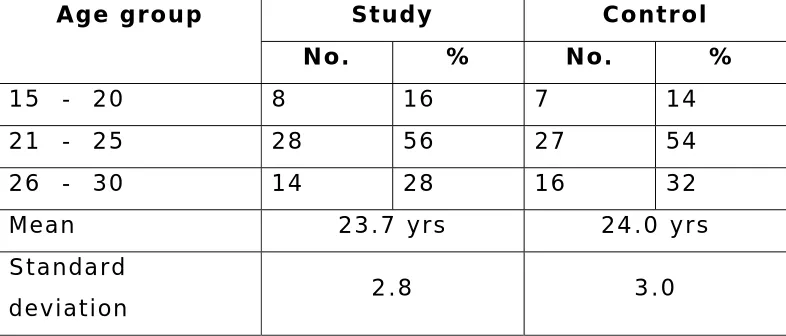
Table 1
Distribution of cases according to age group
Study Control Age group
No. % No. %
15 - 20 8 16 7 14
21 - 25 28 56 27 54
26 - 30 14 28 16 32
Mean 23.7 yrs 24.0 yrs
Standard
deviation 2.8 3.0
‘p’ = 0.586
On analysis of study group age wise, the primigravida age group ranged from 18 years to 29 years and the multigravida age group distribution was 20 –30 years. The mean age of the study group was 23.7 years.
In the control group, the primigravida age ranged from 18 –29 mean and multigravidas ranged from 20 to 30 years. The mean age of the control group was 24 years.
Distribution of cases according to age group
8
28
14
7
27
16
0
5
10
15
20
25
30
35
40
45
50
Study
Control
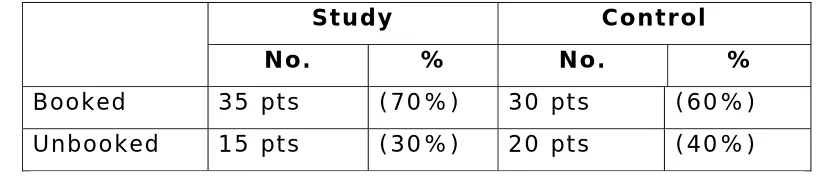
Table 2
Booking status
Study Control No. % No. %
Booked 35 pts (70%) 30 pts (60%) Unbooked 15 pts (30%) 20 pts (40%)
‘p’=0.4017 (not significant)
Booking status
0
10
20
30
40
Study
Control
Unbooked
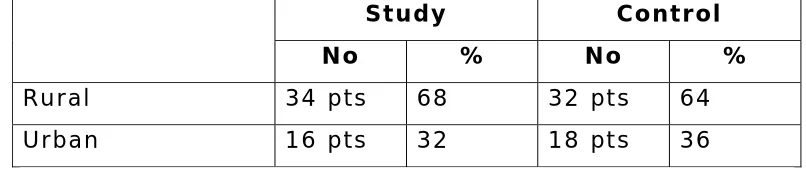
Table 3
Distribution of cases according to residence
Study Control No % No %
Rural 34 pts 68 32 pts 64
Urban 16 pts 32 18 pts 36
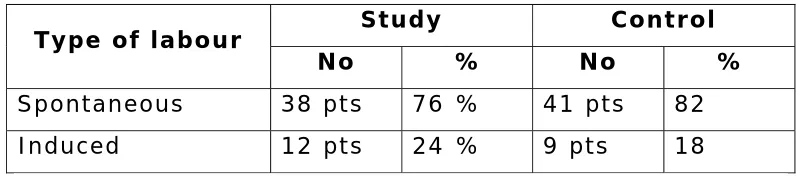
Table 4
Type of labour
Study Control Type of labour
No % No %
Spontaneous 38 pts 76 % 41 pts 82 Induced 12 pts 24 % 9 pts 18
Table 5
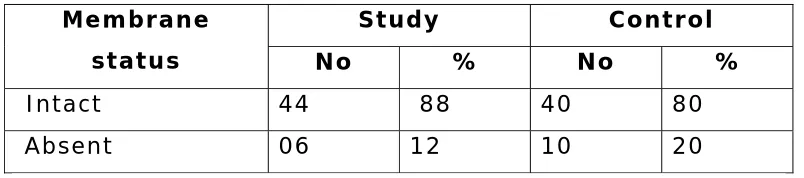
Membrane Status
Study Control Membrane
status No % No %
Intact 44 88 40 80
Absent 06 12 10 20
Table 6
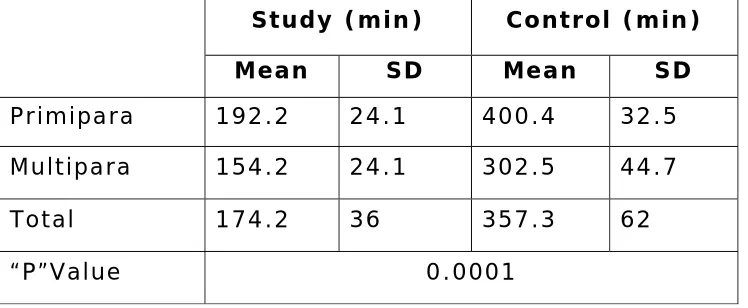
Duration of active phase of Ist stage labour
Study (min) Control (min)
Mean SD Mean SD
Primipara 192.2 24.1 400.4 32.5
Multipara 154.2 24.1 302.5 44.7
Total 174.2 36 357.3 62
“P”Value 0.0001
In the study group the duration of First stage of labour ranged from 2hrs 5min to 4hrs20 min in primigravidas and from1hrs20min to 3hrs30 min in multiparas. In the control group First stage of labour ranged from 4hrs2min to 7hrs40 min in primiparous patients and from 2hrs20min to 6hrs05 min in multiparas.
Duration of active phase of Ist stage labour
192.2
154.2
174.2
400.4
302.5
357.3
0
50
100
150
200
250
300
350
400
450
Study (min)
Control (min)
Table 7
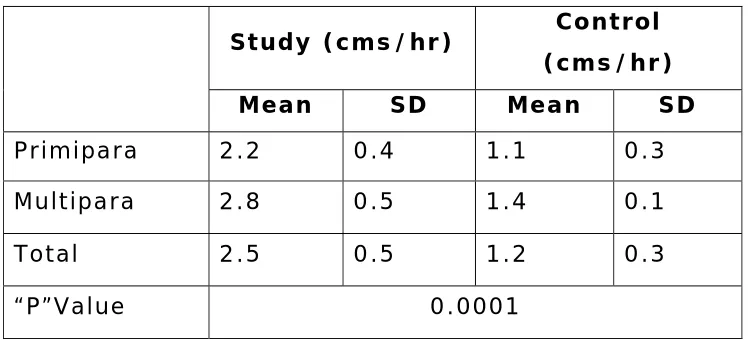
Rate of cervical dilatation (cms /hr)
Study (cms/hr) Control (cms/hr)
Mean SD Mean SD
Primipara 2.2 0.4 1.1 0.3
Multipara 2.8 0.5 1.4 0.1
Total 2.5 0.5 1.2 0.3
“P”Value 0.0001
The rate of cervical dilatation were lower for primi paras than multiparas in both groups. The differences were also statistically significant.
Rate of cervical dilatation (cms /hr)
2.2 2.8
2.5
1.1 1.4
1.2
0 0.5 1 1.5 2 2.5 3
Study (cms/hr) Control (cms/hr)
Table 8
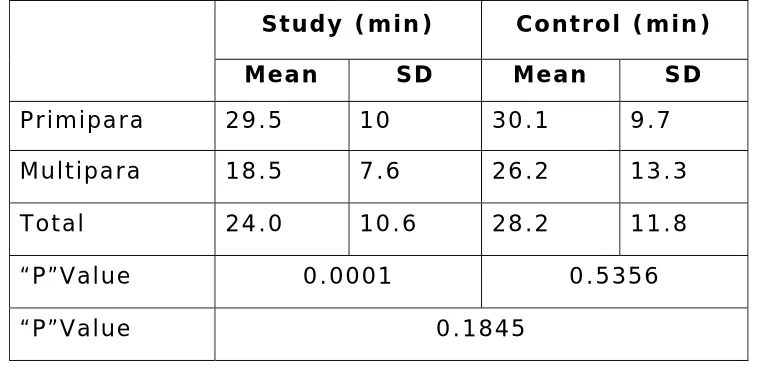
2N D STAGE DURATION
Study (min) Control (min)
Mean SD Mean SD
Primipara 29.5 10 30.1 9.7
Multipara 18.5 7.6 26.2 13.3
Total 24.0 10.6 28.2 11.8
“P”Value 0.0001 0.5356
“P”Value 0.1845
Among the study cases, there is statistically significant difference between the mean duration of 2nd stage of labour among primi paras and multiparas. But this difference is not significant among the control cases.
2N D STAGE DURATION
29.5
18.5
24
30.1
26.2
28.2
0
5
10
15
20
25
30
35
Study Control
Table 9
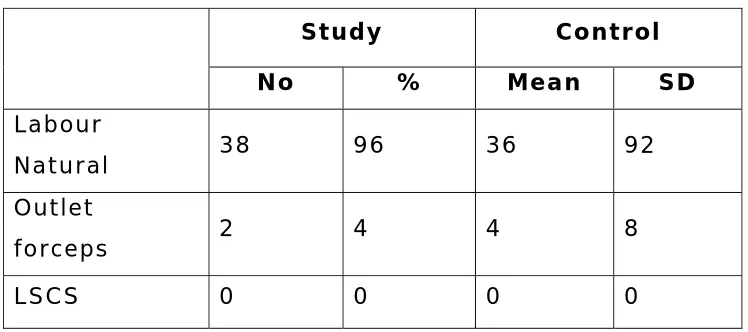
Mode of delivery
Study Control
No % Mean SD
Labour
Natural 38 96 36 92
Outlet
forceps 2 4 4 8
LSCS 0 0 0 0
In the study group only two patients (4%) required assisted vaginal delivery, whereas in the control group four patients (8%) were delivered by outlet forceps.
Mode of delivery
96
4
0
92
8
0
0 10 20 30 40 50 60 70 80 90 100
Percentage
Study Control
Table 10
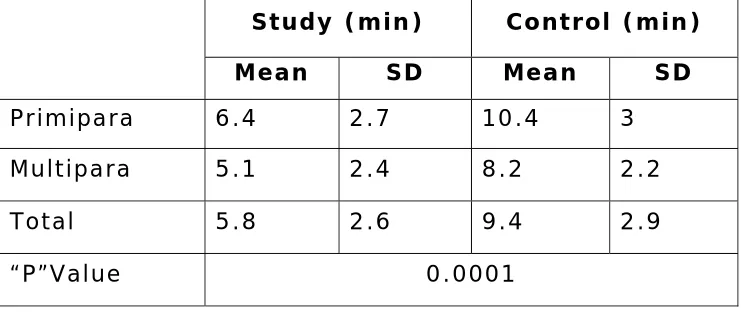
3RD STAGE DURATION
Study (min) Control (min)
Mean SD Mean SD
Primipara 6.4 2.7 10.4 3
Multipara 5.1 2.4 8.2 2.2
Total 5.8 2.6 9.4 2.9
“P”Value 0.0001
The mean duration of 3r d stage of labour is significantly higher for primi paras than multiparas.
3RD STAGE DURATION
0
2
4
6
8
10
12
Study Control
Primipara
Table 11
APGAR SCORE
APGAR 1 MIN APGAR 5 MIN MEAN SD MEAN SD
Study 7.7 0.9 8.9 0.6
Control 7.9 0.8 8.9 0.8
‘p’ 0.1576 0.7699
APGAR SCORE
7.7
7.9
8.9 8.9
7
7.2
7.4
7.6
7.8
8
8.2
8.4
8.6
8.8
9
APGAR 1 MIN
APGAR 5 MIN
Table 12 Average Data
Apgar 1st Stage
Duration (min)
Cervical Dilatation (cms/hr)
2nd Stage
Duration (min)
3rd Stage
Duration (min)
Total Duration
(min) 1’ 5’ Study 174.2 2.5 24.0 5.8 204.0 7.7 8.9
Control 357.3 1.2 28.2 9.4 394.9 7.9 8.9
Average Data
Active
phase Cervical
dilatation 2nd stage
of labour 3rd stage
of labour Apgar 1' Apgar 5'
174 357
2.5 1.2 24 28.2
5.89.4
7.7 7.9 8.9 8.9
0 50 100 150 200 250 300 350 400
Table 13
QUALITY OF PAIN RELIEF
Study group Quality Of Pain
Relief No %
Excellent 19 38
Moderate 14 28
Mild 14 28
Nil 3 6
QUALITY OF PAIN RELIEF
38%
28%
28%
6%
Table 14
Maternal morbidity and side effects
Maternal morbidity
and side effects No %
Tachycardia 15 30
Drowsy 5 10
Nausea/vomiting 4 8
Hallucination 1 2
Amnesia 4 8
Nil 21 42
Maternal morbidity and side effects
30%
10%
8%
2%
8%
42%
Tachycardia
Drowsy
Nausea/vomiting
Table 15
Impact of giving Ketamine
Ketamine was given to those patients who complained of unbearable pain close to delivery.
Ketamine Given
(n=23)
Not Given (n=27) Mean S.D. Mean S.D.
‘p’
A. Apgar 1” 7.7 1.0 7.7 0.8 0.9918
B. Apgar 5” 9.0 0.7 8.7 0.5 0.1547
C. Degree of Pain relief i) Excellent ii) Mild iii) Moderate iv) Nil 14 3 6 - 60.9 13.0 26.1 0.0 5 11 8 3 18.5 40.7 29.7 11.1 0.2396
D. Side Effects i) Yes ii) No 14 9 60.9 39.1 14 13 51.9 48.1 0.723
E. NICU Observation i) Yes ii) No 1 22 4.3 95.7 2 25 7.4 92.6 0.5611
DISCUSSION
A short labour with effect pain relief and minimal side effects to mother and fetus is what every labouring mother and obstetrician would desire for.
Concept of programmed labour has been introduced by Dr. Daftary in 1992. Chauhan et al (2003) and Diwakar et al (2002) endorsed these findings.The observation that analgesia in labour shortens its duration and improves obstetric outcome has been documented in various studies, Ganla et al (2000) and Singh et al (2000).
Programmed labour utilizes a variety of drugs in minimal sub anesthetic doses with the objective of providing pain free short labour while at the same time decreasing significantly morbidity to mother and fetus.
The aim of present study was to determine the influence of the programmed labour protocol on the events of labour and obstetric outcome.
opioids requirement often in a synergistic (supra additive) fashion.
The partogram has been used to monitor of the progress of labour. The partogram is an excellent modality of documenting labour events, Friedman E (1954), Daftary (1979), Studd (1973). The integration of the partogram in the protocol of programmed labour renders its implementation easy and meaningful.
Duration of first stage of labour
Duration of Second Stage of Labour
The mean duration of second stage of labour was not significantly diofferent in the study group when compared the control. However, labour analgesia provided a more favorable environment for the mother which entailed better co-operation. The use of Ketamine close to delivery produced profound analgesia and anaesthesia. As Ketamine is used in very small doses 0.5mg/hr and also because of short half life side effects both mother and fetus are minimal. Two of the patients were given top up doses (0.25mg/kg) at half an hour interval with no adverse effects.
Duration of Third Stage of Labour
The third stage of labour was actively managed by administering 0.4mg methergine iv at the time of delivery of the anterior shoulder. The mean duration of third stage as well as the amount of blood loss was significantly reduced in the study group (mean 5.8 min) when compared to the control (mean 9.4 min).
Effect on Fetus
Effect on mother
The provision of pain free and shorter labour ensures that childbirth is a joyous event. 38% reported excellent pain relief. Multigravidas were better able to feel the difference and document the extent of pain relief, and reported labour as much more satisfying. 8% reported amnesia for the events during labour and stated the labour as comfortable one.
Adverse effects
SUMMARY
9 The study was performed on 50 low risk antenatal mothers in active labour.
9 The majority of the patients belong to the age group of 21-25. The mean age of the study group was 23.7 years and the control group was 24 years.70% of the study cases were booked and 60% of the control cases were booked.
9 The study group has significantly shorter labour when compared to the control. The mean duration of labour was reduced by 50%.
9 The rate cervical dilatation was doubled when compared to that of a control group.
9 The mean duration of second stage of labour was not significantly different in study group and control group.
9 The duration of 3r d stage of labour was significantly reduced.
9 Quality of pain relief was good with 94 % stating that they had some pain relief of which 38 % stated that they had excellent pain relief.
9 Need for assisted vaginal delivery was minimal in study group 4% vs 8% in control.
9 Fetal distress was 2% in study group when compared to 6% in the control. There were no significant fetal side effects following administration of drugs for programming of labour.
CONCLUSION
Programmed labour protocol provides good pain relief in majority of patients. It is very safe and has absolutely no major complications with minimal minor side effects.
It has a favourable impact on the progress of labour. It augments cervical dilatation and shortens the first stage of labour significantly. Duration of second stage of labour is not affected. It reduces the number of assisted vaginal delivery, improves the performance, reduces the duration of third stage and incidence of postpartum haemorrhage.
There is absolutely no untoward effect on mother and foetus. There is no incidence of fetal distress caused by this optimizing labour protocol.
BIBLIOGRAPHY
1. Altissimi C.Ketamine and analgesia during labor] Minerva Anestesiol. 1979 Dec;45(12):907-14.
2. Arkatov VA. The effect of tramal and acupuncture analgesia on labor pain and the psychoemotional status of the parturient] Anesteziol Reanimatol. 1992 Mar-Apr;(2):31-3.
3. Arulkumaran Management of labour
4. Bitsch M. Obstetrical analgesia with tramadol] Fortschr Med. 1980 Apr 24;98(16):632-4.
5. Bredow V. Use of tramadol versus pethidine versus denaverine suppositories in labor--a contribution to noninvasive therapy of labor pain] Zentralbl Gynakol. 1992;114(11):551-4.
6. Chauhan R, Gupta A. A clinical study of programmed labour and it’s outcome J Obstet Gynaecol & Family Welfare 8-9: 2003
7. Daftary SN Ch 24. Modern Management of labour. Principles and Practice of Obstetrics and Gynaecology for
8. Daftary SN, Desai SV, Nanavati MS et al. J Perinatology and Neonatal Care 3:137, 2001
9. Daftary SN, Mhatre PN Cervicographs in the management of labours in primigravida J Obstet Gynaecol India 27:687, 1997
10. Desai SV, Deshpande V, Krishna U, Acceleration in labour J Obstet Gynaecol India 34:657, 1984
11. Divakar H, Patil A. Programmed Labour – A personal communication
12. Effects of analgesics during labor. Middle East J Anaesthesiol. 1978 Jun;5(1):46-56.
13. Elbourne D, Wiseman RA. (Cochrane Review). Types of intra-muscular opioids for maternal pain relief in labour
14. Erskine WA. Self-administered intravenous analgesia during labour. A comparison between pentazocine and pethidine. S Afr Med J. 1985 May 11;67(19):764-7.
16. Fieni S. Evaluation of the peripartum effects of 2 analgesics: meperidine and tramadol, used in labor] Acta Biomed Ateneo Parmense. 2000;71 Suppl 1:397-400.
17. Fishburne JI. Systemic analgesia during labor. Clin Perinatol. 1982 Feb;9(1):29-53
18. Freidman EA Primigavid labour – a graphostatistical analysis Obstet Gynaecol 6:567, 1955
19. Friedman EA Labor clinical evaluation and management. Appleton Century Crofts. New York 1967
20. Ganla KN, Deshmukh S, Bhide A et al. Intermittent i.v. bolus ketamine in labour analgesia J Obstet Gynaecol India 50:60, 2000
21. Guseck E. Conservative acceleration of parturition by avacan Schweizerische Medizinische Wochenschrift 32:882, 1952
22. Husslein P. Obstetrical analgesia with tramadol--results of a prospective randomized comparative study with pethidine] Z Geburtshilfe Perinatol. 1987 Nov-Dec;191(6):234-7.
Oct;83(1):19-27.
24. Kadakia PH, Verma Ragini. Labour Analgesia = Personal communication.
25. Keskin HL. Pethidine versus tramadol for pain relief during labor. Int J Gynaecol Obstet. 2003 Jul;82(1):11-6.
26. Khosla A, Bala I, Dahiya K, Sangwan K. A comparative study of the efficacy of Valethamate bromide and Drotaverine in normal labour J Obstet Gynaecol India 53:568, 2003
27. Larsen JV.Obstetric analgesia and anaesthesia. Clin Obstet Gynaecol. 1982 Dec;9(3):685-710
28. Levy DL. Obstetric analgesia. Pentazocine and meperidine in normal primiparous labor. Obstet Gynecol. 1971 Dec;38(6):907-11..
29. Lewis KS, Han NH. Tramadol: a new centrally acting analgesic. Am J Health Syst Pharm. 1997 Mar 15;54(6):643-52.
30. Long J, Yue Y. Patient controlled intravenous analgesia with tramadol for labor pain relief. Chin Med J (Engl). 2003 Nov;116(11):1752-5
32. Merger R. Control of fetal vitality during obstetrical analgesia. Study of fetal pH, cardiac frequency in the fetus in relation to uterine contraction when a new analgesic, pentazocine, is used in labor] Rev Fr Gynecol Obstet. 1970 Jul-Aug;65(7):437-47.
33. Micro administration of ketamine during labor and delivery of Nigerian women. Int J Gynaecol Obstet. 1978 Jul-1979 Aug;17(1):88-90.
34. Miller GW. Intramuscular analgesia with pentazocine during labor. J Am Osteopath Assoc. 1971.Feb;70(6):555-8.
35. Miller’s textbook of anaesthesia
36. Mishra SL, Toshniawal A, Banerjee R. Effect of Drotaverine HCI on cervical dilatation in labour, a comparison with Valethamate bromide J Obstet Gynaecol India 52:76, 2002
37. Moore J, Ball HG.. A sequential study of intravenous
analgesic treatment during labour. Br J Anaesth. 1974 May;46(5):365-72.
39. O’Driscoll K, Stronge JM, Minogne M. BMJ 11:470, 1973
40. Philpott RH, Castle WM. Cervicographs in the management of labour J Obstet Gynaecol British Commonwealth 79:592, 1972
41. Puri M, Rathee S, Garg G. Effect of Epidosin on cervical dilatation in labour J Obstet Gynaecol India 38:427, 1988
42. Purwar M, Balsara R. Acceleration of labour by iv epidosin in primigravadae Ind J Clin Pract. 6:1, 1996
43. Radakovic D. Drug analgesia during labor Gynakol Rundsch.
1980 Jun;20 Suppl 1:27-34.
44. Ranka PR, Hishikar VA. Effect of Drotaverine HCI on normal labour. A randomized study J Obstet Gynaecol India 52:28, 2002
46. Sharma JB, Pundir P, Kumar A et al. Drotaverine HCL and Valethamate bromide in acceleration of labour Int J
Gynaecol Obstet 74:255, 2003
47. Singh S, Mathur V, Srivastava U Pandey DN. Comparative evaluation of efficacy of Tramadol with Pentazocine HCI in labour analgesia, and their effects on foetal outcome J Obstet Gynaecol India 50, 21, 2000
48. Studd JWW. Partograms and nomograms in the
management of primigravid labours British Medical Journal 4:451, 1973
49. Tiengo M. Pentazocine in labor analgesia (1st observation)] Acta Anaesthesiol. 1968;19:Suppl 2:227.
50. Viegas OA, Khaw B, Ratnam SS. Tramadol in labour pain in primiparous patients. A prospective comparative clinical trial. Eur J Obstet Gynecol Reprod Biol. 1993 May;49(3):131-5.
51. Wahab SA. Effect of some recent analgesics on labor pain and maternal and fetal blood gases and pH. Int J Gynaecol Obstet. 1988 Feb;26(1):75-80.
52. Wien Klin Wochenschr Subanaesthetic doses of ketamine for obstetric delivery. 1978 Feb 17;90(4):127-30
PROFORMA
Name
Case
No
Age
IP
No. Unit
Booking
Status
Married
Since
Gravida :
Para :
Live :
Abortion
:
LMP
:
Gestational
age
in
weeks
:
EDD :
Mens Period
Regular / Irregular
Date & Time of Admission :
Examination
Height PR
BP
RR
Temperature
Weight
Anaemia
Pedal oedema :
Urine - ALB
- SUG
-
Informed
consent
Hb
%
CVS
:
B1. Grouping :
RS
:
Rh typing
P/A
:
P/V
:
Nature of Labour
I)
Spontaneous
ARM
II) Induced
Syntocinon
Position Length Dilatation Consistency
Station
Time of administration of drug :
Drug Time
Diazepam
Pentazocine
Tramadol
Hyoscine
Ketamine
Duration of first stage :
Rate of cervical dilatation :
Duration of second stage :
Mode of delivery
Labour Natural
Instrumental
Caesarean SectionIndication for instrumental delivery
Pain relief
Nil
Mild
Moderate
Excellent
Side effects of drugs
Tachycardia
Rise of BP
Fall of BP
Nausea/Vomiting
Amnesia
Post partum haemorrhage
Vaginal tears/lacerations
Cervical tears
Post partum psychosis
Neonatal outcome
Birth wt
APGAR
Resuscitation NICU
Obs./Adm.
I min
5 min
Duration of third stage
MASTER CHART
STUDY GROUP
S E statu s Ed u statu s G est .a ge me dica l c o mp ob st. Ris k s pon t. /i nd I stg rate o f ce rvic al II stg . Dur m in III s tg . d u r. m in sy nto ke ta mi ne rp t. k e ta m in e mod e of de l. Indi c a ti o n de go fp a in rel ief Ba b y Wt . Ap gar 1" Ap gar 5"IV 5th 38 nil nil spont 4hr20m 1.6 32 3 no no 0 LN epi - mod 2.85 8 9 n IV 8th 41 nil nil ind 4hr 1.8 30 4 yes no 0 LN epi - mod 2.7 7 9 t 1 V 3rd 39 nil nil spont 2hr40m 2.6 20 3 no no 0 LN epi - excellent 3 8 9 n
IV 11th 40 nil nil spont 4hr 1.7 35 5 no no 0 LN epi - mild 3 7 8 n IV grad 40 nil PROM ind 2hr35m 2.7 30 4 yes given 0 LN epi - excellent 2.9 7 8 d n 1 IV 4th 40 nil nil spont 2hr45m 2.5 20 3 no no 0 LN - excellent 2.8 7 9 n 1A
IV 9th 37 nil PROM spont 2hr 3.5 12 5 no given 0 LN - excellent 2.9 8 9 h o 1 V nil 40 nil nil spont 2hr50m 2.5 25 4 yes given 0 LN epi - mod 3.2 8 8 t
III 12th 41 nil ROP ind 3hr20m 2.1 60 5 no no 0 outlet Pro.2 nd
Stage mild 3.25 6 8 t IV 8th 39 nil nil spont 2hr5m 3.3 35 4 yes no 1 LN epi - mod 2.7 8 8 n 1 IV 3rd 40 nil nil spont 2hr30m 2.8 15 4 no no 0 LN - excellent 2.6 9 9 n IV 8th 38 nil nil spont 3hr 2.3 35 4 no no 0 LN epi - mild 3 7 8 n IV 11th 41 nil nil ind 3hr10m 2.2 30 5 yes no 0 LN epi - mild 2.8 7 9 t V nil 40 nil nil spont 3hr 2.3 25 3 yes no 0 LN epi - nil 2.6 8 9 n IV 11th 39 nil md.7yrs spont 3hr15m 2.1 11 2 yes no 0 LN epi - mod 2.9 8 9 t IV 6th 37 nil nil spont 3hr 2.3 25 3 yes no 0 LN epi - mild 2.7 8 9 n 2 V 8th 41 nil nil spont 2hr30m 2.8 10 4 no given 0 LN - mod 3.35 9 1
0 t IV 12th 38 nil nil spont 2hr40m 2.6 30 4 no given 1 outlet Fetal distress excellent 3.1 7 9 n IV 6th 39 nil PROM ind 2hr40m 2.6 25 8 yes no 0 LN epi - nil 2.8 9 9 t
s IV 12th 40 nil Rh-ve ind 3hr 2.3 32 7 yes no 0 LN epi - excellent 3 9 1
0 d IV 9th 41 nil nil spont 3hr30m 2 18 6 yes given 0 LN epi - excellent 3.1 7 8 n IV nil 37 nil nil spont 3hr 2.3 22 8 no given 0 LN epi - excellent 2.6 7 8 d 1 IV 9th 39 nil nil spont 1hr40m 4.2 12 5 no given 0 LN - excellent 2.7 9 10 n 1 V 4th 40 nil nil spont 2hr40m 2.6 14 5 no no 0 LN - mod 2.65 8 9 t
IV 8th 40 nil nil spont 3hr10m 2.2 25 1
2 no given 0 LN epi - mild 3.1 7 9 d V 3rd 39 nil nil spont 2hrs10
m 3.2 16 7 yes given 0 LN - excellent 2.7 9 9 t 1 IV 10th 40 nil nil ind 2hr30m 2.8 30 9 yes given 0 LN lp - excellent 2.9 7 9 n 1 IV 11th 38 nil nil spont 2hr15m 3 15 3 no given 0 LN - excellent 3 9 9 n
IV 5th 41 nil nil spont 3hr 2.3 40 1
0 yes no 0 LN epi - mild 3.1 7 8 n 1 III grad 40 nil nil spont 3hr 2.3 25 6 yes no 0 LN epi - mod 3 7 8 n IV 12th 41 nil nil ind 3hr10m 2.2 30 9 yes given 0 LN epi - mod 2.8 6 9 d n V nil 39 nil nil spont 4hr 1.8 30 1
5 no no 0 LN epi - mild 2.9 8 9 n 1 IV 3rd 37 nil nil spont 2hr30m 2.8 10 3 yes given 0 LN - excellent 2.75 9 10 t 1 IV 8th 38 nil nil spont 2hr20m 3 16 4 no given 0 LN - excellent 3.3 8 9 a
a IV 8th 40 nil nil spont 3hr30m 2 30 7 no no 0 LN - nil 2.8 9 9 n V nil 40 nil nil spont 2hr20m 3 45 6 yes given 0 LN - mild 2.9 9 9 n IV 12th 37 nil nil spont 3hr10m 2.2 20 6 no no 0 LN - mild 2.9 8 9 a IV 5th 41 nil nil spont 3hr30m 2 25 8 yes given 0 LN epi - mild 2.7 9 1
S E st at us Ed u statu s Ge st .ag e m e di ca l com p ob s t. Ri sk s pon t. /i nd I s tg rate o f ce rvic al II s tg. Dur m in III s tg . d u r. m in s y nt o ke ta mi ne rp t. ke ta min e mod e of de l. Indi c a ti o n d e go fp a in re lief Ba by Wt . Apg a r 1" Apg a r 5" 1A
CONTROL GROUP
age g rav id a S E statu s ed u g e s t ag e m e d ical ob st Sp ont /i n d I s tg . cer di l II s tg.III stg. syn
to m d of del In di cation Bab y Wt 1 "
1 primi IV 5 37 nil nil 6hrs 20 1.1 40 10 yes LN epi - 2.9 7
1 primi V 8 39 nil nil s 6hr25 1.1 30 15 LN epi - 3.0 8
9 primi IV 5 40 nil nil s 7hr 1 15 12 LN epi - 2.75 8
2 primi V 6 41 nil nil s 7hr40min 0.9 35 8 LN epi - 2.8 9
9 primi V 11 40 nil nil s 6hr40m 1 70 6 outlet Pro.2nd stg 2.9 8
5 primi IV 7 39 nil nil s 7hr 1 40 9 LN epi - 3.0 7
6 primi IV 9 38 nil nil I 6hr30m 1 25 10 yes LN epi - 3.1 7
1 primi IV 12 37 nil nil s 6hr20m 0.9 30 12 LN epi - 2.8 8
1 primi V 11 39 nil nil s 7hr20m 1 35 14 LN epi - 2.6 9
0 primi IV 9 40 nil nil s 7hr25 1 40 9 LN epi - 2.9 8
9 primi IV 7 41 nil nil i 7hr 1 15 9 LN epi - 2.85 8
2 primi IV 8 40 nil nil s 6hr30m 1.1 20 10 yes LN epi - 2.7 8
3 primi IV 9 37 nil nil s 6hr 40m 1.1 30 16 LN epi - 2.7 7
2 primi IV 10 38 nil nil i 6hr 50m 1 50 12 LN epi - 3.0 8
5 primi III g 39 nil nil s 6hr45m 1 35 15 yes LN epi - 2.8 9
4 primi III g 40 nil nil s 6hr40m 1 20 12 LN epi - 3.1 9
5 primi IV 12 37 nil nil s 6hr35m 1.1 40 8 LN epi - 3.1 7
7 primi IV 9 38 nil nil s 6hr10m 1.2 20 6 yes LN epi - 2.75 8
8 primi IV 4 41 nil nil s 6hr50m 1 15 8 yes LN epi - 2.6 7
9 primi V 4 40 nil nil i 6hr50m 1 18 9 LN epi - 2.5 8
9 primi IV 5 40 nil nil s 7hr 1 20 11 LN epi - 3.1 8
0 primi V 11 38 nil nil s 6hr 1.2 15 10 LN epi - 2.8 9
0 primi V 20 39 nil nil s 7hr10m 1 50 5 yes outlet fet.distress 2.7 7
1 primi IV 8 39 nil nil i 6hr30m 1.2 22 11 LN epi - 2.6 7
5 primi IV 9 38 nil nil s 7hr40m 0.9 35 7 outlet - 2.85 8
4 primi V 7 39 nil nil s 5hr30m 1.3 20 14 LN epi - 2.8 9
6 primi IV 8 41 nil nil s 5hr40m 1.2 25 15 yes LN epi - 2.6 7
2 primi III 4 39 nil nil s 5hr50m 1.1 15 8 LN epi - 3.0 8
7 G2P1L1 IV 11 40 nil nil s 5hr30m 1.3 20 6 LN epi - 3.2 9
5 G3P2L1 IV 10 40 nil nil s 5hr30m 1.3 25 9 LN epi - 3.0 8
3 G2P1L1 IV 9 41 nil nil s 5hr 1.4 18 10 LN - 3.0 8
4 G2P1L1 V 6 40 nil nil s 5hr10m 1.4 30 12 LN - 2.8 7
6 G2P1L1 IV 7 39 nil nil i 4hr50m 1.4 30 5 LN epi - 2.9 8
8 G2P1L1 IV 4 37 nil nil i 6hr 1.1 50 8 outlet fe.distress 2.65 7
9 G2P1L1 IV 11 41 nil nil s 6hr 1.1 25 9 LN epi - 2.75 8
4 G3P2L1 V 4 38 nil nil s 4hr 1.7 20 7 LN epi - 2.8 8
4 G2P1L1 III 5 39 nil nil s 5hr20 1.3 20 9 LN - 2.7 7
5 G3P1L1A1 IV 9 41 nil nil s 5hr20 1.3 35 4 LN epi - 2.6 8
3 G2P1L1 V 10 40 nil nil s 4hr30 1.5 20 8 LN epi - 2.9 7
5 G3P1L1A1 IV 8 40 nil nil s 4hr40m 1.4 35 10 LN epi - 3.0 9
ag e g rav id a SE statu s e du ge s t ag e med ic a l ob s t Sp on t/ in d I stg . c e r d il II s tg . III s tg . sy nt o md o f del Indi ca ti o n Ba by Wt 1 "
0 G3P2L2 IV 8 40 nil nil i 5hr 1.4 34 5 LN epi - 2.9 9
9 G2P1L1 V 4 38 nil nil s 5hr30m 1.3 28 8 LN - 2.8 8
5 G3P2L2 IV 9 39 nil nil s 5hr40m 1.2 34 9 LN epi - 3.0 8
7 G2P1L1 V 4 40 nil nil s 5hr10m 1.4 22 11 yes LN epi - 2.5 7
6 G3P2L2 IV 7 40 nil nil s 4hr40m 1.5 25 5 LN - 2.6 9
0 G2P1L1 III 6 41 nil nil s 6hr 1.2 30 11 LN epi - 3.0 9
7 G3P2L2 IV 5 37 nil nil s 3hr10m 2.2 12 9 LN - 2.6 7
6 G3P1L1A1 V 5 39 nil nil i 3hr30m 2 8 10 LN epi - 2.6 8