BIO-CHEMICAL STUDIES ON THE
HEPATOPROTECTIVE EFFECT OF ECLIPTA ALBA
AND PIPER LONGUM
Thesis Submitted To
THE TAMILNADU DR. M.G.R. MEDICAL UNIVERSITY GUINDY, CHENNAI
As a partial fulfillment of the requirement for the award of the degree of
DOCTOR OF PHILOSOPHY
Submitted by R. VASUKI,
M.Sc.,
Under the supervision of
Prof. Dr. P. SAMUDRAM, M.Sc., M.Phil., Ph.D.
INSTITUTE OF BIOCHEMISTRY
MADRAS MEDICAL COLLEGE
CHENNAI – 600 003
INDIA
ACKNOWLEDGEMENT
My Ph.D. thesis is in the process of being bound. While I have not yet faced the
examiners, just completing such an ambitious project is a joy unto itself.
“The joy, satisfaction and euphoria that comes along with the successful
completion of any work would be incomplete unless we mention the names of the people
who made it possible, whose constant guidance and encouragement served as a beam of
light and crowned our efforts.”
First and foremost I would like to thank THE DIVINE for his grace which
fetched the strength and understanding to surmount the difficulties during the tenure of
my project work and enabled me to complete this herculean task during this journey.
I owe to my father Mr.A.M.Rajashekaran, my mother Mrs. R.Jayalakshmi, who
have stood as pillars of support in all my endeavors, whose love and care is always there
with me during all my difficult times. They are the source of my inspiration always
wishing the best for me from the core of their heart.
It is a great privilege for me to have worked under the guidance of
Dr. P. Samudram, M.Sc., M.Phil., Ph.D., for his constant encouragement, suggestions
and unflinching guidance. His knowledge and wide experience has been a motivating
force in moulding this research work.
My sincere thanks to Dr. T. P. Kalanithi, M.D., Dean, Madras Medical College
My deepest and sincere thanks to Dr. A. Geetha, M.Sc., M.Phil., Ph.D.,
Co-guide, Asst. Prof. Department of Biochemistry, Bharathi Women’s College, for her
continous support and invaluable guidance.
My heartfelt thanks to Dr. Pregna Dolia, M.D., Ph.D., Director, Institute of
Biochemistry for her great support and encouragement.
I wish to express my respect and gratitude to Prof. Dr. V. Ravichandiran, M.
Pharm., Ph.D., Principal, Vel’s college of pharmacy, for his valuable support and
encouragement. and for lending me all the facilities required to proceed my research work.
“Friendship is neither a formality nor a mode; it is rather a life”.
At this juncture, I would like to express my deep sense of gratitude to my beloved
friend Mrs. Rajeshwari Hari for her unforgettable help and encouragement.
I am very much thankful to my friend Mrs.Chanrapraba Rajesh for givn me
immense support throughout my research work
I am indebted to all my friends in Vel’s college of Pharmacy for their help.
I am thankful for the support rendered by Mr.gunasekaran, Mr.Hari and
Mr.Roosevelt,Department of Pharmaceutical analysis
I would like to Give special thanks to my friends Mrs.Vijey aanandhi M,
Dr.Shanmugasundaram P and Mr. Haribaskar, Department of pharmaceutical chemistry
for their moral support and guidance
It’s a pleasure in thanking Mr.Baskar K, Mrs.Umadevi SK, Department of
I express my deep gratitude to Dr. V. Suba, Mr. J.Anbu, Dr.Nazir, Department
of Pharmacology, for their invaluable support.
I thank Mrs. Jeyakumari J,Mrs.Malarkodi V,Department of Pharmacognosy for
their support.
I express my hearty thanks to my better half Mr.P.Ramesh kumar for his
invaluable help and inspiration.
I owe my loving thanks to my cute little darlings , R.Yashika and R.Karan
kumar. Without their encouragement and understanding it would have been impossible
for me to finish this work.
Early in the process of completing this project, it became quite clear to me that a
researcher cannot complete a Ph.D. thesis alone. Although the list of individuals I wish
to thank extends beyond the limits of this format, I would like to thank all my friends for
CONTENTS
INTRODUCTION - 1
AIMS AND OBJECTIVES - 26
REVIEW OF LITERATURE - 28
SCOPE AND PLAN OF WORK - 36
CHAPTER 1 - 40
CHAPTER 2 - 93
SUMMARY - 198
CONCLUSION - 204
REFERENCES -
DECLARATION
I hereby declare that the thesis, entitled “BIO-CHEMICAL
STUDIES ON THE HEPATOPROTECTIVE EFFECT OF ECLIPTA
ALBA AND PIPER LONGUM” is submitted to The Tamilnadu
Dr. M.G.R. Medical University in partial fulfillment of the requirements for
the award of degree of doctor of philosophy is the record of original research
work done by me under the supervision and guidance of
Prof. Dr. P. Samudram, Professor and Head, Department of Biochemistry,
Tagore Dental College & Hospital (Formerly Institute of Biochemistry
Madras Medical college) and the thesis has not formed the basis for the
award of any Degree, Diploma, Associateship, Fellowship or other similar
title.
Mrs. R. VASUKI
CERTIFICATE
This is to certify that the thesis, entitled “BIO-CHEMICAL
STUDIES ON THE HEPATOPROTECTIVE EFFECT OF ECLIPTA
ALBA AND PIPER LONGUM” is submitted to The Tamilnadu
Dr. M.G.R. Medical University in partial fulfillment of the requirements
for the award of degree of doctor of philosophy is the record of
original research work done by Mrs. R. VASUKI, under my supervision
and guidance and the thesis has not formed the basis for the award of any
Degree, Diploma, Associateship, Fellowship or other similar title.
Prof. Dr. P. SAMUDRAM, M.Sc., M.Phil., Ph.D.
Supervisor and Guide,
Professor and Head
Department of Biochemistry Tagore Dental College & Hospital
Ratinamangalam, Chennai
Tamil Nadu, India.
CERTIFICATE
This is to certify that the thesis, entitled “BIO-CHEMICAL
STUDIES ON THE HEPATOPROTECTIVE EFFECT OF ECLIPTA
ALBA AND PIPER LONGUM” is submitted to The Tamilnadu Dr. M.G.R.
Medical University in partial fulfillment of the requirements for the award of
degree of doctor of philosophy is the record of original research
work done by Mrs. R. VASUKI, under my supervision and co- guidance
and the thesis has not formed the basis for the award of any Degree, Diploma,
Associateship, Fellowship or other similar title.
DR. A. GEETHA, M.SC., M.PHIL., PH.D.,
Co-guide, Asst. Prof.
Department of biochemistry, Bharathi women’s college, Chennai
Date:
ABBREVIATIONS
ACE - Acetyl choline esterase
ACP - Acid phosphatase
ATP - Adenosine triphosphate ALP - Alkaline phosphatase ALT - Alanine amino transferase ANSA - Aminonaphthol salicylic acid AST - Alanine amino transferase α - Alpha
β - Beta
BHT - Butylated hydroxyl toluene
CAT - Catalase
CCl4 - Carbon tetra choloride
CD - Conjucated diene
CDNB - 1-chloro, 2,4 dinitrobenzene
CHO - Cholesterol
dl - Decilitre
DNA - Deoxy ribonucleic acid
oC - Degree celsius
DPPH - 2,4 dinitro Diphenyl hydrazine DTNB - 5,5’ –Di thiobis (2nitro benzene) EDTA - Ethylene diamine tetraacetic acid
g - Gram
GPX - Glutothione peroxidase GR - Glutathione reductase GSH - Reduced glutathione GSSG - Oxidized glutathine
hr - Hour
ICD - Iso citrate dehydrogenase
KG - Kilogram
L - Litre
LD50 - Lethal dose to kill 50% of animal LDH - low density lipoprotein LDL - Low- density lipoprotein LOOH - Lipid hydro peroxide LPO - Lipid peroxidation
M - Molarity
MDA - Malondialdehyde
µ - Microgram
µg - Microgram
µl - Microlitre
mg - Milligram
min - Minute
ml - Milliliter
Mm - Millimole
N - Normality
NADP - Nicotineamide adenine dinucleotide phosphate
nm - nano moles
No - Nitric oxide
NOS - Nitric oxide species
OECD - Organization of Economic Co-operation and Development
p.o - per oral
K+ - Potassium
ROS - Reactive oxygen species
SDS - Sodium Dodecyl sulphate
Se - Selenium
SOD - Superoxide dismutase
TBA - Thiobarbituric acid
TBARS - Thiobarbituric acid reactive substances
TCA - Trichloro acetic acid
TG - Triglyceride
V/V - Volume / Volume
VLDL - Very low density lipoprotein
W/V - Weight / Volume
1
INTRODUCTION
The liver is the second largest and one of the most essential organs
which is located within the lower part of the rib-cage on the right hand side of
the body. It has a huge variety of functions in the body and is the only organ
that can repair and re-grow itself after damage. It is a seat of metabolism
which is responsible for performing many functions in the body. Bile juice
produced by liver gets secreted in the intestines which is required for the fat
digestion body. It also works as a guard by keeping check on the cholesterol
levels in the blood stream. It also produces certain proteins that are very much
required for performing ware and tear function in the body. It also works as
an energy store of the body thus providing energy when required in
emergency conditions
ANATOMY AND PHYSIOLOGYOF LIVER
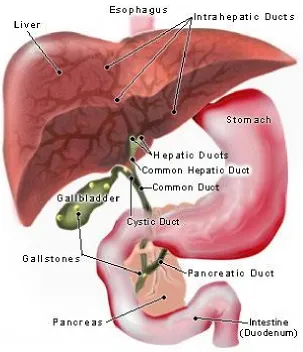
The liver is a fairly large organ that consistently lies in the right upper
part of the abdomen. From front it has a roughly triangular shape. It stretches
from the right upper abdomen across the mid line to halfway across the left
upper abdomen (left lobe) and from the right upper abdomen to halfway down
the flank on the right (right lobe). Above the liver sits the right diaphragm and
the right lung, and below the liver is the intestines. The gall bladder nestles
directly below the liver and is attached to it. The gall bladder stores bile from
the liver to be squirted into the first part of the small bowel (duodenum) when
2
Figure 1. Liver
Blood Flow
A large portion of the output of the heart (about one-third) flows to the
digestive system. This blood returns, rich with nutrients and digestive
impurities, to the liver through the veins of the portal circulatory system. The
liver vascular system is expandable and compressible, and can store large
quantities of blood. It normally contains about one-tenth of the blood volume
in the body, but can, under certain diseased conditions, expand to hold up to a
3
veins can contract so it holds only a thirtieth of the body’s’ blood. Thus the
liver blood volume can potentially vary by a factor of more than seven.About
three-fourths of the blood coming into the liver comes from venous
circulation; only about a fourth comes directly from the heart through the
arteries. Arterial blood is moved under force, being pumped by the heart,
normally under pressure ten to fifteen times that of the blood in the portal
veins. Thus most of the blood in the liver is not moved through it by arterial
pressure and has a natural tendency to stagnate.
The liver is also extremely permeable to fluids, such that they flow
freely into its lymphatic system; the lymph derived from the liver accounts for
from one-half to two-thirds of the total lymph in the body. Finally, the liver
secretes bile into the small intestine, after storage in the gall bladder. Bile
helps to digest fat and is a key player in the symphonic action of the enzymes
and hormones that coordinate digestion. Thus the liver is an expandable and
contractible reservoir of blood, lymph, and bile. Because it has only weak
arterial circulation, these fluids have a tendency to become stagnant and the
liver to become congested.
FUNCTIONS OF LIVER
The liver has multiple functions. The liver processes all the blood
leaving the stomach and intestines. It breaks down the nutrients and drugs in
the blood into forms that are easier for the rest of the body to use or excrete.
Amongst other important functions, the liver is responsible for eliminating
4
The liver is also very important in the digestion of food and produces
bile which is essential in the breakdown of fats, thereby preventing obesity -
one of the biggest contributors to bad health. It also regulates blood sugar and
stores any excess sugar in a useful ‘quick-release’ form for when it is needed.
The liverclears the blood of old red blood cells, bacteria and other infectious
organisms as well as ingested toxins including alcohol. It is responsible for
producing a large number of different proteins including hormones and blood
clotting factors and is the organ which stores Vitamin A,D, E and K.
The functioning of liver does not really decrease with age so, in the
absence of disease, the liver should work optimally right into very old age -
helping to keep all body systems functioning normally and supporting overall
vitality and protection from illness. The maintenance of optimal liver
functioning is therefore of vital importance in the quest for holistic health In
traditional Chinese medicine, for example, a healthy liver is seen as the most
critical element in the body's ability to fight disease and function optimally.
LIVER DISEASES
Environmental pollution, fast foods, drugs, alcohol and sedentary
lifestyles all contribute to sluggish and diseased livers. The result of a
diseased liver are depressed immune systems, constant fatigue, obesity,
sluggish digestive systems, allergies, respiratory ailments, and unhealthy skin
among many other health problems. Alcohol and many pharmaceutical drugs
5
time, health will be endangered. A common sign of a damaged liver is
jaundice, a yellowness of the eyes and skin.
There are many diseases that may affect the liver and they include:
• Liver cancer
• Fatty liver
• Wilson’s disease
• Hepatitis
• Hemochromatosis
• Cirrhosis
Like other parts of our body, cancer can affect the liver. Cancer of the
liver (primary hepatocellular carcinoma or cholangiocarcinoma and metastatic
cancers, usually from other parts of the gastrointestinal tract.
Fatty liver is termed if lipids account for more than 5 percent of its
weight. The mechanisms for the development of fatty liver are varied. A
reduction in the hepatic oxidation of fatty acids as a result of mitochondrial
dysfunction can lead to micro vesicular steatosis. Another mechanism is
related to an imbalance between fat uptake and secretion, with high
insulin-to-glucagon ratio status leading to macro vesicular steatosis.
Wilson's disease, a hereditary disease which causes the body to retain
6
Hepatitis, inflammation of the liver, caused mainly by various viruses
like hepatitis A, hepatitis B and hepatitis C but also by some poisons,
autoimmunity or hereditary conditions.
Hepatitis A or infectious jaundice is caused by a picornavirus
transmitted by the fecal-oral route.It causes an acute form of hepatitis and
does not have a chronic stage. Worldwide, hepatitis B is another major cause
of cirrhosis and hepatocellular carcinoma. Many patients with hepatitis B
virus infection fail standard therapy. Hepatitis C virus infection is the leading
cause of chronic liver disease and the reason for 30 to 35 percent of liver
transplantations (Knolle et al., 1998; Zein et al., 1996).
Haemochromatosis, a hereditary disease causing the accumulation of
iron in the body, eventually leading to liver damage.
Cirrhosis is the formation of fibrous tissue in the liver, replacing dead
liver cells. The death of the liver cells can for example be caused by viral
hepatitis, alcoholism or contact with other liver-toxic chemicals.
In some liver diseases, such as primary biliary cirrhosis, treatment can
slow but not stop the progression of liver injury (Poupon et al., 1991).
Although each form of liver disease has a distinct natural history, most forms
progress slowly from hepatitis to cirrhosis, often over 20 to 40 years (Propst
7
Symptoms of a diseased liver
The external signs include a coated tongue, bad breath, skin rashes,
itchy skin, excessive sweating, offensive body odour, dark circles under the
eyes, red swollen and itchy eyes, acne rosacea, brownish spots and blemishes
on the skin, flushed facial appearance or excessive facial blood vessels. Other
symptoms include jaundice, dark urine, pale stool, bone loss, easy bleeding,
itching, small, spider-like blood vessels visible in the skin, enlarged spleen,
and fluid in the abdominal cavity, chills, pain from the biliary tract or
pancreas, and an enlarged gallbladder. The symptoms related to liver
dysfunction include both physical signs and a variety of symptoms related to
digestive problems, blood sugar problems, immune disorders, abnormal
absorption of fats, and metabolism problems.
EVALUATION OF DRUG TOXICITY
Most ingested substances are metabolized and chemically altered as
they pass through the liver. The liver is vulnerable to injury from some
medications, vitamins and herbal remedies (Speeg and Bay, 1995).
Prescription and over-the-counter arthritis and pain medications are widely
used. Nonsteroidal anti-inflammatory drugs (NSAIDs), which are taken to
alleviate headache and a variety of pain symptoms, can cause idiosyncratic
liver toxicity. Fatalities associated with NSAID use have been reported
(Carson and Willett, 1993). In one study, the use of ibuprofen was associated
with a more than 20-fold increase in liver function values in three patients
8
predictable hepatotoxicity and affects the liver in a dose dependent manner.
However, acetaminophen hepatotoxicity has been reported with dosages of
less than 4 g per day, usually in association with starvation or alcohol
ingestion (Zimmerman and Maddrey, 1995).
HERBAL MEDICINES
Herbal drugs have become increasingly popular and their use is
widespread.
Ayurveda is accepted to be the oldest treatise on medical system,
which came into existence in about 900 BC. The word Ayurveda derived
from ‘Ayur’ meaning life and ‘veda’ meaning science.
Herbal medicines are prepared from a variety of plant materials-
leaves, stems, roots, bark and so on. They usually contain many biologically
active ingredients and are used primarily for treating mild or chronic ailments.
Naturopathic medicine, traditional Chinese medicine and Ayurvedic medicine
all differ in how diseases are diagnosed and which herbal remedies are
prescribed. Out of these, the Chinese herbal medicine or the Traditional
Chinese Medicine (TCM) has a potential usage similar to the Indian system of
medicine.
‘Ethanopharmacology’ have been recently defined as “the
interdisciplinary scientific exploration of biologically active agents
traditionally employed or observed by man”. The objectives of
9
before it is lost, and to investigate and evaluate the agents employed. Thus, it
plays an immense role in evaluation of natural products and more particularly
the herbal drugs from traditional and folklore resources. The random
screening of plants for food and medicine by our prehistoric ancestors is
probably the basis of the botanical pharmacopoeia that exists in virtually all
cultures. What of the future for plant based agents? There are many
possibilities for research, but priority should be given to tropical infectious
and chronic diseases for which current mediations have severe drawbacks,
and to the scientific appraisal of plant-based remedies that might be safer,
cheaper, and less toxic for self- medication than existing prescription
medicines. Man and perhaps some of his closer relatives, has always made
use of plants to treat illness, and many of these remedies have real beneficial
effects. Licensing regulations and pharmacovigilance regarding herbal
products are still incomplete and clear cut proof of their efficacy in liver
diseases is sparse.
There is clearly a need for greater education of patients and doctors
about herbal therapy, for legislation to control the quality of herbal
preparations, and in particular for further randomized controlled trials to
establish the value and safety of such preparations in Hepatic disorders.
EXPERIMENTAL HEPATOTOXICITY IN RATS
Carbon tetrachloride- induced hepatotoxicity
Animal studies have revealed that carbon tetra chloride is metabolized
10
products of the metabolic activity is believed to be a trichloromethyl radical
that leads to the formation of chloroform, hexachloroethane, carbon
monoxide, trichloromethanol, phosgene and carbon dioxide. The radical is
thought to induce lipid peroxidation resulting in membrane destruction and
the loss of organelle and cell function (Rao and Recknagel, 1968).
Free radicals and hepatotoxocity
The cytochrome p-450 system is encased in phospholipids membrane
rich in polyenoic fatty acid. Hence these polyenoic fatty acids are the most
likely immediate target for the initial lipid per oxidative attack to occur. The
organic fatty acid radical rearranges, yielding organic peroxy and hydroxyl
peroxy radicals. The radical destroy the cytochrome p-450 hemoprotein, thus
compromising the mixed - function oxygenase activity. The rapid
decomposition of the endoplasmic reticulum and its function is a direct result
of this lipid peroxidative process (Zangar et al., 2000).
Trichloromethyl free radicals can react with sulfhydryl groups, such as
glutathione (GSH) and protein thiols, and the covalent binding of the
trichloromethyl free radicals to the cell proteins is considered to be the initial
step in a chain of events that eventually lead to membrane lipid peroxidation
and finally to cell necrosis (Recknagel et al., 1991). Several mechanisms have
been proposed for CCl4 induced fatty liver and necrosis. Important
mechanisms include damage to endoplasmic reticulum, mitochondria
lysosomes, disturbances in hepatocellular calcium homeostasis, and lipid
11
looked upon as occurring in two steps. Some toxic event initiates lipid
peroxidation and organic free radical generated by the initiation process serve
to propagate the reaction.
MECHANISM OF LIPID PEROXIDATION
The steps involved in lipid peroxidation are described below and
shown schematically (Anjali et al., 2001).
Initiation
H2O---►HO• , H•, e-aq, O2•–, H2O2
LH+•OH---►L•+ H2O
Propagation
L• + O2 ---► LOO•
LOO• + LH ---►LOOH+ L•
Termination
L• +L.---►L─L
LOO• +LOO.--- ►LOOH+O2
LOO• +L• ---►LOOL
Malondialdehyde is the major reactive aldehyde resulting from the
peroxidation of biological membrane polyunsaturated fatty acid (PUFA).
Thus MDA is used as an indicator of tissue damage and reacts with
12
Mechanism of lipid peroxidation
Hepatotoxicity following acute exposure to CCl4 is manifested as
necrosis and inflammation mainly in the centrilobular areas of the rodent liver
13
The covalent binding of the radical to cell components initiates the
inhibition of lipoprotein secretion and thus steatosis, whereas reaction with
oxygen, to form •CCl3 initiates lipid peroxidation. The latter process results in
loss of calcium homeostasis and, ultimately, apoptosis and cell death. The
massive production of reactive species may lead to depletion of protective
physiological moieties (glutathione and α-tocopherol, etc.), ensuing
widespread propagation of the alkylation as well as peroxidation, causing
damage to the macromolecules in vital biomembranes (Aldridge, 1981). The
reactive species mediated hepatotoxicity can be effectively managed upon
administration of such agents possessing anti-oxidants (Attri et al., 2000), free
radical scavengers (Sadanobu et al., 1999) and anti-lipid peroxidation (Lim
et al., 2000).
Based on a pharmacokinetic model developed by (Paustenbach
et al., 1988) about 4% of the carbon tetrachloride that is metabolized is
converted to and excreted as carbon dioxide. The remaining metabolic
products may bind to proteins, lipids and DNA. The liver and kidney are
target organs for carbon tetrachloride toxicity. The severity of the effects on
the liver depends on a number of factors such as species susceptibility, route
and mode of exposure, diet or co-exposure to other compounds, in particular
ethanol. Furthermore, it appears that pretreatment with various compounds,
such as phenobarbital and vitamin A, enhances hepatotoxicity, while other
compounds, such as vitamin E, reduce the hepatotoxic action of carbon
14
REFERENCE DRUG
Silimarin
Silimarin is widely used as a standard hepatoprotective drug in many
liver disorders. The main effects of silymarin are the membrane stabilising
and antioxidant effects, it is able to help the liver cell regeneration, it can
decrease the inflammatory reaction, inhibit the fibro genesis in the liver and
the long administration of silymarin significantly increased the survival time
of patients with alcohol-induced liver cirrhosis (Fehér and Lengyel, 2008;)
Müzes et al., 1990) reported the antioxidant, antiperoxidative effects might be
important factors in the mechanism of hepatoprotective action of silymarin.
Silymarin prevents to a considerable degree the increase of the serum
enzymes (GOT, GPT, MDH, SDH, ICDH, AP) activity caused by a
D-galactosamine injury, enhances the metabolic conversion of the
UDP-hexosamine into UDP-acetylUDP-hexosamine in the liver and hastens the
normalizing of the UDP-glucuronic acid content in the liver of rats
(Tyutyulkova et al., 1981). Silymarin corrected the altered immunoreactions
and the decreased superoxide-dismutase (SOD) activity of erythrocytes and
lymphocytes in patients with alcoholic liver cirrhoses. The scavenger effect of
silymarin was demonstrated in the sub cellular fractions of liver cells in
animal experiments (Feher et al., 1989).
ECLIPTA ALBA
Eclipta alba Hassk. (Bhringaraja and Fam: Compositae) is a perennial
15
widely in moist tropical countries. Different uses have been reported for this
shrub. It is used as alterative, anthelmintic, expectorant, antipyretic,
antiasthmatic, tonic, deobstruent in hepatic and spleen enlargement, in skin
diseases and as a substitute for Taraxacum (a popular liver tonic). It is good
for the diseases of spleen, stomatitis, toothache, hemicrania, fever, pain in
liver and cures vertigo (Yunani). Its juice in combination with honey is
administered for Catarrh and Jaundice (Chopra et al., 1996). Eclipta alba is
an indigenous medicinal plant, has a folk (Siddha and Ayurvedha) reputation
popularly used for the inflammation, anthelmintic, astringent, deobstruent and
hepatoprotective effect (Bhattachary et al., 1997).
Synonyms
• Eclipta erecta
• Eclipta prostrata
• Verbesina alba
16
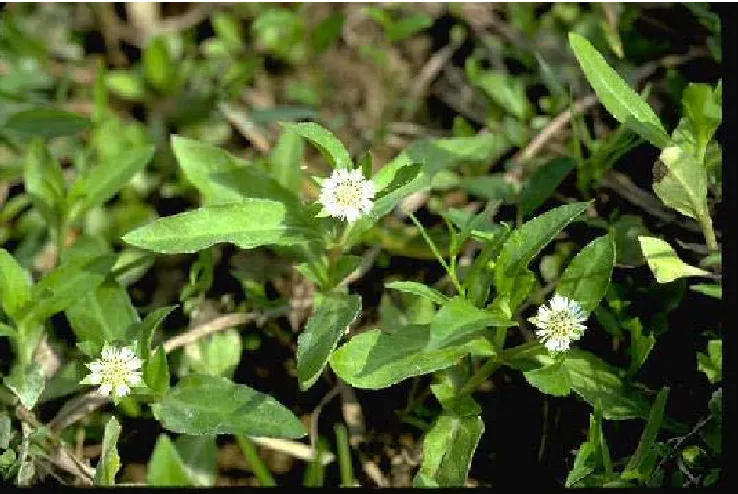
Figure 2. Eclipta alba
Kingdom : Plantae
Division : Magnoliophyta
Class : Magnoliopsida
Order : Asterales
Family : Asteraceae
Genus : Eclipta
Species : Eclipta alba
Vernacular names
Latin : Eclipta alba
Sanskrit : Bhringaraja
17
Hindi : Balari,Bhangra,Bhringraj,Bhengra,Mochkand.
Gujarati : Bhangro,Dadhal,Kalobhangro
Canarase : Ajagara,Garagadasoppu,Kadigga-garaga
Marathi : Bhangra, Maka
Pharmacognostic characteristics
Trailing Eclipta is a small, erect or prostate many branched and a
coarsely haired annual herb. It grows upto 20cm in height. It has a round,
feeble stem, simple ecliptis hairy leaves, variable in shape, bright green in
color with very small flowers, called florets. The leaf epidermis is composed
of single layer of parenchymal cells with characteristic non-glandular
trichomes, on both surfaces. In transaction, the stem is circular in out line with
a ring of collateral endarch vascular bundles of varying sizes and central
parenchymatous pith. The root has a diarch structure with normal and
secondary growth.
The plant grows all over India, especially, in moist places, upto an
elevation of about 800 meters. An erect annual grows 10-15 cm in height,
with flat or round, blackish-chocolaty, much branched, pubescent stems. The
leaves are opposite, serrate, 3-5 cm long and blackish-green in color. The
flowers are small penny-sized, white, on a long stalk. The fruits are many
seeded and the seeds are black, resemble cumin seeds. The plant flowers in
September and fruits in November. Ayurvedic texts describe three varieties of
bhringaraja according to colors of flowers viz. white, yellow and blue. The
18
Phyto Chemical constituents of Eclipta alba
It contains a large amount of resin and an alkaloid principle ecliptine.
The presence of reducing sugar and steroids in the seeds has been observed.
A number of compounds had been isolated from the plant. Wedelolactone,
chemically described as 7-methoxy-5,11,12-trihydroxy-coumestan (Zhang
and Guo, 2001) is basically a furanocoumarin,previously reported as
responsible for the hepatoprotective activity.Literature survey revealed that
HPLC and UV spectrophotometry (Das et al., 1990) methods had been
reported for the estimation of wedelolactone in a methanol extract of Eclipta
alba. Wedelolactone consist of heterocyclic fused ring, which is responsible
for fluorescent behavior. Wedelolactone possesses a wide range of biological
activities and is used for the treatment of hepatitis and cirrhosis (Wagner et
al., 1986).
19
Medicinal properties and uses
Juice of the leaves is a hepato tonic and deobstruent. Root is a tonic.
The herb is used in hepatic and spleen enlargements and in skin diseases.
Fresh juice obtained from leaves is given in fever, liver disorders and
rheumatism. A paste of the herb mixed with sesame oil is used over glandular
swellings, elephantiasis and skin diseases. In Gujarat district and Punjab, it is
used externally for ulcers and as an antiseptic for wounds in cattle. Recently
Chandra et al. (1987 have observed a significant anti-inflammatory activity of
the powder in rats. It has been reported to be useful in liver ailments (Handa
et al., 1986) and has been shown to possess hepatoprotective activity against
carbon-tetrachloride induced liver cell damage in animals. The plant is an
active ingredient of many herbal formulations prescribed for liver ailments
and shows effect on liver cell generation. There are also reports of clinical
improvement in the treatment of infective hepatitis (Dixit and Achar, 1979).
Eclipta alba leaves showed antihyperglycemic activity (Ananthi et al., 2003).
The roots of Eclipta alba were found effective in wound healing (Patil et al.,
2004). In vivo hepatoprotective activity of alcoholic extract (Saxena et al.,
1993; Singh et al., 2001) and analgesic study of total alkaloids of Eclipta alba
were also reported (Sawant et al., 2004).
Ayurvedic Properties
Bhringaraja is bitter in taste, pungent in the post digestive effect and
has hot potency (virya). It alleviates kapha and vata dosas. It possesses light
(laghu) and dry (roksa) attributes. It is a rejuvenator, tonic and beneficial to
20
Piper longum
Piper species are widely distributed in the tropical and subtropical
regions of the world and have multiple applications in different folk
medicines. In traditional Chinese medicine, many species are used to treat
inflammatory diseases. The Chinese Pharmacopoeia contains three
monographs: Piper nigrum (“Hujiao”), Piper longum (“Bibo”) and Piper
kadsura (“Haifengteng”). In addition, several other Piper species are
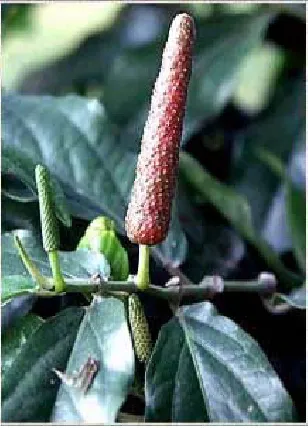
commonly found in China. Piper longum fruits are ovoid, yellowish orange,
minute, and drupe and are sunk in the fleshy spike. The spikes are red when
ripe. Odour is aromatic and the taste is pungent.
Botanical Name : Piper longum
Common Name : Long Pepper, Pipli
Part Used : Fruit, Root, Stem
Habitat : Most deciduas to evergreen forests
Product offered : Seeds, Roots, Fruit, Stem
Kingdom : Plantae
Division : Magnoliophyta
Class : Magnoliopsida
Order : Piperales
Family : Piperaceae
Genus : Piper
21
Figure 4. Piper longum
Vernacular names
Hindi , Punjabi : Pipul, Pipli, Piplamul
Bengali : Pipli, Piplamore (root)
Gujarati : Pipli
Kannada : Hippali, Hippalibali, Kuna
Malayalam : Tippali, Pippali
Marathi : Pimpli
Oriya : Pippoli
Sanskrit : Pippali
Sindhi : Pippli
Tamil : Thippali
Telugu : Tippili, Pippallu
22
Pharmacognostic characteristics
Pepper long is the dried fruit of Piper longum, which is a slender,
aromatic plant with creeping jointed stems and perennial woody roots. Leaves
numerous, lower one broadly ovate, very cordate with broad rounded lobes at
base, upper one oblong–oval, cordate at the base, all sub acute, entire glabours
thin, bullate with reticulate venation.
Phytochemical constituents
The fruits contain 1% volatile oil, resin, alkaloids piperine and
piperlonguminine, isobutyldeca-trans-2-trans-4-dienamide and a terpenoid
substance. Roots contain piperine, piperiongumine. Dihydrostigmasterol has
been isolated. It contains aromatic oil an alkaloid and pipalartine. Besides
this it contains sesamin and piplasterol. The root contains pipperin,
pippalartin, pipperleguminin, sterols and glycosides.
Medicinal properties and uses
Aromatic, stimulant, carminative, good for constipation, for gonorrhea,
paralysis of the tongue, advised in diarrhea, cholera, scarlatina, Chronic
Malaria and Viral hepatitis. Piper Longum is most commonly used to treat
respiratory infections such as stomach ache, bronchitis, diseases of the spleen,
cough, tumors, and asthma. When applied topically, it soothes and relieves
muscular pains and inflammation. In Ayurvedic medicine, it is said to be a
good rejuvenator. Piper longum helps to stimulate the appetite and it dispels
23
induce the expulsion of the placenta. It is used as sedative in insomnia and
epilepsy. Also as cholagogue in obstruction of bile duct and gall bladder.
Activity-guided fractionation of a methylene chloride soluble extract
led to the isolation of three known piperine-related compounds,
methylpiperate (1), guineensine (2), and piperlonguminine (3) of these,
methylpiperate (1) and guineensine (2) showed significant MAO inhibitory
activities (Lee et al., 2008).
Examination on the effects of several extracts of Piper longum L. on
rabbit platelet function showed Thromboxane A(2) receptor agonist U46619
caused rabbit platelet aggregation, which was potently inhibited by the
ethanol or butanol extract of Piper longum L. These results suggest that
Piper longumL. contains a constituent(s) that inhibits platelet aggregation as
a non-competitive thromboxane A(2) receptor antagonist (Iwashita et al.,
2007). Amides of known structures that contain four subtypes of amides were
rapidly determined, and novel amides were also identified for Piper longum.
Forty-two amides were rapidly identified, of which 22 were found in this
plant for the first time and 9 were new compounds (Sun et al., 2007).
Pullela et al. (2006) employed a systematic bioassay guided
fractionation method and isolated pipataline, pellitorine, sesamin,
brachystamide B and guineensine as active principles. A reversed-phase
high-performance liquid chromatography method was developed to quantify these
active principles in the plant material, which can serve as an effective quality
24
(10 microg/ml, 5 microg/ml, 1 microg/ml) inhibited the VEGF-induced vessel
sprouting in rat aortic ring assay. Moreover, P. longum was able to inhibit the
VEGF-induced proliferation, cell migration and capillary-like tube formation
of primary cultured human endothelial cells. Hence, the observed
antiangiogenic activity of the plant P. longum is related to the regulation of
these cytokines and growth factors in angiogenesis-induced animals
(Sunila and Kuttan, 2006).
Piperine has been shown to enhance the bio-availability of structurally
and therapeutically diverse drugs, possibly by modulating membrane
dynamics, due to its easy partitioning and increasing permeability. Piperine
was evaluated and found to exert significant protection against tertiary butyl
hydroperoxide and carbon tetrachloride induced hepatotoxicity, by reducing
both in vitro and in vivo lipid peroxidation. Methyl piperine significantly
inhibited the elevation of total serum cholesterol, and the total cholesterol to
HDL-cholesterol ratio, in rats fed with a high cholesterol diet. Piper longum
Linn, an important medicinal plant belonging to the family piperaceae has
been used in traditional medicine by people in Asia and Pacific islands
especially in Indian medicine (Guido and David, 1998).
Piper longum is a component of medicines reported as good remedy
for treating gonorrhea, menstrual pain, tuberculosis, sleeping problems,
respiratory tract infections, chronic gut related pain and arthritic conditions
25
Piper longum possessed a demonstrable immunostimulatory activity,
both specific and nonspecific, as evident from the standard test parameters
such as haemagglutination titre (HA), plaque forming cell (PFC) counts,
macrophage migration index (MMI) and phagocytic index (Tripathi
et al., 1999). Three isolates of black pepper were active against Gram-positive
bacteria and moderately active against Gram-negative bacteria. Each isolate
was highly active against at least one particular species of bacteria; Piper
longuminine (1) against Bacillus subtilis, piperine (2) against Staphylococcus
aureus and pellitorine (3) against Bacillus sphaericus (Srinivasa Reddy et al.,
26
AIMS AND OBJECTIVES
Aim
The present investigation was aimed to determine the hepatoprotective
effect of the Biherbal extract (BHE), made up of equal proportions of
Melia azedarach leaves and Piper longum seeds in experimental animals with
CCl4 as hepatotoxic model. The hepatoprotective effect of the Biherbal extract
(BHE) was also compared with biological efficacy of individual plant
preparations.
Objective
The study was carried out in the following stages:
1. Preparation of the bi herbal ethanolic extract (BHE) of the leaves
of Melia azedarach and seeds of Piper longum and their
individual ethanolic extracts.
2. To assess the acute and chronic toxicity of BHE.
3. To determine the effective dose of the test drug which gives
optimum therapeutic effect.
4. To compare the hepatoprotective effect of BHE with the standard
drug silymarin.
27
The objective also includes the
1. The determination of the major phytochemicals in the test extract
and HPTLC finger printing.
2. Quantitative analysis of macronutrients and minerals including
protein pattern by SDS-PAGE.
3. In vitro antioxidant studies of plant extracts.
28
REVIEW OF LITERATURE
Research programs in India and china are active in the investigation of
their local medicinal plants, but little ethanopharmacological research has
been carried out for the ethnic groups who live in areas of maximum
biodiversity, where many plants of interest are likely to occur. Medicinal
herbs are significant source of pharmaceutical drugs. Latest trends have
shown increasing demand of phytodrugs and some medicinal herbs. The most
important classes of herbs for functional liver disease are cholagogues
(increase bile flow), choleretics (increasing bile production) and carminatives
(expelling gas and antispasmodic). Cholagogue plants usually have a bitter
flavor, and all bitter plants are cholagogic to some degree. Some important
traditional cholagogues are dandelion (Taraxacum officinalis), greater
celandine (Chelidonium majus), and wormwood (Artemesia absinthum). The
most commonly used herbs for liver problems include Phyllanthus, Milk
Thistle, Sho-saiko-to, Dandelion Root, Licorice Root, and Chicory root.
Phyllantus amarus in chronic hepatitis B, glycyrrhizin to treat chronic viral
hepatitis, and a number of herbal combinations from China and Japan that
deserve testing in appropriate studies.
Liver is often abused by environmental toxins, poor eating habits,
alcohol and over-the-counter drug use, that damage and weaken the liver
leading to important public health problems like hepatitis, cirrhosis and
alcoholic liver diseases (Treadway, 1998). These toxins generally lead to
29
conditions can occur together at the same time, in the same patient. These
three conditions are fatty liver, hepatitis, and Cirrhosis.Paracetamol and CCl4
-induced hepatic injuries are commonly used models for hepatoprotective drug
screening (Plaa Hewitt, 1982).
Abstinence from Alcohol
Alcohol consumption has been associated with alcoholic hepatitis, fatty
infiltration of the liver, accelerated progression of liver disease, a higher
frequency of cirrhosis, a higher incidence of hepatocellular carcinoma, and
death. The daily consumption of more than four drinks of alcohol increases
the risk of cirrhosis, as well as death from other causes (Thun et al., 1997;
Scheig, 1970). Investigators in one study(Corrao and Arico, 1998) found that
the effect of alcohol in patients with hepatitis C virus infection is not merely
additive but synergistic. The mechanism for the synergistic effect of alcohol
and hepatitis C virus is not fully understood, but it has been attributed to the
effects of alcohol on viral replication and the immune system, hepatic iron
content and hepatic regeneration.
Influence of Iron
As many as 30 percent of patients with liver disease have high serum
iron levels, and 10 percent have excessive amounts of iron in their liver tissue
(Riggio et al., 1997; Di Bisceglie et al., 1992). The most likely mechanisms
of liver injury from excess iron are increased generation of free radicals and
increased peroxidation of lipids, which, in turn, lead to mitochondrial
30
to influence the natural history of hepatitis C virus infection and the response
of chronic hepatitis C to treatment (Olynyk et al., 1995; Van Thiel et al.,
1994). To date, no evidence suggest that dietary iron is harmful.
Diet and Exercise
One controlled study (Ueno et al., 199) demonstrated that a weight
reduction program (combined diet and exercise) can improve liver function
test results and liver histology in patients with nonalcoholic steatohepatitis.
With a weight loss of 4.5 to 6.8 kg (10 to 15 lb), liver transaminase levels
often return to normal. Investigators in another study (Deems et al., 199)
found a correlation between high fat and oil consumption and elevated liver
transaminase levels. The findings of these studies suggest that a low-fat diet
and exercise could minimize hepatic steatosis.
Liver protecting Herbs
Ayurveda remains one of the most ancient and yet living traditions
practiced widely in India, Sri Lanka and other countries and has a sound
philosophical and traditional basis (Chopra and Doiphode, 2002).
Atharvaveda (around 1200 BC), Charak Samhita and Sushrut Samhita.
(1000–500 BC) are the main classics that give detailed descriptions of over
700 herbs. Polyherbal formulations reputed to have hepatoprotective activity
that are available on the Indian market comprise about one hundred Indian
31
Andrographis paniculata
For centuries Andrographis has been an important herb in the Asian
healing systems of Ayurveda, Unani and Traditional Chinese Medicine.
Traditionally this herb has been used to potentiate immune system response to
inflammation and infections, and as an anti-inflammatory, antipyretic (lowers
fevers) and a hepatoprotective (liver protector Andrographolide, the active
constituent isolated from the plant Andrographis paniculata showed a
significant dose dependent protective activity against paracetamol-induced
toxicity on ex vivo preparation of isolated rat hepatocytes (Visen et al., 1993).
Boerhavia diffusa (Punarnava)
An alcoholic extract of whole plant Boerhavia diffusa given orally
exhibited hepatoprotective activity against experimentally induced carbon
tetrachloride hepatotoxicity in rats and mice (Ansari et al., 1991).
Terminalia belerica (Baheda)
Compound I isolated from fraction TB5 of Terminalia belerica and
finally identified as 3,4,5-trihydroxy benzoic acid (gallic acid) was evaluated
for its hepatoprotective activity against carbon tetrachloride (CCl4) - induced
physiological and biochemical alterations in the liver. Administration of
compound I led to significant reversal of majority of the altered parameters
confirming the presence of hepatoprotective activity in Compound I
32
Picrorhiza kuroa (Katuki)
Picrorrhiza kurroa is one of the herbs they recommend to support the
liver not only in everyday situations, but in cases where severe viral infections
attack. Pre-treatment with picroliv prevented the hepatotoxic effects of
paracetamol and galactosamine as evidenced by various biochemical and
histopathological observations. Maximum hepatoprotective effect was
observed with daily oral doses of 6 and 12 mg/kg for 7 or 8 days. The
antihepatotoxic action of picroliv seems likely due to an alteration in the
biotransformation of the toxic substances resulting in decreased formation of
reactive metabolites (Ansari et al., 1991).
Taraxacum officinale
Traditionally Taraxacum officinale has been used as a remedy for
jaundice and other disorders of the liver and gallbladder, and as a remedy for
counteracting water retention. Generally, the roots of the plant have the most
activity regarding the liver and gallbladder. Oral administration of extracts
from the roots of Taraxacum officinale has been shown to act as a
cholagogue, increasing the flow of bile (Vogel, 1977). Bitter constituents like
taraxecerin and taraxcin are active constituents of the medicinal herb
(Cordatos, 1992).
Solanum nigrum
In Ayurveda, the drug is known as kakamachi. Aromatic water
33
disorders. Although clinical documentation is scare as far as hepatoprotective
activity is concerned, but some traditional practitioners have reported
favorable results with powdered extract of the plant.
Wilkstroemia indica
W. indica is a Chinese herb and has been evaluated in patients
suffering from hepatitis B. A dicoumarin, daphnoretin is the active constituent
of the herb. The drug has shown to suppress HbsAG in Hep3B cells. It is said
to activator of protein kinase C (Chen et al., 1996).
Curcuma longa
Like silymarin, turmeric has been found to protect animal livers from a
variety of hepatotoxic substances, including carbon tetrachloride (Srinivas
and Shalini, 1991), galactosamine, pentobarbitol, 1-chloro-2,
4-dinitrobenzene, 7 4-hydroxy-nonenal (Selvam et al., 1995) and paracetamol.
Diarylhepatonoids including Curcumin is the active constituent of the plant.
Milk Thistle (Silybum marianum)
The best studied herb for hepatitis and has been shown to help protect
and regenerate liver cells. There is no evidence of toxicity related to the pure
form of milk thistle, and there is weak evidence of a hepatocyte plasma cell
membrane protective effect. For these reasons, it is reasonable not to
34
Piper longum
The isolated constituents and n- hexane extracts of Piper longum were
found to show varying degree of antibacterial activity against all the tested
bacteria (Lokhande et al., 2007). Administration of alcoholic extract of Piper
longum (10 mg/dose/animal) as well as piperine (1.14 mg/dose/animal) could
inhibit the solid tumor development in mice induced with DLA cells and
increase the life span of mice bearing Ehrlich ascites carcinoma tumor to 37.3
and 58.8%, respectively. Administration of Piper longum extract and piperine
increased the total WBC count to 142.8 and 138.9%, respectively, in Balb/c
mice (Sunila and Kuttan, 2004). Ethanol extract of Piper longum fruits and
five crude fractions, petroleum ether (40-60), solvent ether, ethyl acetate,
butanol and butanone were subjected to preliminary qualitative chemical
investigations. The ethanolic extract and all other fractions were screened
orally for hepatoprotective activity in adult Wistar rats. The ethanolic extract
and butanol fraction have shown significant activity, lowering the serum
enzymes glutamic oxaloacetic transaminase and glutamic pyruvic
transaminase in rats treated with carbon tetrachloride when compared to
control and Liv-52-treated rats (Jalalpure et al., 2003)
Eclipta alba
The drug is traditionally used against Jaundice (Mehra and Handa,
1968). As a reputed herbal medicine in the Ayurvedic and Unani system of
medicine, it is incorporated as a major ingredient in a number of Indian
35
contains coumestans, i.e. wedelolactone (W) and demethylwedelolactone
(DMW) possessing potent antihepatotoxic activity and is recommended for
the treatment of hepatitis and cirrhosis. It cure insomnia (Kulkarni, 1990). The
drug also showed antiviral activity in mice experimentally infected with
Semliki forest encephalitis virus (Singh, 1983). The drug also has been found
to be quite beneficial for treatment of jaundice when tested clinically in
36
SCOPE OF THE PRESENT INVESTIGATION
One of the vital organs of the human body, the liver performs essential
functions including detoxification and maintenance of normal immunity by
generating protective antibodies. Liver is susceptible to be encountered with
abnormal metabolites and toxins which are of endogenous and exogenous in
origin. Environmental pollution, drugs, chronic alcohol consumption,
pathogens and hereditary factors can be accounted for susceptibility of liver to
various diseases and results in functional deficiency.
Many liver protecting agents are consumed by people either to prevent
or to cure liver associated disorders. Allopathic medicines are being used to
save those patients by relieving them from the hazardous symptoms. But the
contraindication and limitations for their use also keep increasing due to age
and sex related side effects.
Since the time of its invention various medicinal plants have been
traditionally practised to cure liver diseases or to strengthen the vitality of the
organ. Many plants such as Silybum marianum (milk thistle), Picrorhiza
kurroa (kutkin), Curcuma longa (turmeric), Camellia sinensis (green tea) and
Glycyrrhiza glabra (licorice) have been clinically proved and patented.
India is one of the holistic countries, which believes in traditional
system of folklore medicines made up of medicinal plants. Both single plant
and formulation consisting of more than one plant are used in ayurvedic
37
complaints the ever increasing problem of pollution and alcohol consumption
and thereby liver toxicity demands the screening and identification of new
plants which can be superior to allopathic medicines due to their less toxic
and cost effective nature.
Eclipta alba commonly known as False Daisy and bhringraj, is a plant
belonging to the family Asteraceae. Bhrngaraja is equally useful in many
diseases both, internally as well as externally. It is one of the best blood
purifiers, stimulates the liver and alleviates the general oedema all over the
body. Eclipta alba also has traditional external uses, like athlete foot, eczema
and dermatitis, on the scalp to address hair loss and the leaves have been used
in the treatment of scorpion stings. It is used as anti-venom against snakebite
in China and Brazil.
Piper longum an important medicinal plant belonging to the family of
Piperaceae also known as “Thippali” and used in traditional medicine by
many people in Asia and Pacific islands especially in Indian system of
medicine. Piper longum is a component of medicines reported as good
remedy for treating gonorrhea, menstrual pain, tuberculosis, sleeping
problems, respiratory tract infections, chronic gut related pain, and arthritic
conditions.
Traditional system of medicine, which is the only accessible health
care system for most of the population in rural areas, should be scientifically
38
Both E. alba and P. longum have immense therapeutic properties
especially for the treatment of liver related disorders. But the practice is only
at the traditional level because of the lack of experimental proof to standardise
the optimum dosage, efficacy and toxic effects.
The aim of the present study is to provide experimental proof for the
hepatoprotective efficacy of the ethanolic extracts of E. alba, P. longum and
the combined biherbal formulation made up of equal concentrations of E.alba
and P. longum. Polyherbal formulations are considered more effective than
the single drug and hence the biherbal formulation has been used in the study
and compared with the individual plants E. alba and P. longum.
The present investigation has been divided into two parts
The plants have been processed and screened for the
phytochemicals and tested for free radical scavenging
activities by using standard models in vitro.
The evaluation of non toxic dosage of test drugs by acute and
chronic toxicity in albino Wistar strain rat models according to
OECD guidelines. After assessing the dosage by acute and
chronic toxicity studies efficacy of the single and the biherbal
drugs have been ascertained by using CCl4 induced
hepatotoxicity model in rats. The hepatoprotective nature of
the drugs has been assessed by various biochemical
39
standard drug silymarin have also been utilised in this study to
compare the hepatoprotective efficacy of the test drugs.
The results of this study will throw more light on the mechanism of
action of the test drugs, which is hidden so far due to the lack of experimental
proof. It is sure that the out come of this study will result in the identification
of a new biherbal formulation, which can be used to treat liver disorders in
REFERENCES
Aldridge WN. Mechanism of toxicity: new concepts are required in toxicology. Trends. Pharmacol Sci 1981; 2:228–23.
Anand KK, Singh B, Saxena AK, Chandan BK, Gupta VN, Bhardwaj V. 3,4,5-Trihydroxy bezoic acid (gallic acid), the hepatoprotective principle in the fruits of Terminalia belerica-bioassay guided activity. Pharmacol Res 1997 Oct; 36(4):315-321.
Ananthi A, Prakasam A, Pugalendi KV. Antihyperglycemic activity of
Eclipta alba leaf on alloxan-induced diabetic rats. Yale J Biol Med
2003;76(3):97-102.
Anjali k, Kale RK. Radiation induced peroxidative damage: mechanism and significance. Ind Jn Exp Biol 2001;39:291-309.
Ansari RA, Tripathi SC, Patnaik GK, Dhawan BN. Antihepatotoxic properties of picroliv: an active fraction from rhizomes of Picrorhiza kurrooa. J Ethnopharmacol 1991 Aug; 34(1): 61-8.
Attri S, Rana SV, Vaiphei K, Sodhi CP, Katyal R, Nain RC, Goel CK, Singh K. Isoniazid- and rifampicin-induced oxidative hepatic injury-protection by N-acetylcysteine. Hum Exp Toxicol 2000;19:517–522.
Bhattachary SK, Chakrabarti A. Effect of trasina, an Ayurvedic herbal formulation,on pancreatic islet superoxide dismutase activity in hyperglycemic rats. Indian J Expl Biol 1997;35:297-9.
Carson JL, Willett LR. Toxicity of nonsteroidal anti-inflammatory drugs. An overview of the epidemiological evidence. Drugs 1993;46:243-8.
Chandra T,Sadique J, Soma Sundram S. Effect of Eclipta alba on inflammation and liver injury. Fitoterapia 1987;58(1):23-32.
Chopra A, Doiphode V. Ayurvedic medicine: Core concept, therapeutic principles, and current relevance. Med Clin North Am 2002;86:75-89.
Chopra RN, Nayar SL, Chopra IC. Glossary of medicinal plants. New Delhi: CSIR Publication; 1966.p104.
Cordatos E. Taraxacum officinale. In: Murray M, Pizzorno J, eds. A Textbook
of Natural Medicine. Seattle: Bastyr University press; 1992.
Corrao G, Arico S. Independent and combined action of hepatitis C virus infection and alcohol consumption on the risk of symptomatic liver cirrhosis. Hepatology 1998;27:914-9.
Das N, Bhavsar GC, Chauhan MG. Spectrophotometric estimation of wedelolactone in Eclipta alba. Indian Drugs 1990; 28(2): 100.
Deems RO, Friedman LS, Friedman MI, Munoz SJ, Deems DA, Maddrey WC. Relationship between liver biochemical tests and dietary intake in patients with liver disease. J Clin Gastroenterol 1994;18:304-8.
Di Bisceglie AM, Axiotis CA, Hoofnagle JH, Bacon BR. Measurements of iron status in patients with chronic hepatitis. Gastroenterology 1992;102: 2108-13.
Dixit SP, Achar MP. Study of Bhringaraja (Eclipta alba) therapy in jaundice in children. J Sci Res Plants Med 1981;2:96-101.
Dixit SP,Achar MP. Bhringaraj in the treatment of infective hepatitis. Cur Med Pract 1979; 23(6): 237-242.
Fehér J, Cornides A, Pál J, Láng I, Csomós G. Liver cell protection in toxic liver lesion. Acta Physiol Hung 1989;73(2-3):285-91
Fehér J, Lengyel G. Silymarin in the treatment of chronic liver diseases: past and future. Orv Hetil 2008 Dec 21;149(51):2419-24.
Flora K, Hahn M, Rosen H, Benner K. Milk thistle (Silybum marianum) for the therapy of liver disease. Am J Gastroenterol 1998;93:139-43.
Guido S, David J. Influence of piperine on the pharmacokinetics of curcumin in animals and human volunteers. Planta Med 1998;64:353-356.
Handa SS, Sharma A, Chakarborty KK. Natural Products and plants as liver protecting drugs. Fitoterapia 1986;57(5):307-51
Handa SS, Sharma A.Hepatoprotective activity of andrographolide from
Andrographis paniculata against carbon tetrachloride. Indian J Med Res
1986;92:276-283.
Iwashita M, Saito M, Yamaguchi Y, Takagaki R, Nakahata N.Inhibitory effect of ethanol extract of Piper longum L. on rabbit platelet aggregation through antagonizing thromboxane A2 receptor. Biol Pharm Bull 2007 Jul;30(7):1221-5.
Jalalpure SS, Patil MB, Prakash NS, Hemalata K, Manvi FV.Hepatoprotective activity of the fruits of piper longum linn, Indian Journal of Pharmaceutical Sciences 2003; 65(4): 363-366.
Knolle PA, Kremp S, Hohler T, Krummenauer F, Schirmacher P, Gerken G. Viral and host factors in the prediction of response to interferon-alpha therapy in chronic hepatitis C after long-term follow-up. J Viral Hepat 1998; 5:399-406.
Kulkarni PH. Ayurvedic therapy: Insomnia. Deerghayu Int 1990;6:21.
Lee SA, Hwang JS, Han XH, Lee C, Lee MH, Choe SG, Hong SS, Lee D, Lee MK, Hwang BY.Methylpiperate derivatives from Piper longum and their inhibition of monoamine oxidase Arch Pharm Res 2008 Jun;31(6):679-83.
Lim HK, Kim HS, Choi HS, Oh S, Jang CG, Choi J, Kim SH, Chang MJ. Effects of acetylbergenin against d-galactosamine-induced hepatotoxicity in rats. Pharmacol Res 2000;42:471–474.
Lokhande PD, Gawai KR, Kodam KM, Kuchekar BS, Chabukswar AR, Jagdale SC. Antibacterial activity of extracts of Piper longum. J Pharmacol Toxicol Methods 2007;2(6):574-579.
Müzes G, Deák G, Láng I, Nékám K, Niederland V, Fehér J. Effect of silimarin (Legalon) therapy on the antioxidant defense mechanism and lipid peroxidation in alcoholic liver disease (double blind protocol). Orv Hetil 1990 Apr 22;131(16):863-6.
Olynyk JK, Reddy KR, Di Bisceglie AM, Jeffers LJ, Parker TI, Radick JL, et al. Hepatic iron concentration as a predictor of response to interferon alfa therapy in chronic hepatitis C. Gastroenterology 1995;108:1104-9.
Patil MP, Jalalpure SS, Nagoor VS. Woundhealing activity of the roots of Eclipta alba Linn. Indian drugs 2004; 41 (1): 40-45.
Paustenbach DJ, Clewell HJ, Gargas ML, Andersen ME. A physiologically based pharmacokinetic model for inhaled carbon tetrachloride. Toxicol Appl Pharmacol 1988; 96:191-211.
Plaa GL, Hewitt HR. Quantitative evaluation of indices of hepatotoxicity. In: Toxicology of the Liver. New York: Raven Press ;1992.p.103–12.
Poupon RE, Balkau B, Eschwege E, Poupon R. A multicenter controlled trial of ursodiol for the treatment of primary biliary cirrhosis. UDCA-PBC Study Group. N Engl J Med 1991;324:1548-54.
Propst A, Propst T, Zangerl G, Ofner D, Judmaier G, Vogel W. Prognosis and life expectancy in chronic liver disease. Dig Dis Sci 1995;40:1805-15.
Pullela SV, Tiwari AK, Vanka US, Vummenthula A, Tatipaka HB, Dasari KR, Khan IA, Janaswamy MR.HPLC assisted chemobiological standardization of alpha-glucosidase-I enzyme inhibitory constituents from Piper longum Linn-An Indian medicinal plant. J Ethnopharmacol 2006 Dec 6;108(3):445-9.
Rao KS, Recknagel RO. Early onset of lipoperoxidation in rat liver after carbon tetrachloride administration. Exp Mol Path 1968;9: 271-278.
Recknagel RO, Glende Jr. EA, Britton RS. Free radical damage and lipid peroxidation. In: Meeks, R.G. (Ed.), Hepatotoxicology: Florida: CRC Press; 1991.p 401–436.
Riley TR, Smith JP. Ibuprofen-induced hepatotoxicity in patients with chronic hepatitis C: a case series. Am J Gastroenterol 1998;93:1563-5.
Sadanobu S, Watanabe M, Nakamura C, Tezuka M. In vitro tests of 1,3-dithia-2thioxo-cyclopent-4-ene to evaluate the mechanisms of its hepatoprotective action. J Toxicol Sci 1999; 24:375–81.
Sawant M, Issac JC, Narayanan S. Analgesic studies on total alkaloids and alcohol extracts of Eclipta alba (Linn.) Hassk. Phytother Res 2004;18
(2):111-113.
Saxena AK, Singh B, Anand KK.Hepatoprotective effects of Eclipta alba on
subcellular levels in rats. J Ethnopharmacol 1993; 40(3):155-6.
Scheig R. Effects of ethanol on the liver. Am J Clin Nutr 1970;23:467-73.
Selvam R, Subramanian L, Gayathri R, Angayarkanni N. The anti-oxidant activity of turmeric (Curcuma longa). J Ethnopharmacol 1995; 47:59-67.
Singh B, Saxena AK, Chandran BK, Agrawal SG, Anand KK. In vivo hepatoprotective activity of active fraction from ethanolic extract of Eclipta alba leaves. Indian J PhysiolPharmacol 2001; 45(4): 435-41.
Singh VK, George CX, Gupta KP, Gupta BM. Antiviral activity of plant extract Liv. 52 in mice experimentally infected with semliki forest eccephalitis virus. Sci Culture; 1983;49:354.
Singh Y N. Kava an overview. J Ethanopharmacol 1992;37:18-45.
Sipes IG, Krishna G, Gillette JR. Bioactivation of carbon tetrachloride, chloroform and bromotrichloromethane: Role of cytochrome p-450. Life Sci 1977;20:1541-1548.
Speeg KV, Bay MK. Prevention and treatment of drug-induced liver disease. Gastroenterol Clin North Am 1995;24:1047-64.
Srinivasa Reddy P, Jamil K, Madhusudhan P, Anjani G, Das B. Antibacterial Activity of Isolates from Piper longum and Taxus baccata. Pharma Biol 2001 Jun;39(3):236-238.
Sun C, Pei S, Pan Y, Shen Z.Rapid structural determination of amides in Piper longum by high-performance liquid chromatography combined with ion trap mass spectrometry. Rapid Commun Mass Spectrom 2007;21(9):1497-503.
Sunila ES, Kuttan G.Immunomodulatory and antitumor activity of Piper
longum Linn. and piperine.J Ethnopharmacol 2004 Feb;90(2-3):339-46.
Sunila ES, Kuttan G.Piper longum inhibits VEGF and proinflammatory
cytokines and tumor-induced angiogenesis in C57BL/6 mice. Int
Immunopharmacol 2006 May;6(5):733-41.
Thun MJ, Peto R, Lopez AD, Monaco JH, Henley SJ, Heath CW, et al. Alcohol consumption and mortality among middle-aged and elderly U.S. adults. N Engl J Med 1997;337:1705-14.
Treadway S. An Ayurvedhic approach to a healthy liver. Clin. Nutrition Insights 1998; 16:1-4.
Tripathi DM, Gupta N, Lakshmi V, Saxena KC, Agrawal AK. Antigiardial and immunostimulatory effect of Piper longum on giardiasis due to Giardia lamblia. Phytother Res 1999 Nov;13( 7):561-565.
Tyutyulkova N, Tuneva S, Gorantcheva U, Tanev G, Zhivkov V, Chelibonova-Lorer H. Hepatoprotective effect of silymarin (carsil) on liver of D-galactosamine treated rats. Biochemical and morphological investigation. Exp Clin Pharmacol 1981 Mar-Apr;3(2):71-7
Ueno T, Sugawara H, Sujaku K, Hashimoto O, Tsuji R, Tamaki S, et al. Therapeutic effects of restricted diet and exercise in obese patients with fatty liver. J Hepatol 1997;27:103-7.