FORMULATION AND EVALUATION OF FAST DISSOLVING
TABLETS OF LAMIVUDINE
Dissertation submitted to
THE TAMIL NADU Dr. M. G. R. MEDICAL UNIVERSITY
CHENNAI-32
In partial fulfillment of the requirement for the Degree of
MASTER OF PHARMACY IN PHARMACEUTICS
Submitted By
(Reg.No-26108604)
MAY- 2012
DEPARTMENT OF PHARMACEUTICS
COLLEGE OF PHARMACY
Dr.AJITHADAS ARUNA M.Pharm., Ph.D, Principal,
College of Pharmacy, Madurai Medical College, Madurai– 625020.
_________________________________________________________________________
CERTIFICATE
This is to certify that the dissertation entitled, “FORMULATION AND EVALUATION OF FAST DISSOLVING TABLETS OF LAMIVUDINE.” Submitted by Mr. T.PRAKASH in the Department of Pharmaceutics, Madurai Medical College, Madurai – 20, in partial fulfillment of the requirement for the Degree of Master of Pharmacy in Pharmaceutics, is a bonafide work carried out by him, under the guidance and supervision of Prof. Mr. A. Abdul Hasan Sathali, M.Pharm.,(Ph.D) Professor and Head, in the Department of Pharmaceutics, Madurai
Medical College, Madurai-20,during the academic year 2011 – 2012.
This dissertation is forwarded to the Controller of Examinations, The Tamilnadu Dr. M.G.R. Medical University, Chennai.
Prof. Mr. A. Abdul Hasan Sathali, M.Pharm.,(Ph.D) Professor and Head,
Department of Pharmaceutics, College of Pharmacy,
Madurai Medical College, Madurai-625 020
CERTIFICATE
This is to certify that the Dissertation entitled “FORMULATION AND EVALUATION OF FAST DISSOLVING TABLETS OF LAMIVUDINE.” submitted by Mr. T.PRAKASH in partial fulfillment of the requirement for the degree of Master of Pharmacy in Pharmaceutics is a bonafide work carried out by him under my guidance and supervision during the academic year 2011 – 12 in the Department of Pharmaceutics, Madurai Medical College, Madurai-20.
I wish him success in all his endeavors.
Place: Madurai
ACKNOWLEDGEMENT
It is my pleasure to express my respectful regards and thanks to Dr.A.EdwinJoe M.D., F.M., B.L., Dean, Madurai Medical College, Madurai for providing all kinds of supportive facilities required to carry out my project work.
It is my privilege to extend my gratitude to Dr. Ajithadas Aruna, M.Pharm., Ph. D.,
Principal, College of pharmacy, Madurai Medical College, Madurai for her support to carry out my project work.
It is my immense pleasure and honour to express my deep sense of gratitude and heartfelt thanks to Prof.Mr. A. Abdul Hasan Sathali, M.Pharm.,(Ph.D)., Professor and Head, Department of Pharmaceutics for his excellence in guidance, contribution and encouragement which helped me in the successful completion of each and every stage of my project work.
With immense pleasure I record here my indebtness and hearty thanks to
Mr. C. Pandian, M.Pharm., Mrs. D. Uma Maheswari, M.Pharm., and Mr. R. Senthil prabhu, M.Pharm., Department of pharmaceutics for his support and valuable suggestions throuhtout my work.
I also extend my thanks to our department staffs Mrs.H.Mumtaj, Mrs.A. Geetha and
I express my heartiest thanks to Mr.Mathivanan, Scientific Executive FR&D for his help to source the drug Lamivudine as gift sample from Strides Acrolabs, Bangalore and
universal drug & chemical suppliers for providing chemicals to carry out my project work.
I would like to express my heartfelt thanks to my parents and family members for their moral support to me, to carryout and successfully complete my project work.
I take this privilege to convey my thanks to Mr.Y. Vincent Sagayaraj, St.Jhosep’s college, Trichy. For her helping to carry out FT - IR studies in accordance with my dissertation work.
My sincere thanks to Mr.S. Manivannan, Dept. of Physics, NIT, Trichy for their help in the Powder X-Ray Diffraction studies.
I convey my sincere thanks to Dr.K. Gowthamarajan M.Pharm.,Ph.D, Prof &Head, Dept of Pharmaceutics, J.S.S College of pharmacy, Ooty for their help in carrying out the
DSC studies in accordance with my dissertation work.
I am very much thankful to Mrs.Lavanya Anbu, Pharma Information Centre, Chennai, for her help in reference collections regarding my project.
Also I would like to extend my sincere thanks to my seniors, Ms.A.Gokila, Mrs.R.Kavitha, Ms.K.Priyanka, Ms.P.Shanmugapriya and Ms.T.Sangeetha for their moral support.
I would like to give my sincere thanks to my friends Mr.S.Ganesan, Mr.S.Kathiravan, Mr.V.Palanivel, Mr V.Selvaraj, Mr.D.RajivGandhi, Ms.R.Revathi, Ms.T.Suganya,
Mr.J.Varun, and Ms.B.Yuganya for their timely help and co-operation.
I would like to give my sincere thanks to my juniors Ms. C. Deepa., Ms. M. Gomathi., Mr. M. Gopinath., Mrs. J. Jayalakshmi., Mr. L. Magesh kumar., Mr. P.Mainkandan.,
Mr. I. Samdurai., Ms N.Surya devi., Ms. V.Susila devi., and Ms. N. Nisha., for their timely help and co-operation.
I also extend my thanks to all the staff members and P.G. Students of Department of Pharmaceutical Chemistry and Pharmacognosy for their Co-operation.
I honestly acknowledge the love, care and moral support rendered by my family members & friends whose part cannot be expressed in holophrastic.
CONTENTS
CHAPTER
NO TITLE
PAGE NO
I INTRODUCTION 1
II FAST DISSOLVING TABLETS –A REVIEW 5
III LITERATURE REVIEW 20
IV AIM OF THE WORK 32
V PLAN OF WORK 34
VI MATERIALS AND EQUIPMENTS 35
VII DRUG PROFILE 37
VIII EXCIPIENTS PROFILE 40
IX EXPERIMENTAL DETAILS 59
X RESULTS AND DISCUSSION
TABLES & FIGURES 66
XI
SUMMARY AND CONCLUSION
88
CHAPTER-I INTRODUCTION
Madurai Medical College Page 1
CHAPTER-I
INTRODUCTION
Drug delivery systems (DDS) are a strategic tool for expanding
markets/indications, extending product life cycles and generating opportunities. Oral
administration is the most popular route for systemic effects due to its ease of ingestion,
pain, avoidance, versatility and most importantly, patient compliance. Also solid oral
delivery systems do not require sterile conditions and are therefore, less expensive to
manufacture. Patient compliance, high-precision dosing, and manufacturing efficiency
make tablets the solid dosage form of choice. Excipients and equipments choices will be
significantly affected should solid dosage form technologies change in response to the
unprecedented shifts in the drug discovery such as genomics. Should next generation
drugs are predominantly protein or peptide based, tablets may no longer may be the
dominant format give the difficulty of dosing such moiety. Injections generally are not
favored for use by patients unless facilitated by sophisticated auto injectors. Inhalation is
one good alternative system to deliver these drugs, but the increased research into
biopharmaceuticals so far has generated predominantly chemical entities with low
molecular weights. The development of enhanced oral protein delivery technology by
Fast dissolving Tablets which may release these drugs in the mouth are very promising
for the delivery of high molecular weight protein and peptide. The oral route remains the
perfect route for the administration of therapeutic agents because the low cost of therapy,
manufacturing and ease of administration lead to high levels of patient compliance. Many
patients have difficulty swallowing tablets and hard gelatin capsules and consequently do
CHAPTER-I INTRODUCTION
Madurai Medical College Page 2
by this problem, which results in a high incidence of noncompliance and ineffective
therapy. The demand for solid dosage forms that can be dissolved and suspended in
water, chewed, or rapidly dissolved in the mouth is particularly strong in the pediatric and
geriatric markets, with further application to other patients who prefer the convenience of
a readily administered dosage form. Because of the increase in the average human life
span and the decline, with age, in swallowing ability, oral tablet administration to patients
is a significant problem and has become the object of public attention. The problem can
be resolved by the creation of rapidly dispersing or dissolving oral forms, which do not
require water to aid swallowing. The dosages forms are placed in the mouth, allowed to
disperse or dissolve in the saliva, and then are swallowed in the normal way. Less
frequently, they are designed to be absorbed through the buccal and esophageal mucosa
as the saliva passes into the stomach. In the latter case, the bioavailability of a drug from
fast dispersing formulations may be even greater than that observed for standard dosage
forms.
The concept of Mouth Dissolving Drug Delivery System emerged from the desire
to provide patient with more conventional means of taking their medication. It is difficult
for many patients to swallow tablets and hard gelatin capsules. Hence they do not comply
with prescription, which results in high incidence of non-compliance and ineffective
therapy. In some cases such as motion sickness, sudden episodes of allergic attacks or
coughing and unavailability of water, swallowing conventional tablets may be difficult.
Particularly the difficulty is experienced by pediatric and geriatric patients. Such
problems can be resolved by means of Fast Dissolving Tablet. When put on tongue, this
CHAPTER-I INTRODUCTION
Madurai Medical College Page 3
the saliva. Some drugs are absorbed from the mouth, pharynx and esophagus as the saliva
passes down into the stomach. In such cases, bioavailability of drug is significantly
greater than those observed from conventional tablet dosage form. FDDTs disintegrate
and/or dissolve rapidly in the saliva without the need for water. Some tablets are designed
to dissolve in saliva remarkably fast, within a few seconds, and are true fast-dissolving
tablets.
Others contain agents to enhance the rate of tablet disintegration in the oral cavity, and
are more appropriately termed fast-disintegrating tablets, as they may take up to a minute
to completely disintegrate. When put on tongue, this tablet disintegrates instantaneously,
releasing the drug, which dissolves or disperses in the saliva. Some drugs are absorbed
from the mouth, pharynx and esophagus as the saliva passes down into the stomach. In
such cases, bioavailability of drug is significantly greater than those observed from
conventional tablet dosage form. FDDTs, as a novel dosage form, have several
characteristics to distinguish them from the more traditional dosage forms. Taste-masking
is of critical importance in the formulation of an acceptable FDDT.
Traditional tablet formulations generally do not address the issue of taste
masking, because it isassumed that the dosage form will not dissolve until passing the
oral cavity. Many oral suspensions, syrups and chewable tablets simply contain flavors,
sugars and other sweeteners to overwhelm or complement the bitter taste of the drug.
Current methods of taste masking in fast dissolving/ drug particles. FDTs are the
disintegrating tablets include sweeteners and flavors; however, these are not a sufficient
means for taste-masking many bitter drugs. Most of the FDDT technologies incorporate
CHAPTER-I INTRODUCTION
Madurai Medical College Page 4
adsorption onto or complexation with carriers and spray coating of solid dosage forms,
which increase consumer choice, for the reason of rapid disintegrate/dissolve in oral
cavity within seconds and swallowed without the need of water or chewing. As tablet
disintegrates in mouth this could enhance the clinical effect of the drug through
pre-gastric absorption from the mouth, pharynx and esophagus. This leads to an increase in
bioavailability by avoiding first pass metabolism.
Fast dissolving drug delivery can be achieved various techniques like direct compression,
wet granulation, compression moulding, volatization and freeze – drying. They involve
different mechanisms like use of high amounts of hydrophilic disintegrating agents which
allow the dosage forms to disintegrate quickly in the patient’s mouth on contact with
CHAPTER-II FAST DISSOVING TABLETS - A REVIEW
Madurai Medical College Page 5
CHAPTER-II
FAST DISSOLVING TABLETS - A REVIEW
DEFINITION
A fast dissolving tablet can be defined as a solid dosage form that can disintegrates
into smaller granules which slowly dissolve in the mouth. The disintegration time for fast
dissolving tablet varies from a few seconds to more than a minute depending on the
formulation and the size of the tablet.
A fast disintegrating or dissolving system or tablet can be defined as a solid dosage
form that can disintegrate or dissolve within 30 seconds, in the oral cavity resulting in a
solution or suspension without administration of water. The fast disintegrating tablets are
synonymous with fast dissolving tablets; melt in mouth tablets, rapimelts, Porous tablets,
Orodispersible, quick dissolving or rapidly disintegrating tablets.
DIFFICULTIES WITH EXISTING ORAL DOSAGE FORM
Patient may suffer from tremors therefore they have difficulty to take powder and
liquids. In dysphasia physical obstacles and adherence to an esophagus may cause
gastrointestinal ulceration. Swallowing of solid dosage forms like tablet and capsules and
produce difficulty for young adult of incomplete development of muscular and nervous
system and elderly patients suffer from dysphasia. Liquid medicaments (suspension and
emulsion) are packed in multidose container; therefore achievement of uniformity in the
content of each dose may be difficult. Buccal and sublingual formation may cause irritation
to oral mucosa, so patients refused to use such medications cost of products is main factor
CHAPTER-II FAST DISSOVING TABLETS - A REVIEW
Madurai Medical College Page 6
SALIENT FEATURES OF MOUTH DISSOLVING DRUG DELIVERY SYSTEM
DESIRED CRITERIA FOR MOUTH DISSOLVING DRUG DELIVERY SYSTEM
Mouth Dissolving Tablet should-Not require water to swallow, but it should
dissolve or disintegrate in the mouth within matter of seconds. Be compatible with taste
masking Be portable without fragility concern. Have a pleasing mouth feel. Leave minimal
or no residue in the mouth after oral administration. Exhibit low sensivity to environmental
condition as humidity and temperature. Be manufactured using conventional processing
and packaging equipment at low cost. Ease of administration to patients who refuse to
swallow a tablet, such as pediatric and geriatric patients and psychiatric patients.
Convenience of administration and accurate dosing as compared to liquids. No need of
water to swallow the dosage from, which is highly convenient feature for patients who are
traveling and do not have immediate access to water. Good mouth feel property of MDDS
helps to change the basic view of medication as “bitter pill”, particularly for pediatric
patients. Rapid dissolution and absorption of drug, which may produce rapid onset of
action. Some drugs are absorbed from the mouth, pharynx and esophagus as the saliva
passes down into the stomach, and in such cases bioavailability of drugs in increased.
Ability to provide advantages of liquid medication in the form of solid preparation.
Pregastric absorption can result in improved bioavailability and as a result of reduced
dosage, improved clinical performance through a reduction of unwanted effects.
IDEAL CHARACTERISTICS OF FAST DISSOLVING DELIVERY SYSTEM
Mouth-feel - Mouth-feel is critical, and patients should receive a product that feels
CHAPTER-II FAST DISSOVING TABLETS - A REVIEW
Madurai Medical College Page 7
soluble in saliva would lead to an unpleasant gritty feeling. This can be overcome by
keeping the majority of the particles below the detectable size limit. In some cases, certain
flavors can an improved mouth-feel perception, resulting in a product that is perceived as
being less gritty, even if the only change is the flavor. Effervescence can be added to aid
disintegration and improve mouth-feel by reducing the “dryness” of a product.
Hygroscopicity - Several fast dissolving dosage forms are hygroscopic and cannot maintain
physical integrity under normal conditions of temperature and humidity. Hence they need
protection from humidity, which calls for specialized product packaging. Friability - In
order to allow fast dissolving tablets to dissolve in the mouth, they are made of either very
porous or soft molded matrices or compressed into tablets with very low compression
force, which makes the tablets friable and/or brittle which are difficult to handle, often
requiring specialized peel off blister packing. To overcome this problem, some companies
introduced more robust forms of fast dissolving tablets, such as Wowtab by
Yamanouchi-Shadlee and Dura Solve by CIMA labs.
Excipients balance the properties of the actives in fast-melting tablets. This
demands a thorough understanding of the chemistry of these excipients to prevent
interaction with the actives. Determining the cost of these ingredients is another issue that
needs to be addressed by formulators. The role of excipients is important in the formulation
of fast-melting tablets. These inactive food-grade ingredients, when incorporated in the
formulation, impart the desired organoleptic properties and product efficacy. Excipients are
general and can be used for a broad range of actives, except some actives that require
CHAPTER-II FAST DISSOVING TABLETS - A REVIEW
Madurai Medical College Page 8
BULKING MATERIALS:
Bulking materials are significant in the formulation of fast-melting tablets. The
material contributes functions of a diluent, filler and cost reducer. Bulking agents improve
the textural characteristics that in turn enhance the disintegration in the mouth, besides;
adding bulk also reduces the concentration of the active in the composition. The
recommended bulking agents for this delivery system should be more sugar-based such as
mannitol, polydextrose, lactitol, DCL (direct compressible lactose) and starch hydrolystate
for higher aqueous solubility and good sensory perception. Mannitol in particular has high
aqueous solubility and good sensory perception. Bulking agents are added in the range of
10 percent to about 90 percent by weight of the final composition.
EMULSIFYING AGENTS:
Emulsifying agents are important excipients for formulating fast-melting tablets
they aid in rapid disintegration and drug release without chewing, swallowing or drinking
water. In addition, incorporating emulsifying agents is useful in stabilizing the immiscible
blends and enhancing bioavailability. A wide range of emulsifiers is recommended for
fast-tablet formulation, including alkyl sulfates, propylene glycol esters, lecithin, sucrose esters
and others. These agents can be incorporated in the range of 0.05 percent to about 15
percent by weight of the final composition.
LUBRICANTS:
Lubricants, though not essential excipirnts, can further assist in making these tablets
more palatable after they disintegrate in the mouth. Lubricants remove grittiness and assist
CHAPTER-II FAST DISSOVING TABLETS - A REVIEW
Madurai Medical College Page 9
FLAVOURS AND SWEETENERS:
Flavours and taste-masking agents make the products more palatable and pleasing
for patients. The addition of these ingredients assists in overcoming bitterness and
undesirable tastes of some active ingredients. Both natural and synthetic flavours can be
used to improve the organoleptic characteristic of fast-melting tablets. Formulators can
choose from a wide range of sweeteners including sugar, dextrose and fructose, as well as
non-nutritive sweeteners such as aspartame,
sodium saccharin, sugar alcohols and sucralose. The addition of sweeteners contributes a
pleasant taste as well as bulk to the composition.
SUPER DISINTEGRANTS:
A disintegrant is an excipient, which is added to a tablet or capsule blend to aid in
the breakup of the compacted mass when it is put into a fluid environment.
ADVANTAGES:
Effective in lower concentrations Less effect on compressibility and flowability
More effective intragranularly
Some super disintegrants are:
1) Sodium Starch Glycolate (Explotab, primogel) used in concentration of 2-8 % &
optimum is 4%.
Mechanism of Action: Rapid and extensive swelling with minimal gelling.
Microcrystalline cellulose (Synonym: Avicel, celex) used in concentration of 2-15% of
CHAPTER-II FAST DISSOVING TABLETS - A REVIEW
Madurai Medical College Page 10
2) Cross-linked Povidone (crospovidone) (Kollidone) used in concentration of 2-5% of
weight of tablet. Completely insoluble in water.
Mechanism of Action: Water wicking, swelling and possibly some deformation recovery.
Rapidly disperses and swells in water, but does not gel even after prolonged exposure.
Greatest rate of swelling compared to other disintegrants. Greater surface area to volume
ratio than other disintegrants.
3) Low-substituted hydroxyl propyl cellulose, which is insoluble in water. Rapidly
swells in water. Grades LH-11 and LH-21 exhibit the greatest degree of swelling. Certain
grades can also provide some binding properties while retaining disintegration capacity.
Recommended concentration 1-5%
4) Cross linked carboxy methyl cellulose sodium (i.e. Ac-Di-sol) Croscarmellose
sodium:
Mechanism of Action: Wicking due to fibrous structure, swelling with minimal gelling.
Effective Concentrations: 1-3% Direct Compression, 2-4% Wet Granulation
Gas producing disintegrants
Gas producing disintegrants are used especially where extra rapid disintegration or
readily soluble formulation is required. They have also been found of value when poor
disintegration characteristics have resisted other methods of improvement. Care should be
taken during tab letting, particularly on moisture level. Composition is based upon the
same principles as those used for effervescent tablets, the most common being mixtures of
citric & tartaric acids plus carbonates or bicarbonates. In many instances lower
CHAPTER-II FAST DISSOVING TABLETS - A REVIEW
Madurai Medical College Page 11
disintegrating agents. Certain peroxides that release oxygen have been tried, but they do
not perform as well as those releasing carbon dioxide.
Conventional Technique Used In The Preparation Of MFDTS.
Freeze drying technique
Tablet molding technique
Spray drying technique
Direct compression technique
Sublimation technique
Mass extrusion technique Freeze Drying Technology (Zydis Technology)
Lyophilization can be used to prepare tablets that have very porous open matrix
network into which saliva rapidly moves to disintegrate lyophilized mass after it is placed
in mouth.
The drug is entrapped in a water soluble matrix whichis freeze dried to produce a unit
which rapidly disperses when placed in mouth. Apart from the matrix and active
constituents, the final formulation may contain other excipients, which improve the process
characteristics or enhance the quality of final product. These include suspending agents,
wetting agents, preservatives, antioxidants, colors and flavors. The preferred drug
characteristics for freeze drying formulations are water insoluble, low dose, chemically
stable, small particle size and tasteless. Corveleyn and Remon investigated the influence of
CHAPTER-II FAST DISSOVING TABLETS - A REVIEW
Madurai Medical College Page 12
tablets in lyophilized form using hydrochlorthiazide as a model drug. They have concluded
that maltodxtrins are useful in the formulation of fast dissolving tablets made by
freeze-drying. Lyophilization is relatively expensive and time consuming manufacturing process.
Other drawback includes fragility, which make the use of conventional packing difficult
and poor stability during storage under stressful condition.
Tablet Molding
In this technology, water-soluble ingredients are used so that tablet disintegrate and
dissolve rapidly. The powder blend is moistened with a hydro alcoholic solvent and is
molded in to tablet using compression pressure lower than used in conventional tablets
compression. The solvent is then removed by air-drying. Molded tablets have a porous
structure that enhances dissolution. Two problems commonly encountered are mechanical
strength and poor taste masking characteristics. Using binding agents such as sucrose,
acacia or poly vinyl pyrrolidone can increase the mechanical strength of the tablet. To
overcome poor taste masking characteristic Van Scoik incorporated drug containing
discrete particles, which were formed by spray congealing a molten mixture of
hydrogenated cottonseed oil, sodium bicarbonate, lecithin, polyethylene glycol and active
ingredient into a lactose based tablet triturate form.
Spray Drying
Spray dryers are widely used in pharmaceuticals and biochemical processes. Due to
processing solvent is evaporated rapidly; spray drying can produce highly porous, fine
powder. Spray drying can be used to prepare rapidly disintegrating tablets. This technique
CHAPTER-II FAST DISSOVING TABLETS - A REVIEW
Madurai Medical College Page 13
composition containing support matrix and other components to form a highly porous and
fine powder. This is then mixed with active ingredients and compressed into tablets.
Direct Compression Method
In this method, tablets are compressed directly from the mixture of the drug and
excipients without any preliminary treatment. The mixture to be compressed must have
adequate flow properties and cohere under pressure thus making pretreatment as wet
granulation unnecessary. Few drugs can be directly compressed into tablets of acceptable
quality. A type of disintegrant and its proportion are of prime importance. The other factors
to be considered are particle size distribution, contact angle, pore size distribution, tablet
hardness and water absorption capacity. All these factors determine the disintegration. The
disintegrant addition technology is cost effective and easy to implement at industrial level.
Sublimation Technique
The basis of this technique is to add inert solid ingredients that volatilize readily,
(e.g. camphor, ammonium bicarbonate, naphthalene, urea, urethane etc) to other tablet
excipients and the mixture is then compressed into tablets. Volatile material is then
removed via sublimation, which generate a porous structure.
Mass-Extrusion (Mass-Extrusion)
This technology involves softening the active blend using the solvent
mixture of water-soluble polyethylene glycol and methanol and subsequent expulsion of
CHAPTER-II FAST DISSOVING TABLETS - A REVIEW
Madurai Medical College Page 14
segments using heated blade to form tablets. The dried cylinder can also be used to coat
granules for bitter drugs and thereby achieve taste masking
PATENTED TECHNOLOGIES OF FDTs [20]
Currently, four fast-dissolving/disintegrating technologies have reached the U.S. market:
Zydis (R.P. Scherer, Inc.) ,
WOWTAB (Yamanouchi Pharma Technologies, Inc.)
,
OraSolv (Cima Labs, Inc.).
DuraSolv (Cima Labs, Inc.).
Three others are available outside the U.S. :
FlashDose (Fuisz Technologies, Ltd.),
Flashtab (Prographarm Group),
OraQuick (KV Pharmaceutical Co., Inc.). Zydis Technology
Zydis formulation is a unique freeze dried tablet in which drug is physically
entrapped or dissolved within the matrix of fast-dissolving carrier material. When zydis
units are put into the mouth, the freeze-dried structure disintegrates instantaneously and
does not require water to aid swallowing. The zydis matrix is composed of many materials
designed to achieve a number of objectives. To impart strength and resilience during
handling, polymers such as gelatin, dextran or alginates are incorporated. These forms a
glossy amorphous structure, which imparts strength. To obtain crystallinity, elegance and
hardness, saccharides such as mannitol or sorbitol are incorporated. Water is used in the
manufacturing process to ensure production of porous units to achieve rapid disintegration.
CHAPTER-II FAST DISSOVING TABLETS - A REVIEW
Madurai Medical College Page 15
manufacturing process. Collapse protectants such as glycine prevent the shrinkage of zydis
units during freeze drying process or long term storage. Zydis products are packed in
blister packs to protect the formulation from moisture in the environment.
Limitations
The amount of drug could be incorporated should generally be less than 400mg for insoluble drugs and less that 60mg for soluble drugs.
The particle size of the insoluble drugs should not be less than 50µm and not more than 200µm to prevent sedimentation during processing.
Advantages
Buccal pharyngeal and gastric regions are all areas of absorption from this formulation. Any pre-gastric absorption avoids first-pass metabolism and
can be an advantage in drugs that undergo a great deal of hepatic
metabolism.
The zydis formulation self-preserving because the final water concentration in the freeze-dried product is too low to allow for microbial growth.
Disadvantages
The process of freeze-drying is a relatively expensive manufacturing process.
The formulation is very lightweight and fragile, and therefore should not be stored in backpacks or the bottom of purses.
CHAPTER-II FAST DISSOVING TABLETS - A REVIEW
Madurai Medical College Page 16
The freeze-drying is time consuming process
It has poor physical resistance
Loading of high dose of water-soluble drugs is not possible Durasolv Technology
Durasolv is the patented technology of CIMA labs. The tablets made by this
technology consist of a drug, fillers and a lubricant. Tablets are prepared by using
conventional tableting equipment and have good rigidity. These can be packaged into
conventional packaging system like blisters. Durasolv is an appropriate technology for
products requiring low amounts of active ingredients.
Advantages
Durasolv has much higher mechanical strength than its predecessor due to the use of higher compaction pressures during tabletting.
The Durasolv product is thus produced in a faster and in more effective manner.
Disadvantages
It is not compatible with larger doses of active ingredients because the formulation is subjected to high pressures on compaction.
The drug powder coating may fractured during compaction, exposing the bitter tasting drug to patient’s taste buds.
Orasolv Technology
Orasolv Technology has been developed by CIMA labs. In this system active
medicament is taste masked. It also contains effervescent disintegrating agent. Tablets are
CHAPTER-II FAST DISSOVING TABLETS - A REVIEW
Madurai Medical College Page 17
dissolution time. Conventional blenders and tablet machine is used to produce the tablets.
The tablets produced are soft and friable and packaged in specially designed pick and place
system.
Advantages
The Orosolv formulations are not very hygroscopic
The formulation can accommodate high doses.
It also provides a distinct, pleasant sensation of effervescence in the mouth.
Disadvantages
A weaker and more brittle tablet in comparison with conventional tablets.
Poor mechanical strength.
The cost of fast dissolving tablets is higher than the cost of standard tablets made by direct compression
Manufacturing requires a controlled environment at low relative humidity. Wowtab Technology
Wowtab Technology is patented by Yamanouchi Pharmaceutical Co. WOW means
"Without Water ". In this process, combination of low mouldability saccharides and high
mouldability saccharides is used to obtain a rapidly melting strong tablet. The active
ingredient is mixed with a low mouldability saccharide and granulated with a high
mouldability saccharide and compressed into tablet.
Advantages
Offers Superior mouthfeel due to the smooth melt action
CHAPTER-II FAST DISSOVING TABLETS - A REVIEW
Madurai Medical College Page 18
Bit more stable to the environment than the zydis and orasolv. Flash Dose Technology
Flash dose technology has been patented by Fuisz. Nurofen meltlet, a new form of
ibuprofen as melt-in-mouth tablets, prepared using flash dose technology is the first
commercial product launched by Biovail Corporation. Flash dose tablets consists of
self-binding shearform matrix termed as "floss". Shearform matrices are prepared by flash heat
processing.
Flashtab Technology
Prographarm laboratories have patented the Flashtab technology. Tablets prepared
by this system consist of an active ingredient in the form of microcrystals. Drug
microgranules may be prepared by using the conventional techniques like coacervation,
microencapsulation, and extrusion- spheronisation. All the processing utilized conventional
tabletting technology.
Oraquick Technology
The Oraquick fast dissolving/disintegrating tablet formulation utilizes a patented
taste masking technology. KV Pharmaceutical claims its micro sphere technology, known
as Micro Mask, has superior mouth feel over taste-masking alternatives. The taste masking
process does not utilize solvents of any kind, and therefore leads to faster and more
efficient production. Also, lower heat of production than alternative
fast-dissolving/disintegrating technologies makes Oraquick appropriate for heat-sensitive drugs.
KV Pharmaceutical also claims that the matrix that surrounds and protects the drug powder
CHAPTER-II FAST DISSOVING TABLETS - A REVIEW
Madurai Medical College Page 19
achieve significant mechanical strength without disrupting taste-masking Oraquick claims
quick dissolution in a matter of seconds, with good taste-masking. There are no products
using the Oraquick technology currently on the market, but KV pharmaceutical has
products in development such as analgesics, scheduled drugs, cough and cold,
psychotropics, and anti-infectives.
Each technology has a different mechanism, and each fast-dissolving/disintegrating dosage
form varies regarding the following:
Mechanical strength of final product;
Drug and dosage form stability;
Mouth feel;
Taste;
Rate of dissolution of drug formulation in saliva;
Swallow ability;
Rate of absorption from the saliva solution; and
CHAPTER
CHAPTER
CHAPTER
CHAPTER----III LITERATURE REVIEW
III LITERATURE REVIEW
III LITERATURE REVIEW
III LITERATURE REVIEW
Madurai Medical College Page 20
CHAPTER-III
LITERATURE REVIEW
Viral Shah et al., 2011, Formulation and Evaluation of Mouth Dissolving Tablets of
Metaclopramide Hcl by Direct compression technique. The tablets were prepared by direct
compressed method using crospovidone, croscarmallose sodium and sodium starch glycolate
and superdisintegrant. Tablets containing crospovidone showed better disintegration
character along with rapid release.
Vineet Bhardwaj et al., 2010, Formulation and Evaluation of Fast Dissolving Tablet of
Amlodopine besylate using different superdisintegrants and camphor as sublimating agent.
The tablets were prepared by direct compression method. Different concentrations (2% 4%
5% 6%) of super disintegrants such as Ac-Di-sol, Sodium starch glycolate, kollidon-CL were
used as superdisintegrant, camphor was used as sublimating agent. The result concluded that
the formulation containing 6% croscarmallose sodium has greater release rate and faster
disintegration time than other formulations.
Vikram Chopra et al., 2009, Formulation, Evaluation and Comparison of Fast Dissolving
Tablet of Nimesulide by using Crospovidone as superdisintegrant. Fast dissolving tablets of
nimesulide were prepared by using crospovidone as
superdisintegrant (crospovidone) was used in different concentration to formulate fast
dissolving tablets of nimesulide and optimized batch was compared with marketed
formulation. It can be concluded in the research study that the disintegration of nimesulide
can be enhanced by direct compression technique with addition of crospovidone.
Vijay Tiwari et al., 2010, Preparation and Evaluation of Fast Dissolving Tablets of
CHAPTER
CHAPTER
CHAPTER
CHAPTER----III LITERATURE REVIEW
III LITERATURE REVIEW
III LITERATURE REVIEW
III LITERATURE REVIEW
Madurai Medical College Page 21
bioavailability of water insoluble drug by increasing its dissolution and solubility. The
inclusion of solid dispersion process as a step of preparation of fast dissolving tablets have a
synergistic effect on bioavailability of final dosage form by its contribution in improvement
of solubility profile. It proves that the concentration of superdisintegrants plays a major role
in release profile of fast dissolving tablets.
Uday S Rangole et al., 2008, Formulation and In Vitro Evaluation of rapidly disintegrating tablets using Hydrochlorthiazide as model drug. The tablets were prepared by direct
compression method using 2%, 3%, 4%, 5% of superdisintegrants like croscarmallose sodium
and crospovidone. The tablets containing 4% crospovidone gave fast disintegration and
highest dissolution rates.
Suhas M. Kakade et al., 2010, Formulation and Evaluation of Mouth Dissolving Tablets of
Losartan potassium by Direct Compression Method. The mouth dissolving tablets were
prepared by direct compression method using disintegrants like ployplasdone XL 10,
croscarmallose sodium and explotab in different concentrations. The relative efficacy of
different superdisintegrants to improve dissolution rate of tablets is in the order of
ployplasdoneXL 10 > croscarmallose sodium > Explotab.
Sridhar B.K. et al., 2010, Formulation and Evaluation of Fast dissolving / Disintegrating
tablets of Isoxsuprine Hcl. The tablets were prepared by direct compression method using
crospovidone, croscarmallose sodium and sodium starch glycolate as superdisintegrants at
various levels. The formulation containing 5% croscarmallose sodium showed complete
release of drug within 4 minutes than other formulations.
Shirshand S.B. et al., 2010, Formulation design and Optimization of Fast Disintegranting
Lorazepam Tablets by Effervescent Method”. The tablets were prepared by effervescent
CHAPTER
CHAPTER
CHAPTER
CHAPTER----III LITERATURE REVIEW
III LITERATURE REVIEW
III LITERATURE REVIEW
III LITERATURE REVIEW
Madurai Medical College Page 22
investigate the combined effect of two formulation variables: amount of crospovidone and
mixture of sodium- bi- carbonate, citric acid and tartaric acid on in vitro dispersion time. Crospovidone 2 to 8% w/w was used as superdisintegrant and mixture of sodium- bi-
carbonate, citric acid and tartaric acid (6 to 18% w/w) was used as effervescent material
along with directly compressible mannitol. The formulation containing 8% w/w of
Crospovidone 18% w/w mixture of sodium- bi- carbonate, citric acid and tartaric acid was
found to be promising.
Sharma vijay et al., 2011, Formulation and Evaluation of Mouth Dissolving Tablets of
Cefixime. The tablets were prepared using different concentrations of disintegrants by direct
compression method. crospovidone, croscarmallose and sodium starch glycolate and Kyron
T-314 were the superdisintegrants used. The formulation containing 7.5% of crospovidone
was concluded as best formulation based on wetting time, disintegration time and dissolution
data.
Shailendra Kumar singh et al., 2009, Fast Distintegrating Combination Tablets of
Omeprazole and Domperidone. The tablets were prepared using mannitol as diluent and
sodium saccharin as sweetening agent along with three different levels of disintegrant.
Kollidon- Cl, Ac-Di-sol , and sodium starch glycolate are the
superdisintegrants used. The formulation containing Ac-Di-sol (CCS) 10 mg disintegrated
fast.
Senthilnathan B. et al., 2011, Formulation devolepment of Venlafaxine Hcl Orodispersible
Tablet. The tablets were prepared by direct compression method using crospovidone,
croscarmallose sodium and sodium starch glycolate as superdisintegrants. Formulation
containing 10% crospovidone was found to demonstrate desirable properties and optimized
CHAPTER
CHAPTER
CHAPTER
CHAPTER----III LITERATURE REVIEW
III LITERATURE REVIEW
III LITERATURE REVIEW
III LITERATURE REVIEW
Madurai Medical College Page 23
Sandhya Jaiswal et al., 2011, Formulation and Evaluation of Mouth Dissolving Tablets of
Atenolol. The tablets were prepared by direct compression method using crospovidone,
croscarmallose and sodium starch glycolate in different ratio with directly compressible
mannitol. The formulation containing 4% w/w of crospovidone emerged as over all best
formulation with good disintegration time and highest release rate profile than other
formulations.
Sachin B.S Mahamuni et al., 2009, Formulation and Evaluation of Fast Dissolving Tablets
of promethazine Hcl Masked Bitter Taste. Taste masked granules were prepared by extrusion
method using Eudragit E-100. Fast Dissolving Tablets were prepared by direct compression
using crospovidone, croscarmallose sodium and sodium starch glycolate as
superdisintregrants a mixture of excipients containing optimized level of microcrystalline
cellulose and starch. Tablets containing 5% crospovidone showed the highest improvement
in disintegration and dissolution rate. It was concluded that compelxation of promethazine
Hcl with Eudragit E- 100 masks its bitter taste as well as improved its dissolution profile.
Ravi Kumar et al., 2009, Formulation and Evaluation of Mouth Dissolving Tablets of
Fenofibrate using sublimation technique. The mouth dissolving tablets of fenofibrate were
prepared by sublimation technique using menthol, camphor, ammonium bicarbonate and
thymol as sublimating agent. The wetting time was observed to be very fast. The total drug
from optimized batch was found to be released within first ten minutes of dissolutions study.
The prepared tablets were found to provide benefits in terms of patient compliance, low
dosing, rapid onset of action, increased bioavailability, low side effect and good stability.
Rampure. M.V. et al., 2010, Formulation and Evaluation of Orodispersible Tablets of
Alfuzosin. The tablets were prepared by sublimation method using camphor as sublimating
CHAPTER
CHAPTER
CHAPTER
CHAPTER----III LITERATURE REVIEW
III LITERATURE REVIEW
III LITERATURE REVIEW
III LITERATURE REVIEW
Madurai Medical College Page 24
starch glycolate in 2 to 10% w/w. The formulation containing 10% w/w of crospovidone and
30% w/w of camphor emerged as overall best formulation based on drug release
characteristics.
Rampure M.V. et al., 2011, Formulation and design of Rapidly Disintegrating
Phenobarbitone Tablets by direct compression method. The formulation containing 8% w/w
of crospovidone and 15% w/w of microcrystalline cellulose emerged as overall best
formulations based on in vitro dispersion time and drug release compared to conventional commercial tablet.
Raghavendra Rao N.G. et al., 2009, Formulation and Evaluation of Fast Dissolving
Chlorthalidone Tablets.The fast dissolving chlorthalidone tablets were prepared by direct
compression using co-grinding and solid dispersion methods by using chlorthalidone.The
tablet formulation containing Poly vinyl pyrrolidone - 12 solid dispersion showed maximum
drug release than Poly vinyl pyrrolidone -12 by
co-grinding method. Results concluded that using solid dispersion of the drug with the
hydrophilic carrier Poly vinyl pyrrolidone can enhance the dissolution rate of chlorthalidone
tablets.
Raghavendra Rao N.G et al., 2010, Formulation and design of Fast Dissolving Tablets of
felodipine using novel coprocessed superdisintegrants. The novel co-processed
superdisintegrants were developed by solvent evaporation method using crospovidone and
sodium starch glycolate in different ratios (1:1, 1:2, and 1:3) for use in fast dissolving tablets.
The fast dissolving tablets were prepared by direct compression in method. The results
concluded that formulation containing (1:1 mixture of crospovidone and sodium starch
CHAPTER
CHAPTER
CHAPTER
CHAPTER----III LITERATURE REVIEW
III LITERATURE REVIEW
III LITERATURE REVIEW
III LITERATURE REVIEW
Madurai Medical College Page 25
Padmavathi Y. et al., 2011, Development of Fixed Dose Combination Dispersible Tablets
containing Stavudine, Lamivudine and Nevirapine for pediatric applications. Dispersible
tablets were prepared by direct compression method and formulated using different
superdisntegrants like croscarmallose sodium, crospovidone, sodium starch glycolate at
different concentration levels. The effect of superdisintegrant on dispersion time, drug
content and invitro release has been studied. The formulation containing croscarmallose sodium showed good drug release of all the three drugs when compared to formulation
containing sodium starch glycolate and crospovidone.
Neena Bedi et al., 2009, Formulation and Evaluation of Mouth Dissolving Tablets of
Oxcarbazepine. The mouth dissolving tablets were prepared by two different technologies,
direct compression method and solid dispersion technique. Tablets produced by direct
compression method containing crospovione as a superdisintegrant and aspartame as
sweetener. Solid dispersions of oxcarbazepine with poly vinyl pyrrolidone K-30 and
polyethylene glycol 6000 in different weight ratio. Solid dispersion with polyvinyl
pyrrolidone K30 in 1:2 ratios of drug carrier showed maximum drug release. It was
concluded that solid dispersion technology can be used as better alternative to the direct
compression method for the formulation of mouth dissolving tablets especially for drugs
having poor solubility.
Narayanan et al., 2011, Formulation and Evaluation of Olanzapine as Orodispersible Drug
Delivery System by using β-cyclodextrin and superdisintegrants are used to enhance the
solubility of drug. The drug is complexed with polymer and tablets are formed in direct
compression in method. The superdisintegrants crospovidone, croscarmallose sodium,
sodium starch glycolate are used for formulation in 2 to 5% concentration. The orodispersible
CHAPTER
CHAPTER
CHAPTER
CHAPTER----III LITERATURE REVIEW
III LITERATURE REVIEW
III LITERATURE REVIEW
III LITERATURE REVIEW
Madurai Medical College Page 26
faster relase of drug than both control formulation and formulations prepared with other super
superdisintegrants.
Nagendra Kumar D. et al., 2010, Formulation design of Fast Dissolving Tablets of
Fexofenadine Hcl by sublimation method. Fast dissolving tablets of fexofenadine were
prepared by sublimation method using camphor as sublimating agent. Crospovidone and
croscarmallose sodium were used as superdisintegrants. The study concludes that formulation
containing 8% w/w crospovidone and 30% w/w camphor as best formulation based on
release characteristics and invitro dispersion time.
Margret Chandira M. et al., 2010 “Formulation and Evaluation of Mouth Dissolving
Tablets of Etoricoxib. The mouth dissolving tablets of etoricoxib were prepared by direct
compression method using primogel, kollidone, Ac–Di-sol, L-hydroxypropyl
methylcellulose, L-hydorxypropylcellulose as superdisintegrants in different concentration
like 4% to8%.The results conclude that formulation containing 8%
L-hydorxypropylcellulose showed minimum disintegration time, wetting time and drug
release.The results showed that disintegration time increased in the manner of
L-hydorxypropylcellulose < kollidone < Ac– Di-sol < primogel < L-hydroxypropyl
methylcellulose.
Khole et al., 2011, Development and Evaluation of Melt in Mouth Tablets by Sublimation
Technique. Solid dispersion of the drug Rizatriptan benzoate and taste masking
β-Cycodextrins prepared. Tablets were formulated by direct compression. The tablets prepared
using sublimating agents were porous in nature and showed faster disintegration and
dissolution which is the major aim.
Kawtikwar. P.S. et al., 2009, Formulation and Optimization of Fast Dissolving Tablet
CHAPTER
CHAPTER
CHAPTER
CHAPTER----III LITERATURE REVIEW
III LITERATURE REVIEW
III LITERATURE REVIEW
III LITERATURE REVIEW
Madurai Medical College Page 27
were prepared by mass extrusion technique. There superdisintegrants sodium starch
glycolate, croscarmallose sodium and crospovidone were used. It was concluded that fast
dissolving tablets of Tizanidine Hcl can be successfully prepared by superdisintegrants
addition and sublimation method and superdisintegrant method was found to be superior to
that of sublimation method.
Jain C.P. et al., 2009, Formulation and Evaluation of Fast Dissolving Tablets of valsartan.
The fast dissolving tablets of valsartan were prepared using different superdisintegrants by
direct compression method. It was concluded that the fast dissolving tablets of valsartan
containing crospovidone is most acceptable.
Indhumathi D. et al., 2011, Formulation and Evaluation of Orodispersible tablet of
Fluoxetine using super disintegrants. The tablets were prepared by wet granulation method
using crospovidone, pregelatinized starch, croscarmallose sodium and sodium starch
glycolate as superdisintegrants. It was found and concluded that crospovidone at a
concentration of 5% w/w showed maximum in vitro dissolution profile and hence it emerged as overall best formulation the in vitro drug release of superdisintegrants was in the order of crospovidone > pregelatinized starch ˃ croscarmallose sodium > sodium starch glycolate .
Harish Chander et al., 2011, Formulation and Evaluation of Fast Dissolving Tablets of
Ramipril. The fast dissolving tablets were prepared by direct compression technique
(effervescent) with sodium bicarbonate, mannitol, and polyvinyl pyrrolidone. Citric acid in
different ratios of sodium bicarbonate: Mannitol. In conclusion, overall results suggests that
fast dissolving tablets the containing sodium bicarboinate and mannitol in ratio of 1:3
showed best result in terms of percentage drug release, compressibility index, hardness and
CHAPTER
CHAPTER
CHAPTER
CHAPTER----III LITERATURE REVIEW
III LITERATURE REVIEW
III LITERATURE REVIEW
III LITERATURE REVIEW
Madurai Medical College Page 28
Gupta S.C et al., 2011, Formulation and Evaluation of Mouth Dissolving Tablets of
Dicyclomine Hcl with enhanced bioavailability.The mouth dissolving tablets were prepared
by direct compression method using D-mannitol as diluents, crospovidone as a
superdisintegrants and aspartame as a sweetener. It was concluded that the formulation
containing crospovidone as the best formulation with rapid disintegration time and higher
release rate than other formulations.
Gohil et al., 2011, Formulation and Characterization of Bambuterol Hcl Fast Dissolving
Tablet using various superdisintegrants. The tablets were prepared with four disintegrants
sodium starch glycolate, crospovidone, croscarmallose sodium
and pregelatinized starch by direct compression method. The maximum increase in
dissolutions rate was observed with 12% crospovidone amongst the superdisintegrants. The
order of enhancement of dissolution rate with various disintegrants was found to be
crospovidone > croscarmallose sodium > sodium starch glycolate > pregelatinized starch.
Gnanaprakash K. et al., 2009, Formulation and Evaluation of Fast Dissolving Tablets of
Valdecoxcib. The fast dissolving tablets of valdecoxib were prepared with some carriers
(polymers) and superdisintegrants such as polyvinyl pyrrolidone (PVP), sodium carboxy
methyl cellulose; crospovidone and β-cyclodextrin in different proportions of 5%, 10% and
15% by direct compression method. The formulation containing 15% crospovidone prepared
using mannitol and aspartame were found to have maximum release at the end of 10 minutes.
Ganesh Kumar Gudas et al., 2010, Formulation and Evaluation of Fast Dissolving Tablets
of Chlorpromazine Hcl. The tablets were prepared with five superdisintegrants namely
sodium starch glycolate, croscarmallose sodium and crospovidone, L-hydroxypropylcellulose
and pregelatinized starch. The tablets were prepared by direct impression method. The
CHAPTER
CHAPTER
CHAPTER
CHAPTER----III LITERATURE REVIEW
III LITERATURE REVIEW
III LITERATURE REVIEW
III LITERATURE REVIEW
Madurai Medical College Page 29
disintegrants. The order of enhancement of dissolution rate is crospovidone > croscarmallose
sodium > sodium starch glycolate > L- hydroxypropylcellulose > pregelatinized starch.
Diensh Mohan S. et al., 2010, Formulation and Evaluation of Salbutamol Sulphate Fast
Dissolving Tablet. The tablets were prepared by direct compression method using
superdisintegrants such as primojel, kollidon CL, L- Hydroxypropylcellulose. The
effectiveness of super disintegrants was found to be in the order of kollidon CL > Primojel >
L-Hydroxy propyl cellulose.
Deshpande K.B. et al., 2011, Formulation and Evaluation of Orodispersible Tablets of
Propranolol Hcl. The main objective of the present work is to develop orodispersible tablets
of propranolol Hcl to improve bioavailability, disintegration time, dissolution efficiency and
patient compliance. The formulation containing 4% crospovidone is considered as the best
formulation in all parameters.
Debijit Bhowmik et al., 2009, Design and characterisation of Fast Dissolving Tablets of
Telmisartan. The tablets were prepared by direct compression method using crospovidone,
croscarmallose sodium and sodium starch glycolate as superdisintegrants at different levels
(5%, 7.5% and 10%). The formulation containing 10% crospovidone was found to be
promising than other formulations with minimum disintegration time and maximum
dissolution rate.
Chandrasekar patro et al., 2011, Formulation and Evaluation of Cetrizine Hcl Mouth Fast
Dissolving Tablets. The tablets were prepared by direct compression methods using
crospovidone, croscarmallose and sodium starch glycolate in different concentration as
superdisintegrants. The results indicate that formulation containing 5% croscarmallose
sodium was found to be optimized with maximum drug release and minimum disintegration
CHAPTER
CHAPTER
CHAPTER
CHAPTER----III LITERATURE REVIEW
III LITERATURE REVIEW
III LITERATURE REVIEW
III LITERATURE REVIEW
Madurai Medical College Page 30
Chandira. M et al., 2011, Formulation and Evaluation of Fast Dissolving Tablets of
Rupatidine fumarate. The fast dissolving tablets of rupatidine fumarate were prepared by
direct compression method using mannitol, microcrystalline cellulose as filler croscarmallose
sodium, crospovidone, sodium starch glycolate as superdisintegrants at different
concentrations (2-5%). In conclusion with increase in concentration of superdisintegrant, the
disintegration time decreases in order of croscarmallose sodium > crospovidone > sodium
starch glycolate.
Basawarj S. patil et al., 2011, Formulation and Evaluation of Granisetron Hcl by Direct
Compression Method. The Fast Dissolving Tablets of granisetron Hcl were prepared by
direct compression method. Effect of super disintegrates (such as crospovidone,
croscarmallose sodium and sodium starch glycolate) on wetting time, dispersion time, and
stability parameters were studied.The formulation containing crospovidone as superdistegrant
showed highest dissolution rate.
Basawaraj S. patil et al., 2011, Formulation and Evaluation of Fast Dissolving Candesartan
Cilexetil Tablets. The fast dissolving tablets were prepared by direct compression method
using croscarmallose sodium and crospovidone as disintegrants. The effect of
superdisintegrants on wetting time, in vitro dispersion time and stability parameter has been studied. The present work revealed that the superdisintegrant crospovidone showed better
disintegrating and dissolution property than sodium starch glycolate in formulation of fast
dissolving tablets .
Aravind K. Singh et al., 2010, Development and Evaluations of Fast Disintegrating Tablets
of Salbutamol sulphate by superdisintegranting agents. The fast dissolving tablet is
formulated using Ac-di-sol, polyplasdone and primogel as super disintegrants. While
CHAPTER
CHAPTER
CHAPTER
CHAPTER----III LITERATURE REVIEW
III LITERATURE REVIEW
III LITERATURE REVIEW
III LITERATURE REVIEW
Madurai Medical College Page 31
technique used. It was concluded that with increase in concentration of superdisintegrants,
the disintegration time decreases in Ac- Di-sol and poly plasdone XL, while increases in
primogel due to formation of viscous plug on swelling.
Althaf et al., 2011, Formulation and Evaluation of Oral Fast Dissolving Tablets of Sildenafil
Citrate. The Mouth Dissolving Tablets were prepared by wet granulation and direct
compression method by super disintegrant addition. Crospovidone and croscarmallose
sodium are used as superdisintegrants in different concentrations. Croscarmallose in the
concentration of 5% showed minimum disintegration time and wetting time as compared to
other formulations. The results showed that disintegration time increased with the type of
superdisintegrant.
Aiman A. Obaidat et al., 2010, Development and Evaluation of Fast Dissolving Tablets of
Meloxicam- ß-Cyclodexrin complex prepared by direct compression. A complex of
meloxicam with ß-Cd was prepared by spray drying and then compressed in the term of
tablets by direct compression using various levels of three types disintegrants crospovidone,
croscarmallose sodium and sodium starch glycolate. Co-spray dried mannitol were and as
diluents. Formulation containing 6% of croscarmallose sodium, as superdisintegrant showed
shortest disintegration time and higher release rate than other formulations. It was concluded
CHAPTER
CHAPTER
CHAPTER
CHAPTER----IV AIM OF THE WORK
IV AIM OF THE WORK
IV AIM OF THE WORK
IV AIM OF THE WORK
Madurai Medical College Page 32
CHAPTER-IV
AIM OF THE WORK
The aim of present work is to formulate and evaluate Fast Dissolving Tablets of
Lamivudine to prevent MTCT (Mother to Child Transmission) of HIV virus in perinatal
infants.
Lamivudine, a synthetic nucleoside analogue with activity against HIV-1 and
HBV. The chemical name of lamivudine is (2R, cis)-4-amino-1-(2-hydroxymethyl-1-3,
3-oxathiolan-5-yl)-(IH)-pyrimidin-2-one.The solubility of lamivudine is approximately
70mg/ml in water at 20ºc (Narasimharao et al., 2011).
Rationale behind the devolepment of Fast Dissolving Tablets of Lamivudine (30mg)
MTCT is typically addressed by suppression of virus in mother or by limiting
child’s exposure to the various body fluids during child birth, for example by utilizing
caesarian section birth. However, in addition to potential exposure to HIV in utero and
during birth, new borns may also face continued exposure to HIV through breast feeding.
Thus an alternative approach to reduce incidents of MTCT of HIV is to administer a
single entity anti-retiroviral drug to the new born. While anti-retiroviral “cocktails” may
be used to treat adult patients with HIV/AIDS, such drug combinations may not be
necessary or desirable for preventing MTCT of virus in perinatal infants. First, the
maturity of the virus in the newborn is typically less than in infected adults. That is, the
virus in perinatal children has no time or oppurtunity to mutate and devolep drug
CHAPTER
CHAPTER
CHAPTER
CHAPTER----IV AIM OF THE WORK
IV AIM OF THE WORK
IV AIM OF THE WORK
IV AIM OF THE WORK
Madurai Medical College Page 33
MTCT without need to rely on multicomponent anti-retiroviral cocktails. Further
significant toxicities are associated with antiviral drug cocktails, which may cause
undesirable side effects upon administration to the developing physiology of the perinatal
CHAPTER
CHAPTER
CHAPTER
CHAPTER----V
V
V
V
PLAN OF WORK
PLAN OF WORK
PLAN OF WORK
PLAN OF WORK
Madurai Medical College Page 34
CHAPTER-V
PLAN OF WORK
PART I
1. Determination of λmax for Lamivudine. 2. Calibration of Lamivudine.
PART-II
1. Preformulation evaluations
a) Differential Scanning Colorimetry (DSC) Studies
b) Fourier Transmission Infra-Red (FT-IR) Studies
PART-III
1. Precompression evaluations of all the formulations
PART -IV
1. Formulation of Fast Dissolving Tablets of Lamivudine using various superdisintegrants at different ratios by direct compression method
PART-V
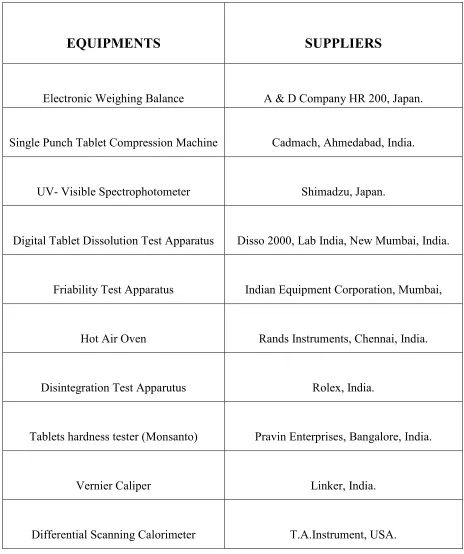
CHAPTER-VI MATERIALS AND EQUIPMENTS
Madurai Medical College Page 35
CHAPTER-VI
MATERIALS AND EQUIPMENTS
MATERIALS
SUPPLIERS
Lamivudine Strides Acrolabs, Bangalore, India.
Sodium starch glycolate Octis Research Lab, Uttarkhand, India.
Crospovidone Octis Research Lab, Uttarkhand, India.
Croscarmellose sodium Octis Research Lab, Uttarkhand, India
Microcrystalline cellulose High purity laboratory chemicals, Mumbai, India.
Mannitol U