EXERCISE IN REDUCING BACK PAIN AMONG
ANTENATAL MOTHERS IN SELECTED
RURAL AREAS AT COIMBATORE
COIMBATORE
A DISSERTATION SUBMITTED TO THE TAMILNADU
DR.M.G.R. MEDICAL UNIVERSITY, CHENNAI, IN PARTIAL
FULFILLMENT OF REQUIREMENT FOR THE DEGREE OF
MASTER OF SCIENCE IN NURSING
A STUDY TO EVALUATE THE EFFECTIVENESS OF STRETCHING
EXERCISE IN REDUCING BACK PAIN AMONG
ANTENATAL MOTHERS IN SELECTED
RURAL AREAS AT COIMBATORE
BY
BENITA.T
A DISSERTATION SUBMITTED TO THE TAMILNADU
DR.M.G.R. MEDICAL UNIVERSITY, CHENNAI, IN PARTIAL
FULFILLMENT OF REQUIREMENT FOR THE DEGREE OF
MASTER OF SCIENCE IN NURSING
CERTIFIED THAT THIS IS THE BONAFIDE WORK OF
BENITA.T
ANNAI MEENAKSHI COLLEGE OF NURSING,
COIMBATORE, TAMILNADU.
SUBMITTED IN PARTIAL FULFILLMENT OF THE
REQUIREMENT FOR THE DEGREE OF MASTER OF SCIENCE IN
NURSING TO THE TAMILNADU DR.M.G.R MEDICAL
UNIVERSITY, CHENNAI.
COLLEGE SEAL:
CAPT.PROF. KALPANA JAYARAMAN, M.Sc (N).,
PRINCIPAL,
DEDICATION
I dedicate this book to
The God almighty who blessed me to finish this work successfully.
I also dedicate this book to
My parents Mr. P.THANGADURAI & Mrs. T.LEELAVATHY, for their
continued support and counsel throughout my studies and made my life purposeful
and meaningful.
I dedicate this book to
My loving sisters Ms. FLORENCE, MS.JEMIMA BELSIA,
MRS.NIGHTINGALE and brother in law MR.JABASEELAN, for their loving
support and encouragement .
I dedicate this book to
My Fiancé Mr. GUNA GLADWIN for his love, hospitality, knowledge &
wisdom has Supported & enlightened me to complete the
dissertation successfully.
ACKNOWLEDGEMENT
ACKNOWLEDGEMENT
I praise and thank the Lord Almighty for His blessings throughout this study.
With profound joy and gratitude, I acknowledge the help of those who
involved in the successful completion of this endeavor.
My special thanks are to my study participants who extended their
co-operation throughout my study period.
I honestly express my sincere thanks to Mr.M.PADMANABHAN, M.A.,
Correspondent of our college, for all the facilities, he has been provided to us at the
institution and for giving me an opportunity to study in this esteemed institution.
I am extremely grateful to Our Principal and My Clinical Guide
Capt. Prof. KALPANA JAYARAMAN, M.Sc (N)., AnnaiMeenakshi College of
Nursing, Coimbatore whose excellent guidance, expert suggestions, encouragement
and support helped me to tide over the hardships encountered during the study.
I am grateful to thank our Vice principal Prof .G.MAHALAKSHMI
M.Sc(N)., AnnaiMeenakshi College of Nursing, Coimbatore for her inspirational
I owe my sincere thanks to Research Guide Mrs. ANNAPURANI, M.A.,
DSP., M.Phil., Ph.D, D.Sc for her excellent guidance.
I am pleased to convey my profound thanks to my Medical Guide
Dr. S.PRAMILA, M.B.B.S,expert Coimbatore for her excellent guidance, expert
suggestions, encouragement and support that helped me to tide over the hardships
encountered during the study.
My sincere thanks are to Statistician Dr. P.SALEENDRAN, Ph.D., for his
invaluable help in statistical analysis.
I am thankful to my most respectful Academic Director Prof. M.MUMTAZ
M.Sc (N)., for her esteemed guidance, keen interest, sustained patience, critical
comments, constant availability and continuous inspiration right from the planning
phase till the completion of the thesis.
I am pleased to express my sincere thanks to Mr.SENTHILKUMAR M.B.B.S,
D.P.H. the Deputy Director of Public Health Coimbatore for permitting me to
collect data from community centres.
I am thankful to our M.Sc(N) FacultyMrs.A.SAHAYAMARY, M.Sc(N).,
Associate professor., Mrs.DHANALAKSHMI M.sc(N)., Lecturer.,
Mrs.PONNAMMAL, M.Sc (N)., Lecturer., Mrs.MANAVALAM, M.Sc(N)., Lecturer,
Mrs.BALAMANI, M.Sc(N)., Lecturer, Mrs.EBENEZER, M.Sc(N)., Lecturer,
M.Sc(N)., Lecturer, Mrs. SIVAPRIYA M.sc (N)., Lecturer,
Mr.CHINNACHADAYAN M.sc (N)., Lecturer and Mr.SATHISHM.Sc (N).,
Lecturer, for their scholarly guidance, valuable suggestions, precise advice,
inspiration and encouragement which made the study purposeful.
My special thanks are to the Experts for their valuable suggestions and
constructive comments.
¾ Prof. Mrs. ESTHER JOHN M.sc (N)., Coimbatore.
¾ Prof. Mrs. LATHA VENKADESAN M.sc (N)., principal, RVS College of
Nursing, Coimbatore
¾ Asso Prof. Mrs. RENUKA M.sc (N)., HOD, KMCH College of Nursing.
¾ Asso Prof. Mrs. RENUKA M.sc (N)., HOD, Shree Ramakrishna College Of
Nursing coimbatore.
¾ Mrs. JONSY M.sc (N)., Lecturer, PSG College Of Nursing, Coimbatore.
¾ Mrs. CHARMILI. M.sc (N)., Principal, Texity College Of Nursing, Coimbatore.
My heartfelt thanks to Asst.Prof.Mrs.DEEPIKA MPhil., (English) for her
editing throughout my research papers.
I am immensely thankful to our Librarians Ms. REVATHY B.A., M.L.I.Sc.,
and Mrs. SULOCHANA M.com., B.L.I.Sc., for allowing me a free hand into many
racks of the library.
Mr. UDAYAKUMAR, vinayaka star xerox for computing the manuscript clearly,
legibly and effectively in a short span of time.
I sincerely thank all the teaching faculty and non-teaching faculty members of
AnnaiMeenakshi College of Nursing for the help rendered in various ways to fulfill
ABSTRACT
More than two-thirds of pregnant women experience back pain. This pain
generally increases as pregnancy advances and it interferes with daily activities (like
carrying, cleaning, sitting and walking). There are certain measures to manage pain.
Antenatal exercises are relatively safe, inexpensive, and accessible and have
beneficial effects in reducing the back pain during pregnancy.
The statement of the problem is a study to evaluate the effectiveness of
stretching exercise in reducing back pain among antenatal mothers in selected rural
areas at Coimbatore.
The objectives of the study are
•
To assess the level of back pain among antenatal mothers.• To evaluate the effectiveness of stretching exercise in reducing back pain
among antenatal mothers.
• To determine the association between the level of back pain among antenatal
mothers with their selected demographic variables and obstetric variables.
Pre-experimental one group pretest post test design was adopted and non
probability purposive sampling technique was chosen for this study. The sample
consists of 30 antenatal mothers. The study was conducted in selected five villages
under Arisipalayam rural PHC Coimbatore.
Data collected by means of structured interview questionnaire - Modified
Roland Morris back pain questionnaire to assess the back pain among antenatal
mothers. Stretching exercises was demonstrated and made to practice for 2 weeks in
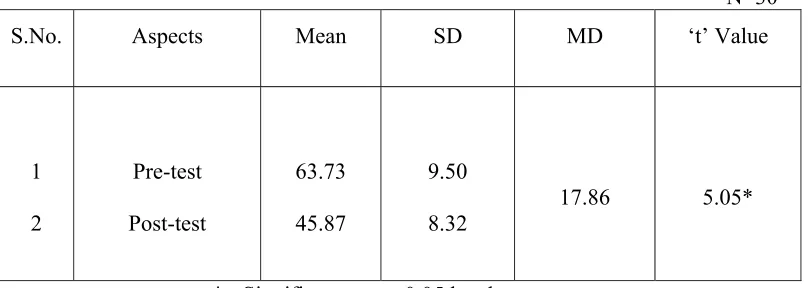
The result reveals ‘t’ value was 5.05. It was significant at p < 0.05 level.
Hence, the stated hypotheses H1 was accepted. It is inferred that stretching exercise
was highly effective in reducing back pain among antenatal mothers with back pain.
Key words: Back Pain, Stretching Exercise, Effectiveness
CONTENTS
TABLE OF CONTENTS
CHAPTER CONTENTS PAGE NO
I
II
III
INTRODUCTION
Need for the Study
Statement of the Problem
Objectives
Hypotheses
Operational Definitions
Assumptions
Delimitations
Projected Outcomes
REVIEW OF LITERATURE
Studies Related to Back Pain during
pregnancy
Studies Related to Effectiveness of stretching
exercise during pregnancy
Studies Related to Effectiveness of stretching
exercise in reducing back pain among
Antenatal mothers.
CONCEPTUAL FRAMEWORK.
METHODOLOGY
Research Approach
Research Design
Setting of the Study Population
CHAPTER CONTENTS PAGE NO
IV
V
VI
Sample
Sampling Technique
Criteria for Sample Selection
• Inclusion Criteria
• Exclusion Criteria
Development of the Tool
Description of the Tool
Scoring Procedure
Intervention on Stretching exercise
Validity and Reliability
Pilot Study
Data Collection Procedure
Plan for Data Analysis
Protection of Human Rights
DATA ANALYSIS AND INTERPRETATION
DISCUSSION
SUMMARY AND RECOMMENDATIONS
Summary
Major Study Findings
Conclusion
Implications of the Study
LIST OF TABLES
TABLE
NO. TITLE
PAGE
NO.
1
2
3.1
3.2
4.1
4.2
Frequency and Percentage Distribution of antenatal mothers
according to Demographic Variables and Obstetric variables
Frequency and Percentage Distribution of Pretest level of back
pain among Antenatal Mothers
Frequency and Percentage Distribution of Pre test and Post test
level of back pain among antenatal mothers
Mean, Standard Deviation, Mean Difference and ‘t’ value of
Pretest, and Post test level of back pain among Antenatal Mothers
Frequency, Percentage, and χ2 Distribution regarding Pre test
level of back pain among Antenatal Mothers with their Selected
Demographic and Obstetric Variables
Frequency, Percentage, and χ2 Distribution regarding Post test
level of back pain among Antenatal Mothers with their Selected
Demographic and Obstetric Variables
40
43
45
47
49
LIST OF FIGURES
FIGURE
NO. CONTENTS
PAGE
NO.
1
2
3
4
5
Conceptual Framework based on Modified Larson et.al Theory
of Symptom Management
The Schematic Representation of Research Methodology
Diagrammatic Representation of Pretest level of Back Pain
among antenatal mothers
Diagrammatic Representation of Pretest and post test level of
Back Pain among antenatal mothers
Diagrammatic Representation of Mean Pretest and Post test
level of Back Pain among antenatal mothers
27
30
44
46
LIST OF APPENDICES
APPENDIX TITLE A B C D E F G H I J K L MLetter Seeking and granting Permission to Conduct the Study at
community Coimbatore.
Letter Requesting the Opinion of Experts on Content Validity of the
Tool.
List of Experts Consulted for Content Validity.
Structured Interview Questionnaire (English).
Structured Interview Questionnaire (Tamil).
Evaluation Rating scale for Validation of Tool.
Intervention on Stretching exercise (English)
Intervention on Stretching exercise (Tamil)
Evaluation Criteria Checklist for Validation of Intervention on
Stretching exercise.
Content Validity Certificate
Checklist for sample selection
Letter Seeking Consent of Subjects for Participation in the study
(English).
Letter Seeking Consent of Subjects for Participation in the study
LIST OF ABBREVIATIONS
• % - Percentage
• n - Frequency
• N - Total number of samples
• H - Hypotheses
• Cont - Continued
• PHC - Primary Health Centre
• BMI - Body Mass Index
• df - Degree of Freedom
• χ2 - Chi square
• > - Greater than
CHAPTER-I
INTRODUCTION
“The world is full of suffering and
It is also full of overcoming of it”
Helen Keller
Pregnancy is the most wonderful time for a woman as she awaits the birth of a
child and prepares for a new chapter in her life. Giving life is powerful, so preparing a
suitable environment for the baby to grow in is a vital necessity of pregnant mothers
to maintain comfort by staying healthy physically and mentally as well. This
wonderful experience is hindered by back pain which is common among most of the
antenatal mothers.
Back pain is one of the minor ailments in pregnancy occurring in varying
degree during late months of pregnancy. Three out of four women experience some
degree of back pain during pregnancy. The severity of this pain ranges from mild
discomfort after standing for long periods of time to deliberate pain that interferes
with daily life. The cause of back pain during pregnancy is related to many factors
such as change in body posture, hormones that cause the relaxation of connective
As the fetus grows mother undergo postural changes that exaggeration of
curve in lumbar spine, which not only allows the pelvis to accommodate the enlarged
uterus, but also weakens the ability of static support in the lumbar spine to withheld
shearing force.
Hormonal changes of pregnancy lead to water retention of connective tissue
which produces increased musculoskeletal pain. Relaxin is insulin like hormone that
causes pelvic ligaments laxity which is necessary for birth. The effect of relaxin on
collagen increases sacroiliac movement and symphysis pubis widening. Relaxin
affects all connective tissue throughout the body including ligaments and tendons
which supports the joints. Increased flexibility makes mother more susceptible to back
pain, as it occurs when enlarging uterus or baby’s head presses down on sciatic nerve,
overstretching of abdominal muscles and the impact of entire weight of uterus on
spine and surrounding muscles.
Collision J (2008) conducted a survey to collect information about pregnancy
–related pain among 600 women in India.Out of them two third reported back pain
and nearly half of all women reported pain at lower back.The findings revealed that
85 percent of women were having back pain at some point of pregnancy.
Women who exercise usually have a better pregnancy, in terms of being more
comfortable physically and healthier for the duration of the pregnancy and afterwards.
Stretching exercises are particularly useful for later easy in labor and delivery. It
seems to go along with eating better and maintaining more positive attitude towards
and potential depression. Muscles and connective tissue tend to get shorter and less
flexible over pregnancy. Stretching improves flexibility. Stretching routine is very
good for toning the perineal area, stretching ligaments, strengthening the inner thighs
and abdominal muscles and promotes proper body alignment and which helps for
back pain relief.
In simple way the midwife can educate the antenatal mothers about the
exercise inorder to alleviate the discomfort, maintain good body posture to adopt
appropriate position and get relieved from pain. As the exercise need a time and not
money so everyone can be beneficial. Creating awareness is a primary role of a
midwife to make antenatal mothers to adopt the newer practices and be beneficial.
Benefits of stretching exercise for pregnant women have been greatly
appreciated, which helps in tolerating labor pain emotionally and physically, increases
muscle strength, decreases unhealthy weight gain,reduces incidence of hemorrhoids,
varicose veins back ache and fatigue causations.Midwives are in the right position to
take over the benefits to antenatal mothers and make them healthier and relieved from
suffering.
Need for theStudy
“If you are planning for a year, sow rice
If you are planning for a decade, plant trees
If you are planning for a life time educate a person”
Back pain and pregnancy seem to go together. Back pain in the course of
pregnancy creates problem that continue for an extended period after
delivery.Pregnancy produces variety of hormones, one of the hormones called relaxin,
causes the ligaments and pelvis to soften to allow baby out through the pelvis,
changes the center of gravity, relaxes uterine ligament that cause strain of surrounding
muscles and overstretched abdominal muscles not equipped to handle the entire
weight of the uterus so that back and spine bear extra burden.
To make pregnancy as pleasant as possible and facilitate an easier delivery,
back pain should be always addressed quickly as possible and managed throughout
pregnancy.
Peter F Ullrich, (2010) in an article denotes worldwide healthcare statistics of
80% women suffer from back pain at some point of pregnancy.
Skaggs .c. (2007) conducted a descriptive study to determine the prevalence of
low back pain among 599 antenatal women in India. A result shows that 67% of
antenatal women reported back pain during the third trimester of pregnancy.
Mchenzie, (2005) statistics article represents the incidence of degree of back
pain during pregnancy is relatively high. Researchers worldwide have suggested that
between 30 - 70% of pregnant women are affected due to back pain. There is a greater
According to KelinkJournal article - US census bureau (2004) country wise
back pain statistics during pregnancy denotes in India extrapolated
prevalence-23,494,204 and population estimated to be affected- 1, 065, 070, 6072.
Back pain statistics are frightening 80% of pregnant women suffer from back
pain. Worldwide there are 72,258 pregnant women who search on the internet every
day for back pain issues, 14,516 for lower back pain and 6483 for sciatica. Upper
back pain is at 3548 and neck pain at 14,516. In one year, over 34 million pregnant
women searching for back pain related issues.
According to American pregnancy association prevalence varies with reports,
showing between 50-70 percent of all pregnant women having back pain.
F.Gary, (2007) conducted an study to evaluate the prevalence of back pain
during four different periods of pregnancy. The results are at 12th weeks of gestation
71.4% women had pain, while at 20th week 16.3%, 32nd weeks 91.7% of women
reported pain and at 37th weeks 98% reported back pain. Back pain is prevalent during
pregnancy and its intensity varies throughout this period.
Damen Leon (2007) conducted descriptive study on complaints of back pain
during pregnancy among 123 antenatal women who were questioned and examined
with Sacroiliac joint laxity being measured by Doppler imaging at 36 weeks gestation
and at 8 weeks postpartum. In 77% of the subjects with moderate to severe
pregnancy‐related back pain during pregnancy, asymmetric sacroiliac laxity was
pregnancy had a threefold higher risk of pain postpartum. In conclusion, this data
indicates that women’s experience moderate to severe complaints of back pain during
pregnancy.
Kristiansson, Per MD (2006) conducted a survey to determine back pain
during pregnancy among 200 women throughout pregnancy with repeated
measurements of back pain and possible determinants by questionnaires and physical
examinations in India. The results showed that 76% reported back pain at some time
during pregnancy. 61% reported its onset during the present pregnancy. In this group,
the rate of pain increased until the 24th week, and then remained stable until delivery,
with decline in pain by 10% after delivery. This study concludes, back pain during
pregnancy is a common complaint and client with the highest pain ratings reported
great difficulties with normal activities. The back pain started early in pregnancy and
increased over time.
Every pregnant woman experiences some type of back pain that gives
uneasiness and discomfort.Exercise during pregnancy is very important for a healthy
child and mother. The first requirement for exercise is to prepare body for childbirth.
Pregnancy exercises such as stretching exercise strengthen muscles, relaxes iliacsacral
ligaments and deliberate lengthening of muscles in order to increase muscle flexibility
and joint range of motion.
Although it may seem enticing to rest when experiencing pain and not
undertake an exercise routine, gentle stretching and movement will often decrease
Every pregnant woman can benefit from stretching the soft tissue – the
muscles, ligaments, and tendons in the back, legs, buttocks, and around the spine. The
spinal column and its contiguous muscles, ligaments, and tendons are all designed to
move, and limitation in this motion can make back pain worse.Stretching and back
exercises to mobilize the spine and soft tissue find meaningful and sustained relief of
back pain followed by the increase in motion.
Stretching in pregnancy helps to protect the freedom of movement, prevent
muscle injury, keep the muscles and joint strong and flexible, counterbalance the
biochemical effect, bring oxygenated blood into muscles, give more energy and helps
to flush out toxins and lactic acid , help to cope with psychological and emotional
stress of pregnancy and experience less muscle soreness. Stretching during pregnancy
properly with deep breathing brings more oxygen to baby and help in growth.
According to Mayo clinic, benefits of stretching include increased flexibility,
improved circulation, better posture, stress relief and enhanced co ordination.
Garshashi., A. et.al (2004) conducted a prospective randomized study on the effect of
stretching exercise on the intensity of low back pain , 107 pregnant women in
experimental group and 105 in control group during 2nd half of pregnancy provided
stretching exercise for 3 times a week for 2 weeks. kebekback pain questionnaire was
used between 17-22 wks of gestation to assess back pain intensity, lordosis and
flexibility of spine were measured by flexible ruler and side bending test. The study
shows that low back pain increased in control group. Researcher concludes stretching
pain in experimental group, has no detectable effect on lordosis and significant effect
on flexibility of spine.
The review of literature and working area created an insight in the
investigator’s mind that an equal importance to be given for exercise as diet and
supplements during pregnancy. Several studies have proven back pain is one of the
minor ailment seen during 28-38 weeks of gestation age in pregnancy and also several
article reported stretching a exercise relieve back pain. Nurse midwife plays an
important role to promote antenatal care and to prevent the pregnancy related problem
earlier and hence forth to bring a healthy mother and healthy baby.Stretching exercise
also one therapyon reducing back pain. So the investigator felt to perform research on
stretching exercise reduces back pain among antenatal women.
Statement of the Problem
A Study to Evaluate the Effectiveness of Stretching Exercise in Reducing Back
Pain among Antenatal Mothers in selected Rural Areas at Coimbatore.
Objectives
•
To assess the level of back pain among antenatal mothers.• To evaluate the effectivenessof stretching exercise in reducing level of back
pain among antenatal mothers.
• To determine the association between the level of back pain among antenatal
Hypotheses
•
H1: There will be significant difference between mean pretest andposttestlevel of back pain among antenatal mothers.
• H2: There will be significant association between the level of back pain
among antenatal mothers with their selected demographic variables and
obstetric variables.
Operational Definitions
Antenatal Mother:
It refers to pregnant women between the gestational age of 28 to 38 weeks.
Effectiveness:
It refers to the outcome of stretching exercise in terms of reducing level of
back pain among antenatal mothers which can be measured using Modified Roland
Morris Back pain questionnaire.
Back pain:
It refers to posterior pelvic pain experienced by antenatal mothers in the lower
back below the waist line around the coccygeal region which can be assessed through
StretchingExercise:
It refers to the gentle tensing and relaxing the transverse abdominal muscles
and spine by kneeling on knees and hands pulling in abdomen to arch spine upward
and downward.
Assumptions
• Stretching exercise reduce the back pain among antenatal mothers
• Stretching exercise promotes comfort and positive health in antenatal
mothers.
Delimitations
• The study is limited to the antenatal mothers of 28 to 38 weeks of gestation
with back pain in selected rural areas.
• The data collection period is limited for six weeks.
Projected Outcomes
• This study will help inassessment of back pain among antenatal mothers.
• This study will help to assess the effectiveness of stretching exercise among
antenatal mothers with back pain
• This study enables nurses to teach stretching exercise during their antenatal
CHAPTER II
REVIEW OF LITERATURE
The review of literature is a key step in the research process. Review of
literature refers to an extensive exhaustive and systematic examination of publications
related to the research project.The typical purposes of review of literature are to
generate research questions, to identify what is known and not known about the topic,
to identify a conceptual and theoretical tradition within the bodies of literature, and to
determine methods of enquiry used in earlier work including their success and short
comings.
Reviewof Literature done for this Study is arranged under the following
Headings:
9 Studies related to back pain during pregnancy.
9 Studies related to effectiveness of stretching exercise during pregnancy.
9
Studies related to effectiveness of stretching exercise in reducing back pain among antenatal mothers.
Studies Related to Back Pain during Pregnancy
Dong Adair et.al (2002) conducted a cohort survey to evaluate the self
reported disability due to low back pain during pregnancy in Tamilnadu. The
analytical study was done to determine the severity of self reported disability.The
mild disability, 37.809 % reported moderate disability, 17.314 % reported severe
disability and 2.120 % reported complete disability .The researcher said that the
majority of pregnant women experiences low back pain during their pregnancy.
Tonali P et.al (2004) conducted a survey among pregnant mothers in last
trimester to assess back pain. Seventy-six women in their 8th and 9th months were
studied by using the Italian validated version of the Roland Questionnaire.The study
found that 31% of the women had no back pain symptoms (Roland score 0); 40%
scored from 1 to 4; 21% scored from 5 to 10; and 8% scored more than 10. Findings
revealed that back pain is a common symptom in women during last trimester of
pregnancy.
Clayton et.al (2007) conducted a survey among pregnant women’s to identify
the prevalence of back pain and treatment satisfaction in the second trimester.
Cross-sectional design was used. 599 women were selected. Pain history, duration, location,
intensity, daily living and treatment frequency were assessed. 67% of the total
population reported musculoskeletal pain and nearly half with a multi-focal pattern of
pain. 21% reported severe pain intensity rated on a numerical rating scale. 81% of
women experiencing pain slept less than 4 hours per night and 75% of these women
took pain medications. The study reveals multi-focal musculoskeletal pain in
pregnancy was prevalent.
AnnelieGutke et.al (2008) conducted a survey to investigate the association of
muscle function and low back pain in relation to pregnancy. Progressive cohort
and 3 months post partum (n=262).Low back pain is more prevalent in pregnant
women (25%) than in the general population (6.3%). Researcher concluded the study
findings that muscle dysfunction was associated with pelvic girdle pain, which should
be taken into consideration when developing treatment strategies and preventive
measures.
Mohseni - Bandpei MA et al (2009) conducted an cross sectional study to
determine the prevalence and risk factors of low back pain during pregnancy from 18
health centers. Eleven hundred randomly selected pregnant women were participated
in this study Visual Analog Scale and Oswestry low back disability questionnaires
were used to assess the pain intensity and functional disability. Lifetime prevalence of
low back pain were 40.2%, 55.9%, 59.4%, 76.2%, and 84.1%, respectively.Low back
pain was significantly correlated with history of previous low back pain and low back
pain in previous pregnancy (p=.000 in both cases). It was found that the prevalence of
low back pain in pregnant women appears to be high.
Wang et.al(2009) conducted an anonymous survey among pregnant mothers to
estimate the severity of the low back pain, including prevalence, risk factors, impact
on daily living, and health provider management in New Haven Country. Randomized
trial was used by distributing 36 questions to pregnant women participating in various
prenatal care clinics. Six hundred and forty-five respondents reported experiencing
low back pain during their current pregnancy. Low back pain during the current
pregnancy was predicted by age (younger women were more likely to develop it; P =
.004), history of low back pain without pregnancy (P = .002), during menstruation (P
low back pain during pregnancy is a common problem.Researcher recommends
further studies can be indicated in the areas of prevention and treatment measures for
back pain.
Ayanniyi et.al (2009) conducted a survey among pregnant women to examine
the prevalence and pattern of back pain (BP) in pregnancy. Pre-tested closed-ended
questionnaire was used. Data obtained was analyzed using both descriptive and
inferential statistics of mean, standard deviation, and inferential statistics of
independent t-tests and chi-square tests. One thousand and eight (52.5%) of the
included subjects had back pain in pregnancy. The mean age of those with and
without back pain was 26.8 ± 5.3 and 27.1 ± 5.4 years respectively. Among the
subjects with back pain, 315 (31.3%) and 53 (5.3%) were in their first and sixth
pregnancies. It was concluded that back pain is a common and real complaint in
pregnancy. It recommended that back pain in pregnancy should be attended to as part
of ante-natal care.
Ayden Coban et.al (2009) conducted an cross sectional study to evaluate the
impact ofpregnancy-related back pain on quality of life and physical ability in the
third trimester of pregnancy. One hundred women in the 28th-40th week of pregnancy
were asked to fill out questionnaires including general questions about background
factors, the Katz's Activity's Daily Living Index and Short Form of WHO Quality of
Life Questionnaire.Back pain intensity was assessed by visual analog scale (VAS) and
functional limitation was measured by Oswestry Low Back Disability Questionnaire
(OSW). Result found that pregnant women with back pain (PBP) have an impact on
Quaresma C et.al (2010) conducted a longitudinal study among antenatal
mothers to evaluate the prevalence of back pain during four different periods (12
weeks, 20 weeks, 32 weeks and 37 weeks) of pregnancy. The sample selected using
cluster randomized trial. Samples comprises of 49 pregnant women aged between 20
and 39 years. Back pain symptoms and severity were evaluated using NIH Record
Activity. The ANOVA was used and significant difference between the pain scores
over the four moments were observed, that at 12 weeks of gestation 71.4% of women
had back pain, while at 20 weeks only 16.3% confirmed pain. At 32 weeks 91.7% of
women reported pain and at 37 weeks, 98% reported the same. This research result
reveals that back pain is prevalent more in 32 weeks and maximum at 37 gestational
weeks of pregnancy.
Ansari N et.al (2010) conducted an cross-sectional study to ascertain the
prevalence of low back pain during pregnancy and compare to other ethnic/cultural
groups and identify risk factors associated with low back pain during pregnancy. One
hundred and three women were interviewed in the obstetric ward of a university
hospital within 48 hours after giving birth. Results states that the prevalence of low
back pain during pregnancy was found to be 57.3%. Pain onset was most frequently
reported in the third trimester of pregnancy (40.7%) and in the low back area (71.2%).
Studies Related to Effectiveness of Stretching ExerciseduringPregnancy
Yeo (2006) conducted an experimental study among pregnant women’s toevaluate the effectiveness of walking and stretching during 18th week of pregnancy.
79 women with previous history of preeclampsia were randomly assigned to the
exercise was performed 5 times a week for 40 minutes. At the end of pregnancy,
almost 15 percent of women in the walking group had developed preeclampsia. Less
than 5 percent of the stretching group developed preeclampsia. The result reveals that
stretching provides protection against preeclampsia because stretchers produce more
transferring than walkers. Transferring is a plasma protein that transports iron through
the blood and protects against oxidative stress on the body.
Cruz Jimenez M et.al (2006) conducted a prospective pilot study among
antenatal women to determine a structured exercise program promotes improved
performance on activities of daily living and pain perception in patients with chronic
low back pain. The therapeutic program consisted of warm up cool down calisthenics,
stretching, back isometric and stabilization exercises and aerobic walking. Visual
Analog Scale and the Quebec Back Pain Disability Scale were used. Six antenatal
women completed the study. Back pain intensity and functional disability decreased
immediately after completing the program. A well guided stretching exercise program
can decrease pain intensity perception and disability in women’s with chronic low
back pain.
Tollison CDet.al (2007) conducted an experimental study among pregnant
women to assess the effects of physical exercises stretching and walking for 50
sedentary pregnant women at risk for preeclampsia. The stretching exercise as a
comparator, multiple ways to measure daily physical activities and the exercise
intervention was used. The intervention of 20 min stretching and 10 min of walking
reduction of 25 % incidence of preeclampsia. Secondary outcomes include the 76.4 %
of improvement in physiologic effects of the intervention and birth outcomes.
Ylinen J et.al (2008) conducted an experimental study on pregnant women to
compare the effects of manual therapy and stretching exercise on neck pain and
disability. A randomized cross-over trial used and sample of 125 pregnant women
was selected. Group 1 consist of 60 mothers received manual therapy twice weekly
for 4 weeks and Group 2 of 65 mothers performed stretching exercises 5 times a week
for 4 weeks. Visual analogue scale was used to assess pain and it found decreased
during the first 4 weeks by 26 mm and 19 mm, respectively in group 1 and group 2.
Both stretching exercise and manual therapy decreases neck pain and disability.
Low-cost stretching exercises can be recommended in the first instance as an appropriate
therapy intervention to relieve pain.
Linda Mary et.al (2009) conducted an experimental study among antenatal
mothers to determine the benefit of mother and babies from stretching exercise during
pregnancy at Kansas City University. The pretest and post test design was used. The
sample was 10 antenatal mothers. Exercise were taught to mother and practiced for 8
weeks .Finally researcher concluded that maternal stretching exercise is instrumental
in healthy development of baby’s heart.
Montoya Arizabaleta AV (2010) conducted an experimental study among
pregnant women to assess the effectiveness of stretching exercise in improving
health-related quality of life during pregnancy in nulliparous women at 16 to 20
involved. Intervention included are walking (10 min), aerobic exercise (10 min),
stretching (30 min) and relaxation (10 min). The control group continued usual
activities. Columbia version of medical outcome health survey done.Fifty women
completed the study. Stretching exercise improved the health-related quality of life in
experimental group.
SeonAe Yeo et.al(2010) conducted an experimental study among pregnant
women’s to compare the effects of walking exercise to a stretching exercise on the
preeclampsia risk factors. A randomized trial was conducted with 124 sedentary
pregnant women. For sedentary pregnant women, a stretching exercise was effective
than walking in mitigating the risk of preeclampsia, heart rate and blood pressure
were lower among stretchers than walkers, but weight gain did not differ between the
groups.
Sankaralingam et.al (2011) conducted a randomized experimental study
among 124 pregnant women. Simple stretching exercises, consisting of slow muscle
movements compared with 40 mins of walking performed 5 times a week starting at
18 weeks of gestation till birth. The result reveals that stretching reduces risk of early
signs of preeclampsia compared to walking.
LeanHaakstad et.al (2011) an experimental study among nulliparous pregnant
women to assess stretching and aerobic exercises improves quality of life. The
pregnant women’s (N = 105), with mean age 30.7 ± 4.0 years, pre-pregnancy BMI
23.8 ± 4.3 were randomized to either an exercise group ( n = 52) or a control group ( n
training for 60 minutes, twice per week for a minimum of 12 weeks, with an
additional 30 minutes of self-imposed physical activity. Researcher concludes
aerobic-dance exercise and stretching exercise improves physical quality of life
among experimental group pregnant women’s.
StafneF et.al (2012) conducted a experimental study to assess whether
exercise during pregnancy can prevent gestational diabetes and improve insulin
resistance.A randomised control trial was used.855 women in gestational week 18–22
were randomly assigned to receive a 12-week standard exercise program (intervention
group) or standard antenatal care (control group).The exercise program – stretching
included moderate-intensity to high-intensity activity 3 or more days per week.
Exercise group revealed the prevention of gestational diabetes and improves insulin
resistance in healthy pregnant women with normal body mass indexes.
Studies Related to Effectiveness of Stretching Exercise in reducing Back
Pain among Antenatal Mothers
Requejo SM et.al (2002) conducted an experimental study among 28 years
primigravida pregnant women’s in 20th week of gestation with low back painto
describe the effectiveness of stretching in the evaluation and treatment of a pregnant
women with low back pain.A randomized trial was conducted with 40 mothers.
Manual joint mobilization (stretching) was applied to the symptomatic vertebral
segment for 4 times in 2 weeks for 20 minutes. Researcher found that after treatments, the mothers were able to bend forward without pain, sit longer than 1 hour without
discomfort and work with minimal discomfort.This study found stretching exercise an
Shim M J et.al (2005) conducted an experimental study among pregnant
mothers to evaluate the effectiveness of stretching exercise program in reducing back
pain. A non-equivalent control group pretest posttest design was used. In an
intervention group (n=29) their intensity of back pain, functional limitation and
anxiety were compared with women in a control group (n=27). At 12 weeks after
intervention, the intensity of back pain experienced by the intervention group (34 %)
was significantly lower than that of the control group (68 %). The findings showed
that the stretching exercise program was effective in reducing the intensity of back
pain experienced by pregnant women.
FaghihZadeh et.al (2007) conducted an experimental study among pregnant
women of 17-22 weeks with back pain to investigate the effect of back stretching
exercise during pregnancy on the intensity of low back pain and kinematics of spine.
A prospective randomized study was used. 107 women participated in an exercise
program three times a week during second half of pregnancy for 12 weeks and 105 as
control group. Kebekquestionnaire provided between 17-22 weeks of gestation and 12
weeks later for assessment of their back pain intensity. The researcher found exercise
group showed 90% reduction in the intensity of low back pain after exercise.
Dumas G.A et.al (2007) conducted an experimental study among pregnant
women with back pain to determine the effect of stretching exercise on pregnancy
related back pain. Randomized controlled trial method was used.Sixty five pregnant
volunteers were included in the study in which 27 were in exercise classes. Back pain
and functional limitations were assessed every 4 weeks during pregnancy and 4
weeks. The strengthening exercises and sitting pelvic tilt exercises was provided.
Exercise group significantly improved and showed reduced pain intensity and back
pain.
GustafssonJet.al (2008) conducted an experimental study in among pregnant
women with back pain to determine the effectiveness of stretching exercise in
reducing back pain. A cross sectional study was used as a study design. A specific
deep muscle training of the transverses abdominus and multifidus muscles was given
for 10 pregnant women with back pain. Pain was rated based on the visual analogue
scale and Disability Rating Index. The analysis done with standard deviation band
test. The visual analysis showed a trend towards reduced pain for all 10 subjects. The
findings revealed that the stretching exercise reduces back pain in pregnant women.
Albaladejo Cet.al (2008) conducted experimental study among clients with
back pain to determine the effectiveness of short education program and short
physiotherapy programs in primary care. Research design cluster randomized clinical
trial was used. Sixty-nine was randomly assigned to 3 groups. In experimental group
all were given a booklet and 15 minutes group talk on postural hygiene. Control group
as an active management 15 minutes group talk on postural hygiene and 4 hour
physiotherapy program that includes exercise and stretching were given. After
6-month follow-up period, Roland Morris questionnaire and visual analog scale used
and found there was no improvement in the "control" group and improvement in the
experimental groups was found for disability (2.0 and 2.2 Roland Morris
Questionnaire points) low back pain (1.8 and 2.10 Visual Analogue Scale points),
5.1 SF-12 points). Research revealed that active management to usual care leads to
improvements in disability, pain and quality of life.
Schoultz et.al (2011) conducted an experimental study to assess the specific
exercise program stretching decreases back pain intensity and increases functional
ability during pregnancy on 50 antenatal mothers between 16-24 weeks of gestation.
26 antenatal women were randomized to 10 week exercise program and 24
randomized as controls.Women in the exercise group experienced significant
improvement in pain intensity and improvement in functional ability at the end of the
study. In the control group, there were no significant changes in pain intensity or
CONCEPTUAL FRAMEWORK
Tabot (1995) stated that a conceptual framework is a network of interrelated
changes that provide a structure for organizing and describing the phenomenon of
intersect. Research studies are based on the theoretical or conceptual framework that
facilitates visualizing the problem and places the variables in a logical manner.
The present study aims at evaluating the effectiveness of stretching exercise in
reducing back pain among antenatal mothers with back pain.Conceptual framework
for this study was developed on the basis of Larson et.alTheory of Symptom
Management.
The theory was initially published as the Symptom Management Model in
1994 as a collaborative effort by members of the Symptom Management Faculty
Group at the University of California at San Francisco.The result of their efforts was
the development of a deductive, process focused model addressing 3 interactive
components of symptom management: symptom experience, symptom management
strategies and outcomes.The model was further updated in 2008 and renamedas the
Symptom Management Theory. This revised model places the process of symptom
management within the context of the domains of nursing science: the person,
Symptom Experience
The symptom experience component has 3 aspects. It is the most thoroughly
described component of the model and is depicted as the beginning of the symptom
management process. This dimension consists of the individual’s perception,
evaluation and response to a symptom. Perception means the client perceived as
distressing and it interferes with sufficient frequency and severity overtime. That
evaluated using a suitable tool. Responses of perception and evaluation are noted.
In present study symptom perceived by antenatal mothers was back pain that
felt over 28-38 week of gestation evaluated using Modified Roland Morris back pain
questionnaire as mild, moderate, and severe and responses as disturbances in activities
of daily living due to back pain.
Symptom Management Strategies
This components are described as the “what, where, why, how much, to
whom, and how” which guide the clinician or investigator in selecting appropriate
intervention strategies and are intended to “avert, delay or minimize the symptom
experience”. The present study conducted in Arisipalayam rural area and the
intervention stretching exercise was provided to antenatal mothers of 28-38 weeks of
gestation for 2 weeks in alternative days of 6 days.
Symptom Status Outcome
Symptom status outcome were clear and measurable outcomes to assess the
implementation of the strategy. The improvement in symptom leads to better physical
strategy include symptom of level of back pain which got reduced and activities of
daily living improved.
Dimensions
The dimensions of nursing science include the person, health and illness, and
environment dimensions and all influencing each of the dimensions of symptom
management.
Person Dimension
The person dimension encompasses variables “intrinsic to the way an
individual views and responds to the symptom experience”. These include
demographic, psychological, sociological, physiological and developmental variables.
The present study demographic variable includes age, education, type of family,
occupation, BMI and obstetrical variable of parity and gestational age.
Environmental Dimension
The environment encompasses physical, cultural and social variables
representing the “aggregate of conditions” in which a symptom is occurring. Physical
variables may include the individual’s home, work or the hospital setting. Social
variables include an individual’s interpersonal relationships or sources of social
support. Cultural variables represent values, practices, and beliefs that arise from the
individual’s racial, ethnic, or religious group. In present study intervention were
provided to antenatal mothers in homes of rural areas Serapalayam, Meenakshipuram,
Health and Illness
The health and illness dimension includes those variable “unique to the health
or illness state of an individual”. These are identified as risk factors, health status, and
disease and injury.In present study health status of antenatal mothers was back pain.
Relationship among the Concepts
The bidirectional arrow illustrated depicts associational relationships among
the 3 components of symptom management. Associational relationships also are
depicted among the 3 aspects of the symptom experience.Adherence denotes the
intended recipient actually receives the strategy prescribed.The breakdown is
illustrated by the broken arrows. Non-adherence denotes the intervention or too
demanding are not applied or applied inconsistently. In present study adherence is
seen for all antenatal mothers who performed stretching exercise during the
CHAPTER-III
METHODOLOGY
Research methodology deals with the research approach, research design,
setting of the study, population, criteria for selection of sample, sample size, sampling
technique, instrument, data collection and data analysis.
Research Approach
Polit and Hunger, 2004 defined the approach as “A general set of orderly
discipline procedure used to acquire information”.
A quantitative approach was used for analyzing the effectiveness of stretching
exercise in reducing back pain among antenatal mothers.
Research Design
Nancy Burns andSusan.k.Groove (2005)defined research design as a blue print
for conducting the study that maximizes control over factors that could interfere with
the validity of the findings. The research design guides the researcher in planning and
implementing the study in a way that is most likely to achieve the indented goal.
Pre experimental one group pretestposttest design was chosen for this study to
analyze the effectiveness of stretching exercise in reducing back pain among antenatal
A diagrammatic representation of research design is given below
Pretest 1st day Intervention Post test 13th day
O 1 X O 2
Keys
O 1 – Pre-test level of back pain
X – Intervention on stretching exercise
O 2 – Post-test level of back pain
O 1- O 2– Effectivenessof stretching exercise
Variables
A variable is “An attribute of a person that varies, that is taken on different
values”.
Independent variable
The independent variable is the variable that is controlled and manipulated by
the experimenter.
In the present study the independent variable is stretching exercise.
Dependant variable
The dependent variable is the variable that is measured by the experimenter.
In the present study the dependent variable is level of back pain among
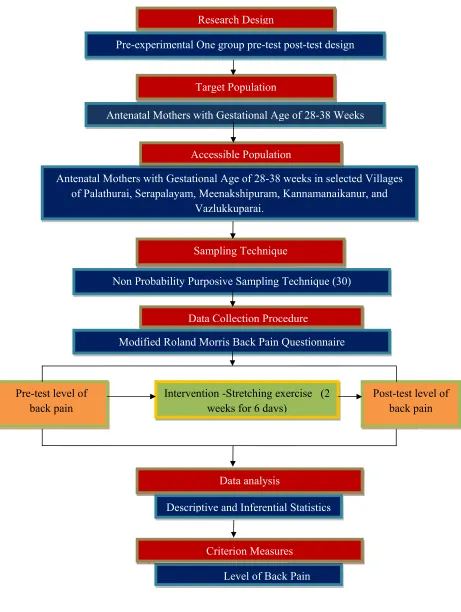
Figure 2:Schematic Representation of Research Methodology
Research Design
Pre-experimental One group pre-test post-test design
Target Population
Antenatal Mothers with Gestational Age of 28-38 Weeks
Antenatal Mothers with Gestational Age of 28-38 weeks in selected Villages of Palathurai, Serapalayam, Meenakshipuram, Kannamanaikanur, and
Vazlukkuparai. Accessible Population
Sampling Technique
Non Probability Purposive Sampling Technique (30)
Data Collection Procedure
Modified Roland Morris Back Pain Questionnaire
Data analysis
Descriptive and Inferential Statistics
Level of Back Pain Criterion Measures
Pre-test level of back pain
Intervention -Stretching exercise (2 weeks for 6 days)
Setting of the Study
The setting of the study was conducted in 5 villages namely Palathurai, Serapalayam, Meenakshipuram, Kannamanaikanurand Valukuparaicome under
Arisipalayam rural area which is situated 10 km away from AnnaiMeenakshiCollege
of Nursing in Coimbatore.
Population
According to Polit and Hungler (2005) “A population is the entire aggregation of
causes in which a researcher is interested”.
The target population is the aggregation of cases about which the researcher
would like to make generalization.
The target population of the study was all the antenatal mothers between the
gestational age of 28-38 weeks.
Accessible population for the study was antenatal mothers between the
gestational age of 28-38 weeks who reside in the villages of Palathurai, Serapalayam,
Meenakshipuram, Kannamanaikanur and Valukuparai. Totally 59 antenatal mothers
found under the criteria of gestational weeks of 28-38 weeks. They were 18 antenatal
mothers in Palathurai, 7 antenatal mothers in Serapalayam, 12 antenatal mothers in
Meenakshipuram, 8 antenatal mothersin Kannamanaikanur and 14 antenatal mothers
Sample
According to Polit and Hungler, (2005) sample consists of a subset of a
population selected to participate in a research study.
The sample selected for present study was 30 antenatal mothers with back
pain.
Sampling Technique
Sampling technique is the process of selecting a group of people, events,
behaviorsor other elements that are representative of the population being studied
.
The sample selected for the present study was by adopting non probability
purposive sampling technique. The survey was done to identify antenatal mothers
with the gestational age of 28-38 weeks at Palathurai, Serapalayam, Meenakshipuram,
Kannamanaikanur, and Valukuparai villages under arisipalayam rural PHC by means
of interview. 59 antenatal mothers were found under the criteria.
In present study 8 antenatal mothers from 18 were selected inpalathurai, 4
antenatal mothers from 7 in serapalayam, 7 antenatal mothers from 12 in
meenakshipuram, 5 antenatal mothersfrom 8 in kannamanaikanur, and 6 antenatal
mothers from 14 in valukuparai with back pain totally 30 mothers were selected based
on inclusion criteria, exclusion criteria and those who scored > 5 from check list for
Criteria for Sample Selection
Inclusion Criteria• Antenatal mother with back pain in rural areas.
• Antenatal mothers with gestational age of 28 -38 weeks .
• Who were willing to participate.
• Mother who can understand Tamil
.
Exclusion Criteria
• High risk antenatal mothers.
• Mother who are not willing to participate.
• Mother with any medical problems.
• Mother with pathological back pain before pregnancy like scoliosis, lordosis, and
kyphosis.
• Grand multi gravida mothers.(>5)
• Antenatal mothers with extreme level of back pain.
Development of the Tool
Treece [1990] emphasized that the instrument selected in research should as
far as possible from the vehicle that would best obtain data for drawing conclusion.
Description of the Tool
Part I
Demographic variables consisting of 5 variables which include age,
education,occupation, type of family and BMI and in obstetric variables consist of 2
variables parity and gestational age.
Part II
Modified Roland Morris back pain questionnaire is used to assess the level of
back pain among antenatal mothers.
The questionnaire consists of 20 items which was been formulated based on
the daily activities of the antenatal mothers modification in the questionnaire were
made as 5 likert scale and options were given as never (1), rarely (2), occasionally (3),
frequently (4) and always (5) scoring was given from 0 to 100% indicating no pain,
mild pain, moderate pain, severe pain and extreme pain. The scoring procedure was
validated by the statistician and found applicable.
Scoring Procedure
The Modified Roland Morris back pain questionnaire consists of 20 items. The
total score was 100 which was classified into 5 categories as follows
0 - 20% (0-20) -No pain
21 - 40% (21-40) - Mild pain
41 - 60% (41-60) - Moderate pain
61- 80% (61-80) - Severe pain
Intervention on StretchingExercise
Stretching exercise is a form of tensing and relaxing the spine and associated
muscles by the following steps. First warm up exercise such as slow walking, deep
breathing exercises, ankle toe movements, extension movements of head in kneeling
positionto be performed and stretching done by kneeling in all four with hands and
knees - take deep breathe in and pull in abdomen by arching spine upward and hold
the position for 5 counts then exhale by pulling stomach down to the floor by
hallowing out back and hold the position for 5 counts. (Appendix-G)
Content Validity of the Tool
Polit and Beck (2004) states that ‘Content validity is a judgment regarding
how well the instrument represents to be assessed’
.
To ensure the content validity the tool along with the statement of the
problem, objectives, hypotheses, methodology and intervention protocol and criteria
check list were given to 11 experts comprising 7 nursing experts from obstetrics and
gynaecological department ,2 gynecologist, 1 physiotherapist and 1 statistician. The
experts were requested to give their opinion and suggestions regarding the relevance
of the tool for further modifications to improve the clarity and content of the items.
The modifications were done in the tool based on expert’s suggestion and consultation
with guide. In demographic variable onset of back pain was added and in obstetric
variable trimester variable was changed as gestational age. In Modified Roland Morris
back pain questionnaire two questions was in the same meaning that was changed
Reliability of the Tool
Brink (1985) stated that reliability refers to the consistency, stability and
reliability of a data collection instrument.
The tool was administered to 5 samples by investigator and inter ratter with 20
minute interval insame situation. Reliability test was performed by parallel Cohen’s
kappa’s method. Reveals that 14 questions have perfect agreement, 3 have substantial
agreement and 3 have moderate agreement which indicatethe tool was reliable.
Pilot Study
Polit and Hungler (1999) denote that the “Pilot study is a small version or trial
run, done in preparation for a main study”
.
Pilot study was conducted in rural areas of Pothanur PHC in Coimbatore to
assess the feasibility of study and to decide the statistical analysis. The permission for
conducting the study was obtained from directorate general of health services and
medical officer of Pothanur PHC. 10 antenatal mothers with back pain were selected
using sample selection criteria. Study period was 2 weeks and stretching intervention
was provided in alternative days for 6 times
The result of the pilot study shows that the mean pre-test level of back pain
was 77.6, standard deviation was 4.65 and mean post-test level of back pain was 58.1,
standard deviation 3.78 and mean difference was 19.5, the obtained ‘t’ value was
The pilot study shows that setting, sample, and tool was feasible to conduct
main study.
Data Collection Procedure
The data collection procedure was done for 6 weeks in Arisipalayam rural area
at Coimbatore. The permission was obtained from the deputy director of health and
medical officer of PHC.
The survey was done to identify antenatal mothers with the gestational age of
28- 38 weeks in selected 5 villages under Arisipalayam PHC by meansof interview.
Antenatal mothers with back pain in selected villages with gestational age of 28-38
weeks were selectedby using non probability purposive sampling method with an
inclusion criteria, exclusion criteria and check list. 30 samples were selected.
A pre test was conducted with demographic variable, obstetric variable and
Modified Roland Morris Back pain questionnaire. Intervention was explained and
from next day the stretching exercise was made to perform under supervision on
alternative days for 2 weeks (6 days).The post test was conducted by using Modified
Roland Morris Back pain questionnaire. Data collection schedule are as follows.
Village name Sample no pretest Intervention Post test
Palathurai 8 Day 3 Day
5,7,9,11,13,15
Day16
Serapalayam 4 Day 4 Day
6,8,10,12,14,16
Day 17
Valukuparai 6 Day18 Day
20,22,24,26,28
Day 29
Kannamanaikanur 5 Day 19 Day
21,23,25,27,29
Day 30
Meenakshipuram 7 Day 31 Day
32,34,36,38,40
Day 41
Plan for Data Analysis
The demographic variables were analyzed by descriptive statistics (frequency
and percentage).The effectiveness of stretchingexercise in reducing back pain among
antenatal mothers was analyzed by inferential statistics (dependent t test). The
association between the back pain among antenatal mothers demographic variable and
obstetric variable was assessed by chi- square test.
Protection of Human Rights
The study was conducted after the approval of research committee in the
college. The nature and the purpose of the study was explained to the chief medical
officer and study subjects, written consent was obtained from participants to gain the
full co-operation and assurance was given to them that the anonymity of each
CHAPTER IV
DATA ANALYSIS AND INTERPRETATION
This chapter deals with the analysis and interpretation of the data collected
from 30 antenatal mothers to assess the effectiveness of stretching exercise in
reducing back pain among antenatal mothers. The purpose of analysis was to reduce
the data to a manageable and interpretable form so that the research problem can be
studied and tested.
Kerlinger, has defined analysis as “The categorizing, reducing, manipulating
and summarizing of data to obtain answers to research hypothesis questions”. The
analysis and interpretation of data of this study are based on data collected through
structured interview questionnaire on antenatal mothers with back pain.
The study findings are presented in sections as follows:
Section I : Data on demographic and obstetricvariables of antenatalmothers
with back pain.
Section II : Data on level of back pain among antenatal mothers with back pain.
Section III : Data on effectiveness of stretching exercise among antenatal
mothers with back pain.
Section IV : Data on association between level of back pain among antenatal
SECTIONI: DATA ON DEMOGRAPHIC AND OBSTETRIC
[image:60.612.122.525.204.724.2]VARIABLES OF ANTENATAL MOTHERS WITH
BACK PAIN
Table: 1
Frequencies and Percentage Distribution of Antenatal Mothers according to Demographic and ObstetricVariables.
N = 30
S.No. Demographic Variables Frequency
( n )
Percentage ( % )
1 Age in Years
a. 18 – 23 10 33
b. 24 – 29 15 50
c. 30 – 35 5 17
2 Education
a. Primary 2 7
b. Middle 9 30
c. Higher Secondary 16 53
d. Degree or More 3 10
3 Occupation
a. Sedentary Worker 14 47
b. Moderate Worker 16 53
4 Type of Family
a. Nuclear Family 18 60
b. Joint Family 12 40
5 BMI
a. <19 - Under Weight 0 0
b. 20-26- Normal 14 47
S.No. Obstetric Variables Frequency (n) Percentage (%) 6. 7. Parity a) Primipara b) Multi para
Gestational age a) 28-32 weeks b) 33-38 weeks
[image:61.612.122.526.65.284.2]18 12 13 17 60 40 43 57
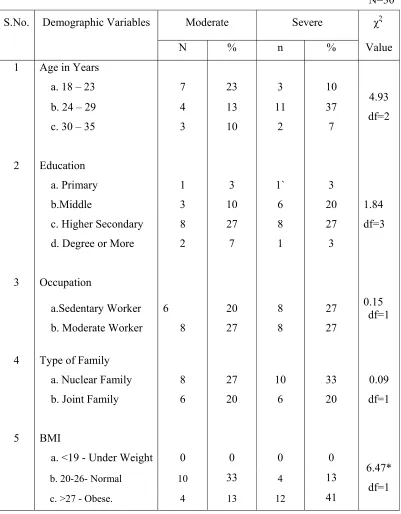
Table 1 reveals that, with regards to age in years, the antenatal mothers with
back pain were 10 (33%) in 18-23 years, 15% (50%) in 24-29 years and 5 (17%) in
29-35 years.
Regarding educational status themajority of antenatal mothers 16 (53%) were
had higher secondaryeducation, 2 (7%) had primary education, 9 (30%) had middle
educationand 3 (10 %) had degree education.
Regarding occupation, themajority of the antenatal mothers 16 (53 %) of them
were moderate worker and14 (47%) were sedentary worker.
Regarding family, the antenatal mothers with back pain 18 (60%)resides in
nuclear family and 12 (40%) in joint family.
Regarding BMI, the majority of antenatal mothers 16(53 %) belong to (greater
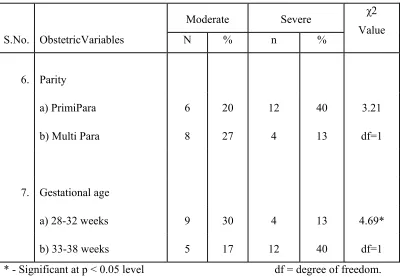
Regarding parity the majority of antenatal mothers 18 (60 %) belong to
primiparaand12 (40 %) belong to multi para.
Regarding gestational age13 (43 %) antenatal mothersbelong to
SECTION II:
DATA ON LEVEL OF BACK PAIN AMONG
ANTENATAL
MOTHERS
WITH BACK PAIN.
Table: 2
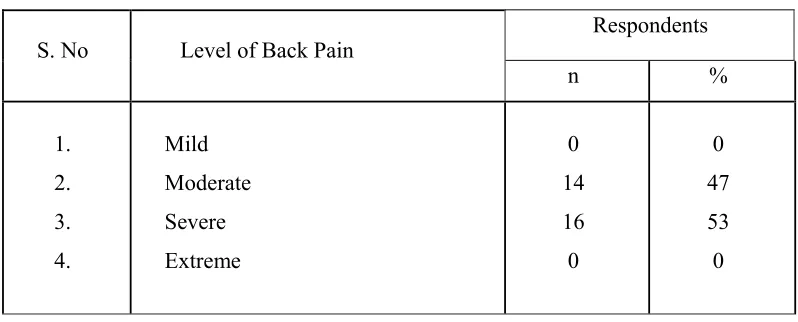
Frequency and Percentage Distribution of Pre testLevel of Back Pain among
Antenatal Mothers.
[image:63.612.121.520.231.392.2]N = 30
Table 2 shows that in pretest, 14 (47%) of antenatal mothers having moderate
level of back pain, and 16 (53%) had severe level of back pain.
S. No Level of Back Pain Respondents
n %
1. 2. 3. 4.
Mild Moderate Severe Extreme
0 14 16 0
SECTION III:
DATA ON EFFECTIVENESS OF STRETCHING
EXERCISE AMONG ANTENATAL MOTHERS
WITH BACK PAIN.
Table: 3.1
Frequency and Percentage Distribution of pre test and post testLevel of Back Pain
among Antenatal mothers.
N = 30
S. No. Level of Back Pain
Respondents
Pre-test Post-test
n % n %
[image:65.612.126.530.255.486.2]1. 2. 3. 4. Mild (20-40%) Moderate (41-60%) Severe (61-80%) Extreme (81-100%) 0 14 16 0 0 47 53 0 9 21 0 0 30 70 0 0
Table 3.1 shows that in pretest14 (47%) of antenatal mothers have moderate
level of back pain, and 16 (53%) had severe level of back pain. On contrast inpost
test, 9 (30 %) had mild level of back pain and 21 (70%) had moderate level of back
Table: 3.2
Mean, Standard Deviation, Mean Difference and ‘t’ Value of Pre-Test and Post-Test
Level of Back Pain among Antenatal Mothers.
N=30
S.No. Aspects Mean SD MD ‘t’ Value
1
2
Pre-test
Post-test
63.73
45.87
9.50
8.32
17.86 5.05*
* - S