A Dissertation Submitted to
THE TAMILNADU Dr. M.G.R. MEDICAL UNIVERSTIY, CHENNAI In partial fulfillment for the award of degree of
MASTER OF PHARMACY IN
PHARMACEUTICS
Submitted by
Reg. No.: 26107707
Under the Guidance of
Dr. M. Senthil Kumar, M. Pharm, Ph.D., Principal & Head of the Department,
Department of Pharmaceutics
ANNAI VEILANKANNI’S PHARMACY COLLEGE SAIDAPET, CHENNAI – 600 015.
DECLARATION
I hereby declare that the dissertation work entitled “FORMULATION AND
EVALUATION OF PREDNISOLONE SODIUM PHOSPHATE ORALLY
DISINTEGRATED TABLETS” is based on the original work carried out by me in
Annai Veilankanni’s Pharmacy College, Saidapet, Chennai and Formulation R&D,
Scoat pharmaceutical Pvt Ltd., Hyderabad under the guidance of Dr. M.Senthil
Kumar and coguidance of Mr.J.Subba reddy , for submission to The Tamilnadu
Dr.M.G.R University in the partial fulfillment of the requirement for the award of
degree Master of Pharmacy in Pharmaceutics. The work is original and has not been
submitted in part or full for any other diploma or degree of this or any other
university. The information furnished in this dissertation is genuine to the best of my
knowledge and belief.
Chennai,
21.08.2012 26107707
of requisite determination and strength to pursue and complete this course and dissertation successfully. It is my immense pleasure privileges to acknowledge the untold contributions, thankfully received, the blessed inspiration and the unreserved support I have had from the individual and institutional sources with whom I have been in association during the course of my last two years of pursuit I hereby take this opportunity to acknowledge all those who have helped me in the completion of this dissertation work.
I am extremely grateful to Dr. S.Devaraj, Chairman and Mr. Devanad, secretary Annai Veilankanni’s Pharmacy College , saidapet, Chennai – 600015 for providing me the opportunity to do my project at MSN Laboratories Ltd., Hyderabad.
It’s a fact that every mission needs a spirit of hard work and dedication but it needs to be put on the right path to meet its destination and in my case this credit goes to my respected teacher and guide, Dr.M.Senthil Kumar, principal , Department of pharmaceutics, AnnaiVeilankanni’s Pharmacy College. I am very much thankful to him for his inspiration, kind co-operation, caring attitude, timely help, valuable guidance and constant encouragement during every phase of this dissertation. His patience way of sharing knowledge, our numerous discursions support always propelled and boosted me to perform better. I would remain grateful to him.
My sincere and heartful thanks to my teachers, Dr.M.Senthil kumar, Mrs.S.Valarmathi for their help and co-operation.
I am extremely grateful to Mr.J.Subba reddy, Manager, Formulation R&D, department for providing me the opportunity to do my project at MSN Laboratories Ltd., Hyderabad.
I am indebted to industrial guide Mr.J.Subba reddy, Manager, Formulation R&D, MSN Laboratories Ltd., Hyderabad for allowing me to accomplish the project work in this industry. He was always there with his enthusiastic suggestions and corrections, despite of his extremely busy schedule rendered me the freedom to explore the facilities in the laboratory and utilize them up to my learning capabilities. His innovative ideas helped me to successfully complete my project and my thesis work with spontaneity and enthusiasm.
Laboratories Ltd., Hyderabad.
I would like to thank my friends Raja lakshmi, Balakrishna, Dinesh , Ashok, Srinivasrao, Hariharan, Anusha, Raghunath, and Suresh for their co-operation and help in carrying out my project work.
I thank everyone who helped me directly or indirectly in the successful completion of this dissertation.
And at last but not least my heartiest and dearest gratitude to my lovable friends , sadhana,sujith and my brother,sister for their love, faith, care and support. And to my beloved friends Srinivas naidu, Sudheer, mohan and Marshal.
S.NO PARTICULARS PAGE NO
1. INTRODUCTION 01
2. REVIEW OF LITERATURE 29
3. AIM AND OBJECTIVE 34
4. PLAN OF WORK 35
5. MATERIALS AND METHODS 36
6. DRUG PROFILE 43
7. RESULTS 88
8. DISCUSSION 95
9. SUMMARY CONCLUSION 98
S.no Particulars Page no
1. Orally disintegrating tablet manufacturers and technology characteristics: 15
2. Excipients and their uses in freeze drying technique 17
3. Classification of superdisintegrants 26
4. Instrument list. 36
5. Materials list 37
6. Innovator product details: 38
7. Processing problems and there remidies 38
8. Flow properties of powder. 41
9. Applications in pharmaceutical formulation or technology. 55
10. Solubility of commercially available polymethacrylates in various solvents. 56
12 Solubility of mannitol. 58
13 Uses of sodium bicarbonate. 63
14 Solubility of sodium bicarbonate. 64
15 Drug- compatibility studies: 68
16 Physical parameters of api. 70
17 Particle size analysis. 71
18. Drug solubility study (ph 1-7). 71
19. Formulation of prednisolone odt ( 30mg ) 75
S.NO PARTICULARS PAGE NO
1. Process principle for formation of agglomerates 20
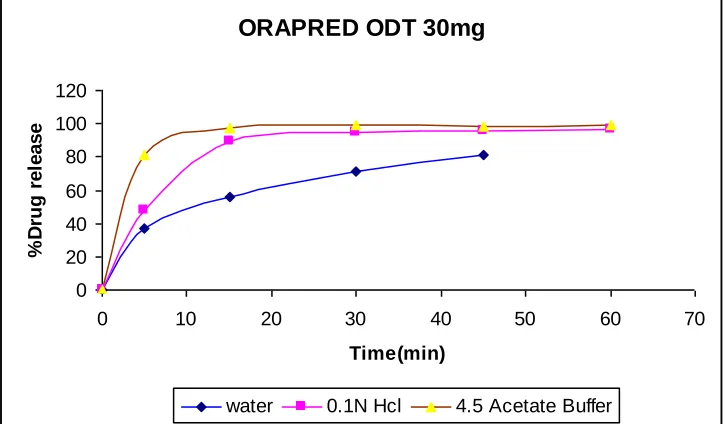
2. Dissolution profile of ORAPRED ODT in Water. 90
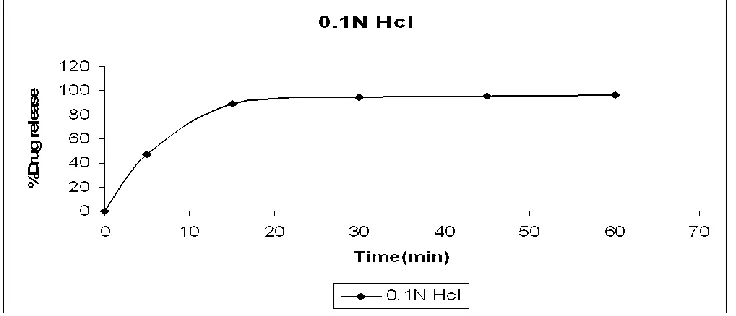
3. Dissolution profile of ORAPRED ODT in 0.1N Hcl. 90
4. Dissolution profile of ORAPRED ODT in 4.5 Acetate buffer. 91
5. Dissolution profile of ORAPRED ODT in different media. 91
6. Dissolution profile of Formulations F-3, F-4, F-5, and F-6. 93
7. Dissolution profile of Formulations F-7, F-8, F-9, and F-10. 93
8. Dissolution profile of Formulations F-11, F-12, and F-13. 94
INTRODUCTION
TabletsTablets may be defined as solid pharmaceutical dosage forms containing drug
substances with or without suitable diluents and prepared either by compression or
molding methods. They have been in widespread use since the latter part of the 19th century and their popularity continues. The term compressed tablet is believed to have
been first used by “JOHN WYETH and Brother of PHILADELPHIN”. During the same period molded tablets were introduced to be used as Hypodermic tablets for injections.
Tablets remain popular as oral dosage form because of the advantages, afforded
both to the manufacturer [e.g.: simplicity & economy of preparation, stability and
convenience in packing, shipping, and dispensing] and the patient [e.g.: accuracy of
dosage, compactness, post ability, blandness of taste and ease of administration.
Although tablets are more frequently discoid in shape, they also may be round,
oval, oblong, cylindrical or triangular. They may differ greatly in size and weight
depending on the amount of drug substance present and the intended method of
administration.
Properties of tablets
The attributes of an acceptable tablet are as follows:
The tablet must be sufficiently strong and resistance to shock and abrasion and to
withstand handling during manufacturing, packaging, shipping and use. Hardness
and friability tests measure this property.
Tablet must be uniform in weight and in drug content of the individual tablet.
This is measured by the weight variation and content uniformity tests.
The drug content of the tablet must be bioavailable. This property is measured by
the dissolution test. Accurate bioavailability can be obtained from the drug levels
of the drug after its administration.
Tablets must be elegant in appearance and must have characteristic shape, color
and other markings necessary to identify the product.
Tablets must retain all these functional attributes, which include drug stability and
Advantages of Tablets:
They are easy to be administered
They offer the greater capabilities of all oral dosage forms for the greatest dose
precision and the least content variability.
Their cost is lowest of all oral dosage forms.
They are the lightest and most compact of all oral dosage forms.
Product identification is potentially the simplest and cheapest, requiring no
additional processing steps when employing an embossed or monogrammed
punch face.
They are in general the easiest and cheapest to package and ship of all oral dosage
forms.
They may provide the greatest ease of swallowing with the least tendency for
“hang-up” above the stomach.
They lend themselves to certain special release profile products, such as enteric or
delayed release products.
They are better suited to large-scale production than other unit oral forms.
They have the best-combined properties of chemical, mechanical and
microbiological stability of all the oral forms.
One of the major advantages of tablet over capsules is that the tablet is essentially
“tamperproof dosage form”.
Disadvantages of Tablets:
Some drugs resist compression into dense compacts, owing to their amorphous
nature or flocculent, low-density character.
Drugs with poor wetting, slow dissolution properties, intermediate to large
dosages, or any combination of these features may be difficult or impossible to
zormulate and manufacture as a tablet that will still provide adequate or full drug
Bitter tasting drugs, drugs with objectionable odor or drugs that the sensitive to
oxygen or atmosphere moisture may require encapsulation or a special type of
coating with may increase the most of the finished tablets.
A major disadvantage of capsules over tablets is their higher cost.
Types of tablets
Tablets are classified according to their route of administration or function. The
following are the 5 main classification groups:
Tablets ingested orally
1. Compressed tablets
2. Multiple compressed tablets
3. Multilayered tablets
4. Sustained action tablets
5. Enteric coated tablets
6. Sugar coated tablets
7. Film coated tablets
8. Chewable tablets
Tablets used in the oral cavity
1. Buccal tablets
2. Sublingual tablets
3. Lozenge tablets and torches
4. Dental cones
Tablets administered by other routes
1. Implantation tablets
2. Vaginal tablets
Tablets used to prepare solutions
1. Effervescent tablets
Molded tablets or tablet triturates (TT)
1. Dispensing tablets (DT)
Compressed tablets:
These tablets are uncoated and made by compression of granules. These tablets
are usually intended to provide rapid disintegration and drug release. These tablets
contain water-soluble drugs, which after swallowing get disintegrated in the stomach, and its drug contents are absorbed in the gastrointestinal tract and distribute in the whole body.
Multiple compressed tablets (MCT):
These tablets are prepared to separate physically or chemically incompatible
ingredients or to produce repeat action prolonged action products. To avoid
incompatibility, the ingredients of the formulation except the incompatible materials are
compressed into a tablet then incompatible substances along with necessary excipients
are compressed tablet.
Multilayered tablets:
These tablets consist of two or more layer of materials compressed successively in
the same tablets. The color of each layer may be the same or different. The tablets having
layers of different colors are known as “multicolored tablets”.
Sustained action tablets:
These tablets are used to get a sustained action of medicament. These tablets
when taken orally release the medicament in a sufficient quantity as and when required
maintaining the maximum effective concentration of the drug in the blood through out
the period of treatment.
Enteric-coated tablets (ECT):
These are compressed tablets meant for administration by swallowing and are
designed to bypass the stomach and get disintegrated in the intestine only. These tablets
are made to release the drug undiluted and in the highest concentration possible within
the intestine. e.g.: tablets containing antihelmentics and amoebicides.
Sugar coated tablets (SCT):
The compressed tablets having a sugar coating are called “sugar coated tablets”.
Film coated tablets (FCT):
These are compressed tablets that are covered with a thin layer or a film of
water-soluble material. A number of polymeric substances with film-forming properties may be
used. Film coating imparts the same general characteristics as sugar coating, with the
added advantage of greatly reduced time period required for the coating operation and
reduced thickness of coating, these compressed tablets having some polymer substance,
such as hydroxy propyl cellulose, hydroxy propyl methylcellulose and ethyl cellulose.
Chewable tablets:
These tablets are to be chewed in the mouth and broken into small pieces. In this
way, the disintegration time is reduced and the rate of absorption of he medicament is
increased. e.g.: aluminum hydroxide tablets, and phenolphthalein tablets.
Buccal tablets:
These tablets are to be placed in the buccal pouch or between the gums and lips or
cheek where they dissolve or disintegrate slowly and are absorbed directly without
passing into the alimentary canal. e.g.: tablets of ethisterone
Sublingual tablets:
These tablets are to be placed under the tongue where they dissolve or disintegrate
quickly and are absorbed directly without passing into GIT. E.g.: tablets of glyceryl
trinities.
Lozenges and torches:
These tablets are designed to exert local effect in the mouth or throat. These
tablets are commonly used to treat sore throat or to control coughing in common cold.
They may contain local anaesthetics antiseptic, antibacterial agents, astringent and
antitussives.
Dental cones:
These are relatively minor compressed tablets meant for placing them in the
empty socket after tooth extraction. They prevent the multiplication of bacteria in the
reduce bleeding by containing the astringent. These cones generally get dissolved in 20 to
40 min time.
Implantation tablets:
These tablets are placed under the skin or inserted subcutaneous by means of minor
surgical operation and are slowly absorbed. These implants must be sterile and should be
packed individually in sterile condition. Implants are mainly used for administration of
hormones such as testosterone, and deoxycorticosterone etc.
Vaginal tablets:
These tablets are meant to dissolve slowly in the vaginal cavity. These tablets are
typically ovoid or pear shaped to facilitate retention in the vagina. This tablet form is
used to release steroids, antibacterial agents, antiseptics or astringents to treat vaginal
infections.
Effervescent tablets:
In addition to the drug substance, these contain sodium bicarbonate and an
organic acid such as tartaric acid or citric. In the presence of water, these additives react,
liberating carbon dioxide that acts as disintegrator and produces effervescence. Except for
small quantities of lubricants present, effervescent tablets are soluble.
Tablet triturates
Tablet triturates usually are made from moist material, using a triturate mold that
gives them the shape of cut sections of cylinder. Such tablets must be completely and
rapidly soluble. The problem arising from the compression of these tablets is the failure
to find a lubricant that is completely water-soluble.
Dispensing tablets:
These tablets provide a convenient quality of potent drug that can be incorporated
readily in to powders and liquids, thus circumventing the necessity to weigh small
quantities. These tablets are supplied primarily as a convenience for extemporaneous
compounding and should never be dispensed as a dosage form.
Hypodermic tablets:
available for most new drug substances, there is no justification for the hypodermic
tablets for injection. Their use in this manner should be discouraged, since the resulting
solutions are not sterile. Large quantities of these tablets continue to be made, but for oral
administration. No hypodermic tablets ever have been recognized by the official
compendia.
Tablets and hard gelatin capsules constitute a major portion of drug delivery
systems that are currently available. However, many patient groups such as the elderly,
children and patients who are mentally retarded, uncooperative, nauseated, or on
reduced-liquid-intake diets have difficulty in swallowing these dosage forms. Elderly patients may
find the administration of these dosage forms particularly difficult because many of them
are required to consume medicines on a regular basis to maintain their quality of life.
Children also may have difficulty ingesting these dosage forms because of their
underdeveloped muscular and nervous systems. Swallowing conventional tablets can be
further hindered by conditions such as allergic reactions, and episodes of coughing1. The aforementioned problems can be solved by developing rapidly disintegrating
and dissolving tablet dosage forms for oral administration because they dissolve in saliva
and do not require water for swallowing. Oral disintegrating tablets are also called as
‘mouth dissolving tablets’, ‘orodispersible tablets’, quick disintegrating tablets, rapid
dissolving tablets, porous tablets and rapimelts2.
Recently orally disintegrating tablet terminology has been approved by United
States Pharmacopoeias, Centre for Drug Evaluation and Research (CDER).
US FDA defined orally disintegrating tablet as ‘A solid dosage form containing
medicinal substances, which disintegrates rapidly, usually within a matter of seconds,
when placed upon the tongue’. Recently European pharmacopoeia also adopted the term ‘orodispersible tablet’ as a tablet that is to be placed in the mouth where it disperses
rapidly before swallowing3. Despite various terminologies used, orally disintegrating tablets are here to offer unique form of drug delivery with many advantages over the
ORALLY DISINTEGRATE TABLETS:
Oral drug delivery remains the preferred route for administration of various drugs.
Recent developments in the technology have prompted scientists to develop orally
disintegrate tablets (ODT) with improved patient compliance and convenience. ODTs are
solid unit dosage forms, which disintegrate or dissolve rapidly in the mouth without the
need of chewing and water. It is particularly meant for people who have difficulty in
swallowing conventional tablets and capsules. It has been reported that Dysphasia
(difficulty in swallowing) is common among all age groups and more specific with
pediatric and geriatric populations along with institutionalized patients and patients with
nausea, vomiting, and motion sickness complications. ODTs with good taste and flavor
increase the acceptability of bitter drugs by various groups of population1.
Orally disintegrating tablets are also called as orodispersible tablets, quick
disintegrating tablets, mouth dissolving tablets, fast disintegrating tablets, fast dissolving
tablets, rapid dissolving tablets, porous tablets and rapimelts. However, of all the above
terms, United States pharmacopoeia (USP) approved these dosage forms as ODTs.
Recently, European Pharmacopoeia has used the term orodispersible tablets that disperse
readily and within 3 min in mouth before swallowing.
USFDA defined ODT as “A solid dosage form containing medical substance or
active ingredient which disintegrates rapidly usually within a matter of seconds when placed upon the tongue”. The disintegration time for ODTs generally ranges from several seconds to about a minute.
Typically a dispersible tablet is dispersed in about 5-15 ml of water (e.g. in a
tablespoonful or a glass of water) and the resulting dispersion is administered to the
patient. However, they can also be placed directly on the tongue and sucked. Dispersible
tablets are required to disintegrate within 3 mins in water at 15-25°C. Also the dispersion
produced from a dispersible tablet should pass through a sieve screen with a nominal
mesh aperture of 710 microns. The dispersion properties of dispersible tablets can be
Ideal characteristics of dispersible tablets
They require water or other liquid at the time of administration.
Should easily disintegrate and dissolve.
Mask or overcome unacceptable taste of drug.
They should have high drug loading.
They should have pleasant feel in the mouth.
They should have low sensitivity against environmental conditions like moisture,
temperature etc.
Ease of administration for patients who are mentally ill, disabled and
uncooperative.
Should be portable without fragility concern.
They should be manufactured using conventional tablet processing and packaging
equipment at low cost.
Special features of dispersible tablets
Dispersible tablets are not intended to be chewed or swallowed whole. They
should not be dispersed in carbonated drinks or milk due to foaming or slow
dispersion. The purpose of dispersible tablet is to provide a unit dosage form of
medication which can be easily administered to infants and children or to elderly,
who may have difficulty swallowing a tablet intact.
Advantages of dispersible tablets
They are particularly suitable both for elderly persons with swallowing difficulties
and for children.
Rapid disintegration and absorption of drug, which will produce quick onset on
action.
Certain dispersible tablets can also be divided.
The bitter taste of the active substance must be masked in advance.
Owing to the number of possible applications, the patient compliance is
These are convenient to carry, easy to manufacture and more stable.
Quick absorption from the gastrointestinal tract improves bioavailability and
reduces unwanted effects caused by the drug. e.g. gastrointestinal irritation caused
by nonsteroidal anti inflammatory drugs.
New business opportunities like product differentiation, line extension and life
cycle management. Exclusivity of product promotion.
Although chewable tablets have been on the market for some time, they are not
same as the new dispersible tablets. Patients for whom chewing is difficult or
painful can use these new tablets easily. Dispersible tablets can be used easily in
children who have lost their primary teeth, but do not have full use of their
permanent teeth.
Limitation of dispersible tablets
One common limitation of these formulations is settling of the insoluble solids at
the bottom or sides of container of the prepared dispersion, which may lead to a
loss of part of the drug during administration, resulting in suboptimal dosing.
Disadvantages of dispersible tablets
Most dispersible tablets lack the mechanical strength common to traditional
tablets. Many products are very light weight and fragile requiring them to be
individually packaged. Patients should be advised not to push these tablets
through the foil film, but instead, peel the film back to release the fast dissolving
tablet.
Due to the formulation of dispersible tablets which also more susceptible to
degradation via temperature and humidity. Some of the newest dispersible tablet
formulations are dispensed in a conventional stock bottle. Pharmacists are advised
to take care when dispensing such formulations to ensure they are exposed to high
levels of moisture or humidity. Excess handling of tablets can introduce enough
Developmental challenges in dispersible drug delivery
Ease of administration
Fast Dissolving Delivery Systems are easy to administer and handle hence, leads
to better patient compliance. Usually, elderly people and pediatrics experience
difficulty in swallowing the conventional dosage forms (tablets, capsules,
solutions and suspensions) because of tremors of extremities and dysphasia. Fast
Dissolving Delivery Systems may offer a solution for these problems.
Taste of the active ingredient
Some drugs have relatively no taste, and simply adding a suitable flavor can hide
any unpleasant sensation. However, most drugs do require taste masking if they
are to be incorporated into dispersible formulations. Numerous methods exist to
achieve this, including simple wet granulation or roller compression with other
excipients to minimize the presented surface area of the drug. Spray drying can
also be employed to shroud the drug. If further taste masking is needed, the
resultant particle can be sealed with a suitable coating material (like
hydroxypropyl methyl cellulose, ethylcellulose, methacrylate and
polyvinylpyrollidone). The choice of coating material will determine the
mechanism of taste masking. In addition, the quantity of coat applied, how it is
applied, and where other excipients are included in the coating will all affect the
quality of taste masking.
Cyclodextrins (cyclic linked oligosaccharides) have been shown to prove some
measure of taste masking by trapping the drug within the cyclic structure long
enough to render initial dissolution. Other taste masking methods namely coating
methods including electrochemical, hot melt and supercritical fluids.
Encapsulation using coacervation has also been employed to encapsulate certain
drugs.
Dose
Molecules requiring high doses present challenges to development of dispersible
and 3) tablet size. These challenges are not unrelated because most drugs will
require taste masking. It depends on the degree of bitterness relative to the dose of
the drug, which will in turn effect the final tablet size. As mentioned previously,
drug may require coating, which will result in an increase in the particle size. The
extent to which this increase will affect the mouth feel and tablet size will depend
on the dose of the drug and the amount of coating material required masking its
taste.
Hygroscopicity
Several fast dissolving tablets are hygroscopic and cannot maintain physical
integrity under normal conditions of temperature and humidity. Hence they need
protection from humidity that calls for specialized product package.
Friability
In order to allow dispersible tablets to disintegrate rapidly in the mouth, they are
made of either very porous or soft molded matrices or compressed into tablets
with low compression force, which makes the tablet friable and/or brittle which
are difficult to handle, often require specialized peel-off blister packing.
Mouth feel
SIGNIFICANCE2:
ODTs offer all advantages of solid dosage forms along with special advantages,
include:
As ODTs are unit solid dosage forms, they provide good stability, accurate
dosing, easy manufacturing, small packaging size, and easy to handle by patients.
Rapid disintegration of tablet results in quick dissolution and rapid absorption which
provide rapid onset of action.
Medication as bitter pill has changed by excellent mouth feel property produced by use of flavors and sweeteners in ODTs.
Bioavailability of drugs that are absorbed from mouth, pharynx, and esophagus is
increased.
Pre-gastric absorption of drugs avoids hepatic metabolism, which reduces the
dose and increases the bio-availability.
Selection of ODT drug candidates3
Several factors must be considered when selecting drug candidates for delivery as
ODT dosage forms. In general, an ODT is formulated as a bioequivalent line extension of
an existing oral dosage form. Under these circumstances, it is assumed that the absorption
of a drug molecule from the ODT occurs in the post gastric GIT segments, similar to the
conventional oral dosage form.
It is possible that these differences may, in part, be attributed to the drug
molecule, formulation, or a combination of both. If significantly higher plasma levels and
systemic exposure have been observed, pregastric absorption leading to the avoidance of
first-pass metabolism may play an important role. This situation may have implications
for drug safety and efficacy, which may need to be addressed and assessed in a marketing
application for an ODT (13). For example, safety profiles may be improved for drugs that
produce significant amounts of toxic metabolites mediated by first-pass liver metabolism
and gastric metabolism and for drugs that have a substantial fraction of absorption in the
oral cavity and segments of the pregastric GIT.
The ideal characteristics of a drug for dissolution in the mouth and pregastric absorption
1. No bitter taste;
2. Dose lower than 20 mg;
3. Small to moderate molecular weight;
4. Good solubility in water and saliva;
5. Partially nonionized at the oral cavity's ph;
6. Ability to diffuse and partition into the epithelium of the
upper git (log p >1, or preferably >2);
7. Ability to permeate oral mucosal tissue (15).
8. In contrast, the following characteristics may render a drug
unsuitable for delivery as an odt:
9. Short half-life and frequent dosing;
10.Very bitter or otherwise unacceptable taste because taste
masking cannot be achieved;
11.Require controlled or sustained release.
12.The drug dose must be lower than 400 mg for insoluble drugs
and less than 60 mg for soluble drugs (because they dissolve
quickly, odts cannot provide controlled or sustained release,
except those that contain slow-dissolving,
microparticulate-coated drugs, which quickly disperse and are swallowed.
Oral routes of drug absorption:
There are two permeation pathways for passive drug transport across the oral mucosa:
1. Paracelluloar and
2. Transcellular routes.
Descriptions of orally disintegrating dosage forms3:
Possible benefits of Orally disintegrating tablet drugs.
Clinical
1. Improved drug absorption
2. Faster onset of action
Medical
1. Better taste, no water needed
2. Improved stability because of unit-dose packaging
3. Manufactured with common process and conventional equipment
Orally disintegrating tablet manufacturers and technology characteristics:
Technology In vitro Disintegra tion Times Tablet hardness and Robustness Packaging Drug-loading dose(mg) Marketed products worldwide
Advatab (Eurand) 15-30 Hard, robust Bottles or blister
pack <700 2
DuraSolv (CIMA
Labs) <30 Hard, robust
Bottles or blister
pack <500 3
FlashDose (Biovail) 5-15 Soft, friable Blister pack <600 1
FlashTab (ethypharm
SA) 30-60
Relatively
durable Blister pack <650 3
Lyoc (Cephalon) <10 Soft, friable Blister pack <1000 6
OraQuick
(KVPharmaceuticals) <20
Relatively
durable
Bottles or blister
pack <500 1
OraSolv (CIMA Labs) <30 Soft, fragile Blister pack <750 3
SATAB (Sato) <10 Relatively
durable Blister pack <600 7
WOWTAB
(Yamanouchi) <30
Relatively
durable
Bottles or blister
pack <500 14
Zydis (Cardinal
Techniques used in the formulation of dispersible tablets
The performance of dispersible tablets depends on the technology used in their
manufacture. The orally disintegrating property of the tablet is attributable to a quick
ingress of water into the tablet matrix, which creates porous structure of the tablet matrix,
which creates porous structure and results in rapid disintegration. Hence, the basic
approaches to develop dispersible tablets include maximizing the porous structure of the
tablet matrix, incorporating the appropriate disintegrating agent and using highly
water-soluble excipients in the formulation.
Following technologies have been used by various researchers to prepare fast
disintegrating tablets:
Freeze-drying or lyophilization
Tablet Molding
Direct compression
Wet granulation
Spray drying
Sublimation
Taste masking
Mass extrusion
Freeze-Drying or lyophilization
Freeze drying is the process in which water is subjected from the product after it
is frozen. This technique creates an amorphous porous structure that can dissolve rapidly.
Commonly used excipients with their uses and examples employed in formulation of
dispersible tablets using Freeze-drying are listed below in the following table. A typical
procedure involved in the formulation of dispersible tablets using this technique is
mentioned here. The active drug was dissolved or dispersed in an aqueous solution of a
freezing tunnel to freeze the drug solution or dispersion, and then the frozen blister packs
are placed in refrigerated cabinets to continue the freeze-drying. After freeze-frying the
aluminum foil backing is applied on a blister sealing machine. Finally the blisters are
packaged and shipped.
Excipients and their uses in Freeze drying technique
Excipients Use Examples
Polymer Strength and rigidity Gelatin, alginate and dextrin
Polysaccharides Crystallinity, hardness and
palatability Mannitol and sorbitol
Collapse protectants Prevents shrinking Glycerin
Flocculating agents Uniform dispersion Xanthan gum and acacia
Preservatives Prevent microbial and fungal
growth Parabens
Permeation enhancer Transmucosal permeability Sodium lauryl sulphate
pH adjusters Chemical stability Citric acid and sodium
hydroxide
Flavors and sweeteners Patient compliance ---
Water Porous unit formation ---
The freeze-drying technique has demonstrated improved absorption and increase
in bioavailability. The Zydis formulation consist of a drug physically trapped in a
water-soluble matrix (saccharine mixture and polymer), which is freeze dried to produce a
technology should be chemically stable and water insoluble and particle size preferably
less than 59 mm. Water soluble drugs might form eutectic mixtures and not freeze
adequately, so dose is limited to 60 mg and the maximum drug limit is 400 mg or water
insoluble drug as large particle sizes might present sedimentation problems during
manufacture. The major disadvantage of lyophilization technique are that it is expensive
and time consuming; fragility makes conventional packaging unsuitable for these
products and poor stability under stressed conditions.
Tablet Molding
The preparation of dispersible tablets using molding technology employs
water-soluble ingredients so that the tablet dissolves completely and rapidly. The active
ingredients in most cases are absorbed through the mucosal lining of the mouth. Molding
process is of two types i.e., solvent method and heat method. Solvent method involves
moistening the powder blend with a hydro alcoholic solvent followed by compression at
low pressures in molded plates to form a wetted mass (compression molding). The
solvent then removed by air-drying. The tablets manufactured in this manner are less
hastens dissolved. The heat molding process involves preparation of a suspension that
contains a drug, agar and sugar (e.g. Mannitol or Lactose) and pouring the suspension in
the blister packing wells, solidifying the agar at room temperature to form a jelly and
drying at 30°C under vacuum. The mechanical strength of molded strength of the tablets,
need to be incorporated. Taste masking is an added problem for this technology.
Direct compression
It is the convenient way to manufacture tablets. Conventional equipment,
commonly available excipients and a limited number of processing steps are involved in
direct compression. Also high doses can be accommodated and final weight of tablet can
easily exceed that of other production methods. This technique can now be applied to
dispersible tablets because of the availability of improved tablet excipients, especially
1) Addition of disintegrants: Addition of disintegrants in fast dissolving tablets, leads to quick disintegration of tablets and hence improves dissolution. In many fast dissolving
tablet technologies based on direct compression, the disintegrants principally affect the
rate of disintegration and hence the dissolution. The introduction so-called
superdisintegrants and a better understanding of their properties have increased the
popularity of this technology. Tablet disintegration time can be optimized by
concentrating the disintegrants. Below critical concentration, tablet disintegration time is
inversely proportional to disintegrants concentration. Above the critical concentration
level, however, disintegration time remains approximately constant or even increases.
Microcrystalline cellulose, cross linked carboxymethyl cellulose sodium, cross
linked polyvinyl pyrrolidone and partially substituted hydroxypropyl cellulose, though
water insoluble, absorb water and swell due to capillary action and are considered as
effective disintegrants in the preparation of dispersible tablets.
Fast disintegration of tablets can also be achieved by incorporating effervescent
disintegrating agents, which generates carbon dioxide. This phenomenon also resulted in
partial taste masking of unacceptable taste of the drug. The major drawback of
effervescent excipients is their hygroscopicity (i.e., the ability to absorb atmospheric
moisture). Hence, their manufacture requires control of humidity conditions and
protection of the final product. This is reflected by the overall cost of the product.
2) Sugar-based excipients: The alternative approach for the development of
dispersible tablets by direct compression is the use of sugar-based excipients (e.g.
dextrose, fructose, isomalt, maltose, mannitol, sorbitol, starch hydrolyse, polydextrose,
and xylitol), which display high aqueous solubility and sweetness, and hence, impart taste
masking and a pleasing mouth feel.
Wet granulation
The concept of wet granulation is well-known and conventional process for tablet
formation, used to reduced bitterness of active drug with water insoluble materials. In a
aqueous composition of a granulating agent to cause the powdered material to
agglomerates. This agglomerated product is subsequently dried and then milled to
reduced size in suitable form.
Wet granulation is often carried out utilizing a shear mixer. The
high-shear granulation process is a rapid process which is susceptible for over-wetting. Thus,
the liquid amount added is critical and the optimal amount is affected by the properties of
the raw materials. Power consumption of the impeller motor and the impeller torque have
been applied to monitor the rheological properties of the wet mass during agglomeration
and, thereby, have been used to determine the end-point of water addition. However,
these methods are affected by the equipment variables. Hence, additional process
monitoring techniques would be valuable.
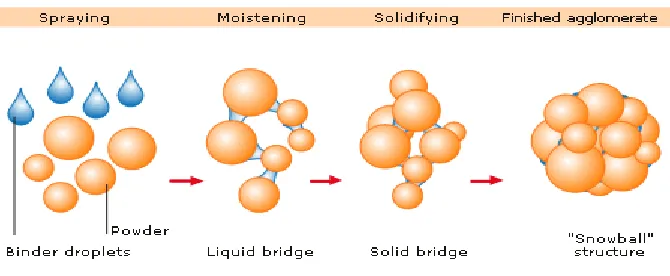
[image:29.612.131.466.344.482.2]
Figure 1: Process principle for formation of agglomerates
Wet granulation is often carried out utilizing a shear mixer. The
high-shear granulation process is a rapid process which is susceptible for over-wetting. Thus,
the liquid amount added is critical and the optimal amount is affected by the properties of
the raw materials. Power consumption of the impeller motor and the impeller torque have
been applied to monitor the rheological properties of the wet mass during agglomeration
and, thereby, have been used to determine the end-point of water addition. However,
these methods are affected by the equipment variables. Hence, additional process
Important steps involved in wet granulation
Mixing of drug(s) and excipients.
Preparation of binder solution.
Mixing of binder solution with powder mixture to form wet mass.
Coarse screening of wet mass using a suitable sieve (6-12 screens).
Drying of moist granules.
Screening of dry granules through a suitable sieve (14-20 screens).
Mixing of screened granules with disintegrant, glidant, and lubricant.
Limitations of wet granulation
The greatest disadvantage of wet granulation is its cost. It is an expensive
process because of labor, time, equipment, energy and space requirements.
Loss of material during various stages of processing.
Stability may be a major concern for moisture sensitive or thermo labile drugs.
Multiple processing steps give complexity and make validation and control
difficult.
An inherent limitation of wet granulation is that any incompatibility between
formulation components is aggravated.
Spray drying
Spray drying is used in pharmaceutical industries to produce highly porous powders. The
processing solvent is evaporated rapidly by spray drying, which renders the product
highly porous and thus can be used in manufacturing dispersible tablets. In this
technique, gelatin can be used as a supporting agent and as a matrix, mannitol as a
bulking agent and sodium starch glycolate or croscarmellose sodium or crospovidone are
used as superdisintegrants. Tablets manufactured from the spray dried powder have been
reported to disintegrate in less than 20 sec in aqueous medium.
Sublimation
The key to rapid disintegration for dispersible tablets is the presence of a porous
structure in the tablet matrix. Conventional compressed tablets that contain highly
Hence, to generate porous matrix, volatile ingredients are used that are later subjected to
a process of sublimation. e.g. ammonium bicarbonate, ammonium carbonate, benzoic
acid, camphor, hexamethonium tetramine, naphthalene, phthalic anhydride, urea, and
urethane were compressed along with other excipients into a table. The volatile material
was then removed by sublimation, leaving behind a porous matrix. Solvents such as
cyclohexane and benzene were also suggested for the generation of porosity in the
matrix.
Taste masking
Taste masking is an essential requirement for fast dissolving tablets for
commercial success. Taste masking of the active ingredients can be achieved by various
techniques. Drugs with unacceptable bitter taste can be microencapsulated into pH
sensitive acrylic polymers. Cefuroxime axetil is microencapsulated in various types of
acrylic polymers (e.g. Eudragit E, Eudragit L-55 and Eudragit RL) by solvent
evaporation and solvent extraction techniques. These polymer microspheres showed
efficient taste masking and complete dissolution in a short period. Fine granules of drug
and disintegrant (e.g. low substituted hydroxypropyl cellulose) when coated with a water
insoluble polymer (e.g. ethylcellulose) masked the bitter taste of sparfloxacin. The
addition of low substituted hydroxypropyl cellulose as disintegrant to the drug in cores
resulted in increased dissolution rate and bioavailability of sparfloxacin compared to its
conventional tablets.
Mass extrusion
This technology involves softening the active blend using the solvent mixture of
water soluble polyethylene glycol, using methanol and expulsion of softened mass
through the extruder or syringe to get a cylinder of the product into even segments using
heated blade to form tablets. The dried cylinder can also be used to coat granules of bitter
Role of Superdisintegrants in the manufacturing of dispersible tablets
Disintegrating agents are substances routinely included in tablet formulations and
in some hard shell capsule formulations to promote moisture penetration and dispersion
of the matrix of the dosage form in dissolution fluids. An oral solid dosage form should
ideally disperse into the primary particles from which it was prepared. Although various
compounds have been proposed and evaluated as disintegrants, relatively few are in
common usage today. Traditionally, starch has been the disintegrant of choice in tablet
formulations, and it is still widely used. For instance, starch generally has to be present at
levels greater than 5 % to adversely affect compactibility, especially in direct
compression. Moreover, intragranular starch in wet granulations is not as effective as dry
starch.
Mechanism of Superdisintegrants
There are four major mechanisms for tablets disintegration as follows
Swelling
Perhaps the most widely accepted general mechanism of action for tablet
disintegration is swelling. Tablets with high porosity show poor disintegration due
to lack of adequate swelling force. On the other hand, sufficient swelling force is
exerted in the tablet with low porosity. It is worthwhile to note that if the packing
fraction is very high, fluid is unable to penetrate in the tablet and disintegration is
again slows down.
Porosity and capillary action (Wicking)
Disintegration by capillary action is always the first step. When we put the tablet
into suitable aqueous medium, the medium penetrates into the tablet and replaces
the air adsorbed on the particles, which weakens the intermolecular bond and
breaks the tablet into fine particles. Water uptake by tablet depends upon
hydrophilicity of the drug/excipient and on tableting conditions. For these types of
disintegrants maintenance of porous structure and low interfacial tension towards
aqueous fluid is necessary which helps in disintegration by creating a hydrophilic
Due to disintegrating particle/particle repulsive forces
Another mechanism of disintegration attempts to explain the swelling of tablet
made with ‘nonswellable’ disintegrants. Guyot-Hermann has proposed a particle
repulsion theory based on the observation that nonswelling particle also cause
disintegration of tablets. The electric repulsive forces between particles are the
mechanism of disintegration and water is required for it. Researchers found that
repulsion is secondary to wicking.
Due to deformation
During tablet compression, disintegrated particles get deformed and these
deformed particles get into their normal structure when they come in contact with
aqueous media or water. Occasionally, the swelling capacity of starch was
improved when granules were extensively deformed during compression. This
increase in size of the deformed particles produces a breakup of the tablet.
Method of Addition of Disintegrants
The ideal disintegrant should have the following characteristics:
Poor solubility
Poor gel formation
Good hydration capacity
Good molding and flow properties
No tendency to form complexes with the drugs
Disintegrants are essentially added to tablet granulation for causing the
compressed tablet to break or disintegrate when placed in aqueous environment. There
are two methods of incorporating disintegrating agents into the tablet:
Internal Addition (Intragranular)
External Addition (Extragranular)
In external addition method, the disintegrant is added to the sized granulation with
mixing prior to compression. In Internal addition method, the disintegrant is mixed with
other powders before wetting the powder mixtures with the granulating fluid. Thus the
disintegrant is incorporated within the granules. When these methods are used, part of
disintegrant can be added internally and part externally. This provides immediate
disruption of the tablet into previously compressed granules while the disintegrating
agent within the granules produces further erosion of the granules to the original powder
particles. The two step method usually produces better and more complete disintegration
than the usual method of adding the disintegrant to the granulation surface only.
Factors affecting action of disintegrants
Percentage of disintegrants present in the tablets.
Types of substances present in the tablets.
Combination of disintegrants.
Presence of surfactants.
Hardness of the tablets.
Nature of Drug substances.
Mixing and Screening.
Because of the increased demands for improved dissolution requirements, there
are currently, a new generation of “Superdisintegrants”. These newer substances are
more effective at lower concentrations with greater disintegrating efficiency and
mechanical strength. On contact with water the superdisintegrants swell, hydrate,
change volume or form and produce a disruptive change in the tablet. Effective
superdisintegrants provide improved compressibility, compatibility and have no
negative impact on the mechanical strength of formulations containing high-dose drugs.
Classification of superdisintegrants
Structural type
(NF name) Description
Trade name
(manufacturer)
Modified starches (Sodium
starch glycolate, NF)
Sodium carboxymethyl
starch; the carboxymethyl
groups induces
hydrophilicity and
cross-linking reduces solubility.
Explotab®(Edward Mendell
Co.), Primojel®
(Generichem Corp.),
Tablo® (Blanver, Brazil)
Modified cellulose
(Croscarmellose, NF)
Sodium carboxymethyl
cellulose which has been
cross-linked to render the
material insoluble.
AcDiSol® (FMC Corp.),
Nymcel ZSX® (Nyma,
Netherlands), Primellose®
(Avebe, Netherlands)
Solutab® (Blanver, Brazil)
Cross-linked
poly-vinylpyrrolidone
(Crospovidone, NF)
Cross-linked
polyvinylpyrrolidone; the
high molecular weight and
cross-linking render the
material insoluble in water.
Crospovidone M® (BASF
Corp.), Kollidon CL®
(BASF Corp.),
Polyplasdone XL (ISP
Corp.)
Three major groups of compounds have been developed which swell to many
times their original size when placed in water while producing minimal viscosity
effects.19
1. Modified starches - Sodium Carboxymethyl Starch (Chemically treated Potato Starch)
i.e. Sodium Starch Glycolate (Explotab, Primogel)
Mechanism of Action: Rapid and extensive swelling with minimal gelling.
Effective Concentration: 4-6 %. Above 8 %, disintegration times may actually increase
2.Cross-linked polyvinylpyrrolidone - water insoluble and strongly hydrophilic.
i.e. Crospovidone (Polyplasdone XL, Kollidon CL)
Mechanism of Action: Water wicking, swelling and possibly some deformation recovery.
Effective Concentration: 2-4 %
3.Modified cellulose- Internally cross-linked form of Sodium carboxymethyl cellulose.
i.e. Ac-Di-Sol (Accelerates Dissolution), Nymcel
Mechanism of Action: Wicking due to fibrous structure, swelling with minimal gelling.
Effective Concentration: 1-3 % (Direct Compression), 2-4 % (Wet Granulation).
Advantages
Effective in lower concentrations than starch.
Less effect on compressibility and flow ability.
More effective intragranularly.
Disadvantages
More hygroscopic (may be a problem with moisture sensitive drugs).
Some are anionic and may cause some slight in vitro binding with cationic drugs (not a problem in vivo).
Packaging of dispersible tablets
Some of the dispersible tablets are stable during storage, e.g. for 2 years or even
3 years in conventional packaging and these type of dosage forms are stored in HDPE
bottles, blister and strip packs.
Some of the examples of dispersible tablets
Aspirin dispersible tablet
Cefadroxil dispersible tablet
Fast dispersible Ibuprofen tablet
Cefpodoxime Proxetil dispersible tablet
Cefixime dispersible Tablet
LITERATURE REVIEW
By Suresh Bandari et al. (2008) 2 Review article: Oral drug delivery remains the preferred route for administration of various drugs. Recent
developments in the technology have prompted scientists to develop orally
disintegrating tablets (ODTs) with improved patient compliance and
convenience. ODTs are solid unit dosage forms which disintegrate or
dissolve rapidly in the mouth without chewing and water. It describes the
various formulation aspects, disintegrants employed and technologies
developed for ODTs, along with various excipients, evaluation tests,
marketed formulations, and drugs explored in this field.
C.Mallikarjuna setty et al. (Apr 2008) 15 Development of fast dispersible aceclofenac tablets: effect of functionally of super disintegrants. Disintegration time and dissolution parameters decreased with increase in the
level of croscarmellose sodium.
D M Patel et al. (Feb 2008) 14 The purpose of thes investigation was to develop fast dissolving tablets of Etoricoxib. Granules containing Etoricoxib,
menthol, crospovidone, aspartame and mannitol were prepared by wet
granulation technique. Menthol was sublimed from the granules by exposing
the granules to vaccum. The porous granules were then compressed in to
tablets. The tablets were evaluated for percentage friability and disintegration
time. Optimization of fast dissolving Etoricoxib tablets prepared by sublimation technique. The dissolving tablets with improved etoricoxib dissolution could be prepared by sublimation of tablet containing suitable
subliming agent.
different concentrations. Formulation and characterization of fast-dissolving
tablets of promethazine theoclate with USP type-II apparatus.
S.Jacob et al. (Oct 2007) 13 Novel co-processed excipients of mannitol and microcrystalline cellulose for preparing fast dissolving tablets of glipizide Using spray dring technique. Improves the fast dissolving tablet could be
prepared by the co-processed mixture of microcrystalline cellulose and
mannitol.
Sheetal malke et al. (Apr 2007) 12 Formulation and evaluation of oxcarbazepine fast dissolving tablets. It prepared with Avicel 102 as diluent & Ac-Di-Sol as a superdisintegrants by wet granulation process. All the
formulations were evaluated for characteristics such as Hardness, Friability,
Weight variation, Wetting ability, Disintegration time and Dissolution rate. A
modified disintegration method was used for studying disintegration. Since
the drug is poorly water soluble, drug release was tested in various media and
effect of surfactant on drug release was studied.
Jack Y. Zheng et al23 developed the purpose of this study is to assess the feasibility for taste masking and comparison of taste intensity during
formulation development using a multichannel taste sensor system
(e-Tongue). Taste-masking efficiency was evaluated using quinine as a bitter
model compound and a sweetener, acesulfame K, as a bitterness inhibitor. the
bitterness inhibition of quinine by using other known taste-masking
excipients including sodium acetate, NaCl, Prosweet® flavor, and Debittering® powder or soft drinks could be detected by the e-Tongue. These results further suggest that the e-Tongue should be useful in a taste-masking
evaluation study on selecting appropriate taste-masking excipients for a
solution formulation or a reconstitution vehicle for a drug-in-bottle
formulation. Based on the group distance, the relative intensity of bitterness
HCl > prednisoloneNa > quinine HCl phenylthiourea > paracetamol
sucrose octaacetate > caffeine. In conclusion, the multichannel taste sensor
or e-Tongue may be a useful tool to evaluate taste-masking efficiency for
solution formulations and to compare bitterness intensity of formulations and
drug substances during pharmaceutical product development.
Omaima A. Sammour et.al (2006)16 investigate the increase in the solubility and dissolution rate of Rofecoxib by the preparation of its solid dispersion
with PVP K -30(1:9) using Solvent evaporation method. In an attempt to
construct a statistical model for the prediction of disintegration time and
percentage friability 32 randomized full and reduced factorial design was used. The obtained results showed that dispersion of the drug in the polymer
considerably enhanced the dissolution rate.
Mishra D.N. et.al.(2005)17 Carried out formulation of rapidly disintegrating tablets of meloxicam using super disintegrates like sodium starch
glycolate, Ac-di-sol and Low molecular weight HPMC. The disintegration
time in the oral cavity was tested And was found to be around 1 minute. It
was concluded that rapidly disintegrating tablets with proper hardness
rapidly disintegrates in the oral cavity with enhanced Dissolution rate.
Sheftell FD et.al (2005)18 developed fast disintegrating / Rapid – release Formulation of Sumatriptan to enhance tablet disintegration and drug
dispersion and potentially, improve absorption. Two studies were conducted
comparing the time to onset of relief from moderate or severe migraine pain
with the fast disintegrating / Rapid Release Formulation of Sumatriptan
tablets 50 and 100 mg and placebo. Using a personal digital assistant,
patients recorded the time of dosing and the at which pain severity reached
none that or mild in real time so that the time to onset of relief could be
measured as a continuous variable. Results shown that Sumatriptan tablets in
treatment of moderate to severe migraine pain, were generally well tolerated
and achieved an onset of pain relief as early as 20 min. for - 100 mg and as
early as 30 min.for 50 mg.
Mukesh G. et.al. (2004)19 Formulates mouth dissolving tablet of Nimesulide. Granules containing Nimesulide, camphor, crospovidone and
lactose were prepared by wet Direct Compression technique. Camphor was
sublimed from the dried granules by exposure by vacuum. The porous
granules were then compressed and evaluated. The result for obtaining a
rapidly disintegrating dosage forms, tablets should be prepared using an
optimum concentration of camphor and a higher percentage of crospovidone.
Yourong Fu et.al (2004)20 conducted comprehensive review of current technologies in making fast dissolving tablet. Mannose was chosen as the
best candidate for the investigation. The mechanisms of fast dissolution of
mannose tablets were studied. The strength of mannose tablets was
improved by the moisture treatment process. Poly (acrylic acid), super
porous hydrogel (SPH) particles showed a high swelling property in various
aqueous solutions and had a very good compressibility and compatibility.
The effect of SPH particles on disintegration time and hardness of fast
dissolving tablet were compared to common super disintegrates such as
sodium starch glycolate and carboxymethyl cellulose sodium. The addition
of SPH significantly decreased the disintegration time of FDT.S but had a
negative impact on tensile strength. The results indicates PAA SPH is a
promising super – disintegrates for making FDT’S.
Mishra et al21 assessed the suitability of spray dried excipient base in the formulation of oral disintegrating tablets of valdecoxib and metoclopramide.
Superdisintegrants (such as Ac-Di-Sol, Kollidon CL, sodium starch
glycolate), diluent (mannitol) along with sweetening agent (aspartame) were
prepared by direct compression and were evaluated in the similar way.
Maximum drug release and minimum disintegrating time were observed with
Kollidon CL excipient base as compared to tablets prepared by direct
compression, showing the superiority of the spray dried excipient base
technique over direct compression technique
Moen and Keating et al22 developed a new fast-disintegrating sumatriptan tablet with the goal of speeding absorption and onset of effect compared withstandard sumatriptan tablets. Compared with placebo, pain relief was
significantly greater with sumatriptan fast disintegrating tablets 100mg at 25
and 17 minutes following administration and with sumatriptan fast
disintegrating tablets 50mg at 50 and 30 minutes following administration, to
AIM AND OBJECTIVE
The aim is to develop and formulate PREDNISOLONE SODIUM
PHOSPHATE Orally Disintegrating tablets using different concentrations of taste
masking and enteric coating materials comparable to the innovator product with
better stability,high product feasibility,and excellent patient compatability.
The Objective of present study is to mask the bitter taste of the API and
prepare a Orally disintegrating tablets using taste masking materials, enteric
coating materials and super disintegrants which is pharmaceutically equivalent to
PLAN OF WORK
To carry out a brief literature review. To do Pre-formulation studies:
1) API- Tap density, bulk density, angle of repose and compressibility index.
2) BLEND- Tap density, bulk density, angle of repose and compressibility
index.
To Formulate of PREDISOLONE Sodium Phosphate Orally Disintegrated Tablets.
To Evaluate PREDISOLONE Sodium Phosphate Orally Disintegrated Tablets for Disintegration time and Dissolution study.
Selection of best formulation on the basis of Disintegration time and In-vitro
drug release.
MATERIALS AND METHODS
INSTRUMENT LIST.
Instruments Supplier/Manufacturer
Compression machine Rimek minipress
Hot air oven Eltek motors, Mumbai
RMG mixer Sreenex machines pvt. Limited, Hyderabad
Sieves Jayanth test sieves. Mumbai.
Balances Citizen scale pvt. Limited, Thane.
Density tester Electrolab ,Mumbai
Disintegration apparatus Electrolab, Mumbai
Dissolution apparatus Electrolab, Mumbai
HPLC Waters India pvt. limited,
Hardness tester Dr.Schleuniger pharmatron,U S A.
Friabilator Electrolab, Mumbai
MATERIALS LIST.
Materials Supplier/Manufacturer
Prednisolone sodium phosphate IPCA Laboratories
Avicel PH101 FMC Polymers
Poly ethylene Glycol 4000 BASF Corporation
Ethyl cellulose 4CPS The DOW chemical company
Mannitol spray dried SPI polyol, 321, new castle.
Eudragit EPO M/s. DEGUSSA
Eudragit L100 M/s. DEGUSSA
Crospovidone XL-10 M/s. ISP Technologies
Ethyl cellulose The DOW chemical company
Aspartame Neutrasweet pharma agencies
Sodium Bicarbonate Merk Chemicals
Citric acid Merk Chemicals
Aerosil M/s. DEGUSSA
METHODS
Innovator Product details:
Innovator product details including their manufacturer name, description, physical
parameters and dissolution profile were given in the following table
Innovator Product details:
Name of the product ORAPRED – 30mg
Manufacturer name Alliant Pharmaceuticals Alpharetta, GA
30022,USA.
Color White
Description white, flat faced, beveled tablets, debossed with
ORA on one side and 30 on the other.
Package They are supplied as 48 tablets per carton. Each
carton has 8 cards containing 6 tablets.
Physical parameters of Innovator product:
Parameters 30mg
Weight of the tablet (mg) 605
Thickness (mm) 5.14
Hardness (kp) 3.08
Disintegration time (sec) 26