R E S E A R C H A R T I C L E
Open Access
Factors associated with smoking among
tuberculosis patients in Spain
María Ángeles Jiménez-Fuentes
1,2,3*, Teresa Rodrigo
2,3,4,5, María Neus Altet
2,3,6, Carlos A. Jiménez-Ruiz
7,
Martí Casals
2,5,8, Antón Penas
2,9, Isabel Mir
2,10, Segismundo Solano Reina
11, Juan Antonio Riesco-Miranda
12,13,
Joan A. Caylá
2,3,4,8,14and Smoking and Tuberculosis Research Working Group
Abstract
Background:To determine the prevalence of smoking and analyze associated factors in a cohort of patients diagnosed with tuberculosis (TB) in Spain between 2006 and 2013.
Methods:Multicenter, cross-sectional, descriptive, observational study using a national database of TB patients, using logistic regression to calculate odds ratios (OR) and confidence intervals (CI).
Results:We analyzed 5,846 cases (62 % men, mean age 39 years, 33 % foreigners). 23.4 % were alcohol abuser, 1.3 % were injected drug users (IDU), 4.6 % were co-infected with HIV, and 7.5 % had a history of TB treatment. 6.6 % and 0. 8 % showed resistance to one and multiple drugs, respectively. The predominant clinical presentation was pulmonary (71 %) with a cavitary radiological pattern in 32.8 % of cases. 82 % of cases were confirmed microbiologically, and 54 % were smear-positive microscopy.
2,300 (39.3 %) patients were smokers. The following factors were associated with smoking: male sex (OR = 2.26;CI:1.97;2. 60), Spanish origin (OR = 2.79;CI:2.40–3.24), alcoholism (OR = 2.85;CI:2.46;3.31), IDU (OR = 2.78;CI:1.48;5.52), homelessness (OR = 1.99;CI:1.14–3.57), pulmonary TB (OR = 1.61;CI:1.16;2.24), cavitary radiological pattern (OR = 1.99;CI:1.43;2.79) and a smear-positive microscopy at the time of diagnosis (OR = 1.39;CI:1.14;1.17).
Conclusions:The prevalence of smoking among TB patients is high. Smokers with TB have a distinct sociodemographic, clinical, radiological and microbiological profile to non-smokers.
Keywords:Tuberculosis, Smoking, Predictors, Prevention
Background
Smoking and tuberculosis (TB) are two of the biggest public health problems worldwide [1]. Smoking is one of the leading preventable causes of premature death, pro-ducing 6 million deaths a year. At present, about 33 % of the world population smokes, mainly in countries with a high prevalence of TB. In turn, TB causes 9.6 million in-cident cases and 1.5 million deaths in 2014 [2, 3].
While, the relationship between smoking and TB has been recognized for almost a century, the impact of smoking on TB has only been demonstrated in last
decade [4–7]: both active and passive exposure to smoke are independent risk factors for TB infection [8, 9], the progression of TB infection to disease [10, 11], greater disease severity, and increased risk of post-treatment relapse and mortality [12–14].
A recent study based on mathematical modelling esti-mated that, between 2010 and 2050, smoking could raise the number of TB cases worldwide by 18 million, and substantially increase secondary mortality if current trends in tobacco consumption are maintained [15]. The World Health Organization and the International Union Against Tuberculosis and Lung Disease issued regulations in 2007 to control these two clearly re-lated epidemics [1].
Smoking prevalence among TB patients could be higher than the objectified general population in many
countries; in China a case-control study shows
* Correspondence:[email protected]
1Unidad de Tuberculosis Valle de Hebrón-Drassanes. Programa Especial de
Enfermedades Infecciosas, Hospital Universitario Valle de Hebrón, Av Drassanes, 17-21, 08001 Barcelona, Spain
2Programa Integrado de Investigación en Tuberculosis (PII TB) de la Sociedad
Española de Neumología y Cirugía Torácica (SEPAR), Barcelona, Spain Full list of author information is available at the end of the article
prevalence of 54.6 % [16], in South Africa found that 56 % of people with active TB were smokers [17], a study in rural India found that 81.5 % of TB cases had previ-ously smoked at some time in their life [18] and in Georgia the prevalence of current smokers among the diagnoses of TB represents 45.9 % [19]. Currently, there are no reliable data on the prevalence of smoking among TB patients in Spain, with the exception of one study carried out in Catalonia between 1996 and 2002, which reported a smoking prevalence of 34.9 % [12].
The aim of our study was to determine the prevalence of smoking among patients diagnosed with TB in Spain between 2006 and 2013, and to identify factors asso-ciated with smoking in this population. The ultimate goal is to design assistance and support strategies for smoking cessation to improve clinical outcomes, re-duce TB transmissibility, and improve prognosis and survival.
Methods
We performed a multicenter, cross-sectional, descriptive, analytical and observational study.
We included patients diagnosed with TB between 1 January 2006 and 31 December 2013 within the catch-ment area of the Integrated TB Research Program (PII TB) Working Group of the Spanish Society of Pneumol-ogy and Thoracic Surgery (SEPAR) in 60 centers in Spanish Autonomous Communities.
We included patients aged >18 years with a diagnosis of TB, as determined by: 1) positive smear, or negative smear with positive culture for Mycobacterium
tubercu-losis, or extra-pulmonary TB as demonstrated by granu-lomas tubercular on histology; 2) patients suspected TB (clinical, radiological, epidemiological and/or laboratory results) with a good response to TB treatment without other diagnosis.
Patients were considered to be smokers if they re-ported having smoked ≥1 cigarettes per day continu-ously during the year preceding the diagnosis of TB and no smoker the person who has smoked less than 100 cigarettes in his life [20].
The information is collected by clinical researcher from the interview and review of the history in three visits: at the time of diagnosis, the second month and the end of treatment. For all cases, we collected socio-demographic data, living status, origin (native or immi-grant), place of diagnosis, alcohol consumption (men consuming over 280 g alcohol per week, an women over 168 gr, were considered alcoholics), use of intravenous heroin or/and cocaine drugs (IDU), delayed diagnosis (>50 days), TB localization, radiology, microbiology re-sults and sensitivity study, history of TB, HIV infection, clinical progression, drug treatment, and treatment out-come (correct: cured, treatment completed; incorrect:
therapeutic failure, moved away/transferred, lost to follow-up and death).
The information obtained from each patient was stored in an electronic data collection notebook (DCN) implemented in a software application available to each study investigator via a personal identifier and password.
The study was conducted according to the require-ments of the Declaration of Helsinki and Spanish Data Protection Law 15/1999. All patients gave their informed consent to participate in this study, which was approved by the Clinical Research Ethics Committee of Vall d'Hebron University Hospital Foundation - Research Institute.
Statistical analysis
We performed a descriptive study of the prevalence of smoking among participants, and the frequency distribu-tion of other variables. We performed bivariate analysis of factors potentially associated with smoking (yes/no) by comparing proportions between groups using the χ2 test. Results with p < 0.05 were considered statistically significant. For the multivariable analysis, we fit logistic regression models using the backward stepwise selection method to include variables that were relevant to the study, as well as those with p < 0.001 in the bivariate analysis, and to compute Odds Ratios (OR) and 95 % Confidence Intervals (CI). We used the Hosmer-Lemeshow test to evaluate the goodness of fit of each model. All analysis was performed using IBM SPSS Statistic19.
Results
We included 5,846 TB patients; with a mean age of 39 years (range 18–100 years), 3,626 (62 %) men, and 1,941 foreigners (33 %). 23.4 % were pathological alcohol drinkers, and 1.3 % were IDU. 4.6 % of cases were coin-fected with HIV, 438 (7.5 %) had a history of TB treat-ment, and 49.5 % were diagnosed by hospital emergency services. 6.6 % of cases were found to be resistant to any drug, and 0.8 % to multiple drugs. The predominant clinical presentation was pulmonary tuberculosis (4,149 cases, 71 %), with a cavitary radiological pattern in 32.8 % of cases. 82 % of cases were confirmed microbio-logically, of which 54 % were smear-positive.
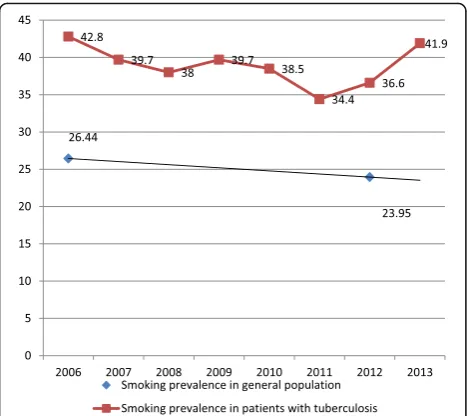
A total of 2,300 (39.3 %) patients were smokers, and this proportion remained stable during the course of the study Fig. 1.
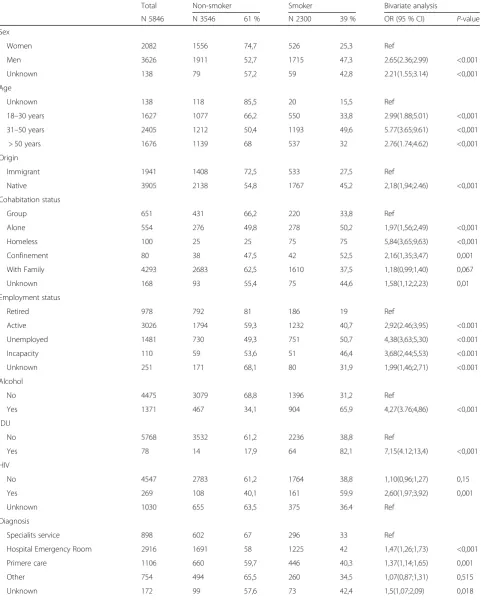
alcoholism and the use of injected drugs. Smoking was more frequent in cases with coexisting HIV infection, and those with a history of TB treatment. The preva-lence of delayed diagnosis was significantly higher in smokers than in non-smokers. Pulmonary forms of TB, radiological cavitation, and positive smear-test results were more common in smokers, as was therapeutic non-compliance, and the need for directly observed treatment (DOT) administration and poorer treatment outcome. In contrast, we observed no differences between smokers and non-smokers in terms of single or multi-drug resist-ance, prescribed treatment, or clinical or radiological pro-gression (Table 1).
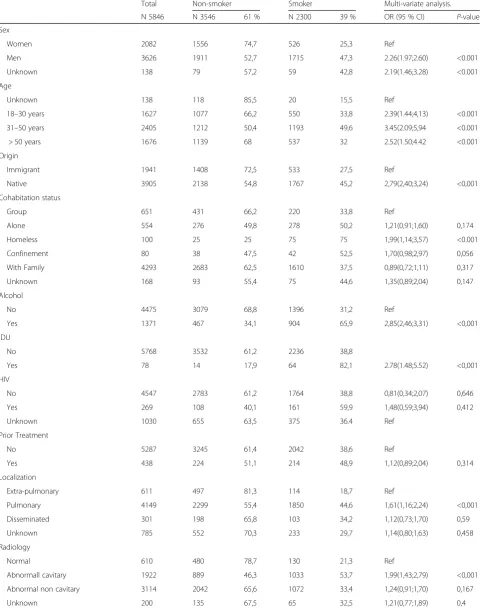
The multivariate analysis (Table 2) showed that the following factors were associated with smoking at the time of diagnosis in this cohort of TB patients: male gender (OR = 2.26,CI 1.97–2.60), being native Spanish (OR = 2.79,CI 2.40–3.24), alcohol consumption (OR = 2.85,CI 2.46–3.31), IDU (OR = 2.78,CI 1.48–5.52), pov-erty (OR = 1.99,CI 1.14–3.57), pulmonary forms of TB (OR = 1.61,CI 1.16–2.24), cavitary radiological patterns (OR = 1.99,CI 1.43–2.79) and positive smear-test results (OR = 1.39, CI 1.14–1.71).
Discussion
We observed a high prevalence of smoking among indi-viduals diagnosed with TB in Spain between 2006 and 2013. Smoking was associated with male gender, being native Spanish, the consumption of other drugs, a pre-carious social position, more severe and more developed lung disease, and poorer treatment outcome than in non-smoking TB patients.
In this study, we found that 39.3 % of TB patients were regular smokers at the time of diagnosis, a much higher figure than that reported for the general population in Spain, 23.95 %, according to data from the National Health Survey 2011–2013 and it remained well above this value, and with little annual variation (Fig. 1); this level was similar to that published for Catalonia in 2002 (34.9 %) [12]. However, during the period of this study, we observed a steady decline in smoking prevalence in Spain, 26.44 % in 2006 to 23.95 % in 2013 [21], as a re-sult of legislative changes and prevention programs [22]. Thus, the TB patients smokers may be resistant to gen-eral anti-smoking measures, possibly for social reasons or because of differences in its level of addiction to nico-tine. This hinders smoking cessation in this group, and highlights the need for a different set of cessation strat-egies to those used in the general population.
In our sample, we found that men smoke significantly more than women; 62 % of men with TB were smokers, compared to 27.87 % of males in the general population during the same period. In comparison, the prevalence of smoking among female TB patients (25.3 %) was only 5 percentage points higher than in the general popula-tion (20.2 %). Worldwide, TB is known to be more com-mon in men than in women. A study conducted in 22 countries with a high burden of TB found that smoking was a predictor of increased reporting of TB in males [23], suggesting that the differences in disease rates be-tween sexes could be due to the higher prevalence of smoking in men, a pattern that persists in virtually all ethnic groups and countries [2].
While a third of the cases included in this study were foreigners, the prevalence of smoking was much lower in this group (27.5 %) than in native Spanish patients (45.2 %). Previous studies carried out in Spain show that the intensity of drug and alcohol consumption is lower in the immigrant population than in natives. This pattern has been attributed to cultural differences and economic difficulties that reduce consumption, and is maintained in immigrants with TB [24].
Smoking was also associated with situations of social precariousness, and its prevalence was significantly higher among individuals who live alone, in poverty, or in confinement, regardless of their age or employment status. Smoking was also associated with pathological alcohol consumption (65.9 %) and injected drug use (82.1 %). These risk factors are classically associated with TB in people at risk of social marginalization, as previ-ously described in our setting [12, 24, 25]. The propor-tion of HIV co-infecpropor-tion was low in this sample (4.6 %), and HIV was associated with tobacco use in the bivariate but not multivariate analysis, possibly because of the low number of co-infected cases. The clinical presentation of TB in smokers was mainly pulmonary and disseminated,
[image:3.595.57.291.87.295.2]Table 1Characteristics of 5,846 tuberculosis patients. Factors related to smoking at the time of tuberculosis diagnosis at bivariate level
Total Non-smoker Smoker Bivariate analysis
N 5846 N 3546 61 % N 2300 39 % OR (95 % CI) P-value Sex
Women 2082 1556 74,7 526 25,3 Ref
Men 3626 1911 52,7 1715 47,3 2.65(2.36;2.99) <0.001
Unknown 138 79 57,2 59 42,8 2.21(1.55;3.14) <0,001
Age
Unknown 138 118 85,5 20 15,5 Ref
18–30 years 1627 1077 66,2 550 33,8 2.99(1.88;5.01) <0,001
31–50 years 2405 1212 50,4 1193 49,6 5.77(3.65;9.61) <0,001
> 50 years 1676 1139 68 537 32 2.76(1.74;4.62) <0,001
Origin
Immigrant 1941 1408 72,5 533 27,5 Ref
Native 3905 2138 54,8 1767 45,2 2,18(1,94;2.46) <0,001
Cohabitation status
Group 651 431 66,2 220 33,8 Ref
Alone 554 276 49,8 278 50,2 1,97(1,56;2,49) <0,001
Homeless 100 25 25 75 75 5,84(3,65;9,63) <0,001
Confinement 80 38 47,5 42 52,5 2,16(1,35;3,47) 0,001
With Family 4293 2683 62,5 1610 37,5 1,18(0,99;1,40) 0,067
Unknown 168 93 55,4 75 44,6 1,58(1,12;2,23) 0,01
Employment status
Retired 978 792 81 186 19 Ref
Active 3026 1794 59,3 1232 40,7 2,92(2.46;3,95) <0.001
Unemployed 1481 730 49,3 751 50,7 4,38(3,63;5,30) <0.001
Incapacity 110 59 53,6 51 46,4 3,68(2,44;5,53) <0.001
Unknown 251 171 68,1 80 31,9 1,99(1,46;2,71) <0.001
Alcohol
No 4475 3079 68,8 1396 31,2 Ref
Yes 1371 467 34,1 904 65,9 4,27(3.76;4,86) <0,001
IDU
No 5768 3532 61,2 2236 38,8 Ref
Yes 78 14 17,9 64 82,1 7,15(4.12;13,4) <0,001
HIV
No 4547 2783 61,2 1764 38,8 1,10(0,96;1,27) 0,15
Yes 269 108 40,1 161 59,9 2,60(1,97;3,92) 0,001
Unknown 1030 655 63,5 375 36.4 Ref
Diagnosis
Specialits service 898 602 67 296 33 Ref
Hospital Emergency Room 2916 1691 58 1225 42 1,47(1,26;1,73) <0,001
Primere care 1106 660 59,7 446 40,3 1,37(1,14;1,65) 0,001
Other 754 494 65,5 260 34,5 1,07(0,87;1,31) 0,515
Table 1Characteristics of 5,846 tuberculosis patients. Factors related to smoking at the time of tuberculosis diagnosis at bivariate level (Continued)
Prior Treatment
No 5287 3245 61,4 2042 38,6 Ref
Yes 438 224 51,1 214 48,9 1,52(1,25;1,85) <0,001
Localization
Extra-pulmonary 611 497 81,3 114 18,7 Ref
Pulmonary 4149 2299 55,4 1850 44,6 3,50(2.84;4.35) <0,001
Disseminated 301 198 65,8 103 34,2 2,27(1,66;3,10) <0,001
Unknown 785 552 70,3 233 29,7 1,84(1,43;2,38) <0,001
Radiology
Normal 610 480 78,7 130 21,3 Ref
Abnormal cavitary 1922 889 46,3 1033 53,7 4,28(3.47;5,32) <0,001
Abnormal non cavitary 3114 2042 65,6 1072 33,4 1,94(1,58;2,39) <0,001
Unknown 200 135 67,5 65 32,5 1,78(1,24;2,53) 0,002
Microbiology
Culture (−) 1055 779 73,8 276 26,2 Ref
Microscopy smear (+) 3144 1636 52 1508 48 2,60(2,23;3,04) <0,001
Microscopy smear (+), culture (−) 1647 1131 68,7 516 31,3 1,29(1,08;1,53) 0,004 Single-drug resistance
No 5458 3311 60,7 2147 39,3 Ref
Yes 388 235 60,6 153 39,4 1,00(0,81;1,24) 0,968
Multi-drug resistance
No 5797 3517 60,7 2280 39,3 Ref
Yes 49 29 59,2 20 40,8 1,07(0,59;1,88) 0,827
Delayed diagnosis
Unknown 343 226 65,9 117 34,1 Ref
< 50 days 2777 1680 60,5 1097 39,5 1,26(1,00;1,60) 0,052
> 50 days 2726 1640 60,2 1086 39,8 1,28(1,01;1,62) 0,04
Treatment indicated
Unknown 197 132 67 65 33 Ref
3 drugs 2566 1521 59,3 1045 40,7 1,39(1,03;1,91) 0,032
4 drugs 2819 1732 61,4 1087 38,6 1,27(0,94;1,74) 0,119
Others 264 161 61 103 39 1,30(0,88;1,92) 0,186
Need for DOT
Unknown 597 373 62,5 224 37,5 Ref
No 4629 2834 61,2 1795 38,8 1,05(0,89;1,26) 0,555
Yes 620 339 54,7 281 45,3 1,38(1,10;1,74) 0,006
Clinical progression
Unknown 569 354 62,2 215 37,8 Ref
Improved 4860 2936 60,4 1924 39,6 1,08(0,90;1,19) 0,406
Stable 368 226 61,4 142 38,6 1,03(0,79;1,35) 0,805
Progressed 49 30 61,2 19 38,8 1,05(0,56;1,89) 0,884
Radiological progression
Stable 981 626 63,8 355 36,2 Ref
while isolated extra-pulmonary TB was rare in smokers. Radiologically, we also observed more extensive lesions in these patients, with more frequent cavitation and positive smear results at the time of diagnosis. These findings are similar to those reported by other authors, mentioned above, and reflect generally more serious and advanced disease [12, 13]. Several studies in animal models and humans have shown that exposure to tobacco smoke causes immunological changes, acting on alveolar macrophages by decreasing the production of TNF-α, IFN-γ, and mucociliary clearance, promoting disease pro-gression [26–28], delaying sputum conversion and thereby extending the period of transmissibility [29]. In this sense, and in contrast to other studies [12], the observed delay in diagnosis was also higher in smokers, possibly because cough is a common symptom in these patients, and it may be difficult to perceive changes that alert the subject and motivate them to seek medical advice.
We did not find any significant differences between smokers and non-smokers in the presence of single or multi-drug resistance, or in the treatment initially indi-cated, although directly observed therapy was indicated more frequently in smokers than in non-smokers. Poorer treatment outcome was also more common among smokers. Therefore, smokers require closer monitoring and greater resources to ensure therapeutic compliance and the ultimate success of treatment, leading to in-creased healthcare spending. Other studies have also found a greater need for hospitalization, longer stays [12], and increased risk of relapse following treatment. A study in Taiwan found that people who smoke more than 10 cigarettes per day have twice the risk of relapse of non-smokers after proper treatment [14]. In our series, 7.5 % of patients had a history of previous illness, which was significantly with smoking.
Our study has some limitations. Our work can only show association between smoking and tuberculosis from an epidemiological point of view, and cannot show causality.
We did not quantify daily tobacco consumption, the number of years of smoking, type of tobacco used, or the intensity of passive smoking, which prevents us from evaluating a possible dose-response relationship. Only smoking status at the time of diagnosis was recorded, and we cannot determine if this persisted throughout the patient’s follow-up. Thus, it was not possible to as-sess the impact of smoking cessation on disease progres-sion or the treatment outcome.
We could not collect systematic information on smok-ing cessation interventions by health professionals, since this survey depended solely on routine clinical practice and the experience of the individual medical teams in each of the participating centers. Some centers gave brief anti-smoking counseling, along with basic health educa-tion during each visit. This type of interveneduca-tion has pre-viously proven useful and feasible in other TB treatment programs [30], but is not included in local or national recommendations or regulations in our setting. The introduction of drug therapy for smoking cessation in patients with TB is still a pending task, given the limited clinical experience available [31]; few professionals feel prepared to advise their TB patients on smoking cessa-tion [32], and cessacessa-tion drugs are not widely accessible due to their high price because Spain are not subsidized by the National Health System and makes it impossible the access groups with economic difficulties as they are often patients with TB.
One of this study’s strong points is the large number of cases recruited representing 12 % of total cases re-ported in the regions that are part of the Spanish state during the study period [33] and the quality of the infor-mation, which allowed us to analyze trends in prevalence during the study period and to evaluate factors associ-ated with smoking among TB patients.
Conclusion
[image:6.595.56.538.112.197.2]The prevalence of smoking among TB patients in Spain is high. Smokers with TB have a distinct sociodemographic, Table 1Characteristics of 5,846 tuberculosis patients. Factors related to smoking at the time of tuberculosis diagnosis at bivariate level (Continued)
Progressed 36 17 47,2 19 52,8 1,97(1,00;3,89) 0,049
Unknown 1079 665 61,6 414 38,4 1,10(0,92;1,31) 0,307
Treatment outcome
Unknown 520 324 62,3 196 37,7 Ref
Correct 5079 3123 61,5 1956 38,5 1,04(0,86;1,25) 0,717
Incorrect 247 99 40,1 148 59,9 2,47(1,81;3,37) <0,001
ORodds ratio CIconfidence interval IDUinjecten drug users
Table 2Characteristics of 5,846 tuberculosis patients. Factors related to smoking at the time of tuberculosis diagnosis at multivariate level
Total Non-smoker Smoker Multi-variate analysis. N 5846 N 3546 61 % N 2300 39 % OR (95 % CI) P-value Sex
Women 2082 1556 74,7 526 25,3 Ref
Men 3626 1911 52,7 1715 47,3 2.26(1.97;2.60) <0.001
Unknown 138 79 57,2 59 42,8 2.19(1.46;3.28) <0.001
Age
Unknown 138 118 85,5 20 15,5 Ref
18–30 years 1627 1077 66,2 550 33,8 2.39(1.44;4,13) <0.001
31–50 years 2405 1212 50,4 1193 49,6 3.45(2.09;5,94 <0.001
> 50 years 1676 1139 68 537 32 2.52(1.50;4.42 <0.001
Origin
Immigrant 1941 1408 72,5 533 27,5 Ref
Native 3905 2138 54,8 1767 45,2 2,79(2,40;3,24) <0,001
Cohabitation status
Group 651 431 66,2 220 33,8 Ref
Alone 554 276 49,8 278 50,2 1,21(0,91;1,60) 0,174
Homeless 100 25 25 75 75 1,99(1,14;3,57) <0.001
Confinement 80 38 47,5 42 52,5 1,70(0,98;2,97) 0,056
With Family 4293 2683 62,5 1610 37,5 0,89(0,72;1,11) 0,317
Unknown 168 93 55,4 75 44,6 1,35(0,89;2,04) 0,147
Alcohol
No 4475 3079 68,8 1396 31,2 Ref
Yes 1371 467 34,1 904 65,9 2,85(2,46;3,31) <0,001
IDU
No 5768 3532 61,2 2236 38,8
Yes 78 14 17,9 64 82,1 2.78(1.48;5.52) <0,001
HIV
No 4547 2783 61,2 1764 38,8 0,81(0,34;2,07) 0,646
Yes 269 108 40,1 161 59,9 1,48(0,59;3,94) 0,412
Unknown 1030 655 63,5 375 36.4 Ref
Prior Treatment
No 5287 3245 61,4 2042 38,6 Ref
Yes 438 224 51,1 214 48,9 1,12(0,89;2,04) 0,314
Localization
Extra-pulmonary 611 497 81,3 114 18,7 Ref
Pulmonary 4149 2299 55,4 1850 44,6 1,61(1,16;2,24) <0,001
Disseminated 301 198 65,8 103 34,2 1,12(0,73;1,70) 0,59
Unknown 785 552 70,3 233 29,7 1,14(0,80;1,63) 0,458
Radiology
Normal 610 480 78,7 130 21,3 Ref
Abnormall cavitary 1922 889 46,3 1033 53,7 1,99(1,43;2,79) <0,001
Abnormal non cavitary 3114 2042 65,6 1072 33,4 1,24(0,91;1,70) 0,167
clinical, radiological and microbiological profile to non-smokers. A detailed understanding of the prevalence of smoking in our setting, as well as sociodemographic, clin-ical and developmental factors associated with smoking among TB patients is the first step towards designing effect-ive strategies for control and monitoring, with the aim of improving the care of these patients, their clinical progres-sion, and the treatment outcome.
Smoking and tuberculosis research working group
R. Agüero (H Marqués de Valdecilla, Santander); J.L. Alcázar (Instituto Nacional de Silicosis, Oviedo); N. Altet (Hospital Universitari Vall d’Hebrón Barcelona); L. Altube (H Galdakao, Galdakao); F. Álvarez Navascués (H San Agustín, Avilés, Asturias); L. Anibarro (Unidad de Tuberculosis de Pontevedra, Vigo); M. Barrón (H San Millán-San Pedro, Logroño); P. Bermúdez (Hospital Universitario Carlos Haya, Málaga), R. Blanquer (H. Dr. Peset, Valencia); L. Borderías (H San Jorge, Huesca); A. Bustamante (H Sierrallana, Torrelavega); J.L. Calpe (H La Marina Baixa, Villajoyosa); J.A. Caminero (Complejo Hospitalario Dr. Negrín, Las Palmas de Gran Canaria); F. Cañas (H. Insular de Gran Canaria, Las Palmas de Gran Canaria); F. Casas (Hospital Clínico San Cecilio, Granada), X. Casas (Hospital de Sant Boi, Llobregat), E. Cases (H Universitario La Fe, Valencia); R. Castrodeza (H El Bierzo Ponferrada-León, Ponferrada); J.J. Cebrián (H Costa del Sol, Marbella); J. E. Ciruelos (Hospital de Cruces, Guetxo); A.E. Delgado (Hospital Santa Ana, Motril), M.L. De Souza (Hospital Universitari Vall d´Hebrón. Barcelona); D. Díaz (Complejo Hospitalario Juan Canalejo, La Coruña); M Dominguez Alvarez (Hospital del Mar, Barcelona); B. Fernández (H de Navarra, Pamplona); A. Fernández (H Río Carrión, Palencia); J. Gallardo (H Universitario de Guadalajara, Guadalajara); M. Gallego (Corporación Sanitaria Parc Taulí, Sabadell); M.M. García Clemente (Hospital Central de Asturias, Oviedo), C. García (H General Isla Fuerteventura, Puerto del Rosario); F.J. García (H Universitario de la Princesa, Madrid); F.J. Garros (Hospital Santa Marina, Bilbao), A. Guerediaga (Hospital Santa Marina, Bilbao), J.A. Gullón (H San Agustín, Avilés, Asturias); C. Hidalgo (Hospital Universitario Virgen de las Nieves, Granada), M. Iglesias (H Marqués de Valdecilla, Santander); G. Jiménez (Hospital de Jaén), M.A. Jiménez-Fuentes (Hospital Universitari Vall d´Hebrón, Barcelona); J.M. Kindelan (H Universitario Reina Sofía, Córdoba); J. Laparra (H Donostia-San Sebastián, San Sebastián); R. Lera (H. Dr. Peset, Valencia); T. Lloret (H General Universitario de Valencia, Valencia); M. Marín (H General de Castellón, Castellón); J.T. Martínez (H Mutua de Terrasa, Tarrasa); E. Martínez (H de Sagunto, Sagunto); A. Martínez (H de La Marina Baixa, Villajoyosa); J.F. Medina (H Universitario Virgen del Rocío, Sevilla); C. Melero (H 12 de Octubre, Madrid); C. Milà (Hospital Univer-sitari Vall d´Hebrón, Barcelona); I. Mir (H Son Llatzer, Palma de Mallorca); C. Morales (Hospital Universitario Virgen de las Nieves, Granada), M.A. Morales (Hospital Cruz Roja Inglesa, Ceuta); V. Moreno (H Carlos III, Madrid); A. Muñoz (Hospital Universitario Carlos Haya, Málaga), L. Muñoz (H Reina Sofía, Córdoba); C. Muñoz (H Clínico Universitario de Valencia, Valencia); J.A. Muñoz (H Universi-tario Central, Oviedo); I. Parra (H UniversiUniversi-tario Virgen de la Arrixaca, El Palmar); A. Penas (Complejo Hospitalario Xeral-Calde, Lugo); J.A. Pérez (H Arnau de Vilanova, Valencia); P. Rivas (H Virgen Blanca, León); J. Rodríguez (Hospital Universitario Virgen de las Nieves, Granada), J. Ruiz-Manzano (H. Universi-tario Germans Trías i Pujol, Badalona); J. Sala (H UniversiUniversi-tario Joan XXIII, Tarragona); M. Sánchez (Unidad Tuberculosis Distrito Poniente, Almería); P. Sánchez (H del Mar, Barcelona); F. Sanz (H. General Universitario de Valencia, Valencia); M. Somoza (Consorcio Sanitario de Tarrasa, Barcelona),
E. Trujillo (Complejo Hospitalario de Ávila, Ávila); E. Valencia (H Carlos III, Madrid); A. Vargas (H Universitario Puerto Real, Cádiz); I. Vidal (Complejo Hospitalario Juan Canalejo, La Coruña); R. Vidal (H. VallD’Hebrón, Barcelona); M.A. Villanueva (Hospital San Agustín, Avilés, Asturias); A. Villar (H. VallD’Hebrón, Barcelona); M. Vizcaya (Complejo Hospitalario Universitario de Albacete, Albacete); M. Zabaleta (H de Laredo, Laredo); G. Zubillaga (H Donostia-San Sebastián, San Sebastián).
Funding
This work was made possible by a grant from the Spanish Society of Pneumology and Thoracic Surgery, SEPAR 2011.
Availability of data and materials
The dataset supporting the conclusions of this article is available by request to Integrated TB Research Program (PII TB) Working Group of the Spanish Society of Pneumology and Thoracic Surgery ([email protected]).
Authors’contributions
MJF conceived of the study, and participated in its design and coordination, acquisition of data, interpreted data analysis and drafted the manuscript. TR, MNA, CJR, AP, IM, SSR, JRM, JAC and The Smoking and Tuberculosis Research Working Group in Spain participated in the acquisition of data and have been involved in revising the manuscript. MC participated in the design of the study and performed the statistical analysis. JAC and TR participated in its design and coordination, interpreted data analysis and helped to draft the manuscript. All authors read and approved the final manuscript.
Competing interests
The authors declare that they have no competing interests.
Consent for publication Not applicable.
Ethics approval and consent to participate
Approved by the Clinical Research Ethics Committee of Vall d'Hebron University Hospital Foundation - Research Institute. All patients gave their informed consent to participate in this study.
Author details 1
Unidad de Tuberculosis Valle de Hebrón-Drassanes. Programa Especial de Enfermedades Infecciosas, Hospital Universitario Valle de Hebrón, Av Drassanes, 17-21, 08001 Barcelona, Spain.2Programa Integrado de
Investigación en Tuberculosis (PII TB) de la Sociedad Española de Neumología y Cirugía Torácica (SEPAR), Barcelona, Spain.3Unidad de Investigación de Tuberculosis de Barcelona, Barcelona, Spain.4Fundación
Respira de la SEPAR, Barcelona, Spain.5Centro de Investigación Biomédica en
Red de Epidemiología y Salud Pública (CIBERESP), Madrid, Spain.6Serveis
Clínics S.A., Barcelona, Spain.7Unidad Especializada de Tabaquismo de la Comunidad de Madrid, Madrid, Spain.8Servicio de Epidemiología de la
Agencia de Salud Pública de Barcelona, Barcelona, Spain.9Hospital Lucus
Augusti, Lugo, Spain.10Hospital Son Llàtzer, Palma de Mallorca, Spain. 11
Hospital Gregorio Marañón, Madrid, Spain.12Complejo Hospitalario de Cáceres, Cáceres, Spain.13Centro de Investigación Biomédica en Red de
Enfermedades Respiratorias (CIBERES), Madrid, Spain.14Departamento de
[image:8.595.60.541.112.171.2]Salud Pública, Universitat Autónoma de Barcelona, Barcelona, Spain.
Table 2Characteristics of 5,846 tuberculosis patients. Factors related to smoking at the time of tuberculosis diagnosis at multivariate level (Continued)
Microbiology
Culture (−) 1055 779 73,8 276 26,2 Ref
Microscopy smear (+) 3144 1636 52 1508 48 1,39(1,14;1,71) <0,001
Microscopy smear (+), culture (−) 1647 1131 68,7 516 31,3 1,01(0,82;1,24) 0,896
ORodds ratio CIconfidence interval IDUinjecten drug users
Received: 12 January 2016 Accepted: 8 September 2016
References
1. WHO, IUATLD: A WHO/The Union monograph on TB and tobacco control: joining efforts to control two related global epidemics. WHO/HTM/TB/2007.390.
2. WHO report on the global tobacco epidemic 2013. Available: http://www. who.int/tobacco/global_report/2013/en/. Accessed 11 Sep 2016. 3. World Health Organization. Global Tuberculosis report 2015. Available:
http://apps.who.int/iris/bitstream/10665/191102/1/9789241565059_eng.pdf. Accessed 11 Sep 2016.
4. Bates MN, Khalakdina A, Pai M, et al. Risk of Tuberculosis from Exposure to tobacco Smoke. A systematic review and meta-analysis. Arch Intern Med. 2007;167:335–42. doi:10.1001/archinte.167.4.335.
5. Slama K, Chiang CY, Enarson DA, et al. Tobacco and tuberculosis: a qualitative systematic review and meta-analysis. Int J Tuberc Lung Dis. 2007;11:1049–61.
6. Lin H, Ezzati M, Murray M. Tobacco smoke, indoor air pollution and tuberculosis: a systematic review and meta-analysis. PLoS Med. 2007;4:e20. doi:10.1371/journal.pmed.0040020.
7. Van Ayl Smit RN, Pai M, Yew WW, et al. Global lung health: the colliding epidemics of tuberculosis, tobacco smoking, HIV and COPD. Eur Respir J. 2010;35:27–33. doi:10.1183/09031936.00072909.
8. Lindsay R, Shin S, Garfein R, et al. The association between active and passive smoking and latent tuberculosis infection in adults and children in the United States: Results from NHANES. PLoS One. 2014;9(3), e93137. doi:10.1371/journal.pone.0093137.
9. Godoy P, Caylà JA, Carmona G, Camps N, et al. Smoking in tuberculosis patients increases the risk of infection in their contacts. Int J Tuberc Lung Dis. 2013;17:771–6. Available: http://dx.doi.org/10.5588/ijtld.12.0696. 10. Alcaide J, Altet MN, Plans P, et al. Cigarette smoking as a risk factor for
tuberculosis in young adults: A casecontrol study. Tuber Lung Dis. 1996;77(2):112–6. PMID: 8762844.
11. Altet MN, Alcaide J, Plans P, et al. Passive smoking and risk of pulmonary tuberculosis in children immediately following infection. A case–control study. Tuber Lung Dis. 1996;77(6):537–44. doi:10.1016/S0962-8479(96)90052-0. PMID: 9039447.
12. Altet-Gómez MN, Alcaide J, Godoy P, et al. Clinical and epidemiological aspects of smoking and tuberculosis: a study of 13038 cases. Int J Tuberc Lung Dis. 2005;9(4):430–6.
13. Leung C, Wing W, Chan C, et al. Smoking adversely affects treatment response, outcome and relapse in tuberculosis. Eur Respir J. 2015;45:738–45. doi:10.1183/09031936.00114214.
14. Yen YF, Yen MY, Lin YS, et al. Smoking increases risk of recurrence after successful antituberculosis treatment: a population-based study. Int J Tuberc Lung Dis. 2014;14(4):492–8. doi:10.5588/ijtld.13.0694.
15. Basu S, Stuckler D, Bitton A, et al. Projected effects of tobacco smoking on worldwide tuberculosis control: mathematical modelling analysis. BMJ. 2011;343:D5506. Available: http://www.bmj.com/content/343/bmj.d5506. 16. Wang J, Shen H. Review of cigarette smoking and tuberculosis in China: intervention in needed for smoking cessation among tuberculosis patients. BMC Public Health. 2009;9:292. doi:10.1186/1471-2458-9-292.
17. Brunet L, Pai M, Davids V, et al. High prevalence of smoking among patients with suspected tuberculosis in South Africa. Eur Respir J. 2011;38(1):139–46. doi:10.1183/09031936.00137710.
18. Gajalakshmi V, Peto R. Smoking, drinking and incident tuberculosis in rural India: population-based case–control study. Int J Epidemiol. 2009;38: 1018–145. doi:10.1093/ije/dyp225.
19. Gegia M, Magee M, Kempker R, et al. Tobacco smoking and tuberculosis treatment outcomes: a prospective cohort study in Georgia. Bull World Health Organ. 2015;93(6):390–9. doi:10.2471/BLT.14.147439.
20. Jiménez-Ruiz CA, Granda Orive JI, Solano Reina S, et al. Treatment of smoking (2003). Arch Bronconeumol. 2003;39:514–23.
21. Instituto Nacional de Estadística. Encuesta Nacional de Salud 2006 y 2011–2013. Available: http://www.ine.es/prensa/np770.pdf. Accessed 11 Sep 2016.
22. BOE. Ley 7/2010 de 30 de diciembre, por la que se modifica la Ley 28/2005, de 26 de diciembre, de medidas sanitarias frente al tabaquismo y reguladora de la venta, el suministro, el consumo y la publicidad de los
productos del tabaco. Available: https://www.boe.es/buscar/doc.php?id= BOE-A-2010-20138. Accessed 14 October 2015.
23. Watkins RE, PLant AJ. Does smoking explain sex differences in the global tuberculosis epidemic? Epidemiol Infect. 2006;134:333–9. doi:10.1017/ S0950268805005042.
24. García-García JM, Blanquer R, Rodrigo T, et al. Social, clinical and microbiological differential characteristics of tuberculosis among immigrants in Spain. PLoS One. 2011;6:e16272. doi:10.1371/journal.pone.0051133. Published: November 30, 2012.
25. Jiménez-Fuentes MA, Augé CM, Gómez MN, et al. Screening for active tuberculosis in high-risk groups. Int J Tuberc Lung Dis. 2014;18(12):1459–65. doi:10.5588/ijtld.14.0271.
26. Feng Y, Kong Y, Barnes PF, et al. Exposure to cigarette smoke inhibits the pulmonary T-cell response to influenza virus and Mycobacterium tuberculosis. Infect Immun. 2011;79(1):229–37. doi:10.1128/IAI.00709-10. 27. Shaler CR, Horvath CN, McCormick S, et al. Continuous and discontinuous
cigarette smoke exposure differentially affects protective Th1 immunity against pulmonary tuberculosis. PLoS One. 2013;8(3), e59185. doi:10.1371/ journal.pone.0059185.
28. O’Leary SM, Coleman MM, Chew WM, et al. Cigarette smoking impairs human pulmonary immunity to mycobacterium tuberculosis. Am J Respir Crit Care Med. 2014;190(12):1430–6. doi:10.1164/rccm.201407-1385OC. 29. de Nijenbandring Boer R, e Oliveira Souza Filho JB, Cobelens F, et al.
Delayed culture conversion due to cigarette smoking in active pulmonary tuberculosis patients. Tuberculosis (Edinb). 2014;94(1):87–91. doi:10.1016/j. tube.2013.10.005.Epub2013Oct31.
30. Awaisu A, Mohamad Haniki Nik M, Noorliza Mohamad N, et al. The SCIDOTS Project: Evidence of benefits of an integrated tobacco cessation intervention in tuberculosis care on treatment outcomes. Subst Abuse Treat Prev Policy. 2011;6:26. doi:10.1186/1747-597X-6-26.
31. Siddiqi K, Khan A, Ahmad M, et al. Action to stop smoking in suspected tuberculosis (ASSIST) in Pakistan: a cluster randomized, controlled trial. Ann Intern Med. 2013;158(9):667–75. doi:10.7326/0003-4819-158-9-201305070-00006.
32. Jiménez-Ruiz CA, Andreas S, Lewis KE, et al. Statement on smoking cessation in COPD and other pulmonary diseases and in smokers with comorbidities who find it difficult to quit. Eur Respir J. 2015. doi:10.1183/ 09031936.00092614.
33. Instituto de Salud Carlos III. Available: http://www.isciii.es/ISCIII/es/ contenidos/fd-servicios-cientifico-tecnicos/fd-vigilancias-alertas/fd-enfermedades/enfermedades-declaracion-obligatoria-series-temporales. shtml. Accessed 14 October 2015.
• We accept pre-submission inquiries
• Our selector tool helps you to find the most relevant journal
• We provide round the clock customer support
• Convenient online submission
• Thorough peer review
• Inclusion in PubMed and all major indexing services
• Maximum visibility for your research
Submit your manuscript at www.biomedcentral.com/submit