The Prime Machine
: A user-friendly corpus tool for English language
teaching and self-tutoring based on the Lexical Priming theory of language
Thesis submitted in accordance with the requirements of the University of Liverpool
for the degree of Doctor in Philosophy by Stephen Jeaco.
Page 2 of 403
List of Tables ... 15
List of Abbreviations ... 19
Abstract ... 21
List of conference presentations arising from this project ... 23
Acknowledgements ... 24
Chapter 1: Introduction ... 25
1.1 Research questions ... 26
1.2 Structure ... 26
Chapter 2: Survey of Students and Teachers ... 29
2.1. Background, teaching context and personal motivations ... 29
2.1.1 English study skills for International students ... 29
2.1.2 English teaching in China ... 30
2.1.3 Personal motivations ... 32
2.1.4 Language learner strategies and dictionary resources ... 33
2.1.5 Corpora as a source for additional examples ... 33
2.1.6 The internet and other technology to collect and share examples ... 35
2.1.7 Items in L2 with limited L1 congruence ... 36
2.1.8 Purpose of the current phase of this research ... 37
2.2. Method ... 37
2.2.1 Participants ... 37
2.2.1.1 The institutions ... 37
2.2.1.2 Teacher survey ... 38
2.2.1.3 Student survey and test ... 38
2.2.2 Materials ... 39
2.2.3 Procedure ... 40
2.3. Results and Analysis ... 40
2.3.1 Results of the teacher questionnaire ... 41
2.3.2 Results of the student test and questionnaire ... 46
2.4. Conclusion ... 53
2.4.1 Limitations ... 53
2.4.2 Implications for EAP teaching and support ... 53
Page 3 of 403
Chapter 3: Software architecture and data pathways ... 58
3.1 Fundamental design considerations ... 58
3.2 Corpus selection ... 63
3.3 Choice of programming languages ... 66
3.4 How do you store a corpus? ... 75
3.4.1 Store data as they come ... 75
3.4.2 Store data ready for output ... 76
3.4.3 Store as XML ... 76
3.4.4 Make the data as few as possible ... 77
3.5 The refactoring process ... 83
3.5.1 Corpus formats ... 83
3.5.2 The Prime Machine corpus refactoring application ... 89
3.5.3 Summary tables ... 93
3.6 Design of the user interface ... 95
3.6.1 Query syntax, auto-complete and spelling support ... 95
3.6.2 Helping users compare words... 99
3.6.3 Helping users compare results from two corpora ... 102
3.7 Summary ... 103
Chapter 4: Collocation ... 105
4.1 Collocation and language teaching ... 105
4.2 Defining collocation ... 107
4.3 What do concordancers offer in terms of collocation? ... 111
4.4 Multi-word units of more than 2 words ... 115
4.5 Priorities for Collocation in The Prime Machine ... 118
4.6 Mutual Information measures used in The Prime Machine ... 120
4.7 A new approach for collocation ... 125
4.8 Uses of collocation results ... 136
4.8.1 Collocation clouds and tables ... 136
4.8.2 Collocations and concordance lines ... 140
4.8.3 Collocations and search query formulation ... 144
4.8.4 Collocations and indications of semantic association ... 147
Page 4 of 403
5.1 Measuring tendencies for text position ... 173
5.1.1 Headings and Position in Text ... 176
5.1.2 Making Position in Text more prominent in concordance lines ... 177
5.1.3 Position in text ... 190
5.1.4 Position in sentence ... 202
5.1.5 Icons to represent different positions ... 208
5.2 Colligation ... 209
5.2.1 Sentence Complexity ... 210
5.2.2 Modality ... 214
5.2.3 Voice ... 218
5.2.4 Sentence Charge ... 221
5.2.5 Definiteness/indefiniteness ... 223
5.2.6 Prepositions ... 226
5.2.8 Icons to represent colligations ... 229
5.3 Self-Repetition ... 231
5.4 Storage and retrieval of data ... 233
5.5 Ways in which the results are displayed ... 237
5.5.1 Hot Icons ... 237
5.5.2 Graphs ... 240
5.5.3 Table ... 245
5.6 Filter and Compare Modes ... 248
Summary ... 251
Chapter 6: Metadata, KeyTags and Key Associates ... 253
6.1 Showing category and citation information ... 253
6.2 Fitting labels into the database schema ... 261
6.3 Key words ... 265
6.3.1 What do concordancers offer in terms of key words? ... 265
6.3.2 Limits and cautions for Log-Likelihood Key Words ... 268
6.3.3 Priorities for keyness measures in The Prime Machine ... 277
6.4 KeyTags ... 277
6.4.1 Calculating KeyTags ... 278
Page 5 of 403
6.5 Key Associates ... 298
Summary ... 306
Chapter 7: Evaluation ... 307
7.1 Evaluation considerations as design features ... 308
7.1.1 Authentication and user settings ... 309
7.1.2 Stars ... 314
7.1.3 Exporting results ... 317
More about the Cards Tab ... 319
7.1.4 Logs ... 320
7.2 Method ... 322
7.2.1 Participants ... 322
7.2.2 Materials ... 322
7.2.3 Procedure ... 323
7.2.4 Summary ... 328
7.3 Results and Analysis ... 328
Summary ... 343
Chapter 8: Conclusion ... 345
8.1 Scenarios ... 345
8.1.1 Scenario for a teacher’s use of The Prime Machine ... 345
8.1.2 Scenario for students’ use of The Prime Machine ... 347
8.2 Implications for future software development ... 350
8.3 Implications for the software as a learning and teaching tool ... 354
8.4 Beyond language learning ... 361
Summary ... 362
Appendix 1 Two word collocation measures ... 364
Appendix 2: Collocation measures for more than two words ... 366
Appendix 3: List of source files ... 368
Note on the source code ... 368
File formats for the source code and other files ... 368
1. Delphi files ... 368
2. SQL scripts ... 369
Page 6 of 403
Subfolder AdvGridDefaults ... 370
Subfolder Rules ... 370
Subfolder Lookup Tables ... 371
Subfolder Templates ... 371
List of source files for the Lexical Priming Script Generator ... 372
Main Delphi application ... 372
Tables of rules ... 372
List of source files for the database compression and processing script ... 373
Filenames and processing order for corpora with more than one category ... 373
Filenames and processing order for corpora with only one category ... 374
List of source files for the one time setup and other metadata updates ... 375
Scripts to set up corpus administration database ... 375
Scripts to set up links to various resources ... 375
Scripts to update citation data and metadata labels for specific corpora ... 376
Script to improve speed after rebooting server machine ... 376
List of source files for the Corpus Management Application ... 376
Main Delphi application ... 376
Text for help screens providing explanations ... 377
List of Source Files for the Server Application ... 377
Main Delphi application ... 377
Other files ... 378
List of source files for the Client Application ... 378
Core files for main Delphi application ... 378
Source code for other forms used in the Delphi application ... 378
Source code for threads used in the Delphi application ... 379
Source code for other units ... 380
Other files ... 381
Page 7 of 403
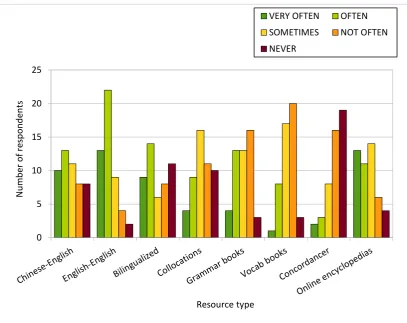
Figure 2.1: Teachers' reported frequency of use of different resources ... 41
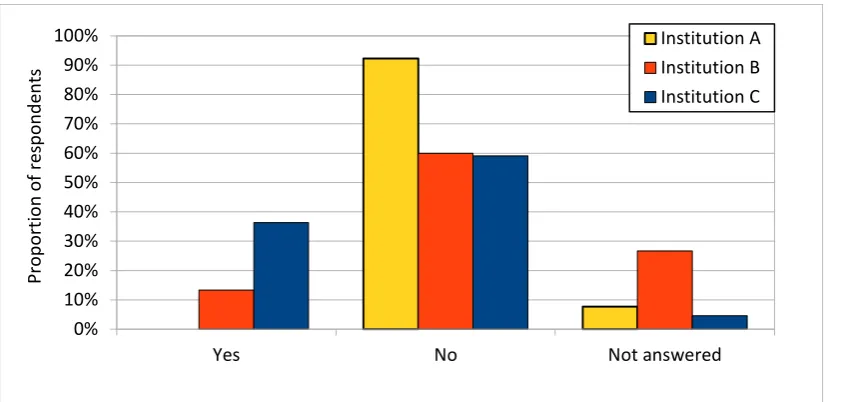
Figure 2.2: Reported use of any concordancer to produce examples ... 42
Figure 2.3: Reported use of different concordancers ... 42
Figure 2.4: Teacher perceptions of ease of use of concordancing software ... 43
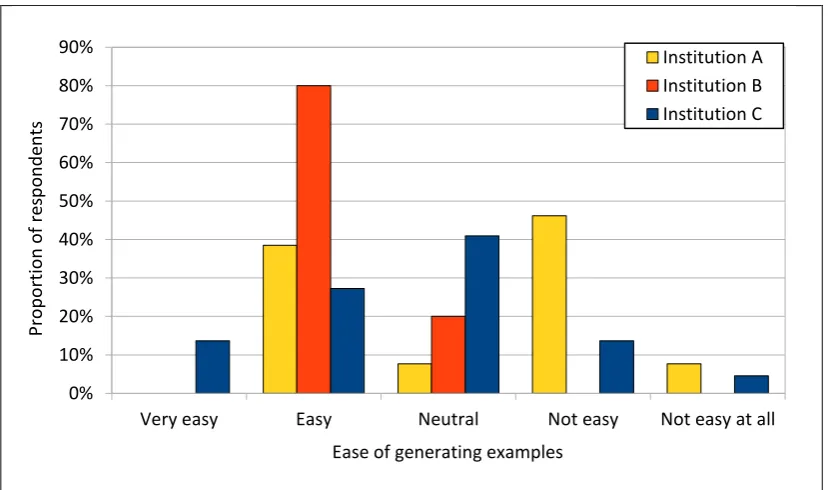
Figure 2.5: Teacher perceptions of how easily good examples can be generated through intuition and reflection. ... 43
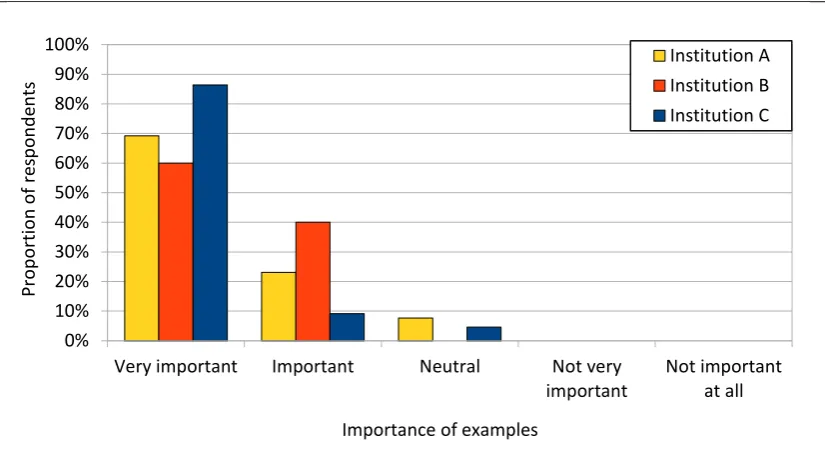
Figure 2.6: Teacher perceptions of the importance of examples ... 44
Figure 2.7: Teacher perceptions of the main causes of student errors ... 45
Figure 2.8: Reported knowledge and correctness grouped by question type ... 46
Figure 2.9: First reference choice grouped by question type ... 47
Figure 2.10: First reference choice grouped by question type (Institution C only) ... 48
Figure 2.11: Websites where this was the first choice grouped by question type ... 49
Figure 2.12: Reported frequency of use of different tools – students from Institution A... 50
Figure 2.13: Reported frequency of use of different tools – students from Institution C ... 50
Figure 2.14: Best tools reported for different problems ... 51
Figure 3.1: Screenshot of hints and tips which appear while results are retrieved (top) and some other examples of hints and tips (below). ... 68
Figure 3.2: Diagram showing the data pathways for the three tier concordancer. ... 74
Figure 3.3: Simplified schema for ranks of items in the corpus database; note: “_other_columns_removed” indicates that some columns used in the full schema have been removed from this diagram to clarify the relationships being described. 79 Figure 3.4: Examples of the use of the same symbol for apostrophes and quotes in the Guardian and Financial Times corpora ... 85
Figure 3.5: The main screen for The Prime Machine corpus refactoring application. ... 90
Page 8 of 403
Figure 3.8: Screenshot showing SoundEx suggestions for "conseqence" in the BNC:
Academic sub-corpus. ... 98 Figure 3.9: Screenshot showing the frequency of "polymorph" in alternative corpora. ... 99
Figure 3.10: Screenshot showing prompts which appear for consequence in the BNC: Academic sub-corpus. ... 102 Figure 3.11: The “Compare with another corpus” sub-tab on the main Search Tab. ... 103
Figure 4.1: Information provided for language learners about collocation on the Life Ring
screen for the Collocations Tab. ... 110
Figure 4.2: Table structure for MI Collocations ... 122
Figure 4.3: MI Collocation cloud and MI Collocation table for the node consequences in the
BNC: Newspapers sub-corpus, sorted by the Dice score. ... 124 Figure 4.4: Table structure for Log-Likelihood Collocations ... 134
Figure 4.5: Table structure for Collocation Extensions ... 135
Figure 4.6: Log-likelihood Collocation Clouds and Tables in the BNC: Academic sub-corpus for the node outcome. ... 137 Figure 4.7: Log-likelihood Collocation Clouds and Tables in the Financial Times corpus for
the node outcome. ... 138 Figure 4.8: Log-likelihood Collocation Clouds and Tables in the Hindawi Biological Sciences
corpus for the node outcome. ... 138 Figure 4.9: Log-likelihood Collocation Clouds and Tables in the Hindawi Mathematics corpus for the node outcome. ... 139 Figure 4.10: Log-likelihood Collocation Clouds and Tables in the Hindawi Computer Science
corpus for the node outcome. ... 139 Figure 4.11: Context menu for clouds and collocation table; cloud showing data from the
BNC: Academic sub-corpus for the node outcome. ... 141 Figure 4.12: Collocation-based captions on cards; screenshot showing data from the BNC:
Page 9 of 403
longterm. ... 147 Figure 4.14: Two collocation clouds displayed side by side for the nodes consequences and
results from the BNC: Newspapers sub-corpus. ... 149 Figure 4.15: Table structure for emotional charging of words derived from their collocates
... 151
Figure 4.16: Collocation and emotion clouds for the nodes consequences (top) and results
(bottom) from the BNC: Newspapers sub-corpus. ... 152 Figure 4.17: Examples of longer duplicate sentences in corpora; exact matches are
instances picked up automatically for the sample sentence and “very similar
instances” are where almost the exact wording and punctuation was used. ... 157
Figure 4.18: Concordance lines for outcome in the BNC: Academic sub-corpus, ranked by fixed random order ... 170
Figure 4.19: Concordance lines for outcome in the BNC: Academic sub-corpus, ranked by the GDEX-like method ... 170
Figure 4.20: Concordance lines for outcome in the BNC: Academic sub-corpus, ranked by Log-Likelihood Collocations and then by the Collier-like method ... 171
Figure 4.21: Concordance lines for outcome in the BNC: Academic sub-corpus, ranked by MI Collocations and then by the Collier-like method ... 171
Figure 4.22: Concordance lines for outcome in the BNC: Academic sub-corpus, ranked by text abridgement-based method ... 172
Figure 5.1: Early design for the project, showing simple visual components with incidental
data from BAWE. ... 179
Figure 5.2: Designs for the Cards Tab (right), based on the navigation bars which appear as
default on the TAdvSmoothTileList component (left). ... 181 Figure 5.3 The card template for the Cards Tab (left) and the full set of data fields used
(right). ... 182
Figure 5.4: Cards of different heights on the Cards Tab with captions at the top and gentle
Page 10 of 403
Figure 5.5: The same card from the Cards Tab, with no highlighting (left), dotted line
highlighting (centre) and gentle yellow highlighting (right) of the node word, showing
one concordance box from the BNC: Academic sub-corpus for pilot. ... 185 Figure 5.6: Text alignment in different columns of the grid on the Lines Tab for a relatively
narrow width (top) and a relatively wide width (bottom) with incidental data from
the BNC: Academic sub-corpus for a search on the node pilot. The currently selected line is shown with a blue background. ... 187
Figure 5.7: The Lines Tab showing left and right contexts for the node extending beyond
sentence boundaries, with concordance lines for the node pilot in the BNC: Academic
sub-corpus. ... 188
Figure 5.8: The same display when contexts are reduced to only include the sentence
containing the node. ... 189
Figure 5.9: Information provided on the Life Ring help screen for the Text Title submenu on the Graphs Tab. ... 194
Figure 5.10: Information provided on the Life Ring help screen for the Heading submenu on the Graphs Tab. ... 195
Figure 5.11: Information provided on the Life Ring help screen for the Text Position
submenus on the Graphs Tab. ... 198
Figure 5.12: Information provided on the Life Ring help screen for the Text Position and
Paragraph Position submenus on the Graphs Tab. ... 200 Figure 5.13: Information provided on the Life Ring help screen for the Theme/Rheme
submenu on the Graphs Tab. ... 205
Figure 5.14: Information provided on the Life Ring help screen for the Sentence Position
submenu on the Graphs Tab. ... 207
Figure 5.15: Information provided on the Life Ring help screen for the Complexity submenu on the Graphs Tab. ... 214
Page 11 of 403
Figure 5.18: Information provided on the Life Ring help screen for the Polarity submenu on the Graphs Tab. ... 222
Figure 5.19: Information provided on the Life Ring help screen for the Articles and
Possessives submenu on the Graphs Tab. ... 225 Figure 5.20: Information provided on the Life Ring help screen for the Prepositions
submenu on the Graphs Tab. ... 227
Figure 5.21: Information provided on the Life Ring help screen for the Repetition submenu on the Graphs Tab. ... 231
Figure 5.22: The database schema for the uncompressed tables for sentences and words
(left), and for the compressed tables (right). ... 235
Figure 5.23: Schema for the cb_primings table ... 237
Figure 5.24: Lines Tab showing the card for the currently selected concordance line and the
dock of icons for the node pilot in the BNC: Academic sub-corpus. ... 239 Figure 5.25: Enlarged icon showing positive evidence for a tendency to occur after
indefinite articles. The hand icon represents the mouse cursor position. ... 240
Figure 5.26: Graphs for the Paragraph Position submenu on the Graphs Tab for the node
pilot in the BNC: Academic sub-corpus, with fixed random order (top) and the log-likelihood collocation and concordance bonding rank method (bottom)... 241
Figure 5.27: Graph display for compare mode for the Voice submenu on the Graphs Tab with results for consequences compared against outcomes from the BNC: Academic
sub-corpus. ... 242
Figure 5.28: Different norm values for Complexity on the Graphs Tab, with results shown for the node pilot in the BNC: Academic sub-corpus (top) and the BNC: Newspapers
sub-corpus (bottom). ... 244
Figure 5.29: Screenshot of the table of features for the nodes consequences and outcomes
Page 12 of 403
Figure 6.1: Citation information displayed at the top of a card from the Hindawi Biological Sciences corpus (left) and the complete BNC corpus (right), as shown on the Cards
Tab. ... 255
Figure 6.2: Clipped screenshot from the Lines Tab, showing citation information for a concordance line from the BNC in a pop-up balloon. ... 255
Figure 6.3: Examples of SQL script update statements created from a spreadsheet ... 257
Figure 6.4: Clipped screenshot from the Refactoring Application, showing examples of tags and how these are to be handled as metadata in the database ... 262
Figure 6.5: Database schema for metadata, with arrows showing links through primary keys ... 263
Figure 6.6: Further pop-up information for a card from the BNC. ... 264
Figure 6.7: Further pop-up information for a concordance line from the Hindawi Biological Sciences corpus. ... 265
Figure 6.8: Measure for key words in LexTutor ... 267
Figure 6.9: Claims made by Gabrielatos and Marchi (2012) ... 269
Figure 6.10: Details about the SiBol 93 and SiBol 05 corpora ... 273
Figure 6.11: Table structure for key tag data... 279
Figure 6.12: Tag clouds and tables for therefore (top) and thus (bottom) in the BNC: Complete. ... 281
Figure 6.13: Tag clouds for goal in the BNC: Academic sub-corpus (top) and the BNC: Newspapers sub-corpus (bottom). ... 282
Figure 6.14: Tag clouds and tables for aim (top)and goal (bottom) in the SpringerOpen corpus. ... 284
Figure 6.15: Tag clouds for important (top) and significant (bottom) in the Hindawi Biological Sciences corpus... 286
Figure 6.16: Text and Producer clouds for mm in the BNC: Spoken Corpus. ... 290
Page 13 of 403
Figure 6.19: Producer cloud for okay in the BNC: Spoken Corpus. ... 292 Figure 6.20: Information about KeyTags cache provided in The Prime Machine User Manual, Version 2.0, January 2015 ... 293
Figure 6.21: The auto-complete functionality of the Tags sub-menu on the Search Tab, with
incidental data from the Hindawi Biological Sciencescorpus. ... 296 Figure 6.22: Table structures for key words and key associates. ... 301
Figure 6.23: Key Associates for pilot in the BNC: Newspapers sub-corpus (top) and the BNC: Academic sub-corpus (bottom). ... 303 Figure 6.24: Information about the corpus and the major categories which is provided on
the Corpus Info. Tab. ... 304
Figure 6.25: Key Associates for drugs in the BNC: Newspaperssub-corpus (top) and the
Hindawi Biological Sciences corpus (bottom). ... 305 Figure 7.1: Information about the cache provided in The Prime Machine User Manual,
Version 2.0, January 2015. ... 310
Figure 7.2: Information about the “Sign In” process, provided in The Prime Machine User Manual, Version 2.0, January 2015. ... 313 Figure 7.3: Concordance cards with the star rating elements visible; with incidental data for
the node outcomes in the BNC: Academic sub-corpus. ... 315 Figure 7.4: Star rating elements on the right-hand side of each concordance line on the
Lines Tab; with incidental data for the node outcomes in the BNC: Academic sub-corpus. ... 316
Figure 7.5: The search history screen with pins highlighted in blue for sets of results which
the user wishes to bookmark and retain in the cache beyond the usual timeframe of
7 days. ... 317
Figure 7.6: Export options available for cards. ... 319
Figure 7.7: Export options available for tables. ... 319
Figure 7.8: The design of the closing screen before the pilot (top) and after the pilot
(bottom). ... 326
Page 14 of 403
Figure 7.11: Attitudes to the importance of different aspects of language for good writing in
English ... 333
Figure 7.12: Reported frequency of use during different stages of the writing task. ... 334
Page 15 of 403
Table 3.2 The main steps in the refactoring process leading up to the importing of SQL
dump files into the database server. ... 91
Table 4.1: Collocation measures available in concordancing software ... 113
Table 4.2: Approximate Bayes Factors and Equation for BIC approximation ... 127
Table 4.3: Contingency table and formula for key words ... 128
Table 4.4: Contingency table for Log-likelihood Collocations for a specific set of slots ... 130
Table 4.5: Cut-off points for storage of collocations for high frequency items as node in the complete BNC based on frequency ... 131
Table 4.6: Contingency table for extending collocations ... 135
Table 4.7: Emotion-Linked Collocation Contingency Table ... 150
Table 4.8: Features of GDEX and their implementation in The Prime Machine ... 160
Table 4.9: Magnitude of the growth of operations required for concordance line comparisons ... 165
Table 5.1: Features of Lexical Priming on the Graphs Tab ... 175
Table 5.2: Contingency table for sentence level features ... 192
Table 5.3: Tendencies to occur in text titles in the BNC: Newspapers sub-corpus. ... 193
Table 5.4: Tendencies to be used (or not used) in paragraph headings in the BNC: Academic sub-corpus. ... 195
Table 5.5: Tendencies to be used in the first or last sentence of texts in the Hindawi Computer Science corpus. ... 196
Table 5.6: Tendencies to be used in the first or last paragraph of texts in the Hindawi Computer Science corpus. ... 197
Table 5.7: Tendencies to be used in the first or last sentence of paragraphs in the Hindawi Biological Science corpus. ... 199
Page 16 of 403
Table 5.10: CLAWS tags used to identify the beginning of “Rheme” ... 202 Table 5.11: Contingency table for word level features ... 203
Table 5.12: Tendencies to be used in Theme or Rheme in the BNC: Academic sub-corpus. ... 204
Table 5.13: Tendencies to be used in the first or last 20% of a sentence in the BNC:
Academic sub-corpus. ... 206 Table 5.14: Proportions of types at different frequency thresholds showing at least one
tendency for use in particular positions in a sentence. ... 207
Table 5.15: Icons representing features related to position ... 209
Table 5.16: CLAWS tags used to identify complex sentences. ... 211 Table 5.17: Tendencies to be used in Complex or Simple sentences in the BNC: Newspapers
sub-corpus. ... 211
Table 5.18: Tendencies to be used in Complex or Simple sentences in the BNC: Academic
sub-corpus. ... 212
Table 5.19: CLAWS tags used to identify modal verbs ... 214 Table 5.20: Limitations on the modal groupings included in the software ... 215
Table 5.21: Tendencies to be used with three groups of modal verbs in the BNC: Academic
sub-corpus. ... 216
Table 5.22: CLAWS tags used to identify passive voice ... 218 Table 5.23: Tendencies to be used (or not used) in passive voice sentences in the BNC:
Newspapers sub-corpus... 219 Table 5.24: CLAWS tags used to identify polarity ... 221 Table 5.25: Tendencies to be used in negative sentences in the BNC: Academic sub-corpus.
... 221
Table 5.26: Proportions of types at different frequency thresholds showing at least one
tendency for use with the first set of features of colligation. ... 222
Page 17 of 403
Table 5.29: Tendencies to be used with two groups of articles and possessives in the BNC: Newspapers sub-corpus... 225 Table 5.30: CLAWS tags used to identify prepositions ... 226 Table 5.31: Examples for tendencies to be used with (or without) prepositions in the BNC:
Academic sub-corpus. ... 226 Table 5.32: Examples for tendencies to be used with (or without) prepositions in the BNC:
Newspapers sub-corpus... 227 Table 5.33: Examples for tendencies of collocates of of to be used with prepositions in the
BNC: Academic sub-corpus, along with the proportion s accounted for by collocations containing of. ... 228 Table 5.34: Proportions of types at different frequency thresholds showing at least one
tendency for use with the second set of features of colligation ... 229
Table 5.35: Icons representing features related to colligation ... 230
Table 5.36: Proportions of types at different frequency thresholds showing a tendency for
repetition of form or stem. ... 232
Table 5.37: Icons representing a tendency for repetition ... 232
Table 5.38: Overview of automatic processing ... 234
Table 5.39: Table of some of the priming features for the node consequences in the BNC:
Academic sub-corpus, with 100 results in the downloaded set. ... 246
Table 5.40: Icons used to show filtering is active ... 251
Table 6.1: List of transformation rules related to citations for the Financial Times corpus 257 Table 6.2: Different research aims and different uses of keyness values ... 272
Table 6.3 Data from by Gabrielatos and Marchi (2012) ... 275
Table 6.4: KeyTags contingency table. ... 279
Page 18 of 403
Table 6.7: Key words and collocations for conclusions in the Hindawi Biological Sciences
corpus ... 298
Table 7.1: User actions which can be automatically logged by the software ... 321
Table 7.2: Logs showing the number of views and time spent on different tabs in the
software ... 336
Table 7.3: Logs showing the number of view, time spent and the number of different users
for the results tabs after the main input session. ... 337
Table 8.1: Summary of principles for evaluating CALL, quoted from Chapelle (2001, p. 52)
Page 19 of 403
%DIFF Formula to calculate percentage difference. Described in Chapter 6.
ASCII A form of character encoding (American Standard Code for Information Interchange)
AWL Academic Word List
BASE The British Academic Spoken English Corpus
BAWE The British Academic Written English corpus
BIC Bayesian Information Criterion
BLLDs Bilingualized learner dictionaries
BNC The British National Corpus
C5 CLAWS Tag Set 5
C7 CLAWS Tag Set 7
CALL Computer Aided Language Learning
CC-EDICT A Chinese English Dictionary project.
CD-rom Compact Disc Read Only Memory
CLAWS CLAWS software (Constituent Likelihood Automatic Word-tagging System)
CSV .CSV is Comma-Separated Values file format; used for storing database or spreadsheet data in a very simple structure
DDL Data Driven Learning
DICE Dice’s similarity coefficient
DNS Domain Name System
EAP English for Academic Purposes
EFL English as a Foreign Language
ESL English as a Second Language
EXE .EXE is an executable file (program) for Windows.
FT The Financial Times
FTW Formula teaching worth
GBP British Pounds
GDEX Good Dictionary Examples; concordance ranking system in The Sketch Engine
HTML HyperText Markup Language (file formatting structure for web pages)
ICE Interactive Communication Environment; the virtual learning environment used for learning and teaching at XJTLU
IELTS The International English Language Testing System
Page 20 of 403
IT Information Technology
JPEG .JPG or .JPEG files used to store images
KWIC Key Word in Context
LL Log Likelihood coefficient
MCQ Multiple choice question
MI Mutual Information (score)
MI3 Cubic association ratio
MLDs Monolingual learner dictionaries
MWU Multi Word Unit
MySQL MySQL relational database system
OS Operating System
POS Part-of-Speech
QR code Quick Response Code; a kind of matrix barcode
regex Regular Expressions (a text pattern matching system used in some programming languages)
RMB Renminbi is the currency of the People’s Republic of China
SFL Systemic Functional Linguistics
SGML The Standard Generalized Markup Language
SLA Second Language Acquisition
SQL Structured Query Language
TEI Text Encoding Initiative
TMS TMS Software; a software development company
UCREL University Centre for Computer Corpus Research on Language, Lancaster University
URL Uniform Resource Locator (a web address)
USB Universal Serial Bus
WECCL Written English Corpus of Chinese Learners
XJTLU Xi’an Jiaotong-Liverpool University
XLS .XLS files are spreadsheet files saved in the Microsoft Excel 97-2003 file format
Page 21 of 403 The Prime Machine: A user-friendly corpus tool for English language teaching
and self-tutoring based on the Lexical Priming theory of language
Stephen Jeaco
University of Liverpool
Abstract
This thesis presents the design and evaluation of a new concordancer called The Prime Machine which has been developed as an English language learning and teaching tool. The software has been designed to provide learners with a multitude of examples from corpus
texts and additional information about the contextual environment in which words and
combinations of words tend to occur.
The prevailing view of how language operates has been that grammar and lexis are
separate systems and sentences can be constructed merely by choosing any syntactic
structure and slotting in vocabulary. Over the last few decades, however, corpus linguistics
has presented challenges to this view of language, drawing on evidence which can be found
in the patterning of language choices in texts. Nevertheless, despite some reports of
success from researchers in this area, only a limited number of teachers and learners of
second language seem to make direct use of corpus software tools.
The desire to develop a new corpus tool grew out of professional experience as an English
language teacher and manager in China. This thesis begins by introducing some
background information about the role of English in international higher education and the
language learning context in China, and then goes on to describe the software architecture
and the process by which corpus texts are transformed from their raw state into rows of
data in a sophisticated database to be accessed by the concordancer. It then introduces
innovations including several aspects of the search screen interface, the concordance line
display and the use of collocation data. The software provides a rich learning platform for
language learners to independently look up and compare similar words, different word
forms, different collocations and the same words across two corpora. Underpinning the
Page 22 of 403
software.
The design features are considered from a pedagogical perspective, focusing on English for
Academic Purposes and including important software design principles from Computer
Aided Language Learning. Through a small evaluation involving undergraduate students,
the software has been shown to have great potential as a tool for the writing process. It is
Page 23 of 403
Jeaco, S. (2011). Developing an intuitive screen design for a learner-centred concordancer.
Presented at the Sixth International Corpus Linguistics Conference (CL2011),
Birmingham,UK, 20-22 July 2011.
Jeaco, S. (2013). “Hold on a minute; where does it say that?” - Calculating key section
headings and other metadata for words and phrases. Presented at the Seventh
International Corpus Linguistics Conference (CL2013), UCREL, Lancaster, UK, 23-26 July
2013.
Jeaco, S. (2014). Making collocation clouds more transparent: towards an asymmetrical,
position sensitive collocation measure for improved learning. Presented at the Second Asia
Pacific Corpus Linguistics Conference, the Hong Kong Polytechnic University, Hong Kong,
7-8 March 2014.
Jeaco, S. (2014). Tell me what I’m missing: Helping language learners make useful
comparisons through enhancing the features of concordancing software. Presented at the
11th Teaching and Language Corpora Conference, UCREL, Lancaster, UK, 20-23 July 2014.
Jeaco, S. (2015). “Can you give me a few pointers?” Helping learners notice and
understand tendencies of words and phrases to occur in specific kinds of environment. To
be presented at the Eighth International Corpus Linguistics Conference (CL2015), UCREL,
Page 24 of 403
I would like to express my gratitude to my wife for her untiring support throughout this
work. The project began with a young daughter and a new born baby boy in the home, and
the patience and kindness of the family has been truly wonderful. We’ve fitted family
outings, games and stories around pressures of work and the thesis, and the children are to
be appreciated for brimming with enthusiasm about anything and everything, for not
growing up too quickly, and for putting up with their father’s disappearances into his study.
I am also grateful to my Mum and Dad for their support – stretching back to the beginnings
of my interest in programming, running through undergraduate and Masters studies and
running through the work of this thesis.
As an inspiration for the whole project in writing his books and giving a talk at our
University, and as an on-going inspiration through supervision, my sincere thanks are also
owed to Michael Hoey. The ringing tone on SKYPE video calls will be forever associated in my mind with the perfect mixture of intensity and kindness which he brought to me
through our online meetings. I also have fond memories of the precious face-to-face
meetings snatched between other XJTLU business.
Page 25 of 403
While learners and teachers may be using more materials based on patterns from corpora,
the impact of corpus technology on self-study and in the classroom has not been as great
as the shift in the academic research or publishing fields. Indeed, it would seem that of the
vast numbers of language teachers working around the world, only a relatively small
number attempt to motivate learners to use concordancers, often finding that learning to
navigate the user interfaces requires a deep understanding of linguistic jargon and that
learners only experience a limited amount of success in being able to process snippets from
authentic sentences which have been decontextualised.
This thesis presents details of the design and evaluation of a new concordancer called The Prime Machine which has been developed as a language learning and teaching tool. The software aims to make insights about language based on Hoey’s theory of Lexical Priming
(2005) accessible and rewarding. The software has been designed to provide a multitude
of examples from corpus texts and additional information about the contextual
environment in which words and combinations of words tend to occur. Hoey argues that
priming is “the result of a speaker encountering evidence and generalising from it” (2005, p.
185), and also considers some of the challenges that learners of a foreign language face
due to limited opportunities to encounter language data naturally, and also due to the
severe limitations of wordlists and isolated grammar rules. As well as supporting aspects of
language which have been focussed on by corpus linguists for many years, such as the role
of collocation and the distinction between word forms, the claims within the theory of
Lexical Priming also demand a wider appreciation of the kinds of information which are
primed with a word (or a combination of words) when they are learned. Within the theory,
there are also several areas such as semantic association and textual colligation which are
often neglected in descriptions of language and in language learning resources and are also
often neglected in language teaching. Therefore the theory of Lexical Priming presents
further challenges for a corpus software developer. If position in the sentence and
paragraph can give vital cues to a learner investigator, and if a word's inclination towards
repetition is also important, learners need to be able to see a much wider context in a
more natural way if they are to appreciate the power of a corpus as a testing ground and as
a tool for writing. Although this project builds on the results of other studies where
researchers have taken corpus software tools and considered how they could be used in
Page 26 of 403
has focused first and foremost on how the most basic building blocks of the data structures
and the user interface can support pedagogical priorities. Inspiration and methodological
approaches have been drawn from other concordancing software, and some of the
strengths and weaknesses of leading English language corpus tools will be considered, but
the emphasis will be on language learning and teaching. The aim of this project was to
build a learner-centred front-end to a corpus engine, which draws on data which has been
processed to be rich in mark-ups and cross-referencing consistent with Lexical Priming
theory, and which presents this evidence as an enriched learning resource for language
learning purposes.
1.1 Research questions
The thesis is chiefly concerned with the following research questions:
1. How can existing sub-processes of corpus tools be adapted to mark and index the
contextual environments according to some of the features of Lexical Priming for
retrieval in a computer program?
2. How can pedagogical considerations drive the design of concordancing software,
ensuring that it supports language learning activities and that it is intuitive to use?
3. To what extent can these methods provide language learners with examples that
they find useful and provide them with insights about language usage which they
find helpful?
1.2 Structure
This introduction concludes with an overview of the structure of the thesis.
Like many other software applications, one of the main visual components of The Prime Machine is a set of tabs which can be used to switch between different functions and different pages of results. Figure 1.1 shows the tabs which appear at the top of the screen.
Page 27 of 403
In some ways, the structure of the thesis mirrors the structure of these tabs, with some of
the tabs corresponding quite closely to specific pedagogical aims for specific linguistic
features. However, just as it will be argued that the concordance lines are to be seen as
central to the user’s experience of the software, it is also the case that each of the chapters
which deals with the design of the software also focusses on different aspects of the design
of the two tabs which display concordance lines: the Cards Tab and the Lines Tab.
Chapter 2 provides background information behind the motivation for the development of
the software, introducing the results of a survey of students and teachers in China. It
begins with a brief consideration of the potential for corpus driven technologies in China
within the context of the current educational system and the language learning
expectations of English language learners. After presenting the results of a language test
and questionnaire data, a summary of implications for language teaching and software
development is provided.
Chapter 3 begins a series of chapters which provide details of decisions made in the design
and development of the software. The focus of Chapter 3 is on the overall software
architecture and the channels through which data can travel. The architectural decisions
include aspects such as the choice of programming languages and the computer systems
which need to be in place. The data pathways include information about the development
of the refactoring process whereby raw texts are transformed into rows in the application’s
database. This chapter also includes an introduction to the motivation and design
considerations regarding the search screen (the Search Tab), and the additional search
support features which are provided to help language learners with aspects such as spelling,
word form and collocation and several features designed to assist learners in making
comparisons.
Chapter 4 continues by presenting the considerations behind the ways in which
collocations are calculated, displayed and used in other processes within the software. It
provides both a pedagogical background to collocation and an exploration of the statistical
methods available for both two word collocations and multi-word units beyond this. As the
phenomena of collocation is one of the main features of language described within the
theory of Lexical Priming (Hoey, 2005), this chapter also discusses how the methods
adopted for the calculation and presentation of collocations support the aims of making
this kind of information available to language learners. As well as an introduction to the
Page 28 of 403
explained in this chapter: their use in captions for concordance line display on the Cards
Tab; their use in providing information about semantic associations; and their use in
concordance line ranking.
Chapter 5 introduces some of the other kinds of contextual information and tendencies
which are based on features of Lexical Priming and which are prominently displayed within
the software. It provides a rationale for the Cards Tab and Lines Tab as two different ways
of displaying concordance lines within the concordancer, as well as an overview of the
mark-up and measurements which facilitate the visualization of summary information
about various environments in the form of graph data on the Graphs Tab, and statistically
significant priming tendencies in the form of icons. This includes an explanation of the
concordance line filtering features which can filter results based on these priming
environments, on nearby words or on a user’s own star rating.
Chapter 6 provides details of how other information about texts in each corpus is used. It
explains how metadata about the source of each text is provided within the visual design of
the concordancer on the Cards Tab and the Lines Tab. It also presents a new application of
the key word technique to provide insights into the ways in which words and collocations
are used within each corpus according to metadata tags, providing the method and visual
display of a technique named KeyTags. This chapter also explores some of the issues
surrounding key words as a technique in corpus linguistics, and explains how text category
summaries and key associates are calculated and presented in the software. It provides
details about the Tags Tab, the Associates Tab and the Corpus Info. Tab.
Chapter 7 brings an end to the series of chapters looking at the design considerations by
introducing features of the software which can be used to facilitate evaluation. It then
provides the methodology and results of an evaluation of the software which drew on log
data as well as questionnaires before and after groups of university students tried using the
software to support them in a writing task.
Chapter 8 is devoted to a consideration of the implications of the evaluation in terms of
further development of the software and in terms of longer term evaluation. The chapter
brings the thesis to a close by exploring to what extent the design of the software tool and
the evaluation of it which has already been completed meet the pedagogical aims of the
Page 29 of 403
This chapter presents results of a preliminary survey and test of students in Eastern China
and their perceptions of existing reference tools. It begins with background information
about the role of English in international higher education and the language learning
context in China. Through analysis and discussion of the results, some specific areas of
need in terms of linguistic knowledge are identified, and the results also show that search
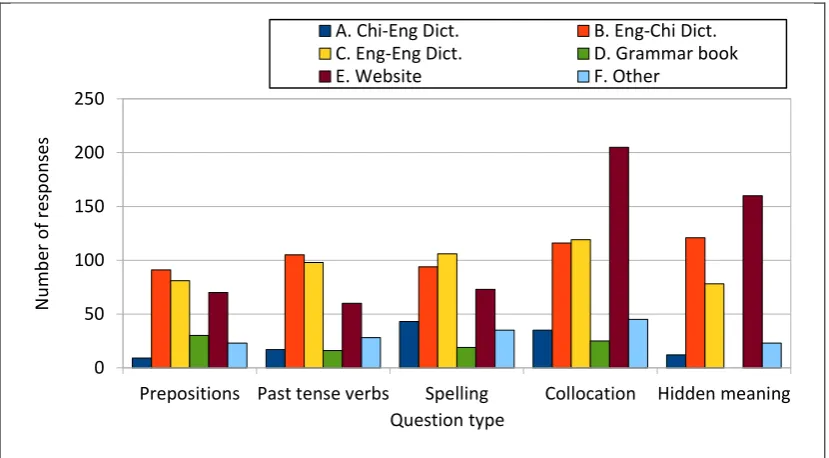
engines are surprisingly popular among students as a source of examples and linguistic
information. These findings guided the development of the concordancer for language
learners which forms the subject of this thesis. The chapter ends by arguing how the
theory of Lexical Priming (Hoey, 2005) and the concordancing tool could be of special
importance for developing and enhancing the language learning of students in this kind of
context.
2.1. Background, teaching context and personal motivations
2.1.1 English study skills for International students
As the number of students studying degree subjects through the medium of English grows,
it is becoming increasingly important to understand the language needs and learning
strategies of these students as they use English as a tool for their academic careers.
Andrade (2006) provides a review of studies into the international student experience and
calls for further research and more targeted services. There has also been a call for a more
detailed focus on measurable outcomes for international students in terms of their
language skills and a better understanding of difficulties they face in achieving them (Y.
Zhang & Mi, 2010). With the large numbers of Chinese international students enrolled in
English-Speaking countries, some studies have focussed specifically on this group. For
example, Zhang and Mi (2010) showed international students in Australia felt that they had
coped well with many areas, but that Chinese learners in particular felt they needed more
on-going support for academic writing. In another study, Chen and Duanmu (2010) found
that at post-graduate level, the Chinese students who were interviewed struggled more
with academic writing than their counterparts and were more likely to employ less active
1
Page 30 of 403
study strategies. In addition, some researchers have looked at the socialization challenges
that face mainland Chinese students in English-medium universities and highlighted the
importance of research into understanding how they cope because of the importance of
English language learning for the success of these students (Gao, 2010).
2.1.2 English teaching in China
It is clear that there are particular challenges for learners making the transition from high
school to university in countries like China. The national curriculum for English in Chinese
high schools is strongly influenced by the grammar-translation method, and emphasises a
distinct separation of grammar and vocabulary. Although it is argued that Hallidayan
linguistics is more widely accepted in China than alternative approaches which put
grammar at the centre of language (G. Huang, 2002), recent textbooks for English teacher
training programmes explain that the grammar-translation method2 is still commonly used
across China and that it has a strong place alongside trends towards the communicative
approach or task-based learning (see Z. Li & Hao, 2009). Time constraints and a heavy
emphasis on examination results mean that teachers have to balance innovation and
adoption of other teaching methodologies against a view that the majority of time should
be spent explaining English language using Chinese and working on grammar and
translation activities (X. Zheng & Adamson, 2003). In brief, students entering university
may have a strong foundation in some aspects of English grammar, but usually hold to a
belief in the possibility of translating each item directly from their first language (L1) into
their second language (L2). The widespread practice of memorizing words without any
contextual information leads to problems with measuring students’ long-term abilities in
English (L. He & Qi, 2010). There have also been studies which have shown that weaker
performing students tend to make the most use of memorization strategies, favouring
these over other vocabulary learning strategies (Gu & Johnson, 1996).
The aims and guiding principles for English curricula in China are a subject of great
discussion (Y. Zheng & Cheng, 2008). For example there are calls for changes to the
national examination systems to make them fairer to all ethnic groups and to consider who
really wants to learn English (Hu & Alsagoff, 2010). Others have argued that they need to
be more responsive to the local context (Hu, 2005), and to embrace China English as an
internationally recognised variety (D. He & Li, 2009). Two important areas of change are a
2
Page 31 of 403
greater focus on learner autonomy and a greater emphasis on process over product (Ruan
& Jacob, 2009). These areas can be explained as a greater focus on helping the students
take more control over the pace and direction of their studies with a view to helping them
to continue studying independently beyond the course and a greater emphasis being
placed on the processes which they go through as they perform language activities rather
than merely checking whether the final product matches expectations. A study into
Chinese high school students' levels of motivation for learning English by Kyriacou and Zhu
(2008) showed that motivation is relatively high and the students have a clear awareness of
both the importance of getting good marks for the university entrance examination in
English3 and the importance of English for international communication in the future.
However, the study also showed that in actual fact the motivation levels were not as high
as for other academic subjects.
Within this complex and changing English learning context, the opening up of China to
international universities has brought with it a rather different focus for undergraduate
English study, where English for Academic Purposes (EAP) provides the support students
need as they make their transition from English as a core subject in high school to English
as a tool for academic study at institutions where English is the medium of instruction.
Zhang (2008) argues that international institutions and joint ventures provide many
benefits to students including access to learning and teaching resources of an international
standard, a reduced cost compared to studying overseas and greater opportunities to
develop English and communicate with others on the international stage. Despite the fact
that many institutions starting up in China face difficulties or fail, it is predicted that more
of these types of institution will be established (Gide, Wu, & Wang, 2010). Furthermore, as
well as the increase in international cooperative ventures as independent entities or
colleges within established institutions, it is becoming increasingly common for higher level
universities in China to provide courses which are wholly or partly delivered in English,
drawing on international textbooks (F. Huang, 2006). While there may be a minimal move
in this direction across the whole education system from early years through high school,
Hu and Alsagoff (2010) have argued English medium primary and secondary schools are
likely to experience too many practical problems to become very commonplace at this
stage. However, at the university level, there are a growing number of students in China
Page 32 of 403
who study in situations where their level of English acts as a filter to their overall
educational experience and for whom effective EAP provision is essential.
2.1.3 Personal motivations
This thesis describes the development of a piece of language learning software, the idea for
which grew out of my own experience in China as a teacher and manager of language
teachers. At the time when I began work on this project, I had been interested in corpus
linguistics for several years, but I had had limited success in passing on this enthusiasm to
my students or colleagues. As the head of an English language centre from the time it was
first established through to a staffing level of well over 100, I had had some success in
encouraging staff from a wide variety of backgrounds to use computer and internet
technologies to enhance their teaching, but I found little opportunity to integrate corpus
linguistics into the syllabus or classroom sessions beyond using “corpus informed” textbook
materials and dictionaries. Part of the problem was being able to find ways to
systematically present convincing examples from corpora which learners could understand
and appreciate. Another aspect of the problem was finding ways to introduce the
functions of corpus software tools without needing to explain complicated procedures or
difficult to grasp background information about the corpus linguistic theories underpinning
the results.
Given the limited time available in class and a deep sense of the need to help my Chinese
learners of English develop skills to explore language themselves, one of the main reasons
for developing the concordancing tool was so that it could be an additional language
resource to which my students could turn in order for them to check the meaning and use
of words as they were composing, to consider alternative wordings as they were
proof-reading and editing their own work or the work of a peer, and to explore in their own time
some of the words and phrases which they had encountered briefly in a class session. The
potential role of the concordancer I wanted to develop centred on the idea of it being a
language resource which might be consulted by students to answer language questions
related to their own linguistic and communicative needs. The role of any new language
resource would need to be considered in terms of its ability to replace or complement
other resources. It is because of these considerations that the survey of teachers and
students which is presented in this chapter can be seen as having been one of the
Page 33 of 403
2.1.4 Language learner strategies and dictionary resources
An obvious strategy which learners can adopt when needing to write in a second language
is to consult a reference resource to learn or check how a word or phrase can be used.
Tickoo (1989) and Cowie (Cowie, 1999) provide extended reviews of studies looking at
dictionary design and support for foreign language users at the end of the last two decades
of the twentieth century. Since this time there have been many studies looking at the
dictionary preferences of language learners, and several looking specifically at those of
Chinese learners of English. Chan (2011) gave questionnaires to students in Hong Kong to
look into perceptions and reported use of monolingual learner dictionaries (MLDs)
compared to bilingualized learner dictionaries (BLLDs). Two thirds of respondents in the
study said they used both MLDs and BLLDs. However, she found that learners had
preconceptions about features they thought were not present in bilingualized dictionaries,
and argues that ESL teachers should try to incorporate both types of dictionaries into
classroom activities to help learners see the value of each. Her results also confirmed
previous reflections by Rundell (1999) on learners’ preferences for bilingualized dictionaries
being based on the greater speed of access and ease of use these afford over monolingual
dictionaries. Over 30 years ago, Nesi (1987) argued that dictionaries need to provide more
examples showing how words are used if learners are to use them as a tool for productive
use. Rundell (1999) looked specifically at a range of features which can help learners with
productive use and found favourable results for monolingual dictionaries at the time of the
study. However, it has been shown that English learner dictionaries have a very limited
number of examples. Although a recent survey of learners in a general Chinese university
setting found that students were reasonably satisfied with the number of examples in their
dictionaries (Xu, 2009), this may not hold true for productive use in an EAP setting. In a
study of the number of examples for words from three different levels of word frequency,
Hai (2008) found that the most frequent words had on average 1.9 examples per sense,
mid-frequency 1.65 and the third range 1.05. This study suggests that more examples are
needed, particularly for words in the mid-frequency range.
2.1.5 Corpora as a source for additional examples
Corpus linguistics and concordancing software provide one possible answer to this need.
Corpora have been used with learners in a number of different teaching situations; for a
review of the use of corpora with learners see Yoon (2008) and Kennedy and Miceli (2010).
There are several reasons highlighted in the literature which explain why concordancing
Page 34 of 403
learners want to learn about common patterns of syntax associated with a particular word
dictionaries do not usually provide this. Secondly, as well as providing more information in
an accessible way, it has been argued that concordancers give the learner an “ideal” space
to test hypotheses (Kettemann, 1995; cited in Meyer, 2002). Studies have shown that
teaching learners to use concordancers and then explore aspects of syntax by themselves
can reduce their anxiety, and it has been suggested that this is because they can be freed
from a sense of being subject to human judgement (Hunston, 2002). As well as providing
the opportunity for learning about language use at the time concordancers are consulted,
another advantage of teaching learners to use corpora is that it is a skill which can form
part of their life-long learning (Mills, 1994). The procedures learners follow when they
systematically perform searches and analyse corpus output help develop disciplines for
self-access (G. D. Kennedy, 1998). In addition, for advanced learners and near expert
speakers in the language teaching field, corpora empower further development of near
native speaker abilities (Mair, 2002).
Although corpora have had an indirect influence on language teaching through the creation
of dictionaries and materials which draw on corpus data, the main pedagogic
implementation of corpus linguistics is Data Driven Learning (DDL). Johns (2002) listed
several advantages of DDL over other types of learning materials, including new ways of
approaching problem areas such as prepositions with a main focus on meaning and also
helping teachers and learners prioritize what should be learned. As well as an approach to
curriculum and materials development, Johns (2002) also found corpora helpful as a
reference during tutorial feedback sessions with his learners. If an approach is taken where
the learner is seen as a “traveller” rather than a “researcher”, Bernardini (2004) argues that
concordancing tasks can be used as a means of meeting a variety of language teaching
goals.
There have also been many studies into the use of corpora as a means for vocabulary
building. Thurstun (1996) created materials for learners using lists of concordance lines,
with a view to enabling them to recognise the common syntax of selected academic
vocabulary and then use the terms for specific writing functions. Cobb (1999) used a
concordancer as a means for students to develop their own personalised dictionaries,
suggesting that new examples from a corpus could help students strengthen their
Page 35 of 403
In addition to DDL and vocabulary building, corpora have also been used with learners as
part of feedback on writing. Gaskell and Cobb (2004) explored the creation of hyperlinks to
concordance lines for specific grammatical trouble spots based on their occurrence in the
student essays and they report that learners found this kind of concordance use enjoyable.
It has also been demonstrated that corpus-based activities can have an effect on the
appropriateness of moves for a specific genre. Henry (2007) used corpus tools to build a
set of online learning materials and to analyse the writing of learners prior and after their
use.
However, despite some success, only a limited number of teachers and learners of second
language seem to make regular use of these tools. Factors which may be holding teachers
back from learning to use and teach corpus tools include issues with the context, the level
of detail, interpretation, the time required to get results and software design. Traditional
Key Word in Context (KWIC) concordance output is almost completely cut away from its
context (Hunston, 2002). Also, the amount of detail which concordances can provide to a
learner can be confusing (G. D. Kennedy, 1998). However, Varley (2009) reports some
success for students if they can cope with the “overwhelming” amount of corpus data.
Another point is that beyond dealing with the amount of raw data, the skills required to
actually interpret them in order to understand grammatical patterns are far from simple
(Gaskell & Cobb, 2004). Providing specific training about the limitations of corpus sources
and a focus on patterns in more linguistically accessible examples within a larger sample
has been shown to be one way forward (C. Kennedy & Miceli, 2010). However, from the
students' perspective, exploration using carefully selected concordance lines may seem to
take too long (Thurstun, 1996). In addition to these issues, as Anthony (2004) argues as he
presents his classroom concordancer (AntConc), software for concordance exploration is not usually designed specifically with learners in mind. It is true that AntConc goes some way towards simplifying the interface of a concordancer, but there are still many obstacles
to getting started and knowing enough about the tools and functions in order to use them.
Effort is still needed to strive to make concordancers more user-friendly and more suitable
for language learners (Horst, Cobb, & Nicolae, 2005; Krishnamurthy & Kosem, 2007).
2.1.6 The internet and other technology to collect and share examples
In addition to concordancing, the application of other computer solutions may also be able
to provide a source for more examples. Activities have been designed for learners which
attempt to make the most of the internet and collaborative technologies while putting the
Page 36 of 403
learners in building specialised dictionaries or word-banks has been shown to be useful.
Horst and colleagues (2005) started with carefully selected sections of online publications
and led a group of learners through the process of building word-banks to store vocabulary
items and then test each other as part of increasing their academic vocabulary. Friedman
(2009) found that guiding learners through the process of finding useful examples on
web-pages and then setting a task where they created their own learner dictionary through
Google searches4 was effective, particularly when collocations were used as search terms. However, web text presents many challenges for learners due to the fact that texts are not
usually designed with second language users in mind and because there may be difficulties
finding texts at the right level (Loucky, 2005). One way of harnessing the vastness of web
data but “refining” it for language learners has been presented by Shaoqun, Franken and
Witten (2009). Through making use of Google n-grams and combining results from
established corpora, they showed that it is possible to build a tool for learners and reported
positive observations of how learners made progress in forming more natural writing as a
result.
2.1.7 Items in L2 with limited L1 congruence
Given that the literature has demonstrated most learners have a preference for
translations, and that, as has been argued above, learners of English in China often lack the
awareness of differences between L1 items and L2 “equivalences”, it would seem
important to consider which language resources students use when direct translations will
not provide a simple answer. In a recent study of how Portuguese learners of English
respond to this linguistic problem, Frankenberg-Garcia (2011) demonstrated it was possible
to construct a measurement to explore the strategies learners adopt when their knowledge
of L1 is unlikely to be helpful. The results of her test and questionnaire showed a strong
preference for grammar books and bilingual dictionaries, even though it was found that
these would frequently lack the kind of information necessary to retrieve the correct
answers. One interesting result was that a commonly reported source of information
under the open category “other” was the internet. As part of her discussion and
conclusions she noted that in the test learners had not been asked to indicate a specific
website and that this might be a useful avenue for future exploration. By making minor
changes to make it fit in the Chinese context and by extending the instructions in order to
elicit more details about preferred websites, her test was felt to be a very useful way to
Page 37 of 403
investigate the perceptions and habits of Chinese learners in high-school, a typical Chinese
university and one of the new internationally formed universities based in China.
2.1.8 Purpose of the current phase of this research
The aims of the study reported in this chapter were to answer the following research
questions:
1. What kinds of reference tool do Chinese learners prefer for different kinds of
language problems where use of L1 is unlikely to help?
2. Are there different patterns between high school and national curriculum student
groups compared to students studying EAP in an institution where English is the
medium of instruction?
3. How widespread are notions about the use of authentic examples for both
teachers and learners in these situations and do they match their preferences and
understanding of language reference tools which are available.
2.2. Method
2.2.1 Participants
2.2.1.1 The institutions
For both the teacher and student components of the study, participants came from three
institutions in the same city in Eastern China. The economic growth of cities in the
provinces on the central Eastern coast of China is well known and middle tier cities such as
the one in this study have increasing affluence as well as increasing levels of
internationalisation. The high school was a high level state school which catered for
around 1,000 students from age 12 to 195. It will be referred to as institution “A”. The
university following the national curriculum for English in China had over 24,000 students
5 Ages in China are sometimes given as “虚岁” (age 1 at birth) and sometimes as “实岁” or “周岁” (age 0 at birth); therefore, it is not always possible to gather information about age in a