UNIVERSITI TEKNIKAL MALAYSIA MELAKA
DEVELOPMENT OF CAR TEMPERATURE COOLING
CONTROL BY USING MAGNET CODE
This report submitted in accordance with requirement of the Universiti Teknikal Malaysia Melaka (UTeM) for the Bachelor Degree of Electronic Engineering
Technology (Industrial Electronic) (Hons.)
by
SYAKIRA BINTI ABD WAHID B071410719
920707-08-5848
UNIVERSITI TEKNIKAL MALAYSIA
MELAKA
BORANG PENGESAHAN STATUS LAPORAN PROJEK SARJANA MUDA
TAJUK: Development Of Car Temperature Cooling Control By Using Magnet Code
SESI PENGAJIAN: 2017/18 Semester 2
Saya SYAKIRA BINTI ABD WAHID
mengaku membenarkan Laporan PSM ini disimpan di Perpustakaan Universiti Teknikal Malaysia Melaka (UTeM) dengan syarat-syarat kegunaan seperti berikut:
1. Laporan PSM adalah hak milik Universiti Teknikal Malaysia Melaka dan penulis. 2. Perpustakaan Universiti Teknikal Malaysia Melaka dibenarkan membuat salinan
untuk tujuan pengajian sahaja dengan izin penulis.
3. Perpustakaan dibenarkan membuat salinan laporan PSM ini sebagai bahan pertukaran antara institusi pengajian tinggi.
4. **Sila tandakan ( )
SULIT
TERHAD
TIDAK TERHAD
(Mengandungi maklumat yang berdarjah keselamatan atau kepentingan Malaysia sebagaimana yang termaktub dalam AKTA RAHSIA RASMI 1972)
(Mengandungi maklumat TERHAD yang telah ditentukan oleh organisasi/badan di mana penyelidikan dijalankan)
Alamat Tetap:
No 48C, Jalan Tok Sidang, Kampung Manjoi,
30020 Ipoh, Perak
Tarikh: ________________________
Disahkan oleh:
Cop Rasmi:
Tarikh: _______________________
DECLARATION
I hereby, declared this report entitled Development of Car Temperature Cooling Control by Using Magnet Code is the results of my own research except as cited in
references.
Signature : ……….
Author’s Name : SYAKIRA BINTI ABD WAHID
APPROVAL
This report is submitted to the Faculty of Engineering Technology of UTeM as a partial fulfillment of the requirements for the degree of Bachelor of Electronic Engineering Technology (Industrial Electronic) with Honours. The member of the supervisory is as follow:
……… MR. EFFENDY ONN BIN SIAM
i
ABSTRAK
ii
ABSTRACT
Most Malaysia families have more than one car for daily use. Cars are vehicles traveling on roads that carry passengers and goods and are easier to use than public transport. However, the car parked in an open car park will have problems with increasing temperature in the car. This will cause the vehicle owner to feel uncomfortable when entering the car. Due to the high temperature rise in the car, the items in the car are easily damaged as an example of plastic components in cars, laptops, disc players, LCDs, GPS and so on. Therefore, a temperature control system is required to reduce the temperature rise in the car. Through this project, programs written in the 16F777 microcontroller chip will control the system. LM35 sensors will detect temperature inside and outside the car and send signals to microcontroller. The fan is used to remove heat from inside the car and the solar energy is used as a source of energy to turn on the cooling fan. The Magnet Code software is used as a medium of interaction between the system and the car owner's smart phone. For the results of this test, hot air can be reduced but depends on the heat generated if the heat is high then the time taken to vent out the hot air is longer.
iii
DEDICATION
Alhamdulillah, praise to the Almighty Allah SWT. This thesis is dedicated to my beloved mother, father and brother who always give me their support Nazirah binti
Ariffin, Abd Wahid bin Ramly and Mohammad Izwan bin Abd Wahid
To my supervisor,
Mr Effendy Onn bin Siam, thank you for your guidance, encouragement and kindness.
iv
ACKNOWLEDGEMENT
Bismillahirrahmaanirrahim,
In the name of Allah S.W.T, the most compassionate and the most merciful.
Firstly, thanks to Allah S.W.T because giving me a good health, huge courage and strength to accomplish this final year project.
Secondly, I would like to deeply express my gratitude and appreciation to my supervisor, Mr.Affendy Onn bin Siam for his guidance, support, encouragement and help to finish my final year project.
v
TABLE OF CONTENT
Abstrak i
Abstract ii
Dedication iii
Acknowledgement iv
Table of Content v
List of Tables viii
List of Figures ix
List Abbreviations, Symbols and Nomenclatures x
CHAPTER 1: INTRODUCTION 1
1.0 Introduction 1
1.1 Problem Statement 3
1.2 Objective 3
1.3 Scope
CHAPTER 2: LITERATURE REVIEW 4
2.0 Solar Radiation 4
2.1 Software Part 7
2.1.1 Android 7
2.1.2 CCS C Compiler 7
2.1.3 Magnet Code 8
2.2 Bluetooth 8
2.3 Hardware Part 9
2.3.1 Solar Panel 9
2.3.1.1 Types of Solar Cells 9
2.3.2 Power Relay 13
vi
2.3.4 PIC 16F777 15
2.4 Related Project Research 16
CHAPTER 3: METHODOLOGY 19
3.0 Introduction 19
3.1 Project Planning 20
3.2 Project Flow 22
3.3 Flow Chart 23
3.4 The Main Hardware Selection 24
3.5 Software Implementation 27
3.5.1 PIC 16F777 Programming Configuration 27
3.5.2 Magnet Code Programming Configuration 28
3.5.3 Magnet Code Setting 29
3.5.3.1 Command Setting 29
3.5.3.2 Button, LCD and Title Setting 30
3.5.3.3 Bluetooth Connection Setting 31
3.6 User Interface Connection 32
3.7 Hardware Development 33
3.7.1 Hardware Development Block Diagram 33
3.7.2 Car Temperature Cooling Control Schematic Circuit 34
CHAPTER 4: RESULT AND DISCUSSION 35
4.0 Introduction 35
4.1 Software Development Result 35
4.2 Hardware Development Result 38
4.2.1 Project Working 38
4.2.2 Project View 39
4.3 Result from Analysis 40
4.3.1 Solar Panel 42
4.4 Calculations 43
4.5 Discussion 44
CHAPTER 5:CONCLUSION AND RECOMMENDATION 45
vii
5.1 Conclusion 45
5.2 Recommendations 46
REFERENCES 47
APPENDICES 48
A Block Diagram PIC 16F777 48
B Data Sheet LM35 Temperature Sensor 49
C Bluetooth Module 50
D Relay 51
E Chopper 52
viii
LIST OF TABLES
2.0 Annual Solar Radiation in Different Cities/ Town in Malaysia 5
2.1 Solar Cells Type Specification 12
2.2 The Different Between Thermistor, LM35 and DS18B20 14 2.3 Related Project Research Advantages and Disadvantages 18
3.0 Gantt Chart PSM 1 20
3.1 Gantt Chart PSM 2 21
3.2 The Main Hardware Selection 24
3.3 Command Setting in Magnet Code 29
3.4 Step for Connecting Bluetooth 31
4.0 Display of Main Page 35
4.1 Time Taken to Vent Out Hot Air 40
4.2 Temperature Different and Average Time Taken 41
4.3 Solar Panel Specification 42
ix
LIST OF FIGURES
2.0 Annual Average Solar Radiation in Malaysia 5
2.1 CCS C Compiler 7
2.2 Magnet Code Icon 8
2.3 Bluetooth 8
2.4 Solar Panel & Cross Section 9
2.5 Monocrystalline Solar Cells 10
2.6 Polycrystalline Cells 11
2.7 Amorphous Cells 11
2.8 PIC 16F777 Pin Configurations 15
3.0 Project Methodology 20
3.1 Project Flow for Cooling Control 22
3.2 Flow Chart for Project Development 23
3.3 PIC 16F777 Programming Configuration 27
3.4 Magnet Code Programming Configuration 28
3.5 Setting Page for Button in Magnet Code 30
3.6 Setting Page for LCD and Title in Magnet Code 30
3.7 User Interface Connection 32
3.8 Block Diagram of Hardware Development 33
3.9 The Schematic Circuit 34
4.0 Command Message and Acknowledgement Message 37
4.1 Project Working 38
4.2 Connection between Main Board and Components 38
4.3 Project Top View 39
4.4 Project Front View 39
4.5 Bar Chart of Temperature versus Time Taken for Cooling 40 4.6 Line Graph for Temperature Different vs Average Time Taken 41
x
LIST OF ABBREVIATIONS, SYMBOLS AND
NOMENCLATURE
˚C - Degree Celcius
SMS - Short Message Service
PV - Photovoltaic
J - Joule
KM - Kilometer
˚F - Fahrenheit
PIC - Programmable Integrated Circuit
RXD - Receiver
TXD - Transmitter
GND - Ground
m - Meter
1
1.0 INTRODUCTION
According to Department of Statistic Malaysia, our country population in the year 2016 is 31,660,000 people and in ranking number 41 in world populations. While in the year 2020, Malaysia population estimation around 32.4 million according to Economic Planning Unit Prime Minister Department. Meanwhile, from Malaysian Automotive Association vehicle that registered is 580,124 vehicle for the year 2016 while estimation from Trending Economics there will be 1460,000 cars registered in the year 2020. From information demonstrates that as the number of population is increasing, the number of the vehicle also increase because nowadays automobile is necessary for everyone.
A car air conditioning is one of an important element in our car and attempts to make driving more agreeable by controlling the temperature and humidity inside the car. Car air conditioning is customizable, enabling passengers to travel in a comfortable temperature at all times. However, it comes to an issue when the car is park below the sunlight at open parking.
As sunlight hits the window then enters the car and make interior and air inside the car became warm when park at open parking. The windows, since they are currently hotter than the air outside, exchange heat back to the air around the car as in ‘steady state’ theory state that the heat moves from hotter bodies to colder one and if the difference is bigger, the heat moves faster. (Zach, 2007)
INTRODUCTION
2 If the inside temperature is hotter, surroundings will generate more heat because of heat transferred around it. Thus, when the car is cool, the sun will heat it up more quickly, and the heat gained from sun same as heat lost due to the air. A current research carry out by Stanford School of Medicine uncover the critical effects of high internal temperatures of the car. Indeed, a parked car heat could raising even on mid-temperature days. From the research found that the average of temperature raising in one hour was around 22˚C and can result to be life threating particularly for little children (Spector, 2005)
Ordinarily, there are huge different between temperature inside a parked car
with outside because during the normal sunny day can reach up to more than 20-30
degrees. The expansion in temperature is the consequence of conduction, convection and radiation makes heat absorbing materials and glass and car body respectively, while radiation is the most compelling component causes for increased temperature of the parked car. (Almanjahie, 2008)
3
1.0 PROBLEM STATEMENT
The temperature inside the car is one of a factor to keep comfort to the car passenger. The air conditioning system functioned to control the temperature but this system only operates with a car engine in operation. On the other hand, there is a problem when the car is park or left at open parking under the sunlight because the temperature inside the vehicle will increase resulting from the hot air flow inside the car.
1.2 OBJECTIVES
The objective of this project as follows;
a) To study and design car temperature cooling control that utilizes the solar energy.
b) To develop a system by using the MagnetCode software. c) To analyze the effectiveness of cooling controller system.
1.3 SCOPE
Due to the time constraint frame allocated and to ensure the project successfully done, the scope limited within the following area:
a) To create a device as heat removing using a cooling fan. b) Circuit design and its assemblage.
4 In this chapter will show all the existing research that related to the project. All the information are required to design and build up the new project. The research will concentrate on each hardware and software that will be utilized for project development. With the research help, the idea for the suitable component for the project can be generate. The source of these research has to be worthy in the system format such as books, journals, articles, and websites.
2.0 Solar Radiation
Malaysia is situated in the central region with an average solar radiation of 400–600 MJ/m² per month. It has a promising potential to establish large-scale solar power installations; however, solar energy is still at the infancy stage due to the high cost of photovoltaic (PV) cells and solar electricity tariff rate. The Malaysian government is keen to develop solar energy as one of the significant sources of energy in the country.
Throughout the year, the temperature ranges between 22 ˚C and 33 ˚C (72–91 ˚F) and the average daily temperature are 26.5 ˚C. The monthly solar radiation in Malaysia is approximately around 400–600 MJ/m2. It goes higher during the Northeast monsoon period and lowers during the Southwest monsoon. Two places where have the best solar radiation in Malaysia are Kota Kinabalu (Sabah) and Bayan Lepas (Penang).
LITERATURE REVIEW
5 Figure 2.0: Annual Average Solar Radiation in Malaysia (MJ/m²/day)
Table 2.0: Annual Solar Radiation in Different Cities/Town in Malaysia
Region/Cities Annual average value (kWh/m²)
Kuching 1470
Bangi 1487
Kuala Lumpur 1571
Petaling Jaya 1571
Seremban 1572
Kuantan 1601
Johor Bahru 1625
Senai 1629
Kota Bharu 1705
Ipoh 1739
Taiping 1768
Georgetown 1785
Bayan Lepas 1809
Kota Kinabalu 1900
[image:19.595.114.526.366.687.2]7
2.1 Software Part
2.1.1 Android
Android is mobile operating coming from the technology mammoth by Google. This mobile operating system is based on the Linux Kernel and basically designed for smart devices. Once the Android app is installed on the device then each Android app has its own security sandbox. An app’s code run in isolation from other apps as each process has its own Virtual Machine. Android also implements the principle of least privilege by that, each app can access only the components that are required to accomplish a specific task.
2.1.2 CCS C Compiler
[image:21.595.264.450.582.718.2]One of a Microchip PIC Microcontroller Tool Solutions company product is CCS software that stands for Custom Computer Services. This software includes a lot of built-in libraries which enable to program a PIC Microcontroller without the deep knowledge of its internal architecture of PIC. It can develop with design through device programming and debug. C-Aware is the ideal environment to develop C program code with integrated built-in functions, performance analyzation, and statistics, and debugging compiled code in real-time while running on Microchip PIC devices.
8
2.1.3 Magnet Code
[image:22.595.294.415.306.392.2]For controlling purpose, Magnet Code was develop the prototyping platform and can be installed in the Smartphone (with Android OS) to interface Smartphone with a Microcontroller or a computer. Each smartphone can be upgraded with controller feature by using Magnet Code software. It also provides a user-friendly graphical user interface. The communication between user and smartphone is by Bluetooth communication. Through the commands, the user can easily control any module in the Smartphone, such as take photo, record video, vibrate, send SMS and email. The user can easily create a layout for their App by using Magnet Code.
Figure 2.2: Magnet Code Icon
2.2 Bluetooth
Bluetooth is one of wireless technology nowadays. It functioned as exchanging data over short distances by using UHF radio waves in short-wavelength in the ISM band from 2.4 to 2.485 GHz from building personal area networks (PANs) and from fixed and mobile devices. Bluetooth is low-power consumption, with a short range based on low-cost transceiver microchips in each device.
[image:22.595.224.414.611.725.2]9
2.3 Hardware Part
2.3.1 Solar Panel
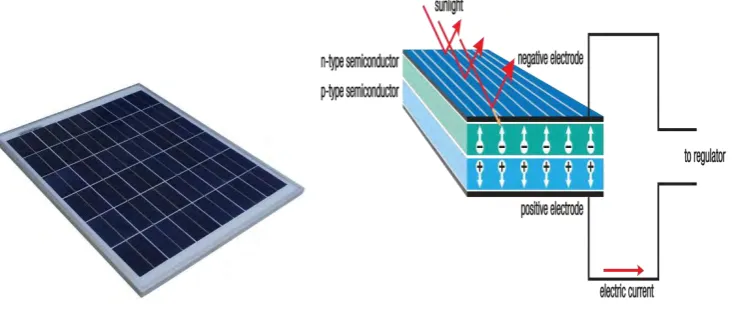
[image:23.595.137.505.375.533.2]To generate a flow of electricity, a solar panel works by permitting photons, or particles of light, to knock electrons free from atoms. Solar panels actually comprise many, smaller units called photovoltaic cells. Each photovoltaic cell is basically a sandwich made up of two slices of semi-conducting material, usually silicon. To work, photovoltaic cells need to establish an electric field. Much like a magnetic field, which occurs due to opposite poles, an electric field occurs when opposite charges are separated. To get this field, manufacturers "dope" silicon with other materials, giving each slice of the sandwich a positive or negative electrical charge. (Dhar, 2013)
10
2.3.1.1 Types of Solar Cells
There are three basic types of solar cell that is Monocrystalline cells, Polycrystalline cells and the third type is the amorphous or thin-film solar cell.
(a) Monocrystalline cells
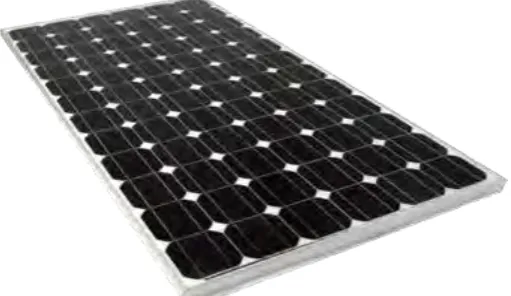
[image:24.595.242.498.435.583.2]Solar cells made of monocrystalline silicon (mono-Si), also called single-crystalline silicon (single-crystal-Si). The regular monocrystalline solar cell is a dull black shading, and the sides of cells are usually missing as a result of the production process and the physical nature of monocrystalline silicon. Monocrystalline solar cells are made out of silicon ingots, which are cylindrical in shape. To improve performance and lower expenses of a single monocrystalline solar cell, four sides are removed of the cylindrical ingots to make silicon wafers, which is what gives monocrystalline solar panels their characteristic look.