i
A Dissertation On
TO EVALUATE THE EFFECT OF HOT MUD APPLICATION ON PAIN MANAGEMENT IN PERIARTHRITIS OF SHOULDER
Submitted by
Dr. V. ARUMUGARAJ, B.N.Y.S (Reg. No. 461611002)
Under the guidance of
Prof. Dr. N. MANAVALAN, N.D. (OSM), M.A (G.T), M.Sc (Y&N), M.Phil, P.G.D.Y, P.G.D.H.M, P.G.D.H.H
Submitted to
The Tamil Nadu Dr. M.G.R. Medical University, Chennai In partial fulfillment of the requirements for the award of degree of
DOCTOR OF MEDICINE BRANCH – I: NATUROPATHY
POST GRADUATE DEPARTMENT OF NATUROPATHY
GOVERNMENT YOGA AND NATUROPATHY MEDICAL COLLEGE AND HOSPITAL,CHENNAI – 600 106.
ii
GOVERNMENT YOGA AND NATUROPATHY MEDICAL COLLEGE AND HOSPITAL, CHENNAI, TAMILNADU
CERTIFICATE BY THE GUIDE
This is to certify that “TO EVALUATE THE EFFECT OF HOT MUD APPLICATION ON PAIN MANAGEMENT IN PERIARTHRITIS OF SHOULDER” is a bonafide work done by the Postgraduate Dr.V. ARUMUGARAJ, Department of Naturopathy, Government Yoga and Naturopathy Medical College and Hospital , Chennai-600106,
under my guidance and supervision in partial fulfillment of regulations of The Tamilnadu Dr.M.G.R.Medical University, Chennai for the award of degree of DOCTOR OF MEDICINE (M.D) – (Naturopathy) BRANCH – I during the academic period 2016 to 2019.
Date: SIGNATURE OF THE GUIDE Place:
Dr. N. MANAVALAN,
N.D.(OSM),M.A(G.T), M.Sc (Y&N), M. Phil, P.G.D.Y, P.G.D.H.M, P.G.D.H.H, Head of the Department - Department of Naturopathy, Government Yoga and Naturopathy Medical College and Hospitals, Chennai – 106.
iii
GOVERNMENT YOGA AND NATUROPATHY MEDICAL COLLEGE AND HOSPITAL, CHENNAI, TAMILNADU
ENDORSEMENT BY THE HEAD OF THE DEPARTMENT
I certify that the dissertation entitled “TO EVALUATE THE EFFECT OF HOT MUD APPLICATION ON PAIN MANAGEMENT IN PERIARTHRITIS OF SHOULDER” is the record of original research work carried out by
Dr. V. ARUMUGARAJ, Department of Naturopathy, Government Yoga and Naturopathy Medical College and Hospital, Chennai – 600 106, submitted for the degree of DOCTOR OF MEDICINE M.D – Branch – I (Naturopathy) under my guidance and supervision, and that this work has not formed the basis for the award of any degree, diploma, associate ship, fellowship or other titles in this University or any other University or Institution of higher learning.
Place: Chennai. SIGNATURE OF THE H.O.D Date:
Dr. N. MANAVALAN,
iv
GOVERNMENT YOGA AND NATUROPATHY MEDICAL COLLEGE AND HOSPITAL, CHENNAI, TAMILNADU
ENDORSEMENT BY THE PRINCIPAL
I certify that the dissertation “TO EVALUATE THE EFFECT OF HOT MUD APPLICATION ON PAIN MANAGEMENT IN PERIARTHRITIS OF SHOULDER” is the record of original research work carried out by Dr. V.ARUMUGARAJ, Department of Naturopathy, Government Yoga and Naturopathy Medical College and Hospital, Chennai – 600 106 submitted for the award of degree of DOCTOR OF MEDICINE (M.D) Branch – I (Naturopathy) under my guidance and
supervision, and that this work has not formed the basis for the award of any degree, diploma, associate ship, fellowship or other titles in this University or any other University or
Institution of higher learning.
Place: Chennai. SIGNATURE OF THE PRINCIPAL Date:
Dr. N.MANAVALAN,
N.D. (OSM), M.A (G.T), M.Sc (Y&N), M. Phil, P.G.D.Y., P.G.D.H.M., P.G.D.H.H., Govt. Yoga and Naturopathy Medical
v
GOVERNMENT YOGA AND NATUROPATHY MEDICAL COLLEGE AND HOSPITAL,CHENNAI, TAMILNADU.
DECLARATION BY THE CANDIDATE
I, Dr. V.ARUMUGARAJ I solemnly declare that this dissertation entitled
“TO EVALUATE THE EFFECT OF HOT MUD APPLICATION ON PAIN MANAGEMENT IN PERIARTHRITIS OF SHOULDER” is a bonafide and genuine research work carried out by me at Government Yoga and Naturopathy Medical College and Hospital, Chennai from July 2016 - June 2017 under the guidance and supervision of Dr. N. MANAVALAN, N.D. (OSM), M.A (G.T), M.Sc (Y&N), M. Phil, P.G.D.Y, P.G.D.H.M, P.G.D.H.H, Head of the Department - Department of Naturopathy. This dissertation is submitted to The Tamilnadu Dr.M.G.R.Medical University, Chennai towards partial fulfillment of requirements for the award of M.D. Degree (Branch – I – Naturopathy) in Yoga and Naturopathy.
Place: Chennai Signature of the candidate Date:
vi
INSTITUTIONAL ETHICAL COMMITTEE
GOVERNMENT YOGA AND NATUROPATHY MEDICAL COLLEGE AND HOSPITAL,CHENNAI – 600 106.
CERTIFICATE OF APPROVAL
The Institutional Ethical Committee of Government Yoga & Naturopath y
Medical College and Hospital, Chennai reviewed and discussed the
application for approval “TO EVALUATE THE EFFECT OF HOT MUD APPLICATION ON PAIN MANAGEMENT IN PERIARTHRITIS OF SHOULDER” project work submitted by Dr. V.ARUMUGARAJ, 2 year M.D. Naturopathy, Post graduate, Government Yoga and Naturopathy Medical College and Hospital, Chennai.
The proposal is APPROVED.
The Institutional Ethical Committee expects to be informed about the progress of the study and adverse drug reactions during the course of the study and an y change in the protocol and patient information sheet /informed consent and asks to be provided a cop y of the final report.
vii COPYRIGHT
DECLARATION BY THE CANDIDATE
I here by declare that the Tamilnadu Dr.M.G.R.Medical University, Chennai, Tamilnadu shall have the rights to preserve, use and disseminate this Dissertation / Thesis in print or electronic format for academic / research purpose.
Place: Chennai
Date: Signature of the candidate
(Dr.V.ARUMUGARAJ)
viii
ACKOWLEDGEMENT
Foremost, I express my sincere gratitude to Dr.N.Manavalan, Prinicpal, Govt. Yoga & Naturopathy Medical College, Chennai, for giving me this opportunity to pursue my Post Graduation degree in M.D. Naturopathy from this prestigious institute.
I extend my gratitude towards Dr.N.Manavalan, H.O.D., Department of Naturopathy, Govt. Yoga and Naturopathy Medical College and Hospital, Chennai for her constant support and encouragement by providing all necessary requirements needed for the completion of this dissertation.
I express my heartfelt gratitude to Dr. S.T.Venkateshwaran, H.O.D., Department of Yoga for his support and guidance.
I am very much thankful to Dr. Kumaresan MD for helping me in statistical analysis and its interpretations and also making of the manuscript of this study.
I thank my parents, Mr. A.Velayutham and Mrs.V.Muthulakshmi, , for their support and blessings.
I express my thanks to my wife G.Sangeetha andmy Sister V. Subbulakshmi for always constant source of support throughout my study.
My special thanks to my beloved grandfather Dr.A.Balakrishnan Retd. Siddha research officer for motivating me to complete the study and the dissertation.
ix
I am thankful to Dr. K. Ramya M.D for motivating me for their constant guidance in the study and Dr. Y. Rosy Ayda M.D. for supporting me in manuscript editing.
I thank Dr.T.Venkatesan and G.Ramesh supporting me in this project work and also I thank Mr. G.Magi pushpa for supporting me typing work in this project work.
My sincere thanks go out to all my Post-Graduate and Undergraduate friends who have been there at all phases of this study including the preparation of this dissertation. I also acknowledge the support of all the subjects who participated in the study.
Above all I thank God for all that I am blessed with.
Date: Signature of the Candidate
Place: Chennai
x
LIST OF ABBREVIATIONS
AC Adhesive capsulitis MMP Matrix Metalloproteinase
ANS Autonomic Nervous System MPk Mud pack
ARR Arthroscopic release and repair NSAIDs Non-Steroidal Anti-Inflammatory Drugs
aROM Active Range of Motion NMDA N-Methyl-D-Aspartic Acid
AMPA
a-Amino-3-Hydroxy-5-Methyl-4-Isoxazolepropionic Acid P Probability DM Diabetes Mellitus ROM Range of Motion HMA Hot mud application SD Standard Deviation
HTN Hypertension SPSS Statistical Package for the Social Sciences
5-HT 5-Hydroxytryptamine SPADI Shoulder Pain and its Disability Index
MRI Magnetic resonance imaging TGF-beta Transforming Growth Factor beta
xi ABSTRACT BACKGROUND
Periarthritis of shoulder (PAS) is a common painful musculoskeletal disorder of shoulder. Mud treatment has demonstrated to be effective in the administration of skin pathologies, rheumatic issue, musculoskeletal clutters, gynecological conditions, neurological protests and cardiovascular conditions. The present quasi experimental study was planned to evaluate the effect of hot mud application over the painful shoulder joint in increasing Range of motion of the shoulder – flexion, abduction and external rotation.
METHODS
A total of forty subjects, aged (40-65 yrs) were randomly assigned into the study group after satisfying the inclusion and exclusion criteria. Study group was assessed at baseline and after 15 sessions (alternate days in a month) for Shoulder pain and its disability index (SPADI) and range of motion.
RESULTS
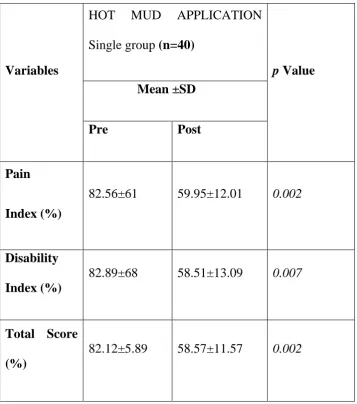
The study group showed significantly improvement in both statistically and clinically in pain index (P <0.002), disability index (P <0.007), total SPADI score (P<0.002), shoulder flexion (P <0.003), abduction (P <0.002) and external rotation (P <0.004).
CONCLUSION
Fifteen session application of hot mud over painful shoulder joints of periarthritis patients causes vasodilatation and it infiltrates further into the muscle and consequently decreases the pain and increase the range of movements in shoulder joint.
KEYWORDS
Periarthritis of shoulder (PAS), Hot mud application, Shoulder pain and its disability index (SPADI), Mud therapy.
xii
SL.NO INDEX PAGE NO.
1 INTRODUCTION 1
2 AIMS AND OBJECTIVES 8
3 LITERATURE REVIEW 9
Introduction to PAS Epidemiology
PAS and Diabetes Mellitus History of PAS
Phases of clinical presentation Physical Examination
Clinical Presentation Pathogenesis
Differential Diagnosis Diagnostic testing
Conventional Interventions Introduction to Naturopathy Mudtherapy
Modern Theories Recent evidences
xiii
4 MATERIALS AND METHODS 49
Subjects
Ethical Considerations Screening of the subjects Study Design
Assessments Intervention
Data extraction & analysis
5 RESULTS 62
6 DISCUSSION 69
7 CONCLUSION 72
8 SUMMARY 73
9 REFERENCES 74
xiv
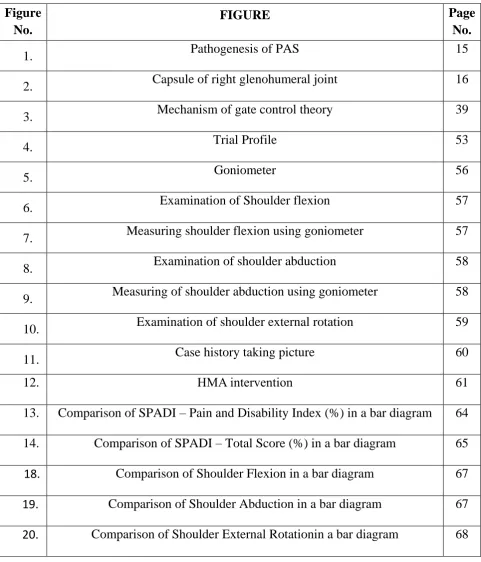
[image:14.595.73.555.96.659.2]LIST OF FIGURES Figure
No.
FIGURE Page
No.
1. Pathogenesis of PAS 15
2. Capsule of right glenohumeral joint 16
3. Mechanism of gate control theory 39
4. Trial Profile 53
5. Goniometer 56
6. Examination of Shoulder flexion 57
7. Measuring shoulder flexion using goniometer 57
8. Examination of shoulder abduction 58
9. Measuring of shoulder abduction using goniometer 58
10. Examination of shoulder external rotation 59
11. Case history taking picture 60
12. HMA intervention 61
13. Comparison of SPADI – Pain and Disability Index (%) in a bar diagram 64
14. Comparison of SPADI – Total Score (%) in a bar diagram 65
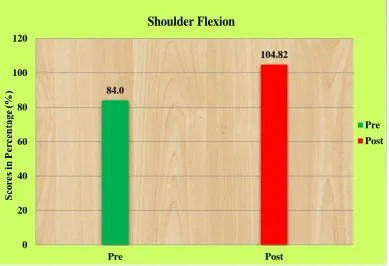
18. Comparison of Shoulder Flexion in a bar diagram 67
19. Comparison of Shoulder Abduction in a bar diagram 67
xv
LIST OF TABLES
Table No. TOPIC Page No.
1 Clinical and histological stages of PAS 11
2 Describes the demographic details of the subjects 49
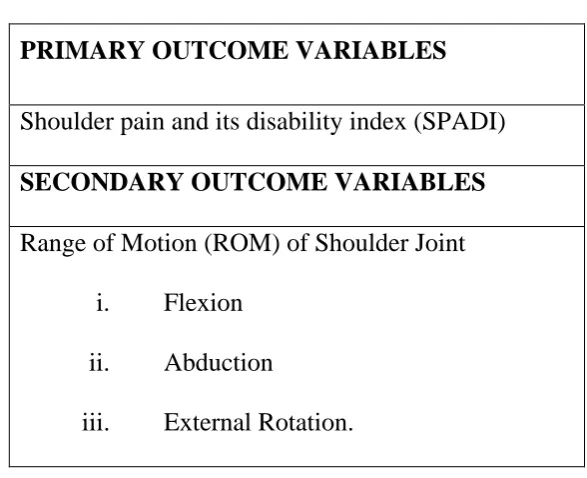
3 List of Primary and Secondary outcome variables 54
4 Result of Primary Outcome Variables 63
1 1.0 INTRODUCTION
Periarthritis of shoulder (PAS) is a common painful musculoskeletal disorder of shoulder [1]. Frozen shoulder was first described by Duplay in 1872 and termed periarthritis. The key symptoms as described earlier i.e gradual onset of shoulder stiffness, severe pain, especially at night and restriction in active and passive range of movement of the shoulder, were initially attributed to inflammation of the subacromial and sub deltoid bursae [codman,1911].In 1945 Neviaser was the first to described fibrosis and adhesions in the shoulder capsule in 10 cases and suggested the term’ adhesive capsulitis’ as a more accurate description of the condition (J.S.Neviaer,1945]
[2]. Observational studies conducted with these findings and it is generally accepted that the shoulder capsule is the cause of symptoms in periarthritis shoulder [3].
Neviaser in 1945 who given the term ‘adhesive capsulitis’ for painful Stiffening of the
shoulder [4]. Adhesive capsulitis (AC), also known as frozen Shoulder, is a common and painful musculoskeletal disorder. The shoulder is a Complex joint comprising 3 bones and multiple muscle groups, ligaments, and Tendons. Accompanying the inflammation of the joint is stiffness that greatly restricts the patient’s motion and strength [5]. ‘Frozen shoulder’ was another word used by Codman Frozen shoulder, a
2
reported burden of middle age between 40 and 65 and is rare in children age group and in manual labours and but it is slightly more common in women [7].
PAS is believed to have an incidence of 3% to 5% in the general population and up to 20% in those with diabetes [8], patients with PAS have a higher risk of having certain form of pre diabetic condition with an abnormal fasting glucose or impaired glucose tolerance test [9]. The loss of range is multi planar, with external rotation and abduction being the most affected restricted passive external rotation [10].
PAS classified into four distinct stages namely painful, freezing, frozen and thawing stages [11-13]. PAS associated with pain can cause an immobilization of a shoulder extended immobilization of a joint has been shown to cause several detrimental pathophysiologic findings including decreased collagen length, fibrofatty infiltration into the capsule recess, ligament atrophy resulting in reduced stress absorption, collagen band bridging across recesses, random collagen production, and reformed sarcomere number in muscle tissue [14].
3
patient is under short general anaesthesia. This can be undertaken as a day procedure [15], exercise therapy, electrotherapy, hydrotherapy [16], bupivacaine suprascapular nerve blocks using bupivacaine and methylprednisolone acetate in chronic shoulder pain [17], which are anti-inflammatories, intra-articular corticosteroid injections to reduce the inflammation and provide the pain relief [18], arthroscopic capsular release and repair a surgical procedure conducted under anaesthesia which the contracted tissue is released[19]. Most of Patients may also choose complimentary therapies like physiotherapy [20], arthroscopic capsular distention (also called hydrodilation) which involves controlled dilatation of the joint capsule with sterile water under local aneasthesia [21].
It is a scientific and systemic manipulation of the tissue and muscle of the body. The main aim to improving the blood circulation and also strengthening muscles and bodily organs.so massage is an effective treatments for reducing shoulder pain [22].
MUD THERAPY
In naturopathy, among these five elements, earth is an integral component of the human body and has a specific effect on health and diseases. Mud is a mixture of inorganic and organic matter with water, which has undergone geological and biological processes under the influence of various physic chemical factors [23].
4 Preparation of Mud for Application
Source: The mud should be clean and taken from 122 -153 cm depth from the surface of ground. Free from contamination of stone pieces & chemical manures.
Preparation: Before using mud should be dried in sun rays, powdered and sieved to separate stones, grass particles and other impurities. It should be well heated and then sterilised. Take the mud fine powder and mix it with adequate amount of water (hot).Mix the mud powder with water and make mud as paste [24].
Mud has been used empirically in musculoskeletal and inflammatory joint diseases. Antiseptic and substances interchange capacity are attributed to (mainly) the inorganic components of mud [25]. Effects of mud-application include: increase in membrane electrical conductance, absorption phenomena, hyperemia, hidropoietic glands, enzymes and hormones activation. Scientific studies revealed that bath therapy increases skin temperature, impacts on cardiovascular systems, water-electrolytes balance, neurotransmission (central nervous system, neural conductibility), immune system, enzymes activation and metabolism mud, which contains organic and mineral ingredients, has been used in the treatment of several degenerative diseases [26].
5
Since the time of Cleopatra, people have revered the mud found at the bottom of the Dead Sea and have used the rich mineral mix for healing baths and beauty treatments. Its high concentration of chloride salts of magnesium, sodium, potassium, calcium, and bromine help relax muscles, ease pain, and stimulate circulation, which makes it particularly useful in the treatment of dermatological conditions, such as psoriasis, acne, dandruff, eczema, and dry skin [28].
Thermal muds are hydrothermal or hydro thermalized pastes produced by primary or secondary mixing of clayey (geo) materials with salty thermo-mineral waters, accompanied by organic materials produced by the biological-metabolic activity of micro-organisms growing during the so-called “maturation” process. The routine applications of thermal muds (“peloids”) are: (i) local or total-body
cataplasms for recovering chronic rheumatism, myalgias, neuralgias, osteo-arthrosis and periarthritis of shoulder [29].
We found that pain score reduce in hot mud application compare to mustard application. Which suggest the main use of the treatment is to relieve rheumatic musculoskeletal pain [30].
6
accompanied by organic materials produced by the biological-metabolic activity of microorganisms growing during the so-called “maturation” process.
Diatoms alive within the thermal mud are able to produce proteins and lipids as the result of biotransformation by thio-bacteria [32].Clay raw materials (NE Turkey) have been studied to determine their mineralogical and physicochemical properties and evaluation of their thermal mud characteristics. The following The grain-size analysis revealed that the samples the highest percentage of smaller than 2 µm. The smaller size of particles attributed to theirs better thermal behaviour, since the smaller the clay particle. It was observed that the dominant clay mineral was smectite and other clay minerals were kaolinite, illite, mica and zeolite. Non clay minerals identified were quartz, calsite, plagioclase and feldispare. The degree of plasticity was high and very high except one sample which recorded moderate plasticity. The dense fragments of dreissensia spgastropoda sp. and congeria sp. observed in the clay raw materials increased the biogenic carbonate. Na2O/CaO ratios in all samples were found to be lower than
the swelling clay minerals because of high CaO contents caused by biogenic carbonate. Although, physicochemical properties such as CEC and SSA values were low because of very high biogenic [33].
7
In particular, the in-vitro experiments of percutaneous migration clearly indicate that for most elements, the amount transferred across the skin depends on their concentration in mineral water, the exchange able fraction of ions being negligible respect to high salinity of the water. A qualitative evaluation of indicates that all the most abundant “inorganic” elements of biological systems (Na, K, Ca, Mg,
8 2.0 AIMS AND OBJECTIVES
2.1 Aim: To evaluate the effect of hot mud application on pain and range of motion in patients with periarthritis of shoulder.
2.2 Objectives
2.2.1 Primary objective
To assess the shoulder pain and its restriction by SPADI (shoulder pain and its disability index).
2.2.2 Secondary Objective
To assess the range of motion (ROM) of the shoulder by Goniometer 1. Flexion
2. Abduction
9 3.0 LITERATURE REVIEW
3.1 Introduction to PAS
Periarthritis of shoulder (PAS) is a musculoskeletal disorder with self-limiting condition in shoulder joint. Patients typically present with a traumatic history of progressive painful restriction in range of movement of the shoulder joint. They reveal a capsular pattern of limitation with external rotation and being the most affected followed by abduction in the level of the scapula and then finally flexion. In 1934 Codman described a diagnostic criteria which involves of idiopathic onset, painful restriction of all glenohumeral movements with limitation of flexion and external rotation without any radiological changes.
PAS associated with pain can cause an immobilization of a shoulder. Prolonged immobilization of a joint has been shown to cause several detrimental pathophysiologic findings.
3.2 Epidemiology
10
Persons with a history of PAS are at increased risk of developing the condition on the contralateral side. Recurrence side is also possible, especially in patients with diabetes.
3.3 PAS and Diabetes Mellitus
Studies have presented that correspondence between PAS and diabetes mellitus (DM), with the incidence of two to four times higher when matched with general population. It affects about 20% of people with DM and has been described as the most disabling of the common musculoskeletal manifestations of diabetes. The prevalence of diabetes in patients with PAS was 71.5% DM increases the risk of microvascular complications and believed to play a role in the developed of musculoskeletal complications [37].
3.4 History of PAS
Reeves, in a prospective study had a follow up for 5-10 years with 41 patients, out of them he have observed that 39% recovered completely, 54% had clinical limitation without functional changes, and 7% had functional limitation [38].Shaffer et al showed that 50% of his 61 patients with PAS had certain degree of pain and stiffness on an average of seven years after onset of the disease [39].
3.5 Phase of Clinical Presentation
11
STAGES SYMPTOMS
LENGTH OF
SYMPTOMS
HISTOLOGICAL FEATURES
PAINFUL STAGE
Aching pain and moderate limitation of ROM
Less than 3 months
Synovitis and
capsular hypertophy
FREEZING STAGE
Severe pain and reduction of ROM
3 to 9 months
perivascular synovitis. Disorganized
Collagen deposition
FROZEN STAGE
Stiffness is
predominant. Pain may persist.
9 to 14 months
Dense and
hypercellular collagenous tissue
THAWING STAGE
Minimal pain and a gradual improvement of ROM
15 and 24 months Not investigated.
12 3.5.1 Painful Stage
First stages in PAS is the painful stage, which is characterised by a progressive beginning of pain. It continues less than 3 months on the insertion of deltoid muscles and in ability to sleep on the affected side. Patients may report a mild restriction of ROM which perpetually resolves with the advise of local anaesthesia [42]. Arthroscopic perspectives demonstrates a hypertrophic, vascularized synovitis without grips or capsular contracture.
3.5.2 Freezing Stage
The second stage is also classified "solidifying stage" symptoms proceed for 3 to 9 months and are described by increasing of nocturnal pain while resting on the influenced side, also a significant loss of both active and passive ROM can be taken noticed. Arthroscopic view demonstrates a thickening of perivascular synovitis [42]. Histologically demonstrates perivascular and sub synovial scar development with deposition of disordered collagen fibrils with a hypercellular appearance, however no any inflammatory infilteration.
3.5.3 Frozen Phase
13 3.5.4 Thawing Phase
The last stage is thawing or "defrosting stage". It is described by minimal pain and a gradual progression of ROM because of capsular remodeling. This stage happen somewhere in the range of 15 and two years [42].Arthroscopic and histological correspondence has not been explored.
3.6 Physical Examination
Chronic PAS patients may lose characteristic swing of the arm that happens while walking. Shoulder support muscles atrophy can be taken note. Debilitated movement in the glenohumeral joint may result with irregular scapular development with active forward flexion of the affected shoulder. Physical examination of a patient with PAS can be uneasiness and require brief rest or delicate release their arm to demonsrate the moves. Palpation may yield dubious, diffuse tenderness over the anterior and posterior shoulder. Central tenderness over unequivocal structure is uncommon and its essence proposes differential determination or attendant pathologies, for example, rotator cuff or biceps tendinopathy.
14 3.7 Clinical Presentation
Periarthritis shoulder is a clinical conclusion. The three all marks of solidified shoulder are active shoulder firmness, severe pain (particularly around night time) that results inability to sleep on the affected side and a close total loss of uninvolved and active external rotation of the shoulder. Appropriate history-taking incorporates the onset and duration of symptom, site, function and preceding truama. Past therapeutic and careful history is significant and relevant and should be obtained. On inspection, mild diffuse atrophy of the deltoid and supraspinatus in long standing cases is usually observed. The arm may be adducted and internally rotated. Tenderness would be positive on palpation of the glenohumeral joint. Both active and passive range of motion are affected, especially that of abduction and external rotation. Movement in the thoracoscapular joint, which may aid abduction, should be noticed.
The hallmark of PAS is decreased range of motion and shoulder pain there often idiopathic cause or trigger. The pain is often described as a poorly localized and deep ache. If the pain is localized, it is usually in the area of the anterior or posterior capsule. It may radiate to the biceps with progressive pain and stiffness when performing flexion, abduction and external rotation. Weakness is often correlated to pain or concomitant tendinopathy. Crepitus may be present on the involved side. Like other shoulder conditions pain may be impair sleep [43].
3.8 Pathogenesis of PAS
15
process is believed to involve synovial inflammation and fibrosis of the shoulder joint capsule .with microscopic examination of the tissue one will find the majority of the cells to be fibroblasts with some mast cells also present. Cytokines such as transforming growth factor β and platelet –derived growth factor may contribute to the
inflammatory process. Although the glenohumeral joint, synovial capsule is involved, much of the disease also involves structures outside the glenohumeral joint. These structures can include the coracohumeral ligament, rotator interval, subscapularis, musculotendinous and the subacromial bursa [44].
Figure 1: Pathogenesis of PAS
16
[image:31.595.88.519.284.611.2]such as tumour necrosis factor-alpha (TNF-alpha) and Interleukins (ILs) also cause synovitis in both the glenohumeral joint and subacromial bursa, however matrix-bound transforming growth factor beta (TGF-beta) may act as a persistent stimulus and resulting in capsular fibrosis [45]. Another likely initiator of synovitis is degeneration or injury of the rotator cuff tendon. Tendon injury may trigger induction of inflammatory mediators or fibrotic cytokines in the shoulder joint, where as partial rotator cuff tear may cause joint contracture [46].
Figure 2: Capsule of right glenohumeral joint
Capsules of Right Glenohumeral Joint
17
from the superomedial margin of the glenoid cavity to the lesser tubercle and inferiorly related anatomical neck of the humerus superiorly between the base of the coracoid process and the greater tubercle of the humerus (the coracohumeral ligament); between the greater and lesser tubercles of the humerus (transverse humeral ligament)-this holds the tendon of the long head of the biceps bronchi muscle in the intertubercular sulcus .Joint stability is provided by surrounding muscle tendons and a skeletal arch formed superiorly by the coracoid process and acromion and the coraco-acromial ligament [47].
3.9 Differential Diagnosis
Diagnosis of PAS is generally clinical. Other conditions that would be considered in a patient who presents with a stiffness, painful shoulder include acromio clavicular arthropathy, autoimmune disease (e.g., systemic lupus erythematosus, rheumatoid arthritis), cervical disc degeneration, biceps tendinopathy, glenohumeral osteoarthritis, neoplasm, rotator cuff tendinopathy or tear (with or without impingement), sub acromial and subdeltoid bursitis. PAS in the presence of related conditions is most appropriately defined as painful shoulder syndrome.
3.10 Diagnostic Testing
3.10.1 Laboratory
18
sedimentation rate levels may be raised in patients with PAS, however these tests are not specific or sensitive [48].
3.10.2 Imaging
Authoritative finding of PAS can be obtained distinctly through direct surgical observation. All things considered, this isn't generally essential. Other imaging strategies can be utilized to supplement the previous history and physical examination [49].
The glenohumeral joint capsule is comprising of soft tissue; consequently plain radiography may not be useful. it may, radiography can distinguish other shoulder pathologies. X-beams can be helpful to evaluate for pathologic fracture, avascular necrosis, calcific rotator cuff, progressed glenohumeral joint pain, and biceps tendinopathy.
Magnetic resonance imaging (MRI) isn't diagnostic for PAS. Capsular thickening can be seen on MRI, it may likewise accommodating in distinguishing different conditions, for example, subacromial bursitis and rotator cuff tendinopathy [50].
3.11 Conventional Interventions
3.11.1 Steroid injection
19
transient advantage to steroid injection alone for PAS however the evidence is uncertain.
3.11.2 Anti-inflammatories
Employments of hostile to inflammatories or corticosteroids are the significant in the treatment of PAS. Non-steroidal anti inflammatory drugs (NSAIDs) may be utilized in brief pain relief [52].
No evidence has demonstrated to show that NSAIDs change the visualization of PAS. Be that as it may, NSAID's are included in the activity of hostile to irritation as well as creating pain relieving impact. So it very well may be sensible prime decision for PAS.
In addition, No comparative study has done on oral corticosteroids with placebo treatment or natural history of the PAS. Most studies have demonstrated that corticosteroids may reduce pain than recovery or placebo treatment however their results are not maintained long term
3.11.3 Intra-articular Corticosteroid Injections
20
[53]. This limitation can be overwhelmed by utilization of imaging strategies, for example, ultrasound guided joint injection.
3.11.4 Capsular Distension Injections
This method of treatment ought to be done under local anesthesia affected joint is injection with local analgesic to extend the capsule. This method is regularly inadequately tolerated because of pain that is experienced during the procedure of intra-articular injection. So capsular distention injections may be unfamiliar [54].
3.11.5 Surgical Treatment
The treatment of PAS should prompt the surgical treatment simply after conservative management has not given any advancement. There is no positive due date to mediate medical procedure. There is no definite deadline to intervene surgery. As a general rule patients should not noticing any progress in the symptoms, after taking some form conservative management for at least 2 months. Patients those who are having significant pain and limitations can proceed with surgical intervention.
3.11.6 Manipulation Under Anesthesia
21
recovery process. When it adding with surgical release it induces further surgical trauma to the shoulder and may cause slow rehabilitation.
3.11.7 Arthroscopic Release and Repair
Arthroscopy is an extra device for tending to the shoulder with PAS. Essential lesion are fixed coracohumeral tendon and rotator cuff interim with the contracted capsule including the axillary pouch on the affected joint. . These structures can be preserved by release with arthroscopic instruments. ROM of the shoulder can be maintained under arthroscopic release with manipulation, if necessary. The release can be executed either before, during, or after the manipulation [56]. The manipulation may need to precede the technique to gain access to the joint. Arthroscopy allows complete evaluation of the shoulder and its anatomy as well. Any pathology that may not have been diagnosed can be addressed with this procedure. This procedure may make postoperative ROM less painful and decreases the recovery period. Operative treatment of PAS has been shown to reduce the duration of the disease and to return ROM with good prognosis. Total recovery of pain-free ROM averages 2.8 months and time taken for formal physical therapy is 2.3 months [57].
3.11.8 Chinese Medicine Packet Plus Wax Therapy
The prepared Chinese medicine packet will be placed onto the shoulder joint followed by a warm paraffin cake [2–4 cm × 20 cm × 30 cm, 45–55°C) as a hot compress, fixed
with a cotton pad, once a day for 20 minutes, totally for 4 weeks.
22
guidelines and technical standards for Chinese medicine packet plus wax therapy for the treatment of periarthritis shoulder [58].
3.11.9: Effects of Deep and Superficial Heating in the Management of Frozen Shoulder
May our findings suggest that the addition of deep heating (using SWD) to stretching exercises is more effective than superficial heating (using Hp) or stretching alone in improving shoulder pain and function. Also, the addition of deep heating to stretching produces a significantly greater gain in shoulder ROM (flexion, external rotation with the arm by one’s side, external rotation with the arm in abduction and in the
hand-behind-back position) than does the use of a superficial heating plus stretching superficial heating therapy including paraffin baths, hot packs, mud application, balenotherapy and mineral water. The common action mechanism is to increase pain threshold by affecting sensory and muscle nerve and muscle nerve endings. Beta endorphin releasing and washing out the pain mediators by peripheral releasing and washing out the pain mediators by peripheral vasodilation also play a role in producing analgesia and sedation for the management of pain and to progress ROM of affected joint [59].
3.11.10: Physiotherapy
23
ROM, high grade mobilization and mobilization with movement along with self exercises are recommended for improving function [60].
3.11.11Patient Education
PAS is so painful and has a very slow progression of resolution. Patients should be educated the slow prognosis of the condition and inclusion of complication of the PAS.
3.12 MUD THERAPY
3.12.1 Introduction
Naturopathy is a normal and proof based arrangement of prescription giving medicines with common components dependent on the speculations of essentialness, toxeamia and one self mending limit of the body and the standards of sound living. Indian Naturopathy incorporates Yoga alongside some old Indian ideas like – 'Panchabhuta based comprehension of wellbeing and disease [61].
Among the five components, earth is a basic segment of the human body and specifically affects wellbeing and ailments. Naturopathy utilizes every last one of these components as a helpful methodology as a result of their properties to treat the illnesses. In naturopathy, mud is one of the center restorative parts as a component of earth.
24
Mud treatment can be characterized as the utilization of prepared mud either legitimately. Mud treatments has demonstrated to be effective in the administration of skin pathologies, rheumatic diseases, musculoskeletal clutters, gynaecological conditions, neurological protests and cardiovascular conditions. The mud demonstrations by weakening and retaining the dangerous substances of the body and at last dispensing with them from the body. The impacts of mud application include: an expansion in layer electrical conductance, retention wonders, hyperaemia and initiation of the hidropoietic organs, catalysts and hormones [63].
3.12.2 Planning of Mud for Application
Source: The mud should be spotless and taken from 122 - 153 cm profundity from the ground. Free from sullying of stone pieces and substance excrements and sieved to isolate stones, grass particles and different polluting influences.
In the event that any uncertainty in its tidiness, it ought to be very much warmed and after that sanitized. Take the mud fine powder and blend it with satisfactory measure of water (hot).Mix the mud powder with water and make mud as paste [64].
3.12.3: Mud Allergy Test
Take the mud glue and apply on the forearm (1-2 cm) surface territory. Keep it for the time of 20-30 minutes. Wash it with the cold water. Keep the patient in perception for the time of 24 hours. Check for any hypersensitive response.
25 3.12.4 TYPESAND HISTORY OF MUD
Types of mud
The Dead Ocean Mud
Since the season of Cleopatra, individuals have loved the mud found at the base of the Dead Ocean and have utilized the rich mineral blend for recuperating showers and excellence medicines.
Its high grouping of chloride salts of magnesium, sodium, potassium, calcium, and bromine help to loosen up muscles, ease torment, and animate dissemination, which makes it especially valuable in the treatment of dermatological conditions, for example, psoriasis, skin break out, dandruff, dermatitis, and dry skin [65].
Dead Ocean Mud rehydrates tired skin, profound purging and normally expanding course and makes the skin look and feel more youthful.
The wealth of the ocean offers the ideal antitoxin for dry, develop and touchy skin. Studies demonstrate that Dead Ocean mud showers can effectively reduce manifestations of fibromyalgia [66].
Ghiol Mud
26
Dark Ocean Mud ("Namol") effectly affects degenerative rheumatic illnesses a wide range of calcification - (cervical, lumbar and dorsal spondylosis, cox joint inflammation, gonarthrosis, joint inflammation of the hands and feet, ceaseless lumbago), provocative rheumatic maladies (torment in the joints after intense articular ailment or contaminations in foci, rheumatoid spondylitis, rheumatoid joint pain) and articular rheumatic infections (tendinitis, tendomyositis, scapula humeral periarthritis, panniculosis, fibrillosis), also fringe and focal neurological disarranges (post-awful loss of motion and paresis of the appendages, polyneuropathies after the intense stage, sequelae after poliomyelitis, late sequelae after paraparesis and hemiparesis [67].
Field Mud
Field mud originates from old frosty valley bowl that never depleted away enabling the field to hold the majority of its natural, mineral, and follow elements. Composition examination has demonstrated that the Field mud is interestingly rich in disintegrated vegetation, with over a 1000 plant stores: blooming herbs, seeds, leaves, blossoms, tubers, organic product, roots, and grasses.
27
Field mud is utilized not exclusively to enhance, yet in addition to fix huge number of diseases from portability issues, joint pain, gout, skin issues, for example, skin break out and hormonal irregularity to post medical procedure recuperation and muscle recuperation in game medication. Its activities are thermo-physical, biochemical, against maturing, calming, and characteristic anti-toxins. Since peat has chelatic properties (it ties overwhelming metal isotopes) it is an exceptionally solid characteristic detoxifier. It contains a high measure of humic and fulvic acids which are chelaters. Chelaters tie with substantial metals and different poisons and help to fend off them from the body tissues.
Biomass of Mud
The high carbon substance of the microbial biomass (0.06 mg/g) was natural skyline of the dirt profile contemplated. The offer of carbon of the microbial biomass in the carbon of the mud natural issue fluctuated from 0.5 to 1.4% Semaghiul and Dobrinas examined the remedial estimation of water and mud from the Salt Lake (LacuSarat) in Romania. They investigated the complete substance of Fe, Cu and Cr in the sapropelic mud. The outcomes demonstrate the presence of ionic trade between the restorative mud and human life form at the epithelial dimension.
28
phosphatase (more noteworthy action in winter). Mud, which contains natural and mineral fixings, has been utilized in the treatment of a few degenerative ailments. It has been recommended that valuable impacts of mud are identified with its nearby warm impacts, yet in addition to its synthetic parts. Not at all like hydrophilic components, the lipophilic segments of the mud separate have not been exactly portrayed so far. Three distinctive mud species (e.g., krenogen, tone, and fango) were broke down by utilizing gas chromatography-mass spectrometry. The synthetic investigation of mud does not just uncover hydrophilic natural substances, for example, humic, fulmic, and ulmic acids, yet in addition natural substances made out of unsaturated fats.
3.12.5 Physical Properties of Mud
29
torment and swelling over influenced territories of the body, which makes it helpful in the treatment of joint inflammation [68].
3.12.6 Mineral Restorative Temperances of Mud
Warm mud applications open the skin pores permitting supplements in and acids out. It effectively draws out lactic corrosive and metabolic squanders from tissues. Humic substances, rich in mud, are successful chelators they tie with poisons, for example, substantial metals and expel them from the body for compelling detox. As your body part temperature ascends under the warm mud pack, the skin truly completes a trade of poisons for minerals from the mud. The skin's three layers can normally assimilate the structure of minerals and components of the mud. In Eastern Drug the skin is known as "The Third Lung" and because of its capacity to circle blood all through the vessels of the skin, this flushing out procedure of the skin's layers is considered to have comparable advantages of a cardiovascular exercise. Core sticks to the rationality of treating the skin from the back to front, which thus aids the help of sicknesses and upgrades the well being [69].
3.12.7 Impacts of Mud-Application
30
The examination of skin blood flow motion another way to deal with concentrate the microcirculatory Skin blood stream swaying, the supposed flowmotion, is an outcome of the arteriolar measurement motions, for example vasomotion, and it is thought to assume a basic job in favoring the ideal appropriation of blood stream in the skin microvascular bed. Examination of skin blood flowmotion, utilizing phantom investigation of the skin laser Doppler flowmetry (LDF) signal, demonstrated diverse flowmotion influxes of endothelial, thoughtful or myogenic intervened vasomotion starting point. Utilizing this technique in fringe blood vessel obstructive malady (PAOD) patients. Skin blood flowmotion because of various vasoactive substances exhibited a significant job of nitric oxide (NO) in controlling the endothelial part of vasomotion and an insulin activity on smooth muscle cells of skin microvessels. Every one of these information propose that the investigation of skin blood flowmotion can turn into a strategy to right on time and effectively recognize skin microvascular weakness in vascular sicknesses and to examine the systems of substances dynamic on skin microvascular bed [71]. So the impact of mending mud application relies upon sort, compound synthesis and nature of recuperating mud [72].
Mud pack treatment fundamentally improved the agony and practical status of patients with knee osteoarthritis, regardless of whether connected legitimately or covered with nylon. Direct application was observed to be predominant, which suggests substance properties of the mud add to the development of remedial effect [73].
31
benchmark. No critical contrasts were seen in serum dimensions of the staying free amino acids [74].
Mud treatment impacts numerous biochemical procedures of the body, autonomously of the thermic incitement alone and the present paper records explicit increments of insulin development factor 1 and abatements of tumour putrefaction figure alpha serum of osteoarthritis patients following 12 days of mud pack application [75].
Mud pack treatment (MPT) impacts the serum dimensions of a few cytokines associated with chondrocyte digestion and in the pathogenesis of osteoarthritis. It diminishes IL-1 and TNF-alpha, engaged with ligament irritation and demolition, and increments of IGF-1 that impact the ligament. Study demonstrates a diminishing in PGE2 and LTB4 serum levels in every one of the peoples after MPT with no relationship between the PGE2 and LTB4 diminishes. So mud pack treatment applies a defensive impact on the ligament and can instigate help with discomfort by decreasing the incendiary reaction [76].
32
harm through official of the circling TNF, which controls the initiation of the cells in charge of the generation of ace provocative cytokines [77].
Treatment of knee osteoarthritis with intra-articular hyaluronic corrosive infusions or mud-pack treatment yielded comparative outcomes in the present moment as far as practical improvement and relief from discomfort. Mud-pack treatment is a non invasive, entanglement free, and practical elective methodology for the preservationist treatment of knee osteoarthritis.
33
suggested that sulfur in the mud actuated the generation of carotene, nutrients, and phytosterol in the skin network prompting a calming effect [78].
Thinking about the compound impact, It has been accounted for that substances in watery mud concentrates can penetrate crosswise over human full thickness skin in amounts that effectively affect unconstrained contractile action of smooth muscle tissue. Extensibility of collagen-rich tissues increments with warm incitement. Because of increment in the extensibility of collagen-rich tissues, the scope of movement of included joints improves, torment lessens, and muscle fit alleviates. The pain relieving impact of warmth might be because of expanded β-endorphin focus. It
has been guessed that human skin can discharge noteworthy measures of narcotic peptides, altering the edge of agony under various boosts, for example, warmth or UV radiation [79].
Warmth have a mitigating impact, which may result from the expanded emission of cortisol and catecholamines instigated by warm pressure [6,20]. In addition, it has been speculated that mud pack treatment may influence emission of specific cytokines, yet related data is rare. Mud applications have mitigating impacts on the adjuvant-prompted joint pain in rodents. Anyway it could be hypothized ace provocative cytokine TNFa and IL-1b levels may be down-directed by methods for the neuro-endocrine response to the warm treatment [80].
3.12.8 Therapeutic Virtues of the Mud
34
Humic substances, copious in mud, are exceptionally viable chelators - they tie with poisons, for example, substantial metals and expel them from the body for successful detox. As your body part temperature ascends under the warm mud pack, the skin truly completes a trade of poisons for minerals from the mud.
The skin's three layers can normally retain the creation of minerals and components of the mud. In Eastern Medicine the skin is known as "The Third Lung" and because of its capacity to course blood all through the vessels of the skin, this flushing out procedure of the skin's layers is considered to have comparative advantages of a cardiovascular exercise. Yet, rather than draining the assortment of electrolytes and minerals, mud is adding them to the skin and lymphatic framework. Core clings to the logic of treating the skin from the back to front, which thus aids the alleviation of diseases and improves the well-being [81].
Impact of Warm Application on Body
Increases the surface temperature of the particular zone of the body where connected and animates its glow receptors, causing vasodilatation.
Impacts of Vasodilatation
35
perspiring to string through autonomic pathways and after that through thoughtful nerves to skin. Perspiring is the way toward expelling abundance heat from body.
Sodium and chloride particles are lost in plentiful perspiring. Amid this procedure forerunner liquid is discharged. They go through channel gradually so sodium and chloride particles are reabsorbed and there fixation tumbles to low. This fall, in grouping of particles lessens the osmotic weight of liquid to such a dimension, that water is likewise reabsorbed. Diminishing grouping of sodium and chloride particles permits logically better protection of salts.
Aldosterone is discharged because of diminishing centralization of sodium and chloride particles, which helps in better protection of salts. This procedure helps in support of electrolyte focus. Along these lines it helps in thermoregulation; it additionally helps in discharge of certain salts like smelling salts and by items thought about dangerous.
In a similar time, the mineral substance of mud is ingested through the pores, safeguarding the re-mineralization of the skin [82].
36
decreasing aggravation, torment and subsequently reduces the reason for pressure. Has been affirmed that the warm pressure related with Fango therapy, enacts the pituitary organ and the biochemical impacts of peat parts have beside their physical-warm impacts. Moreover, steroids and antimicrobial movement of certain helpful mud has been suggested [83].
Mud-shower applications prompted a significant decrease of paw volume in contrast with the controls, higher than that acquired by indomethacin treatment toward the finish of the treatment. Also, TNF and IL-1 serum dimensions were essentially brought in rodents submitted down to warm treatment and toward the finish of the investigation cytokines levels were like those seen in rodents treated with indomethacin. The back off of paw volume increment and the huge decline of TNF and IL-1 serum levels recommend a mitigating impact of mud-shower applications on rodent adjuvant arthritis [84].
EVIDENCES
37
investigation on a huge example size ought to be directed to assess the efficacy of Agni karma in the administration of Frozen Shoulder Agni karma is a kind of solid fomentation this outcomes in decrease in irritation. Patrapindasweda is additionally a one of a kind system referenced in Ayurveda [85].
Thermotherapy as hot packs with taking consideration to stay away from singes for a time of 15-30 minutes over the shoulder joint and later the Maitland assembly is given. Post thermotherapy Maitland preparation is observed to be increasingly compelling and useful in improving shoulder work and lightening torment in periarthritis over the shoulder dynamic activation exercises [86].
No critical contrast was identified in ROM restrictions between patients in the left and right shoulder gatherings; notwithstanding, a noteworthy ROM improvement was noted in both dynamic and latent assembly measures. Thinking about this discovering, it tends to be inferred that the area of the sore morally justified or the left shoulder does not in itself influence the guess or the treatment result [87].
38 3.12.9 MODERN THEORIES
3.12.9.1 Neurophysiological System
Sensory system is in charge of sensations, mental exercises, and control of the muscles and numerous organs. The sensory system is comprised of the cerebrum, spinal string, nerves, and tactile receptors. The sensory system can be separated into the focal and the fringe sensory systems. The focal sensory system (CNS) comprises of the cerebrum and the spinal rope. The fringe sensory system (PNS) is outer to the CNS. The PNS is isolated into two divisions. The tactile division, or afferent division, transmits activity possibilities to the CNS from tangible receptors, while the engine division, or efferent division, transmit activity possibilities from the CNS to effector organs, for example, muscles and organs. The engine division can be additionally subdivided into the physical engine sensory system, which transmits activity possibilities from the CNS to skeletal muscles, and the autonomic sensory system (ANS), which transmits activity possibilities from the CNS to heart muscle, smooth muscle, and organs.
Synapses of the Autonomic Nervous System
39
neurons of the thoughtful division are adrenergic, yet a couple of postganglionic neurons that innervate thermoregulatory sweat organs are cholinergic.
Figure 3 Gate control hypothesis
40
Door hypothesis stresses incitement of enormous, exceptionally myelinated (afferent A-beta strands) hinder the transmission of torment flag by generally little, nociceptive filaments with no myelination (A-delta and C strands) at the dimension of the spinal line. Little, unmyelinated C filaments are in charge of ceaseless and throbbing agony. Be that as it may, bigger A-delta filaments with insignificant myelination are in charge of quick transmission, intense and exceptional agony. It is conjectured that thermo incitement diminishes the impression of agony by expanding the initiation of A-beta filaments. In this way, Over-swarming of agony signal pathway may close the door of transmission in the spinal cord [90].
These objective cells are situated in the substantia gelatinosa of the dorsal horn. System of entry way control hypothesis.
HOT MUD APPLICATION
3.12.9.3 Motor Gate Hypothesis
41
Hyperactivity of the cells prompts an expansion in the inhibitory impact applied on foremost horn cells through Renshaw and Cajal cells including come back to impartial action. Ordinarily entryways arranged between foremost horn, renshaw cells and cajal cells are open [92].
3.12.9.4 Adrenergic Framework
Noradrenaline neurons that start from different pieces of the cerebrum including raphe cores, locus coeruleus, periaqueductal dark, and A1, A2, and A4-7 cores of the brainstem, which venture to the forebrain and slip along the dorsolateral tracts of the spinal line, assumes a crucial job in torment modulation [93].
3.12.9.5 Anti-fiery Hypothesis
42
3.12.9.6 Activation of the Diffuse Harmful Inhibitory Control Framework
Nociceptive contributions from tactile afferents are adjusted by plummeting hindrance from supraspinal and higher focuses. This marvel is known as diffuse toxic inhibitory control (DNIC). Anatomically, DNIC comprises of rising pathways from spinal line ventrolateral quadrant to the supraspinal focuses and plunging projections from supraspinal focuses of dorsolateral funiculi to the spinal dorsal horn [95]. DNIC is assumes an essential job, when two diverse harmful improvements are connected in the meantime, which implies a second upgrade outside the responsive field of the primary restrained neuron [96].
3.12.9.7 Hot Mud Application and PAS
Hot application is non-pharmacological, reasonable and most straightforward methodology which beneficially affects incessant joint pain. It causes vasodilatation and it infiltrates further into the muscle and consequently decreases the muscle spasm and pain [97].
43
builds joint collagen augmentation, favoring extending furthermore, diminishing ankylosis and fibrotic withdrawal. Absence of pain is predominantly because of the limit of thermic stimuli [98].
At the point when mud blended with mineral water it is consider as a pelotherapy, on the off chance that it blends with paraffin it is called paramuds, same mud blended with ocean or salt lake water it is consider as balenotherapy [99].
High-dampness content is a significant factor for high warmth limit of the peloid when connected to the patient's body at 40–45 °C for 20–30 min. The warmth maintenance dispersal is likewise relying upon the granulometry (explicit surface) of the strong phase (Ferrand and Yvon, 1991) [100]. Beta-endorphin levels diminished altogether twelve days after the beginning of treatment plasma ACTH additionally diminished amid treatment. The abatement of this hormone was dynamic and endured after culmination of treatment It might be proposed that warm treatment, by lessening irritation, decreased torment and along these lines reduced the reason for stress [101].
44
Mud packs together with energizer treatment can impact the HPA pivot, animating expanded dimensions of adrenocorticotropic hormone, cortisol and beta-endorphin serum levels. The release of corticoids in the blood and the expansion in beta-endorphin serum levels are trailed by a decrease in torment indications, which is firmly identified with an improvement in handicap, gloom and nature of life [103]. We found that torment score lessen in hot mud application contrast with mustard application. Which propose the primary utilization of the treatment is to diminish rheumatic musculoskeletal pain [104] the fundamental mechanical activity of the mud pack is warm remedial, its fundamental activity enables it to follow up on sub-atomic and compound procedures in degenerative conditions [105].
Mud pack treatment fundamentally improved the torment and useful status of patients with knee osteoarthritis, regardless of whether connected legitimately or covered with nylon. Direct application was observed to be predominant, which suggests substance properties of the mud add to the development of restorative effect [106].
In physiotherapy, fango (mud) application is an as often as possible utilized warmth treatment. The fundamental helpful impacts are because of the raised temperature of the various tissues with a noteworthy redistribution of blood towards the warmed area [107].
45
impact of warmth can atleast halfway be ascribed to expanded centralizations of endorphin [108].
Solidified shoulder, otherwise called periarthritis or adhesive capsulitis causes a critical loss of movement. So every patient was guided and given clarification about the methodology so as to make them mindful about the procedure of treatment. Composed consent of the patient was taken. Most weakness of the shoulder joint was altogether washed down with typical water and abhyanga was given with til-taila for 15 minutes toward hairs with the end goal of snehana. The preliminary medication was set up by blending Guda (Jaggery), Madhu and Ghrita in 4:2:1 proportion and warmed for 10-15 minutes to be kept up at a temperature of around 40-44 degree celsius [109].
The temperature of the blend checked before rendering the treatment. The readied blend connected on the influenced locale of shoulder joint with the assistance of spatula or brush. After 3-4 mint the blend ought to be cleared out and rehashed for multiple times. After the methodology ghritkumari mash ought to be aphandled. Patients were encouraged to keep the zone dry, clean, maintain a strategic distance from effort and injury. Same method proceeded up to 15 days [110].
46
for 20 minutes, for about a month. In the control gathering, Chinese medication parcels will be supplanted by palcebo treatment.
The Chinese medication bundle is a jump pocket containing Chinese herbs that enact to meridians to stop torment, advance blood dissemination by evacuating blood stasis, warm meridians to advance blood course, dissipate cold and calm arthralgia, which can be warmed and put straightforwardly on the influenced territory to improve nearby blood flow, quicken assimilation of provocative exudates, increment local sustenance, and mitigate muscle decay.
47
An examination detailed that the utilized method with hyper or isothermic mud prompted transient increment in the grouping of progesterone and estradiol in blood sera of ladies with ordinary and lacking hormonal capacity of corpus luteum. There was additionally a noteworthy ascent in discharge of adrenaline and noradrenaline in pee, especially after hyper thermic mud application. They referenced increment in the grouping of steroids was separated with the height influencing the convergence of gonadotropins, however likely because of their release from ovaries [112].
Solidified shoulder otherwise called glue capsulitis is debilitating sickness of shoulder causing torment and limited versatility of shoulder joint. There is critical decrease in torment and firmness is alleviated bringing about expanding scope of mobility Frozen shoulder can be adequately treated with agnikarma, patrapindasweda. Agnikarma is a kind of solid fomentation this outcomes in decrease in irritation. Patrapindasweda is additionally a one of a kind technique referenced in Ayurveda [113].
48
instigate vasodilatation, which thus expands blood stream, digestion, and viscoelasticity of connective tissue, bringing about goals of muscle fit and help with discomfort [114].
49 4.0 MATERIALS AND METHODS
4.1 Subjects
A total forty subjects of both gender with age ranging between 40 and 65 years were participated in the study.
4.1.1 Description of the subjects and selection of samples
The study subjects were randomly recruited from the Government Yoga and Naturopathy Medical College and Hospitals, Arumbakkam, Chennai-106. The Subjects were recruited for the study from the above mentioned hospital after fulfilling inclusion criteria by screening of the subjects and by providing informed consent. Forty participants were screened through a routine medical check-up and those are satisfying the diagnostic criteria for PAS were recruited for the study.
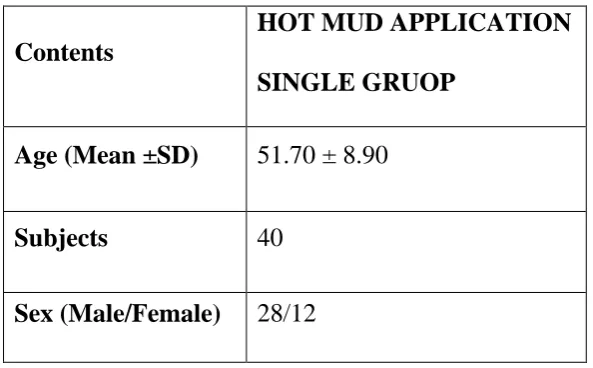
4.1.2 Demographics
Contents
HOT MUD APPLICATION SINGLE GRUOP
Age (Mean ±SD) 51.70 ± 8.90
Subjects 40
Sex (Male/Female) 28/12
[image:64.595.150.447.438.622.2]SD – Standard deviation
50 4.2 Ethical Considerations
4.2.1 Ethical Clearance
Ethical clearance was sought from the Institutional Ethics Committee prior to the start of the study and the approval for the same was granted.
4.2.2 Written Informed Consent
Subjects who fulfilled inclusion criteria were apprised about the purpose of the study and their rights as research subjects. Informed consent form was administered in English and regional language Tamil. Sufficient time was given to each patient to go through the information sheet and their queries were answered. Their right to withdraw anytime from the study and the need for willingness to participate voluntarily in the study was explained. All the subjects expressed their willingness to participate in the study by giving a signed informed consent.
(A sample consent form and case sheet is enclosed as Annexure I and II respectively)
4.3 Screening of the Subjects
4.3.1 Criteria for Diagnosis [116]
The necessary criteria for the diagnosis of a PAS are: (i) History
Functionally significant restriction of shoulder motion
Absence of history of previous major shoulder injury or surgery
(ii) Physical examination
Limited glenohumeral motion in all directions
51
No changes in cartilaginous joint space
Absence of pathological changes other than osteopenia
4.3.2 Inclusion Criteria
1. Shoulder pain for at least 3 month and less than 12-month duration
2. Appreciable restriction of both active and passive motions with abduction and flexion not exceeding 90° and external rotation not exceeding 30°
3. Pain at night, with inability to lie on the affected side. 4. Age between 40 years and 65 years.
5. Both genders
6. Receiving no treatment in the last 4 weeks.
7. Providing written inform consent agree to co-operate for the hot mud application study and to follow instructions of doctors.
4.3.3 Exclusion Criteria
Participants will be excluded if they have:
1. History of major shoulder injury or surgery.
2. Clinical or radiological evidence of other pathologies that could possibly account for the symptoms.