A STYDY TO ASSESS THE EFFECTIVENESS OF
VIDEO ASSISTED TEACHING PROGRAMME ON KNOWLEDGE OF BASIC CARDIAC LIFE SUPPORT AMONG SCHOOL TEACHERS
IN A SELECTED SCHOOL AT ERODE DISTRICT. By
301412901
Dissertation submitted to
The Tamilnadu Dr. M.G.R. Medical University, Chennai
In partial fulfillment of the requirement for the degree of Master of Science
In
Medical - Surgical Nursing (Critical Care Nursing) under the guidance of
Prof. Mrs. M.LATHA, M.Sc (N), M.B.A., Ph.D., Principal
Department of Medical Surgical Nursing
ANBU COLLEGE OF NURSING M G R NAGAR, KOMARAPALAYAM,
A STYDY TO ASSESS THE EFFECTIVENESS OF
VIDEO ASSISTED TEACHING PROGRAMME ON KNOWLEDGE OF BASIC CARDIAC LIFE SUPPORT AMONG SCHOOL TEACHERS
IN A SELECTED SCHOOL AT ERODE DISTRICT.
Approved by: ANBU COLLEGE DISSERTATION COMMITTEE. RESEARCH GUIDE ...
Prof. Mrs. M.LATHA, M.Sc (N), M.B.A, Ph.D., HOD of Medical Surgical Nursing,
Anbu College of Nursing Komarapalayam.
PRINCIPAL ...
Prof. Mrs. M.LATHA, M.Sc (N), M.B.A, Ph.D., Principal
Anbu College of Nursing Komarapalayam.
A DISSERTATION SUBMITTED TO THE TAMIL NADU DR. M.G.R MEDICAL UNIVERSITY, CHENNAI IN PARTIAL FULFILLMENT OF THE REQUIREMENT FOR THE DEGREE OF MASTER OF SCIENCE IN NURSING.
VIVA VOCE:
INTERNAL EXAMINER: ...
ENDORSEMENT BY HEAD OF THE INSTITUTIONS
ACKNOWLEDGEMENT
“In all your ways acknowledge Him ,and
He will make your path straight ‘
Proverb-3:6
First of all ,I bow before God and owe my sincere thanks to almighty, who is the source, strength and inspiration to every step of my life.
I render my sincere thanks to Shri. S.Srinivasan, Chairman of Anbu Educational Institutions, who gave this opportunity to complete my master degree in this esteemed institution.
It is my privilege to express my heartfelt thanks to Prof. M.Latha, M.Sc, M.B.A, (Ph.D)., Head of Medical Surgical Nursing, Principal, Anbu College of Nursing , for the encouragement, inspiration, support as well as for providing all facilities for successful completions of this study.
I express my grateful thanks to Mrs. K.Vijayalakshmi M.Sc (N), Vice – Principal and Class Co-ordinator, who has given precious advice, valuable suggestions, and guidance for the completion of thesis in a stipulated period.
I deeply extend my thanks to Mrs. R.Gowri, M.Sc (N), Associate Professor, Medical Surgical Nursing Department for her valuable suggestions, advice and guidance to carry out the study in a given period of time.
I extend my thanks to Mrs. G.Juliet Nirmala Mary, M.Sc (N), Assistant Professor, Medical Surgical Nursing Department for her valuable suggestions and guidance throughout the study.
of Medical Surgical Nursing who validated tools and provided constructive and valuable opinions.
I wish to express my sincere thanks to Mrs. Aishwarya, Biostatistician, in carrying out the statistical analysis of the data.
My heart felt thanks to Mrs. Indra M.Sc (N) H.O.D Professor, Department of Pediatrics, Mrs. Lavanya M.Sc (N), Mrs. Jothi M.Sc (N), Mrs. Revathi M.Sc (N) for their guidance and constant motivation through out the study.
My sincere gratitude to all PG Faculties for their guidance and constant motivation throughout the study.
I also accord my respect and gratitude to all the UG faculties & office staff of Anbu College of Nursing for their timely assistance, co-operation and support throughout the period.
My sincere thanks to all my friends and beloved juniors for their constant help, ideas and for standing with me during the odds.
I owe my heartfelt gratitude to my parents Mr.Dasarathan, Mrs. Ranjitham my husband Mr.Suresh, my mother in law Mrs. Lalitha francis, my brothers Mr.Jeeva, Mr.Deepan, my brothers in law, Mr Ramesh, Mr Paul Samuel, Mr. Jerry and my sisters Mrs Gracelyn, Mrs Poorni and my lovely children Jo, Joel, Jonna, Johan, Joella , Mathu and all my relatives for their dedication and unconditional love. I am solomnly thankful to my uncle Pr.Jayapaul David for his constant prayers in all my endevours.
ABSTRACT STATEMENT OF THE PROBLEM:
“A STUDY TO ASSESS THE EFFECTIVENESS OF VIDEO ASSISTED TEACHING PROGRAM ON KNOWLEDGE OF BASIC CARDIAC LIFE SUPPORT AMONG SCHOOL TEACHERS IN A SELECTED SCHOOL AT ERODE DISTRICT”.
OBJECTIVES OF THE STUDY:
¾ To assess the knowledge regarding basic cardiac life support among school
teachers.
¾ To evaluate the effectiveness of video assisted teaching programme on the
knowledge on basic cardiac life support among the school teachers.
¾ To find out the association between the level of knowledge with the selected
demographic variables.
HYPOTHESIS:
H1: The mean post test score of knowledge will be significantly higher than the
mean pre-test score of knowledge of school teachers regarding basic cardiac life support.
H2: There will be a significant association between the level of knowledge on
METHOD OF STUDY :
The research approach adopted for the study was evaluative and educative approach. The research design adopted for this study was pre-experimental design.
The purposive sampling technique was used for the selection of school teachers which includes a sample of 30 school teachers.
Data was collected by using a structured questionnaire, which consist of three sections.
Section 1: Demographic variables of the school teachers.
Section 2: Questionnaire regarding knowledge of basic cardiac life support.
Section 3: Knowledge checklist on basic cardiac life support procedure.
RESULTS
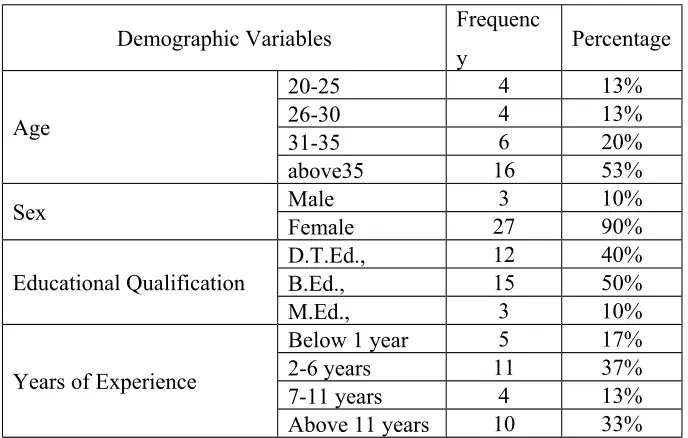
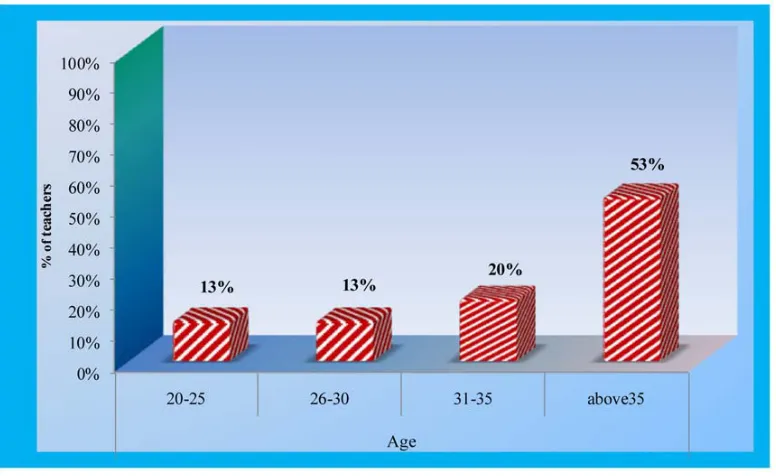
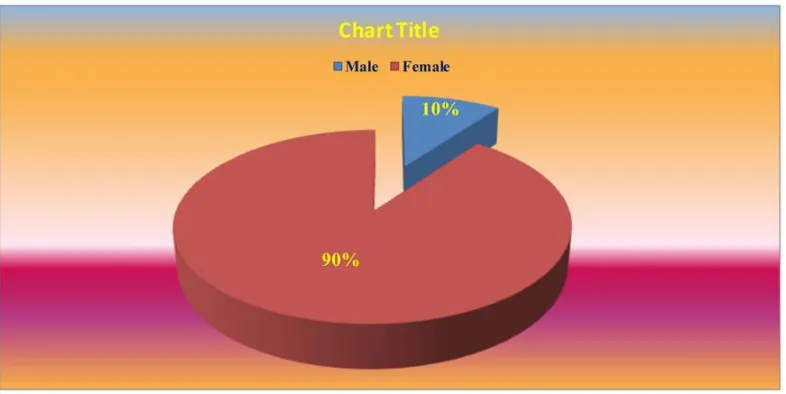
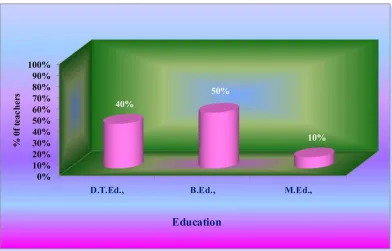
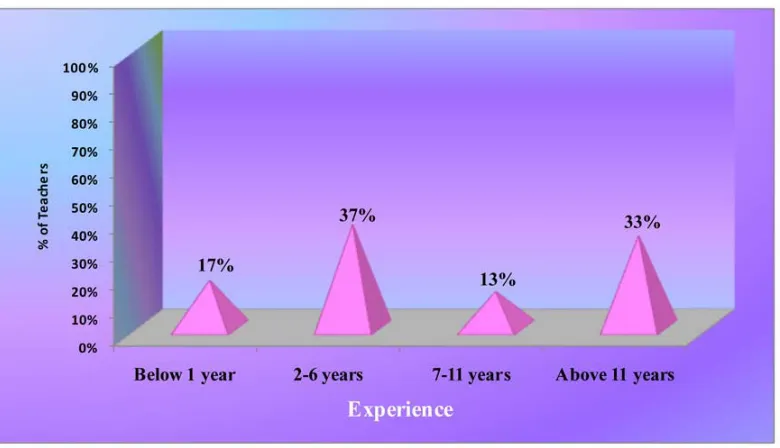
Among the subjects, 53% of them belong to the age group of above 36 years. Also 90% were female and 50% had completed B.Ed., 37% of the samples were of having 2-5 years of experience.
In the pre-test, 80% of the school teachers had inadequate knowledge and 20% had moderately adequate knowledge and in the post-test 27% were moderately adequate knowledge and 73% had adequate knowledge regarding basic cardiac life support.
on basic cardiac life support. Hence there was a significant increase in level of knowledge of the school teachers regarding basic cardiac life support after their exposure to the video assisted teaching programme on basic cardiac life support.
Further, the paired t’ test was used to find the significant difference between the overall pre-test and post-test knowledge score. The’t’ value <29.42> was significant at p<0.05. Hence there was significant difference between the overall pre-test and post-pre-test knowledge score, and that difference was due to the exposure of the school teachers to video assisted teaching programme.
There was no significant association between the level of knowledge with demographic variables.
CONCLUSION
The present study assessed the knowledge regarding basic cardiac life support among the school teachers and found they had inadequate knowledge. After video assisted teaching programme on basic cardiac life support there is a significant improvement in the level of their knowledge. The study concluded that the video assisted teaching programme was effective in improving the knowledge regarding basic cardiac life support.
KEYWORDS:
TABLE OF CONTENTS
S.NO CONTENTS PAGE NO
I INTRODUCTION 1-14
II REVIEW OF LITERATURE 15-31
III METHODOLOGY 32-43
IV DATA ANALYSIS AND INTERPRETATION 44-57
V DISCUSSION AND SUMMARY 58-64
BIBLIOGRAPHY 65-70
LIST OF TABLES
Table No.
Tables Page
No.
1. Frequency and percentage distribution of teachers according to
selected demographic variables
47
2. Knowledge score on basic cardiac life support among school
teachers
52
3. Overall mean knowledge score on basic cardiac life support
among school teachers
55
4. Association between pre test and post test level of knowledge
regarding basic cardiac life support among school teachers.
56
5. Association between the pre test knowledge score with their
demographic variables:
LIST OF FIGURES
Figure No.
Figures Page
No.
1. Conceptual framework based on general system model 14
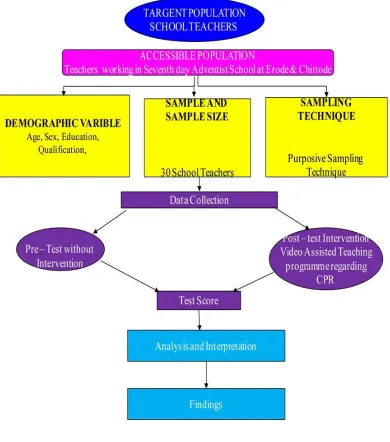
2. Schematic representation of the study 43
3. Bar diagrams showing the distribution of school teachers
according to their age
48
4. Pie diagrams showing the distribution of school teachers
according to their sex.
49
5. Cylindrical diagram showing the distribution of school teachers
according to their educational qualification
50
6. Pyramidal diagram showing the distribution of school teachers
according to their year of experience
51
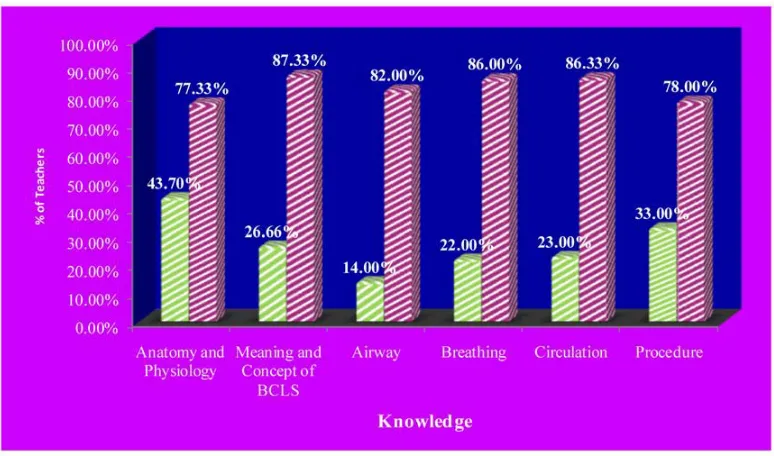
7. Bar diagrams showing the distribution of each domain pre test
and post test percentage of knowledge score among school teachers
53
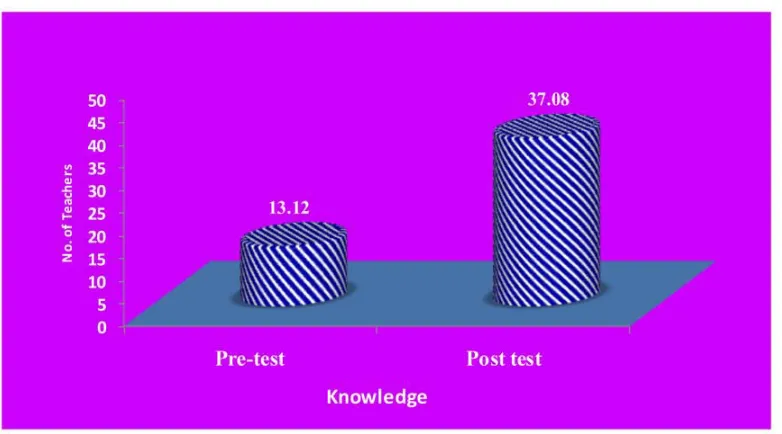
8. Cylindrical diagram showing the overall mean knowledge score
pre test and post test among school teachers
55
9. Conical diagram showing the level of pre test and post test
knowledge regarding basic cardiac life support
CHAPTER - I
CHAPTER – I
INTRODUCTION:“The best and most beautiful things in the world cannot be seen or even
touched they must be felt with the heart”.
- Helen Keller.
“Oh God, a rhythmic music in my heart slows down,
My lungs not open its way to enter the air,
Please help me to respire, save my heart and give me a life”
The human heart is an organ that pumps blood throughout the body via the circulatory system, supplying oxygen and nutrients to the tissues and removing carbon dioxide and other waste.
The tissue of the body needs a constant supply of nutrition in order to be active. If it is not able to supply blood to the organs and tissues, they will die.
- Dr. Lawrence Phillps.
Each year, a number of persons suffer with an accident or illness, severe enough to stop their breathing and leads to respiratory arrest. In a small percentage of these cases, it will even stop their heart beating and lead to cardiac arrest. Sudden cardiac arrest is a major cause of death in developed countries. Sudden death occurs when heartbeat and breathing stops.
The other common causes of sudden death include heart attack, electrical shock, drowning, chocking, suffocation, trauma, drug reactions, and allergic reactions. The best chance of ensuring their survival is to give them emergency treatment known as cardiopulmonary cerebro resuscitation (CPCR).
CPCR can consist of many different things, but the initial, vital part is Basic Life Support (BLS). Cardio means “of the heart” and pulmonary means “of the lungs”. Resuscitation is a medical word that means “to revive” or bring back to life. Sometimes cardio pulmonary resuscitation (CPCR) can help a person who has stopped breathing, and whose heart may have stopped beating, to stay alive.
Cardiopulmonary Cerebro Resuscitation (CPCR) is a procedure to support and maintain breathing and circulation. Cardio pulmonary cerebro resuscitation is part of the emergency cardiac care system designed to save lives. Many deaths can be prevented by prompt recognition of the problem and notification of the Emergency Medical System (EMS), followed by early cardiopulmonary cerebro resuscitation, defibrillation and advanced cardiac life support measures.
survival is composed of the following sequence: early activation of the EMS system, early CPCR, early defibrillation and early advanced care.
Recommending that chest compressions be the first step for lay and professional rescuers to revive victims of sudden cardiac arrest, the association said the A – B – Cs (Airway – Breathing – Compressions) of CPCR should now be changed to C – A – B (Compressions – Airway – Breathing). For more than 40 years, CPCR training has emphasized the ABCs of CPCR, which instructed people to open a victim’s airway by tilting their head back, pinching the nose and breathing into the victim’s mouth, and then giving chest compressions. This approach was causing significant delays in staring chest compressions, which are essential for keeping oxygen – rich blood circulating through the body. Changing the sequence from A-B-C to C-A-B for adults and children allows all rescuers to begin chest compressions right away.
Cardiopulmonary Cerebro Resuscitation (CPCR) must be performed within four to six minutes after cessation of breathing, so as to prevent brain damage or death. It is two part procedure that involves rescue breathing and external chest compression. To provide oxygen to a person’s lungs, the rescuer administer mouth to mouth breaths, and then helps to circulate blood through the heart to vital organs by external chest compression.
get a healthcare job, but the truth is many jobs simply require applicants to be CPCR and First Aid certified Courses to receive certification in CPCR and First Aid are offered at colleges, technical schools, and Red Cross facilities across the country. This makes getting certified easy and very accessible to anyone. People can get both certifications as young as 16 years of age. This means they can start getting credible work experience at an earlier age, which will only help them out more down the road. And since the courses are so short, it does not have to interfere with high school.
NEED FOR THE STUDY
CPCR is a rescue procedure to be used when the heart and lungs have stopped working. There is a wide variation in the reported incidence and outcome for out of hospital cardiac arrest. These differences are due to definition and ascertainment of cardiac arrest as well as differences in treatment after its onset.
Studies reporting the need for improvement of resuscitation techniques led to the recent changes in BLS and ALS algorithms.
In the United States, more than 1,000 people die every day from sudden cardiac arrest. Some study suggests that, those who stay up late may be more prone to heart disease even if they get eight hours sleep. Also, in one study, women who slept five hours or less in night were 39% more likely to develop heart disease, than women who got eight hours sleep. All of this is possible due to habits or events associated with late nights or short sleep hours rather than the time factors them selves.
Approximately 40% of heart attack victims die before they reach a hospital. In 2006, heart disease death rates were highest in Mississippi and lowest in Minnesota. Dangers of Sudden Cardiac Arrests (SCA) can lead to death of an individual within a few minutes. As per WHO statistics mortality due to cardiac arrest approximately 4280 out of every one lakh people die every year from SCA in India alone. After a cardiac arrest there are four to six minutes before brain death and death occur. Chances of survival reduce by 7 – 10 percent with every passing minute. It is a silent epidemic. Cardiac arrest is reversible if the victim is administered prompt and appropriate emergency care. This generally involves administration of cardiopulmonary resuscitation (CPCR), shock treatment to the chest to rest the heart’s rhythm (defibrillation) and advanced life support.
In India the annual incidence of sudden cardiac death accounts for 0.55 per 1000 population. The survival rate of a sudden cardiac arrest is almost less than 1%. Sudden cardiac death constitutes 40 – 45% of cardiovascular deaths and out of this almost 80% are due to heart arrhythmia disturbances or arrhythmia.
cause of death from heart attack in adult is a disturbance in the electrical rhythm of the heart or ventricular fibrillation. It can be treated by applying an electrical shock to the chest. One way of buying time until a defibrillator becomes available is to provide artificial breathing and circulation by performing CPCR.
Over one million heart attacks happen every year and more than 20% of people die before ever reaching a hospital. Latest data shows that cardiac arrest is becoming the number one cause of death. In fact, studies show that 80% of all cardiac arrests happen at home which will most likely be a family member or friend.
In April 2008, the American heart association took steps to simplify the process of helping victims of cardiac arrest by introducing “hands only’ CPCR. About one third of people who suffer a cardiac arrest at home or at a public place actually receive help, bystanders could be afraid to initiate CPCR for fear that they will do something wrong or won’t know what to do. Others may be reluctant to perform mouth to mouth breathing for fear what to do. Others may be reluctant to perform mouth to mouth breathing for fear of contracting an infection. The American heart association proposed the new guidelines in order to allow bystander who have not been trained in conventional CPCR or who may fear of making mistake on the way to offer help.
hospital population based on prearrest and intra arrest factors can help patients, their families, and their physicians decide with compassion and conviction, in what situations CPCR should be administered
Various studies suggest that in out – of – home cardiac arrest, bystanders, lay presons or family members attempt CPCR in between 14% and 45% of the time, with a median of 32%. Internationally, rates of bystander CPCR reported to be as low as 1% and as high as 44%. However, the effectiveness of this CPCR is variable, and the studies suggest only around half of bystander CPCR is performed correctly. These experts believe that better training is needed to improve the willingness to respond to cardiac arrest.
In the light of above, the investigator found it is desirable to assess the knowledge and skill in CPCR technique among the school teacher and also to update the knowledge and improvement in skill. The way to learn CPCR is to practice CPCR. Educating the teachers and creating awareness in helping to learn more about CPCR and it help to prevent death at schools. Early initiation of CPCR improves the chance of successful resuscitation and survival.
STATEMENT OF THE PROBLEM:
“A STUDY TO ASSESS THE EFFECTIVENESS OF VIDEO ASSISTED TEACHING ON KNOWLEDGE OF BASIC CARDIAC LIFE SUPPORT AMONG SCHOOL TEACHERS IN A SELECTED SCHOOL AT ERODE DISTRICT”.
1. To assess the knowledge regarding basic cardiac life support among school teachers.
2. To evaluate the effectiveness of video assisted teaching programme on the knowledge on basic cardiac life support among the school teachers.
3. To find out the association between the level of knowledge on basic cardiac life support with the selected demographic variables of school teachers.
OPERATIONAL DEFINITIONS:
Effectiveness:
It refers to the extent to which the teaching programme had brought about the result intended and measured in terms of significant knowledge gained in post-test.
Video Assisted Teaching:
It is systematically developed instruction and teaching aids to provide information regarding basic cardiac life support with help of video.
Knowledge:
Facts, information and skill acquired by a person through experience or education. The theoretical or practical understanding of a subject.
It is the organized, systematic and continuous process of collecting data from the school teachers regarding cardio pulmonary resuscitation.
Cardiopulmonary Cerebro Resuscitation:
Cardiopulmonary Cerebro Resuscitation is a procedure to support and maintain breathing and circulation for a person who has stopped breathing (Respiratory arrest) and for whose heart has stopped (Cardiac arrest).
Teacher:
A person who teaches especially in a school, after obtaining the basic qualification in teaching.
HYPOTHESIS:
H1 : The mean post test score of knowledge on basic cardiac life support will be significantly higher than the mean pre test score of knowledge of school teachers regarding basic cardiac life support.
H2 : There will be a significant association between the level of knowledge on basic cardiac life support and selected demographic variables of school teachers.
ASSUMPTION:
1. School teachers may have limited knowledge on basic cardiac life support.
2. Video Assisted teaching is an effective way to improve the knowledge of school teachers regarding basic cardiac life support.
4. School teachers should have some basic knowledge about cardiac life support to help the students in case of any emergencies.
LIMITATION:
1. The study is limited to those who are willing to participate. 2. The sample is limited to 30
3. The study is limited to teachers who could able to read and write English. 4. The study is limited to those who were available during data collection.
CONCEPTUAL FRAME WORK:
A theoretical frame work is the precursor of a theory. It provides broad perspectives for nursing practice, research and education. Theoretical frame work plays several inter-related roles in the progress of science. Their overall purpose is to make scientific and meaningful findings and also generalize the findings. (Polit & Hungler, 1995).
Theoretical frame work provides description of variable suggesting was of methods to conduct the study and guiding the interpretation, evolution and integration of study findings stated that (Wood and Harbon 1994).
The present study is focused on assessing the effectiveness of video assisted teaching on knowledge and practice of basic cardiac life support among school teachers.
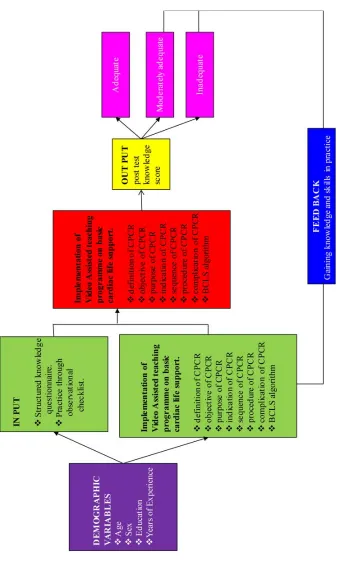
environment from which the system receives input and gives back output in the form of matter, energy and information.
The concepts of Kenny’s open system model are input, throughput, output and feed back. Input refers to matters and information which are continuously processed through the system and released as output. After processing the input, the system returns output to the environment in an altered state, affecting the environment for information to guide its operation. The feed back information of environment responses to the systems output is used by the system in adjustment correction and interaction with the environment. Feed back may be positive, negative or natural. In this study the concepts have been modified as follows.
INPUT:
According to J.W. Kenny input can be matter, energy and information from the environment. In put is the assessing the knowledge on basic cardiac life support among the school teachers.
THROUGH PUT:
Throughput is the processing of information of basic cardiac life support through video assisted teaching on basic cardiac life support which is processed for the school teachers.
The expected outcome is obtained by assessing the knowledge through knowledge questionnaire and procedure checklist. The output was considered in terms of change in post test knowledge scores obtained through close ended questionnaire and by procedure check list.
FEED BACK:
F
ig 1: Modified th
e
o
re
tical
frame work
bas
ed on
general
sys
te
m theory by J.W
Kenn
y’
s (1986)
[image:28.612.129.472.125.687.2]CHAPTER - II
CHAPTER – II
REVIEW OF LITERATURE “Knowing is not enough; we must apply
willing is not enough; we must do”?
- Johann Wolfgang von Goethe.
Literature review is a key step in the research process. Polit and Hungler defined Review of literature as “A broad, comprehensive, in-depth, systematic and critical review of scholarly publications, unpublished scholarly printed materials, audio visual material and personal communication”.
According to Basavanthappa, “It refers to an extensive, exhaustive, systematic examination of publications relevant to the research project”.
One of the most satisfying aspects of the literature review is the contribution it makes to the new knowledge, insight and general scholarship of the researchers. ‘A literature review is a combination of resources that provide the ground work for future study.’
Review of relevant literature refers to both the activities involved in searching the information on a topic as well as to the actual written report that summarizes the state of the existing knowledge on a topic is generally facilitated by the use of various obstructing and indexing services.
i) Studies related to Incidence and prevalence of cardiac arrest ii) Studies related to the knowledge of basic cardiac life support. iii) Studies related to the skill of basic cardiac life support. iv) Studies related to the effectiveness of video assisted teaching.
A. STUDIES RELATED TO INCIDENCE AND PREVALENCE OF CARDIAC ARREST:
TVS Murthy and Bhavna Hooda, September 13, 2012. The study conducted related to cardio cerebral resuscitation is better than CPCR. The guidelines for CPCR have been in place for decades; but despite their international scope and periodic update there has been improvement in survival rates in out – of – hospital cardiac arrests for patients who did not received early defibrillation. Instituting the new cardio cerebral resuscitation protocol for managing pre – hospital cardiac arrest improved survival of adult patients with witnessed cardiac arrest and an initially shock able rhythm.
Dr. H. Shankar (2008). The study conducted related to cardiac arrest and CPCR. The study shows that the sudden cardiac arrest in the hospital setup can be anticipated at any time. Are be prepared to handle such as event around us? We are experienced is our emergency department during the month April 2008. The patients were successfully resuscitated and went home after few days walking their own without any neurological deficits.
quality and to determine compliance with published American Heart Association and international guidelines. The sample consisted of 67 patients who were experienced in – hospital cardiac arrest at the University of Chicago Hospitals, Chicago. The result of this study indicated that the importance of high – quality CPCR suggests the need for rescuer feedback and monitoring of CPCR quality during resuscitation effort.
Vanderschmidt H, Burnap TK, Jhwaties J.K. 1975 Sep; 13(9) A study conducted by evaluation of a cardio pulmonary resuscitation use for secondary schools. The objective of this study was to test the feasibility to teaching secondary school students to perform cardio pulmonary resuscitation fifty five percent of the practice group in the initial test and 31 percent of the retention studies were able to perform the skills. The study suggests that it is possible to train secondary school students to perform the ABC, of CPCR if they have an opportunity to practice their skill. The study also suggests that the teacher training is an important factor.
II. STUDIES RELATED TO KNOWLEDGE ON CPCR:
Resuscitation is a technique used by professional health care staff, as well as member of the public. It is essential for all health care professionals to be able to perform basic life support, and training for staff who is commonly involved with resuscitation attempts must take place on a regular basis. If a cardiac arrest occurs in the community, the patient must be moved onto a hard surface and placed on his or her back. Quickly make the environment appropriate for performing life – saving procedures. This could mean moving chairs or tables.
graduate medical students of a medical college in Tamilnadu, India. This was a descriptive, cross-sectional study conducted among 241 under graduate medical students of a medical college in Tamilnadu, using a pretest, semi-structure questionnaire devised based on American Heart Association Guidelines for BLS and CPR2010. Results of the study is, the mean knowledge score of the participants was 4.55 ± 1.21 out of a possible high score of 6.The level of knowledge and attitudes related to BLS varied depending on the year of study, and this difference was statistically significant (p<0.05). The knowledge score decreased with increasing duration of training. The higher the year of study, the more positive the participants’ attitudes were. Only 12.9% of the participants had ever practiced BLS. Twenty-one (21) participants (8.7%) expressed reluctance about performing BLS in a hospital setting, and 57.3%ofthe participants expressed reluctance about performing BLS in an out-of-hospital setting. Fear of acquiring infection, causing harm to the victim, and lack of confidence were the common causes for participants’ reluctance
Jan Stroobants,Koenraad G. Monsieurs,Bart Devriendt, Christa Dreezen, Philippe Vets, Pierre Mols 2014 children from primary and secondary school (age span 11–13 years) received a free individual CPR training package
containing an inexpensive manikin and a training video. After a CPR training session
by their class teacher, they were invited to teach their relatives and friends. After the
training, the trainees of the children were invited to participate in a web survey,
containing a test and questions about prior CPR training and about their attitude
towards bystander CPR (BCPR) before and after the training. We measured the
impact on the attitude to perform BCPR and the theoretical knowledge transfer by the
class teachers subscribed their students (n = 822) for the training programme for
relatives and friends. After a validation procedure, 874 trainees of 290 children were
included in the study. In comparison to trainees of secondary schoolchildren, trainees
of primary schoolchildren scored better for the test as well as for a positive change of
attitude towards future BCPR (P < 0.001). For every child-instructor 1.7 people
changed their attitude towards BCPR positively.
person is likely to realize. Here’s a hint about compressions; more than on per second! While a 911 dispatcher can you give you basic information over the phone, nothing takes the place of training, which is so readily accessible in almost every community!
Karan Prakash Singh 2 May 2011 and team The study to assess the knowledge and personal experience with CPCR among dentist in Udaipur India. This study shows that 75.9% of dentist had received information about basic CPCR but only 66.0% had the current concept of performing it and only 12% had received practical training in basic CPCR. 1 in 10 dentists had seen patients suffering from cardiopulmonary arrest in their practice, but none – of them mentioned any fatality, because CPA. The level of knowledge was significantly higher among faculty dental practitioner compared with local dental practitioner. In addition a positive linear correlation was found between educational level and knowledge level.
Choa M, Cho J, et.al., 2009, USA, stated that is study was a single blind randomized controlled trial. The participants’ last CPCR trainings were held at least six months ago. We revised our CPCR animation for on-site CPCR instruction content emphasizing importance of chest compression. These video clips were assessed by three evaluators using a checklist. Using the 30-point scoring checklist, the AA-CPCR-II group had a significantly better score compared to the control group. Psychomotor skills evaluated with the AA-CRP-II group demonstrated better performance in hand positioning, compression depth and compression rate than the control group.
learn basic CPCR skills, including automated external defibrillator deployment, correct recovery position, and emergency calling. As in adults, physical strength may limit the depth of chest compressions and ventilation volumes given by younger individuals with low body mass index; however, skill retention is good. In addition, early training not only sets the stage for subsequent training and better retention, but it also reinforces the concept of a social obligation to help others.
Bertoglio VM, 2008, conducted the study in Brazil, during July and August. Teachers were assigned to groups 1 (33 teachers, in units equipped with a heart monitor and a cardiac defibrillator) and 2 (23 teachers, in units without this equipment). Teachers in group 1 showed better knowledge on the recognition of electrocardiography recordings, and 91% of them recognized the ventricular fibrillation algorithm. Among teachers in group 2, 85% had knowledge on issues relative to basic care. The results showed that training in CPCR generates positive results.
Omi W, 2008, Japan, conducted the study to identify the current conditions of CPCR training in Japanese high schools and the attitudes of teachers toward CPCR. We distributed a questionnaire study to the teachers of 12 cooperating high schools regarding their willingness to perform CPCR in 5 hypothetical scenarios of cardiopulmonary arrest. Most of the respondents, who reported that they would decline to perform full CPCR, stated that poor knowledge and/or fear of incomplete performance of CPCR were deciding factors.
specifically designed to teach 10-12 years old children basic life support stills. Medical teachers taught teachers from the western education and library board area of Northern Ireland how to teach life support stills. Medical teachers taught teachers from the western education and library board area of Northern Ireland how to teach basic life support skills. The research findings are that significantly improved score following training. This study demonstrates that primary school teachers, previously trained by medical teachers, can teach BCLS effectively using the ‘ABC for life’ programme.
Youngblood P, et.al., 2007, conducted the study created a virtual 3 D world for learning to manage medical emergencies and evaluated it with 24 high school teachers in the USA and Sweden. We found that teachers in both groups felt immersed and found the online simulation easy to use. Scores for flow and self-assessed flow were significantly higher for the RHS group as compared to the HG group. Self-efficacy scores for the HG group were significantly higher after training.
Diaz N, et.al., 2005, conducted the study in Spain, to assess the degree of teachers’ learning, they were administered a 20-question test before and after the program. Teachers were 14 years old in 38%, 15 in 38% and 16 or more in 24%. Before PROCESS, the mean mark (over 20 points) was 8.5 (2.4). After PROCESS, marks improved up to 13.5 (3.2) (p<0.001). Participants who had previously taken a
first-aid course or were in the 4th course obtained significantly marks than the rest.
These differences disappeared after PROCESS completion.
Lafferty C, 2003, New Zealand, conducted the study to determine the frequency of, and factors influencing, CPCR teaching in New Zealand primary and secondary schools. At the end of the 2001 school year, we surveyed by questionnaire every school in New Zealand asking which schools taught CPCR skills during CPCR skills, or other life-saving first aid, and that the majority of secondary schools are treating these subjects as optional, taught only to a small proportion of teachers.
III. STUDIES RELATED TO THE SKILL OF BASIC CARDIAC LIFE SUPPORT:
Of the 1941 patients who met the inclusion criteria, 981 were randomly assigned to receive chest compression alone and 960 to receive chest compression plus rescue breathing. We observed no significant difference between the two groups in the proportion of patients who survived to hospital discharge (12.5% with chest compression alone and 11.0% with chest compression plus rescue breathing, P=0.31) or in the proportion who survived with a favorable neurologic outcome in the two sites that assessed this secondary outcome (14.4% and 11.5%, respectively; P=0.13). Prespecified subgroup analyses showed a trend toward a higher proportion of patients surviving to hospital discharge with chest compression alone as compared with chest compression plus rescue breathing for patients with a cardiac cause of arrest (15.5% vs. 12.3%, P=0.09) and for those with shockable rhythms (31.9% vs. 25.7%, P=0.09).
Hill K, et. al., 2009, United Kingdom stated that eighty-five school teachers were given a 2-h CPCR training programme. After 2 months they were randomised into two groups and asked to perform CPCR on a resuscitation skills reporter manikin for 3 min at a ratio of 30:2 followed by 5 min rest, then for 3 min at 15:2 (or vice versa). Teachers are capable of performing effective CPCR after a single, 2h training session in cardiopulmonary resuscitation given in school. The group are able to achieve greater depth of chest compressions, when using a ratio of 30:2.
unconscious victims, as were participants who believed CPCR to be an important skill for teachers.
Azhar AA, 2008, Malaysia stated that a mass CPCR (Cardio-Pulmonary Resuscitation) teaching programme, believed to be the first in Malaysia, this programme was conducted for 200 first years UM teachers. We describe the organisation of this non-traditional and non-threatening, new CPCR teaching programme and purpose that this be further developed for the dissemination of CPCR skills to our Malaysian public.
Wang XP, 2008, China, teachers were randomly divided into 2 equal groups, control group receiving PBL and training of specific operation such as artificial respiration, external cardiac compression, tracheal intubation, and defibrillation, and ECS group receiving ECS training in addition. A questionnaire survey was conducted to collect the feedback. There were significant differences between the Control group and the ECS group.
Kelley J, et.al., 2006, USA, conducted a study to evaluate a new, 1-h, condensed training programme to teach continuous chest compression cardiopulmonary resuscitation (CCC-CPCR) skills to a cohort of eight grade public school teachers. Following initial training 29/33 subjects demonstrated skill retention in similar scenario testing. Subjects also showed improvement in written knowledge regarding CPCR use as shown by scores on an AHA based written exam.
that occurred 2 months following the course assessment two groups of variables were created: procedural and compression-ventilation variables. Comparisons between groups yielded significant differences of P<0.05.
Handley JA, 2003, London, stated that the study is an attempt to see if simplifying the teaching of basic life support leads to better skill acquisition and retention. Forty-eight lay volunteers received instruction in CPCR; 24 were taught the standard 8-step sequence whereas 24 were taught a simplified 4-step sequence. Tests of performance were carried out on a manikin before and after training. Those in the 4-step group were significantly better than those in the 8-step group at remembering the sequence of skills immediately after training, 1 week later and at 6 weeks.
Gasco C, 2000, Spain, stated that one hundred and sixteen second-year undergraduate teachers of Anaesthesiology at the Dental School of the Complutense University in Madrid were tested at the end of the two periods of learning using a recording manikin with a validated scoring system (Laerdal Resusci-Anne). This manikin recorded the percentage of adequate chest compressions and insufflations, rate of chest compressions and the causes of error in each case. Regression analysis found a positive correlation among excessive compression, height and weight and a negative correlation between weak compression, height and weight.
IV. STUDIES RELATED TO THE EFFECTIVENESS OF VIDEO ASSISTED TEACHING:
Trainees who Completed Multimedia Self-Instruction CPR Program Outperformed
their Traditional Training Counterparts. Education researchers from Harvard
University confirmed that multimedia training was superior to traditional AHA Multimedia Self Instruction Program for CPR is as Effective as a Traditional AHA
Instructor Led Training Class in Adults Likely to Witness a Cardiac Arrest.
Researchers from the University of Chicago and the University of Washington 2014, confirmed that a 30 minute multimedia CPR training program is more effective at training adults between 40 and 70 years of age than the traditional 4-hour instructor led classroom training. Researchers conducted a randomized controlled study evaluating the effectiveness of 1) a 30 min. DVD self-instruction program and manikin vs. 2) a traditional 4 hour American Heart Association, instructor-led, CPR training class in adults between the age of 40 and 70, those most likely to witness a cardiac arrest. The researchers determined that the CPR performance data showed a clear pattern of evidence in favor of utilizing the 30
minute DVD. The authors concluded that the shorter, self-paced multi-media CPR
training program offers potential learners logistical convenience, a comfortable
learning environment, and time efficiency without compromising acquisition of CPR skills.
using a skill reporter manikin and skill observation checklist. The teachers in traditional and case-based instruction group that used video self-instruction as a learning tool.
Friesen L, et.al., 2009, Denmark, conducted the study in a university school. The teaching methods studied were a lecture-demonstration-return demonstration method and a self-paced method. The sample consisted of 63 baccalaureate teachers who were assigned to one of the two teaching methods. American Heart Association instructional materials and cognitive and performance tests were used with both treatment groups. Initial mastery and retention were tested during week two and eight respectively. However, neither group was able to demonstrate retention of performance skills at a mastery level. The result of this study was effective.
Nishiyama C, et.al., 2009, Japan, conducted the study to evaluate the effectiveness of 1-h practical chest compression-only cardiopulmonary resuscitation (CPCR) training with or without a preparatory self-learning video. The primary outcome measure was the total number of chest compressions during a 2-min test period. 1-h chest compression-only CPCR training makes it possible for the general public to perform satisfactory chest compressions. Although a self-learning video encouraged people to perform CPCR, their performance levels were not sufficient, confirming that practical training as well is essential.
innovative learning techniques and videos, 30-min cardiopulmonary resuscitation training is as effective as traditional multi-hour courses, even after 6 months.
Younas S, et.al., 2006, United Kingdom stated that study to evaluate the effect of a cardio pulmonary resuscitation training programme on the knowledge, attitudes and application of BLS in Manchester, United Kingdom. Teachers from two schools who had piloted Opportunities for Resuscitation and Citizen Safety (ORCS) in the academic year 2004/2005 volunteered to partake in the study. This study demonstrates that training through the ORCS scheme has a positive influence on the ability of secondary school teachers to perform emergency life support (ELS), but particularly in their ability to deploy a perform CPCR.
CHAPTER – III
METHODOLOGY
“Everybody has a talent, but if you do not expose yourself you will not birth the
talents within you”
-Spike Lee
Methodology is the major phase of research in which the investigator makes a number of decisions about the methods and materials to be used to study the research problem basically through the collection of data.
(Polit & Hungler, 1999)
This chapter deals with the methodological approach adopted for the study. The purpose of the study is to assess the knowledge and practice of the school teacher regarding basic cardiac life support with the effectiveness of video assisted teaching.
The methodology includes description of research approach, research design, site and setting, sampling technique, department of the instrument, validation of the instrument and its reliability, methods of data collection, pilot study and plan for statistical analysis.
RESEARCH APPROACH :
The research approach adopted for this study is an educative and evaluative approach.
Quantitative approach – Educative and Evaluative approach.
RESEARCH DESIGN:
The research design refers to the researcher’s overall plan for obtaining answers to the research questions and for testing the research hypothesis. The research design spells out the strategies that the researcher adopts to develop information that is accurate, objective and interpretable.
(Polit D.F., Hungler B.P., 2002)
For this study the research design chosen is pre-experimental design. That is one group pre test and post test.
Group Pre-Assessment Intervention Post Assessment
Experimental O1 X O2
Key O1 = Pre assessment of knowledge and practice on basic cardiac life
support
O2 = Post assessment of knowledge and practice of basic cardiac life support
X = Video assisted teaching
VARIABLES:
Variables are the qualities of properties or characteristic of person. Things or situation that change or vary.
The variables included in this study are dependent variables, independent variables.
Dependent Variables:
It was the response, behaviours or outcome that was predicted or explained in research (Kothari CR, 2004). In this study, the dependent variables are knowledge and practice of basic cardiac life support.
Independent Variables:
An independent variable is the treatment or experimental activity that is manipulated or varied by the researcher to create an effect on the dependent variable (Kothari. R, 2004), In this study, the independent variable was “Video assisted teaching on Basic Cardiac Life Support”.
SITE AND SETTING:
Site – School teachers at Erode District.
Setting – Selected schools at Erode District.
1. Seventh day Adventist Matriculation School, Erode District.
2. Seventh day Adventist Matriculation School, Chitthode, Erode District.
POPULATION:
performed. The population for the present study are the school teachers working at Erode District.
SAMPLE AND SAMPLING TECHNIQUES:
Sample:
Sampling refers to the process of selecting the portion of population to represent the entire population (Polit and hungler 2002)
School teachers who met the inclusion criteria at Erode District.
Sampling technique refers to the process of selecting a portion of the population to prepresent the entire population (Polit and Beck 2007).
Sampling Techniques:
In this study non-probability sampling technique was used, in that purposive sampling was done.
Sample Size:
Sample size for the present study is 30.
CRITERIA FOR SELECTION OF SAMPLE:
Inclusion criteria:
Able to read English
Teachers who are willing to participate in the study
Teachers who are teaching from standard 1 to 12.
Exclusion criteria:
Teachers who are absent on the day of data collection.
Teachers those who undergone in-service education on basic cardiac life
support.
Not able to read English
SELECTION AND DEVELOPMENT OF INSTRUMENT:
Research instruments also called research tool are the devices used to collected data. The tool facilities the observation and measurement of variables.
The following instruments were developed by the research for the present study.
Section I : Demographic variables of the school teachers.
Section II : Structured knowledge questionnaire on basic cardiac life support. Section III : Procedure check list on basic cardiac life support.
THE STEPS USED FOR PREPARING TOOL:
1. Review of related literature:
The literature (nursing book, medical and surgical book, journals, reports and articles) was referred to prepare the tools and guide also consulted.
2. Preparation of tool:
a. Lesson plan
It consists of preface, physiology of heart, indications of CPCR, importance of CPCR, steps in CPCR and complications of CPCR.
b. Questionnaire
It was prepared to assess the knowledge of school teachers regarding CPCR.
3. Consultations with Guide and Research Committee:
The blue prints were given to the experts in research committee. The research guide and committee members were consulted before finalizing the tool.
4. Preparation of the Final Draft:
Final draft of the tool was prepared after consulting with the expert and research committee.
DESCRIPTION OF THE TOOL:
The tool was organized into 3 sections.
Section I: Demographic Variables of the school teachers:
A demographic variable consists of 4 items seeking information about age, sex, educational qualification, years of experience.
Section II: Structured Knowledge questionnaire on basic cardiac life support:
It consisted of 45 closed ended multiple choice questions to assess the knowledge of samples regarding basic cardiac life support. The questionnaire was divided into
Part I : Anatomy and Physiology - 10 items.
Part II: Concept of cardiopulmonary cerebro resuscitation - 5 items
Part III : Knowledge regarding airway - 5 items
Part IV : Knowledge regarding breathing - 5 items
Part V : Knowledge regarding circulation - 10items
Part VI : Procedure of basic cardiac life support - 10 items
A score of one was allotted to correct answers. The structured questionnaire had 4 alternative responses. The correct response was given a score of one and incorrect was scored as zero. The total knowledge questionnaire score were 45. An arbitrary classification of knowledge score was done, which was classified as
Adequate knowledge - 75% to 100% Moderately adequate - - 51% to 74%
Section III: Procedure Checklist :
Procedure check list was used to assess the skill of sample on basic cardiac life support. It consisted of 35 items divided into three parts. The areas are as follows.
Area I - Assessment phase – 7 items
Area II - Performance phase – 23 items
Area III – Reassessment phase – 5 items
There were 35 items in the observation check list. A score of one was given to those who have performed the steps correctly and zero for those who performed incorrectly.
VALIDITY OF THE INSTRUMENT:
Validity refers to the degree to which an instrument measures what it is
intended to measured (Burns N, 2002) Content validity is the extent to which the
method of measurement includes all the major elements relevant to the concept being measured (Kothari CR, 2004).
Validity of the tool was assessed by obtaining opinion from 5 experts. In this topic that includes 4 nursing experts and I medical expert.
RELIABILITY OF THE TOOL:
The reliability of the instrument was estimated by Pearson coefficient correlation. The reliability value of the instrument was 0.9 and it was found to be reliable.
Ethical Consideration
Prior to the data collection written permission was obtained from the Principal,Seventh day adventist School – Erode.
Data Collection Procedure:
Period of data Collection:
During this period, the investigator collects both pre- test, teaching with video assisted teaching programme and then posttest.
Stages of Data Collection:
The data was collected in following three steps:
a) Pre – Test
b) Implementation of VAT
Immediately after pretest, VAT was given to the same teachers regarding CPR.
c) Posttest
Evaluation was done by conducting posttest after 7 days of implementation of VAT. Post test was conducted by using the questionnaire used for the pretest.
PILOT STUDY:
“A pilot study is a small preliminary investigation of the same general character as the major study. It is designed to acquaint the researcher with the problems to be corrected in preparation for the larger research project and try out the problems for collecting the data.” Pilot study was conducted to ensure validity and reliability of the tool and feasibility for giving intervention.
The pilot study was conducted in Seventh Day Adventist Matriculation School Chithode, Erode. After getting formal permission from the principal. 5 school teachers were selected by purposive sampling technique. A structured pre test, post test questionnaire was used to collect data from the school teachers during pilot study. The study was feasible, practicable and acceptable.
PLAN FOR STATISTICAL ANALYSIS:
and inferential statistics include student ‘t’ test, Chi – square test and Pearson coefficient correlation.
CHAPTER – IV
CHAPTER IV
ANALYSIS AND INTERPRETATION
“A clay pot sitting in the sun will
always be a clay pot, It has to go through
the white heat of the furnace to become porcelain”
- Mildred Struden
Polit and Hungler, (2004) defines as categorizing, ordering, manipulating and summarizing the data to reduce it into intelligible and interpretable form, so that research problem can be studied and tested by including relationship between the variables.
This chapter deals with analysis and interpretation of the data elicited form sample of 30 school teachers on knowledge and practice regarding basic cardiac life support. The data which are necessary to provide the adequacy of the study are collected through the semi structured interview schedule and analyzed using relevant descriptive and inferential statistics. The substantive summary of the findings were arranged in collection with the objectives of the study.
Objectives of the Study:
1. To assess the knowledge regarding basic cardiac life support among school teachers.
2. To evaluate the effectiveness of Video assisted teaching programme on the knowledge on basis cardiac life support among the school teachers.
ORGANIZATION FINDINGS:
Section I:
Description of sample characteristics.
Section II:
Assessment of pre – test and post – test knowledge of school teachers regarding basic cardiac life support.
Section III:
SECTION I
DESCRIPTION OF SAMPLE CHARACTERISTICS
Table: 1 Frequency and percentage distribution of school teachers according to the demographic variables:
Demographic Variables Frequenc
y Percentage
Age
20-25 4 13%
26-30 4 13%
31-35 6 20%
above35 16 53%
Sex Male 3 10%
Female 27 90%
Educational Qualification
D.T.Ed., 12 40%
B.Ed., 15 50%
M.Ed., 3 10%
Years of Experience
Below 1 year 5 17%
2-6 years 11 37%
7-11 years 4 13%
[image:62.612.152.496.235.454.2]Above 11 years 10 33%
Fig 3: Bar Diagram showing the distribution of school teachers according to their age
[image:63.612.131.519.163.401.2]Fig. 4: Pie diagram showing the distribution of school teachers according to their sex
Fig. 5: Cylindrical diagram showing the distribution of school teachers according to their educational qualification
Fig. 6: Pyramidal diagram showing the distribution of school teachers according of their experience
SECTION II
Assessment of pre-test and post test knowledge and practice of school teachers regarding basic cardiac life support.
An attempt has been made to study the knowledge and practice of basic cardiac life support among school teachers. After converting the qualitative information of the knowledge and practice into a quantitative one the average score was obtained from the school teachers on various dimensions like anatomy and physiology of cardiovascular and respiratory system, meaning and concept of basic cardiac life support, knowledge regarding airway, breathing, circulation and procedure.
[image:67.612.84.569.402.699.2]PART A: LEVEL OF KNOWLEDGE:
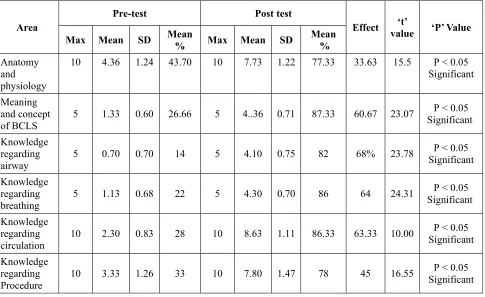
Table 2: Knowledge score on basic cardiac life support among school teachers
Area
Pre-test Post test
Effect ‘t’
value ‘P’ Value Max Mean SD Mean
% Max Mean SD
Mean %
Anatomy and physiology
10 4.36 1.24 43.70 10 7.73 1.22 77.33 33.63 15.5 P < 0.05
Significant
Meaning and concept of BCLS
5 1.33 0.60 26.66 5 4..36 0.71 87.33 60.67 23.07 P < 0.05
Significant
Knowledge regarding airway
5 0.70 0.70 14 5 4.10 0.75 82 68% 23.78 P < 0.05
Significant
Knowledge regarding breathing
5 1.13 0.68 22 5 4.30 0.70 86 64 24.31 P < 0.05
Significant
Knowledge regarding circulation
10 2.30 0.83 28 10 8.63 1.11 86.33 63.33 10.00 P < 0.05
Significant
Knowledge regarding Procedure
10 3.33 1.26 33 10 7.80 1.47 78 45 16.55 P < 0.05
Fig. 7: Bar Chart showing the each domain pre – test and post – test percentage of knowledge score among school teachers
The knowledge on anatomy and physiology, the pre – test mean score was 4.36 and standard deviation was 1.24 and in the post – test mean score was 7.73 and standard deviation was 1.22 with the effectiveness 33.63 and paired value of 15.5 and it is statistically significant.
The pre – test mean score of the knowledge on meaning and concept of basic cardiac life support was 1.33 and standard deviation was 0.60 and in the post – test mean score was 4.36 standard deviation was 0.71 with the effectiveness 23.07 and paired value of 23.78 and it is statistically significant.
standard deviation was 0.75 with the effectiveness of 68 and paired value of 23.78 and it is statistically significant.
The pre – test mean score of the knowledge on breathing was 0.13 and standard deviation was 0.68 and in the post – test mean score was 4.30 and standard deviation was 0.70 with the effectiveness of 64 and paired value of 24.31 and it is statistically significant.
The knowledge on circulation the pre – test mean score was 2.30 and standard deviation 0.83 and in the post – test mean score was 8.61 and standard deviation was 1.11 with the effectiveness of 53.33 and paired value of t = 10.00 and it is statistically significant.
Table : 3 Overall mean knowledge score
Component Observation Mean Mean
Difference
SD ‘t’
Value
‘P’ Value
Knowledge score total
Pre – test 13.12
23.96 11.9
8 29.42
Significant P < 0.05
Post – test 37.08
Fig 8: Cylindrical Diagram showing the overall mean knowledge score pre – test and post – test among school teachers
[image:70.612.130.521.270.487.2]Table 4: Association between pre – test and post – test level of knowledge regarding basic cardiac life support among school teachers:
Level of knowledge
Pre – test Post – test
F % F %
Inadequate 24 80.00 0 0
Moderately adequate 6 20.00 8 27
Adequate 0 0 22 73
Fig. 9: Conical diagram showing the level of pre – test knowledge among School teachers
[image:71.612.127.521.332.584.2]SECTION 111
Table 5 : Association between the pre – test knowledge score with their demographic variables:
n = 30
Demographic variables
Knowledge
Chi – Square
Significan ce Inadequate Moderately
adequate
F % F %
Age
20-25 4 100% 0 0
x2 = 3.652
df = 3
P > 0.05 Not Significant
26-30 3 75% 1 25.00
31-35 5 83.33% 1 16.67
Above 35 12 75.00 4 25.005
Sex
Male 2 66.67 1 33.33 x2 = 0.439
df = 1
P > 0.05 Not Significant
Female 22 81.48 5 18.52
Educational Qualification
D.T.Ed., 10 83.33 2 16.67 x2 = 0.430
df = 2 P > 0.05
Not Significant
B.Ed., 12 80.00 3 20.00
M,Ed., 2 66.67 1 33.33
Years of Experience
1 year 5 100 0 0 x2 = 1.960
df = 2
P > 0.05 Not Significant
2-6 year 9 81.18 2 18.82
7-11 year 3 75.00 1 25.00
Above 11 years
7 70.00 3 30.00
CHAPTER – V
CHAPTER – V
DISCUSSION, NURSING IMPLICATION, RECOMMENDATION AND CONCLUSION
“Do not go where the path may lead
go instead, where there is no path and leave a trail ”.
This chapter discusses the main findings of the research study and implication to nursing and recommendation for further studies.
STATEMENT OF THE PROBLEM
“A STUDY TO ASSESS THE EFFECTIVENESS OF VIDEO ASSISTED TEACHING PROGRAM ON KNOWLEDGE OF BASIC CARDIAC LIFE
SUPPORT AMONG SCHOOL TEACHERS AT ERODE DISTRICT”
OBJECTIVES:
1. To assess the knowledge regarding basic cardiac life support among school teachers.
2. To evaluate the effectiveness of video assisted teaching programme on the knowledge on basic cardiac life support among the school teachers.
1) To assess the knowledge regarding basic cardiac life support among school teachers
Based on the above objective of the study to assess the knowledge regarding basic cardiac life support in relation to the finding of the pre-test study there is significant increase in post-test knowledge score after the administration of VAT.
The level of knowledge in post-test mean score 37.08 is increased than the pre-test mean score after administration of video assisted teaching programme.
2) To evaluate the effectiveness of video assisted teaching programme on the knowledge of basic cardiac life support
Findings of the pre-test and post-test knowledge of school teachers is to know the effectiveness of video assisted teaching programme on basic cardiac life support.
The level of knowledge of school teacher in post-test mean score was 37.08 and the pre-test mean score was 13.12 and the mean difference between post-test and pre-test knowledge was 23.96 which shows that there is a effectiveness after administration video assisted teaching programme.
Lynch DM, 2002, Australia, conducted the study to determine community application of cardiopulmonary resuscitation (CPR) skills in an emergency, and, thus asses the value of training programmes in raising community competence. Practical and theoretical assessment course were significantly better on trained versus untrained participants. The number of times a person was trained in CPR was more effective for retention and competence than time since last trained. Thus, this study supports result of current study.
3) To find out the association between knowledge with the selected demographic variables.
Findings of the study revealed that there is no significant association between knowledge of school teachers with demographic variables.
RESULTS:
The following were the results of this study.
Among the samples taken, 53% of the samples belong to the age group of above 36 years which is the greater part. Also 90% were female and 50% had completed B.Ed., 37% of the samples were of 2-5 years of experience.
The difference between the overall pre-test and post-test knowledge mean difference score was 23.96% which reveal the effectiveness of video assisted teaching program on basic cardiac life support. Hence there was a significance increase in knowledge of the school teacher regarding basic cardiac life support after their exposure to the structured teaching programme on basic cardiac life support
Further, the paired t’ test was used to find the significant difference between the overall pre-test and post-test knowledge score. The’t’ value <29.42> was significant at p<0.05. Hence there was significant difference between the overall pre-test and post-pre-test knowledge score, and that difference was due to the exposure of the school teachers to video assisted teaching programme.
There was no significant association between the level of knowledge with demographic variables.
IMPLICATION OF THE STUDY :
The finding of the study of implication are related to nursing administration, nursing practice, nursing education, nursing research and community regarding increase in knowledge related to basic cardiac life support
NURSING ADMINISTRATION:
Nursing administrators should encourage involvement of all people in saving lives in emergency according to the primary health care concept of “people’s health in people’s hand”
NURSING EDUCATION:
Nursing education should equip the students with adequate basic cardiac life support training. So that, they will be able to train the public. Health care institutions should have resuscitation committee. Sufficient experience to improve the skills in performing basic cardiac life support should be included in nursing education programme.
NURSING PRACTICE:
Nursing practice should focus on providing health education regarding importance of basic cardiac life support among clinical nurse and community health nurse to motivate the general public to participate in the education regarding basic cardiac life support. The booklet can be used as a guide for community health nurse in order to bring awareness.
NURSING RESEARCH: