Rochester Institute of Technology
RIT Scholar Works
Theses
12-2018
Infinite Edges
Yagmur Akarsu
Follow this and additional works at:https://scholarworks.rit.edu/theses
This Thesis is brought to you for free and open access by RIT Scholar Works. It has been accepted for inclusion in Theses by an authorized administrator of RIT Scholar Works. For more information, please [email protected].
Recommended Citation
ROCHESTER INSTITUTE OF TECHNOLOGY
A Thesis Submitted to the Faculty of
The College of Art & Design
School for American Crafts
In Candidacy for the Degree of
MASTER OF FINE ARTS
CERAMICS
Infinite Edges
by Yagmur Akarsu
Thesis Approval
____________________________________________________________________ Thesis Title
____________________________________________________________________ Thesis Author
Submitted in partial fulfillment of the requirements for the degree of
The School
Rochester Institute of Technology | Rochester, New York
__________________________________________
Name Title
____________________________________________________________________ Electronic Signature: Use Adobe Acrobat
__________________________________________
Name Title
____________________________________________________________________ Electronic Signature: Use Adobe Acrobat
__________________________________________
Name Title
____________________________________________________________________ Electronic Signature: Use Adobe Acrobat
__________________________________________
Name (Optional for some programs) Title (Optional for some programs)
____________________________________________________________________ Electronic Signature: Use Adobe Acrobat (Optional for some programs)
Infinite Edges
Yagmur Akarsu
Master of Fine Arts
for American Crafts | Ceramics
Jane Shellenbarger Chief Thesis Advisor
Peter Pincus Associate Thesis Advisor
Luvon Sheppard Associate Thesis Advisor
Acknowledgment
Through my years here, there are many I would like to thank.
I want to give special thanks to my advisor Jane Shellenbarger, and my committee members, Luvon Sheppard, and Peter Pincus for their constant support and guidance.
I am grateful for the opportunity of be a part of College of Imaging Arts and Sciences at Rochester Institute of Technology. Thank you to all my colleagues.
Dan Yitzhak Gabber and Rachel Gu, thank you for feedback and guidance.
Dilan Koç, Burçin Çelik and Celal Şavur, thank you so much for your help during my difficult
days and always being next to me.
I would like to thank my family for always supporting me.
Finally, I would like to thank my Turkish friends who live in Rochester. Since I have
been here, they have always supported and helped me.
Abstract
This thesis work focusses on an experimental approach to ceramic sculptures that uses everyday disposable materials as a basis and are incorporated with clay to sculpt abstract forms. Materials used for the sculptures were napkins, textured paper, bread, different kinds of sponges and recyclable paper plates.
The supplies that people use and take for granted, without realizing how important they are, refer symbolically to a variety of cultural traditions. Traditions create a structure that makes life easier. However, people are so used to them they forget how integrated they are in our lives and ways of thinking and reacting. These essential, yet disposable materials become a metaphor for tradition as I try to show reverence through an exploration of ceramic material, material
transformation, and the discovery of organic surfaces, they manifest as sculptural objects with infinite edges.
The objective of this study is to show relationship between tradition and daily disposable supplies by using them in my sculpture. The similarities have helped me to develop a new artistic expression based on the perception of these materials. My work is an expression of my own personal perspective of the relationship between modernism and tradition. Each work
represents, through abstraction, my interpretation of the traditional processes used in making
Table of Contents
Acknowledgment… ... 3
Abstract ... 4
I.Context ... 6
Personal Background ... 6
Discussion of Sources and Research… ... 7
Influences… ... 7
II.Evolution… ... 12
III.The Body of Work… ... 14
1.Tired… ... 14
2.Effect… ... 15
3.First Discovery… ... 16
4.Memorial… ... 17
5.Reverse… ... 18
6.White… ... 19
7.Alteration… ... 20
8.Free… ... 21
9.Blessing… ... 22
10.First & Last… ... 23
Conclusion… ... 24
Section I: Context
Personal Background
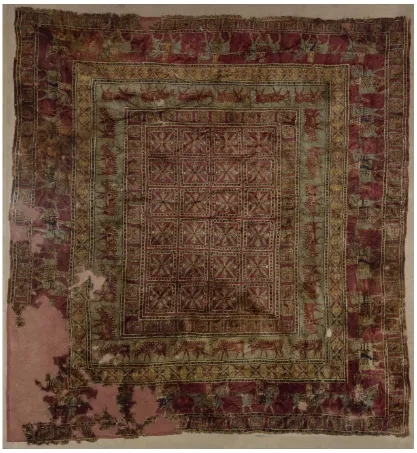
Through making a series of sculptures, I am interested in the Traditional Turkish Rugs
that are used to ornament floors, cover surfaces and walls. The traditional rugs are akin to wine,
they don’t lose their value over time, conversely, they become more precious and valuable.
While researching the history of rugs, I came across contemporary types; however, they were all
industrially made, to my disappointment. This revelational research made me more curious about
the comparison of traditional and modern rugs. Because as technology improves, the perception
of the techniques and quality changes and yet, the potential and possibility creates new
expectations. But, I believe, that as people move away from their tradition, they are in peril of
forgetting their roots and identifying with their culture.
For this reason, I have chosen to combine two disparate and contrasting elements.
Tradition as it relates to Turkish culture and my specific history is my subject matter. I make
modern sculptures that transform contemporary disposable objects into vintage artifacts.
Throughout my working process I wanted to capture the duality and dichotomy in my sculpture.
While creating them I think about the past and the present, new and old, ugliness and beauty,
greatness and insignificance, depth and superficiality, complexity and simplicity, regularity and
irregularity, what is structured and unstructured.
The main reason that I am influenced by traditional Turkish rugs and their construction
is that they are a reflection of my cultural heritage and also my contemplations. I like to think
how carpet weavers knit their designs while I am working. My process is similar to what carpet
weavers do: to create aesthetic line by line. I also remember my parents using the Turkish idiom
means ‘create your life slowly and be sure, as the most important thing is patience’ like hand
made rugs.
Discussion of Sources and Research
What does tradition mean? According to American heritage dictionary (Houghton Mifflin
Harcourt Publishing Company 2018), the meaning is “A mode of thought or behavior followed
by a people continuously from generation to generation; a custom or usage”. While traditions
are important and adds structure to life, in some cases making it easier, there are some people
that do not follow them as much as others. Some people recognize the value of traditions and
they appreciate what they have in their cultures. On the other hand, others take them for granted.
What about essential daily mundane materials? As human beings we tend to forget what
we use during each day, because they become routine. As a result, we forget how important they
are and tend to overlook their importance. According to ‘The Statistics Portal’ (U.S. Census data
and Simmons National Consumer Survey (NHCS) 2018) approximately 73 percent of
329.26million people used napkins in the USA in 2018. This number is including people who
use only one time a day, as well. If we assume each person uses at least three napkins a day
(actually we use more than three), 1095 napkins per person will be consumed each year. 241
million people will consume approximately 264 billion napkins in the United States of America
alone. Can you imagine napkin usage for rest of the world? The problem is, few know about this
fact and care about it! People use and discard napkins without appreciating them.
Influences
I believe Turkish people see their culture as the roots of a tree. Traditions spread far and
wide, but are still strongly connected to each other, tracing back to the origin. In light of this, I
Pazyryk Rug. Place: Gosudarstvennyi Ermitazh (Russia).
https://library.artstor.org/asset/ARTSTOR_103_41822001378452) (Figure 1) in Turkish history
as an inspiration. Moreover, I grew up seeing these kinds of decorative rugs in my parents’
home. Although we had different kind of traditional heirlooms, the red wall rug was the one that
[image:9.612.94.511.209.662.2]I admired the most.
Figure 1. Known as the oldest (4th – 5th Century BC) hand-made rug in the world. Woven using a technique known as the symmetrical
It is well known that hand-made rugs need patience, time and effort (Hereke İpek Halı
Dokuma, Düğüm Atma Tekniği 2013). To finish 1 to 2-meter square rug, one needs to spend at
least a month. I relate to this patient weaving, and believe I am weaving my life like a
hand-made rug. This metaphor of myself is what I attempt to show in my sculpture. With passion and
self-belief, layer by layer, I create my way and my life. My sculpture reveal to their audience
that life is full of small mundane details and life is knitted through the knots and challenges in
life that everyone faces!
As I am growing as an artist I have been finding myself interested in visceral and
ephemeral surfaces, antique objects, and artifacts. So, I chose to apply these things to my work
to explore a natural aesthetic for my clay body. Therefore, I have researched various
combinations to identify and achieve the desired texture. While researching I came across
many ceramicists who also use unconventional materials.
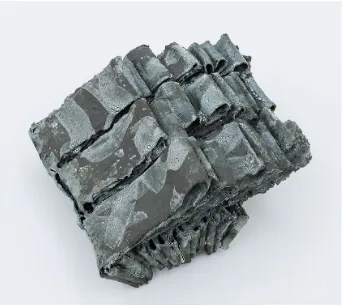
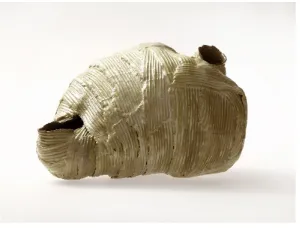
Artist Gillian Lowndes is the first potter to use fiberglass tissue dipped in porcelain slip
(Standen 2013, 11). In addition, she uses nichrome wire, broken tableware, curled bus tickets,
[image:10.612.363.534.516.669.2]granite chips, bulldog clips, horse hair, sand, metal, grog and loofah. (See Figure 2 and Figure 3)
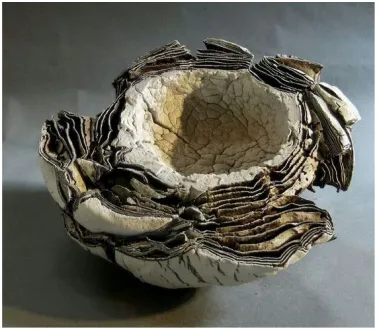
[image:10.612.108.327.516.665.2]Another artist whose style interested me is Mette Maya Gregersen, a Danish ceramicist. She
adds molochite, paper pulp, acrylic fibers, bentonite and sand in soft stoneware clay (Standen 2013,
66). She applies this clay body on the bamboo which she gives a shape with cuts and ties. I was
fascinated by the way she portrays her inspiration and thinking of her work. She says “I work in two
quite different ways. One is the making of waves (Figure 4) and the other is constructing (Figure 5).
One is loose and wild, the other is fine and measured – similar to how I live my life, drifting off and
[image:11.612.343.493.311.425.2]trying to disappear in response to staying strong and building my home.” (Gregersen 2017)
Figure 4.
Mette Maya Gregersen, Making Waves 2, 2013, Stoneware paper clay, bamboo sections, multiple firing
(30x30cm) Photo: Courtesy of the artist
Figure 5. Mette Maya Gregersen,
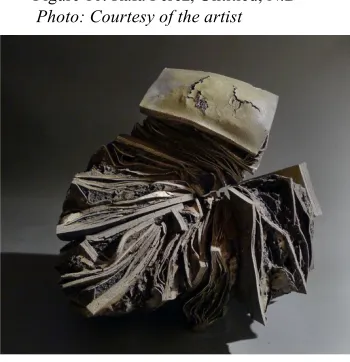
Of most significance for me is Spanish artist Rafa Perez, who likes to see surprises when he
opens the kiln. In his artist statement, he said that he tries to transform his works and he wants to see
different piece that he put in kiln rather than the same (Perez n.d.). He uses two different types of
clay, earthenware and low temperature porcelain. He also takes advantage of the altered tension of
[image:12.612.321.510.237.402.2]the clay bodies thereby capturing the diversity of clay.
[image:12.612.91.275.238.403.2]Figure 6. Rafa Perez, Untitled. No Date Figure 7. Rafa Perez, Untitled. N.d. Photo: Courtesy of the artist Photo: Courtesy of the artist
Figure 8. Rafa Perez, Untitled, No date Figure 9. Rafa Perez, Untitled, N.D.
[image:12.612.323.510.478.629.2]Figure 10. Rafa Perez, Untitled, N.D
Photo: Courtesy of the artist
All these artists use unique textures that provoke the audience to think about integral
structure. Seeing their work fascinated me and triggered a desire to explore more and use
unconventional material additions. I want to stimulate the curiosity of my audience to make
them consider my underlying concepts, materials, and how I integrate the two.
It is worthwhile to study the methods that these artists are using. However, I want to
find my own ways to express my ideas by adding and using unusual and personal materials
which would make my ceramic journey exceptional.
Section II: Evolution
In the beginning my thoughts were very broad about my subject. The material options
were numerous and I wanted to experiment with all of them. Thus, working with so many
different materials was overwhelming and I felt a bit lost and confused. But then I just selected a
couple of materials that I liked more than the others. I could then focus more specifically on
representing, my concept of the forgotten traditions.
In my thesis, I focused on exploring common disposable things that people use in their
important of a role they play. Imagine what would happen to our lives without napkins, sponges
or paper plates. When I came to the USA, I became aware of paper plate consumption as being
excessive, and used everywhere. It makes life easy during picnics, parties, meetings, and
sometimes even at home. I also used bread as a material for my sculpture. Bread is the primary
food source for people in many countries. It has special meaning for each and every culture. For
example, bread is seen as a blessing and it is very respected food in Turkey. Thus, napkins,
sponges, paper plates and bread are very essential in daily life so, I want to emphasize them and
give them a sense of permanence.
I have utilized clay, molded around napkins, sponges, paper plates, and bread to convey
characteristics such as fragility, reflection, solidity and eternity. These materials that we use and
Section III: The Body of Work
1.
Tired
Paper Plate, Colored Porcelain Slip, 2018
This piece is made out of porcelain casting slip. Firstly, I cut a circular shape by hand in
the middle of the paper plates, one by one. Then, I brushed paper plates with colored porcelain
and put them on top of each other. I used 775 paper plates to build this sculpture. It was very tall
in the beginning. However, after firing, the bottom was unstable and wobbly. Then, I decided to
take it out and give it a new shape by cutting out surfaces. But, the sculpture’s bottom middle
part was very fragile, so it did not work as I expected. Then, I fired the top side of the sculpture
a second time in the electric kiln with cone 10 (2340’F), it shrank more than the first firing.
Having gone through so many iterations of the process, much more than usual, I was compelled
to name this work ‘Tired’. It has the endurance to stay standing even though it has gone through
2.
Effect
Porcelain Slip, Napkins, 2018
I made this piece out of porcelain slip. I brushed a cross-shape onto 600 napkins with
pure and colored porcelain and fired until cone 6 (2228’F) in a gas kiln. In the gas kiln, the
un-brushed parts burned away, leaving the un-brushed parts as the porcelain shape that I envisioned.
After firing, I used a brick saw to make the edges clear. In order to leave a clue to my audience,
I intentionally left some saw marks at the edges. The symmetry of the shape reflects one Turkish
idiom that says “Yaptıkların senin karakterinin aynasıdır” means “Whatever you do, it reflects
your personality”. This idiom also reminds me of the virtue of patience of the carpet weavers
when they are knitting rugs or facing their life challenges. So, the view of life reflects personal
character just like how one side of this piece reflects the other. For this reason, it is named
3.
First Discovery
Corrugated Paper, Colored Porcelain, 2018
This is made with 32 layers of corrugated paper. First of all, I brushed each layer with
different colored porcelain slip and put on top of each other. Then it was fired until cone 10 in a
gas kiln. Papers burned and porcelain body remained. The edges have a really nice corrugated
texture that comes from the paper; thus, I did not want to cut off the edges for this piece.
This art piece has really nice line textures on it just like yarn of hand-knotted carpet.
4.
Memorial
Paper Towel, Colored Porcelain Slip, 2018
I made this piece out of brushed porcelain slip on 250 paper towels. I brushed some parts
that I wanted solidified. I used two mason stain colors to have colored porcelain. After first gas
firing, I cut the four edges, and then fired second time in an electric kiln until cone 10.
Memorial means “a statue or structure established to remind people of a person or event”
(Oxford University 2018). This work represents that same durability in existing traditional
Turkish rugs that have lasted throughout the centuries. Grey color is consciously selected
because so many monuments are of this color in Turkey. Also, the shape of the sculpture is like
the most famous monument “Canakkale Sehitler Abidesi” which was made to commemorate the
sacrifices of World War I. Thus, the color and the shape of this work symbolize the longevity of
Turkish rugs over the centuries. Yellow represents achievement, one of them being the
5.
Reverse
Colored Porcelain Slip, Napkin, 2018
This piece made out of brushed porcelain slip on napkins layers. Fired until cone 6 in the
gas kiln. After that, I cut six surfaces with circular electric saw and fired it again in the electric
kiln until cone 10.
Cutting off surfaces allows audience to clearly see the layers and the texture. On the top
and the back audience can see the evidence of napkins. This piece has some spontaneous
cracks on it. These happened in the first kiln.
This piece also allows the audience to see the layers in the middle of work which
includes two different colors that bled together when brushing. Additionally, this piece criticizes
the contrast between integrity and emptiness that follows two ways of life: one with tradition and
one without. Either way of life can be represented here. The solid part could represent the life for
is the meaninglessness of a life without customs. It could be exactly the opposite for other people
whose lives are meaningful without customs—the solid part refers to the stability in their lives,
while the hole reflects how empty a life would be if it was restricted by customs. It all depends
on what is valuable to a person, which is different for everyone. However, some values of life
erode with time, so the scratches on this piece refer to that erosion.
6.
White
Porcelain Slip, Paper Towel, 2018
I used 330 paper towels for this art work. Porcelain slip was brushed and put on top of
each other also, I put some glass mosaic pieces and cardboard between layers. During gas
firing, glass pieces melted and cardboard burned. When the cardboard burned it left a void in
the sculpture. I also used blue porcelain slip for some of the layers. On the top, the napkin
texture could still be seen.
This sculpture as a whole signifies forgotten traditions as its basic shape. Forgotten
7.
Alteration
Porcelain Slip, Sponges, 2018
This art work series represent traditions, and how they are changed and molded by
people, depending on the generation and the needs to adapt to the changing world. This is
represented by the sponge and its malleability and ability to absorb. For example, in Turkish
culture serving Turkish coffee is very important and it has to be served with a glass of water by
host. If the guest first drinks water it means that guest is hungry and the host should offer some
food. If the guest drinks coffee first, it means that guest is full, so host does not have to serve
food. Unfortunately, this tradition is changed. In the present time, hosts usually serve Turkish tea
This series made out of sponges dipped in porcelain slip. I used different kinds of
sponges with uncolored porcelain and no additional material. Sponges dipped in porcelain and
shaped by hand, then waited until it dried, finally firing them in a gas kiln until cone 6.
8.
Free
Colored Porcelain, Napkin, 2018
My journey of using napkins started when I saw stacks of napkins in the market, at that
time, I imagined how nice would be to use them with clay. Then I bought 3000 napkins, and
came to the studio to work with this unusual supply. I was so excited to use them and I started
working with them right away. I simply brushed napkins with colored porcelain slip and loosely
put them on each other. This art displays my excitement and my first experience with napkin.
The freedom to experiment and make something without thinking, is what this work represents.
9.
Blessing
Porcelain Slip, Bread, 2018
I used bread, because in Turkey and in many cultures, bread is seen as blessing. Proverbs
and idioms give us great insight into the importance of bread. For example, “Ekmek parası” –
“Money for bread” which means money for survival, another example is “Ekmeğini taştan
çıkartmak” – “Extract a bread from a stone” means work hard even if it is difficult to do. Also, if
a piece of bread falls to the ground accidently, it should be picked up, kissed three times and
placed on a high level to be respectful.
These pieces made out of different kinds of bread with porcelain slip. Firstly, I scooped
the inside the bread to make it hollow, poured the porcelain slip in it and waited until it dried.
After that, I poured colored porcelain in it and fired in the gas kiln. As the bread burned, the
porcelain remained and was a bit distorted cause of the high temperature. The sculpture
10.
First & Last
Porcelain Slip, Paper Towel, 2018
Traditions are followed and passed down from generations, and new traditions are made
with each generation. So a tradition can be followed the very “First” time by someone who
chooses to follow it, or be the “Last” time someone followed it. Just like an open window that
looks to the outside of something new or the outside that looks to the inside to something old.
I used 90 paper towels for this art work which I brushed some parts with colored
porcelain slip. I also used glass mosaics on the glazed parts. After first gas firing, I cut the
Conclusion
Through thinking and material exploration, I learned what kind of materials could be
incorporated with the clay, how to tackle new challenges, how to create a solution when
working with new materials, and how to express my ideas. All of these experiences help me to
move forward, confidently with the goal of being a practicing artist.
During the pursuit of my Master of Fine Art degree, my perspective has evolved toward the
ability to see the big picture. My confidence in expressing myself through art has improved and
these thesis artworks have allowed me to develop patience like carpet wavers. As an international
student in the USA, I often recall things from my culture and tradition differently than when I was
in Turkey. Moving to a different country with a different culture and different traditions has
pushed me to think and consider Turkish people and traditions. In time, I have grown to appreciate
how old and deep my culture is.
In the future, I look forward to extending my artistic vision into different subjects and to
dive deeper into the art field. I also want to continue to my PhD degree within the study of Art
and my cultural heritage. I believe that I cannot be myself without art and culture. Ataturk who is
the founder of Republic of Turkey says “Sanatsız kalan bir milletin hayat damarlarından biri
kopmuş demektir” that means “A nation without art has lost one of its vital veins”. Ataturk’s
statement shows us importance of art in the culture and society. I plan to gain more experience in
different cultures so as to create artworks that bridge between culture for mutual and universal
5th C. B.C. Knotted Linen Carpet from Pazyryk Valley, Pazyryk Carpet, Pazyryk Rug. Place: Gosudarstvennyi Ermitazh (Russia).
https://library.artstor.org/asset/ARTSTOR_103_41822001378452).
Gregersen, Mette Maya. 2017. Mette Maya Ceramics. February 5. Accessed March 29, 2018. http://www.mettemayagregersen.com/wordpress/.
2013. "Hereke İpek Halı Dokuma, Düğüm Atma Tekniği." Haluk Özözlü. February 25.
Accessed October 28, 2018. https://www.youtube.com/watch?v=dKVvo_DdQ_0.
Houghton Mifflin Harcourt Publishing Company. 2018. The American Heritage Dictionary of the English Language. Accessed 10 3, 2018.
https://www.ahdictionary.com/word/search.html?q=tradition.
Oxford University. 2018. English Oxford Living Dictionaries. Edited by Oxford University
Press. Accessed 2018. https://en.oxforddictionaries.com/definition/memorial.
Perez, Rafa. n.d. Rafa Perez - Artist Statement. Accessed April 1, 2018.
https://rafaperez.es/about.
Standen, Kathleen. 2013. The New Ceramics Additions to Clay Bodies. Edited by Design and Patent Act Copyright. Cleveland, Ohio: The American Ceramic Society.
U.S. Census data and Simmons National Consumer Survey (NHCS). 2018. U.S. population: Do you use paper napkins?. Accessed October 9, 2018.
https://www.statista.com/statistics/275713/us-households-use-of-paper-napkins/.