This is a repository copy of Amyotrophic lateral sclerosis.
White Rose Research Online URL for this paper:
http://eprints.whiterose.ac.uk/122838/
Article:
Hardiman, O., Al-Chalabi, A., Chio, A. et al. (6 more authors) (2017) Amyotrophic lateral
sclerosis. Nature Reviews Disease Primers, 3. 17071.
https://doi.org/10.1038/nrdp.2017.71
[email protected] https://eprints.whiterose.ac.uk/ Reuse
Items deposited in White Rose Research Online are protected by copyright, with all rights reserved unless indicated otherwise. They may be downloaded and/or printed for private study, or other acts as permitted by national copyright laws. The publisher or other rights holders may allow further reproduction and re-use of the full text version. This is indicated by the licence information on the White Rose Research Online record for the item.
Takedown
If you consider content in White Rose Research Online to be in breach of UK law, please notify us by
[Au: We really need to reduce the number of references to ~250; accordingly, I have suggested a few
1
places in the manuscript where the number of references could be reduced. I have reduced this to 2
256] 3
Amyotrophic lateral sclerosis
4Orla Hardiman
1, Ammar Al-Chalabi
2, Adriano Chio
3, Emma M Corr
1, Giancarlo Logroscino
4, Wim
5
Robberecht
5, Pamela J Shaw
6, Zachary Simmons
7and Leonard H van den Berg
8.
6
7
1.
Academic Unit of Neurology, Room 5.41 Trinity Biomedical Science Institute, Trinity College
8Dublin, Pearse Street, Dublin 2, Ireland.
92.
Department of Basic and Clinical Neuroscience, Maurice Wohl Clinical Neuroscience
10I
I
P
P
N
K
College London,
11
London, UK.
123.
Rita Levi Montalcini Department of Neurosciences, University of Turin, Turin, Italy
134.
Department of Neuroscience, University of Bari, Bari, Italy.
145.
KU Leuven - University of Leuven, University Hospitals Leuven, Department of Neurology, B-3000 15Leuven, Belgium. 16
6.
Sheffield Institute for Translational Neuroscience, University of Sheffield, Sheffield, United
17Kingdom.
187.
Department of Neurology, Milton S. Hershey Medical Center, Penn State Health, Hershey,
19Pennsylvania, USA.
208.
Department of Neurology, Rudolf Magnus Institute of Neuroscience, University Medical
21Center Utrecht, Utrecht, The Netherlands.
2223
Competing interests A P I CI
24
same order as the author list]
25
O.H. declares grants from the Health Research Board and Science Foundation Ireland, and receives 26
funding through the EU Joint Programme in Neurodegenerative Disease Research (JPND) [Au: I presume
27
the highlighted are non-profit associations? If so, they do not need to be declared here, only for-profit
28
companies - we can move this into the Acknowledgements section if you wish? OK ], has served on 29
is Editor in Chief of the Journal ALS and the Frontemporal Degenerations. A.A.C. has consulted for 31
Chronos Therapeutics, OrionPharma, Cytokinetics, Biogen Idec, Mitsubishi Tanabe Pharma and GSK, has 32
received speaking honoraria from Cytokinetics and Lilly, has been the chief or principal investigator of 33
clinical trials for [Au: funded by?] OrionPharma, Cytokinetics, Biogen Idec and GSK and receives royalties 34
for books The Brain (OneWorld Publications) and Genetics of Complex Human Diseases (Cold Spring 35
Harbor Laboratory Press). A.C. has served on scientific advisory boards for Biogen Idec, Cytokinetics, 36
Italfarmaco, Neuraltus and Mitsubishi. G.L. is the Associate Editor of Neuroepidemiology (Karger 37
Publishers) [Au: you can omit this if this is not a paid position] . P.J.S. has served on scientific advisory 38
boards for Biogen, Orion Pharma, Sanofi and Treeway and has received research grants from Reneuron, 39
Astra Zeneca and Heptares. Z.S. has received consultation fees from Cytokinetics and Neuralstem and 40
research funding from Cytokinetics, GlaxoSmithKline and Biogen. L.H.B. declares grants from ALS 41
Foundation Netherlands, grants from The Netherlands Organization for Health Research and 42
Development (Vici scheme), grants from The Netherlands Organization for Health Research and 43
Development (SOPHIA, STRENGTH, ALS-CarE project), funded through the EU Joint Programme 44
Neurodegenerative Disease Research, JPND) [Au: I presume the highlighted are non-profit
45
associations? If so, they do not need to be declared here, only for-profit companies - we can move this
46
into the Acknowledgements section if you wish?], has served on the Scientific Advisory Boards of 47
Biogen, Cytokinetics and Orion and has recieved honoraria for presentations from Baxalta. 48
[Au: Please add the competing interests for Emma Corr and Wim here - if these authors do not have
49
any competing interests, this should be added here. Our competing interest policy can be found here:
50
http://www.nature.com/authors/policies/competing.html. Essentially, competing financial interests
51
include honoraria, consultation fees, research grants, stocks, etc. from for-profit companies. Emma 52
Corr and Wim do not have any competing interests] . 53
54
Author contributions
55
Introduction (O.H.); Epidemiology (G.L.); Mechanisms/pathophysiology, (W.R. and P.J.S.);
56Genetics, Diagnosis, screening and prevention, (O.H and L.H.B.); Management, (A.C.); Quality of
57life, (Z.S.); Outlook, (A.A.); Overview of Primer, (E.M.C. and O.H.).
5859
Abstract Amyotrophic lateral sclerosis (ALS), also known as Motor Neuron Disease (MND) [? It is
60
synonymous.], is characterized by the degeneration of both upper and lower motor neurons, leading to 61
neuromuscular domain, although new imaging and neuropathological data have indicated the 63
involvement of the non-motor neuraxis in disease pathology. In most patients, the mechanisms 64
underlying development of ALS are poorly understood, although a subset of patients have familial 65
disease and carry mutations in genes that have various roles in neuronal function. Two disease 66
modifying therapies which can slow disease progression, are available for the treatment of ALS, but 67
patient management is largely mediated by the use of symptomatic therapies, such as the use of muscle 68
relaxants for spasticity and speech therapy for dysarthria. 69
70
71
[H1] Introduction
72
Amyotrophic lateral sclerosis (ALS) is a heterogeneous neurodegenerative syndrome that is 73
characterized by the degeneration of both upper (that is, neurons that project from the cortex to the 74
brain stem and the spinal cord) and lower (that is, neurons that project from the brainstem or spinal 75
cord to the muscle) motor neurons leading to motor and extra-motor symptoms (Figure 1). The initial 76
presentation of ALS can vary between patients; some present with spinal-onset disease (that is, the 77
onset of muscle weakness of the limbs), but others can present with bulbar-onset disease (characterized 78
by dysarthria difficulty with speech and dysphagia difficulty swallowing.In most patients, the cause 79
of ALS is unknown, although some individuals develop familial forms of the disease, which are 80
associated with mutations in genes that have a wide range of functions, including functions in non-81
motor cells. In the familial forms of the disease, some of the implicated genes are incompletely 82
penetrant, and with rare exceptions, genotype does not necessarily predict phenotype 1. Although the 83
primary symptoms of ALS are associated with motor dysfunction (such as muscle weakness, spasticity 84
and dysphagia), up to 50% of patients develop cognitive and/or behavioral impairment during the 85
course of disease and 13% of patients present with concomitant behavioral variant frontotemporal 86
dementia (bv-FTD)2-4. The high prevalence of cognitive and/or behavioural symptoms, coupled with the 87
finding of a hexanucleotide repeat expansion in C9orf72 as the major genetic cause of ALS and FTD 5, 6, 88
have contributed to the re-characterization of ALS as a neurodegenerative, rather than a neuromuscular 89
disorder, and have signposted the direction of research over the coming decade.
90
91
The classification of ALS can vary depending on the criteria used. The traditional definitions of ALS 92
subgroups are based on the extent of upper and lower motor neuron involvement, although other 93
onset of disease), the level of certainty of diagnosis according to the revised El Escorial Criteria and 95
heritability (sporadic or familial disease)7. To date, none of these classification systems have 96
incorporated the cognitive or behavioural symptoms and within each classification system a range of 97
sub-phenotypes and clinical trajectories can be demonstrated. 98
99
This Primer will review the aspects of ALS that contribute to disease heterogeneity, and will look to the 100
future of new therapeutic trials that incorporate recent advances in our understanding of this disease 101
spectrum. For new therapies, the challenge is to define mechanisms of disease amenable to drug 102
targeting, and to define sub-cohorts of patients that are likely to respond to these new therapeutic 103
agents. 104
105
106
[H1] Epidemiology
107108
[H2] Descriptive epidemiology
109
The majority of population based epidemiological studies for ALS have come from high quality European 110
patient Registers 8. These European population based Registers have been combined to form the 111
European ALS Epidemiology Consortium (EURALS), which has provided data comparing the incidence of 112
ALS between European countries 9. In Europe, the incidence ranges from 2-3 cases per 100,000 113
individuals. Defined geographical areas are ideally suited to estimate the incidence and prevalence, and 114
to support more-detailed studies of risk, clinical trajectory, outcome and utilization of services for ALS8. 115
As ALS is a rare disease, a population-based approach with multiple sources of ascertainment is the best 116
way to describe the entire phenotypic spectrum 10 as population-based registers provide more complete 117
information about the disease than datasets from specialist clinics, which are often biased in favour of 118
younger patients and those with less severe disease [?OK]10. Similarly, clinical trial cohorts such as those 119
collected within the US-based pooled resource open-access ALS clinical trials database (?OK ] ProACT) 120
dataset also select for patients with ALS who have better prognosis; survival within these cohorts is ~12 121
months longer than that of true population-based cohorts. 122
[OK] [OK] Contrary to earlier assumptions, the incidence of ALS has been shown to differ based on 123
ancestral origin; studies in populations of European origin [] have shown a crude incidence of >3 cases 124
South Asia (0.7 per 100,000). In some regions (such as Guam and the Kii peninsula of Japan) the 126
reported incidence was very high, but dropped substantially over the past 30 years for reasons that 127
remain unclear. In areas where different ancestral populations live in close proximity (as in Northern 128
America), the incidence rates of ALS in indigenous populations is particularly low (0.63 cases per 100,000 129
individuals)13, whereas reported incidences in regions of relatively homogeneous populations (such as 130
Ireland, Scotland and the Faroe Islands) are high (2.6 cases per 100, 000 individuals) 9, 14. 131
132
In addition, variations in the phenotype and natural history of ALS have been reported in different 133
ancestral populations; indeed reported survival of patients with ALS is much shorter in Europe (24 134
months) than in Central Asia (48 months) 15. [OK] In addition, admixed populations (that is, populations 135
of mixed ancestryOK] ) might have lower mortality rates of ALS. In a population-based study in Cuba, 136
ALS mortality rate was 0.55 per 100,000 individuals in a mixed population,[ OK ] but was about 0.9 per 137
100,000 individuals[Au:OK?OK]in white or black individuals 16, confirming the importance ofancestral 138
origin in disease risk. [ok ] In Europe, most men have spinal onset disease, and women have increased 139
propensity for bulbar onset disease 9.The percentage of individuals with bulbar onset disease is much 140
lower in Asia compared with Europe, but a North to South gradient has been described in Europe, with 141
higher percentage of individuals with spinal onset disease in Southern Europe 9. Based on available data, 142
the age of diagnosis and first symptoms is higher in Europe compared to Asia and South America. [OK ]
143
In Europe, the age of onset peaks at 65 9. [] The main limitation of global ALS epidemiology is that 144
almost 80% of studies have been conducted in Europe and the US, and mainly comprise patient cohorts 145
of Northern European ancestry. International consortia collecting data in areas with mixed populations 146
and in different continents will be required to fully elucidate the range of clinical presentations, and to 147
understand the roles of ancestry, genetics and environmental exposures in ALS causation. 148
149
[H2] Causes of ALS
150
151
[H3] Genetics. ALS is considered a complex genetic disorder with a Mendelian pattern of inheritance in a 152
proportion of cases, but no discernible family history in the rest. Mathematical models developed using 153
population-based registers have suggested that individuals with ALS are likely to carry a number of at 154
risk variants that interact with environmental factors through a series of at least 6 notional steps 155
leading to disease manifestation. One of these steps is thought to be the genetic risk (from birth), but 156
transgenic mice, the genetic background can alter the phenotypic presentation of ALS [OK ?] 17, 18, 158
suggesting that human disease phenotypes could also have a genetic basis, and that genomic and 159
the clustering of different phenotypic manifestations into 160
discrete underlying causes that are amenable to therapeutic intervention. 161
162
Large combined genome-wide association studies (GWAS) of apparently sporadic ALS suggest that the 163
genetic architecture is based primarily on rare variants, in contrast to other diseases, such as 164
schizophrenia, which are associated with large numbers of common variants. GWAS in ALS are also 165
complicated as the rare variants that confer risk might be specific to individuals, families and ancestral 166
populations 19, rendering GWAS less suited for study of ALS genetics than is schizophrenia. Initiatives 167
such as the Project MinE Consortium (www.projectmine.com), which aims to undertake whole genome 168
sequencing of >16,000 patients with ALS and 6,000 control individuals, are likely to provide greater 169
clarity of the genetic architecture of ALS. 170
171
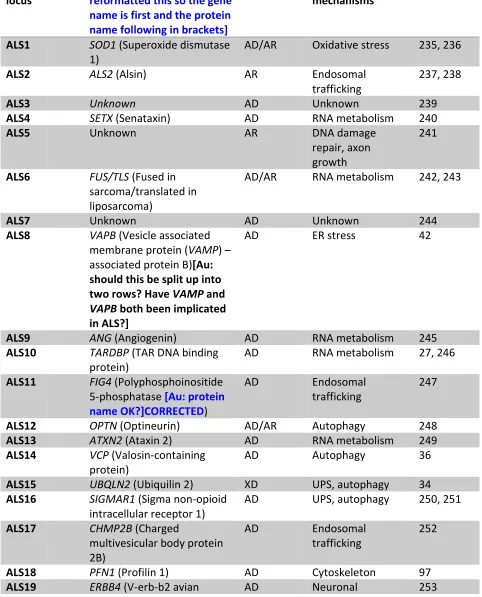
Of the known genes of major effect for the development of ALS (Table 1 [ OK), our current knowledge 172
comes primarily from the study of ancestral European (Europe, USA, Canada and Australia) and East 173
Asian populations; within these populations, OKthe dichotomization of ALS into familial and sporadic 174
subtypes is an over-simplification. Although at least 30 genes are known to confer a major risk for ALS, 175
evidence suggests a role of oligogenic inheritance (in which a phenotypic trait is determined by more 176
than one gene? OK ] ) and of genetic pleiotropy (in which a single gene [OK ] has multiple phenotypic 177
manifestations). Within populations of European extraction, up to 20% of people with ALS have a family 178
history of either ALS or FTD (Familial ALS) , and of these 4 genes account for up to 70% of all cases of 179
familial ALS , namely C9orf72, TARDBP (also known as TDP43), SOD1 and FUS[?OK]20. However, even in 180
the case of these known Mendelian inherited genes, familial forms of ALS are often characterized by 181
lower than 50% penetrance [and genetic pleiotropy, with evidence of oligogenic and polygenic 182
inheritance in individuals with apparently sporadic disease 21, 22. 183
184
[H3] Environmental and lifestyle factors. OK ]. Epidemiological case control studies have sought to 185
determine the environmental causes of ALS. Early epidemiological studies from regions with a high 186
incidence of ALS and dementia such as Guam and the Kii peninsula of Japan suggested a role for 187
neurotoxins [Would prefer to retain neurotoxins ] contained within cycad seeds, including -188
substantiated, a possible role for related cyanotoxins has been proposed, and exposure to water 190
harbouring cyanobacterial blooms has been suggested to contribute to risk of ALS in susceptible 191
individuals 24. 192
193
ALS has been reported at a higher frequency among groups of athletes compared to the general 194
population although whether physical activity is a risk factor for ALS, or a marker of underlying athletic 195
prowess is unclear. Evidence from a UK study suggests that individuals with ALS had higher rates of pre-196
morbid [Pre-Morbid is ok standard use PJS I AGREE] physical activity, but two other European studies 197
suggested either no effect, or a protective effect 22-24. Reasons for this discrepancy [might relate to study 198
design and true population-based differences. However, because ALS is a rare disease, smaller case 199
control studies are often underpowered and are subject to both bias and error in interpretation. To 200
address these problems in study design, a very large case control study OK has been completed as part 201
of the EuroMOTOR project (www.euromotorproject.eu), which has collected >1,500 population-based 202
incident cases and 3,000 matched controls across 3 countries. Analysis is ongoing, although preliminary 203
data suggest that exposure to smoking might increase the risk of developing ALS, but type 2 diabetes 204
mellitus, high levels of circulating lipids and exposure to [EXPOSURE is more accurate female 205
contraceptive hormones seem to be protective 25, 26[ (YES- OH is the senior author) PENDING . 206
207
[H1] Mechanisms/pathophysiology
208209
[H2] Histopathology [?OK ]
210
Although the fundamental pathophysiological mechanisms underlying ALS are not well understood, the 211
neuropathological hallmark of disease is the aggregation and accumulation of ubiquitinated 212
proteinaceous inclusions in motor neurons [?YES ] . Protein inclusions occur in other neurodegenerative 213
disorders (such as amyloid plaques in Alzheimer Disease and synuclein-containing Lewy Bodies in 214
Parkinson DiseaseOK ].The biological processes leading to formation of these inclusions OK] has been 215
the subject of intensive research, but is poorly understood 4. 216
In most subtypes of ALS the tar DNA-binding protein 43 OK ] (TDP-43) is the major constituent of these 217
inclusions, although mutations in TARDBP are a rare cause of ALS 27, 28 OK r] Indeed, approximately 97% 218
of patients with ALS have features of a TDP-43 proteinopathy, with depletion of TDP-43 in the nucleus, 219
neurons (Figure 2A). In specific subtypes of ALS, other types of protein aggregates might be seen, such 221
as P62-positive, TDP-43 negative protein inclusions that are caused by dipeptide repeat proteins and 222
might be seen outside the motor system in patients with ALS C ORF72 mutations OK ]
223
(Figure 2C) and neurofilamentous hyaline conglomerate inclusions (Figure 2B) and the accumulation of 224
misfolded superoxide dismutase (SOD1) in patients with SOD1-ALS YES ] . [Au: green text mvoed here
225
OK] Although protein aggregates are the 226
hallmark of ALS, the high molecular weight YES ] complexes that precede the formation of the 227
aggregates, rather than the aggregates themselves29, 30, might be the toxic species. Shedding of higher 228
molecular protein complexes might mediate cell to cell propagation of disease, linking the progression 229
of ALS to a prion-like mechanism, as has also been suggested for tau and synuclein-mediated diseases 31, 230
32. 231
232
The gross pathological features of ALS comprise skeletal muscle atrophy, atrophy of the motor cortex 233
and pallor LEAVE PALLOR (more accurate in neuropathology)] and sclerosis of the corticospinal and 234
corticobulbar tracts OK ] ), together with thinning of the hypoglossal nerves (which are involved in the 235
control of the muscles of the tongue) and the ventral roots of the spinal cord. Microscopic examination 236
usually reveals a depletion of at least 50% of spinal motor neurons and diffuse astrocytic gliosis and 237
microglial infiltration in the grey and white matter of the spinal cord (Figure 2D AND 2F). OK OK NOW ]. 238
Axonal loss, gliosis and myelin pallor are seen in the corticospinal tracts, and astrocytic gliosis is usually 239
observed in the motor cortex, together with variable depletion of upper motor neurons. Skeletal muscle 240
shows features of denervation and reinnervation, with fibre type grouping and clusters of angular 241
atrophic fibres. 242
243
244
[H2] Overview of pathophysiology OK
245
Progress has been made in the identification of the genetic causes of ALS21, 22 and models in rat, mouse, 246
zebrafish, flies, worms and yeast have been developed to study the mechanisms by which gene 247
mutations cause motor neuron degeneration and to model particular biological processes thought to be 248
important in disease pathobiology. All of these models have limitations and none fully recapitulates 249
human disease, which is partly because most models are based on gene overexpression (with multiple 250
copies of the human variant inserted into the transgenic model) and because the human neuro-axis 251
OK ] can contribute to our understanding of the cell biology underlying neurodegeneration and can 253
open new avenues towards targeted drug development. In reality, the cellular disruption ?OK ] in ALS is 254
likely the result of many different interacting mechanisms that culminate in larger network disruption, 255
and the separation of different mechanisms is somewhat artificial. [OK ] This is exemplified by the 256
finding that multiple factors can contribute to neuronal damage inmodels ofSod1OK MODIFIED BY PJS
257
?] mutations (Table 1). The relative extent by which each of these factors contributes to the overall 258
pathobiology of human disease cannot be fully ascertained, it would be erroneous to assumethat all of 259
these factors are involved in all cases of ALS, as human disease is heterogeneous. Notwithstanding, each 260
of the thematic areas should be considered in detail, as they represent our current knowledge base of 261
the pathophysiology of ALS, and are the drivers of current and future therapeutic initiatives (Figure 3). 262
263
[H2] Impaired protein homeostasis
264
[] OK
265
Mutations in some genes OK ] lead to the translation of proteins that are misfolded, have an abnormal 266
cellular localization or are aberrantly formed, and that can directly or indirectly impair the proteasome 267
or autophagy machinery of the cell, leading to impaired cellular protein turnover. Indeed, genes 268
associated with familial ALS encode proteins that can [OK ] promote dysfunction of the ubiquitin-269
proteasome system. For example, mutant SOD1 is associated with reduced expression of ubiquitin-270
proteasome system components 33, valosin-containing protein (VCP) and ubiquilin-2 are involved in 271
substrate delivery to the proteasome, and this function is disrupted in the presence of ALS-associated 272
mutations [n SENTENCE IS OK AS IT STANDS ]34-36. In addition, dysregulation of chaperone proteins has 273
been identified in ALS associated with SOD1 and TARDBP mutations 37-40 . Mutations in VAPB (encoding 274
vesicle-associated membrane protein associated protein B [Au OK:] ) can cause defective activation of 275
the unfolded protein response in disease models 41, 42. 276
277
C9orf72 [? PROTEIN YES ] is a key regulator of autophagy initiation 43 and loss of this function might 278
contribute to the presence of ubiquitin and p62 positive, TDP-43 negative inclusions in extra-motor 279
areas of the central nervous system (CNS) in C9orf72-related ALS [YES ] . OK ] Sequestosome-1, 280
optineurin and ubiquilin-2 have a role in the early steps of autophagy 44-46, and alsin, 281
polyphosphoinositide phosphatase (FIG4), transitional endoplasmic reticulum ATPase (VCP) and charged 282
multivesicular body protein 2b (CHMP2B) have roles in the maturation of autophagosomes into 283
endosomes and lysosomes lysosomes 47-51. Mutations in SQSRM1 [? OK ] might disrupt the correct 285
delivery of autophagic substrates to the autophagosome 52 and mutations in UBQLN2 and OPTN OK ?] 286
(which both encode autophagy receptors) are also associated with ALS. The activities of sequestosome-1 287
and optineurin are regulated by serine/threonine-protein kinase OK ] (TBK1) and 53, 54 haploinsufficiency 288
of TBK1[YES is a cause of familial ALS, which supports the hypothesis that reduced substrate delivery to 289
autophagosomes might contribute to motor neuron injury in ALS. Reduced VCP activity YES ] has been 290
shown to decrease the maturation of autophagosomes. Other proteins implicated in ALS 291
pathophysiology, including alsin and FIG4 YES ?] , can affect autophagy at the stage of initiation, OK ?]
292
although the mechanism for this is unclear47, 55. Both SOD1 and TDP-43 are known substrates of 293
autophagy, suggesting that defective autophagy could contribute to the toxic accumulation of these 294
proteins in ALS. The formation of dipeptide repeat proteins through repeat-associated non-ATG (RAN) 295
translation from the expanded RNA repeat of the C9orf72 [Au: this is quite technical - can we edit to
296
C9orf72 r -experts
297
WOULD PREFER TO KEEP ORIGINAL TEXT IF POSSIBLE ?] gene might also result in dysproteostasis, but 298
this remains to be conclusively demonstrated and the mechanism elucidated. 299
300
[OK 301
302
[H2] Aberrant RNA metabolism
303
Alteration of mRNA processing is a key theme in ALS pathogenesis56. [OK]mRNA undergoes a complex 304
system of processing as it transits from the nucleus to cytoplasm, where it is translated into protein. In
305
neurons, mRNAs can be transported to allow local translation in the axonal compartment. Although the 306
functional consequences of RNA dysregulation that lead to age-related and selective degeneration of 307
neuronal populations NO- other neurons also affected ] remain poorly understood [Both actually but
308
the latter in this context , analysis of the translatome of actively transcribing mRNAs will be essential in 309
elucidating the upstream molecular events contributing to neuronal injury. 310
311
OKThe discovery of mutations in TARDBP and FUS as rare causes of [Au: familial? NO- ok at stands ALS 312
has identified a crucial pathogenetic role for RNA binding proteins that contain low complexity domains 313
57. Mutant TDP-43 or FUS proteins mislocalize from the nuclear to the cytoplasmic compartment and this 314
is hypothesised to [OK ] result in the loss of the normal processing of their target RNAs 58, 59. Indeed, up 315
of gene expression has also been observed in relation to mutations in C9orf72, SOD1, and FUSOK ?]61, 317
including transcription, alternative splicing of mRNA, axonal transport of mRNAs and biogenesis of 318
microRNAs 62, 63. 319
320
[
321
The GGGGCC repeat expansion in the noncoding region of C9orf72[YES ] forms stable parallel uni- and 322
multimeric G-quadruplex structures, which avidly interact with RNA processing factors 64, 65. [OK ] In 323
addition, the repeat expansion gives rise to abnormal RNA species that can be identified as nuclear RNA 324
foci and the C9orf72 mutation [? MUTATION OK ] might induce direct RNA toxicity, by, for example, 325
sequestering RNA binding proteins 66-68 . Indeed, a large set [ No need to change large set ok ?] of 326
proteins that bind to the expanded repeat have been identified 69. In addition, repeat expansions could 327
lead to the formation of R-loops OK ] (that is, DNA-RNA hybrid structures) that increase susceptibility to 328
DNA damage and genome instability 70, 71. Indeed, R-Loops and genome instability due to double strand 329
DNA breaks and defective serine-protein kinase ATM-mediated DNA repair have been identified as 330
important components of neuronal injury due to GGGGCC repeat expansion in C9orf72 [OK ]72 . 331
332
OK?OK ] Mutations in ANG (encoding angiogenin, which has a role in RNA processing 73, 74) and SETX 333
(encoding senataxin, which regulates the transcription of ribosomal RNA 75, 76) OK ] are associated with 334
ALS, and might lead to disturbances in RNA metabolism. In addition, mutations in [OK? OK ] ELP3
335
(encodingelongator protein 3), TAF15 (encoding TATA-binding protein-associated factor 2N]OK ) and 336
EWSR1 (encoding RNA-binding protein EWS OK ) 77-79 have also been associated with ALS. These genes 337
encode proteins that are involved in regulation of RNA metabolism; ELP3 contributes to the regulation 338
of transcription elongation, and TAF15 and EWSR1, which are functionally and structurally related to 339
FUS, have a role in the control of transcription and alternative splicing 80, 81. 340
341
Mutations in other genes involved in RNA metabolism [Au: such as TAF15, EWSR1, hnRNPA1,
342
hnRNPA2B1 A T HUGO
343
CORRECTED ] and MATR3 have been implicated in ALS 82, 83 [Au C 344
ALS OK OK Please cite fewer refs here REFS REDUCED]. The mislocalization of the
345
mutant proteins into the cytoplasm might result in a toxic gain-of-function, and the effect of these
346
proteins on the formation of stress granules is an area of intense research effort [Au: why specifically
347
on stress granules? Do the aforementioned proteins all compose stress granules, for example? PLEASE
LEAVE AS ORIGINAL STRESS GRANULES ARE IMPORTANT AS MOTOR NEURON INJURY IS OCCURRING
349
]84-86 . 350
351
[H2] Nucleocytoplasmic and endosomal transport
352
In addition to altering RNA metabolism [OK ] , the GGGGCC repeat expansion in C9orf72 is believed to 353
alter the intracellular localisation of C9orf72 mRNA. Dipeptide repeat proteins are generated from the 354
repeat expansion in C9orf72 and interfere with proper nucleocytoplasmic transport and trigger 355
neurotoxicity via several mechanisms 87, 88. A I 356
separation as this is quite technical. Please restrict the number of reference here to 1-2ONE OF THE
357
REVIEWERS SPECIFICALLY ASKED FOR INCLUSION OF DISCUSSION OF LIQID PHASE SEPARATION. ONE
358
REF REMOVED ] OK . For example, arginine-rich dipeptide repeat proteins isolated from [OK ]C9orf72
359
expansions can induce phase separation of proteins that have a role in RNA and stress granule 360
metabolism, and produce spontaneous stress granule assembly 89. In addition, increased binding of 361
mRNA export adaptors to expanded C9orf72 pre-mRNAs might target those pre-mRNAs for nuclear 362
export, which could allow RNA translation to occur with potential toxicity from the expression of 363
abnormal dipeptide repeat protein species YES ] 68, 90. Indeed, sequestration of the nuclear export 364
adaptor serine/arginine-rich splicing factor 1 (SRSF1) by the repeat expansion region of the [Au:OK? OK]
365
RNA, triggers nuclear RNA export factor 1 [?OK] (NXF1)-dependent nuclear export of C9orf72 transcripts 366
retaining the hexanucleotide repeats, allowing RAN translation to dipeptide repeats in the cytoplasm 367
[YES . Depletion of SRSF1 in cellular and in vivo models reduces the production of dipeptide repeat 368
proteins and neurotoxicity 91. 369
370
[H2] Endosomal and vesicle transport
371
[OK] TDP-43 is involved in the regulation of endosomal trafficking and TDP-43 loss-of-function 372
[PROBABLY ] has been shown to alter dendritic endosomes [, which resulted in reduced signalling of
373
neurotrophins [OK ] and detrimental effects on neuronal health 92. Mutations in ALS2 (encoding alsin) 374
and UNC13A can alter endosomal and vesicle transport . Indeed, alsin is a guanine nucleotide exchange 375
factor for the small GTPase Rab5, and is involved in endosome trafficking and fusion 55, 93. UNC-13 376
homolog A [OK encoded by UNC13A, which is a risk factor for ALS), is involved in synaptic-vesicle 377
priming and neurotransmitter release 94. 378
[H2] Axon structure and function
380
The finding of DCTN (encoding dynactin) [YES ] , PFN1 (encoding profilin 1) and TUBA4A (encoding 381
tubulin alpha-4A chain ) mutations suggests that abnormalities of proteins that are essential for axonal 382
transport are associated with ALS 95-97. In addition, mutations in NEFH ( [Au: please complete this with 383
the gene name(s) - should this be NEFH and NEFL? YES NEFH T
384
YES encoding neurofilament) have also been
385
described in a small number of patients 98, although whether these mutations are pathogenetic through 386
axonal dysfunction remains to be seen. Rare mutations in PRPH encoding peripherin, another 387
cytoskeletal protein, have been suggested to have a role in ALS pathogenesis, possibly through effects 388
on neurofilament housekeeping including protein cargo trafficking [Au: have mutations in PRPH been
389
identified in patients with ALS? THE SENTENCE HAS BEEN ALTERED]99, 100. 390
391
[H2] DNA repair
392
Impaired DNA repair was suggested to have a role in ALS pathophysiology following the identification of 393
FUS mutations, although the exact role of DNA repair failure in ALS remains to be clarified101, 102. 394
Mutations in NEK1 and C21orf2[, both of which encode proteins involved in DNA repair, have recently 395
been identified as causes for ALS 103-105 although the biological pathways associated with their their 396
causal role awaits confirmation [LEAVE THIS SENTENCE AS MODIFIED HERE
397
398
[H2] Excitotoxicity
399
Motor neurons are very sensitive to toxicity induced by calcium entry following excessive glutamate 400
stimulation as they have a lower calcium buffering capacity than other neuronal subtypes and -amino-401
3-hydroxy-5-methyl-4-isoxazolepropionic acid (AMPA) receptors that are more calcium permeable (as 402
they contain less of the GluR2 subunit) 106. In addition, excitatory amino acid transporter 2 (EAAT2), an 403
astroglial [protein that is the main synaptic glutamate re-uptake transporter, is impaired in ALS, which is 404
likely to result in synaptic glutamate abundance and motor neuron toxicity. The loss of EAAT2 has been 405
observed in both rodent models and patients with familial or sporadic ALS. Excitotoxicity is thought to 406
be a mechanism common to all forms of ALS, although the evidence for this remains indirect. One 407
argument is that riluzole, which can attenuate disease progression and is an approved drug for 408
neuroprotection in ALS, can inhibit glutamate release 107, 108. However, whether this underlies the 409
therapeutic effect of riluzole remains unclear. 410
[H2] Oligodendrocyte degeneration
412
Oligodendrocyte degeneration has been observed in ALS. In the healthy CNS, oligodendrocytes are 413
replaced by the proliferation [Au: and presumably differentiation NOT FULLY DIFFERENTIATED, so BEST
414
TO LEAT TEXT AS IS ?] of oligodendrocyte precursor cells, which are abundantly present 109, 110 . At least 415
in animal models of ALS, and for reasons that are now clear [Au: please expand on this in 1-2 sentences;
416
what causes this failure to differentiate?] CAUSES ARE NOT KNOWN , oligodendrocyte precursor cells 417
A I OK OK fail to go through the final stages of differentiation. 418
Oligodendrocytes provide vital metabolic support to axons through the shuttling of lactate through 419
monocarboxylate transporter 2 111, 112, and accordingly, dysfunction of oligodendrocytes contributes to 420
the motor axonal failure [YES ] in ALS. Restoring oligodendrocytic function by transgenically deleting 421
mutant SOD1 from these cells significantly slows disease progression and prolongs their life span 113. In 422
patients with ALS, abnormalities in oligodendrocytes can occur, but whether these changes contribute 423
to the disease remains to be demonstrated. 424
425
[H2] Neuroinflammation
426
[OK Neuroinflammation can be observed in imaging studies in patients with ALS, human postmortem 427
samples and rodent models of ALS 114, 115. [Au: cite fewer refs here? Refs removed]. Astrocytes and 428
microglial cells release a number of hazardous and possibly neuroprotective factors. Deleting mutant 429
Sod1 OK ] from these cells in a mouse model increases survival and slows disease progression 116, 430
indicating that inflammation is an important factor for amplifying neuronal injury and disease 431
progression in ALS. [OK Microglia have dual activation phenotypes, which can be neuroprotective (the 432
M2 phenotype) or toxic (also known as classically activated, or M1 phenotype); evidence from SOD1- 433
transgenic mice suggests the phenotype of microglia evolves with disease progression, from a 434
neuroprotective phenotype at disease onset to a neurotoxic phenotype, with an altered cytokine release 435
profile, at end-stage disease 117 OK In addition, evidence highlights complex signalling between CNS 436
resident immune cells and peripheral cells, including monocytes and T-lymphocytes. 437
[H2] Mitochondrial dysfunction
438
Mitochondrial function is impaired in ALS and changes in mitochondrial morphology have been shown in 439
some patients, and in the SOD1 mouse model 118, 119. In the SOD1 model, vacuoles containing protein 440
aggregates containing mutant SOD1 can be observed in the mitochondrial inter-membrane space, 441
leading to impairment of protein import 120. In addition, oxidative damage to mitochondrial proteins 442
various experimental models of ALS have defects in axonal transport of mitochondria, which could 444
contribute to the axonopathy at the neuromuscular junction 122, 123. 445
446
Many of the functions disrupted in ALS are regulated by signalling between the endoplasmic reticulum 447
and mitochondria, underpinned by tight junction associations mediated by the endoplasmic reticulum 448
protein VAPB and the outer mitochondrial protein regulator of microtubule dynamics protein 124. These 449
associations are perturbed by TARDBP and FUS mutations125, 126. TDP-43 preferentially binds to mRNAs 450
encoding respiratory chain complex 1 subunits and causes complex 1 disassembly 127 and accumulates in 451
the mitochondria of patients with ALS and mutations in TARDBP increase the mitochondrial localization 452
of TDP-43. Suppression of TDP-43 localization to mitochondria improves mitochondrial dysfunction and 453
reduces neuronal loss in mTDP-43 cell based models. In C9orf72-related ALS models, the dipeptide 454
repeat protein poly(GR) appears to compromise mitochondrial function and causes oxidative stress and 455
DNA damage 128. CHCHD10 mutations, which are associated with familial ALS, can promote the loss of 456
mitochondrial cristae junctions, impair mitochondrial genome maintenance and interfere with apoptosis 457
by preventing of cytochrome-C release 129. 458
459
[H2] Final common pathway
460
The main mechanism involved in the pathogenesis of ALS is probably dependent on the initial cause, 461
although multiple mechanisms appear to explain the toxicity of one mutation and these mechanisms are 462
likely highly interlinked. This is clearly the case for SOD1 mutations. In the case of C9orf72 repeat 463
expansions, multiple factors likely contribute to neuronal injury including toxic gains-of-function related 464
to RNA foci and the presence of dipeptide repeat proteins, but loss of the normal function of the 465
C9orf72 protein might also have a role. 466
467
Whatever the mechanisms of ALS, the end result is that the motor neuron cannot maintain its axonal 468
projections, leading to axonal retraction and denervation of the target cell. For lower motor neurons, 469
this results in denervation of the muscle, but for upper motor neurons results in the loss of proper 470
control of lower motor neurons, hypertonicity and weakness .. In addition, a loss of important neural 471
networks within motor and extra-motor domains is also apparent 130. []OK As many of the proteins 472
encoded by genes that are implicated in ALS are ubiquitously expressed (Table 1), it is unclear why 473
motor neurons are the most susceptible to the hazardous effects of these mutations. The large size of 474
cells more sensitive to metabolic abnormalities than others, but other neuronal subtypes, such as 476
sensory neurons, have even larger axonal projections. Other factors that have been suggested to have a 477
role are the high expression of EphA4 and matrix metalloprotein 9 and the low expression of 478
osteopontin and insulin-like growth factor 2 by motor neurons, which might limit axonal sprouting and 479
repair. Of particular interest is that within the motor neuron pool, neurons that establish the fast 480
fatiguable motor units die first in ALS 131, 132 , but how this relates to the other vulnerability factors needs 481
to be clarified. 482
483
[H1] Diagnosis, screening and prevention
484485
[H2] Clinical presentations
486
[OK The clinical hallmark of ALS is the involvement of both upper and lower motor neurons (Figure 1). 487
Patients can present with symptoms of an upper motor neuron predominant onset (that is, spasticity
488
and [Au: muscle] weakness) in whom lower motor neuron involvement only becomes evident at later 489
stages of disease. 7, 133-136[Au: cite fewer refs here? Keep these refs if possible] . Conversely, patients 490
can present with symptoms of lower motor neuron dysfunction, which includes fasciculations, cramps 491
and muscle wasting. Approximately one third of patients with ALS present with bulbar-onset disease, 492
which is characterized by progressive dysarthria, followed by difficulty swallowing and often with 493
associated emotional lability. Limb onset disease accounts for 60% of cases, is usually asymmetrical in 494
presentation and can first develop in the upper or lower limb. [Up to 5% of patients present with 495
respiratory problems and are often seen first in cardiology and pulmonology clinics prior to their referral 496
to neurology clinics 137. In these cases, patients can also present with unexplained weight loss. Evidence 497
suggests that some patients with ALS are hypermetabolic; 138 although the pathophysiology 498
underpinning this is not well understood. Cardiovascular risk factors (such as hyperlipidemia or obesity) 499
might attenuate risk 138, but do not alter clinical outcome 139 . Patients can present with a pure motor 500
phenotype of ALS, and have normal cognition and behaviour, but some patients can present with a 501
purely cognitive or behavioural phenotype consistent with frontotemporal dementia(FTD) ), or a mixed 502
phenotype with minor changes in executive impairment that progress over time. Frontotemporal
503
dementia is part of the presenting features of 13% of incident cases 2-4 and approximately 30% of all 504
incident patients have some evidence of executive dysfunction at the time of first presentation 3, 140. 505
suggested that up to 50% of patients can remain cognitively normal throughout the course of the 507
disease 3 Behavioural changes are common in patients with ALS, with apathy as the most prevalent 508
symptom. Detailed examination of behavioural changes in patients with ALS, using a disease specific 509
behavioural scale (that is, the Beaumont Behavioural Index) suggests that up to 40% of incident cases 510
have new behavioural changes that can be clustered into at least 5 different groups which roughly map 511
to known neuroanatomical networks and pathways 141. Substantial autonomic impairment (such as 512
cardiovascular, gastrointestinal and bladder dysfunction) does not occur in the majority of patients with 513
ALS. 514
515
[H2] Diagnostic criteria
516
No definitive test for the diagnosis of ALS is available, and diagnosis is a process of clinical investigation 517
to exclude other possible causes of the presenting symptoms, combined with evidence of disease 518
progression. However, the growing understanding of the extra-motor features of ALS, the presence of 519
phenotypic overlap with other neurodegenerative diseases and the identification of genetic and 520
pathological subtypes of ALS can confound accurate and timely diagnosis 7. 521
522
Diagnosing ALS is based on the El Escorial criteria (Box 2) 142. Diagnosis according to these criteria 523
requires a history of progressive weakness spreading within a region or to other regions (such as bulbar 524
regions (speech and swallowing), cervical regions (upper limbs), thoracic regions (chest wall and 525
abdominal muscles) or lumbar regions (lower limbs), with evidence of lower motor neuron (through the 526
presence of specific symptoms or evidence of denervation on electromyography) and upper motor 527
neuron (through the presence of specific symptoms and brisk deep tendon reflexes) involvement In the 528
original criteria, diagnostic certainty ranged from Suspected ALS, (although this is no longer included in 529
the revised criteria), to Definite ALS (in which three body regions with mixed upper and lower motor 530
neuron findings were observed), which relates to the burden of disease. Neurophysiological findings 531
have been classified using the Awaji Criteria, which can enhance diagnostic and prognostic sensitivity 143. 532
Variants of the El Escorial criteria are used in research settings and for the purposes of clinical trial 533
enrolment, but these criteria should not be routinely used in clinical practice for routine patient 534
AL“ AL“ clinically 144, 145. Genetic 535
testing can also be included in patients with a strong family history of ALS 146 and clinical evidence of 536
disease, although this is not uniformly applied across centres 147. 537
[H2] Cognitive and behavioural deficits
539
Standard diagnostic and stratification parameters for ALS do not yet include cognitive or behavioural 540
status, which is altered in up to 50% of cases (depending on the extent of cognitive and behavioural 541
assessment 2-4. Various screening tools have been designed to identify patients with ALS and cognitive 542
and behavioural changes in the clinic, such as the Edinburgh Cognitive and Behavioural ALS Screen 543
(ECAS), which is validated in several languages and is widely used, as it has a high degree of sensitivity 544
with lower degrees of specificity 148. Individuals with abnormal ECAS scores (after adjustment to 545
population-based and educational norms) should be referred for a full neuropsychological evaluation 149. 546
The detection of cognitive and behavioural changes is important for patients with ALS and their 547
caregivers, as executive impairment is associated with a more-rapid disease trajectory and behavioural 548
changes are associated with higher caregiver burden 150. 549
550
[H2] Biomarkers
551
As ALS is a clinical syndrome with a heterogeneous phenotypic manifestation [and clinical course, 552
diagnostic and prognostic biomarkers are urgently required for the purposes of stratification. Levels of 553
neurofilament light chain (NfL) and phosphorylated neurofilament heavy chain in the cerebrospinal fluid 554
(CSF) can differentiate patients with ALS from those with mimics including cervical myelopathy, 555
multifocal motor neuropathy and inclusion body myositis, with moderate sensitivity and specificity [Au:
556
could you quote some values , and levels have a
557
moderate correlation with disease progression [Au: how do they correlate? Do levels increase with
558
progression?] 151-153. However, CSF neurofilament levels are not integrated into standard clinical 559
practice. Levels of NfL in serum are sensitive and specific for separating patients with ALS from healthy 560
controls, but data on comparison with ALS mimics are not available. 561
562
MRI studies of patients with ALS have shown corticospinal tract degeneration, with extensive 563
involvement within the frontal and temporal regions and basal ganglia, compared with controls 564
Evidence suggests that selective network vulnerability of structural and functional connectomes could 565
drive the clinical manifestations of ALS, such as vulnerability of the corticospinal, orbitofrontal, 566
orbitotemporal and frontostriatal circuits 154-156. The presence of network disruption is also supported by 567
findings using spectral electroencephalogram 130, and that patients with different degrees of cognitive 568
impairment show significantly different patterns of frontal lobe metabolic impairment on 18F 569
provide individualised data that can be used as a reliable biomarker of upper motor neuron dysfunction 571
and of cognitive impairment in patients with ALS. 572
573
[H2] Differential diagnosis
574
The differential diagnosis in patients with pure bulbar pure upper motor neuron or pure lower motor 575
neuron presentations includes ALS variants, treatable ALS mimics and disorders with a more benign 576
prognosis 134, 158. Other forms of motor neuron disease include progressive muscular atrophy (that is, the 577
exclusive degeneration of lower motor neurons) and primary lateral sclerosis (that is, the exclusive 578
degeneration of upper motor neurons). Some patients with progressive muscular atrophy have 579
mutations in genes associated with ALS159. Similarly, patients with primary lateral sclerosis may have a 580
family member with ALS and most autopsies of patients with primary lateral sclerosis show subtle signs 581
of ALS pathology in the lower motor neurons within the brain stem and spinal cord 135, 158. 582
583
Several conditions have similar initial clinical features as ALS and should be considered in the differential 584
diagnosis 145, including cervical myelopathy, multifocal motor neuropathy, myasthenia gravis, Lambert 585
Eaton myasthenic syndrome and inclusion body myositis. Features that should alert the clinician to a 586
possible mimic syndrome include presentation with of symmetrical findings; prominent extensor plantar 587
responses (which should raise suspicion of a cervical myelopathy) and the presence of sensory findings. 588
Although sensory symptoms are common in ALS, clinical evidence of sensory loss is atypical and should 589
trigger further investigations. In addition, the presence of substantial weakness in the absence of 590
wasting which is common in multifocal motor neuropathy and myasthenia gravis and the presence 591
of disproportionate involvement of quadriceps which is common in inclusion body myositis may 592
indicate the presence of an ALS mimic syndrome 160. As ALS is a progressive disease, failure of the 593
condition to progress over months should also trigger a re-investigation 161. 594
595
[H2] Staging and prognosis
[
596
Several different staging systems for ALS have been described (Figure 4) 162-165, including K 597
system, which is based on the number of affected regions of the body, and the Milano-Torino system 598
(MITOS), which is based on a clinical scale The prognosis of ALS is highly variable and prognostic 599
algorithms have been generated from population-based and clinical trial-based datasets 166, 167. Negative 600
prognostic indicators include bulbar or respiratory onset disease, the presence of executive impairment 601
reported including serum urate, serum creatinine, serum chloride, and increased serum and CSF 603
neurofilament levels 153, 168-170[Au: please cite fewer refs here. Keep if possible?] Declining respiratory 604
function, measured by slow vital capacity, forced vital capacity and sniff nasal inspiratory pressure also 605
correlate with short survival 166, 167, 171, 172. [Au: please limit the number of references here to 1-2. Keep 606
if possible?] 607
608
[H2] Clinical genetics and predictive testing
609
Consensus guidelines recommend genetic testing of probands with ALS who have a first or second 610
degree relative with ALS and/or frontotemporal dementia 19, 173. As the genetic risk for ALS depends on 611
ancestral origin, the genetic testing should be contextualized; for example, C9orf72 variants are rare in 612
Asia, whereas mutations in OPTN are more common in Asian than in European populations. Although 613
the potential benefits of genetic testing for patients are clear and could improve knowledge about their 614
disease, family planning and their possible inclusion in clinical trials, individuals also have a right not to 615
know their genetic status. Pre-symptomatic testing of family members of patients with ALS remains 616
controversial. Guidelines for genetic testing in research settings have been published 174, but most 617
centres do not advocate routine testing outside of specialist centres 147. 618
[H1] Management
619620
ALS management is best achieved by a multidisciplinary approach to care, comprising a clinical team 621
with different specialities, including neurologists, psychologists, nutritionists, pulmonologists, physical 622
therapists, speech therapists and specialized nurses175, 176. Multidisciplinary care increases survival 177-179, 623
reduces the number of hospital admissions and shortens hospital stays 178 and increases quality of life of 624
patients with ALS 180. This is likely related to the optimization of pharmacological and non-625
pharmacological interventions and enhanced adherence to treatment guidelines. 626
627
[H2] Disease-modifying therapies
628
Although > 50 drugs with different mechanisms of action have been studied for the treatment of ALS, 629
only 2 compounds (riluzole and edaravone have come to market. The negative results of these trials 630
might include clinical and pathogenetic heterogeneity in disease, and faults in trial design 181. 631
Riluzole was the first FDA approved treatment for ALS, and, although the mechanism of action is poorly 632
channels on presynaptic neurons. . In the original trial, Riluzole, increased 18-month survival of patients 634
by 3 months compared with placebo , but had no significant effect on muscle strength 182. Riluzole is a 635
relatively safe drug, although the most common adverse effects are an increase in liver enzymes and 636
asthenia (that is, a lack of energy) and some cases of fatal hepatic failure and pancreatitis have been 637
reported. In addition to the traditional tablet form of the drug, an oral suspension has been produced 638
and marketed in some countries for patients who are unable to swallow solid forms of the drug, owing 639
to severe dysphagia 183. Edaravone, which is thought to act as an anti-oxidant agent has a beneficial 640
effect on progression in a highly selected cohort of patients with early onset and rapidly progressive 641
disease 184, and accordingly, has been licensed by the US FDA but not by the European Medicines 642
Agency. Whether edaravone should be provided to all patients of ALS regardless of clinical 643
presentation is a matter of debate 185 644
645
[H2] Symptomatic treatments
646
Other symptoms of ALS can be treated with pharmacological and non-pharmacological interventions. 647
Nuedexta may improve bulbar function 186 and is available in the US but not in Europe. However, most 648
of these therapies for the symptoms of ALS have not been tested in randomized controlled trials and 649
are based on management of other diseases. 650
651
[H3] Spasticity. Spasticity is present in most patients with ALS, but only a small proportion need 652
treatment. The most commonly used drugs are baclofen and tizanidine (both of which are muscle 653
relaxants) although no randomized controlled trials in patients with ALS have been conducted. When 654
patients have severe, disabling spasticity, baclofen can be administered through an intrathecal pump. . 655
Cannabinoids have been approved for the treatment of spasticity in patients with multiple sclerosis and 656
are also used off-label or as a self-prescribed medication in patients with ALS187. 657
658
[H3] Sialorrhoea. Sialorrhoea (that is hypersalivation), causing drooling and the pooling of saliva within 659
the oral cavity is one of the most disturbing symptoms in patients with ALS, and is more commonly 660
observed in patients with bulbar-onset disease and during late-stages. Sialorrhoea can be treated [with 661
anticholinergic drugs, such as scopolamine, atropine, hyoscine, amitriptyline and glycopyrrolate. 662
Adverse effects associated with the use of anti-cholinergics include blurred vision, mouth dryness and 663
constipation, and these drugs are contraindicated in patients with heart conduction disturbances and 664
indicated, botulinum toxin A or B injections into the salivary glands can used to treat sialorrhoea188, 189. 666
Salivary gland irradiation has been also proposed 190. 667
668
[H3] Pain. Pain is reported in 15 85% of patients with ALS, depending on the duration of the disease 669
and the setting of the study, and is more frequently of nociceptive than of neuropathic origin. 191 670
Depending of the type of pain, pharmacological treatments include gabapentin, pregabalin and tricyclic 671
antidepressants (for neuropathic pain), and NSAIDs, opioids and cannabis for nociceptive pain), but no 672
randomized controlled trials evaluating treatment of pain in patients with ALS are available. Nociceptive 673
pain can be also treated with intra-joint injections of lidocaine or steroids, and physical therapy, 674
including assistive range-of-motion exercises. 675
676
[H3] Muscle cramps. Muscle cramps are the main cause of pain in about one-quarter of patients with 677
ALS (mainly patients with the spinal onset disease) and are caused by the instability of motor units 192. 678
Commonly used treatments for muscle cramps include quinine sulphate, levetiracetam and mexiletine. 679
Indeed, mexiletine has been shown to induce a significant dose-dependent reduction in muscle cramps 680
in a phase 2 randomized controlled trial in patients with ALS 193. Of note, the FDA has advised against the 681
use of quinine sulphate for the treatment of cramps because it can cause cardiac arrhythmias, 682
bradycardia and prolongation of Q-T interval. 683
684
[H3] Dysphagia 685
Dysphagia is reported by about 60% of patients with spinal onset ALS, within two years from onset and 686
100 % of patients with bulbar-onset disease 194. Several strategies can be implemented to reduce the 687
effects of dysphagia in patients, including dietary changes such as modification of the consistency of the 688
diet, the use of fluid thickeners and prescription of high-protein and high-caloric supplements, 689
swallowing facilitating manoeuvers and exercises (such as oral and pharyngeal range-of-motion 690
exercises, head postures and the technique of supraglottic swallow). An option for severe difficulties 691
with swallowing is to use enteral nutrition via the insertion of a gastrostomy tube. No established 692
criteria are available for the initiation of enteral nutrition in patients with ALS, but weight loss of >5% or 693
unsafe swallowing are generally considered to be red flags that should prompt intervention. 175. Several 694
techniques are available for minimally invasive tube insertion and open surgery is not recommended 195, 695