EFFECTIVENESS OF TIME OUT PROCEDURE PROTOCOL ON
KNOWLEDGE AND SKILL REGARDING PATIENT SAFETY
AMONG OPERATING ROOM NURSES
AT SELECTED HOSPITALS,
CHENNAI, 2018
DISSERTATION SUBMITTED TO
THE TAMIL NADU Dr. M.G.R. MEDICAL UNIVERSITY, CHENNAI
IN PARTIAL FULFILMENT OF REQUIREMENT FOR THE DEGREE OFInternal Examiner:
EFFECTIVENESS OF TIME OUT PROCEDURE PROTOCOL ON
KNOWLEDGE AND SKILL REGARDING PATIENT SAFETY
AMONG OPERATING ROOM NURSES
AT SELECTED HOSPITALS,
CHENNAI, 2018
Certified that this is the bonafide work of
Ms. D. EMILY JOYCE Omayal Achi College of Nursing
No. 45, Ambattur Road, Puzhal, Chennai – 600 066
COLLEGE SEAL :
SIGNATURE : ___________________________
Dr. (Mrs.) S. KANCHANA
R.N., R.M., M.Sc. (N). Ph.D., PDF.(R)., Principal & Research Director, ICCR Omayal Achi College of Nursing, Puzhal, Chennai – 600 066, Tamil Nadu.
DISSERTATION SUBMITTED TO
THE TAMIL NADU Dr. M.G.R. MEDICAL UNIVERSITY, CHENNAI
IN PARTIAL FULFILMENT OF REQUIREMENT FOR THE DEGREE OFEFFECTIVENESS OF TIME OUT PROCEDURE PROTOCOL ON
KNOWLEDGE AND SKILL REGARDING PATIENT SAFETY
AMONG OPERATING ROOM NURSES
AT SELECTED HOSPITALS,
CHENNAI, 2018
Approved by the Research Committee in March 2017
PROFESSOR IN NURSING RESEARCH
Dr. (Mrs.). S. KANCHANA _________________
R.N., R.M., M.Sc. (N). Ph.D., PDF.(R)., Principal & Research Director, ICCR,
Omayal Achi College of Nursing, Puzhal, Chennai-600 066, Tamil Nadu.
MEDICAL EXPERT
Dr. VIJAYAKUMAR CHOKKAN __________________
MBBS., M.Sc., Ph.D. Neuroscience (Canada) Director of Medical Services
SRM Institutes of Medical Science Hospital,
Vadapalani, Chennai – 600 026, Tamil Nadu. CLINICAL SPECIALITY – HOD
Dr. JOLLY RANJITH _________________ R.N., R.M., M.Sc.(N)., Ph.D(N),
Professor and Head of the Department, Medical Surgical Nursing,
Omayal Achi College of Nursing,
Puzhal, Chennai - 600 066, Tamil Nadu.
CLINICAL SPECIALITY-RESEARCH GUIDE
Mrs. SASIKALA.S _________________ R.N., R.M., M.Sc.(N).
Associate Professor, Medical Surgical Nursing, Omayal Achi College of Nursing,
Puzhal, Chennai - 600 066, Tamil Nadu.
DISSERTATION SUBMITTED TO
THE TAMIL NADU Dr. M.G.R. MEDICAL UNIVERSITY, CHENNAI IN PARTIAL FULFILMENT OF REQUIREMENT FOR THE DEGREE OF
ACKNOWLEDGEMENT
I trust in the Lord with all my heart, and in all my ways I acknowledge Lord, and God shall direct my paths. I submit myself to The Exquisite, Matchless, Glorious, Merciful, Ever living Lord God Almighty; The Alpha and Omega, The Maker of Heaven and the Earth, He is the Father of the Fatherless, His Everlasting mercy, Unfailing love, Abundant grace, Magnificent wisdom, and Abundant blessings, as a servant is thankful for his Master so am I thankful to you my Master, without you I’m nothing but dust. I’m much obliged for the reason helping me in all the ways to complete this research study.
“Being Thankful itself is a divine art”
I’m grateful to every divine soul who enriched and imparted all three domains of knowledge, skill and attitude into my grey and white matter and made me a Rigorous Researcher.
At the outset, I’m much grateful to TheTamil Nadu Dr. M.G.R. Medical University, Chennai, for granting me an opportunity to pursue the postgraduate programme in this prestigious and esteemed university, for the upliftment in my professional career.
I owe my sincere thanks and gratitude to the Managing Trustees, Omayal Achi College of Nursing, for giving me an opportunity to upgrade my profession in
this reputed institution.
I’m indebted and take this opportunity to imprint my Superabundant token of gratitude to “The Whiz of Research” Dr.K.R. Rajanarayanan, B.Sc., M.B.B.S, FRSH, London, Research Coordinator, ICCR and Honorary Professor in Community Medicine for his zealous, scrupulous, supremacy in sharing his wisdom to sculpt this research study.
My sincere gratitude to the most deserved admirable person Dr. Mrs. Celina. D, Vice Principal, Omayal Achi College of Nursing for her ingenious ideas, pioneering guidance and diligent support in meticulous corrections of research work.
I warmly thank the ICCR Executive Committee Members, and Head of all the Departments and Faculty for their thought provoking ideas, and never-ending encouragement during research proposal, pilot study and mock viva presentations.
I’m cordially thankful to Mrs.Sorna Daya Rani, Nurse Researcher cum Assistant professor, for her constant motivation and timely help for arranging ethical clearance and IEC certificate.
My deep sense of obligation to my reverence and warmhearted Guide and Class coordinator Mrs. Sasikala .S, Associate Professor, for her adroit and proficient preceptorship, impetus motivation, felicitous corrections and highly constructive guidance which accelerated for successful completion of my study.
I wish to record my allegiant and ardent thanks to Dr. Mrs. M. Sumathi, Former Head of the Department, Medical Surgical Nursing and our M.Sc. Nursing 1st year Class coordinator (2016 – 2017) who provided immeasurable guidance and gave freedom in choosing this research topic, understating my interest towards this research topic and for being a fulcrum of support during my research proposal.
I bestow my loyal gratitude to the most principled, fastidious person Dr. Mrs. Jolly Ranjith, Professor and Head of the Department, Medical Surgical Nursing for
her contemplating and conscientious corrections, maestro in research mentoring, priceless patience, genuine grammatical guidance in each facet of research. Yet again I thank you for always bringing out the best in me and molding into a competent researcher.
My fervent gratitude to Mrs. Grace Lydia, Assistant Professor, Head of the Department, Fundamental in Nursing Mrs. Remya M.R, Tutor, for being a main spring of motivation and lovingly wrapped guidance and deep rooted support and extensive help during research proposal.
A special note of thanks to cherished well wisher Mrs. Ruth Rani Princely, Associate Professor, Head of the Department, Child Health Nursing, for your kindness and ceaseless encouragement and spur of motivation in impelling to complete my research study.
I accord my courteous gratefulness to all the Medical and Nursing Experts in the field of Medical Surgical Nursing for sharing their expertise knowledge.
I am immensely thankful to the Librarians, Mr.N.Muthukumaran, Mr.P.M.Ashokan and Ms.Judith Anand, Omayal Achi College of Nursing and the E-consortium Technical Expert from The Tamilnadu Dr.M.G.R. Medical University, for their assistance and help in accessing the related literatures for this study.
My sincere thanks to the Biostatistician, Dr.Venkatesan Sathish. A for his efficient assistance in statistical analysis.
My special thanks to Mr. Arokiyasamy M.A., B.ED. P.G Assistant (English), for editing the tools in English.
An exceptional note of gratefulness to Mr.G.K.Venkataraman, Elite computers for his kindness and effort in shaping and aligning the manuscript.
I extend my heartfelt gratitude to the Administrators of SIMS Hospital and Mrs. Agnes Vijayan Mary, Assistant Nursing Officer, OR for her kindness in providing
separate area for demonstration and cooperation in arranging OR nurse’s availability.
I wish to express my loving gratitude to my beloved procreators Mr. E. Davidson who made my life more adventurous, Mrs. J. Arunothayam Felicita Mabel
who is the reason for what I’m today, and my sweet sister cum friend Ms. D. Hepziba Beaulah, who is the reason for my smile. Words can’t express my love towards you all. Your sacrifice, love, care, faith is the pivotal tool which helps me in reenergizing my strength to complete this study.
I bequeath my heartfelt gratitude to my beloved brother in law Mr. J. K. Abraham Jebadoss, for his scrupulous moral support, Generosity in gifting a laptop
without which this research study wouldn’t be easy, compassionate painstaking efforts in preparing poster, constant encouragement and motivation throughout the course and in my personal endeavors.
I bestow my affectionate gratitude to my dear loving cousins “Pasamalargal” for your endless encouragement and loving motivation, to pursue this study.
My fortune to express my deep sense of gratitude to Mrs. Lija Christy, Ms. Roshini and all Rafftrodills for their endless care and rejuvenating energy to complete
my study.
I evince my inmost sense of thanks and gratitude to my class mates “The Sagacious” Ms. Ambika Rathinam, “The Erudite” Mrs. Karthika.M,
“The Altruistic Artistry” Sr. Rev. Lourdu Antony SAL, “My Bosom pal” Ms. Rajiya M.Sc, Nursing (2016-2018 Batch) for their peer evaluation and beneficial ideas, which enhanced the study to attain its perfection.
LIST OF ABBREVIATIONS
ANOVA - Analysis of Variance
AORN - Association Peri-Operative Registered Nurses
CINAHL - Cumulative Index to Nursing & Allied Health Literature
CMPA - Canadian Medical Protective Association DALYs - Disability Adjusted life Years
ICCR - International Centre for Collaborative Research JC - Joint Commission
MEDLINE - Medical Literature Analysis and Retrieval System Online NPSGs - National Patient Safety Goals
OR - Operating Room
PUBMED - Public/ Publisher Medline SD - Standard Deviation SSC - Surgical Safety Checklist SSI - Surgical Site Infection WHO - World Health Organization
WSS - Wrong Site Surgery
LIST OF SYMBOLS
& - And F - ANOVA
’ - Apostrophe or Single Quote
- Asterisk or Star
‘r’ - Coefficient of correlation ] - Closed bracket
) - Close parenthesis : - Colon
, - Comma
. - Dot or Full Stop = - Equals to / - Forward Slash - - Hyphen
X - Intervention < - Less than > - More than
≥ - More than or equal to p - Level of Significance n - Number of samples
O - Observation or measurement of the dependent variable/outcome
[ - Open bracket ( - Open parenthesis % - Percentage +/- - Plus or Minus ? - Question mark “ - Quotation mark ; - Semicolon
TABLE OF CONTENT
CHAPTER NO. CONTENT PAGE NO.
ABSTRACT
1. INTRODUCTION
1.1 Background of the study
1.2 Significance and need for the study 1.3 Statement of the problem
1.4 Objectives of the study 1.5 Operational definition 1.6 Null hypotheses
1.7 Delimitation
1.8 Conceptual Framework 1.9 Outline of the report
2. REVIEW OF THE LITERATURE
2.1 Critical reviews related to patient safety
2.2 Critical reviews related to burden of surgical error 2.3 Critical reviews related to surgical safety checklist 2.4 Critical reviews related to communication failure in OR
3. RESEARCH METHODOLOGY
3.1 Research approach 3.2 Research design
3.3 Variables
3.4 Setting of the study
3.5 Population
3.6 Sample
3.7 Sample size
3.8 Sampling technique
3.9 Criteria for sample selection
3.10 Development and description of the tool 3.11 Content validity
CHAPTER NO. CONTENT PAGE NO.
3.14 Pilot study
3.15 Data collection procedure 3.16 Plan for data analysis
4. DATA ANALYSIS AND INTERPRETATAION
5. DISCUSSION
6. SUMMARY, CONCLUSION, IMPLICATIONS,
RECOMMENDATIONS AND LIMITATIONS REFERENCES
LIST OF TABLES
TABLE NO.TITLE PAGE NO.
1.1.1 Root causes for adverse events in operating room.
1.1.2 Surgical adverse events.
3.2 Research design.
3.12 Reliability of the tool.
4.1.1a Frequency and percentage distribution of demographic
variables with respect to age in years, gender, marital status and educational qualification in study and control group.
4.1.1b Frequency and percentage distribution of demographic
variables with respect to year of passing, state, experience and education obtained through private or government sector in study and control group.
4.1.1c Frequency and percentage distribution of demographic variables with respect to overall clinical experience, experience in OR and attended in-service education in study and control group.
4.2.1 Frequency and percentage distribution of level of need for time out procedure protocol in the study and control group.
4.3.1 Comparison of domain wise percentage of knowledge on time out procedure protocol among operating room nurses.
4.3.2a Comparison of post test mean knowledge score on timeout procedure protocol between study and control group.
4.3.2b Comparison of post test mean skill score on timeout procedure protocol between study and control group.
LIST OF FIGURES
FIGURE NO. TITLE PAGE NO.
1.1.1 Most frequently reported sentinel events by joint commission.
1.1.2 Most frequently reported Adverse events.
1.1.3 No. of Adverse events in 2015
1.1.4 Outcome of adverse events.
1.1.5 Root cause analysis for the occurrence of Adverse events
1.1.6 The locations of wrong site surgery.
1.1.7 Types of objects retained during surgery.
1.1.8 Wrong site surgery/ procedure
1.1.9 Number of leading causes of death in U.S
1.1.10 The top 10 most frequently reported sentinel events
1.8.1 Integrated conceptual framework based on stuffle beam’s model and von bertalanffy’s general system theory
3.1 Schematic representation of research methodology
4.3.1a Frequency and percentage distribution of post test level of knowledge regarding timeout procedure protocol in the study and control group among OR nurses.
4.3.1b Frequency and percentage distribution of post test level of skill regarding timeout procedure protocol in study and control group.
4.3.2a Effectiveness of timeout procedure protocol on post test level of knowledge and skill between study and control group.
4.4.1 Correlation between post test mean knowledge score with skill score among OR nurses in the study and control group.
FIGURE NO. TITLE PAGE NO.
4.5.2 Association of post test level of knowledge with Nurse's experience in study group
4.5.3 Association of post test level of knowledge with Nurse's over all clinical experience in study group
4.5.4 Association of post test level of knowledge with Nurse's age in study group
4.5.5 Association of post test level of knowledge with Nurse's experience in study group
LIST OF APPENDICES
APPENDIX TITLE PAGE NO.
A Ethical clearance certificate IEC approval certificate
B Letter seeking and granting permission for conducting the main study
C Content validity
i)Letter seeking expert’s opinion for content validity
ii)List of experts for content validity
iii)Certificate of content validity
D Certificate for English editing
E Informed consent
i)Informed consent requisition form
ii)Informed written consent form- English
F Copy of the tool for data collection with scoring key
i)English
G Coding for the demographic variables
H Blue print of data collection tool
I Intervention tool
J Plagiarism report
K Dissertation Execution plan- Gantt chart
L Photographs
Effectiveness of time out procedure protocol on knowledge and skill regarding patient safety among operating room nurses at selected hospitals, Chennai.
ABSTRACT:
Background: Patient safety is a discipline that emphasize safety culture in health care through the prevention, reduction, reporting, and analyzing of medical and surgical error
that often leads to adverse effects. Aim and Objective: To assess and compare the effectiveness of time out procedure protocol on knowledge and skill regarding patient safety
among operating room nurses. Methodology: A Pre - experimental post test only design and a Quantitative approach was adopted to assess the effectiveness of time out procedure
protocol on knowledge and skill regarding patient safety among 60 operating room (OR)
nurses (30) each in study and control group, who were working as a OR nurse holds > 6
months of working experience at SIMS Hospital, Vadapalani and Nungambakkam,
Chennai. Lottery method was used to divide the setting. Need assessment was performed and OR nurses who scored ≥ 3/6 and who fulfilled the inclusion and exclusion criteria using
non - probability purposive sampling technique were selected as samples. Timeout
procedure protocol was administered and the level of knowledge and skill was assessed
by using structured knowledge questionnaire and observational checklist. Results: The study findings revealed that the post test mean knowledge score was 14.60 with SD of 2.66
in study group and 9.40 with SD of 1.93 in control group, and their post test mean skill score
was 9.77 with SD of 1.17 in study group and 4.63 with SD. 1.82 in control group. The calculated student independent ‘t’ value (8.66 and 12.96) for knowledge and skill among
the study and control group. indicates that there was a very high statistical significance at
p<0.001. Conclusion: The results unfolds that the time out procedure protocol was effective in improving the knowledge and skill regarding timeout procedure in OR and can
be utilized as a tool to evaluate the knowledge and skill of OR nurses.
Keywords:timeout procedure, patient safety in operating room, surgical safety checklist
INTRODUCTION
training, safety improvements through quality markers, skilled health care professionals and their effective involvement of patients in their care, all these ingredients are needed to ensure sustainable and significant improvements in patient safety of health care. Patient safety helps doctors, nurses and all other health care professionals practice safe and better health care. Therefore, it is good not only for patients but for everyone in healthcare team.
The World Health Organization calls patient safety an endemic concern as there is an impact of health care errors lies 1 in every 10 patients around the world. despite many advances in the surgical environment, there is still a lot of work to do to improve patient safety in operating room and throughout pre and post-operative care, death and illness still arises as a result of surgical site infections, patient misidentification, wrong site surgery, mistakes and omissions.
The major purpose of the research study is to create patient safety environment in operating room and to update the operating room nurse’s knowledge and skill on accurately performing timeout procedure and follow Surgical safety checklist, recommended by WHO.
Objectives
1. To assess the level of need for time out procedure protocol regarding patient safety among operating room nurses in study and control group.
2. To assess the effectiveness of time out procedure protocol on knowledge and skill regarding patient safety among operating room nurses between study and control group.
3. To correlate the post test mean knowledge score with skill score regarding time out procedure protocol among operating room nurses in the study group and control group.
4. To associate the selected demographic variables with post test mean of knowledge and skill score regarding time out procedure protocol among operating room nurses in the study group and control group.
Null Hypotheses
NH1: There is no significant difference in the post test level of knowledge regarding time out procedure protocol on patient safety among operating room nurses between study and control group.
NH3: There is no significant association of the selected demographic variables with post test mean score of knowledge and skill regarding time out procedure protocol among operating room nurses in the study group and control group.
METHODOLOGY
A pre-experimental research design and a quantitative approach was adopted. The independent variable was Timeout procedure protocol and the dependent variables were knowledge and skill regarding patient safety in OR among OR nurses. The main study was conducted at SIMS Hospital, Vadapalani (setting I – study group) and Nungambakkam (setting II – control group) setting was divided using lottery method. Need assessment was performed to screen the samples and those who scored ≥ 3/6 and who full filled inclusion criteria using Non-probability purposive sampling technique 60 OR nurses (30 in each study and control group) were selected as samples.
The investigator administered Time out procedure protocol to the study group through a lecture cum discussion (30 minutes) and through role play demonstration and return demonstration (15 minutes) on timeout procedure was performed by the samples and the total duration of intervention was about 45 minutes and usual hospital routine for control group.
On the seventh day, the post test level of knowledge and skill was assessed using structured knowledge questionnaire and observational checklist for both the group. After completion of post test, on the same day Timeout procedure protocol was executed to the control group.
Similarly, OR nurses from both the groups were reinforced with help of a booklet and poster and reminder was sent daily through WhatsApp technology. The collected data was analyzed using descriptive statistics such as mean and standard deviation and inferential statistics such as ‘t-test, chi-square test, Spearman rank correlation’ was used to show the statistical significance.
RESULTS
level. This inference unveils the effectiveness of the intervention in improving the knowledge in study group.
In study group while comparing the post test level of skill, the mean skill score was 9.77
with standard deviation of 1.17, whereas in control group the mean post test level of skill score was 4.63 with standard deviation and the mean difference was 1.82. The calculated ‘t’value was 12.96 using student independent t-test, which was found to be very high statistical significance at p<0.001 level. Thus, evidently proves that the OR nurses in study group had performed the timeout procedure better when compared with the control group. This ascertains the effectiveness of the demonstration of Timeout Procedure Protocol by the investigator.
The correlation between the post test mean knowledge score with skill score revealed that,
the calculated ‘r’ value among study and control group, r =0.48 and 0.18 respectively, which showed a very high statistical significance that there was a positive moderate correlation between knowledge and skill at p<0.001 level. Hence improving knowledge regarding Timeout procedure protocol has also enhanced the skill in study group.
The association of selected demographic variables with post test mean knowledge and skill
score in the study group revealed that there is a statistical significant association with regard to the demographic variables such as age in years (41 – 50), experience (> 5 years), overall clinical experience (>5 years). None of the variables in the control group showed any statistically significant association with knowledge and skill.
DISCUSSION
The study findings revealed that the Timeout procedure protocol improved the level of knowledge and skill regarding patient safety in OR among OR nurses.
CONCLUSION
IMPLICATION
Implementation of Timeout procedure: Prevents harm in operating room.
Improves quality patient care in operating room.
Enhanced performance of the surgical team.
Improves communication between the surgical team members.
All aspects of the operation can be monitored in a standardized way.
Brings new concept of patient-centered safety culture in operating room.
It is an opportunity for other members of the team to share their thoughts regarding surgical
intervention.
Ultimately adheres to the code of ethics- “Do no harm”
Builds an environment of trust in staff who were empowered to report patient safety events without fear of reprisal.
It enables, the team to comes together and increases the chances that all members will have
the situational awareness needed to prevent harm.
Establishes leadership training within the team and empowers all the members need to be
empowered to work on behalf of the patients.
INTRODUCTION
Thousand years back, The Greek Healers in the fourth century BC, drafted a Hippocratic promise and vow to "endorse regimens which is useful for patients based on their capacity and judgement and never do harm to anybody". From that point onwards, they inferred primum non nocere (first do no harm) which turned out to be the primary need in health care industry.1, 2
Patient safety is a discipline that emphasize safety culture in health care through the prevention, reduction, reporting, and analyzing of medical and surgical error that often leads to adverse effects. 3 The frequency and magnitude of near and never miss events experienced by patients were not revealed until 1990’s, even when various countries from different health care agencies reported number of patients were harmed and killed by medical and surgical errors.2
Patient safety is a fundamental principle of health care delivery system. Every point in the process of care-giving contains certain degree of inherent unsafety. Few countries have published studies showing that significant number of patients are harmed while receiving health care facility. This may result in permanent injury, increased length of stay in health care facility, or even death.4
Patient safety helps doctors, nurses and all other health care professionals to practice safe and better health care. Therefore, it is good not only for patients but also for everyone in healthcare team.5
“World Patient Safety Day” is celebrated annually on 17th September, the financially imperative of patient safety was stressed greatly, seeking prioritization and unwavering support and commitment Globally from all delegates for patient safety5
The magnitude and impact of errors in health care was not appreciated until the 1990’s, in 1999, the Institute of Medicine (IOM) of the National Academy of science released a report, To Err is Human: Building a Safer Health system. They made efforts to establish a center for patient safety, expanded reporting of near and never miss events, development of safety programs in health care organization. The media focused on statistics from 44,000 to 98,000 preventable deaths annually due to medical error in hospitals, 7000 preventable deaths related to medication errors alone. 7
Despite many advances in the surgical environment, there is still a lot of work to do to improve patient safety in operating room and throughout pre and post operative care, death and illness still arises as a result of surgical site infections, patient misidentification, wrong site surgery, mistakes and omissions. 8
1.1BACKGROUND OF THE STUDY
WHO, (2018) 6 reported that 1 in 10 hospitals admission lead to an adverse event and 1 in 300 admissions in death. An adverse event could range from the patient spending extra day in hospital and also adds unintended medical and surgical errors are the big threat to patient safety.
British Medical Journal, quoted that 5.2 million errors happening in India annually, like any other developing country a lot of medical errors are recorded in India, the reason behind is
that due to lack of trained doctors and nurses to measure the clinical outcomes. [Source: - A Harvard study by Prof. Dr. Giridhar J.Gyani, (2017)] 9
Figure 1.1.1 Most frequently reported sentinel events by joint commission.
[Source: The Joint Commission, 2009] 11
The above figure depicts that wrong site surgery was the most frequently reported sentinel event which indicates an urgent need for call towards the preventive actions against the occurrence of wrong site surgery
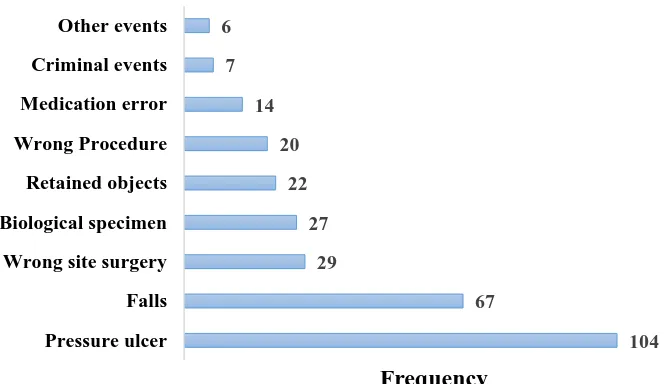
Figure 1.1.2 Most frequently reported Adverse events.
[Source: Adverse Health Events in Minnesota, Fifth Annual Public Report. St. Paul, MN: Minnesota department of health; January 2009] 12
The above figure depicts that wrong procedure was one of the most frequently reported adverse event in Minnesota during the period of 2009.
0% 20% 40% 60% 80% 100%
wrong site surgery suicide Op/Post-Op complication Delay in treatment Medication Error Patient Fall
39%
30% 12%
7%
5%
2%1%4%
Pressure ulcers/ bedsores Falls
retained objects wronge sire surgery wrong procedure medication error suicide
Figure 1.1.3 No. of Adverse events in 2015.
[Source: Adverse Health Events in Minnesota, Twelfth Annual Public Report. St. Paul, MN: Minnesota department of health; October 2015] 13
[image:28.595.79.412.80.272.2]The above figure depicts The No. of Adverse events in Minnesota, 29 cases of wrong site surgeries were reported in 2015.
Figure 1.1.4 Outcomes of Adverse Events.
[Source: Adverse Health Events in Minnesota. Fifth Annual Public Report. St. Paul, MN: Minnesota department of health; January 2009] 12
The above figure depicts that treatment or monitoring was the major outcome of adverse events in 2009.
104 67
29 27 22 20 14 7 6
Pressure ulcer Falls Wrong site surgery Biological specimen Retained objects Wrong Procedure Medication error Criminal events Other events
Frequency
0% 10% 20% 30% 40% 50% 60% Death
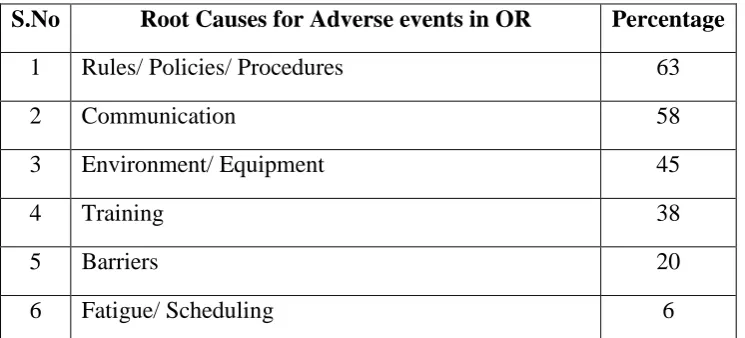
Table 1.1.1 Root Causes for adverse events in OR
S.No Root Causes for Adverse events in OR Percentage
1 Rules/ Policies/ Procedures 63
2 Communication 58
3 Environment/ Equipment 45
4 Training 38
5 Barriers 20
6 Fatigue/ Scheduling 6
[image:29.595.72.445.101.270.2][Source: Adverse Health Events in Minnesota. Fifth Annual Public Report. St. Paul, MN: Minnesota department of health; January 2009] 12
Figure 1.1.5 Root Cause Analysis for the occurrence of Adverse events
[Source: Adverse Health Events in Minnesota, Twelfth Annual Public Report. St. Paul, MN: Minnesota department of health; October 2015] 13
The above figure depicts improper adherence to rules, policies, and procedures were the top reason for occurrence of adverse events and communication breakdown occupies the second reason for adverse events.
In the previous Table 1.1.1 Training causes 38% of Adverse events in 2009, whereas in 2015 Training holds only 7%. variations were found in causes such as new cause like Organizational Culture in 2015.
31%
20% 17%
12% 9%
7% 4%
Rules/ Policies/Procedures Communication/ Information No Root Cause
Figure 1.1.6 Locations of wrong site surgery.
[Source: Adverse Health Events in Minnesota. Fifth Annual Public Report. St. Paul, MN: Minnesota department of health; January 2009] 12
The above figure depicts that operating room holds highest place where wrong site surgery occurs.
Figure 1.1.7 Types of objects retained during surgery.
[Source: Adverse Health Events in Minnesota. Fifth Annual Public Report. St. Paul, MN: Minnesota department of health; January 2009] 12
The above figure depicts that sponges or gauze are the frequent type of objects retained during surgeries.
19%
8%
15%
43%
15%
Ambulatory surgery
Diagnostic Lab Radiology OR others
58%
11%
14%
17%
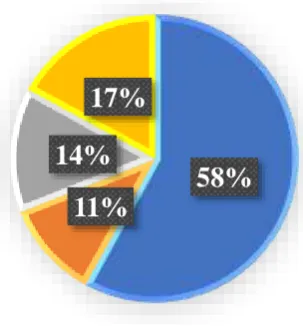
sponge/ Gauze [image:30.595.160.312.442.607.2]Figure 1.1.8 Wrong site surgery / procedure
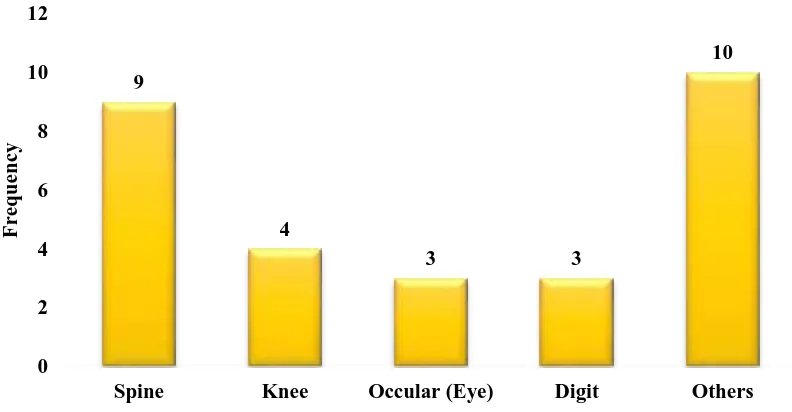
[Source: Adverse Health Events in Minnesota, Twelfth Annual Public Report. St. Paul, MN: Minnesota department of health; October 2015] 13
The above figure depicts that in the patient’s body where wrong site or procedure was performed, the spine and other areas were noted high risk of operating wrong site.
Table 1.1.2 Surgical Adverse events (October 7,2014 – October 6, 2015)
S.No Types of Events No. of Events
1 Wrong body part 29
2 Wrong patient 1
3 Wrong procedure 20
4 Foreign object 22
5 Intra/ post – op death 0
Total No. of Events 72
[Source: Adverse Health Events in Minnesota, Twelfth Annual Public Report. St. Paul, MN: Minnesota department of health; October 2015] 13
9
4
3 3
10
0 2 4 6 8 10 12
Spine Knee Occular (Eye) Digit Others
[image:31.595.71.525.486.644.2]Fig. 1.1.9 Number of leading causes of death in U.S, 2014
[Source: CDC, National Centre for Health statistics, 2014] 14
The above figure depicts that Medical error is third leading cause of Death in US.
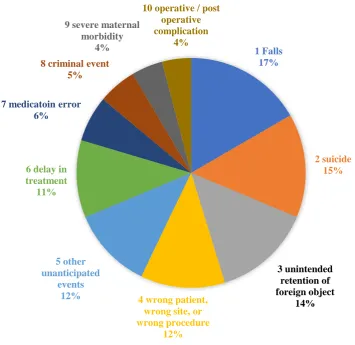
Figure 1.1.10 The top 10 most frequently reported sentinel events from Jan. 1, 2017 to June 30, 2017.
[Source: WHO, Sentinel events statistics report, 2018] 15
Figure 1.1.1, 1.1.2, 1.1.3 depicts sentinel events report from Joint commission and also in Adverse Health events from Minnesota 2009 and 2015. The above figure depicts, in 2017 wrong site or wrong procedure stands in fourth place in top 10 sentinel events reports by WHO within 6 months of duration. This indicates the magnitude of the problem still holds its place strongly since following years. From this we could suggest the alarming need for prevention of wrong site surgery / procedure.
1 Falls 17% 2 suicide 15% 3 unintended retention of foreign object 14%
4 wrong patient, wrong site, or wrong procedure 12% 5 other unanticipated events 12% 6 delay in treatment
11%
7 medicatoin error 6%
8 criminal event 5%
9 severe maternal morbidity
4%
10 operative / post operative complication
World Health Organization; 2018 report on safe surgery says; 16
Medical procedure is regularly considered as the treatment which decreases disabilities and lessens the risk of death. Millions of people undergo any form of surgical intervention every year, surgical interventions which accounts for an estimated 13% of the world's aggregate of Disability Adjusted Life Years (DALYs)
While surgeries are indented to spare lives, unsafe care can land up in serious life-threatening issues to patients, this has significant ramifications:
The crude mortality rate reported after major surgery was 0.5 – 5 %.
Complication after inpatient operation happens up to 25% of patients.
In Industrialized nations, almost 50% of every adverse events in hospitalized patients
are identified with surgical care.
At slightest portion of the cases in which surgical procedure prompted hurt are viewed
as preventable;
Mortality from general anesthesia alone is accounted for to be as high as 1 out of 150
patients.
Annually, 4,000 people who undergo surgery are injured from a surgical error; preventable mistakes called “never events, the term “never events” is used because they represent shocking surgical errors that should never have happened like when a surgeon performs the wrong procedure.
Surgical errors cause a wide range of issues; 59% of victims suffered temporary injury,
33% had permanent injuries and 6.6% of cases lead to wrongful death.
Determining the exact number of surgical errors can be difficult, Besides the fact that hospitals are required by law to report “never events” that result in a settlement or judgment. This means that hospitals are not required to report medical errors that do not result in a lawsuit.
In addition, all patients do not realize that an error has been committed. Unless patient doesn’t experience complications from an object being left inside their body, and hence no one will ever know that an error has occurred.
Surgeon leaves a foreign object each week like a sponge inside a patient’s body after surgery (39 times)
Operate on the wrong part of the body (20 times)
Based on this data, researchers estimate that every year 4,044 surgical “never events” happen in the U.S, Researchers noted that if all surgical error is obtained the numbers raises to
peak, since it is an iceberg phenomenon, the exact estimation was not possible. [Source: - Seattle malpractice lawyers, 16th feb, 2017] 17
1.2 SIGNIFICANCE AND NEED FOR THE STUDY
The joint commission established its National Patient Safety Goals (NPSGs) in 2002 in order to help accredited organization to address specific areas of concern in regard to patient safety. The patient safety advisory group is a panel of nurses, physicians, pharmacists, risk managers, clinical engineers and other professionals who have hands on experience in addressing patient safety issues in a wide variety of health care settings.
National Patient Safety Goals: 2017,
Goal 01:01:01 :- Identify patient; correctly
Goal 02:03:01:- Improve staff communication
Goal 01:02:01 :- Prevent mistakes in surgery
- Correct surgery - Correct patient
- Correct place (patient body) - Site marking
- Time out before invasive procedure
The joint commission strongly supports to improve accuracy of patient identification by using two patients identifiers and a time out procedure before invasive procedure and to eliminate wrong site, wrong patient, wrong procedure, surgery using a preoperative identification process by following surgical safety checklist. 18
range of surgical specialties, with general and orthopaedic surgeons and health care professionals (e.g., nurses, anaesthesia assistants), were also key players. In many of these cases, surgical safety processes were inadequate, non-existent or not followed by the operating room team. The CMPA analysis reveals that safety issues occurred before induction of anaesthesia and/or before skin incision in 96 of the 155 closed medico-legal cases, and just before the patient left the Operating Room in 59 of the cases. Identified issues are patient-related issues, medication issues, equipment issues, issues with surgical counts resulting in retained foreign bodies, issues with equipment and/or instruments resulting in retained foreign bodies.
Multiple Researchers Pearse R M, Moreno R P, e.tal, (2012)20 conducted a cohort study revealed that, out of 46 539 patients, of whom 1855 (4%) died before hospital discharge and 3599 (8%) patients were admitted to critical care after surgery with a median length of stay of 12 days. variations in mortality between countries suggest the need for use of surgical checklist and national and international strategies to improve patient safety care for the patients who under go any form of surgical intervention.
According to Deebashree (2014) 21 conducted a cohort study, measured the growth of the health care industry in India, there are as many as 98,000 patients die every year due to surgical errors. >20% lead a comfortable life if not for that one gross medical negligence, in this 37% were children under 15 years of age, and 11% were senior citizens. only 20 – 27% approached consumer court for claim. while 12% had withdrawn in midway due to tedious process and time taken for action, only 2% hung to a low chance of getting money from hospital.
A crew of researchers (2017) 23 performed a prospective observational cohort study data from the international surgical outcomes study (ISOS), findings revealed that, there were 40,245 (89.8%) patients exposed to surgical safety checklist, whilst 7508 (16.8%) sustained >1 postoperative complications and 207 (0.5%) died before hospital discharge and in addition to that patients exposed to a surgical safety checklist experience better postoperative outcomes.
A prospective interventional study was conducted by S Erestam, e.tal., (2017)24 in operating room after implementation of WHO‘s Surgical Safety Checklist (SSC), which recorded a good teamwork improves patient safety in operating room and adherence to SSC has improved safety climate in operating room.
The concept of patient safety is the significant health concern within health care delivery system, hence the surgical environment should encompass of higher level of standardization and safety process to decrease human mistakes.
The investigator had encountered many near and never events during clinical experience in OR, hence through Timeout procedure implementation the likelihood of occurrence of adverse events can be decreased, “there is no single root cause for failure- events are frequently the result of a cascade of small errors” hence proper training on Timeout Procedure Protocol should be embedded in every operating room nurses who acts as an advocate. Their voice should lead the surgery and create a patient safety climate in operating room.
1.3 STATEMENT OF THE PROBLEM
1.4 OBJECTIVES
1. To assess the level of need for time out procedure protocol regarding patient safety among operating room nurses in study and control group.
2. To assess the effectiveness of timeout procedure protocol on knowledge and skill among operating room nurses between study and control group.
3. To correlate the post test mean knowledge score with skill score regarding time out procedure protocol among operating room nurses in the study group and control group.
4. To associate the selected demographic variables with post test mean of knowledge and skill score regarding time out procedure protocol among operating room nurses in the study group and control group.
1.5 OPERATIONAL DEFINITIONS
1.5.1 Effectiveness
It refers to the outcome of time out procedure protocol, assessed in terms of changes in the level of knowledge and skill regarding patient safety among operating room nurses. It is evaluated by using structured knowledge questionnaire for knowledge and observational checklist for skill respectively within the study period.
1.5.2 Timeout procedure
It refers to an immediate pause by the entire surgical team to confirm the correct patient, procedure, and site.
1.5.3 Time out procedure protocol
It refers to the interventions, developed by the investigator, aimed at promoting patient safety in operating room by educating 5 to 6 operating room nurses in groups. It comprises of,
• Demonstration of time out procedure by the investigator through role play and Return demonstration of time out procedure by the operating room nurses for about 15 mins.
• The total duration of the interventions was for 45 minutes. 1.5.4 Patient safety
It refers to the protection from physical harm of the patients undergoing surgical interventions in the operating room.
1.5.5 Knowledge regarding patient safety
It refers to the state of knowing facts regarding time out procedure protocol regarding patient safety among operating room nurses, evaluated after a period of 7 days using a structured questionnaire which is devised by the investigator.
1.5.6 Skill regarding patient safety
It refers to the capability of the operating room nurses to perform time out procedure to maintain patient safety, evaluated after a period of 7 days using observational check list, devised by the investigator based on WHO’s SSC.
1.5.7 Operating room nurses
It refers to the health care personnel with educational qualification of Masters in Nursing, Baccalaureate in nursing, Post basic B.sc nursing, Diploma in nursing, and working as circulatory or scrub nurse in operating room with > 6 months of experience.
1.6 NULL HYPOTHESES
NH1: There is no significant difference in the post test level of knowledge regarding time out procedure protocol on patient safety among operating room nurses between study and control group.
NH3: There is no significant association of the selected demographic variables with post test mean score of knowledge and skill regarding time out procedure protocol among operating room nurses in the study group and control group.
1.7 DELIMITATIONS
The study is delimited to:
Period of 4 weeks.
Registered nurses who have more than 6 months of experience in the operating room.
Post test only design, since the samples are professionals and conducting pretest itself can create bias, considering this the research investigator have chosen post only control group design.
1.8 CONCEPTUAL FRAMEWORK
According to Betty M. Johnson and Pamela B. Webber, (2015)25 Conceptual framework is the abstract and logical structure of meaning that guides the development of the study which enables the researcher to link the findings of the nursing body of knowledge. It is the symbolic depiction of the reality, providing a schematic representation of relationships among the phenomena and concepts.
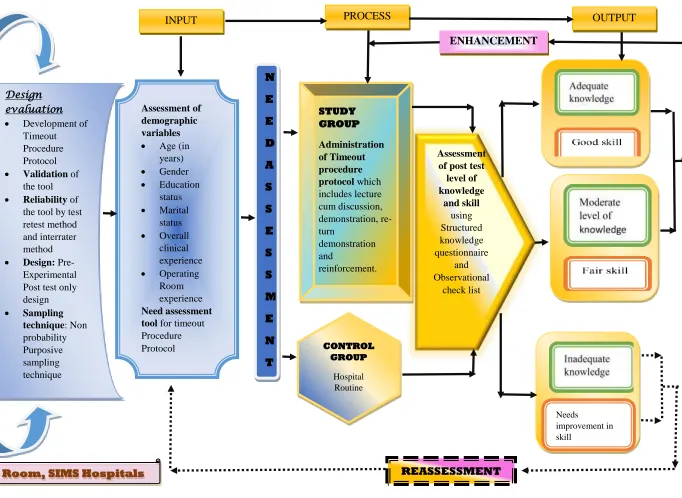
The current research study aimed at developing and evaluating the effectiveness of the Timeout procedure protocol on knowledge and skill among operating room nurses working in selected settings. The research investigator had adopted conceptual framework by integrating the concepts of Stuffle beam Model and Von Berttalannfy’s General System Model. It provides a comprehensive, systematic and continuous ongoing framework for programme evaluation. This system model focuses on the organizing, interacting and interaction of parts and subparts and the interdependence of the parts on each other.
CONTEXT EVALUATION
DESIGN EVALUATION
In this study input refers to the
Development of Timeout procedure protocol.
Development of tool: Structured knowledge questionnaire and observational checklist.
Validation of the tool and preparation of teaching module.
Establishment of Reliability of tool by test retest method and interrater method.
Framing research design- Pre-Experimental post test only design.
Selection of samples- Non-Probability purposive sampling technique. Input
It refers to an open system that exchange energy with environment and continually attempts to adapt holistically.
In the present study it refers to the assessment of demographic variables and OR nurses screened for their need for participating in the study using a need assessment tool based on the scores (≥ 3/6) in need assessment samples were selected for the study.
Process
It refers to the different operational procedure of the programme.
It denotes the administration of Timeout procedure protocol for 4 – 5 OR nurses in group, thereby improving knowledge and skill regarding patient safety in operating room. Here the investigator executed the Timeout procedure protocol through lecture cum discussion on Timeout procedure, demonstration on performing Timeout procedure using surgical safety checklist by the investigator through role play and return demonstration by the OR nurses.
Output
After processing the input, the system returns output to the environment in the form of practicing the intervention in their daily lives.
adequate and moderately adequate knowledge, good and fair skill, this will help the operating room nurses in adjusting well to practice timeout procedure as their daily routine and knowledge and skill can be enhanced, with a view to reinforce a booklet and poster was issued regarding Timeout procedure protocol and daily reminders were sent through WhatsApp technology. whereas inadequate knowledge and those who needed improvement in skill may perform ineffective operating room safety practices, for whom reassessment was done.
Feedback
The feedback is the process by which the output of the system is redirected as a part of the input of the same system. Inadequate knowledge and needs improvement in skill can be rectified by reassessment, which serves as an input. Hence this is a cyclic process.
Assessment of post test
level of knowledge and skill using Structured knowledge questionnaire and Observational check list NU RSE IN V E ST IGA T O R CONTEXT EVALUATION
Nurses in study and control group may have some knowledge and skill on Timeout Procedure protocol on patient safety Investigator assumption is based on Clinical experience
Review of literature
Expert’s opinion
Design evaluation Development of
Timeout Procedure Protocol Validation of
the tool Reliability of
the tool by test retest method and interrater method Design:
Pre-Experimental Post test only design Sampling
technique: Non probability Purposive sampling technique Assessment of demographic variables
Age (in years) Gender Education status Marital status Overall clinical experience Operating Room experience Need assessment tool for timeout Procedure Protocol INPUT STUDY GROUP Administration of Timeout procedure protocol which includes lecture cum discussion, demonstration, re-turn demonstration and reinforcement.
[image:43.842.149.831.46.544.2]PROCESS OUTPUT
Figure 1.8.1 INTEGRATED CONCEPTUAL FRAMEWORK BASED ON STUFFLE BEAM’S MODEL AND VON BERTALANFFY’S GENERAL SYSTEM THEORY
ENHANCEMENT REASSESSMENT N E E D A S S E S S M E N T
Context – Operating Room, SIMS Hospitals
1.9 OUTLINE OF THE REPORT
Chapter 1: Deals with the Introduction, background of the study, significance and need for the study, objectives, operational definitions, assumptions, null hypotheses, delimitation and conceptual framework.
Chapter 2: Contains the scientific critical reviews related to the present study.
Chapter 3: Presents the methodology of the study and plan for data analysis.
Chapter 4: Focuses on data analysis and interpretation.
Chapter 5: Enumerates the discussions and findings of the study.
Chapter 6: Gives the summary, conclusion, implication, and limitation of the study.
CHAPTER – 2
REVIEW OF LITERATURE
A literature review in a research study is a written summary of evidence on a research problem. It is defined as a broad, comprehensive, in depth systematic and critical review of scholarly publication, unpublished scholarly print materials, audio visual materials, and personal communications. This process is termed as critical review. 26
A critical review is the summarization and evaluation of the ideas and information in an article. It expresses the researcher’s point of view. Reviewing critically means the investigator considers both the strength and weakness in the material under review. 26
The researcher critically reviewed numerous articles related to the research problem from books, published articles in print and electronic sources such as PubMed, Medline, Google Scholar and other popular scientific websites to obtain in-depth understanding insight into research problem.
SOURCES OF REVIEW OF LITERATURE
The literature review was collected from various sources such as primary: from research reports, conference manual and theses, secondary: reviews from internet, national and international journal of articles and the tertiary sources: Peri-operating nursing books.
This review of literature was done using key words such as surgical error, Operating Room error, patient safety in operating room, timeout procedure in OR, surgical safety checklist. These data was searched on the standard data base such as COCHRANE library, Cumulative index to Nursing and Allied Health literature (CINAHL), Google Scholar, Medical literature Analysis and Retrieval system Online (MEDLINE), Public/ Publisher Medline (PUBMED), and other unpublished studies from dissertations. Collectively 94 studies were searched out of which 78 relevant and updated studies were utilized to support current research topics in which 4 national and 74 international studies.
ORGANISATION OF REVIEW OF LITERATURE
SECTION 2.1 Critical reviews related to patient safety
2.1.1 Importance of patient safety
2.1.3 Tools used in OR for patient safety
a) Communication tool
b) Safety culture assessment tool
c) Surgical safety checklist as a tool to improve patient safety in operating room
2.1.4 Effect of SSC in improving patient safety
2.1.5 Organizational safety culture
SECTION 2.2 Critical reviews related to Burden of Surgical error
2.2.1 Global burden of surgical error
a) Surgical safety checklist to reduce mortality and morbidity in global population
2.2.2 Burden of surgical error in India
SECTION 2.3 Critical reviews related to Surgical safety checklist
2.3.1 WHO’s SSC
2.3.2 Implementation of surgical safety checklist
2.3.3 Role of SSC in reducing post operative complication
2.3.4 SSC in reducing surgical error
2.3.5 Barriers and facilitators towards implementation of SSC
SECTION 2.4 Critical reviews related to Communication Failure in OR
2.4.1 Communication failure a ‘bane’ in OR
a) Types of communication failure in OR b) Causes of communication failure in OR c) Training to improve communication
2.1.1 Importance of patient safety:
Hippocratic oath drafted first “do no harm” for the patient. Patient safety is a discipline that emphasize safe culture in health care through various aspects of prevention, reduction, reporting and analyzing medical error. 1,2
Patient safety is a fundamental principle of health care delivery system. 3 “world patient safety day” is celebrated annually on 17th of September.5 This impact of health care errors is 1 in every 10-patient safety as an endemic concern.6
2.1.2 Importance of patient safety in operating room:
An abstract proposed by Fernando J K, Rodrigo e.tal 27 states that, more than 200 million surgeries are performed worldwide each year and recent reports revealed that adverse events rates for surgical condition remain unacceptably high, despite of multiple patient safety initiatives.
Operating room is a complex environment where the team work and communication are essential ingredient and patient safety in an operating room is the worldwide concern. Surgical error is an alarming health care concern.28
A Harvard based group called safe surgery, led by Gawande28 aims to have all operating rooms in the world using health organization’s surgical safety checklist program.
Alfreds dottir H e.tal 29 conducted a longitudinal study found that operating room nurses should have a core concept, which is to ensure patient safety during operations securing patient safety and preventing mistakes were the key element in operating room. Nurses should recognize their crucial role in enhancing safety in operating room.
Samir S Awad e.tal 30 carried out a prospective minute to minute observations of 10 complex general case surgery a qualitative analysis identified that problems in communication and information flow and work load and competing tasks were found to have measurable negative impact on surgical team performance and adverse events which pose the greatest threat to patient safety in operating room.
that in the operating room (OR) poor communication among surgeons, anaesthesiologists, and nurses may lead to adverse events which can undermine patient safety.
2.1.3 Tools used in OR for patient safety:
a) Communication tool
Columbas A B32 pointed out communication error is one of the major cause for adverse events31 and revealed that intraoperative communication tool that increases team communication and focuses mainly on a newer trend of shared awareness among intraoperative personnel, which further suggested that communication skill training is a need among surgical team.
b) Safety culture assessment tool
A legion of researchers conducted a longitudinal study which assessed the existing safety practices among health care team and found that some measurement tool focuses only on management aspect of patient care in their organization like safety checklist usage, feedback forms which did not assess the safety culture in an organization from patient’s point of view. In addition to that, the leaders in health care organizations should take a step to generate awareness about patient safety practices and motivate the organization to take action on areas which needs improvement. 33
c) Surgical safety checklist as a tool to improve patient safety in operating room
An assemblage of researchers34 stated in a prospective study, that approximately 2700 patients were harmed by wrong site surgery every year. The world health organization created surgical safety checklist to reduce the incidence of wrong site surgery. A project team conducted a narrative review of literature to determine the effectiveness of surgical safety checklist in correcting and preventing errors in OR.
Team members used “swiss cheese model of error by reason” to analyses the findings indicated the effectiveness as well as suggested successful implementation requires perioperative stakeholders to understand the nature of errors and encourages a shared vision of patient safety. 34
such protocols has improved patient safety. The joint commission made the universal protocol mandatory for all institution.35
Some studies gave insight into the effect of the checklist on preventing wrong site surgery.34 Panesar et. al,36 showed that the proper use of a surgical safety checklist could have prevented 28 of 133 wrong site surgeries, although this finding supported the use of checklist.
A recent protocol required surgical instruments to be kept back of the OR, away from patient, until the completion of time- out. This practice helps to ensure that team members were not distracted or preoccupied during time out, as described by Vats et. al,.37
2.1.4 Effect of SCC in improving patient safety
A Meta-analysis 38 study summarized that the use of the WHO surgical safety checklist improves patient safety in operating rooms by decreasing postoperative complications and surgical mortality.
The use of checklist has also been shown to improve processes such as timely use of prophylactic antibiotics. 37,39 Perhaps one of the way that WHOs SSC improves patient safety through their effect on team communication.38 Surgical team communication is pivotal in OR environment because most of the clinical error and adverse instances of wrong site surgery result due to lack of communication among team members. 36,40 The literature is consistent in reporting that, surgical safety checklist helped in improving team communication and decreased communication failures. 41-44
2.1.5 Organizational safety culture
Team of researchers45 generated the data from systemic analysis which revealed that safety culture in an organization is increasingly recognized as an important strategy and perhaps a mandatory precursor which improves the shortfalls in patient safety and error management. Many organizations have embarked on efforts to measure safety culture, although these efforts are laudable, the budding nature of culture assessment tool in health care lack consensus and clarity.
the multitrait analysis. The principle findings showed that it is possible to measure salient features of hospital’s safety climate. 46
Multiple researchers47,48 conducted a survey which was identified through a systemic review that yielded 13 instruments, covering a total of 23 individual dimensions of the patient safety grouped into broad categories like
- Supervision/ management - Risk
- Work pressure - Competence - Rules
- Miscellaneous
The desire to address safety culture in the hope of improving patient safety will continuously motivate the researchers and organizational policy makers to make use of safety culture surveys as a choice of instruments. 48
SECTION 2.2 CRITICAL REVIEWS RELATED TO BURDEN OF SURGICAL ERROR
2.2.1 Global burden of surgical error
“Of all the forms of inequality, injustice in health care is the most shocking and in humane”-Dr.Martin Luther King.Jr.
A cohort study 49 identified provision of high quality surgical care is essential for health care delivery system worldwide. Even though, globally developing countries carry the cross of surgical error, and accessing high quality surgical care issues like lack of staffing, lack of funding, infrastructure and lack of resources to implement international validated programs and health care guidelines to ensure safe surgical care. The degree and magnitude of unsafe surgical care in developing countries is not well known, since it is an ice berg phenomenon, and non-translucent in reporting the errors and unsound measuring tools of patient outcomes.
hospitalizations in the world annually, in which 42.7 million adverse events took place, out of which 23 million DALYs lost per year, and also showed that these evidence represents a major source of morbidity and mortality globally and these data should alarm the global health policy makers to make patient safety as an international priority.
An interdisciplinary study51 estimated incidence of adverse events, in which adverse events occurred in 3.7% of the hospitalizations and 27.6% of were due to negligence. Although 70.5% of the adverse events gave rise to disability lasting less than six month, 2.6% caused permanent disabling injuries and 13.6% led to death.
a) Surgical safety checklist to reduce mortality and morbidity in global population:
Few researchers52 conducted a prospective study which unveiled that surgery has become an integral part of global health care which estimated 234 million operations performed yearly. which showed the rate of death was 1.5% before checklist was introduced and declined to 0.8% after introduction of checklist.
Worldwide volume of surgery is large. In view of the high death and complication rates of major surgical procedures, surgical safety should now be a substantial global health concern.53
2.2.2 Burden of surgical error in India
A prospective study was conducted by team of researchers, Sunil Kumar and Sujata Chaudhary54 for patients with trauma, presenting to surgery at university college of hospital, Delhi, revealed the consequences following the surgery were disability 157 (185%), increased hospital stay or increased visit 28(15.3%), death 62 (40%), temporary disability 90 (58%), permanent disability 90 (58%) and in addition to it, all adverse events were preventable and error of omission accounted for 122 (65.9 %) which was the commonest among all adverse events, this study proves that medical error and adverse events are serious life threatening problems in India.
2.3.1 WHO’s SSC
A longitudinal and prospective study55 was conducted among patients who underwent any form of surgical intervention, which inferred that a statistical significant reduction of mortality in major surgeries by 47%, from 56 in 3733 cases (1.5%) to 32 in 3955 cases (0.8%) and a statistical significant reduction in major morbidity by 36 % from 411 in 3733 cases (11%) to 288 in 3955 cases after exposure to SSC, therefore world health organization strongly recommends to use surgical safety checklist for any surgical interventions or invasive procedures.
A series of systemic reviews analyzed using current evidence with regards to effectiveness of SSC in reducing post-operative complication, was based on their main outcomes (any complications, mortality and SSI) This highly recommends WHO ‘s SCC as there was an marked reduction in post operative complication mortality and improvement in post operative outcomes were associated with improved perception of team work.56
Thus, a positive safety attitude among surgical team members directly proportional to perioperative patient care outcomes.57
2.3.2 Implementation of surgical safety checklist
Dante M C e.tal,58,59 performed observational studies which showed that implementation of the checklist helped in reducing surgical complications and it is also feasible in urgent operation and suggested that safety checklist can reduce surgical mortality and other post-operative complication.
Few researchers conducted retrospective cohort studies60, 61 which included 25,513 patients undergoing surgery data generated from electronic patient records revealed after implementation of checklist, the crude mortality rate decreased from 3.13% to 2.85% a significant reduction was observed. Use of this comprehensive surgical safety checklist is feasible and it generated a measurable development in perioperative patient care outcomes.
and teamwork. communication error and poor team work attributes to the major errors in safety culture.
2.3.3 Role of SSC in reducing post operative complication
A prospective observational studies64-66 was conducted on successful completion of SSC findings showed, that compliance with SSC domains (sign in, time out, sign out) were poorly adhered, there should be a proper training to OR team members for proper completion of the safety checklist. Metanalysis of observational studies67,68 have shown significant improvement in postoperative patient outcomes after implementation of SSC. even though only few randomized control trails have studied the effectiveness of SSC69-71. Even, further studies have shown, that implementation and outcomes of the SSC needed a stepped – wedge cluster design, as it would be no lo