Beverley Irene Heron
RN, RM, BA
Submitted in fulfilment of the requirements for the
Master of Nursing
University of Tasmania
November 1996 ,
Contents
Acknowledgements iv
Statement
Permission to copy vi
Abstract vii
Chapter 1 Introduction 1
1.1 Overview 1
1.2 Context 2
1.3 The research problem 3
1.4 Limitations of this study 5
1.5 Examination of key terms 6
1.6 The experience of burnout 7
1.7 Thesis outline 9
1.8 References 11
Chapter 2 Burnout and nursing environments:
A review of the literature 12
2.1 Overview 12
2.2 Stress and burnout 14
2.3 The economic context 18
2.4 Nursing environments and the relationship to
burnout 20
2.5 Medical dominance and nurse compliance 22
2.6 The 'vocabulary of complaint' 27
2.7 Perceived alternatives to the medical model of
dealing with burnout 29
2.8 Nursing strategies for dealing with burnout 33
2.9 Summary 35
2.10 References 37
Chapter 3 Discourse analysis 42
3.1 Overview 42
3.2 Discourse analysis 43
3.3 Process 45
3.4 Justification 47
3.5 Summary 48
4.2 Self-help genre
52
4.3 The construction of the book
53
4.4 Preferred meanings
55
4.4.1 The nature of burnout
59
4.4.2 Stress and burnout
61
4.4.3 The nature of organisations
63
4.4.4 The concept of nursing
65
4.4.5 People with burnout
65
4.5 Interventions
66
4.6 Summary
69
4.7 References
71
Chapter 5 Interpretation 72
5.1 Overview
72
5.2 Powell's position
73
5.3 The nurse client position
74
5.4 Major themes
75
5.5 Health care organisations as industries
77
5.6 Powell's solution to the problem of not coping
77
5.7 The ideology of planning, changing and controlling
79
5.8 Managerial discourse
80
5.9 The issue of responsibility
83
5.10 Conflicting discourses
84
5.11 Victim ideology
86
5.12 Medical-psychological discourse
87
5.13 Powell avoids addressing differences
91
5.14 Powell's limits
92
5.15 Summary
94
5.16 References
97
Chapter 6 Beyond burnout 98
6.1 Overview
98
6.2 Past strategies
100
6.3 Political factors
103
6.4 Empowerment strategies
106
6.5 Conclusion
110
6.6 References
113
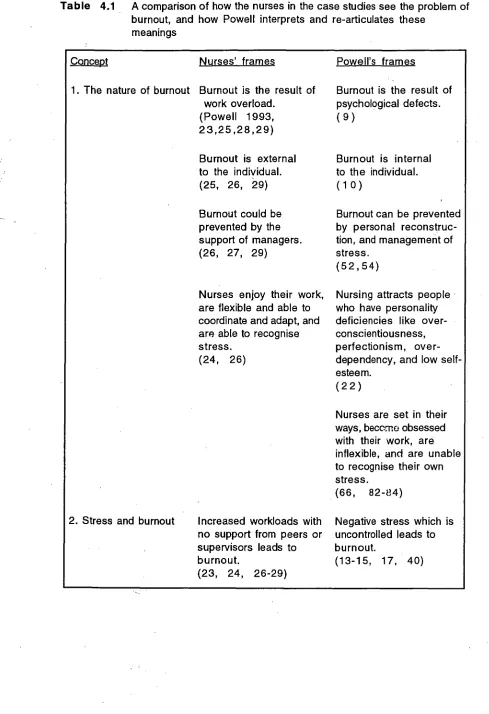
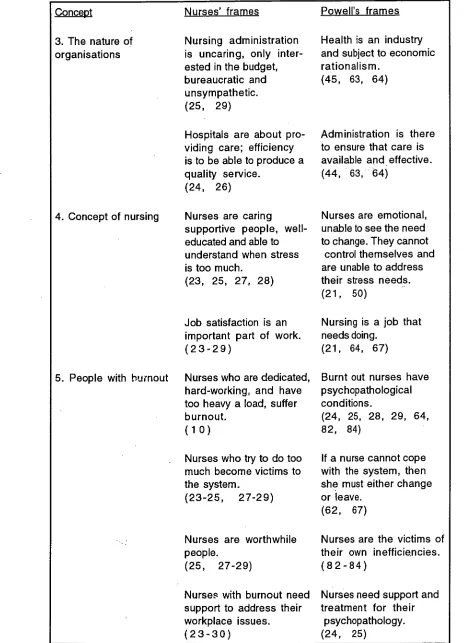
Table 4.1 A comparison of how the nurses in the case studies see 57 the problem of burnout, and how Powell interprets and
re-articulates these meanings
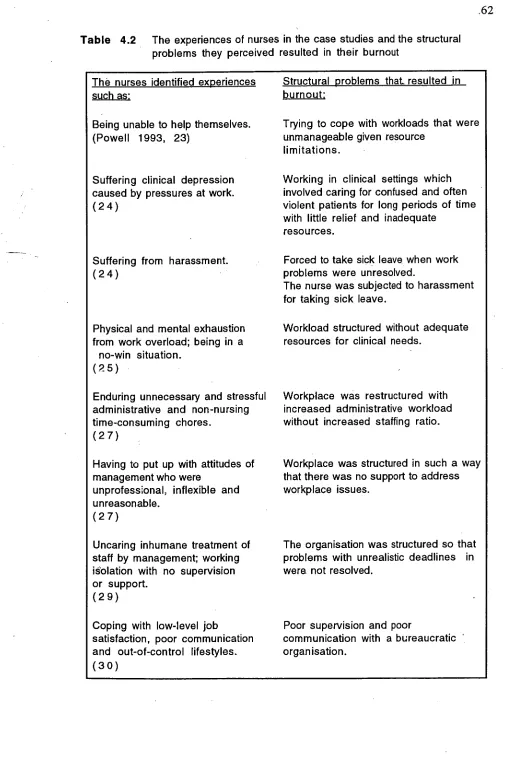
Table 4.2 The experiences of nurses in the case studies and the structural 62 problems they perceived resulted in their burnout
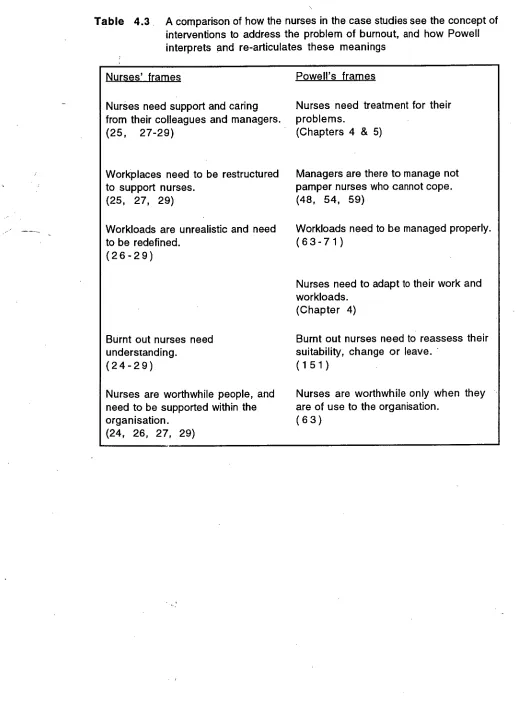
Table 4.3 A comparison of how the nurses in the case studies see the 68 concept of interventions to address the problem of burnout,
Acknowledgements
I wish to acknowledge the help given to me to complete this thesis from
Michael Hazelton, Judi Walker
and my family
Statement
, This thesis contains no material which has been accepted for a degree or diploma by the University, or any other institution, except by way of background information and duly acknowledged in the thesis, and to the best of the candidate's knowledge and belief no material previously published or written by another person except where due acknowledgement is made in the text of the thesis.
Permission to copy
This thesis may be made available for loan and limited copying in accordance with the Copyright Act 1968.
Abstract
This thesis explores the socio-cultural and political construction of the concept of burnout and the effects of this on nurses. The way burnout is conceptualised affects how it is dealt with, and how those suffering burnout are treated.
In spite of identifying a number of work related stressors nurses have not been able to address the work related issues that cause burnout. This is related to the nature of nursing. Nursing is an oral culture and involves body care and is seen as women's work and dirty work. This socio-cultural aspect of nursing serves to subordinate nursing to medicine in the occupational division of labour, and in the treatment of burnout.
Economic conditions in the workplace are such that workers are expected to do more with fewer resources. This has impacted on nurses' well-being. Nurses suffering from the effects of prolonged workplace stresses as a result of economic rationalist management are subjected to medical dominance when seeking to address their symptoms. Nursing subordination is on the level of knowledge, gender and power. In the role of client the symptoms of work related stress are re-articulated as personal problems requiting a medical solution.
In this study, discourse analysis of a text on burnout is used to illustrate the underlying structure, prooess and powerful interest groups involved in the treatment of burnout. Through discourse analysis and critique, how burnout is constructed, managed and treated, and how this process serves to dis-empower nurses, is exposed.
Introduction
1.1 Overview
This thesis explores the socio-cultural and political construction of the concept of burnout and the effect of this on nurses. The way burnout is conceptualised in society affects how it is dealt with, and how those suffering from burnout are treated. The primary concerns are:
• how the problem of burnout is constructed, and
• how this construction is addressed from the socio-cultural and political aspects in the work environment, and
• how this impacts on nurses, that is the nurses suffering burnout and other nurses not suffering burnout.
An understanding of this conceptualisation and the underpinning power structures will enable nurses to move beyond the present situation where nurses become 'burnt out' as a result of workplace issues impacting on their wellbeing. In the past nurses have relied on other professionals to address the problem of burnout and this has resulted in the solution reflecting the needs of the profession that is addressing the problem. This has not necessarily provided a solution that has addressed the problem of burnout for nurses. By exposing how burnout is constructed and the effects of this on nurses other solutions to the problem Of burnout can be proposed that are
In this chapter the problem of burnout is introduced and explored in terms of how it is defined and treated within society. The research problem is identified in the context of research and data on burnout in nursing, and the limitations of the study are identified. Key terms relating to burnout are examined, and a case study is used to illustrate the problem of burnout for nurses. The experience of burnout illustrates the impact of workplace stress on the individual nurse, his/ her career and the
community.
To conclude, an outline of this thesis is presented which provides a description of the contents of each chapter.
1.2 Context
In spite of nurses identifying the work related problems that have a negative impact on their well-being, burnout continues to be a problem. Nursing management
strategies have identified the changes that need to occur in the workplace, but nurses have been unable to move beyond this identification to addressing the problems that impact on their health (Lewis & McLin 1991; Robinson, et al. 1991). This is due to the lack of power that nurses have in the workplace, which is related to the work that they do and to the social, cultural and political role that nurses have in society.
environment can result in 'burnout'. Burnout has been defined as a process in which the professional's attitude and behaviour changes in negative ways in response to job strain (Cherniss 1980).
1.3 The research problem
Researchers have identified work environments that nurses find stressful, specific work situations that nurses find stressful, and management strategies that are helpful in reducing nurses' stress in the workplace (Robinson, et al. 1991). There has also been discussion on the official strategies of dealing with a nurse who is 'burnt out', and these have led to discussion on the social, cultural and political implications of the sickness role.
Much has been written about burnout in nursing and how to manage it, most of the treatment has centred on the medical model and has been dominated by medical ideology. This has impacted on how burnout has been conceptualised and managed.
According to Kress (1995) linguistic and social processes are totally connected; the individual being a social agent located in a network of social relations. Texts are the individual writer's attempt to be a social agent and are instrumentally and causally involved in the process of language construction and change. Each text can therefore be seen as the individual writer's attempt to resolve differences.
time. Thus a text provides an example of both a discourse and genre. The discourse carries meanings about the nature of the social context from which the text is derived and the genre carries meanings about the conventional social occasion from which the text arises.
A text on burnout will therefore provide an example of how burnout is constructed within society, the specific purpose of this construction, and how possible
differences are dealt with. To explore the social construction, a discourse analysis of a contemporary text on burnout will be undertaken. The text selected is Burnout by Ken Powell (1993).
No text is the text of a single writer as 'all texts show traces of differing discourses, contending and struggling for dominance' (Kress 1985). Texts are therefore the sites of struggle and the sites of linguistic and cultural change. Through discourse analysis it is possible to expose the relationship between language and ideology at a contextual and textual level and provides a way of exploring the relationships of power that are encoded within the text. As a methodology, discourse analysis is pertinent as it exposes the ideological dimensions of the care provider and the client relationship and how burnout ;s constructed within its socio-cultural and political context.
A critique of this construction of burnout offers nurses a way of addressing burnout by:
• assisting in the treatment of nurses suffering burnout by addressing issues that are important to them;
• inducing change in work practises, and in the organisation of the work environment.
A critique of how burnout is conceptualised and treated in society exposes the powerful groups in society and how they construct problems to support their own interests. A critique of a text on burnout will thus offer nurses a way of moving beyond the present situation to address the politics in the workplace that affect how nurses are treated.
1.4 Limitations of this study
A major limitation of this study is that the outcomes are not definitive. The discourse analysis may be subject to further analysis and critique. The process of critique enables discussion and enlightenment which is the dynamic essence of the socio-political perspective.
This study is limited in that it is being carried out in isolation, that is specific to one book. The results are therefore limited to this study and cannot be generally applied. However the same methodology of discourse analysis can be applied to other
material for a wider application.
Medical dominance is not the only method of dealing with burnout. The dominance of medicine is subject to being contested and usurped at any time and by a number of other professionals and professional groups and particular individuals do not
1.5 Examination of key terms
Burnout is defined as a syndrome of emotional exhaustion, depersonalisation and reduced personal accomplishment. Emotional exhaustion is a state in which the person feels emotionally overextended and drained. Depersonalisation is where the person feels negative in attitude, this often presents as the person being insensitive towards others. Reduced personal accomplishment manifests as a person having a decline in his/her sense of competence with feelings of inadequacy, failure, loss of self-esteem and depression (Maslach & Jackson 1981; Maslach 1982).
A number of themes emerged from the literature on burnout. Firstly, there is no clear agreement on what the cause of burnout is, but there are a number of identified work situations that contribute to the problem. Secondly, most of the literature on the treatment of burnout focuses on the individual's response to stress and adjusting the individual's responses to the stressors. Thirdly, as there are no standardised
treatments for burnout, there are no standardised evaluations of interventions. This seemingly ad-hoc approach and focus on individual treatment and individual studies of environments prevents a uniform approach. There is no way of knowing in what social conditions burnout is always likely to occur, how often it will occur, and to whom it is most likely to occur.
1.6 The experience of burnout
To illustrate the experience of burnout, an article written by Julia Cornwall (1991) is used. This article is titled 'Opting out of burn-out' and appeared in the Nursing Times, May 1991. Julia Cornwall is one of the nurses that Powell (1993) has
included as a case study in his book, Burnout.
In this article Cornwall described her personal experience of burnout and the impact it had on her life and career. Burnout is conceived in four stages:
1 Beginning with the individual's enthusiasm and motivation becoming dulled, stagnation sets in.
2. The person gradually becomes cynical and frustrated.
3. Withdrawal from the workplace takes place.
4. The victim feels totally unable to work.
Julia Cornwall is a nurse with over 20 years experience in the British National Health Service. She spent eight years as a leg ulcer specialist and research nurse. In this
`Th
position, she worked in collaboration with the consultant vascular surgeon providing
• nursing care to patients suffering from leg ulcers. Her work is recognised both in
England and Abroad, and she has been awarded the Florence Nightingale award.
Disillusionment occurred in the sixth year as an Ulcer Specialist when she wanted to set up a training course on ulcerative limbs for nurses within the hospital. This course would have brought in some much needed money for the vascular unit for equipment or more nursing help. She approached the school of nursing and was told that she would have to gain passes in three more pre-tertiary subjects before being considered for the necessary teacher training. She felt that this was a personal attack, considering her expertise in the field and the clinical teaching role of her position.
Over time the economic conditions in the workplace changed. Nursing care treatment and non-prescription items became difficult to obtain, and this impacted on the care of people with leg ulcers. Economic conditions in the workplace were such that they impacted on her nursing care in such a way that Cornwall was unable to provide the level of care she saw as essential to her clients. Furthermore nursing administration added to the stress by increasing her workload by requiring her to document all her client data on a computer database. Cornwall foresaw that this information would result in further cutbacks in patient services as economic rationalisation of services occurred. Increased scrutiny on budgets increased the nurse's stress, and impacted on her performance.
Nursing management did offer emotional support, but it was too late. In spite of the nurse working harder, and for extra hours, the workload was too much and the nurse had already used up all her personal resources to cope with the workplace situation. 'I was already working well over my 371/2 hours - a normal occurrence for most
From a nursing perspective, the workplace lost a highly skilled and hard working nurse. The community also lost in that when she had the necessary nursing supplies to do her work, the nurse was able to save the community money by reducing acute admissions to the hospital. The patients supported through this nursing practice, would have had appropriate care that was relatively cheap, and this would save the hospital acute care beds in the long term.
Cornwall's position, as an ulcer specialist nurse became subservient to that of the administration of casemix, in that nursing management, although sympathetic, was not powerful enough to address the workplace problems that affected both
Cornwall's well-being and patient care. The problems of a lack of nursing resources were justified through managerial discourse and economic rationalism. Within the workplace areas of possible conflict related to the unequal distribution of resources were discursively re-articulated as personal problems of the victim of burnout, and the social conditions that caused the problem were not addressed.
1.7 Thesis outline
This thesis is divided into six chapters.
Chapter 2, Burnout and nursing environments, includes a review of the literature on burnout in which a number of recurrent themes are identified. These themes describe links between stress and burnout, the concept and symptoms of burnout, strategies to manage stressful situations which are likely to cause burnout, and the
treatment.
Chapter 3, Discourse analysis, describes and justifies the process used in the critique of a text on burnout. The text that is critiqued, is Burnout written by Ken Powell (1993).
Chapter 4, The construction of burnout, addresses the conceptualisations of burnout within the text. These conceptualisations are from the perspectives of: the clinical psychologist, the nurses being treated by the clinical psychologist, and the reader of the text. This chapter focuses on the purpose of self-help genre, the construction of the book, preferred meanings, the nature of burnout, stress and burnout, the nature of organisations, the concept of nursing and interventions.
Chapter 5, Interpretations, focuses on the interpretation of burnout in Powell's text from the social, political and cultural perspectives and the effect of this on the nurses suffering burnout.
1.8 References
Chemiss,C. 1980, Professional burnout in human service organisations., Praeger, New York.
Cornwall,J. 1991, 'Opting out of burn-out', Nursing Times, 20, 15 May 1991.
Kress,G. 1985, Linguistic Processes in Sociocultural Practice, Deakin University Press, Victoria.
Lewis,D.J. & McLin,P.A. 1991. 'Stress management: A program designed to facilitate coping', Today's OR Nurse, July 1991, 23-26.
Maslach,C. 1982, Burnout:The cost of caring. Englewood Cliffs, NJ:Prentice-Hall.
Maslach,C. & Jackson.S.E. 1981, The Maslach Burnout Inventory, Palo Alto, CA: Consulting Psychologists Press.
Powell,K. 1993, Burnout, Thorsons, London.
Chapter 2
Burnout and nursing environments:
A review of the literature
2.1 Overview
The literature reviewed identified a number of recurrent themes including:
• description of the symptoms of burnout from a treatment perspective, and the identification of strategies to overcome contributing stressors;
• identification of strategies to manage stressful situations; and
• assessment and identification of different environments in which burnout is likely to occur.
Within these themes two sub-themes emerged:
• the 'vocabulary of complaint' (Turner, 1987) which was focussed upon as the primary method of coping with stressors; and
• alternatives to the medical model of treatment were identified.
Most of the literature reviewed came from North American and British health journals, and focused on the treatment perspective of burnout. The Australian
and the 1990s on alternatives methods of managing burnout (other than the medical model).
In this chapter the literature reviewed demonstrates the conceptualisation of burnout in contemporary society. Nursing occurs within a social structure, and is influenced by economic and cultural conditions within society.
The key issues explored within this chapter are:
• The concept of stress, and the links between stress and burnout.
• Nursing environments and their relationship to burnout, with reference to medical dominance and nursing compliance.
• Strategies employed by nurses to deal with the stress associated with their work, with reference to Turner's (1987) vocabulary of complaint.
• Alternative models of addressing burnout other than the medical model.
A critical analysis of strategies that nurses have employed to address burnout illustrates how these strategies have failed to address the problem of burnout in nursing because they fail to address the workplace issues that cause burnout to occur.
Alternative models to the medical model of treatment have been suggested as ways of addressing the problem of burnout, in most cases these alternatives are extensions of the medical model from a different professional perspective. For example, a
psychological, alternative therapy or self-help perspective.
resources, and the distribution and value of work and workers. Within health, these policies have impacted on the work environment and the content and structure of workloads, which have affected nurses' well-being. Health care services are socially constructed and support a medical dominant model of operation. This dominance is not total but subject to contestation.
The nature of nursing work involves body care and, as such, is not seen as valuable by society. Nursing has been subordinated to medicine on the level of knowledge, gender and the nature of work. Within the workplace nurses have developed alternative ways of dealing with this dominance. The work that nurses do is by nature stressful, and nurses have developed ways of dealing with the stresses they experience. Where negative stresses have impacted on the well-being of nurses and resulted in burnout, nurses have looked at strategies to deal with these. Nursing burnout strategies have focused on the individual, the work environment and management. Although alternative strategies have been proposed and developed on closer inspection they too follow the medical model and fail to address workplace issues.
2.2 Stress and burnout
refer to the body's response to noxious stimuli and the word stress to refer to the noxious stimulus events. As he put it: 'My English was not yet good enough for me to distinguish between the words "stress" and "strain" (Selye 1976, 50).
The term stress has had different emphases according to different theorists. For example, Buss (1966) and Maher (1970) viewed stress as the effect of stressors acting on the individual. Selye (1976) defined stress as a response of physiological arousal brought about by a troublesome event. The transactional model of stress, as advocated by Lazarus and Folkman, viewed stress as neither a stimulus nor a
response, but a stimulus-response transaction in which one feels threatened. They argued against stress as a response of physiological arousal because it is possible to experience arousal in the absence of stress (Lazarus & Folkman 1984).
Antonovsky (1979) viewed stress as evolving from exposure to stressors..He distinguished between stressors and routine stimuli. A routine stimulus is one to which the person responds more or less automatically. This is not to imply that the stimulus is exactly the same as previous stimuli, but rather that one can incorporate a new stimulus into an existing framework. This allows the person to respond in a routine fashion. It presents no problem in adjustment. A stressor is defined as a demand made by the external or internal environment of an organism that upsets its homostasis. Restoration depends on a non-automatic and not readily available energy-expending action (Antonovsky 1979).
person has at that point of time. It is also dependent on the repertoire of coping mechanisms that the individual has available to him or her.
Lazarus and colleagues (1978; 1980) and Lumsden (1981) developed the stress theory to include the physiological, psychological, and behavioural levels of analysis. Lazarus's model of stress is that it is viewed as an on-going process affected by individual personality factors and environmental variables. The individual is viewed as constantly responding to, and interacting with, the environment. Whether the stress is a benefit or a harm to the individual depends greatly on the individual's cognitive appraisal of the stress, and the subsequent coping process. Life is dependent upon an organism maintaining itself at the cellular level in a state of tension with the environment. Stress is not always perceived as negative but it is the negative stress that is damaging (Weiten et al. 1991).
The person-environment fit theory proposes that health strain results where there is a misfit between the individual and the work environment. The concept of fit or compatibility and the environment is used to define job stress and strain. Coping is the individual's activity directed to changing the objective environment or changing the individual to improve the fit. Stress is experienced when the environment either does not provide or threatens not to provide the goals which the individual seeks (Van Harrison 1978). In life, stressors are not limited and do not necessarily come one at a time, more often than not they affect a system already under strain. Burnout can be understood as the result of prolonged work-related negative stress that depletes the individual's resources and ability to cope.
included in the Cumulative Index to Nursing and Allied Literature in 1980
(McConnell 1982). This term was readily accepted by nurses as a way of identifying experiences arising from work-related stress.
The term 'burnout' is not a medical diagnosis. In the medical profession the symptoms of burnout are described in terms of behavioural maladjustment.
Burnout has been researched by behavioural scientists in the areas of nursing and clinical psychology. Pines and colleagues described burnout as a syndrome that involves physical, mental and emotional exhaustion that is attributed to work-related stress (Pines & Aronson 1988; Pines et al. 1981). Many nursing researchers have studied burnout in nurses. These include Branco et al.(1981), McAbee (1991), Chiriboga and Bailey (1986), Constable and Russell (1986), and Robinson et al. (1991).
Weiten et al. (1991, 80) advanced the concept of stress and its relationship to burnout. Burnout involves physical, mental and emotional exhaustion that is attributed to work-related stress. The physical exhaustion includes chronic fatigue, weakness and low energy. The mental exhaustion is manifested in highly negative attitudes towards oneself, one's work and life in general. The emotional exhaustion includes feeling hopeless, helpless and trapped (Weiten et al. 1991, 80).
Burnout is thus conventionally considered to be the result of chronic job-related stress which does not occur as a result of a few traumatic events but is a general erosion of the spirit over time (Pines et al. 1981, 3).
researched by a number of clinical researchers in the areas of behavioural sciences and nursing. These researchers have concluded that some stress is necessary for a person to function, but that excessive negative stress can have adverse physical effects on an individual. Stress is not a problem until it is perceived, by the individual, as being more than they can cope with. Burnout is the result of chronic job-related negative stress.
2.3 The economic context
In recent years health care services have undergone major restructuring. There have been many rapid changes in technology as well as in the administration and clinical structures of service provision. The economic climate is such that workers are now required to do more with fewer resources (Davis 1993). This puts pressure on the nurses and this pressure flows through to the interactive relationship between the individual and workplace needs, wants and services. In many ways, exposure to physical, psychological and social stimuli within the workplace has had a positive effect on nurses, but it can also impact negatively on the individual's well-being, especially over a long period of time. This can result in the physical, mental and emotional resources of the person becoming depleted, and the nurse becomes 'burnt out'. Nursing literature on burnout in the 1980s and 1990s has focused on the management of resources so as to prevent burnout occurring but this has not been successful in preventing burnout in nursing.
more with less is now seen as the main attribute of good public administration in all areas including the provision of health services.
The economic pressures in the workplace have caused tensions to build up within the community, where there are limited resources. As a way of dissipating the possible areas of conflict certain management strategies have been adopted. The tension between the social and administrative reform agendas have been the catalyst that have lead to the adoption of social justice strategies of management. These strategies have increased the emphasis on the rights of the citizen to participate in decisions about them and about how public services are provided. The extent of convergence, divergence, conflict and tension between these different administrative reform
agendas is dependent on the politics of those who are leading and implementing them (Yeatman 1990, 3).
Nursing workplaces are now structured in such a way that worker participation is essential. In order to operate at an efficient level, the organisation requires
participation and involvement of team members with different skills. This is partly because the work needed to provide health care services requires specialisation. This participation makes it essential for workers to be trained to adopt participatory behaviour,and managed in such a way as to facilitate service provision,
health care industry (Street 1992, 27). Therefore, economic rationalist policies have had a considerable impact on the profession of nursing, and nurses who have secure jobs have considered themselves to be in a privileged position.
The present economic situation has meant that nurses have had to manage with increased workloads and fewer resources. Nurses have also picked up additional workloads when other areas have reduced their services as a cost-cutting exercise. This has had a negative impact on nurse well-being (Napthine 1993, 15-16).
2.4 Nursing environments and the relationship to burnout
Nursing work takes place in a wide range of environments, some of which have
working conditions which are more stressful than others. The effect of these different environments on nurses, with regard to burnout, have been studied in detail by
clinical psychologists. Although these scholars have suggested ways of addressing the problem of burnout, they have so far not addressed the workplace issues which cause burnout to occur. This is because the clinical psychologists have focused on the individual nurse adapting to the work environment, whereas individual nurses have identified the workplace as the major cause of burnout, that is external factors for which they have little control.
Cherniss (1995) recognises that nurses are affected by their work environments and by their perceptions of that work environment. The impact of the nurses'
burnout.
Nursing researchers such as Vashon (1987) studied stress related to nurses working in community environments and hospital settings; O'Keefe (1985) studied Intensive Care unit staff; Constable and Russell (1986) looked at hospital settings; Hare et al. (1988) studied staff in nursing homes; Holman (1990) looked at staff in palliative care settings; Astrom et al. (1991) studied nurses in geriatric and psychogeriatric units; Oehler et al. (1991) studied staff in neonatal units; and Willis (1991) studied remote area nurses.
Review of this research on different nursing environments found the main issues contributing to burnout to be:
• Underestimation of workplace stress (O'Keefe 1985).
• Low job enhancement related to work pressure, the work being task oriented, unclear instructions, and, a lack of autonomy, innovation, supervisor support and physical comfort (Constable & Russell 1986).
▪ Low job satisfaction and the emotional climate of the work environment (Humphris & Turner 1989; Hare & Skinner 1990)
▪ Poor interpersonal and physical relationships (Benjamin & Spector 1990).
• Frequent exposure to death, attitudes equating death with professional failure, a lack of professional education, and poor organisational coping strategies among nurses (Holman 1990).
1991).
Isolation, subordination and bureaucratic constraints in remote areas (Willis 1991).
Dealing with an apparently excessive workload (Tyler et al. 1991).
No single cause was identified by any of the researchers, but a number of work issues and personal attributes were seen as influencing the individual's ability to cope in the workplace. These contributing factors related to how staff felt about the work
conditions and the support they received. However, the researchers did not address the workplace issues, such as lack of power and authority to address resource issues, which caused the staff to 'burn out'.
2.5 Medical dominance and nurse compliance
Nurses are socialised into behaving in certain ways, in accordance with
institutionalised norms and needs. According to Lupton, the hierarchical nature of the health care environment has meant that nurses have had the added strain of being lower in the medical hierarchy, compared to doctors. As a result of this, nurses have had to deal with professional conflicts, and contend with power struggles, sexism and paternalism on the part of patients and.doctors and administrators. These inequalities of power are related to gender (doctors have been traditionally male, nurses being traditionally fernal), social class, and also the nature of their work (doctors are concerned with curing, nurses with nurturing and caring) (Lupton 1994, 121).
engagement in written documentation. The value of experience has not been
recognised by society as it does not conform to the dominant scientific ideology. The written code of the academic culture of medicine is seen as superior to the oral culture of nursing, and medicine is seen as-a science (Street 1992, 19). Nurses remain
oppressed by the oral basis of nursing culture because they have so far been hesitant to document their clinical knowledge and practice (Street 1992, 268).
Where nursing knowledge has been documented, it has often merely been an
extension of the medical perspective. Hare, et al. (1988) looked at the prediction of burnout in hospitals and nursing homes and concluded that burnout is both a personal and work problem but did not offer nurses any help in addressing the workplace issues.
Humphris and Turner (1989) studied job satisfaction in a unit for the elderly and severely mentally infirm at a time when the unit was moved to another location. All nurses who found the workplace too stressful left their jobs, so the workplace issues that caused the stress were never addressed.
Hare and Skinner (1990) researched burnout at another nursing home and found that it was important to have an environment that enhances self esteem. Where nurse managers addressed the issues of autonomy, task efficiency, and reduced work pressures this had little effect as the staffing levels were inappropriately low. The nurse managers did not have the power to address the real issues in the workplace related to resources.
broken careers and inadequate career structures, to produce low occupational commitment (Turner 1987, 374-383).
A general perception that is evident in the literature, is that, in the health care industry, nurses are perceived as having limited control over their destiny. Nurses' participation in the health care organisation is limited to the role of service provider, and nurses are seen as having no intrinsic value, outside of the provision of this service. Consequently, when nurses can no longer provide these services, they are seen as having no value and become instead a liability to the organisation.
One of the possible reasons for this, as discussed by Lawler, is the nature of nursing work. Nursing work involves body care and the crises of birth, illness, and death. Body care is concealed and sanitised by nurses because it is seen as dirty work by society. In the process of concealment nurses perpetuate public ignorance, and to some extent become 'victims' of their own work (Lawler 1991, 224). Nurses are thus unable to address the stressful issues related to the nature of their work, publicly,. because the work is seen as dirty, and to talk about this work is socially
unacceptable. In society, those groups that are involved with socially unacceptable work are seen as socially subservient to those groups performing tasks which have greater social acceptance. Thus, this reinforces the subordination of nurses to other health care professionals.
The body care that is associated with nursing's 'dirty work' is also closely associated with the traditional caring roles assigned to women in society. Turner (1987, 148) discussed the link between nursing care and women.
(represented by the medical profession). Exploitation occurs, and is socially justified under the ideologies which assert the naturalness of nursing as a feature of the female personality.
Women are exploited as nurses because they are socialised into a doctrine which equates nursing with mothering and sees the hospital ward as merely an extension of the domestic sphere of labour (Turner 1987, 149).
In addition to this, Oakley suggested that nursing has four characteristic features of the traditional role of the housewife. These are that nursing work:
is almost exclusively allocated to women, rather than both sexes;
is associated with economic dependence;
has the status of non-work, because it is associated with caring, which is not seen as being real work, or economically productive work; and
is seen as primarily women's work (Oaldey 1982, 1).
Thus, nursing work is seen as an extension of the traditional female role. This is
According to Cox (1996), male nurses are highly conscious of their masculinity, their physical ability is valued, and they have to be more virile than other males to avoid losing their gender power roles. This helps their working relationship with senior male medical practitioners and they are more likely to be seen as suitable_for managerial positions; this is probably because hospital management is primarily male. Therefore, when a male nurse suffers burnout, he has failed not only in adapting to the workplace role, but also in his masculinity.
Male nurses have adapted to a caring role traditionally reserved for women, and when they fail at this, it is seen as a personal failure to care. Society also takes an extreme view towards male nurses who have failed at their job. This is as a consequence of nursing being seen as women's work, and thus regarded as being easy work.
O'Hara (1989) discussed the role of the male nurse in the workplace, which is typically female. Male surgeons cope with their power over male nurses by
designating the male nurse to the role of homosexual. The male nurse is reduced to the role of honorary woman by the fallacious equation of male nurse = gay = effeminate = woman (O'Hara 1989, 93). Thus a male nurse suffering burnout has 'failed' in his work and has become an emotional misfit who is shunned by his female colleagues.
2.6 The 'vocabulary of complaint'
Turner (1987, 152) suggested that while there is an ideology of compliance and discipline within the nursing profession, there is also resistance and opposition from nurses to traditional working conditions, bureaucratic regulations, and the notion that nurses are compliant totally with doctors' instructions. There is a split in the
occupational culture of nursing into a discourse of compliance and complaint. While the nurse acquires a formal occupational culture as part of her/his training, there is also a socialisation into a sub-cultural occupational ideology. Turner called this alternative occupational ideology the 'vocabulary of complaint'. The official
occupational ideology specifies how the principle tasks are to be accomplished, while the vocabulary of complaint outlines methods of survival on the job which have the consequence of de-legitimising the authority of the formal structure of the
bureaucracy (Turner 1987).
The 'vocabulary of complaint' serves an important function. The crucial complaint is focused on the experience of lack of autonomy within bureaucratic settings in relation to the patient and health care. Nurses complain about the absence of control over their situation, and sharing these complaints with each other is an important aspect of the informal organisation of nursing as an occupation. Complaints articulate the differences between nursing skills and medical skills, and also highlight the ,nurse's lack of autonomy within the medical bureaucracies of health. Turner (1987, 377-382) identified five main components that function to express the value and differences of nurses compared to medical practitioners. These are:
of the doctor in the therapeutic process, providing a negative view of the doctor's role. Patients are seen as in need of protection from male medical intervention, which represents a threat to their health.
2. The vocabulary serves to de-legitimise the system of authority and hierarchy at the place of work.
3. The complaint system deflates the unwarranted idealism of young nurses and seeks to describe the real nature of nursing as a laborious, tiring, and
unrewarding set of activities, which is a realistic view of the social role of ward nurses. These complaints see much of the activity on the ward as irrelevant and useless, and merely to support the bureaucratic function of hospitals, rather than to care for the patient.
4. The vocabulary creates a sense of solidarity of the work force against the intrusion and dominance of the bureaucracy and the medical profession. Since the majority of nurses are female, the complaint system operates to unite female nurses against their male superiors. Complaining is therefore a crucial feature of occupational sub-cultures where solidarity becomes an important aspect of resistance.
-
The complaints have the function of uniting nurses as an occupational group sharing a common experience and language. Although the complaints verbally de-legitimise the authority structure with respect to the nurse-doctor relationship, the outcome is conservative.
Much of the research on burnout in nursing, such as that by Donovan (1990), Oehler et al. (1991), and Willis (1991), can be seen in the light of this vocabulary of
complaint by underlining the independent contribution and important function of nursing in the therapeutic process, de-legitimising the authority of medicine by creating a sense of solidarity and acting as a safety valve to release emotional frustration. These researchers unite nurses in their suffering, but do not present nurses as a political force who are able to address the issues which affect themselves in the workplace.
2.7 Perceived alternatives to the medical model of dealing with burnout
image of bio-medicine, have conceptualised health in a holistic manner emphasising the perception of health as a value in itself, and the individual actively participating in the on-going maintenance of good health (Berliner & Salmon 1980, 143).
The rapid growth of the alternative health industry supports the view that many people have been attracted to new alternative therapies as a way of addressing their health needs. The alternative health industry is strongly associated with the ideology of nature and health. In Coward's (1989) book The Whole Truth: The myth of
alternative health, 'nature' is described as having a powerful symbolic meaning in late
capitalist society, related to virtue, morality, cleanliness, purity, renewal, vigour and goodness. By implication, therefore, the alternative therapies support the ideology of nature as being safe and gentle, and therefore appear to have inherent properties which will benefit individuals.
Critics, such as Otto (1985, 13-15), have argued that the ideology of alternative medicine differs little from that of scientific medicine. Both place emphasis on the individual's responsibility for their health. The rejection of the philosophical beliefs of orthodox medicine by alternative therapies does not offer a political critique of health service practices. Alternative and scientific medicine both fail to address the link between the individual's health and the broader social environment, such as the impact of social class. Alternative therapies, by focusing on the individual, merely serve as another social control mechanism.
where the patient is submissive and the treatment giver dictatorial. The behavioural boundaries between medicine and alternative therapies are becoming blurred and the treatments are merging, as is demonstrated by Powell (1993).
Berliner and Salmon's (1980, 143) view is that many of the practices of alternative therapies for 'personal' problems tend to adjust the individual to the society from which the pathology has arisen. Alternative therapies come from the middle class professional and often these alternative therapy movements have little to offer the lower socio-economic classes of people. Payment for the treatment is not covered by reimbursement from public or private health funds and the costs of the services means that the service is limited to those who can pay. The psychological perspective as presented by Powell (1993) is a model of an alternative therapy, within the behaviour-medical perspective.
In many ways alternative medicine adds to the medicalisation of western culture and further extends jurisdiction over patients' autonomy. The ideology of nursing with its interests in the 'whole person' may also be viewed as extending the medical gaze into the personal lives of patients. This too can be intervieted as an extension of power over the patient. Moral judgments are also emphasised in that the language used by the health care professional serves to position the body as a metaphysical essence, and by doing this judgments are made based on what is bad or good for the body (Montgomery 1991, 355-358).
meanings (Crawford 1980, 370). Alternative therapies are no more concerned with practice and procedure than symbolic meaning, and do little to challenge the medical paradigm. They overtly offer an apparent alternative to the medical behavioural model, while they covertly legitimise social inequality (Coward 1989, 42).
Since the 1970s self-help ideologies have become a popular strategy of resistance for those who have become dissatisfied with the medical model of health. This thinking is a part of wider socio-political movements, such as the women's movement. These movements have the potential to foster resistance to victim-blaming ideologies and dependence on the medical profession, by transferring simple medical skills to lay people and constantly highlighting medicine's role in the oppression of women (Crawford 1977, 676; Broom 1991, Chapter 6).
The middle class orientation of the self-help movement does not address the barriers to social change. These movements have continued to direct attention towards
expanding the provision of health, rather than addressing the question of the dynamic nature of the discursive constitution of illness and the body (Broom 1991, 148-149). Using Foucauldian perspectives, self-help movements have extended the normalising gaze, but have focused on the judgments of the members of the group, who replace medical professionals, in maintaining surveillance over each other and themselves (Silverman 1987, 230).
adapt, but why would anyone want to adapt to a workplace that is unhealthy?
2.8 Nursing strategies for dealing with burnout
Review of nursing literature on burnout identified a number of management strategies as a way of dealing with burnout in the workplace. For example:
• Survival tactics, such as identifying the rights and needs of all individuals, and strategies for addressing the physical, social and emotional needs of individuals in the work environment, as well as education about burnout and how to manage it (Branco et al. 1981).
• Reducing stress from a personal perspective and using a change of environment as a possible way of reducing stress and avoiding burnout (Hickey 1985).
• Programs to facilitate coping as a stress management tool (Lewis & McLin 1991).
• Training techniques to improve communication skills (Roger & Nash 1993).
▪ Programs of burnout prevention by promoting elements of job enhancement, reducing unhealthy work pressure, and increasing social support mechanisms (Constable & Russell 1986).
• Investigation of organisational social support and the use of coping strategies as buffering agents between occupational stress and burnout (McAbee 1991).
encounter in their professional and domestic situations (Hiscox 1991).
' Leadership and communications training for supervisors to enable them to provide more appropriate support and encouragement to the staff, as well as implementing changes to overcome high work pressure and low work
involvement (Robinson et al. 1991; Simms et al. 1990; Constable & Russell 1986).
On the organisational level, exercise programs, dietary awareness, stop-smoking options, stress management workshops, and psychological services have been proposed to prevent burnout in the workplace (Leighton & Roye 1984; Patrick
1984). These 'encourage workers to cope with subordination, exploitation, and alienation' (Arches 1991, 202). Arches' study looked at social workers, but her comments are equally as relevant to nurses and the environment within which nursing occurs.
2.9 Summary
Burnout has been studied in various nursing environments by both nurses and clinical psychologists who have identified several work issues that have had a negative impact on nurses' well-being. Many of these have a direct relationship to the nature of nursing work. However, the nature of nursing is such that, so far, nurses have been unable to address these issues.
In the workplace, nurses have been subordinated to medicine on the levels of knowledge, gender and the nature of the work involved. Medical power has been socially constructed in this way, and nurses have been socially conditioned to accept this subservient role. The subordination of nursing to medicine is not without conflict but this conflict is discursively dissipated through the 'vocabulary of complaint'.
Previous methods used by nurses to address the workplace issues that create problems such as burnout have generally centred around the medical model. They have therefore served merely to reinforce medical dominance.
The literature does not address the problems in the workplace that cause the nurse to become burnt out but focuses on the identification and treatment of burnout. If nurses are to address the problem of burnout them it is important to address the workplace issues that cause the problem in the first instance. To do this, it is important for them to analyse how burnout is socially constructed, and understand the social and cultural nature of nursing.
2.10 References
Antonovslcy,A. 1979, Health, Stress and Coping, Jossey-Bass, San Francisco.
Arches,J. 1991, 'Social structure, burnout, and job satisfaction', Social Work, May 1991, 36(3), 202-206.
Astrom,S., Nilsson,M., Norberg,A., Sandman,P. & Winblad,B. 1991, 'Staff burnout in dementia care - relations to empathy and attitudes', Int.J.Nurs.Stud., 28(1), 65-75.
Benjamin,L.C. & Spector,J. 1990, 'The relationship of staff, resident and
environmental characteristics to stress experienced by staff caring for the dementing', International Journal of Geriatric Psychiatry, 5, 25-31.
Berliner,H. & Salmon,J. 1980, 'The holistic alternative to scientific medicine: History and analysis', International Journal of Health Services, 10(1), 133-145.
Branco,E., Chambers,I., Fallon,A., Fraser,J. & Howlett,S. 1981, 'Management of burnout in the helping professions', Australian Social Work, September 1981, 34(3), 27-31.
Broom,D.H. 1991, Damned If We Do: Contradictions in women's health care, Allen & Unwin, Sydney.
Buss,A.H. 1966, Psychopathology, Wiley, New York.
Carey,V., Chapman,S. & Gaffney,D. 1994, `Children's lives or garden aesthetics? A case study in public health advocacy', Australian Journal of Public Health, 18(1), 25- 32 .
Cherniss,C. 1995, Beyond Burnout, Routledge, New York.
Chiriboga,A.A. & Bailey,J. 1986, 'Stress and burnout among critical care and medical surgical nurses:. A comparative study', Critical Care Quarterly, 9(3), 84-92.
Constable,C. & Russell,D. 1986, 'The effect of social support and the work environment upon burnout among nurses', Journal of Human Stress, Spring 1986, 20-26.
Coward,R. 1989, The Whole Truth: The myth of alternative health, Faber & Faber, London.
Crawford,R. 1977, 'You are dangerous to your health: The ideology and politics of victim blaming', International Journal of Health Services, 7(4), 663-680.
Crawford,R. 1980, `Healthism and the medicalization of everyday life', International Journal of Health Services, 19, 365-388.
Davis,A. 1993,`Economising Health.'in Beyond the Market. edited by Stuart Rees, Gordon Rodley, Frank Stilwell, Pluto Press Australia Limited.
Donovan,M. 1990, 'What we need to change about nursing: Staff nurses share their ideas', Journal of Nursing Administration, December 1990, 20(12), 38-42.
Hare,J., Pratt,C. & Andrews,D. 1988, 'Predictors of burnout in professional and paraprofessional nurses working in hospitals and nursing homes', Int J Nurs Stud, 25(2), 105-115.
Hare,J. & Skinner,D. 1990, 'The relationship between work environment and burnout in nursing home employees', The Journal of Long-Term Care
Administration, Fall 1990, 9-12.
Hare,J., Pratt,C. & Andrews,D. 1988, 'Predictors of burnout in professional and paraprofessional nurses working in hospitals and nursing homes', Int J Nurs Stud, 25(2), 105-115.
Hare,J. & Skinner,D. 1990, 'The relationship between work environment and burnout in nursing home employees', The Journal of Long-Term Care
Administration, Fall 1990, 9-12.
Hicicey,J. 1985, 'How to reduce stress and avoid burnout', Nursing85, April, 7-9.
Hiscox,C. 1991, 'Stress and its management', Nursing Standard, 13 February 1991, 5(21), 36-40.
Holman,E.A. 1990, 'Death and the health professional: Organization and defense in health care', Death Studies, 14, 13-24.
Humphris,G. & Turner,A. 1989, 'Job satisfaction and attitudes of nursing staff on a unit for the elderly severely mentally infirm, with change of location', Journal of Advanced Nursing, 14, 298-307.
Lawler,J. 1991, Behind the Screens: Nursing somology and the problem of the body, Churchill Livingstone, London.
Lazarus,R. & Cohen,J. 1980, 'Psychological stress and adaption: Some unresolved issues' in Selye's Guide to Stress Research, vol.1, ed. H.Selye, 90-117, Von Nostrand Reinhold, New York.
Lazarus,R. & Launier,R. 1978, 'Stress related transactions between person and environment' in Perspectives in International Psychology, eds L.Pervin & M.Lewis, 287-327, Plenum, New York.
Leighton,S. & Roye,A. 1984, 'Prevention and self-care for professional burnout', Family and Community Health, 6, 44-58.
Lewis,D. & McLin,P. 1991, 'Stress management: A program designed to facilitate coping', Today's O.R. Nurse, July 1991, 23-26.
Lumsden,P.D. 1981, 'Is the concept of stress of any use anymore?', Contributions to Primary Prevention in Mental Health, ed. D.Randolph, Canadian Mental Health Association (National Office), Toronto.
Lupton,D. 1994, Medicine as Culture: Illness, disease and the body in western societies, SAGE Publications, London.
Maher,B.A. 1970, Principles of psychology: An experimental approach, McGraw Hill, Lubjana.
McAbee,R. 1991, 'Occupational stress and burnout in the nursing profession: A model for prevention', AAOHN Journal, December 1991, 39(12), 568-574.
McConnell,E. 1982, Burnout in the Nursing Profession, CV Mosby, New York.
Montgomery,S.L. 1991, 'Codes and combat in biomedical discourse', Science as Culture, 2(3), 341-391.
Napthine,R. 1993, 'Economic madness', Australian Nursing Journal, July 1993, 15- ' 16.
O'Hara,L. 1989, 'The operating theatre as degradation ritual: A student nurse's view', Science as Culture, vol.6, pp.78-103.
O'Keefe,S. 1985 'Burnout in critical care areas', Nursing in Australia, 3(2), 11-15.
Oakley,A. 1982, Housewife, Penguin, Harmondsworth.
Otto,R. 1985, 'Health damage through work stress: Is 'stress management' the answer?', New Doctor, 35, 13-15.
PatriCk,P. 1984, 'Preventing burnout: Coordinating the employee health function', Family and Community Health, 6, 76-92.
Pines,A.M. & Aronson,E. 1988, Career Burnout: Causes and cures, Free Press, New York.
Pines,A.M., Aronson,E. & Kafry,D. 1981, Burnout: From tedium to personal growth, Free Press, New York.
Powell,K. 1993, Burnout, Thorsons, London.
Robinson,S.E., Roth,S.L., Keim,J., Levenson,M., Flentje,J.R. & Bashor,K. 1991, 'Nurse burnout: Work related and demographic factors as culprits', Research in Nursing & Health, 14, 223-228.
Roger,D. & Nash,P. 1993, 'Taking control', Nursing Times, 21 July 1993, 89(29), 44-46.
Selye,H. 1936, 'A syndrome produced by diverse inocuous agents', Nature, 138, 32.
Selye,H. 1956, The Stress of Life, 1st ed., McGraw-Hill, New York.
Selye,H. 1976, The Stress of Life, 2nd ed., McGraw-Hill, New York.
Selye,H. 1982, 'History and present status of the stress concept' in Handbook of Stress: Theoretical and clinical aspects, eds L.Goldberger & S.Breznitz, Free Press, New York.
Silverman,D. 1987, Communication and Medical Practice: Social relations in the clinic, Sage, London.
Simms,L.M., Erbin-Roesemann,M., Darga,A. & Coeling,H. 1990, 'Breaking the burnout barrier: Resurrecting work excitement in nursing', Nursing Economics, 8,
177-187.
Street,A.F. 1992; Inside Nursing: A critical ethnography of clinical nursing practice, State University of New York Press, New York.
Tyler,P.A., Carroll,D. & Cunningham,S.E. 1991, 'Stress and well-being in nurses: A comparison of public and private sectors', Int J Nurs Stud, 28(2), 125-130.
Van Harrison,R. 1978, 'Person-environment fit and job stress', in Stress at Work, ed. C.L.Cooper & R.Payne, John Wiley & Son, Chichester.
Vashon,M.L.S. 1987, Occupational Stress in the Care of the Critically Ill, the Dying, and the Bereaved, Hemisphere Publishing Corporation, New York.
Weiten,W, Lloyd,M.A. & Lashley,R.L. 1991, Psychology Applied to Modern Life: Adjustment in the 90s, 3rd ed., Brooks/Cole Publishing Company, Pacific Grove, California.
Willis, Eileen 1991, 'Occupational stress and RANs', Australian Journal of Advanced Nursing, December 1990-February 1991, 8(2), 18-26.
Chapter 3
Discourse analysis
3.1 Overview
The literature review on burnout identified some of the nursing environments in which burnout occurs. This is related to the nature of nursing work, being an extension of women's work and the hierarchical social structure of the health care service.
A number of strategies have been identified to manage the workload and staff more effectively. The treatment of those suffering burnout has followed the medical model, which focuses on the individual adapting her/his psychopathology to accommodate the work place. However, this approach has not addressed the problem of burnout for nurses. This is because the social issues, in the form of workplace problems that cause the individual to suffer burnout, are not addressed.
This chapter describes and justifies discourse analysis as a method of analysis which is used to critique a text on burnout. The text, Burnout was written by Ken Powell (1993), a clinical psychologist. The aim of the analysis is to expose the ideological dimensions of the concept burnout, how it is constructed, and how this construction benefits certain groups within society.
3.2 Discourse analysis
Discourse analysis is best described as an interdisciplinary field of inquiry (Lupton 1992). As used in this chapter the terms discourse and discourse analysis will be taken to refer to the recent developments in our understanding of the ways in which individuals and institutions communicate through written texts and spoken
communications, focusing specifically on the work of Lupton (1992) and Kress (1985). 'Discourse' is defined as a patterned system of text or communications that are located in social structures. Discourses may be rule-governed and structured, or they may be more ad hoc and context-bound (Lupton 1992).
Through discourses it is possible to identify patterns of words, figures of speech, concepts, values and symbols, and a coherent way of describing and categorising the social and physical world. Discourse analysis is a way of making sense of objects, persons, social groups and events. All discourses are textual and expressed in text, intertextually drawing upon other texts in their discourses to achieve meaning, and contextually embedded in historical, political and cultural settings. Discourses are organised in terms of abstract principles and serve as a means of communicating purpose and strategies to achieve a desired end, generally supporting the interests of the communicators (Lupton 1994, 18).
the reception by audiences. In discourse analysis, the text is examined critically and not just descriptively (Lupton 1992, 145). Discourse analysis reveals not only what is said but the possible motives behind the discourse. Why is the discourse
constructed in this way? What does the writer wish to achieve? How does the writer _ aim to achieve these goals? What discourses are used or referred to?
The socio-cultural experiences of people influence the meaning of the text. Readers have a number of pre-existing discourses available to them. These are determined by their own social location, that is, their social class, occupation, age and gender. First-hand experience, interpersonal interaction and internal processes like logic are resources that readers can use to resist and negotiate textual meanings. Texts are therefore polysemic and capable of having multiple meanings (Lupton 1994, 38).
A critical analysis of a text relies upon the interpretive skills of the researcher for verification. Discourse analysis is not a methodology that relies on scientific method and statistical data to demonstrate the validity and reliability of findings.
Interpretation of the text is from the researcher's perspective and as such, is itself subject to interpretation. There may be multiple dominant textual readings according to different social and historical conditions, and according to who is involved. Meanings are not static but change as time goes by. Texts are the sites where the struggle for meaning occurs (Lupton 1994, 28-33).
self-help health care text.
3.3 Process
As a way of understanding the text at a textual and contextual level it is necessary to become immersed in the text. On reading and re-reading the text a number of times the
structure that Powell has used in the narrative emerges. Powell has used a number of narratives to construct the phenomenon of burnout, that is burnout is described in a number of ways from a number of different perspectives. The dominant narratives or discourses that Powell has used are those of:
• medicine,
• psychology, and
• economic rationalism.
The discourses serve to position the reader into certain ways of thinking about burnout. They do this through Powell's use of metaphors. It is thus possible to expose the discourse by drawing attention to the types of metaphors used and how the images that are created are used. These are the structural dimensions of how the narrative is constructed at a textual level.
medicine and psychology. Within this text burnout is described in medical terms and is viewed as 'the final response to cumulative, long term negative stress'. To
reinforce this perspective Powell refers to the work of other psychologists such as Cherniss (1980), Firth et al. (1987) and Maslach (1976), and also the work of Selye (1974) all respected researchers in the area of stress. There is thus a link between this book and other scholars who are working in this field. This, indirectly, gives this work credibility.
P.owell's use of the primary narratives of medicine, psychology and economic rationalism are strengthened by the sub narratives of science and management. These narratives provide key images. For example, in the medical discourse there is an image of illness, and illness needs to be 'cured' and it is up to the individual to seek a cure and to take control of her/his burnout. There is an urgency attached to the medical images of infection and contamination and the need to clean it up. The medical image is linked to psychology with the 'cure' being focused in the realm of behaviour modification. These changes in behaviour are measured scientifically as a way of supporting and justifying this method or cure. Organisationally these methods are linked in economic rationalist terms in the 'need to be effective and efficient'.
Powell's use of client case studies is a very powerful way of positioning the 'audience' into a client role in need of 'treatment'. The treatment of choice is naturally in the form of a medical psychological solution. The way that Powell positions the audience discursively eliminates other possible choices of treatment such as spiritual or organisational changes. The case studies provide a very simple but powerful way for the reader to identify with the symptoms experienced by other nurses early in the text.
psychologist, and those of the nurses, clients, who are suffering from the effects of burnout. Thus the problem of burnout is conceptualised from two perspectives, Powell's and those of the nurse clients.
The text provided a site where Powell tried to resolve particular problems. The problems identified were:
• the nature of burnout;
• stress and burnout;
• the nature of organisations;
• the concept of nursing;
• people with burnout;
• interventions; and
• interpretation.
The analysis of Powel's text served to highlight the dominant groups in society and their agenda when addressing the problem of burnout, but more importantly it exposed why burnout continues to be a problem for nurses.
3.4 Justification
encountered in the author's practice as staff counsellor at a regional hospital. The literature equated to the medical model of burnout, and Powell's approach to the treatment of burnout was similar to the treatment the author's clients had received. Powell's approach to dealing with burnout is characteristic of that employed by a number of clinical psychologists and scholars researching the area of stress. These include psychologists such as Cherniss (1980), Maslach (1976), Pines (1981) and Firth et al. (1987) and the work of Selye (1974).
3.5 Summary
Discourse analysis of a text on burnout is used as a method to analyse and critique how burnout is constructed and treated in contemporary society. Analysis of the text exposes two opposing points of view, those of the nurses in the case studies and Powell, as the treating psychologist.
Within the text Powell provides sites where problems are identified and resolved. The problems identified involve the nature of burnout, stress and burnout, the nature of organisations, the concept of nursing, people with burnout ,interventions and interpretations.
3.6 References
Cherniss,C. 1980, Staff Burnout: Job stress in human services, Sage Publications, Beverly Hills, California.
Firth,H. et al 1987, 'Professional depression, burnout and the personality in longstay nursing', Institute of Nursing Studies, 24.3, 1987.
Kress,G. 1985, Linguistic Processes in Sociocultural Practice, Deakin University Press, Deakin University, Victoria.
Lupton,D. 1992, 'Discourse analysis: A new methodology for understanding the ideologies of health and illness', Australian Journal of Public Health, 16(2), 145-150.
Lupton,D. 1994, Medicine as Culture: Illness, disease and the body in western societies, SAGE Publications, London.
Maslach,C. 1976, 'Burned out', in Human Behaviour, 5: 16-22.
Pines,A 1981, 'Burnout: A current problem in pediatrics', Current Problems in Pediatrics, 11(7), 3-31.
Powell,K. 1993, Burnout, Thorsons, London.