Rochester Institute of Technology
RIT Scholar Works
Theses Thesis/Dissertation Collections
2009
A New covert channel over RTP
Christopher ForbesFollow this and additional works at:http://scholarworks.rit.edu/theses
This Thesis is brought to you for free and open access by the Thesis/Dissertation Collections at RIT Scholar Works. It has been accepted for inclusion in Theses by an authorized administrator of RIT Scholar Works. For more information, please [email protected].
Recommended Citation
A New Covert Channel over RTP
By
Christopher R. Forbes
Thesis submitted in partial fulfillment of the requirements
for the degree of
Master of Science in
Computer Security and Information Assurance
Rochester Institute of Technology
B. Thomas Golisano College
of
Computing and Information Sciences
[ii]
Rochester Institute of Technology
B. Thomas Golisano College
of
Computing and Information Sciences
Master of Science in
Computer Security and Information Assurance
Thesis Approval Form
Student Name: Christopher R. Forbes
Thesis Title:
A New Covert Channel over RTP
Thesis Committee
Name
Signature
Date
Bo Yuan
8/28/09
Chair
Bill Stackpole
8/28/09
Committee Member
Pete Lutz
8/28/09
[iii]
Thesis Reproduction Permission Form
Rochester Institute of Technology
B. Thomas Golisano College
of
Computing and Information Sciences
Master of Science in
Computer Security and Information Assurance
A New Covert Channel over RTP
I, Christopher R Forbes, hereby grant permission to the Wallace Library of the Rochester Institute of Technology to reproduce my thesis in whole or in part. Any reproduction must not be for commercial use or profit.
[iv]
Abstract
In this thesis, we designed and implemented a new covert channel over the RTP protocol.
The covert channel modifies the timestamp value in the RTP header to send its secret
messages. The high frequency of RTP packets allows for a high bitrate covert channel,
theoretically up to 350 bps. The broad use of RTP for multimedia applications, including VoIP,
provides plentiful opportunities to use this channel. By using the RTP header, many of the
challenges present for covert channels using the RTP payload are avoided.
Using the reference implementation of this covert channel, bitrates of up to 325 bps were
observed. Speed decreases on less reliable networks, though message delivery was flawless
with up to 1% RTP packet loss. The channel is very difficult to detect due to expected variations
Table of Contents
1. Introduction ... 3
2. Background ... 5
2.1 Prior Research ... 5
2.2 RTP ... 9
3. A New Covert Channel over RTP ... 13
3.1 Covert communications in RTP timestamp ... 13
3.2 Challenges ... 14
3.3 Characteristics of the Covert Channel ... 15
3.3.1 Covertness ... 16
3.3.2 Reliability ... 18
3.3.3 Bandwidth ... 19
4. Experimental Design ... 21
4.1 Methodology ... 21
4.2 Minimalistic protocol for communications ... 24
4.2.1 Simple Acknowledgment ... 25
4.2.2 Doubling ... 27
4.2.3 Binary transfer ... 28
5. Reference implementation ... 30
5.1 Implementation and environment ... 30
[2]
5.1.2 Base Project ... 32
5.1.3 Alternative implementations ... 38
6. Experimental results... 40
6.1 Initial Results... 40
6.2 Current Results ... 42
6.2.1 Speed ... 42
6.2.2 Reliability ... 44
6.2.3 Covertness ... 47
7. Future work ... 51
8. Conclusion ... 53
References ... 54
Appendices ... 56
Appendix 1: SIP/SDP Call Setup ... 56
Appendix 2: Transmit Flow Chart ... 57
Appendix 3: Receive Flow Chart ... 58
Appendix 4: Dual acknowledgment packets ... 59
Appendix 5: NY to IL Call Statistics ... 60
Appendix 6: Reference Implementation ... 61
Appendix 7: rtp.c source code (acknowledging) ... 62
Appendix 8: rtp.h source code ... 71
[3]
1. Introduction
A covert channel provides discrete communications using data in motion as its carrier. A
covert channel is hidden within a legitimate communications channel, and seeks transmission
without detection of the channel’s existence. This project will develop a covert channel using
Real-time Transport Protocol (RTP) used during a Voice over IP (VoIP) call as the carrier. The
high frequency of packets for multimedia communications using RTP (such as VoIP) makes it an
attractive carrier for a covert channel. This covert channel will utilize the least significant bits
of the timestamp in the protocol header to deliver its message rather than delivering it in the
payload. By using the protocol header, the channel provides for broad applicability by ignoring
many of the codec issues encountered in the payload. A sample implementation of the covert
channel was also developed and experimental results taken.
With VoIP communications, the focus is often on the signaling protocols used, such as SIP
and H.323. However, the signaling protocols actually form a small amount of the overall data
traffic generated. Rather, the most common protocol by frequency is RTP, which is used to
carry the audio data. RTP is used generically to carry multimedia for a number of streaming
communications, including video and audio applications. This broad application gives an RTP
based channel uses beyond VoIP, allowing for even wider usage. Prior research has focused on
the payload, but the variable nature of the codecs used and possible re-encoding has been an
issue. By moving the channel to the protocol header, the payload associated issues are
[4]
The first section reviews similar literature and details how they relate to our design. Next
the design and methodology of the channel will be introduced. Following that, the reference
implementation and a discussion of the results will be presented. Last, we will identify areas
[5]
2. Background
2.1 Prior Research
Given the rising popularity of VoIP, a number of papers have addressed covert channels
within a VoIP carrier. Prior research has focused on embedding within the RTP payload rather
than the header. The payload has many traits that make it attractive: a large amount of data to
embed within, noisy data source, and the ability to change the payload without obvious
detection. However, these existing channels have not been without problems.
One issue that was encountered was the lack of reliability, as RTP uses UDP as its transport
protocol. To address this, protocols within the channel were used to increase reliability. Druid
[1] addressed this by providing his own minimalistic protocol to be used within the covert
channel. The author used simple protocol containing fields including checksum, type, length,
and sequence fields. He makes use of control messages separate from data messages as
opposed to sending control messages with the covert data. The design presented by Druid was
effective, but could be costly in a low bandwidth channel.
The RTP payload based covert channel was not without its problems. One issue
encountered by Druid [1] was the varying codecs that can be used within RTP, and can force a
different solution for each codec encountered. This made implementations specific to a
particular setup. Furthermore, codecs could be changed by media gateways, and the covert
[6]
Another implementation of a covert channel in the RTP payload was presented by "An
assessment of VoIP covert channel threats" [2]. The authors sought to use VoIP, in particular
the RTP payload, to embed a secondary data stream hidden from obvious detection. They also
developed a performance evaluation framework to be able to quantify the threats to users.
They found that covert channels are well-supported within a VoIP carrier channel, and
suggested that detection of these covert channels is possible. An implementation was also
provided, showing the ability to embed a secondary voice stream in a RTP stream. However,
they did little to address the major issues of reliability and integrity across an unreliable
medium.
Other issues encountered with an RTP based covert channel include detectability and
encryption. In “An M-Sequence Based Steganography Model for Voice over IP” [3]the authors
seek to provide a real time steganography design that resists detection. They make use of the
G.729 codec as a cover medium and established an m-sequence technique to hide the data. A
RSA-like key exchange provides for synchronization between the two endpoints. The authors
found that their techniques provided good security for transmitting covert data while
maintaining the real time requirements of VoIP. The real time requirements are important to
consider, as only a minor processing delay can be afforded between both ends of the channel
without becoming easily detectable by ear. This was a novel approach but again focused on
[7]
Another implementation within a VoIP call was presented by “Covert channel for improving
VoIP security” [4]. The authors sought to exchange information over VoIP using digital
watermarking and steganography techniques to provide a covert channel, trying to provide a
covert channel that could improve security of VoIP calls or provide bandwidth savings. To
provide their solution, the authors embedded watermarks and steganographic data to provide
for authentication and integrity of the VoIP stream. Control fields were embedded into the
existing protocol headers, while the data were embedded within the voice stream. However,
the simple control information provided was embedded within available unused protocol
headers, which is likely to increase detection. The authors found that the covert data
effectively improved the security of the VoIP communications by providing authentication and
integrity, and noted that it could also be used for other applications. This differs from our new
covert channel as it focuses on improving security for the call versus just developing a covert
channel. They also have a less robust system for their data transmission. However, the idea of
using protocol headers for some control information is shared, though the approach differs
notably.
Other approaches have also been taken to use RTP as a covert channel. “Hiding Data in
VoIP” [5] compares steganographic techniques that can be used to introduce covert channels
within VoIP and provides a brief description of these methods and their characteristics. The
primary method introduced makes use of both timing delays and modifying packet contents for
a hybrid channel. The idea is to use excessively delayed packets that are discarded to carry a
[8]
detection, given normal delays of packets and resistance to statistical analysis. This differs
notably from our new covert channel, due to the use of timing delays and using large portions
of packet payload rather than sending a small amount of data in packets that are accepted by
the receiver.
Another approach to a VoIP covert channel was using a full timing channel as presented in
“Tracking Anonymous Peer-to-Peer VoIP Calls on the Internet” [6]. The authors investigated
how watermarking can be used to track encrypted, peer to peer VoIP calls even in the presence
of anonymizing networks. To accomplish this, they presented a way to embed a watermark in
the VoIP stream which could be used for identifying the stream using a timing based channel.
The authors found that it was possible to make timing adjustments that were small enough to
allow for proper VoIP communications while allowing for their covert signal to be received.
They also found that low-latency anonymizing networks are vulnerable to timing based covert
channels. This solution only embedded a very small amount of data over the channel, but the
persistence of timing across anonymizing networks is notable. This timing channel shows an
alternative solution to using the RTP payload, but is limited in its data transmission capability.
A covert channel using the TCP timestamp was presented in “Covert Messaging Through
TCP Timestamps” [7]. This channel carried 1bit in the least significant bit of the TCP timestamp
by delaying the packet creation. It is essentially a timing channel, with the timing change read
from the timestamp value. In TCP, the timestamp is only an option, making it easier to detect if
[9]
packet. The TCP timestamp is set from the system clock, but has no set unit of measure (varies
by operating system). This variability works favorably for the channel, as it makes detection
more difficult. The data is obscured by an XOR against the 9th bit of the hash of the packet
headers and the secret key, providing a simple yet reliable obfuscation method.
TCP provides several benefits over UDP, including the ordering of segments and reliability of
its payload. However, the header of the TCP segment does not share this reliable delivery. In
the case of a retransmission, the payload will be resent, but a new timestamp will be included.
This means that the covert channel would need to watch for retransmissions of TCP and resend
the lost data to take advantage of TCP’s reliability. Instead, the authors send each bit multiple
times to achieve reliable delivery. However, this further reduces the available bandwidth,
leaving the channel with a very limited bandwidth that could restrict its usefulness for many
scenarios.
2.2 RTP
[image:14.612.98.500.493.647.2][10]
The RTP packet header is shown in Figure 1 above. The smaller sized fields in the header,
covering the first 16 bits of the header, are expected to have specific values for an RTP header.
This means that making changes to these fields could be easily detected. Additionally, the small
size of these first six fields greatly limits the amount of data that could be transmitted within
them. The fields exceeding one byte in the RTP header are the sequence number, timestamp,
SSRC, and CCRC. The SSRC and CCRC have set values for a given data stream, making any
modifications to these values obvious. Also, the CCRC is often blank, and making any changes
to an empty field is easily detectable. The sequence number must increment by a value of one
for each RTP packet and is used in loss detection, meaning that it cannot be modified either.
However, the timestamp value does not require an exact number, but rather accepts a range,
allowing our covert channel to be embedded there.
It is important to understand the respective roles of the RTP timestamp and sequence
number. The timestamp is used to determine order of the packets for playback, and with jitter
calculations. If a high bitrate video is transmitted, it is possible for the timestamp to remain the
same for several packets transmitting a single frame. In contrast, the sequence number is used
to detect RTP packet loss, as they only increase by one for each packet transmitted. [9]
The timestamp in the RTP header is not derived from actual time values in most cases, but
rather from the sample rate that is used by the codec in the RTP payload. The most common
sampling rate, 8 kHz, results in a timestamp increment of 160 for most codecs. Similarly, a
[11]
the number of samples per frame, and with most codecs covering 20 ms/packet. 20/1000 ms *
8000 Hz = 160 samples per frame. Accordingly, the timestamp unit for 16 kHz wideband codecs
is 16,000/50, which equals 320. Units are not usually used in reference to the RTP timestamp,
given its somewhat arbitrary nature, but are equivalent to samples/frame. Note that there is a
special exception with G.722, which is actually 16,000 Hz but registered as 8,000 Hz by mistake
in an RFC, so it actually uses a 160 increment instead of 320. [10]
Accordingly, codecs with alternative sampling rates can affect the frequency at which RTP
packets are sent, and their corresponding timestamp interval. This means that the range
available for covert channel use varies with the codec used. Based upon common voice
sampling rates, most codecs use a timestamp increment of 160 or 320, either of which would
work using this new design. If a codec were encountered which did not use a multiple of 160 in
the timestamp, then modifications would have to be made to accommodate this. By designing
the channel to expect only a timestamp increment of 160, it increases its flexibility for being
used with a wide variety of codecs at common voice sampling rates.
[12]
Name Standardized by Description Bit rate (kb/s) rate (kHz) Sampling size (ms) Frame
(ADPCM) DVI Intel, IMA ADPCM 32 8 sample
G.711 ITU-T Pulse code modulation (PCM) 64 8 sample G.721 ITU-T Adaptive differential pulse code modulation (ADPCM) 32 8 sample G.722 ITU-T 7 kHz audio-coding within 64 kbit/s 64 16 sample
G.722.1 ITU-T Coding at 24 and 32 kbit/s for hands-free operation in systems with low
frame loss 24/32 16 20
G.723 ITU-T
Extension of G.721 adaptive differential pulse code modulation to 24 and 40 kbit/s for digital circuit multiplication equipment application
24/40 8 sample
G.723.1 ITU-T Dual rate speech coder for multimedia communications transmitting at 5.3 and
6.3 kbit/s 5.6/6.3 8 30
G.726 ITU-T 40, 32, 24, 16 kbit/s adaptive differential pulse code modulation
(ADPCM) 16/24/32/40 8 sample
G.727 ITU-T 5-, 4-, 3- and 2-bit/sample embedded adaptive differential pulse code
modulation (ADPCM) var. ? sample
G.728 ITU-T Coding of speech at 16 kbit/s using low-delay code excited linear prediction 16 8
G.729 ITU-T Coding of speech at 8 kbit/s using conjugate-structure
algebraic-code-excited linear-prediction (CS-ACELP) 8 8 10 GSM 06.10 ETSI RegularPulse Excitation LongTerm Predictor (RPE-LTP) 13 8 22.5 LPC10e (FIPS
1015) US Govt. Linear-predictive codec 2.4 8 22.5
Speex
(narrowband) Xiph.org Open source codec based on CELP 2.15-24.6 8 20 Speex
(Wideband) Xiph.org Open source codec based on CELP 4-44.2 16,32 20 A table of common codecs used in VoIP, with sampling rates shown.
[13]
3.
A New Covert Channel over RTP
3.1 Covert communications in RTP timestamp
This project will modify the timestamp field in the RTP header and use it to transmit covert
data. For a regular voice stream sampled at 8000 Hz using G.711, the timestamp is
incremented by 160 in each packet rather than incrementing by the actual time passed. The
160 is based on the expected time between packets based on the sample rate. However, the
numbering of the packets needs only to be in proper sequence to function properly at the
receiving end.
The G.711 codec was chosen as the reference point due to its standardized nature, high
quality performance, and common usage in VoIP communications. G.711 provides a high
quality communications channel, using pulse code modulation at 8,000 Hz with 8 bits per
sample for a 64 Kbit/s bit rate [15]. G.711 μ-law was used, as this is the version commonly used
in North America. G.711 is typically used for VoIP setups when bandwidth limitations are not
an issue due to its high quality sound.
Data can easily be embedded into the last seven bits based on standard VoIP sampling rate
of 8 kHz without disturbing transmission. Seven bits cover a range of 128 (0-127) in decimal,
which is still below the value of 160 used for incrementing the timestamp. With 50 packets
transmitted per second, this provides a gross data rate of 350 bits per second full duplex, with
less available dependent on network conditions, reliability protocols implemented, and needed
[14]
While this throughput is less than the 1000 bytes established in [1] using the RTP payload,
this is to be expected given the limited size of the timestamp (4 bytes) as compared to the
payload size with G.711 (160 bytes). In addition, this new method makes use of a higher
percentage of bits available in its respective field, using 21.9% of the field as opposed to the
12.5% used in the payload of [1].
3.2 Challenges
There are numerous challenges to making this covert channel successful. The first is that the
transport layer for RTP, UDP, is connectionless and unreliable. It performs best effort delivery,
but there is no retransmission of corrupt or missing data. Data may arrive out of order, corrupt,
or not arrive at all. Accordingly, to ensure reliable transit, our covert channel must provide its
own mechanism.
The next challenge is limitations imposed by cover size. In our particular case, the RTP
packet is composed of 32 bits of data. Of those 32 bits, 7 can be safely used for the covert
channel. This small size per packet of this channel means that messages must be spread across
multiple packets and reassembled properly at the other end. The dependency on a high
number of packets means that the threat of packet loss is multiplied, especially for delivering
data intolerant of any loss. It also means that efficiency is of the utmost importance, as there is
little room for any overhead in the covert channel.
Latency can also prove to be a challenge, given the real time nature of the application.
Sensitivity to network latency is very noticeable on a phone call, as too much latency is easily
[15]
additional overhead from embedding and receiving message cannot delay RTP by much, or else
the covertness is lost.
The nature of the RTP streams can also prove to be problematic. RTP uses two separate
half-duplex streams, rather than a single, full-duplex stream. The split nature makes tracking
stream progress more difficult. This means that both RTP streams must be correlated and used
in support of the full-duplex solution for the covert channel.
In addition to common RTP issues, there are also specific RTP Payload issues. Payload based
solutions suffer from compression issues, particularly with the lossy compression that is
commonly used. In addition, different audio codecs may require different approaches to work
properly. Also, media gateways may re-encode audio or otherwise modify the RTP payload,
thereby resulting in data loss. By using the timestamp, our covert channel largely bypasses
codec issues. However, since timestamp is derived from the codec sampling rate, any
frequency that is not a multiple of 8,000 Hz could require some reworking.
3.3 Characteristics of the Covert Channel
This covert channel makes use of the timestamp of RTP for carrying the data, rather than
being used in support of another carrier as was done in other covert channels. In our
implementation, the timestamp will pass accuracy checks, instead of failing checks to deliver a
covert payload. In addition, there is no dependency upon the rest of the header or the payload
for the covert channel to function. This simple approach makes it easier to implement reliably,
[16]
3.3.1 Covertness
This implementation is difficult to detect provided the channel is not already known. The
timestamp field is expected by most to contain actual timestamp values, which do not follow an
exact pattern but rather contain some variability. However, if it is known that the RTP
timestamp used for a particular stream increments by a certain amount, detection could focus
on looking for variations from this expected increment. Such detection attempts could suffer
from false positives, given the unreliable nature of UDP and the potential for datagram loss or
disorder. Furthermore, the particular usage of RTP needs to be identified in order to know the
expected increment, including not only the application but the particular codec in use for that
particular stream. It is also difficult to see the data when examining packets, as the values are
added to the timestamp as opposed to replacing the least significant bits. Detection of covert
channels based on RTP focuses on the payload manipulation, which is left untouched for this
channel.
The varying timestamps by codec also is advantageous as it makes it very difficult to detect
manipulation of the timestamp. Since even a single application (VoIP) makes use of a wide
range of codecs, simply detecting that timestamps are not incrementing at a certain rate is not
easily accomplished without very heavy and specific processing, based on every possible known
codec. This requires identification in the data stream of the codec used, which can be
accomplished via the codes as detailed in RFC 3551 (G.711 ulaw is 0) [10]. However, knowledge
[17]
newer codecs, such as speex, do not even have an assigned number for RTP payloads, further
complicating detection.
Another difficulty in detecting the RTP timestamp is that UDP is not reliable, meaning
packets may be lost in transit. This results in packets that appear to not follow a regular
pattern. In addition, it is possible for RTP streams to be reset during a call, resulting in the
timestamp to be reset to a new start time. Both of these aspects of the RTP stream add to the
irregularity of the channel and impair detection.
It can be difficult to even detect that RTP is in use. UDP does not specify what kind of data
is in its payload. To be certain that RTP is in use, the start of the call must be captured, where
the signaling protocol specifies a RTP transport. Wireshark [16] is able to detect an RTP stream
if it catches the call setup, but otherwise will display as only UDP. When using the SIP
protocol, the use of RTP is specified in the SDP in the message body of the SIP 200 (ok) packet
(see Appendix 1). If capturing packets after the call has started, they will also only show as UDP
in Wireshark. These issues mean that filtering for the channel faces many difficulties, especially
since RTP need not use ports around 4000 as is customary. Furthermore, if a packet capture is
saved without the session initiation, the RTP packets will again only display as UDP. The RTP
header does not make it obvious it is in use, as the only static field is the first two bits,
representing the RTP version. With only two bits in use, there is a 1 in 4 chance that any
packet will match that pattern, making it a very poor method. Since it can be difficult to even
[18]
There is also a matter of where the endpoints of the covert channel are in comparison to
the RTP stream. To detect the covert channel, one must be able to capture packets from a
point where the covert channel is present. By using a man in the middle approach, the covert
data can be added after it leaves one client and stripped before it arrives to the other client.
This means that at the end points, there is no evidence that the covert channel ever existed.
Enterprise perimeters can only detect it if one of the covert channel interceptors is within their
perimeter; otherwise, they are completely useless as well. Granted this requires the covert
operators to gain network access en route, but this is not an impossible task.
The ease of detecting the channel also depends upon how much data is being transferred.
The more data that is transferred, the more irregular the timestamp may appear. While it is
unlikely that the timestamp is examined in detail for the call, it is possible to do so. Thus
performing a large file transfer will create many modified packets, while a few lines of text sent
back and forth modifies very few of the RTP packets. More covert data packets also mean
greater entropy in the timestamp increment, which could aid in detection.
3.3.2 Reliability
The channel is not particularly robust without further mechanisms being used to make it a
reliable carrier. This is because it is carried over a UDP carrier, as opposed to a reliable carrier
such as TCP. As such, part of the available bandwidth can be dedicated to a minimalistic
protocol to improve the reliability and integrity of the messages. However, given the limited
bandwidth available, the channel may still experience reliability issues when faced with a highly
[19]
the majority of the tests, even with imperfect network transmissions. The protocols used for
increasing reliability are detailed within the experimental design section.
3.3.3 Bandwidth
The bandwidth of the channel is up to 7 bits per packet by 50 packets a second, for a total
of 350 bits per second. This max rate can be closely realized using the raw data transmission on
a well-functioning local network. When using the reliability protocol in the reference
implementation, this rate was in the range of 60-130 bps. This drop in speed is largely
dependent upon distance, as increased distance lengthens travel time for the packets and their
acknowledgments. The speed from the channel is still sufficient for text based communications
and small file transfer, among other applications. However, the speed from the reliability mode
represents a significant drop from the raw data transmission rate.
The main downfall of the reliability protocol used is that its acknowledgment system allows
for only one piece of data to be sent before an ACK is received. This greatly slows down the
data transmission, as it needs to wait for the data to get to the receiver and for an ACK to travel
back before any data transmission can occur. During this round trip travel time, no additional
data may be transmitted. It is important to note that this is true for each direction independent
of the other; each direction ACK and transmit is almost entirely independent of the other
direction. The only connection is that the ACK for one direction is sent before new data going
the opposite direction. While this seemingly could allow one sender to absorb all of the data
transmission, in reality that is not the case. The fact that only one piece of data is sent at a time
[20]
on the wire. While this underutilizes bandwidth, it improves ordering and reliability of the
stream.
An alternative considered was to use error correction code to detect packet loss and
perform data reconstruction rather than using an acknowledgment based system. This would
allow for higher speeds, with only a small amount of data being used for reliability, and put no
holds on the data transmission rate. This also runs the slight risk of packets arriving out of
order, which is detrimental to data reconstruction. While packets could be ordered based on
the RTP sequence number, this further complicates this setup. Also, this solution places no
guarantees against data loss, though it is effective against periodic loss of a single packet.
However, multiple packets missing in short sequence would result in lost data with no hope of
[21]
4.
Experimental Design
4.1 Methodology
In order to transmit the data over the RTP stream, it first needs to be known the rate at
which packets are sent. This design focuses on RTP as used for VoIP application, but it could be
used for other RTP streams as well. With VoIP at 8000 Hz, the RTP timestamp increments by
160 in each packet, with packets sent 50 times per second. This means that up to 7 bits in the
timestamp can be utilized to carry data for the channel (128 decimal). With roughly 50 packets
per second, this provides a gross data rate of 350 bits per second. It is unlikely that this full
speed would be realized, as it is a theoretical maximum, expecting packets to be sent at an
exact speed of 50 packets per second with no data loss from end to end. In reality, data loss,
protocol overhead, and other miscellaneous factors tend to slow the data rate.
As an alternative to the 7 bit transfer rate, a lower bit rate and / or introducing delays in
transmitting data can increase the covert nature of the channel. Since the lower 5 bits do not
change with all codecs, any changes in those may be more conspicuous. To counter this, use
the 6th and 7th least significant bits avoids any simple detection of the channel while the data is
in binary form. These two bits correspond to the values 32 and 64 in decimal. It also decreases
the data rate and provides more order, which can decrease the entropy. However, this greatly
reduces the available bandwidth to the channel, and requires that data be spread out across
[22]
To embed data for the covert channel, we take the timestamp value and add the value of
the data to be transmitted, while subtracting any previously added value. For example,
transmitting the value “A” is prior_ts-last_mod+160+65, with prior_ts being the last timestamp,
and last_mod being the last timestamp modification used. This means that all necessary
tracking of prior values is done by the sender, not the receiver, simplifying the process and
avoiding the two RTP streams issues. It also means that, even with no additional reliability, the
channel can communicate even in the result of packet loss. In order to keep the timestamp
close to the expected value, removal of the previously transmitted value must be removed
from the timestamp. This allows for the timestamp to stay closer to the actual value, thereby
helping to avoid detection and potential software malfunction.
To decode the data, modular arithmetic is used. It is performed as x mod(160), where x is
the timestamp received. This simplifies decoding and allows for reading the covert data even
when experiencing packet loss. This method also supports random start points, provided the
implementation uses the proper timestamp increment when choosing the start point. If a
particular implementation does not do so, it is necessary to run the modular arithmetic above
after subtracting the initial timestamp value.
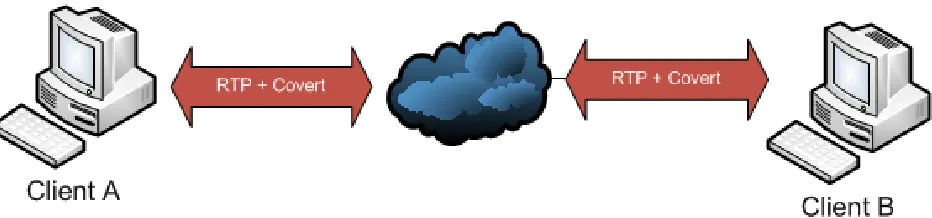
There are numerous models under which this covert channel could be implemented. It can
be added to a VoIP client, run as a standalone application on one of the computers a call is
placed from, or run as a proxy/man in the middle. In addition to these modes, any combination
[23]
where the covert data is added and removed from the RTP stream, and the access required to
use them.
The reference implementation was integrated into a softphone package that can serve as
the basis for many other applications. This allowed for easy testing and demonstration of the
project, as well as insight into the operation of the phone. By placing the channel in a common
softphone, detection of the software would prove more difficult than an additional process on
a local computer, and would not require the same kind of privileged access to use. However,
the ultimate for covertness is man in the middle, provided proper network access can be
obtained (and that is the difficult part). Use as a softphone also provides for the least latency,
as there is no additional packet capturing and formation over that of the phone call. This is
under the assumption that all implementations are written in languages and run on platforms
with similar execution times. Also, UDP checksums need to be recomputed for a man in the
[image:28.612.78.544.499.608.2]middle implementation, adding further overhead.
[24]
Figure 3: The covert channel being used via proxy servers.
The reference implementation was tested against several common codecs. All of the
codecs used worked without issue with the covert channel. Most of the testing was performed
against G.711, which uses a timestamp increment of 160 and is considered the baseline for
quality voice audio. Other codecs used include G.722, which is actually 16,000 Hz but
registered as 8,000 Hz by RFCs, and actually uses 160 as its increment. Speex, an open source
solution, was used at 16,000 Hz, giving it a timestamp increment of 320. GSM, running at 8 kHz
and a timestamp increment of 160, also performed admirably. The only major codec not tested
with the implementation was G.729, which operates at 8 kHz and is heavily compressed. G. 729
is patent encumbered and considered costly, and accordingly was not included in the open
source softphone that the reference implementation was built upon.
4.2 Minimalistic protocol for communications
In support of enabling communications using the RTP covert channel, a minimalistic
protocol can be utilized to improve robustness of the channel. While UDP provides a checksum
to verify the integrity of the data it carries, it does not guarantee delivery of data. Similarly, RTP
provides sequence numbering for ordering packets, but does not guarantee reliable delivery
either. Accordingly, what is needed for the covert channel is its own reliable transport protocol
[25]
In the case of a softphone implementation of the channel, the phone software is relied
upon for verifying the UDP checksum. In other implementations, this would need to be
performed by the covert channel implementation. In addition, depending on the protocol used,
the implementation may need to check the RTP sequence numbering or timestamp to ensure
proper ordering of the packets.
4.2.1 Simple Acknowledgment
In this implementation, a very simple acknowledgment (ACK) and retransmission system
was used to improve reliability. Flowcharts of transmission and receiving with this protocol are
shown in Appendices 2 and 3. When a packet is transmitted, a flag is set by the transmitter to
not transmit again until an ACK is received. A two second timer begins to count as well, and if
this is exceeded without receiving an ACK, the last piece of covert data is retransmitted. On the
receiving end, when data is received (anything that is not an ACK or mod 160), a flag is set that
an ACK needs to be transmitted in the next packet sent. Once this ACK is sent, the receiver can
resume sending its next piece of data, provided it has received an ACK for its last piece of data.
The two second retransmission delay was meant to ensure adequate time for
acknowledgments were provided. The buffer delay is only approximately 120 ms, but this came
into effect on receipt of the data and receipt of the ACK, plus the time on the wire in both
directions. It is likely that one second would suffice in most circumstances, but this could risk
premature timeouts and make data collection difficult. This increased timer length can cause
[26]
needed. For the reference implementation, it was preferable to eliminate premature timeouts
as an issue.
In order to mitigate retransmissions due to lost ACKs, two ACKs are now sent in short
sequence, with two different code values (see Appendix 4). This is meant to prevent
retransmission of properly received data, resulting in duplicate data when an ACK is dropped.
Since it is considered more likely for two subsequent packets to be lost than two
non-sequential, the second ACK is transmitted in the second RTP packet after the first ACK. This also
helps by making the channel more covert, as two sequential timestamp adjustments are easier
to detect than two non-sequential packets. To avoid mistaking the second ACK as an ACK for
new data, it is ignored if first ACK was received. The second ACK can be clearly identified since
it has the sequence number of the first ACK + 2. If a second ACK is received that is not the prior
ACK +2 in sequence, then it is used for the acknowledgment.
Integrity is provided for by the UDP checksum, which covers all of the data in its payload as
well (including the RTP header). If the UDP checksum is valid, the datagram is kept and the RTP
timestamp processed. If the UDP checksum is invalid, it is simply discarded, and a
retransmission will occur if data was present in the header. No signaling goes back on a
discard, since there is no way to determine if covert data was actually carried within that RTP
packet or not.
Another available option is to send a packet before a retransmission, signaling that the next
[27]
received, but it runs the risk of further complications with the retransmit packet itself being
lost. In the reference implementation, this part of the protocol was not implemented.
Originally, the idea was to create a reliable system that was virtually flawless. However,
given the small amount of space per packet, and chance of packet loss, a perfect solution was
not devised for packet loss exceeding 1%. With more available space, one could reply back with
the sequence number of a corrupted or lost packet, or note the sequence number a
retransmission was sent to replace. However there is not that much space, even without
transmitting any additional data, and spanning multiple packets would prove too unreliable for
a reliability protocol.
4.2.2 Doubling
An alternative method considered is to limit the character set to base 64, and allow
doubling to represent 64 bit retransmissions of the corresponding data. By doing this, it is easy
to determine if the data sent should be accepted or not, based on whether an acknowledgment
was sent or not and comparison to the last received data. If the retransmission is different than
the last received, it should be kept and acknowledged. If it is the same, it may or may not be a
duplicate, and still must be acknowledged. The default behavior is to presume it is a duplicate
and discard it, though there is a chance that the original data was lost, and not the ACK. The
likelihood of the ACK or data packet being lost is the same, but there is only theoretically a 1 in
64 chance that the second piece of data matches the first. Overall, there is a 1 in 128 chance of
a duplicate occurring from this when a packet is lost. As such, this solution attempts to address
[28]
On codecs using a longer timestamp interval (such as 320 when sampled at 16 kHz), another
modification can be used to improve reliability while maintaining a larger amount of data to
transmit. A similar doubling technique is used, but doubling the 128 basic ASCII values instead
of base 64. This provides an estimated 1 in 256 chance of duplication should a packet be lost in
one direction, which is better than the base 64 solution as well. However, this limits
implementation to 16 kHz samplings when most voice is still sampled at 8 kHz, restricting its
usefulness. The wider variations in timestamp increment also increases entropy, thereby
limiting covertness.
4.2.3 Binary transfer
Another method to address potential reliability issues focuses on the actual binary
transmissions. Instead of manipulating the timestamp value in decimal form, bits are
manipulated directly. Two control bits are used as the protocol header, with 5 bits available for
data transmission per packet. With roughly 50 packets per second, this provides a net data rate
of approximately 250 bits per second and gross data rate of 350 bits per second. Since the RTP
protocol already provides a sequence number, separate sequencing is unnecessary. The two
bits are used to flag four different conditions: new data, stop, acknowledgment (ACK), and
retransmit, as detailed below.
• New data: signals new data sent in the payload.
• Stop: signals the end of a data block, or no new data to send. This is sent in the
[29]
is available for retrieval in the payload. Regular timestamp data will be transmitted
in the payload instead.
• ACK: sent in reply to acknowledge last transmission. Data is copied back to receiver
for accuracy checking. If ACK is not received by the sender after a set time, data is
sent again.
• Retransmit: set if ACK is not received within timer limit for acknowledging data.
[30]
5.
Reference implementation
5.1 Implementation and environment
To implement this design, existing open source programs were modified to write packets to
communicate the covert data. This was favored over starting from scratch, as it is redundant to
start from scratch given the freely available software. Integrating the channel into the phone
software eliminates an extra process and executable file that may raise detectability on the end
user system. Additionally, this could minimize overhead for packet processing, since there is
not the extra overhead of capturing and reforming packets. Depending where the covert
channel is implemented, it can even take advantage of the jitter buffer for ordering of packets.
However, a standalone application would provide a more universal application, free of
constraints of a particular softphone, and could even implement its own jitter buffer. The
current reference implementation was done in an existing softphone, though future versions
will be done in standalone form as well.
C was chosen as the programming language due to its portability and speed. Java was
looked at due to its ease of networking, but C offers faster execution and more low level access.
In addition, stucts in C provide for an efficient and logical way for storing packet data. The
major downside to C is that any GUI development is typically more heavily linked with
[31]
5.1.1 Build Environment
The reference implementation was designed to run on Windows XP and Windows Vista.
Other versions of Windows may work but have not been tested. The software was built in
Visual Studio 2005, using the Visual C++ component. The Windows Platform SDK is necessary
for the build environment, and the Windows SDK for Windows Server 2008 and .NET 3.5 (SDK
6.1) was used for the final versions of the implementation [17]. This allows for greatest
compatibility with current Windows versions, including Windows XP, Windows Server 2003,
Windows Vista, and Windows Server 2008. The DirectX SDK March 2009 was used for
dependencies of its sound libraries [18]. The application may also build using Visual Studio
2008, though this is not a supported environment for PJSIP. Using Visual Studio 2005 and the
newest version of PJSIP, the resulting program has been entirely stable, with no crashes
occurring.
In addition to the Windows version, another version (using the same code) was built for
Linux. This additional build was simple to do, as PJSIP includes make files for use with GCC on
top of MS VC++ project files. The Linux version was compiled on Fedora 11, running Linux
kernel 2.6.29.6, GCC 4.4.0, and GLIBC 2.10.1. These versions use an identical codebase, besides
the parts that directly interface with OS API calls. Both builds of the reference implementation
worked in the same fashion, though testing focused on the Windows build. The Linux build was
[32]
5.1.2 Base Project
The reference implementation of the project was being built upon the sample
implementation provided by pjsip.org [19]. The application, pjsua, provides a basic SIP client
based upon libraries from the PJSIP open source project. This provides an easy to use yet
flexible VoIP application using SIP and RTP. Part of the appeal of this client is that it does not
require the use of a PBX but rather can perform direct, peer-to-peer calls, thereby simplifying
testing. However, it is also capable of placing and receiving calls by registering with a VoIP PBX.
[image:37.612.77.542.329.434.2]In testing, an Asterisk PBX was used as the soft PBX [20].
Figure 4: Media Flow of PJSIP [21].
The media flow of the PJSUA client is shown above. While all of the segments shown above
are used in placing calls, the only parts involved in the covert channel are rtp.c and rtp.h (see
appendices 7-9 for sources code). Accordingly, the vast majority of the application is not even
aware of the timestamp modification. To further conceal the presence of the covert channel,
the covert channel data is removed from the timestamp by rtp.c before heading to the rest of
the application. By doing so, the modifications made by the covert channel are seen by as little
[33]
While leaving the covert data did not appear problematic to the rest of the application, taking
extra precautions will, if anything, result in better quality.
While removing the timestamp modification from the receiving end is not necessary for an
implementation built into a phone client, it is more important when performing a man in the
middle style operation. When performing the channel using a standalone application or a
proxy, resetting the timestamp to the expected value can prevent the end user from ever
having a chance to detect the channel. At first glance it seems that reverting timestamps could
allow for a larger data amount sent per packet without disruption, but this requires the
receiving end to track the last timestamp received (since modular 160 alone might give
inaccurate results). While this could be accomplished, the increased complexity and potential
for packet loss puts the reliability of the channel at risk. In addition, the covert channel would
become easier to detect mathematically, given the larger fluctuations in timestamp increments.
The reference implementation currently provides a framework for transmitting data in ASCII
form. Two main versions of the application were produced: one sending data without
additional reliability mechanisms, and one following a basic protocol to improve reliability. The
version without the reliability protocol enabled relies on very low packet loss to ensure
delivery, or that a message can be useful without receiving every last character (text based
communications). This “raw” version might work fine if the network connection is good along
its entire length. For data where no loss is acceptable, or on noisy networks, the reliability
[34]
The reference implementation also relies on reading values from one text file, and writing
received values to another text file. This was done because the user interface was already
crowded on the command line application, and it was not realistic to provide both reading and
writing on the command line display. This is an area where a GUI could lead to improvement.
However, to demonstrate that the data is being transmitted, received data is printed to the
console on top of being written to the file (see Appendix 6). By default, these are named
input.txt and output.txt, and should contain ASCII characters.
Line encoding (UNIX or Windows) does not make a difference, as newline and carriage
return are simply transmitted as is any other character, printable or not. Since the characters
are actually representative of an integer in C, the values can be read in as characters and added
to the timestamp easily. Similarly, writing the value out is simply a matter of determining the
timestamp modification and writing that as a character to the file. This keeps the process
simple and efficient.
There are two values that are swapped for reasons of keeping the channel covert while on
the line, the Null character (0) and no data (128). Since the desired effect is to have no
timestamp modification when no covert data is sent, the value of 0 and 128 were swapped on
the wire. These swaps are transparent to the read and write operations, as swapping occurs
after reading and before writing. The decision was made to just move null rather than moving
[35]
efficient in processing. Besides “no data”, the other special values transmitted are 130 and 131,
which represent ACK 1 and ACK 2, respectively.
To transfer binary files, they were first encoded in base 64 to ensure reliable transfer. This
is similar to the MIME encoding used in email, and is possible using a wide variety of tools. As
this results in sending a 6 bit character as a 7 bit character, 1/7th of the bits are wasted in this
mode of transfer. Binary data could be encoded as ASCII prior to transfer without the overhead
of base 64, but tools are not as readily available to perform this task.
The phone calls were placed using the modified version of PJSUA using the following
configuration options for standard tests (see Appendix 6 for PJSUA main menu). Note that the
play-file and auto-play flags were not always set, depending upon the particular test conducted.
Command
Calling Phone covert.exe sip:#.#.#.# --add-codec pcmu --no-vad
Receiving Phone covert.exe --play-file noise.wav --auto-answer 200 --auto-play --no-vad
Covert.exe is the name of the executable file for the modified softphone. Sip:#.#.#.#
contains the IP address of the answering phone in place of the pound signs. –add-codec pcmu
specifies to place the call using G.711 U-law. –no-vad ensures the phone sends RTP packets,
[36]
and respond with SIP 200 (ok). –play-file noise.wav has the phone play back a sound file, and –
auto-play has that sound file play back automatically when the call is established.
Most of the experimental results were collected running two instances of the client, one
running on Windows Vista SP2 and the second on a Windows XP SP3 virtual machine. For
thoroughness, tests for functionality were also run with a number of different XP and Vista
machines at different locations, as well as Linux builds. Data was captured using Wireshark for
analysis. In some instances, a sample noise file was used for the RTP data at one end, while in
others microphones were utilized for both ends. The X-Lite 3.0 softphone [22] was also used as
a secondary receiver for testing purposes, and a Grandstream Budgetone 200 SIP phone was
used as a simple hardware based client for testing call functionality. However, all data rates
and statistics were run from one covert client to another; other phones were used simply for
interoperability testing. Unless otherwise noted, the G.711 codec was used for the RTP payload
with a sampling rate of 8000 Hz.
For NY to IL tests, they were run between a Windows Vista SP2 machine and a Windows XP
SP3 machine. Both machines were behind home routers using NAT, and connected to the
Internet using cable modems. Both computers were connected to the LAN via 802.11G wireless
networking. This wireless networking provided another source of potential interference for
these tests, as multiple computers were using the shared wireless medium at both ends.
[37]
For the tests involving packet drops, they were run from a laptop running Windows Vista 64
bit to Windows Server 2008 64 bit. The two machines were connected to a switch using gigabit
Ethernet. Percentage of RTP packets dropped was set on the application using the
--tx-drop-pct=% --rx-drop---tx-drop-pct=%, where % is the percentage of packets to drop in that direction.
Percentage drops were performed at 1, 3, 5, and 10 percent, with the percentage being the
same for both receiving and transmitting.
Additional tests were performed XP to XP, Vista to Vista, and Linux to Vista, using various
computers. These tests were not performed for speed but rather to test functionality of the
product across a number of different systems. In all cases, the client was found to work
identically regardless of the operating system used. Speed and reliability data was not collected
from tests using Linux.
For the tests, the standard file used was a 1024 character block of ASCII text using Windows
line endings. This file was transmitted in full duplex. While it is encoded in the file as 8 bits per
character in ANSI for 256 possible characters, the ASCII character set records each character as
only 7 bits for 128 possible values. Accordingly, the calculations for speed are based on the
number of character in the file multiplied by 7, rather than 8 as is stored on the disk. This gives
a more accurate representation of the data transmitted on the wire. In addition to the
standard 1024 character file, a 300 KB file was also transmitted on some local tests to check for
[38]
5.1.3 Alternative implementations
In addition to the two primary versions of the reference implementation, two other versions
were created. The first is the original acknowledging system, which makes use of a single
acknowledgment. The one ACK mode, like the two ACK build, is designed to optimize reliability
of the channel. The second alternate mode increases covertness by modifying only the 6th and
7th least significant bits of the timestamp (the 2 bit mode). While this reduces the overall
bandwidth, it avoids detection by not changing bits that are usually unmodified in the
timestamp. It also reduces the entropy of the overall channel. Recall that the second main
implementation is a raw transfer mode, which sends data without any acknowledging or
reliability measures to maximize bandwidth. This means there are the ACK based modes
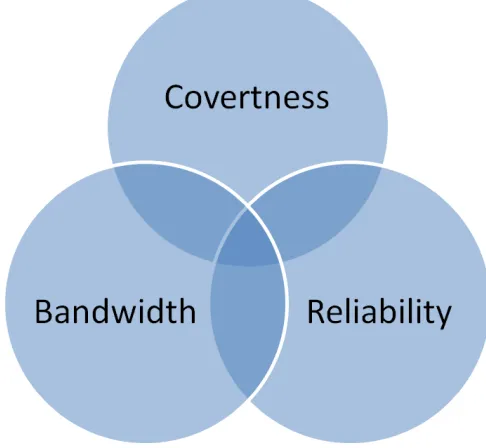
[image:43.612.90.333.413.637.2]favoring reliability, the 2 bit mode favoring covertness, and the raw mode favoring bandwidth.
[39]
Depending upon the situation, one of these may prove to be better than another. For
legitimate uses of a secondary stream, the acknowledging or raw modes should be used. For
maximizing covertness of the channel, 2 bit transfer mode should be used. For maximizing
bandwidth, the raw data mode is the best. On networks with a small amount of loss, the 1 ACK
mode works well, while on high loss networks the 2 ACK mode is optimal. The type of data sent
[40]
6.
Experimental results
6.1 Initial Results
Initial experimentation has focused on manipulating the RTP timestamps and its resiliency
to this manipulation. Based on initial experimentation, the timestamp can be manipulated
within the expected range of 128 (7 bits) without any issues with receiving the voice stream. In
further experimentation, it was determined that changes to the timestamp beyond the
increment of 160 could be used, provided that the results are sequential. It is unclear whether
this holds true for all phones, as it was only tested against a few phones available. Values of up
to 256 were used with G.711, with no detectable degradation in call quality.
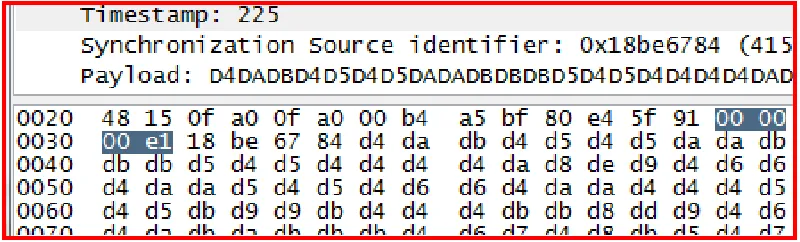
An example is shown in Figure 6 below, where the letter “A” (decimal 65) is embedded on
the first packet of an RTP stream. In decimal, the total value is 225; 160 for the regular
implement, plus 65 for the letter. During these transmissions, the audio reception was not
[image:45.612.89.489.515.636.2]impaired by this manipulation.
[41]
Another experiment sought to add the new covert values to the timestamp without
removing the previously used ones. This resulted in the timestamp increasingly growing out of
sync with the real timestamp value. However, this also did not interrupt operations with the
voice stream. This suggests that the timestamp values at which packets are dropped are based
[42]
6.2 Current Results
[image:47.612.86.524.136.429.2]6.2.1 Speed
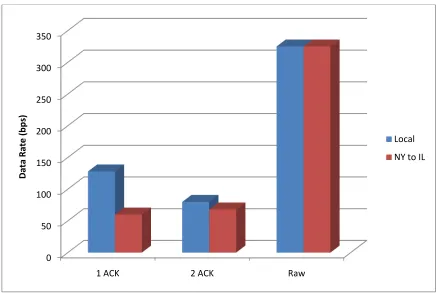
Figure 7: Speed of the data transfer with various modes of the reference implementation
Test Speed Tx (bps) Speed Rx (bps)
XP to Vista local – 1 ack 128 128
XP to Vista local – 2 ack 80 80
XP to Vista local - Raw 325 325
NY to IL – 1 ack 60 60
NY to IL – 2 ack 68 68
NY to IL - Raw 325 325
0 50 100 150 200 250 300 350
1 ACK 2 ACK Raw
Da
ta
Ra
te
(b
ps
)
[43]
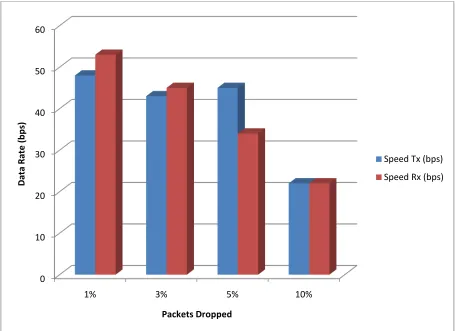
Figure 8: Speed of the data transfer using 2 ACKs at different amounts of packet loss
Percent Dropped (both directions) Speed Tx (bps) Speed Rx (bps)
1% 48 53
3% 43 45
5% 45 34
10% 22 22
0 10 20 30 40 50 60
1% 3% 5% 10%
Da
ta
Ra
te
(b
ps
)
Packets Dropped
[44]
The speed of the application when running in the raw mode (without reliability protocol)
was close to the expected theoretical maximum. In tests, both local and from NY to IL, the
speed transmission speed was 325 bps, compared to the theoretical maximum of 350 bps. It is
not entirely clear what caused this slight discrepancy though it not surprising that it does not
exactly match the theoretical rate. A minor change in timing of the packets could easily cause
such a drop in rate.
When using the reliability protocol, the speed was also good, though it dropped notably
from the raw data rate. When calling on a local network with the 2 ACK mode, speeds
averaged 80 bps, while it dropped to 68 bps from NY to IL. The drop in speed as distance
increases is expected using the ACK based systems, as round trip time increases and packets
must complete a round trip before new data is sent. While this lower speed makes large data
transfer impractical, small file transfer and two way text communications are easily
accomplished.
6.2.2 Reliability
Test Reliability Tx Reliability Rx
XP to Vista local – 1 ack Perfect Perfect
XP to Vista local – 2 ack Perfect Perfect
XP to Vista local - Raw Perfect Perfect
NY to IL – 1 ack Perfect Perfect
NY to IL – 2 ack Perfect Perfect
[45]
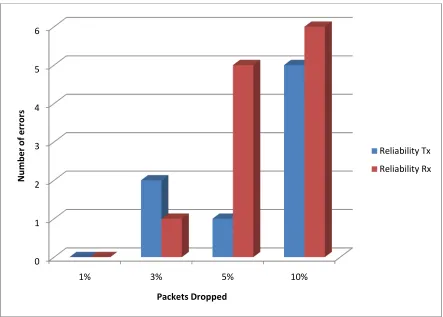
Figure 9: Errors in received data for different amounts of packet loss
Percent Dropped (both directions) Reliability Tx Reliability Rx
1% Perfect Perfect
3% 1024 to 1026 characters due
to duplication 1024 to 1025 characters due to duplication
5% 1024 to 1025 characters due
to duplication 1024 to 1029 characters due to duplication
10% 1024 to 1029 characters due
to duplication 1024 to 1030 characters due to duplications from lost ACKs 0
1 2 3 4 5 6
1% 3% 5% 10%
N
umb
er o
f e
rro
rs
Packets Dropped
[46]
In early tests, 100% accuracy for a 1k files was obtained about 90% of the time. When
imperfections arose, it was duplicates of certain characters appearing due to lost ACKs. To
minimize this from single packet loss, the dual ACK system was implemented, which improved
performance. It was determined that the errors on the original local tests were due to running
too many applications on the same computer rather than network loss, which at times delayed
processing for the softphone. The least reliable setup was operating between a guest and host
OS on the same machine over the VMware NAT network, due to the load on a single system.
This proved to drop numerous packets at times, which could result in a duplicate appearing in a
file (typically 1 in 1000 characters or less).
With the initial systems issues resolved, reliable transfers with no errors were repeatedly
obtained over both the local network and across the public Internet. Raw mode transmitted
flawlessly on all local and remote tests. It offered much faster data rates, with accuracy equal
to the reliability mode. Even in the NY to IL tests, the data transfer was found to be accurate
when using the raw client. The raw client also performed flawlessly on a local 300 KB test file.
This persistence of the data indicates a quality Internet infrastructure in the northeastern US
area and indicates that most calls could use the raw client as opposed to the more reliable one.
The client performed without error with up to 1% data loss, but experienced problems with
3% or higher loss. In those cases, duplicates were sometimes problematic. These results
provided data that was easily readable for human communications, but could prove
problematic the transferring of binary files. On a network experiencing a very high amount of
[47]
6.2.3 Covertness
Overall the channel exhibited a high degree of covertness, making it difficult to detect. This
was mainly due to the flexible nature of the RTP protocol and operation of the RTP timestamp.
In the clients performing acknowledgments, the covert data was spread over time rather than
being sequential, making it harder to detect. Acknowledgments also slow the rate at which
data is sent, meaning many packets carry no data and use a default timestamp. This means
that a data carrying packet needs to be located first, which increases the difficulty of detection.
However, the acknowledgments themselves create additional network traffic, which could aid
detection.
Attempts to view the covert channel proved difficult, even with knowledge of the covert
channel. Even with a packet capture from Wireshark, it can be hard to see the covert data.
Without knowledge of the channel, nothing appears unusual in the RTP packets. With
knowledge of the channel, one must first find a data bearing packet, then determine the
expected timestamp value, before being able to decode the data. Even if detected, the end
product can be hard to decipher, as one has no means of knowing whether or not the receiving
client successfully read the last piece of data. Without this knowledge, duplication could easily
occur when attempting to decipher the stream.
The jitter experienced with the rapid rate of packets also leads to detection problems. Data
on the wire may not arrive in the order it was sent, meaning the change in timestamps may be
erratic on the wire. To effectively process this data while looking for the channel, one needs a
[48]
Firewalls inspecting only layers one through four are unable to block the channel; only
application level firewalls with specific knowledge of the covert channel can detect it, and even
then not entirely reliably. Applications firewalls properly configured for such a channel may
potentially detect it, though they would face numerous challenges as detailed earlier.
Mathematically the channel is hard to detect since the RTP timestamp field need not follow
any particular pattern. The RTP timestamp increment changes depending on protocol used for
the RTP payload at that point in time, and may use system clock time. Additionally, the fact
that the timestamp may not increment between packets further complicates analysis, and
could make it easy to get false positives. In comparison, a payload based RTP covert channel
may be detected by using mathematical steganographic analysis of payloads containing covert
data.
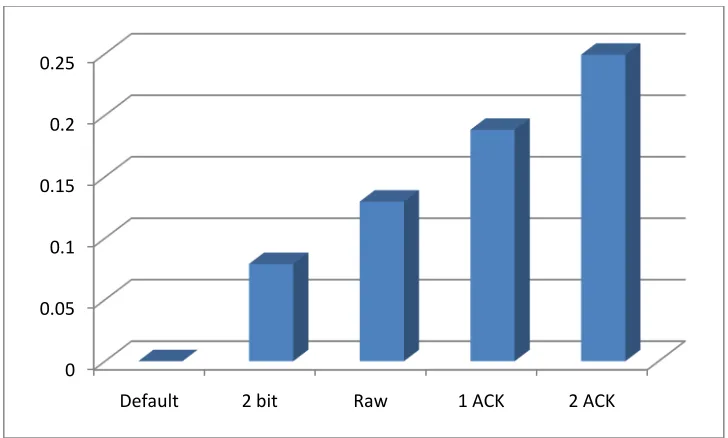
Transfer Mode Increment Entropy
Default 0
2 bit 0.079072
Raw 0.129782
1 ACK 0.188215
2 ACK 0.249292
[49]
Figure 10: Entropy of the timestamp increment for G.711, for each of the different modes. Low bandwidth and low reliability is the most covert. Additional overhead from acknowledgments increases entropy. 1024 characters were sent on the covert channel out of 10,000 RTP packets for the above calculations.
However, it is possible to detect the covert channel provided knowledge of the codec used
and particular implementation is available. This is done in one of two major ways: by looking
for changes in the least significant bits of the timestamp, and by checking for entropy in the
increment of the timestamp. While the former is fairly simple, the later is complicated by the
flexible nature of RTP, the variety of codecs, and the varying nature of the timestamp. With
knowledge of the expected timestamp value, one can detect variations in the incremental
value. The entropy, relative to the timestamp increment, was calculated using
![Figure 1: RTP Packet Header. Source: RFC 3550 [8].](https://thumb-us.123doks.com/thumbv2/123dok_us/55548.5103/14.612.98.500.493.647/figure-rtp-packet-header-source-rfc.webp)

![Figure 4: Media Flow of PJSIP [21].](https://thumb-us.123doks.com/thumbv2/123dok_us/55548.5103/37.612.77.542.329.434/figure-media-flow-pjsip.webp)