Dissertations
2004
An agent-based computational model of the
evolution of reproductive isolation in populations
of digital plants
Nicole Patricia Leahy
Iowa State University
Follow this and additional works at:
https://lib.dr.iastate.edu/rtd
Part of the
Botany Commons
,
Ecology and Evolutionary Biology Commons
, and the
Genetics
Commons
This Dissertation is brought to you for free and open access by the Iowa State University Capstones, Theses and Dissertations at Iowa State University Digital Repository. It has been accepted for inclusion in Retrospective Theses and Dissertations by an authorized administrator of Iowa State University Digital Repository. For more information, please [email protected].
Recommended Citation
Leahy, Nicole Patricia, "An agent-based computational model of the evolution of reproductive isolation in populations of digital plants " (2004).Retrospective Theses and Dissertations. 833.
by
Nicole Patricia Leahy
A dissertation submitted to the graduate faculty
in partial fulfillment of the requirements for the degree of
DOCTOR OF PHILOSOPHY
Major: Bioinformatics and Computational Biology
Program of Study Committee: Daniel Ashlock, Co-major Professor
John MayBeld, Co-major Professor Xun Gu
Gavin Naylor Dean Adams
Iowa State University
Ames, Iowa
2004
INFORMATION TO USERS
The quality of this reproduction is dependent upon the quality of the copy
submitted. Broken or indistinct print, colored or poor quality illustrations and
photographs, print bleed-through, substandard margins, and improper
alignment can adversely affect reproduction.
In the unlikely event that the author did not send a complete manuscript
and there are missing pages, these will be noted. Also, if unauthorized
copyright material had to be removed, a note will indicate the deletion.
UMI
UMI Microform 3136366
Copyright 2004 by ProQuest Information and Learning Company.
All rights reserved. This microform edition is protected against
unauthorized copying under Title 17, United States Code.
ProQuest Information and Learning Company
300 North Zeeb Road
Graduate College Iowa State University
This is to certify that the Doctoral dissertation of
Nicole Patricia Leahy
has met the dissertation requirements of Iowa State University
Co-major Professor
For the Major Program
Signature was redacted for privacy.
Signature was redacted for privacy.
TABLE OF CONTENTS
LIST OF TABLES ix
LIST OF FIGURES x
ABSTRACT xiii
1 GENERAL INFORMATION 1
1.1 Introduction 1
1.1.1 Speciation and the Concept of Species 2
1.1.2 Putative Mechanisms for Speciation 3
1.1.3 Metaphors of Speciation 7
1.2 Hypothesis 9
1.3 Dissertation Organization 10
2 LITERATURE REVIEW 11
2.1 Approaches to Modeling Speciation 12
2.2 Individual-Based Models of Speciation 16
2.2.1 Accumulating Genetic Diversity 17
2.2.2 Extrinsic versus Intrinsic Sources of Selection 18
2.2.3 The Case for Reinforcement 18
2.3 Conclusions 19
3 PSEUDOPHYTE EVOLUTIONARY ALGORITHM 23
3.1 Abstract 23
3.2 Introduction 23
3.2.1 Species Concept 24
3.2.2 Reproductive Isolation Concept 25
3.2.3 Pseudophyte Concept 26
3.3.1 Information Structure 27
3.3.2 Pseudophyte World 29
3.3.3 Pseudophyte Organisms 29
3.4 Simulation 34
3.4.1 Initialization of PEA 34
3.4.2 Annual Cycle 37
3.5 Analysis 42
3.5.1 Experimental Crosses 42
3.5.2 Mantel Test 42
3.5.3 Nei's Genetic Distance 44
3.5.4 Connect Components 45
3.5.5 Habitat and Region Comparison 45
3.5.6 Phenotype Analysis 46
3.6 Limitations 46
3.6.1 Biological Considerations 4-7
3.7 Summary 48
4 EFFECT OF HABITAT FRAGMENTATION AND NUMBER OF ECOLOG ICALLY IMPORTATN LOCI ON THE EVOLUTION OF REPRODUCTIVE
ISOLATION 49
4.1 Abstract 49
4.2 Introduction 49
4.3 Experimental Design 52
4.4 Results 54
4.5 Discussion 70
4.5.1 The Central Value Bias 73
5 THE EFFECT OF THE NUMBER OF ECOLOGICALLY IMPORTANT LOCI, HABITAT FRAGMENTATION, POTENTIAL REPRODUCTIVE OUTPUT, AND METHOD OF ENERGY COMPUTATION ON THE EVOLUTION OF
REPRODUCTIVE ISOLATION IN f&EUDCtPjTyTES 75
5.1 Abstract 75
5.2 Introduction 75
5.5 Discussion
6 EFFECT OF LINKAGE ON THE EVOLUTION OF REPRODUCTIVE ISO
LATION 6.1 Abstract
6.2 Introduction
6.3 Experimental Design
6.4 Results
6.5 Discussion
7 SUMMARY 7.1 Conclusions
7.1.1 Habitat Fragmentation
7.1.2 Number of sp Loci
7.1.3 Ovule Production
7.1.4 Method of Computing Energy Need
7.1.5 Linkage
7.2 Further Experimentation
7.2.1 Genotype to Phenotype Mapping
7.2.2 Linkage with Seed Number
7.2.3 Initial Population and Habitat Fragmentation
7.2.4 Linkage Control Groups
7.2.5 Expanded Experiments
7.3 Future of the PEA
7.3.1 Improvements
7.3.2 Variations
7.4 Caveat for the Over-Enthusiastic Knob Twister
APPENDIX ACCOMPANYING CD-ROM AND OPERATING INSTRUCTIONS
LIST OF TABLES
Table 2.1 References for classification of models of speciation 21
Table 2.2 References for genetic implementation 22
Table 3.1 Mathematical Symbols and Notation 24
Tbble 3.2 Pseudophyte Genome 32
Table 3.3 Look-up table values for and 34
Table 3.4 World Parameters 36
Table 4.1 Experimental Design 54
Table 4.2 End Results: Number of Individuals and Genotypes 56
Table 4.3 End Results: Reproductive Isolation 57
Tbble 4.4 Connected Components 71
Table 4.5 Adjustment of Stage for Mutation Rate 72
Table 5.1 Experimental Design 78
Table 5.2 Reproductive Isolation Correlations 81
Ibble 5.3 sp Bias Under Modified Energy Need 83
Table 5.4 Final Reproductive Isolation Rates 84
Table 5.5 Time to Speciation 103
Table 6.1 Linkage Notation 113
Tbble 6.2 Chromosomal Arrangement Experiment 114
Table 6.3 Occurrences of Correlation with Habitat 117
Table 6.4 Final Reproductive Isolation Rates 118
LIST OF FIGURES
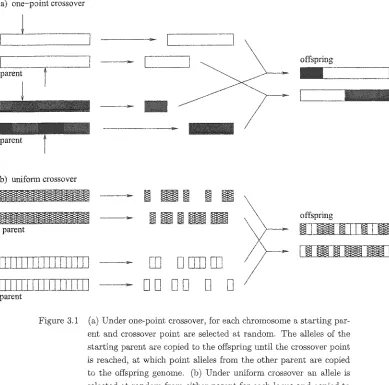
FigureS.l Crossover Operations 28
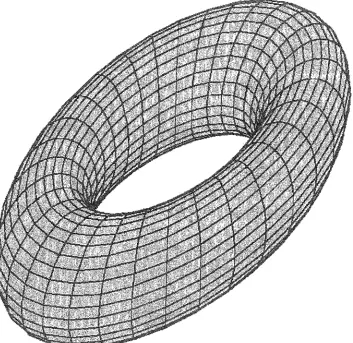
Figure 3.2 Toroidal World 30
Figure 3.3 Microhabitat 31
Figure 3.4 Pseudophyte Genome 31
Figure 3.5 Main Program Flow Chart 35
Figure 3.6 Reproduction Flow Chart 38
Figure 3.7 Seed Dispersal Neighborhood 40
Figure 3.8 Germination and Survival Flow Chart 41
Figure 4.1 Spatial Arrangements of Soil Types 53
Figure 4.2 j -Biased Trait Loci Set 55
Figure 4.3 Mantel's Test 56
Figure 4.4 Stage of Population Evolution 59
Figure 4.5 Number of Individuals and Genotypes 60
Figure 4.6 Total Reproductive Isolation 62
Figure 4.7 Probability of Inviable Offspring 63
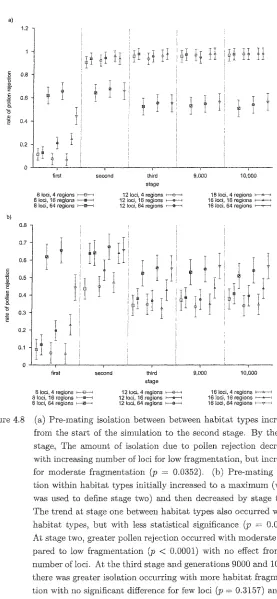
Figure 4.8 Probability of Pollen Rejection 64
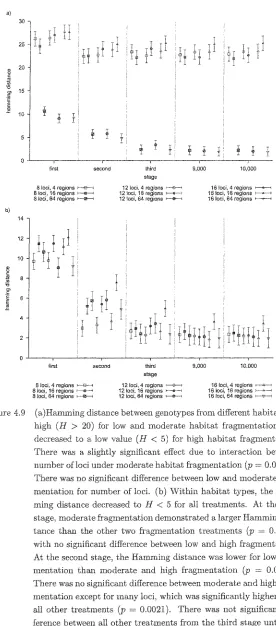
Figure 4.9 Hamming Distance over the Entire Genome 65
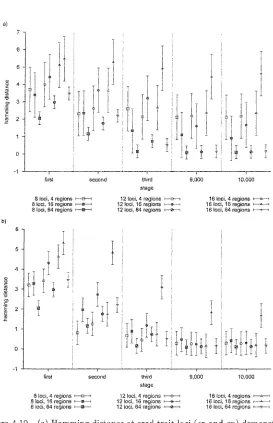
Figure 4.10 Hamming Distance over the Seed Trait Loci 66
Figure 4.11 Hamming Distance over the Identity Loci 67
Figure 4.12 Nei's Genetic Distance 68
Figure 4.13 Last Occurrence of D > 0.10 Between Regions of the Same Resource Type ... 69
Figure 5.1 Spatial Arrangements of Soil Types 79
Figure 5.2 Hamming Distance Correlations 82
Figure 5.4 Number of Individuals and Genotypes 87
Figure 5.5 Total Reproductive Isolation Between Habitats 89
Figure 5.6 Total Reproductive Isolation Within Habitat 90
Figure 5.7 Probability of Inviable Offspring Between Habitats 91
Figure 5 8 Probability of Inviable Offspring Within Habitat 92
Figure 5.9 Probability of Pollen Rejection 93
Figure 5.10 Probability of Pollen Rejection Within Habitat 94
Figure 5.11 Genomic Hamming Distance Between Habitat Types 95
Figure 5.12 Genomic Hamming Distance Within Habitat Type 96
Figure 5.13 Seed Trait Loci Hamming Distance Between Habitat Type 97
Figure 5.14 Seed ÏYait Loci Hamming Distance Within Habitat Type 98
Figure 5.15 Identity Loci Hamming Distance Between Habitats 100
Figure 5.16 Identity Loci Hamming Distance Within Habitat 101
Figure 5.17 Nei's Genetic Distance 102
Figure 5.18 Comparison of Nei's Genetic Distance for Treatment m,4,12,4 109
Figure 6.1 Spatial Arrangements of Soil Types 115
Figure 6.2 Significant Correlations by Mantel's Test 116
Figure 6.3 Time Interval Between Stages 119
Figure 6.4 Number of Pseudophytes and Genotypes 122
Figure 6.5 Total Reproductive Isolation Between Habitat Types 123
Figure 6.6 Total Reproductive Isolation Within Habitat Type 124
Figure 6.7 Probability of Inviable Offspring Between Habitat Types 125
Figure 6.8 Probability of Inviable Offspring Within Habitat Type 126
Figure 6.9 Probability of Pollen Rejection Between Habitat Types 127
Figure 6.10 Probability of Pollen Rejection Within Habitat Type 128
Figure 6.11 Genomic Hamming Distance Between Habitat Types 130
Figure 6.12 Genomic Hamming Distance Within Habitat Type 131
Figure 6.13 Seed Trait Loci Hamming Distance Between Habitat Types 132
Figure 6.14 Seed Trait Loci Hamming Distance Within Habitat Type 133
Figure 6.15 Identity Loci Hamming Distance Between Resource Types 134
Figure 6.16 Identity Loci Hamming Distance Within Resource Type 135
Am agent-based computational model of the evolution of reproductive isolation in populations of digital plants
Nicole Patricia Leahy
Daniel Ashlock, Co-major Professor John MayAeld, Co-major Professor
Iowa State University
The process of speciation is a fascinating area of research in the biological sciences. Development of
mathematical and computational models are an important part of developing speciation theory. The
Pseudophyte Evolutionary Algorithm (P&4) is a individual-based population model developed to test
hypotheses concerning process of speciation. The individuals (pseudop/tyfea) are digital "plants." Bio
logically, they are haploid annuals, each producing pollen and ovules. Pseudophytes are implemented as
binary strings representing loci which encoded six traits. Loci were divided into two chromosomes each
with three traits. The loci are mapped to a phenotype which determines the behavior of the pseudo
phyte. The PEA examines the evolution of pre-mating (accepting or rejecting pollen) and postzygotic
(offspring in viability) reproductive isolation. Experiments were performed to study the effect of habitat
fragmentation, number of loci, method of computing the energy need of a pseudophytes, ovule produc
tion, and linkage on the rate at which reproductive isolation evolves. Speciation occurred under low
levels of habitat fragmentation, but not high. The effect of moderate habitat fragmentation resulted in
faster and more complete reproductive isolation when simulations began with specialist, but speciation
did not occur when the initial populations consisted of generalists. Increasing the number of loci tended
to delay speciation and result in less between and more within habitat postzygotic isolation. Energy
need computation that imposed greater requirements resulted in fewer instances of speciation and less
reproductive isolation when it did occur. Linkage experiments revealed complex interaction between
CHAPTER 1 GENERAL INFORMATION
Speciation is fundamental to the understanding of biology (Dieckmanii and Doebeli, 1999) and
con-sidered by many, including this author, to be the most fascinating phenomenon studied in the biological
sciences (Gavrilets, 1999). Despite this, there is a considerable lack of understanding of the mechanisms
for the origin of new species from extant species and no cohesive theory encompassing all aspects of
speciation (Kaneko, 2002; Kirkpatrick and Ravigné, 2002; Gavrilets, 1999). One of the manifestations
of our limited knowledge are the voluminous definitions of species developed by biologists. Critical to
the goal of understanding the process is the development of mathematical and computational models
in order to better define general principles of speciation. The research presented in this dissertation is
not an attempted all-encompassing synthesis, but and effort to study the mechanisms and factors that
play a crucial role in the development of reproductive isolation, a well-known, if incomplete (Templeton,
1989), definition of speciation.
1.1 Introduction
Dobzhanksy (1973) wrote, "Nothing in biology makes sense except in the light of evolution." This
quote eloquently illustrates the role of evolution as a fundamental principle of modem biology. As such,
the study evolutionary of biology is essential to the biological sciences. Speciation is the evolutionary
process by which new species evolve from extant species. This cryptic and obtuse definition lacks utility
save that it is perhaps the only consensus among scientists conducting research in this area. Much of
the interest surrounding speciation is in its ability to explain the origin of the diversity of species
observed in nature. The complexity of this process in conjunction with the different approaches taken
in studying it can be seen in the lack of a universal definition of a biological species. The most commonly
studied mechanisms of speciation can be divided into four categories: natural selection and adaptation,
random genetic events, magnitude and interactions of genetic effects, and assortative mating. These
1.1.1 Speciation and the Concept of Species
When one first asks how speciation occurs, it is necessary to have a working définition, of species.
The first impression given by the literature is biologists are afflicted with the compulsion to generate
their own unique definition of species (e.g. Harrison 1998; Templeton 1989). Nevertheless, there is
a method to this madness. Modern biology is a young science, with respect to other scientific fields,
studying a highly complex system obliquely defined as "life." Many biological processes, especially
the mechanisms and factors involved in speciation, are poorly understood or as of yet undiscovered
(Barraclough et al., 1999). A functional definition of species implies a set of mechanisms and processes
by which new species arise. Consequently, the definition of most use to a researcher is dependent upon
the questions asked. This ambiguity is in part responsible for the lack of a unified theory encompassing
all aspects regarded as important to speciation (Kirkpatrick and Ravigné, 2002).
This heated debate concerning the définition of species is a reflection of the relatively young age of
the study (Orr and Orr, 1996). That there is such discussion should be seen as an asset rather than
a hindrance. Not only does the definition of species depend up the questions under study, but the
definition accepted by scientists shapes the way one thinks of speciation (Harrison, 1998). A universally
accepted definition of species presents the risk of blinding researchers to potentially relevant aspects of
the process.
This is illustrated by the Biological Species Concept (BSC), also know as the Isolation Species
Concept. This is the most frequently used definition of species. Indeed, the description of the BSC, if
not the name, is widely recognized and accepted by the laity. The BSC defines species as a maximal set
of reproducing or potentially reproducing individuals. Under this definition. Speciation is the process
through which reproductive isolation evolves, Essentially, a population is divided into non-interfertile
subpopulations.
Although proponents point to the widespread use of the BSC (Coyne, 1994), it falls short when
attempting to understand the process of speciation in organisms that do not undergo sexual recombi
nation. Many of the myriad of definitions stem from this very difficulty. Others have argued that it is
erroneous to talk of speciation in asexual organisms, neatly sweeping the problem under the proverbial
rug.
Such valiant attempts to formulate a definitive and functional definition of species are admirable,
but premature. As the factors and condition that result from speciation are not well understood
(Barraclough et al., 1999), a single definition has the potential of omitting certain processes under the
more true for the efforts to formulate a unified theory of speciation. Widespread acceptance of such
could result in discouraging researchers from studying factors not incorporated into the theory, leaving
blind spots in our understanding of biology. Even so, such attempts are not without merit. Resulting
definitions and theories reveal weaknesses and gaps in our understanding of the evolutionary process.
For purposes of this chapter and the literature review, a simple definition as used by Gavriletg (1999)
will be used: Species are assumed to differ with respects to genetic factors. Speciation is the genetic
divergence of subpopulations. In other words, speciation may be seen as a division of the gene pool by
means of restricted gene Sow (Kirkpatrick and Ravigné, 2002).
1.1.2 Putative Mechanisms for Speciation
The study of speciation generally focuses on the mechanisms for driving genetic divergence between
subpopulations and maintaining a genetic cohesion within a subpopulation. The mechanisms considered
important for speciation are natural selection, Zoci electa, random genetic efenb, and osaortatiue mating.
The mechanisms are often understood as a metaphor of factors acting on individuals in some fitness
schema. The most familiar of these is the adaptive landscape first presented by Wright (1931), but
there is a growing body of evidence for interaction-driven divergence (e.g. Kaneko 2002; Dieckmann
and Doebeli 1999).
Natural selection is the differential reproductive success of genetically diverse individuals. Studies
of speciation typically concern themselves with five modes of natural selection: atc&iZizing, direcfionoi,
disruptive, /reguency-depemdenf, and density-dependent. In the discussion that follows, it is important
to remember that phenotype is assumed to be influenced by heritable factors (genetics) and there is an
approximately Gaussian distribution of phenotypes about the mean.
In staMizing defection, also known as Wnncing selection, the mean phenotype of the population has
the highest fitness and, consequently, the greatest reproductive success. Over successive generations,
the variance of the phenotypes in the population will decline as individuals with the mean phenotype
produce more offspring them those further away from the mean.
Directional selection occurs when the mean phenotype is displaced from the optimal. The rarer
phenotypes closer to the fittest phenotype will have greater fitness. Over successive generations the
mean phenotype of the population will move toward the optimal phenotype. Once the mean and
optimal phenotypes are the same, stabilizing selection will be observed.
The phenomenon of disruptive selection is similar to directional selection in that the population
optima, resulting in a fission of the population into multiple subpopulations. Assuming that gene flow
is sufficiently restricted between the subpopulations, each subpopulation will undergo directional and
then stabilizing selection.
j^-e^uency-dependent a election and density dependent selection describes the scenario where the
fitness of the phenotype depends upon its frequency within the population or occurrence within a unit
area, respectively. The following description is for frequency dependent selection, but applies to density
dependent selection if one thinks in terms of absolute numbers rather than probability within an area.
The Gtness may increase or decrease with the phenotypic frequency depending on the situation. For
example if phenotype is somehow associated with mate selection, the more frequent phenotype will
exhibit greater fitness than the rarer ones. In a situation where phenotype is associated with resource
use, the rarer phenotypes will have less competition and likely exhibit a greater fitness than the more
common phenotypes. It should be apparent that the strength of frequency-dependent selection is non
linear. Consider the two examples presented. If there were strong linkage between the genes determining
the phenotypes for resource use and mate selection, it is possible to imagine a scenario where the more
common phenotype soon arrives at a disadvantage due to over-use of resources.
Random genetic events in the process of speciation present dilemmas to developing theory. In the absence of these, it is possible to generate deterministic models with unambiguous results. However,
these may not be reflective of the conditions in nature. By contrast, random effects frustrate attempts to
estimate parameters thought necessary to create specific models of natural populations. Results of such
models are largely qualitative, providing poor estimations of relevant parameters. The random events
significant to speciation are genetic dri/t, mignition, recombination, simple mutation, chromosomal
rearrangement, and large-scale genomic events.
Genetic dri/t is the process of loss of alleles irrespective of their relative fitness. The net effect is
loss of variability within a population, impeding the efficacy of natural selection. On the other hand,
genetic divergence between subpopulations can be said to have occurred when different alleles of a gene
become fixed in different subpopulations. Genetic drift is known to be more effective and rapid in
small populations. Theory suggests that genetic drift has no appreciable effect for effective population
sizes over 1000 individuals. However, assortative mating (see below) could increase its effectiveness
(Gavrilets and Hastings, 1996; Orr, 1991).
.Recombination, also known as crossover in organisms is the process of forming new allelic combi
nations through allelic exchange between homologous chromosomes. Recombination may also result in
disrupt the same. Unlike other random events, recombination (not resulting novel alleles, gene dupli
cation, or gene loss) can be modeled and linkage disequilibrium, a correlated relation in the occurrence
of specific alleles in genes, is used to measure divergence in populations and employed in modeling as
metric for the degree of speciation (Kirkpatrick and Ravigné, 2002).
Simple mutation, or more simply, mutation, refers to both the conversion of one allele to another
and the genesis of a novel allele. Mutation is seen as a phenomenon that increases the genetic diversity,
counteracting the homogenizing effect of genetic drift. Novel mutations are postulated to be neutral
or slightly deleterious with advantageous mutations occurring infrequently. More complex conceptual
models consider mutations as neutral in its own genetic background, but potentially incompatible with
other genetic backgrounds (Orr, 1995, 1996).
CTiromoaomal changea are conceptually easy to place in the framework of speciation, but pose a
theoretical challenge as there is little known about the mechanisms of such changes or the resulting
effect within an organism. CTiromosomaZ rearrangements alter the gene order of a chromosome. This
includes insertion and deletion of genes, gene duplication, or the inversion of a section of the chromosome,
large scale genomic events are more drastic alterations such as aneuploidy, polyploidy, translocation
of sections of one chromosome to another, and eradication of part or all of a chromosome. Despite
the evidence of these occurrences throughout evolutionary history (Navarro and Barton, 2003; Spirito,
1998) these are seldom addressed by either computational models or mathematical theory.
The effect of loci is much debated in the genetic aspects of speciation theory. The reason why
will become clear in the discussion of the metaphors used to describe speciation. Much of the debate
centers around whether reproductive isolation is due to only a few loci with large effects or several
loci of small effect. Models that utilize a few loci of large effect usually rely upon the penetrance of
alleles. Models with several loci are typically concerned with quantitative traits and additive effects. In
addition, epistatic effects, often used to explain heterozygote disadvantage, are important to the process
of speciation (Wagner et al., 1994).
Assortment is non-random mating within a population Kondrashov and Shpak (1998), placing con straints on gene Sow. This can occur through sezuo! selection, mating systems, temporal displacement,
or spatial arrangement of individuals in the population.
jfezua! selection occurs when an individual of one sex selects a mate based on a phenotypic character
istic of another sex. This mechanism is often employed by models of pre-mating reproductive isolation.
Although this may permit genetic divergence between subpopulations when the sexually selected trait
are highly restrictive (Kondrashov and Shpak, 1998). Sexual selection is more elective when it is either
linked to adaptive alleles or alleles influencing mate preference Lambert et aL (1984).
Temporal displacement describes conditions in which subpopulations have partially or completely
non-overlapping reproductive phases. Temporal isolation may be in short cycles, such as diurnal versus
nocturnal reproductive activity, seasonal separation (e.g. .Linum marginale, Thrall and Surdon 2000,
or even greater lengths of time (e.g. 13 year Cicada Simon et al. 2000).
5pa(ial arrangement of phenotypes is an extrinsic (non-genetic) mechanism of assortative mating
(Kirkpatrick and Ravigné, 2002). Nevertheless, this can have a strong effect on the probability of
evolving reproductive isolation between subspecies (Payne and Krakauer, 1997). Biologists studying
speciation have given considerable study on every scale from coarse geographic distance separating
populations and subpopulations to the effect of migration to fine-scaled analysis of the location and
movements of individuals within a population or subpopulation.
There are three categories describing the spatial arrangement of a population undergoing speciation:
allopatric, parapatric, and sympatric. When considering spatial arrangement, migration, the rate and
magnitude of individuals moving from one subpopulation to another, becomes an important issue.
Migration may have effects on partially separated gene pools. First, it may introduce new variation
to the subpopulation if the new individuals have alleles not present in the subpopulation. Second,
if migration rate is large or of sufficient magnitude, it will have a homogenizing effect on the allelic
frequencies of the subpopulations involved. Third, one subpopulation may be displaced by another.
Allopatric subpopulations are considered to be geographically isolated. Migration is infrequent
and of small magnitude. Each subpopulation may be under different selection pressures, accumulate
different sets of mutations, or have different alleles fixed through genetic drift. Without the opportunity
for mating between subpopulations, there is no selection for pre-mating strategies to evolve. Rather,
reproductive isolation at the genetic level is thought to be the result of accumulated complementary
loci or local adaptation.
Pampatric subpopulations are geographically adjacent. Migration is considered to be frequent at
the zone of contact. Subpopulations are usually considered to be under different selections! pressures,
but gene flow between subpopulations greatly reduces the effect of genetic drift fixing different alleles in
the subpopulations and novel mutations readily pass from one subpopulation to another. The evolution
of both pre-zygotic and pre-mating isolation are effective mechanisms to prevent disruption of locally
adaptive allelic combinations.
arrangement of subpopulations, though individuals may be distributed across a patchy environment.
Subdivision may occur as the result of niche differentiation, presumably to escape the pressures of
competition for resources. Sympatric speciation is the least understood of the three spatial arrange
ments in part due to the uncertainty as to whether high environmental patchiness should be considered
parapatric or sympatric.
1.1.3 Metaphors of Speciation
The conceptual framework, or metaphor, in which a scientist studies speciation may have a profound
effect on which mechanisms are regarded as important to the process. The two dominant metaphors are
the rugged adaptive landscape (Wright, 1931) and founder effect speciation (Mayr, 1954). There have
been two new metaphors proposed within the last five years: the "holey" adaptive landscape (Gavrilets
et al., 1998) and interaction-driven divergence (Dieckmann and Doebeli, 1999; Kaneko, 2002).
Wright (1931) introduced the concept of the adaptive landscape. The set of relevant phenotypes
of an individual are mapped to a fitness value. There are numerous optima representing adaptive suites
of high fitness. This is usually visualized as a surface in 3-space with the genotypes mapped along the
z and y axes and fitness the z axis. The optima are termed "adaptive peaks." Matings of individuals
from different peaks result in offspring with genotypes mapping to an "adaptive valley" between the
two peaks. A sufficiently "deep" valley is indicative of low fitness or inviability in the hybrids. In other
words, the depth of the valley between two peaks is a measure of the degree of reproductive isolation
separating two populations at different peaks. Within this metaphor, a species occupies an adaptive
peak and speciation the process by which the species shifts to an new peak.
The difficulty with this metaphor is that the species must pass through a maladaptive valley, some
thing made unlikely by stabilizing selection. To solve this problem Wright (1932) suggested his aAi/ting
Wamce A population is comprised of subpopulations connected by migration. The process
of genetic drift and mutation can displace a subpopulation from the local optimum. Then a new adap
tive suite of phenotypes may evolve and directional selection will move the subpopulation to another
local optimum. Through migration and genetic drift, it is possible for the entire population to shift
from one adaptive peak to another. The peak shift can be further facilitated if there are significant
epistatic effects.
The shifting balance has been criticized as being too improbable and too slow (Coyne et al., 2000,
1997; Barton and Rouhani, 1987). A more recent metaphor depicts the peak shifts via movement along
is the population occupying an adaptive valley, but hybridization between individuals at the two peaks
still results in offspring of low or no fitness (Gavrilets and Hastings, 1996; Orr and Orr, 1996).
Founder effect speciation, introduced by Mayr (1954), differs from the rugged adaptive landscape in that genetic drift plays a major role in the process of speciation. Critical to the founder effect
metaphor is the formation of a subpopulation geographically separated from its source population.
The set of mechanisms by which speciation occur under these conditions have been named genetic
revolutions, founder-Gush, and genetic transilience (Gavrilets and Hastings, 1996).
Mayr (1954) proposed that founder effect speciation may be the result of genetic rewWioiw. In
this, genetic drift acting on several major loci leads to the evolution of reproductive isolation. The
small size of the new population permits rapid genetic drift. The fixation of alleles of major effect could
alter the selections! pressures on the population driving divergence from the source population (Mayr,
1954). Accumulation of mutations neutral in the genetic background of the subpopulation, but not the
source can lead to infertility between the source and founder populations (Orr, 1995).
The founder-flush mechanism was introduced by Carson (1968) (but see Gavrilets and Hastings
1996). Many loci of minor effect are involved in the evolution of reproductive isolation. Divergence
from the source population results solely from genetic drift. For this to be effective, there must be an
initially high level variation in the source population. Otherwise, there would not be sufficient genetic
diversity for drift to act as a mechanism of speciation.
Genetic transilience, introduced by Templeton (1980) (but see Gavrilets et al. 1998), states that the
underlying genetic architecture of speciation involves an interaction of a small set of loci of major effect
and several minor loci of small effect. Loss of allelic variation in the major loci due to drift shifts the
selection pressure acting upon the minor loci. In the context of the rugged adaptive landscape, a peak
shift can then occur. The landscape could be visualized as broad mesas connected by thin ridges, where
the location of each mesa represents the effect of the major loci, the area of the mesa that of the minor
loci.
The "holey" adaptive landscape was introduced by Gavrilets et al. (1998). Whereas Wright
(1931) considered a rugged landscape of fitness peaks and valleys, Gavrilets et al. (1998) considers a
largely neutral landscapes with sporadic fitness "holes," representing genotypes of low fitness. Popula
tions move about in the landscape directed by the various mechanisms previously mentioned. If a line
between two genotypes crosses a hole, the pair is considered to be reproductively isolated due to the
low fitness or inviability of the resulting offspring. Speciation can be visualized as two subpopulations
of the other. The advantage of this metaphor is that it does not rely peak-shifts across a maladaptive
valley, directed movement along an adaptive ridge, or small founder populations. In fact, under this
model, the majority of mutationa are assumed to be adaptively neutral with respects to the genetic
background of the subpopulation in which they occur.
Interaction-driven divergence considers interaction with conspecifics to be the mechanism ini tiating population subdivision. Individuals within a population are assumed to be competing for the
same set of resources. Those able to use a slightly different set of resources are at an advantage and
demonstrate greater reproductive success, even if the alternate set of resources is not as rich. Concep
tually, frequency-dependent selection acts against the mean and the "landscape" becomes a dynamic
surface that changes as a function of the phenotypes of the individuals in the population. This places
a selective disadvantage on matings between individuals on either side of the mean. This is considered
to be sufficient to drive further divergence and the development of pre-mating reproductive barriers.
Under this metaphor, geographic isolation becomes a hindrance to speciation. In fact, spatial separation
of the individuals removes the selection pressure driving divergence.
Kaneko (2002) further defined the mechanisms by which this could occur. The interaction-driven
relies on the phenomenon of phenotypic plasticity for the initial variability acted upon
by frequency-dependent selection. This will lead to a linkage disequilibrium between genetic factors
affecting the phenotype. Eventually, there will be sufficient separation of the subpopulations so that
crosses between subpopulation are inviable.
It is interesting to note that this is often seen in natural populations (e.g. Geyer and Palumbi 2003)
this separation is often binary in nature. Although this was observed in the models by Dieckmann and
Doebeli (1999) and Kaneko (2002), it was likely an artifact of the way the models were constructed.
Nevertheless, I conjecture that this bifurcating pattern is the most stable configuration of interdependent
divergence. It is also important to note that this "fluctuating adaptive landscape" calls into question
the utility of the adaptive landscape metaphor.
1.2 Hypothesis
This dissertation presents a computational model simulating speciation through the evolution of
reproductive isolation. The model is intended to test the hypothesis that local adaptation in a patchy
environment applies selection pressures against intermediate phenotypes via low reproductive output
and inviabHity. A system of mate preference will evolve in order to prevent disadvantageous mating.
1.3 Dissertation Organization
This dissertation describes the Pseudophyte Evolutionary .Algorithm (PEA) created to test evo
lutionary hypotheses using simulated populations. Chapter 2 provides an overview of the literature
concerning computational models of speciation. A detailed description of the PEA is in chapter 3.
Chapters 4-6 describe experiments performed using the PEA and presented in a format intended for
submission for publication. Chapter 4 discusses the effect of habitat fragmentation and the number of
loci when the initial population is adapted to the local environments. Chapter 5 discusses the effect
of the method of computing energy need, ovule production, habitat fragmentation, and number of loci
in an initially generalist population. Chapter 6 describes the effect of linkage between trait loci and
uniform crossover in an initially generalist population. Chapter 7 summarizes the conclusions of the
previous chapters, outlines additional experiments, and suggest improvements and alterations to the
PEA code. The C++ code (the sorce code and the code in pdf format) used in this dissertation is
CHAPTER 2 LITERATURE REVIEW
Modela of speciation are often criticized by biologists, including those who create the model (e.g.
Rice 1984, Meszéna et al. 1997) for their lack of realism. Such criticism is often misplaced. By necessity,
computational models are distilled versions of the natural system under investigation, containing fewer
variables than reality. In fact, any model, be it strict mathematics, explicitly stochastic, computational
simulation, laboratory study, or field experiment, is an attempt to study a phenomenon under controlled
conditions. Dry lab experiments (research conducted with pencil and paper rather than pipette and
petri) are a more concentrated distillate than those of a wet lab. Perhaps a more accurate depiction of
the criticism is that the scientist must make a large number of assumptions in order to build a model
(Kirkpatrick and Ravigné, 2002). Despite the criticism, the past decade has seen a proliferation in the
number of mathematical and computational models. It is clear that such models play a role in the
study of speciation by helping with the development of general principles of speciation, by permitting
experiments that are otherwise out of reach, and complement wet lab research.
Speciation is a complex process with numerous interacting mechanisms. This innate complexity
can misdirect the scientific intuition concerning the process. Through observing and understating the
emergent properties of distilled systems, a model helps to identify key components of speciation and train
the insight of researchers (Gavrilets, 1999). Models also serve to test general principles of speciation.
The proverbial GroiZ of speciation research is the formulation of a complete cohesive theory of
speciation. The general principles upon which they are based arise from verbal models suggesting
critical properties of a system for speciation to occur. In this manner, mathematical and computational
simulations help to refine the understanding of speciation. These verbal models are themselves the
product of considerable web lab and field experimentation.
In addition to the formulation of more general concepts, dry lab experimentation is complementary
to traditional wet lab research. The contribution of modeling to empirical experimentation is two-fold.
First, it expands the range of possible experiments that may be performed. Second, it can assist in
possible or impractical to conduct in the laboratory or Geld. In many instances, when one wishes to
model the complete process of speciation, from the acquisition of genetic variability to the Gssion of the
gene pool, the time required is prohibitive. Even if speciation can occur within a few dozen generations,
the time to conduct such experiments can exceed that of the career of a scientist. Organisms that do
reproduce at a sufficiently high rate often confine studies to either asexually reproducing organisms or
a select set of sexually reproducing ones. The resources necessary for direct research on speciation also
pose a problem. At the very least, experimentation with living organisms requires sufficient space to
contain and nurture them. The labor for the care of these systems is intensive to insure experimental
conditions remain within the desired parameters. In addition, there are some conceivable experiments
for which there is no clear model organism, by constructing a "what if" scenario, it is possible to extend
our understanding of the potential of natural systems. Mathematical and computational simulations
can help guide the design of laboratory and Geld experiments. Reduction of the study system to a more
simplified case serves to identify key components and suggest controls. These models may also be used
to test hypotheses about the underlying mechanisms of a biological system (e.g. Orr 1991, Sadedin and
Littlejohn 2003). This chapter explores various aspects and methods of computational models. Previous
reviews by Kirkpatrick and Ravigné (2002) and Gavrilets and Hastings (1996) explore the mechanisms
studied so this review will focus more on methods of representing a population with special attention
given to individual-based models.
2.1 Approaches to Modeling Speciation
In order to discuss the various modeling approaches, it is helpful to generate a system of
classiG-cation. For purposes of this review, the aspects of modeling will be described in terms of the level of
implementation, state of speciation examined, source and mode of selection pressures, scale, arrange
ment, and ecological heterogeneity of the geography, and the classification used by Pels ens tein (1981),
number of loci, generation of phenotype, and stochastic effects of the genetic system. These are not
intended as a rigorous method of classiGcation, but as a set of reference points and a framework for
understanding published models.
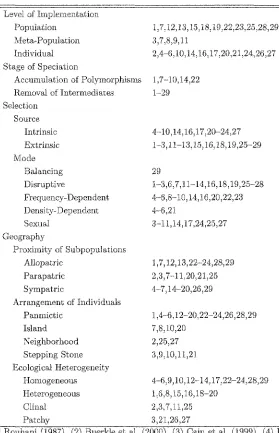
The level of implementation of a model describes the level at which the genetics of the population
is defined. It can also be used to identify the level at which the dynamics of a population model is
governed. There are three such levels: population-based, meta^population-based, and individual-based
models. In a popWaftoTi-boaed model the population is represented by allelic and genotypic frequencies.
drift. In general, these models are mathematically deterministic, the behavior depending upon the
initialization of parameters and lack stochastic effects.
A mefa-popuWion-Wed model, as with the population-based models, the allelic and genotypic
frequencies are modeled by systems of equations. The population is divided into two or more subpop
ulations with independent account of frequencies for each subpopulation. These are often studied with
numerical simulations on a computer.
An ifw&wdu&Z-baaed model explicitly defines each individual within a population. In such models,
and individual is a set of alleles. The behavior of the individual is determined by the phenotype as
expressed by these alleles for the defined trait. The behavior of the model is an emergent property of
the interactions between individuals. Unless strictly controlled, genetic drift is a feature of individual
based models.
Another aspect of speciation models is the stage of speciation being studied. The Erst stage of
speciation is the accumulation of sufficient genetic diversity within the population to be acted upon
by the various mechanisms of speciation. The second stage involves the removal of intermediate geno
types from the population (Gavrilets, 1999). This is often accomplished by disruptive selection on an
ecological trait (adaptive radiation) or sexual selection (reinforcement) imposing a disadvantage on the
hétérozygote leading to the fixation of certain alleles in the various subpopulations. It is this seeming
paradoxical conundrum, the accumulation of diversity in the presence of factors that act against the
formation, viability, and fecundity of heterozygous individuals, that puzzles many researchers. Most
models tend to only focus on the second stage. Those that do not usually have a set of rules for each
stage to avoid any antagonistic effects of the two stages.
For speciation (as defined in chapter 1) to occur there must be some restriction and eventual ces
sation of gene Sow between subpopulations. If the subpopulations are geographically isolated without
significant migration, the process is relatively trivial. In a scenario where subpopulations frequently
exchange individuals or gametes, some form of selective pressure must act to reduce the frequency
of heterozygous individuals. The source of this selection may be from either intrinsic factors, extrinsic
factors, or both. The mode of selection may be any of those outlined in chapter 1. Since they were
previous discussed, they need not be restated here.
fMrnwic sources of selective pressure are those unaffected by the dynamics of the population. These
are often attributed to abiotic environmental factors such as temperature, moisture, and light intensity.
For purposes of modeling, extrinsic factors include those elements which could be biological, but not
intrinsic sources of selective pressure are the result of the behavior of the population. These may be
global (density dependent growth rate) or localized (frequency dependent competition). The strength
and effect of selection changes in response to change in the populations.
The geography of a model encompasses the physical proximity of subpopulations, the spatial
arrangement of members of the population, and the ecological heterogeneity of the abiotic factors. The
modes can be difficult to distinguish and, but have long been important to how scientists think of the
process of speciation. As with the various forms of selection, they have been discussed in chapter 1.
Briefly, they are referred to as allopatric, parapatric, and sympatric.
The arrangement o/ individual; (or quasi-individuals for non-individual based models) may be
pan-mictic, island, stepping-stone, and explicit. In a panmictic population every individual has the potential
to interact equally with other individuals. This is the typical arrangement of population-based models
where there is no explicit accounting of individual organisms, this is also common of individual based
models studying sympatric speciation in the absence of spatial assortment. Island, neighborhood, and
stepping-stone models place individuals (or quasi-individuals) into subpopulations. Individuals inter
act with those within their subpopulation and may migrate to other subpopulations. The distinction
between these different spatial arrangements indicates the level of connectivity between the
subpopu-lations. In an island model all subpopulations are assumed to be adjacent. That is, every island is
assumed to be adjacent to every other island. The other extreme a stepping-stone model assumes a
subpopulation is adjacent to only a subset of the other subpopulations. Migration only occurs between
adjacent subsets. A neighborhood model defines the strength and frequency of interaction as well as
the probability of migration as inversely proportional to the distance between the subpopulations.
EcoZpgicaZ heterogeneity describes the spatial arrangement of ecological factors. In a homogeneous
environment, the conditions are the same throughout the model. A clinal environment is a monotonie
succession of one set of ecological factors by another. This may be an abrupt boundary or a gradual shift
from one type to another, but there is no repetition, each region (contiguous set of adjacent, identical
resources). In a patchy environment, a resource type does not cover a contiguous spatial area, but is
separated by regions of other resource types.
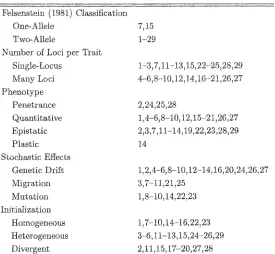
The genetic representation of a population is a critical factor of every model. The implementation
of the genetic system of the population can have a strong effect on the outcome of a simulation (Leahy,
2002). This becomes all the more important given the current debate on the number and effect of loci
involved in the process of speciation (Via, 2002). This necessitates a fairly comprehensive classification
(1981) classification, number of loci, the formation of the phenotype, the presence of stochastic effects
on, and the initialization of the gene pool.
Felsenstein (1981) identified two classes of speciation: one-o/ZeZe and Zwo-oJWe. This classification
is concerned with the genetics underlying the reinforcement of reproductive barriers. In a one-allele
model, reinforcement is due to the substitution of the same allele at a locus within the subpopulations.
A two-allele model depends on different allelic substitutions in each of the subpopulation. It is noted
(Felsenstein, 1981) that the two classes are not mutually exclusive and may co-occur within a model.
When discussing mathematical and computational modeling, it is useful to use the terms (octw
and rather than gene. This helps to avoid confusion as many would disagree as to whether the
locus or the trait is the "gene." In this chapter, a (ocua is the smallest unit of the genetics in the
model. A froit is the character acted upon by selection. Models are readily classified by num&er
o/ be: per (mit. The earliest models involved a single locus or two loci per trait. These are easily
analyzed using traditional equations of population genetics. More recent models involved numerous loci
per trait (Sadedin and Littlejohn, 2003; Kaneko, 2002; Dieckinann and Doebeli, 1999; Gavrilets, 1999;
Kondrashov and Kondrashov, 1999). Forming and solving a system of equations grows increasingly
complex as more loci are added. This has been a limiting factor to early models and in part explains
the appeal of individual-based models.
The expression of the loci of a trait is the phenotype. The phenotype determines the response to
selective pressures of the model. It is desirable in modeling to keep this system simple to maintain an
acceptable level of realism within the model. Most often, models involve either penetrance or quan
titative effects. Epistasis is pervasive in models even though it is not always explicitly stated as a
factor. The nature of epistatic interactions is frequently implemented as a heterozygote disadvantage in
either fecundity or viability. A few rare models models incorporate phenotypic plasticity (e.g. Kaneko
2002) which permits variation in phenotype in response to extrinsic factors rather than being deter
mined exclusively by the genotype. Penetrance ranks alleles at a locus by some level of expression in
the presence of other alleles. The most simple form of penetrance is complete penetrance, that is, a
dominance-recessive relationship, where the dominant allele is expressed and the recessive allele silent
in a heterozygote. More complicated relations allow for the level of expression to vary between the
range of silent and fully expressed. Quantitative traits assume that the effect of an allele is consistent.
This may be an additive, multiplicative, or exponential effect, but direction of change of the phenotype,
if not the magnitude, remains the same regardless of the the alleles present at other loci. Epistasis de
other loci. Under this broad definition, it is easy to claim that moat models demonstrate some epistatic
interactions. For purposes of this discussion, unless a model explicitly examines epistatic effects, it will
not be considered a model with epistasis. Otherwise, it would be necessary to develop a fine-grained
taxonomy to explore the intricacies of accidental and emergent epistasis.
Models vary in the afocAasfic electa present in the implementation. Stochastic effects are those
that are the result of probabilistic causes. The most frequent of these is recombination. Mutation and
genetic drift are less common and often seen as undesirable due to the uncertainty such effects present
to the model.
Finally, the initial allelic frequencies have a strong effect on many models (Kirkpatrick and Ravigné,
2002). Models attempting to study the complete process of speciation begin with a homogeneous
population where every individual is homozygous and identical. Models concerned with the removal
of intermediate (heterozygous) genotypes assume genetic diversity as a pre-existing condition. If the
goal is to observe the divergence within a gene pool, initialization is heterogeneous, usually assuming a
hardy Weinberg equilibrium. For studies observing the effect of contact between two previously isolated
populations, the model is initialized with two divergent populations, fixed for different alleles.
2.2 Individual-Based Models of Speciation
The reason for the recent proliferation of individual-based models is largely due to the development
of computers capable of running the necessary computations. In an early study by Rice (1984) one
simulation required 26 hours on a 2.5 MHz machine with 64 KB of RAM. By contrast, at the time
of this dissertation, machines running in excess of 1 GHz with 500 MB of RAM are common. The
Pseudophyte Evolutionary Algorithm (PEA) introduced in chapter 3 was primarily run two machines,
one with a 2 GHz processor and 1.5 GB of RAM and another with a 3 GHz processor with 1 GB of
RAM.
With rare exception, individual based models of speciation implement the genetics as sets of
bi-allelic (typically "zero" and "one") loci. The traits are frequently quantitative (Rice, 1984; Doebeli,
1996; Dieckmann and Doebeli, 1999; Doebeli and Dieckmann, 2000; Gavrilets et al., 1998, 2000; Sadedin
and Littlejohn, 2003) although there are models implementing the Hamming distance (number of allelic
mismatches across loci of two binary strings) (Kondrashov and Shpak, 1998; Gavrilets et al., 1998;
Gavrilets, 1999), dominance (Orr, 1991), epistasis (Buerkle et al., 2000), or combining methods of
phenotypic computation (Kondrashov and Mina, 1986; Kondrashov and Kondrashov, 1999). There are
the phenotype is determined by a set of equations or operations that make up the genotype of the
individual.
Another commonality among individual-based models is the focus on parapatric and sympatric
modes of speciation, modes difficult to study using population and meta-population based models.
When only one or two loci involved in speciation, speciation is slow and rare (Felsenstein, 1981). It
wag suggested that involving more loci would both expedite the process and make it more likely (Nei
et al., 1983). These are conditions easily implemented in individual-based models. Furthermore, the
effect of genetic drift helps to increase the probability of sympatric and parapatric speciation (Doebeli
and Dieckmann, 2000).
2.2.1 Accumulating Genetic Diversity
Research by Kaneko (2002), Doebeli and Dieckmann (2000), Dieckmann and Doebeli (1999), Gavrilets
et al. (2000), Gavrilets (1999), Gavrilets et al. (1998), are notable in that they do not assume initial
genetic diversity within the population. Rather, variability is introduced through mutation. Since the
initial population is usually homogeneous, these models examine speciation through the entire
pro-cess. The accumulated mutations have variable affects on the fitness of the individual. Whether these
changes are assumed to be selectively nearly-neutral (Gavrilets et al., 2000; Gavrilets, 1999; Gavrilets
et al., 1998) or ecologically relevant (Kaneko, 2002; Doebeli and Dieckmann, 2000; Dieckmann and
Doebeli, 1999) the same initial behavior is observed: the mean phenotype of the population evolves to
a median value as determined by the number of bi-allelic loci in the neutral cases, or an ecologically
stable attractor when the mutations are not necessarily neutral.
The amount of variability reaches a threshold level, there is selection against new variation due to
decreased fecundity in the novel genotypes as the result of incompatibilities with other members of
the population (Gavrilets, 1999). Unless some form of disruptive selection is introduced or
frequency-dependent selection against the most common phenotypes is in place, the population will remain at this
point in phenotypic space. In the presence of the selective pressures just mentioned, the population
is able to divide. The subpopulations then accumulate incompatible changes and undergo genetic
divergence. Another important feature of all these models is that ecological selection pressure need not
be strong (Gavrilets, 1999; Gavrilets et al., 2000) or disruptive (Kaneko, 2002; Doebeli and Dieckmann,
2.2.2 Extrinsic versus Intrinsic Sources of Selection
Extrinsic sources of selection often involve disruptive selection base on an ecological trait. The
underlying assumption of the disruptive selection is low fitness of the heterozygote relative to the
parental types as the result of inviability or infertility. This is often attributed to local adaptation
of individuals to the environment (Buerkle et al., 2000; Gavrilets, 1999; Kondrashov and Kondrashov,
1999; Gavrilets et al., 1998; Kondrashov and Mina, 1986; Rice, 1984). Rice (1984) and Kondrashov and
Mina (1986) demonstrate that selection does not need to be strong to initiate fission in the gene pool.
A difSculty with extrinsic disruptive selection is its antagonistic nature to the accumulation of
variability. Under strong selection with the possibility of genetic drift, the population will evolve toward
one of the two optima defined by the fitness function. On the other hand, if selection is insufficiently
strong and there are mechanisms of assortative mating (either sexual selection or spatial arrangement)
it is unlikely that complete reproductive isolation will evolve (Buerkle et al., 2000; Dieckmann and
Doebeli, 1999). The usual solution is to assume initial diversity and not be concerned with the origin
(e,g. Rice 1984) or impose constraints after the accumulation of variability (e.g. Gavrilets et al. 1998).
Intrinsic sources of selection are determined by the characteristics of the population. This allows
selection pressures to change through time as the population evolves, and avoid the need to impose
restrictions after the accumulation of diversity. Sexual, frequency-dependent, and density-dependent
selection are the forms of selection that most often result from intrinsic sources of selective pressure
in models. Frequency-dependent selection can be highly effective when it involves competition for
resources, leading to the bifurcation of a population even when there is an ecological optimum (Kaneko,
2002; Doebeli and Dieckmann, 2000; Dieckmann and Doebeli, 1999).
2.2.3 The Case for Reinforcement
Reinforcement, the process by which selection against heterozygous individuals leads to the evolution
of genetic mechanisms for assortative mating, can greatly improve the probability of speciation and
facilitate the evolution of complete reproductive isolation (Sadedin and Littlejohn, 2003; Doebeli and
Dieckmann, 2000; Orr, 1991; Rice, 1984). In the absence of selective pressures, reinforcement is unlikely
unless there is a pre-existing strong genetic basis for sexual selection (Kondrashov and Shpak, 1998).
Likewise, in the absence of reinforcement, natural selection must be very strict for complete speciation
(Buerkle et al., 2000; Dieckmann and Doebeli, 1999; Kondrashov and Kondrashov, 1999; Rice, 1984).
Reinforcement requires that subpopulations be in either parapatry or sympatry, able to interact and
The efficacy of reinforcement varies in relation to the number of loci involved, the amount of link
age between the assortment loci and the ecological trait loci, the manifestation of the heterozygous
disadvantage, and the probability of encountering an individual of a sufficiently dissimilar genotype.
In a model of single gene speciation presented by Orr (1991), the assortative trait was the chirality
of a snail shell. It was possible for two snails of the same chirality to mate, but not of different ones.
To prevent rapid extinction of the rare mutant allele, the chirality of the shell wag determined by the
maternal genotype, not the genotype of the individual itself. Without this condition, selection would
likely remove the novel mutation. In this study, it was found that reproductive isolation could evolve
quickly under such conditions.
However, single locus control of assortative mating is the exception rather than the rule (Orr, 1991).
More than one locus involved in the evolution of reproductive isolation increases the likelihood of
speciation, but too many will reduce the effectiveness of these loci (Kondrashov, 1986; Kondrashov
and Kondrashov, 1999). The optimal number of loci is uncertain and some studies suggest that this
may depend on how the simulation is represented in the algorithm (Leahy, 2002). In a simulation by
Kondrashov and Kondrashov (1999), it was found that fewer loci improve the likelihood of speciation,
with more than eight making reinforcement highly improbable. By contrast, Sadedin and Littlejohn
(2003) observed reinforcement with 10 loci. The cause for this seeming contradiction is assuming that
use of n loci in one simulation is equivalent to using n loci in another. In truth, there has been no
thorough study comparing different modeling approaches to confidently state what constitutes "many"
and "few" loci between models.
Work by Gavrilets et al. (1998) suggested that hybrid infertility would result in stronger
reinforce-ment than hybrid inviability. Sadedin and Littlejohn (2003) presented a model what could distinguish
between hybrid inviability (mortality before reproduction) and infertility (the inability to produce off
spring). Their results verified this hypothesis and demonstrated a fitness cost to mating with infertile
individuals.
2.3 Conclusions
Mathematical and computational models are important to furthering our understanding of specia
tion. With the advent of more powerful computers, the number of individual-based models has also
increased, permitting research that was previously impossible due to the time and resources required.
Individual based models focus largely on sympatric and allopatric speciation. They serve to extend
Table 2.1 References for classification of models of speciation
Level of Implementation
Population 1,7,12,13,15,18,19,22,23,25,28,29
MetarPopulation 3,7,8,9,11
Individual 2,4-6,10,14,16,17,20,21,24,26,27
Stage of Speciation
Accumulation of Polymorphisms 1,7-10,14,22
Removal of Intermediates 1-29
Selection Source
Intrinsic 4-10,14,16,17,20-24,27
Extrinsic 1^3,11-13,15,16,18,19,25-29
Mode
Balancing 29
Disruptive 1-3,6,7,11-14,16,18,19,25-28
Frequency-Dependent 4-6,8-10,14,16,20,22,23
Density-Dependent 4-6,21
Sexual 3-11,14,17,24,25,27
Geography
Proximity of Subpopulations
Allopatric 1,7,12,13,22-24,28,29
Parapatric 2,3,7-11,20,21,25
Sympatric 4-7,14-20,26,29
Arrangement of Individuals
Panmictic 1,4-6,12-20,22-24,26,28,29
Island 7,8,10,20
Neighborhood 2,25,27
Stepping Stone 3,9,10,11,21
Ecological Heterogeneity
Homogeneous 4-6,9,10,12-14,17,22-24,28,29
Heterogeneous 1,6,8,15,16,18-20
Clinal 2,3,7,11,25
Patchy 3,21,26,27
(1) Barton and Rouhani (1987), (2) Buerkle et al. (2000), (3) Cain et al. (1999), (4) Dieckmann and Doebeli (1999), (5) Doebeli and Dieckmann (2000), (6) Doebeli (1996), (7) Felsenstein (1981), (8) Gavrilets (1999), (9) Gavrilets et al. (2000), (10) Gavrilets et al. (1998), (11) Gavrilets and Cruz an (1998), (12) Gavrilets and Hastings (1996), (13) Holgate (1966), (14) Kaneko (2002), (15) Kirkpatrick
and Ravigné (2002), (16) Kondrashov and Kondrashov (1999), (17) Kondrashov and Shpak (1998), (18) Kondrashov (1983a), (19) Kondrashov (19836), (20) Kondrashov and Mina (1986), (21) Meszéna et al. (1997), (22) Orr (1996), (23) Orr (1995), (24) Orr (1991), (25) Payne and Krakauer (1997), (26)
[image:33.614.173.452.147.580.2]