Effect of Information System Adoption to Improve
Immunity Function after Curative Resection of
Colorectal Cancer
Seong-Ran Lee
Abstract This research is to measure the effectiveness of information system adoption to improve immunity function after curative resection of colorectal cancer. The data were surveyed and interviewed by 174 people who visited general surgery at a general hospital in C province from May 10 through July 21, 2017. The chi-square test was conducted to obtain their personal information about the participants. In addition, the t-test also examined the changes of symptoms and physical habits before and after applying information system. The following are the contents derived from the data. Firstly, the mean score(39.17±3.25) of physical strength after applying the advanced system significantly increased than subjects(18.62±2.16) before applying the advanced model(t=-4.72, p=.000). Secondly, the average score of the practice for physical improvement in life showed a significantly higher rate after applying than before applying information system(p<.05). Thirdly, the insomnia after curative resection of colorectal cancer by applying the information system has continued to improved by 35 percent. That is, after the surgery of the colon, the quality of sleep had improved after applying information system. Therefore, it is expected that the successful implementation of the medical information system will help to construct the foundation of advanced knowledge infrastructure in the 21st century.
Keywords: Immunity, Function, Curative resection, Mediation, Colorectal cancer.
I. INTRODUCTION
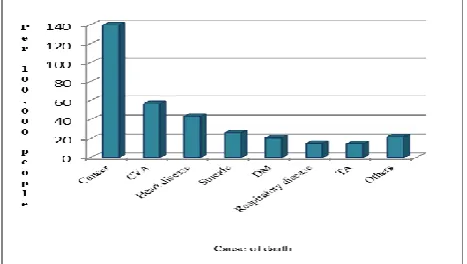
Colorectal cancer is not a benign disease that occurs in the colon. Rectal and colon cancers in South Korea. It is the fourth most common malignant tumor after stomach, lung, and liver in male in Figure 1. On the other hand, women are the fourth largest distribution after thyroid, breast, and stomach in female in figure 2. The causes of death are in Figure 2. Cancer incidence distribution by nation in 2016 (1),(2),(3) . Colorectal cancer is the third most
common cause of cancer deaths in Korea in Figure 3. The National Incidence Rate of Colon Cancer in 2017 in Figure 4. According to the state of the country, France was the highest in terms of colon cancer (4),(5),(6),(7).
Colorectal cancer develops 26.1 percent in the cecum and the ascending colon, 15.3 percent in the transverse colon, 5.4 percent in the descending colon, 25 percent in the sigmoid colon, 20 percent in the rectum. and 10 percent in the rectum-sigmoid colon joints. Colorectal cancer can develop to every people. About 92 % of patients is diagnosed after age 45. As age increases, colon cancer also increases. There are colorectal cancers after colon polyp (8),(9),(10),(11).
If patients turn out to be colon cancer, the patients will have curative resection of colorectal cancer. Early colon cancer patients must perform laparoscopic operation. Laparoscopic surgery has been known it that the risks of surgery are insufficient and has a risk of complications after surgery.
Revised Manuscript Received on May 06, 2019
Seong-Ran Lee, Dept of Medical Information, Kongju National University, South Korea.
But the cancer is still at risk of complications. The complications that develop in the lungs after colon cancer surgery. The cancer is still at risk of complications
which are liver and stomach. lt is blocked lung from entering the air and obstruct the trachea. If patients neglect this complication, they can cause pneumonia and pulmonary infarction (12),(13),(14),(15),(16).
So it is important to improve the immune system after curative resection of colon cancer. Many microbacteria have gone into the human body. The tears of man have also gone into microbacteria. The stool of man is a sort of microbacteria. Therefore, patients with colorectal cancer can prevent colorectal cancer through enhancing their immune function. The human body is competing against
bacteria that entering all parts of human body. This is called an immunity system. When it is very strong, it can be a source of protection against foreign body and allergy reaction. Weak immune system can lead to more diseases. Early recuperative powers is especially important after colon cancer surgery. Postoperative
immunity is important before the body collapses. ln the late stages of colorectal cancer, the immune system is also weak, making it difficult to treat (17),(18),(19),(20).
Thus, it is important to strengthen the immune system. lt can be
minimized with treatment and prevention to the patients after resection of colorectal cancer. The hardening of immunity function
is possible through changes in lifestyle. The advanced information system can change life behavior. In previous studies, the colorectal cancer patients are mostly treatment. It is insufficient to strengthen the immune function (21),(22),(23),(24).
Existing literature suggest that monitoring of cancer patients is cost-effective, but relies on identifying more cases of cancer patients, and increasing treatment. Information system of this paper could be reduced recurrence and mortality caused by a lack of immunity after curative resection of colorectal cancer.
Therefore, this research is to establish the effectiveness of information system adoption to improve immunity function after curative resection of colorectal cancer. Through this contents, it will be used as a data to prevent colorectal cancer. It will also greatly contribute to improving postoperative immunity function in colorectal cancer patients.
[image:1.595.308.544.566.713.2]Fig. 2 : The incidence of women cancer in South Korea in 2017
II. Materials and Methods
2.1 Building A New Information Design
The research is to verify the system for building a new information design from problem to solution. The advanced model requires the overall foundation to collect, process, store, transfer, propagate, and apply. The design is to identify a problem through analysis of the subjects in the planning phase.
The data analysis was performed on the subjects in Figure 5. The first phase, it is to perform the methods of building steps and sets goals for constructing of the system. The second phase is to verify the factors of successful model and analyze the contents. Moreover, the first of preparation stage is to be analyzed in the medical profession. The last phase leads a continuous investigation after the process to identify the differences before and after the applying mediation for daily activities between the experimental and control group.
2.2 A Framework of Model in Patients
This paper has been constructed a framework of model to verify
the effectiveness of the system adoption to improve immunity function after curative resection of colorectal cancer.
This paper presents an attempt to understand the dynamics of the process from an innovation research perspective for the construction of information system in cancer patient management. This paper described how to use modules to assure the procedure and and the development efficiency. In this paper, we mainly did two things, the first is to build the big data storage platform. The sensors sent back the real-time data, which will be stored in the temporary database. Every week, these data will be synchronized to the big data platform for permanent storage and backup. The second is the visualization of the current data. Based on the data we have got, we designed different diagrams accomplished by using charts for the visualization of the current data. Additional, for the later analysis of the history data, we designed a data processing flow in the big platform for processing enormous amounts of data. The details of the information system are as follows. Creation of information system architecture, processes inherent to the functioning of information systems, information systems management, observation of weaknesses and strengths of information systems, increase of information systems effectiveness, structuring and creation of data bases etc.
Fig. 3 : The causes of death in Korea in 2017 † CVA : cerebrovascular accident
DM : diabetes mellitus TA : traffic accident
2.3 Types of A New Data base
A new data base was constructed through investigation of previous references (25)(26),(27),(28), evaluation of colorectal cancer patients’ needs, available updates on colorectal cancer patients. Databases are essential for managing big data. Data base is a set of data that is integrated and managed for the purpose of being shared and used by multiple people. It is to improve the efficiency of data retrieval and renewal by eliminating duplicate data items and by organizing and saving data. The database performs structural design, data processing, input, and editing through data collection and classification.
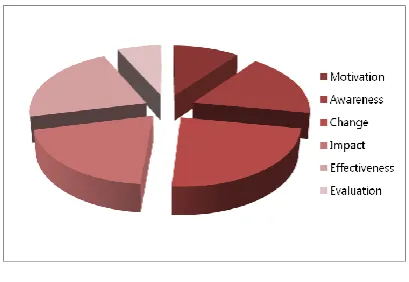
There are many types of data. The data consisted of six types. 1) structure of design 2) identification of subjects 3) data analysis 4) data of application 5) contents of evaluation 6) implementation of the search for data. The effect of the advanced information system on its application is shown in Figure 6. lt was derived the user’s satisfaction of the information system.
2.4 Tracking of Immunity in Patients
Subjects were formed into test and normal people. The subjects were compared to any changes in factors that affect the advanced model. In order to verify the efficiency of information system, functional immunity after surgery in colorectal cancer patients analyzed over time after applying information system : 11, 21, 31, 41, 51, 61, 71 days. lt analyzed the trend of immunity function in experimental and control group after surgery in colorectal cancer patients.
[image:2.595.48.292.50.221.2] [image:2.595.310.544.584.716.2]2.5 Contents of Questionnaires
Data were surveyed and interviewed by 174 people who visited general surgery at a general hospital in C province from May 10 through July 21, 2017.
The advanced information system has been used three times a month by video, power point, and excel etc. It assessed how effective information system had been for the participants. And then, the effect measured the change of physical symptoms after the application of information system in comparison to before mediation. In this paper, insomnia and habits, physical condition and practice rates after the application of mediation are shown graphically over time.
2.6 Distribution of Subjects
Research subjects were patients who were diagnosed with colorectal cancer at least 5 months ago by general surgery in C province. This program was totally consisted 174 persons, it has been classified into two parts. The experimental group of 87 patients which was assigned as group with information mediation, while the control group of 87 patients was assigned as group with no information mediation. The two groups are compared to know the difference of changes which affects the immunity function process,
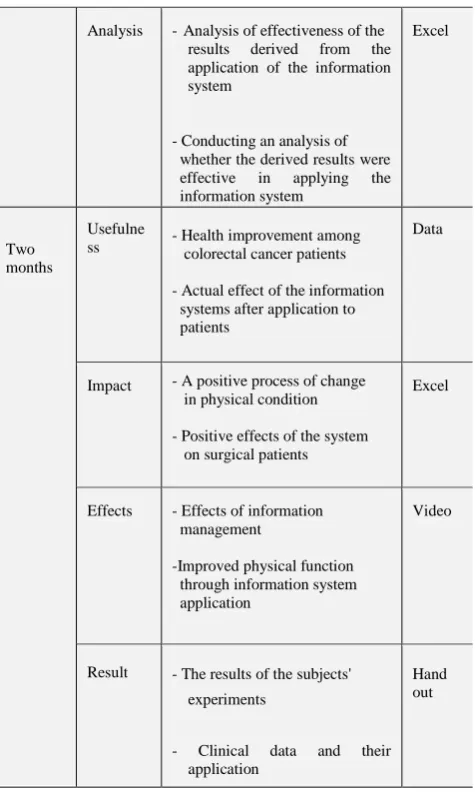
On the other hand, in order to estimate the information system efficiency, a follow-up test had been estimated the durability performance of insomnia, habits and symptoms for 71 days. The experimental group was applied by the information system during a eleven-week period of time, twice or three a week, for 9 sessions each of which lasted 40 minutes in Table 1. During the period, the control group received no application. The participants were conducted the assessment after finishing program.
2.7 Data Collection Tool
The effects of the program were measured before and after the test by health related behavior’s application. The data collection tool was composed of totally 39 items. lt consisted of 8 items for personal information of study participants. lt consisted of 10 items such as gender, age, family history, other chronic disease, income, marital status, education, religion for effect of applying of advanced system in colorectal cancer patients. lt consisted of 12 items such as physical strength, usefulness etc. for symptoms and habits in participants. lt consisted of 9 items such as anemia, anorexia, etc. for human body and mental state. This questionnaire covered three areas and employed a five point scale. After collecting the survey questionnaires, the usable data was conducted after excluding such as distrust or omission.
To see if the experimental groups were equivalent to control groups in the immunity-related examination, the process using SAS software package(version 9.2) for statistical analysis was carried out to verify the comparison between the experimental and control group.
Data can be handled using statistical packages, which are software of SAS. lt is able to join and process many data. The strong point of SAS can solve various social problems such as disease, health, education, and information through data analysis. The disadvantage of SAS provides too much output at a time, some of them are necessary. SAS can collect and analyze data through internet. lt is an integrated application software. SAS can convert data into information and provide information at the right time for those who need it.
Fig.5 : Analysis of data carried out to participants
2.8 Contents of the Advanced Information System
The following represents the process of an information model in Figure 7. 1) Introduction : structure, effectiveness, reliability, feasibility, and efficiency of advanced systems. 2) Quality : positive changes of immunity function process, examination and therapeutic contents : just after application. 3) Motivation : disease recognition and attitude of patients. 4) Awareness : medical research and education data 5) Change : development of symptoms 6) Time : timely management as provided by information application 7) Impact : process for changing symptoms of insomnia after applying the system 8) Efficiency : effectiveness of the advanced model 9) Conveniency : contents of an testing model 10) Connection : connection of information system model 11) Feasibility : reality of a model 12) Assessment : feeling of a structured information base file.
2.9 Design of Information System
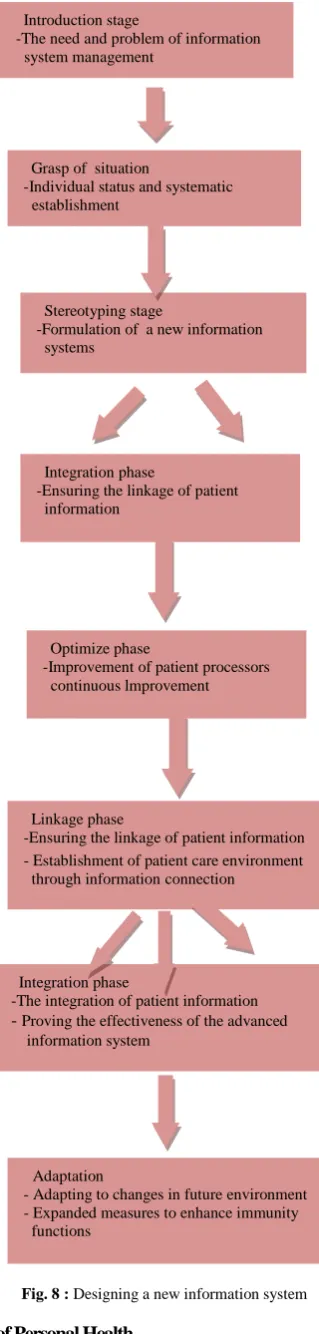
The following represents the design of the information system in Figure 8.1) Introduction stage, 2) Grasp of situation, 3) Stereotyping stage, 4) Integrate, 5) Optimize, 6) Linkage phase, 7) Adaption
Fig.6 : User satisfaction of the information system
2.10 Methods
The chi-square test was conducted to obtain personal health of research subjects. lt was analyzed by name and percentage. In addi tion, the t-test was also derived the degree of symptoms and habits before and after applying mediation. The pairwise t-test was done
to compare the before and after applying the information of human body and mental state rate after surgery.
It was also conducted to verify a statistically significant difference in mean scores between the two groups to improve physical condition and practice after surgery in colorectal cancer patients. All associations were considered to be statistically significant if the two-sided P value was
0.05 or less.
Efficiency
Convenien cy
Informatio n
[image:3.595.325.530.48.189.2] [image:3.595.318.502.441.574.2]Fig. 7 : Process of an information model
Table 1: Methods Required For the Application of Advanced Systems
Time Division Contents Metho
ds
One month
Inputs - Input and procedure of information systems
- Effectiveness of the latest information systems inputs
Hand out
Procedur e
- Positive changes of daily living Immunity function after resection in colon cancer patients
- Proposing a way to practice health
Power point
Store -The treatment attitude of colon cancer patients
-Attitudes to improve immunity function
-Enhancement of postoperative immunity
Excel
Analysis
- Useful data for participants’ management
-Assessment of the information system quality
- Communication among colo rectal cancer patients
- Statistical data for chronic disease patients
Hand out
Analysis - Analysis of effectiveness of the results derived from the
application of the information system
- Conducting an analysis of whether the derived results were effective in applying the information system
Excel
Two months
Usefulne
ss - Health improvement among colorectal cancer patients
- Actual effect of the information systems after application to patients
Data
Impact - A positive process of change in physical condition
- Positive effects of the system on surgical patients
Excel
Effects - Effects of information management
-Improved physical function through information system application
Video
Result
- The results of the subjects'
experiments
- Clinical data and their application
Hand out
III. RESULTS
3.1 Personal lnformation of Research Subjects
Table 2 was derived their personal information of research subjects. According to the age category, it divided under 50 years, between 51 and 60 years, and over 61 years old. In cases older than 61, the experimental group showed a higher rate than the control group. In case of family history,the experimental group with family history(65.4%) was significantly higher than the ratio(35.6%) of control group(X2=1.64, p<.05).
For other chronic diseases such as diabetes mellitus, degenerative arthritis, cancer, chronic renal failure, artherosclerosis, myocardial infarction etc, the experimental group who has other chronic diseases showed a significantly higher rate than the control group who has other chronic diseases(X2=3.71, p<.01). The experimental
group who has married was significantly higher than the control group(X2=9.14, p<.05).
Change to positive
health Feasibility
of a model
Evaluatio n of a model quality
Reliability of system model Classification
[image:4.595.54.283.72.273.2]Table 2 : Personal Information of Research Subjects
Variables
Experi group Control group
X²
N(%) N(%)
Gender
Male 48(55.2) 36(41.4) 2.63*
Female 39(44.8) 51(58.6)
Age
≤50 17(19.5) 23(26.4) 5.27*
51-60 41(47.1) 38(43.7)
≥61 29(33.3) 26(29.9)
Family history
Yes 42(65.4) 31(35.6) 1.64*
No 45(34.6) 56(64.4)
Other chronic
diseases
Yes 57(65.5) 28(32.2) 3.71**
No 30(34.5) 59(67.8)
Education level
Under middle
school 23(26.4) 29(33.3) 8.06
High school 39(44.8) 35(40.2)
Over
college 25((28.7) 23(26.4)
Monthly
Income
≤99 19(21.8) 23(26.4) 11.35
100-199 27(31.0) 35(40.2)
≥200 41(47.1) 29(33.3)
Marital status
Married 46(52.9) 58(66.7) 9.14*
Unmarried 25(28.7) 16(18.4)
Separation
/divorce 16(18.4) 13(14.9)
Religion
Christianity 24(27.6) 21(24.1) 12.63
Catholic 16(18.4) 14(16.1)
Buddhism 19(21.8) 22(25.3)
Others 28(32.2) 30(34.5)
Total 87(100.0) 87(100.0)
* p<.05 **p<..01
Fig. 8 : Designing a new information system
3.2 Degree of Personal Health
The degree of personal health to be affected by the application of the information system.
Grasp of situation
-Individual status and systematic establishment
Integration phase
-Ensuring the linkage of patient information
Optimize phase
-Improvement of patient processors continuous lmprovement Stereotyping stage
-Formulation of a new information systems
Linkage phase
-Ensuring the linkage of patient information - Establishment of patient care environment
through informationconnection
Adaptation
- Adapting to changes in future environment - Expanded measures to enhance immunity
functions Integration phase
-The integration of patient information
- Proving the effectiveness of the advanced information system
Introduction stage
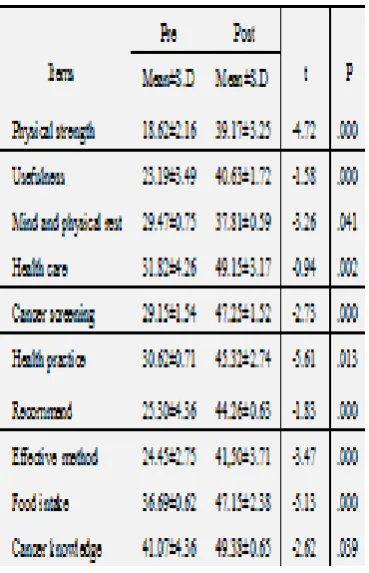
[image:5.595.42.274.71.777.2]Table 3 was derived the degree of personal health before and after the application of the information system. The mean score(39.17±3.25) of physical strength after applying the advanced model significantly increased than people(18.62±2.16) before applying the advanced model(t=-4.72, p=.000). The mean score(47.25±1.52) of cancer screening has improved significantly after the training period than mean score(29.15±1.54) before applying the advanced model(t=-2.73, p=.000).
[image:6.595.325.522.85.333.2]The average score of effective methods in the advanced model was significantly higher in the mean score(41.50±3.71) of subjects after applying the advanced model than mean score(24.45±2.75) of subjects before applying the advanced model(t=-3.47, p=.000). The mean score(49.38±0.65) of cancer knowledge in the advanced model showed a statistically significantly higher rate after the training period than before mean score(41.07±4.36) applying the advanced model(t=-2.62, p=.039).
Table 3 : Degree of Personal Health Before and After the Application of the System
3.3 Process of Changing Symptoms and Habits
Table 4 shows the process of changing symptoms and habits in colorectal cancer patients. For anemia, the mean score(28.64±1.59) of subjects with symptoms of anemia before applying the system statistically has decreased significantly than the mean score(19.75±2.41) after applying the advanced model(t=3.17. p=.038). The means score(35.14±3.86) of subjects with diarrhea before applying information system showed a significantly lower rate than the mean score(21.52±0.53) of subjects after applying the information model(t=2.78, p=.000).
The mean score(31.62±1.59) of subjects with hematochezia after applying the system has decreased significantly than the mean score(19.41±2.68) of subjects before applying the system(t=1.55, p=.000). The mean score(9.73±1.38) of subjects who has eating meat after applying the system has decreased significantly than the mean score(14.26±1.15) of subjects before applying the system(t=2.61, p=.003).
Table 4 : Process ofChanging Symptoms and Habits
[image:6.595.73.258.283.570.2]3.4 Human Body and Mental State
Table 5 shows human body and mental state of subjects. The mean score(28.64±1.59) of subjects who had suffered from insomnia before applying the mediation had been decreased than the mean score(22.95±2.41) of subjects who have suffered from insomnia before applying the system(t=3.17, p=.162).
[image:6.595.309.542.498.836.2] [image:6.595.309.544.499.833.2]The mean score(25.27±1.36) of subjects who have suffered from depression state after applying the system had been decreased significantly than the mean score(16.13±4.93) of subjects before applying the system(t=1.94, p=.000). For vitality, the average score(31.41±2.68) of those who are vitality in life after applying the system showed a significantly higher rate than the mean score (19.62±1.59) of subjects before applying the system(t=-1.57, p=.000)
Table 5 : Human Body and Mental State
Items
Pre Post
t p
Mean±S.D Mean±S.D
Insomnia 35.92±0.46 21.74±0.63 1.97 .025
Depression 33.54±3.25 24.61±3.74 3.51 .046
Performance 18.14±1.86 20.49±1.63 -5.42 .519
Vitality 24.95±0.42 37.82±0.25 -1.73 .000
Dizziness 27.22±3.75 23.42±1.81 6.26 .570
Personal relationship
35.16±0.96 26.17±3.25 1.83 .000
Will of life 24.91±1.46 30.94±0.55 -2.74 .168
Positive thinking 19.52±0.38 25.19±2.41 -4.16 .002
Physical movement
3.5 Degree of Progress in
3.6 Immunity Function Status
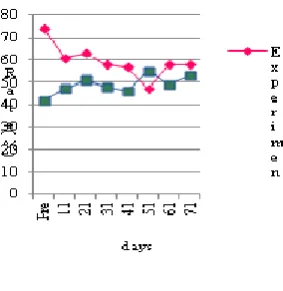
Fig. 9 was derived the degree of progress in immunity function status after curative resection of colorectal cancer by applying the information system. The resilience rate of performance activity showed an increase in the experimental group after 41 days after applying the system. The resilience continued to increase after 31 days in the experimental group.
[image:7.595.343.510.67.183.2]The physical resilience was higher immunity function in the experimental group than the control group. However, the application effect decreased slightly after 51 days after applying the system in the experimental group compared to the control group.
Fig. 9 : Degree of progress in immunity function status
3.6 General Physical Symptoms
Fig 10 shows general physical symptoms before and after the information system.
[image:7.595.48.287.208.353.2]Overall, the physical symptoms in the experimental group after curative resection of colorectal cancer by applying the system decreased by 15-30 percent than control group. In addition, physical symptoms in the experimental group after curative resection of colorectal cancer decreased by 74 percent after applying the information system..
Fig. 10 General physical symptoms 3.7 Differences of Insomnia and Performance
Fig. 11 shows the differences of insomnia and performance after curative resection of colorectal cancer. The performance of colon surgery patients had improved by 10 percent after applying the information system. On the other hand, the insomnia after curative resection of colorectal cancer after applying the system had improved by 35 percent. That is, after the surgery of the colon, the quality of sleep had improved after the application of the system.
Fig. 11 : Differences of insomnia and performance 3.8 Physical Condition Through Health Practice
Fig. 12 measured physical condition through health practice to improve immune function after curative resection of colorectal cancer. The health practice after curative resection had improved by 34 percent after applying the information system. On the other hand, the health condition after curative resection of colorectal cancer by applying the system had improved by 10 percent. Therefore, after curative resection of colon cancer, physical condition and immune functions had improved through health practice.
Fig. 12 Physical condition through health practice
IV. DISCUSSION
The purpose of this study is to verify the application of the advanced to improve immunity function after surgery in colorectal cancer patients.
As a result, the subjects who have eaten garlic showed a statistically significantly increase of immunity function in the human body. lt had been decreased the incidence rate of colorectal cancer. The contents were same as many researches on pancreatic cancer (29),(30),(31),(32). This study was derived that participants with colorectal cancer should focus on symptoms of body and habits to enhance immunity function from colorectal cancer patients. From the result, it will help that the research may be used as statistical data for developing vitality for colorectal cancer patients.
[image:7.595.340.497.336.440.2] [image:7.595.89.231.484.630.2]Current practice of exercise in colorectal cancer patients was obtained through application of the advanced model. Therefore, adequate practice behavior in colorectal cancer patients will improve their health status in accordance with proper system.
Curative resection of colorectal cancer is a flow chart of patients in figure 13. It shows a process used to execute the advanced model. 1) feasibility of research 2) selection of study subjects 3) application of data 4) realizability of data analysis 5) assessment of data. The data of this paper, after receiving application, there was in good condition for the hematochezia after application than before application in the mean score of hematochezia. The contents were consistent with the data of many papers (33),(34),(35),(36). Therefore, it needs to maintain daily management.
The data was verified throughout the statistical analysis how effective application contributes to enhance physical function for the prevention of colorectal cancer. The future study should focus on the study of the application effect as enhancement of body function after curative resection of colorectal cancer throughout more research based on data mining (37),(38),(39).
The problem after surgery in colorectal cancer patients lies in that there is nothing put into physical practice despite the increase of knowledge(40),(41).
The data of this finding would be the enhancement of physical practice after surgery in colorectal cancer patients. Thus, this paper was verified that the implemented mediation was derived significant positive effects on the symptoms of subjects and habits. The quality of life in the experimental group has been enhanced over time compared to control group.
It was also derived that it is an effective program for the prevention of colorectal cancer. The latest system has been developed by complementing and revising preliminary program.
[image:8.595.334.491.50.201.2]Therefore, the improvement of immunity function after surgery of colorectal cancer implemented by the application research is quite meaningful. lt will be evidence-based program development which will contribute in reliability under medical conditions for colorectal cancer patients.
Fig. 13 : Process Used to Execute the Advanced Model
V. 5. Conclusion
This research is to establish the effectiveness of information system adoption to improve immunity function after curative resection of colorectal cancer.
The data were surveyed and interviewed by 174 subjects who visited general surgery at a general hospital in C province from May 10 through July 21, 2017. The chi-square test was conducted to obtain their personal information about the subjects. In addition, the t-test also examined the changes of symptoms and habits in the body before and after applying information system. The following are the summary derived from the data.
First, for other chronic diseases, the experimental group who has other chronic diseases showed a significantly higher rate than the control group who has other chronic diseases(X2=3.71, p<.01). Second, the mean score(31.62±1.59) of subjects with hematochezia after applying the system had decreased significantly than the mean score(19.41±2.68) of subjects before applying the system(t=1.55, p=.000).
Third, the mean score(39.17±3.25) of physical state after applying the system significantly had increased than subjects(18.62±2.16) before applying information system(t=-4.72, p=.000).
Fourth, the resilience rate of performance activity showed increases in the experimental group in spite of the 41 days over time after applying the mediation. The resilience had been continued increases after 31 days in the experimental group. Fifthly, overall, the physical symptoms in the experimental group after curative resection of colorectal cancer by applying the system had decreased by 15-30 percent than control group.
Sixth, the insomnia after curative resection of colorectal cancer by applying the mediation had improved by 35 percent. That is, after the surgery of the colon, the quality of sleep had improved since the application of the system.
Seventh, the health practice after curative resection had improved by 34 percent since the mediation was applied. On the other hand, the health condition after curative resection of colorectal cancer by applying the system had improved by 10 percent.
This information system will contribute to strengthening the immune function after colon surgery. This paper will contribute to a successful implementation of medical information system. lt will help to construct the foundation of advanced knowledge information infrastructure for the 21st century. The research would also promote the satisfaction of patients after colon resection and the reliability of the services provided them through rapid service provision and diversified information sharing with the relevant patients, which would enhance the efficiency in handling the relevant diseases.
■ Feasibility of research
-Identifying the feasibility of research
-Practicability to improve immunity
function in surgery patients
■ Selection of study subjects
- Practicability of research plans and data
- Careful selection of the subjects
- Problems in selecting target
- Precautions for selecting subjects
■ Action for extracting data
- Application of advanced model in subjects
- Experimental effect of statistical data
- Action for extracting data to the subjects
■ Realizability of data analysis
- Analysis of the data in the experimental
and control group
- Comparison of data characteristics
■ Evaluation of data
- Effectiveness of the advanced system
[image:8.595.71.233.443.762.2]Furthermore, the establishment of such a database could contribute to the establishment of a systematical medical system that would assist in health assessment.
ACKNOWLEDGMENT
In spite of their busy schedule, I am deeply grateful to those who participated in the improvement of immune function after curative resection in colorectal cancer patients. Our organization is supported by the research projects on clinical information systems by university and the special coordination for promoting science and technology by hospitals.
The paper was revised and expanded under the title of "Performance measurement of educational management information system to prevent colorectal cancer.” This paper was presented at the Education Workshop held in April 2018 at Hanbat National University.
This work was supported by the research grant of the Kongju National University in 2018.
REFERENCES
1. Nishizawa Y, lio M. Takanori S, Sugito M & Tanaka T (2011), Male sexual dysfunction after rectal cancer surgery, International Journal of colorectal disease 1, 12,1541-1548
2. Bmami B, Tolerance of Normal Tissue to Therapeutic Radiation, Radiotherapy Oncol 1, 1, 25-48.
3. Ball D & Melinda K (2013), Men’s experience with sexual dysfun tion post-rectal cancer treatment: a qualitative study, Journal of Cancer Education 28, 3, 494-502.
4. American Cancer Society (2010), Cancer prevention & early detection facts and figures 12, 14.
5. Han MA, Kim KS, Ruy SY & Kang MG (2006), Association between smoking and alcohol drinking and suicidal behavior in Korean adolescents : Korea youth behavioral risk factor surveillance, J Prev Med 49, 248, 252.
6. Cox DR, Regression models and life-tables(2002), Journal of the Royal Statistical Society Series B (Methodological) 34, 187, 220.
7. Doh G, Kim SY & Kim JY (2015), Statistical analysis of economic activity state of workers with industrial injuries using a competing risk model. Journal of the Korean Data & Information Science Societys 26, 1271,1281.
8. Fine JP & R. J. Gray (2009), A proportional hazards model for subdistribution of a competing risk, Journal of the American Statistical Associations 94, 496, 509.
9. Gove W (2003), Sex, marital status, and mortality, American Jou- rnal of Sociology 79, 45, 67.
10. Heagerty PJ, and Zheng Y & Survival Y (2005), Model predictive accuracy and ROC curves,Biometrics 61, 92, 105.
11. Kaplan EL & Meier P (2008), Nonparametric Estimator from lncomplete Observations, Journal of the American Statistical Association 53, 457, 481.
12. Lee, SR (2018), Performance measurement of educational management information system to prevent colorectal cancer, Proceedings of International Workshop of Education, Hanbat National University, Daejeon, Korea, April, 13, 15
13. Orlikowsk WJ (2002), The duality of technology : rethinking the concepts of technology in organizations, Organization Science 33, 387, 388.
14. Poole MS & DeSanctis G (2002), Understanding the use of group decision support systems, in J. Fulk C. Steinfield, Organizations and Communication Technology, Beverly Hills, CA : Sage, 174, 17.
15. Riggins FJ & Rhee HS (2009), Developing the learning network using extranets, International Journal of Electronic Commerce 4, 1, 6. 16. Straub DM, Karahanna E & Evaristo K (2005), Measuring system
usage : implications for lS theory testing, Management Science 41, 8, 1327, 1331.
17. Subramanian GH (2004), A replication of perceived usefulness and perceived ease of use measurement, Decision Sciences 25, 6, 865, 866.
18. Venkatesh V & Morris MG (2000), Why don’t men ever stop to ask for
directions? gender, social influence, and their role in technology acceptance and usage behavior, Mis Quarterly 24, 1, 116, 117. 19. Weick KE (2002), Technology as equivoque, sensemaking in new
technologies, in P.S Goodman, L.E. Sproull & Associates, Technology and Organizations, San Francisco : Jossey-Bass, 2, 4.
20. Typor S, Taylor, PA & Todd K (2005), Understanding information technology usage : a test of competing models, Information Systems Research 6, 2, 144-146.
21. Lee JR, Kim SA, Yoo JW & Kang YK (2007), The present status of diabetes education and the role recognition as a diabetes educator of nurses in korea. Diabetes Research and Clinical Practice 77, 199–204. 22. Cho JH, Chang SA, Kwon HS, Choi YH, KoSH, Moon SD, Yoo
SJ, Song KH, Son HS, Kim HS, Lee WC, Cha BY, Son HY & Yoon KH (2006), Long-term effect of the internet-based glucose monitoring system on HbA1c Reduction and glucose stability: a 30-month follow-up study for diabetes management with a ubiui- tous medical care system. Diabetes Care 29, 2625–2631. 23. Lee JH, Jae MK, Jo MJ & Son HS (2014), Big data utilization
trends in the healthcare, J. of the korea Institute of Electronic Communication Sciences 2, 1, 63-75.
24. Choi JY (2015), Utilization value of medical big data created in operation of medical information system, The Korea Institute of Electronic Communication Sciences 10, 12, 1403-1410.
25. Ministry of Education (2015), Software Training Operation Guide lines, Education Curriculum Policy Department 22-23.
26. Lee JM & Choi JY (2016), A study of business demands on job competency and curriculum for college graduates majoring the medical information, The Korea Institute of Electronic Communication Science 11, 1, 99-106.
27. Jeong HJ (2015), Development and Utilization of NCS and NCS Learning Module, National Assembly Library 52, 4, 4-13.
28. Lee JM & Choi JY (2016), A study of business demands on job competency and curriculum for college graduates majoring the medical information, The Korea Institute of Electronic Communication Sciences 11, 1, 99-106. .
29. Choo HJ & Park JH (2010), Web based PBL teaching learning development model for medical education, The Korea Contents Association 10, 10, 246-254.
30. Choi JY (2016), Roles of the hospital information system in field-centered medical record technician job training, The Korea Society of Health and Welfare 18, 100-114.
31. Korea Data Agency (2016), The Guide for SQL Profession, Korea Data Agency, 20-25.
32. Kim MJ, Choi JY & Kim SH (2015), Introduction to heath informatics, Soomoonsa 245-278.
33. Hong JH (2015), Medical record & health information management, Kommoonsa 9, 107-108.
34. Choi JY (2017), The role and preparation of medical information manager for health big data utilization, Journal of The Health Care and Life Science Reprints 51, 1, 73-81.
35. Choi JY (2016), A study on educational contents of software for the management of medical information, The Korea Society of Heal and Welfare 18, 113-126.
36. Wimalasiri JS, Ray P (2004) & Wilson CS, Maintaining security in a oncology driven multiagent system for electronic health record enterprise networking and computing in healthcare Indus try, HEALTHCOM, Proceedings, 6th International Workshop on 28-29.
37. University of Rochester (2004), Letting the home interface with the healthcare system ; new paradigms for consumers and provide Though Leader’s Workshop White Paper, 35-37.
38. Hair JF, Anderson RE, Taham RL & Black WC (2008), Multivariate data analysis, prentice hall, Upper Saddle River, NJ
39. Harris M & Schaubroek J (2000), Confirmatory modeling in
40. organzational behavior / human resource management : issues and applcations, Journal of Management 16, 2, 337-338.
41. Drzymala, M. Hawkins M. A & Henrys A. J (2009), The effect of treatment position, prone or supine on dose volume histograms for pelvic radiotherapy in patients with rectal cancer. The British Journal of Radiology 82, 321-327.
42. Jee SJ. Hongl Y & JC (2013), Bladder Filing Variations During Concurrent Chemotherapy and Pelvic Radiotherapy in Rectal Cancer Patients Early Experience of Bladder Volume Assessment Using Ultrasound Scanner, Radiation Oncology Journal 31, l, 41-47.
.