Advances in Information Security
Sushil
Jajodia
Consulting EditorCenter for Secure Information Systems George Mason University
Fairfa, VA 22030-4444 email: [email protected]
The goals of the Springer International Series on ADVANCES IN INFORMATION SECURITY are, one, to establish the state of the art of, and set the course for future research in information security and, two, to serve as a central reference source for advanced and timely topics in information security research and development. The scope of this series includes all aspects of computer and network security and related areas such as fault tolerance and software assurance.
ADVANCES IN INFORMATION SECURITY aims to publish thorough and cohesive overviews of specific topics in information security, as well as works that are larger in scope or that contain more detailed background information than can be accommodated in shorter survey articles. The series also serves as a forum for topics that may not have reached a level of maturity to warrant a comprehensive textbook treatment.
Researchers, as well as developers, are encouraged to contact Professor Sushil Jajodia with ideas for books under this series.
Additional titles in the series:
NETWORK SECURITY POLICIES AND PROCEDURES by Douglas W . Frye; ISBN: O- 387-30937-3
DATA WAREHOUSING AND DATA MINING TECHNIQUES FOR CYBER SECURITY by Anoop Singhal; ISBN: 978-0-387-26409-7
SECURE LOCALIZATION AND TIME SYNCHRONIZATION FOR WIRELESS SENSOR AND AD HOC NETWORKS edited by Radha Poovcndran, Cliff Wang, and Sumit Roy; ISBN: 0-387-32721-5
PRESERVING PRIVACY IN ON-LINE ANALYTICAL PROCESSING (OLAP) by Lingyu Wang, Sushil Jajodia and Duminda Wijesekera; ISBN: 978-0-387-46273-8
SECURITY FOR WIRELESS SENSOR NETWORKS by Donggang Liu and Peng Ning; ISBN: 978-0-387-32723-5
MALWARE DETECTION edited by Somesh Jha, Cliff Wang, Mihai Christodorescu, Dawn Song, and Douglas Maughan; ISBN: 978-0-387-32720-4
ELECTRONIC POSTAGE SYSTEMS: Technology, Security, Economics by Gerrit Bleumer; ISBN: 978-0-387-29313-2
MULTIVARIATE PUBLIC KEY CRYPTOSYSTEMS by Jintai Ding, Jason E. Gower and Dieter Schmidt; ISBN-13: 978-0-378-32229-2
UNDERSTANDING INTRUSION DETECTION THROUGH VISUALIZATION by Stefan Axelsson; ISBN-10: 0-387-27634-3
QUALITY OF PROTECTION: Security Measurements and Metrics by Dieter Gollmann, Fabio Massacci and Artsiom Yautsiukhin; ISBN-10: 0-387-29016-8
COMPUTER VIRUSES AND MALWARE by John Aycock; ISBN-10: 0-387-30236-0 Additional information about this series can be obtained from
Secure Data Management
in
Decentralized Systems
edited by
Ting Yu
North Carolina State University
USA
Sushi1 Jajodia
George Mason University
Ting Yu Sushi1 Jajodia
North Carolina State University George Mason University
Dept. Computer Science Center for Secure Information Systems
3254 EB I1 4400 University Drive
Raleigh NC 27695 Fairfax VA 22030-4444
[email protected] [email protected]
Library of Congress Control Number: 2006934665
SECURE DATA MANAGEMENT IN DECENTRALIZED SYSTEMS
edited by Ting Yu and Sushil Jajodia
ISBN- 13: 978-0-387-27694-6 ISBN- 10: 0-387-27694-7 e-ISBN-13: 978-0-387-27696-0 e-ISBN- 10: 0-387-27696-3
Printed on acid-free paper.
O 2007 Springer Science+Business Media, LLC
All rights reserved. This work may not be translated or copied in whole or in part without the written permission of the publisher (Springer Science+Business Media, LLC, 233 Spring Street, New York, NY 10013, USA), except for brief excerpts in connection with reviews or scholarly analysis. Use in connection with any form of information storage and retrieval, electronic adaptation, computer software, or by similar or dissimilar methodology now know or hereafter developed is forbidden. The use in this publication of trade names, trademarks, service marks and similar terms, even if the are not identified as such, is not to be taken as an expression of opinion as to whether or not they are subject to proprietary rights.
Contents
Preface..
...
VIIPart I Foundation
Basic Security Concepts
Sushi1 Jajodia, Ting Yu
. . .
3Access Control Policies and Languages in Open Environments
S. De Capitani di Vimercati, S. Foresti, S. Jajodia, I! Samarati
. . .
21Trusted Recovery
Meng Yu, Peng Liu, Wanyu Zang, Sushi1 Jajodia
. . .
59Part I1 Access Control for Semi-structured Data
Access Control Policy Models for XML
Michiharu Kudo, Naizhen Qi
. . .
97Optimizing Tree Pattern Queries over Secure XML Databases
Hui Wang, Divesh Srivastava, Laks VS. Lakshmanan, SungRan Cho, Sihem Amer-Yahia
. . .
127Part I11 Distributed Trust Management
Rule-based Policy Specification
Grigoris Antoniou, Matteo Baldoni, Piero A. Bonatti, Wolfgang Nejdl, Daniel Olmedilla
. . .
169Automated lkust Negotiation in Open Systems
. . .
Building Trust and Security in Peer-to-Peer Systems
Terry Bearly, Vijay Kumar
. . .
.259Part IV Privacy in Cross-Domain Information Sharing
Microdata Protection
V Ciriani, S. De Capitani di Vimercati, S. Foresti, l? Samarati
...
.291 k-AnonymityV Ciriani, S. De Capitani di Vimercati, S. Foresti, l? Samarati
. . .
,323 Preserving Privacy in On-line Analytical Processing Data CubesLingyu Wang, Sushi1 Jajodia, Duminda Wijesekera . . . ,355
Part V Security in Emerging Data Services
Search on Encrypted Data
Hakan Hacigumu~, Bijit Hore, Bala Iyer, Sharad Mehrotra
. . .
.383Rights Assessment for Relational Data
RaduSion
. . .
427Preface
Database security is one of the classical topics in the research of information system security. Ever since the early years of database management systems, a great deal of research activity has been conducted. Fruitful results have been produced, many of which are widely adopted in commercial and military database management systems. In recent years, the research scope of database security has been greatly expanded due to the rapid development of the global internetworked infrastructure. Databases are no longer stand-alone systems that are only accessible to internal users of or- ganizations. Instead, allowing selective access from different security domains has become a must for many business practices. Many of the assumptions and problems in traditional databases need to be revisited and readdressed in decentralized envi- ronments. Further, the Internet and the Web offer means for collecting and sharing data with unprecedented flexibility and convenience. New data services are emerg- ing every day, which also bring new challenges to protect of data security. We have witnessed many exciting research works toward identifying and addressing such new challenges. We feel it is necessary to summarize and systematically present works in these new areas to researchers.
This book presents a collection of essays, covering a wide range of today's active areas closely related to database security organized as follows. In Part I, We review classical work in database security, and report their recent advances and necessary extensions. In Part 11, We shift our focus to security of the Extensible Markup Lan- guage (XML) and other new data models. The need for cross-domain resource and information sharing dramatically changes the approaches to access control. In Part 111, we present the active work in distributed trust management, including rule-based policies, trust negotiation and security in peer-to-peer systems. Privacy has increas- ingly become a big concern to Internet users, especially when information may be collected online through all kinds of channels. In Part IV, privacy protection efforts from the database community are presented. Topics include micro data release and k-anonymity. In Part V, we include two essays, which are about challenges in the database-as-a-service model and database watermarking.
ful supplementary reading material for graduate-level information system security courses.
We would like to express our sincere thanks to Li Wu Chang (Naval Research Laboratory), Rohit Gupta (Iowa State University), Yingjiu Li (Singapore Manage- ment University), Gerome Miklau (University of Massachusetts, Amherst), Clifford
B. Neuman (University of Southern California), Tatyana Ryutov (Information Sci- ences Institute), and Yuqing Wu (Indiana University) for their valuable and insightful comments on the chapters of this book.
Part I
Basic Security Concepts
Sushi1 Jajodial and Ting Yu2
'
Center of Secure Information Systems George Mason UnversityNorth Carolina State University
1
Introduction
The computer security problem is an adversary problem: there is an adversary who seeks to misuse the storage, processing, or transmittal of data to gain advantage. The misuse is classified as either unauthorized observation of data, unauthorized or improper mod@ation of data, or denial of service. In denial of service misuse, the adversary seeks to prevent someone from using features of the computer system by monopolizing or tying up the necessary resources.
Thus, a complete solution to the computer security problem must meet the fol- lowing three requirements:
0 Secrecy or confidentiality: Protection of information against unauthorized dis- closure
Integrity: Prevention of unauthorized or improper modification of information 0 Availability: Prevention of denial of authorized access to information or services
These three requirements arise in practically all systems. Consider a payroll database in a corporation. It is important that salaries of individual employees are not disclosed to arbitrary users of the database, salaries are modified by only those individuals that are properly authorized, and paychecks are printed on time at the end of each pay period. Similarly, in a military environment, it is important that the target of a missile is not given to an unauthorized user, the target is not arbitrarily modified, and the missile is launched when it is fired.
Sushi1 Jajodia and Ting Yu
example, it does not make sense to have a security policy that cannot be implemented, nor does it make sense to have a mechanism that is easily bypassed.
2
Security
Policy
The security policy elaborates on each of the three generic objectives of security- secrecy, integrity, and availability-in the context of a particular system. Thus, com- puter security policies are used like requirements; they are the starting point in the development of any system that has security features. The security policy of a system is the basis for the choice of its protection mechanisms and the techniques used to assure its enforcement of the security policy.
Existing security policies tend to focus only on the secrecy requirement of se- curity. Thus, these policies deal with defining what is authorized or, more simply, arriving at a satisfactory definition of the secrecy component.
The choice of a security policy with reasonable consequences is nontrivial and a separate topic in its own right. In fact, security policies are investigated through formal mathematical models. These models have shown, among other things, that the consequences of arbitrary but relatively simple security policies are undecidable and that avoiding this undecidability is nontrivial [5,7,8]. To read more about the formal security models, see [3].
All security policies are stated in terms of objects and subjects. This is because in reasoning about security policies, we must be careful about the distinction between users and the processes that act on behalf of the users. Users are human beings that are recognized by the system as users with an unique identity. This is achieved via identification and authentication mechanisms; the familiar example is a user identi- fier and password.
All system resources are abstractly lumped together as objects and, thus, all ac- tivities within a system can be viewed as sequences of operations on objects. In the relational database context, an object may be a relation, a tuple within a relation, or an attribute value within a tuple. More generally, anything that holds data may be an object, such as memory, directories, interprocess messages, network packets, I10
devices, or physical media.
A subject is an abstraction of the active entities that perform computation in the system. Thus, only subjects can access or manipulate objects. In most cases, within the system a subject is usually a process, job, or task, operating on behalf of some user, although at a higher level of abstraction users may be viewed as subjects. A user can have several subjects running in the system on his or her behalf at the same time, but each subject is associated with only a single user. This requirement is important to ensure the accountability of actions in a system.
The reason a distinction must be made between users and subjects is that while users are trusted not to deliberately leak information (they do not require a computer system to do so), subjects initiated by the users cannot be trusted to always abide by the security policy. Example 1 given below in section 2.2 illustrates just such a situation.
2.1 Identification and Authentication
Any system must be able to identify its users (ident8cation) and confirm their iden- tity (authentication). The system assigns each legitimate user (i.e., user that is al- lowed to use the system) a unique identification (userid), which is kept in an iden- tification (id) file. A user must present the userid at login, which is matched against the id file. The usual means of performing authentication is by associating a reusable password with each userid. (A password is reusable if the same password is used over and over for authentication.) The password files are typically protected through encryption.
Reusable passwords are inherently risky since often users choose weak pass- words (such as their own name, their own name spelled backward, or some word that also appears in a dictionary) which can be guessed by password cracker pro- grams. A more elaborate method of defeating reusable passwords is called spoojng. Spoofing is a term borrowed from electronic warfare, where it refers to a platform transmitting deceptive electronic signals that closely resemble those of another kind of platform. In the computer system context, spoofing is a penetration attempt made by writing a false user interface, say, for the operating system or the DBMS. The spoofing program mimics the portion of the user interface that requests user identi- fication and password, but records the user's password for use by the writer of the spoofing program. If it is properly done, the spoof will be undetected.
One does not have to rely on password cracker or spoofing programs to capture reusable passwords in today's networked environment. Unless special measures are taken (which is rarely the case), computer systems exchange information over the network in clear text (i.e., in unencrypted form). It is a trivial matter to capture the host name, userid, and password information using either Trojan network programs (e.g., telnet or rlogin) or network packet sniffing programs.
To overcome this vulnerability, systems have been developed that provide one- time passwords (i.e., passwords that are used only once). These systems include smart cards, randomized tokens, and challenge-response systems. Some methods of authentication are based on biometrics (e.g., fingerprint matching, retina scan, voice recognition, or key stroke patterns). However, there are problems associated with each of these methods. For example, tamper resistance of smart cards is problem- atic [I] and biometrics are not always reliable.
Sushi1 Jajodia and Ting Yu
2.2 Access Control Policies
Access control policies define what is authorized by means of security attributes associated with each storage, processing or communication resource of the com- puter system. The attributes take the form of modes of access: read, write, search, execute, own, etc., and security is defined in terms of allowable access modes.
The accesses are held by subjects. A subject has privileges, i.e., the accesses it is potentially allowed to have to the objects. The privileges of the subjects and the accesses they currently hold make up the protection or security state of the computer system.
As mentioned above, access control policies usually assume that mechanisms are present for uniquely associating responsible human users with subjects (typically via an identification and authentication mechanism).
Discretionary Access Control
The most familiar kind of access control is discretionary access control. With dis- cretionary access control, users (usually the owners of the objects) at their discretion can specify to the system who can access their objects. In this type of access control, a user or any of the user's programs or processes can choose to share objects with other users.
Since discretionary access control allows users to specify the security attributes of objects, the discretionary access control attributes of an object can change during the life of the system. For example, the UNIX operating system has a discretionary access control under which a user can specify if read, write, or execute
access is to be allowed for himself or herself, for other users in the same group, and for all others. Unix uses access model bits to implement these controls; these bits can be set and changed for files owned by the user by means of the chrnod command.
A more advanced model of discretionary access control is the access matrix model in which access rights are conceptually represented as an access matrix (see figure 1). The access matrix has one row for each subject and one column for each object. The (i, j)-entry of the access matrix specifies the access rights of the subject corresponding to the ith row to the object corresponding to the jth column.
Since the access matrix is often sparse, the access matrix is implemented using one of the following methods:
0 Access control lists: Each object has a list of subjects that are allowed access to that object. Entries in the list also give the possible modes of access that a particular subject may have. In terms of the access matrix, each column of the access matrix is stored with the object corresponding to that column.
Objects (and Subjects),-b
\
rightsFig. 1. Example of an access matrix
The Trojan Horse Problem
The essential purpose of discretionary access control is to prevent human users from directly accessing other user's objects. It cannot prevent indirect access via malicious software acting on behalf of the user. A user can have indirect access to another user's objects via a malicious program called a Trojan horse. A Trojan horse is a mali- cious computer program that performs some apparently useful function, but contains additional hidden functions that surreptitiously leak information by exploiting the legitimate authorizations of the invoking process.
Inability to defend against security violations due to Trojan horses is a funda- mental problem for discretionary access control. An effective Trojan Horse has no obvious effect on the program's expected output and, therefore, its damage may never be detected. A simple Trojan horse in a text editor might discreetly make a copy of all files that the user asks to edit, and store the copies in a location where the penetra- tor, the person who wrote or implanted the program can later access them. As long as the unsuspecting user can voluntarily and legitimately give away the file, there is no way the system is able to tell the difference between a Trojan horse and a legitimate program. Any file accessible to the user via the text editor is accessible to the Trojan horse since a program executing on behalf of a user inherits the same unique ID, privileges and access rights as the user. The Trojan horse, therefore, does its dirty work without violating any of the security rules of the system. A clever Trojan horse might even be programmed to delete itself if the user tries to do something that might reveal its presence. Thus, a Trojan horse can either copy a file, set up access modes so that the information can be read directly from the files at a later time, or delete, modify or damage information.
Example 1 [Trojan Horse] Suppose that user
A
creates file fl and writes some infor- mation in it. Suppose now user B creates file f2. As the owner of the file, user B is allowed to execute any operation on the file f2. In particular,B
can grant other users authorization on the file. Suppose then that B grants A the write privilege on file f2, and converts a program P which performs some utility function into a Trojan horse by embedding a hidden piece of code composed of a read operation on filefl
and a write operation on file f2.Suppose now that A invokes program P. The process which executes program P
runs with the privileges of the calling user A and, therefore, all access requests made in P are checked against the authorizations of user A. Consider, in particular, the execution of the hidden code. First the read operation on file
f
1 is requested. Since P is executing on behalf of A who the owner of the file, the operation is granted. Next, the write operation on file f2 is requested. Since A has been given the write privilege on f2, the write operation is also granted. As a consequence, during execution of program P contents have been read from file fl,
on which user B does not have read authorization, and written into file f2, on which user B does have read authorization (see Figure2). In this way, an illegal transmission of information to unauthorized user A has occurred in spite of the discretionary access control.Principal A ACL
Program Goodies
Fig. 2. Example of a Trojan horse
This simple example illustrates how easily the restrictions stated by discretionary authorizations can be bypassed and, therefore, the lack of assurance on the satisfac- tion of authorizations imposed by the discretionary policy. To overcome this weak- ness, further restrictions, beside the simple presence of the authorization for the re- quired operations, must be imposed on discretionary access control to provide assur- ance that the accesses which are not authorized will not be executable indirectly (by employing a Trojan horse).
Mandatory Access Control
Mandatory access control contains security restrictions that are applied to all users. Under mandatory access control, subjects and objects have jked security attributes that are used by the system to determine whether a subject can access an object or not. The mandatory security attributes are assigned either administratively or auto- matically by the operating system. These attributes cannot be modified by either the users or their programs on request.
To explain mandatory access control fully, we need to introduce lattice-based policies since almost all models of mandatory security use lattice-based policies. Lattice-based policies Lattice-based policies partition all the objects in the system into a finite set SC of security classes. The set SC is partially ordered with order
5.
That is, for any security classes A, B, and C , in SC, the following three properties hold:(1) Reflexive: A 5 A
(2) Antisymmetric: If A
5
B and B5
A, then A = B (3) Transitive: I f A d B a n d B C , t h e n A 5 CThe partial order
5
defines the domination relationship between security classes. Given two security classes L1 and L2, L1 is said to be dominated by L2 (and, equiv- alently, L2 dominates L1) if L15
L2.We use 4 to denote strict domination. Thus, L1 is strictly dominated by L2 (and, equivalently, L2 strictly dominates L1), written L1
<
L2, if L1 5 L2, but L1 # L2.Since
5
is a partial order, it is possible to have two security classes L1 and L2 such that neither L1 dominates L2 nor L2 dominates L1, in which case L1 and L2 are said to be incomparable.Throughout this chapter, we use the terms High and Low to refer to two security classes such that they are comparable and the latter is strictly dominated by the for- mer. Also, we sometimes use the notation L2
>
L1 as another way of expressing L15
L2.SC with partial order
5
is in fact a lattice (hence the term lattice-based policy). In a lattice, every pair of elements possesses a unique least upper bound and a unique greatest lower bound. That is, for any pair of security classes A and B in SC, (1) There is a unique security class C in SC such that(a) A
1:
C and B5
C , and(b) I f A < D a n d B 5 D , t h e n C d D f o r a l l D i n S C .
Security class C is the least upper bound of A and B . (2) There is a unique security class E in SC such that
(a) E
5
A and E1'
B , and10 Sushi1 Jajodia and Ting
Since S C is a lattice, there is a lowest security class, denoted by system-low, and a highest security class, denoted by system-high. Thus, by definition, system-low
5
A and A5
system-high for all A in SC.Explicit and Implicit Information Flows In a lattice-based model, the goal is to reg- ulate the flow of information among objects. As a simple example of information flow, consider the program fragment given below:
i f (A = 1)
D
:= B elseD := C ;
Obviously, there is an explicit information flow from B and C into D since the information in B and C is transferred into D. However, there is another implicit in- formation flow from A into D because the future value of D depends on the value of A. Access control only determines that the program has read access to A, B, and C, while it has write access to D. Thus, access control is only capable of detect- ing explicit information flows; however, they can easily permit implicit information flows.
In a lattice-based model, the partial order
5
determines if the information in object A can flow into object B. Information in A can flow into B only if A5
B.As a result, information can either flow upward along the security lattice or stay at the same security class.
Although there are security models based on information flow, determining in- formation flow is much more complex than determining accesses. Thus, its use in computer security is restricted to special cases where only static analysis is needed to determine information flow, for example, in covert channel analysis, discussed later in this chapter.
Example 2 [Military Security Lattice] A security class (or level) in the military se- curity lattice is an ordered pair consisting of a sensitivity level as the first component and a set of categories (or compartments) as the second component. The set of cate- gories could be empty, in which case we write only the sensitivity level as the security class.
The usual sensitivity levels are UnclassiJied, Confidential, Secret, and Top Secret, which are hierarchically ordered as follows:
UnclassiJied
<
Confidential<
Secret<
Top SecretThere is an unordered list C of categories consisting of labels such as Conven- tional, Nuclear, Crypto, and NATO (North Atlantic Treaty Organization). The set of categories is a subset of this list. Different categories are partially ordered using the set inclusion as follows: Given categories C1 and C2 C, C1
5
C2 if C1g C2.
The partial orders defined on sensitivity levels and compartments are used to define a partial order on the set SC consisting of all security classes as follows:
S, {NUCLEAR) TS, O S, {CRYPTO)
Fig. 3. A portion of the military security lattice
It is easy to see that military security classes form a lattice. For any pair of se- curity classes (AI, C1) and (A2, C2) with A1
<
A2, (A1, C1n
C2) is their greatest lower bound and (A2, C1 UC2) is their least upper bound. In fact, the system-high and system-low elements are given by (Unclass$ed, 0)) and (Top Secret, C), respectively. A security lattice can be naturally viewed as a directed acyclic graph where the security classes in SC are its nodes and there is a directed edge A+
B whenever A3
B. The arrows in the graph indicate the allowable information flow.A portion of the military security lattice is shown in Figure 3.
The Bell-LaPadula Security Model
The Bell-LaPadula security model is a widely used formal model of mandatory access control. It is an automata-theoretic model that describes lattice-based poli- cies [ 2 ] .
The model contains a lattice (SC,
5 )
of security classes, a set S of subjects, and a set 0 of objects with a function C that assigns security classes to both subjects and objects: C: S U 0+
SC. Subjects also have a maximum security level, defined as a function L,,,:S
+SC, but objects have a constant security level. By definition, C(S)5
Lrnaz(S).There is a set
R
of access privileges (or rights) consisting of following access modes:r e a d : subject has read access to the object a p p e n d : subject can append to an existing object e x e c u t e : subject can invoke the object
r e a d - w r i t e s u b j e c t has both the read and write access to the object
destructive modification (by overwriting) to the object. With only an execute ac- cess, a subject can neither read nor modify the object. Finally, with a read-write
access, a subject can both read and modify the object.
There is a control attribute associated with each object. The control attribute is granted to the subject that created the object. A subject can extend to other subjects some or all of the access modes it possesses for the controlled object. The control attribute itself cannot be extended to other objects. (Thus, a control attribute is similar to the ownership flag in the discretionary access control since it governs the right to grant other subjects discretionary access to the object.)
The privileges of the subjects can be represented by an m
x
n access matrixM.
The entry
M
[i, j ] is the set of privileges that subject Si has to object O j . Note that a right is not an access. Accesses in the current state are described by an mx
n current access matrixf?.
The protection state of the model is the combination of
M
andB.
The model reads in a sequence of requests to change the protection state; transitions to new states either satisfy or reject the request. Specific access control policies are modeled by a set of rules that define satisfiable requests (i.e., allowable transitions to new states) in a given security state. An important characteristic of the model is the open- ended nature of the rules. This can lead to problems, but we will simply present the two most widely used rules which have been found to be reasonable for practical implementation, assuming objects have a constant security class. The two rules are usually presented as invariants:THE SIMPLE SECURITY PROPERTY. The access mode read is in B[i, j] only if read is in M [ i , j] and L(Oj) 5 L(Si).
THE *-PROPERTY (read "the star property"). The access mode append is in
B[i, j] only if append is in M [ i , j] and L(S;)
3
L ( Q ) , and the access mode read-write is in B[i, j] only if read-write is in M [ i , j] and L(&) = L(Oj). Thus, the simple security property puts restrictions on read operations ("no read up"), while the *-property restricts append operations ("no append down") and read- write operations ("read-write at the same level").As an example, a file with security class (Secret, {Nato, Nuclear)) can be read by a subject with security class (Top Secret, {Nato, Nuclear; Crypto)), but not by a subject with security class (Top Secret, {Nato, Crypto)). Also, a subject with (Secret, {Nato)) security class cannot gain either read or read-write access to a file at (Secret, {Crypto)) security class since these two classes are incomparable. Note that these restrictions are consistent with the information flow shown in Figure 3.
There are several different versions of the *-property. The two most popular ver- sions of the *-property do not make any distinction between append and read-write operations. Thus, there is a single write access mode that gives a subject the right to read as well as modify (append and write) the object.
With simple security property and the revised *-property, a subject is not allowed to either read up or write down.
RESTRICTED +-PROPERTY. The access mode write is in B [ i , j ] only if write
is in M [ i , j ] and
13(Si)
= C(e)j).With simple security property and the restricted +-Property, a subject can read objects at its session level and below, but can write objects at its session level only.
The Bell-LaPadula Model and the Military Security Policy
The Bell-LaPadula model was designed to mirror the military security policy that existed in the paper world. To see how well it meets this goal, we review the military security policy for handling paper documents.
Each defense document is stamped with a security label giving the security level of the document. Any document that is Conjdential or above is considered classified. Any user that requires access to classified documents needs an appropriate clearance. The clearance is assigned by some process which is external to the system, usually by the system security officer.
A user is trusted to handle documents up to his clearance. Accordingly, it is permissible for a user to read a document if the clearance level of the user dominates the security label of the document. A user may be authorized to reclassify documents, down or up (but not above his clearance level).
Suppose now that a user logs into a system that controls accesses in accordance with the Bell-LaPadula model. At the time of the login, he must specify a security level for the session. The system requires that this session level is dominated by the clearance level of the user, and any process running on behalf of the user during this session is assigned this session level. In terms of the Bell-LaPadula model, the function ,,C, corresponds to the clearance levels of the users. When a user reads an object 0, C ( 0 )
5
C(S) by the simple security property, and since C(S)5
C , ,
, (S), clearance level of the user dominates the security label of the object, which is consistent with the military security policy.
When a user creates a file
f,
the security label for the file f dominates the session level (because of the +-property which prevents any write downs). This means that during a Secret session, any files created by the user will have a Secret or higher security label. If this user wishes to create a file which is labeled only Conjdential, he must first initiate another session at the Conjdential level and then create the Conjdential file.14 Sushi1 Jajodia and Ting Yu
Principal A ACL
Confidential
write
The
program cannot write to FileF,
Fig. 4. Example of a Trojan horse that fails
Conjdential file f2 and gives
A
the write access to f2 and hides the malicious code inside P that copies the contents offi
into fi.Without the *-property restrictions, were A to invoke P, the contents of
fi
will be copied in f2. Thus, the Trojan horse in effect downgrades a file which is Top Secret to a file which is merely Conjdential. (Note that the user A is not aware that this downgrading has taken place.) The purpose of the *-property is to foil just such attacks.To see this, suppose now that the system has a mechanism, called the reference monitor, that enforces the two Bell-LaPadula restrictions faithfully. Given this, sup- pose the user A invokes the program P while logged in at a Top Secret session. As before, program P runs with the same privileges as those of user A. Although the read operation on file fi will succeed (by the simple security property), the write operation on file f2 will fail (since this operation will violate the *-property). See figure 4.
Note that although the *-property plays an important role in foiling the Trojan horse attack in Example 4, there is another hidden assumption that is equally im- portant. This hidden assumption is the mandatory access control requirement that security levels of subjects and objects are fixed; they cannot be modified by the users or the processes running on their behalf. Since the Trojan horse cannot change the security attributes of an object, the Trojan horse cannot make it available to a subject that is not privileged to access it. Since the static assignment of security classes is an essential assumption, we make it explicit as a principle, as follows.
THE TRANQUILITY PRINCIPLE. A subject cannot change the security class of an object.
Trusted Subjects In the model described thus far, we have assumed that security attributes of objects and subjects are fixed. However, this assumption is too restrictive in a real situation since there are legitimate tasks which cannot be performed under the Bell-LaPadula model (due to "no write down" restrictions of the *-property). The legitimate tasks include system maintenance tasks such as specification of clearance levels of users and tasks such as, reclassification, sanitization, and downgrading of objects, all of which entail lowering the security classes of these objects. The concept of a trusted subject was added to overcome the restrictions.
TRUSTED SUBJECT. A subject is said to be trusted it is exempt from one or more security policy restrictions, yet it will not violate these restrictions.
Thus, even if a trusted subject has the power to violate our security policy, we trust it not to do so. For reclassification, sanitization, and downgrading tasks, a sub- ject only needs exemption from the "no write down" restriction of the *-property.
2.3 Illegal Information Flow Channels
Even if we have a lattice-based mandatory access control policy implemented by a reference monitor, an adversary can still launch attacks against our system's security. As we observed earlier, access controls only protect direct revelation of data, but not against violations that produce illegal information flow through indirect means. A program that accesses some classified data on behalf of a process may leak those data to other processes and thus to other users. A secure system must guard against implicit leakage of information occurring via these channels.
Covert Channels
In terms we have established so far, a covert channel is any component or feature of a system that is misused to encode or represent information for unauthorized trans- mission, without violating our access control policy. Potential unauthorized use of components or features can be surprising; the system clock, operating system inter- process communication primitives, error messages, the existence of particular file names, and many other features can be used to encode information for transmission contrary to our intentions.
system with B2 rating or higher must be free of these channels. The most important parameter of a covert channel is its bandwidth, i.e. the rate (in bits per second) at which information can be communicated. Surprisingly, the higher the speed of the system the larger the bandwidth of these covert channels. According to the Orange Book standards, a channel that exceeds the rate of 100 bits per second is considered as having a high bandwidth.
The covert channel problem is of special interest for us because many database system concurrency control mechanisms are potential covert channels. We will dis- tinguish between covert channels that are implementation invariant and covert chan- nels that are found only in some implementations. The former are called signaling channels. Thus, a signaling channel is a means of information flow inherent in the basic algorithm or protocol, and hence appears in every implementation. A covert channel that is not a signaling channel is a property of a specific implementation, and not of the general algorithm or protocol. Thus a covert channel may be present in a given implementation even if the basic algorithm is free of signaling channels. It is critical to exclude signaling channels from our algorithms as much as possible. The absence of signaling channels in an algorithm does not guarantee the absence of other implementation-specific covert channels in a particular implementation.
3
Mechanism
Once the security policy is defined, we need to design and implement a sound pro- tection mechanism. The efficiency and power of the available protection mechanisms limits the kinds of policies that can be enforced. Mechanisms should have the fol- lowing qualities:
(1) Every user and every system operation affected by the mechanism should have the least privilege necessary.
(2) It should be simple.
(3) It should completely mediate all operations defined for it (i.e., it cannot be by- passed).
(4) It should be tamper resistant.
(5) Its effectiveness should not depend on keeping the details of its design secret. This last requirement is used in cryptography, where the strength of an encryption algorithm does not depend on concealment of the algorithm itself.
3.1 Reference Monitor
Objects
Access Control Database
Fig. 5. Reference monitor abstraction
instructions or of system utilities such as debuggers. By definition, the reference monitor is correct, tamper resistant, and unbypassable. Thus we assume all accesses are forced to be in accordance with our security policy unless they are made by trusted subjects.
3.2 Trusted Software and Trusted Components
One of the key features of the trusted systems is trusted software. Generally, a trusted software is a program that is correct with respect to its specification. In the context of security, a software is said to be trusted if it has the power to violate our security policy, but we trust it not to do so.
A trusted component is a system component containing only the trusted software. By definition, trusted components cannot be exploited by a subject to violate the security policy of the system.
In practice, trusted components are generally undesirable because they must be verified and validated at extra expense to show they deserve the trust. According to DOD's Trusted Computer System Evaluation Criteria (the Orange Book) [4], trusted components require that they be formally verified and certified as correct by a formal evaluation process.
3.3 Trusted Computing Base
18 Sushil Jajodia and Ting Yu
3.4 Trusted Path
To protect against spoofing and other attacks that capture passwords, a trusted system must provide a reliable two way communication path between itself and its users. This path is often referred to as a trusted path, but is more accurately described as a secure attention key. A secure attention key is a dedicated key that will cause the reference monitor to suspend all activity at the user interface and put the user in direct, reliable communication with the identification and authentication mechanisms of the system. With this mechanism, both the system and the user can be sure that they are communicating with the other instead of a malicious program.
If the trusted path is used for password entry, it provides good protection against password guessing programs as well. No program is able to simulate the secure at- tention key and, therefore, cannot establish a connection with the password entry software.
4
Assurance
Assurance provides the glue that binds the security policy and the mechanism that purportedly implements the security policy. Assurance is needed in order to trust the reference monitor or any other components used for security policy enforcement. Assurance is justified confidence that a trusted computing base enforces its security policy in an unbypassable fashion.
Assurance is obtained through careful design and implementation, accompanied by explicit justification (present technology does not permit the more desirable full formal verification of all trusted components) and comes in varying degrees, depend- ing on the degree of care and rigor that are applied. Trusted components are expected to be made up of simple parts that are related in simple ways, without exception. For higher degrees of assurance, the components must be increasingly modular, object- oriented in design, and layered according to a uses hierarchy [ 6 ] . Finally, the com- ponents must only perform functions related to security. Trusted components are expensive to implement and their use is to be avoided if possible.
5 Basic Architecture for Trusted Operating Systems
There are many commercial (untrusted) operating systems, e.g., MS-DOS and the original Unix operating system, that do not have a well-defined structure. In MS- DOS, application programs can access the basic 110 routines to write directly to the disk drives. This leaves MS-DOS vulnerable to malicious programs that can cause system crashes, for example.
19
Processes
Operating System
Security Kernel (Software)
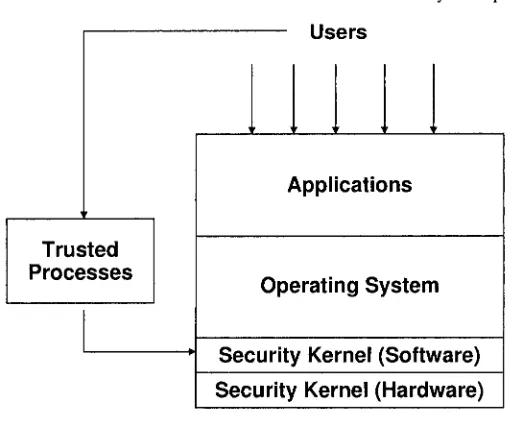
[image:27.441.93.358.65.276.2]Security Kernel (Hardware)
Fig. 6. Basic architecture for trusted operating systems
A basic trusted operating system architecture is shown in Figure 6. The two low- est layers, consisting of the hardware and software security kernels, constitute the TCB of the system. As such, they satisfy all the properties of a TCB. In particular, they are responsible for enforcing the system security policy on every access to an object by a subject.
The operating system software is partitioned into two layers. The lower layer is the software security kernel that provides a small subset of the operating sys- tem functions. The upper layer, called the supervisor, uses the kernel primitives to provide the remainder of the operating system functions. The supervisor primitives define the application interface to the trusted operating system.
How functionalities are divided between the kernel and the supervisor depends on the security policy. Obviously all security relevant functions must be inside the kernel. An example of such a function is memory and disk management. Since these parts are shared by multiple users, the way they are managed must be inside the kernel.
Since trusted subjects are essential for performing certain legitimate tasks, they are implemented as extensions of the security kernel. Clearly, trusted subjects must be carefully engineered since it is critical that they work properly.
6 Conclusion
20 Sushi1 Jajodia and Ting Yu
policies, mechanisms and assurance. In particular, a system's security is always con- strained by available resources, e g , funding and time. It is often not practical to have the most stringent security requirements and adopt the strongest security mechanism and assurance. There is always a cost and benefit tradeoff. Therefore, risk analysis is indispensable when deciding appropriate security policies and mechanisms for a system.
A system's security relies not only on the adopted specific techniques, but also on the security practices of users in the system. Many systems' security is compromised due to attackers' exploitment of human users' negligence instead of the failure of security mechanisms. Human factors are thus an important aspect of information se- curity. Besides educating users about good security practices, a secure system should also be designed to be intuitive and user-friendly. Though the importance of this prin- ciple is well recognized, realizing it in real systems is still a challenging problem.
References
1. Ross Aderson and Markus Kuhn. Tampter Resistance
-
A Cautionary Note. In Pro- ceedings of the 2nd Workshop on Electronic Commerce, Oakland, California, November 1996.2. D. Elliot Bell and Leonard J. LaPadula. Secure Computer Systems: A Mathematical Model, Volume 11. Journal of Computer Security, 4(2/3):229-263, 1996.
3. Matt Bishop. Computer Security: Art and Science. Addison-Wesley, 2003. 4. Trusted Computer System Evaluation Criteria, 1985.
5. Michael A. Harrison, Walter L. Ruzzo, and Jeffrey D. Ullman. Protection in Operating Systems. Communications of the ACM, 19(8):461-471, August 1976.
6. David Lorge Parnas. Designing Software for Ease of Extension and Contraction. IEEE Trans. Software Eng., 5(2): 128-138, 1979.
7. Ravi S. Sandhu. The Schematic Protection Model: Its definition and analysis for acyclic attenuating systems. Journal of ACM, 35(2):404-432, 1988.
Access Control Policies and Languages in Open
Environments
S. De Capitani di Vimercatil, S. Foresti', S. Jajodia2, and P. Samarati' Universitit degli Studi di Milano
{decapita, foresti, samarati}@dti.unimi.it
Center of Secure Information Systems George Mason University
1
Introduction
Access control is the process of mediating every request to resources and data main- tained by a system and determining whether the request should be granted or denied. Access control plays an important role in overall system security. The development of an access control system requires the definition of the regulations (policies) ac- cording to which access is to be controlled and their implementation as functions executable by a computer system. The access control policies are usually formal- ized through a security model, stated through an appropriate specification language, and then enforced by the access control mechanism enforcing the access control ser- vice. The separation between policies and mechanisms introduces an independence between protection requirements to be enforced on the one side, and mechanisms enforcing them on the other. It is then possible to: i) discuss protection requirements independently of their implementation, ii) compare different access control policies as well as different mechanisms that enforce the same policy, and iii) design mecha- nisms able to enforce multiple policies. This latter aspect is particularly important: if a mechanism is tied to a specific policy, a change in the policy would require chang- ing the whole access control system; mechanisms able to enforce multiple policies avoid this drawback. The formalization phase between the policy definition and its implementation as a mechanism allows the definition of a formal model representing the policy and its working, making it possible to define and prove security proper- ties that systems enforcing the model will enjoy [30]. Therefore, by proving that the model is "secure" and that the mechanism correctly implements the model, we can argue that the system is "secure" (with respect to the dejnition of security consid- ered [37]).
S. De Capitani Vimercati, Foresti, Jajodia, and Samarati
tem. Many real world situations have complex policies, where access decisions de- pend on the application of different rules coming, for example, from laws, practices, and organizational regulations. A security policy must capture all the different regu- lations to be enforced and, in addition, must also consider possible additional threats due to the use of a computer system. Given the complexity of the scenario, there is a need for flexible, powerful, and expressive access control services to accommodate all the different requirements that may need to be expressed, while at the same time be simple both in terms of use (so that specifications can be kept under control) and implementation (so to allow for its verification).
An access control system should include support for the following con- ceptslfeatures.
0 Expressibility. An access control service should be expressive enough so that the policy can suit all the data owner's needs. To this purpose, several of the most recent language designs rely on concepts and techniques from logic, specifically from logic programming [16,28,32-34,481. Logic languages are particularly at- tractive as policy specification languages (see Sect. 3). One obvious advantage lies in their clean and unambiguous semantics, suitable for implementation val- idation, as well as formal policy verification. Second, logic languages can be expressive enough to formulate all the policies introduced in the literature. The declarative nature of logic languages yields a good compromise between expres- siveness and simplicity. Their high level of abstraction, very close to the natural language formulation of the policies, makes them simpler to use than imperative programming languages. However, security managers are not experts in formal logics, either, so generality is sometimes traded for simplicity.
0 Ejjiciency. Access control efficiency is always a critical issue. Therefore, simple and efficient mechanisms to allow or deny an access are key aspects (see Sect. 3). Simplicity. One of the major challenges in the definition of a policy language is to provide expressiveness and flexibility while at the same time ensuring easiness of use and therefore applicability. An access control language should therefore be based on a high level formulation of the access control rules, possibly close to natural language formulation (see Sect. 4).
0 Anonymity support. In open environments, not all access control decisions are identity -based. Resource/service requesters depend upon their attributes (usually substantiated by certificates) to gain accesses to resources (see Sect. 5). 0 Policy combination and conyict-resolution. If multiple modules (e.g., for differ-
Personal
/
/
\
Purchase Sales Production
I
\
Internal Exports RepA
/ \
RepBI \
I
Alice Bob Carol David Elvis Frank George
Fig. 1. An example of user-group hierarchy
9"""'""
1
Rs
Orders,Srt Received
/
\
/NatT-z
InternationalI
[image:31.441.77.366.73.275.2]IS01 IS02 IROl ON01 ON02 0101
I
0102\
0103Fig. 2. An example of object hierarchy
supported by the system or specified by the users. Dealing with inconsistencies require support for conflict resolution policies.
In this chapter, after a brief overview of the basic concepts on which access con- trol systems are based, we illustrate recent proposals and ongoing work addressing access control in emerging applications and new scenarios. The remainder of this chapter is structured as follows. Section 2 introduces the basic concepts of access control. Section 3 presents a logic-based framework for representing access control policies. Section 4 briefly describes some XML-based access control languages and illustrates the XACML policy model and language. XACML is a OASIS standard that provides a means for expressing and interchanging access control policies in XML. Section 5 introduces recent solutions basing the access control decisions on the evaluation of users' attributes rather than on their explicit identity. Section 6 ad- dresses the problem of combining authorization specifications that may be indepen- dently stated. We describe the characteristics that a policy composition framework should have and illustrate some current approaches. Finally, Sect. 7 concludes the chapter.
2
Basic Concepts
. -
/ \
Admin-Sta f f Operative-Sta f f
/
\
/
Secretary Manager
\
Local-Chie fFig. 3. An example of role hierarchy
Users (U) are entities requesting access to objects. Abstractions can be defined within the domain of users. Intuitively, abstractions allow to define group of users. Users together with their groups, denoted
G,
define a partial order that introduces a hierarchy on the user domain. Figure 1 illustrates an example of user-group hierarchy.Data Items (Obj) are the objects of the system that have to be protected and on which access rights can be specified. Objects can be organized in a hierarchi- cal structure, defining sets of objects that can be referred together with a given name. The definition of groups of objects (object types), denoted T, introduces a hierarchy of objects and groups thereof. For instance, a file system can be seen as an object hierarchy, where files are single objects and directories are groups thereof. Figure 2 illustrates an example of object hierarchy.
Access Types (A) are the actions that can be executed on an object. The actions may vary depending on the kind of objects considered.
Roles (R) are sets of privileges. A user playing a role has the ability to execute the privileges associated with the role. Roles can be organized hierarchically. Figure 3 illustrates an example of role hierarchy.
Administrative policies regulate who can grant and revoke authorizations in the system.
Note that groups and roles are different concepts with two main differences: a group is a named collection of users and possibly other groups, and a role is a named collection of privileges, and possibly other roles;
while role can sometimes be activated and deactivated directly by users at their discretion, the membership in a group cannot be deactivated.
These two concepts are not exclusive but complementary to each other. The hier- archical structure of data items, users/groups, and roles can be formally represented through a mathematical structure called hierarchy.
Definition 1 (Hierarchy). A hierarchy is a triple ( X , Y ,
5 )
where:0 X and Yare disjoint sets;
0
5 is a partial order on ( X
U Y ) such that each x E X is a minimal element of25
According to this definition, X represents primitive elements (e.g., a user or a file), and Y represents aggregate entities (e.g., a set of users or objects).
Given a system composed of the elements listed above, an authorization speci- fies which authorization subjects can execute which actions on which authorization objects. An authorization can then be represented as a triple (s, o, a), indicating that authorization subject s can execute action a over authorization object o.
In addition to positive authorizations, recent access control languages support also negative authorizations, that is, authorizations indicating that an authorization subject cannot execute a stated action on the specified authorization object. The com- bined use of positive and negative authorizations has the great advantage of allowing an easy management of exceptions in policy definition. For instance, if all users in the system but Alice can access a resource and we use only positive authorizations, it is necessary to specify for each subject but Alice a triple indicating that user u can access resource r. By contrast, with negative authorizations, we can simply state that Alice cannot access r, supposing, as a default policy, that everybody can access r.
To represent both positive and negative access rights, authorization triples be- come of the form (s, o, f a ) , where +a indicates a positive authorization and -a indicates a negative authorization.
Given a set of authorizations explicitly specified over the elements in the sys- tem, it is possible to obtain a set of derived authorizations obtained according to a hierarchy-based derivation. Some of the most common propagation policies (which include also some resolution policies for possible conflicts) are described below [26]. No propagation. Authorizations are not propagated. For instance, a triple speci- fied for a node is not propagated to its descendants. No propagation is applicable when non-leaf nodes can appear in an access request and therefore authorizations that apply to them as subjectlobject must be considered (as it is, for example, the case of roles).
No overriding. Authorizations of a node are propagated to its descendants. Most spec$c overrides. Authorizations of a node are propagated to its descen- dants if not overridden. An authorization associated with a node n overrides a contradicting authorization3 associated with any supemodeof n for all the subn- odes of n.
Path overrides. Authorizations of a node are propagated to its descendants if not overridden. An authorization associated with a node n overrides a contradicting authorization associated with a supemode n' for all the subnodes of n only for the paths passing from n. The overriding has no effect on other paths.
The combined use of positive and negative authorizations brings now to the prob- lem of how the two specifications should be treated when conflict authorizations are associated with the same node in a hierarchy. In these cases, different decision crite- ria could be adopted, each applicable in specific situations, corresponding to different conjlict resolution policies that can be implemented. Examples of conflict resolution policies are the following.
26 S. De Capitani di Vimercati, S. Foresti, S. Jajodia, and P. Samarati No conflict. The presence of a conflict is considered an error. Denials take precedence. Negative authorizations take precedence.
a Permissions take precedence. Positive authorizations take precedence.
Nothing takes precedence. Neither positive nor negative authorizations take precedence.
It may be possible that after the application of a propagation policy and a conflict resolution policy, some accesses are neither authorized nor denied (i.e., no authoriza- tion exists for them). A decision policy guarantees that for each subject there exists a permission or a prohibition to execute a given access. Two well known decision policies are the closed policy and the open policy. The closed policy allows an ac- cess if there exists a positive authorization for it, and denies it otherwise. The open policy denies an access if there exists a negative authorization for it, and allows it otherwise.
3
Logic-Based Access Control Languages
Several authorization models and access control mechanisms have been imple- mented. However, each model, and its corresponding enforcement mechanism, im- plements a single specified policy, which is built into the mechanism. As a conse- quence, although different policy choices are possible in theory, each access control system is in practice bound to a specific policy. The major drawback of this approach is that a single policy simply cannot capture all the protection requirements that may arise over time. Recent proposals have worked towards languages and models able to express, in a single framework, different access control policies, to the goal of pro- viding a single mechanism able to enforce multiple policies. Logic-based languages, for their expressive power and formal foundations, represent a good candidate. The main advantages of using a logic-based language can be summarized as follows:
the semantic of a logic language is clear and unambiguous;
logic languages are very expressive and can be used to represent any kind of policy;
logic languages are declarative and offer a better abstraction level than impera- tive programming languages.
The first work investigating logic languages for the specification of authoriza- tions is the work by Woo and Lam [48]. Their proposal makes the point for the need of flexibility and extensibility in access specifications and illustrates how these advantages can be achieved by abstracting from the low level authorization triples and adopting a high level authorization language. Their language is essentially a many-sorted first-order language with a rule construct, useful to express authoriza- tion derivations and therefore model authorization implications and default decisions (e.g., closed or open policy).
rules with periodicity and order constraints are provided to derive new authoriza- tions based on the presence or absence of other authorizations in specific periods of time. Another approach based on active rules, called role triggers, has been pre- sented in [6]. The authors extend the RBAC model by adding temporal constraints on the enablingldisabling of roles.
Other logic-based access control languages support inheritance mechanisms and conflict resolution policies. The Hierarchical Temporal Authorization Model adopts the denials-take-precedence principle and does not distinguish between original and derived authorizations: an authorization can override another one independently from the category to which they belong. The main problem of this logic language is that it is not stratifiable. However, it supports a dynamic form of stratification that guaran- tees a polynomial computation time. A framework based on the C-Datalog language has also been presented. The framework is general enough to model a variety of access control models.
Although these proposals allow the expression of different kinds of authoriza- tion implications, constraints on authorizations, and access control policies, the au- thorization specifications may result difficult to understand and manage. Also, the trade-off between expressiveness and efficiency seems to be strongly unbalanced: the lack of restrictions on the language results in the specification of models that may not even be decidable and implementable in practice.
Starting from these observations, Jajodia et al. [26] worked on a proposal for a logic-based language that attempted to balance flexibility and expressiveness on the one side, and easy management and performance on the other. The language allows the representation of different policies and protection requirements, while at the same time providing understandable specifications, clear semantics (guaranteeing therefore the behavior of the specifications), and bearable data complexity. In the remainder of this section, we will describe this proposal in more details.
3.1 Flexible Authorization Framework
The Flexible Authorization Framework (FAF) [26] is a powerful and elegant logic- based framework where authorizations are specified in terms of a locally stratified rule base logic. FAF is based on an access control model that does not depend on any policy but is capable of representing any policy through the syntax of the model. In FAF, a data system to which protection must be ensured is formally defined as follows.
Definition 2 (Data System). A data system (DS) is a 5-tuple (OTH, UGH, RH, A, Rel) where:
OTH=
(Obj, T ,SOT)
is an object hierarchy;UGH=
(U,
G,
5 " ~ )
is a user-group hierarchy;RH=
(0,
R,
SR)
is a role hierarchy;A is a set of actions;



![Fig. L1 11. XACML overview [17]](https://thumb-us.123doks.com/thumbv2/123dok_us/8116482.238317/50.441.67.369.55.387/fig-l-xacml-overview.webp)