The 16 to 19 bursary
fund: year 3 process
evaluation
Research report
June 2015
Cheryl Lloyd, Ivonne Wollny, Meg Callanan,
Alexandra Fry and Sarah Haywood –
Contents
List of figures 5
List of tables 7
Executive Summary 11
1 Introduction 20
1.1 The 16 to 19 Bursary Fund 20
1.2 Evaluation aims and methods 21
1.3 Summary of methods 24
1.4 Report conventions 32
2 Awareness and take up of Bursaries 34
2.1 Provider activities to publicise the Bursary Fund 34
2.2 Awareness amongst young people 37
2.3 Take up of Bursaries 39
2.4 Targeting young people who may be in need 42
3 Defined Vulnerable Group Bursary awards 44
3.1 The number of Defined Vulnerable Group Bursary awards 44
3.2 Recipients in Defined Vulnerable Groups 45
3.3 Spending on Defined Vulnerable Group Bursaries 46
4 Discretionary Bursary awards 48
4.1 Numbers of Discretionary Bursary awards 49
4.4 How young people spent their Bursary 61
5 Bursary Fund spending 63
5.1 Spending on Discretionary Bursaries 63
6 Administering the Bursary Fund 69
6.1 Models of administration 70
6.2 How Bursary awards were made 75
6.3 Views on in-kind and cash awards 77
6.4 Administering the Defined Vulnerable Group Bursary 79 6.5 Conditions attached to the receipt of Bursary awards 82
6.6 Timing of applications 86
6.7 Timing and frequency of Bursary payments 87
6.8 Young people’s views on Bursary administration 92
6.9 Changes to Bursary administration 95
7 Perceived impacts of the Bursary Fund 97
7.1 Perceived impacts on post-16 participation 98
7.2 Perceived impacts on engagement 101
7.3 Perceived impacts on students’ welfare 108
7.4 Perceived impacts on families 110
7.5 Effectiveness at targeting support at those most in need 112
8 Conclusions and recommendations 116
9 Appendix A Methodology 122
10 Appendix B Case study recruitment materials 139
12 Appendix D Case study topic guides 143
13 Appendix E Learner follow-up topic guide 151
List of figures
Figure 2.1 Provider survey: How the Bursary Fund was publicised (% mentioned)
(2013/14) 35
Figure 2.2 Learner survey: When young people heard about the Bursary Fund (%)
(2012/13) 37
Figure 2.3 Learner survey: How they found out about financial support (%) (2012/13) 38 Figure 3.1 MI returns: Distribution of all provider spending on Defined Vulnerable Group
Bursaries (2013/14) 47
Figure 4.1 Provider survey: Median number of applications and awards (2013/14) 49 Figure 4.2 Provider survey: Median number of applications and awards from 2011/12 to
2013/14 50
Figure 4.3 Provider survey: Mean percentage of applicants and recipients of
Discretionary Bursaries by gender and ethnicity (2013/14) 51 Figure 4.4 Provider survey: Mean percentage of applicants and recipients of
Discretionary Bursaries by level of qualification studied (2013/14) 52 Figure 4.5 Provider survey: Criteria used to award Discretionary Bursaries (%)
(2013/14) 55
Figure 4.6 Learner survey: Spending the Bursary Fund (2012/13) 62 Figure 5.1 Provider survey: Spending more or less than funding allocation in 2013/14
(%) 65
Figure 5.2 Provider survey: Spending more or less than funding allocation in 2013/14,
by type of provider (%) (2013/14) 66
Figure 6.1 Provider survey: Providers who awarded Discretionary Bursaries in-kind,
directly to young people, or both (%) 2013/14 75
Figure 6.4 Provider survey: Whether the centralisation has helped to reduce
administrative burden on providers (%) (2013/14) 81 Figure 6.5 Provider survey: Whether the centralisation has helped to plan financial
support for students (%) (2013/14) 81
Figure 6.6 Provider survey: Conditions attached to Bursary receipt (%) (2013/14) 83 Figure 6.7 Learner survey: Conditions attached to Bursary receipt (%) (2012/13) 84 Figure 6.8 Learner survey: Changing behaviour as a result of conditions, by level of
support (%) (2012/13) 85
Figure 6.9 Provider Survey: When applications can be made (%) (2013/14) 86 Figure 6.10 Provider Survey: Frequency of Bursary Payments (%) (2013/14) 88 Figure 6.11 Learner Survey: Frequency of Bursary Payments (%) (2012/13) 89 Figure 6.12 Provider Survey: Why there were delays to payments (%) (2013/14) 92 Figure 6.13 Provider Survey: Changes made in 2013/2014 (%) (2013/14) 95 Figure 6.14 Provider Survey: Changes planned for 2014/2015 (%) (2013/14) 96 Figure 7.1 Provider Survey: Perceived impact on participation (%) (2013/14) 99 Figure 7.2 Provider Survey: Perceived impact on engagement (%) (2013/14) 102 Figure 7.3 Learner Survey: Bursary recipient views on impact on engagement (%)
(2012/13) 102
Figure 7.4 Provider Survey: Perceived effectiveness at targeting learners with greatest
financial disadvantages (%) (2013/14) 112
Figure 7.5 Learner Survey: Views of young people not receiving the Bursary Fund (%)
List of tables
Table 1.1 Summary of evaluation aims and research methods used 23 Table 1.2 Provider survey response rates by sample type and mode of completion 27 Table 1.3 Learner survey response rates by sample type and mode of completion 29 Table 1.4 Overview of case study provider sample 29 Table 1.5 Overview of learner follow-up achieved sample 31 Table 2.1 Learner survey: Why non-vulnerable learners did not apply for the Bursary
(2012/13) 42
Table 3.1 MI returns: Median number of any DVG awards by provider type 45 Table 3.2 MI returns: Total numbers of bursary recipients in each Defined Vulnerable
Group in 2013/14 46
Table 3.3 MI returns: Median value of DVG awards by provider type 47 Table 4.1 Learner survey: Profile of non-vulnerable learners applying for a Bursary
(2012/13) 53
Table 4.2 Provider survey: Discretionary Bursaries spend per recipient in quartiles
(2013/14) 59
Table 5.1 Provider survey: Overall amount spent on Discretionary Bursaries in the
2013/14 academic year 64
Table 5.2 Provider survey: Under and over spend 2013/14, by size of funding allocation
(%) (2013/14) 66
Table 6.1 Models of Bursary administration – summary of strengths and limitations 70 Table 6.2 Provider survey: Awareness of changes to the Defined Vulnerable Group Bursary funding which is now held centrally by the Learner Support Service (2013/14) 80 Table 6.3 Provider Survey: How often there were delays to payments (%) (2013/14) 91 Table 7.1 Learner survey: Financial difficulties and education by whether received
Table 7.2 Learner survey: General views about financial support by whether received
Acknowledgements
This contract was funded by the Department for Education. We are grateful to the evaluation steering group and officials in the Education Standards Evidence and Data Dissemination division and the Education Funding Agency for their direction and guidance with the evaluation. In particular, we would like to thank Peter Sellen, Jonathan Johnson, Simon Butt, Claire Humphrey, Nick Thatcher and Bill Martin. At NatCen Social Research many people contributed to the evaluation. We wish to thank: Sarah Kitchen for advice and guidance overseeing the beginning of the
evaluation; Sarah Tipping for her statistical expertise; Emma Drever for managing the Learner Survey; Natasha Reilly for help with qualitative fieldwork; and; Hannah Bridges, Peyman Damestani, Alessio Fiacco, Bryan Mason, Sonia Shirvington, Kay Renwick and Chris Massett for their work on the provider and learner surveys.
Finally and most importantly we are enormously grateful to all the provider staff and young people for generously giving their time and views throughout the three years of the evaluation.
Organisations represented on the steering group: • Local Government Association (LGA) • National Union of Students (NUS) • Association of Colleges (AoC)
• Association of School and College Leaders (ASCL)
• Association of Employment and Learning Providers (AELP) • Barnardo’s
• Equality and Human Rights Commission (EHRC) • Institute for Fiscal Studies (IFS)
List of Abbreviations
BTEC Accredited vocational / work-related qualification DB Discretionary bursary
DLA Disability living allowance
DVG bursary Defined vulnerable group bursary EFA Education Funding Agency
ESA Employment and Support Allowance
FE Further Education
EMA Education Maintenance Allowance FSM Free School Meals
LA Local Authority
MI data Management information data
Executive Summary
Introduction
This report presents findings from three years of the independent evaluation of the 16 to 19 Bursary Fund, commissioned by the Department for Education. The evaluation aims to:
1. Investigate the number and characteristics of young people who have applied for and/or received Defined Vulnerable Group and Discretionary Bursaries;
2. Evaluate the perceived impact of the policy on levels of participation and
engagement amongst young people, and review decision-making processes that have been used by providers to allocate funds.
The report follows the interim reports from the first (May 20131) and second (April 20142) years of implementation which reported the number and characteristics of young people receiving a bursary, provider practices in administering the Fund, learners’ views about the financial support, and perceptions of impact.
Background
The 16 to 19 Bursary Fund
The 16 to 19 Bursary Fund was introduced in September 2011, replacing the Education Maintenance Allowance in England, and provides financial support to young people who face significant financial barriers to participation in education or training post-16. The Bursary Fund has two parts:
1. Defined Vulnerable Group Bursaries. Vulnerable young people (those in care; care leavers; young people receiving Income Support and young people
receiving both Disability Living Allowance or a Personal Independence Payment and Employment Support Allowance) receive yearly bursaries of up to £1,200.
1 Callanan et al (2013) Evaluation of the 16 to 19 Bursary Fund: Year 1 Report Research Report
Available at: https://www.gov.uk/government/uploads/system/uploads/attachment_data/file/199996/DFE-RR265.pdf
2 Callanan et al (2014) Evaluation of the 16 to 19 Bursary Fund: Year 2 Process Evaluation. Available at
The funding of individual awards of this bursary type was centralised from 2013/14.
2. Discretionary Bursaries. The rest of the fund is allocated to schools, colleges and training providers so that they can identify and support the young people who need it.
Methodology
The evaluation was carried out using a range of research methods. This report draws on:
§ Management Information data with details about all the Defined Vulnerable
Group Bursaries awarded in 2013/14.
§ A survey of 16 to 19 providers that collected information on bursary
spending, the characteristics of applicants and recipients, the administration of the Bursary Fund and perceptions of its impacts on young people.
§ A survey of young people aged 16 to 19 from a sub-sample of the providers
participating in the provider survey to find out about their experiences of financial support and views about the Bursary Fund.
§ Qualitative case studies with 12 providers which included interviews with
staff about experiences and perceptions of the Bursary Fund, focus groups with young people and telephone interviews with parents.
§ Qualitative depth interviews with 27 young people, following up the learner
survey.
This is the final process evaluation report and focuses on how the Bursary Fund was being administered and spent in the third year of implementation, perceived impacts, and how these changed since the Bursary Fund was introduced.
Key Findings
Awareness and take up of Bursaries
Providers are responsible for making young people aware of the Bursary Fund.
The level of awareness of the Bursary Fund amongst learners was relatively high at 71% per cent. However, levels of awareness at the time of making decisions about post-16 education were lower - of those young people who had heard about the
bursary, just 36 per cent had done so before finishing Year 11. Just under a third (29%) of young people who had not applied for a bursary said this was because they were unaware that financial support was available.
Young people thought that the best way to raise awareness would be to increase
promotion in schools during Years 10 and 11, before decisions are made about post-16 education.
Defined Vulnerable Group Bursary Awards
From September 2013, the administration of Defined Vulnerable Group (DVG)
Bursaries was centralised with providers being able to claim the funds for DVG awards as and when needed, instead of having to provide this funding from their own bursary allocation.
Individual awards for Defined Vulnerable Group Bursaries are fixed at £1,200 for a full bursary and pro-rated as appropriate for part-time learners.
The total number of young people in England receiving a Defined Vulnerable Group (DVG) Bursary in 2013/14 was 23,900. Of these, 21,865 attended FE Colleges or school sixth forms, equating to 1.8 per cent of the overall cohort of 16-19 year olds in these providers3.
The total amount spent on this type of bursary was £23.5 million.
Discretionary Bursary awards
Providers have the freedom to establish their own eligibility criteria for awarding Discretionary Bursaries, the size of awards and how these are paid. Management Information, available in the second year of implementation, suggested the total number of students awarded Discretionary Bursaries was estimated to be 357,300, representing
3 This figure excludes Special Schools and Local Authority provision as no cohort size figures were available for these groups.
approximately 23 per cent of the 16-18 cohort in education and work based learning.4 There is no reason to expect this has changed in year 3.
As in previous years of implementation, the majority of providers continued to use income-related criteria to determine eligibility for Discretionary Bursaries with household income (66%), Free School Meal entitlement (65%), and household benefit receipt (58%) being the most common.
The success rate of applications continued to be very high – 95 per cent of applications resulted in an award being made. Profiles of applicants and recipients for Discretionary Bursaries across all characteristics were very similar, suggesting that no groups were more or less likely to be awarded Bursaries if they applied.
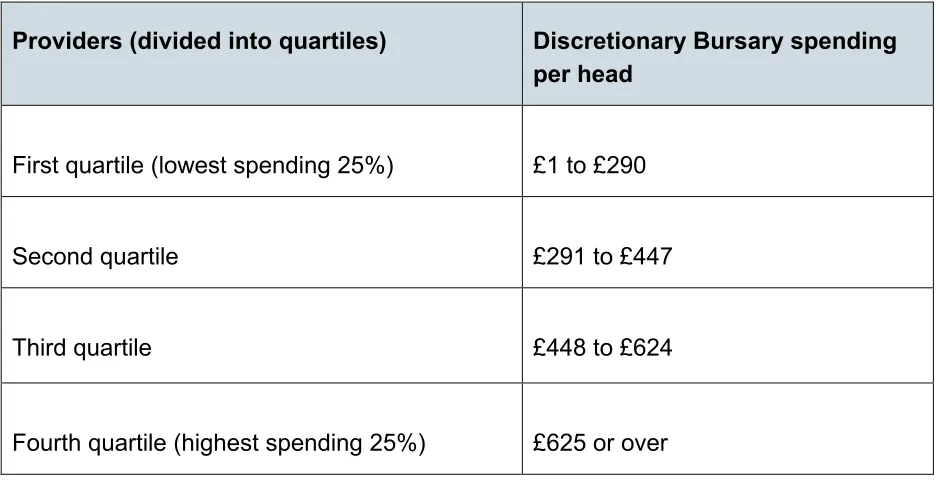
The amount allocated as individual Discretionary Bursary awards varied considerably; from around £60 to just below £4,000, with a median spend of £447 per recipient in the 2013/14 academic year.
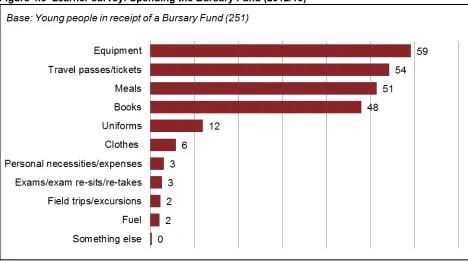
Young people reported most commonly using the Bursary Fund to buy equipment for their course, travel passes, meals and books.
Discretionary Bursary Fund spending
Total spending reported by providers ranged from zero to over £3.5 million with an overall median spend of just below £11,000.
In the third year of implementation we had expected the level of underspends to reduce as providers should be better able to estimate demand, and no longer have to provide the DVG Funds from their allocation. Around half (51%) of providers had spent less than 90 per cent of their in-year funding allocation, which is similar to the second year of implementation, though we have estimated that underspends amounted to only 6% of allocations in surveyed providers. Providers continued to be cautious in allocating funds to minimise the risk of unaffordable overspends, many also had funds carried over from
4 Participation in education, training and employment by 16- 18 year olds in England to the end of 2012, DfE, 27th June 2013.
https://www.gov.uk/government/uploads/system/uploads/attachment_data/file/209934/Participation_SFR_ __end_2012_-_FINALv2.pdf [Accessed 31/01/14] Calculation based on 1,544,400 16 to 18 year olds in education or work based training.
previous years which, together with lower awards due to students failing to meet the conditions attached to the receipt of their bursary, meant the money was not used.
Administering the Bursary Fund
The case studies revealed that providers who administered their own Bursary Funds continued to consider the flexibility and opportunity to tailor the support to their students to be beneficial. Perceived drawbacks were potential inequality in the financial support available to young people at different providers in the same area, the wide variation in the quality of the schemes and the administrative burden placed on providers. The administrative burden meant that sometimes the level of resources available to administer the scheme determined the model, rather than the provider being able to implement the Fund in the way they would ideally want.
Young people were generally positive about the Bursary Fund support they received. Sixty-six per cent of bursary recipients felt that the timing and way their bursary payments were made worked well for them. This rose to 85 per cent for those who received their payments weekly during term time. Young people fed back that regular payments made it easier to budget and respond to educational needs.
Young people in receipt of cash payments were also more likely to say that it changed their behaviour (57% compared to 31% of those paid ‘in kind’). Bursary awards were conditional on attendance at most providers (85%). Just over half (53%) of young
people with conditions attached to their award said that their behaviour had changed as a result of this, for example by improving their attendance or the amount of time spent studying at home.
In the third year of implementation young people continued to experience delays in receiving payments and conditions for receipt were not always clear. Just under half (47%) of providers reported delays in making bursary payments which can cause difficulties for young people to attend and fully participate in courses.
Perceived impacts
Overall, providers and young people were positive about the impact of the Bursary Fund on participation. Most providers (83%) reported this, and 28 per cent of bursary
the financial support has been helpful (85%). However, around a third of young people (35%) receiving support disagreed that the financial support available was enough to make a difference to them.
Three-quarters of providers reported that the Bursary Fund was having a positive impact on young peoples’ engagement with their studies.
The majority of providers (80%) said that the Bursary Fund was effectively targeting young people who faced the greatest financial disadvantages. There were however a small but significant proportion of young people (9 per cent) who were not in receipt of a bursary and reported that there was a risk of them dropping out of education because they could not afford it. Among non-recipients, around a quarter (27%) stated that they were struggling to cope financially, suggesting that there remains a proportion of young people in need of financial support who are not currently being reached by the Bursary Fund.
Conclusions and recommendations
In the third year of implementation the flexibility of the Bursary Fund was seen as its major asset. Providers valued being able to make decisions about how to use the Fund in ways they considered best met their students’ needs. However, this greater flexibility also brought with it variability in the support available across providers in close proximity and variability in the quality of schemes.
In the third year of implementation, young people and their families expressed their views about how the Bursary Fund worked for them in case study interviews. Generally speaking young people viewed the financial support available positively with it reaching many of those who were in need. However, there were concerns about inequalities between providers and whether the funding was sufficient to enable full participation and engagement in education post-16.
Finding Recommendations
Although young peoples’ general awareness of the Bursary Fund was high, many were not aware of this support when making decisions about their post-16 participation.
§ Schools and 16 to 19 providers should work together to
ensure pupils in Years 10 and 11 are aware that there is financial support available through the Bursary Fund to help them make informed decisions about post-16
participation. There is guidance about the responsibilities of schools and other institutions in DfE’s statutory careers information and guidance document to support this
recommendation.
§ Clear, detailed information about the Bursary Fund
should be available on 16 to 19 providers’ websites.
§ Providers should consider how best to raise awareness
about the availability of Defined Vulnerable Group and Discretionary Bursary awards, for example in
prospectuses and application forms (such as having a box for young people to request extra information).
Not all providers were aware of the centralised Defined Vulnerable Group administration.
§ The DfE and Education Funding Agency should make
efforts to ensure all providers are aware of how to draw funds from the Defined Vulnerable Group system, and that they are encouraged to do so to support these vulnerable young people.
§ The DfE should consider how best to estimate numbers
of the cohort from vulnerable groups to allow longer term measurement of met/unmet need.
Some young people may require more
encouragement to apply for support.
§ Providers should maintain confidentiality, administer
bursaries discreetly, and encourage applications to minimise barriers to take-up related to stigma and embarrassment.
Providers should consider what data sharing
Finding Recommendations
Providers tend to use a combination of financial and needs-based criteria to assess eligibility for Bursary Fund support but this is sometimes
considered too crude, or unfair, by young people.
§ When using objective eligibility criteria, providers should
design these to be sufficiently wide ranging to minimise the risk of young people just falling out of these criteria being substantially disadvantaged.
§ When assessing eligibility on a case by case basis this
increases the difficulties for young people to understand what they may be entitled to and can lead to perceived unfairness. Therefore, providers should consider having a basic guarantee clearly stating the minimum
requirements.
Many young people seemed unaware of the conditions attached to receipt of the financial support, when payments will be received and reasons for any delays.
§ Young people should be given clear information from
their providers about:
- when they will receive payments
- the value of each payment
- the conditions attached to payments and sanctions for not meeting these
- if there are delays/non-payments an explanation of why
- contact details to speak to a member of staff if there are any payment queries.
Young people preferred frequent payments, as these helped them budget and respond to educational needs more easily.
§ Providers should explore whether more frequent
Finding Recommendations
Young people value financial support at the start of the first term and application cut-off dates may cause hardship for those whose
circumstances change during the year.
§ Providers should review when Bursary Fund applications
can be made to improve access and to meet needs at the start of the academic year, including:
- whether the application process can start before the start of term to help young people with early course costs and travel
- providing flexibility throughout the year by avoiding application cut of dates
Levels of underspending had been anticipated to fall in the third year of implementation, however, the number of
underspending
institutions has remained stable.
§ The DfE should review and improve the Bursary Fund
1 Introduction
This report presents findings from the third and final year of the 16 to 19 Bursary Fund evaluation. In this chapter we describe how the Bursary Fund works and provide an overview of the evaluation’s aims and methods.
1.1 The 16 to 19 Bursary Fund
The 16 to 19 Bursary Fund provides financial support to young people who face
significant financial barriers to participation in education or training post-16. The Bursary Fund has two parts:
1. Defined Vulnerable Group Bursaries. Vulnerable young people (those in care; care leavers; young people receiving Income Support and young people
receiving both Disability Living Allowance or a Personal Independence Payment and Employment Support Allowance) receive yearly bursaries of £1,200 if they are on courses for 30 weeks or more.5
2. Discretionary Bursaries. The rest of the fund is allocated as a block to schools, colleges and training providers so that they can identify and support the young people who need it.
The 16 to 19 Bursary Fund was introduced in September 2011 to replace the Education Maintenance Allowance (EMA). Providers are responsible for administering
applications, deciding eligibility criteria for Discretionary Bursaries and distributing funds. The first year of the Bursary Fund (2011/12) was a ‘transitional’ year; most second year students who had previously received Education Maintenance Allowance (EMA) continued to receive transitional payments and could also apply for discretionary bursaries. EMA payments ended in August 2012. From the second year (2012/13), all students were eligible to apply for the Bursary Fund.
To be eligible to receive a 16 to 19 Bursary in the 2013/14 academic year, the young person had to be aged between 16 and 19 at the start of the academic year in which
5 Full Defined Vulnerable Group Bursaries of £1,200 are awarded to students if their course lasts for 30 weeks or more, if courses are less than 30 weeks a year students are eligible to receive a proportional (pro-rata) amount.
they started studying a course which was deemed eligible.6 Young people are only eligible if they are studying at a provider that is subject to inspection by a public body that assures quality (e.g. Ofsted) and must also be:
§ funded by the Education Funding Authority (either directly or via a local
authority); or
§ funded or co-financed by the European Social Fund; or
§ otherwise publicly funded and studying towards a qualification (up to level 3)
that is accredited by Ofqual or is pursuant to Section 98 of the Learning and Skills Act 2000.
Whilst providers give out these Bursaries in the first instance, in 2013/14 the
administration of Defined Vulnerable Group Bursaries was centralised with providers claiming the funding from a central source for every award. This change was introduced during the third year of the evaluation so providers were still adapting to this change at the time of the research.
1.2 Evaluation aims and methods
The Department for Education (DfE) commissioned NatCen Social Research to carry out an evaluation of the 16 to 19 Bursary Fund. The aims of the evaluation are to:
1. Investigate the number and characteristics of young people who have applied for and/or received Defined Vulnerable Group and Discretionary Bursaries;
2. Evaluate the perceived impact of the policy on young people’s participation and engagement in post-16 education and on providers who are responsible for administering the fund, and review decision-making processes that have been used by providers to allocate funds.
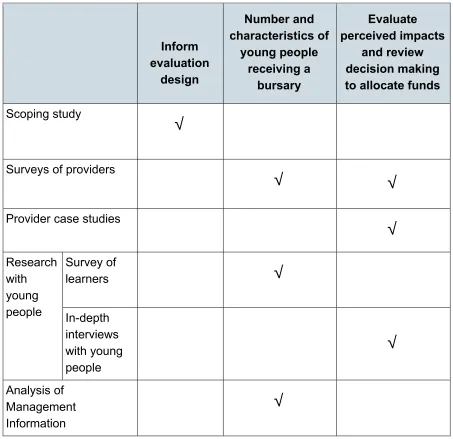
The evaluation met these aims using the following methods:
1. An initial scoping study to explore current practice and inform the main evaluation.
6 Full guidance is available at
https://www.gov.uk/government/uploads/system/uploads/attachment_data/file/239840/EFA-00044-2013.pdf
2. Surveys of providers. Surveys took place in the 2012, 2013 and 2014 summer terms to collect information about Discretionary Bursaries, and prior to their centralisation, about the Defined Vulnerable Group Bursaries.
3. Provider case studies. Twenty-seven ‘light-touch’ case studies were carried out in summer term 2012 and autumn term 2012. Twelve of these providers were re-visited as in-depth case studies during the second year of implementation
(2012/13) and again in the third year (2013/14).
4. Research with young people. A survey of 16 to 19 year old learners in education or training was carried out in 2013 to collect information about their experiences and perceptions of the Bursary Fund.
Qualitative follow-up interviews were carried out in 2013/14 with 27 young people (22 of whom took part in the survey) to explore the issues in greater depth. 5. Analysis of Management Information. The evaluation includes analysis of
information collected from providers by the DfE about the Bursary Fund in 2011/12 and 2012/13 and information from the centralised administration of the Defined Vulnerable Group Bursary in 2013/14 to add to findings from the other strands of the evaluation.
Table 1.1 Summary of evaluation aims and research methods used Inform evaluation design Number and characteristics of young people receiving a bursary Evaluate perceived impacts and review decision making to allocate funds
Scoping study
√
Surveys of providers
√
√
Provider case studies
√
Research with young people Survey oflearners
√
In-depth interviews with young people
√
Analysis of Management Information√
This report presents findings from all strands of work across the three years of the evaluation, focusing on the Year 3 Management Information, provider survey, depth interviews with young people and provider case studies. Interim reports from Year 17
7 Callanan et al (2013) Evaluation of the 16 to 19 Bursary Fund: Year 1 Report Research Report
Available at: https://www.gov.uk/government/uploads/system/uploads/attachment_data/file/199996/DFE-RR265.pdf
and Year 28 are available from the DfE website. Details of the methods used for these research elements are provided in the following sections.
A separately commissioned quantitative evaluation analyses the impact of the 16 to 19 Bursary Fund on levels of participation and attainment in post-16 education. This strand is being undertaken by the Institute for Fiscal Studies and Institute of Education and reports separately.
1.3 Summary of methods
This section summarises the evaluation methodology; more details are provided in Appendix A.
Management Information
In 2011/12 and 2012/13 the Department for Education asked all providers who had received bursary funding to complete a short Management Information (MI) return, relating to their Bursary Fund for the academic year. Providers were asked to complete this return electronically.
The information included in this return and analysed for Year 1 and 2 reports was:
§ Numbers of young people receiving full and pro-rata Defined Vulnerable
Group Bursaries;
§ Numbers of young people in each of the Defined Vulnerable Groups receiving
a bursary;
§ Numbers of young people awarded Discretionary Bursaries; § Numbers of Discretionary Bursary awards made.
DfE carried out initial checks of the data, resolving inconsistencies that could not be resolved with the provider. DfE then provided this data to NatCen for analysis. Weights were applied to the MI data to correct for differences in likelihood of responding to the MI request by provider type and region, and to scale up the responses to represent the whole population of providers receiving funding. This allowed us to estimate the overall
8 Callanan et al (2014) Evaluation of the 16 to 19 Bursary Fund: Year 2 Process Evaluation Available at
spending and awards made by providers in England, supplementing the more detailed data available from the longitudinal survey of providers.
In 2013/14 information about Defined Vulnerable Group Bursaries was collected centrally by Capita as part of the administration process and was comprehensive. This meant that we were able to use this complete record of the DVG Bursary awards which details the numbers of awards for each vulnerable group of young people and value of awards. This change of methodology undermines the comparability of DVG spending and awards over time and does not provide data for the total number of Discretionary Bursary awards and spending which was available in previous years.
The data was analysed using Statistical Package for the Social Sciences (SPSS).
The Year 3 provider survey
Data collection
The longitudinal survey was carried out using postal and online data collection methods. In Year 3, providers were sent the survey by post and email in early June 2014 and asked to complete it by the end of the Summer term.
In all three years, the questionnaire asked providers about:
§ Spending and award criteria for Discretionary Bursaries
§ Numbers and characteristics of applicants and recipients of Discretionary
Bursaries
§ Centralisation of the Defined Vulnerable Group Bursary (asked in Year 3 only) § How the Bursary Fund awards were made
§ Administration of the Bursary Fund § Perceived impacts of the Bursary Fund.
Sampling and response
Table 1.2 Provider survey response rates by sample type and mode of completion
Original sample Refresher sample All
Number % Number % Number %
Issued 199 100 74 100 273 100
Completed - web 86 43 15 20 101 37
Completed - post 51 26 14 19 65 24
Total 137 69 29 39 166 61
Many of the providers who completed the survey did not answer all the questions, presumably because they did not hold the information that was requested. This was a particular problem on the questions relating to characteristics of bursary applicants and recipients. Analysis in this report is based on valid responses and unweighted base sizes are shown in figures.
Learner survey
Data collection
The survey used online, telephone and postal data collection and was carried out in Year 2 of the evaluation. Young people were posted a paper questionnaire and given details about how to access the survey online.
Participating young people received a £10 high street voucher as an incentive for completing the survey.
Sampling and response
eligible age range (16 to 19 years), with students who were classified as vulnerable9 having a higher probability of selection.
After selecting providers, the sample of students came from two sample frames. This is because at the time no single database held information about all students aged 16-18 years. Students in school sixth forms were selected from the National Pupil Database (NPD). Students in separate sixth form colleges, Further Education Colleges and other providers were selected from the Individualised Learner Record (ILR).10 The NPD does not include telephone contact details so young people sampled from this source were invited to take part online and by post only.
Overall, 1,240 young people took part in the survey, a response rate of 34 per cent (Table 1.3). The survey data was weighted to take into account differential probabilities of selection and non-response prior to analysis.
9 Students with a Special Educational Need, in receipt or eligible for Free School Meals, with a disability or who are in care, or have been in care.
10 This is a record for all students who are studying outside the school system. The majority of students aged 16-18 years are on the ILR. The NPD and ILR records have since been merged so a single database is now available.
Table 1.3 Learner survey response rates by sample type and mode of completion
NPD sample ILR sample All
Number % Number % Number %
Issued 450 100 3,250 100 3,700 100
Completed – web 22 5 530 16 552 15
Completed – post 134 30 216 7 350 9
Completed –
telephone - - 338 10 338 9
Total 156 35 1,084 33 1,240 34
In-depth provider case studies
Longitudinal case studies were conducted with 12 case study providers. Initial telephone interviews conducted in 2011/12 were followed up by case study visits in 2012/13 and 2013/14. The purpose of these visits was to explore how providers were implementing the funds and to track changes in implementation over time. Table 1.4 shows the composition of the achieved case study sample by provider type.
Table 1.4 Overview of case study provider sample
Type of provider Achieved Number
School Sixth Forms 4
FE Colleges 4
Private Training Providers 2
Special Schools 2
Total 12
The composition of each case study in 2013/14 varied depending on the size and context of the provider, but typically included:
§ A depth interview with a senior member of staff responsible for determining
bursary policy
§ A depth interview with a member of staff responsible for the administration of
§ A depth interview with a member of staff with a pastoral role (e.g. personal
tutor)
§ A focus group of 16 to 19 students.
In addition, four telephone interviews were conducted with local authority staff with responsibility for supporting post-16 provision in case study areas, and nine telephone interviews were conducted with parents of young people from case study providers.
Qualitative follow-up interviews with learners
Qualitative depth interviews were carried out with a sample of the young people who participated in the learner survey to explore in greater depth their views and
Table 1.5 Overview of learner follow-up achieved sample
Sample criteria Achieved sample
Bursary receipt
Not receiving a bursary 8
Discretionary Bursary Less than £300 4
£300-£600 3
Over £600 6
Defined Vulnerable Group
bursary £1,200 6
Provider Type School Sixth Forms 1
FE Colleges 13
Sixth Form Centres 10
Private Training Providers 3
Gender Male 10
Female 17
Ethnicity White 20
BME 7
Survey impact responses In receipt – coping better 7 In receipt – not coping better 7 Not in receipt – not struggling 3 Not in receipt - struggling 5
Not applicable 5
1.4 Report conventions
Table conventions
§ Throughout the report, percentages based on fewer than 50 cases are
enclosed in square brackets, and should be interpreted with caution.
§ Figures have been weighted, and the unweighted base population is shown in
each table.
§ Percentages are rounded up or down to whole numbers and therefore may
not always sum to 100.
§ Where more than one answer could apply, this is indicated under the
table/figure.
§ Percentages less than 0.5 (but greater than 0) are shown as ‘+’.
Analysis groupings
Providers have been grouped as follows for the analysis of Management Information and survey responses where base sizes are sufficient:
Provider type
§ Further Education and Sixth Form colleges
§ Schools (includes maintained school and academy sixth forms) § Special schools (includes special schools and colleges)
§ Other providers (includes local authorities and private training providers)
Median
Reporting qualitative data
The findings presented here from the case studies and follow-up interviews with learners reflect the range and diversity of views and experiences among the staff and young people interviewed. As qualitative studies, the prevalence of views and
experiences arising from the case study data are not reported.
2 Awareness and take up of Bursaries
This chapter draws on the surveys of providers and young people and case studies to look at:
§ The ways providers publicise the Bursary Fund to raise awareness about this
financial support
§ Levels of awareness amongst young people § Barriers to take-up; and
§ Methods for targeting young people in need.
Key findings from this chapter include:
§ Providers publicised the Bursary Fund to young people in a variety of ways,
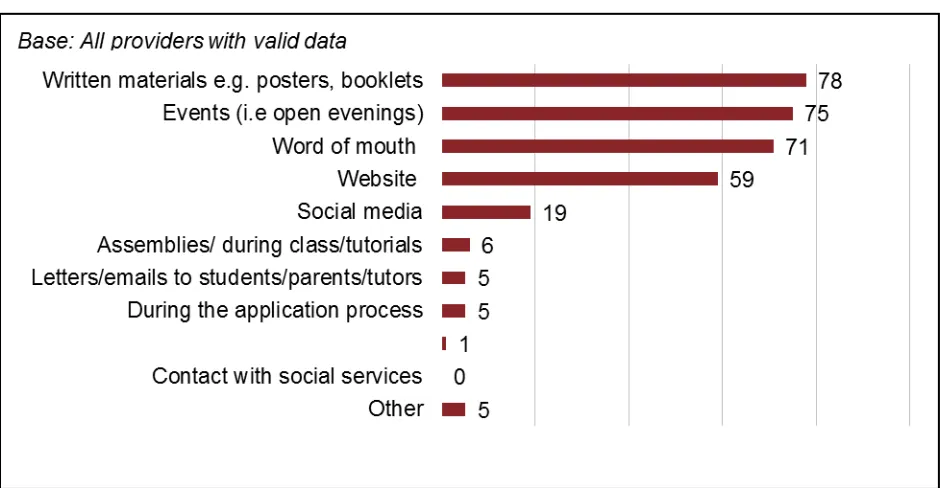
including written materials such as leaflets and posters (78%) and at events such as open days (75%). Over half of providers put information about the Bursary Fund on their websites (59%), with 19 per cent also using social media.
§ The survey of young people found that 71 per cent of learners were aware of
the Bursary Fund. Of those, 36 per cent had heard of it before finishing year 11, while 64 per cent had heard about it after finishing year 11.
§ Young people in the focus groups thought more should be done to raise
awareness of the 16 to 19 Bursary Fund in Years 10 and 11, before they had to make decisions about post-16 education.
§ There were a number of barriers to take up, including perceived benefit
versus administrative burden, stigma, financial privacy and confidentiality, and impacts on other benefits.
2.1 Provider activities to publicise the Bursary Fund
mouth. Between Years 2 and 3, there was an increase in the use of websites (from 50% to 60%) and social media (from 12% to 20%) to publicise the bursary.11
Figure 2.1 Provider survey: How the Bursary Fund was publicised (% mentioned) (2013/14)
Note: Providers could mention more than one method of publicising the scheme so the total sums more than 100 per cent.
Findings from the case studies told a similar story of providers using wide-ranging promotional activity. Examples included sharing information face-to-face during assemblies, workshops or inductions, via posters and leaflets, and also online, for example on the provider’s website and intranet.
In the second year of implementation we found that providers were promoting the availability of the Fund at different time points. Some providers were doing so whilst young people were still deciding on their post-16 options (for example, at open days, in their prospectuses, college staff visiting local schools and on their websites), whilst others advertised the Fund after enrolment, for example during inductions and in
tutorials. A number of providers were concerned about publicising the Fund in case this
activity did not comply with the DfE guidance.12 This guidance was updated in the third year of implementation, and all case study providers reported advertising and promoting the fund in some capacity.
By the third year of implementation, providers considered there to be greater awareness of the Bursary Fund amongst their tutors, teachers and pastoral staff, which in turn led to a wider awareness amongst students. Providers were more confident that they had identified successful ways to advertise, and some recognised that previous efforts had not been sufficiently substantial.
‘I think [last year] it was very much kind of a rumour or a secret. ‘I believe there is this secret pot somewhere.’ But, again I've gone down this route of complete
transparency [this year].’ (Head of Sixth Form, School Sixth Form)
As reflected by the learner survey, advertising of the Bursary Fund was often done after the students had enrolled at a provider, for example during inductions, assemblies or with acceptance letters. Providers still held the view that the Bursary Fund was not as widely recognised as the Educational Maintenance Allowance. In addition, some providers expressed a concern that younger pupils currently making post-16 decisions had misconceptions about the availability of financial support at different providers and that this was influencing decision making.
Some providers acknowledged a lack of awareness amongst their students; this was a difficulty particularly in large Further Education Colleges where it was considered to be hard to ‘keep track’ of the student population. Providers who took a more ‘personal’ approach to making young people aware of the bursary also recognised some of its downfalls.
‘One of the questions I'll always ask them, the first one-to-one is, 'How are you for money?'. That's one of the things I'll always ask but if you can imagine I've got 320 students I'm working with. I might not see the back end of students till two
months down the line.’ (Student Support staff, FE College)
12 The DfE guidance for 2012/13 stated that “Bursary Funds should not be used by a provider for any
purpose designed to give them a competitive advantage over other providers, such as the provision of benefits, gadgets or other financial incentives.” However, the guidance also says “Providers should develop a statement, setting out how they will administer and distribute their funds, in good time to inform young people’s consideration of their choices about what and where to learn in the following academic year.”
At Special Schools there was a greater focus on ensuring both parents and school staff were aware of the Bursary Fund. These schools were concerned about a lack of
parental knowledge of the benefits system and how eligibility for a Defined Vulnerable Group Bursary based on ESA and DLA could impact on other benefits within the family. Therefore, case study Special Schools worked hard to support parents in understanding the system and completing the necessary forms.
2.2 Awareness amongst young people
In the second year of the study we surveyed young people about their awareness of the Fund. The rate of awareness was relatively high, at 71 per cent amongst learners. However, of those young people who had heard about the Bursary Fund, only 36 per cent had done so before finishing year 11, while the majority (64%) had heard about it after finishing year 11 (Figure 2.2).
Figure 2.2 Learner survey: When young people heard about the Bursary Fund (%) (2012/13)
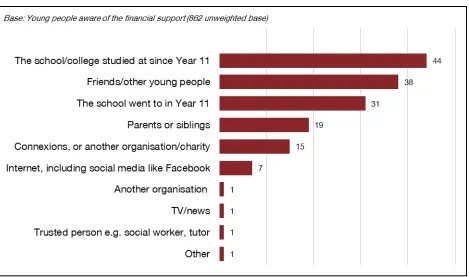
Figure 2.3 shows the main channels through which young people found out about the Bursary Fund which included schools and colleges, as well as through informal
Figure 2.3 Learner survey: How they found out about financial support (%) (2012/13)
However, the survey also found that a significant proportion (29%) of young people could not recall hearing about the Bursary Fund. Case studies and depth interviews with young people found that this lack of awareness was due to a combination of factors. The variation in provider approaches to publicising the Fund meant there was no ‘clear message’ getting through to young people. This led to confusion as to what was
available and who could receive it. This was particularly apparent for young people who had changed provider during the academic year.
Although some providers had increased their levels of advertising and had increased their awareness activities, some young people still reported a lack of guidance in the third year of the scheme:
‘M: Cause we never got nothing when we started did we? Nothing, nothing even about our course or anything. We just literally got told to turn up on the day and then we got told about what we're doing. We never got no information about anything.
F: You have to find out yourself
F: Unless you ask, like I had to ask on the enrolment day whether I am entitled, like whether I can fill out a form or not.
M: Yeah, that's the same for me. I had to ask. They didn't like just mention it. You
have to go and ask certain people for it.’ (Student focus group, FE College)
Young people in the focus groups thought more should be done to raise awareness of the 16 to 19 Bursary Fund in Years 10 and 11, before they had to make decisions about post-16 education. They thought that this would lead to some young people making different decisions about future participation, for example whether or not they could afford to stay on in education. This was highlighted in cases where young people’s parents were not able or willing to provide financial support, or where they would have to travel a long way to a provider. Young people also thought that finding out earlier about the support available would have helped them to plan and prepare for post-16 education, and in some instances it may have changed their decision on which provider to attend. These themes are further explored in the impacts section (section 7.1).
There was a great deal of variation in parental knowledge and understanding of the Bursary Fund. Parents considered that direct communication by letter or email to parents would be the best way to make them aware of the Fund.
Case Example
2.3 Take up of Bursaries
In the third year of implementation, the provider case studies and young person interviews explored views and experiences of take up in more detail. The following barriers to take-up were identified:
This inner-city school Sixth Form had high levels of awareness amongst both staff and pupils. The provider promoted the Bursary Fund in a number of ways including putting application letters in the induction pack, mentioning it repeatedly in
§ Perceived benefit versus burden
Providers considered that for some young people the bureaucracy of paperwork, combined with a general lack of engagement led to some not applying at all or applying late.
‘I think there's always gonna be some students who haven't bothered to fill in the application form, simply out of can’t be botheredness or apathy. I do think there will be some there that are eligible but haven't bothered to take it home or show mum, you know.’
(Student support officer, School Sixth Form) Young people reported that the application process could be a ‘hassle’ due to how long the process took. This issue was raised by young people who felt unsupported by providers in the application process, and where the level of financial support from the Bursary Fund was seen as too low to make a difference.
§ Stigma
Views were mixed on the extent to which the stigma associated with means tested support was a barrier to take up. Providers reported that for a
proportion of parents there was stigma attached to ‘claiming money’; although some felt this had declined over the first three years of implementation.
‘I've noticed that. That if there is any stigma there it's certainly a lot less than it was last year, there was last year.’
(Finance Manager, School Sixth Form) However, depth interviews and focus groups with young people highlighted that stigma remains an issue. For some young people, claiming money was seen as something that you should be ‘ashamed’ and ‘embarrassed’ of and ‘not something to be proud of’.
‘M: Some people don't like asking for help.
F: Yeah some people are embarrassed.’
education gave them an opportunity to leave behind their ‘in care’ status and prove that they could manage without help.
‘I think it's just a perceived stigma attached to having been in care, and it's maybe something, you know, when they reach college age, they leave an age that they wanna leave behind.’
(Student support officer, FE College) Providers recognised that young people actively avoided telling staff about their situation. However, staff considered that receiving the support would be beneficial for their education. Providers recognised that they needed to do more to identify those who are/have been in care.
‘I think we can work harder on trying to identify the vulnerables more because that is another pot that we're not really tapping into that I believe
we can.’ (Business manager, Training provider)
§ Financial privacy and confidentiality
Providers expressed some concern that families did not want to disclose personal information. This was particularly apparent in areas where the provider suspected illegal work (for example black market trading or
unlicensed cab driving) was being undertaken by parents. This meant parents withheld financial information from the provider. There were also concerns that deprived families were reluctant to share financial information due to fears that the authorities were ‘checking up’ on them.
§ Impact on other benefits/income
There were some concerns about young people who would be eligible for a Defined Vulnerable Group Bursary based on receipt of Employment Support Allowance (ESA) and Disability Living Allowance (DLA). Due to anxieties about the possible wider financial impacts of claiming ESA and DLA 13 some eligible young people were not claiming this benefit and were therefore not receiving the Defined Vulnerable Group Bursary. Special schools in particular reported this to be a problem; it was believed a lack of overall awareness
13 Bursary Q&A guidance for 2013/14 states that if a young person claims ESA and DLA this may affect the household / family benefits the parents can claim for that child and families should take this into consideration (DfE, 2013).
about how their benefits would be affected meant families were reluctant to apply.
Reasons why young people do not apply for bursaries
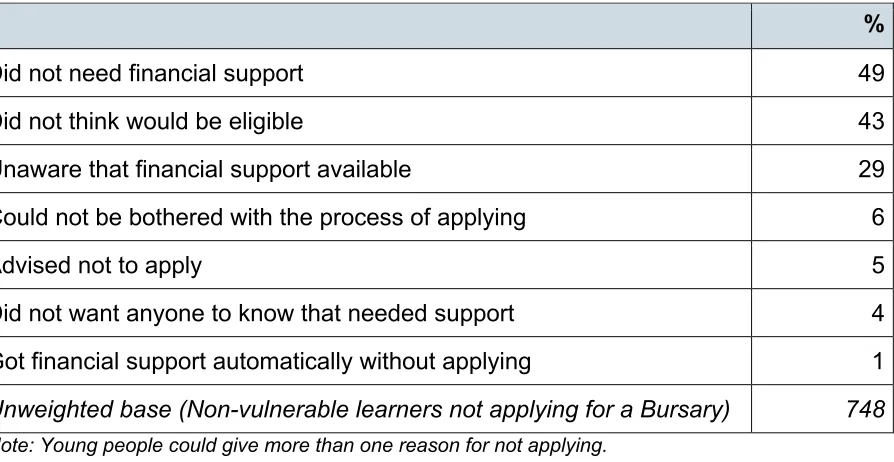
[image:42.612.79.526.281.512.2]As reported in Year 2, 38 per cent of surveyed learners who were not eligible for a DVG Bursary had made an application for a discretionary bursary. For young people who did not apply, the most common reasons given were that they did not need financial support (49%; Table 2.1) and that they did not think they would be eligible (43%). Awareness was also an important factor with 29 per cent saying that they had been unaware that financial support was available.
Table 2.1 Learner survey: Why non-vulnerable learners did not apply for the Bursary (2012/13)
%
Did not need financial support 49
Did not think would be eligible 43
Unaware that financial support available 29
Could not be bothered with the process of applying 6
Advised not to apply 5
Did not want anyone to know that needed support 4 Got financial support automatically without applying 1
Unweighted base (Non-vulnerable learners not applying for a Bursary) 748
Note: Young people could give more than one reason for not applying.
2.4 Targeting young people who may be in need
Beyond setting initial eligibility criteria, proactive targeting was mainly used to
Providers experienced difficulties when they had lots of new students whom they had no background information on; this was particularly apparent in large providers.
‘We've got records from when they come to us in Year 7.. there's free school meals and there are all those kind of social factors in place. Um, it's slightly more difficult when we take in new students which we tend to do in Year 12, who come
to us from other institutions.’ (Head of Sixth Form, School Sixth Form)
In urban areas young people could come from as many as 100 different feeder schools. This made it a huge task to identify young people who might be eligible for the Defined Vulnerable Group Bursary, and providers did not always feel they had enough data to proactively target the DVG bursaries.
Providers identified a number of ways of targeting young people ‘in care’ whilst still being sensitive to their needs. These included contact with agencies outside the
schools, for example local charities, care teams (and mentors), counselling services and the Local Authority, although careful consideration had to be given to ensuring data was shared in accordance with the Data Protection Act:
‘That's one of the things we've really developed this year is to try to identify every single looked after young person and with a, well actually quite some success there, so we've made, we've forged links with the local authority and they're
3 Defined Vulnerable Group Bursary awards
This chapter uses the Management Information (MI) data to look at the number of young people receiving a Defined Vulnerable Group (DVG) Bursary, total spending and the average numbers of DVG awards at the provider level.
Individual awards for DVG Bursaries are fixed at £1,200 for a full bursary and pro-rated as appropriate for part-time learners. The administration of DVG Bursaries was
centralised in 2013/14 with providers being able to claim the funds for these awards as and when needed instead of having to provide this funding from their own bursary allocation.
Key findings from this chapter include:
§ In total 23,900 young people in England received a Defined Vulnerable Group
(DVG) Bursary in 2013/14. Of these, 21,865 attended FE Colleges or School Sixth Forms, equating to 1.8 per cent of the overall cohort of 16-19 year olds in these providers14.
§ The total amount spent on DVG Bursaries was £23.5 million.
§ As in previous years, the largest group of DVG Bursary recipients was young
people in receipt of Income Support (9,700), followed by those in care (8,750).
3.1 The number of Defined Vulnerable Group Bursary awards
The Management Information (MI) provides a record of the numbers of young people receiving full and pro-rata Defined Vulnerable Group (DVG) Bursaries. Due to the centralisation of the DVG awards in 2013/14, in the third year of implementation the MI data is based on claims and payments made to providers for vulnerable learners while in previous years estimates have been based on MI submitted by a sub-sample of providers at the end of the academic year. Therefore, comparisons with previous years would not be robust and are not made in this section of the report.14 This figure excludes Special Schools and Local Authority provision as no cohort size figures were available for these groups.
The total number of young people in England receiving any DVG Bursary in 2013/14 was 23,900. Of these young people, 19,400 received a full DVG award whilst 4,500 received a pro-rata award.
Overall, 44 per cent of providers claimed central funding to award DVG Bursary Funds to their learners, with the remaining 56 per cent of providers not making a claim in 2013/14. Of those providers that did make successful claims, the median number of students receiving any DVG Bursary (full or pro-rata) was three (Table 3.1). On
[image:45.612.70.490.263.469.2]average, the number of awards was much higher in FE colleges and sixth form colleges (median of 26), compared to special schools (4) and school sixth forms (2).
Table 3.1 MI returns: Median number of any DVG awards by provider type
Median
Provider MI returns
Any DVG award
Pro-rata DVG
Full DVG award
FE colleges and sixth form colleges 26 2 22 479
Schools 2 0 2 772
Special schools 4 0 4 206
Other providers 6 2 1 41
All provider types 3 0 3 1,498
3.2 Recipients in Defined Vulnerable Groups
The MI provided a breakdown of the numbers of young people in each of the Defined Vulnerable Groups who were receiving a bursary.15
The largest group of DVG Bursary recipients was young people in receipt of Income Support (9,700; Table 3.2). In total, 8,750 young people in care received a DVG Bursary. For care leavers this was 3,500, while 1,950 of the young people were
15 As defined in the Education Funding Agency 2013/14 guidance:
https://www.gov.uk/government/uploads/system/uploads/attachment_data/file/239840/EFA-00044-2013.pdf [Accessed 17-10-14]
receiving Disability Living Allowance (DLA) and/or Employment Support Allowance (ESA).
The number of young people in each group in individual institutions tended to be small, with those on Income Support, in care and care leavers concentrated in FE colleges and Sixth Form colleges.
Table 3.2 MI returns: Total numbers of bursary recipients in each Defined Vulnerable Group in 2013/1416
Number
Income Support 9,700
In care 8,750
Care leavers 3,500
DLA and ESA 1,950
Provider MI returns 1,498
3.3 Spending on Defined Vulnerable Group Bursaries
The total amount claimed by all providers for DVG Bursaries in 2013/14 was £23.5 million. Further Education Colleges and Sixth Form Colleges awarded the highest value of DVG bursaries at £19.5 million, followed by school sixth forms and academies (£2.5 million) and special schools (£1.1 million). In total, 1.8 per cent of the total cohort of young people studying in Further Education Colleges and School Sixth Forms received a DVG Bursary (2.4 per cent of the cohort in Further Education Colleges and 0.4 per cent of the cohort in School Sixth Forms)17.16 Due to missing data in the Management Information returns the sum of Bursary recipients in this table does not add up to the total number of recipients given in section 2.1.
17 These figures exclude Special Schools and Local Authority provision as no cohort size figures were available for these groups.
Figure 3.1 MI returns: Distribution of all provider spending on Defined Vulnerable Group Bursaries (2013/14)
[image:47.612.75.548.105.335.2]The amount awarded at individual providers ranged from £0 to £540,540; 58 per cent of providers awarded between £1,000 and £5,000 in total (Figure 3.1). Of all providers receiving funds from the centralised system, the median total amount awarded was £3,600 which is the equivalent to three full DVG bursaries (Table 3.3). The median value of DVG bursaries awarded was highest at FE colleges and sixth form colleges (£26,400) which reflects the larger numbers of eligible young people at this type of provider. At special schools the median value of awards was £4,800, which is equivalent to four DVG awards, whilst this was £2,400 at schools and academies. Table 3.3 MI returns: Median value of DVG awards by provider type
Median Provider MI returns
FE colleges and sixth form colleges £26,400 479
Schools £2,400 772
Special schools £4,800 206
Other providers £5,890 41
4 Discretionary Bursary awards
Providers have the freedom to establish their own criteria for awarding Discretionary Bursaries, the forms these awards take and the size of awards. In this chapter we use provider survey data and case studies to look at:
• How many Discretionary Bursary awards were made in 2013/14 • How many applications were made
• The characteristics of young people who applied for and received the awards • The criteria providers used to assess applications and give awards.
Key findings from this chapter include:
§ Overall, providers received an average (median) of 30 applications for a
Discretionary Bursary. The median number of awards made was also 30.
§ In the second year of implementation, the total number of students awarded
Discretionary Bursaries in 2012/13 was estimated to be 357,300. This
represented approximately 23 per cent of the 16 to 18 cohort in education and work based learning.
§ Profiles for applicants and recipients for Discretionary Bursaries were very
similar, suggesting that the likelihood of being awarded a bursary was similar across gender and ethnic groups.
§ For most providers the proportion of applications for Discretionary Bursaries
which resulted in an award was very high – half reported that all applications resulted in an award. Overall, 95 per cent of applications resulted in an award being made.
§ The criteria used by providers to determine eligibility for Discretionary
Bursaries in the third year of implementation were similar to the first and second years. The majority of providers continued to use income-related criteria; household income (66%), Free School Meal entitlement (65%), and household benefit receipt (58%) were the most commonly mentioned.
§ The amount allocated as individual Discretionary Bursary Awards varied
4.1 Numbers of Discretionary Bursary awards
In the third year of implementation there continued to be a wide variation in the number of applications, reflecting the diversity in the size of student populations. Across all providers, the median number of applications for Discretionary Bursaries was 30 (Figure 4.1). A quarter of providers received 12 or fewer applications, whilst at the other end of the scale around ten per cent of providers received over 400 applications. The median number of awards made was 30; this is the same median as for the number of
[image:49.612.72.547.238.508.2]applications, indicating that most young people were successful in their application. Figure 4.1 Provider survey: Median number of applications and awards (2013/14)
There has been a steady increase in the median number of applications in the three years since the implementation of the scheme (Figure 4.2). The median number of applications was 18 in the first year, increasing to 26 in the second year when more young people were eligible to receive the funding due to the end of transitional arrangements for Year 13, and was 30 in the third year of the policy.
In the second year of implementation, based on the MI returns the total number of
represented approximately 23 per cent of the 16-18 cohort in education and work based learning.18
Figure 4.2 Provider survey: Median number of applications and awards from 2011/12 to 2013/14
For most providers the proportion of applications for Discretionary Bursaries which resulted in an award was very high, with half of providers reporting that all applications had resulted in an award (Figure not shown). Just three per cent of providers reported that less than 75 per cent of applications were successful, the lowest success rate being 37 per cent. Application success rates were slightly lower at FE and Sixth Form colleges (mean of 91%) than Schools (mean of 96%).
The overall success rate of applications has remained stable at around 95 per cent in the first three years of Bursary Fund implementation.
In the Year 2 young person’s survey we found that 69 per cent of those who were not in a defined vulnerable group and who applied for a bursary were successful in their applications and received financial support. This success rate is lower than reported in the provider survey in the same academic year (i.e. 2012/13) where just six per cent reported less than 75 per cent of applications were unsuccessful. This difference may in part be due to providers only counting final submitted applications while young people
18 Participation in education, training and employment by 16- 18 year olds in England to the end of 2012, DfE, 27th June 2013.
https://www.gov.uk/government/uploads/system/uploads/attachment_data/file/209934/Participation_SFR_ __end_2012_-_FINALv2.pdf [Accessed 31/01/14] Calculation based on 1,544,400 16 to 18 year olds in education or work based training.
may have started but not completed and submitted an application, or may not recall whether they did so.
4.2 Characteristics of applicants and recipients of
Discretionary Bursaries
Providers responding to the survey were asked to give information on the
characteristics of applicants and recipients for Discretionary Bursaries to allow us to look at differences in the likelihood of different groups applying and being successful. As in previous years, bursaries were equally likely to be awarded to males and females with 94 per cent of applications resulting in an award for both groups (Figure not
shown).
Overall, around a third (30%) of Discretionary Bursary applicants were from a non-White ethnic group and a similar proportion (33%) were awarded funding (Figure 4.3). The proportions of applications resulting in an award were also similar for White (94%) and non-White (96%) students (Figure not shown).
Figure 4.3 Provider survey: Mean percentage of applicants and recipients of Discretionary Bursaries by gender and ethnicity (2013/14)
Level 1, 19 per cent at Level 2, and one per cent at Level 4.19 This pattern is consistent with the second year of implementation; however, in the third year the proportion of applications from students taking Level 1 qualifications fell from 20 per cent in the first year to 10 per cent in 2013/14 with a corresponding increase in applications from students taking level