This is a repository copy of
Two planets orbiting the recently formed post-common
envelope binary NN Serpentis
.
White Rose Research Online URL for this paper:
http://eprints.whiterose.ac.uk/108492/
Version: Accepted Version
Article:
Beuermann, K., Hessman, F. V., Dreizler, S. et al. (10 more authors) (2010) Two planets
orbiting the recently formed post-common envelope binary NN Serpentis. Astronomy and
Astrophysics, 521. L60. ISSN 0004-6361
https://doi.org/10.1051/0004-6361/201015472
[email protected] https://eprints.whiterose.ac.uk/
Reuse
Unless indicated otherwise, fulltext items are protected by copyright with all rights reserved. The copyright exception in section 29 of the Copyright, Designs and Patents Act 1988 allows the making of a single copy solely for the purpose of non-commercial research or private study within the limits of fair dealing. The publisher or other rights-holder may allow further reproduction and re-use of this version - refer to the White Rose Research Online record for this item. Where records identify the publisher as the copyright holder, users can verify any specific terms of use on the publisher’s website.
Takedown
If you consider content in White Rose Research Online to be in breach of UK law, please notify us by
arXiv:1010.3608v1 [astro-ph.SR] 18 Oct 2010
October 19, 2010
L
etter to the
E
ditor
Two planets orbiting the recently formed post-common envelope
binary NN Serpentis
K. Beuermann
1, F. V. Hessman
1, S. Dreizler
1, T. R. Marsh
2, S. G. Parsons
2, D. E. Winget
3, G. F. Miller
3, M. R.
Schreiber
4, W. Kley
5, V. S. Dhillon
6, S. P. Littlefair
6, C. M. Copperwheat
2, and J. J. Hermes
31 Institut f¨ur Astrophysik, Georg-August-Universit¨at, Friedrich-Hund-Platz 1, D-37077 G¨ottingen, Germany, 2 Department of Physics, University of Warwick, Coventry, CV4 7AL,UK
3 Dept. of Astronomy, University of Texas at Austin, RLM 16.236, Austin, TX 78712, USA
4 Departamento de Fisica y Astronomia, Universidad de Valparaiso, Av. Gran Bretana 1111, Valparaiso, Chile, 5 Institut f¨ur Astronomie & Astrophysik, Universit¨at T¨ubingen, Morgenstelle 10, D-72076 T¨ubingen, Germany, 6 Department of Physics & Astronomy, University of Sheffield, S3 7RH, UK
Received 26 July 2010/accepted 6 October 2010
ABSTRACT
Planets orbiting post-common envelope binaries provide fundamental information on planet formation and evolution. We searched for such planets in NN Ser ab, an eclipsing short-period binary that shows long-term eclipse time variations. Using published, reanalysed, and new mid-eclipse times of NN Ser ab obtained between 1988 and 2010, we find excellent agreement with the light-travel-time effect produced by two additional bodies superposed on the linear ephemeris of the binary. Our multi-parameter fits accompanied by N-body simulations yield a best fit for the objects NN Ser (ab)c and d locked in the 2 : 1 mean motion resonance, with orbital periods Pc≃ 15.5 yrs and Pd≃7.7 yrs, masses Mcsin ic≃6.9 MJupand Mdsin id ≃2.2 MJup, and eccentricities ec≃0 and ed≃0.20. A secondary χ2 minimum corresponds to an alternative solution with a period ratio of 5 : 2. We estimate that the progenitor binary consisted of an A star with∼2 M⊙and the present M dwarf secondary at an orbital separation of∼1.5 AU. The survival of two planets through the common-envelope phase that created the present white dwarf requires fine tuning between the gravitational force and the drag force experienced by them in the expanding envelope. The alternative is a second-generation origin in a circumbinary disk created at the end of this phase. In that case, the planets would be extremely young with ages not exceeding the cooling age of the white dwarf of 106yrs.
Key words.Stars: evolution – Stars: binaries: eclipsing – Stars: individual: NN Ser – Stars: cataclysmic variables – Stars: planetary systems – Planets and satellites: detection – Planets and satellites: formation
1. Introduction
NN Ser ab1 is a short-period (P
orb=3.12 hr) eclipsing binary
at a distance of 500 pc. The detached system contains a hot hydrogen-rich white dwarf NN Ser a of spectral type DAO1 and an M4 dwarf star NN Ser b with masses of 0.535 M⊙ and
0.111 M⊙, respectively (Parsons et al. 2010a). With an effective
temperature of 57000 K (Haefner et al. 2004), the white dwarf has a cooling age of only 106yrs (Wood 1995). The present
sys-tem resulted from a normal binary with a period of∼1 year when the more massive component evolved to a giant and engulfed the orbit of its companion. The subsequent common envelope (CE) phase led to the expulsion of the envelope, laying bare the newly born white dwarf and substantially shortening the orbital period. Some eclipsing post-CE binaries display long-term eclipse time variations, among them V471 Tau (Kami´nski et al. 2007), QS Vir and NN Ser (Parsons et al. 2010b, and references there-in). The latter possesses deep and well-defined eclipses, which allow measurements of the mid-eclipse times to an accuracy of 100 ms and better (Brinkworth et al. 2006; Parsons et al. 2010b). The processes advanced to explain them include the long-term angular momentum loss by gravitational radiation and magnetic braking, possible quasi-periodicities caused, e.g., by Applegate’s
1 On recommendation by the Editor of A&A, we refer to the sys-tem as NN Ser, to the binary explicitly as NN Ser ab, and to the objects orbiting the binary as NN Ser (ab)c and NN Ser (ab)d.
(1992) mechanism, and the strict periodicities produced by apsi-dal motion or the presence of a third body in the system. Finding the correct interpretation requires measurements of high preci-sion and a coordinated effort over a wide range of time scales. The existence of a third body orbiting NN Ser ab was previ-ously considered by Qian et al. (2009), but the orbital parame-ters suggested by them are incompatible with more recent data (Parsons et al. 2010b). In this Letter, we present an analysis of the eclipse time variations of NN Ser ab, based on published data, the reanalysis of published data, and new measurements obtained over the first half of 2010.
2. The data
K. Beuermann et al.: Two planets orbiting NN Serpentis
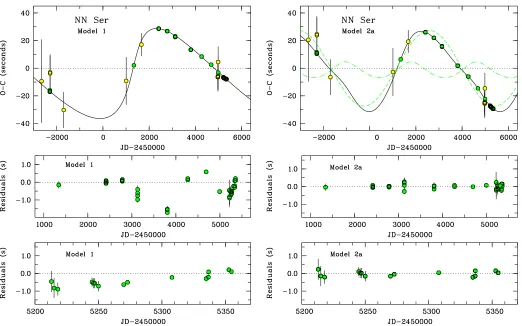
Fig. 1. Top: Top: Observed – calculated mid eclipse time
dif-ferences relative to the best-fit linear ephemeris for Model 1 of a single planet orbiting NN Ser ab. Center and bottom: Residuals relative to the eccentric-orbit fit for two selected time intervals.
variations on a shorter time scale is lacking. We, therefore, organized a collaborative effort of the G¨ottingen, McDonald, and Warwick groups to monitor NN Ser over the first half of 2010. We used the remotely controlled MONET/North 1.2-m telescope at McDonald Observatory via the MONET internet remote-observing interface, the McDonald 2.1-m telescope, and the ESO 3.5-m NTT. The MONET data were taken in white light, the McDonald data with a BG40 filter, and the NTT obser-vations were acquired with the ULTRACAM high-speed CCD camera equipped with Sloan filters. The mid-eclipse times mea-sured in Sloan u’, g’, and i’are consistent, and we used the g’ data as the most accurate set for the present purpose.
The mid-eclipse time derived by Haefner et al. (2004) from the trailed VLT image of 11 June 19992is the most variant of
the published eclipse time measurements and was assigned a large error of 17 s, although this should be a very precise mea-surement, given the very simple form of the eclipses in NN Ser and the use of an 8.2m telescope. We reanalysed the image of 11 June 1999, which started 04:53:05.537 UT with an exposure of 1125.7462 s and was taken in good atmospheric conditions. The key issue is the conversion of the track from pixel space to time. Using two independent methods, we found that the orig-inal analysis by Haefner et al. (2004) was in error and that the mid-eclipse time can be determined with an accuracy of 0.20 s (cycle E=30721). We also reanalysed the less accurate data of Pigulski & Michalska (2002) (cycle E=33233) by including the effects of the finite integration times.
[image:3.595.43.565.53.379.2]2 http://www.eso.org/public/images/eso9936b/
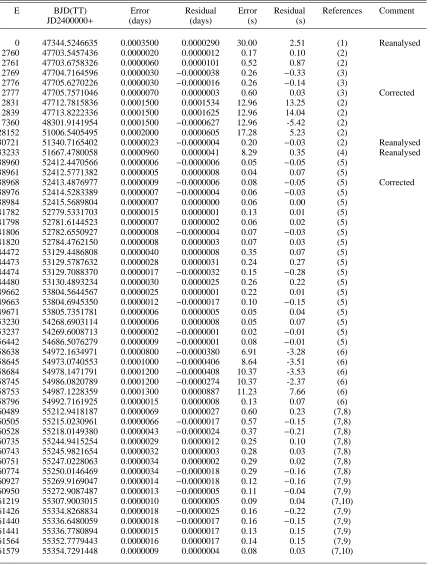
Fig. 2. Same as Fig. 1 for Model 2a of two planets orbiting
NN Ser ab. The contributions of components b and c are indi-cated by the dashed and dot-dashed curves, respectively, the solid curve shows the combined effect.
Table 2 lists all previously published, the reanalysed, and the new mid-eclipse times shifted to the solar system barycenter and corrected for leap seconds. The table also gives the 1-σstatistical errors and the residuals relative to our Model 2a, as shown in Fig. 2 and discussed in Sect. 4, below.
3. The light-travel-time effect in NN Ser
All measurements of mid-eclipse times of NN Ser ab are dis-played in Figs. 1 and 2 as O−C values relative to the model-dependent linear ephemerides of the respective fits. Data points with errors<1 s and>1 s are shown as green and yellow dots, respectively. The eclipse time measurements dominating the fit are the 1989 data points of Haefner et al. (2004) near the ab-scissa value JD’= JD-2450000=–2295, the reevaluated VLT point on JD’=1340, the 2002–2009 series of Warwick eclipse times since JD’=2411 (Parsons et al. 2010b), and the data of this work since JD’=5212. In particular, the revised VLT mid-eclipse time implies a twofold change in the time derivative of O−C and excludes the simple quadratic ephemerides used by Brinkworth et al. (2006) and Parsons et al. (2010b). The avail-able data do not exclude abrupt period changes or an ultimate aperiodicity, but there is no physical process that predicts such behavior. We consider a periodic behavior the most promising assumption and proceed to explore this possibility.
shift with an amplitude Pbinebin/π=3577 ebins (Todoran 1972).
As a result, ebin∼0.01 would suffice to produce the observed
am-plitude. However, the likewise predicted variation of the FWHM of the eclipse and the time shift of the secondary eclipse are not observed (Parsons et al. 2010b, this work). Furthermore, the ob-served variation is not sinusoidal and, given an apsidal motion constant for the secondary star NN Ser b of k22 ≃0.11, the
pe-riod of the apsidal motion would be as short as∼0.4 years. Such periodicity is not detected (see Fig. 2, bottom panel).
This leaves us with the third-body hypothesis, at least for the major fraction of the observed eclipse time variations. In general, it would be possible that different physical processes combine to produce the observed signal. We find, however, that a perfect fit within the very small statistical errors can be obtained for a signal that consists of the periodicities produced by two objects orbiting NN Ser ab. Guided by Ockham’s razor and the history of discoveries in the Solar system, we consider that a fourth body in the presence of a third one is a natural assumption.
4. One-planet and two-planet fits to the data
Including the light-travel-time effect of the objects NN Ser (ab)c and NN Ser (ab)d, the times of mid-eclipse become
T =T0 +PbinE+
X
k=c,d
Kbin,k(1−e2k)
(1+ekcosυk)
sin (υk−̟k), (1)
where time is measured from a fiducial mid-eclipse time T0. A
linear binary ephemeris is assumed with Pbin the orbital period
and E the cycle number. The five free parameters for planet k are the orbital period Pk, the eccentricity ek, the longitude of
perias-tron̟bin,kmeasured from the ascending node in the plane of the
sky, the time Tkof periastron passage, and the amplitude of the
eclipse time variation Kk = abin,ksin ik/c, with abin,k the
semi-major axis of the orbit of the center of mass of the binary about the common center of mass of the system, ikthe inclination, and
c the speed of light. In the denominator,υkis the true anomaly,
which progresses through 2πover the orbital period Pk.
We explored the multi-dimensional χ2 space of the two-planet model, using the Levenberg-Marquardt routine imple-mented in IDL and an independent code. The search showed that compensation effects render some parameters ill defined. This uncertainty results, in particular, from the long hiatus between the accurate measurements of 1989 (Haefner et al. 2004) and 1999 (VLT, this work). We selected the best model, therefore, by imposing the additional requirement that the derived orbits be secularly stable. We investigated all solutions permitted by the data with numerical N-body simulations with a variable time step Runge-Kutta integrator, following the orbits over 105yrs,
and find that only a narrow range in parameter space corresponds to stable solutions. In what follows, we consider the one-planet and the two-planet models in turn.
Model 1 with seven free parameters describes a single planet with eccentricity e. The fit requires e>∼0.60 and is bad for any value of e, with a reducedχ2ν≥23.3 (χ2=1052 for 45 degrees of freedom). The top panel of Fig 1 shows the case e=0.65. The residuals based on the statistical errors of the data points (cen-ter panel) reach 23 standard deviations and indicate that there is an additional modulation at about half the orbital period. The residuals of the 2010 data (bottom panel) demonstrate the lack of O−C fluctuations on a short time scale.
Model 2 for two planets requires some restriction in param-eters, because the grid search yields good fits for a range of ec-centricities of the outer planet ec, including zero, and for a period
ratio rp=Pc/Pd=1.90±0.30 or rp=2.50±0.15 (1-σerrors),
with the former slightly preferred. The dichotomy in rp arises
from the uncertain phasing of the singular 1989 point relative to the train of the 1999–2010 data. Further minima at still larger rpdo not exist. Only a small fraction of the parameter space
al-lowed by the fits corresponds to secularly stable orbits, however. Near rp≃2, orbits with ec>0.1 tend to be unstable, while the
sta-bility region is broad in the remaining parameters for ec≈0.02.
Furthermore, all solutions with rp<∼1.9 are unstable, with only
some solutions stable at rp=1.9. The solutions near rp=2.5 are
more generally stable. We consider Models 2a and 2b, represent-ing the cases of rp≃2.0 and 2.5, respectively, both with ec≡0.
Model 2a provides the slightly better fit and is shown in Fig. 2. It yields Kc=27.4 s, Kd=5.7 s, Pc=15.5 yrs, Pd=7.75 yrs, and
ed=0.20 withχ2ν=0.78 (χ2=32.9 for 42 d.o.f.). Periastron pas-sage of NN Ser (ab)d occurred last on JD’≃4515. At that time NN Ser (ab)c was at longitude 213◦. For the low value of e
c=
0.03, a shallow minimum of χ2 is attained for aligned apses. From the present data, we cannot infer the true value of rpwith
certainty, but it is intriguing that objects c and d may be locked in either the 2 : 1 resonance, found also in other planetary systems, or the 5 : 2 resonance. The parameters for Models 2a and 2b are listed in Table 1, together with their 1-σerrors. A simpler model with two circular orbits reaches onlyχ2
ν=1.96 (χ2=86.2 for 44 d.o.f.) at rp=2.46 and can be excluded.
Using Model 2a as input to our N-body simulations, we find that ec and ed oscillate around 0.02 and 0.22 with amplitudes
of 0.02 and 0.05, respectively. The difference∆̟of the perias-tron longitudes circulates on a time scale of 400 yrs. The periods perform small-amplitude anti-phased oscillations, which cause rp to oscillate between 1.9 and 2.2. Even if the two planets are
secularly locked in the 2 : 1 mean motion resonance, therefore, the observed period ratio at any given time may deviate slightly from its nominal value.
For Model 2a, the best-fit binary ephemeris is T= BJED 2,447344.524425(40)+0.1300801419(10) E, where the errors refer to the last digits. Adding a quadratic term BE2 to the ephemeris does not improve the two-planet fit and yields a 1-σ limit of|B|< 1.5 10−13days, leaving room for a period change by gravitational radiation or a long-term activity-related effect (Brinkworth et al. 2006; Parsons et al. 2010b).
5. Discussion
The large amplitude of the O −C eclipse time variations in NN Ser can only be explained by a third body in the system, while the still substantial residuals from a single-planet fit could, in principle, have a different origin from that of a fourth body. The two-planet model, however, possesses the beauty of simplic-ity, and the fact that the residuals for the entire data set vanish si-multaneously imposes tight restrictions on any other mechanism. In particular, the lack of short-term variability of the residuals in the first half of 2010 argues against any process that acts on a short time scale or leads to erratic eclipse time variations. Hence, there is strong evidence for two planets orbiting NN Ser ab.
With masses Mcsin ic ≃ 6 MJup and Mdsin id ≃ 2 MJup,
NN Ser (ab)c and NN Ser (ab)d both qualify as giant planets for all inclinations ic>28◦and id >9◦, respectively. The probable
detection of resonant motion with a period ratio of either 2 : 1 or 5 : 2 is a major bonus, which adds to the credence of the two-planet model. It is the second two-planetary system found by eclipse timing, after HW Vir (Lee et al. 2009).
first-K. Beuermann et al.: Two planets orbiting NN Serpentis
Table 1. Parameters of the models fitted to the measured mid-eclipse time variations of NN Ser, where≡indicates a fixed parameter.
Model Planets Number Pc Pd Pc/Pd ec ed ac ad ̟c ̟d Mcsin ic Mdsin id χ2 χ2ν
free par. (yrs) (yrs) (AU) (AU) (◦) (◦) (M
Jup) (MJup)
1 1 2+5 22.60 >∼0.65 6.91 8.0 8.36 1052.3 23.38 2a 2 2+8 15.50 7.75 2.00 ≡0.0 0.20 5.38 3.39 74 6.91 2.28 32.9 0.78
±0.45 ±0.35 ±0.15 ±0.02 ±0.20 ±0.10 ±4 ±0.54 ±0.38
2b 2 2+8 16.73 6.69 2.50 ≡0.0 0.23 5.66 3.07 73 5.92 1.60 33.8 0.80
±0.26 ±0.40 ±0.15 ±0.04 ±0.06 ±0.13 ±7 ±0.40 ±0.27
generation planets that formed in a circumbinary protoplanetary disk or they could be young second-generation planets formed<∼ 106yrs ago in a disk that resulted from the CE (Perets 2010). To evaluate both scenarios, we have reconstructed the CE evolution of NN Ser ab using the improved algorithm by Zorotovic et al. (2010), who constrain the CE efficiency to a rangeα≃0.2−0.3. Possible solutions for the progenitor binary of NN Ser ab are not very sensitive toα: forα = 0.25, the progenitor was a gi-ant of 2.08 M⊙ and radius 194 R⊙ with the present secondary
star at a separation of 1.44 AU. When the CE engulfed the sec-ondary star, dynamic friction caused the latter to spiral in rapidly, thereby dramatically decreasing the binary separation to the cur-rent 0.0043 AU. Stability arguments imply that any planet from the pre-CE phase must have formed with semi-major axes ex-ceeding 3.5 AU (Holman & Wiegert 1999). With three quarters of the central mass expelled in the CE event, pre-existing plan-ets would move outward or may even be lost from the system. However, given a sufficiently dense and slowly expanding CE, the dynamical force experienced by them may have ultimately moved them inward (Alexander et al. 1976). Since the drag pri-marily affects the more massive and more slowly moving outer planet, such a scenario could lead to resonant orbits, so a first-generation origin appears possible.
The alternative post-CE origin in a second-generation of planet formation is also possible, since the formation of cir-cumbinary disks is a common phenomenon among post-AGB binary stars and the concentration of a slow, dusty wind to the orbital plane of the binary is thought to favor the formation of planets (e.g. van Winckel et al. 2009; Perets 2010). In particular the tiny separation of the present binary poses no problem for stable orbits of second-generation planets even at significantly shorter distances than the inner planet that we have detected (Holman & Wiegert 1999). A particularly intriguing aspect of a second-generation origin of the planets in NN Ser would be their extreme youth, equal to or less than the 106yrs cooling
age of the white dwarf (Wood 1995). This feature would dis-tinguish them from all known exoplanets and may ultimately lead to their direct detection. While we cannot presently prove a second-generation origin for these planets, modeling the CE event may allow us to distinguish between the two scenarios.
Acknowledgements. We would like to thank Dr. Reinhold Haefner for
informa-tion concerning the original VLT observainforma-tions and analyses and Dr. Andrzej Pigulski for sending us his original photometry. This work is based on data ob-tained with the MONET telescopes funded by the ”Astronomie & Internet” pro-gram of the Alfried Krupp von Bohlen und Halbach Foundation, Essen, on ob-servations with the ESO NTT under ESO programme 085.D-0541, and on data obtained from the ESO/ST-ECF Science Archive Facility. TRM, VSD, CMC, and SPL acknowledge grant support from the UK’s STFC. MRS acknowledges support from FONDECYT under grant number 1061199 (MRS) and the Centre of Astrophysics Valpara´ıso. DEW acknowledges the support of the Norman Hackerman Advanced Research Program under grant 003658-0255-2007.
References
Alexander, M. E., Chau, W. Y., & Henriksen, R. N. 1976, ApJ, 204, 879 Applegate, J. H. 1992, ApJ, 385, 621
Brinkworth, C. S., Marsh, T., Dhillon, V. S., & Knigge, C. 2006, MNRAS, 365,287
Haefner, R., Fiedler, A., Butler, K., & Barwig, H. 2004, A&A, 428, 181 Holman, M. J., & Wiegert, P. A. 1999, AJ, 117, 621
Kami´nski, K. Z., et al. 2007, AJ, 134, 1206
Lee, J. W., Kim, S.-L., Kim, C.-H., et al. 2009, AJ, 137, 3181
Parsons, S. G., Marsh, T. R., Copperwheat, C. M. et al. 2010a, MNRAS, 402, 2591
Parsons, S. G., Marsh, T. R., Copperwheat, C. M. et al. 2010b, MNRAS, 407, 2362
Perets, H. B. 2010, arXiv:1001.0581
Pigulski, A., & Michalska, G. 2002, IBVS, 5218, 1 Qian, S.-B., Dai, Z.-B.,Liao, W.-P. et al. 2009, ApJ, 706, L96 Todoran, I. 1972, Ap&SS, 15, 229
van Winckel, H., et al. 2009, A&A, 505, 1221
Wood, M. A. 1995, in White Dwarfs, ed. D. Koester, & K. Werner, LNP 443, 41 Zorotovic, M., Schreiber, M. R., G¨ansicke, B. T. & Nebot G ´omez-Mor´an, A.
Table 2. Previously published, reanalysed, and new mid-eclipse times of the white dwarf in NN Ser with residuals for the
light-travel-time effect produced by the two planets of Model 2a. The published mid-eclipse times have been converted to BJD(TT) if not yet on this time standard.
E BJD(TT) Error Residual Error Residual References Comment JD2400000+ (days) (days) (s) (s)
0 47344.5246635 0.0003500 0.0000290 30.00 2.51 (1) Reanalysed 2760 47703.5457436 0.0000020 0.0000012 0.17 0.10 (2)
2761 47703.6758326 0.0000060 0.0000101 0.52 0.87 (2) 2769 47704.7164596 0.0000030 −0.0000038 0.26 −0.33 (3) 2776 47705.6270226 0.0000030 −0.0000016 0.26 −0.14 (3)
2777 47705.7571046 0.0000070 0.0000003 0.60 0.03 (3) Corrected 2831 47712.7815836 0.0001500 0.0001534 12.96 13.25 (2)
2839 47713.8222336 0.0001500 0.0001625 12.96 14.04 (2) 7360 48301.9141954 0.0001500 −0.0000627 12.96 -5.42 (2) 28152 51006.5405495 0.0002000 0.0000605 17.28 5.23 (2)
30721 51340.7165402 0.0000023 −0.0000004 0.20 −0.03 (2) Reanalysed 33233 51667.4780058 0.0000960 0.0000041 8.29 0.35 (4) Reanalysed 38960 52412.4470566 0.0000006 −0.0000006 0.05 −0.05 (5)
38961 52412.5771382 0.0000005 0.0000008 0.04 0.07 (5)
38968 52413.4876977 0.0000009 −0.0000006 0.08 −0.05 (5) Corrected 38976 52414.5283389 0.0000007 −0.0000004 0.06 −0.03 (5)
38984 52415.5689804 0.0000007 0.0000000 0.06 0.00 (5) 41782 52779.5331703 0.0000015 0.0000001 0.13 0.01 (5) 41798 52781.6144523 0.0000007 0.0000002 0.06 0.02 (5) 41806 52782.6550927 0.0000008 −0.0000004 0.07 −0.03 (5) 41820 52784.4762150 0.0000008 0.0000003 0.07 0.03 (5) 44472 53129.4486808 0.0000040 0.0000008 0.35 0.07 (5) 44473 53129.5787632 0.0000028 0.0000031 0.24 0.27 (5) 44474 53129.7088370 0.0000017 −0.0000032 0.15 −0.28 (5) 44480 53130.4893234 0.0000030 0.0000025 0.26 0.22 (5) 49662 53804.5644567 0.0000025 0.0000001 0.22 0.01 (5) 49663 53804.6945350 0.0000012 −0.0000017 0.10 −0.15 (5) 49671 53805.7351781 0.0000006 0.0000005 0.05 0.04 (5) 53230 54268.6903114 0.0000006 0.0000008 0.05 0.07 (5) 53237 54269.6008713 0.0000002 −0.0000001 0.02 −0.01 (5) 56442 54686.5076279 0.0000009 −0.0000001 0.08 −0.01 (5) 58638 54972.1634971 0.0000800 −0.0000380 6.91 -3.28 (6) 58645 54973.0740553 0.0001000 −0.0000406 8.64 -3.51 (6) 58684 54978.1471791 0.0001200 −0.0000408 10.37 -3.53 (6) 58745 54986.0820789 0.0001200 −0.0000274 10.37 -2.37 (6) 58753 54987.1228359 0.0001300 0.0000887 11.23 7.66 (6) 58796 54992.7161925 0.0000015 0.0000008 0.13 0.07 (6) 60489 55212.9418187 0.0000069 0.0000027 0.60 0.23 (7,8) 60505 55215.0230961 0.0000066 −0.0000017 0.57 −0.15 (7,8) 60528 55218.0149380 0.0000043 −0.0000024 0.37 −0.21 (7,8) 60735 55244.9415254 0.0000029 0.0000012 0.25 0.10 (7,8) 60743 55245.9821654 0.0000032 0.0000003 0.28 0.03 (7,8) 60751 55247.0228063 0.0000034 0.0000002 0.29 0.02 (7,8) 60774 55250.0146469 0.0000034 −0.0000018 0.29 −0.16 (7,8) 60927 55269.9169047 0.0000014 −0.0000018 0.12 −0.16 (7,9) 60950 55272.9087487 0.0000013 −0.0000005 0.11 −0.04 (7,9) 61219 55307.9003015 0.0000010 0.0000005 0.09 0.04 (7,10) 61426 55334.8268834 0.0000018 −0.0000025 0.16 −0.22 (7,9) 61440 55336.6480059 0.0000018 −0.0000017 0.16 −0.15 (7,9) 61441 55336.7780894 0.0000015 0.0000017 0.13 0.15 (7,9) 61564 55352.7779443 0.0000016 0.0000017 0.14 0.15 (7,9) 61579 55354.7291448 0.0000009 0.0000004 0.08 0.03 (7,10)