Brussels, 27 November 1978
Proposal for a Council Directive
on the approximation of the laws, regulations and administrative provisions of the Member States relating to construction products
Proposal for a Council Resolution
laying down a list of priority products to be covered by directives implementing Council Directive ___/EEC/___ on the approximation of the Laws, regulations
and administrative provisions of the Member States relating to construction products
(Submitted by the Commission to the Council)
1. General
In all the countries of the European Community, the building industry is one of the major industrial sectors.
In the Member states, building and civil engineering account for
approximately 15% of the GNP and almost 60% of the gross fixed capital formation (GFCF).
In
1975,
this sector employed over7
million workers throughout theCommunity (representing approximately 18.5% of the total employed in the manufacturing industries).
The proportion of major materials and industrial products which goes to the building industry and civil engineering is as follows
(*)
Roof tiles and bricks Cement
Ceramic tiles and sanitary ware Plaster
Flat glass Wood
Paints Steel Plastics Copper Aluminium
(*) Euro-Construct
100% 100 % 100%
97
%
70
%
60
%
40%30
%
25
%
establishment of a common market in the building sector, particularly from
the industrial point of view.
In view of the economies of scale which it would bring about and which
would benefit both the producer and consumer, the unification of this
market is an essential factor in the internal development of the
Community's construction industry.
This internal development, in turn, is indispensable if the construction
industry is to develop its exports to non-member countries, whether such
exports take the form of products or of technology or - perhaps most
important - of projects involving the supply of products and technology
as well as the actual services.
At the present time the very large entity which is formed by the various
national components of the construction industry in the Community is
excessively compartimentalized.
The main characteristic of the end product of this industry, i.e. the
building or the civil engineering structures, is that it is erected at
the place of its final destination. It incorporates materials and
components of different kinds and origins and is, therefore, subject to
legal, regulatory and administrative provisions of a national and/or local
nature. Such provisions have, in all countries, the same objective, namely
to protect health, to promote safety and to impose requirements as regards
the social aspects of construction, comfort, the environment and energy
saving. However, although the aims of these provisions are identical, the
methods advocated for achieving them are still very largely of an
empirical nature, their evolution having been determined by the particulal~
country and its history ; they therefore vary greatly from one country to
another.
This has repercussions on the products, whether they be basic materials,
semi-finished products, components or assemblies.
The definition of technical characteristics and performance, the test
me-thods, the design codes, the methods of classification and the marketing
Harmonisation of these provisions will result in both the establishment of
a common market in the construction sector and the development of exports
of these products to non-member countries.
Il will have the effect of removing the fragmentation of internal market
and limiting, if not reducing, the costs borne by industrial undertakings,
which are frequently obliged to embark upon expensive, rep,titive test
pro-grammes before they can submit their products for national approval
proce-dures. Moreover, these procedures are in many cases a source of distorsions
of competition and a restraint on technical innovation which the
construc-tion sector urgently needs in order to reduce the continuous rise in
pro-duction costs.
The resolution setting out the list of products to be covered b,y the
appro-ximation procedure is strictly limited to those which have to contend with
major obstacles to trade and are manufactured in undertakings which depend
to a considerable extent on a Community wide market for their profitability.
The proposal for a directive, which was prepared with the help of a group
of government experts and representatives from the quarters concerned, is
intended in the first instance to harmonize, pursuant to Article 100 of
the EEC Treaty, the various procedures that govern the marketing and
supervision of products intended for the construction industry.
This proposal constitutes a basic tool; it stems on the one hand from the
procedures devised by the Community institutions for other industrial
sec-tors, and on the other hand from the discussions that have taken place in
the working party.
It defines the field of application, which comprises all the products used
in the construction of buildings and civil engineering works. It would,
however, be neither desirable nor efficient to try to harmonize
systema-tically all products used in the building industry. Consequently, a list
is being drawn up of priority products on which action at Community
respect of which the obstacles to free circulation have major
repercussions both commercially and industrially.
The procedures which have been adopted are as follows
- EEC type approval by the Member state itself ;
- EEC type examination carried out by the bodies authorized for this
purpose by the Member state ;
- EEC self-certification by the manufacturer acting on his own
responsibility.
The first two procedures may be supplemented by EEC verification of
conformity to type carried out by bodies approved for this purpose by
the Member state.
In view of the great variety of products that fall within the scope of
the proposal for a directive, it is not possible to define criteria for
deciding in advance the procedure to be adopted for a given product. Such
a decision must take into account established practice, the purpose for
which the product will be used in construction and the requirements that
have to be satisfied. The choice may also be linked with considerations
of a purely economic nature. The graded severity of the procedures means,
however, that the administrative constraints can be adjusted to the needs.
The proposal also deals with problems relating to the designation of the
approved bodies and with the question of markings.
2. Basic principles
The scope of the proposal for a directive is not, however, restricted to
the definition of a field of application, to that of procedures such as
EEC type approval, EEC type examination, EEC verification of conformity
to type and EEC self-certification, nor to the problem of marks or of
It lays down the principles on which the implementing directives in respect of products intended for the building industry that fall within the scope of the directive must be based. The principles are concerned mainly with healt and safety ; they apply to all products intended for
the building industry, which in some respects constitute a highly diversified range.
For each product covered by an implementing directive, these principles must be reflected by appropriate means in the technical content of that directive. Depending on the requirements, the technical content should cover :
- technical characteristics, having regard to the intended use, - test methods,
- calculation codes for properties and performance, - classification and methods of classification, - methods of inspection,
- rules for implementation.
Whichever procedure is ad~pted, the technical content can take the form of annexes specially drawn up for this purpose, or of standards, or of guidelines on technical approval. The choice is decided from case to case, according to the prevailing situation and in the light of consultations with representatives of the parties concerned and with government experts meeting in the working party.
The proposal for a directive laying down the principles and procedures is therefore based on the same system as that applied in certain Member states. In these Member states, outline laws are adopted by the legislature and the implementing provisions for these laws are adopted by the
occasions in resolutions of the European Parliament concerning the
Customs Union, and also in order to simplify and accelerate the procedure for the adoption of the implementing directives with a view to the
removal of technical barriers to trade in construction products - these directives being of a particularly technical nature - that the Commission, in its proposal for a directive, has adopted a procedure based on a wide application of the fourth indent of Article 155 of the Treaty.
This procedure, which is similar ·iio that used for the adaptation to technical progress of directives, is implemented by a Committee on Rules, chaired by a representative from the Commission, which takes its decisions by a qualified majority vote weighted as set out in Article 148(2) of the Treaty.
Since the power to adopt implementing directives has been conferred on the Commission by the Council, there is no longer any need to distinguish between this procedure and that applied for adoption to technical progress, the latter procedure being entirely subsumed in the former.
It must be stressed that this proposal, relating to recourse to the fourth indent of Article 155, is in line with the suggestions made by the Commission, at the request of the Ministers for Foreign Affairs at their meeting at Villers-le-Temple, in its note to the European Council of
5-6
December1977.
3. Method of harmonization
Two different methods can be used for the harmonization of legislation, the one optional, the other total. The "optional" method gives
manufacturers the guarantee that their products which conform to Community provisions can circulate freely on the Community market. The "total"
As regards products intended for the construction industry, emphasis
should once more be placed on the diversity of the field covered by
this proposal for a directive. It should also be stressed that the
effect of harmonization must be to increase the users', and therefore
the consumers', choice while at the same time allowing more open
competition between producers. As a general rule, therefore, the
Commission is in favour of resorting to the optional method of
harmonization in the implementing directives. This general rule, of
course, does not exclude the possibility of using the total harmonization
method should this prove to be essential in the case of certain specific
problems or as regards the use of certain products.
One of the aims of this directive is to allow an exporter to benefit
from the advantages offered by the reciprocal recognition of checks
without, however, obliging a local producer to grapple with the
formalities and checks that compliance with Community measures entails.
Consequently, the local producer need not comply with Community provisions
if national legislation all0ws him not to do so.
The importance of such haJ.·monization to the sector, which was also
empha,-sized by the statement o.r. the Committee on Housing, Building and Planning
of the UN Economic Commission for Europe: "to consider the need to
harmo-nize regulations and standards in order to promote international trade in
building materials, components and equipment, as well as in construction
machinery and Knowhow",l) justifies the effort in terms of work and staff
which would be required in order to implement the proposal for a Directive.
4• Consultation of the European Parliament and the Economic and Social
Committee
In pursuance of the provisions of Article 100(2) of the Treaty, the
opinion of these two bodies is required. For the Memeber states,
imple-mentation of the provisions laid down by the proposal for a directive
invol vee an amendment of their own laws •
1) Policy Statement - 13 October 1973 UN Economic Commission for Europe
Committee on Housing, Building and Planning
NOTES ON THE PROPOSAL FOR A DIRECTIVE
Notes on Chapters
Chapter 1
First of all, Article 1 of this chapter defines the scope of the proposal for a directive. Since there are a vast number of construction products, the scope is defined very broadly. Mors detail is added to this definition by the descriptions given in Annex I.
However, in order to implement this proposal for a directive in the most rational and effective manner so as to achieve the desired effect in the Community's construction industry by removing barriers to the establishment of a common market for construction products, a list of priority products will be drawn up. This list will be the subject of a separate proposal for a Council resolution, which will, if possible, be transmitted to the Council at the same time as the proposal for a directive.
Finally, account has been taken in defining the scope of the directive of the existence of directives already adopted by the Council, certain aspects of which concern construction products. These directives, like those relating, for example, to dangerous substances, to pressure vessels or to electrical goods, are the subject of a general exclusion for all the aspects with which they deal.
Most of the rest of this chapter is composed of Article 2 which defines all the procedures and concepts dealt with in the proposal for a directive. This will facilitate the reading of the proposal and allow for a more straight-forward understanding of its content. The subjects dealt with are :
Chapter II
This chapter deals with basic principles. It details the content of the implementing directives for products which fall within the scope of this directive.
The content must be such as to comply with the basic requirements laid down in Annex II, particularly as regards safety.
As stated in Article
4,
directives will be adopted by the Commission on ·~hebasis of Article 155(4) of the Treaty, in accordance with the Committee procedure laid down in Article 28.
Article 5 provides that the procedures for placing on the market as laid down by the implementing directives can, in certain circumstances, be associated with technical approvals, details of which will be laid down in the directives.
Technical approval is a concept specific to the construction sector and is based on the concept of performance. In contrast to a straightforward
typological description, it represents a powerful means of .removing barriers to trade within a sector where elements required to fulfill a given function can be made from various materials and constituents.
It is also a concept which is essential to the development of technical progress and which favours innovation. This concept of performance is a
fundamental principle whose influence is to be found notably in Article 4(2).
Article 6 opens the way to the use, if necessary, of the complete
harmonization procedure in implementing directives, it being understood that optional harmonization is the general rule.
Chapter III
This chapter deals with EEC type approval. It gives details of the
implications, the procedure to be followed by the applicant, as described in Annex III, and the obligations of the Member state and those of the recipient.
It also states the special procedures which may accompany EEC type approval, together with the rights and duties conferred on the recipient who is
granted an EEC type approval certificate, of which model is given in Annex IV.
It must be emphasised that EEC type approval is a procedure which deals with the placing on the market of construction products, the purpose of which is to facilitate the free circulation of conforming products. This means that Member states have a duty to process type approval applications addressed to them, where this is provided for by an implementing directive. It does not mean that Member states are obliged to insist on EEC type
approval being obtained for use of the product concerned, unless this requirement already appears in their national legislation on construction.
Chapter IV
This chapter deals with EEC type examination. It gives details of the implications, the procedure to be followed by the applicant, as detailed in Annex III, the obligations of the approved body authorized by the Member state to carrying out this procedure and those of the recipient.
It also explains the special conditions which may accompany EEC examination, together with the rights and duties conferred on the recipient who is
granted an EEC examination certificate, of which a model is given in Annex IV.
Chapter V
approved body shall carry out this supervision and the manufacturer's obligations.
Chapter VI
This chapter covers EEC independent certification. It explains the way in which this procedure is to be applied, the obligations of the manufacturer using it and those of Member states.
Taking into account the wide range covered by the construction products sector, the Commission has adopted the unanimous opinion of the group of experts and considers it is necessary to specify these procedures in the proposal for a directive. In referring the establishment of these procedures to implementing directives there is a risk that rather diverse procedures will be formulated for EEC independent certification. This would be contrary to the aims laid down in the proposal for a directive.
Chapter VII
This chapter deals with the procedure for adopting implementing directives on the basis of Article 155(4) of the Treaty. When a draft implementing directive is brought before the Committee by the Commission, which supplies the Chairman, it must be approved by a qualified majority in accordance with the weighting in Article 148(2) of the Treaty before the Commission can adopt it. If the Committee does not approve the draft, the Commission must transmit a proposal to the Council which has three months to act by a qualified majority. Should the Council not reply within this period, the Commission may adopt the proposal for an implementing directive.
Chapter VIII
The safeguard clause constitutes a derogation from the free circulation clause contained in Article
7.
Chapter IX
This chapter covers the special provisions which can be applied to products which fall within the scope of the draft directive but which are not yet the subject of an implementing directive.
The procedure defined is usually known as "conditional recognition of checks". According to this procedure, tests and checks made by an approved body in the exporting Member state in accordance with the current methods used in the importing Member state are recognized by the latter as conforming
to national provisions laid down by law, regulation or administrative action.
Chapter X
This chapter deals with the approved bodies which are designated by Member states for technical approval system, EEC type examination, EEC supervision of conformity to type or, finally, for conditional recognition of checks.
Each Member state must send the list of such bodies to the other Member states and to the Commission.
To be approved these bodies must meet the minimum criteria laid down in Annex VI.
Chapter XI
This chapter contains the general and final provisions and, in particular,
the provisions on the protection of EEC marks, on the costs arising from
processing EEC type approvals, EEC type examinations and EEC checks on
conformity to type and those relating to appeals by interested parties
against decisions to refuse or withdraw EEC type approval or EEC type
examination, to ban the right to use independent certification and to
withdraw approval from a body.
Notes on the Annexes
Annex I
This Annex describes and gives examples of products which fall within the
scope of the directive. These can be divided into the following main
classes :
- unformed materials
- formed materials
- elements
- components
- plant
Annex II
This Annex describes the main requirements to be met by construction
products.
The implementing directives will, for each product, define the implementing
means for ensuring compliance with these requirements.
Annex III
This Annex gives step-by-step descriptions of the procedures for EEC type
the applicant's obligations, especially those concerning the establishment of the two parts of the application .:
• the administrative dossier • the technical dossier
- the Member state's or approved body's obligations • certification
• publicity on certification and problems regarding the suspension or withdrawal of certificates
in cases where a construction product has to be EEC type approved or EEC type examined.
Annex IV
This Annex lays down the model certificate for EEC type approval or type examination. It also shows the model document which must be used for notyfying suspension or withdrawal of an EEC type approval or type examination certificate.
Annex V
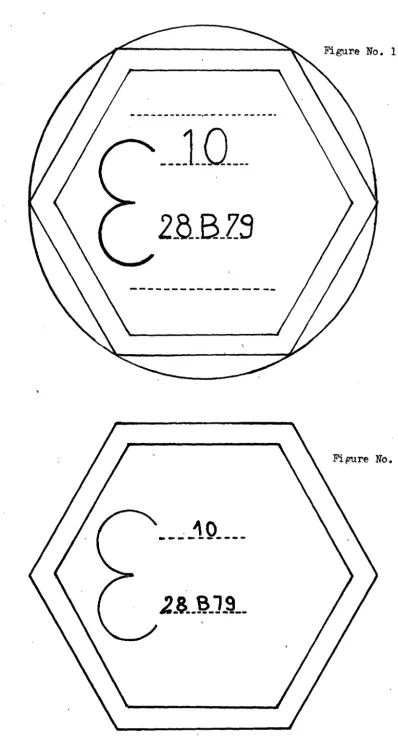
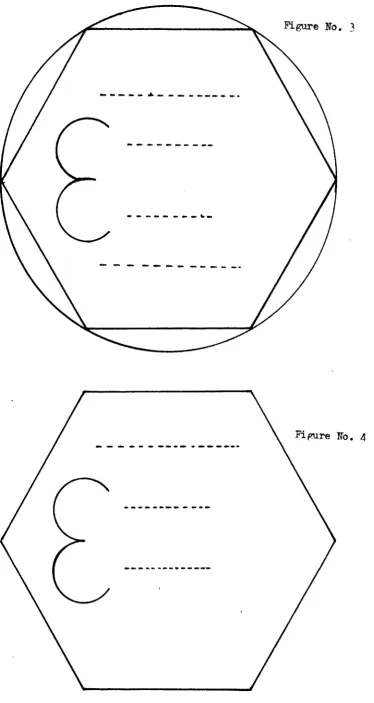
This Annex shows the models for each of the EEC marks relating to - EEC type approval
- EEC type examination
- EEC independent certification
as well as the corresponding conformity certificates.
It gives details of the information which must appear on these marks and more particularly explains how to establish, in the case of EEC type
approval and examination, whether or not the EEC checking of conformity to type is associated with it.
Annex VI
This Annex sets down the minimum criteria with which Member states must comply in designating approved bodies, without prejudice to their power to take such measures and lay down such conditions as they may consider
THE COUNCIL OF THE EUROPEAN COMMUNITIES,
Having regard to the Treaty establishing the European Economic Community, and in particular Articles 100 and 155 thereof ,
Having regard to the proposal from the Commission ,
Having regard to the Opinion of the European Parliament ,
Having regard to the Opinion of the Economic and Social Committee ,
Whereas the provisions in force in the Member States for the manufacture, inspection and use of construction products answer differing requirements; whereas these divergences constitute barriers to trade within the Community ; Whereas the construction products sector is very large and very
diversified whereas certain products and constituent materials are
used in other fields ; whereas harmonized rules at Community level already exist for certain products and constituent materials ;
Whereas in order to remove the barriers, steps should be taken at Community level to harmonize national laws, regulations and
administrative provisions ; whereas these harmonization measures must not be contradictory to those already in force for certain products belonging to the construction products sector ; whereas such products should be excluded from the scope of this Directive insofar as all the aspects directly connected with it have already been expressly covered or are in the course of being covered ;
Whereas in order to remove the barriers, the performances to be complied with, the technical specifications, the technical guides, the methods of testing, of classification and of uniform calculation must be suitably defined for the various products by means of annexes, standards and technical approvals ; whereas the results of the tests, calculations,
Whereas the conformity of construction products to common provisions must be the subject of procedures which are recognized by all the
Member States ; whereas the EEC type approval, the EEC type examination, the EEC check for conformity to type and the EEC self-certification
p~ocedures must be the subject of a common definition ;
Whereas the documents drawn up under these procedures are issued by approved bodies ; whereas, in order to ensure the reciprocal recognition of these documents or of the check on the use of the marks and/or
certificates of conformity to which they give the right, these bodies should be approved on the basis of common criteria ;
Whereas the user must be able to tell from the EEC mark or certificate of conformity, whether a product has been the subject of EEC
type approval, EEC type examination or EEC independent certification and whereas these procedures should therefore be indicated by
distinctive marks which are easy to interpret
Whereas it is not possible absolutely to define the criteria for deciding in advance, according to the type of product, which of the EEC type
approval, EEC type examination or EEC independent certification
procedures should be applied ; whereas the established practice in the Member States must be taken into account in each case ; whereas the role the product plays, especially from the safety view point, must also be taken into account ;
~fuereas, in general, the implementing directives must ensure that Member states may not refuse, prevent or prohibit the placing on the market of products which comply with the requirements of this Directive and of the appropriate implementing directive ; whereas, in certain cases it may nevertheless be desirable that Member States shall, in addition, allow only such products on to their market ;
Whereas provision should be made for directives implementing the rules
maid down in this Directive on construction products or groups of such
products; whereas these implementing directives must include technical
specifications to which such products must conform ;
Whereas these implementing directives are defined in this irective and
assume the nature of executive measures ; whereas it is therefore desirable to confer on the Commission, assisted by a Committee acting
on a qualified majority, the powers for executing this Directive ;
Whereas construction products put on the market could, while meeting
the provisions of the relevant implementing directive, nevertheless
endanger safety or health ; whereas, therefore, a procedure should be
established in order to counteract this risk ;
Whereas, for products which are not yet covered by an implementing
directiv~ it is desirable to provide for a transitional procedure to
facilitate trade within the Community ;
Whereas it should be specified that the parties concerned must have
available the appropriate legal means of appeal against decisions taken
by the approproate national authorities as regards the implementation
of this Directive and of the implementing directives ,
Chapter I
Scope and definitions
Article 1
1. This Directive shall apply to those products which are
incorporated in buildings and civil engineering works, hereinafter c-alled
"products", which are described in Annex I.
2. Products which are the subject of separate Community D.irectives shall be
excluded from the scope of this Directive.
However, such exclusion shall apply only to those aspects which are dealt with
in the separate Directives.
Article 2
For the purposes of this Directive :
1. a) "EEC type approval" shall mean the act whereby a Member State certifies,
after testing, that a type of product complies with the requirements of
this Directive and of the relevant implementing directives ;
b) "EEC type examination" shall mean the procedure by which a body
approved for this purpose by a Member State establishes, after testing,
that a type of product complies with the requirements of this Directive
and of the relevant implementing directives ;
c) "EEC verification of conformity to type" shall mean the procedure by
which a body approved for this purpose by a Member State
- shall ensure the correct usage, by the holder of an EEC approval
certificate or an EEC type examination certificatei of aA EEC mark
and/or of the corresponding certificate of conformity ;
- shall, by means of checks, factory inspections, sampl1ng and tests,
ensure that the product conforms to a type which has been the subject
2. "EEC self-certification" shall mean the procedure by which the
manufacturer certifies, on his own responsibility, that a product complies with the requirements of this Directive and of the relevant implementing
directives.
3. "EEC product" shall mean products bearing one of the following EEC
marks and/or accompanied by one of the following corresponding certificates of conformity
a) The EEC mark of EEC type approval and/ or the EEC type approval
certificate of conformity ;
b) The EEC mark of EEC type examination and/or the EEC type examination
certificate of conformity ;
c) The EEC mark of EEC self-certification and/or the self-certification
certificate of conformity.
4. "Technical approval" shall mean an assessment of a product's suitability
for use, based on performance, where such product, by reason of its novel
use of materials or of the novelty of the materials them~elves, is
not yet covered by a standard.
This assessment shall be directed by technical guides and shall be based on
Laboratory and in situ experiments, which shall be as wide in scope as possible.
5.
"The applicant", "the beneficiary" or "the holder" shall mean themanufacturer, the issuer of the licence or their duly accredited
representative within the Community.
Article 3
The model EEC marks and the models for the EEC type approval, EEC type
examination and EEC self-certification certificates of conformity are
Chapter II
Basic principles
Article
4
1. The implementing directives covering the products referred to in
Article 1 shall be issued in accordance with the procedure laid down in
Article 28.
Implementing directives may :
- either be of a general nature, for all products or for a sub-assembly
of products,
- or relate to a group of products or to a particular aspect of a group of products.
The provisions of the implementing directives shall be such that the
products which conform to them shall allow the constructions in which they
are used to meet generally recognized requirements, especially those
concerning safety. Such requ~rements are set out in Annex II.
2. The implementing dir~ctives shall lay down in each individual case, by
the means appropriate to the product in question, and as necessary,
- the technical characteristics, having regard to the intended use
- the methods of testing ;
the methods of calculating the properties and performance of a product ;
- the classification and methods of classification ;
- the inspection procedures ;
- the rules for bringing the products into use.
3.
The implementing directives shall state, for each individual case, whichprocedure(s) described in this Directive shall apply to the marketing of
the EEC product concerned.
The choice of procedure shall take account both of established practice and
Article 5
1. The implementing directives may provide that EEC type approval, EEC
type examination or EEC self-certification shall be temporarily based on
technical approvals issued by approved bodies in accordance with the
guidance given in those directives.
2. Such implementing directives shall lay down the provisions necessary
to ensure that the technical appr~vals issued by the competent approved
bodies are consistent with each other.
Article 6
The implementing directives shall state, where necessary, the date after which Member States may no longer permit the marketing of products which are covered by these directives but are not in conformity with them.
Article
7
1. Member States may not refuse, prohibit or restrict the marketing of an
EEC product, or its use for it~ intehded purpose, on grounds covered by this
Directive and the relevant implementing directives, if such product conforms to the provisions of such directives.
2. Products having EEC marks and/or certificates of conformity shall be
Chapter III
EEC type approval and certificate
Article 8
1. The EEC type approval certificate is the document by which the Member
~ate certifies that a type of product conforms with the provisions of this
O.irective and of the implementing directive.
2. ~he obtaining of an EEC type approval certificate, when provided
for by an implementing directive, shall be a prerequisite to the marketing
and use for its intended purpose of an EEC product.
Article
9
1. The application for EEC type approval of a type of product shall be
made to the Member State by the applicant in accordance with the procedure
laid down in Annex III.
Each Member State shall corrmunicate to the other Member states and to the
Commission the addresses to which applications for EEC type approval must
be sent.
2. The Member State to whom the application is addressed shall acknowledge
receipt thereof.
3.
For a specific type of product, subject to any special provisions inthe relevant implementing directive, an applicant may only make
application for EEC type approval to one Member State.
Article 10
1. If the type of product submitted for EEC type approval conforms with the
provisions of this ~irective and the relevant implementing directives, the
Member State shall grant approval and shall issue, in accordance with the
model set out in Annex IV, an EEC type approval certificate, note of which
and in particular those in Article 19, and to those set out in the implementing
directives, the applicant shall undertake to abide by these conditions.
2. Moreover, an EEC type approval may be made subject to a time limit
or to other conditions set out in the implementing directives. In
particular, when the application is made, access to the works for inspectors
and the means for them to ensure the conformity of the products manufactured
with the approved type shall be guaranteed.
3.
The implementing directives may provide that the applicant shall informthe Member State of the date from which he will start to manufacture the product.
4.
The applicant shall affix the EEC type approval mark and/or draw up anEEC type approval certificate of conformity in accordance with the provisions
of the implementing directive.
Article 11
1. If a Member State observes that several samples of a type approved
product do not conform to this type, it shall request the holder of the
certificate to rectify manufacture within a period specified by it, with
possible suspension of the certification.
Where necessary, the implementing directive relating to this type of product
shall stipulate the number of samples deemed sufficient to justify
intervention by a Member State. If the holder of the EEC type approval
certificate does not act upon the request within the stated period, the
Member State shall suspend or withdraw the type approval under the conditions laid down in Annexes III and IV.
2. The Member State may withdraw· the EEC type approval granted by it if it
establishes that such approval ought not to have been granted.
3.
It shall suspend or withdraw EEC type approval where the recipient noArticle 12
1. If a Member ~ate is informed by another Member State of the existence
of one of the cases referred to in Article 11, it shall comply, after
consultation with that Member State, with the measures stated in that
Article.
2. In the event of a dispute between the Member State which granted the
EEC type approval and another Member tate over the advisability of
suspension or over the obligation to withdraw approval, the matter shall be
brought before the Commission, which shall in consequence take all measures
necessary, without prejudice to the provisions of the Treaty.
3.
An EEC type approval may only be withdrawn by the Member State whichgranted it. This Member State shall immediately inform the other Member
States and the Commission thereof, giving as far as possible the quantitative
and ~ualitative details necessary to identify the non-conforming product.
Chapter IV
EEC type examination and certification
Article 13
1. The EEC type examination certificate is the document by which the
approved body certifies that a type of product conforms with the provisions
of this Directive and of the implementing directive.
2. The obtaining of the EEC type examination certificate, when provided
for by an implementing directive, shall be a prerequisit• to the marketing
Article 14
1. The application for an EEC examination of a type of product shall be
made to the approved body by the applicant in accordance with the procedure
laid down in Annex III.
2. The approved body to whom the application is addressed shall
acknowledge receipt thereof.
3.
For a specific type of product, subject to any special provisions inthe relevant implementing directive an applicant may only make application for EEC examination to one competent approved body.
Article 15
1. If the type of product submitted for EEC type examination conforms
with the provisions of this Directive and the relevant implementing ·
directives, the approved body shall issue, in accordance with the model
contained in Annex IV, the EEC type examination certificate, notice of
which shall be given to the applicant. When EEC type examination is
subject to the conditions Laid down in Chapter V, and in particular those in
Article 19, and to those set out in the implementing directives, the applicant shall undertake to abide by these conditions.
2. Moreover, an EEC type examination certificate maybe made subject to
a time limit or to other conditions set out in the implementing directives.
In particula~when the application is made, access to the works for
inspectors and the means for them to ensure the conformity of the product
manufactured with the type submitted for EEC examination shall be guaranteed.
3.
The implementing directives may state that the applicant shall informthe approved body of the date from which he will start to manufacture the
product.
4· The applicant shall affix the EEC type examination mark and/or dra't
up an EEC type examination certificate of conformity in accordance with the
Article 16
1. If an approved body observes that several samples of a product, for
the type of which an EEC type examination certificate has been issued, do
not conform to this type, it shall request the holder of the certificate to
rectify manufacture within a period specified by it, with possible
suspension of the certification.
Where necessary, the implementing directive relating to this type of product
shall stipulate the number of samples deemed sufficient to justify
intervention by the approved body. If the holder of the EEC examination
certificate does not act upon the request within the stated period, the
approved body shall suspend or withdraw the type examination certificate
under the conditions Laid down in Annexes III and IV.
2. The approved body may withdraw the EEC type examination certificate
granted by it if it establishes that it ought not to have been granted.
3. It shall suspend or withdraw an EEC type examination certificate
where the recipient no Longer complies with the conditions referred to in
Article 15.
Article 17
1. If in a Member State one of the cases described in Article 16 is
observed, that Member state shall inform the Member State in which the EEC
type examination certificate was issued.
2. The Member state in which the EEC type examination certificate was
issued shall require the approved body to take the measures provided for
in Article 16.
3. In the event of a d1spute between the Member State in which an EEC type
examination certificate was issued and another Member State, the matter shall
be brought before the Commission, which shall in consequence take all measures
necessary, without prejudice to the provisions of the Treaty.
4.
An EEC type examination certificate may only be withdrawn by theapproved body which granted it. This approved body shall immediately inform
as far as possible the quantitative and qualitative details necessary to
identify the non-conforming product.
Chapter V
EEC type conformity check
Article 18
EEC type conformity checks shall be carried out by the approved bodies
referred to in Chapter
x.
Article 19
The holder of the type approval certificate or the examination certificate
shall
a) inform the approved bo~ responsible for EEC type conformity checks
- of the place where the manufacturing plant is located,
- of the date on which manufacture will start,
- of any other necessary information laid down in the implementing
directive ;
b) ensure access for the representatives of the approved body to the
manufacturing plant and/or to the stores involved and to the
inspection registers and give them all the information necessary
for the performance of their task ;
c) permit the approved bo~ to take samples in accordance with the
procedures provided for by the implementing directive.
Article 20
1. The inspecting bo~ shall ascertain whether the manufacturer has
available the necessary means and the competent staff to enable him to
carry out internal inspection of the EEC products manufactured, whether he
this internal inspection and whether he keeps inspection registers if this
is laid down by the implementing directive.
2. The approved inspecting body may take samples without prior warning
from the manufacturing plant and the specified stores. Furthermore,it is
entitled to take samples, against payment at all stages of marketing
including, in appropriate circumstances, from building sites.
3.
If the manufacturing plant or the stores are situated in,or ifmarketing is carried out in a Member State other than that which granted
the EEC type approval, the inspecting body approved by the Member State which
has granted such type approval may collaborate with the approved body in the
Member State where the samples are to be taken for the checks referred to in
paragraph 2.
In the case of EEC type examination, the approved body which has granted the
examination certificate may collaborate with the approved inspection body
insofar as these two bodies are separate.
4.
The approved body which has carried out the inspection shallforward its report, depending on the circumstances, to the Member state
which has issued the EEC type approval or to the approved body which has
issued the EEC type examination certificate if this is a separate body.
Article 21
1. Where the checks referred to in Article 20 approve that the
product manufactured does not conform to the type which has been approved
or which has received the EEC type examination certificate and/or that the
provisions of this Directive and the relevant implementing directives
have not all been satisfied, the Member State or the approved
body shall take against the beneficiary, and according to the circumstances,
the measures referred to respectively in Articles 11 and 12 or in Articles
16 and 17.
2. As in the case of the withdrawal decision, the suspension decision
shall be communicated to the other Member States, who shall inform the
Chapter VI
EEC self-certification
Article 22
1. The implementing directives may provide for EEC self-certification. In this case, the manufacturer shall affix the.E~C self-certification mark and/or shall establish the self-certificate of conformity in accordance with the provisions of the implementing directives.
2. The implementing directives may also specify that the manufacturer shall draw up a technical note which he shall attach to the accompanying commercial documents. The model of the technical note shall be laid down in the implementing directive which provides for it.
3. Where applicable, the implementing directives may provide for the self-certification of conformity and/or the technical note to be replaced by a manufacturer's declaration entered directly on the accompanying commercial documents.
Article 23
1. A manufacturer who intends to use EEC self-certification shall inform the Member State on whose territory the product is manufactured thereof, ~he date on which he will begin and,where applicable,the date on which he will cease to use self-certification.
2. The manufacturer shall draw up his declaration of intent in accordance with the model set out in Annex
v.
The Member State to whom this isaddressed shall send copies thereof to the other Member States and to the Commission.
3. For products manufactured outside the territory of the Community, the Member ~ate to whom the manufacturer's declaration is addressed shall send
•
Article
24
In order to apply EEC self-certification a manufacturer shall have
available the technical means needed to check the products manufactured and
shall carry out such checks under the conditions provided for by the
implementing directive and shall keep inspection registers.
"Have available" here means that the manufacturer shall have in his
factories the necessary equipment and staff or that he shall make use of
a body which possesses these and with which he is linked by a permanent
contract.
Article 25
Member States shall take all necessary measures to ensure that self-certified
EEC products satisfy ~he provisions of this Directive and of the relevant
implementing directives. In particular they shall oblige the manufactur~r
to permit v1sits to his plant by inspectors and, if necessary, to submit
the inspection registers to them.
Article 26
1. Without prejudice to other provisions of national legislation, a
Member State may withdraw from a manufacturer the right to apply EEC
self-certification if it becomes clear that the product does not conform
to the provisions of the relevant implementing directive and/or that the
provisions of this D1re~t1ve are not being respected.
2. In this case, this Member state shall immediately inform the other
Member States and the Commission thereof giving as far as possible the
quantitative and qualitative details necessary to identify the non-conforming product.
3.
In the event of a dispute between Member States on the need or otherwiseto withdraw from a manufacturer the right to apply EEC self-certification,
the matter shall be brought before the Commission which shall in consequence
Chapter VII
Procedure for the adoption of implementing directives
Article 27
1. A Committee of Implementing directives is hereby set up with a view to removing technical barriers to trade in the construction products sector, hereinafter called "the Committee", which shall comprise representatives of Member states, with a representative of the Commission as Chairman.
2. The Committee shall adopt its own rules of procedure.
Article 28
1. Where the procedure laid down in this Article is to be followed, matters shall be referred to the Committee by the Chairman, either on his own initiative or at the request of the representative of a Member state.
2. The representative of the Commission shall submit to the Committee a draft implementing directive. The Committee shall deliver its Opinion on this draft within a time limit set by the Chairman, having regard to the urgency of the matter. Opinions shall be adopted by a majority of 41 votes, the votes of the Member States being weighted as provided in Article 148(2) of the Treaty. The Chairman shall not vote.
3. a) The Commission shall issue the implementing directive when it is in accordance with the Opinion of the Committee.
b) Where the draft implementing directive is not in accordance with the Opinion of the Committee, or in the absence of an Opinion, the
Commission shall without delay submit to the Council a proposal relating to the implementing directive. The Council shall act by a qualified majority.
Chapter VIII
Safeguard Clause
Article 29
1. vlhere a Member State has good grounds for believing that an EEC
product, although satisfying the requirements of this Directive and the
relevant implementing directives, presents a hazard to safety or health,
it may temporarily prohibit, or attach special conditions to,the marketing
and use of that product. It shall immediately inform the Commission and
other Member States thereof, giving the reasons for its decision.
2. The Commission shall consult the Member States concerned within six
weeks, then deliver its Opinion without delay and take the appropriate
measures.
3.
If the Commission considers that amendments to the relevantimplementing directives are needed, such amendments shall be adopted in
accordance with the procedure laid down in Article 28 ; in this event the
Member State which took the safeguard measures may retain them until these
Chapter IX
Special Provisions
Article 30
1. This Article shall apply to products within the scope of this
Directive, as defined in Article 1, which are not yet the subject of an
implementing directive.
2. In this event :
a) the Member ~ate addressed shall consider as conforming to current
national laws, regulations and administrative provisions those
products which have satisfied the tests and checks carried out by an
approved bo~.
b) The tests and checks shall be carried out in accordance with the
methods current in the Member State addressed or recognized as
equivalent by that Member State.
c) Member ~ates shall, on request, supply approved bodies with all
necessary information on the procedure to be followed and on the
tests and checks to be carried out.
3.
Member States shall attach to reports and certificates issued by theapproved bo~ which has carried out the tests ~1d checks provided for in
paragraph 2 under b) the same value as they attach to the corresponding
Chapter X
Approved bodies
Article 31
Each Member State shall forward to the other Member states and to the
Commission the list of approved bodies,with addresses, referred to in
Articles
5,
13, 18 and 30 , specifying the groups ofproducts falling within their competence and the nature of the task
assigned to them. It shall also inform the other Member States and the
Commission of any subsequent change in this list.
Article 32
The approved bodies shall in all cases satisfy the minimum criteria Laid dowr
in Annex VI without prejudice to the competence of the Member S,tates to
take measures and lay down the conditions which they consider necessary
at a national level to ensure the proper working of these bodies.
Satisfaction of these minimum criteria by a body shall not oblige a Member
State to approve this body.
Article 33
1. Member states shall ensure that the approved bodies carry out the
tasks assigned to them correctly.
To this end, they shall by appropriate measures oblige the approved bodies
to submit to inspection at any time by the Member State which has appointed them.
2. A Member State may authorize a body which it has approved, without
thereby limiting this body's own responsibility, to entrust to one or more
laboratories the execution of the tests to be carried out as part of the
EEC type examination. These laboratories shall satisfy the minimum criteria
3.
If a Member State finds that a body which it has appointed is not carrying out the tasks assigned to it correctly, the Member State shall take all the appropriate measures in respect of this body.4.
In all cases the Member State shall withdraw approval from a body which it has appointed if it finds that this body has ceased to satisfy the minimum criteria laid down in Annex VI.5.
If a Member state does not withdraw approval from a body which no longer satisfies the minimum criteria, any other Member State may, without prejudice to the provisions of the Treaty, bring the matter before the Commission, which shall in consequence take all measures necessary.Article 34
1. The Member State which withdraws approval from a body shall take all measures necessary to ensure continuity in the implementation of the obligations and duties which result from the attestations, certificates and reports drawn up by this body before the withdrawal of approval.
Chapter XI
General and final provisions
Article 35
Member States shall take all measures necessary to ensure that products which have not received EEC type approval nor EEC type examination nor EEC self-certification should not carry either on the products themselves or on their packaging or their c~rtificates of conformity or the accompan~ing
commercial documents any signs, marks or inscriptions likely to create confusion with the EEC marks.
Article 36
1. The costs resulting from the operation of the EEC type approval procedure or of the EEC type examination and the costs of EEC type
conformity checks with which these procedures are linked shall be borne by the applicant.
2. These costs shall cover ~he expenses incurred by the Member State and/or the approved body.
3. The implementing dir'JCtives may lay down the rules for the implementation of paragraph 2.
Article 37
1 • Member States shall take all measures necessary to ensure that the parties concerned may appeal against the decisions referred to in Articles
7,
10-12, 15-17, 21, 26, 30, 33, 34 and 36 _oragainst any other decision taken in pursuance of this Directive and of the implementing directives.
2. The reasons for any decisions by a Member State shalL be set out and the party concerned shall be notified as soon as possible of the decision and of the means of appeal available in
Article 38
1. Member States shall bring into force the laws, regulations or
administrative provisions necessary to comply with this Directive within
a period of eighteen months from its notification and shall forthwith
inform the Commission thereof.
2. As soon as this Directive has been notified, Member States shall
also ensure that the Commission is informed, in sufficient time for it
to submit its comments, of any subsequent draft essential laws, regulations
or administrative provisions which they intend to adopt within the field
covered by this Directive.
Article 39
1. Construction products incorporated in buildings and civil engineering
works are products, the use, working or installation or laying of which,
come under the economic activities listed in Class 50 of the "General
Industrial Classification of Economic Activities within the European
Communities (NACE)" shown in the following table
Class
50 Building and civil engineering
Group
500 Building and civil engineering (no specialization)
demoli tl.Jn
501 Cons trr.c t ion of buildings (residential and others)
502 Civil engineering : construction of roads, bridges,
railways, etc.
503 Installations
2. Products suitable for use in a building or in civil engineering works which come within the scope of this directive (see Article 1), and which may be the subject of implementing directives, are
Elements :
e.g., prefabricated wall elements ; prefabricated roof elements.
Components :
e.g., door components, including locks and ironmongery staircases.
Shaped materials :
e.g., bridges, tiles, pipes and panels.
Amorphous materials :
e.g., granular materials and paint.
Installations :
e.g., waste disposal installations water supply system.
ANNEX II
Requirements relating to construction products
1. Basic requirements for buildings and works
In defining the requirements of specific users of buildings and, in some circumstances, of society in general, the following properties of buildings must be taken into account :
- reliability, - safety, - hygiene, - comfort, - economy.
In particular, these properties cover :
Stability of the buildings and oft its parts Safety in the event of fire
Safety in the use of fitments and fixtures Safety of traffic (on foot or mechanical) Security against intruders
Air purity
Potability of water
Absence of any harmful materials with which the occupants might come into contact
Protection against insects and other pests Absence of damp walls
Easy maintenance of the property, especially service areas Feasibility of disinfection
Removal of rubbish Acoustic comfort HYgrothermic comfort Durability
Performance/cost ratio
2. Requirements relating to products
The performance of the building as a whole can sometimes be used as a basis for calculating or forecasting the performance of elements and
components which, in their turn, depend on the physical properties of their constituent materials. The main requirement for amorphous and shaped
construction materials is that their properties must be known and their performances must remain stable within specified limits.
Implementing directives, by laying down methods of classification, testing and inspection, must enable the following objective to be attained
products must be so manufactured and dimensioned that they can be used for their intended purpose ; that they are stable in use, that their durability is reasonably predictable and that the proportion of defective products remains within acceptable limits.
To this end :
.a) The values for the properties of products which are characteristic of a group of products and/or which indicate their suitability for use must be
- established by the manufacturer
- freely available in the manufacturer's literature - indicated on the packaging, where possible.
b) EEC marks, together with the particulars on origin specified in the implementing directives, must appear on the products, on the packaging or on the accompanying commercial documents.
3.
Requirements relating to the bringing into use of productsANNEX III
EEC type approval and type examination
1. Applicant's obligation
1.1. The application shall be sent to the address (or, in the case of EEC type Examination, to one of the addresses) indicated by the Member state.
The Member state to whom the application is addressed has the right to require that the application and the relevant correspondence be in its official language or languages. This also applies to all documents attached to the application.
1.2. The application shall be in two parts - the administrative dossier
- the technical dossier
1.2.1. The administrative dossier shall comprise the following: - name, address and status of applicant (manufacturer, licenser
or agent),
- details of the person to whom correspondence must be addressed, - the implementing directive invoked,
- trade description(s) of the product,
- a statement on the ownership of the manufacturing process (e.g. patents) which enables the applicant to make the application, - a statement certifying that the applicant has not submitted the
same application to another country or approved bo~.
1.2.2. The technical dossier shall comprise (in duplicate) :
- all the descriptive documents and drawings needed to understand the manufacturing process for the product and the way in which it is used, and any documents required by the implementing directive, - documents relating to any national approval alrea~ given to the
- EEC type approval or type examination certificates already granted for objects incorporated in the product or EEC self-certification certificates,
- the locations provided for affixing the mark in accordance with the latitude allowed by the implementing directive.
2. Obligations of the Member state or approved body
2.1. The applicant shall receive, within six weeks from the receipt of his application, notification as to whether such application has been granted or refused.
If it is granted, he shall be notified of the serial number, of the dossier's priority date and of the expected date of issue of the certificate.
If it is refused, he shall be notified of the reasons for refusal, and where applicable, of any items the submission of which might make the application acceptable.
2.2. The Member state or approved body shall, at the same time, send an estimate of the charge for its action.
2.3. The Member state or approved body shall initiate the examination of the application, in accordance with the relevant implementing directive. 2.4. If, within the period stated in paragrah 2.1. above, the examination
has not been completed, the applicant shall be entitled to request repayment of any fees and shall be free to submit an application to another Member state or approved body.