ResearchOnline@JCU
This file is part of the following work:
Mylrea, Martina F. (2018)
Design and evaluation of a novel professional identity
development program for pharmacy students.
PhD Thesis, James Cook University.
Access to this file is available from:
https://doi.org/10.25903/5bf365046e2a3
Copyright © 2018 Martina F. Mylrea
The author has certified to JCU that they have made a reasonable effort to gain
permission and acknowledge the owners of any third party copyright material
included in this document. If you believe that this is not the case, please email
Design and Evaluation of a Novel Professional Identity
Development Program for Pharmacy Students.
Martina F Mylrea
BEd – James Cook University, Australia BSc – James Cook University, Australia
MEd (Learning technologies) – James Cook University, Australia
This thesis is submitted in fulfilment of the requirements for the degree of Doctor of Philosophy
at
James Cook University
Division of Tropical Health and Medicine College of Medicine and Dentistry
Townsville QLD
i
Statement of authentication
I, Martina Mylrea, the author of this thesis, understand that this thesis will be made available for use to others. All users consulting this thesis will have to sign the following statement: In consulting this thesis I agree not to copy or closely paraphrase it in whole or part without the written consent of the author; and to make proper public written acknowledgement for any assistance which I have obtained from it.
Beyond this, I do not wish to place any restriction on access to this thesis.
………. ……….
(Author’s signature) (Date)
ii
Declaration
I declare that this thesis is my own work and has not been submitted in any form or another degree or diploma at any university or institution of tertiary education. Information derived from the published or unpublished work of others has been acknowledged in the text and a list of references is given.
………. ……….
(Author’s signature) (Date)
iii
Electronic copy
I, the undersigned, the author of this work, declare that the electronic copy of this thesis provided to the James Cook University Library is an accurate copy of the print thesis submitted, within the limits of the technology available.
………. ……….
(Author’s signature) (Date)
iv
Acknowledgements
I would like to extend my deep gratitude to my supervisor Professor Beverley Glass, firstly for giving me the opportunity to pursue study at this level and also for her continued support and encouragement, especially when the days were long and challenging. We were
colleagues before this adventure and I hope we can continue to work together for many years to come. Thank you also to Professor Tarun Sen Gupta who co-supervised me, providing me with valuable constructive advice and feedback.
My sincere thanks goes to Ms Christine Richardson for being a part of this study, generously offering her time and expertise. A special mention also goes to the students in the BPharm, who participated in this study.
I would like to thank my friends and colleagues for their kindness, patience, concern and welcome distractions on difficult days. To my pharmacist friends in particular, thank you, laughter truly is the best medicine.
This work would not have been possible without the love and support of my family. To my parents, who raised me to value education and have a love for both scientific and artistic pursuits. Thank you to my mother especially, who cared for the boys (painted, cooked, read, laughed, played cars, rode bikes) during the most demanding periods of this thesis. Thank you to my sister for keeping me going with motivational text messages.
Lastly, and certainly not least, thank you to my husband, Darren for his unwavering love and support (IT included) and to our sons Matthew and David; Yes, my darling boys, I have now finally, finished paper six!!
Education is not the filling of a pail, but rather the lighting of a fire.
v
Abstract
Introduction
Professionalism, which is integral to the practice of pharmacy, is evolving to include a recognition of the importance of the development of professional identity. What is lacking, however is the presence of a framework for understanding the formation of student
professional identity and the selection of suitable pedagogical approaches to facilitate such development. Educators are under increasing pressure to produce work-ready graduates, which involves the development of student professionalism. Current competency-based approaches focus on promoting student professional attitudes, values and behaviours. While these competencies are important to professional practice, they fail to adequately capture the complexity and richness of the professional role. A greater understanding of the mechanism of identity development, paired with pedagogies, which support identity formation, would better enable educators to adequately prepare students for professional practice. Professional identity is formed on two levels; the individual or psychological level and the collective level, also known as socialisation. The aim of this study was to develop a Professional Identity Program (PIP), designed to facilitate student professional identity formation, targeting the psychological development of the individual student. This study utilised the theoretical tenets of Self-Determination Theory (SDT), a psychological theory of human motivation and identity development, as a basis for the design of the program. SDT states that satisfaction of the three human basic psychological needs; competence,
relatedness and autonomy, results in increased motivation (autonomy) and identity development. The PIP featured autonomy-supportive teaching in a longitudinal, early intervention, theory-based approach to professional development for pharmacy students.
Methods
Design: In line with the central tenets of SDT, the PIP was designed to support student
vi
approaches previously proven to enhance professional development such as reflective activity, role models and authentic practice-related activity were also incorporated into the program.
Delivery: The PIP was integrated into the existing curricular structure, in each semester for
the first two years of the BPharm. Sessions were delivered together with a practicing pharmacist, offering the students an opportunity to interact with the profession, in the
absence of workplace exposure. Autonomy-supportive teaching techniques underpinned the delivery of the program, and a variety of teaching styles were employed to promote student participation and engagement.
Evaluation: A previously validated professional identity measure, the McLeod Clarke
Professional Identity Scale (MCPIS-9), was utilised as part of a mixed methods approach to the evaluation of the PIP. The Pharm-S, an instrument for measuring student motivation was adapted from an existing scale, modifying the context for pharmacy education. The Pharm-S was validated using recognised techniques and incorporated, alongside the MCPIS-9 and demographic questions to form the student survey. Students in two separate first year cohorts (2014 and 2015 intake) were surveyed at 0, 12 and 24 months. The 2014 cohort did not receive the PIP, whereas the 2015 cohort had the PIP integrated into their curriculum. The student survey scores were summarised as averages in the case of the MCPIS items, and a weighted scoring protocol, the Relative Autonomy Index (RAI) was used for the Pharm-S. To effectively explore inter and intra group differences, inferential statistical techniques, using non-parametric analysis, was undertaken.
An additional survey, using likert-response, was also administered to the 2015 students for the purposes of evaluating the content and delivery of the PIP. Data from this survey were analysed using basic descriptive statistical techniques.
vii
Results
The Pharm-S instrument proved to be suitable for use after successfully conducting face, content, test-retest, construct and convergent validation techniques. A positive correlation (r=0.64) between motivation scores and professional identity scores was also revealed. Analysis of the systematic monitoring of student motivation during the PIP, using the Pharm-S, showed a statistically significant increase in their motivation (autonomy) after 2 years participation in the program (U=421, Z=-2.5, p=0.012). Comparing student scores from those who received the PIP with student scores who did not receive the PIP, also revealed a statistically significant increase in motivation (autonomy) scores after two years in the program (Z=-2.3, p=0.020). Autonomy-supportive teaching has previously been reported to increase student autonomy through its student-centred focus1 and by increasing motivation to learn.2,3 Observed increases in motivation (autonomy) and a demonstrated link between Pharm-S and MCPIS-9 scores, provided evidence of professional identity formation when support is provided for student competence, relatedness and autonomy. This reflects the theoretical basis of SDT which states that the satisfaction of the three human basic psychological needs, lays a necessary foundation for identity development.4
The PIP was positively received by students with 100% stating that they gained a greater understanding of the importance of professionalism and 84% reporting that it improved their sense of professional identity (n=44, 88% response rate, M=18, F=26), mean age=20 yrs, SD=4.2). Student (first and fourth year) perceptions of their professional development revealed three major influencing factors; pharmacist-educators, curriculum and placement. Differences however were noted between groups, however, with the first years prioritising pharmacist educators and the fourth years, placement.
Conclusion
This study builds on and contributes to work in professional education by demonstrating the impact of an early intervention, theory-based, professional identity program. It is the first of its kind to apply the tenets of a psychological theory on motivation and to feature pedagogies that facilitate motivation and identity development in pharmacy students. Adopting
viii
References
1. Ten Cate TJ, Kusurkar RA, Williams GC. How self-determination theory can assist our understanding of the teaching and learning processes in medical education. AMEE guide No. 59. Med Teach. 2011;33(12):961-973.
2. Orsini C, Evans P, Jerez O. How to encourage intrinsic motivation in the clinical teaching environment?: a systematic review from the self-determination theory. J Educ Eval Health Prof. 2015;12(8).
3. Niemiec CP, Ryan RM. Autonomy, competence, and relatedness in the classroom: Applying self-determination theory to educational practice. Theory and Research in Education. 2009;7(2):133-144.
ix
Publications in support of this thesis
Mylrea MF, Sen Gupta T, Glass BD. Professionalisation in Pharmacy Education as a Matter of Identity. Am J Pharm Educ. 2015;79(9):142.
Mylrea M, Sen Gupta T, Glass B. Developing Professional Identity in Undergraduate Pharmacy Students: A Role for Self-Determination Theory. Pharmacy. 2017;5(2):16.
Mylrea MF, Sen Gupta T, Glass BD. Validation of a motivation survey tool for pharmacy students: exploring a link to professional identity development. Currents in Pharmacy Teaching and Learning. 2017 9(5), p 763-769.
Mylrea MF, Sen Gupta T, Glass BD. Design and Evaluation of a Novel Professional Identity Development Program for Pharmacy Students. Am J Pharm Educ. 2018; Published online 8th March 2018
Mylrea MF, Sen Gupta T, Glass BD. Commencing and graduating pharmacy students’ perceptions of their professional development during undergraduate study. Pharm Educ Accepted for publication June 2018
Mylrea MF, Sen Gupta T, Glass BD. Student perceptions of the white coat ceremony in a pharmacy program in Australia. JPPR; Accepted for publication.
x
Conferences and presentations
Mylrea MF, Gupta TS, Glass BD. Professional Identity: From Pharmacy Student to the Practice. Oral presentation at the Life Long Learning in Pharmacy, 6-9 July 2018, Brisbane, QLD, Australia
xi
Abbreviations
AACPC American Association of Colleges of Pharmacy Commission
AACP-COD American Association of Colleges of Pharmacy, Council of Deans
ACCP American College of Clinical Pharmacy
ACPE Acreditation Council for Pharmacy Education
AHPRA Australian Health Professionals Regulatory Agency
AIBM American Board of Internal Medicine
APhA-ASP American Pharmaceutical Association,
ASP Academy of Students of Pharmacy
AST Autonomy supportive teaching
BPharm Bachelor of Pharmacy
BREQ Behavioral Regulation in Exercise Questionnairie
EFA Exploratory factor analysis
EI Emotional Intelligence
FIP International Pharmaceutical Federation
HREC Human Research Ethics Committee
JCU James Cook University
KMO Kaiser-Meyer-Olkin
MCPIS-9 McCleod Clark Professional Identity Scale
PAT Professional Asssessment Tool
PharmD Doctor of Pharmacy
Pharm-S Pharmacy Motivation Scale
PIF Professional Identity Formation
PIP Professional Identity Program
PPTK Pharmacy Professionalism Tool Kit
RAI Relative Autonomy Index
SDT Self-Determination theory
SMS-II Sports Motivation Scale
xii
Table of contents
Statement of authentication ... i
Declaration ... ii
Electronic copy ... iii
Acknowledgements ... iv
Abstract ... v
Publications in support of this thesis ... ix
Conferences and presentations ... x
Abbreviations ... xi
Table of contents ... xii
Tables ... xvii
Figures ... xviii
1 CHAPTER 1 INTRODUCTION ... 1
1.1 Background ... 1
1.2 Professionalism ... 1
1.2.1 Pharmacy education ... 2
1.2.2 Professional socialisation ... 3
1.2.3 Professional education ... 3
1.3 Professional identity formation ... 4
1.3.1 Developing professional identity ... 5
1.4 Study aims and objectives ... 6
1.5 Chapter summary ... 8
1.6 References ... 10
2 CHAPTER 2 LITERATURE REVIEW ... 13
2.1 Abstract ... 15
2.2 Introduction ... 16
2.3 Method ... 17
2.4 Decline in social values ... 17
2.5 Defining professionalism ... 18
2.6 Professionalisation and identity ... 21
2.7 Professional education ... 22
xiii
2.9 Professional identity ‐ pharmacy ... 26
2.10 Conclusion ... 28
2.11 References ... 29
3 CHAPTER 3 RATIONALE FOR SELF-DETERMINATION THEORY ... 36
3.1 Abstract: ... 38
3.1 Introduction ... 39
3.2 Professional Education and Identity ... 40
3.3 Pharmacy Education and Identity ... 41
3.4 Theoretical Frameworks ... 43
3.5 Self‐Determination Theory ... 44
3.6 Pharmacy Education and SDT ... 45
3.7 Conclusions ... 47
3.8 References ... 48
4 CHAPTER 4 PROGRAM STRUCTURE AND DESIGN ... 53
4.1 Introduction ... 54
4.2 The student cohorts ... 54
4.3 Supporting competence, relatedness and autonomy ... 55
4.4 Professional Identity Program (PIP) structure ... 55
4.4.1 Workshops ... 56
4.5 Evaluation schedule ... 58
4.6 Sample session planning ... 59
4.7 References ... 61
5 CHAPTER 5 INSTRUMENT VALIDATION ... 62
5.1 Abstract ... 64
5.2 Introduction ... 65
5.3 Methods ... 68
5.4 Results ... 70
5.4.1 Face validity... 70
5.4.2 Reliability ... 70
5.4.3 Construct validity ... 70
5.4.4 Factor analysis ... 71
5.4.5 Convergent validity. ... 72
5.5 Discussion ... 73
xiv
5.7 References ... 77
6 CHAPTER 6 EFFECT OF A PROFESSIONAL IDENTITY PROGRAM ON STUDENT MOTIVATION AND IDENTITY ... 81
6.1 Abstract ... 83
6.2 Introduction ... 84
6.3 Methods ... 86
6.3.1 Design ... 86
6.3.2 Evaluation ... 89
6.4 Results ... 90
6.5 Discussion ... 93
6.6 Conclusion ... 95
6.7 References ... 97
7 CHAPTER 7 FOCUS GROUP: STUDENT PERCEPTIONS OF PROFESSIONAL EDUCATION ... 101
7.1 Abstract ... 103
7.2 Introduction ... 104
7.3 Methods ... 104
7.3.1 Participant selection and recruitment ... 104
7.3.2 Conduct of the focus group ... 105
7.3.3 Analysis ... 106
7.4 Results ... 106
7.4.1 Focus group I (FGI): Commencing students ... 106
7.4.2 Focus group II (FGII): Graduating students ... 108
7.5 Discussion ... 111
7.6 Conclusion ... 116
7.7 References ... 118
8 CHAPTER 8 PHARMACY STUDENT PERCEPTIONS OF THE WHITE COAT CEREMONY ... 121
8.1 Abstract ... 123
8.2 Introduction ... 124
8.3 Methods ... 125
8.4 Results ... 126
8.5 Discussion ... 128
xv
8.7 Conclusion ... 130
8.8 References ... 131
9 CHAPTER 9 PRECEPTOR EXPECTATIONS AND EXPERIENCES OF PHARMACY STUDENTS DURING EXPERIENTIAL PLACEMENT ... 133
9.1 Introduction ... 135
9.1 Method ... 135
9.2 Results ... 136
9.3 Discussion ... 139
9.3.1 Expectations ... 139
9.3.2 Experiences ... 140
9.4 Conclusions ... 141
9.5 References ... 142
10 CHAPTER 10 DISCUSSION OF FINDINGS ... 144
10.1 Introduction ... 144
10.2 Key findings ... 144
1.1.1 Design: A theoretical framework for Professional identity formation (PIF) ... 144
1.1.2 Deliver: Anatomy of a PIP program ... 145
1.1.3 Evaluate: ... 145
10.2.1.1 Survey instrument validation – Pharm‐S ... 145
10.2.1.2 Evaluation of the PIP ... 145
1.1.4 Factors influencing professional development ... 146
10.3 Limitations ... 147
10.4 References ... 150
11 CHAPTER 11 CONCLUSIONS AND RECOMMENDATIONS ... 152
11.1 Conclusion ... 152
11.2 Future directions and recommendations ... 152
11.3 Researcher reflections ... 154
12 BIBLIOGRAPHY ... 155
13 APPENDICES ... 167
APPENDIX 1 ... 168
APPENDIX 2 ... 170
APPENDIX 3 ... 171
APPENDIX 3a ... 173
xvi
APPENDIX 5 ... 177
APPENDIX 6 ... 179
APPENDIX 7 ... 181
APPENDIX 8 ... 182
APPENDIX 9 ... 183
APPENDIX 10 ... 184
xvii
Tables
Table 2‐1 Professionalism Traits as identified by AACP35 ... 20
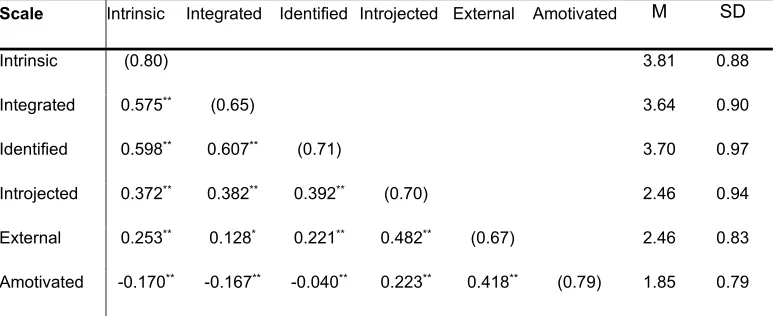
Table 5‐1 Correlations, means (M), standard deviations (SD) and reliability scores for each motivation regulatory style in the Pharm‐S survey ... 71
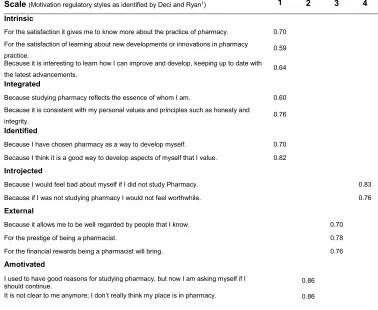
Table 5‐2 Factor loadings for exploratory factor analysis with Varimax rotation ... 72
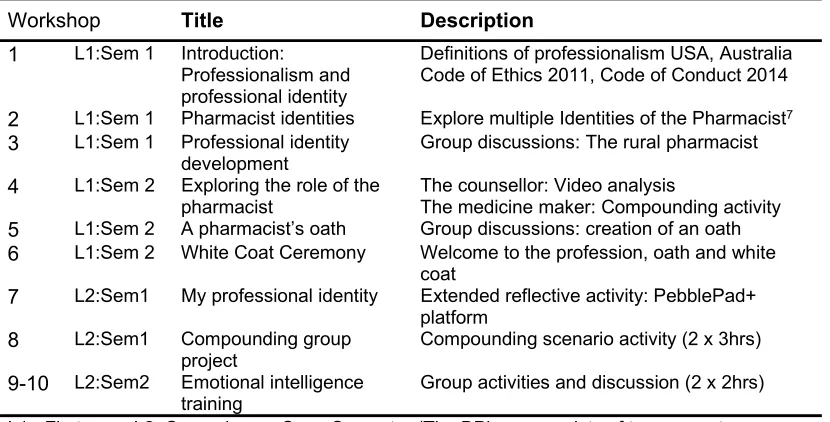
Table 6‐1 Strategies used in the PIP workshops for addressing SDT’s psychological needs. ... 87
Table 6‐2 Professional Identity Program Workshops ... 88
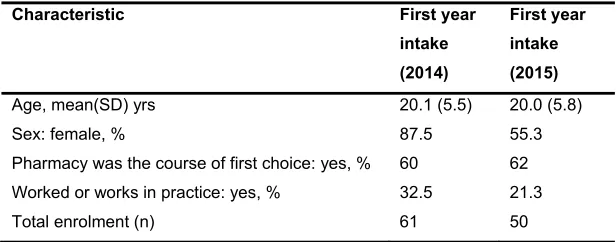
Table 6‐3 Demographics of the first year BPharm cohort ... 91
Table 6‐4 MCPIS‐9 and Pharm‐S mean (SD), at 0, 12 and 24 Months for Participating (PIP) and Non‐ Participating (non‐PIP) Students in the Professional Identity Program (PIP) ... 91
Table 6‐5 Pharm‐S Scores at 0, 12 and 24 months for participating students (PIP) in the professional identity program (PIP). ... 92
Table 7‐1 Focus group questions asked of BPharm students at the end of the first year of study. ... 106
Table 7‐2 Autonomy‐supportive teaching Strategies for stimulating intrinsic motivation developed by Kusurkar et al,20 derived from self‐determination theory. ... 116
Table 8‐1 Respondent Characteristics by year level ... 126
Table 8‐2 Percentage of survey participants who answered agree or strongly agree to the white coat survey questions. ... 126
Table 8‐3 Survey participant preference for timing of the White Coat Ceremony ... 127
xviii
Figures
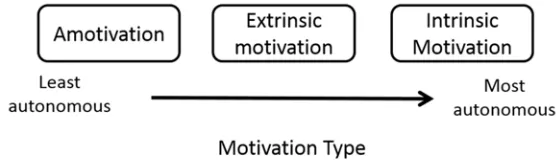
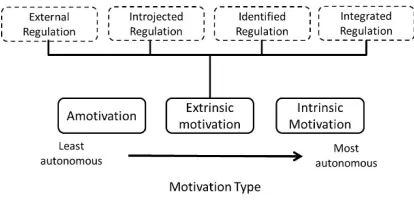
Figure 3‐1 Diagrammatic representation of motivation types as described by Self‐Determination Theory. Adapted from Ryan and Deci 47. ... 44 Figure 3‐2 Conceptualisation of the role of self‐determination theory nutriments in the development of
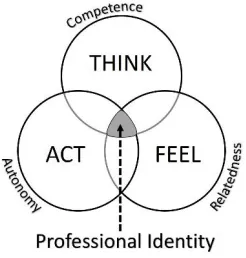
professional identity. ... 46
Figure 5‐1 The Self‐determination continuum by Deci & Ryan23 ... 66 Figure 5‐2 Scatter plot for scores on the Pharm‐S against scores on the MacLeod Clark Professional Identity
Scale (MCPIS‐9)... 73
1 1 CHAPTER 1 INTRODUCTION
1.1 Background
Preparation for professional practice involves the acquisition of essential knowledge and skills, as well as the development of professional identity, including inherent dispositions that define the profession and its members.1 The role of the professional program is to support both the epistemological and ontological development of the student, thus facilitating a successful transition to practicing professional.2 In response to growing concerns around the preparation of professional graduates for an increasingly complex healthcare landscape, an independent commission for the education of health professionals was formed in 2010.3 The commission was formed by twenty individuals from across the globe, representing both health professionals and academic leaders. Among the recommendations reported by the commission, was the call for students to develop ‘responsible professionalism’, not only through the acquisition of knowledge and skills, but in the development of fundamental professional behaviours, identity and values.
1.2 Professionalism
Professionalism is central to the practice of pharmacy, particularly for the establishment and maintenance of patient fiduciary relationships. Aguilar et al4 explain the impact of
professionalism on patient care and subsequent health outcomes, highlighting its role in establishing a relationship of trust.4 Upholding professional standards is thus key to the current and future status of the pharmacy profession.5 Professionalism is a complex construct, influenced by many factors, as identified by Hammer.6 As such, arriving at an agreed definition has been problematic, with consensus difficult to achieve.7 The
professionalism task force, an initiative between the American Pharmaceutical Association Academy of Students of Pharmacy (APhA-ASP) and the American Association of Colleges of Pharmacy Council of Deans (AACP-COD), was formed in 1995, with an aim to
standardise professional education. One of their tasks was to define pharmacy
professionalism. The task force arrived at ten character traits required of the pharmacist. These included knowledge and skills, service orientation, desire for self-improvement, pride in the profession, ethically sound decision making and leadership qualities.
2 identity formation.8 The latter is a recent conceptual shift in the thinking around professional education in medicine and pharmacy. Irby and Hamstra8 state that no one single framework is sufficient to adequately describe professionalism, that a combination of the three
frameworks is required.
Adding to the complexity of the nature of professionalism, is an observed decline in professional behaviour in society in general, with evidence of fraud and professional misconduct across a range of professions.4,9 In 2010, in an effort to maintain professional standards in health education, the Australian Health Practitioner Regulation Agency (AHPRA)10 introduced mandatory reporting of undergraduate pharmacy student conduct. This has brought the issue of student professionalism sharply into focus, with the
responsibility to develop student professionalism increasingly falling to university educators.11
1.2.1 Pharmacy education
As this study will examine research in pharmacy education from Australia, UK and the US it is useful to briefly discuss the formal educational processes in place in each location. In Australia there are two main pathways to achieve registration as a pharmacist. The most common is the completion of a Bachelor of Pharmacy (BPharm), as offered by James Cook University (JCU). This is a four-year undergraduate course, which alongside an additional internship year, allows the student to register as a pharmacist in Australia. Post-graduate courses are also offered such as the Master of Pharmacy (MPharm), a two year, graduate-entry course work program.
In the UK the recognised registrable qualification is the MPharm, a four year degree pathway, which includes an internship year. Students participate in 1 week of experiential learning per academic year, for the final three years.10 In the US students must complete a PharmD, which has a pre-requisite of two years of pre-professional coursework. The PharmD involves four years of study which includes a high level of exposure to experiential learning in the form of introductory and advanced professional experiences in community and hospital pharmacy settings.11
The US PharmD programs commence their professional experiential learning in the first year of study, as the foundation science component has been completed during the
3 undergraduate qualification, the first two years of study places a large emphasis on science-based subjects, leaving the majority of the experiential component to the last two years of the course. As a result students spend, on average, 500 hours in experiential placement settings, less than a third of the time a PharmD student would undertake. After graduation from the BPharm students then proceed to undertake a 40 week internship, after which they can register to practice.
The majority of the students who enrol in the BPharm at JCU are school leavers with a small proportion of mature-aged students who have spent some time in the workforce or studying in other areas. James Cook University is a regional university, therefore typical class sizes range from forty to fifty students, significantly lower than its metropolitan counterparts. The course has adopted an integrated structure, such that therapeutic information is delivered alongside the major body systems, giving students the opportunity to make essential links between the basic sciences and the practice of pharmacy. The majority of the course is delivered face-to-face in lectures, tutorials and workshop formats. Learning technologies such as Blackboard is used extensively to support student learning.
1.2.2 Professional socialisation
Socialisation is defined as ‘the process by which a person learns to function within a particular society or group by internalising its values and norms’.1 This concept was extended to professional socialisation, and used in medical education to describe the process of becoming a physician.6 Hammer describes it as an active process which involves ‘the transformation of individuals from students to professionals who understand the values, attitudes, and behaviours of the profession deep in their soul’.6 It is an essential process if students are to make the transition from student to working professional.1 As early as 1990, the American Association of Colleges of Pharmacy Commission (AACPC) recommended curriculum reform, to include strategies to facilitate the professional socialisation of students. It is the process of professional socialisation that invokes professional identity formation.1
1.2.3 Professional education
4 education. Hammer5 explored the factors impacting professionalism of pharmacy students, reporting that strategies such as role models, experiential learning and reflective practice serve to enhance professionalisation.5,6,13 It was also agreed that professionalism must be taught explicitly,14 as Hammer explains, ‘for professionalism to be considered seriously, it must be taught in the curriculum’.6
Historically, the teaching and assessment of professionalism has been aligned with the virtue and behavior-based professionalism frameworks.5,14, as described by Irby and Hamstra.8 The research literature reflects a large body of research focused on the teaching and assessment of professionalism based on these characteristics and traits.1,15-17 Hammer reported on the difficulty around describing and measuring attitudes and behaviours,5 with more recent research, raising doubt around the validity of attitudes, values and behaviours as reliable indicators of student professionalism.4
1.3 Professional identity formation
Medical education research has recently led a significant shift in thinking around professional education. The third framework of professionalism, professional identity formation (PIF), is a recent introduction of an additional dimension in the area of professional education.1,18 Cruess et al, after decades of research around professional attitudes, values and behaviours, have stated that a main objective of professional education should be the development of professional identity.1,19 As Irby explains, the new emphasis on PIF, was prompted by the constraints of previous professional education paradigms,20 citing the ‘perceived reductionistic and prescriptive behavioural approach to competencies and milestones’.8 Cruess et al argue that the demonstration of appropriate attitudes, values and behaviours remains important, but that professional education needs to make explicit the role of professional identity formation (PIF).1
5
1.3.1 Developing professional identity
In a review of professional identity development in higher education by Trede et al it was reported that there is a lack of research around the conceptualisation of professional identity.11 Holden also observes that ‘there is no unified theoretical framework for
understanding the process of PIF’,24 thus hindering research into appropriate and effective pedagogical approaches for developing professional identity.1,11 What has been recognised however, is that the development of student professional identity can serve to prepare students for the professional workplace.25
Dall’Alba explains that becoming a professional should involve thinking, feeling and acting like a professional and that professional programs should provide opportunites for students to experiment with their future identity.26 She states that preparing students for their chosen profession should involve more than knowledge and skills, the curriculum should be
concerned also with who the student is becoming, otherwise known as ontological development.2
6 1.4 Study aims and objectives
The aim of this research project was to design and evaluate a professional identity program (PIP) for first year Bachelor of Pharmacy (BPharm) students, based on the theoretical tenets of Self-Determination Theory (SDT). The evaluation component sought to test the
hypothesis that participation in the PIP would increase student professional identity. In order to achieve these aims the following objectives were defined:
OBJECTIVE CHAPTER
1) Conduct a literature review to determine the status of professional education in Australia and overseas.
2
2) Explore the rationale for the use of Self-determination theory as a basis for professional identity development.
3
3) Design a Professional Identity Program (PIP), based on SDT for students in the first and second year of the BPharm.
a) Develop workshops to include pedagogies incorporating the tenets of SDT.
b) Build autonomy-supportive teaching into the program
4
4) Develop and validate a survey instrument to evaluate student motivation(Pharm-S)
a) Adapt the SMS-II, a sports motivation scale based on SDT, to reflect the motivations to study pharmacy
b) Validate the adapted survey (Pharm-S), using recognised validation procedures.
c) Use statistical techniques to explore the possibility of a correlation between motivation and professional identity formation in
pharmacy students.
5
5) Survey students at t=0, 12 and 24 months using:
a) MCPIS-9, as a previously validated Professional Identity scale. b) The validated Pharm-S instrument
c) Demographic items
d) Analyse motivation and professional identity data collected over a period of 2 years.
7 6) Determine the factors involved in professional development from the
student perspective.
a) Conduct focus groups involving commencing and graduating students.
7
7) Explore student perceptions of the white coat ceremony a) Conduct a survey of students at all levels of the BPharm b) Analyse survey data
8
8) Determine preceptor expectations and experiences of student professionalism
a) Conduct preceptor interviews
b) Transcribe and analyse interview data
8 1.5 Chapter summary
A literature review provided the background to professional education in higher education, and a starting point for this study. This review can be found in Chapter 2 of this thesis and was published in the American Journal of Pharmaceutical Education.18[Mylrea MF, Gupta TS,
Glass BD. Professionalisation in Pharmacy Education as a Matter of Identity. Am J Pharm Educ. 2015;79(9):142.]
The next phase of the study involved an investigation into possible appropriate theoretical frameworks for the development of professional identity. Chapter 3 is a proposal for the application of SDT as a theoretical framework for teaching and learning strategies in professional education, specifically the development of professional identity. This was published as an article in Pharmacy.31 [Mylrea M, Sen Gupta T, Glass B. Developing Professional Identity in Undergraduate Pharmacy Students: A Role for Self-Determination Theory. Pharmacy. 2017;5(2):16.]
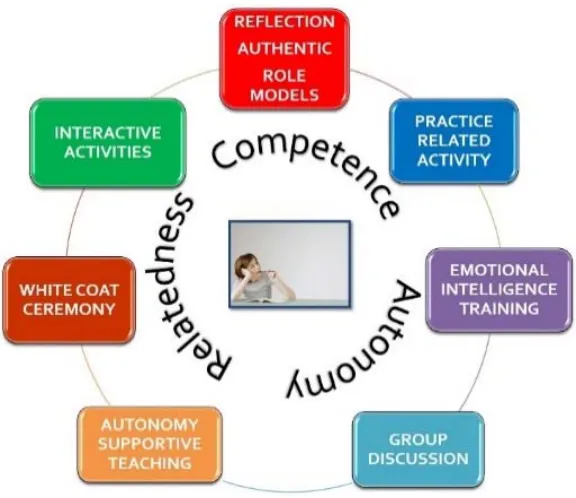
The PIP was developed using the basic tenets of SDT, specifically providing support for student competence, relatedness and autonomy. Strategies were put in place to directly address each of the basic psychological needs, featuring autonomy-supportive teaching featuring throughout. Development of the program content, design, lesson plans, sequencing on a semester by semester basis, over the duration of two years, the details of which can be found in Chapter 4.
To evaluate the impact of the planned professional identity program, it was necessary to develop and instrument which would detect and quantify the motivation regulators specified by SDT. An existing survey instrument based on SDT, utilised in the context of sporting athletes (SMS-II), was adapted for use in the pharmacy context. The validation of this instrument can be found in Chapter 5 as an article published in Currents in Pharmacy Teaching and Learning.32 [Mylrea MF, Sen Gupta T, Glass BD. Validation of a motivation survey
tool for pharmacy students: exploring a link to professional identity development. Currents in
Pharmacy Teaching and Learning. 2017;http://dx.doi.org/10.1016/j.cptl.2017.05.014.] . For comparison purposes, an existing validated instrument for measuring professional identity (MCPIS33) was also included in the final survey instrument.
The students were surveyed at regular intervals and the results of this part of the study were published as a paper34 in the American Journal of Pharmaceutical Education which can be found in Chapter 6. [Mylrea MF, Gupta TS, Glass BD. Design and Evaluation of a Novel
9 Additional perspectives, considered relevant to the study were gathered via organised focus groups. In particular, attitudes towards and experiences of professional education were explored in focus groups involving first and fourth year students, the results of which can be found in Chapter 7 and published as a paper in the journal Pharmacy Education [Mylrea MF, Sen Gupta T, Glass BD. Commencing and graduating pharmacy students’ perceptions of their professional development during undergraduate study. Pharm Educ Accepted for publication June 2018]
10 1.6 References
1.
Cruess RL, Cruess SR, Boudreau JD, Snell L, Steinert Y. Reframing
medical education to support professional identity formation.
Acad
Med.
2014;89(11):1446-1451.
2.
Dall’Alba G.
Learning to be professionals.
Vol 4. Dordrecht: Springer;
2009.
3.
Frenk J, Chen L, Bhutta ZA, et al. Health professionals for a new
century: transforming education to strengthen health systems in an
interdependent world.
Lancet.
2010;376(9756):1923-1958.
4.
Aguilar AE, Stupans L, Scutter S. Assessing students' professionalism:
considering professionalism's diverging definitions.
Educ Health
(Abingdon).
2011;24(3):599.
5.
Hammer DP. Professional attitudes and behaviors: the "A's and B's" of
professionalism.
Am J Pharm Educ.
2000;64(4):455-464.
6.
Hammer DP, Berger BA, Beardsley RS, Easton MR. Student
Professionalism.
Am J Pharm Educ.
2003;67(3):Article 96.
7.
Wilson S, Tordoff, A., Beckett, G. Pharmacy professionalism: A
systematic analysis of contemporary literature (1998-2009).
Pharmacy
Education.
2010;10(1):27-32.
8.
Irby DM, Hamstra SJ. Parting the Clouds: Three Professionalism
Frameworks in Medical Education.
Acad Med.
2016;91(12):1606-1611.
9.
Rabow MW, Remen RN, Parmelee DX, Inui TS. Professional
formation: extending medicine's lineage of service into the next
century.
Acad Med.
2010;85(2):310-317.
10.
Queensland Government. Health Practitioner Regulation National Law
(Queensland). 2014;
https://www.legislation.qld.gov.au/view/html/inforce/current/act-2009-045
. Accessed February 5 2017.
11.
Trede F, Macklin R, Bridges D. Professional identity development: a
review of the higher education literature.
Stud High Educ.
2012;37(3):365-384.
12.
Sosabowski MH, Gard PR. Pharmacy Education in the United
Kingdom.
Am J Pharm Educ.
2008;72(6):130.
13.
Accreditation Council for Pharmacy Education. Accreditation
Standards and Key Elements for the Professional Program in
Pharmacy Leading to the Doctor of Pharmacy Degree ("Standards
2016"). 2015; Available at: (
https://acpe-accredit.org/pdf/Standards2016FINAL.pdf
). Accessed August 9, 2017.
14.
Deans/APhA-ASP ACo. Pharmacy Professionalism Toolkit for
Students and Faculty. 2009;
https://www.aacp.org/sites/default/files/version_2_0_pharmacy_profes
sionalism_toolkit_for_students_and_faculty.pdf
. Accessed 16 May
11
15.
Cruess RL, Cruess SR, Steinert Y.
Teaching Professionalism.
Cambridge, UK: Cambridge University Press; 2008.
16.
Cruess RL, Cruess SR. Teaching professionalism: general principles.
Med Teach.
2006;28(3):205-208.
17.
Goldie J. Assessment of professionalism: A consolidation of current
thinking.
Med Teach.
2012;10.3109/0142159x.2012.714888.
18.
Hammer DP, Mason HL, Rupp MT. Development and testing of an
instrument to assess behavioral professionalism of pharmacy students.
Am J Pharm Educ.
2000;64(2):141-151.
19.
Kelley KA, Stanke LD, Rabi SM, Kuba SE, Janke KK. Cross-validation
of an instrument for measuring professionalism behaviors.
Am J Pharm
Educ.
2011;75(9):179.
20.
Mylrea MF, Gupta TS, Glass BD. Professionalisation in Pharmacy
Education as a Matter of Identity.
Am J Pharm Educ.
2015;79(9):142.
21.
Goldie J. The formation of professional identity in medical students:
considerations for educators.
Med Teach.
2012;34(9):e641-648.
22.
Holden M, Buck E, Clark M, Szauter K, Trumble J. Professional identity
formation in medical education: the convergence of multiple domains.
HEC Forum.
2012;24(4):245-255.
23.
Jarvis-Selinger S, Pratt DD, Regehr G. Competency is not enough:
integrating identity formation into the medical education discourse.
Acad Med.
2012;87(9):1185-1190.
24.
Lave J, Wenger, E.
Situated Learning: Legitimate Peripheral
Participation.
Cambridge: Cambridge University Press.; 1991.
25.
Holden M, Buck E, Clark M, Szauter K, Trumble J. Professional identity
formation in medical education: The convergence of multiple domains.
HEC Forum.
2012;10.1007/s10730-012-9197-6.
26.
Reid A, Dahlgren LO, Petocz P, Dahlgren MA. Identity and
engagement for professional formation.
Stud High Educ.
2008;33(6):729 - 742.
27.
Dall'Alba G. Learning professional ways of being:ambiguities of
becoming.
EPAT.
2009;41(1):34-45.
28.
Deci E, Ryan R.
Intrinsic Motivation and Self-Determination in Human
Behaviour.
New York: Plenum; 1985.
29.
Ryan RM, Deci EL. Self-determination theory and the facilitation of
intrinsic motivation, social development, and well-being.
Am Psychol.
2000;55(1):68-78.
30.
Deci E, Ryan, R.
Handbook of Self-Determination Research.
Rochester, NY: University of Rochester Press; 2002.
31.
Deci E, Ryan R. Self-determination theory: a macrotheory of human
motivation, development, and health.
Canadian
Psychology/Psychologie canadienne.
2008;49(3):182-185.
12
33.
Mylrea MF, Sen Gupta T, Glass BD. Validation of a motivation survey
tool for pharmacy students: exploring a link to professional identity
development.
Currents in Pharmacy Teaching and Learning.
2017;9(5):763-769.
34.
Worthington M, Salamonson Y, Weaver R, Cleary M. Predictive validity
of the Macleod Clark professional identity scale for undergraduate
nursing students.
Nurse Educ Today.
2012;33(3):187-191.
35.
Mylrea MF, Gupta TS, Glass BD. Design and Evaluation of a Novel
Professional Identity Development Program for Pharmacy Students.
13 2 CHAPTER 2 LITERATURE REVIEW
________________________________________________________________________
This chapter is the first publication from this study and is published in the American Journal of Pharmacy Education. It is a review of the current state of the literature regarding
14 Mylrea MF, Gupta TS, Glass BD. Professionalisation in Pharmacy Education as a Matter of Identity. American Journal of Pharmaceutical Education.
2015;79(9):142.
Authors’ contributions
Martina Mylrea conducted the literature search and prepared the manuscript. Beverley D Glass critically reviewed and edited the manuscript prior to submission. Tarun Sen Gupta provided tertiary health education expertise.
____________________ Martina F Mylrea
____________________ Beverley D Glass
____________________ Tarun Sen Gupta
15 2.1 Abstract
16 2.2 Introduction
In 2010 a Global Independent Commission into the Education of Health Professionals for the 21st Century called for a third generation of educational reforms to better prepare graduates working in health fields.1 The commission identified inequitable distribution of healthcare expertise, threats to health security and increased demands on health workers as some of the challenges facing those working in healthcare. They point out that graduates are currently poorly prepared for these challenges in the present global health context. The call for new reforms followed 2 previous calls, both aiming to transform health education. The first, inspired by the 1910 Flexner report, recommended that science knowledge form the basis of health education in a period that saw a dramatic reduction in mortality rates.1 The second call was characterised by the introduction of problem-based learning into medical curricula. An independent commission consisting of 20 academic and professional leaders from around the world concluded that health education programs were not preparing
graduates to respond to current demands of the health system and a curriculum redesign for health education was urgently needed. In particular they stated:
‘Professional education … must inculcate responsible professionalism, not only through explicit knowledge and skills, but also by promotion of an identity and adoption of the values, commitments, and disposition of the profession.’1
Moreover, in 2014, the International Pharmaceutical Federation (FIP) alerted both
practitioners and those in pharmacy education to challenging times ahead as the practice of pharmacy continues to become more complex and demanding.2
17 aspiring professional.5,8,9 This paper examines implications of the decline in professionalism for health education programs and highlights the challenge in defining professionalism among professional agencies. This paper also describes current approaches to professional education, with increasing attention being directed towards the development of a
professional identity as a mechanism for professionalisation.
2.3 Method
In conducting this review several databases were employed including PubMed, Science Direct, Scopus and CINAHL. In addition ERIC, the educational clearing house was also used to identify articles with an education focus. Search terms used were ‘professionalism’, ‘professional identity’, ‘professional socialisation’ and ‘pharmacy education’. Journal articles published in the English language from the preceding twenty years were included, with conference presentations and non-peer reviewed articles being excluded
2.4 Decline in social values
There are misgivings regarding the decline of professionalism and common civility in society at large.3,8,10,11 Examples of professional misconduct and occasions of fraud across various disciplines have highlighted the issue of professionalism and the need to address these issues during university education.12,13 Undergraduate students are also perpetrators of unprofessional behaviours, fueled by the lowering of standards as educational institutions are pressured to placate students who feel entitled to special treatment.14 The need for instruction in the ways of professional conduct in health education was highlighted over a century ago. Abraham Flexner’s full vision for medical education in 1910 included not only technical and cognitive skills, but also core professional values such as compassion, service and altruism.15 These characteristics lie at the heart of those working in the health
professions such as medicine, nursing and pharmacy. Aguilar and her colleagues explain the importance of professionalism in these settings:
‘Health practitioners’ professionalism can impact patient care, health outcomes, therapeutic relationships and the public’s perception and trust of a profession and its members.’3
18 registration and reporting was introduced in 2010 by the Australian Health Practitioner Regulation Agency (AHPRA)17, the issue of student professionalism becomes more entwined with and reflective of health professional educational programs.
2.5 Defining professionalism
The professionalism movement began more than thirty years ago when Arnold Relman, the editor-in-chief of the New England Journal of Medicine expressed concern over a rise in business influence on physician practices. In response others called for a return to core professional values, where the interests and well-being of the patient were the central concerns.18 Knowing which characteristics define the professional is problematic and despite extensive efforts an agreed definition has yet to be achieved.3,19-23 The main driver towards the development of a definition for professionalism was initially led by the American Board of Internal Medicine (ABIM).24 In 1995 Project Professionalism was established with a view to achieving definitional specificity and describes in detail the aims and qualities of a
professional. Six values were identified – altruism, accountability, excellence, duty, honor, and integrity and respect for others.25 A subsequent collaboration between the ABIM, the American College of Physicians and the American Society of Internal Medicine and the European Federation of Internal Medicine resulted in the publication of the Physician’s Charter26 which is the most widely accepted and acknowledged publication on
professionalism.24 And while medicine served as the benchmark for considerations around professionalism24, other healthcare areas such as nursing and pharmacy27 have expressed increased concern about professionalism in their students. Other occupations such as veterinary science and dentistry are beginning to call for consensus on a definition as well.28,29
19 In its development of ‘A Global Framework for Quality Assurance of Pharmacy Education’, FIP presented the following definition of professionalism:
‘Professionalism: The [demonstration of] ethics, attitudes, values, qualities, conduct, and behaviors that characterise a profession and are expected of its practitioners, and that underpin the trust that the public has in the profession’.2
One of the earliest responses to the rapidly changing landscape of the pharmacy profession was the collaboration between the American Pharmaceutical Association, Academy of Students of Pharmacy and the American Association of Colleges of Pharmacy, Council of Deans (APhA-ASP/AACP-COD) to form the Task Force on Professionalism. This resulted in the publication of a White Paper on Pharmacy Student Professionalism. This document defined 10 characteristics of a professional and 10 characteristics of a professional pharmacist.34 This was followed by a toolkit expanding on the ten professional traits identified in the original white paper. Included also in the white paper are three documents which help to define professionalism for the pharmacist and the pharmacy student: The Oath of a Pharmacist, the Code of Ethics for Pharmacists and the Pledge of Professionalism.34 Hammer et al followed up with a comprehensive review of the issues surrounding student professional development and offered recommendations to university educators for the implementation of professional education within pharmacy programs.8
20 pharmacist which in turn lead to behaviours on the outer rim of the wheel, such as patient care.36 The nature of the attitudes, values and behaviours that epitomise professionalism is acknowledged as problematic and the authors attest to the comprehensive list of
professional characteristics identified by their research. It was their intent however to develop a manageable framework with which to guide student understanding and
development. The most important aspect identified by the authors is a relationship built on trust with corresponding actions and behaviours and without which the profession does not exist.36
The Pharmacy Board of Australia released its latest code of conduct in March 2014.37 It clearly outlines professional values and qualities which must be adopted by the pharmacist. Once again the patient is at the center of all activity which concurs with the view of
Holdford14 who highlights that professionalism can only be achieved when the patient is the central focus. The Australian viewpoint also draws particular attention to the need for cultural awareness, respect for patient diversity and a greater focus on awareness and self-reflection.37 The latest report from the AACP in 2011 revisits the set of ten identified traits published in the White Paper in 2000 and adds flexibility and punctuality as additional elements as well as alertness, initiative, and integrity to create a suite of 11 traits of professionalism as shown in Table 2-1.
Table 2-1 Professionalism Traits as identified by AACP35
Knowledge and skills
A commitment to self-improvement and life-long learning. A service minded orientation
Pride in the profession and a dedication to advance its value to society Create a covenantal relationship with those served
Alertness, creativity, initiative and innovation Conscientiousness, integrity and trustworthiness Flexibility and punctuality
Accountability for his/her performance
Ethically sound decision making and moral behaviour Leadership
21 assessment tools, changes to admission processes to incorporate aspects of
professionalism, update of previous resources for educators and the development of leadership training within the curriculum.35
2.6 Professionalisation and identity
The process of becoming a professional is called ‘professional socialisation’ or ‘professionalisation’ and is an essential component of health education.38 It involves a transformation of the self over time. Merton describes socialisation as:
‘… the transformation of individuals from students to professionals who understand the values, attitudes and behaviours of the profession deep in their soul. It is an active process that must be nurtured throughout the professional’s/student’s development.’39
In medical education the term ‘professional formation’ has been adopted to describe
professionalisation, indicating a reference to the tradition of educating clergy. Specifically the 475 year old tradition of Jesuit formation is used as an example where core training involves service, experience, attainment of knowledge and a reflection on the inner self. These activities are focused around the call to help others.15,40 The Carnegie Foundation for the Advancement of Teaching defined professional formation in terms of three apprenticeships: cognitive, practical and professional formation. The latter is further described as that which ‘introduces students to the purposes and attitudes that are guided by the values for which the professional community is responsible’.41(p12)
22 identity development may be delayed until the scientific basis to pharmacy practice has been mastered.46PIF is attracting increasing attention as an essential element of professional socialisation in medical education40,47,48 and is described as ‘the establishment of core values, moral principles, and self-awareness’.40 Goldie viewed the development of a professional identity as essential to the practice of medicine. Interestingly, he also links low professional identity with underperforming students, which can lead to low retention of these students.6
Professionalisation has been identified as a complex process unique to each individual that is influenced by the context and environment in which the development takes place.40,49 This idea has been supported by the work of several authors who suggest that there is a strong link between socialisation and identity formation.50,51 Dall’Alba refers to professionalisation as a transformation involving an ‘embodiment of understanding of practice’ and adds that it is critical during this transition period that the student has the opportunity to consider ‘ways of being’ as they consider who they are becoming, as well as what they know and what they can do.7 She notes that professional development programs focus overwhelmingly on the acquisition of knowledge and skills and that this is inadequate for the transformation that is required in becoming a professional.7 Focusing solely on skills alone and creating highly specific measurable competencies may compromise the realisation of the richness, depth and interconnectedness of professionalism.50,52
2.7 Professional education
A significant body of work exists around teaching professionalism instead of professional identity and it proposes important recommendations. In his publication ‘Teaching
Professionalism: Theory, Principles and Practices’53, Cruess outlines key recommendations for institutions introducing a professional education program in the area of medical
education. He advises that professionalism must be taught explicitly from the first day of the program and continued throughout the course structure53, a viewpoint supported by other research. 8,13,30,54-56 Importantly the program must begin with an agreed definition of professionalism, which may differ at each institution.23,53,57-59 This can be problematic. He explored 8 areas for attention in the design of such a program. These include experiential learning, institutional support and evaluation. Moreover, Cruess places particular emphasis on the creation of an environment conducive to professional socialisation. He cautioned that aspects of the informal or hidden curriculum may work against positive professional
23 art of medicine’.53(p179) Others have similarly identified the value of role modeling in
professional education.6,40,60,61,62 In pharmacy education, Schafheutle et al espoused the value of practice-based experiences to the development of professionalism.63
In 2007 the US Accreditation Council for Pharmacy Education (ACPE) recognised the importance of experiential learning and released new standards for introductory and advanced practice experiences which remain an integral part of the current standards – Standards 2016.64 This standard requires a minimum of 300 hours of practice experiences to be incorporated into doctor of pharmacy (PharmD) programs. Subsequent related work has sought to provide support to preceptors as they train students in these settings45 and assessment protocols to assist student understanding of professional expectations.10
Hammer et al8 described aspects of pharmacy education, that influenced the professional development process in student pharmacists including professional competence, mentoring and modelling, school culture and environment, extra-curricular activities, personal values, communication and empathy. The authors provide general and specific recommendations for educators designing professional education programs extending from recruitment and admissions through to curriculum design and assessment8. Sylvia65 conducted an analysis of the response by US pharmacy schools and colleges to such recommendations. Schools were surveyed to determine the extent of the uptake of the recommendations in areas such as recruitment, admissions, educational programs and practice. The research showed that while white coat ceremonies and student participation in professional organisations were common, less than 50% of the responding schools employed a mentoring program, utilised professional portfolios or conducted dedicated professional development studies. The study revealed a need for an agreed upon definition of professionalism and standardised
assessment instruments for the advancement of professional education.65
The 2016 ACPE Accreditation Standards for PharmD programs, or ‘Standards 2016,’66 identify professional development as one of 4 main educational outcomes in the PharmD. Central to professional development in accredited PharmD programs are introductory and advanced professional practice experiences (IPPE/APPE). These practice-based
24 envisioned that students will be practice ready and capable of working in multi-disciplinary teams.66
2.8 Professional Identity – higher education
According to Trede et al’s review67 there was a lack of research on professional identity development in higher education. The authors reported identity development as ‘an underdeveloped field where there is little agreement between scholars’.67(p375) The role for universities was discussed and while research activity is low, the dominant viewpoint is that learning directly from the practice is crucial to identity development67,68 Research supports the importance of experiential learning in the professionalisation of students.35,67,69,70 Professional identity development also has an important role in the professionalisation of students.13,32,48,68 Dall’Alba, for example, considered the process of becoming professional to involve thinking, acting and being like a professional7, a position which highlights the importance of students being given opportunities to directly engage with and reflect on aspects of professional practice.7,71
The Trede et al review also called for research into achieving a greater understanding of identity development to inform teaching, learning and assessment of professionalism. Regarding the last, the absence of concrete concepts and accurate measures makes
assessing professionalism complex.3,11,72 The lack of an agreed upon definition for pharmacy professionalism means there is little work in the literature on appropriate assessment tools.11 Research to date focuses on generating assessment tools, which have been designed around professional attitudes and behaviours.73-75 In their paper on assessing
25 Trede et al reported that it is important to adopt teaching strategies, which encourage
students to actively develop facets of professional identity. They also revealed that some research saw professional identity development as being the responsibility of the students.67 Trede et al commented on the need for a more unified and consistent approach and
recommend that ‘universities need to claim their role in professional identity development to prepare graduates for global citizenship, for leadership qualities and for future
practice’.67(p379)
Reid et al’s study, conducted across a range of professional disciplines in Sweden and Australia saw professional identity development as a way for higher education to prepare students for work.76 The authors explained that opportunities for ‘blurring the boundaries between the academy and work’, facilitated identity formation and provided students with knowledge of the profession.76 The suggested 4 strategies for blurring the boundaries:
The involvement of professionals with higher education
The involvement of students in work situations
The alignment of learning with authentic work practices
The approach of inter-professional learning
In addition the authors recommend that attention also be paid to the sense of profession created around a particular area of study, and its potential effect on student professional identity development.48,76 The authors believe that the more authentic the activity, the greater the influence on professional identity development.76 Their work is in agreement with the well recognised work of Lave and Wenger on communities of practice77 where professional identity development occurs through student participation in and interaction with professional work settings.
As a result of their work Reid et al developed a model of professional identity development describing it as a function of two dimensions: ‘knowledge for the profession’ and ‘learning for professional work’. The potential outcome of the combination of these two factors is
26 professional repertoire to include a level of meaning that is intrinsic to the professional activity.76
The ultimate aim of the model is for students to realise and internalise the connection between their individual and professional selves, otherwise defined as the ontological dimension of professional development.76 This agrees with the work of Dall’Alba, who, in her description of individual trajectories towards professionalisation, stated that educational programs often fail to address these differences in their teaching approaches.78Reid et al suggest that student learning trajectories ‘are influenced by the ways that the sense of profession is communicated and articulated to students through the design and pedagogy of the educational program’.48(p734) Branch79 proposed that the development of professional identity would be optimal when a combination of teaching methods are employed over an extended period across the curriculum. Experiential learning, critical reflection and small group learning should feature in curriculum design as a combined model and importantly extended long-term over the course structure.79
2.9 Professional identity - pharmacy
Schafheutle et al conducted a large study into the common approaches to professional educational adopted by pharmacy schools in the UK. A review of teaching practices and program design looked specifically at how professionalism is acquired in 3 master of pharmacy( MPharm) courses. The researcher compared the approaches of 3 different schools using triangulation methods and curriculum mapping to reveal strategies for
27 Stakeholders in the pharmacy profession are active in driving the cultivation of quality
professionals on a global scale. Established in 2001 and controlled by the academic section of FIP, the International Forum for Quality Assurance of Pharmacy Education aimed to advance pharmacy education through the development of a quality assurance framework. The 2014 version of the framework recommended that the pharmacy curriculum include exposure to the practice, as such experiences serve to enhance student professional identity development.2 The framework quotes The World Health Report that stated students who engage in practical experiences show ‘increase in empathy towards people with illnesses, have greater self-confidence and professional identity, and have learned effectively from the knowledge, attitudes, values, behaviours, and judgments of experienced practitioners’.81 (p48)
It has been noted by Hammer that students develop professionally as a result of influences from a number of different corners of their educational experience. The design of the curriculum, placement experiences, teaching staff and professional representatives and the overall culture established in the school serve to mold the student towards their professional self.8 Schafheutle et al group the various influences on professionalism development such as those described by Hammer8 into the ‘intended, taught and received’ aspects of the curriculum. They suggest that the greater the overlap or agreement between the three domains the more effective the professional program will be.82
28 have an awareness of the changing nature of their identity as it responds to forces within the modern professional working context67.
2.10 Conclusion
The professionalisation of students in health education is receiving increased attention, with concerns around student conduct, producing work ready graduates and the increasing demands of a career in healthcare. Additionally as pharmacy moves towards advanced practices and the complexity of the role increases, a corresponding amelioration of
29 2.11 References
1
. Frenk J, Chen L, Bhutta ZA, et al. Health professionals for a new century: transforming education to strengthen health systems in an interdependent world. Lancet.2010;376(9756):1923-1958.
2. International Pharmaceutical Federation (FIP). Quality Assurance of Pharmacy Education: the FIP Global Framework. 2014; 2nd edition:
http://fip.org/files/fip/PharmacyEducation/Quality_Assurance/QA_Framework_2nd_Edit ion_online_version.pdf
3. Aguilar AE, Stupans L, Scutter S. Assessing students' professionalism: considering professionalism's diverging definitions. Educ Health (Abingdon). 2011;24(3):599. 4. Cruess RL, Cruess SR. Teaching professionalism: general principles. Med Teach.
2006;28(3):205-208.
5. Hammer DP. Professional attitudes and behaviors: the "A's and B's" of professionalism. Am J Pharm Educ. 2000;64(4):455-464.
6. Goldie J. The formation of professional identity in medical students: considerations for educators. Med Teach. 2012;34(9):e641-648.
7. Dall'Alba G. Learning professional ways of being:ambiguities of becoming. EPAT. 2009;41(1):34-45.
8. Hammer DP, Berger BA, Beardsley RS, Easton MR. Student Professionalism. Am J Pharm Educ. 2003;67(3):Article 96.
9. Cruess RL, Cruess SR, Steinert Y. Teaching Professionalism. Cambridge, UK: Cambridge University Press; 2008.
10. Boyle CJ, Beardsley RS, Morgan JA, Rodriguez de Bittner M. Professionalism: A Determining Factor in Experiential Learning.