Ab initio supercell calculations on
nitrogen-vacancy center in diamond:
Electronic structure and hyperfine tensors
The Harvard community has made this
article openly available.
Please share
how
this access benefits you. Your story matters
Citation Gali, Adam, Maria Fyta, and Efthimios Kaxiras. 2008. “Ab Initiosupercell Calculations on Nitrogen-Vacancy Center in Diamond: Electronic Structure and Hyperfine Tensors.” Physical Review B 77 (15). https://doi.org/10.1103/physrevb.77.155206. Citable link http://nrs.harvard.edu/urn-3:HUL.InstRepos:41384089
arXiv:0803.1267v1 [cond-mat.other] 8 Mar 2008
Ab initio
supercell calculations on nitrogen-vacancy center in
diamond: its electronic structure and hyperfine tensors
Adam Gali,1, 2 Maria Fyta,2 and Efthimios Kaxiras2
1
Department of Atomic Physics, Budapest University of Technology and Economics, Budafoki ´ut 8., H-1111, Budapest, Hungary
2
Department of Physics and School of Engineering and Applied Sciences, Harvard University, Cambridge, Massachusetts 02138, USA
Abstract
The nitrogen-vacancy center in diamond is a promising candidate for realizing the spin qubits
concept in quantum information. Even though this defect is known for a long time, its electronic
structure and other properties have not yet been explored in detail. We study the properties of the
nitrogen-vacancy center in diamond through density functional theory within the local spin density
approximation, using supercell calculations. While this theory is strictly applicable for ground state
properties, we are able to give an estimate for the energy sequence of the excited states of this
defect. We also calculate the hyperfine tensors in the ground state. The results clearly show
that: (i) the spin density and the appropriate hyperfine constants are spread along a plane and
unevenly distributed around the core of the defect; (ii) the measurable hyperfine constants can be
found within about 7 ˚A from the vacancy site. These results have important implications on the
decoherence of the electron spin which is crucial in realizing the spin qubits in diamond.
I. INTRODUCTION
The nitrogen-vacancy (NV) center in diamond has attracted much attention in recent
years, because it has been shown to give rise to a single optically active level within the
diamond band gap1,2 , and as such provides an interesting candidate for a qubit for
quan-tum computing applications.3,4,5,6,7,8 Besides providing a single photon source for quantum
cryptography,9,10 the NV center is also a promising candidate as an optically coupled
quan-tum register for scalable quanquan-tum information processing, such as quanquan-tum communication11
and distributed quantum computation.12In addition, it has been recently demonstrated that proximal nuclear spins can be coherently controlled via hyperfine interaction13 and used as
a basis for quantum memory with an extremely long coherence time.14 Therefore, knowing
the electron-nucleus hyperfine interaction and its position-dependence is essential to analyze
and optimize coherent control of proximal nuclear spins.15
Experimentally, the hyperfine constants of the closest atoms near the vacancy are known
from electron paramagnetic resonance (EPR) and electron-nuclear double resonance
(EN-DOR) studies.16,17 The hyperfine interaction between 13C isotopes farther from the vacancy
contributes to the coherent electron-nuclear spin states in the measurements.13,14 Ab initio
supercell calculations can be a very useful tool for determining the hyperfine tensors of a
defect. For instance, such calculations have been used to identify the basic vacancy defects
in silicon carbide by comparing the measured and calculated hyperfine constants.18,19,20,21In
the present paper we focus on the calculation of the full hyperfine tensor of the NV center
in diamond which is of very high importance for qubit applications. Previous theoretical
work has reported a calculation of the hyperfine constants of the NV center in a small
64-atom supercell,22 but that work determined only the Fermi-contact term rather than the full
hyperfine tensor. We will show in the Results and Discussion section that the conclusions
based on that earlier analysis were adversely affected by the small unit cell size. The larger
supercell of 512 atoms employed here does not suffer from this limitation and provides a
re-alistic picture for the defect properties, which are in excellent agreement with experimental
measurements.
The rest of this paper is organized as follows: Section II gives a general discussion of
the electronic states of the NV center based on a single-particle picture and the many-body
first-principles calculations we performed. Section IV presents and discusses our results
concerning the atomic and electronic structure of the defect, as obtained from theab initio
calculations. In Section V we present a detailed discussion of the calculated hyperfine
interactions. Finally, we give our conclusions on the nature of this defect in Section VI.
II. THE ELECTRONIC STATES OF THE NV CENTER IN DIAMOND
The electronic structure of NV center in diamond has been discussed in detail in a recent
paper23; we briefly review the main points here. The NV center was found many years ago in
diamond.24 The concentration of NV centers can be enhanced in N-contaminated diamond
by irradiation and annealing.24,25 The model of the NV center consists of a substitutional
nitrogen atom adjacent to a vacancy in diamond.16,24,25,26The NV center has a strong optical
transition with a zero phonon line (ZPL) at 1.945 eV (637 nm) accompanied by a vibronic
band at higher energy in absorption and lower energy in emission. Detailed analysis of the
ZPL revealed that the center has trigonal, C3v symmetry.25Later, an optically induced EPR center was found in diamond which correlated with the NV center.16The EPR center showed
trigonal symmetry with a spin polarized triplet state (S=1). Since the nitrogen atom has
five valence electrons and the S=1 state implies even number of electrons, the NV defect
must be charged in the EPR measurement. It was assumed that the NV defect is negatively
charged and the extra electron may be donated from isolated substitional nitrogen defects.16
In a recent measurement, the coupling between the NV center and the nitrogen substitional
has been indeed detected.27 Loubser and van Wyk16 measured the NV EPR signal just
under the optical excitation, based on which they proposed that the spin polarization arises
from a singlet electronic system with inter-system crossing to a spin level of a metastable
triplet. Redman and co-workers28 detected the NV center in the dark even at 100 K by EPR,
from which they concluded that the S=1 state is the ground state of the NV center. Hole
burning,29 optically detected magnetic resonance30 and Raman heterodyne measurements31
also showed the S=1 state to be the ground state of the NV center.
A group theory analysis based on a single-particle picture can be very useful in
under-standing the nature of the defect states and the possible optical transitions between them.
While the number of electrons in the NV center has been disputed in the literature32,33
was originally proposed by Loubser and van Wyk.16 We will also show in the Results and
Discussion section that the NV center should be negatively charged.
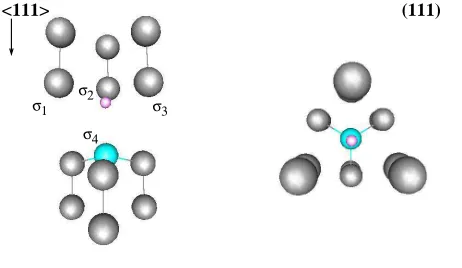
In the NV defect, three carbon atoms have sp3 dangling bonds near the vacancy and
three back bonds each to the lattice, while the nitrogen atom has also three back bonds
and one dangling bond pointing to the vacant site. Since nitrogen has five valence electrons
the negatively charged NV defect has altogether six electrons around the vacant site. The
structure of the NV defect, including the definition of the symmetry<111>axis, is depicted
in Fig. 1.
σ 1 σ 2 σ 3
<111> (111)
σ 4
FIG. 1: (Color online) The NV center viewed in perspective (left) and along the<111> direction
(right); this direction is the C3 symmetry axis of the C3v symmetry group of the defect. The vacant site is indicated by a small pink circle and the neighboring C and N atoms by grey and cyan balls,
respectively. The first neighbor atoms around the vacant site have sp3 dangling bonds pointing toward the vacant site, which are labeled σi (i= 1,4), as in the scheme used in the group theory
analysis.
The group theory analysis of the six electron model has been worked out previously for
this defect.35 We summarize the results using our notation and conventions: Since it is
known that the carbon and nitrogen atoms relax outward from the vacancy,22,34 we assume
[image:5.612.193.424.246.380.2]x ey
a (1)1
ex ey
Conduction Valence VBM VBM 1.2 eV 0.9 eV 2.2 eV 1.2 eV 1.4 eV 3.2 eV a a 1(2) 1 e (2)
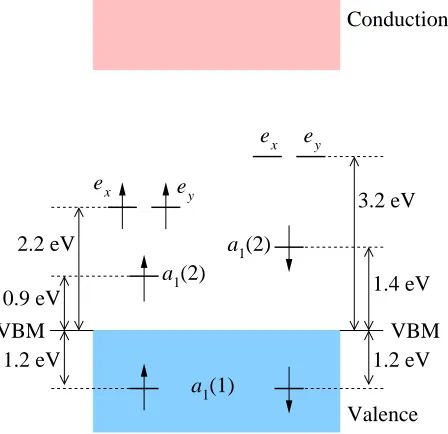
FIG. 2: (Color online) The calculated spin-resolved single-electron levels with respect to the valence
band maximum (VBM) in the ground state of the NV defect. Valence and conduction bands of
the host crystal are shown as blue and pink shaded regions, respectively. The levels are labeled as
in Eq. (1) and their occupation is given for a negatively charged defect (a total of 6 electrons).
states:
a1(1) : φ1 =
√
1−α2 σ 4−
α
√
3 (σ1+σ2 +σ3)
a1(2) : φ2 =α σ4+
r
1−α2
3 (σ1+σ2+σ3) (1)
ex : φ3 =
1
√
6 (2σ1−σ2−σ3)
ey : φ4 =
1
√
2 (σ2−σ3)
where 0 ≤α ≤ 1is a parameter that determines the extent to which the nitrogen dangling bond is mixed in the φ1 and φ2 defect states. There are two fully symmetric one-electron
states (a1) and one doubly degenerate e state, with a total occupation of 6 electrons. We
note here that the dangling bond of nitrogen is not mixed in the e state but only in the a1
states. It was found by Goss et al.34 using ab initio molecular cluster calculations that the two a1 states are lower in energy than the e state. As a consequence, four electrons occupy
the a1 states and two electrons remain for the e state. Our calculated one-electron levels
[image:6.612.194.418.74.291.2]analysis, the natural choice is to put the two remaining electrons in the e level forming an
S=1 state (by analogy to Hund’s rule for the p-orbitals of the isolated group IV elements in
the Periodic Table).
In the C3v point group the total wavefunction has 3A2 symmetry with S=1. In our
special case we choose MS = 1, so both electrons are spin-up electrons in the e level.
The C3v symmetry can also be maintained by other occupations of the states. Putting two electrons into four possible quantum states of the degenerate e level, we end up with
six possible multiplets (including the degeneracy): 3A
2, 1A1, and 1E. By taking the 3A2
to be the ground state of the defect (as experiments indicate) there is no allowed optical
transition to first order, since the spin state cannot be changed in a PL process. The φ1
level is relatively deep in the valence band, so to a good approximation we can assume that
it does not contribute to the excitation process. However, theφ2 level in the gap is not very
far from the e level. If one electron is excited fromφ2 into the e level (φ3 or φ4) then either
a 3E or a 1E multiplet is obtained. If both electrons are excited from φ2 toφ3 and φ4 then
a fully symmetric 1A
1 state is obtained. The only allowed transition is 3A2 →3 E to first
order. The electronic configurations of these states are explained in Table I. Most of these
states were discussed in Ref.35.
The MS = ±1 triplet states can be described by a single Slater-determinant. However,
the singlet states (except for the last 1A
1 state) can be described by a linear combination
of two Slater-determinants. The two singlet single-Slater-determinant states of the a2 1(2)e2
configuration are:
|σ2σ¯2σ3σ¯4i=
1
√
2[
1E(0, y) +3 A
2(0)] (2a)
|σ2σ¯2σ3σ¯3i=
1
√
2[
1E(0, x) +1A
1(0)] (2b)
where 1E(0, λ) is the multideterminant wavefunction of the singlet E state of M
S=0 at
λ-row (λ = x or y) in Table I. The singlet single-Slater-determinant state of the a1 1(2)e3
configuration is:
|σ¯2σ3σ4σ¯4i=
1
√
2[
3E(0, x) +1E(0, x)] (3)
In summary, the following many-body states must be considered: 3A
2, 1A1, 1E, 3E, 1E,
and 1A
1. The two triplet states are orthogonal to each other while the two1A1 and the two 1E states theoretically can be mixed with each other. This will be discussed below. Our
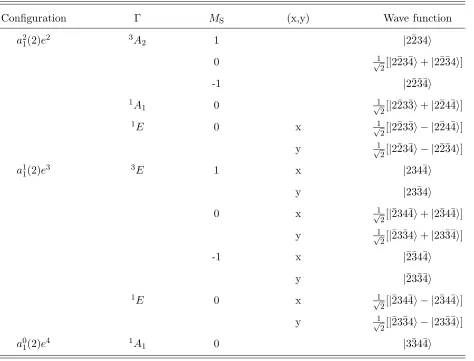
TABLE I: The electronic configurations and the possible total wave functions with C3v symmetry. For simplicity we abbreviate σ2 → 2, etc. in the last column. Overbar in a wavefunction means
spin-down electrons, the rest are spin-up electrons. We assume thata1(1) :σ1 is fully occupied, so
we do not show that part of the wave function here. In the second and third columns we give the
symmetry of the total wavefunction (Γ) and its spin projection (MS), respectively. In the case of
doubly degenerate representations (E states) we designate which transforms as x or y in the last
column.
Configuration Γ MS (x,y) Wave function
a21(2)e2 3A2 1 |2¯234i
0 √1
2[|2¯23¯4i+|2¯2¯34i]
-1 |2¯2¯3¯4i
1A
1 0 √1
2[|2¯23¯3i+|2¯24¯4i]
1E 0 x 1
√
2[|2¯23¯3i − |2¯24¯4i]
y √1
2[|2¯23¯4i − |2¯2¯34i]
a11(2)e3 3E 1 x |234¯4i
y |23¯34i
0 x √1
2[|¯234¯4i+|2¯34¯4i]
y √1
2[|¯23¯34i+|23¯3¯4i]
-1 x |¯2¯34¯4i
y |¯23¯3¯4i
1E 0 x √1
2[|¯234¯4i − |2¯34¯4i]
y √1
2[|¯23¯34i − |23¯3¯4i]
a01(2)e4 1A1 0 |3¯34¯4i
interaction into account. From the energetic point of view those effects are marginal (within
few meV) but they could have important consequences on the possible optical transitions
III. COMPUTATIONAL METHOD
We use density functional theory with the local spin density approximation (DFT-LSDA)
of Ceperley-Alder36 as parameterized by Perdew and Zunger.37 We employed three different
codes and somewhat different methodologies to carry out the calculations. The geometry
of the defect was optimized with the VASP code38,39 and the SIESTA code.40 The
lat-ter utilizes numerical atomic orbitals with Troullier-Martins pseudopotentials.41 We applied
the high level double-ζ plus polarization functions for both carbon and nitrogen atoms. In
the SIESTA calculations no symmetry restriction was applied. The linear combination of
atomic orbitals (LCAO) analysis of the defect states is straightforward in this methodology
through the wavefunction coefficients obtained directly from the SIESTA calculations. In
the VASP calculations we use a plane wave basis set with cutoff 420 eV(≈30 Ry) which is
adequate for well converged calculations using projected augmented wave (PAW)
pseudopo-tentials for the C and N atoms.42,43In the VASPcalculations we applied the C
3v symmetry, and the energy of the ground state as well as that of the excited states are calculated by
setting the appropriate occupation of the defect states in the gap. In the geometry
optimiza-tion calculaoptimiza-tions, all the atoms were allowed to relax until the magnitude of the calculated
forces was smaller than 0.01 eV/˚A. The hyperfine tensor of the NV center was calculated
by the CPPAW code.44 In theCPPAW calculations we used a 30 Ry cutoff for the plane
wave basis with PAW projectors which is virtually equivalent with the methodology used in
the VASP calculations.
Convergence of calculated defect properties with supercell size is an important
consider-ation. For this reason, we have chosen to model the NV center by using a large 512-atom
simple cubic supercell. The lattice constant of the supercell (≈14.2 ˚A) is four times larger than the lattice constant of the conventional cubic cell of diamond, a0=3.54 ˚A. We used the
Γ-point sampling in the Brillouin-zone which corresponds to sampling finer than a 6×6×6 grid of the primitive lattice; this provides a well converged charge density. It is also
ad-vantageous to restrict the calculations to the Γ-point in order to keep the degeneracy of
the e defect states which may split in a general k-point sampling of the Brillouin-zone. We
checked that the geometry was practically identical (to within 0.01 ˚A) going from a
216-atom fcc supercell to the 512-216-atom simple cubic supercell. We will show that the calculated
supercell. Thus, the 512-atom supercell is adequate to represent the isolated NV defect in
a realistic manner.
We calculated the hyperfine tensor of the defect with the optimized geometry obtained
by the VASP code. In the calculation of the hyperfine tensor the relativistic effects are
taken into account.45 The hyperfine tensor of nucleus I consists of the Fermi-contact term
(first parenthesis in the following equation) and the dipole-dipole term (second parenthesis):
A(ijI) = 1 2S
Z
d3r ns(r)γIγeh¯2
h8π
3 δ(r)
+3xixj r5 −
δij r3
i
(4)
where ns(r) is the spin density of the spin state S, γI is the nuclear Bohr-magneton of nucleus I and γe is the electron Bohr-magneton. The Fermi-contact term is proportional to
the spin density localized at the place of the nucleus which is dominant compared to the
dipole-dipole term. The ratio of the Fermi-contact and dipole-dipole terms characterizes the
shape of the spin density.
The contribution of s-like wave functions to the charge density has a large effect on
the Fermi-contact term but negligible effect on the dipole-dipole term, since thes-like wave
function has a maximum at the positions of the nuclei and it is an even function. In contrast
to this, the contribution ofp-like wave functions to the charge density has a negligible effect
on the Fermi-contact term but a large effect on the dipole-dipole term, since the p-like
wave function has a node at the place of nuclei and it is an odd function. Typically, the
contribution of the dipole-dipole term is significant for the spin density built from
well-localized dangling bonds, that is, the sp3 hybrid orbitals (see Table II). We note that the pseudopotential methodology produces artificially smooth wave functions close to the nuclei,
therefore only the all-electron PAW methodology can provide reliable hyperfine tensors. In
the PAW methodology the calculation of the hyperfine tensor is somewhat more subtle than
Eq. (4) shows and the dipole-dipole term is not fully calculated (see the appropriate note in
Ref.45) which causes about 0.3 MHz inaccuracy in the calculated dipole-dipole term in our
case. This error could be important to take into account for hyperfine tensors with small
matrix elements (<3 MHz). The total spin density, ns(r), can be defined as
ns(r) = nup(r)−ndown(r)
where nup(r) and ndown(r) are the spin densities built from spin-up and spin-down electrons,
ns(r) will be positive. We will show that this is not true for the entire space around the
defect.
IV. ATOMIC AND ELECTRONIC STRUCTURE OF THE NV DEFECT
A. Geometry and electronic levels
We begin with a discussion of the geometry optimization of the negatively charged NV
center obtained from the SIESTA calculations using spin-polarization and no symmetry
restrictions. The defect automatically finds t the S=1 state and maintains the C3v symmetry of the original, unrelaxed structure. The calculated one-electron defect levels are shown in
Fig. 2. The first neighbor C and N atoms clearly relaxed outward from the vacancy. The
calculated distances from the vacant site are 1.63 and 1.69 ˚A for the C atoms and the N
atom, respectively, that is, the N atom relaxes more than the C atoms. We note that the
C-vacancy distances are the same within 0.0002 ˚A without any symmetry constraints after
geometry optimization. The N-C bond lengths are 1.46 ˚A, while the bond lengths of C
radicals are 1.50 ˚A, which is not far from 1.44 and 1.45 ˚A, respectively, obtained in an LDA
molecular cluster calculation.34 The localized basis sets can have problems in the description
of vacancy-like defects. OurVASPcalculation, which employs a plane wave basis set, shows
basically the same geometry after optimization: the calculated distances from the vacant
site are 1.62 and 1.68 ˚A for the C atoms and the N atom, respectively. Thus, we conclude
that the double-ζ plus polarization basis provides results very close to those of the converged
plane wave basis set.
In an earlier work by by Luszczek et al.,22 a plane wave basis set with pseudopotentials
was employed in a 64-atom cubic supercell using 2×2×2 Monkhorst-Pack Brillouin Zone sampling46 to investigate the NV defect in diamond. In that work, only the nearest neighbor
atoms to the vacant site were allowed to relax without symmetry restrictions and a geometry
close to C3v symmetry was obtined; the largest deviation in the C-vacancy distances was about 0.001 ˚A. The calculated distances from the vacancy were 1.67 and 1.66 ˚A for the C
atoms and the N atom, respectively, which shows the opposite trend from what we find both
in the SIESTA and in the VASP calculations in the larger unit cell. Most probably the
atoms around the vacant site.
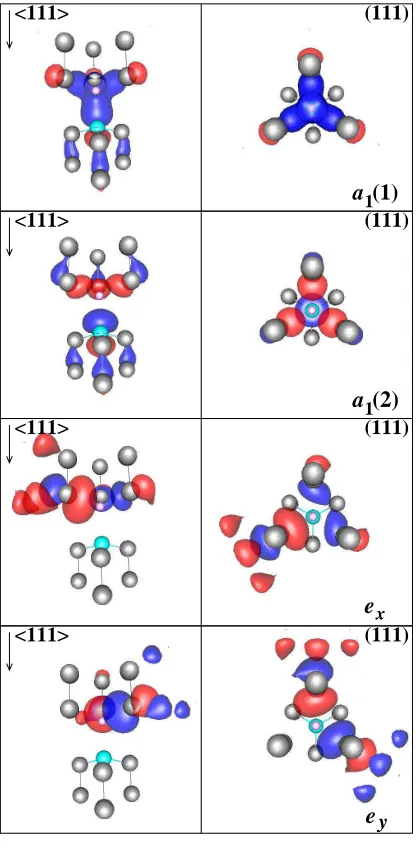
[image:12.612.202.410.137.562.2]We plot the wave functions of the defect states obtained by the LSDA calculations in
Fig. 3. The group theory analysis based on the single-particle picture describes very well
<111> <111>
<111> (111)
(111)
(111)
<111> (111)
1
1
ey ex a
a
(2)
(1)
FIG. 3: (Color online) Isosurfaces of the calculated wavefunctions of the a1(1), a1(2), ex, ey defect states, shown in side (left) and top (right) views relative to the<111>axis. Blue (red) isosurfaces
correspond to negative (positive) values of the wavefunction. The small pink circle represents the
position of the vacant site, while the grey and cyan balls show the C and N atoms, respectively.
We show the atoms up to the second neighbor from the vacant site.
the defect states. Naturally, the defect states are not strictly localized on the first neighbor
there. The SIESTA calculation gives α ≈ 0.7 for the parameter that appears in Eq. (1).
This means that the N orbital is mostly localized on the a1(2) : φ2 defect level and has no
amplitude on theelevels. Therefore, the nitrogen atom is only very weakly spin-polarized in
the3A
2 state, while it is strongly spin-polarized in the3E state (when one electron is excited
from the a1(2) to level to the e level). This is clearly shown on Fig. 4. It is apparent, from
this figure, that the N atom is only weakly polarized (small negative spin density) in the
3A
2 state while it is strongly polarized in the 3E state comparable to the C ligands (large
positive spin density). The spin density is always highly localized on the three C atoms
around the vacant site (orange lobes in the figure).
−0.005 +0.014 −0.010
+0.070 +0.200
<111> 3
A
3E
2 <111>
FIG. 4: (Color online) Calculated spin density isosurfaces in theMS=1 state for the3A2 (left) and
the3E state (right). The vacant site is depicted by a small pink sphere at the center of each plot.
We also checked the situation when we optimized the geometry with the condition S=0.
We already showed that the |σ2σ¯2σ3σ¯3i state is not an eigenstate with C3v symmetry. In addition, this state is a Jahn-Teller unstable system. Indeed, the defect reconstructs to C1h symmetry to remove the degenerate e level. However, this configuration is about 0.3 eV
higher in energy than the3A
[image:13.612.95.516.269.477.2]B. Energy sequence of multiplets
From the structural analysis, we conclude that the dangling bonds around the vacancy
do not form long bonds which could be the driving force of the reconstruction. Instead,
the atoms relax outward from the vacancy and retain the strongly localized dangling bonds
pointing to the vacant site which maintains the C3v symmetry. Since the degenerateedefect level is only partially occupied, this is a typical situation where configurational interaction
plays a crucial role. As shown above, most of the singlet eigenstates can be described only
by multi-determinantal wavefunctions in C3v symmetry. The optical transition takes place between the triplet states. We already showed the results on the 3A
2 state. In the VASP
calculation it is possible to set the occupation of one-electron states. The 3E state can be
achieved by setting zero occupation for the spin-down φ2 level and full occupation of φ3
spin-up and spin-down levels. The energy of the 3E state can be calculated in the fixed
geometry of the 3A
2 state which yields the vertical ionization energy. Upon the excitation
of the electron the nuclei can relax to find the minimum energy in the new configuration
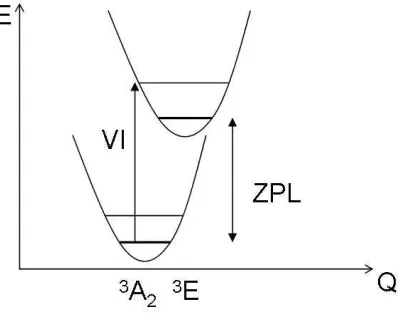
space. This relaxation can take place with the help of phonons around the defect. The ZPL
transition corresponds to that energy where phonons do not participate, between the energy
[image:14.612.200.399.449.609.2]minima of the two configurations as shown in Fig. 5.
FIG. 5: Energetics of photoluminescence absorption: VI is the vertical ionization energy, ZPL is
the zero-phonon line transition, E is the total energy and Q the configuration coordinate.
The calculated vertical ionization energy is 1.91 eV within LSDA. We found that the NV
defect significantly relaxes due to this internal ionization. The C-vacancy distance is 1.67 ˚A
what was found in the3A
2 state. This may be understood as follows: the N atom is strongly
spin-polarized in the 3E state compared to 3A
2 state, while the C ligands will be somewhat
less spin-polarized which induces different charge transfer between the atoms in the3Estate,
and leads to a different geometry. The calculated relaxation energy (the Fracnck-Condon
shift) is 0.2 eV. From this, we find a ZPL energy of 1.71 eV which can be tentatively
compared to the experimental value of 1.945 eV.24,25 We note that a similar value (1.77 eV)
was found by the LSDA molecular cluster calculation.34 The LSDA excitation energy and
the experimental transition energy are remarkably close to each other. This shows that the
self-interaction error of LSDA for these defect levels does not differ too much, which is not
unexpected since both of the defect states are basically valence band derived (from sp3-like
hybrid orbitals). Nevertheless, the calculated Franck-Condon shift, which is the relaxation
energy defined as the energy difference between the vertical ionization energy and the ZPL
energy, should be even more accurate than the calculated internal ionization energy. Indeed,
the PL spectrum shows a broad phonon spectrum even at low temperature, and the intensity
of the ZPL line is relatively small compared to the phonon side bands which indicates a large
Franck-Condon shift.
In addition to the triplet states it is worthwhile to calculate the energies of the singlet
states because they play a significant role in the emission process but these states have not
yet been measured directly in experiments (see Ref.23 and references therein). LSDA is not
a suitable methodology to calculate these energies accurately. Beside the self-interaction
error (which is relatively small for these defect levels as discussed above), LSDA gives the
charge density of the interacting electrons, which is expressed in terms of the non-interacting
Kohn-Sham particles. In the Hartree-Fock language the total wave function, which is not
directly used in DFT-LSDA, is expressed by a single Slater-determinant. Thus, the usual
DFT-LSDA calculation cannot represent most of the singlet eigenstates of the NV center.
This can be corrected by using a perturbation theory within DFT-LSDA as explained by
Lannoo et al..47 Instead, we adopt here a more approximate method48 which was already
applied for some states of this defect in Ref.34. Our goal is to give approximate energies of
the singlet eigenstates in order to predict their sequence, and we do not attempt to provide energies directly comparable to the experiments.
One of the1A
1states can be described by a single Slater-determinant (when thea1(2) level
optimization by LSDA as explained for the 3E state. We therefore concentrate on the
remaining 1A
1 and two 1E states. While the |σ2σ¯2σ3σ¯3i, |σ2σ¯2σ3σ¯4i, and |σ2σ3σ¯3σ¯4i single
Slater-determinants are not eigenstates, they can be expressed as the linear combination
of different eigenstates shown in Eqs. (2a), (2b) and (3). von Barth48 has shown that the
LSDA total energy (E) of the mixed state can be expressed as the appropriate sum of the energy of the eigenstates, which yields the following equations:
E[|σ2σ¯2σ3σ¯4i] =
1 2(E[
1E] +
E[3A2]) (5a)
E[|σ2σ¯2σ3σ¯3i] =
1 2(E[
1E] +
E[1A1]) (5b)
E[|σ¯2σ3σ4σ¯4i] =
1 2(E[
3E] +
E[1E]) (5c) In Eqs. (5a) and (5c) we assume that the energy of the triplet states withMS = 0 andMS = 1
is the same. This is a very good approximation since, for instance, the experimentally
measured splitting is about 2.88 GHz (few µeV) for the ground state due to spin-spin
interaction,16 while the spin-orbit splitting for the 3E state is expected to be within few
meV, which is far beyond the accuracy of LSDA calculations. The energy of the mixed states
on the left hand side of Eqs. (5a)-(5c) can be calculated directly by LSDA. Since E[3A 2] is
known, E[1E] can be determined from Eq. (5a). Similarly, E[1E] can be determined from
Eq. (5c). By combining Eqs. (5a) and (5b) we arrive at:
E[1A1] = 2(E[|σ2σ¯2σ3σ¯3i]− E[|σ2σ¯2σ3σ¯4i]) +E[3A2]) (6)
Thus, the 1A
1 state can be also determined.
von Barth48applied this approach successfully to calculate the energy of atoms in different
states. Formally, this method can also be applied to the NV defect in diamond, but attention
must be paid to relaxation effects. Generally, if the electron state changes then it may
imply also relaxation of the ionic positions, as was the case for the 3E state discussed
earlier. Relaxation effects cannot be taken into account with this methodology, since only
the energy of the mixed states can be calculated directly by LSDA, and the relaxation
of the mixed state is meaningless. In other words, the geometry must be fixed in these
calculations. The occupation of theestate varies in the case of the1A
1 and1E states of the
a2
1(2)e2 configuration. We assume that the geometry would involve negligible change from
the geometry of the 3A
we fix the geometry obtained in the 3A
2 state in the process of calculating the 1A1 and 1E
states of the a2
1(2)e2 configuration. Using the same argument we fix the geometry obtained
for the 3E state in the calculation of the 1E state of the a1
1(2)e3 configuration. With these,
we find the following energy sequence of the multiplets:
E[3A2] ≈ 0.0 eV
−−−−−→ E[1A1] ≈ 0.9 eV
−−−−−→ E[1E]−−−−−→ E≈0.8 eV [3E]−−−−−→ E≈0.5 eV [1E]−−−−−→ E≈1.3 eV [1A1],
that is, the deeper 1A
1 state is close in energy to the 3A2 state, and the deeper 1E state is
below 3E state. The energy differences between the triplet states were already discussed.
We focus next on the singlet states. Within our approximate methodology the 3A 2
and 1A
1 states are almost degenerate. Close inspection of Eq. (6) reveals that the energy
sequence of the 3A
2 and 1A1 states depends on the energy difference of two singlet states:
(E[|σ2σ¯2σ3σ¯3i]− E[|σ2σ¯2σ3σ¯4i]). We obtain almost zero for this energy difference. However,
the LSDA self-interaction error may be larger for the|σ2σ¯2σ3σ¯3istate (where the exchange
energy of σ3 appears) than for the |σ2σ¯2σ3σ¯4i state (where the electrons occupy spatially
orthogonal orbitals). This may raise the energy of the E[1A
1] state. Nevertheless, this can
be partially compensated by the relaxation effect of the 1A
1 state which we are neglecting
by necessity as explained before. An additional issue is the possible mixing with the higher
1A
1 state. We argue that the two 1A1 states are not likely to mix because they are very far
from each other in energy.
We conclude from the above analysis that the 1A
1 state is indeed close in energy to the 3A
2 state. This may imply a very complicated fine structure of the states. Taking the
spin-spin interaction into account the 3A
2 state splits to A1(MS = 0) and E(MS = ±1) states,
while 1A
1 becomes A1(MS = 0) (the spin state is not a good quantum number anymore,
just its projection). If the two A1(MS = 0) states are close in energy then they may mix
with each other. It is also important to notice that the energy of the deeper 1E state falls
between the energies of the triplet states. The relaxation effect may lower the energy of this
state. In addition the two1E states are not far from each other in energy, so the off-diagonal
elements in the hamiltonian may not be neglected. The mixing of the two 1E states would
further lower the energy of the deeper 1E state and would raise the energy of the higher1E
state. The final conclusion is that there are two singlet states between the triplet states, and
the 1A
1 state is much closer in energy to the ground state than the 1E state. The energies
The deeper singlet 1A
1 and 1E states can play an important role in the emission process
of the NV center. Experiments indicate that there should be a possibly long-living singlet
state between the triplet states (see Ref.23 and references therein). Usually, the singlet 1A 1
is considered in this process. However, our calculations indicate that there are two singlet
states between the triplet states. Gosset al.34reported the sequence of3A
2,1E,1A1, and3E
states which is surprising in light of the previous discussion, as these states were obtained by
LSDA molecular cluster calculations. Manson et al.23 recently showed that if the 1E state
is above the 1A
1 state, the known properties of the emission can be consistently explained
as with the original singlet 1A
1 model, with the only difference being that the 1E and 1A1
states both contribute to the spin polarization process during the optical cycling and that the
effect will be more efficient. Having the 1A
1 state higher in energy than the1E state would
result in no change in spin orientation during optical cycling which is in contradiction with
experiment.23 From this point of view our results obtained from approximate calculations
are consistent with the PL experiments.
V. HYPERFINE CONSTANTS
As mentioned in the Introduction, the NV center in diamond is a promising candidate
to realize qubit solid state devices operating at room temperature (Ref.14 and references
therein). The qubit is the non-zero (S=1) electron spin ground state which can interact
with the neighbor13C isotopes possessing I=1/2 nuclear spin via hyperfine interaction. The
natural abundance of the13C isotope is about 1.1%, so we can assume the same abundance
in the diamond lattice. In conventional EPR measurements, the EPR absorption signal
is detected on the ensemble of the defects in the diamond sample. The sample should be thick enough for absorption measurements and the concentration of the defects should be
sufficiently high. Finally, a large number of defects is measured at the same time by EPR,
so statistics can be applied to analyze the data. If the spin density is strongly localized on
threesymmetrically equivalent C ligands (see Fig. 4) then the probability of finding one13C
atom among them is given by the binomial distribution and is about 3.2%. Finding two
or three of them has negligible probability. Due to the I=1/2 nuclear spin, the hyperfine
the hyperfine line associated with the C ligands will be roughly 1.5%. This makes the EPR
measurement on 13C hyperfine interaction a challenging task, since the signal to noise ratio
should be very good and the intensity of the EPR signal should be strong enough and stable
to identify the satellite hyperfine lines due to 13C isotopes.
The 13C hyperfine interaction has been detected in EPR from two sets of three
symmetri-cally equivalent C atoms by Loubser and van Wyk.16,49 The larger hyperfine constants were
associated with the C-ligands of the NV center. In addition, the hyperfine interaction of
the 14N isotope was found in NV center by EPR and ENDOR measurements.16,17 To our
knowledge, hyperfine interaction with other 13C isotopes has not been measured directly by
EPR. We can estimate the localization of the charge density on the C and N atoms that are
immediate neighbors of the vacant site, from the linear combination of the atomic orbitals
as they appear in the wavefunctions. Heet al.17estimated that 72% and 0.2% of the charge
density is localized on the three C ligands and the N atom, which leaves approximately 28%
of the charge density to be spread in the lattice. Wrachtrup et al.3 speculated that the spin density decays exponentially as a function of the distance from the vacant site. Since the
hyperfine constants are roughly proportional to the spin density, as Eq. ((4)) indicates, these
authors proposed that 9 or more carbon nuclei should have a hyperfine value of 70 MHz
in the second neighborhood while the more distant carbon atoms should have a hyperfine
constant smaller than 10 MHz. This proposal is not entirely consistent with the known
EPR data, since isotropic hyperfine splitting of 5.4 G(≈15 MHz) was measured from three
13C isotopes49 whereas a value of 70 MHz hyperfine splitting should be measurable by EPR
because it would not be obscured by the main EPR line.
In their theoretical treatment of the NV center, Luszczek et al.22 claimed that they can support the proposal of Wrachtrup et al.3 based on their ab initio results. They optimized the geometry without symmetry constraints only for the first neighbor atoms of the vacancy
in a 64-atom supercell. The adequacy of this restriction was already discussed above; with
this restriction, while the C3v symmetry is almost retained, the calculated Fermi-contact hyperfine interactions for the three C ligands deviate from each other more than 10% (see
Table 2 in Ref.22). This suggests that the spin density was not adequately converged in that
calculation since the small deviation in the geometry from the C3v symmetry could not imply such a large discrepancy in the calculated hyperfine field. These authors also calculated the
vacant site. The reported numbers were about an order of magnitude smaller than for the C
ligands, which led to their conclusion that the spin density and the corresponding hyperfine
constants should decay fast for other C-atoms farther from the vacant site.
In addition to the problem of the inconsistent values of the hyperfine interaction for the
three C-ligands, several other issues related to the results of Ref.22 must be mentioned:
(i) These authors reported actually the hyperfine field and not the hyperfineconstant. How-ever, the conversion from the hyperfine field, which is the magnetization density on the atom
and it is a number directly obtained from the computation, to the hyperfine constant is not
unique; therefore, it is very difficult to compare the calculated values to the experimental
data.
(ii) Only the Fermi-contact term was calculated while the dipole-dipole term can be also
sig-nificant; this is known to be the case for the C ligands from experimental measurements.16,49
(iii) The hyperfine interaction with distant C atoms could be very important for qubit
appli-cations based on this defect, so the hyperfine tensor must be calculated at larger distances
from the vacancy.
Based on these arguments, we believe that the nature of the spin density and the
corre-sponding hyperfine interaction with the 13C isotopes has not yet been explored in detail
despite of its high importance.
Toward establishing the nature of this interaction, we show first the calculated spin
density in our 512-atom supercell in Fig. 6. As expected, the spin density is highly localized
around the three C-ligands nearest to the vacant site (orange lobes in the figure), within a
radius of 1×a0 from this site. The spin density practically vanishes at distances >2×a0
from the vacant site. Below the three C atoms (see Fig. 6) there is the N atom with a small
negative spin density. Some C atoms farther from the vacant site also have negative spin density. The spin density extends mostly on a plane perpendicular to the (111) direction and
no measurable spin density can be found below the N atom. On the N atom, the spin density
is negative. It was shown earlier that the spin density comes mostly from the spin-polarized
e level localized on the C dangling bonds, and due to symmetry reasons, orbitals related to
the N do not appear in the e level. The tiny negative charge density on the N atom can be
explained by the polarization of its core states: since the nuclear Bohr-magneton of the N
atom is positive, the Fermi-contact term will be negative (see Table II). Overall, the spin
−0.005 +0.014 −0.010
+0.070 +0.200
(a) (b) (c)
x o
14.2 A = 4 a0
(111) <111>
FIG. 6: (Color online) (a) The 512-atom cubic supercell with all C atoms shown (atoms within a
64-atom supercell are shown in red). The suprercell size in ˚A and in units of the conventional cubic
cell lattice constant,a0, is indicated on the side of the cube. (b) Perspective view of the calculated
spin density isosurfaces in theMS=1 state. Only atoms up to the second nearest neighbor of the
vacant site are shown. (c) View along the (111) direction indicating the C3v symmetry of the spin density, which is given in colored contours. The black lines denote the size of the 512-atom
supercell, while the red dotted ones show the boundaries of the 64-atom supercell.
which have significant negative spin density which results in negative Fermi-contact term.
No measurable hyperfine interaction (spin density) can be found for the C atoms below
the N atom. Loubser and van Wyk49 speculated that the 15 MHz 13C isotropic hyperfine
splitting comes from the three C atoms bonded to the N atom. Our calculation negates this
possibility.
Table II shows that there is a local maximum of the spin density at Rvac ≈3.9 and 5.0 ˚A,
where Rvac is the distance from the vacant site. At Rvac >6.3 ˚A the calculated hyperfine
constants are below 1 MHz which means that the spin density vanishes at Rvac ≈ 2×a0.
Apparently, the 64-atom supercell is too small to capture these properties due to the artificial
overlap of the spin density caused by the periodic boundary conditions.
We also find that the charge density does not decay monotonically like an exponential
function, but behaves more like a wavepacket, that is, as f(x) = sin(x)/x (see Fig. 7).
It is important to compare the calculated hyperfine values with the known experimental
data in order to estimate the accuracy of our calculations. For that purpose, the hyperfine
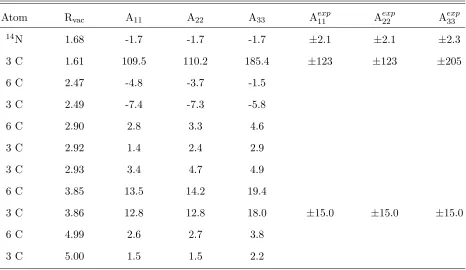
TABLE II: The calculated principal values of the hyperfine tensor (columns 3 to 5) compared
to the known experimental data (columns 6 to 8) in MHz. The average of the three principal
values yields the contact term. The difference between the principal values and the
Fermi-contact term gives the dipole-dipole term. Only atoms with a signal larger than 2 MHz are shown.
The symmetrically equivalent number of C atoms is shown in the first column and their distance
in ˚A from the vacant site in the second column. The experimental data on 14N is taken from
Refs.17,49. Experimental data on 13C atoms were taken from Ref.49. EPR studies can directly measure only the absolute value of the hyperfine constants, which is indicated by adding a±sign to
experimental values. The calculated hyperfine tensors can be used for comparison with spin-echo
measurements (see text).
Atom Rvac A11 A22 A33 Aexp11 A
exp
22 A
exp
33 14N 1.68 -1.7 -1.7 -1.7 ±2.1 ±2.1 ±2.3
3 C 1.61 109.5 110.2 185.4 ±123 ±123 ±205
6 C 2.47 -4.8 -3.7 -1.5
3 C 2.49 -7.4 -7.3 -5.8
6 C 2.90 2.8 3.3 4.6
3 C 2.92 1.4 2.4 2.9
3 C 2.93 3.4 4.7 4.9
6 C 3.85 13.5 14.2 19.4
3 C 3.86 12.8 12.8 18.0 ±15.0 ±15.0 ±15.0
6 C 4.99 2.6 2.7 3.8
3 C 5.00 1.5 1.5 2.2
caused by only indirect spin-polarization effect. As mentioned above, there is an inherent
inaccuracy in the calculated dipole-dipole term of about 0.3 MHz, therefore it is reasonable
to consider only values of the hyperfine constants that are significantly larger than this
limit. Accordingly, we restrict the comparison to values that are higher than 2 MHz. By
comparing the hyperfine constants of the C-ligands we estimate the inaccuracy for both the
Fermi-contact term and the dipole-dipole term to be about 10%. This is usual for LSDA
dipole-1.5 3 4.5 6 7.5
Rvac(Α o
) −10
40 90 140 190
Aij
(MHz)
A11 A33
2.5 4 5.5 7 −5
[image:23.612.192.418.68.239.2]5 15
FIG. 7: Variation of the principal values of the hyperfine tensor A11 and A33 as a function of the
distance from the vacant site (Rvac) for the set of 3 symmetrically equivalent C atoms (3C). In the
inset we show changes farther from the vacant site on a finer scale. The variation for the set of 6
symmetrically equivalent C atoms follows closely the one shown for 3C.
dipole term agrees remarkably well with experiment for the C-ligands. This shows that
the shape of the spin density is very well described by LSDA. This ratio indicates that the
p-functions dominate by about 90% in the dangling bonds, so those are morep-like orbitals
than sp3 hybrids. The reason is most likely the outward relaxation of the C-atoms from
the vacant site. The plotted wavefunctions indeed show a very strong p-contribution of the
e levels in Fig. 3 while the spherical s-contribution is very small. The shape of the wave
functions can be directly compared to the proposed wave functions in Eq. (1) from the group
theory analysis of the defect diagram.
An additional 15 MHz13C hyperfine splitting was measured by Loubseret al.49using EPR
but the measured spectrum of the NV center was not shown in detail, therefore we cannot
comment on the accuracy of this measurement. Nevertheless, that work stated that the
hyperfine splitting is isotropic, that is, the dipole-dipole term is negligible, and the relative
intensity of the hyperfine satellite line and the main EPR line indicates the involvement of
three symmetrically equivalent C atoms.49 The likely candidate for this signal is found at
the third neighbors of the vacant site at Rvac=3.86 ˚A. The spin density of these atoms is
shown as yellow lobes above the small green lobes at the highest position on the side view
in Fig. 6. The calculated anisotropy of this hyperfine interaction is about 3-4 MHz. If the
be detected as nearly isotropic. However, our calculations reveal that six additional C atoms
have similar hyperfine splitting at the third neighbor distance of Rvac=3.85 ˚A, corresponding
to the six yellow lobes laterally spread farthest from the vacant site, which is most obvious
from the view along the (111) direction in Fig. 6. This means that the hyperfine splitting
due to these six C atoms would have to be detected simultaneously with the other three
ones. Since the difference in the hyperfine splitting of these two sets of atoms is small, the
six-atom set could obscure the signal of the three-atom set showing an effective relative
intensity associated with six symmetrically equivalent C atoms. We suggest that this part
of the spectrum should be re-investigated in detail experimentally. The hyperfine splitting
of 7-8 MHz from the 13C atom may be also detectable by EPR while the other signals may
be too small and hence obscured by the main hyperfine lines.
Recently, individual NV centers have been detected by spin-echo measurements.13,14 In
particular, detailed results for six NV centers in diamond have been reported.13The spin-echo
measurements have detected the coherent state of the electron spin coupled with a proximal
13C nucleus. The coupling is due to hyperfine interaction between the electron spin and
the nuclear spin of 13C isotopes. The resulting spin-echo signals show a rapidly oscillating
function enveloped by a more slowly oscillating function.13These authors proposed a theory
to explain this signal, and they concluded that the fast modulation frequency is due to the
effective magnetization density of the electron spin felt by the13C nucleus, which is the same
as the hyperfine interaction. The modulation frequency can be well approximated as the
norm of the hyperfine tensor projected to the symmetry axis, which leads to the following
expression within our formulation of the problem:
ω(X)=q [111]
×A(ijX)2
(7)
where [111] is the appropriate projection vector and A(ijX) is the hyperfine tensor of nucleus
X. Since we calculate the full A(ijX) tensor (see Eq. (4)), the calculation of the modulation frequency is straightforward. Modulation frequencies have been reported for four single NV
defects (see Fig. 4B in Ref.13). A single modulation frequency was measured for each NV
center at ≈2 MHz, ≈4 MHz, ≈9 MHz, and ≈14 MHz, respectively, so these particular NV centers had hyperfine interaction with one 13C isotope in the lattice.13 It would be useful
to compare the hyperfine interaction measured by EPR and spin-echo techniques which can
explained earlier, conventional EPR tools have limitations in detecting 13C isotopes. A13C
enriched sample would be useful to study this defect experimentally in more detail.
The largest 13C hyperfine splitting corresponds to a modulation frequency that is too
large to be detected by spin-echo measurements. However, an isotropic 13C hyperfine
split-ting of 15 MHz has also been reported.49 The isotropic signal means that the modulation
frequency should be also about 15 MHz. This is very close to one of the measured
modula-tion frequencies at≈14 MHz.13From the calculated hyperfine tensors in Table II, this signal
must originate from a C-atom which is a third neighbor of the vacant site at Rvac=3.86 ˚A.
The calculated modulation frequency is≈16 MHz which is close to the measured one taking into account the limitations of our computational method. The 9 MHz spin-echo signal
can originate only from the atoms at Rvac=2.49 ˚A, and contributions from other neighbors
can be safely excluded. In this way, the origin of the signal can be identified. The 4 MHz
spin-echo signal can originate either from atoms at Rvac=2.90 ˚A or at Rvac=2.93 ˚A taking
into account computational limitations. In the first case, six symmetrically equivalent C
atoms are involved, while in the second case a set of three symmetrically equivalent C atoms
are involved. It is difficult, if not impossible, to identify the origin of the 1 MHz spin-echo
signal, which is beyond the accuracy of our calculations. Nevertheless, the calculations
in-dicate that this signal could arise from at least 12 C atoms. Most of them are far from the
vacant site but some are closer than the atoms that give rise to the ≈14 MHz signal, as is evident from Figure 7.
The number of symmetrically equivalent atoms is also specific to the individual hyperfine
constant, and therefore to the modulation frequency. Because of the C3v symmetry, sets of three or sets of six C atoms are equivalent with each other. The relative occurrence of the
modulation frequencies measured by spin-echo experiments helps in identifying the
equiv-alent atoms around the vacancy. Four samples represent a rather limited set of values for
statistical analysis, so the relative occurrence of 13C isotopes picked up by these
measure-ments cannot be used for such analysis. A much larger number of NV samples is needed in
the spin-echo measurements in order to use the relative occurrence of the13C isotope signals
VI. SUMMARY AND CONCLUSIONS
In this work we investigated the negatively charged nitrogen-vacancy center in diamond
in detail by ab initio supercell calculations using density functional theory methods. We showed that the energy sequence of multiplet states is 3A
2, 1A1, 1E, 3E,1E, and 1A1. This
means that the singlet 1E state enhances the spin polarization process during the optical
cycling of the defect. The center has non-zero spin ground state. The full hyperfine tensor for
a large number of atoms around the defect was calculated for the first time. The calculated
hyperfine constants of the C ligands agree well with the experimental values detected by
electron paramagnetic resonance tools. However, there is a controversy about the number
of symmetrically equivalent carbon atoms of the second highest hyperfine interactions when
these are compared to experiment. We propose that that part of the electron paramagnetic
resonance spectrum should be re-investigated in detail in order to clarify this issue. Our
calculations reveal that the spin density of the ground state is spread in the lattice, mostly
on a plane perpendicular to the (111) direction defined by the positions of the N atom
and the vacant site, and that it does not decay monotonically from the vacant site. As a
consequence, only a certain number of13C isotopes can interact with the electron spin, which
can be used as qubits for quantum computing. Using the limited number of measurements
that have been recently published for single nitrogen-vacancy centers detected by spin-echo
measurements, we were able to identify some individual atoms around the defect. Our results
contribute to the understanding of the spin-echo signals of the defect, which is a crucial step
towards realization of the qubit concept in this system. Additional spin-echo measurements
in NV samples will help identify other individual 13C atoms around the defect.
Acknowledgments
We are thankful to Liang Jiang, Jeronimo Maze and Mikhail Lukin for encouraging
dis-cussions. AG acknowledges support from E¨otv¨os Fellowship of Hungary. MF acknowledges
Science Foundation, Award Number PHY-0117795.
1 A. Gruber, A. Drabenstedt, C. Tietz, L. Fleury, J. Wrachtrup, and C. Borczyskowski, Science
276, 2012 (1997).
2 A. Drabenstedt, L. Fleury, C. Tietz, F. Jelezko, S. Kilin, A. Nizovtzev, and J. Wrachtrup,
Physical Review B60, 11503 (1999).
3 J. Wrachtrup, S. Y. Kilin, and A. P. Nizotsev, Opt. Sepctrosc. 91, 429 (2001).
4 F. Jelezko, I. Popa, A. Gruber, C. Tietz, J. Wrachtrup, A. Nizovtsev, and S. Kilin, Appl. Phys.
Lett.81, 2160 (2002).
5 F. Jelezko, T. Gaebel, I. Popa, A. Gruber, and J. Wrachtrup, Phys. Rev. Lett. 92, 076401
(2004).
6 F. Jelezko, T. Gaebel, I. Popa, M. Dunham, A. Gruber, and J. Wrachtrup, Phys. Rev. Lett.
93, 130501 (2004).
7 R. J. Epstein, F. Mendoza, Y. K. Kato, and D. D. Awschalom, Nat. Phys.1, 94 (2005). 8 R. Hanson, F. M. Mendosa, R. J. Epstein, and D. D. Awschalom, Phys. Rev. Lett. 97, 087601
(2006).
9 R. Brouri, A. Beveratos, J.-P. Poizat, and P. Gragier, Opt. Lett.25, 1294 (2000).
10 A. Beveratos, R. Brouri, T. Gacoin, J.-P. Poizat, and P. Grangier, Phys. Rev. A64, 061802(R)
(2002).
11 L. Childress, J. M. Taylor, A. S. Sørensen, and M. D. Lukin, Phys. Rev. Lett.96, 070504 (2006). 12 L. Jiang, J. M. Taylor, A. Sørensen, and M. D. Lukin, quant-ph/0703029 (2007).
13 L. Childress, M. V. Gurudev Dutt, J. M. Taylor, A. S. Zibrov, F. Jelezko, J. Wrachtrup, P. R.
Hemmer, and M. D. Lukin, Science314, 281 (2006).
14 M. V. Gurudev Dutt, L. Childress, L. Jiang, E. Togan, J. Maze, F. Jelezko, A. S. Zibrov, P. R.
Hemmer, and M. D. Lukin, Science316, 312 (2007).
15 Cappellaro, unpublished.
16 J. H. N. Loubser and J. P. van Wyk, in Diamond Research (London) (Industrial Diamond
information Bureau, London, 1977), pp. 11–15.
17 X.-F. He, N. B. Manson, and P. T. H. Fisk, Phys. Rev. B47, 8816 (1993).
and A. Gali, Phys. Rev. B71, 193202 (2005).
19 T. Umeda, N. T. Son, J. Isoya, E. Janz´en, T. Ohshima, N. Morishita, H. Itoh, A. Gali, and M.
Bockstedte, Phys. Rev. Lett.96, 145501 (2006).
20 N. T. Son, P. Carlsson, J. ul Hassan, E. Janz´en, T. Umeda, J. Isoya, A. Gali, M. Bockstedte,
N. Morishita, T. Ohshima, and H. Itoh, Phys. Rev. Lett.96, 055501 (2006).
21 T. Umeda, J. Ishoya, T. Ohshima, N. Morishita, H. Itoh, and A. Gali, Phys. Rev. B75, 245202
(2007).
22 M. Luszczek, R. Lakowski, and P. Horodecki, Physica B348, 292 (2004).
23 N. B. Manson, J. P. Harrison, and M. J. Sellars, Physical Review B 74, 104303 (2006). 24 L. du Preez, PhD. dissertation, University of Witwatersrand, 1965.
25 G. Davies and M. F. Hamer, Proc. R. Soc. London Ser. A 348, 285 (1976). 26 A. T. Collins, J. Phys. C 16, 2177 (1983).
27 R. Hanson, O. Gywat, and D. D. Awschalom, Phys. Rev. B 74, 161203 (2006).
28 D. A. Redman, S. Brown, R. H. Sands, and S. C. Rand, Phys. Rev. Lett.67, 3420 (1991). 29 N. R. S. Reddy, N. B. Manson, and C. Wei, J. Lumin.38, 46 (1987).
30 E. van Oort, N. B. Manson, and M. Glasbeek, J. Phys. C21, 4385 (1988). 31 N. B. Manson, P. T. H. Fisk, and X.-F. He, Appl. Magn. Reson.3, 999 (1992).
32 J. P. Goss, R. Jones, P. R. Briddon, G. Davies, A. T. Collins, A. Mainwood, J. A. van Wyk,
J. M. Baker, M. E. Newton, A. M. Stoneham, and S. C. Lawson, Phys. Rev. B56, 16031 (1997).
33 A. Lenef and S. C. Rand, Phys. Rev. B56, 16033 (1997).
34 J. P. Goss, R. Jones, S. J. Breuer, P. R. Briddon, and S. ¨Oberg, Phys. Rev. Lett. 77, 3041
(1996).
35 A. Lenef and S. C. Rand, Phys. Rev. B53, 13441 (1996).
36 D. M. Ceperley and B. J. Alder, Phys. Rev. Lett. 45, 566 (1980). 37 J. P. Perdew and A. Zunger, Phys. Rev. B23, 5048 (1981). 38 G. Kresse and J. Hafner, Phys. Rev. B49, 14251 (1994). 39 G. Kresse and J. Furthm¨uller, Phys. Rev. B54, 11169 (1996).
40 D. Sanch´ez-Portal, P. Ordej´on, E. Artacho, and J. M. Soler, Int. J. Quantum Chem. 65, 543
(1997).
43 G. Kresse and D. Joubert, Phys. Rev. B59, 1758 (1999).
44 P. E. Bl¨ochl, C. J. F¨orst, and J. Schimpl, Bull. Mater. Sci.26, s33 (2001). 45 P. E. Bl¨ochl, Phys. Rev. B62, 6158 (2000).
46 H. J. Monkhorst and J. K. Pack, Phys. Rev. B13, 5188 (1976).
47 M. Lannoo, G. A. Baraff, and M. Schl¨uter, Phys. Rev. B24, 943 (1981). 48 U. von Barth, Phys. Rev. A20, 1693 (1979).