ATTACHMENT SECURITY AS A BASIS
FOR GRATITUDE: AN EMPIRICAL
INVESTIGATION
Tram Thi Huyen Dinh
A thesis submitted for the degree of Doctor of Philosophy (in Clinical Psychology) from the Australian National University
April 2016
DECLARATION
I declare that this thesis reports my original work, that no part has been previously accepted and presented for the award of any degree or diploma from any university, and that, to the best of my knowledge, no material previously published or written by any other person is included, except where due acknowledgement is given.
ACKNOWLEDGEMENTS
The completion of this thesis could not have been achieved without the help and support of many significant others. I would like to acknowledge the invaluable input of my primary supervisor, Associate Professor Ross Wilkinson. I am enormously grateful to him for his advice and guidance throughout the candidature. I could not have completed the thesis without his help. I am grateful to my advisers, Dr Jay Brinker, Prof Michael Platow, and Prof Elinor McKone, for their expertise and advice on my thesis research projects. It was reassuring to know that I had a panel of amazing advisors to assist me with thesis issues. I would like to thank the school of psychology’s administrative and IT staff for their support and assistance, especially Caroline Twang and Shane Pozzi. They were always organised and ready to help and made the practical aspects of my candidature smooth and easy. Thank you to my colleagues at the school of psychology who shared their experiences with me, helping to normalise my own experience. Their presence made the journey more enjoyable and meaningful. Thank you to Tegan Cruwys, Daphne Goh, Jodie Burchell, Danielle Clout, Sarah Walker and Paul Campbell for taking the time to talk thesis with me.
Lastly, I am grateful to my family and friends for their support and understanding and especially grateful to Adam who has always been there for me and supported me every step of the way. I would never have considered embarking on this journey without his
ABSTRACT
Gratitude is a positive, higher order affect with significant links to well-being. Research has shown that an attitude of gratitude increases well-being and life-satisfaction and is a protective factor against mental health problems. However, little is known about how trait gratitude is developed or what mechanisms are involved in the link between gratitude and well-being. While there are a number of extant theories of gratitude they tend to be limited in scope, are not well tested, and lack an empirical support base. This thesis proposes that attachment theory can address some of the current theoretical limitations in the field and provide a framework for studying gratitude. A critical overview of the gratitude and attachment literature is presented as well as an analysis of how attachment processes may relate to gratitude.
A research program with five studies (N = 837) is presented across four empirical chapters. These test the viability of an attachment theory framework for gratitude and examined the hypothesis that attachment security facilitates gratitude arousal and relates to trait gratitude. A cross-sectional study found that individual differences in attachment functioning significantly predicted state and trait gratitude, providing evidence for the validity of attachment as framework for the study of gratitude. Two experimental studies used affective subliminal priming methodology to explore the relationship between
TABLE OF CONTENTS
DECLARATION ... 2
ACKNOWLEDGEMENTS ... 3
ABSTRACT ... 4
OVERVIEW ... 11
Problem Statement ... 11
Thesis Aim ... 12
Overview and Structure... 12
CHAPTER ONE: GRATITUDE ... 14
Construct Definition ... 15
Individual Differences in Gratitude ... 24
Relationship between Gratitude and Well-being ... 25
Well-being Causal Link ... 28
Theories of Gratitude ... 31
Conclusion ... 39
CHAPTER TWO: ATTACHMENT THEORY ... 40
Attachment System Functions and Normative Processes ... 40
Attachment Behavioural System ... 41
Attachment hierarchy ... 43
Attachment transfer ... 44
Attachment bond markers ... 45
Working Models of Attachment ... 45
Attachment System Strategies... 48
Security-based Strategies of Affect Regulation ... 53
Secondary attachment strategies of Affect Regulation ... 55
Attachment System and the Broaden-and-build Cycle of Attachment Security ... 60
Individual Differences in Attachment Functioning ... 62
Individual Differences in Infant Attachment ... 63
Individual Differences in Adult Attachment ... 64
Developmental and clinical research contributions to attachment theory ... 66
Social and personality research contributions to attachment theory ... 69
Attachment dimensions and the measurement divide ... 74
Conclusion ... 77
CHAPTER THREE: ATTACHMENT AND GRATITUDE ... 79
An Attachment Perspective of Gratitude ... 79
Research Evidence for Gratitude and Attachment Link ... 86
Research Design and Scope ... 91
CHAPTER FOUR: STUDY 1 EXPLORATION OF THE RELATIONSHIP BETWEEN INDIVIDUAL DIFFERENCES IN ATTACHMENT AND GRATITUDE ... 94
Abstract ... 96
Methodology ... 109
Results ... 112
Discussion ... 118
Conclusion ... 127
References ... 128
CHAPTER FIVE: STUDY 2 INVESTIGATING THE INFLUENCE OF ATTACHMENT SECURITY ON GRATITUDE USING THE LEXICAL DECISION TASK ... 139
Methodology ... 143
Results ... 148
Discussion ... 156
CHAPTER SIX: STUDY 3 INVESTIGATING THE INFLUENCE OF
ATTACHMENT SECURITY AND GRATITUDE USING THE STROOP
COLOUR NAMING TASK ... 163
Methodology ... 168
Results ... 173
Discussion ... 178
Conclusion ... 186
CHAPTER SEVEN: STUDY 4 AND 5 INVESTIGATING THE INFLUENCE OF ATTACHMENT SECURITY AND GRATITUDE AT THE AFFECTIVE LEVEL ... 188
Abstract ... 190
Study 1 ... 199
Methodology ... 200
Results ... 204
Discussion ... 206
Study 2 ... 209
Methodology ... 209
Results ... 212
Discussion ... 214
General Discussion... 216
CHAPTER EIGHT: GENERAL DISCUSSION ... 236
Review of Thesis Aims and Objectives ... 236
Summary of Empirical findings ... 238
Implications ... 242
Conclusion ... 267
REFERENCES ... 270
LIST OF TABLES
Table 1. Factor loadings from principal components analysis with oblimin rotation for 28items from the short version of the Gratitude, Resentment, and Appreciation
Test (GRAT) and the Appreciation Scale (AS) (N=608) ... 135
Table 2. Pearson's Correlations ... 136 Table 3. Step-wise Hierarchical Regression of Attachment Variables on Trait Gratitude
controlling for the effects of Gender, Age, and Trait Positive and Negative
Affect. ... 137
Table 4. Step-wise Hierarchical Regression of Attachment Variables on State Gratitude controlling for the effects of Gender, Age, and State and Trait Positive and
Negative Affect. ... 138
Table 5. Study One, Frequencies of Gratitude Related Words by Condition ... 232 Table 6. Study One, Frequencies and Percentages of Participants Employing Gratitude
Related Words by Condition ... 232
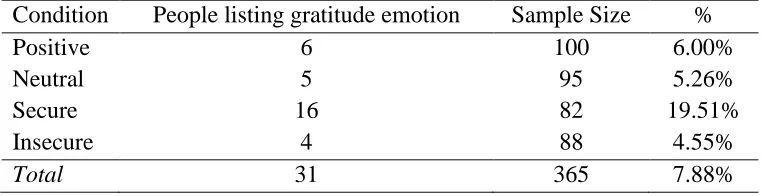
Table 7. Study Two, Frequencies of Gratitude Related Words by Condition ... 233 Table 8. Study Two, Frequencies and Percentages of Participants Reporting Gratitude
Related Words by Condition ... 233
Table 9. Study Two, A Descriptive table of Means, Standard Deviations, and Sample Size for Gratitude Ratings Scale (Dependent Variable) and Covariates by Prime
condition. ... 234
LIST OF FIGURES
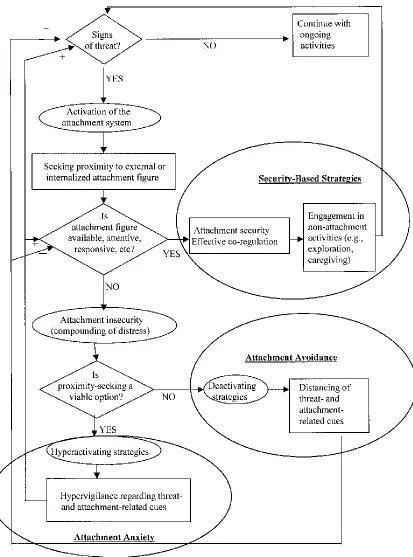
Figure 1. Shaver and Mikulincer’s (2002) model of attachment system activation and
dynamics... 50
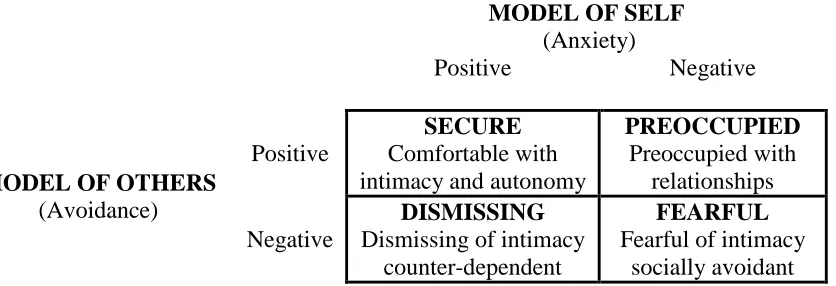
Figure 2. Bartholomew and Horowitz (1991) model of adult attachment based on models
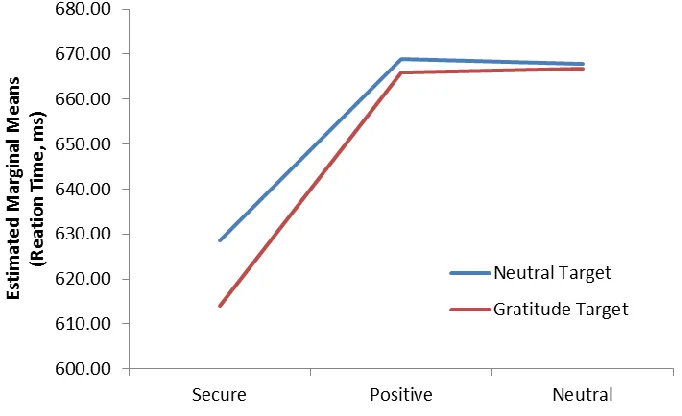
of self and others. ... 71 Figure 3. Estimated marginal means of reaction time by prime and target. ... 151
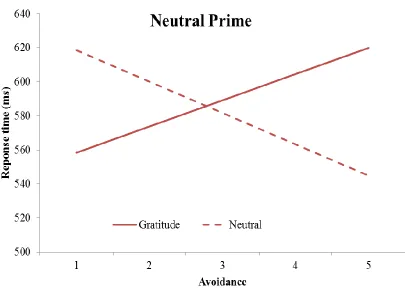
Figure 4. Interaction between avoidance and target in the neutral condition on mean
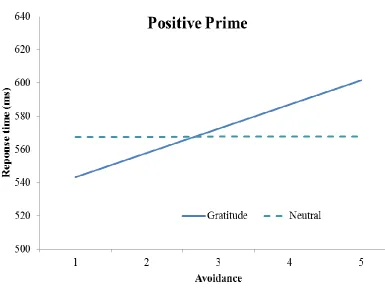
response time. Other covariates in the model were held constant: Anxiety = 3, Trait gratitude = 4, ESL= 1. ... 153 Figure 5. Interaction between avoidance and target in the positive condition on mean
response time. Other covariates in the model were held constant: Anxiety = 3, Trait gratitude = 4, ESL = 1. ... 154 Figure 6. Interaction between avoidance and target in the secure condition on mean
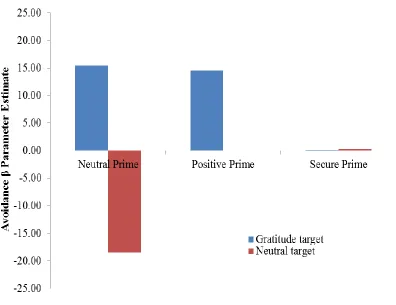
response time. Other covariates in the model were held constant: Anxiety = 3, Trait gratitude = 4, ESL = 1. ... 155 Figure 7. Avoidance Beta parameter estimate by target and condition ... 156
OVERVIEW
Problem Statement
Gratitude is a positive higher order affect with strong links to multiple indicators of well-being evidenced by correlational (e.g., Wood, Joseph, & Maltby, 2009), experimental (e.g., Froh, Sefick, & Emmons, 2008; McCullough, Tsang, & Emmons, 2004), and
intervention studies (e.g., Froh et al., 2008; Lambert, Green, Fincham, & Stillman, 2009; Otsuka, 2012) making it a construct worth studying due to the potential benefits of
gratitude on clinical and well-being psychology (Emmons & Mishra, 2011; Wood, Froh, & Geraghty, 2010). However, little is currently known about how trait gratitude develops, or the mechanisms linking trait gratitude or gratitude interventions to well-being (Emmons & Mishra, 2011; Wood et al., 2010). Although some theories have been proposed (see
Emmons & McCullough, 2006; Watkins, 2014), the literature lacks an empirically validated theory of gratitude and thus is unable to account for the “how” of the gratitude phenomenon. This thesis proposes that attachment theory (Bowlby, 1969, 1973, 1980), a social cognitive theory of interpersonal functioning containing an account of personality that encompasses affective, behavioural, social, and cognitive processes, can provide a useful framework to study gratitude and help to address this gap in the literature.
Thesis Aim
The primary aim of this thesis is to help address the uncertainty surrounding the development and origin of the gratitude by using attachment theory as a framework and empirically testing the premises provided by an attachment account of gratitude.
Overview and Structure
The thesis begins with a literature review of what is known about gratitude. Chapter 1 describes what is known about the construct including definitions of gratitude as an
emotion and as a trait. It presents a review of the research evidence associated with gratitude and well-being and discusses the current limitations in the field regarding trait gratitude. Finally it makes an argument for the need to study the development of trait gratitude and suggests approaching this study using a theory of interpersonal functioning, particularly Attachment Theory.
Chapter 2 details Attachment Theory and describes how it relates to interpersonal functioning. This chapter focuses on attachment theory and describes basic premises, working models, attachment strategies, attachment measures, affect regulation, and the broaden-and-build cycle of attachment security. The chapter provides a review of the evidence base for attachment theory and the account of interpersonal functioning.
Chapters 4 to 7 presents the empirical investigations conducted to address the research questions and hypotheses of the research program. Chapter 4 details the cross-sectional analysis of the relationship between individual differences in attachment processes and state and trait forms of gratitude, providing a test for the viability of the attachment framework of gratitude. Chapters 5 and 6 contain two experimental studies that test the causal link between attachment security and gratitude using subliminal affective priming technique focused at the cognitive information processing level. Specifically, Chapter 5 presents a Lexical Decision Task paradigm in a within subjects design where participants were exposed to all experimental conditions. Chapter 6 presents a different paradigm, the computerised Stroop Task with a between subjects design where participants were randomly assigned to one of three experimental conditions. Chapter 7 presents two studies with independent samples that tested the causal link between attachment security and gratitude using an affective priming technique at the affective level of experience.
Chapter 8 revisits the aims and hypotheses of the research program, integrates the findings from the thesis and discusses the implication of the research.
It should be noted that the empirical chapters consists of two formats with Chapter 4 and Chapter 7 diverging from the typical thesis format and rather presented in APA
CHAPTER ONE
GRATITUDE
“Gratitude is not only the greatest of virtues, but the parent of all others.”
Cicero
Gratitude is widely considered to be a key personal and interpersonal virtue (Emmons & Crumpler, 2000). Historically it has predominantly been considered in theological and philosophical teachings and is perceived to be a positive state that is highly desirable and worth pursuing. Given this, it is surprising to find that gratitude has been largely neglected in the psychology literature. It was not until the 20th century with the rise of the positive psychology movement that we have begun to explore the construct itself (Emmons & Crumpler, 2000; Howells, 2012; McCullough, Emmons, Kilpatrick, & Larson, 2001; McCullough et al., 2004).
Prior to the positive psychology movement, psychology was predominantly
concerned with improving functioning through understanding and mastering psychopathy and dysfunction. However, we now understand that improved functioning does not
necessarily equate to well-being, happiness, or life-satisfaction. Indeed, research indicates that positive and negative affect are not opposite states and are not mutually exclusive (Cacioppo & Gardner, 1999), and well-being is not the absence of mental-illness (Ryan & Deci, 2001). In fact, it appears that the "good life" is characterized by the presence of positive psychological attributes.
understanding that well-being involves not only the absence of dysfunction but also a presence of positive elements in one's life (Seligman & Csikszentmihalyi, 2000; Seligman, Steen, Park, & Peterson, 2005). Positive psychology attempts to strengthen understanding of all positive elements of human functioning providing an added pathway towards achieving well-being (Seligman & Csikszentmihalyi, 2000; Seligman et al., 2005; Vella-Brodrick, 2013). Researchers have found that gratitude is consistently linked with well-being and life-satisfaction, and is a protective factor against mental health deterioration (see Wood, Froh, & Geraghty, 2010). It has been established that gratitude is a construct that is unique and different from other studied traits (e.g., McCullough et al., 2004; Wood, Maltby, Stewart, & Joseph, 2008), and that it offers value in the study of positive and clinical psychology (Wood et al., 2010). The following section will review and detail what is currently known about the psychology of gratitude including construct definition, trait and personality, well-being, research on interventions, and current theories of gratitude.
Construct Definition
Gratitude is a positively valanced emotion that is experienced as a mixture of
admiration, joy (Ortony, Clore, & Collins, 1988), contentment, pleasant surprise (Emmons & McCullough, 2003), appreciation and thankfulness (Adler & Fagley, 2005; Emmons & Crumpler, 2000). Research has shown that gratitude is elicited when there is a perception that a positive outcome has occurred to the self which was bestowed by an external source that is well intentioned (e.g., Tesser, Gatewood, & Driver, 1968). As such, the determinants of the gratitude emotion are attribution based and embedded within the interpersonal
Contextual Determinants of Gratitude
Contextual determinants of gratitude have been consistently identified as involving the interplay between a benefactor, a beneficiary and a gift, (e.g., Emmons & McCullough, 2006; Ferrucci, 2006; Tesser et al., 1968; Tsang, 2007; Wood, Maltby, Stewart, Linley, & Joseph, 2008). Researchers have shown that the intention of the benefactor, value of gift, and cost to the benefactor for providing the gift influence whether feelings of gratitude are elicited and the degree of gratitude experienced (Tesser et al., 1968; Wood et al., 2010). Research indicates that feelings of gratitude are positively correlated with the value of the gift, cost to the benefactor, and genuine intentions of the benefactor. In other words, the higher the value of the gift, the higher the cost to the benefactor, and the more genuine the intentions of the benefactor, the more intense the feelings of gratitude.
Subsequent research findings indicate that the benefactor can be an abstract impersonal entity, such as god (Solomon, 1977) or a nonhuman entity such as animals (Teigen, 1997). Additionally, the gift may be either material or nonmaterial (Emmons & McCullough, 2003). In fact, some research findings show that individuals still experience grateful emotions towards an external source for the attempt to provide a benefit, even if the attempt is unsuccessful and no benefit is received (Emmons & McCullough, 2006). Overall, there is consensus among gratitude researchers that the gratitude emotion is influenced by these specific contextual factors. However, contextual factors are inferior to individual attribution styles in eliciting feelings of gratitude (Wood et al., 2008).
benefactor, the perceived cost to the benefactor, and the perceived benefit to the self. Wood and colleagues (2008) found that personal appraisal of contextual factors explained 83% of variability in feelings of gratitude. They found that individual attribution styles
significantly influence interpretation of contextual factors and impact on the arousal of feelings of gratitude. Specifically, their findings indicate that people who tended to feel grateful had an attribution style that increased the perception of cost to the benefactor, value of gift, and genuine intentions of the benefactor, leading the individual to be more likely to feel grateful than typical individuals. Thus, feelings of gratitude seem primarily dependent on the individual's perception of the context rather than the context itself. In particular, the perception of a benefit received from an external source with genuine intention is required to elicit feelings of gratitude. In summary, evidence suggests that gratitude is a positive emotion that is attribution dependent and is embedded within an interpersonal, external context.
Gratitude as a Higher Order Affect
Emotion
"emotion") is characterized by "acute, intense, and typically brief psychophysiological changes that result from a response to a meaningful situation in one's environment" (Rosenberg, 1998, p.250). Like other emotions, gratitude is elicited from appraisals which can be quick, automatic and non-conscious assessments of the relevance of a stimulus situation (Lazarus, 1999). Emotions, such as gratitude, tend to demand one's attention, motivating specific action to deal efficiently with life-relevant situations (Ekman, 1992; Lazarus, 1991; Levenson, 1994). Accordingly, McCullough and colleagues (2001) posited that the gratitude emotion may be associated with motivating action towards "contributing to the welfare of the benefactor (or other third party) in future" (p.252).
There is evidence to suggest that gratitude acts to motivate prosocial behaviour to create benefit for others (Bartlett & DeSteno, 2006; Tsang, 2006). For instance, Tsang found that participants who received a favour from another reported feeling more gratitude and exhibited more helping behaviour than participants who received a chance positive outcome. Over three experimental studies, Bartlett and DeSteno examined the effect of feelings of gratitude on prosocial behaviour using interpersonal emotion inductions and request for assistance. They demonstrated that feelings of gratitude increased participants’ efforts to assist the benefactor even when such efforts were costly (Bartlett & DeSteno, 2006). Furthermore, this effect was uniquely due to the effect of gratitude rather than positive affect in general.
Mood
(p. 250). Moods are "transient states" which "wax and wane, fluctuating throughout or across days" (p.250) (Clark, Watson, & Leeka, 1989; Hedges, Jandorf, & Stone, 1985) and generally last longer than emotion states. McCullough, Tsang, and Emmons (2004)
described mood as comprising of "a stable component that is attributable in part to individual differences among persons" but "also varies across days as a function of the events that occur to people each day and their discrete emotional reactions to those events." (p. 296). McCullough and colleagues conducted two studies (Study 1: N = 96; Study 2: N=112) to explore gratitude in daily mood and assess how the different levels of the
gratitude affect interact. Participants were asked to complete a daily mood diary for 21 days where the amount of gratitude was measured based on participants average score on three gratitude-related emotion words (grateful, thankful, and appreciative). One month after completing the 21-day diary, participants were asked to complete the Gratitude
Trait
The trait form of gratitude has received a significant amount of attention due to its association with a variety of factors associated with well-being. Rosenberg (1998) proposed that affective traits are "stable predispositions toward certain types of emotional
responding" and are "enduring aspects of our personalities" (pg. 249). Affective traits tend to "predispose one to emotions that are congruent with that trait and not to trait-incongruent emotions" (pg. 249). Thus, deriving from what is known about gratitude emotion, a trait form of gratitude would be associated with more positive emotional experiences and prosocial behaviours. Evidence suggests that a trait form of the gratitude affect does exist. For example, McCullough and colleagues (2002) found that people who experienced gratitude frequently and intensely for long periods tended to experience more gratitude in the future. Further, they reported that gratitude uniquely accounted for a host of constructs related to well-being, prosociality and spirituality after controlling for variance explained by the Big Five personality taxonomy. A number of studies report evidence indicating that trait gratitude is distinct but related to other trait-like measures of emotions such as
dispositional happiness, vitality, optimism, hope, depression, anxiety, and envy (Adler & Fagley, 2005; McCullough et al., 2002; Watkins, Woodward, Stone, & Kolts, 2003).
Trait construct
favours received" (p. 432). McCullough, Emmons and Tsang (2002) defined trait gratitude as "a generalised tendency to recognise and respond with grateful emotion to the roles of other people's benevolence in the positive experiences and outcomes that one obtains." (p. 112). Adler and Fagley (2005) defined trait appreciation as "acknowledging the value and meaning of something (such as) an event, a person, a behaviour, an object, and feeling a positive emotional connection to it." (p. 81). Even though these are different definitions, with Adler's and Fagley's (2005) definition as the broadest among the three, all three definitions are rather similar and largely overlap. Specifically, all three definitions describe a trait tendency to experience grateful emotions that derive from perceiving a positive outcome arising from an external source.
The approaches differ mainly in their construct operationalization and corresponding measurement scales. Watkins and colleagues (2003) posited that three factors characterised trait gratitude: appreciation of people; appreciation of life; and absence of feelings of deprivation (also known as sense of abundance); They developed the Gratitude,
Resentment, and Appreciation Test (GRAT) containing items that measured these factors to capture trait gratitude. McCullough and colleagues instead argued that trait gratitude is characterised by the span, frequency, intensity and density in which individuals experience gratitude. That is, gratefully inclined persons would feel more intensely grateful than someone less disposed in the same situation (intensity), report more gratitude experiences in a day compared to someone less disposed (frequency), and report gratitude for more life circumstances (span) and more people that they feel grateful for (density). They
classified it as a multidimensional construct involving the contribution of eight dimensions: awe, ritual, present moment, self/social comparison, gratitude, focusing on what we have (''have'' focus), loss/adversity, and interpersonal. Adler and Fagley developed a measure of trait appreciation, the Appreciation Scale, which contained items that corresponded to these eight dimensions. Even though the characteristics outlined for trait gratitude and
appreciation by each operationalisations are varied, they appear to represent different dimensions of a higher order gratitude construct. For instance, McCullough and
colleagues’ characterisation focuses on the dimension of experience, whereas Watkins and colleagues’ operationalisation focus on the content or object of appreciation. Adler’s and Fagley's operationalisation appear to overlap with the other two and also contain added dimensions such as behavioural repertoire (e.g., ritual), and cognitive style (e.g., present moment, "have" focus).
Wood and colleagues (2008) conducted factor analyses on the three measurement scales and found results suggesting that the scales each tap into a higher order gratitude construct. They found that the higher order construct encompassed the complete breadth of the people and events with which people report feeling gratitude towards. More
importantly, the pattern of results from all three conceptualisations has been almost identical, providing convergent evidence for the existence of the higher order gratitude construct. Specifically, gratitude, represented via all three scales, was shown to be
to represent a higher order gratitude construct, there is a general consensus among gratitude and appreciation researchers that these measures tap into a higher order construct and as there are more studies using the gratitude term, “gratitude” has won out as the typical term used to refer to the underlying gratitude/appreciation construct.
After reviewing the research evidence of the higher order gratitude construct, Wood, Joseph, Lloyd, and Atkins (2009) argue for a "life orientation" definition of gratitude where trait gratitude reflects a "worldview towards noticing and appreciating the positive in the world." (p.443). They explained that the gratitude "life orientation" uniquely orients attention to noticing and appreciating the positive in life which contrasts from other positive life orientations. For example, optimism orients one to expecting positive future outcomes and hope orients attention to pathways where positive outcomes can be achieved (Geraghty, Wood, & Hyland, 2010). Wood and colleagues (2009) pointed out that well-being is dependent on how people interpret situations and evidence indicates people low on well-being attribute their successes to causes that are uncontrollable, short-lived, and due to external factors (Abramson, Seligman, & Teasdale, 1978). A life orientation formulation of gratitude better explains the link between gratitude and well-being because the explanation of trait gratitude reflecting an appreciation of others would suggest an external locus of control where positive outcomes are attributed to external factors and not under one’s control. This is less compatible with well-being than the life-orientation formulation of trait gratitude (Wood et al., 2010).
Watkins and colleagues' (2003) and McCullough and colleagues' conceptualisations do not account for feelings of gratitude that arise from nontangible sources such as feeling grateful "to be alive". Graham and Barker (1990) found results that indicate people can also feel grateful for internal sources like one's ability. Further, other researchers found that feelings of gratitude extend beyond interpersonal appreciation of others (Veisson, 1999; Weiner, Russell, & Lerman, 1979). Overall, there is evidence to support the "life orientation" approach of trait gratitude.
Individual Differences in Gratitude
Research on individual differences in trait gratitude can be broadly divided into four domains: personality, wellbeing, social relationships, and physical health. A large body of evidence has amassed indicating a strong positive relationship between gratitude and all aspects of well-being (Wood et al., 2010)
Personality Trait
Trait gratitude has consistently been shown to be related to a host of positive personality traits. With regard to the Big Five, grateful people are more extroverted, agreeable, open, conscientious, and less neurotic (McCullough et al., 2002, 2004; Wood, Maltby, Gillett, Linley, & Joseph, 2008; Wood, Maltby, Stewart, & Joseph, 2008).
seeking, trust, emotional warmth, altruism and tender-mindedness (McCullough et al., 2004). Additionally, grateful people were higher on openness to feelings, ideas, and values, had greater competence, dutifulness, and achievement striving (Wood et al., 2010). Overall, research shows that gratitude is linked to traits that are adaptive, facilitative of positive relationships, and associated with well-being and positivity.
Relationship between Gratitude and Well-being
The gratitude research literature abounds with studies linking gratitude to well-being factors. For example, gratitude has been shown to be robustly related to emotional
functioning (also known as subjective well-being) which is characterized by high positive affect, low negative affect and high life satisfaction (e.g., Froh et al., 2008; Gallup, 1999; Joseph & Wood, 2010; Kashdan, Uswatte, & Julian, 2006; McCullough et al., 2004). Gratitude is negatively associated with psychopathology, particularly depression,
(Fredrickson, Tugade, Waugh, & Larkin, 2003; Kendler et al., 2003; Wood, Maltby, Gillett, et al., 2008), generalized anxiety disorder, nicotine dependence phobia, alcohol
environmental mastery, life purpose, and self-acceptance (Wood, Joseph, & Maltby, 2009). Finally, gratitude is robustly linked to positive relationships (e.g., peer-report: Algoe, Haidt, & Gable, 2008; Emmons & McCullough, 2003; Self-report: Wood, Maltby, Gillett, et al., 2008) and the factors needed for the development and maintenance of positive relationships such as relationship intimacy (Murray & Hazelwood, 2011), perceived social support (Froh, Yurkewicz, & Kashdan, 2009; Kashdan, Mishra, Breen, & Froh, 2009), conflict resolution (Baron, 1984), increased reciprocity (Tsang, 2006), willingness to forgive (DeShea, 2003), low levels of narcissism (Farwell & Wohlwend-Lloyd, 1998) and the absence of
psychopathic traits (Maltby et al., 2008).
Gratitude Interventions
Apart from the plethora of correlational studies exploring the association between gratitude and well-being, there is also evidence from experimental methodologies showing that gratitude interventions lead to increased well-being both in the clinical (Duckworth, Steen, & Seligman, 2005; Froh et al., 2008; McCullough et al., 2004; Seligman, Rashid, & Parks, 2006) and normal (e.g., Froh et al., 2008; McCullough et al., 2004) population.
afterwards (Seligman, 2005; Wood et al., 2010). Evidence suggests that, in the on-line, self-help domain, gratitude list interventions are as effective as cognitive therapy techniques but with significantly better retention rates (see Wood et al., 2010 for review). Further, research has shown that the positive effects of the lists can last as long as six months from two weeks of treatment (Seligman et al., 2005).
Evaluation of Gratitude Interventions
Gratitude has been promoted as arguably the most successful positive psychology intervention to date and it is one that can be applied widely, even on a national scale (G. Bono, Emmons, & McCullough, 2004; Duckworth et al., 2005; Seligman et al., 2006, 2005; Wood et al., 2010). However, it should be noted that the gratitude intervention studies are not gold-standard treatment studies. There is a lack of randomised controlled trials for gratitude interventions and the existing studies use varying types of controls, complicating interpretations of treatment effects. For example, control groups across studies differ. They include listing hassles, listing five events that have impact, listing events that one was unable to do in summer, writing about typical things that occurred in the day. Further, some studies showed that the gratitude effect was only different from the hassles condition but no other conditions (Emmons & McCullough, 2003; Froh et al., 2008; Sheldon &
the level of confidence with which one can interpret the findings regarding gratitude interventions.
Nevertheless, gratitude is strongly related to well-being and because gratitude interventions are easy to administer, easy to complete and enjoyable to participate in, the intervention is viewed as a strong candidate for use in the clinical setting (Wood et al., 2010).
Well-being Causal Link
depressed, and had higher perceived social support at the end of the first term. They concluded that the gratitude trait may contribute to resilience in life transitions. Of note, gratitude levels did not change over the three month period and this was interpreted to mean individual differences in gratitude represent stable phenomena like schematic processing (Baldwin, 1992; Wood, Maltby, Gillett, et al., 2008). More recently, in an attempt to examine how gratitude treatments work, Watkins, Uhder, and Pichinevskiy (2015) conducted a randomized controlled trial to test how gratitude lists enhanced well-being. They found that the gratitude list condition significantly outperformed comparison treatments (memory placebo and pride listing). Further, the authors found that people in the gratitude condition continued to report increases in well-being beyond the treatment week. Additionally, the study found that people in the gratitude condition showed greater
accessibility of positive memories than the comparison conditions. The researchers argued that the results suggest that gratitude intervention may lead to well-being through by the training of cognitive biases facilitative of subjective well-being.
Theory of link between Gratitude and Well-being
Wood and colleagues (2010) observed that the link to well-being may be different for trait gratitude and gratitude interventions. They noted that the positive impact of gratitude interventions on well-being is well documented but it is not known what mechanisms are at work that causes gratitude interventions to have the positive effect on well-being. Further, we cannot make the conclusion that gratitude interventions that lead to increased well-being are directly related to increases in gratitude levels because these are not specifically
that increases in positive affect associated with gratitude list intervention (relative to no-treatment controls) were mediated by changes in average daily gratitude across the intervention period. Further, decreases in negative affect found in the gratitude condition, relative to the no-treatment condition, were not mediated by gratitude levels. This suggests that well-being factors that are affected by gratitude interventions are not linked to gratitude emotion levels. It is possible that the mechanisms are related to non-specific common therapy factors (Wampold, 2007; Wood et al., 2010) or perhaps general changes in life outlook (Wood et al., 2010). The lack of certainty about the effective ingredient in gratitude interventions does not negate the value of gratitude interventions on clinical outcomes. Further research is needed to determine the exact reason gratitude interventions are effective
Incremental Validity of Gratitude
A number of studies have shown that the relationship between gratitude and well-being remains when other variables are controlled for. For example, Froh and Kashdan et al., (2009) and Froh and Yrkewicz et al. (2009) found a unique relationship between gratitude and well-being in youths after general positive affect was controlled. Further, gratitude has been shown to be uniquely related to well-being and social relationships, controlling for the Big Five traits. These result suggests that trait gratitude captures unique variability in well-being (McCullough et al., 2002, 2004; Wood, Maltby, Stewart, Linley, et al., 2008). More specifically, Wood, Joseph, and Maltby (2008) found that gratitude
.16 and .25), positive relationships with others, self-acceptance, and purpose in life (Wood, Joseph, & Maltby, 2009).
An incremental validity of >.15 indicates a "reasonable contribution" to the field (p.451) (Hunsley & Meyer, 2003). Additionally, often effect sizes reported in the literature contain shared variance. Because the effect sizes reported for gratitude above are unique, this suggests that the effect size is of a substantial magnitude for subjective and eudemonic well-being. These results indicate that the relationship between gratitude and well-being is unique and worth consideration and further research.
Theories of Gratitude
Thus far, the gratitude literature has developed an understanding of the emotional component of gratitude, the contextual determinants of gratitude and has begun to develop an understanding of the profile of trait gratitude. The empirical literature on the description and measurement of gratitude has been very useful in developing our understanding of this important social emotion. However, there is little research investigating the origins and development of the grateful disposition, despite some speculation in the literature (e.g., Algoe, 2012; Emmons & McCullough, 2006; Fredrickson, 2004; Watkins, 2014; Wood, Maltby, Stewart, & Joseph, 2008; Wood, Maltby, Stewart, Linley, et al., 2008).
Specifically, we do not know how trait gratitude is linked to well-being, or what mechanisms are involved in increasing well-being for those who complete the simple gratitude interventions. We have very limited understanding because there are few
There are currently five known theories of gratitude that have some empirical data for support, two of which focus on the function of gratitude and the rest focused on explaining the link between gratitude and well-being. They are the find-remind-and-bind theory of gratitude (Algoe, 2012), the Broaden-and-Build Hypothesis (Fredrickson, 2004), the Schematic Hypothesis (Wood, Maltby, Stewart, Linley, et al., 2008), the Coping
Hypothesis (Wood, Maltby, Stewart, & Joseph, 2008), and the Positive Affect Hypothesis. These hypotheses have only been proposed relatively recently and thus lack rigorous empirical support.
Schematic Hypothesis
Wood, Maltby, Stewart, Linley and colleagues (2008) found results that suggest grateful people have schematic biases in viewing help as more beneficial to them leading to increased gratitude. They suggested that specific schema biases influence how grateful people interpret help giving situations and that gratitude is related to well-being through schematic processing. They found that grateful people perceived the help as of higher cost to the benefactor, that the help was more valuable to them and that the benefactor was more altruistic and genuine than did non-grateful people. This perception bias fully mediated the relationship between trait gratitude and state gratitude (the amount of gratitude experienced following help). These findings were replicated in two other studies including an
interpretations of the help giving situations. These results were consistent with those of Markus, Smith, and Moreland’s (1985) who found that people generally have biases towards interpreting other people's intentions and behaviours as similar to their own. A limitation of this approach is that it does not offer an explanation for how grateful people develop these schema biases.
Coping Hypothesis
Wood and colleagues (2007) proposed that coping strategies preferred by grateful people may explain the link between gratitude and well-being. Specifically, grateful people use positive coping strategies that lead them to have better well-being. In their study, they found that gratitude was related to three categories of coping. Specifically, grateful people are more likely to seek out instrumental and emotional support in times of stress; they tend to approach problems rather than avoid them and attempt to deal with the problem. Finally, grateful people are less likely to disengage and use maladaptive coping strategies such as substance abuse. These strategies relate to lower self-blame, proactive problem solving strategies, effective reframing, and personal growth. These coping strategies mediated 51% of the relationship between gratitude and stress. This is consistent with the finding that stress levels relate to the interaction between perceived situational threat and perceive coping resources/abilities (Lazarus & Folkman, 1984).
between gratitude and well-being through the impact of stress but that other mechanisms may explain the relationship between gratitude and other aspects of well-being. Therefore, the coping hypothesis is only a partial explanation of the relationship between gratitude and well-being.
Positive Affect Hypothesis
This approach proposes that gratitude is linked to well-being due to its positive valence. Specifically, it is argued that people who experience gratitude are habitually exposed to more positive emotions which is protective against mental illness and that grateful people tend to be more satisfied with life and happy because they experience more positive emotions than negative emotions (Diener, 1984). A number of studies have shown that habitual experiences of positive emotions are protective factors in mental disorders (Watson & Naragon-Gainey, 2010). There is also a large body of evidence that shows gratitude is a positively valanced emotion (Gallup, 1999) which is strongly associated with habitual experiences of positive emotion (e.g., Baron, 1984; Froh, Kashdan, et al., 2009; Naito, Wangwan, & Tani, 2005). Further, gratitude is a positive emotion which is pleasant to experience. The more gratitude one experiences, the more often one experiences positive emotion, and the hedonic balance of positive affect compared to negative affect which leads to more life satisfaction (Wood et al., 2010). Finally, gratitude also arises from a positive experience and therefore tips the balance of emotional state to a positive emotional state and thus increasing life satisfaction (Diener, 1984).
This hypothesis is limited because a number of studies have shown that the
words, gratitude may overlap with positive emotions due to its positive valence, but it is distinct from positive emotions. Indeed, evidence shows that positive affect is consumed by the Big Five trait agreeableness whereas gratitude is still linked with well-being variables even after controlling for agreeableness (McCullough et al., 2002; Wood, Joseph, Lloyd, et al., 2009; Wood, Maltby, Gillett, et al., 2008; Wood, Maltby, Stewart, Linley, et al., 2008). Infact, positive affect is not linked and does not account for the relationship between
gratitude and life satisfaction or eudemonic well-being. Further Additionally, negative affect did not influence the relationship between gratitude and well-being (Wood, Joseph, & Maltby, 2009; Wood, Maltby, Stewart, & Joseph, 2008), indicating that affective valence may offer only a partial link between gratitude and well-being.
Due to interpersonal nature of gratitude, many hypotheses have been proposed relating to gratitude’s function in interpersonal relationships (Emmons & Mishra, 2011; Wood et al., 2010). Two dominant theories exist that offer an account of the relationship between gratitude and interpersonal relationships within context of the function of the gratitude emotion.
Broaden-and-Build Hypothesis
functions to build social bonds during stress free periods (Fredrickson, 2004). These bonds become additional resources that one could use in times of stress. This is compatible with the schematic and coping hypothesis. A limitation of this approach is that it is not clear how gratitude relates to well-being, although it does point towards social relationships being a mediator.
Find-remind-and-bind theory of Gratitude
This evolutionary theory proposes that gratitude has evolved to strengthen the relationship with a responsive partner (Algoe, 2012) and is important for forming and maintaining significant relationships. Algoe and colleagues argue that the expression of gratitude helps to signal communal relationship norms and facilitate an upward spiral of mutually
responsive behaviours between the recipient and the benefactor. Research conducted by Gordon et al., (2012) supports the position that gratitude helps to maintain significant relationships. They found that the expression of gratitude lead to enhanced relationship intimacy and satisfaction. People who were appreciative of their partners were more attentive to their needs and were observed to be more responsive and committed in dyadic interactions with their partner. Some limitations of this theory should be noted. The theory has not yet been tested directly or systematically and lacks the empirical support base. Further, it is not different from the broaden-and-build hypothesis of gratitude which also states that gratitude functions to build social bonds. Where they differ seems to be that the broaden-and-build hypothesis speaks more generally to the social bonding effect of gratitude expression, whereas the find-remind-bind theory focuses on the function of
the recipient and the benefactor. Lastly, both of these theories only account for the function of the gratitude emotion and but neglect to account for trait gratitude. Overall, the theories presented tend to be a little narrow in scope and only account for specific aspects of
gratitude. With applications of gratitude for clinical interventions on the rise, it is important that we improve our understanding of how gratitude is developed and what mechanisms are involved in the relationship between gratitude and well-being.
Need for an Interpersonal Functioning Perspective of Gratitude
The empirical evidence reviewed, shows that feelings of gratitude are determined by the individual's appraisal of the situation and the individual's attribution relating to the intention of the source of the gift (e.g., Tesser et al., 1968; Wood et al., 2008). This
indicates that interpersonal attribution styles influence gratitude. As such, it is argued that a theory of interpersonal functioning would then logically be an appropriate start in exploring how gratitude develops. It is further argued that, given that gratitude is an emotion that is grounded in the interpersonal context and is dependent on person attributions (Wood, Maltby, Stewart, Linley, et al., 2008), it may be linked to close interpersonal bonds and processes which are accounted for by attachment theory.
The idea that attachment processes may be linked to gratitude has been touched upon by a number of researchers including Buck (2004), Mikulincer, Shaver, and Slav (2006) and Watkins (2014). Buck conceptualised a developmental-interactionist model of gratitude that he claims is underpinned by attachment to others. He reasoned that gratitude as
Buck’s model seems reasonable and logical, there is not yet empirical data to support it. Similarly, in his review of the gratitude literature, Watkins (2014) showed that there is preliminary evidence suggesting that secure attachment may be important to the
development of gratitude (A review of these research findings are presented in Chapter 3). Consequently, Watkins presented the view that attachment security might lead to gratitude because secure individuals are confident in the good will of others and trust that others can meet their needs. He emphasised the importance of attachment security in focusing the individual on the recognition that the goodness of the giver which he thought was the mechanism that leads to the development of gratitude. As with Buck’s model, this hypothesis has not been directly empirically tested.
Like Buck (2004), Mikulincer, Shaver, and Slav (2006), and Watkins (2014), this thesis offers that attachment processes likely play an important role in the development of gratitude and is worth investigating further. Attachment processes, in particular the working models of attachment, can account for the presence of the schema biases observed by Wood and colleagues (2008) in grateful people and account for how the biases may have
Conclusion
This chapter provided a review of what is known of the gratitude construct; a higher order affect that has state, mood, and trait levels. Importantly, it was argued that gratitude is an attribution dependent emotion that is aroused depending on the person’s attribution of elements in the situational context, namely the intention of the external source, the value of the gift, and the cost of providing the gift to the benefactor. Gratitude is a positive emotion which is strongly linked to well-being and has been used successfully as an intervention to improve well-being. However, much of what is known about gratitude relates to
correlational associations with other constructs and little is known about how trait gratitude develops. Currently there is no satisfactory empirically validated explanation that can account for why there are individual differences in trait gratitude, how trait gratitude is links to well-being, and how gratitude interventions impact on well-being. This limitation relates to the lack of an empirically validated theory of gratitude. Given gratitude is attribution based and embedded within the interpersonal context, researchers should consider a theory of interpersonal functioning as a framework to study gratitude. It is proposed that attachment theory, a ‘grand’ theory of interpersonal functioning, is a useful and valid framework to explore the development of gratitude in depth. The next chapter (Chapter 2) presents information on the fundamentals of attachment theory and the evidence base for attachment relating to interpersonal functioning. The following chapter (Chapter 3) will detail the theoretical link between attachment and gratitude and review the related available empirical evidence.
CHAPTER TWO
ATTACHMENT THEORY
Attachment theory is a cognitive behavioural theory of interpersonal functioning originally proposed by John Bowlby (1969/1982, 1973, 1980), extended by Mary
Ainsworth (Ainsworth, 1973) and further developed by a growing number of theoreticians and researchers (for examples see Cassidy & Shaver, 2008). The collective works of attachment researchers have formed an extensive theory of interpersonal functioning that encompasses both normative and individual differences in functioning and provides a rich account of processes at work within individual and interpersonal experiences including cognitive, emotional, social and behavioural domains (N. L. Collins & Feeney, 2013). Of particular relevance to the study of gratitude, is the attachment social-cognitive account of emotion regulation and interpersonal functioning. This chapter provides an in-depth review of attachment theory and is divided broadly into two sections. The first covers the
fundamentals and normative processes of attachment, particularly detailing the attachment system and how it functions, the attachment system as an emotion regulation system, and the broaden-and–build cycle of attachment functioning. The second section focuses more specifically on the research and evidence base related to individual differences in
attachment functioning.
Attachment System Functions and Normative Processes
presenting this section is to provide a thorough explanation of how attachment works and how it influences our emotion, cognition, and behaviour. Attachment theory originated from John Bowlby's work with children to explain his observations of a pattern of behaviour that he thought reflected an adaptive behavioural system which enhanced survival likelihood and was normative (present within all individuals) (Bowlby,
1969/1982). This section addresses why attachment exists, how it is developed, and how attachment processes work. Specifically it will cover basic concepts in attachment as well as the attachment behavioural system, working models of attachment, attachment system strategies and emotion regulation, and the broaden-and-build cycle of attachment security.
Attachment Behavioural System
Bowlby conceptualised attachment as an evolved, adaptive behavioural system, naturally selected for its ability to enhance the likelihood of survival (Bowlby, 1969). Behavioural systems function to organise and activate behaviours in response to specific cues to achieve set system goals (Bowlby, 1969; Mikulincer & Shaver, 2007a) and the system is deactivated when the goals are met. Attachment is a behavioural system that is activated by the presence of perceived threat or danger and the goal of the system is to seek safety and security by attempting to gain close proximity to caregivers to gain their
prolonged periods of separation from caregivers can be dangerous and is considered a significant source of threat (Bowlby, 1969/1982).
The attachment system motivates infants to attach or seek proximity to their primary caregiver in order to achieve a sense of security and feelings of safety. Overtime, the child forms an attachment bond to the caregiver which increases its chances of survival by instilling in the caregiver a sense of responsibility and concern for the welfare of the child, and ensures that the infant maintains proximity to the adult. The attachment bond is a special emotional bond that is persistent and emotionally significant. Attachment bonds are argued to be a specific class of affectional tie that reflects a bond between one individual and another (an attachment figure) who is seen as "stronger and/or wiser" (Bowlby, 1973), p.292). The attachment figure is seen as unique and not replaceable with any other
(Ainsworth, 1967). The bond is formed over time and is characterised by 4 phases; preattachment, attachment-in-the-making, clear-cut-attachment, and goal-directed
partnership (Ainsworth, 1973; Bowlby, 1969/1982). Preattachment is the first phase in the
attachment bonding process and is observed between birth and 2 months of age. In this phase, infants do not have preferences in terms of caregivers and will socially interact and accept care and attention from most people. From 2 to 6 months, the attachment-in-the-making phase is active and infants are observed to show preferences for specific caregivers
separated from their caregivers. The final phase, goal-directed partnership, children, now around 2 years old, are less vulnerable, have developed more skills, become more
autonomous and independent and have less need for actual proximity (Hazan, Gur-Yaish, & Campa, 2004; Marvin & Britner, 2008). In this phase, children can tolerate increasing periods of separation and have adapted their attachment behaviours to match with the needs and preferences of their attachment figures. Although attachment bonding formation was first observed in infancy (and described in that context here), the same phases occur in adulthood and across the lifespan (Hazan & Zeifman, 1999; Mikulincer & Shaver, 2007a).
The following subsections describe in further detail the particulars of attachment bonds including how different attachment bonds exist within an attachment hierarchy, how the nature of attachment bonds change with age and developmental phases, and how to recognise the existence of an attachment bond through behavioural markers.
Attachment hierarchy
towards this figure in times of distress (Ainsworth, 1973, 1982). This is referred to as monotrophy (Bowlby, 1969/1982), thought to be evolutionarily adaptive because it ensures
that one attachment figure assumes primary responsibility for the infant allowing for an efficient and effective response in the presence of environmental threats (Cassidy, 2008).
Attachment transfer
According to Bowlby (1969/1982), changes to the composition and structure of the attachment hierarchy is a developmentally normative process of attachment functioning across the lifespan. As children mature, parents penetrate fewer domains in their life (Ainsworth, 1982; Allen & Land, 1999) and others, such as, peers in adolescence and romantic partners in adulthood, become increasingly more involved, relied on and available to the individual. Consequently individuals adapt by using different attachment figures for different attachment needs, with the majority of people reporting romantic partners being primary attachment figures by adulthood (Doherty & Feeney, 2004; Hazan & Zeifman, 1994).
It is important to note the differences in an attachment relationship between a child and parent and between adults. There are two distinct roles in the child-parent attachment relationship; the caregiver engages in the role of the wiser and more knowledgeable
attachment system is thought to function in the same way for both childhood and adulthood attachment processes (e.g., Ainsworth, 1985a; Bowlby, 1969)
Attachment bond markers
The attachment relationship is characterised by four markers: proximity seeking, separation protest, safe haven, and secure base (Doherty & Feeney, 2004; Hazan &
Zeifman, 1994; Mikulincer & Shaver, 2007a). Individuals within an attachment relationship are seen to engage in proximity seeking to be closer to the other (attachment figure)
particularly in times of need. They are also seen to protest real or anticipated separation from their attachment figure. The idea of separation from the other, particularly in times of distress, causes feelings of distress and anxiety, and these feelings are soothed by proximity to the other. Attachment figures are also used as a safe haven, a third marker of an
attachment relationship, as they reliably provide protection, comfort, support and
consequently provide the individual with feelings of safety and security. The fourth marker of an attachment relationship relates to the attachment figure acting as a secure base where the individual knows that they can go to as a safe haven when distressed. This knowledge allows the individual to feel secure and so they can confidently engage in non-attachment related goals such as exploration (Bowlby, 1969; Mikulincer & Shaver, 2007b).
Working Models of Attachment
As a social cognitive model of interpersonal behaviour, attachment theory describes all modes of experience in the context of attachment including motivation, emotion,
attachment, covers the link between cognition and behaviour, and introduces how individual differences in behaviour begin and are maintained.
There are individual differences in the evolution and manifestation of behavioural systems which is a function of the adaptive and responsiveness of the systems to variations in individual environments. Consequently individuals driven by the same behavioural system can behave in different ways in response to the same basic problem (Bartholomew & Horowitz, 1991; Main, 1990). The ability of the attachment system to be adaptive to the environment relies extensively on the functions of stable cognitive representations called 'working models' (Bowlby, 1969). Working models are purported to be the mechanisms that perpetuate attachment patterns of behaviour and maintain attachment continuity from infancy into adulthood. Specifically, working models provide scripts for what to expect in attachment related interactions, and act as an aid to judge and guide behaviour in the social environment (Mikulincer & Shaver, 2007a). Novel attachment experiences are interpreted and processed against expectations created from previous attachment relationships. These are the process in which mental representations contribute to the continuity of attachment patterns of behaviour (Holmes, 1993). Continuity is achieved through a complex
transactional process (Lyddon & Sherry, 2001) where models continually undergo the schematic processes of assimilation and accommodation of new information and
experiences. Working models formed from early attachment relationships tend to persist into adulthood if they are confirmed by the same encounters of attachment relationships as in infancy (Bowlby, 1973).
information regarding the self in attachment interactions and provides a basis for the evaluation of self-worth and self-efficacy. The model of others encodes the behaviour and responses of others in attachment related interactions. This model contains expectations of how others behave in attachment related interactions, which allows the individual to prepare a behavioural repertoire to best achieve felt security. These models contain information relating to the responsiveness and trustworthiness of attachment figures and perception about self-worth. Importantly it is these working models that manifest individual variability, and form the basis of attachment continuity (Bowlby, 1977; Mikulincer & Shaver, 2007a).
There is substantive evidence demonstrating that working models manifest in attachment related patterns of behaviour. For example, Bretherton and Munholland (1999) and Main and colleagues (1985) were able to demonstrate that working models were directly linked to the three attachment styles identified by Ainsworth and colleagues (1978). Specifically, they found that working models guided general expectations about self-worth and supportiveness of others. That is, secure children were found to expect that others are responsive and available and that they are worthy of love and support. Those with an insecure internal representation more often felt undeserving of comfort and closeness, and perceived the world as a hostile and unwelcoming environment.
The following section describes how the attachment system is activated and
Attachment System Strategies
The attachment system is a dynamic, adaptive system that is activated when a threat to self is perceived. The goal of the attachment system is to seek a sense of safety or feelings of security in times of physical or psychological threat through proximity seeking (Bowlby, 1969). According to Shaver and Mikulincer (2002), once the system is activated an individual proceeds through a series of decisions leading to the selection of an
appropriate coping strategy that matches the context they find themselves and which depends on the availability and responsiveness of attachment figures in supporting them in times of need (see Figure 1). The following section details the dynamics of how the
attachment system operates and how these translate to observable individual differences in interpersonal functioning.
Shaver and Mikulincer (2002) detailed three stages of attachment system activation (see Figure 1). The first involves monitoring and appraising the environment for
1). If attachment figures are appraised as unavailable or unresponsive, resulting in failure to meet the goal of security, the individual moves towards the third stage of attachment
system activation. In this stage, the person deploys a second set of attachment strategies depending on their appraisal of the viability of further proximity-seeking attempts given unavailable and unreliable attachment figures. Individuals are left to select either a
hyperactivating or deactivating strategy to regulate their affect. Repetitive use of particular strategies gradually bias the monitoring of threatening events and attachment figure
There is extensive empirical support for this model of attachment activation. For example, when in need, infants engage in proximity seeking behaviour, show preference for their primary caregiver, and are measurably soothed by the caregiver's presence (e.g., Ainsworth, 1973; Heinicke & Westheimer, 1966). In adults, departure of a relationship partner elicits overt proximity seeking behaviours (Fraley & Shaver, 1998), and experience of stressful events lead people to seek others for support and assistance (e.g., Kobak & Duemmler, 1994; Lazarus & Folkman, 1984).
More recently, advances in experimental psychology methods have allowed for the direct testing of the activation of attachment processes stipulated by attachment theory at the cognitive level of analysis. Research stemming from experimental priming techniques have provided important causal evidence demonstrating the validity of the attachment theory of interpersonal functioning (e.g., Baldwin, Fehr, Keedian, Seidel, & Thomson, 1993; Banse, 1999; Mikulincer, Gillath, Sapir-lavid, & Yaakobi, 2010). Studies have shown that thoughts related to proximity seeking and mental representations of internalized attachment figures are often activated in marginally threatening situations. For example, Mikulincer, Gillath, and Shaver (2002) found that subliminal priming of threat words increased accessibility of the names of attachment figures, whereas names of friends and acquaintances were not different from control and less accessible than attachment figure names. Mikulincer, Birnbaum, Woddis, and Nachmias (2000) found subliminal priming of threat word increased cognitive accessibility of attachment related thoughts shown by the faster response time to proximity-related words such as love and closeness.
2002), the accessibility of mental representations of attachment figures is increased (e.g., Ein-Dor, Mikulincer, & Shaver, 2011; Gillath et al., 2006; Mikulincer et al., 2000, 2002; Pierce & Lydon, 1998), and attachment related goals become salient (e.g., Gillath et al., 2006).
More importantly, priming techniques have provided evidence for the secure-based strategies shown in Figure 1, which has shown that contextual activation of attachment security is possible. A sense of security can be induced using priming techniques and this sense of security induces effects that are consistent with the broaden-and-build model of functioning (e.g., Mikulincer, Hirschberger, Nachmias, & Gillath, 2001; Mikulincer & Shaver, 2001). Induction of security is related to increased positive affect, positive
expectations of relationships (Rowe & Carnelley, 2003), increased self-esteem, a reduction in anxiety (Carnelley & Rowe, 2007), promotion of empathic responses (Mikulincer, Hirschberger, et al., 2001), and promotion of endorsement of self-transcendent values (Mikulincer et al., 2010).
Overall, each attachment strategy has unique goals of emotion regulation and
contains its own cognitive and affective responses. Security-based strategies act to alleviate distress, build resources and broaden perspective. Secondary strategies (Figure 1,
Deactivating strategies act to suppress the attachment system and have serious consequences for cognitive and emotional openness.
The following section details the emotional and behavioural consequences of specific attachment strategies and the evidence base related to research for each strategy.
Security-based strategies of affect regulation
Maintaining proximity, either literally or symbolically with an attachment figure who is available, helps alleviate distress and facilitates adaptive coping. This leads individuals to feel a sense of security (See Figure 1). Feelings of security create a "broaden-and-build" cycle of attachment security (Mikulincer, Shaver, & Pereg, 2003) which functions to build resources used to improve coping in times of stress and broadens ones perspectives and capacities. Security-based strategies include declarative and procedural knowledge about the self, others, and affect regulations (which are absorbed from interactions with
attachment figures). The declarative knowledge contains optimistic beliefs about distress management, trust in other's goodwill, and a sense of self-efficacy in dealing with threats (Shaver & Hazan, 1993). These beliefs are the foundations of the sense of security and are developed as a consequence of positive interactions with attachment figures who are available and responsive. Individuals learn within the interactions that distress is manageable, obstacles can be overcome, that one can exert control over the course and outcome of threatening events, and that other people generally have good intentions.
The secure base script