Research Report
No 288
Adapting To Change: An
Evaluation of the ESF Objective 4
Programme In Britain (1998-2000)
David Devins, Steve Johnson and Fiona Bolam
Policy Research Institute, Leeds Metropolitan University.
The views expressed in this report are the authors' and do not necessarily reflect those of the Department for Education and Skills.
Contents
EXECUTIVE SUMMARY ... I
1. INTRODUCTION ... 1
1.1 INTRODUCTION TO ESFOBJECTIVE 4 ... 1
1.2 AIMS AND OBJECTIVES OF THE EVALUATION ... 5
1.3 SECTION SUMMARY ... 8
2 POLICY AND LABOUR MARKET CONTEXT IN GREAT BRITAIN ... 9
2.1 THE RATIONALE FOR INTERVENTION UNDER OBJECTIVE 4 ... 9
2.2 THE POLICY CONTEXT DURING THE PROGRAMMING PERIOD IN BRITAIN 1998-2000 ... 12
2.3 SOME RELEVANT RESEARCH AND EVALUATION STUDIES ... 14
2.4 SECTION SUMMARY ... 18
3 IMPLEMENTATION OF THE O4 PROGRAMME IN GREAT BRITAIN ... 21
3.1 THE LINKAGE BETWEEN EU AND THE GBREGIONS ... 21
3.2 THE SINGLE PROGRAMMING DOCUMENT ... 23
3.3 PROGRAMME DESIGN ... 26
3.3.1 National and Regional Development of O4 ... 26
3.3.2 Targeting Priority Groups ... 28
3.3.3 Coherence and Linkage with Other Policy Priorities ... 29
3.4 PROJECT APPROVAL AND DELIVERY ... 31
3.4.1 Advice and Support ... 31
3.4.2 Scoring Framework ... 32
3.4.3 Scoring Panels ... 34
3.4.4 Levels of Interest ... 35
3.5 MONITORING AND EVALUATION ... 37
3.6 SECTION SUMMARY AND EMERGING ISSUES ... 38
4 ASSESSING OUTCOMES OF OBJECTIVE 4 IN BRITAIN ... 41
4.1 THE NATURE OF THE SURVEY SAMPLES ... 41
4.1.1 Sample Attrition and Comparability 1999- 2000 ... 44
4.2 CHARACTERISTICS OF CHANGE IN PARTICIPATING COMPANIES ... 45
4.2.1 Employment Change ... 45
4.2.2 Innovation ... 46
4.3 CHARACTERISTICS OF HRDEVELOPMENT ACTIVITY PRIOR TO O4 ... 48
4.5 ADAPTABILITY AND EMPLOYABILITY ... 50
4.6 ENHANCED JOB MOBILITY:A CAUSE FOR CONCERN FOR EMPLOYERS? ... 52
4.6.1 Losing the Investment in Training ... 53
4.7 IMPACT ON THE INDIVIDUAL AT WORK ... 55
4.8 IMPACT ON ATTITUDES TOWARDS AND INCIDENCE OF TRAINING ... 57
4.9 IMPACT ON ORGANISATIONAL PERFORMANCE ... 61
4.10 SECTION SUMMARY ... 64
5 AN ASSESSMENT OF PROGRAMME PERFORMANCE ... 67
5.1 PROCESS ISSUES ... 67
5.1.1 Strategic Guidance ... 67
5.1.2 Regional Implementation ... 67
5.2 PROJECT APPROVAL AND DELIVERY ... 69
5.2.1 Targeting ... 69
5.2.2 Monitoring and Evaluation ... 70
5.3 IMPACT ON THE LABOUR MARKET ... 71
5.3.1 Training and Development Activity ... 72
5.3.2 Supporting the Development of Formal Training Processes ... 74
5.3.3 Equal Opportunities ... 76
5.3.4 Employability and Adaptability ... 79
5.4 LIFELONG LEARNING ... 80
5.4.1 Linkage with National Policy ... 81
5.4.2 Summary of Deadweight and Additionality ... 84
5.5 DOES BUSINESS SIZE MATTER? ... 86
5.5.1 Adoption of Training Related Activities, Procedures or Policies ... 87
5.5.2 Employment Performance and Impact of O4 ... 89
5.6 SECTION SUMMARY ... 91
6 POST OBJECTIVE 4 ... 95
6.1 NATIONAL DEVELOPMENTS ... 96
6.2 THE CHALLENGES AHEAD ... 98
6.3 SUMMARY ...102
BIBLIOGRAPHY ...105
ANNEX 1: O4 EVALUATION METHODOLOGY ...111
E
XECUTIVES
UMMARYIntroduction
ESF Objective 4 (O4) supports Priorities that aim to make it easier for the workforce (particularly those threatened with unemployment) to adapt to changes in working practices, industrial change and to developments in production systems. There were three Priorities associated with O4:
Priority 1 (P1): to develop anticipation tools that inform the development of training programmes. Within P1 there are 2 strands of funding. The first supports overall anticipation of changes in the labour market at national, regional and local level and the second supports company level skills analysis.
Priority 2 (P2): to target training on those individuals within companies who do not have relevant up to date skills and who risk becoming unemployed. Within P2 there are also two strands of funding. Both strands support training and development firstly for key individuals and secondly for target groups within the workforce.
Priority 3 (P3): to reinforce solutions to change. The two strands of funding support the development of new training solutions and improved networking.
In Britain, O4 funding amounted to £167million over two years (1998-2000). P1 accounted for approximately twelve per cent of the total, P2 seventy per cent and P3 seventeen per cent of the fund. Technical assistance accounted for approximately one per cent of the fund.
The O4 Evaluation Process
• Assess the impact of O4 in GB
• Evaluate the extent to which the programme has met its objectives
• Suggest ways of improving the delivery of programmes which are designed to
improve the adaptability in the workplace in order to inform future provision.
The evaluation methodology drew on a variety of primary/secondary information and utilised both qualitative and quantitative data collection methods. There were several discrete but inter-linked research elements associated with the evaluation methodology, namely:
• Analysis of the monitoring and final claims data collected by Government Office
in the Regions and processed by DfEE.
• Twenty face to face interviews were conducted with key stakeholders (identified
by DfEE) at the outset of the evaluation project together with a further thirty telephone interviews with managers of O4 funded projects.
• A survey was undertaken in October/November 1999 to explore the experiences
of individuals (n=1000) undertaking training supported through O4. A follow up survey (n=759) to assess outcomes and impact was undertaken in October 2000.
• A survey was undertaken in October/November 1999 to examine the
experiences of employers (n=200) engaged through O4. A follow up survey was undertaken in October 2000 (n=180) to assess further impact and outcomes. • Further in depth face to face interviews (n=84) were undertaken to explore issues
associated with the impact of support provided through O4 on individuals, employers and local trainers.
• A literature search and review provides contextual information.
• Presentation of results. Feedback on the progress and emerging evaluation
findings were provided to the Steering Group throughout the duration of the project. An interim report was produced in December 1999 and a ‘Good Practice Guide’ produced in October 2000. The final report was delivered in March 2001.
Policy Context
The aim of O4 was to help alleviate the threat of social exclusion through long-term unemployment by developing the skills of the workforce who are currently employed but who are potentially at most risk of losing their jobs. The emphasis was placed on those threatened with redundancy and the programme aspired to smooth the transition of workers made redundant back into employment. However the potential to contribute to the competitiveness of SMEs through the development of improved training and development processes was also a key driver.
Enhancing adaptability and employability were two central attributes of O4. However the extent to which they were/are universally understood and applicable is debatable. For example employability is a term used in a variety of contexts, with a range of meanings and as a result it can lack clarity and precision as an operational concept. Furthermore adaptability suffers from the same lack of clarity and precision sometimes referring to the characteristics of an individual, sometimes the organisation, sometimes the outcome of a process and sometimes the process itself.
Policy connected to the themes of O4 in Great Britain has continued to emerge and evolve during the O4 programming period. Key events include
• The Learning Age Green Paper (1997), re-emphasising the link between the
development of lifelong learning, skills, competitiveness and social exclusion and proposed policy initiatives such as Individual Learning Accounts and University for Industry to widen learning opportunities. The Learning to Succeed White Paper (1999) determined new delivery structures (including the development of Learning and Skills Councils and Small Business Service) and continued commitment to workplace development initiatives such as the development of National Vocational Qualifications and Investors in People.
• The programme of research under the National Skills Task Force and publication
• The Competitiveness agenda set out in the Building the Knowledge Economy
White Paper (1998) recognised the importance of developing skills (and particularly the skills of managers in SMEs) in the workplace. The development of workplace skills has been re-emphasised in the recent joint DTI/DfEE White Paper on Enterprise, Skills and Innovation entitled Opportunity for All in a World of Change (2001).
• Devolution and regional governance. The emergence of the Welsh and Scottish
Executives, the establishment of Regional Development Agencies and the development of Regional Economic Strategies and Skills Action Plans to reflect regional economic priorities.
• Increased emphasis on evaluation at the EC and National level. For example the
creation of the Centre for Management and Policy Studies in the Cabinet Office and the increased emphasis on evidence based policy (Cabinet Office 2000).
Labour Market Context
Economic and labour market conditions were relatively favourable at the outset of the programming period (1998) with more people in work than ever before, low inflation and low unemployment. However, there remained concerns associated with
• the number of people unemployed (1.8m)1 • the problem of large scale redundancies
• inequitable access to training for members of the workforce including those with
relatively low qualifications, women and those working part-time
• too few employers (particularly SMEs) supporting sufficient skills development
amongst their workforce.
• the capability of the supply side to meet the diverse needs of SMEs.
the uncertainty surrounding return on investment in training can be a significant barrier to training activity, particularly in SMEs.
Implementation of the O4 Programme in Britain
• Four Pillars of action (adaptability, employability, entrepreneurship and equal
opportunities) underpin the European Employment Strategy and provide the foundation for ESF supported labour market intervention at the national level. These were established during the O4 programming period in GB, influenced its implementation and have become central to the new Objective 3 (O3) Programme (2000-2006) which incorporates key concepts of the previous O4 Programme.
• Stakeholders generally viewed O4 positively at the national, regional and local
levels, although the thinking underpinning this positive view was diverse and somewhat contradictory. Some stakeholders viewed O4 primarily as an important aspect of proactive prevention of unemployment whilst others viewed it primarily as a means of improving the competitiveness of local companies. These views are not mutually exclusive as it can be argued that O4 works with both companies and their employees to improve skills levels, raise company performance and reduce the threat of unemployment.
• Many stakeholders at the national, regional and local level welcomed the
opportunity presented by O4 to engage employers in workforce development activity although concerns were expressed at the low level of employer involvement in the design of interventions to be funded under O4.
• Largely due to the late take up of O4 funds by the UK Government, both the SPD
and Regional Assessments were completed within a short timescale. This had ongoing implications for the planning, design and implementation of O4, and there was a general feeling that the process was ‘rushed’ and that the requirement to allocate resources exerted a major influence on funding decisions.
• The Regional Committees were essentially comprised of the existing O3
• There were concerns associated with the mechanistic nature of the scoring
process, the continuity and timing of the funding decisions and the resources available for monitoring and evaluation at the regional level.
• There was (and to some extent remains) considerable uncertainty associated
with eligibility of beneficiaries, match funding issues and the amount/utility of information required to service ESF requirements.
Assessing Outcomes of O4 in Britain
The primary research with employers and individual beneficiaries suggests that O4 intervention has been of benefit to the majority of participants. Key findings include:
Characteristics of beneficiaries
• The majority of organisations were responding to external challenges and were
involved in activity including product, process and/or technological change
• The majority of employers (64%) were already undertaking substantial2 training activity
• The most common training needs were associated with management and IT skills • Two in five individuals had undertaken no training in the previous twelve months
Adaptability and employability
• O4 provision focussed on the management and IT training needs identified as a
priority by employers prior to the O4 intervention
• The vast majority (73%) of individual beneficiaries suggested that the training had
positively impacted on various aspects of their flexibility and adaptability
• Employers reinforced the view that O4 positively contributed to factors such as
employee commitment and access to new technology
• At the end of the O4 Programme, almost one third of employers suggested that
employees suggested that they had changed their job title since being involved in O4 training
• The majority of individuals felt more confident and got more satisfaction from their
work and attributed this, at least in part, to the O4 training.
Lifelong Learning
• The majority of individuals suggested that they were more interested in training and
education. Two in five suggested that their employer had become more supportive and almost half had undertaken additional training following the O4 intervention • Employers suggested a high level of commitment to ESF activity with over ninety per
cent suggesting that they would probably or definitely be involved in similar initiatives in the future
• The majority of employers suggested that the O4 training had met the needs of the
organisation
• Employers recognised the benefit of the training both in terms of ‘soft’ organisational
measures such as ‘increased confidence in the future’ and general concepts such as ‘competitiveness’ and ‘improved employee performance’.
An Assessment of Programme Performance: Process
• The effectiveness of the SPD and the Regional Assessments was contested.
Some stakeholders viewed them in a more positive light as ‘flexible’ whilst others referred to them as ‘vague’
• There were concerns that the ‘pepperpot of projects’ funded under O4 did not
‘add up’ to the achievement of regional priorities as outlined in the Regional Assessments
• Some organisations expressed difficulty in developing bids for ESF funding, in
particular, smaller organisations who do not have resources dedicated to accessing ESF funding and organisations bidding for ESF for the first time
• The scoring process was perceived to operate efficiently. However there were
• There were concerns at the outset of the programme that O4 would be used to
support training in large firms that would otherwise undertake training anyway. This does not appear to have occurred as the vast majority of beneficiaries are drawn from SMEs (employing fewer than 250). However many of these were involved in training activities prior to O4.
• The survey of individuals undertaking O4 supported training suggests that the
three occupational groups (unskilled and semi-skilled manual workers, craft and skilled manual workers; clerical and secretarial workers) identified as priorities for support in the SPD accounted for forty per cent of the beneficiaries. A relatively large proportion of managers appear to have been engaged in O4 supported activities. Managers were identified as a priority group in the guidance notes accompanying O4 even though they are generally less likely than other occupational groups to be subject to redundancy and more likely to be engaged in training activity
• Monitoring and evaluation appears to have been highly variable at both the
regional and local level. The extent of regional activity has been influenced by the lack of specific resources for O4 monitoring and evaluation. Local monitoring and evaluation was highly diverse and characterised essentially by financial monitoring and after-the event approaches.
An Assessment of Programme Performance: Outcomes
• The net impact of the O4 programme on the macro economic performance of
the economy was always likely to be minimal given the relatively small amount of funds associated with O4 and the impact of other factors such as the stage of the business cycle on macro economic performance.
• Whilst there has been an increase in productivity growth, the UK continues to
lag behind its major international competitors. Whilst employers recognise improvements in their employees’ ability the direct attribution of benefit to quantitative measures of productivity remains elusive in most instances.
• Most employers identify the O4 training received as ‘company specific’.
• Overall redundancy rates have decreased from 9% to 7% (Spring 1998 to
Autumn 2000)3. However, the problem of large scale redundancies remains and whilst public sector responses have emerged in response to the problem (e.g. Job Transition Service, Rapid Response Fund), the largely unpredictable and ‘shock’ nature of these occurrences and the extent to which they occur in large companies (as opposed to SMEs) have conspired against the use of O4 resources in these circumstances.
• Inequitable access to training would appear to remain a key issue in the
economy. Generally O4 has reflected the pre-existing broader labour market situation with unequal access to training for sections of the workforce (e.g. women, craft skilled, Part time employees) replicated in O4 projects more generally. O4 has engaged far more men than women in training activities. • There remains a demand side issue associated with the extent to which
SMEs are able to recognise, articulate, source and evaluate training activities. However O4 appears to have encouraged the development of systems to support human resource development and in particular processes such as training needs analysis, appraisal systems and personal development plans.
• There is some evidence to suggest greater additionality associated with the
impact of O4 on smaller employers (employing between 1-25).
• O4 appears to have supported the development of interventions which meet
the diverse needs of the majority of participants and which have gone some way to addressing policy concerns associated with relevance and flexibility of supply.
3
Summary
The multi-method evaluation methodology has provided a wealth of qualitative and quantitative data to triangulate and assess the operation and impact of the O4 programme in Britain. Whilst there is a recognition that improvements can be made to all stages of the design, development, delivery and evaluation of the O4 programme, the evaluation research suggests that overall the programme has been delivered successfully in Britain. Awareness of the potential of a preventative approach to dealing with unemployment, a relatively new approach in British policy, has been raised. At the same time interventions developed with O4 funding have engaged SMEs, supported their competitiveness in a wide variety of ways and assisted a range of employees to adapt to change. The surveys of employers and employees suggest that resources have been largely allocated to the broad ranging target beneficiaries identified at the outset of the programme. Employers and employees involved in O4 supported activities report a range of outcomes which have contributed to the development of various aspects of adaptability and employability which often appear to exceed what has been experienced in the labour market more generally. The majority of both employers and employees appear to have experienced positive outcomes and express a willingness to be engaged in further learning and ESF supported activities in the future.
There remain concerns associated with the extent to which O4 delivery has mirrored inequalities in the labour market associated with access to training for some groups such as women, those with low or no qualifications and part-time employees. There are also concerns about the extent to which the SPD provided sufficiently focussed guidance to target beneficiaries. Certainly the lack of specific objectives and adequate performance indicators mitigate against an unequivocal view of the success of the programme against predetermined criteria. Other concerns are associated with the resources made available to evaluate the programme at the regional level and the extent to which the ‘lessons learned’ from local projects are communicated both horizontally and vertically to inform future policy and service development4.
4
(1998-However the largely positive outcomes associated with O4 in Britain provides a useful foundation for implementing the new O3 programme. Stakeholders at the national, regional and local level will need to ensure that the strategic framework, allocation processes and design of projects rise to the challenges outlined in this report, which include:
• The need to ensure that interventions build on the positive experiences
expressed by beneficiaries in the O4 programme through encouraging the adoption of both formal and informal approaches to lifelong learning
• At the same time as encouraging further progression for those involved in O4
activities, efforts should be made to extend provision. Interventions need to overcome (rather than mirror) existing labour market inequalities in order to address equal opportunities issues and target those most at risk of social exclusion (e.g. low skilled, lone parents, Pakistanis and Bangladeshis, ethnic minority women and disabled)
• The need to develop and differentiate approaches which engage
organisations of different size (e.g. micro, small) and reach employees with the lowest probability of experiencing training and development. In particular interventions need to move beyond the personal development of managers to encourage wider workforce participation
• The development of a customer-centred (SME and employee) approach to
ensure that interventions reflect the needs of the customer may help to reconcile the competition/cooperation tension whilst building capacity in the emerging institutional infrastructure
• There are also demand-side issues to address and priority should be given to
the development of employer capability to recognise training needs, articulate them, source appropriate training and to evaluate the intervention.
• Evaluation is recognised as a key element in the new O3 programme and
1. I
NTRODUCTIONThe Policy Research Institute (Leeds Metropolitan University) was commissioned to evaluate the European Social Fund (ESF) Objective 4 (O4) Programme in Britain in June 1999. This final report summarises the evaluation process, findings and outcomes of the Programme. The report is divided into six sections. This, section 1, introduces the scale and scope of O4 in Britain and provides an overview of the evaluation framework, aims and methods. Section 2 reviews the rationale underpinning O4 and the associated dynamic policy environment in Britain between 1998-2000. Section 3 explores the organisation and implementation of the programme in Britain and section 4 draws on research with employers and employees to assess the outcomes of the programme. Section 5 provides an assessment of programme performance in terms of both process and outcomes. Finally Section 6 of the report draws on the experiences of O4 and looks ahead to the challenges associated with the Objective 3 programme (2000-2006).
1.1 Introduction to ESF Objective 4
The Objective 4 (O4) programme was designed to assist those in employment to adapt effectively to labour market changes driven by a global economy characterised by technological and social change. The ESF is one of three Structural Funds of the European Union and O4 was one of six ESF structural objectives. O4 supports Priorities that aim to make it easier for the workforce (particularly those threatened with unemployment) to adapt to changes in working practices, industrial change and to developments in production systems. There were three Priorities associated with O4:
Priority 1 (P1): to develop anticipation tools that inform the development of training programmes. Within P1 there are 2 strands of funding. The first supports overall anticipation of changes in the labour market at national, regional and local level and the second supports company level skills analysis.
development firstly for key individuals and secondly for target groups within the workforce.
Priority 3 (P3): to reinforce solutions to change. The two strands of funding support the development of new training solutions and improved networking.
P1 accounted for approximately twelve per cent of the total, P2 seventy per cent and P3 seventeen per cent of the fund. Technical assistance accounted for approximately one per cent of the fund. Together the three priorities provided a holistic model for labour market interventions based on identification of need, development and delivery of training solutions and dissemination and embedding of practice. In Britain, O4 accounted for £167 million over two years and engaged more than seven thousand employers and over 160,000 individuals in a variety of training and development activities.
A Statistical Overview
[image:17.612.201.412.447.635.2]The allocation of budgets provides an insight into the allocation of O4 resources within the UK. These are outlined in table 1.1:
Table 1.1: Objective Four expenditure by region
Total (m)
North East 6.97
North West 16.07
Y&H 13.99
W. Mids 14.14
E. Mids 11.76
Eastern 16.30
South West 15.99
South East 22.31
London 21.04
National 25.53
Wales 3.47
Source DfEE Final Claims 2000
The applications database and the final claims database compiled by DfEE to oversee the implementation of O4 provided an overview of the programme. Both databases have required significant cleaning and maintenance to provide the basis for the analysis in this section. Recommendations for improvements were put forward following the interim evaluation report (Dec 1999).
[image:18.612.91.522.240.492.2]The allocation of projects for the regions and GB as a whole is summarised in table 1.2.
Table 1.2: Allocation of projects by region (1998)
Area Priority 1 Priority 2 Priority 3 Priority 4 Total %
North East 21 56 16 1 94 8.3
North West 27 90 19 10 146 12.8
Yorkshire and Humberside 14 54 16 1 85 7.5
West Midlands 20 40 13 3 76 6.7
East Midlands 21 79 25 3 128 11.2
Eastern 17 47 18 6 88 7.7
South West 19 66 22 2 109 9.6
South East 28 82 23 6 139 12.2
London 18 101 27 10 156 13.7
Wales 4 18 7 1 30 2.6
Scotland*
National 30 26 29 2 87 7.6
219 659 215 45 1138
Source DfEE Final Claims 2000 (*not available)
Priority 2 projects accounted for just over half (57.9%) of all projects funded through ESF O4. The bulk of the remaining projects were split between Priority 1 (19.3%) and Priority 3 (18.9%). Priority 4 projects provided technical assistance and accounted for the remaining (3.9%) of all projects.
Organisations from a variety of sectors led bids for O4 funding. Table 1.3 provides a summary of projects by organisational sector.
Table 1.3 Size of project by sector
Total
Local Authorities 99
Further Education 341
Higher Education 138
TEC/BusinessLink/ Chamber 243
Training Organisations 115
Voluntary sector 76
SMEs/Private 103
Other 23
1138
Source DfEE Final Claims Data (2000)
Just over 341 projects (29.9%) were led by organisations from Further Education and 21.4 per cent were led by Training and Enterprise Councils (TECs)/Business Links/Chambers. SMEs and private companies led on almost 10% of all projects.
Table 1.4 Summary by O4 priority and strand
P1.1 P1.2 P2.1 P2.2 P3.1 P3.2 P4 Total
Number of projects 89 130 179 480 136 79 45 1138
Total (m) 9.14 11.09 25.35 90.97 22.73 6.96 1.33 167.57
Mean (000) 103 85 142 190 167 88 29 147
Source: DfEE Final Claims Data (2000)
1.2 Aims and Objectives of the Evaluation
The main aims of the evaluation were to
• Assess the impact of O4 in the GB
• Evaluate the extent to which the programme has met its objectives
• Suggest ways of improving the delivery of programmes designed to improve the
adaptability in the workplace to inform future provision.
Objective 4 was designed to facilitate:
• an improvement in the adaptability to industrial change within firms in terms of
training systems and forward planning; and
• an improvement in the employability of individual workers either within the firm,
sector or the external labour market
Priority 2 projects accounted for the majority of the resources available through O4 and in line with the wishes of DfEE the main focus of the O4 evaluation was targeted on the assessing the impact of these projects.
Evaluation Framework
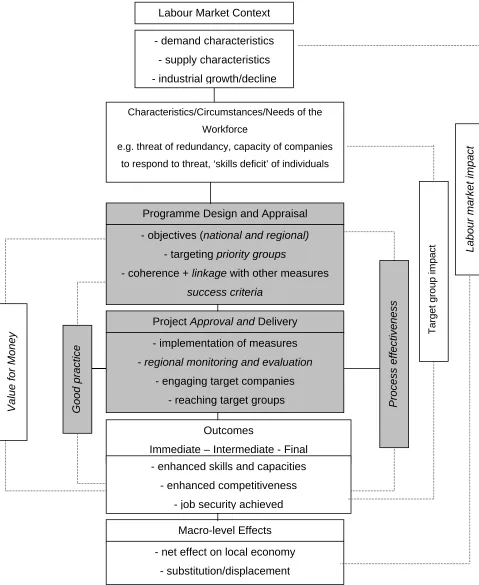
Figure 1: A Framework for Labour Market Programme Evaluation
Labour Market Context
- demand characteristics - supply characteristics - industrial growth/decline
Characteristics/Circumstances/Needs of the Workforce
e.g. threat of redundancy, capacity of companies to respond to threat, ‘skills deficit’ of individuals
Programme Design and Appraisal - objectives (national and regional)
- targeting priority groups
- coherence + linkage with other measures success criteria
Project Approval and Delivery - implementation of measures - regional monitoring and evaluation
- engaging target companies - reaching target groups
Outcomes
Immediate – Intermediate - Final - enhanced skills and capacities
- enhanced competitiveness - job security achieved
Macro-level Effects - net effect on local economy
- substitution/displacement
Labour market impact
Target grou
p
impa
ct
Process effe
ctiveness
Good practice
Evaluation Methodology
The evaluation methodology drew on a variety of primary/secondary information and qualitative and quantitative data collection methods. There were several discrete but inter-linked research elements associated with the evaluation methodology, namely:
1. Analysis of routine monitoring data. This included analysis of the monitoring and final claims data collected by DfEE.
2. Qualitative interviews with key actors. Twenty face to face interviews were conducted with key stakeholders (identified by DfEE) at the outset of the evaluation project.
3. Two stage survey of individuals. A survey was undertaken in October/November 1999 to assess the impact of O4 on one thousand individuals undertaking training supported through O4. A follow up survey was undertaken in October 2000 to assess further impact and outcomes.
4. Two stage telephone survey of employers. A survey was undertaken in October/November 1999 to assess the impact of O4 on two hundred companies supported through O4. A follow up survey was undertaken in October 2000 to assess further impact and outcomes.
5. Case studies were developed to explore issues associated with the impact of support on individuals, employers and local trainers.
6. A literature search and review was undertaken to provide contextual information. 7. A telephone survey of thirty projects funded under Priorities 1 and 3 was
undertaken to explore implementation issues, progress and experiences at the local level.
8. Presentation of results. Feedback on the progress and emerging evaluation findings were provided to the Steering Group throughout the duration of the project. An interim report was produced in December 1999 and this, the final report provides the evaluation findings.
1.3 Section Summary
ESF O4 supports Priorities that aim to make it easier for the workforce (particularly those threatened with unemployment) to adapt to changes in working practices, industrial change and to developments in production systems. There were three Priorities associated with O4 which provide a holistic model for labour market intervention based on the identification of needs, the development and delivery of training solutions and the dissemination and embedding of practice.
In Britain, O4 accounted for £167 million over two years (1998-2000). P1 accounted for approximately fourteen per cent of the total, P2 seventy per cent and P3 fifteen per cent of the fund. Technical assistance accounted for approximately one per cent of the fund.
The ESF Evaluation Team in DfEE commissioned the Policy Research Institute to undertake an evaluation of the Programme in Britain. The main aims of the evaluation were to
• Assess the impact of O4 in the GB
• Evaluate the extent to which the programme has met its objectives
• Suggest ways of improving the delivery of programmes designed to improve the
adaptability in the workplace to inform future provision.
2 P
OLICY ANDL
ABOURM
ARKETC
ONTEXT ING
REATB
RITAINThis section of the report outlines the rational for intervention under O4 and reviews the policy context in Britain.
2.1 The Rationale for Intervention Under Objective 4
The rationale for O4 intervention is largely based on the development of a preventative approach to dealing with the problem of unemployment. It is based on the premise that improving the skills, attitudes and aspirations of those in work will alleviate their propensity to become excluded from the labour market. Research suggests that individuals with low skills are more likely to be unemployed, or underemployed and are more vulnerable to redundancy. For example in a review of the benefits of learning Campbell (1999a) reports:
• Unemployment rates for those with lower secondary qualifications are 60%
higher than for those with upper secondary level qualifications • There is a strong relationship between qualifications and earning
• Higher level skills/qualifications are likely to be in most demand in future
years
• The proportion of jobs requiring qualifications increased from 62-69%.
The aim of O4 was to alleviate the threat of social exclusion through long-term unemployment by developing the skills of the workforce currently employed but at most risk of losing their jobs, thereby alleviating the threat of long term unemployment. It seeks to be pre-emptive rather than reactive, seeking to smooth the process of industrial change as opposed to dealing with its consequences (Begg 1995).
heart of EU and national policy (EC 1998, DfEE (1998, 1999) DTI 1998). Whilst the effectiveness of training interventions is contested (Black et al 1996, Storey et al 1994, Green 1997) the development of the skills of those in work is seen to be (at least in substantial part) the answer to improving productivity (Rainbird 1994). It is based on the belief that people are more effective if they understand what they are doing, have a firm grasp of the theories that underpin their activities and if they aim for continuous improvement in techniques, knowledge and performance (Stern et al 1999). It is argued that when people acquire skills they do not only make themselves more productive they commonly make themselves more adaptable to changing tastes and technologies. Adaptability is crucial for keeping labour and capital employed and maintaining competitiveness. Skilled workers are regarded as being more flexible than unskilled workers in the sense that skilled workers can adapt to new technologies at lower cost than can unskilled workers (Booth et al 1996). Conversely it is argued that deficient training may lead to deficient investment leading to even more deficient training and so on (Acempglu 1996). Employees can see too low a rate of return to acquiring skills, while simultaneously employers perceive skilled workers and hence innovation (product, process technology) as too expensive. A vicious circle ensues and can lead to a low skill/low investment trap (Snower 1996).
This analysis has impacted on the training agenda which has widened from the transmission of specific technical skills to individuals to linking development activity with company objectives, implementing organisational change and adherence to quality standards (Felstead et al 1997). Skills formation is increasingly viewed as a continuous process in which learning at work is a central activity rather than a series of discontinuous, one off educational or training activities (Ashton 1998).
The aim of Objective 4 in GB as outlined in the Invitation to tender for the evaluation was
to facilitate the adaptation of workers of either sex to industrial change, and especially those threatened with unemployment or affected by industrial change or changes in production systems.
Global economic restructuring and the increasing freedom to trade is a key factor affecting both company growth and development, and national economic success. Components of the change include a decline in the primary and manufacturing sectors, growth in financial and other service sectors, and increasing internationalisation of trade. The business environment is increasingly characterised by global sourcing and resourcing, progressively shorter product life cycles with a premium on innovative products and processes and, customer orientation. The ability of a nation, its companies and its workforce to respond positively to these changes is important both for economic prosperity and for social cohesion (OECD 1998, Campbell 1999).
The response to the changing economic environment is to encourage skills acquisition, both as a means to enhance the employability of the workforce, but also to encourage companies and, in particular small and medium sized enterprises (SMEs), to respond to changes in a proactive and planned manner. ESF O4 is a mechanism which unites the objectives of enhanced individual employability and both individual and organisational adaptability at the local level.
2.2 The Policy Context During the Programming Period in Britain
1998-2000
Employment and education policy has continued to emerge and evolve during the O4 programming period in Britain. The National Skills Task Force was established in 1997 to advise on the main skills gaps and shortages, current and anticipated in the labour force and to explore how they could be addressed (DfEE 1998). Nineteen research reports were produced in the period between 1999 and 2000 and the Final Report of the Task Force was published in 2000. Several other influential reports have been delivered (e.g. Moser 1999, Fryer 1999, Beattie 1999) which provide policy guidance associated with the lifelong learning, competitiveness and social exclusion agendas.
A key initial milestone was the production of the Green paper, “The Learning Age” (Dfee 1998). The Green Paper introduced interventions such as Individual Learning Accounts, the University for Industry and the Union Learning Fund whilst reinforcing commitment to existing initiatives such as Employee Led Development and Investors in People. Following extensive consultation the White Paper was published in June 1999. The Learning to Succeed White Paper represented a wide ranging reform of post-16 education and training (DfEE 1999). The overarching policy objective is to equip individuals and businesses with the skills and qualifications both need for economic growth in a global market. Learning is also understood to be necessary for individual fulfillment and social cohesion. Key interventions in the workplace to encourage employers (e.g. Investors In People) and employees (Career Development Loans, Individual Learning Accounts) to undertake training and development activities are set to continue.
places that offer an alternative to traditional academic settings. The development of the UfI has been influenced by projects funded under the ESF ADAPT initiative5 (Round 3).
It is envisaged that the Learning and Skills Councils will work closely with National Training Organisations (NTOs) and further engage employers in the development of policy interventions. They will develop plans in conjunction with the emerging Small Business Service to provide ‘a seamless service to SMEs and to integrate skills development with enterprise competitiveness’ (DfEE 1999). The Small Business Service became operational in April 2000 and incorporated Business Links (England), Business Shops (Scotland) and Business Connect (Wales) as the focus for business support for smaller businesses. This continues a support policy which was articulated in the DTI Competitiveness White Paper (1998) “Building the Knowledge Driven Economy” which focussed on developing the skills and capabilities of companies and the workforce in response to the global challenges of economic restructuring and technological change. The emphasis of DTI support remains on the development of capability associated with business issues such as exporting, environmental management, innovation and business planning. The role of leadership, management and learning to create competitive advantage in a knowledge driven economy is an example of the common agenda shared by DfEE and DTI.
Drawing together the myriad of workplace learning initiatives and ensuring that the needs of the regions are met falls under the auspices of the Regional Development Agencies and their equivalent agencies in Scotland and Wales (DETR 1997). Their remit includes the development of a strategic approach to business support, training and other labour market activities at the regional level. The DETR emphasis is placed on ‘people development’ and encouraging the development of an educated and skilled workforce that is inventive and adaptable. The recent urban (DETR 2000a) and Rural (DETR 2000b) White Papers reinforce the Departments commitment to partnership working, raising educational attainment and targeted small business support. At the outset of O4 in GB, Regional Assessments were produced as a basis for identifying
5
regional priorities. In the majority of instances these formed an integral element of the Regional Economic Development Strategies produced by the Regional agencies. The linkage to the skills agenda is facilitated by the development of Regional Skills Plans. The regional agenda continues to develop and evolve with the government proposing a strong link between the emerging Learning and Skills Councils and the RDAs both at the national and local level (DfEE 1999).
2.3 Some Relevant Research and Evaluation Studies
A review of the social, economic and political landscape in 1998 (Cully et al 1999) suggests:
• There were more Britons in paid work in 1998 than ever before
• Unemployment as measured by the claimant count was at its lowest level
since 1979
• Inflation was low (underlying rate running between 2.5 and 3.2 per cent) • Growth in average earnings above inflation (between 4.3 and 5.7 per cent)
However in spite of these positive attributes there remained concerns associated with the level of unemployment (1.8m were actively seeking work) and high profile large scale redundancies. Whilst a highly flexible labour market continued to evolve there was increasing evidence of job insecurity. For example, one in twelve workers were in temporary employment and a higher proportion of workers worked longer hours than their European peers.
High profile redundancies continued to impact on local areas however, analysis of Labour Force Survey data suggested that the number of redundancies remained more or less stable between 1996-1998 (Terryn 1999). Nevertheless certain sections of the workforce appear more vulnerable to redundancy than others. For example
• Men are more than one and a half times as likely as women to be made
redundant
• Those aged between 25 and 49 were less likely to be made redundant than
• Employees in manufacturing industry are more likely to be made redundant
than employees in any other industry
• Plant and machine operatives and employees in craft and related
occupations are more likely to be made redundant than employees in any other occupation.
Cully et al suggest 1998 was a distinctive year in the field of employment relations as the new labour government introduced a range of proposals impacting on the workplace.
There have been a range of research and evaluation studies informing the development and implementation of training and workforce development programmes. Research raises questions associated with inequity/inequality of access to training and development opportunities. For example the incidence of training amongst particular groups of workers is less than would be expected across the whole labour force. Strebler et al (1997) report that women are less likely to undertake competence based training than men, and are increasingly disadvantaged in terms of pay and progression. Furthermore there is a gender bias apparent associated with access to training with females far less likely to undertake training than males (Blundell et al 1996, Metcalf 1997). Gallie et al (1998) indicate that those employed on a part-time basis tend to be disadvantaged in terms of access to skills development opportunities. The incidence of training is therefore, uneven across different groups of employees.
Barriers to training amongst particular groups of employees may include:
• Caring responsibilities, both of children and / or elderly relatives; • Mobility, the lack of time or transport to travel to learning opportunities;
• Cost, both in term of the direct cost of courses, or the opportunity cost in terms of
lost earnings
• Lack of motivation: in some sub-occupational groups training is not thought to be
necessary prior to employment or on the job • Lack of time
Employers who are committed to learning may be able to offer ways to overcome some of these obstacles, however when these are placed in the SME context the policy desire to increase skills and training levels becomes even more challenging.
Analysis of training activity invariably leads to the conclusion that SMEs undertake less training than their larger counterparts. For example, SMEs are significantly less likely than their larger counterparts to be involved in formal training programmes, particularly those that take place off the job.
• 92% of employers with 500+ workers provided off-the-job training compared
with 79% in the 25-49 size band (IFF Research 1998).
• 65% of firms with 500+ employees offer NVQs/SVQs, but only 37% in the
25-49 size band do so (IFF Research 1998).
• micro businesses are even less likely than small businesses to provide
internal and/or external formal training (Cosh et al 1998)
• Only 10% of SMEs have a specific budget for workforce training/learning
(Curran et al 1997)
The incidence of ‘formal’ external training amongst SMEs is undoubtedly lower than amongst larger companies. The reluctance of both SME employers and employees to undergo training goes some way to explain the generally lower level of training in SMEs (Storey 1994). However whilst business size itself may be a key determinant in undertaking development activity the key determining factor (for managers at least) is one of individual choice (Thomson et al 1999). Workplace training is not a prominent feature of SMEs notwithstanding the massive investment in the sector by NCVQ (FEFC 1994) which might have been expected to boost the prevalence of training. There has been recognition over a number of years that there is a need for more targeted, flexible solutions in terms of local delivery, duration and timeliness to encourage both businesses and their employees to undertake training activity (Johnson et al 1992; Beaver et al 1998; Perrin 1999).
increased wages for trained workers and increased productivity for those enterprises which train and innovate (OECD 1994). One of the most positive studies, undertaken by Dearden et al (2000), found that training significantly boosts productivity in the productive sector of the UK economy. They estimate that raising the proportion of workers trained in an industry and thereby the stock of available skills from 10% (the mean) to fifteen per cent is associated with at least a three per cent increase in the value added per worker.
However the cost-benefit case remains to be proven and there is considerable doubt as to whether a definitive answer could ever be found to the question of payback on training (Gibb 1997). For example a review of research (Storey et al 1994) attempted to establish links between management training and SME growth. They concluded firstly that “those firms which participated in training schemes generally felt they derived some benefit from this participation”, if this results in better confidence then it could result in better performance. Secondly they note that “our highly subjective impression is that some types of training may be effective in improving firm performance while others are not”. This exemplifies the ambiguity and absence of ‘hard evidence’ which bedevils the evaluation of the costs and benefits of training.
Despite these issues a number of studies have demonstrated the positive effects of training, although some have been more cautious than others. For example Green (1997) reviewed 21 empirical studies investigating the link between employee training and company performance. He found:
• that studies from abroad in most but not all cases show that training does
have a positive impact on productivity;
• certain kinds of training were effective in raising productivity, notably computer
training in the non-manufacturing sector;
• there is a marginal effect on the propensity of individuals to remain with their
employer if they undertake training - hence training reduces the danger of competitors poaching skilled workers; and
Green notes that the potential importance of enterprise based training for upgrading the skills of the British workforce is not in doubt, he does find some cautious confirmation of a direct link between training and productivity.
2.4 Section Summary
The aim of O4 was to alleviate the threat of social exclusion through long-term unemployment by developing the skills of the workforce currently employed but at most risk of losing their jobs. The emphasis was placed on those threatened with redundancy and the programme aspired to smooth the transition of workers made redundant back into employment. However the potential to contribute to the competitiveness of SMEs through the development of improved training and development processes was also a key driver.
Adaptability and employability were two central attributes of O4. However the extent to which they were/are universally understood and applicable is debatable. For example employability is a term used in a variety of contexts, with a range of meanings and as a result it can lack clarity and precision as an operational concept. Furthermore adaptability suffers from the same lack of clarity and precision sometimes referring to the individual, sometimes the organisation, sometimes the outcome of a process and sometimes the process itself.
Policy in Great Britain has continued to emerge and evolve during the O4 programming period. Key events include
• The Learning Age Green Paper (1997), re-emphasised the link between the
development of lifelong learning, skills, competitiveness and social exclusion and proposed policy initiatives such as Individual Learning Accounts and University for Industry to widen learning opportunities. The Learning to Succeed White Paper (1999) determined new delivery structures (including the development of Learning and Skills Councils and Small Business Service) and continued commitment to workplace development initiatives such as the development of National Vocational Qualifications and Investors in People.
learning and social exclusion including the final report of the National Skills Task Force ‘Skills for all; Proposals for a National Skills Agenda’.
• The Competitiveness agenda set out in the Building the Knowledge Economy
White Paper 1998 recognised the importance of developing skills (and particularly the skills of managers in SMEs) in the workplace. The development of workplace skills has been re-emphasised in the recent joint DTI/DfEE White Paper on Enterprise, Skills and Innovation entitled Opportunity for All in a World of Change.
• Devolution and regional governance. The emergence of the Welsh and Scottish
Executives, the establishment of Regional Development Agencies and the development of Regional Economic Strategies and Skills Action Plans to reflect regional economic priorities.
• Increased emphasis on evaluation at the EC and National level. For example the
creation of the Centre for Management and Policy Studies in the Cabinet Office and the increased emphasis on evidence based policy (Cabinet Office 2000).
Economic and labour market conditions were relatively favourable at the outset of the programming period with more people in work than ever before, low inflation and low unemployment. However, there remained concerns associated with the number unemployed; the problem of large scale redundancies; inequitable access to training; too few employers (particularly SMEs) supporting sufficient skills development amongst their workforce and the capability of the supply side to meet the diverse needs of SMEs.
3 I
MPLEMENTATION OF THEO4
P
ROGRAMME ING
REATB
RITAINThis section of the report reviews the institutional organisation and implementation of O4 in Britain. It draws on interviews with twenty key stakeholders at the outset of the evaluation and a survey of thirty managers of projects funded under P1 and P3 to investigate issues associated with two key elements identified in the evaluation framework namely Programme Design and Project approval and delivery.
3.1 The Linkage Between EU and the GB Regions
ESF O4 funding was provided through DG Employment and Social Affairs.
Objective 4 Upper level Process Model
O4 was implemented at the start of the 1994-1999 programming period in all EU Member States except the UK. The Conservative government had initially negotiated an option to withdraw from O4. However, after consultation in 1997 the UK authorities submitted an O4 Plan to the Commission in November 1997. The UK Single
GB National Monitoring Committee (Chair:DfEE) European Commission Employment and Social Affairs (Previously DG 5)
GB Regional Committee (Government Office, Welsh
Office, Scottish Office)
Programming Document (SPD) was in draft form by February 1998. In the UK therefore, O4 ran for the two years prior to the commencement of the 2000-2006 Programming Period.
At the European level, the Commission’s 1994 White Paper on Growth, Competitiveness and Employment began a process of discussion and negotiation. Key milestones included the Dublin Declaration on Employment (December, 1996), which noted that “it is necessary to continue with macroeconomic policies oriented towards stability, economic growth and employment”, and the Amsterdam European Council in June 1997 which agreed a new Employment Chapter. Subsequently the European Employment Strategy articulated the four pillars of action which were agreed subsequent to the commencement of the O4 programming period in GB (1998-2000). These are:-
• Adaptability: to pursue actions which encourage people to adapt to the new
labour market opportunities, to embrace change and acquire skills relevant to the new economic realities.
• Employability: to ensure that people possess the attributes, attitudes, aspirations
and generic skills required to become and remain employable whether they be new labour market entrants; the unemployed and other job seekers; or people changing roles, occupations and industries.
• Entrepreneurship: to promote actions which exploit business opportunities to be
creative, innovative and to manage change. Encouragement of self employment, business start ups, spin offs and partnerships which are all key elements of the evolving economy.
• Equal opportunities: to ensure that all individuals have the appropriate skills
and knowledge, including all groups in society and all geographical areas.
The UK response to the Employment strategy was the National Action Plan for Employment (NAP). The NAP itself evolves annually in response to the Annual Employment Package adopted each year by the Commission.
unskilled and semi-skilled manual workers, craft and skilled manual workers and clerical and secretarial workers. A proportion of funds was allocated to national projects, however the majority of funds were distributed through the regions.
The emerging regional agenda resulted in a series of regional assessments designed to identify priority groups in each region in order to develop a strategic framework within which Objective 4 could be implemented.
A proportion of funds were allocated to be used for national projects and bidding rounds were instigated where project proposals were put forward at a national level and by organisations and partnerships within each of the regions. Applications were scored by a panel drawn from key players and resources allocated accordingly to successful bids.
3.2 The Single Programming Document
The analysis underpinning the O4 intervention contained in the SPD for Great Britain (EC 1998) noted that the impact of economic restructuring has different effects amongst particular groups, localities, industrial sectors and occupations, and not all were benefiting from the healthy state of the economy.
The SPD (EC 1998 p22) suggested that the O4 programme should give priority to
• Increasing the higher-level skills of employees to meet the needs of the new
jobs which are expected to be created
• Aiming to broaden the level of key skills within the workforce
• Ensure that those lacking basic skills are trained to increase their
employability
Groups of workers which should be given priority for support were identified as
• Unskilled and semi-skilled manual workers • Craft and skilled manual workers
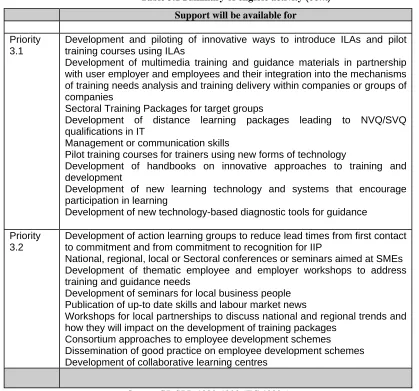
The SPD provided further indications of the wide ranging support activity eligible for funding under O4. Table 3.1 provides a summary.
Table 3.1 Summary of eligible activity
Support will be available for Priority
1.1
National research projects that
• Examines industrial change and skills needs
• Examines the effects of new technology on particular sectors Sectoral research into training needs
Cross-Sectoral labour market research
Regional research into skill needs and labour market changes Research into baselines for a learning town or learning city project
Development of new tools for labour market analysis, prediction and the effective dissemination of results to the lowest possible level
Priority 1.2
Development of Company based skills analysis which addresses the competence and training needs of the company. This should lead towards a commitment to IIP or recognition
Research into baselines of learning experiences, achievements and attitudes of employees and managers in companies, or groups of companies, or industrial sectors
Locally based skills analyses based on groups of companies acting in partnership
Sectoral skills analyses within groups of SMEs and within SMEs and large company partnerships
Skills analyses linked to supply chain
Development of lifelong learning strategies within companies or groups of companies
Development of company competence frameworks and self-assessment tools for employees
Action plans demonstrating how skills will be developed to meet future business objectives
Customers’ and clients’ feedback on service delivery which could inform the future skill requirements demanded by the market
Priority 2.1
Training to develop the skills of
• in-house trainers, mentors and NVQ/SVQ assessors • sector based IIP advisors
Managing development
Development of mentor schemes
Change management training for mentors and key members of staff Training part-funded through ILAs
Priority 2.2
Training
• of owner managers
• of employees in development –related basic skills • in information technology
• in new production technology
Table 3.1 Summary of eligible activity (cont) Support will be available for
Priority 3.1
Development and piloting of innovative ways to introduce ILAs and pilot training courses using ILAs
Development of multimedia training and guidance materials in partnership with user employer and employees and their integration into the mechanisms of training needs analysis and training delivery within companies or groups of companies
Sectoral Training Packages for target groups
Development of distance learning packages leading to NVQ/SVQ qualifications in IT
Management or communication skills
Pilot training courses for trainers using new forms of technology
Development of handbooks on innovative approaches to training and development
Development of new learning technology and systems that encourage participation in learning
Development of new technology-based diagnostic tools for guidance Priority
3.2
Development of action learning groups to reduce lead times from first contact to commitment and from commitment to recognition for IIP
National, regional, local or Sectoral conferences or seminars aimed at SMEs Development of thematic employee and employer workshops to address training and guidance needs
Development of seminars for local business people Publication of up-to date skills and labour market news
Workshops for local partnerships to discuss national and regional trends and how they will impact on the development of training packages
Consortium approaches to employee development schemes Dissemination of good practice on employee development schemes Development of collaborative learning centres
Source GB SPD 1998-1999 (EC 1998a)
3.3 Programme Design
Several issues associated with programme design emerged during the stakeholder interviews. These included national and regional development of O4, targeting of the interventions and linkage with other policy objectives.
3.3.1 National and Regional Development of O4
Three aspects of the national and regional development of O4 came to the fore during interviews with key stakeholders at the outset of the evaluation. Firstly issues associated with the development of the National Single Programming Document (SPD). Secondly issues associated with regional assessments and finally issues associated with the composition of regional committees/partnerships. Other issues associated with, for example, agreement by the Monitoring Committee of the methodology associated with the allocation of funds amongst the regions did not re-emerge in the stakeholder interviews to any great degree.
3.3.1.1 The National Single Programming Document
The national SPD provided the framework for the implementation of O4 in GB. The constrained time scale for consultation on the SPD was the most often mentioned characteristic of the formative part of the O4 process. This was particularly pertinent for membership based organisations who did not have the time to take the proposals to their members and report back within the timeframe.
There was an understanding that the time frames were largely dictated by the timing of the process and reflected a pragmatic necessity to move the O4 process forward at some speed. However stakeholders reported a range of views associated with the SPD development process. The feeling that consultation on a document that had already been through many drafts and any ‘inputs’ constituted nothing more than “tweaking” or “tokenism” was expressed in two instances. By contrast another interviewee was satisfied that the key issue for their organisation had been taken on board.
3.3.1.2 Regional Assessments
completed within a month. In almost all cases these were delivered by local or national consultancies.
One interviewee had reviewed the Regional Assessments and expressed the view that the reports were essentially a regional interpretation of the national guidance, and that while the broad target groups were relevant to regions there was little evidence of vigorous debate relating to specific regional priorities. These comments were reinforced through anecdotes from other stakeholders. The Regional Assessments were delivered quickly, were used as a reference document in the applications process and were essentially working documents rather than statements of a partnership’s strategy at the regional level.
Nevertheless within the regions there were some specific ideas about the role which O4 could and should be playing (although less certainty about whether that was actually being delivered in practice). For instance, one region pushed the need to up-skill the workforce in the area of IT, another that O4 should be used to support people with low skills living in deprived communities.
3.3.1.3 Regional Committees
Responsibility for managing the implementation of O4 in line with national guidance and in accordance with the Regional Assessment rested with Regional Committees. In the regions these tended to have predominantly the same composition as existing Objective 3 Committees. This was generally thought to be the most pragmatic way to proceed given the limited time frame and the short life of the Programme. However there were additions to these Committees in some regions, including regional CBI members, Universities and Training Organisations.
3.3.2 Targeting Priority Groups
National guidance notes accompanying the SPD indicated that priority would be given to:
• Increasing the higher-level skills of employees to meet the needs of the new jobs
being created
• Broadening key skills within the workforce
• Training those lacking in basic skills to increase their employability
While public sector employees were the only ineligible group, particular occupational categories were identified as priorities:
• Unskilled and semi-skilled manual workers • Craft and skilled manual workers
• Clerical and secretarial workers
The guidance notes suggested that it was anticipated that support would focus primarily on SMEs, but that larger companies might be eligible if they worked with SMEs in their supply chain.
In practice, several regional interviewees said that these target groups were too wide;
“a sharper sense of priorities and narrower defined target groups” is needed.
“the money should have been better targeted in real terms and against some kind of
Plan”
However, there is a paradox associated with definitional issues, namely whilst some interviewees suggested projects should be more focused on specific issues, others found the flexibility within the guidelines to be of benefit. What one interviewee called “vague” another called “flexible”.
Table 3.2:Target market by priority (number of projects)
Target market P1 P3 Total
Sector based 7 8 15
Geographical 3 3
Occupational 4 4
Company 1 1
Broad based 5 2 7
15 15 30
Source Survey of P1 and P3 projects
The managers suggest that sector based approaches were the most common method of targeting P1 and P3 activity. A wide range of sectors were targeted in the sample including hotels and catering, care, textiles, automotive, engineering, building products and the voluntary sector. Three projects focused activity on spatial areas (i.e. local, regional, rural) and four projects focused on specific types of occupations (owner-mangers of SMEs, IT professionals). Seven projects indicated that SMEs were the target for their intervention, which implies a broad based approach to targeting was being adopted.
3.3.3 Coherence and Linkage with Other Policy Priorities
At the national level, the key actors expressed support for the overall objectives of Objective Four as set out in the Single Programming Document. In several cases this was because they chimed well with organisational or sector objectives, so for example the CBI was building its Employability agenda, the TUC was prioritising vocational training and its learning services, and training was reinforced as part of the NTOs core mission.
However, as suggested earlier, there was some concern about the clarity of the aims of the Programme and the definition of the target groups. This uncertainty was transmitted to the regional level. The comparison was made between O4 and O3 by three regional respondents. They suggested that whereas the aims and client group for Objective 3 were very clear, this was not the case with Objective 4.