Ed
uc
at
ion
Protecting Vulnerable Groups:
Scottish Vetting and Barring Scheme
Analysis of the Consultation
I SBN 0- 7559- 6211- 7
ISSN 0950 2254 ISBN 0-7559-6211-7 Price £5.00
PROTECTING VULNERABLE GROUPS:
SCOTTISH VETTING AND BARRING SCHEME
ANALYSIS OF THE CONSULTATION
Sue Granville and Shona Mulholland
George Street Research
Scottish Executive Social Research
2006
The views expressed in the report are those of the author(s) and do not necessarily reflect those of the Scottish Executive or any other organisation(s) by which the author(s) is/are employed.
The Scottish Executive is making this research report available on-line in order to provide access to its contents for those interested in the subject. The Executive commissioned the research but has not exercised editorial control over the report.
Both reports are published by Information and Analytical Services Division, Scottish Executive Education Department, Victoria Quay, Edinburgh, EH6 6QQ. If you have any enquiries about these reports please contact the Dissemination Officer on 0131-244-0894 or e-mail[email protected] .
CONTENTS
EXECUTIVE SUMMARY
CHAPTER ONE – BACKGROUND 7
CHAPTER TWO - COVERAGE OF THE WORKFORCE 10
2.1 WHO SHOULD BE INCLUDED? 10
2.2 DEFINITIONS TO BE APPLIED 14
2.3 OVERSEAS WORKERS 14
CHAPTER THREE – VETTING AND BARRING DISCLOSURE 16
3.1 ONE LIST OR TWO? 16
3.2 COSTS OF DISCLOSURE 17
3.3 LIFETIME OF DISCLOSURE 26
CHAPTER FOUR – INFORMATION 28
4.1 INFORMATION SHARING 28
4.2 UPDATING OF INFORMATION 33
4.3 PROVISION OF CONVICTION AND NON CONVICTION INFORMATION 33 4.4 INTERPRETATION OF INFORMATION 35
4.5 CROSS BORDER INFORMATION 35
4.6 ACCESS TO INFORMATION 35
4.7 CIVIL ORDERS 39
4.8 REGULATORY BODIES 41
CHAPTER FIVE – THE CENTRAL BARRING UNIT 44
5.1 STRUCTURE / PREFERENCES FOR GOVERNANCE 44
5.2 DECISION MAKING PROCESS 47
5.3 QUALITIES NEEDED BY DECISION-MAKERS 47 5.4 STRUCTURE OF THE DECISION-MAKING BODY 48
5.5 PROVISIONAL LISTING 49
5.6 BARRED LISTS 52
CHAPTER SIX – REFERRALS FROM COURTS AND ORGANISATIONS 54
6.1 REFERRALS 54
6.2 RETROSPECTIVE REFERRALS 55
CHAPTER SEVEN – THE LEGISLATIVE CONTEXT 56
7.1 EMPLOYMENT LEGISLATION 56
7.2 HUMAN RIGHTS LEGISLATION 57
7.3 THE LEGISLATIVE IMPACT 57
CHAPTER EIGHT - IMPLEMENTATION 59
8.1 THE CURRENT SYSTEM 59
8.2 THE PROPOSED NEW SCHEME 62
8.3 PHASING / RETROSPECTIVE CHECKING 65
8.4 THE NEED FOR GUIDANCE 66
8.5 A NEED FOR TRAINING 69
8.6 A NEED FOR AN INFORMATION / COMMUNICATIONS CAMPAIGN 69
APPENDICES
APPENDIX 1 – SCENARIOS 75
CHARTS
PageCHAPTER THREE – VETTING AND BARRING DISCLOSURE
3.1 PREFERENCES FOR COSTS OF NEW SYSTEM 19
CHAPTER FIVE – THE CENTRAL BARRING UNIT
5.1 PREFERRED GOVERNANCE 46
CHAPTER EIGHT – IMPLEMENTATION
ACKNOWLEDGEMENTS
Thanks to Children & Families Division and the Children, Young People and Social Care Analytical Services Unit within the Scottish Executive Education Department who provided input and offered advice as required, and to the individuals and organisations who responded to this consultation and participated in information events and focus groups.
EXECUTIVE SUMMARY
BACKGROUND OVERVIEW
A Scottish Executive consultation, “Protecting Vulnerable Groups: Scottish Vetting and
Barring Scheme” took place between 8 February 2006 and 2 May 2006. Over 200 responses
were received to the consultation, although this report focuses on 186 received by 17 May
and these have been included in the analysis. The consultation document was also available
on the Scottish Executive website.
The consultation document sets out the background to the consultation, a description of a new vetting and barring scheme for those who work with vulnerable groups and asked for views on a range of issues. This report provides a robust analysis of all responses to the consultation using both quantitative and qualitative analytical approaches. A programme of information events was also conducted by the Scottish Civic Forum and a series of focus groups and in-depth interviews were undertaken by George Street Research. The findings from these additional elements have been incorporated into this report. The findings will feed into legislation and the development of the detailed operation and process in the new scheme.
OVERVIEW OF RESPONDENTS
The protocol we have adopted in this report is to firstly state the themes emerging from individuals and organisations responding to the consultation paper, and these have been referred to as “consultees”. We then provide additional commentary from those attending information events, focus groups or in-depth interviews and these are referred to as “respondents”.
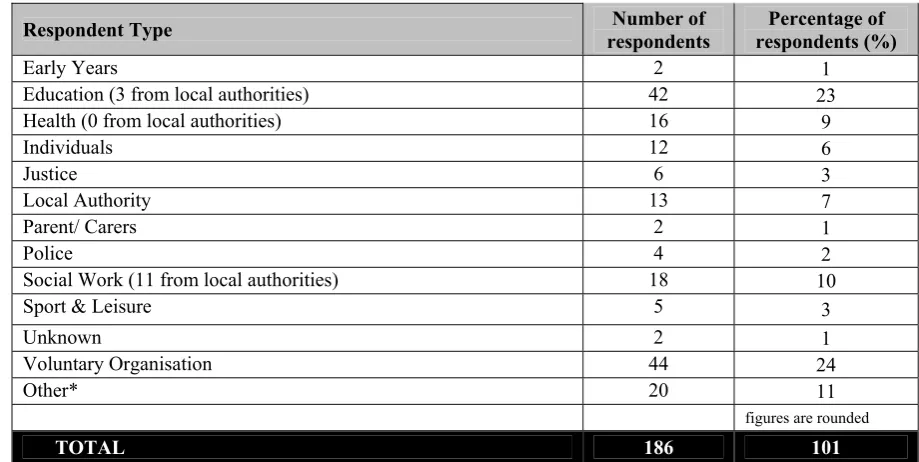
In total, 186 written responses have been analysed. The majority (92%) responded on behalf of organisations and only 6% responded as individuals; the remaining 2% were anonymous. The largest number of organisational responses was received from voluntary organisations (n = 44) and those categorising their organisation as operating within the education sector (n = 42).
Across those responding to the consultation paper and those attending focus groups and
information events, there was widespread approval of the introduction of a new vetting
and barring scheme in Scotland as proposed within the consultation paper. Overall, the proposed system is perceived to be more transparent, efficient and fairer than the present system.
A number of disadvantages were identified within the current system and these are as follows:
• Lack of protection for adults at risk
• The need for multiple disclosures
• “Point in time” nature of each disclosure (with no capacity to obtain updated
• Processing time – while most noted that there has been an improvement in processing
times recently, there were still some comments that there can be delays in obtaining some disclosures and this can have a knock-on impact on recruitment of staff
• While most respondents accepted the current cost level (£20 per disclosure), the need
for multiple disclosures serves to increase overall costs for many organisations or individuals
• Lack of capacity to cross-reference information with other sources and limitations on
what information can be accessed, particularly on some overseas workers
• A degree of confusion over who needs to be disclosed (categories of workers) and
potential loopholes for disclosure of self-employed individuals
• A lack of understanding on the part of employers as to how to interpret disclosure
information.
Overall, there was widespread support for the recommendations contained within the proposals from those attending focus groups, in-depth interviews and information events and those responding to the consultation paper. In some instances the information provided
raised further questions for respondents, although it was noted that the new system as
outlined would go some way towards counteracting disadvantages of the current system. Key themes identified in the study are outlined in the following paragraphs:
Updating of Information
The proposed ongoing updating of information removes the point in time nature of current disclosures as well as providing up-to-date information upon which employment can be offered. Of most importance, because each disclosure is portable across different roles relating to the same individual, the need for multiple disclosures is reduced.
While respondents were very favourable about the concept of ongoing updating of information, there were some concerns about who should be responsible for updating information. It was felt that primary responsibility for updating should lie centrally and then with regulatory bodies and organisations. While there was also an expectation that employers would provide updated information, there were some concerns over whether employers would in reality do so, particularly in instances where an employee was no longer in their employment.
Coverage of the Workforce
There was general agreement from consultees and respondents on the need to extend the range of positions requiring disclosure to include occupations with indirect contact with children and adults at risk.
Information Sharing
The concept of information sharing across different regulatory bodies and organisations was welcomed and would overcome a weakness of the current system in that certain groups are unable to obtain access to information, although some consultees and respondents assumed that information would be shared between all regulatory bodies. While there were some concerns about the infrastructure and operation of the new system (at least initially), a wide range of organisations were cited as potential providers of information to feed into the disclosure system. Furthermore, organisations participating in the consultation and who might be providing information for disclosures were generally positive about this concept.
of overseas workers in Scotland – particularly within certain sectors such as health and education – there were acknowledgements that it is not possible to obtain full disclosures on all potential staff. There were requests for links to be set up with as many countries as possible so that disclosure information can be obtained. Second, while there was an acceptance of the need for parents and personal employers to be able to obtain disclosures for employees, there were concerns over the provision of what can be confidential and sensitive information. A need was defined for a new body that could adopt the role of intermediary on behalf of parents and personal employers obtaining disclosures. In this way, parents and personal employers would only have access to basic information as to whether or not someone is barred.
When information is updated on barred status, it is felt that this should be shared with all relevant employers and regulatory bodies and well as the applicant. While there was acceptance that there may be some instances where disclosure information could not be shared (ongoing police investigations were cited by most), this was felt to be the exception rather than the norm.
Non-conviction Information
Although there was significant support for non-conviction information to be provided as part of the disclosure, there were concerns over how this information would be used and who this should be provided to. In particular, the capacity of many employers to interpret this information was highlighted as an issue that needs to be dealt with.
Two Separate Lists
Views on whether there should be one or two separate lists were split. There were some individuals who perceived that inclusion on one list should lead to automatic barring on the other; while others felt it was acceptable for an individual to be barred from one list but not
the other. That said, manyconsultees andrespondents would expect to be given information
as to whether or not an individual was on the other barred list. There were also some concerns that the maintaining of two separate lists could create further unnecessary expense. If there are two separate lists, it was felt that these should both be operated by the same central body.
Costs of Disclosure
This was an issue that many respondents found difficult to discuss. While it was acknowledged that the costs of the new system were not known, there were concerns that the cost to implement the proposals as laid out could be significant. While there were some acknowledgments that removing the need for multiple disclosures could reduce long-term costs, it was felt that the cost of the initial disclosure could increase significantly. Of those who were able to specify what might be an acceptable cost, there were preferences for something in line with the current level of £20. While some respondents guessed that the cost of disclosure could increase to over £50, for most this level was too high. There was widespread agreement for volunteers working in voluntary organisations with children or adults at risk to receive a disclosure at no cost to themselves.
increase in costs would also mean a speedy or speedier processing time.
Lifetime of Disclosure
The proposed lifetime of 10 years for an individual disclosure was generally accepted by respondents. However, this was not a key issue for respondents, given that information will be continually updated under the new system.
Provisional Listing
Views on provisional listing were mixed. For some respondents and consultees it was felt that individuals should not be able to continue to work during the determination process, either because of an immediate need to remove potential harm from vulnerable groups, or because of a lack of available staff to offer supervision.
There was a degree of confusion over the difference between provisional listing and provisional barring.
Need for Consistency across Legislation
A number of issues were highlighted due to perceived inconsistencies between different legislation. For example, under current law, for the purposes of the Disqualified from Working with Children (DWCL) a child is any individual up to the age of 18, but for the purposes of some criminal activity, an individual is an adult from the age of 16.
There were also suggestions that any new legislation should meet with the requirements of current employment law and human rights law. At present, there are sometimes contradictions between guidelines laid down by regulatory bodies, recruitment practices, human rights legislation and disclosure requirements. There were also some concerns that there should be no discrepancies between the new legislation and the Data Protection Act.
Inclusion of Civil Orders
There was broad agreement of the need to include civil orders as part of a new disclosure check, but there was a preference for this to be limited to those which are deemed relevant. A clearly defined, mandatory statutory list of civil orders was requested by some consultees and
respondents.
Retrospective Checking
While there was an acceptance of retrospective checking for all relevant employees, some respondents would like to be provided with guidance on the types of employee or volunteer that should be prioritised for retrospective checking. Additionally, some requested a timeframe for this.
The Structure of a New Body
The most favoured option for the structure of a body to make decisions on barring was for a special panel. Key criteria for members of this panel would be to have expertise in relevant fields, be representative of a broad range of sectors and to have training to enable them to make decisions and interpret available information. In terms of the status and governance of a Central Barring Unit, there was a preference for this to be at arms length from Scottish Ministers.
The Future
new scheme, many made suggestions as to ways in which any problems could be overcome.
There were many calls for the provision of guidance and help in how to interpret information provided under disclosure and the Scottish Executive was perceived to have a key role to play. Within this guidance, there was a perceived need for employers to be made to understand the importance of a robust recruitment policy and not simply to rely upon disclosure information when making a decision over whether to employ someone. For example, there was support for information to be released as part of a disclosure when there is not sufficient cause for someone to be added to a barred list. However, the capacity of some employers to interpret this information was questioned.
There should also be guidance provided on priorities for retrospective checks and a timeframe for this. There were also some requests for guidance on how to identify level of risk in order to help prioritise retrospective checks. Some respondents cited a need for guidance similar to that provided alongside PoCSA (Protection of Children (Scotland) Act 2003).
There was also a suggestion for training to be provided to sit alongside guidance and help. While there were acknowledgements that many larger organisations will have robust recruitment policies, this was not perceived to be the case for many smaller organisations or those relying on volunteers. The role that can be played by umbrella bodies in dissemination of information should also not be underestimated.
There were also calls for a large-scale and sustained information and communications campaign to sit alongside any new legislation. This would have a number of key roles. First, to counteract any concerns from potential employees or volunteers about the disclosure process. Second, to provide information to employer organisations and the general public at large on the disclosure process and why it is important. Third, to explain key elements of the disclosure process. The Scottish Executive was seen as the obvious body to provide this information and communications campaign, perhaps backed up by more localised or tailored guidance from regulatory bodies.
Clear definitions need to be provided for who constitutes a “child” and “adult at risk” and, wherever possible, these should comply with other legislation such as PoCSA.
There was a preference from some for an online facility via which disclosures could be obtained and it was felt that this would help to eradicate any delays caused by the postal service. At a time when there has been a huge growth in Information and Communication Technologies (ICT) for a wide range of services, it was seen by some to be an essential element of a new service.
There is a need to set up an intermediary body that can deal with disclosure requests on behalf of parents and personal employers in order to retain confidence in the system and ensure confidentiality when information is provided.
There was broad agreement that parents and personal employers should be able to make their referrals via an intermediary body.
CHAPTER 1 :
BACKGROUND
Introduction
Following the terrible events during the summer of 2002 when two school girls were murdered by Ian Huntley in Soham, the Home Secretary launched an independent inquiry which focussed on systematic failures that led to the tragedy. Sir Michael Bichard, Rector of the London Institute and a former Permanent Secretary at the Department for Education and Employment, was appointed as the chairman of the inquiry.
This inquiry was known simply as ‘The Bichard Inquiry’ and two years later the Inquiry
report was published in June 20041. Sir Michael Bichard highlighted that the inquiry was set
up to “Urgently enquire into child protection procedures in Humberside Police and
Cambridgeshire Constabulary in the light of the recent trial and conviction of Ian Huntley for the murder of Jessica Chapman and Holly Wells. In particular to assess the effectiveness of the relevant intelligence-based record keeping, the vetting practices in those forces since 1995 and information sharing with other agencies, and to report to the Home Secretary on
matters of local and national relevance and make recommendations as appropriate.”
The inquiry led to a total of 31 recommendations being made in relation to systems and practice in the protection of vulnerable groups. These included the following key recommendations:
• Development of a national IT intelligence system
• New code on information management
• Police informed of offences against children
• Improved selection/recruitment training
• New registration/barring scheme
Sir Michael Bichard’s recommendations focused on the system in operation in England and Wales. However, Scottish Ministers made clear that they too would learn from the findings of the inquiry and would, where necessary, improve existing practice in line with the recommendations included in the report. There was also clear recognition of the need to streamline current systems throughout Scotland to ensure that there were no cross border loopholes within the UK that may be exploited by those who could potentially bring harm to vulnerable groups.
On 12 January 2006 the First Minister announced that the Scottish Executive would bring forward legislation in response to recommendation 19 of the Bichard report. The legislation would set the framework for a new vetting and barring scheme for people seeking work, (voluntary or paid) with children and/ or adults at risk.
The Current System in Scotland
The current vetting system in place for people working with vulnerable groups within Scotland operates via an enhanced disclosure certificate being obtained by individuals through Disclosure Scotland. In order to obtain a certificate, an application for disclosure has to be completed by an applicant and subsequently countersigned by a body registered with Disclosure Scotland.
There are three types of disclosure - basic, standard and enhanced. A basic disclosure only provides information on convictions that are unspent under the Rehabilitation of Offenders Act 1974, while a standard disclosure provides details on both spent and unspent convictions and, in instances where an individual is applying for a job to work with children, whether this applicant is on the Scottish Disqualified from Working with Children List (DWCL) or similar lists held in other parts of the UK. In the case of an enhanced disclosure, the police have discretion to provide non-conviction information they consider to be relevant to the position being considered in addition to all of the information that would be provided as part of a standard check. Those individuals seeking employment in care/childcare positions are required to obtain either a standard or enhanced disclosure.
Good practice guidance encourages employers and organisations in the care/childcare sector to operate a “safe recruitment” policy whereby an applicant for a job may be required to provide further information such as the names of individuals who can act as referees for their suitability to work with vulnerable groups, or to self-certify that they have no convictions that would bar them from working with vulnerable groups.
While the Protection of Children (Scotland) Act commenced in January 2005, there is no list of those barred from working with vulnerable adults. It is the intention of the Scottish Executive to introduce such a list through legislation. Additionally, also under consideration is extending the provisions of the Rehabilitation of Offenders (Exceptions) Order to include those who have indirect contact with children or vulnerable adults (for example, via the telephone or internet or those with access to personal and sensitive information about vulnerable groups).
The need for change
As part of the development of the legislation, a consultation paper was published on 8
February 2006 with the aim of introducing a Bill to the Scottish Parliament in autumn 2006.
The consultation paper set out the framework for a Bill to build upon the current disclosure system and DWCL. It set out the broad framework for a scheme that will:
• Pro-actively check the unsuitability of all individuals entering the children's or adults
at risk workforces;
• Introduce a new disclosure check (a vetting and barring disclosure) which will be
applicable to all individuals seeking employment (whether paid or unpaid) with children or adults at risk;
• Register all those individuals who have been subject to a vetting and barring
disclosure for continuous updating of information;
• Provide for a new central decision-making body (Central Barring Unit) which will
• Introduce a new function allowing employers mediated access to review an individual’s barred status, reducing the need for repeat checks;
• Create a list of those who are disqualified from working with adults at risk;
• Enable the continuous updating of information to the Central Barring Unit to ensure
that those who become unsuitable to work in the sector(s) are detected at the earliest possible stage and are prevented from continuing to work.
Similar legislation is to be introduced in England and Wales. However, while the Westminster framework will be comparable to that being developed in Scotland, it is likely that there will be some significant differences. Nevertheless, it will be vital that these systems are compatible with each other.
It is intended that this new legislation will serve to keep Scotland’s children safe from those who pose a danger to them as well as offering appropriate care and protection to the adult population. The new vetting and barring system has two key aims, that:
• Those who are known to be unsuitable do not gain access to vulnerable groups through
their work;
• Those who become unsuitable are detected at the earliest possible stage and are prevented
from continuing to work, or seeking to work, with vulnerable groups.
There are four key objectives that support these aims:
• Reducing the bureaucracy around the disclosure process;
• Reducing the burden on employers by including an assessment on unsuitability to work in
identified sectors as part of the disclosure process;
• Effective mechanisms for barring unsuitable individuals;
• Ensuring consistency, compatibility and connectivity across the UK, even though
different approaches may be adopted in some of the detail.
The consultation exercise sought views on the overall framework and direction of policy as well as the detail elements of the proposals.
CHAPTER 2: COVERAGE OF THE WORKFORCE
2.1 WHO SHOULD BE INCLUDED?
Proposal 1: individuals requiring Vetting and Barring Disclosure
Any individual new to the children and vulnerable adult workforce or changing positions (whether paid or unpaid) will need to apply for a Vetting and Barring Disclosure from Disclosure Scotland. (A Vetting and Barring Disclosure is a new type of Disclosure for the children and vulnerable adult workforce.)
Proposal 2: range of applicants
Parents and personal employers, as well as organisations, will be able to ask individuals to apply for a Vetting and Barring Disclosure or check the barred status of somebody already in the system.
Proposal 3: range of positions
The range of positions for which a Vetting and Barring Disclosure can be obtained will be expanded beyond those for which disclosure can currently be obtained. It will include occupations with indirect contact with children and vulnerable adults.
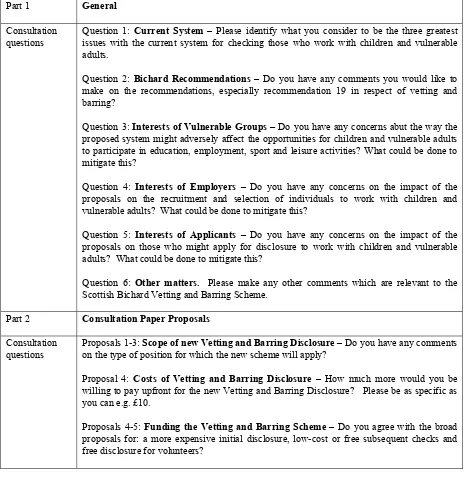
In commenting on these proposals specifically, 45 consultees agreed with the intentions as stated.
2.1.1 Individuals requiring vetting and barring disclosure
With regard to proposal 1, most consultees and respondents felt that any individual new to the workforce should undergo vetting and barring, although this was not universal. One
respondent representing an education body noted that the new system as proposed was “using
a sledgehammer to crack a nut.”
Views on whether changes of post within an organisation should require a full disclosure varied, with 12 consultees stating that this should be the case and a further 6 suggesting that anyone taking up a new position should be disclosed, regardless of whether or not they already worked for the organisation.
2.1.2 Range of Applicants
Proposal 2 intends that parents and personal employers will be able to ask applicants to apply for disclosures and also to allow them to check on the barred status of applicants. Although 24 consultees commenting on proposals 1-3 specifically agreed that this should be the case, 32 others cautioned on the need for careful regulation to avoid malicious enquiries or other
misuse of the system. One consultee from the voluntary sector remarked “There should be
These views were echoed by respondents participating in the information events, focus groups and interviews. While it was acknowledged by some that parents should have a right to check on an individual working directly for them – perhaps in a caring role for an elderly relative or as a tutor of their child – there were concerns that unless properly set up and managed, this could offer wide potential to be abused.
Most of these respondents agreed with the proposal to set up a registered body through which parents and personal employers could obtain disclosures. That said, there was wide ranging comment that the amount of information made available to parents and personal employers should be very restricted. Most of these respondents felt that it was suitable for parents and personal employers only to be able to obtain a “yes” or “no” response on disclosure. Furthermore, most did not want conviction or non-conviction information to be available to these parents and personal employers seeking disclosure for an employee.
A couple of alternative suggestions were made by a number of respondents. Some suggested that an applicant should have their disclosure form on hand to show to parents and personal employers on request. Another was that perhaps an applicant and employer could have access to an online facility whereby a one-off pin number could be provided by the applicant and used by the employer to obtain information on whether the applicant was disclosed or not. This pin number could then be changed by the applicant to prevent further visits to the online facility by an employer.
Four consultees commenting at question 2 (comments on the recommendations) also noted the need to make disclosure information accessible to people employing personal carers or
other similar personal employers.
2.1.3 Range of Positions
The majority (162) of consultees commented in some way on proposals 1-3, with the main issue raised being that of a need for guidance on, or clarification of, the type of applicants or posts requiring disclosure. Sixty-four consultees felt that clear definitions were needed for various terms used in the consultation document including “child-care”, “regular contact” and
“vulnerable adults”. However, a consultee from the education sector felt it important to “err
on the side of caution” rather than “get bogged down on the debate about what posts could
be considered ‘child care’.”
While twenty consultees felt the proposals should include anyone in contact with children or adults at risk, 25 mentioned specifically their view that posts with indirect contact should be included and 8 specified the need to include support staff. Ten consultees, however, felt indirect contact should not be included.
Eleven consultees agreed that there should be a non-job specific approach; “Agree with not
specifying job titles, thus leaving the definition for liable groups open - should ensure
breadth for those requiring disclosure.” (Education)
Consultees gave a variety of suggestions for posts or types of applicants which, they felt, required disclosures and these are listed below:
• Any educational establishment staff (5 consultees);
• Employees of regulated bodies or agencies (10 consultees);
• Care centre staff (8 consultees);
• Police (6 consultees);
• Self-employed or freelance (5 consultees);
• Drivers or escorts (2 consultees);
• Foster carers (1 consultee)
• Trades people (3 consultees);
• Sub-contractors’ staff (3 consultees);
• Development workers (2 consultees);
• Co-ordinators (2 consultees);
• Ice-cream sellers or shop staff (2 consultees);
• Clergy (1 consultee);
• Trainers or work experience supervisors (1 consultee);
• Social workers (1 consultee);
• Immigration officers (1 consultee).
Some consultees also mentioned non-employed and unpaid positions which, they felt, should require disclosure. These included 9 mentions of guardians or those with power of attorney and 11 specified voluntary staff. Five consultees felt that disclosures should be required for anyone in a position of trust.
While 13 consultees welcomed the extended range of positions mentioned in proposal 3, there were a variety of suggestions for other specific or more general posts to be included. In addition to the wide range of posts mentioned where staff would be in physical proximity to children or adults at risk, other, more indirect posts were also mentioned. These were positions where applicants would have access to information about children or vulnerable adults and included:
• people with substantial access to information about vulnerable groups (15 consultees);
• telephone help-line operators or any other telephone contacts (12 consultees);
• chat-room monitors or other internet contacts (9 consultees);
• database operators (6 consultees).
The range and type of positions covered by disclosures were questioned by 11 consultees providing comments on the recommendations (at question 2) who felt that the current system does not distinguish between different levels of risk. A further 11 consultees also mentioned that adults at risk are not currently protected.
These themes emerged at other points in the consultation. For example, when asked to comment on the interests of employers (Q4), the need for clarification on the sort of posts for which disclosures are necessary was mentioned by 21 consultees, with 17 requesting official
guidance on this matter. One consultee from the justice sector commented “Clear guidance
on what posts are applicable together with education and training on the new process are essential.”
Among individuals attending qualitative discussions and information events, the majority view was that the proposed vetting and barring system should err on the side of caution. As such, most respondents acknowledged the need to widen out those positions requiring disclosure. However, there were concerns about the cost implications this would have for many organisations who would have a large increase in the numbers of staff needing disclosure. Respondents pointed not simply to the direct financial cost but also the indirect cost in terms of recruitment practices, training of staff and so on. Some respondents suggested that, in the first instance, there would be a need to prioritise those posts requiring immediate disclosure. Additionally, some organisations had concerns that they might lose staff in that some staff who had previously not needed to be disclosed might leave their jobs rather than submit to going through the disclosure process.
Two consultees also noted the need for the system to allow adults at risk or adults with disabilities access to employment or voluntary posts.
Proposal 9 specifically asked about extending the definition of child care positions (see
below) and consultees were asked to comment on any further changes, other than those
outlined, which they would like to see made to the DWCL.
Proposal 9: changes to the Disqualified from Working with Children List
Schedule 2 of the Protection of Children (Scotland) Act 2003 will be amended to clarify and extend the definition of child care positions. (Other amendments will be required to this Act in relation to other proposals in this paper.)
Of the 120 consultees who commented on this specific proposal, 42 stated that no changes were necessary to the DWCL and 18 said they agreed with the amendments or made other general positive comments about the changes.
Twenty-three consultees desired more clarity on what defined childcare positions or contact positions with children, while 6 wanted to further extend the scope of the childcare position definition. Specific categories (mentioned by only 1 consultee each) were:
• Those registered on the Provisional List
• Third Party workers (e.g. Confectionery, Ice cream vans)
• NHS Staff
• Workers for unregulated providers (e.g. day care providers not registered with the
2.2 DEFINITIONS TO BE APPLIED
Proposal 8: definition of vulnerable adult
The intention is to improve protection for those vulnerable adults aged 16 or over who are in receipt of care services and/or support from employees (including paid and unpaid volunteers) in regulated and NHS care settings. Therefore, the definition of “vulnerable adult” will primarily be a service-orientated definition.
The consultation document stated: We are not looking for comments on the Disqualified from
Working with Vulnerable Adults List (DWVAL), since this has been covered by previous consultation. However, we would like to know if this new context raises any new issues.
Of the 115 consultees commenting on proposals 7-8 (DWVAL), 30 felt there were no new issues raised by the new context and 12 commented positively in general terms.
Eighteen consultees stated that the ‘vulnerable adult’ definition needed to be clarified, while 9 wanted to extend the scope of the definition beyond those receiving services in regulated and NHS care settings.
“We need to make sure we have the highest standard of care, safety and protection for vulnerable groups…. … urges the Executive to amend the proposed definition of vulnerable adults to cover a wide range of settings – including voluntary sector services – in order to ensure that as many vulnerable adults as possible are protected.”
(Voluntary)
Twelve consultees raised a specific problem as to whether 16-18 year olds should be classified as adults or children. Some qualitative respondents noted that under current law, for the purposes of the DWCL a child is any individual up to the age of 18, but for the purposes of some criminal activity, an individual is an adult from the age of 16. There was a preference from some respondents for this lack of consistency in definitions to be resolved.
Of the consultees commenting on the interests of vulnerable groups at question 3, 22 also noted the need to ensure that any changes to rules and definitions used in the process did not have any adverse affect on opportunities for children and vulnerable adults.
“The proposed scheme could also impose permanent restrictions on certain people who could provide valuable input to the education of young people e.g. reformed drug addicts. An opportunity and mechanism for appeal and review at a suitable time following offending should be considered.”
(Education)
2.3 OVERSEAS WORKERS
in some instances it is not possible to obtain information and / or the degree of reliability that can be attributed to any available information is questionable.
One respondent from the health sector attending an information event also noted that obtaining disclosure information on overseas workers was an increasing problem and that this also raises the potential for discrimination. He felt that if a disclosure is not available or is potentially unreliable, should an individual then be offered employment? He noted that this was a particular issue within the health service where recruitment of workers from overseas countries is on the increase. Another respondent participating in an in-depth interview, within a care setting, noted that disclosures are currently obtained for all potential employees but acknowledged that any worker coming from abroad will in effect not be properly disclosed due to a lack of available information from their country of origin.
Five consultees (in response to question 5 of the consultation paper) noted an allied need to ensure forms are accessible and that links with information held in other countries are in place. While consultees responding to question 6 of the consultation paper were broadly supportive of the proposals to create a cross-borders system within the UK, 12 consultees also stressed the need for the system to include the ability to check workers, students or volunteers from overseas.
In summary,
There was broad agreement for widening out the range of individuals requiring vetting and barring disclosure. That said, there were some calls for clarification of who needs to be disclosed and preferences tended to be for a contact-based definition rather than simply a listing of different positions. There was agreement that the range of individuals for whom disclosure could be requested should be broadened out to include those with both direct and indirect contact with children and adults at risk.
While there was general agreement that parents and personal employers will be able to ask individuals to obtain disclosure, most respondents cautioned on the need for careful regulation to avoid misuse of the system. There was a preference from many for the set up of a registered body through which parents and personal employers could obtain disclosures. There was also a preference for any information made available to parents and personal employers to be restricted.
There were calls for a clarification of the definition of “adult”.
CHAPTER 3: VETTING AND BARRING DISCLOSURE
3.1 ONE LIST OR TWO?
The Scottish Executive is proposing that there will be a Disqualified from Working with Vulnerable Adults List (DWVAL) that will operate in a similar way to the Disqualified from Working with Children List. The consultation document asked for views on this.
Proposal 7: Disqualified from Working with Vulnerable Adults List (DWVAL)
There shall be a list of persons barred from working with vulnerable adults.
The issue of whether there should be one list or two was raised by consultees at various points in their response to the consultation paper and was also noted by other respondents during the course of information events, focus groups or interviews.
Of those responding specifically to proposal 7, 27 consultees felt that there was no need for 2 separate lists and that a combined list would suffice, or that inclusion in one of the lists should imply automatic inclusion in the other. This view emerged elsewhere in the consultation with a further 9 consultees (commenting on proposal 9 specifically - changes to the DWCL) noted that there was no need for 2 separate lists and that a combined list would suffice, or that inclusion in one of the lists should imply automatic inclusion in the other.
Eighteen consultees commenting specifically at proposal 7 felt there was a need to check applicants against both lists, or that inclusion on either list should preclude working with any vulnerable group. In the words of a consultee working within the social work sector,
“We would feel there must be similar issues in being placed in DWVAL/DWCL and find it difficult to understand how someone on one of these lists could be considered suitable to work with any vulnerable group.”
Five consultees intimated that such checks should be carried out with one application only and 3 felt the lists needed to be strongly linked in order to operate properly. Conversely, 2 consultees thought that 2 lists would be better than a combined list in some circumstances; 1 because it would be comparable to the system in England and Wales to allow for cross-border checks, and the other because separate lists fit better with human rights.
(scope of new vetting and barring disclosure) questioned the need for two separate lists. Of those commenting on proposal 23 (cross-referencing with offender registers and other lists), 11 consultees again stated that one list would be their preferred option.
Views on having one or two lists were mixed among those attending information events, focus groups and in-depth interviews and many respondents found it difficult to provide possible examples as to why an individual might be barred from one list but not from another. One respondent did note though that automatic disclosure of inclusion on both lists would mean a lack of employment opportunities across a wide range of different jobs and might mean that some individuals become relatively unemployable. Most respondents attending qualitative discussions noted that if there are 2 lists introduced, when requesting disclosure on any employee, they would expect to be notified if that individual were on the other barred list.
There were also some concerns that automatic inclusion on both lists would open up opportunities for individuals to sue in respect of human rights or UK employment law. A few respondents commented that the new scheme must take account of human rights and UK and EU employment legislation.
3.2 COSTS OF DISCLOSURE
Not surprisingly, the issue of costs of disclosure was commented on by significant numbers of those participating across all elements of this consultation exercise. This section of the report examines a number of issues raised by respondents in relation to costs.
3.2.1 Costs of obtaining disclosure under the Current System
The fee for disclosure is currently £20, having risen from £13.60 in April 2006, although the cost of disclosures for unpaid posts within the voluntary sector in Scotland are covered by Scottish Ministers. Under the present system, 32 consultees viewed disclosure costs as a burden, both in terms of money and time, although 38 considered that the current cost of disclosure in Scotland was acceptable. Some individuals attending groups and interviews were aware that the equivalent cost of obtaining disclosure in England and Wales is at a higher level and some noted that an increase in fee in Scotland to the level of that currently charged in England and Wales would be significantly more expensive for individuals.
There were some consultees who noted that the current system is too bureaucratic and costly, and this issue was highlighted by 32 consultees providing comment to question 1 of the consultation paper specifically.
“The current system for getting disclosures is too bureaucratic and costly. There is no simple way for small independent bodies that are caught up in the legislation to register and secure a disclosure without filling in endless complex forms; the overall cost of the system is running into millions of pounds - money that would be better spent on frontline services.”
(Education)
costs to the individual in April of this year, and one or two specifically noted that an increase of almost 50% this year was too high.
3.2.2 Costs of Disclosure under the New System
Proposal 4: costs of Vetting and Barring Disclosure
Scottish Ministers will have a power to set charges for Vetting and Barring Disclosure (as they do now for all Disclosures) and any other new processes. Detailed costs have still to be established but there will be additional costs in conducting a Vetting and Barring Disclosure which are likely to be met through the application fee. The current intention is that subsequent checks of barred status will be free, or at a lower cost. A fee would be charged for subsequent full disclosure.
Proposal 5: free Vetting and Barring Disclosure for volunteers
It is planned that volunteers working in voluntary organisations with children or vulnerable adults will receive the Vetting and Barring Disclosure at no cost to themselves.
At question 6 (general comments on the proposed new scheme), the issue of costs associated with the new scheme was the most frequently mentioned concern with 18 consultees commenting on a possible financial burden and the need for funding. Of those commenting at question 4 (interests of employers), 43 consultees referred to costs associated with the new system, and 13 mentioned the effect on the voluntary sector specifically.
In considering likely cost levels specifically, it was acknowledged that the cost of implementing the new system was not known, although there were concerns that the cost of implementing the proposals as laid out could be significant. While there were some acknowledgments that removing the need for multiple disclosures could reduce long term costs, it was felt that the cost of the initial disclosure could increase significantly, particularly if the new system is to be self funding. While many individuals attending information events, groups and interviews accepted that the cost of implementing and managing the new scheme would need to be covered by charges levied on users, many found it difficult to second guess a likely level of charge that would need to be imposed if the Scottish Executive introduce the system as outlined in the consultation document.
Eight consultees at Proposal 4 (cost of vetting and barring disclosure) asked that costs be kept at an “acceptable”, “balanced” or “reasonable” level (although they did not provide
indications of what constituted an acceptable, balanced or reasonable level); “Costs need to
be calculated carefully which would maintain a balance between enabling the efficient and
effective provision of the service without being a burden on smaller organisations.” (Social
work)
In response to question 5 (interests of applicants), the need for extra resources was mentioned by 5 consultees; either to help implement the system or to offset some or all costs to applicants.
i Costs of the New System
Of those who were able to specify what might be an acceptable cost, there were preferences for something in line with the current level of £20. Some respondents were concerned that the cost of disclosure could increase to over £50 and for most this level was too high.
In response to Proposal 4 specifically, 71 consultees suggested a range of fees; including 38 who favoured no increase on the current charge of £20; 2 consultees suggested amounts of less than £10, and 13 felt amounts between £10 and £20 would be appropriate. Thirteen consultees suggested prices from between £20 and £35 and 5 consultees suggested fees of £50 or over (see chart 3.1).
Chart 3.1
Preferences for cost of new system
0 5 10 15 20 25 30 35 40 < £10
£10 - £20 £20 - £35 £50 + No increase on £20
(Base : all suggesting cost level at Proposal 4)
ii Disclosures for Voluntary Organisations
Disclosures for unpaid posts within the voluntary sector in Scotland are currently covered by Scottish Ministers and proposal 5 stated the intention to continue to provide this. There was widespread agreement across all audiences for volunteers working in voluntary organisations with children or adults at risk to receive a disclosure at no cost to themselves.
Fifty five consultees responding to the question relating to proposal 5 (free vetting and barring disclosure for volunteers), voiced broad support for the proposal overall, while 97 chose to comment on the need to ensure the system remains free for volunteers. Eleven commented specifically that this should include a free service to voluntary organisations as well as the applicants themselves. Nine consultees wanted to see a system of full cost recovery in place.
“Proposed substantial higher cost for a Vetting and Barring check may prohibit organisations’ ability to deliver services. Keen to see an extension of free checks for individuals who act in a volunteering capacity outwith a voluntary organisation. There are many parent helpers who assist with school activities which are non paid and these valuable activities could be curtailed or ceased completely due to additional costs.”
Consultees responding to the question on Proposal 5 specifically were also supportive of extending the range of individuals available to access free disclosure, regardless of the sector or organisation they work for. This was raised by 16 consultees, while a further 9 also referred to the need to provide free checks for the paid staff of voluntary organisations. Seven consultees mentioned the need for a reduced rate for paid staff in voluntary organisations.
iii Impact on Recruitment
In response to Proposal 5 specifically, 17 consultees remarked that costs can act as a disincentive in a sector where recruitment is already a challenge and 3 noted that the checks should be free for all applicants. One consultee noted,
“The new scheme could well be a barrier to volunteering, which in turn may adversely affect the opportunities for children and vulnerable adults to participate in the type of activities listed. Voluntary organisations provide via their staff- who largely work on a voluntary basis - a layer of "trusted" people in whom children and adults at risk can confide if they are being abused. The new scheme could prove counter-productive to the aim of securing the safety of children and vulnerable adults if it results in the removing or reduction of such staff. It will, therefore, be vital for confidence in the system to be built up so that potential volunteers are not deterred from entering the system.”
(Voluntary)
Seventeen consultees commenting at question 5 (interests of applicants) were concerned that financial issues may act as a deterrent to applicants, although 4 consultees felt that this could be mitigated by setting fees at a level appropriate to the applicants’ ability to pay.
iv Indirect Costs of Disclosure
The issue of indirect costs in relation to the administration and time taken to manage the disclosure process was raised by a number of those responding to the consultation paper. For example, 14 consultees commenting on Proposal 5 specifically, noted the burden placed by associated administrative costs.
It is also important to note that some individuals attending groups, interviews and information events, further noted the indirect costs that would be introduced alongside the new system. Even among those organisations working in the voluntary sector that do not have to pay for disclosure, there were concerns about the increased cost of training (on how the scheme would operate and how information would be interpreted) and administration in order to ensure the new scheme could work effectively and efficiently.
Thirty-five consultees responding to question 3 (interests of vulnerable groups) felt that the system might operate as a deterrent, barrier or disincentive to workers or volunteers who might apply for a post. The need to avoid this outcome was highlighted by Peter Peacock,
Minister for Education and Young People in his statement introducing the consultation “It is
vital that, in securing protection as our first priority, we also create a climate in which people who can contribute so much and so significantly to enhancing the quality of life of
children and adults at risk are not discouraged from doing so.”2 However, 40 consultees, of
whom over a quarter were from the voluntary sector, felt the new system might lead to recruitment problems or to a reduction in volunteers. This was echoed by some respondents attending information events, focus groups and in-depth interviews and there were some concerns that some clubs or activities within the leisure sector might end as a result of changes to the disclosure system.
v Additional Financial Burdens
In response to Proposal 5 specifically, 35 consultees stated that any cost increase would be a financial burden on small or voluntary organisations, and 11 commented that extra disclosure costs would mean a reduction in the money available to spend on providing a service. Nineteen consultees mentioned the impact of the recent increase in cost of disclosure and 4 noted that higher costs might lead to a lower rate of compliance or inhibit recruitment for those working with children or adults at risk.
vi Burden on Resources / Resource Implications
Eight consultees responding to question 2 (comments on the Bichard recommendations) voiced concern over any increase in costs associated with the new system and a number of qualitative respondents were concerned about the potential increases that would be needed in order to implement the system as outlined. For example, one consultee from the Early Years
sector felt that “The Executive must make finances available to provide ongoing training to
voluntary organisations or run the risk of an adverse affect on voluntary sector activity, capacity and ability to comply.”
Eleven consultees at question 4 (interests of employers) required extra funding to alleviate any additional financial burden caused by the new system and 3 specifically referred to a
need to cap fee levels.
vii Responsibility to Pay
The issue of costs was clearly important to audiences participating in all elements of the consultation exercise with some respondents querying who should have responsibility to cover the costs of the new system. One or two respondents attending focus groups suggested that the Scottish Executive should underwrite the cost of the new scheme and then recoup their initial expenditure at a later date. One consultee from the voluntary sector commented “We believe that it should be fully funded by new money from the Executive and not by the threat of money coming out of other funds.”
Six consultees commenting on Proposal 4 specifically felt that the cost of disclosure should be borne by the applicant, with 2 proposing that the disclosure fee be treated in a similar way to professional registrations. Some respondents attending groups felt this was acceptable to those qualifying to work within a profession and who had reasonable expectations for future salary levels, but that it would be unfair to expect employees on minimum or low wages to have to cover the costs of their own disclosure.
Conversely, 3 consultees stated that the employer should be responsible for meeting the cost of disclosures. One manager in a nursery participating in a qualitative discussion noted that her employer currently pays for disclosure checks for all staff. However, it was her view that her employer might not be prepared to pay above a maximum of £30.
The problems faced by those on low wages were also raised by 11 consultees in relation to Proposal 4, who felt there should be some kind of sliding scale related to ability to pay, and one or two of those participating in focus groups made a suggestion for some form of means testing for employees to determine their ability to pay for disclosure. It was however also acknowledged by some respondents that “means testing” would serve to make the process more complicated to administer and have the potential to cause delays in the timescales for disclosure. Means testing for employer organisations was also suggested by 26 consultees at Proposal 5 who felt that some sort of scale based on the type of organisation, staff turnover or number of employees would be merited.
The need for some kind of monetary assistance was mentioned by 30 consultees in relation to Proposal 5, who suggested that whole or part funding should be made available, perhaps after an impact assessment. Two consultees felt money should be ring-fenced to pay for disclosure checks in the public sector and another 2 consultees suggested that a one-off fee per organisation could be introduced.
viii Extending Coverage of the Workforce
While there was broad support for the concept of extended coverage of the workforce needing disclosure, 3 consultees providing comment in relation to Proposal 9 (changes to the DWCL) specifically were concerned that voluntary organisations would incur cost or resource problems as a result of extending the scope of childcare positions needing disclosure.
significant impact on many organisations. For example, including those in administrative posts who have not previously required disclosure checks and others with indirect contact with children and adults at risk.
Commenting on Proposal 4 (costs of vetting and barring disclosure) specifically, the issue of students, either on placement or entering the workplace for the first time, was raised by eight consultees who felt they should receive a free disclosure.
ix Other Costing Issues
We have already noted that cost is an issue concerning many who participated in this consultation exercise and a number of other issues in relation to increased costs were raised. These included:
• Costs associated with the IT systems that will be needed to ensure the new system
operates effectively;
• Costs in relation to information sharing across a wide range of bodies and the allied need
for ICT systems capable of cross-referencing huge amounts of information;
• Costs to organisations of implementing and administering the system were raised by 18
consultees commenting on Proposals 1-3 (scope of new vetting and barring disclosure), with a further 7 voicing concern that workloads would increase;
• Commenting on Proposals 11-13 (Central Barring Unit), 8 consultees were not convinced
of the need for a new agency and reasons for this were based mainly on cost.
Conversely, 3 consultees commenting on question 4 noted the potential for cost savings because there would no longer be the need for multiple disclosures. One consultee from the
justice sector commented “The cost will also be of concern, although if the ‘life’ of the
Certificate is elongated this cost could be recouped over time.”
There were also a small number of comments that cost of disclosure cannot be considered in isolation but that consideration also has to be given to the cost of other checks that have to be made by employers or employees. As the following quotation notes, many professional organisations will also have costs associated with registration checks.
“This is impossible to answer at this stage in the process. However, costs are important to small voluntary-run groups. It is not the cost of the check in isolation that needs to be considered but the potential full costs involved. For example, a playworker would require to be registered with the SSSC. At present this involves a fee and a fee for a Disclosure Check. If the Vetting and Barring Check can be brought into this process then costs may actually reduce but if not, there will also be a fee incurred at the point of re-registering with the Scottish Social Services Council (SSSC) which will also need to be taken into consideration. Playworkers are not financially well-rewarded and increased costs could act as a barrier to employment.
3.2.3 Subsequent Disclosures
Proposal 4 states the intention to give Scottish Ministers powers to set charges for Vetting and Barring Disclosures and states that additional costs of conducting the disclosures will be met through the application fee. It is intended that subsequent checks will be free or cost less than the initial disclosure and that a fee would be charged for subsequent disclosures.
Twenty-five consultees felt that they did not have enough information to make judgements on fee levels at this stage and the need to keep any increase in cost at a nominal or minimum level was voiced by 27 consultees commenting on Proposal 4 specifically.
Commenting on the cost of the initial disclosures at Proposal 4, 22 consultees felt an initial higher fee would be acceptable if this meant subsequent disclosures were charged at a lower rate. In total, 36 consultees commented on the need for subsequent disclosures to be cheaper. Twenty-seven consultees also noted that they would accept a higher initial rate if the subsequent disclosures were free. Overall, 36 consultees were in favour of subsequent disclosures being free.
A small number of respondents participating in the information events, focus groups and in-depth interviews noted that the proposed higher levy on initial disclosure could be unfair on employers as many assumed that employers would be covering the cost of disclosure certificates. Respondents also found it difficult to suggest a specific fee to be levied for subsequent checks.
Four consultees commenting on Proposal 4 felt that a higher initial charge would be a disadvantage for the initial employer paying for disclosure and that there should be a standard charge for all types and levels of disclosure. Again, a small number of respondents attending focus groups agreed with this view. There were some suggestions for some form of economic cost analysis to be carried out in order to provide a guide to likely costs of disclosures under the new system.
The possibility of misuse of the system was raised by 7 consultees, 4 of whom suggested that applicants might apply as volunteers to obtain initial disclosure and then take up paid positions after completing the disclosure process.
“However if there is a cost differential between Disclosure Scotland and the Criminal Records Bureau (CRB) (as there is at present), Registered Bodies in England and Wales may choose to register with Disclosure Scotland (if cheaper) and there may be no legislation to prevent this. This situation would cause an effect in Disclosure Scotland with volumes and the structured phased approach. It would also make it very difficult to project volumes for business resourcing.”
(Justice)
3.2.4 The Cost of Retrospective Checking
Seventeen consultees commenting on Proposal 6 noted the financial or administrative impact that would be felt by voluntary organisations faced with the need to retrospectively vet their workers while 36 felt there would be resourcing issues to be faced.
“There are financial implications for organisations such as ourselves who’ll be under more pressure to process more checks and support organisations in other ways such as training, general advice and support. We have already taken a 25% cut from Scottish Executive funding, limiting the capacity of our Disclosure Unit to support those small clubs and groups who need us most. Adequate funding would allow this proposal to be introduced over a shorter period of time than the 3 - 5 years suggested. The protection of children must be paramount over the relatively small economic factors involved.”
(Other)
Many respondents attending information events and focus groups noted the need for employers to prioritise groups of employees needing to be disclosed in order to spread additional cost and administrative burden over a time period. In general, there was agreement that a period of between 3-5 years in which to carry out retrospective checking would be acceptable.
3.2.5 Perceived Impact of Increased Costs
A number of additional comments were made in relation to the likely impact of introduction of the new disclosure system and these included:
• Potential staff could be lost if the cost of obtaining disclosure is too high;
• There could be additional costs levied on a number of organisations such as regulatory
bodies to enable information sharing to be brought about;
• The cost of running two separate lists would make the scheme more expensive;
• Some volunteers who have not previously needed to be disclosed might give up
volunteering if they are required to be disclosed.
3.2.6 Expectations of the New System in relation to Costs
While there was broad support for the new system as outlined in the consultation document, there was an expectation on the part of some respondents that an increase in costs would also mean a speedy or speedier processing time.
At Proposal 4 specifically, 10 consultees expressed the opinion that they would expect any subsequent checks to be full disclosures. A further 5 consultees indicated that they would expect an increase in efficiency or accuracy in return for an increase in cost.
3.3 LIFETIME OF DISCLOSURE
Proposal 26: lifetime of Vetting and Barring Disclosure certificate
The Vetting and Barring Disclosure certificate will be valid for a period of 10 years. The Scottish Ministers will be able to vary this time period, if necessary.
The consultation document asked whether the vetting and barring disclosure certificate
should have a finite lifetime, after which a new application for full disclosure needs to be made?
Of the 165 consultees commenting on proposal 26, 95 agreed that the certificate should have a finite lifetime. A further 10 agreed but felt that this would depend on how robust the system was or how efficiently the checking and updating system worked. Six consultees felt that there should be a monitoring period to evaluate the system.
Twenty-one consultees disagreed with the proposal and 30 voiced the opinion that they were unsure why this would be necessary under the new system.
“Why bother with a 10-year lifetime when it will be updated automatically anyway? Who is then to initiate this check, the individual or the organisation
employing them? Is there really any need for re-checking?”
(Sport and leisure)
Twenty-six consultees felt the proposed 10 year lifetime was too long and some of these consultees suggested alternative lifetimes. Eleven suggested that 5 years would be more appropriate; 2 suggested 3-5 years and 3 suggested a lifetime of 3 years.
Provided updated information will be available throughout the lifetime of a disclosure, the length of the disclosure took on a more secondary importance. One respondent also queried who would be responsible for notification that a new disclosure is required.
Other issues raised by smaller numbers of consultees included 3 who queried whether a new full disclosure would be needed if someone changed their employer and 2 felt that this would be the case. The cost or resource implications of this aspect of the system were raised by 10 consultees.
Three consultees asked whether the disclosure provided at the 10 year update would be the full, more expensive form of disclosure or the less expensive or free subsequent check disclosure.
Some regulatory bodies currently request updates at more frequent intervals, an example being the Scottish Social Services Council who require rechecking after 3 years. Four consultees felt there should be agreement between all relevant bodies over the timeframe to be used.
should be some way of tracking who was employing them.
In summary,
Views on whether there should be one or two lists were split. Some consultees and respondents felt that anyone barred from working with children should automatically be barred from working with adults at risk and vice versa.
Regardless of whether there are one or two lists, there was a preference for cross-referencing between the two in any disclosure check.
There were also some concerns over unnecessary duplication of effort, increased bureaucracy and additional costs if two lists are maintained.
There were some concerns over the likely costs of disclosure under the new scheme and many individuals were unable to suggest likely cost levels. Some simply made reference to the need for costs to be reasonable, without actually defining what this meant. There were assumptions from some that a higher disclosure cost would mean an increase in efficiency of the service.