RIT Scholar Works
Theses Thesis/Dissertation Collections
2006
Adjusting the margins: Building bridges between
deaf and hearing cultures through performance arts
Luane Davis Haggerty
Follow this and additional works at:http://scholarworks.rit.edu/theses
This Dissertation is brought to you for free and open access by the Thesis/Dissertation Collections at RIT Scholar Works. It has been accepted for inclusion in Theses by an authorized administrator of RIT Scholar Works. For more information, please [email protected]. Recommended Citation
ADJUSTING THE MARGINS:
BUILDING BRIDGES BETWEEN DEAF AND HEARING CULTURES THROUGH PERFORMANCE ARTS
LUANE RUTH DAVIS HAGGERTY
A DISSERTATION
Submitted to the Ph.D. in Leadership & Change Program of Antioch University
in partial fulfillment
of the requirements for the degree of Doctor of Philosophy
This is to certify that the dissertation entitled:
ADJUSTING THE MARGINS: BUILDING BRIDGES BETWEEN DEAF AND HEARING CULTURES THROUGH PERFORMANCE ARTS
prepared by
Luane Ruth Davis Haggerty
is approved in partial fulfillment of the requirements for the degree of Doctor of Philosophy in Leadership & Change.
Approved by:
Dr. Carolyn Kenny, Chair date
Dr. Elizabeth Holloway, Member date
Dr. Stephanie Polowe Aldersley, Member date
iv
ACKNOWLEDGMENTS
No project of this size could have any possibility of being carried out by one person. The
following people have shown support for my vision and a willingness to see the project
through to fruition. Without their support emotionally, intellectually, and practically I
could not possibly have come this far. My most sincere and heartfelt thanks to:
Simon Carmel – (RIT retired) For putting his whole self into this project: physically, by
starring in the show; intellectually, by adding his own research into Deaf Folklore to
mine in the writing of the script; and emotionally, by believing whole-heartedly in the
value of this project.
Dr. Carolyn Kenny – (Antioch) For her support and guidance through the maze of
research methods to help me find one that suits my nature. She showed me how to have
confidence in my work by never allowing me to give up on my vision.
Dr. Elizabeth Holloway – (Antioch) For creating a learning environment where I could
thrive.
Dr. Stephanie Polowe Aldersley – (RIT, Creative and Cultural Studies) For teaching me
to navigate the politics of town and academia.
Dr. Bonnie Meath-Lang – (Artistic Director of NTID Performing Arts Department) For
accepting the position of NTID Performing Arts liaison for this project and for procuring
departmental support of the project.
Dr. Joseph Bochner – (RIT Chair, Creative and Cultural Studies) For the additional
support to bring in a guest artist for Windows of the Soul as well as assistance during the
v
Dr. Robert Panara – (RIT Retired) For showing me the way through example.
Dr. Karen Christie – (RIT, Creative and Cultural Studies) For reading my work at various
stages, including the script and literature review, and for giving me frank feedback.
Dr. J. Matt Searls – (RIT Deaf Studies Chair) For listening to my troubles and providing
all the support, consultation, and feedback I needed to keep the integrity of this project
intact.
Dr. Harry Lang – (RIT Research department) For willingly giving me Deaf Culture
advice, acting as Dramaturge, and providing research methods consulting.
Peter Haggerty – (RIT/NTID Associate Professor of English) For being my writing
consultant and editor, assisting with dramaturgy, and serving as a board member of
Interborough Repertory Theater. Most special thanks for the personal support given as a
husband, friend, and colleague.
Patti Jacobs – For using her web design and graphic artistry to make my cyber-ideas a
reality.
Finally, my deepest thanks to all of the acquaintances, friends, and family who gave of
vi ABSTRACT
This study addresses a gap in scholarship on leadership styles in the Deaf community.
There is an invisible style of leadership differing from the mainstream culture that has not
been previously addressed in the literature at any depth. My study was composed of three
interlocking parts in a sequence that constitutes the practice of anthropology: fieldwork,
analysis, and presentation. The foundation for my fieldwork was an “archeology of the
structure of the perceived world” (Merleau-Ponty), using the holding environment of the
rehearsal process and the structural process of an acting technique called Sign.
Del-Sign is a fusion acting style that I created by combining American Del-Sign Language and the
Delsarte method. I also employed current qualitative methods described as “performance
ethnography” (Norman Denzin and Ron Pelias). The fieldwork of creating discussion
groups, which I call salons, provided the initial material, my analysis process turned that
material into a performance script; and audience participation in the form of talk-back
sessions after the performance provided documentation for the results of the presentation.
I provided data for the fieldwork with journaling and videotaping events in rehearsals and
performances, director’s notes, and observations. The participants in this study offered
great contributions to the research design, and social and cultural contexts were shifted by
their action in the research. Their participation was analyzed in the context of Action
Research (Argyris, 1985). The resulting findings from the data were compared to
anthropological and folkloric theories of performance and style. I was able to create and
study a bridge, created through performance, between a hearing audience and a
vii
that this performance bridge was the critical element of potential “change” in my study,
thus addressing the gap in scholarly literature. Individuals in both the audience and the
cast reported a change in perception about the opposing culture. The study results also
indicated a unique style of leadership by Deaf people within a Deaf community that is
collaborative in nature yet values the individual. I trust further study into that aspect of
viii
TABLE OF CONTENTS
ACKNOWLEDGMENTS iv
ABSTRACT vi
LIST OF FIGURES xii
CHAPTER ONE: INTRODUCTION 1
A Beginning: Positioning the Researcher 1
Meta-Culture 8
What Is the Subject of Your Work? 8
So Are Your Subjects Deaf? 9
Theoretical and Practical Foundations 11
CHAPTER TWO: LITERATURE REVIEW 16
Purpose and Focus of the Review of Deaf Leadership 16
Stories of Deaf Leadership 17
Historical Perspective From the Mainstream 17
Historical Perspective From the Deaf Community 21
Deaf Leaders in Residential Schools 27
Traits and Styles 32
Deaf Leaders in Business 32
Storytelling: A Foundation for Deaf Influential Leadership 35
Storytelling Provides a Cultural Bridge 36
Comparison of Minority Leadership and Deaf Leadership 37
African-American Leadership 37
Minority Leadership Requires a Community Base 40
ix
Native American Leadership 44
Minority Leaders’ Need for a Sense of Self 46
Leadership Literature on Self-Esteem 48
Deaf Leaders Need to Tell Their Own Stories 50
Mainstream Culture’s Story of Deaf Leadership 51
Deaf Culture’s Stories of Leadership 53
Deaf Leadership Revealed and Developed Through Arts-Based Practice 56
CHAPTER THREE: METHODOLOGY 59
Position in the Philosophy and Theory of Science 59
Description of Research Methods 63
Description of the Process 72
Specifics of the Methods Used in This Study 77
Selection of Participants 82
Summary 88
CHAPTER FOUR: RESULTS OF THE STUDY 92
List of Ethnographic Data 93
A Narrative Summary of the Field Notes for the Production Windows of
the Soul 94
Translating Raw Interview Data Into a Theatrical Script 111
Transcription from Writer's journal - Notes on how to build the stories into a script 116
The Haggertarian Characters 1199
The Politically Correct “Honorable” Deaf Person—Leading Player 1222
The Shirker—Villain or Comic Relief 1244
“Honorable” Hard of Hearing and Ethnic Minority Supporting Character—Comic
x
Hearing Child of Deaf Adults (CODA): Supporting Character—
Tragic Figure 129
Hearing Interpreter—Minor Supporting Character 1311
Hearing Spouse—Minor Supporting Character 1333
Hearing But Is Employed in the Deaf Community (Educator)—
Minor Supporting Character 1344
Hearing Parent or Family Member of a Deaf Person—Minor
Character 1366
The Poet, “Unacknowledged Legislator” (Shelley)—Narrator or
Bridge Character 1388
The Writer 14040
Performance Process: Director’s Notes as Published in the Program 1411
Production Script 1455
Comments From the Talk-Back Sessions, Email, and After-Show Feedback
From the Rochester Audience 210
Transcription of ASL Conversation About Deaf Identity (Rehearsal
Video Tape) 210
Email Correspondence 211
"Worlds Apart," a Poem by Patti McAllister (Voice Actor in Windows of
the Soul) 215
Representative Responses From the New York City Production 215
"Places People," a Poem by Lou Labriola (Deaf Actor in Windows of
the Soul) 218
CHAPTER FIVE: A DISCUSSION OF THE PROCESS 221
The Fieldwork—“Salons” 221
The Analysis—Script Development 225
The Presentation—Performance Discussion 232
xi
Post Production—Audience Response and Feedback 235
Cultural Sensitivity and Transformational Learning 239
Analysis and Interpretation 241
Action Research 243
CHAPTER SIX: THE INTEGRITY OF THE ART 246
The Hermeneutic Circle 248
Spatiality 248
Temporality 251
Relationality 253
Corporality 255
The Deaf Community’s Natural Art 258
APPENDIX A: PROPOSAL TO NTID PERFORMING ARTS FOR A
PRODUCTION 261
APPENDIX B: LETTER OF INFORMED CONSENT TO THE CAST 267
APPENDIX C: JOURNAL SKETCH OF PRODUCTION NOTES 270
APPENDIX D: IRB APPROVAL 276
xii
LIST OF FIGURES
Figure 1.1. Rehearsal photo from the first Del-Sign production of Michael Frayn’s Noises Off done at the Samuel Beckett Theater on 42nd Street in New
York City, 1993. 15
Figure 2.1. Selena Alverio, Carlos Mendez in Eye Music; The cast of IRT’s Twelfth Night in NYC; and Carolyn Yu in Lute Song. Del-Sign theatrical
productions that celebrate Deaf community. 16
Figure 3.1. Anthony Buscato and his group “Tribe” evidence Deaf leadership in the natural setting of a poetry performance at Wallace Library at Rochester
Institute of Technology. 59
Figure 3.2. Pentimento. 68
Figure 3.3. Five-part methodological process. 78
Figure 3.4. Elements of the daily rehearsal. 81
Figure 4.1. Windows of the Soul poster. 92
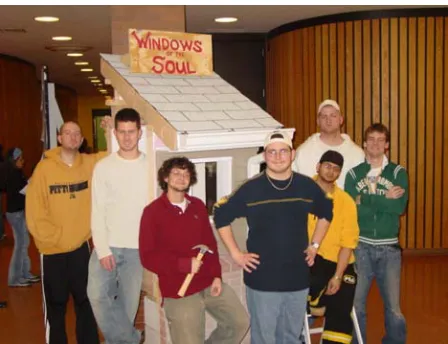
Figure 4.2. Jim Fugate’s class built the lobby display. 1055
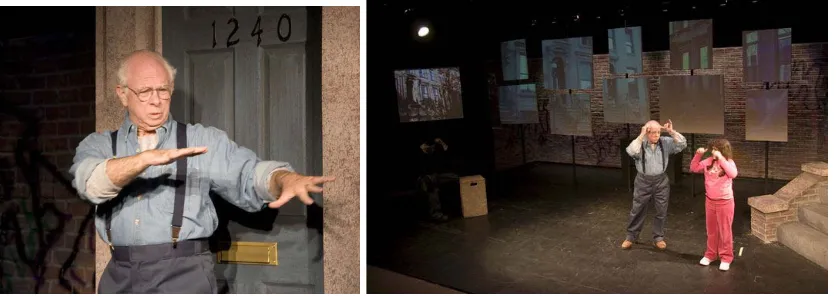
Figure 4.3. Windows of the Soul performance photographs. 108
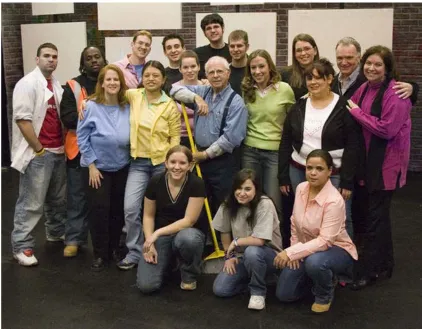
Figure 4.4. Cast of Windows of the Soul. 109
Figure 4.5. The New York City cast of Windows of the Soul on Christopher Street. 110
Figure 4.6. The last “salon” held in the Dyer Art Gallery, Rochester, New York. 111
Figure 4.7. Rehearsal photos from Windows of the Soul, November 28, 2005. 112
Figure 4.8. The Del-Sign warm-up. 113
Figure 4.9. Our backstage crew. 114
Figure 4.10. The main character types in the Deaf community. 115
Figure 4.11. The cast of Windows of the Soul during the daily warm-up before
rehearsal. 119
Figure 4.12. Lou Labriola as Al B. 122
xiii
Figure 4.14. Troy Chapman as Lamar, Jamila Assaf as Jessica, and Karriefh Norman
as “T.” 126
Figure 4.15. Crystal Campbell originally rehearsed; Holly Dzimidas took over the role
of Sharon. 129
Figure 4.16. Patricia MacAllister, Scott Christian, and Danny Maffia played the
hearing neighbors to the Deaf community. 131
Figure 4.17. Eileen Thorsen as Debbie. 133
Figure 4.18. Morgan Tucker as Eliza. Error! Bookmark not defined.
Figure 4.19. Idalia Vazquez as Marissa. 136
Figure 4.20. Dr. Simon Carmel as Simon the Custodian. 138
Figure 4.21. Dan Bugosh as Deaf Proud Dan, Joseph Fox as Mathew Gay/Deaf,
Gabrielle Nocciolino as Recent Cochlear Implant, and Yolanda Santana as
The Future. 141
Figure 4.22. Rehearsal process photos. 143
Figure 4.23. Rehearsal process photos. 1444
Figure 4.24. Performance photos. 205
Figure 4.25. Performance photos. 206
Figure 4.26. Performance photos. 207
Figure 4.27. Performance photos. 208
CHAPTER ONE: INTRODUCTION
A Beginning: Positioning the Researcher
My dissertation investigates how theater can be used to uncover and characterize
Deaf leadership. Leadership in the Deaf culture seems to take on a form that is frequently
not apparent to the mainstream hearing culture. It is my hope that this study will allow a
Deaf cultural leadership style to be accessible to others so that it can be understood more
fully. As I begin to explore a Deaf cultural leadership style with you, I feel I should
address the natural first question that is often asked of me: “Why are you, a hearing
person, so involved in the world of the Deaf?”
“Deaf” and “hearing” can be seen as polar opposites conceptually similar to black
and white or to us and them, i.e., two separate communities divided by a language barrier.
In this work, the terms are used in a cultural rather than an audiological sense. In the
cultural framework, I am a member of the Deaf community. I can determine this without
sharing the physical impairment because Deaf people have varying degrees of hearing
loss; in fact, the exact point of being considered legally deaf is not always a determining
factor in being considered culturally Deaf. The choice of sign language as a primary
language and self-identification with the group, i.e., using the sign DEAF to describe
oneself as opposed to HH (hard of hearing) or HI (hearing impaired), are the principal
indicators of group membership. “Hearing people too are considered a part of the
community if they participate in the Deaf community in a significant way – as a family
member or by sharing a large part of their lives” (Padden & Humphries, 1998, p. 32). The
and Humphries point out that in Sign communication the Sign for “hearing” is often used
to represent “the opposite of us.” The example used was from a Deaf football game in
which one deaf team referred to the other deaf team as “hearing” even though both teams
were deaf. That is why I find it awkward to label myself “Hearing.” I do not feel I am an
outsider.
Although I self-identify as and am physically hearing, I have a place in the Deaf
community as an artist, as a teacher, and as a friend. My closeness to the community
creates a bias, no doubt, but it also positions me as an intimate observer – neither really
an outsider nor passing as a natural member of the community. My self-identification as a
community member was reinforced by the treatment I received in the creation of this
project. I expected some hesitancy in the sharing of personal stories with a researcher
perceived as “hearing;” but, that did not happen. Instead the stories were shared openly
and the attendance at the various salons I arranged made rooms full to overflowing. I
often was asked to explain my connection to the community, and some discussion about
what my label might be caused some ruffling of feathers. “Am I culturally deaf?” The
answer is no, since this is taken to mean life members of the deaf community who are
often physically hard of hearing. However, I found that it was easily agreed that I have a
place in the community even though no recognizable standard label easily suits me.
What began as a question of clarifying my membership in the Deaf community
actually helped to illuminate an example of Deaf culture in miniature. It is culturally
appropriate that a person in the Deaf community be given a sign name. Often it is based
descriptive way. For example, my English name is Luane but my sign name is the letter
“L” jumping up and down to signify my continual energy and excitement. It is not
appropriate for individuals to name themselves – they must be given the name by
someone in the deaf community acknowledged to be culturally adept. In my case my
close friend George Garcia, who is a deaf poet, storyteller, and Sign Language instructor
as well as a Broadway show Sign coach and advisor, gave me my Sign name. My cultural
labeling of my identity developed in much the same way. Although I am physically
hearing, my bias is in favor of my membership in the Deaf community.
George Garcia also labeled me a “visual person,” meaning my frame of reference
is similar to a culturally Deaf perception. In a similar manner Ben Bahan (1989, p. 32)
suggested calling both deaf people and “visually centered” hearing people as “seeing”
people. By this he means to focus attention on the skills we have, rather than on the
physical abilities we do or do not share. My students at NTID express disappointment
when I tell them I am hearing, and I have been told that I am wrong to say that; instead,
they suggest I say I am from deaf family (please note, this is markedly different from
claiming to be a child of Deaf Adults – CODA). Therefore, in the interest of honoring the
tradition of being given a “sign name” I accept the labels given to me by the community.
I am warmed, though, by the fact that whatever I am labeled it is still a position
considered to be within the community.
The esteemed ethnographer, Franz Boas, is quoted in connection with this
In all our thoughts, we think in terms of our own social environment. However, the activities of the human mind exhibit an infinite variety of forms among the peoples of the world. In order to understand these clearly, the student must endeavor to divest himself entirely of opinions and emotions based upon the peculiar
environment into which he is born. He must adapt his mind, so far as feasible, to that of the people whom he is studying. The more successful he is in freeing himself from the bias based on the group of ideas that constitute the civilization in which he lives; the more successful he will be in interpreting the beliefs and actions of man. He must follow lines of thought that are new to him. He must participate in new emotions, and understand how, under unwonted conditions, both lead to actions. Beliefs, customs, and the response of the individual to the event of daily life, give us ample opportunity to observe the manifestations of the mind of man under varying conditions. (Boas, 1940, p. 8)
Mindful of Boas’ advice, a goal of this research project was to trace language
choices, to examine social significance, and to present a theatrical story with a message
significant to the participants. This experience formed the basis for a practice of
ethnography and an aesthetic and sensory experience. It was my intention to actively
integrate and synthesize forms of ethnographic practice and representation with the
aesthetic dynamics at work in the social/cultural domain of the fieldwork, through
experimentation in intrinsically practical, experientially-based ways of knowing,
recording, analyzing, and presenting (Helgesen, 1990). To do this I needed to
re-invigorate old questions of what “culturally other” means and how it affected leadership
style. I also asked for active participation by everyone involved in the process – my
staff, the actor/participants, and the audience. This form of participation has its roots in
Action Research as is defined below.
Action Research, according to one definition, engages researchers, students, and
community leaders “in a collaborative process of critical inquiry into problems of social
Research to investigate the present area of inquiry began with engaging people to discuss
topics of interest to the community. Those subjects who came and participated in the
discussion “salons” then shaped the direction of the conversation and the resulting
questions. Action Research also appeared in the rehearsal process when the actors
themselves took ownership of interpreting the roles and added details from their own
lives. The final stage of Action Research was in the audience talk-back sessions at the
end of every performance. The audience felt empowered to add to the information with
reflection and to respond to the stories they had just seen.
Since joining the faculty at the National Technical Institute for the Deaf (NTID)
at the Rochester Institute of Technology (RIT) in the fall of 1998, I have consciously
tried to increase my understanding of “Deaf culture” and “signed communication.” My
awareness of a Deaf community began with my maternal grandmother, who was deaf and
with whom I was close. Sadly, I only had my first years to have her imprint as she died
when I was only four years old. However, I had believed the signs she shared with me
were our own private language. My ownership of the language was challenged, however,
when I realized that there was a community of people in the world who knew my secret
language. Moreover, this group of people did not recognize me as a member of their
community. Thus, getting no further encouragement, I dropped my connection with the
Deaf community until much later in my life.
As an adult I was able to find work in the theater, and one of the remarks often
made about my performance style on stage was how expressive and physically
with my grandmother, and the validity of this attribution was confirmed when I began my
graduate work at Goddard College. The motto of the College and a framework for their
approach to study is “to know, to do, and to be.” It was expected that reflections on my
daily work would be incorporated into my studies. At the same time, I was a Public
Education Specialist for New York State Office of Mental Retardation and
Developmental Disabilities (OMRDD). In a skit we performed in high schools titled
Mainstreet, it was desirable that one actor portray a Deaf professional. I took on the role
and there I rediscovered my ability to sign and I vividly recalled my personal
remembrances of deafness. Simultaneously, I was in the position of Artistic Director with
the company I had co-founded, Interborough Repertory Theater (IRT), and the young
actors we were hiring, however well-trained, were simply not expressive enough for the
stylized children’s theater tours we were creating. All of this came together as one: my
graduate studies and my new appreciation for my experiences with sign language
encouraged me to train these young actors in the foundations of sign communication to
help improve their physical communication.
I then was hired by the National Improvisation Company to work at the Javitt’s
Center portraying historical characters. Because our work was improvisatory, the
required two-week rehearsal period that the Actor’s Equity Association contract called
for was used by the company to train actors in the acting techniques popular in the eras
appropriate to our characters. I was playing Susan B. Anthony, and someone called
François Delsarte was all the rage in American theater during her lifetime. It was there I
and my knowledge of sign language, but I found myself falling short of my goal. I was
forced to admit to glaring holes in my understanding of and my ability to use sign
language. Therefore, I studied in and graduated from the Interpreter Training Program at
the New York Society for the Deaf. In addition, I attended all levels of Interpreting
sessions at The Julliard School, which has a program for theatrical interpreting supported
by the American Theater Wing. I joined the Registry of Interpreters for the Deaf (RID) in
1992 and studied privately with some of the best theatrical interpreters in New York City.
I was honored to study under acknowledged masters like Alan Champion, Stephanie
Feyne, Lynnette Taylor, George Garcia, Al Berkowitz (“Al B.”) Roy Doliner, Manny
Hernandez, and Bruce Hlibok (whose brother Greg led the Gallaudet College protests
demanding a Deaf President for the College in 1990).
This training, the use of my skills as an interpreter, and the exercise of my
observational skills as an actor resulted in a heightened awareness and understanding of
body language, facial expression, and non-verbal communication. This new awareness
and understanding led to analysis of how these features of communication affected
relationships, partnerships, and the work environment at my theater company. This
allowed me a view “from the balcony” (Heifetz & Laurie, 1997), a perspective from
which to analyze and improve conditions at my theater company as well as to develop the
Del-Sign acting technique. I found I not only had a different view, but also a different
Meta-Culture
Although I had trouble finding studies on Deaf cultural leadership, I did find a
different research method tradition that supported many of the beliefs and perspectives I
used when I approached my work. Suppose, for example, I were asked by an interested
acquaintance:
What Is the Subject of Your Work?
I would respond by saying that my focus is the anthropological significance of
Deaf leadership in balance with hearing cultural norms while in the holding environment1
of a theatrical rehearsal process. My research question targets a very specific pool of
participants. My participants are the creative people who inhabit the edges or “margins”
of their cultures (Deaf or hearing) because of their relationship to the arts. These theater
people, whose tolerance and innovation bring them into contact with each other, create a
third pool of people who inhabit a cultural bridge area allowing for both cultures to
experience successful cultural change and shared power in leadership. It is in this pool of
participants that a previously unrecognized form of Deaf leadership was evidenced.
Through my years of living and working in the Deaf2 community I noticed a style
of leadership that seemed to be unique to the Deaf. Yet it is a style rarely shown in
“mixed” company, that is, Deaf and hearing people working together. Unlike the usual
work or academic environment in which this “mixed” group often functions and which
1
Heifetz uses the term holding environment to describe the time frame and treatment of participants in a case study.
2
abides by hearing cultural norms, like Spoken English and hierarchical structures, the
environment of the rehearsal was consciously weighted in favor of Deaf cultural norms,
like Signed communication and collaborative structures.
My subject domain, or my “native” participant pool, was comprised of a group of
people who have a theatrical or performing background. This theater knowledge created a
sense of initial bonding with shared jargon and a foundation of behaviors appropriate to
working and playing in theater. My participants (and myself) were also able to
communicate in various forms of signed language, which was be the primary
communication style used during the rehearsal (or treatment) process.
So Are Your Subjects Deaf?
My answer would have to be found in the place where yes meets no. It is an
answer finds a place where the boundary between cultures, which rub up against each
other, exists. It is the bridge area, a place that becomes the home of people who are on the
“margins” or edges of both cultures. From an audiological perspective, my participants
were physically both deaf and hearing. From a cultural perspective, they shared an
interest and a linguistic ability that leaned more toward Deaf community. The theatrical
technique of Del-Sign is a method that intentionally favors an experimental form of Deaf
styles of theatrical presentation. The term Del-Sign is a fusion of Delsarte codified
movement studies and American Sign Language. The aspects of the technique that focus
on skills enhancement are a blend of known acting methods from a range of disciplines.
Acting exercises from Stanislavski, Miesner, Grotowski, and Meyerhold’s bio-Mechanics
enhance poetic skills and build signed vocabulary. The presentational aspect of the
technique requires that an actor who cannot hear and an actor who can are partnered and
must work together to create a single character. They create their character within a
framework in which one person represents the corpus of the character and the other
represents the character’s spirit. By working together, they create a single character that
functions on two reality planes, which I call doubling.3
While developing this technique I have directed several productions with the
entire cast doubled in this way. In addition, in 2001 Ed Waterstreet used this style in the
Broadway production of Big River, produced by Deaf West Theater Company. Mr.
Waterstreet, the Artistic Director, used this idea primarily with one character that had
been originally cast with an actor very familiar with Del-Sign (Iosif Sniederman4). There
were also other cast members who had studied and performed in the Del-Sign technique,
most notably Michele Banks5 and Guthrie Nutter.6 Although no acknowledgement or
credit was given to Del-Sign in the Big River press or program, I understood the use of
3
In theatrical jargon this means a single actor playing more than one character. It should be noted that I am using this term to express an opposing situation where two or more actors share the playing of a single character.
4
Mr Sniederman appeared in the Interborough Repertory Theater (IRT) production of Noises Off
in 1993 at the Samuel Beckett Theater in New York City. He also appeared in the co-production between IRT and the National Technical Institute for the Deaf (NTID) of The Tempest in 1999 at the Panara Theater in Rochester New York and at the Quintero Theater in New York City. He was also an instructor in several Del-Sign workshops from 1994 – 1999 and the development of the technique is indebted to and influenced by his contributions.
5
Ms. Banks appeared in the IRT production of Noises Off in 1993 and collaborative work between her theater company ONYX and IRT was comfortable enough that it nearly resulted in shared office space. She participated as an instructor in one Del-Sign workshop in 1994 and the development of the technique is influenced by her involvement.
6
the technique to be a form of acceptance and validation of the concept. I continued
development of the technique by using it in this study as a way to provide a structure for
the sort of partnership work that created a safe place for the Deaf leadership style to
emerge in a mixed group (deaf and hearing). Use of the Del-Sign technique allowed me
to observe and analyze the Deaf leadership style as it emerged in theatrical collaborative
work. The technique called for close collaborating between two actors in order to create a
single role. As the partners worked out how to collaborate on the role, they embodied a
cooperative work environment. The partner’s language of choice in this environment was
ASL, giving the Deaf approach to the work an ease of access rarely found. The life
stories of the participants illustrated the tension that existed as the Deaf community faced
changes brought about especially by a decrease in the support of residential schools for
the deaf and the advances of medical technology.
Theoretical and Practical Foundations
The design for this dissertation is comprised of three interlocking parts that form
the practice of anthropology: fieldwork, analysis, and presentation. I have used, as the
foundation for fieldwork practice, a phenomenological model, “archeology of the
structure of the perceived world” (Merleau-Ponty, 1962), by doing a series of group
interviews, which I called “salons.” I rendered myself “present in the body,” and I
encountered elements of pre-understanding that guided me into appropriate forms of
analysis. This analysis resulted in a dramatic manuscript comprised of personal stories
culled from the salons. Next, I examined anthropological and folkloric theories of
performance using conversational sign (rather than stage elocution) as an analytical
approach to an ethno-epistemology, i.e., an approach to a cultural way of knowing. I
discussed how the grounding of the specific formal elements of text, technique, and
understanding of theater industry behaviors contribute to alternative forms of
consciousness and new ways of imagining, which led to a response that impacted the
face-to-face social relations between the Deaf and hearing communities. I was also able
to note how a Deaf cultural leadership style was nurtured and can thrive in a theatrical
environment that emphasizes the group over the individual.
Two anthropologists supplied two definitions of culture which I found useful:
John Friedl (1980, p. 88) and Clyde Kluckhohn (1949, p. 24). I merged them form the
following explicit statement:
Culture may be referred to as the distinctive lifeways of a particular group of people—their customs, beliefs, values, material belongings, and shared understandings and socio-cultural patterns of behavior – that permit the group to share a degree of similarity and to live together harmoniously [my emphasis], but separate them from others.
Culture is always linked to a group of people, not to individuals (Friedl, 1980, p. 90).
Culture is created and maintained by members of a given community or society that
shares the same lifeway (Carmel, 2006, p. 2). It is the socially acquired and repetitively
patterned lifestyle of a particular group of people. This signifies that there are patterned,
predictable, and repetitive or recurring ways of perceiving, thinking, feeling, and acting
that are uniquely characteristic of the members of a particular group who stay and live
worldviews everyday. This can be easily compared to the patterned, predictable, and
repetitive environment of the theatrical rehearsal.
My work also parallels the work of feminist anthropologists who have studied
women in the male world of work. Much of my analytic process, which resulted in a
rehearsal script titled Windows of the Soul, was informed by Benedict’s (1934) process as
outlined in Patterns of Culture. I culled monologues from a range of stories that allowed
me to represent different “characters” within the community. I then patterned the script to
place these individuals in the context of community to reveal how they interact within the
framework of current issues of interest within the Deaf community. I then stretched the
comparison a bit by bringing in feminist anthropological concepts that deal with the roots
of theater and ritual, like Ruth Benedict’s work, which emphasizes the concepts of
cultural configuration, national character, and the role of culture in individual personality
formation. I structured the material and the environment, and I chose actors who would
have a strong Deaf identity, share that pride with the group, and be eloquent enough to
help illustrate their own personality formation in their work as actors. The work of
Catherine Bell (1983) influenced me to create an opening scene that was tied directly to
ritual tradition. In that scene, each individual steps into a heightened reality plane to
address the audience, directly using language that is stylized; I also used a Japanese haiku
poetic structure to heighten the feeling of ritual. This same pattern was repeated in the
closing but without the stylized language. In addition, the influence of Denzin (2003)
helped me to form my plan for the method of performance ethnography in my research.
by Ron Pelias’ (2004) writing style. True to Pelias’ style, I decided to use my director’s
(or field) notes as a base from which to write a series of articles expressing my
observations at various points in the process. This renders them more accessible to
readers unfamiliar with theatrical habit and jargon as well as allowing me the ability to
reflect and record.
Ultimately, all of these approaches to methodology were informed by Deaf uses
of performance as a frequent element of everyday and naturally occurring discourse. This
discourse rendered a theater environment the appropriate place to illuminate leadership
within the Deaf community. I began by outlining the historical oppression of Deaf people
as evidenced in the stories and poetry found in mainstream literature. I then compared the
same situations as they appear in Deaf literature. This research was reflected in the
theatrical production by the inclusion of various pieces of Deaf literature, which helped to
transition the plotline and often directly addressed feelings of oppression. This oppression
was often symbolized by physically containing sign communication. Because of this
control by the majority culture of the minority preference for gestural communication,
performance practice that features sign language can be seen as a representation of the
body’s own acts of resistance, self-determination, and celebration. This artistic
presentation featuring what was once a “forbidden” language (Lane, 1992) offered a clear
example of storytelling as a Deaf leadership trait (Gardner, 1995). In order to add to
feelings of ownership and empowerment for the actors, I also broke the standard of
having actors use no voice and sign in standard theatrical American Sign Language
comfortable for them and I trusted that the small size of the theatrical space would help
[image:29.612.114.537.183.501.2]the audience’s comprehension.
CHAPTER TWO: LITERATURE REVIEW
M endez
Figure 2.1. Selena Alverio, Carlos Mendez in Eye Music; the cast of IRT’s Twelfth Night in NYC; and Carolyn Yu in Lute Song. These were Del-Sign theatrical productions that celebrate Deaf community.
Purpose and Focus of the Review of Deaf Leadership
The literature of leadership studies was born in the field of organizational
development (Bennis & Nanus, 1997). The notable management theologians who first
tried to determine if the phenomenon of leadership could be defined placed their
questions on a landscape defined by the shape of their own cultural backgrounds. Every
culture evidences leaders who reflect the values and embody the styles that best suit their
community. However, since the Deaf community is a minority, it was unsurprising that
when I searched the leadership literature to find evidence of leadership in my community,
I came up empty-handed. Moreover, when I analyzed the traits and styles of hearing
presidents and company owners, I found their approach to the task of being a leader was
unlike the approach of leaders I had witnessed in my experiences living and working in
the Deaf community (Northouse, 2001).
This lack of recognition of successful Deaf leaders in the leadership literature is
rehabilitation, and society in general as a deficiency, a dysfunction, and a deviance.
Historically, the focus of observations about the deaf always began with the question:
how can we help them become like us? Consequently, there has been a paucity of
research in the leadership literature on successful individuals who are deaf. We had yet to
ask: how can the difference of a deaf perspective inform the rest of us? The purpose of
this literature review, then, was to try to uncover the reasons for this oversight. I began by
examining anecdotal evidence of deaf leadership in historical texts. I then discussed the
research that has investigated Deaf leaders in comparison to the standard texts of
leadership studies. I also compared research on other minority cultures whose relational
leadership styles and use of storytelling appear to be similar to the Deaf cultural
leadership style in order to offer suggestions for how to further research devoted to Deaf
leaders in the future.
Stories of Deaf Leadership
Historical Perspective from the Mainstream
For the past 4,000 years, deafness has manifested itself in every society with
written records. However, it has only been within the last 200 years that the evidence of
and concern with deafness has become even slightly more than anecdotal. Most of what
we know about leadership in the deaf community comes from historical texts that
occasionally mention pivotal moments, which were triggered by deaf influence. One of
the first references to deafness in relation to leadership in recorded history was by
Herodotus (Scouten, 1984), who portrays this emergence of a deaf leader as a miracle. In
over the sounds of battle, “Man, do not kill Croesus!” This cry alerted Croesus that his
enemy from Persia was about to kill him. Instead of dying that day, because of his deaf
son’s intervention, Croesus overcame his adversary (Herodotus, book I, pp. 47–48).
Despite this very positive action the prevailing attitudes of ancient society toward
deafness and the deaf are revealed in the rest of the story. The child saved his father’s life
and yet nowhere in Herodotus’ entire story does the name of the deaf son appear.
Additionally, when Croesus is recorded as speaking to his hearing son, Atys, he says,
“For you are the one and only son that I possess; the other whose hearing is destroyed, I
regard as if he were not.” (Herotodus, p. 22). The deaf son was in, what would be called
today, a non-person status, which makes his contribution even more striking. He
disregarded how he was perceived by others in his desire to protect his father.
The Greeks had a long established practice of placing handicapped infants on a
hillside to die, and yet this practice did not always apply to deaf children probably
because deafness is not an easily discernable disability. Therefore, some deaf children
may have survived long enough to show their value in physical strength or manual
dexterity (Scouten, 1984, p. 4). However, these skills must not have been enough to
engender respect, a key commodity in Greek society.
Since deaf people had no respect and were considered non-persons, there would have
been no opportunity for a positional deaf leader to emerge, although it was understood
that a leader needed to know his own limitations both as a leader and physically.
You will certainly not be able to take the lead in all things yourself, for to one man a god has given deeds of war, and to another the dance, to another lyre and song, and in another wide-sounding Zeus puts a good mind. (Homer, The Iliad)
Still, the limitation of silence was too large a limitation to overcome. As Aristotle opined,
“Those born deaf become senseless and incapable of reason” (as cited in Gannon, 1981,
p. iv).
Aristotle and Plato focused on systems of government more than individual
qualities and yet both provided history with very strong opinions that leaders needed to
be superior beings both physically and ethically. Take, for example, Aristotle’s thoughts
on rulers and the law:
They should rule who are able to rule best and a state is not a mere society, having a common place, established for the prevention of mutual crime and for the sake of exchange.... Political society exists for the sake of noble actions, and not of mere companionship. (Aristotle, Politics)
In addition, neither of these philosophers was supportive of a democratic form of
government. Therefore, they tended more toward exclusivity rather than embracing the
entire wealth of diversity and strength in a community. For example, whether or not Plato
is being sarcastic in his much-quoted view on democracy (below), this view was not
conducive to the encouragement of a deaf leader: “Democracy, which is a charming form
of government, is full of variety and disorder and disperses a sort of equality to equals
When leadership theorists look at the next era in historical texts, they defer to
Bennis, who describes the Big Bang Theory (Bennis & Nanus, 1997). This theory
conjectures that great people do not make great leaders, but great events make people
great leaders. According to this Big Bang Theory of leadership, fate plays a far more
important role in leadership development than bloodline or education. Thus, although this
theory opens possibilities for deaf leadership to emerge, virtually no examples of it can
be found in the research literature. It is not until the Hebraic formulation of a written
moral code that the recognition of deaf individuals can be seen. A societal shift occurred
opening the majority culture to accepting deaf people as human. This culture’s moral
code provided protection and concern for individuals who could not orally defend
themselves. “Thou shalt not curse the deaf….” (Leviticus 19:14). The deaf are accepted
as a part of the community. However, they are still unable to be property-owners and
have only the same rights and privileges as children. Again, their societal position placed
them outside of conventional leadership possibilities.
From these historical anecdotes it is clear that Deaf people in antiquity were
largely disregarded by society in terms of their genuine potential and usefulness
(Scouten, 1984). Their predicament was perhaps most clearly outlined in the poetic work
of Titus Lucretius Carus (96 – 55 B.C.):
To instruct the deaf, no art could ever reach No care improve, and no wisdom teach.
The next mention of deafness in historical texts appeared in Rome when Emperor
attention and protection due to the perception that “the Deaf and Dumb from birth,
without exception and without regard to degree of intelligence, [are] condemned to a
perpetual legal infancy” (Peet, 1857, p. 32). Sadly, that Roman law, specifically the
Justinian Code, served as the foundation for the legal structure of the whole western
world. To a great extent this serves to explain why the focus of research concerning the
deaf community has been on “fixing” them. Thus, despite some exceptions, this systemic
marginalization of this community has been in evidence from the earliest written
memory. As Machiavelli put it, “A man who has no position in society cannot even get a
dog to bark at him” (The Discourses, Book I, chap. 3, pp. 7–8).
However, it is not only because of societal perceptions and because of values that
deaf leadership has been overlooked. The other part of the problem of identifying Deaf
leadership in history is in recognizing that individual leadership in the Deaf community is
not highly valued. The physical experience of being deaf in a hearing society can be
isolating. Therefore, from a Deaf perspective, to value individualism is to value isolation.
When a Deaf person is in an environment that supports a communication difference that
does not rely on sound there are no limits. Naturally, then, it is when the community acts
collectively that the outlines of culturally defined Deaf leadership can really be seen.
Therefore, allow me to now change the lenses, revisit some historical references, and
view them from the perspective of Deaf Studies scholarship and of leadership theory.
Historical Perspective from the Deaf Community
The significance of Deaf leadership starts to become evident when reading Deaf
leadership. Deaf cultural history is rich with ordinary stories that lead to innovative
change, with a vision that breaks through invisible barriers and unites the Deaf
community with mainstream society. One of the first notable moments in Deaf cultural
history, when the community (rather than an individual) evidenced Innovative Leadership
acting en masse and affecting a breakthrough moment that affected the community at
large as well as the deaf community itself, is during the French Revolution (Scouten,
1984, p. 73).
Many teachers of the Deaf throughout history have used a teaching method that
had the potential of crushing Sign language by making the gestures used by deaf students
punishable. However, the Abbe` de l’Epee, director and principal of the National Institute
for the Deaf of France, learned Sign Language from his pupils and then used it to teach.
Although his methods were highly criticized by the Abbe` Sicard, his successor, Sicard
also encouraged and continued to develop educational use of Sign language. As you can
well imagine, these teachers were beloved by their deaf students. However, the
revolutionary government of France felt otherwise, thus, in August of 1792 in the name
of the Republic of France, Sicard was seized at his Institute for the Deaf and placed in
confinement. This set the stage for an event that fits Bennis and Nanus’ (1997) Big Bang
theory.
In response to this event, deaf students walked publicly in daytime as a
community to the National Assembly to plead for their teacher. When I have seen this
story told in American Sign Language (ASL), the members of the Tribunal are
a petition on the desk of the Tribunal. Historical texts quote this petition as stating,
“…This man [Sicard] is good and just. We ask you his liberty. Restore him to his
children, we are his children. Return him to us” (Bender, 1981, p. 78).
This petition was heard and approved. However, some days later Sicard was still
led to execution through a bureaucratic oversight. “There are dumb hearts making wail,
with signs, with wild gestures; he their miraculous healer and speech-bringer is rapt
away” (Carlyle, 1978, p. 484). Mysteriously, as the carriages were approaching the Town
hall courtyard, thirty priests were torn from the carriages and massacred. But, the crowd
saved Sicard and they delivered him to Morton, a deaf watchmaker (Carlyle, pp. 492 –
493) who hid him.
In the telling of this historical anecdote, it is important to note that although two
deaf individuals are mentioned by name, it is the power of the group as a whole that
succeeds in saving their mentor. This scenario is redolent of the Innovative Leadership
concept put forth by Gardner (1995). Richard Couto has described Gardner’s Innovative
Leadership as bringing “a new twist to a familiar but ignored story.” The values they
champion may be familiar, but asserting them in public life requires change (Couto,
2002, pp. 12–13). Innovative Leadership calls for significant change-action in order to
increase and improve the forms of investments we make in the social good of a
community.
This story also reveals the deaf community’s adaptive leadership (Heifetz &
Laurie, 1997). The deaf students in the story attempt to use the accepted societal structure
Sicard is still saved by the community. In that way, the community demonstrates how to
reduce the gap between values (trusting the system) and practice (sometimes the system
works against you). Heifetz and Laurie say adaptive leadership is distinguished by values
based on communal bonds that guide a group’s work. Some values are moral and
democratic, and others are not. Heifetz and Laurie’s work suggests that groups may adopt
and express a variety of values in just the way Sicard’s loving deaf students did.
Some versions of the Sicard story emphasize the preciousness of Sign language
over the Deaf community’s action. For example, another well-known story from Deaf
history shows how just how the language but also how the connection to the community
can save lives. Eighteen-year-old Joshua Davis was squirrel hunting near Atlanta,
Georgia. It was a great day for hunting and Joshua was very skilled, intent on a
particularly bold squirrel. Joshua forgot time and place in his focus until suddenly he
found himself surrounded by Union soldiers shouting something at him. The soldiers
believed that Joshua was a Confederate spy and was only playing deaf. Joshua frantically
gestured to his ears but the soldiers did not believe him and they began to find a rope and
a tree from which to hang the boy. It was an officer with a deaf brother (a member of the
community) that came to Joshua’s aid. He signed, “Are you deaf?” The boy answered,
“Yes.” Then the officer asked a typical question asked within the community upon first
meeting, “Where were you educated?” The boy was able to tell him that he was from a
school known to be for deaf people. The officer let him go. In Deaf Heritage, Gannon
(1981) makes the point that sign language, as in this story, can save your life. However, I
gestures can get you hanged. Speech is likewise useless. Instead of speech, it is the
special knowledge gained from other people in the Deaf community that can save one’s
life” (p. 33).
Another story told in historical texts that focus on Deaf culture gives a good
example of adaptive leadership that influenced mainstream culture. The story begins on a
baseball field in Oshkosh in 1886. A young deaf man named William F. Hoy, nicknamed
“Dummy,” took the field. His ability as a baseball player attracted the press and he
enjoyed showing off to them. One story tells of him catching fly balls while balancing on
a buggy shaft (Moore & Panara, 1996). He taught his teammates signs and together they
devised a gestural code to avoid collisions and to communicate in secret. During a game
in 1887, “Dummy” asked the umpire to express balls and strikes with exaggerated arm
movements. This developed into the colorful signals we all now know that are used by
umpires in baseball games today (Moore & Panara, p. 84). William Hoy granted his
hearing teammates the “keys to the kingdom” of signs and initiated them into what
George Veditz, a former president of the National Association of the Deaf, would call,
“the noblest gift God has given to Deaf people” (Padden & Humphries, 1998, p. 35).
William Hoy’s ability to take the structure of communication in baseball and adapt that
communication style into one that allowed for equal access and a place in the baseball
community where he could belong also fits Heifetz’s description of adaptive leadership
(1983). It should be noted that his adaptive approach involved using his team as a
his leadership style still reflects the environment of collaboration, which is a common
occurrence in Deaf culture.
A more widely recognized moment in the emergence of Deaf leadership as a
community configuration appeared on newspaper front pages and other prime time news
sources from March 6 – 13, 1988. Two qualified Deaf candidates for president of
Gallaudet College were by-passed in favor of a hearing administrator who did not yet
know sign language. Gallaudet is a Liberal Arts University, founded in the 1800’s by
President Abraham Lincoln, as a post-secondary educational opportunity for the deaf. In
1988, students, faculty, and staff went on strike to protest the Board of Trustees’ decision
and forced the closing of the Gallaudet University campus. This event has been coined
the “Deaf President Now” movement. We can notice here that the Deaf President Now
(DPN) leaders did not appoint themselves; instead, they were chosen by the Gallaudet
student body. All were student government leaders and all were from Deaf families. The
confidence that the deaf community placed in these four young leaders encouraged them
to push past barriers that had long been taken for granted. Jerry Covell, Tim Rarus, Greg
Hlibok and Brigetta Bourne-Firl led a successful nonviolent strike, which had immediate
positive results for the Deaf community and for the majority hearing community as a
whole. The first accomplishment was the appointment of the first Deaf Gallaudet
University President. Soon after this appointment, the election of a Board of Trustees
consisting of a majority of Deaf members occurred. Subsequently, across the nation,
schools for the deaf began actively seeking and hiring qualified Deaf candidates as
Disabilities Act (ADA) was signed into law on July 27, 1990. It is generally accepted that
DPN helped to provide the impetus for this law’s passage (Moore & Panara, 1996, p.
425).
To bring about this kind of dramatic breakthrough, leadership must be embedded
in the community (Senge, 2002). Personal mastery and shared vision create a spirit of
inquiry, which leads to team support. As Senge suggests, change can happen when there
is interplay between “seed” and “soil.” If results can be seen, goals, real trust, and
intelligent group thought will create a pocket of people willing to support change.
However, it is important to break the Industrial Age image that many hold in their
thoughts, i.e. the image of leadership as a machine. Through leadership theory, we begin
to see that the approach needs to be more systematic. This is especially evidenced in the
DPN occurrence. A belief existed among DPN members and others that the conditions
were right for the moral and ethical imperative to have a Deaf president and at that time
the community rose together to create this change.
Deaf Leaders in Residential Schools
Seventy eight percent of all deaf people are born into hearing families (Lane,
1992). If deaf people had been viewed as different but equal, it is possible that deaf
culture might never have been recognized. However, the difference of deafness led us to
create a separate educational system that was different and unequal but that helped to
form a community. Most cultures put a great deal of faith in the power of education to
balance the differences of class, race, and culture but are often unaware of a byproduct,
In addition to this, the perception that the special educational needs of a deaf child were
all encompassing led to the creation of residential schools, which were originally called
“asylums” (Branson & Miller, 2002, p. 132). In addition, although we now view these
institutions as repressive, causing children to be separated from their families and
segregated from the larger community, initially they were seen as progressive. Ironically,
the deaf community saw – and still sees – the advent of this form of education as a
blessing. The deaf community was nurtured by having deaf children brought together.
Although the environment was often Dickensian and horror stories remain of children
knowing each other by number not by name (National Theater of the Deaf, My Third
Eye), hands tied to chairs to discourage use of Sign Language, and abuse of children
raised in dormitories by their adult supervisors (Branson & Miller, p. 141), the
environment also provided for the creation of a community.
Uniquely, though, Deaf culture is the only culture documented as being passed
from child to child rather than handed down from generation to generation (Lane, 1992).
Instead of crushing deaf individuals, experiences shared from residential school life
served to define the value of being part of a unique community. With the establishment of
this unintentional community, American Sign Language (ASL) became more
standardized, leading to easier communication (Padden & Humphries, 1996). Deaf
children learned to rely on each other more than those – even family members – that
were now seen as being “outsiders” and from this special situation the cultural norms
children wielded influence with the adults but implemented change by involving
everyone (Wrigley, 1996).
A visual image of deaf leadership would show a circle of people who step in as
they have something to contribute and step back out when they are done, sharing the
leading role while focusing on accomplishing the goal (Van Cleve & Crouch, 1989). The
structure of deaf leadership can be compared to the energy models of the I Ching (Fu,
2004) where the individual elements create a sphere of energy spun by the movement
created in an environment that holds both cooperative and oppositional elements.
Now, gentle reader, let us consider Deaf cultural studies, an area in which the
number of studies done on deafness rose after the advent of residential schooling became
the norm for deaf children at the turn of the twentieth century (Gannon, 1981). Most of
this work focused on questions of educational “best practices,” leaving research on
cultural issues, most particularly leadership, untouched. I was able to uncover two
dissertations, three empirical studies, and three professional journal articles that mention
deaf leaders in residential school settings. However, these writings tend to focus on
individual Deaf leaders who are in a hierarchical setting. They tend to compare the Deaf
leader in these situations unfavorably to hearing leaders in the same circumstance. I have
found no academic leadership literature discussing a Deaf style of leadership that creates
change through a group dynamic rather than by the impetus of an individual leader.
However, I have found evidence that others have noticed a Deaf leadership tendency to
Chronologically, Sutcliffe (1986) is credited with the first documentation of a
look at cultural habits of deaf leaders and hearing leaders in his dissertation comparing
hearing and deaf supervisors’ habits. In his dissertation, Sutcliffe outlines a quantitative
comparative study of leadership behavior among deaf and hearing supervisors of
residential deaf institutes. A survey comparison investigated whether or not
communication styles affected leadership effectiveness. Follow-up interviews attempted
to illuminate the difference between deaf supervisors’ habits and hearing supervisors’
habits. It was mentioned in the results that deaf supervisors were more likely to delegate
and share responsibility while individual hearing supervisors were more likely to bear full
responsibility alone. The standard of leadership behavior used in the study, however,
exposed the researcher’s bias. In his dissertation, the habits of hearing supervisors to
control all aspects of production were seen in a more positive light. Their unwillingness
to delegate was viewed as more “responsible” rather than irresponsible. From my
perspective, I would have liked to know if the deaf leader’s tendency to share
responsibility resulted in a more engaged work force or if the hearing leader’s
shouldering the responsibilities alone led to more efficiency.
There seems to be nothing more written on deaf leadership until a dissertation by
Balk (1997) titled Leadership Practices of Superintendents at Residential Schools for the
Deaf. This quantitative case study compared leadership practices of deaf superintendents
of residential schools to hearing superintendents and rated their effectiveness using
The results of this study are suspect, though, because of the assumption that the
hearing supervisors are the model that the deaf supervisors should emulate. The
assessment tool used in the study was the Leadership Practices Inventory (LPI) developed
by Kouzes and Posner (1999). The population used for the study was composed of
positional leaders, i.e., either managers or superintendents of schools. The results of the
LPI showed no statistical difference between the leadership practices described in the
literature, although an “observable difference in the practices of deaf superintendents as
opposed to hearing superintendents” was noted:
Deaf individuals are frequently chosen as administrators because of their particular skill, ability or knowledge, and although job-related competency, such as high oral communication proficiency can be seen as one important characteristic, the most commented-on characteristic is that the Deaf leaders tend to delegate more. (Balk, 1997, p. 37)
I think that this study might have rendered information that is more helpful if the
comparison had included a triangulated assessment of the LPI, such as a survey, and
generated statistics that illustrated the result of their management in numbers of
successful graduating students. In addition, more information might have resulted if a
qualitative interview method of research, which might have provided more detail, were
used. I would also like to have had the documentation describing what the observable
differences were, even if they were not quantifiable. Then we might have been able to get
closer to an answer to this important question: did the results that showed a tendency on
the part of the Deaf supervisors symbolize laziness, as is implied in the study, or did they
simply reflect a more collaborative approach to the work than was used by the hearing
Traits and Styles
I did uncover one dissertation case study that focused more on the personality
type and style of leadership offered and less on comparison to hearing leaders. This
dissertation also used administrators as their population base. Singleton and Moos (1989)
titled their study Leadership Style, Personality Type and Demographic Profiles for Deaf
Female Administrators. They sought to identify common styles and traits similar to
Northouse’s work (2001) on deaf women administrators in educational programs for deaf
students in the United States. This two-part descriptive quantitative study began with a
demographic questionnaire to obtain information on variables in the four categories of
personal information, educational background, job-related background, and hearing
status/communication. A telephone interview followed, using a telecommunication
device for deaf people, at that time called a TTY (teletype-writer). In the interview, the
researchers gathered information on mentors and problems experienced by deaf women
in administrative roles. The assessment tool for identifying personality type and
leadership style was the Myers-Briggs Type Indicator (MBTI) and the Leadership
Effectiveness Adaptability Descriptor (LEAD-Self/Other). The results showed a high
number of deaf female administrators emerged as “Extraverted Sensing with Feeling” on
the MBTI and High Relationship Leadership Style on the LEAD. These results were
promising with respect to the notion of deaf leaders’ use of collaborative approaches.
Deaf Leaders in Business
An additional look at characteristics or traits of deaf leaders appears in a study
collaborative style. This study questions whether deaf and hearing males in the same
leadership position approach the work in the same way. This quantitative study, entitled
Characteristics of Leaders: Deaf Administrators and Managers in Employment by
Mangrubang (1993), still holds hearing managers as a standard, but it shows interesting
results. The researcher’s question looked for a correlation between management style and
achievement in the workplace by deaf administrators and managers. The results of a
questionnaire, which was later correlated to statistics on promotion, suggested that
managers who are less controlling do not advance as quickly as their counterparts who
make better use of a hierarchical structure. In essence, it said that hearing administrators
were promoted more often. However, there seems to be no acknowledgement that those
who were doing the hiring and promoting were hearing and may have had a bias toward
other hearing people. There also seemed to be no measurement of the controlling
approach or non-controlling approach to production. The results of this study left me
wanting to know more. Does this mean that deaf leaders who have assimilated more
completely into hearing culture’s hierarchical approach achieve promotions? What makes
a “less controlling” manager less likely to get a promotion? Would those statistics change
if the study were done in an all-deaf environment? Finally, this study used assessment
tools that were adapted from the hearing culture and they may not have been appropriate
for the deaf environment.
This is a similar bias found in a well-known text used for deaf studies, Meeting
the Challenge: Hearing Professionals in the Workplace by A.B. Crammatte, which


![Figure 4.5. The New York City cast of Windows of the Soul on Christopher Street. [photo by Peter Haggerty] Left to right, top row: Jamila Assaf, Holly Dzimidas, Julie Mason (stage manager), Maxwell Lance (replacement for Karriefh Norman), Becky Randall, Lu](https://thumb-us.123doks.com/thumbv2/123dok_us/120138.11552/124.612.126.522.235.534/windows-christopher-haggerty-dzimidas-maxwell-replacement-karriefh-randall.webp)