City, University of London Institutional Repository
Citation: Roden, S., Nucciarelli, A., Li, F. & Grahamd, G. (2017). Big Data and the
Transformation of Operations Models: A Framework and A New Research Agenda. Production Planning and Control, 28(11-12), pp. 929-944. doi:10.1080/09537287.2017.1336792
This is the accepted version of the paper.
This version of the publication may differ from the final published
version.
Permanent repository link: http://openaccess.city.ac.uk/17135/
Link to published version: http://dx.doi.org/10.1080/09537287.2017.1336792
Copyright and reuse: City Research Online aims to make research
outputs of City, University of London available to a wider audience.
Copyright and Moral Rights remain with the author(s) and/or copyright
holders. URLs from City Research Online may be freely distributed and
linked to.
This paper has been accepted for publication in
Production Planning & Control, 2017
Big Data and the Transformation of Operations Models:
A Framework and A New Research Agenda
S. Roden* a, A. Nucciarelli b,c, F. Li*c, G. Grahamd
aTrinity Business School, Trinity College Dublin, The University of Dublin, Dublin, Ireland,
bDepartment of Economics and Management, University of Trento, Trento, Italy,
cCass Business School, City, University of London, London, UK, [email protected]
d Leeds University Business School, Maurice Keyworth Building, The University of Leeds, Leeds, UK, [email protected]
*Corresponding authors
Big Data and the Transformation of Operations Models:
A Framework and A New Research Agenda
Abstract
Big Data has been hailed as the „next big thing‟ to drive business value, transform organisations and industries, and “reveal secrets to those with the humility, willingness and tools to listen” (Mayer-Schönberger and Cukier, 2013: 5). However, despite growing interest from organisations across industry sectors, Big Data applications appear to have concentrated on delivering incremental change and operational efficiency improvements, with little evidence on using Big Data to facilitate strategic, transformational change. In this paper, we explore how Big Data can be used across different sectors in leading organisations and examine the ways in which it is fostering change in the core operations models of organisations. A definition of „operations model‟ is developed and the core dimensions of an operations model are then examined, namely capacity, supply network, process and technology, and people development and organisation. Through a series of case studies, we examine the role of Big Data in affecting some, or all, of these dimensions in order to generate value for the organisation by optimising, adapting or radically transforming the operations model. Following our analysis, we develop a tentative framework which can be used both for understanding how Big Data affects operations models, and for planning changes in operations models through Big Data. We set out a new research agenda to systematically understand the full potential of Big Data in transforming operations models.
1. Introduction
Around 50 billion connected devices - often referred to as the Internet of Things (IoT) - are expected to generate data with a potential economic impact of as much as US$11.1 trillion per year by 2025 (McKinsey, 2015). At the heart of the IoT exists what is commonly referred to as Big Data, an unprecedented amount of data that smartphones, vehicles, factories and production plants, infrastructures and urban facilities will constantly produce and make ready for analyses (Lycett, 2013; The Economist, 2010; Sanders, 2014). Big Data will become the engine of more informed customer choices as well as more tailored market strategies and efficient operations models for business and government. In recent years, Big Data has fuelled the emergence of a new industry focused on data and data analytics, with companies such as BigQuery, Datalogix, Oracle Bluekai, and Amazon Space Needle now providing a critical back-office analytics service to many household names. In this respect, Big Data has gained commodity like status in that it has a monetary value and can be traded between different entities - those with the computing power, and expertise, to generate, capture and manage the data and those who need the insights that can be derived from the data.
The academic literature has reflected the relevance of this topic as shown by featured articles and Special Issues in Marketing Science, Computer and Electrical Engineering, MIS Quarterly, California Management Review, Journal of Process Control, Future Generation Computer Systems, and International Journal of Production Economics. In an Editorial of the Academy of Management Journal ,George, Haas, and Pentland (2014, p.1) highlighted that “Big Data has now become commonplace as a business term [but] there is very little published management scholarship that tackles the challenges of using such tools [and] explores the promise and opportunities for new theories and practices that Big Data might bring about”. However, the
identifying the most comprehensive definition of Big Data; debating the usefulness and credibility of the different applications of Big Data; and, distinguishing Big Data from concepts such as decision support, executive support, online analytical processing, and business intelligence (Balboni et al., 2010; Boyd and Craword, 2012; Hayashi, 2014; The Economist, 2010; Davenport, 2014; Kiron, Prentice and Ferguson, 2014).
In this paper, we share the sentiments of George et al (2014) that the concept of Big Data is one which requires theoretical positioning and contextualisation if we are to understand and analyse it as a form of information - and potentially knowledge and intelligence - that can be most effectively gathered, managed and used by organisations. We provide a framework which can be used to examine how Big Data transforms operations models. We acknowledge that at the organizational level, Big Data is considered a form of technology-based advantage, which is increasingly integrated into the decision-making process and used to guide the management of different functions, from marketing and sales to operations and new product development. Governments, businesses and other organisations are increasingly using Big Data as a new resource to identify useful patterns and generate insights through advanced data analysis. The ability to capture, store and analyse Big Data is now rapidly becoming a desired competence for all types of organisations. We explore Big Data from the perspective of the Resource Based View (RBV) in order to discuss how it can be used to create sustainable competitive advantages (Barney, 1991).
agenda that can guide scholars to validate our framework with empirical research and gather further evidence on firms‟ best practices using Big Data.
The remainder of this paper is structured as follows. In Section 2 we commence with a review of relevant literature on operations models and offer a concise definition of the term, distinguishing it from business models. We then review the literature on Big Data and develop a framework to establish explicit connections between Big Data and operations models. In Section 3, we introduce the case study approach adopted in this paper and proceed to present each of the four selected cases in turn. We discuss the case studies in Section 4 with a view to extracting insights on how Big Data can be used to impact their operations models, focusing on the four key dimensions described in Section 2. In Section 5 we present the framework and conclude the paper in Section 6 identifying potential future research directions.
2. Literature Review
2.1. Understanding Big Data
in the US, manufacturing and personal location data globally). Today, Big Data is increasingly seen as the next frontier of innovation, with significant implications for competition and productivity in the digital economy.
artificial intelligence based natural-language processing, pattern recognition and machine learning) playing an increasingly important role in the application of Big Data.
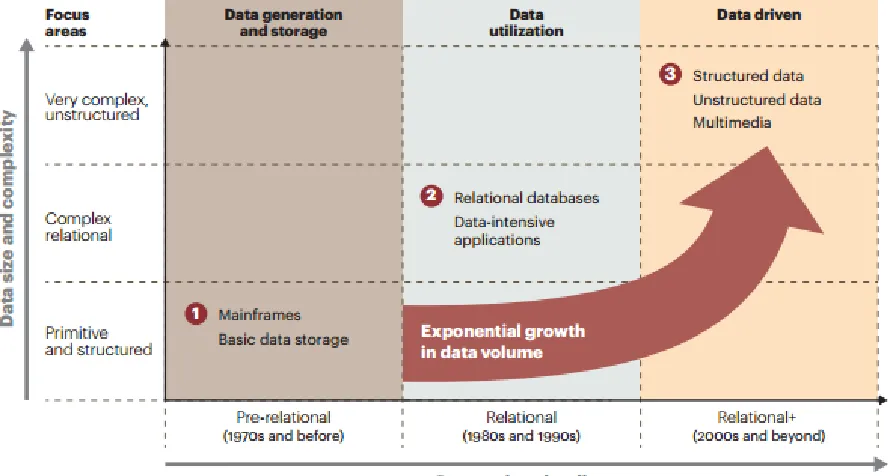
Figure 1. The Evolution of Big Data (Source A.T Kearney)
It is worthwhile noticing that recently, two additional Vs, namely, Veracity and Value, have been added to the list (Fosso-Wamba et al., 2015). Veracity refers to the messiness or trustworthiness of the data. With many forms of Big Data, quality and accuracy are less controllable
but we are increasingly able to work with these types of data. The large volume of data is often
argued to make up for the lack of quality or accuracy, although this assertion is open to debate.
Value emphasises the need to turn Big Data into something useful, which helps make a business
case for collecting and leveraging Big Data with a clear understanding of costs and benefits.
2.2 Contextualising Big Data
operations models, has lagged behind practice. To contextualise current research on Big Data and operations management, we conducted a comprehensive literature review. The initial search for articles connecting Big Data with operations models was conducted using the Scopus database1, identifying 668 articles. As suggested by Wang et al., (2016) we then intuitively checked through all the titles and only included those articles in which: “big data technologies were not only considered as possible new tools for enterprise operation, but which were also triggering impacts in the management (operations and supply chain management) arena” (p. 98). This resulted in 200 articles which were retained for further analysis. A further round of examination of the title and abstract of these remaining articles identified those focusing on topics directly relevant to how big data affects different dimensions of operations models.
An initial study of the literature revealed a number of observations. One is that although Big Data has been touted as having the potential to facilitate strategic change and transform organisations, most existing research seems to have focused on incremental improvements in operations using Big Data. In particular, the links of Big Data to strategic values and transformational change are often implicit rather than explicit. Secondly, from the articles reviewed, they appear to be largely void of any coherent theoretical underpinning, or any systematic treatment of theory coalescing around Big Data. In order to explore what strategic value Big Data can add, it is necessary to think about the theoretical rationale underpinning the processes at play within, and across operations models. Thirdly, we found that many of current research have focused on the technical issues around the management of Big Data itself, not the applications of big data to create strategic value and transformational changes in organisations and along supply chains.
Nevertheless, theoretically motivated frameworks are beginning to emerge in the literature. Wu, Lu and Peng (2015) used the ideas and methods of Big Data to systematically summarize the
1
operational processing problems in traditional regional logistics and freightage. Whilst Harrington and Srai (2016), in the area of multi-organisational service networks, introduced the concept of a Big Data operations architecture underpinned by network theory. They present a series of operating principles and protocols open to all relevant stakeholders “co-operating” within a shared environment. Kuusisto, Kuusisto and Roehrig (2015) develop a big data framework to improve situational understanding for operational art2 in complex social systems and in military cyber operations. Whilst Caldwell et al (2015) develop an interface model of the management challenges that need to be overcome (e.g. rapidly evolving process automation technologies) if big data is to be successfully embedded into the chemical process industry.
2.3 Conceptualising Big Data
The resource based view is built on the principle that a firm‟s resources are a source of competitive advantage when these resources are valuable, rare, inimitable, and not substitutable (Barney, 1991). Developed in reaction to the “five competitive forces” analysis (Porter, 1980), the
RBV theory (Penrose, 1957; Chandler, 1977; Nelson and Winter, 1982; Prahalad and Hamel, 1990; Grant, 1991; Wernerfelt, 1995; Conner and Prahalad, 1996; Priem and Butler, 2001) has put forward the strategic relevance for firms to identify, acquire, and use resources and capabilities to achieve a sustainable competitive advantage. Within the resource-based view, knowledge has been regarded as a key strategic resource (see for instance Nonaka, 1994) leading to the formulation of a knowledge-based theory where the creation and application of knowledge identify the primary rationale for the firm (Bierly et al., 2000). Upon that, Spender and Grant (1996) introducing the Special Issue on “Knowledge and the Firm” in the Strategic Management Journal argued that the “growing interest in knowledge and its management reflects the trend towards „knowledge work‟ and Information Age”. In that respect, Bierly et al. (2000) have elaborated on the link “between
2
strategic choices and the application of organisational knowledge”. By doing so, they presented a conceptual model to elaborate on the relationship among four different levels of learning (i.e. data, information, knowledge, and wisdom) and learning processes. The model display data, information, knowledge and wisdom as four layers through which firms can experience the mere accumulation of facts, the comprehension and application of their meaning, the ability to analyze and synthesize them to generate cognitive skills, and evaluating their meaning to “make conscious value judgments based on clearly defined criteria” (Bierly et al., 2000). In a nutshell, their conceptual model sheds light on an increasing level of ability to extract a unique value from raw data and use it to establish and achieve the firm‟s desired goals.
The intention of this paper is not to examine big data and new operations models using the RBV theory in the literal sense, but to explore how big data, as one form of resource, can be used to facilitate changes in operations models. The shift from data to wisdom implies the ability to operationalise data and embed it into the definition of strategic goals. Our work contends that Big Data still remains a key source of knowledge and wisdom, and it can also facilitate the transformation of a firms‟ operations model, because the magnitude of its effect spans beyond the operationalisation of the value extracted from the raw data and it becomes a strategic resource to inspire new ways to do business.
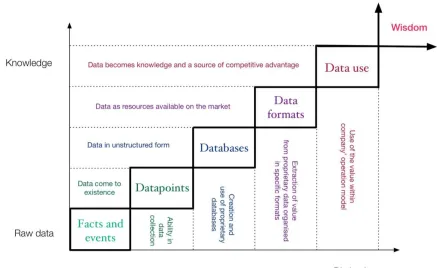
organisations to potentially extract value from data that are seen as resources to be exploited. Only when those data are analysed and used they are transformed into knowledge that can support decision-making process within organisations. Thus, data can be regarded as a strategic capability helping decision makers recognise value and apply new intelligence either within their organisation or beyond.
Figure 2: The Data Ladder
unstructured data, and uses a combination of advanced analytic techniques and disciplines to predict, prescribe, and adapt.
These conceptualisations infer that Big Data, by nature, is a complex multidimensional concept, which requires theoretical consideration, because Big Data and its application can take many different forms. In particular, Big Data provide the raw materials for an organisation to extract new knowledge and insights, not as an one off exercise, but through multiple iterations of manipulation and analyses and through the effective combination of both old and new data, to support descriptive, diagnostic, predictive and prescriptive decisions at operational and strategic levels. As will be discussed later in one of our case studies, EBay, Big Data enables the firm to understand customer journey and ask new questions in ways that were inconceivable before: around 85% of the analytics questions are new or unknown, according to its Head of Global Business Analytics. Such new capabilities enable the EBay to improve and transform its operations model, and help its sellers to change the way they operate.
2.4 Defining Operations Models
technology; and, people development and organisation. We will now review each one of these dimensions in turn.
i) Capacity: The capacity strategy of an organisation determines its productive potential or level of productive activity. Whilst capacity decisions can be altered in the short and medium term (through work-load balancing, flexible working patterns, contracting or outsourcing), long-term capacity decisions pertaining to configuration of facilities, location of manufacturing sites or customer facing facilities, can have a considerable effect on the competitive capabilities of an operation. From a service delivery point of view, the location of capacity can have an impact on the ability to offer flexibility and responsiveness to customers. This is directly related to the shape of an operations capacity and whether they have concentrated capacity, over fewer sites, or a more decentralised capacity structure, spread out over more sites. The determination of capacity is often closely aligned with forecast level of demand. Acknowledging the inherent inaccuracies of many forecasting techniques, coupled with dynamic and volatile consumer demand patterns, organisations seek to better understand „real‟ market demand, so that their operations can respond with
appropriate capacity decisions. As the component of the operations model that determines the level of productive activity of an organisation, capacity is greatly affected by the growth of digital platforms and online marketplaces, where traditional „brick and mortar‟ limitations no longer exist.
process which features actors external to the core organisation. These can be first tier (and beyond) suppliers of product or service, customers (first tier and beyond) but competitor organisations, legislative bodies and government entities can also reside within supply chains. Decisions relating to the design of the supply chain (lean or agile in structure), work undertaken in house or outsourced, supplier selection, vendor management, supplier involvement in new product development and integration with suppliers in terms of IT, plant or people, are core to this component of an organisation‟s operations model. As business models have become more global and focused on customisation as a point of differentiation, operations model have had to make significant adjustments to how they configure their supply network with greater levels of supplier and customer collaboration in innovation now in evidence, a focus on agility and supply chain responsiveness, as well as maintaining control of supply chain risk across their network.
sophistication of customer processing technologies has grown also, be it in healthcare, gaming, transport or security industries.
iv) People development and organisation: This aspect of an operations model includes the continuous improvement activities which are associated with direct operations improvement or reform, or updating in line with changing industry or market requirements. The activities associated with development and organisation as a key component of an operations model are generally connected to a series of medium and longer term decisions related to the governance and management of the operation on a continuing basis. Specifically these decisions can be focused on how the operations people as a resource are integrated with the operation, what capabilities the operation needs to develop or enhance in order to remain competitive, and what the service concept is and how this is manifest through the product/services on offer. Connected to this idea of development is the approach that the operation adopts when it comes to radical or incremental product, service or process innovation and what quality management philosophies drive their daily operations (i.e. lean management; six sigma; or BPR). How the operation engages with stakeholders - both internal and external - is an important element in this aspect of the operating model. The continuously evolving role that customers play in the service delivery process (Gouthier and Schmid, 2003), makes them the lynchpin of many operations models. The digitalisation of many product and service platforms and addition of customer processing technologies within a variety of customer facing industries, requires decision makers to evaluate the extent to which they hand over responsibility for parts of the process to consumers, when designing, or updating, their operations model.
2.5 Big Data and Operations Models
manage, process and analyse the 5V‟s in order to create actionable insights for sustained value
delivery, measuring performance and establishing competitive advantages”. From an operations
point of view, there is evidence to suggest that Big Data and effective analytics, has been used to
improve inventory optimization, operational planning, enhancing forecast accuracy, distribution
transparency, and order frequency, and reducing lead time in processes (Chae et al., 2013; Hoffman
2015; Mortenson et al., 2015).
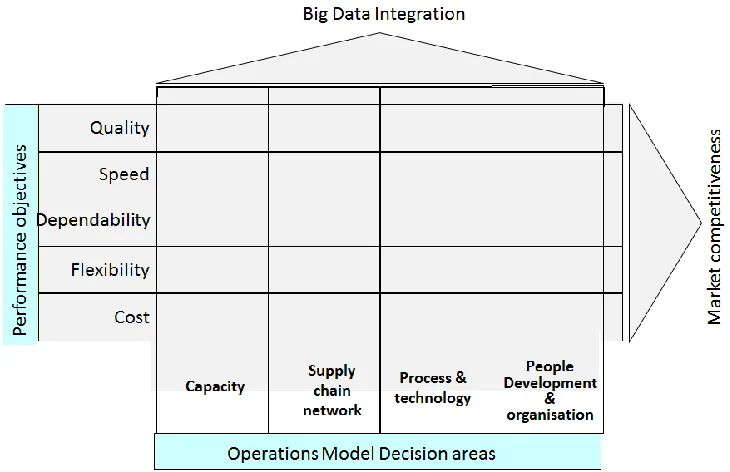
Figure 3 Big Data Driven Decision Making (adapted from Slack et al., 2011)
3. Case Studies
3.1 Case Study Design
This study aims to explore how Big Data is integrated by firms into their operations models, in particular, how operations models have changed as a result of using Big Data, hence a case study approach was adopted which focuses on four firms in different sectors scoped around the theoretical framework in Figure 3. The case study design involved a comparison of four cases drawn from retailing, electronics, automobiles and e-commerce. We followed Levy‟s (2008) „theory-guided case studies‟, as opposed to conventional inductive case studies, in our gathering and analysing of the evidence collected. .
informed by Patton‟s (1990) theoretical sampling approach in choosing cases which are likely to help extend or build theory around the role of Big Data in enabling new operations models in an organisation. Case analysis is determined by the framework outlined in figure 3 relating to the dimensions and measurements of operations models, allowing us to examine the selected underpinning theoretical concepts. This theoretical framing of the data enables consistent comparison between the key operations model characteristics across the case studies.
Information was mainly gathered from secondary sources (with the exception of Philips where some face to face interviews were conducted), including published media interviews, company published materials, industrial journals and trade magazines, newspapers, as well as various online sources. The construct validity of our cases were achieved by developing constructs through a literature review, use of multiple sources of evidence, establishing a chain of evidence, and having each of the co-authors independently and then collectively review the case study reports (Miles and Huberman, 1984; Yin 1993). In accordance with Eisenhardt (1989), the internal validity is established by linking the analysis to prior theory identified in literature review, expert peer review, and the development of diagrams, to demonstrate the internal consistency of the information collected.
The data analysis was structured around key concepts critically derived from our literature review and text mining work. Adopting Miles & Huberman‟s (1984) recommendations, initially a “with-in” case analysis was conducted to identify the different sets of operational practices. Later, a
cross-case analysis was adopted to identify similar or differentiating patterns in the data acquired. While the within case analysis identified the unique capabilities of the company‟s practices, cross case analysis brought about generalisations in the results.
Founded in 1891, Royal Philips (a.k.a. Philips) is a Dutch company considered an innovator in the lighting industry as producer of the first incandescent bulb lamp. Philips is headquartered in Amsterdam and spans its activities across three businesses: healthcare, lighting, and consumer lifestyle. In 2011, the CEO - Frans van Houten - started an enduring transformation program called Accelerate with the aim of promoting variety in the product portfolio by offering integrated solutions (i.e. products linked to other products or services), fostering locally relevant innovations and promoting connected products. As part of this program, Philips exited the lighting business and turned its attentions to the healthcare field in order to reinforce its market share.
The interdependencies which exist between healthcare and consumer lifestyle businesses have presented considerable opportunities for Philips in the creation and management of Big Data created by their customers through the use of Philips devices. For example, the HealthSuite Digital Platform (HSDP) is an open cloud-based data infrastructure which collects data created through health and lifestyle technologies, and is now used by care professionals, as well as patients, to access medical data and make adjustments to care plans as appropriate.
In building a digital ecosystem around their products, Philips has effectively defined a new supply chain and is focused on fostering strategic relationships to maintain the innovative trajectory it is on. Philips management has gone through a process of reinventing their operating model, that of a traditional diversified high tech company, by re-orientating the relationship between products and processes, stakeholder (employee and customer) integration, the role of technology and use of data. The HSDP, alone, has enabled the redesign of Philips‟ operations model. Being an open cloud-based platform it enables third parties to engage with Philips by developing apps to be adopted by care professionals and customers. By doing that, Philips has profoundly innovated the way it integrates with partners along the supply chain. Moreover, HSDP leverages Philips knowledge of integrated and connected solutions by fostering the adoption of its own products, supported by the development of third-party softwares. Internal processes and technology management result here organised in a platform where Philips acts as a leader and dictates the rules third parties have to stick to when engaging in collaboration and innovation activities. The use of Big Data as the engine of this supply chain platform reinforces the value created by professionals and customers for both in-patients and out-patients and care professionals.
3.3 eBay
EBay, a world leading online retailer founded in 1995 in the USA, provides a platform for online auctions linking buyers and sellers and thereby enabling consumer to consumer sales services via the internet. Its revenue was around $8.8 billion, with 162 million active users, and its Gross merchandise volume, or the value of goods transacted across eBay‟s platforms, came in at $19.58 billion in 2016.3 With over 100 million customers who list items in 30000 categories, eBay processes thousands of dollars of transactions every second. However, transaction processing is just the tip of the iceberg, and processing the massive amounts of customer journey data is an
3
http://www.forbes.com/sites/ryanmac/2016/04/26/ebay-shows-signs-of-recovery-as-sales-grow-in-first-enormous challenge. Asking a simple question, such as „what were the top search items yesterday‟, involves processing 5 billion page views. To run more complex sentiment analysis, network analysis and image analysis would overwhelm any traditional transactional database.
The data challenge for EBay is truly enormous: it captures 50TB of machine generated data every day (particularly web metrics), and processes over 100PB of data altogether. The data tells eBay what people do and how they navigate the website. However, as described by its Head of Global Business Analytics at eBay, Mr David Stevenson, collecting web metrics data is like mounting a video camera on the head of every customer going into a supermarket; and recording everything every customer does generates the equivalent of 100 million hours of customer interactions every month. The data challenge is significant in terms of Volume, Velocity and to a lesser extent, Variety, even though much of the data is generated on its own systems and is owned by the firm.
To address the Big Data challenge, eBay split its data analytics in three platforms.4 The first platform is a traditional enterprise data warehouse, from Teradata, which forms the foundation for transactional processing. The system is essentially a massive relational database, which captures 50TB of data every day. Historically the firm kept a sample of 1% of the data and discarded the rest due to the prohibitively high cost for data storage and processing. However, this also limited the ability of the firm to understand the customer journey and ask new questions. Around 85% of the analytics questions are new or unknown, according to its Head of Global Business Analytics, Mr David Stevenson. The second platform was added in 2009 to store all customer journey data more efficiently at low cost. A custom data warehouse was developed called Singularity. The new system offers 100 fold increase in capacity for the same price as the old solution, which allows the processing of hundreds of Petabytes of raw customer journal data. In addition, the firm also built a two 20000-node Hadoop clusters with 80PB capacity as its third data platform.
4
http://www.computerweekly.com/news/2240219736/Case-Study-The three data platforms together enable eBay to conduct a variety of data analysis and offer new services to customers. For example, the data enables eBay to understand what works on the website, such as whether site visitors prefer bigger or smaller pictures. It also enables eBay to present query tips based on topics that eBay „power users‟ have already asked, which helps eBay sellers to determine whether it is best to set a low auction reserve price, whether free shipping matters and any other possible questions related to selling an item successfully on eBay. Such new capabilities are underpinning a series of changes in eBay‟s operations model, and in the operations models of many eBay online sellers. For example, eBay can now provide online sellers real time information about their eBay enabled sales, which helps them to sell more goods. This would indirectly satisfy the buyers better on eBay with a speedier and better shopping experience. The result for eBay is increased sales and revenues. In doing so the capacity is increased, and the supply chain network is optimised. Big Data also enables eBay to use predictive analytics to achieve new revenue streams, greater speed to market and enhanced business flexibility.
3.4 Walmart
As the largest retailer in the world, Walmart is leveraging the power of Big Data to improve their operational efficiency and to tailor their marketing campaigns in order to better deliver value to their 245 million customers. With 10,900 stores, 10 active websites and nearly half a trillion dollars in annual revenue, Walmart can collect data in considerable volume; 2.5 petabytes of unstructured data from 1 million customers every hour (www.dezyre.com). Point of sales data, inventory and logistics tracking data, competitive intelligence, and trends revealed through social media and the behaviours of individual customers reflect the variety of data that Walmart collates and analyses daily.
ecosystem at Walmart analyses close to 100 million keywords on daily basis to optimize the bidding of each keyword. Through the use of Big Data, Walmart has transformed its decision making across the different pillars of their business model, resulting in increased sales – online and instore.
Through Walmart Labs, a product called the Social Genome has allowed Walmart to effectively „listen‟ to what their customers are saying online. The Global Customer Insights analysis estimates that Walmart sees close to 300,000 social mentions every week. Social Genome is a Big Data analytics solution that analyses billions of Facebook messages, tweets, YouTube videos and blog postings. Through on the analytics produced through Social Genome, Walmart is reaching their customers or friends of customers who tweet or mention something about the products of Walmart to inform them about the product and offer them special discount. Through the combination of click streams, social and behavioural data, and proprietary data (customer purchasing data and contact information), Walmart are able to effectively target customers directly, who might have referred to a product online to inform them about that exact product. Such targeted advertising and tailored promotions, unmatched so far by others in this retail sector, encourage customers to purchase and create loyalty.
of when and how their products are selling, and with what other products in the shopping cart (The Economist, 2010). Through this system, and insight into real time demand in stores, suppliers can organise replenishment as well as search for information on forecasts, sales and shipments. The impact is that suppliers can now base production requirements on accurate, real-time sales data. For Walmart, they no longer have to place orders directly with suppliers, keeping their inventory costs at a minimum whilst also improving customer services by reducing stock outs in store. Through collaborative planning with suppliers and the sharing of Big Data, Walmart have been able to smooth out inventory flows through the supply chain.
As well as integrating their suppliers more explicitly, Walmart has also worked proactively on applications that directly involve the demand side of their supply chain: their customers. Through Walmart Labs, the organisation has developed an application called Get on the Shelf, which uses crowdsourcing to elicit ideas from customers. Proposed products are put before a voting public to determine whether they should be stocked by the chain nationally. Acknowledging the limitations with being „locked-in‟ conventional cloud based platforms which often lack
flexibility, speed and scalability, the engineers at Walmart designed their own cloud technology called OneOps which has allowed them to develop and launch new products to customers with greater speed and control (walmartlabs.com).
In terms of process technology, Walmart have made a number of significant technological developments in their process that have revolutionised how they involve their customers in the purchase process, and how they use a customer‟s mobile technology. Each store‟s wifi network allows the company to track customers as they move through the store and also collects behavioural data that customers provide as they compare prices, check items and coupons during their visit in-store. This data is then stored in the company‟s search engine called Polaris and combined with customer data Walmart. om (Neef, 2014). Polaris uses semantic search technology that understands the contextual meaning of a shopper‟s search and in doing so, generates more meaningful results. Another push has been to “mobilise the store”. Each Walmart store has its own layout that requires
up-to-date information about every product in terms of availability and location. The aim is to bring all this to mobile applications, making shopping easier for Walmart customers. Search My Store helps customers quickly and easily navigate their local Walmart. They can search for an item and find available products in the store, the aisle products are located and product reviews
(http://www.walmartlabs.com/innovation/labs/).
3.5 Volkswagen
Volkswagen have evolved over time into a systems integrator and contract manufacturer. Its
operations model involved providing a supplier with a master specification that addressed an
assumed or forecasted market need in accordance with government regulations such as
requirements regarding safety, speed, emissions and so on. Furthermore, Volkswagen (VW)
expected its suppliers to develop components and subsystems in line with strict performance
specifications. This resulted in much of the innovation and knowledge regarding how to address
these requirements remaining with the individual suppliers, rather than being passed on to the car
manufacturer.
In order to integrate Big Data into their operations model, the carmaker is now considering
the realisation that if it is to become a Big Data company producing smart connected cars, it must
adapt its traditional manufacturing production processes to become more consumer centric. Part of
the response to this challenge has seen the company get involved in the production of components
which produce data in order to generate information. The company has built a Big Data lab5 that is
generating predictive models for engine failure as well as building systems that utilize Big Data for
generating real time map data for autonomous driving, and transmitting them to their fleet.
Additionally, the Lab is integrating third party data such as weather data to offer innovative services
around electric vehicles such as real time calculations based on current weather and conditions.
As the car industry shifts its focus towards addressing the needs of the service economy, VW are changing their production capacity from private car manufacturer to mobility provider. They have initially begun developing this capacity through strategic partnerships with external firms. For instance, the riding hailing market is the fastest growing city mobility market segment. A key technology enabling the emergence of this segment is Big Data (Manyika et al., 2011). VW have recently set up a strategic partnership with Gett (an app which connects customers with taxi drivers). Using the Gett application consumers can book on demand rides instantly or pre-book future rides. The Gett technology leverages Big Data, predictive algorithms and artificial intelligence and offers a scalable and dynamic approach to managing capacity. VW aim to use the Big Data predictive analytical capacity provided by Gett to identify, target and expand its operational model into emerging mobility service market segments in Europe. The competitiveness of the VW operational model is therefore evolving with Big Data from a focus on production efficiencies (as per tradition in the car industry) to a focus on agility and adaptability in how it delivers value to customers.
5
At a supply chain level most of VW‟s focus is downstream with their distribution network and after sales service. They are developing a fleet of “smart cars” in which all their vehicles will exchange data on performance and maintenance with their service centres. This information will be used to improve after sales performance. VW is also experimenting with differential service recovery approaches based on prescriptive and predictive uses of Big Data. For instance, they have developed linguistic software to enable the interpretation and integration of dealership and customer service data from different country sources including China, Mexico and India. Previously this information had been isolated and stored in individual silos but now it is centrally collected, stored and analysed. As such, statements from customers related to product or service complaints, or operational problems, can be compared across regions, regardless of language barriers. This allows VW to track customer satisfaction and issues with product quality on a close to real time basis, and expedite appropriate resolutions.
Directly related to their supply chain improvement efforts is the attention VW are paying to leveraging procurement efficiencies. For example, they recently assessed the demand curve across their parts portfolio going back to 1996, which was comprised of 400,000 different parts, and represented some 32m transactions. Using this historic data they built and extrapolated forward 11,000 demand curves for different car parts. Based on these patterns, forecast quality improved by 80% within the dataset.
from across 30 operating systems to make predictive calculations about worker and team productivity.
Leveraging Big Data in their operations model is a huge challenge for VW since the Big
Data business is very different from the traditional car manufacturing. The car maker did not take
the early strategic initiative to integrate Big Data. Rather it seemed to be responding to the social
pressures (Di Maggio and Powell, 1983) forced upon it by new entrants into the sector, who were
appearing to normalise the use of Big Data into their operations decision making. VW have been
forced to take control of their Big Data strategy, reconciling traditional manufacturing technologies
with new processing technologies, supported by strategic partnerships with Big Data firms (online
mobile data services) as well as other ICT suppliers (sensors) in the automotive value chain.
However, in the field of autonomous driving it is clearly firms such as Google, Tesla or Uber and start ups like Faraday Future who are defining the strategic agenda of what Big Data is needed in the operations model and how often predictions have to be updated for autonomous driving.
4. Cross Case Analysis
4.1 Managing Capacity using Big Data
Defined as the productive activity of an organisation, capacity has been greatly affected by the growth of digital platforms, online marketplaces, and the predictive capabilities of Big Data. Big Data was used across all of the cases to tighten operational forecasts, thereby directly impacting capacity planning strategies. The analysis of behavioural data of customers and employees serves as basis for Walmart‟s capacity management strategy and forecasting approach, which directly affects how they manage their human resources and stock in store. Through optimised and flexible scheduling, the company can expect minimal losses linked to excess staffing capacity. As workforce costs, in store, account for 30% of the average retailer's fixed cost (McKinsey, 2011), managing this aspect of capacity closely is a worthwhile task. Also, continuous monitoring of store capacities directly informs the decision making process around store layout and product configuration on a real time basis. In combining multiple datasets such as past sales data, weather predictions and seasonal sales cycles, Walmart have been able to improve their stock forecasting.
Through its‟ connected network of smart devices connecting hospitals and patients globally,
Philips leverages the Big Data collected to respond, and plan capacity scheduling accordingly for hospitals around patients needs. On the one hand, Philips increases its knowledge of hospitals‟ internal processes to streamline them with the design and development of innovative products and services. On the other hand, through the analysis of the patients‟ use of its products and services Philips are able to use the knowledge and wisdom gained around the embedding of technical solutions in new personalised care solutions, to make longer term capacity decisions.
From the perspective of capacity planning in VW, Big Data is being analysed at a granular country level so that production planning can be configured according to the environment and product preferences, or requirements, of different countries. At the customer level, customer expectations are requiring an increase in the capacity and service offering around “infotainment”. Therefore, in planning future design and production capacity, VW are using Big Data analytics to find behavioural clues of the expectations of their customer regarding what services they want providing in their cars (e.g. smart phone connectivity, GPS tracking, and entertainment). It is clear that VW is acutely aware of the risk of losing future market share by failing to evolve its forecasting, design and production capacity with Big Data. They have therefore also sought to build capacity through recent acquisitions, investments and partnerships (Inrix for example) they have made, coupled with their focus on adding human capacity in the form of data scientists.
4.2 Transforming Relationships
We observed that relationships between an operation and its key suppliers have been redesigned to some extent, through Big Data. New modes of engagement with the supply chain have emerged that allow expedited information transfer, idea sharing, real time inventory and product tracking. In relation to Walmart, volumes of social media are being used not only to predict trends and product preference across different product groups, but social media data is being used to drive supply chain decisions around the location of inventory. Using Big Data in this way in the automotive sector is not uncommon, but Walmart are leading the way in their application in retail. Their best-in-class approach to inventory management allows them to hold much lower levels of stock, as orders are so tightly coupled with real time demand signals.
supply chain to its suppliers. As a result, some of its suppliers, such as Bosch, became Big Data firms leaving them behind. Much of the innovation and knowledge regarding Big Data requirements remained with individual suppliers, rather than being passed onto VW. With the arrival of new entrants into car industry they noticed how strategically important Big Data was becoming to the sector and the advantages it could have in product development and building operations and supply chain decision making, to the extent that it is now a central component of their proposed 2018 strategy. It seems that for traditional manufacturers, there exists unexploited potential to consider how they can really embed a culture of co-creation around product development and product lifecycle management with input from different stakeholders, including suppliers. In VW, as is the case with many car makers, there is still a degree of hesitancy to share data, particularly customer data as it represents a strong source of revenue. Likewise suppliers have been reluctant to share data also.
The Philips approach to managing data, and innovation, through their supply chain is somewhat different however. The Philips case shows how Big Data has created the basis to establish a new supply chain where customers (both hospitals and patients) co-develop innovative healthcare solutions by generating data and providing them to Philips and supply chain partners (e.g. Massachusetts Institute of Technology, SURFsara National Research Infrastructure, Salesforce). Using virtual collaboration sites, Philips have been able to source and share ideas in the spirit of „open innovation‟.
In the case of eBay, the supply network is optimised through the use of Big Data. Big Data enables eBay to provide real time information to its online sellers, which helps these sellers to make timely adjustments in order to improve the shopping experiences of customers. The result is increased sales and revenues for the sellers, larger fees for eBay, and more satisfied customers.
Through sophisticated information processing and customer processing technologies, all cases exhibited improvements in the speed at which they can now fulfil different parts of their process. This has been largely facilitated by the integration or overlapping of different types of technologies: from the systems used to track and process customers in Walmart (customer technologies), to the collection of details relating to their purchases, preferences and demographics (information technologies), to the real time tracking of inventory and supplier orders (material processing technologies). What is noteworthy is the degree of connectivity between these different types of technologies. The connectedness of the system architecture described in the Walmart case makes it scalable which is important given the volume and variety of the data that is generated.
Walmart shows how a physical product retailer can leverage data as an asset to drive down cost through a leaner approach to managing inventory whereby it requires its suppliers to track and coordinate inventories through integrated RFID tagging systems. From a customer perspective, through the integration of Hadoop and NoSQL technologies, the shopping experience as a process has been revolutionised for Walmart customers. Through an overhaul of their global websites and the development of innovative applications that personalise customer experience while also increasing the efficiency of their logistics, Walmart are able to offer a more customised service, ensuring that the „right‟ products are in the right place, at the right time. Also the Philips case shows how the information processing technology is primarily aimed at extracting knowledge from Big Data. That is in fact the main strategic and operations target through which Philips internal processes are designed to transform raw data into meaningful insights for developing innovative care solutions, and integrating supply chain stakeholders into the core business.
based on topics that eBay „power users‟ have already asked, which helps eBay sellers to determine whether it is best to set a low auction reserve price, whether free shipping matters and any other possible questions related to selling an item successfully on eBay. Such new capabilities are underpinning a series of process changes in eBay‟s operations model, and in the operations models of many sellers.
Process improvement is also in evidence at VW as they sought to synchronise their parts procurements and logistics, in line with customer orders. Reducing aftermarket inventory is now a major strategy for the carmaker, from process and planning improvement, to stock and goods-flow systems. For example, at its Depot Kassel the car maker are introducing Big Data mining techniques to predict and improves its parts picking performance. As previously mentioned, currently it monitors picking KPIs in a partially automated operation across 70,000 daily order lines, with its operations analysts monitoring its service levels, lead times and loading time. By 2017 this will be fully automated and configured using SAP HANA software with parts service performance predicted to improve by 40%.
4.4 Big Data and Organisational Development
operation and organisation. In all cases, the data analysts have relative freedom to „ask new questions‟ of the data and be creative with how they analyse it. This flexibility and autonomy is important for these internal customers who are in high demand across sectors. For example, a study by McKinsey (2011) predicted that by 2018 the U.S. could face a shortage of between 140,000 to 190,000 people with deep analytical skills, and a shortage of 1.5 million managers and analysts who know how to leverage data analysis to make effective decisions.
As well as possessing the right „human capital‟ to unlock wisdom from the data, the case study organisations showed a marked shift in how they engaged with another important stakeholder - their external customers. In an era of digitalisation and ever shortening product lifecycles, the innovation process is one which can serve to sustain organisations. Both Philips and Walmart leverage novel crowdsourcing methodologies to collaborate with their customers or lead users, in order to converge on new product ideas and tailor innovative solutions of customers‟ needs. Crowdsourcing, defined as the idea of taking a task that has previously been done by a clearly defined person or group and directing it to an undefined group via an open call (Howe, 2008), is enabled through the integration of customer processing technologies (through their website in the case of Walmart). Through Get On The Shelf, customers have a direct forum in which they can offer feedback on potential new product offerings and essentially affect the product lines stocked. This not only reduces the risk associated with some product launches and expediates the product innovation process but also allows enables the customer to feel involved - an important aspect of crowdsourcing. Across the case studies, Big Data is clearly being used to affect change at different levels of the operations model, through its integration into different decision making processes.
5. How Big Data Transforms Operations Models: A Framework
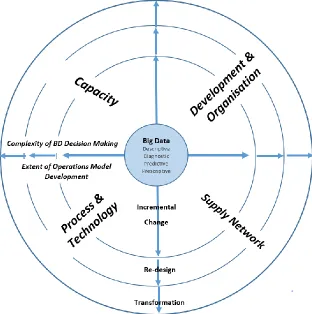
Through examination of four cross-sectional case studies, we observe that Big Data can be leveraged to: 1) incrementally adjust or improve some components of the operations model; 2) assist in the redesign or reconfiguration of the operations model and its components; or, 3) it can radically transform the operations model. Despite the element of subjective judgement involved in determining the level of change along a particular dimension in an organisation, this classification can be used by researchers and managers to understand the nature of organisational change enabled by big data. Following our analysis, we present a tentative framework (Figure 4) which can be used both for understanding how Big Data affects operations models, and for planning changes in operations models through Big Data.
[image:36.595.144.456.310.624.2]
Figure 4: A Framework for Big Data and Changes in Operations Models
prescriptive. The framework is pivoted around Big Data and shows how different levels of Big Data integration can impact change across the core dimensions of operations models - capacity, process and technology, supply network and, people development and organisation. The different degrees of change are represented from incremental change through to radical transformations. Following the case analysis, we observe that Big Data has largely been used to make adjustments at the incremental level, with transformational change in the operations model the exception rather than the rule.
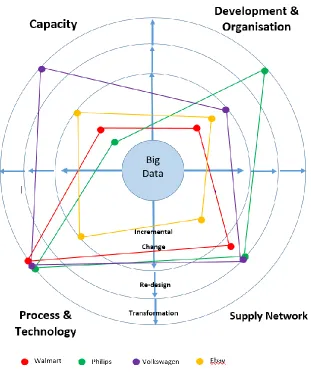
Across the cases we observed that Big Data does not affect change equally across the dimensions of operations models but rather that it was used, with differing levels of complexity and integration, in the manipulation of some components more so than others. In Figure 5, we plot the extent of change or manipulation (incremental, redesign or transformational) in each component of the operations models, across the four case studies. Despite the subjective element involved in determining the levels of change along each of the dimensions, this figure is helpful for researchers and manager in clearly visualising the patterns of change both within an organisation and when comparing multiple organisations.
the „servitisation‟ of their business model, VW have focused on using Big Data to revolutionise their process design and technology, as well as how they predict demand at a regional level and adapt capacity accordingly.
[image:38.595.116.427.149.526.2]
Figure 5: Big Data and Changes in Operations Models across the Case Studies
In this discussion we use Figure 5 to compare across cases, but do suggest a note of caution in how one interprets changes between operations models. The industries in which our case study companies reside are very different in nature - their clock speed, dynamism, digital development and technology - and therefore changes in operations models should be compared, relative to where the organisation was before the application and integration of Big Data. For example, eBay is not inherently less radical than Volkswagen, in how it uses Big Data in its operations model, as Figure 7 might imply, but has a different starting point.
6. Conclusions and Future Research Agenda
The research highlighted a range of theoretical and practical issues that need to be examined. For example, what is big data? Does it have to meet all conditions of the 3Vs or 5Vs in order to qualify as big data; or could it be regarded as Big Data when only one or some of the Vs are featured? How could Big Data be used, which might range from ad hoc use for incremental improvements by refining operations, to more systematic use of Big Data to redesign business processes and change operations models. How could the impact of using Big Data in organisations be systematically understood, which could range from improving existing operations models, to introducing new services and creating new revenue streams, to transforming and disrupting old operations models and supply networks.
Information is defined as data interpreted into a meaningful framework, whereas knowledge is information that has been authenticated and thought to be true (Vance, 1997). This research revealed that one of the challenges is that Big Data is often treated as „knowledge‟ when in fact there are transformative processes and advanced data analytics that are required in order to make this data „useful‟. The capabilities of organisations in extracting knowledge and intelligence from
raw Big Data will increasingly become a core competence for these organisations.
head. Such things cannot be captured or included in Big Data and therefore are likely to be downplayed in data-driven decision making processes.
It should also be noted that not all decisions will be based on data – in other words, some decisions should not be data-driven (Brynjofsson, 2014). Risks and challenges are emerging especially when we: i) question the technical and managerial ability to crunch the large amount of data available, ii) overlook or underestimate the value of the information that can be extracted. As a consequence, the use of Big Data introduces high stakes for organisations because it makes measurable what has been traditionally unmeasurable; and it implies the abandoning of sampling techniques in the decision-making process in favor of adopting predictive analytics that reveal specific correlations among phenomena.
Much remains to be done and four types of research are particularly required. Firstly, more research is needed to develop and validate the framework to link Big Data with changes in operations models in different types of organisations. This will require both theoretical and empirical research. Secondly, new research is particularly needed to gather detailed evidence on real life examples and industry best practices of using Big Data to enable the transformation of operations models and the development of new operations models in different sectors and domains, and explore lessons that can be learnt from such cases. This will enable us to develop deeper understanding of the opportunities and challenges involved, and use the new capabilities of Big Data to facilitate transformational changes in operations models; and articulate and measure the strategic values that can be derived from such changes. Thirdly, the risks involved - the dark side of Big Data - should also be systematically examined, which has been largely absent from the academic literature. Finally, this paper focused on how big data transforms operations models, which will inevitably be reflected in changes in the business models of the organisation. This issue should be explicitly examined in future research.
References
Balboni, F., M. Haydock, D. Kasdan, C. Kinser, and K. White. 2010. “Analytics: The New Path to Value. How the smartest organisations are embedding analytics to transform insights into action”. IBM Institute for Business Value (in collaboration with). MIT Sloan Management Review. Research Report, Fall 2010.
Barney, J. 1991. “Firm Resources and Sustained Competitive Advantage.” Journal of Management 17(1): 99-120.
Batty, M., 2013. “Big data, smart cities and city planning.” Dialogues in Human Geography 3: 274–279.
Bierly, P.E., E.H. Kessler, and E.W. Christensen. 2000. “Organizational learning, knowledge and wisdom.” Journal of Organizational Change Management 13(6): 595-618.
Caldwell, J., M. Nixon, T.G. Blevias, and W. Wojsniz. 2015. “Embedded Analytics in Industrial Big Data Applications.” 11th Global Conference on Process Safety, 26-30 April 2015, Austin, US.
Chae, B. K., D. Olson, and C. Sheu. 2013. “The impact of supply chain analytics on operational performance: A resource-based view.” International Journal of Production Research 52(16): 4695– 4710.
Chandler, A.D. 1977. The Visible Hand. Boston: Harvard University Press.
Conner, K.R., and C.K. Prahalad. 1996. “A Resource-Based Theory of the Firm: Knowledge versus Opportunism.”, Organization Science 7(5): 477-501.
Davenport, T. 2014. Big Data at work: Dispelling the myths, uncovering the opportunities. Boston: Harvard Business Review Press.
Davenport, T.H., P. Barth, and R. Bean. 2012. “How „Big Data‟ is Different.” MIT Sloan Management Review, 54(1): 21-24.
Di Maggio, P. and W. Powell. 1983. “The Iron Cage Revisited: Institutional Isomorphism and Collective Rationality in Organizational Fields.” American Sociological Review 48(2): 147-160.
Duta, D., and I. Bose. 2015. “Managing a Big Data project: The case of Ramco Cements Limited.” International Journal of Production Economics, 165: 293–306.
Eisendardt, K. 1989. “Building Theories from Case Study Research.” The Academy of Management Review 14(4): 532-550
Fosso Wamba, S., S. Akter, A. Edwards, G. Chopin, and D. Gnanzou. 2015a. “How “Big Data” can make big impact: Findings from a systematic review and a longitudinal case study.” International Journal of Production Economics 165: 234–246.
Fosso Wamba, S., and S. Akter. 2015b. “Big Data analytics for supply chain management: A literature review and research agenda.” The 11th International Workshop on Enterprise & Organizational Modeling And Simulation (EOMAS 2015), 8–9 June 2015, Stockholm, Sweden.
Fox, S., and T. Do. 2013. “Getting real about Big Data: applying critical realism to analyse Big Data hype.” International Journal of Managing Projects in Business 6(4): 739-760.
George, G., M.R. Haas, and A. Pentland. 2014. “Big Data and Management: From the Editors.” Academy of Management Journal 57(2): 321- 326.
Gouthier, M., and S. Schmid. 2003. “Customers and customer relationships in service firms: The perspective of the resource-based view.” Marketing Theory 3(1): 119-143.
Harrington, T. S., and J.S. Srai. 2016. “Designing a „Concept of Origins‟ Architecture for Next Generation Multi-Organizational Service Networks.” AI and Society, (May): 1-13.
Hayashi, A.M. 2014. “Thriving in a Big Data world.” MIT Sloan Management Review, 55(2): 34-39.
Hofmann, E. 2015. “Big Data and supply chain decisions: The impact of volume, variety and velocity properties on the bullwhip effect.” International Journal of Production Research, 1-19.
Johnson, M.W., C.M. Christensen, and H. Kagermann. 2008. “Reinventing your business model.” Harvard Business Review 86(12): 57-68.
Kiron, D., P.K. Prentice, and R.B. Ferguson. 2014. “Raising the bar with analytics.” MIT Sloan Management Review 55(2): 29-33.
Kitchin, R., 2014. “Big Data, new epistemologies and paradigm shifts.” Big Data & Society 1(1) :1-12.
Kumar, M., G. Graham, P. Hennelly, and J. Srai. 2016. “How Will Smart City Production Systems Transform Supply Chain Design: a Product level Investigation.” International Journal of Production Research. Forthcoming.
Kuusisto, T., R. Kuusisto, and W. Roehrig. 2015. “Situation Understanding for Operational Art in Cyberspace Operations.” European Conference on Information Warfare and Security, 2-3 July, Vol 2015: 169-175.
Laney, D. 2001. 3-D data management: controlling data volume, velocity and variety. META Group Research Note. Accessed May 15 2016
https://blogs.gartner.com/doug-
laney/files/2012/01/ad949-3D-Data-Management-Controlling-Data-Volume-Velocity-and-Variety.pdf
Levy, J. S. 2008. “Case Studies: Types, Designs, and Logics of Inference: Presidential Address.” Conflict Management and Peace Science 25(1): 1-18.
Li, F., S. Roden, A. Nucciarelli, and G. Graham. 2016. “How Smart Cities Transform Operations Models: A New Research Agenda for Operations Management in the Digital Economy.” Production Planning and Control, 27(6): 514-528.
Manyika, J., M. Chui, B. Brown, J. Bughin, R. Dobbs, C. Roxburgh, and A.H. Byers. 2011. Big Data: The next frontier for innovation, competition and productivity. New York: McKinsey Global Institute.
Mavragani, A., and K.P. Tsagarakis. 2016. “YES or NO: Predicting the 2015 GReferendum results using Google Trends.” Technological Forecasting and Social Change, 109: 1-5.
Mayer-Schoenberger, V., and K. Cukier. 2013. Big Data. A revolution that will transform how we live, work and think. London: John Murray Publishing.
McAFee, A., and E. Brynjolfsson, 2012. “Big Data: The Management Revolution.” Harvard Business Review 90 (10): 60-66.
McKinsey Global Institute. 2011. Big Data: The next frontier for innovation, competition, and productivity. McKinsey & Company, Accessed April 23
http://www.mckinsey.com/business-functions/business-technology/our-insights/big-data-the-next-frontier-for-innovation
McKinsey Global Institute. 2015. The Internet of Things: Mapping the value beyond the hype.
Executive summary, June 2015, Accessed November 2016
http://www.mckinsey.com/~/media/McKinsey/Business%20Functions/McKinsey%20Digital/Our% 20Insights/The%20Internet%20of%20Things%20The%20value%20of%20digitizing%20the%20ph
ysical%20world/Unlocking_the_potential_of_the_Internet_of_Things_Executive_summary.ashx
Miles, M. and M. Huberman, 1984. Qualitative Data Analysis. Sage: London.
Mortenson, M. J., N.F. Doherty, and S. Robinson. 2015. “Operational research from Taylorism to terabytes: A research agenda for the analytics age.” European Journal of Operational Research 241(3): 583–595.
Neef, D. 2014. Digital Exhaust: What Everyone Should Know About Big Data, Digitization and Digitally Driven Innovation. Upper Saddle River: Pearson Education
Nelson, R.R. and S.G. Winter. 1982. An Evolutionary Theory of Economic Change. Boston: Harvard University Press.
Nonaka, I., P. Byosiere, P.C. Borucki, and N. Konno. 1994. “Organizational knowledge creation theory: a first comprehensive test.” International Business Review 3(4): 337-351.
Patton, M. 1990. Qualitative Evaluation and Research Methods. London: Sage. Penrose, E.T. 1957. The Theory of the Growth of the Firm. New York: Wiley