0022-538X/90/041616-09$02.00/0
CopyrightC) 1990, American Society for Microbiology
Equine
Infectious Anemia Virus
tat:
Insights
into the Structure,
Function, and Evolution of Lentivirus trans-Activator Proteins
PATRICIA DORN,'tLUISDASILVA,2 LUISMARTARANO,' AND DAVID DERSE3*
Biological Carcinogenesis andDevelopmentProgram, Program Resources Inc., Frederick Cancer Research Facility, Frederick, Maryland21701'; Instituto Nacional do Cancer, Rio de Janeiro, Brazil2; and Laboratory of Viral
Carcinogenesis, National CancerInstitute, Frederick, Maryland2170J-10133 Received 29 September 1989/Accepted 5 December 1989
Equineinfectious anemia virus (EIAV)containsatatgenewhichisclosely relatedtothetrans-activatorgenes of the human and simian immunodeficiency viruses. Nucleotide sequence analysis of EIAV cDNA clones revealed that thetatmRNA is composed ofthreeexons; the firsttwoencodeTat andthe thirdmayencodea Rev protein. Interestingly, EIAV Tat translation isinitiated ata non-AUG codon in exon 1 ofthe mRNA,
perhaps allowing an additional level of gene regulation. The deduced amino acid sequence of EIAV tat, combined withfunctional analysesoftatcDNAs in transfectedcells,hasprovidedsomeunique insightsintothe
domainstructureof Tat. EIAV Tat hasaC-terminalbasic domainandahighlyconserved 16-amino-acidcore
domain,butnotthecysteine-rich region,thatarepresentin theprimateimmunodeficiencyvirus Tatproteins. Thus, EIAV encodesa relatively simple version ofthiskindoftransactivator.
Equine infectious anemia virus (EIAV) is the etiologic agentofadisease of horses that is characterized by severe
anemia,fever, andviremiain aperiodically cyclingmanner
(5). The virus infects cells of the monocyte/macrophage lineage and persists for the life of the animal; stress or
immunosuppression mayprecipitate a resumption of clinical
disease (25, 29). EIAV is a retrovirus of the lentivirus
subgroup whose other family members include the human and simianimmunodeficiency viruses (HIV andSIV), visna virus, caprine arthritis-encephalitis virus, and the recently described lentiviruses feline immunodeficiency virus (FIV) (35) and bovine immunodeficiencyvirus (15). Most of these viruses are known to encode several genes in addition to thoserequired for replication and virion assembly; in some of theseviruses, these geneproductsfunctionasregulators ofvirusexpression.
The control of gene expression has been extensively
examined for the primate immunodeficiency viruses and visna virus. These agents appear to control their expression
through a complex interaction of viral regulatory proteins and cis-acting response elements. Thefirst of several
regu-latoryproteins tobe describedfor these viruseswasthe HIV
transcriptional activator, Tat, which acts in concert with sequence elements in the long terminal repeats (LTRs) to increase the abundance ofviral transcripts (2, 40, 43, 44). The HIV and SIV Tat proteins share several highly con-servedamino acid domains andact onTat-response (TAR) elementslocated downstream of theRNA startsite (36, 45).
Incontrast, the sequence of the visna virus Tat protein is
quite differentfrom those of the primate virusTat proteins and appearsto act onsequence elementslocated inaregion upstream from the transcriptional promoter (8, 22). It is apparent that the various lentiviruses have evolved distinct
strategies, incorporating discrete cis- and trans-acting com-ponents, for the regulation of theirexpression.
We previously suggested that EIAV gene expression is controlled in a manner similar to the primate lentiviruses,
*Correspondingauthor.
tPresentaddress:DepartmentofMicrobiologyandImmunology,
StanfordUniversity, Stanford, CA94305.
since the EIAV TAR elements were present in the region immediately downstream of the RNA start site (9, 11). On the basis of the mechanistic similarities, we hypothesized that EIAVmight encodeaTatprotein related to the HIV and SIV proteins. Aputative tat gene has been mapped to the centralregion of the EIAV genome both by deletion analyses of the provirus (42) and by cloning subgenomic fragments into mammalian expression vectors (11). Because therewere
several open reading frames (ORFs) and potential splice sites within theregion tested, an unambiguous definition of the essential tat exon was not possible. In the work de-scribed in the present communication, we examined the sequenceandexpressionof theEIAV tatgeneandanalyzed the structure and activity of the Tatprotein in transfected cells. The predicted EIAV Tat protein has an amino acid sequence and domain structure closely related to the HIV and SIV Tat proteins. The sequence comparisons, when combined with functionalanalyses, helped to delineate do-mains critical forTatfunction. Anovel aspectofEIAVtat
expression is the use of a non-AUG codon for translation
initiation,thus demonstratingan additional strategy for fine
tuninggeneexpressionin the lentiviruses.
MATERIALSANDMETHODS
cDNA cloning. cDNA was synthesized by using 5 ,ug of poly(A)+ RNA from EIAV-infected FEA cells, an oligo
(dT)1218
primer, andreagents and conditionsrecommendedbythesupplier (Bethesda ResearchLaboratories, Inc.).The
ends of the double-stranded DNA were modified by the
addition of EcoRI linkers andligatedtoEcoRI-digestedarms
of the bacteriophage lambdaZAP vector(Stratagene Inc.).
Approximately 40,000 plaques were recovered, and 50 of these thathybridizedtotheEIAV LTR werefurtherpurified by two rounds of plating and screening. The plasmid por-tionsof the recombinantphage (containing the cDNAinsert)
were excised by superinfection with helper phage, R408. Plasmids were subsequently analyzed by restriction
map-ping, Southern blot hybridization to subgenomic probes representing the LTR and the central region of the virus genome, anddideoxy-nucleotide sequencing (20, 39).
Plasmid construction. pElcat contains the EIAV LTR 1616
on November 10, 2019 by guest
http://jvi.asm.org/
cloned into pUXcat (11). pCl5cat contains an HIV LTR
fragment cloned into pSVocat (40). pUXSV2cat and
pUXRSVcat respectively containthesimian virus 40(SV40) early promoterfrom pSV2cat and the Rous sarcoma virus LTRfrom pRSVcat cloned into pUXcat. Fragments from thecentralregionof the EIAV genomewereclonedintothe
expression plasmid, pS, containingtheSV40earlypromoter and polyadenylation signals at the extreme ends of the
multiple cloning site of the Bluescribe vector (11). pS1,2
contains the 800-base-pair (bp) NcoI-SmaI fragment
(ge-nomepositions 4870 to 5670) cloned intotheHincll site of
pS.pSl contains the 448-bpNcoI-BamHIfragmentfrom this
regioninpS. pS2 containsthe 530-bp PvuII-SmaIfragment
in the HincII site of pS. pS1,2bRsa contains the 608-bp RsaI-SmaI fragment in pS. Translation termination codons wereintroduced intoORF
Si
orS2 ofplasmid pS1,2 to formplasmids pSul,2 and pSl,a2, respectively. Single
nucleo-tides within the PvuII and BamHI restriction sites were
changed
to create stop codons by oligonucleotide-directed mutagenesis of single-strangedDNA. Alteredplasmidswereidentified
by
the loss ofthe appropriate restriction site. Aslightly differentvectorsystemwasusedtoexpressHIV Tat and EIAV cDNA fragments. pRSPA-Kand
pRSPA-S
con-tain theRoussarcomaviruspromoterand SV40 polyadeny-lation sequences clonedinto the distal ends of the multiple
cloning
site oftheBluescript-KS+
vector(Stratagene);
thetwo vectors differ in the orientation of the transcription
signals
with respect to the vector cloning sites. pRS-Htat contains the HIV tat gene from the HXB2provirus
clone(41);a343-bp
SaII-Sau96-1
fragment(genomepositions5785to 6128) was inserted into the SalI-to-EcoRV sites of
pRSPA-K.The insertsfromEIAVtatcDNAclones 442 and 492 were released as XhoI-XbaI fragments and cloned
di-rectly into the same sites ofpRSPA-S to give pRS442 and
pRS492, respectively. A 279-bpHaeII-ApaI fragmentfrom cDNA 492 wascloned, afterT4 DNApolymerase digestion ofthe HaeII
end,
intotheSmaI-to-Apal
sitesofpRSPA-Stogive
pRS-Etat-HA. pRS-Etat-HAXwasmadeby ligatingtheoligonucleotide
CTAGTCTAGACTAG to the SmaI site,within the tatgene, ofpRS-Etat-HA. pRS-Etat-S contains
the
219-bp
SmaI-ApaIfragment
ofcDNA 492 cloned into thesame sites of pRSPA-S. pRSPA-S was modified by the
insertion of the oligonucleotide CCACCATGG into the EcoRV site to give pRSPA-Met; digestion of this plasmid
with Ncol and endfillingwith DNApolymerase providesan
efficient methionine initiation codon for insertedgenes. The
Smal-Apal
fragment from pRS-Etat-S was ligated to thepolymerase-filled
Nco- andApal-digested
sites ofpRSPA-Met to
give pRS-Etat-M,
thusplacing
the tatcoding
se-quences in frame with the methionine initiation codon. A
177-bp fragment
was releasedfromcDNA 492 by digestionwith BstNIand mung bean nuclease followedby
ApaI;
itwasthen
ligated
topRSPA-S (SmaI
to ApaI) andpRSPA-Met
(NcoI to
Apal)
to give pRS-Etat-B and pRS-Etat-MB,re-spectively.
Theplasmid pRS-Etat-MP
wasmade inasimilar way by insertion of the 126-bpPvuII-ApaI
fragment fromcDNA 492 into pRSPA-Met. The plasmids pRS-Etat-M23,
pRS-Etat-M24,
andpRS-Etat-M25wereconstructedbyexo-nuclease III and mung bean exo-nucleasedigestionof the 5' end of cDNA 492 followed by
ApaI
digestion
and ligation topRSPA-Met plasmids. All plasmids were banded twice by
cesium chloride
gradient centrifugation
and verified by nu-cleotide sequenceanalysis (20, 39).Cells and transfections.
EIAV-infected,
feline FEA (E-FEA), canine osteogenic sarcoma (D17), African greenmonkey kidney (COS), and human(HeLa) cellswere
main-tained in Dulbecco modified Eagle medium supplemented with10% fetal calfserum(GIBCO Laboratories).For chlor-amphenicol acetyltransferase (CAT)assays, 3 x 10⁵cells in 5 ml of medium were plated in 3.5-cm-diameter wells of six-well clusterdishes the daybefore transfection. Plasmid DNAsweretransfectedascalciumphosphatecoprecipitates
aspreviouslydescribed(11).After 4 hfor D17 and COSor12 hfor HeLa, the cellswere washed withphosphate-buffered
saline and fresh medium wasadded. Twodays after
trans-fection, cells were harvestedby scraping, suspended in 100 ,ul of 0.1 M Trishydrochloride (pH 7.8), andlysed bythree
cycles offreezing and thawing. The resulting supernatants were thenassayed forCATactivity.
CAT assays. CAT activity was assayed by the solvent
partition method of Neumann et al. (31). A200-,lreaction mixturecontaining100mMTrishydrochloride (pH 7.8), 1.0
mMchloramphenicol,0.1 ,Ciof
[14C]acetyl
coenzyme A(4 mCi/mmol) (Du Pont, NEN Research Products), and cellextract wasoverlaid with 3 ml ofscintillationfluid (Econo-fluor;DuPont, NEN).Reactionswereperformedatambient temperature. Production of theradioactivelylabeled acetyl-chloramphenicol was monitored by counting in a liquid
scintillation counter athourly intervals.
RNA purificationand Northern(RNA) blot analysis.Total RNAfrom E-FEA cellswas prepared bylysis inguanidine thiocyanate and ultracentrifugation through a cesium chlo-ride cushion (6). Poly(A)+RNAwasprepared by oligo(dT)-cellulosecolumnchromatography,anda
2.5-pug
portionwasfractionatedon a 1%agarose-0.66 Mformaldehyde gel and transferred to a nylon membrane for hybridization.
Mem-branes were hybridized to a 32P-labeled EIAV LTRDNA fragment aspreviously described (11).
RESULTS
Identification ofthe essential tat exon. As a first step in
identifying the EIAV tat gene, genomic fragments derived
fromthe centralregion ofthevirusgenomewere expressed
in mammalian cells (11). EIAV tat coding sequences were
thusmappedto an800-bp fragmentthatcontainedthe 3' end
ofthepolgene, twosmall ORFs
designated
Si andS2, and the 5' end ofthe env gene (Fig. 1). EIAV LTR-directedtranscription was activated in cells transfected with the
expression plasmid pS1,2, whichcontains this 800-bp
Ncol-SmaI
fragment
controlled bythe SV40early promoter(11).Toprecisely identifytheORFrequiredfor theexpression of
Tatactivity,we haveintroduced several deletions andpoint mutations intopS1,2
(Fig.
1). Theresulting plasmids
werethentransfected into canineD17cells withpEIcat,aplasmid containing the bacterial cat gene controlled by the EIAV LTR.CAT
activity
expressedin thetransfected cells reflectsTatactivation of the EIAV LTR sequences (Table 1).
Levels of CAT
activity
directedbypElcat
wereapproxi-mately10times
higher
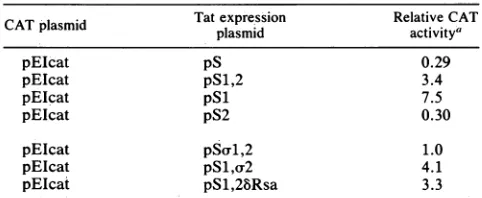
in cellscotransfected withpS1,2than with pS, thenoncoding expressionvector(Table 1). PlasmidpSi
is deletedofsequences3' of the BamHIsite;
itcontains allof ORFSiandonlythefirst 18 codons of ORFS2(Fig.
1).pSi
expressed Tat activity in transfected cells,yielding
levelsof CATactivity higherthanproducedby
pS1,2(Table
1). We previously reported that a
pSi plasmid
did not express Tat activity (11); we later discovered that thiserroneous result was due to secondary alterations in that
plasmid. Deletion of sequences upstream ofthe PvuII site gaverisetopS2,which contains all 66 codonsof ORF S2 but islackingthefirst 12codonsof ORFSi.
pS2
didnotexpressTatactivityinthetransfected
cells,
suggesting
that ORF Sion November 10, 2019 by guest
http://jvi.asm.org/
5000
pS1,2
pSI
pS2
pSal,2
pSl, 2
5200 5400
Ncol RsalPvull BamHI Smal
~~~I.
AUG4
POL
ISi
I
ENV
AUG
I~~~~~~~~~~~~~~~~~~~
TAG
TGA
pSl ,2ARsa
FIG. 1. Structures of expression plasmids containing subge-nomic fragments from the central region of the EIAV genome. At the top is shown the 800-bpNcoI-SmaI fragmentcontaining the 3' end of pol, ORFsSi and S2, and the 5' end of env. Numbersrefer tonucleotide positions in the genome. Translation initiation codons (AUG) and restriction sites are indicated. This 800-bp fragment was inserted into theexpressionplasmid, pS,to give pS1,2, from which the other plasmids were derived. Termination codons were intro-ducedinto ORFs
Si
and S2, altering thePvuIIandBamHIsites, by site-directed mutagenesis.butnotORF S2 isrequiredfor Tat expression. In a comple-mentaryapproach, translation stop codons were introduced into ORF
Si
or S2 by site-directed mutagenesis, conse-quently altering the PvuII or BamHI site, respectively.Plasmid pScrl,2, which has a stop codon in
Si,
did not express Tat activity, whereas plasmidpSl,r2,
which has a stop codon in ORF S2, retainedTat activity. Theseexperi-mentsrevealed that ORF
Si
but not S2 isanessentialcodingexon of thetat gene.
It was notclear how translation of ORF
Si
wasinitiated,since it
lacks
anAUG codon. Todetermine whether an AUG from thepol region was being joined toSi
by splicing, we removed sequences upstream of the RsaI site, yielding theplasmid
pS1,25Rsa.
AlthoughpS1,25Rsa
does not possess anyAUG codonsprecedingSi,
it still expressed Tat activityTABLE 1. trans activationoftheEIAV LTR bysubgenomic expression plasmids
CATplasmid Tat expression Relative CAT
plasmid activitya
pEIcat pS 0.29
pEIcat pS1,2 3.4
pElcat pS1 7.5
pElcat pS2 0.30
pElcat
pSoi,2
1.0pElcat
pSl,u2
4.1pElcat pS1,28Rsa 3.3
a Data are the mean of 4 to 12 separatetransfections. Background CAT activity obtained with a promoterless plasmid, pUXcat, was subtracted from all values, which areexpressed relative to thevaluesobtained with pUXSV2cat, which containstheSV40earlypromoter. pEIcat(3Rig)plus 3 ,ug ofexpression plasmidweretransfectedonto 1)17 cells as calciumphosphate precipitates. Twodays laterCAT activities were assayed by the solvent partition method (31).
(Table 1). It should be noted that the genomic fragment in pS1,28Rsa, as well as the other pSl,2 plasmids, contain two UUG codons preceding ORF Si, which may act as alterna-tive start codons. Thus, expression of ORF Si, even in the absence of an AUG initiation codon, results in EIAV-specific transactivation.
Characterization of tat cDNA clones. The transcription patternof EIAV is depicted in the Northern blot analysis of poly(A)+ RNA prepared from EIAV-infected FEA cells, E-FEA (Fig. 2A). The blot was hybridized with an LTR probe which revealed the approximately 8-kilobase (kb) genomic mRNA, an approximately 4-kb singly spliced env transcript, and what appears to be a population of small RNAsof approximately 1.5 kb. As in the other lentiviruses, thesesmall RNAs probably represent small, multiply spliced transcripts encoding regulatory proteins.
To identify and characterize the tat mRNA, we con-structed a cDNA library from poly(A)+ RNA from the E-FEA cell line. It was known from earlier transfection experiments that this cell line produces significant Tat activ-ity (9, 11). Of approximately 40,000 recombinant
plaques,
5clones, whose inserts ranged in size from 0.4 to 4.0 kb and
showed positive hybridization to a probe containing ORFs
Si and S2, were examined by nucleotide sequencing. Of these five clones, two appeared to represent truncated
copies of unspliced RNAs and the other three, designated 492, 272, and 442, were examined in detail. Their basic features are summarized in Fig. 2B. Clone 492 appears to represent a nearly complete copy of a multiply spliced RNA, since 5' and 3' LTR sequences were present at the termini. Clone 272isidentical to 492 except for the addition of some unknown sequences at the extreme 5' end of the cDNA.
Clone 442differs fromthe other clones in several respects; first, cDNA synthesis, primed by oligo(dT), was initiated within anadenosine-richregion immediately downstream of ORFS2. Second, thesplicingpattern atthe 3'end of clone 442differs from the other clones; the splice donor following ORF Si was joined to a splice acceptor within ORF S2. Thus,clone 442 lacks the env and ORF S3 sequences present in the other clones.
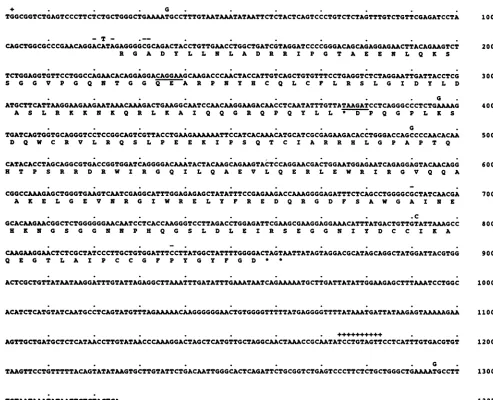
The nucleotide sequence of tat cDNA clone 492 (Fig. 3) (GenBank accession no. M30138) revealed that it is 1,325 bp long and begins 14 bases downstream of the previously determined RNAstartsite (9). Exon 1(bases numbered 1 to 236 in Fig. 3) contains the R and U5 regions of the 5' LTR and 130 nucleotides of the region preceding the gag gene. This is joined to exon 2 by a splice donor immediately before the gag initiation codon and a splice acceptor in ORF Si (genomepositions440and 5116, respectively) (24, 37). Exon 2,containing
ORF
Si,is 142 bases long, ending at nucleotide 378of the cDNA sequence. It is joined to exon 3 by a splice donor following theSi
stop codon and a splice acceptor within the env gene (genome positions 5257 and 7216, respectively). Exon 3 is 948 bases long and contains the 3' endof the env gene, ORF S3, and the U3 and R regions of the 3' LTR. There are several nucleotide changes in thiscDNA compared with reported genomic sequences; how-ever,noneof these arelocated within the tat coding region (see below).
Inferred amino acid sequence of the Tat protein. The deduced translationof the cDNA in clone 492 revealed two extended ORFs. The first, containing 83 codons, starts at nucleotide 126 and ends at nucleotide 377 of the cDNA sequence (Fig. 3); the 37 amino-terminal codons derived from the pre-gagregion of exon1arejoined to 46 codons of ORF
Si,
supplied byexon2.Since this region contains ORFon November 10, 2019 by guest
http://jvi.asm.org/
[image:3.612.60.301.567.666.2]N P B Sr-r.
II
I
I
I-'
"I'--'''
'----'
I
'''''
'''-''IrI--
1
-'
'' -'- -l
2 3 A 5 6 - 8
S; .Ar
_ _I
N
E>ENV
492 _M
442 8 Nl
FIG. 2. (A)Northern blot analysis of poly(A)+ RNA from EIAV-infected FEA cells hybridized withanEIAV LTRprobe. Numbersto
theleft refertopositions of RNA molecular size markers in kilobases. The probe identifies the full-length genomic RNA of approximately 8 kb,thesingly spliced RNA of approximately 4 kb, andapopulation ofsmall multiply spliced mRNAs in the 1.5-kb sizerange.(B)Genetic organization of EIAV andstructuresof three EIAV cDNA clones. The major ORFs of EIAV, includingthegag,pol,andenvgenesandORFs S1(tat),S2, and S3,areshown.Therestrictionenzyme sites shownatthetopareNcoI (N), PvuII (P), BamHI (B), SmaI (Sm), and HpaI (Hp). Sequences in the three cDNA clones (492, 272, and 442)arealigned withgenomicsequencestoshow theexon(-) and intron(- )
boundaries. The threeclones used the samesplice donor andacceptorfortheupstreamsplice which joins the 5' endtothecentralregion. Clones492and 272usethesamesplice sitestojoin thecentral regiontothe3' end of thegenome. Incontrast,clone442usedadifferent 3' spliceacceptor, located within ORF S2; in addition, cDNA synthesiswasapparently initiated inanA-richregion inenv.
Si, itispresumed to represent the tatmRNA. The second
extendedORF, of 160 codons, followsthestopcodonatthe endofORF Si. Thus, exon3 is read for 105 codons in ORF
S3; then the reading frame shifts relative to the genomic sequence(duetoasinglebasedeletionatposition 836 ofthe
cDNA)andcontinues foranadditional55codons in theenv
ORF. By analogy to theprimate lentiviruses, it ispossible
that thisORF encodesa revgene.
The inferred amino acid sequence of EIAV Tat is
com-paredwiththat of Tatproteins of other lentivirusesinFig.4.
Two regions areconserved amongthe primate viruses and EIAV. The first is a region near the carboxy terminus,
containing a string of basic amino acids, that may be
involved in nuclearlocalization of the HIV-1 protein (21). The second, or core domain, is a 16-amino-acid sequence
containing12residues thatare veryhighly conservedamong thisgroupofproteins. This degree ofsequenceconservation suggests a pivotal role of this domain in Tat function.
Interestingly,EIAV Tatlacksthecysteine-rich region that is
conserved among the HIV and SIV Tat proteins, thereby defining the boundary of the core and upstream domains.
The N-terminal portions of the various Tat proteins vary significantlyinsize andsequence.TheEIAV,HIV, and SIV
Tatproteinsformagroupquite distinct from thevisna virus Tat and the putative Tat of FIV; these two show little similarityto anyof the otherproteins.
Expression and activity of EIAV tat cDNAs. Expression
plasmids derived from EIAV tatcDNA clones were
trans-fected intomammaliancellstoevaluatetatexpressionandto
examine the effects of aminoacid deletionsonTatactivity. The cDNA in clone 492 was inserted into the mammalian
expression vectorpRSPA, containingaRoussarcomavirus
promoterandSV40polyadenylation signals,togivepRS492. Transfection of D17 cells with pEIcat in combination with
pRS492 revealed that Tat activity was expressed at high levels (Table 2), suggestingthatcDNA clone492 represents an authentic tat mRNA. Expression plasmids containing
cDNA from clones 442 and 272yielded levels of Tatactivity comparabletothose ofpRS492 (datanotshown).Aseries of
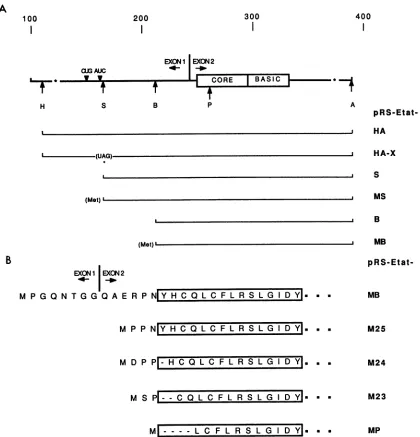
plasmids was then constructed in which fragments from cDNAclone 492 were inserted into the expressionplasmid pRSPAto define the region containing thetranslation initi-ation codon (Fig. 5A). The first plasmid in this series, pRS-Etat-HA, contains the two tat coding exons located between the HaeII andApaI sites (Fig. 3, positions 111 to 390). Atranslation termination codon wasintroduced atthe SmaI site of pRS-Etat-HA to create the plasmid
pRS-Etat-HAX. Expression of Tat activity in cells transfected withpRS-Etat-HAandpRS-Etat-HAXwascomparedovera
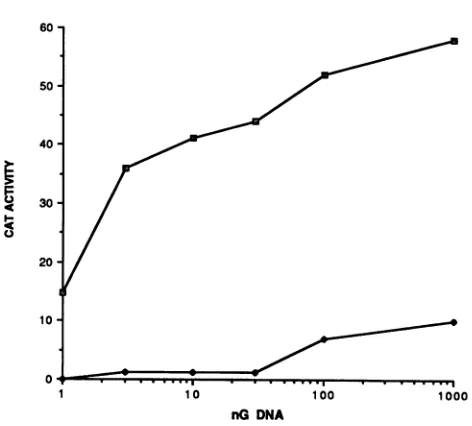
range of DNA concentrations (Fig. 6; Table 2).
pRS-Etat-HA activated EIAV LTR-controlled CAT expression even at the lowest concentration tested (1 ng), whereas
pRS-Etat-HAX was relatively inactive. Plasmid pRS-Etat-S is deletedofsequencesupstreamfromtheSmaI site(Fig. 5A)
and was also inactive in the cotransfection experiments
(Table 2). Together,thesedatasuggestedthattattranslation is initiated between the stop codon at position 123 and the SmaI siteatposition170 of the cDNA. The cDNAfragment
from the plasmid pRS-Etat-S was fused to a methionine initiationcodon in arelatedvector togive pRS-Etat-M;this
plasmid expressed Tat activity, indicating that sequences
upstream of the SmaI site are required for translation initiation but are not essential for Tat function. Within this
regionofexon1areseveraltripletsthat havebeen shownto
A
B
9.5 7.5
-4.4
-2.4
-1.4
c.,
r-i A -7
on November 10, 2019 by guest
http://jvi.asm.org/
[image:4.612.65.544.74.309.2]+ . . G . . .
TGGCGGTCTGAGTCCCTTCTCTGCTGGGCTGAAAATGCCTTTGTAATAAATATAATTCTCTACTCAGTCCCTGTCTCTAGTTTGTCTGTTCGAGATCCTA
*- T- .- ...
CAGCTGGCGCCCGAACAGGACATAGAGGGGCGCAGACTACCTGTTGAACCTGGCTGATCGTAGGATCCCCGGGACAGCAGAGGAGAACTTACAGAAGTCT
R G A D Y L L N L A D R R I P G T A E E N L Q K S
TCTGGAGGTGTTCCTGGCCAGAACACAGGAGGACAGGAAGCAAGACCCAACTACCATTGTCAGCTGTGTTTCCTGAGGTCTCTAGGAATTGATTACCTCG
S G G V P G Q N T G G Q E A R P N Y E C Q L C F L R S L G I D Y L D
* . . G
ATGCTTCATTAAGGAAGAAGAATAAACAAAGACTGAAGGCAATCCAACAAGGAAGACAACCTCAATATTTGTTATAAGATCCTCAGGGCCCTCTGAAAAG
A S L R K K N K Q R L K A I Q Q G R Q P Q Y L L * D P Q G P L K S
* . . . . .. . G
TGATCAGTGGTGCAGGGTCCTCCGGCAGTCGTTACCTGAAGAAAAAATTCCATCACAAACATGCATCGCGAGAAGACACCTGGGACCAGCCCCAACACAA
D Q W C R V L R Q S L P E E K I P S Q T C I A R R L G P A P T Q
CATACACCTAGCAGGCGTGACCGGTGGATCAGGGGACAAATACTACAAGCAGAAGTACTCCAGGAACGACTGGAATGGAGAATCAGAGGAGTACAACAGG
R T P S R R D R W I R G Q I L Q A E V L Q E R L E W R I R G V Q Q A
CGGCCAAAGAGCTGGGTGAAGTCAATCGAGGCATTTGGAGAGAGCTATATTTCCGAGAAGACCAAAGGGGAGATTTCTCAGCCTGGGGCGCTATCAACGA
A K E L G E V N R G I W R E L Y F R E D Q R G D F S A W G A N HE
GCACAAGAACGGCTCTGGGGGGAACAATCCTCACCAAGGGTCCTTAGACCTGGAGATTCGAAGCGAAGGAGGAAACATTTATGACTGTTGTATTAAAGCC
H K N G S G G N N P H Q G S L D L E I R S E G G N I Y D C C I K A
Q E G T L A I P C C G F P Y G Y F G D * *
*GTTGCTGTGCTCTC T.ACCTTGT*TACCC*AGGACTAGCTCATGTTGCTAGGCAACTAAACCGCA +TATCCTGTAGTTCCTCATTTGTGACGTGT
G TAAGTTCCTGTTTTTACAGTATATAAGTGCTTGTATTCTGACAATTGGGCACTCAGATTCTGCGGTCTGAGTCCCTTCTCTGCTGGGCTGAAAATGCCTT
TGTAATAAATATAATTCTCTACTCA
100
200
300
400
500
600
700
800
900
1000
1100
1200
1300
[image:5.612.65.558.70.470.2]1325
FIG. 3. Nucleotidesequenceand deducedtranslation ofEIAV cDNAclone 492. Bases that differfrompublished proviralsequencesare shown above the cDNA sequence;plusand minussignsindicate the additionordeletion,respectively,of bases in the cDNAcomparedwith genomicsequence.Thesplicesitesareunderlined.The one-letter amino acid code is used below the cDNA sequence, and asterisks denote stopcodons. The sequence has beenentered intotheGenBank data baseasaccessionno. M30138.
act as alternative initiation codons in other systems (34);
theseinclude the CUGatposition141, UUGat144, CUGat
150, and AUC at 165 of the cDNA sequence (Fig. 3). The
CUG at 150, followed by the AUC at 165, would be
predicted to be the most efficiently utilized start codons based on the Kozakconsensus sequencecontext (26). The
precise identification of thetat startcodon is currentlybeing addressed by site-directed mutagenesis.
The preceding experiments indicated that the region
up-stream of the SmaI site supplies the translation initiation codon but does not contain amino acids essential for Tat
function. To define the essential N-terminal amino acids,
cDNAfragments with progressive deletions of 5' sequences wereligatedtoexpressionplasmids that supply a translation
initiationcodon (Fig. SB). Plasmid pRS-Etat-B was deleted of sequences upstreamfrom theBstNIsite(position 216) and didnotexpressTatactivity. When this fragmentwasligated
to a vector that provides a methionine initiation codon,
pRS-Etat-MB, Tat activity was expressed at high levels in
transfected cells (Table 2). pRS-Etat-M25 lacks the entire exon 1and4residues ofexon2oftatandstillexpressedTat
activity in transfected cells. pRS-Etat-M24 is missing an
asparagine and a tyrosine residue at the start of the core
domain;thisdeletion reduced Tatactivity by approximately
60%. Removal ofthetyrosineandhistidineattheNterminus of the core domain in plasmid pRS-Etat-M23 reduced Tat
activityby 97%. PlasmidpRS-Etat-MP,which lacks thefirst 4 residues of the core region, did notexpress Tat activity.
Thus, a non-AUG codon present in exon 1 is used for
initiation of EIAV tat translation; however, other amino acids inexon 1 are notrequired forTatfunction.Tatactivity
wasreduced when the firsttworesidues of thecoredomain
were removed and abolished when the first four residues
weredeleted. These results support thedomaintopography inferred from the pattern of conserved Tat amino acids
shown in Fig.4.
Cell and virusspecificity of EIAV Tat function. The trans-activation ofEIAV and HIV-1 LTRs in canine D17 cells,
ACATCTCATGTATCAATGCCTCAGTATGTTTAGAAAAACAAGGGGGGAACTGTGGGGTTTTTATGAGGGGTTTTATAAATGATTATAAGAGTAAAAAGAA
on November 10, 2019 by guest
http://jvi.asm.org/
DRRIcPGT SSGGVP--GG--- Nw
NE:PR HPGS---KTA TPLZAPZSSLLRSCNE ILSQLYRPLET !4IKEAEQZL-'DY---tPILQT IMPGVYVSSSDERLWW
-__________nc-RiRGIDY
|3ccI 21CIT:AISY
SID
iQQGSQYLL
IIsYOC lrOmwcFLnKGIcyI ER~RTKTPHSPTDK
VIS S g m g n_
EIVS P}NDY= I EQSTLSI*
FIG. 4. Comparison of the amino acid sequences of lentivirus Tatproteins. The one-letter aminoacid code isused, asterisks refer to stop codons, and dashes represent gaps introduced to align sequences.The Tataminoacid sequences are shownintwoparts: the upper part shows the N termini, and the lower part shows the central andC-terminal regionsof theproteins. The deduced amino acidsequencesforthefirst codingexonsoftatgenesareshownfor HIV-1(2), HIV-2 (18), SIVmac (4), andSIVagm (14). Visna virus Tatisbasedon the sequence of Davis andClements (8). ForFIV, the deduced amino acid sequence is that of ORF 2, analogous to
visnavirusORFS(tat),fromFIV-14 (32).The sequenceforEIAV Tat assumes that translation is initiated at the CUG codon at
position150ofcDNA 492. Theboxed sequences,from lefttoright,
correspondtothecysteine-rich,core,and basicdomains;these are
contiguous regionsthatare separated in the figureforemphasis.
primate COS cells, and human HeLa cells transfected with
plasmidsthat expressed EIAV orHIV-1 Tat wascompared
(Table 3). The HIV-1tatgenewascloned into theexpression plasmid pRSPAtogive pRS-Htat;plasmidpCl5cat contains
anHIV-1 LTR-controlledcatgene (40).TwodifferentEIAV
Tat expression plasmids were tested with pEIcat;
pRS-Etat-HA has the native non-AUG start codon, whereaspRS-Etat-M has a synthetic methionine initiation codon
(Fig.5A). Theplasmidsyielded nearlyidentical levelsofTat
activity in all cell lines examined, indicating that the
non-AUG start codon is utilized in cells other than D17. The
[image:6.612.53.288.75.230.2]ability ofeither HIV-1 or EIAV Tat to trans-activate the
TABLE 2. transactivation ofthe EIAV LTRby tatcDNA expression plasmids
CAT Tatexpression CATactivity
plasmid plasmid (103cpm/h)a
pUXRSVcat pRSPA 10.0
pElcat pRSPA 1.2
pElcat pRS492 16.6
pElcat pRS-Etat-HA 20.0
pElcat pRS-Etat-HAX 1.9
pElcat pRS-Etat-S 1.4
pElcat pRS-Etat-M 21.7
pElcat pRS-Etat-B 1.3
pElcat pRS-Etat-MB 18.6
pElcat pRS-Etat-M25 19.0
pElcat pRS-Etat-M24 7.8
pElcat pRS-Etat-M23 2.0
pElcat pRS-Etat-MP 1.4
aDataarethemeanofatleast three transfections andarepresentedasthe
net cpm of product formed per hour under the conditions described in MaterialsandMethods. D17 cellsweretransfected with 5 ,ug of CATplasmid
and 0.01 ,ugoftheindicatedTatexpression plasmids. pUXRSVcatcontains the Roussarcomavirus promoter.
heterologous
LTR was examined in transfections withpElcat plus
pRS-Htat
orpC15cat
plus pRS-Etat-M,
respec-tively.
In bothcases aslight
activation of theheterologous
LTRwas observed inmostcell
lines;
however,
this levelofactivity
was 1 to 2 orders ofmagnitude
lower than theactivities obtained with the
homologous
components.In-spection
of the CAT activities obtained in the various celllines transfected with the HIV-1components suggests that these function best in HeLa cells. The pattern of activities seen in the same cell lines transfected with the EIAV components indicated that these worked
poorly
in HeLacells but gave the
highest
levelsofactivity
in D17cells. Itispossible
that these differences inactivity
result either fromdifferent affinities or associations of the Tat
proteins
with cellular cofactors or fromcell-type-specific
interactions oftranscription
factors with promoter control elements.DISCUSSION
EIAVencodesa tatgenewhoseactiveexon, like thoseof
the other
lentiviruses,
is located in theintergenic
region
between
pol
andenv. The EIAVtatmRNA has threeexons;thefirst two encode tatand the third may encode rev. The EIAV Tat
protein
is similartobutsimpler
than theprimate
lentivirus Tat
proteins; although
it shares C-terminal basic andhighly
conserved core domains with these otherpro-teins,
it lacks the N-terminalcysteine-rich
domain.Surpris-ingly,
the EIAV Tatprotein
isquite
differentfromthe visna virus Tat or thepredicted
Tat of FIV. Therelationships
among the various lentivirus Tat
proteins
parallel
the simi-larities in the structure andposition
ofthe TAR elements.EIAV, HIV,
and SIV have TAR elements thatarelocated 3'from the RNA start site and form similar
stem-loop
struc-tures(1, 12,
23, 30;
P. L. Dorn and D.Derse,
unpublished
data),
whereas visna virus TAR elements are located up-streamof the promoter(22).
Although
EIAV Tatis relatedto theprimate
lentivirus Tatproteins,
it has a distinct TARspecificity.
Structure and
expression
of EIAVtatcDNA. The arrange-mentofthecoding
exonsin the EIAVtatmRNAdiffers from the otherlentivirustatmRNAsintworespects.First,
EIAVcontainstatin thefirst two, rather than the last two,exons;
EIAVtattranslationisinitiatedatanon-AUGcodon inexon
1rather thanat amethionine codonatthe
beginning
ofexon2.
Second,
theputative
EIAV rev would be containedentirely
withinexon3 rather thanbeing
split
between the last two exons. Until more EIAV isolates aresequenced,
wecannot exclude the
possibility
that the absence ofan AUG initiation codon for tat ispeculiar
to certain strains ofthe virus.However,
theuseofanon-AUG initiation codon may representanovel mechanism forbalancing protein
synthesis
from
polycistronic
mRNAs. The first tat exon is presentin thefull-length
mRNA which contains gag and pol genes;furthermore,
the first two tat exons may be presentin the envand rev mRNAs.Therefore,
the efficientexpression
of thedistalgeneswouldrequire
that thetatinitiationcodon bepoorly
utilized andfrequently passed
overby
theribosome.A
regulatory
strategy usedby
human T-celllymphotropic
virus and bovine leukemia virus to
coordinately
expressproteins
frompolycistronic
mRNAsmakesuseof the effects of AUG context on translationefficiency;
synthesis
ofthedownstream genes is
apparently
aidedby
therelatively
poor sequence context of the upstream initiation codons(D.
Derse,
unpublished
data).
Certain codons that differ from AUGatasingle
base havebeendemonstratedtofunctionastranslation initiation
codons,
albeit at reducedefficiency,
inEIAV ivm HIV2
sir.c
SIVagm
VIS S FIV S
ZIAV
Vivm
EMV2 Stnuac
SIVag
on November 10, 2019 by guest
http://jvi.asm.org/
[image:6.612.53.294.541.688.2]200 300
EXON1IEXON2 _lo
CORE BASIC I *
B p
(Met)L
EXON1I EXON2
M PG Q N TG G QA E R P NIY H C Q L C F L R S L G
M P P NIY H C Q L C F L R S L G
M D P P1- H C Q L C F L R S L G I D Yl. a a M24
M23
[image:7.612.103.523.73.510.2]MP
FIG. 5. (A) Structures of cDNA expression plasmids. At thetopis shown the basicarrangement ofthetatcodingsequencesin the EIAV tatcDNA. Numbersatthetoprefertonucleotidepositions in the cDNA (Fig. 3). Asterisksdenote stopcodons in the cDNA. Thesplicesite isshown, indicating the sequencesderived fromexons 1and2; thetwoconserved domainsarerepresentedasboxes. Potential alternative initiation codonsareindicatedby CUG and AUC. Restriction enzymesitesareHaeII(H), SmaI(S),BstNI(B),PvuII (P),andApaI (A). Restriction fragments from cDNA 492 were cloned into the expression plasmid, pRSPA, to give the series ofplasmids starting with pRS-Etat-HA. Plasmid pRS-Etat-HAX hasanoligonucleotide containingastopcodon insertedattheSmaIsite. Thefragments preceded by (Met)wereclonedintovectorsthat supplyanin-frame translation initiation codon.(B) PredictedN-terminal amino acid sequencesof Tat proteins expressed from plasmids containing cDNA fragments fusedto a methionine initiation codon. The two Tat-encodingexons are indicated. Thecoredomain is boxed, and the C terminus of Tat isnotshown. InpRS-Etat-M25, thevectordonatesMetandProresidues; inpRS-Etat-M24, thevectorsupplies the N-terminal Met, Asp, Pro, and Pro residues;inpRS-Etat-M23, only the N-terminalMet is derived from thevector.
transfected cells and in cell-freesystems (34). Furthermore,
severaleucaryotic and viral proteins, including human basic
fibroblastgrowth factor (13),asecond product of thehuman
c-myc gene (19), a mouse mutant dhfr gene (33), adeno-associated virus capsid proteins (3), and Sendai virus C' protein (7), have recently been found to beginat non-AUG
codons. The use of a non-AUG codon by EIAV may
thereforerepresentyetanother level of control of lentivirus geneexpression.
Structure andfunctionof Tatproteins. Theimportance of
specific proteindomains withrespecttoTat functioncanbe deduced both from Tat amino acid sequence comparisons
andfromexperimental manipulationof Tatproteins. EIAV encodes acomparatively simple Tat protein, relatedto but distinct from those of theprimatelentiviruses. Thepresence
ofa C-terminal basic domain and a highly conserved core domain in the EIAV, HIV, and SIV Tat proteins suggests that these arefunctionally critical regions. The N-terminal
boundary of the core domain and the boundaries of the cysteine-richdomain of HIV andSIV Tataredefinedbythe
A
100
CJ AUC
400
H S A
pRS-Etat-B
HA HA-X
S
MS B MB
pRS-Etat-DY|. a . MB
I D YI. . . M25
M S
PI-
- C Q L C F L R S L G I D YI. * mMl
----L C F L R S L G I DYi.
a .I
on November 10, 2019 by guest
http://jvi.asm.org/
60
-50
40 1
i-0 30
-20
10
-0j
10 100
nG DNA
FIG. 6. trans-activation of theEIAV LTRbyvarious concentra-tions ofEIAV Tatexpression plasmids.D17 cells weretransfected with 5 jigofpElcatand theindicated amounts ofpRS-Etat-HA(E) orpRS-Etat-HAX (*). Twodays later cells wereassayedfor CAT activity bythesolventpartition method (seeTable1).CAT activity isexpressed as cpmof[14C]acetylcoenzyme Aconvertedtoproduct perhourmultipliedby 10'.
EIAVTat sequence,since it does not have the latterdomain.
The absence of the cysteine-rich domain in EIAV Tat suggests that itmay not be required fortrans-activation by
the other Tat proteins. That thisregionmayplay anauxiliary
role, perhaps in modulatingTatactivity by altering protein conformation, is supported by the experimental observa-tions that HIV-1 Tat peptides lacking the cysteine-rich regionpossessed Tatactivity(17), whereasactivitywaslost when specific amino acids within this domain were altered (38). By using synthetic peptides, it was revealed that the
[image:8.612.57.293.66.279.2]minimal, active HIV-1 Tat peptide contained the core and basicdomains (16, 17), consistent with the conservation of these regions among the divergent viruses. Removal of the four N-terminal amino acids of the EIAV Tat core domain abolished activity, whereas the minimal, active HIV-1 Tat
TABLE 3. transactivation ofEIAV and HIV LTRsin various cell linesbyEIAV and HIV Tatexpression plasmids
CATplasmid Tat CAT activity(103 cpm/h)ain:
(LTR) plasmid HeLa COS D17
pUXRSVcat(Rous pRSPA 1.10 10.5 6.71
sarcomavirus)
pElcat(EIAV) pRSPA 0.01 0.04 0.45
pElcat(EIAV) pRS-Etat-HA 0.75 0.93 20.3 pElcat(EIAV) pRS-Etat-M 0.86 0.34 24.1
pElcat(EIAV) pRS-Htat 0.03 0.02 1.91
pCl5cat(HIV-1) pRSPA 0.09 0.08 1.88
pCl5cat(HIV-1) pRS-Htat 162 48.6 35.7 pCl5cat(HIV-1) pRS-Etat-M 0.59 0.17 3.84
aThe data are the mean offourtransfection experiments.CAT activities arepresentedasthe netcpmofproductformed per hour.CATplasmid (5,ug) plus 1 ,ug of the indicated Tat expression plasmid were transfected onto cultures ofHeLa, COS, or D17 cells. Two days later, CAT activity was assayedasdescribedin Table1, footnotea.
peptideslacksix N-terminal residues from this domain(16).
Thisdiscrepancymayreflect differences in the Tatproteins,
cell lines, or experimental approaches used. The basic domain has been showntobe required for HIV-1 Tat activity and nuclearlocalization (21). Although it is hypothesizedto act in nucleic acid binding (16), the role of this and other domains intransactivation is notknown. The distinct TAR and cell type specificities of EIAV and HIV Tat proteins, combined with their modular domainstructures, suggestthat chimeric EIAV-HIV Tat proteinsmaybeuseful in analyzing thefunction of each region in the trans-activationprocess.
Evolution oflentivirus Tat proteins. The similarity of the
cis-and trans-actingcomponents of the EIAV Tatsystem to the primate lentiviruses but not to visna virus or FIV is paradoxical in light of the lentivirus phylogenies derived from nucleotidesequencecomparisonsofpolgenes(10,28).
These phylogenies would generally place EIAV closer to visna virus andFIVthan tothe primatelentiviruses.
More-over, EIAV, visna virus, and FIV contain a proteaselike
gene segment, inserted between the RNase H- and endonu-clease-encoding regions of the polgene,that isnot presentin HIVorSIV (27). Itwassuggested that thegene segment was
captured after the divergence of an EIAV, FIV, and visna
virus ancestor from the primate lentivirus progenitor. The alternativepossibility, that the ancestor ofHIVand SIVlost thisgene segment, is supportedby the relationship of EIAV
to the other lentiviruses based on the comparison of the
trans-activation components. EIAV transactivation is more similartothatofHIVand SIVthantothat of thenonprimate lentiviruses. Theposition of the tat (and perhaps rev) exons in the genome and the splicing patterns that are used to
generatethetatmRNA are verysimilar in allthe lentiviruses
examined in detail, suggesting that thesegenes were present
before the divergence of EIAV, HIV, SIV, FIV, andvisna
virus. It is possible that recombination events have led to mixing or that FIV and visna virus independently evolved transactivators of adifferent type from thoseof EIAV, HIV, and SIV. As more and different lentiviruses are examined, perhaps a clearer picture of the evolution of regulatory function inlentiviruses will emerge.
ACKNOWLEDGMENTS
This project was funded in part by federal funds from the Department of Health and Human Services under contract N01-CO-74102 with Program Resources Inc. L.D.S. was supported by CAPES fellowship 3721/87-2, Ministry ofEducation, Brazil.
LITERATURE CITED
1. Arya, S. K., and R. C. Gallo. 1988. Humanimmunodeficiency virus type 2 long terminal repeat: analysis of regulatory ele-ments. Proc. Natl. Acad. Sci. USA 85:9753-9757.
2. Arya, S. K., C. Guo, S. F. Josephs, and F. Wong-Staal. 1985. trans-activator gene of human T-lymphotrophic virus type III (HTLV-III). Science 229:69-73.
3. Bacerra, S. P., J. A.Rose, M. Hardy, B. M. Baroudy, and C.W. Anderson. 1985. Directmappingof adeno-associated virus cap-sid proteins B and C: a possible ACG initiation codon. Proc. Natl. Acad. Sci. USA 82:7919-7923.
4. Chakrabarti, L., M. Guyader, M. Alizon, M. D. Daniel, R. C. Desrosiers, P. Tiollais, and P. Sonigo. 1987. Sequence of simian immunodeficiency virus from macaque and its relationship to other human and simian retroviruses. Nature (London) 328: 543-547.
5. Cheevers, W. P., andT. C. McGuire. 1985. Equine infectious anemia virus: immunopathogenesis and persistence. Rev. In-fect. Dis. 7:83-88.
6. Chirgwin, J. M., A. E. Przybyla, R. J. MacDonald, and W. J. Rutter. 1979. Isolation of biologically active ribonucleic acid
on November 10, 2019 by guest
http://jvi.asm.org/
[image:8.612.58.296.554.685.2]from sources enriched in ribonuclease. Biochemistry 18:5294-5299.
7. Curran, J., and D. Kolakofsky. 1988. Ribosomal initiation from an ACG codon in the Sendai virus P/C mRNA. EMBO J. 7:245-251.
8. Davis, J. L., and J. E. Clements. 1989. Characterization of a cDNA clone encoding the visna virus transactivating protein. Proc.Natl. Acad. Sci. USA 86:414-418.
9. Derse, D., P. L. Dorn, L. Levy, R. M. Stephens, N. R. Rice, and J. W. Casey. 1987. Characterization of equine infectious anemia virus long terminal repeat. J. Virol. 61:743-747.
10. Doolittle, R. F., D. F. Feng, M. S. Johnson, and M. A. McClure. 1989. Origens and evolutionary relationships of retroviruses. Q. Rev. Biol. 64:1-29.
11. Dorn, P. L., and D. Derse. 1988. cis- and trans-acting regulation of gene expression of equine infectious anemia virus. J. Virol. 62:3522-3526.
12. Feng, S., and E. C. Holland. 1988. HIV-1 tat trans-activation requires the loop sequence within TAR. Nature (London) 334:165-167.
13. Florkiewicz, R. Z., and A. Sommer. 1989. Human basic fibro-blast growth factor gene encodes four polypeptides: three initiate translation from non-AUG codons. Proc. Natl. Acad. Sci. USA86:3978-3981.
14. Fukasawa, M., T. Miura, A. Hasegawa, S. Morikawa, H. Tsuji-moto, K. Miki, T. Kitamura, and M. Hayami. 1988.Sequence of simian immunodeficiency virus from African green monkey, a new member of the HIV/SIV group. Nature (London) 333: 457-461.
15. Gonda, M.A., M. J. Braun, J. W. Bess, Jr., L.0. Arthur, and M. J. Van Der Maaten. 1987. Characterization and molecular cloning of a bovine lentivirus related to human immunodefi-ciency virus. Nature (London)330:388-391.
16. Green, M., M. Ishino, and P. M. Loewenstein. 1989. Mutational analysis of HIV-1 Tat minimal domain peptides:identification of trans-dominant mutants that suppress HIV-LTR-driven gene expression. Cell 58:215-223.
17. Green, M., and P. M. Loewenstein. 1988. Autonomous func-tional domains of chemically synthesized human immunodefi-ciency virus tat trans-activator protein. Cell 55:1179-1188. 18. Guyader, M., M. Emerman, P. Sonigo, F.Clavel, L. Montagnier,
and M. Alizon. 1987. Genomeorganization andtransactivation of the human immunodeficiency virus type2. Nature (London) 326:662-669.
19. Hann, S. R., M. W. King, D. L. Bentley, C.W. Anderson, and R. N. Eisenman. 1988. A non-AUG translational initiation in c-myc exon1 generates anN-terminally distinct proteinwhose synthesis is disrupted in Burkitt's lymphomas. Cell 52:185-195. 20. Hattori, M., and Y. Sakaki. 1986. Dideoxysequencing method using denatured plasmid templates. Anal. Biochem. 152:232-238.
21. Hauber, J., M. H. Malim, and B. R. Cullen. 1989. Mutational analysis of the conserved basic domain ofhuman immunodefi-ciency virus tat protein. J. Virol.63:1181-1187.
22. Hess, J.L., J. A. Small, and J. E. Clements. 1989.Sequences in the visna virus longterminal repeat thatcontroltranscriptional activity and respond to viral trans-activation: involvement of AP-1 sites in basal activity and trans-activation. J. Virol. 63:3001-3015.
23. Jakobovits, A., D. H. Smith, E. B. Jakobovits,and D. J. Capon. 1988. A discrete element 3'ofhumanimmunodeficiency virus 1 (HIV-1) and HIV-2 mRNA initiation sites mediates transcrip-tional activation by an HIV transactivator. Mol. Cell. Biol. 8:2555-2561.
24. Kawakami, T., L. Sherman, J. Dahlberg, A. Gazit, A. Yaniv, S. R. Tronick, andS. A. Aaronson. 1987. Nucleotide sequence analysis of equineinfectiousanemia virus proviral DNA. Virol-ogy 158:300-312.
25. Kono, Y., K. Hirasawa, Y. Fukunaga, and T.Taniguchi. 1976. Recrudescence ofequine infectious anemia by treatment with immunosuppressivedrugs.Natl. Inst.Anim.Health Q. 16:8-15.
26. Kozak, M. 1986. Point mutationsdefineasequenceflankingthe AUG initiatorcodon that modulates translation byeukaryotic ribosomes. Cell44:283-292.
27. McClure, M. A., M. S. Johnson, and R. F. Doolittle. 1987. Relocation ofa protease-likegene segmentbetweentwo retro-viruses. Proc. Natl. Acad. Sci. USA 84:2693-2697.
28. McClure, M. A., M. S. Johnson, D. F. Feng, and R. F. Doolittle. 1988. Sequence comparisons of retroviral proteins: relative ratesofchange andgeneral phylogeny. Proc. Natl. Acad. Sci. USA 85:2469-2473.
29. McGuire, T. C., T. B. Crawford, and J. B. Henson. 1971. Immunofluorescent localization of equine infectious anemia virus in tissue. Am. J. Pathol. 62:283-294.
30. Muesing,M.A.,D.H.Smith,and D.J.Capon. 1987.Regulation of mRNA accumulation by a human immunodeficiency virus trans-activator protein. Cell 48:691-701.
31. Neumann, J. R., C. A. Morency, and K. 0. Russian. 1987. A novel rapid assay for chloramphenicol acetyltransferase gene expression. BioTechniques 5:444 447.
32. Olmsted, R. A., V. M. Hirsch, R. H. Purcell, and P. R.Johnson. 1989. Nucleotide sequence analysis of felineimmunodeficiency virus: genome organization and relationship to other lentivi-ruses. Proc. Natl. Acad. Sci. USA 86:8088-8092.
33. Peabody, D.S. 1987. Translation initiation at an ACG tripletin mammaliancells. J. Biol. Chem. 262:11847-11851.
34. Peabody, D.S. 1989. Translationinitiation atnon-AUG triplets in mammalian cells. J. Biol. Chem. 264:5031-5035.
35. Pedersen, N. C., E. W. Ho, M. L. Brown, and J.K. Yamamoto. 1987. Isolation ofa T-lymphotropic virus from domestic cats with an immunodeficiency-like syndrome. Science235:790-793. 36. Rosen, C. A., J. G. Sodroski, and W. A. Haseltine. 1985. The location ofcis-acting regulatory sequences in the human T cell lymphotropic virus type III (HTLV-lII) long terminal repeat. Cell41:813-823.
37. Rushlow, K., K. Olsen, G. Stiegler, S. L. Payne, R. C. Mon-telaro, and C. J. Issel. 1986. Lentivirus genomic organization: the complete nucleotide sequence of the env gene region of equine infectious anemia virus. Virology 155:309-321. 38. Sadaie, M. R., J. Rappaport, T. Benter, S. F.Josephs, R.Willis,
and F. Wong-Staal. 1988. Missense mutations in an infectious human immunodeficiency viral genome: functional mapping of tat and identification of the rev splice acceptor. Proc. Natl. Acad. Sci. USA 85:9224-9228.
39. Sanger, F., S. Nicklen, and A. R.Coulson. 1977. DNA sequenc-ing with chain-terminatsequenc-ing inhibitors. Proc. Natl. Acad. Sci. USA 74:5463-5467.
40. Seigel, L. J., L. Ratner, S. F.Josephs, D.Derse, M. B. Feinberg, G. R. Reyes, S. J. O'Brien, andF. Wong-Staal. 1986. Transac-tivation induced by human T-lymphotropic virus type III (HTLVIII) maps to a viral sequence encoding 58 amino acids and lacks tissue specificity. Virology 148:226-231.
41. Shaw, G. M., B. H. Hahn, S. K. Arya, J. E. Groopman, R. C. Gallo, and F. Wong-Staal. 1984. Molecular characterization of human T-cell (lymphotropic) virus type III in the acquired immunedeficiency syndrome. Science 226:1165-1171. 42. Sherman, L., A. Gazit, A. Yaniv, T.Kawakami, J. E. Dahlberg,
and S. R. Tronick. 1988. Localization ofsequences responsible for trans-activation of the equine infectious anemia virus long terminal repeat. J. Virol. 62:120-126.
43. Sodroski, J., R. Patarca, C. A.Rosen,F. Wong-Staal,and W. A. Haseltine. 1985. Location of the trans-activating region on the genome of human T-cell lymphotropic virus type III. Science 229:74-77.
44. Sodroski, J., C. A. Rosen, F. Wong-Staal, S. Z. Salahuddin,M. Popovic, S. Arya, R. C. Gallo, and W. A. Haseltine. 1985. Trans-acting transcriptional regulation ofhuman T-cell leuke-mia virus type III long terminal repeat. Science 227:171-173. 45. Viglianti, G.A.,and J.I. Mullins. 1988. Functionalcomparison
of transactivation by simian immunodeficiency virus from Rhesus macaques and humanimmunodeficiency virus type 1. J. Virol. 62:4523-4532.