This is a repository copy of Developing person-centred consultation skills within a UK
hospital pharmacy service: evaluation of a pilot practice-based support package for
pharmacy staff.
White Rose Research Online URL for this paper:
http://eprints.whiterose.ac.uk/125115/
Version: Accepted Version
Article:
Barnett, NL, Leader, I and Easthall, C orcid.org/0000-0002-9810-3870 (2019) Developing
person-centred consultation skills within a UK hospital pharmacy service: evaluation of a
pilot practice-based support package for pharmacy staff. European Journal of Hospital
Pharmacy, 26 (2). pp. 93-100. ISSN 2047-9956
https://doi.org/10.1136/ejhpharm-2017-001416
© European Association of Hospital Pharmacists (unless otherwise stated in the text of the
article) 2019. This is an author produced version of a paper published in European Journal
of Hospital Pharmacy. Uploaded in accordance with the publisher's self-archiving policy.
[email protected] https://eprints.whiterose.ac.uk/
Reuse
Items deposited in White Rose Research Online are protected by copyright, with all rights reserved unless indicated otherwise. They may be downloaded and/or printed for private study, or other acts as permitted by national copyright laws. The publisher or other rights holders may allow further reproduction and re-use of the full text version. This is indicated by the licence information on the White Rose Research Online record for the item.
Takedown
If you consider content in White Rose Research Online to be in breach of UK law, please notify us by
Title
Developing person-centred consultation skills within a UK hospital pharmacy service: Evaluation of a pilot practice-based support package for pharmacy staff.
Nina L Barnett PhD MSc BPharm FFRPS IPresc FRPharmS. Consultant Pharmacist, Pharmacy Department, Northwick Park Hospital, Watford Rd, Harrow HA13UJ, UK*
Ilana Leader BSc, Psychological Wellbeing Practitioner, Improving Access to Psychological Therapies (IAPT) service, London, UK.
Claire Easthall PhD MPharm, Lecturer in Pharmacy, School of Healthcare, University of Leeds, Leeds LS2 9JT UK.
Abstract
A person- NH“ E
pharmacy practice from the General Pharmaceutical Council. Health coaching is a method of delivering a person-centred care. A pilot of a health coaching support package, including a two-day course and practice-based follow-up, was delivered to 70 London North West Healthcare NHS Trust pharmacy staff between December 2015 and July 2017.
Objectives
To evaluate the support package, identifying key themes from course feedback, evaluating staff perception and evidence of application in practice.
To identify key benefits of the support package.
Methods
Qualitative analysis of written course feedback was undertaken to identify staff learning themes about person-centred care. The themes were used to design a survey, administered to support package recipients (staff), exploring staff perception of the package. Qualitative review of written examples highlighted use of person-centred themes in practice.
Results
Twelve person-centred themes emerged from 49 course evaluations forms, describing what participants learnt about patient- centred care. Of 24 surveys completed respondents reported increased awareness of themes however use in practice varied between themes. Overall, respondents valued the support package and rated practice- support more highly than the course for ongoing development. Patient examples described the use of themes in practice.
Conclusions
Key messages
What is already known on this subject
Person-centred care is a core component of health service delivery A person-centred approach is a global imperative for health practitioners Pharmacy practice has yet to incorporate this approach into everyday practice
What this study adds
Skill development to improve person-centredness within pharmacy consultations can be undertaken using a coaching approach to behaviour change
A combination of taught and practice-based support may be valuable in embedding these skills within pharmacy practice
Introduction
A person-centred approach to healthcare encompasses coordinated, personalised and compassionate care alongside supporting the individual to recognise their strengths and promote their independence (1). This approach is now considered an essential component of healthcare (1,2) and a focus of NHS
E 3).
Coaching is a cognitive-based behaviour change method, defined as an intervention focussing on changing thoughts and feelings about medicines-taking and improving patient confidence and
motivation to adhere (4). This approach supports person-centred care by considering the patient as an
individual with values and preferences, encouraging
clinicians to tailor patient care to meet individual needs in the context of their lives (1). A review of evidence for health coaching indicates that it is an effective method for all health professionals to increase patient motivation towards self-management and improve health (5). The World Health
Organisation (6
the future s A ctively involving patients in their care, shared-decision making, and empowering patients leads to better health outcomes.
Communication skills training in pharmacy endorses the application of health coaching to medicines-related consultations (7). This approach aligns with all four principles of the Royal Pharmaceutical Society medicines optimisation agenda (8), particularly supporting principle one, the patient
experience. The Medicines Optimisation agenda was introduced in 2013 to promote understanding of the patient experience and promote safe, effective use of medicines as part of everyday pharmacy practice. Health coaching techniques in pharmacy support medicines optimisation in short
consultations (9). This fosters building rapport and encourages shared-decision making, which have also been demonstrated in pharmacy consultations (10).
Despite recognition of the merits of person-centred approaches to healthcare, it does not appear to be
- 11). The General Pharmaceutical Council recently
person-centred consultations is available to pharmacy staff (7) it does not yet appear to be part of routine clinical practice (2).
At London North West Healthcare (LNWH) NHS Trust, a large hospital in Greater London, UK, the author (NB) observed consultations in the pharmacy dispensary and on the wards to be mostly
information-based. While education about safe and effective use of medicines is required, optimal use of medicines requires additional understanding of patient beliefs, values and attitudes (14). To address this, a coaching approach was implemented at LNWH Trust in dispensary settings (9).
This pilot will evaluate perceptions of pharmacy staff on the impact of a support package within the trust. This package consisted of a two-day health coaching course and options for individual
accompanied ward visits, email support, telephone support and small group workshops. This package aimed to equip staff with the necessary approach, knowledge, skills, tools and techniques to embed a person-centred approach to pharmacy consultations. This paper uses - now preferred terminology (6 H - used for evaluation forms and survey questions as it was more familiar to participants.
Background to the study
The pharmacy department at LWNHT includes more than 200 staff across three sites. Over half the staff, including pharmacists and pharmacy technicians, have patient-facing roles.
Following a successful health coaching course in 2014 for 18 pharmacy staff, a proposal for a further course was submitted to the Education and Training Department at LWNHT. Funding was received and the course delivered in spring 2016. A further three courses were funded by LWNHT charitable fund in autumn 2016.
Box 1 Description of support package
1. Follow up group workshops to support the application of new skills to pharmacy-specific contexts in the dispensary, clinic and during consultations on the ward.
2. Group meetings also allowed space for case discussion and peer support as a group, as well as providing an opportunity to share experiences, both positive and negative, of using the approach in practice. On-going group meetings were delivered every 2-3 weeks following that, lasting one hour each meeting. Topics covered included medicines reconciliation, high risk medicines
consultation, discharge medicines consultation, and dispensary consultation. Telephone and email support was continually provided over this time.
3. Accompanied ward visits aimed to provide real-
ability and confidence to use this training in practice. There were 16 accompanied ward visits lasting about 45 minutes each. These supported visits were continually offered over the six-month period.
4. Email and telephone discussions enabled participants to discuss individual cases.
The practice-based support package was led by one of the authors (NB) and offered to all staff attending the courses. Staff were encouraged to submit (to NB) anonymised case examples of situations where they had applied this approach in their consultations.
Aims:
To deliver a person-centred consultation support package to pharmacy staff.
Objectives:
1. To evaluate this support package in three ways:
a. Identify key learning themes from written feedback of a two-day skill development course.
b. Administer a survey to pharmacy staff who had received any part of the support package.
c. Reflect on written , provided by pharmacy staff, who had received any part of the support package.
2. To identify the elements of the support package which provide benefit to pharmacy staff in developing and maintaining health coaching-based person-centred consultations
Method:
Data collection
This pilot study was undertaken between Dec 2015 and July 2017.
The evaluation of the aforementioned person-centred support package for pharmacy staff (pharmacists and technicians) working at LWNHT was undertaken in three stages:
Participants were asked to complete an evaluation form at the end of the two-day course in order to provide qualitative data of their experience of the course. Completion of the section relating to name and job role was optional to allow for anonymity. The form (supplementary file 1) was developed by The Performance Coach, a training provider who have supported evaluation of health coaching training for a number of NHS organisations. The areas of enquiry explored in this form are listed below.
i. What the participant hoped to achieve from the course ii. Whether the course met the participants expectations
iii. What the participant considered to be the most important aspect of the course iv. What the participant intended to do differently as a result of attending the course
v. Whether the participant would recommend the course to others (and if so whom)
Participants were also provided with opportunity to offer any additional comments. Forms were analysed by NB and IL and anonymised so that individual participants could not be identified. Summary data were collated for points i,ii and v listed above. Points iii and iv
views on the most important aspect of the course and what they intended to do differently. These data were subjected to a thematic analysis. Initial coding to identify key themes was undertaken by IL; NB cross checked this analysis independently.
2. Questionnaire of staff perceptions of the support package
A 10-item questionnaire, created from the feedback themes identified in stage one of the analysis, was delivered to all 52 participants receiving the support package currently employed within LWNH Trust. The questionnaire was administered using an online tool (Survey MonkeyTM) and was open for responses for five weeks, with weekly reminders sent. Questionnaire face validity was established using three participants, who had left the Trust, prior to wider dissemination.
Box 2 indicates main areas of enquiry in the questionnaire including confirmation of respondent job role and perceived level of experience.
Box 2 Main aspects of enquiry from the participant survey
Which elements of the health coaching support package the respondent had received
Which aspects of the patient-centred approach (identified as key themes from stage one of our analysis) respondents were now more aware of
Which aspects of the patient-centred approach (identified as key themes from stage one of our analysis) respondents were now using in their patient consultations
Which aspects of the support package respondents perceived to be most useful (each aspect was rated on a five-point Likert scale)
The respondents overall perceived confidence in delivering health coaching-based patient-centred care (rated on a 10-point scale)
The respondents perceived importance of the support package received for delivering patient-centred consultations
3. Evaluation of participan to illustrate the use of the health coaching approach in practice
One of the authors (NB) requested that pharmacy staff, who had received any part of the support package, to email anecdotes of patient examples which demonstrated their use of a coaching approach to deliver person-centred care. These anecdotes were anonymised and analysed by NB, then cross-checked by IL to identify themes from the anecdotes linking with themes from the course evaluation forms (Table 2).
Participant comments, reflecting these themes,
skills they were using in practice. Anecdotes were submitted by participants who had received a range of support package elements. Quotations are written verbatim.
Results
The following results relate to the two-day training course and subsequent elements of the support package.
1. Interpretation of evaluation forms completed after two-day courses
Overview
Of the 57 LWNH staff completing the two-day health coaching course, 49 evaluation forms were returned (86%). Comments indicated that participants felt they had learnt new skills and behaviours to support a more person-centred approach which they intended to put into practice. For example:
What was the most importan How not to have a set mind when speaking
to patients and the importance of listening to patients and showing empathy (course 1 participant 1) What do you intend to do differently in your work as a result of learning from t Start
practicing skills that I learnt from this course e.g. spend time to ask ques (course 3 participant 2)
P
summarised. Most participants hoped to achieve a better understanding of health coaching and how to use it in practice. The course met the expectations of the participants and attendees stated that they would recommend the course to others.
Thematic analysis of participant responses
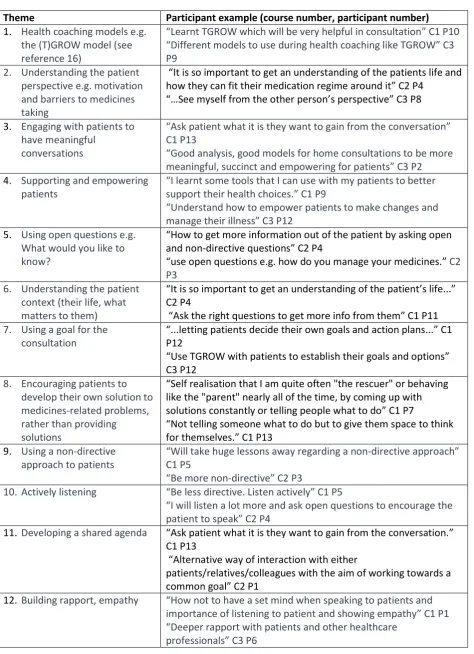
Table 1: Key person-centred themes identified from thematic analysis of 2 day course feedback forms with participant examples
Theme Participant example (course number, participant number)
1. Health coaching models e.g. the (T)GROW model (see reference 16)
Learnt TGROW which will be very helpful in consultation C P Different models to use during health coaching like TGROW C P9
2. Understanding the patient perspective e.g. motivation and barriers to medicines taking
It is so important to get an understanding of the patients life and how they can fit their medication regime around it C P
See myself C P
3. Engaging with patients to have meaningful
conversations
Ask patient what it is they want to gain from the conversation C1 P13
Good analysis, good models for home consultations to be more meaningful, succinct and empowering for patients C P
4. Supporting and empowering patients
I learnt some tools that I can use with my patients to better support their health choices. C1 P9
Understand how to empower patients to make changes and manage their illness C P 2
5. Using open questions e.g. What would you like to know?
How to get more information out of the patient by asking open and non-directive questions C P
use open questions e.g. how do you manage your medicines. C2 P3
6. Understanding the patient context (their life, what matters to them)
It is so important to get an understanding of the patient s life C2 P4
Ask the right questions to get more info from them C P 7. Using a goal for the
consultation
letting patients decide their own goals and action plans C P12
Use TGROW with patients to establish their goals and options C3 P12
8. Encouraging patients to develop their own solution to medicines-related problems, rather than providing solutions
Self realisation that I am quite often "the rescuer" or behaving like the "parent" nearly all of the time, by coming up with solutions constantly or telling people what to do C P
Not telling someone what to do but to give them space to think for themselves. C P
9. Using a non-directive approach to patients
Will take huge lessons away regarding a non-directive approach C1 P5
Be more non-directive C P
10. Actively listening Be less directive. Listen actively C P
I will listen a lot more and ask open questions to encourage the patient to speak C P
11. Developing a shared agenda Ask patient what it is they want to gain from the conversation. C1 P13
Alternative way of interaction with either
patients/relatives/colleagues with the aim of working towards a common goal C P
12. Building rapport, empathy How not to have a set mind when speaking to patients and importance of listening to patient and showing empathy C P
2. Questionnaire-based evaluation of staff perceptions towards support package
Participant demographics and level of experience
Twenty-four questionnaires were completed, by 19 pharmacists and 5 pharmacy technicians, giving a response rate of 46%. When asked to rate their level of experience in consulting with patients, 58% rated
or
Elements of health coaching support programme received
The majority of participants (88%) had received the two-day health coaching training course. Seven respondents (30%) reported receiving group meetings and the same number had received email support. Slightly fewer respondents (25%) reported receipt of accompanied ward visits with experienced health coaching staff and just one respondent (4%) had received telephone support.
[image:10.595.98.484.530.756.2]Awareness and use of person-centred themes (identified from phase one of analysis)
Figure 1 summarises the percentage of respondents who, following receipt of the health coaching support package, reported awareness and use of the person-centred themes. While awareness of all 12 themes
increased,
what matters to them); 21 respondents (91%) reported an increased awareness of this theme. Nineteen
T
themes; nevertheless 15
T
after their health coaching training. However, overall, use of the themes in practice was reported to be lower than awareness. Despite stating that awareness of health coaching models had increased, this was the least used person-centred theme with only 3 respondents (14%) using models within consultations.
Perceived confidence in using person-centred approach and reported usefulness of support package elements
The average participant rating for confidence in a person-centred approach, using a 0-10 scale, was 6.7 (23 respondents). Usefulness of each element of the support package was rated on a scale of 0-5. Eighteen of the 21 respondents (86%) who had received the two-day health coaching course rated as 4/5 or 5/5. Nine out of the ten (90%) respondents who had received accompanied ward visits rated its usefulness as 4/5 or 5/5. There was a wider variation of usefulness for group meetings and email support. Ten of the 12
respondents for group meetings and 11/13 respondents for email support rated at least 3/5. Four of the five respondents who indicated receiving telephone support rated it as 4/5-5/5.
Future support requirements
The final survey question addressed the issue of what respondents would like to receive moving forward to best support them in delivering person-centred consultations (Figure 2). Sixty-eight percent (15/22
respondents) would like accompanied ward visits, followed by group meetings (64%, 14/22), then email support (55% 12/22) and telephone support (32%, 7/22 respondents). Less than a quarter of respondents chose the two-day health coaching course as ongoing support (22%, 5/22 respondents). One respondent felt strongly that the approach was of no value, stating I ime. Most of the things are not
3. Anecdotes illustrating use of themes in practice.
Forty anecdotes were received by email, from 19 pharmacists and pharmacy technicians, between
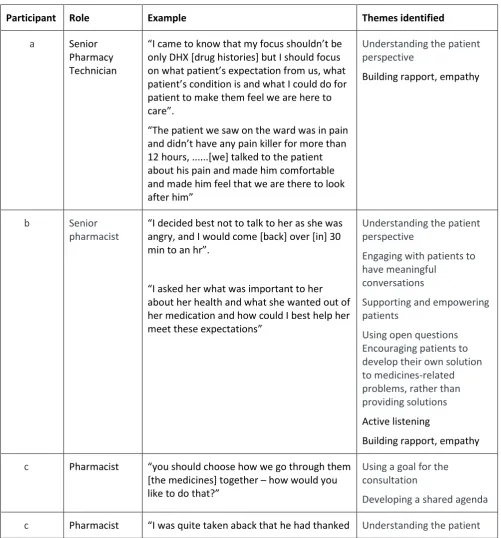
[image:12.595.48.550.229.768.2]December 2015 and July 2017. All the anecdotes described the application of 12 patient-centred themes, in a range of clinical situations, integrated within their everyday consultations. One or more of themes could be identified in each of the forty anecdotes. Table 2 provides examples of this; quotations from six emails sent by five participants illustrate the application of the themes.
Table 2 key quotations from anecdotes received from participants of the support programme, highlighting the use and combination of key themes in practice
Participant Role Example Themes identified
a Senior
Pharmacy Technician
I
only DHX [drug histories] but I should focus us, what
I
patient to make them feel we are here to .
T
12 hours, ...[we] talked to the patient about his pain and made him comfortable and made him feel that we are there to look
Understanding the patient perspective
Building rapport, empathy
b Senior pharmacist
I decided best not to talk to her as she was angry, and I would come [back] over [in] 30 mi .
I what was important to her
about her health and what she wanted out of her medication and how could I best help her meet these expectations
Understanding the patient perspective
Engaging with patients to have meaningful
conversations
Supporting and empowering patients
Using open questions Encouraging patients to develop their own solution to medicines-related problems, rather than providing solutions
Active listening
Building rapport, empathy
c Pharmacist you should choose how we go through them
[the medicines] together how would you like to do that?
Using a goal for the consultation
Developing a shared agenda
me for giving him a choice and it highlighted to me the importance of involving patients and giving them a choice when conducting consultations. ...This simple and fast technique helped me build a rapport with the patient and obtain relevant information in a timely, patient-centred way.
perspective
Supporting and empowering patients
Developing a shared agenda
Building rapport and empathy
d Pharmacist .... make the patient feel comfortable enough to open up to us, and to show the patient we are investing time into the
consult
acknowledging what the patient says fully before trying to 'cut them off' to ensure we
the patient drank 13 bottles of water to flush the alcohol out of the system to pass his alcohol test at work which potentially led to low sodium and caused the seizure ... his is important, as initially, from reading the notes, I personally thought the seizures would have been alcohol induced, or as a result of the head injury sustained
Engaging with patients to have meaningful
conversations
Understanding the patient context (their life, what matters to them)
Using a non-directive approach to patients
Active listening
Building rapport, empathy.
e Senior pharmacist
I did go back and speak to the patient trying the coaching techniques and as you [the author, NB] said let him come up with the solution ... it worked fabulously!
ad an idea of putting the medications in two separate bags grouped into morning and evening meds
Discussion
Person-centred care is an essential component of the General Pharmaceutical
Council's professional standards for pharmacy (12) and pharmacy has an imperative to deliver this approach in all consultations. While this approach is not yet part of routine clinical practice (2), progress is being made to implement person-centred care in pharmacy (9). Health coaching training has been delivered to a variety of clinical professionals within the NHS (5), however, the authors are not aware of published evidence describing the impact of health coaching training to support person-centred consultations in hospital pharmacy practice. This pilot provides an insight into potential benefits of a coaching approach, as part of a person-centred support package, delivered in a hospital pharmacy setting.
Qualitative analysis of the course evaluation forms indicates that staff found the training useful and intended to put their new skills into practice. Our findings concur with other reports of the usefulness of these techniques in practice (5). Health coaching training has been shown to be beneficial across hospital, community and general practice settings where more than two thirds of clinicians who had undertaken a two-day training course were using the skills with patients a year later (17). A review of health coaching training in the UK also reported benefits to NHS efficiency including increased patient compliance and reduces medication waste (18). However, whilst the course increased awareness, the quantitative work in this pilot study suggested that some participants were not applying the knowledge and skills gained. Further work is required to identify reasons for this.
Twelve person-centred themes emerged from the qualitative analysis of course evaluation forms. These included empathy, shared decision making and building rapport which are supported by
literature on person-centred care (2,19). These themes reflect good practice guidance for consultations within pharmacy and in wider clinical practice (1,2,6,7).
The results of the survey indicated that while respondents valued the course, they felt that practice-based support was more useful than the course for ongoing development to embed person-centred care into consultations. Most of the respondents were aware of the themes and valued the support package.
One respondent, who attended two-day course but received no further support, felt that the approach was inapplicable in practice and stated that it was too time consuming for busy practitioners. However this conflicted with an anecdote where the pharmacy staff member described saving time. Using a person-centred approach, this staff member identified that the patient had already read what they needed to know about the medication, obviating the need for explanation. The authors hypothesise another benefit of this approach is for staff to identify more quickly when the patient does not wish to have a detailed consultation and signpost the patient to relevant alternative resources, optimising the patient-focus and reducing consultation time. The use of goal-setting focuses consultations on a shared agenda which reduces the time taken to identify issues and prevents unnecessary diversion in the conversation. The authors suggest that while the course provides knowledge and skill development, the ward visits, email and telephone support as well as group workshops may enhance methods for application in practice.
The anecdotes submitted by participants illustrate the use of the fundamental principles of person-centred
care (1 T
indicate that delivery of
person-their ability respond to these needs. This benefit is particularly important for staff in the challenging NH“
Limitations
While the study has provided some useful insights into the practical application of a support package for person-centred care in pharmacy, there are limitations to the work. The evaluation forms from the initial two-day course were completed on the last day of the course. The forms did not require names of respondents however they were completed with the facilitators present. This may have created social desirability bias, where respondents have a desire to be viewed favourably, therefore submitting more positive feedback. The authors recognise that the sample sizes were small and response rate for the survey was low, with 24/80 trained staff responding to the survey. This can be explained in part by the fact that a few participants were not pharmacy staff (less than 10%) and some staff had left the trust at the time of the survey. Another limitation is the use of self-reported data for the majority of data collected, rather than objective measures. While the ward visits were observed by one of the authors (NB), adding some objectivity to behaviour change, these were not undertaken for all participants. Therefore, knowledge gained most of the support package or change in practice behaviour of the pharmacy staff involved could not be verified. This work was not controlled for primacy and recency of training and support offered and therefore participants may have remembered the initial training and the most recent support. The course delivered, while it contained an element of pharmacy focus, was mostly generic to healthcare which may have left some participants who only attended the course unsure how to apply the principles into pharmacy practice. It is noted that one participant who responded with a rating of 1/5 for usefulness of all types of support also responded that they had only received the two-day training course. Of the practice-based support offered, only 25% of the survey respondents had received the ward visits. Whilst this may reflect the respondents who completed the survey, the challenge of only one trained staff member offering the support visits needs to be addressed in future work. Although the survey was tested for face validity, more rigorous validation may have improved the usefulness of the responses. The anecdotes were submitted voluntarily and therefore may not represent participants either not using the approach or who had negative experiences.
Local recommendations and next steps
The two-day training course was valued for providing a foundation for the use of a person-centred approach. Given the financial constraints of the service, an in-house, shorter provision of this type of structured
training would be beneficial to introduce the concepts into practice for all local pharmacy staff. Continuing funding of an externally provided course is unlikely to be cost effective. Practice-based support is needed to support staff in embedding a person-centred approach into the day to day practice of pharmacy. Access to an expert and advice on individual patient cases should be made available to pharmacy staff to support development of their use of this approach. An approach to using person-centred principles in pharmacy practice may be useful where pharmacy staff activities are interpreted in a person-centred way.
include: experiential learning of person-centred care using a coaching model, application to medicines history, medication review and discharge consultations as well as short conversations in the dispensary. Pre-registration pharmacy graduates will attend a group workshop to explore their use of the techniques in practice one month later. They will then be asked to submit an anecdote describing their use of this
approach in practice. Each graduate will be assigned a staff member who is using person centred approaches as a mentor. Graduates will be accompanied to the ward by the mentor during their ward-based rotations and given formative feedback on their progress. In order to assess the benefits of this programme, an
training programme
Wider recommendations and next steps
Person-centred care is a core component of global health service delivery, as highlighted in both national and international publications. This pilot study included a number of arms within the support package and it is not clear which elements are most valuable, In order to understand the potential benefits of this work, more rigorous investigation of the intervention and its specific components are essential next steps.
Identification of the most effective intervention to deliver a person-centred approach is very important given the resource limited capacity of the NHS. Future work should focus on identifying the most useful elements in embedding a person-centred approach to pharmacy consultations. This could be explored both in a hospital, general practice and community setting in the future. This work can serve as a foundation to explore the benefits of the specific elements of the support package in other hospital pharmacy settings. Future work may have far reaching and strategic implications, influencing policy makers and educators to provide appropriate guidance and support for delivering person-centred care in pharmacy practice.
Conclusion
References
1. Health Foundation. Person centred care made simple: what everyone should know about person centred care. London. The Health Foundation; 2014.
http://www.health.org.uk/sites/health/files/PersonCentredCareMadeSimple.pdf [Accessed 28.09.17] 2. King's Fund. From vision to action: Making patient-centred care a reality. London: The King's Fund;
2012.
3. K F I E NH“ A L T K F
https://www.kingsfund.org.uk/publications/quality-improvement?gclid=Cj0KCQjwwevLBRCGARIsAKnAJveKPu6m4rTlWoyp8liaOPLiJePbNUs9dBTlNQSFSoqd Py5Rrju74mcaAqGQEALw_wcB [Accessed 28.09.17]
4. Easthall C, Song F, Bhattacharya D. A meta-analysis of cognitive-based behaviour change techniques as interventions to improve medication adherence. BMJ open. 2013 Aug 1;3(8):e002749.
5. Health Education East of England and The Evidence Centre. Does health coaching work? Summary of key themes from a rapid review of empirical evidence. April 2014
https://eoeleadership.hee.nhs.uk/sites/default/files/Does%20health%20coaching%20work%20-%20summary_0.pdf#overlay-context=Evaluation [Accessed 28.09.17]
6. Coulter A, Parsons S and Askham J. Where are the patients in decision-making about their own care? World Health Organization 2008 and World Health Organization, on behalf of the European
Observatory on Health Systems and Policies 2008 Denmark; 2008
http://www.who.int/management/general/decisionmaking/WhereArePatientsinDecisionMaking.pdf [Accessed 28.09.17]
7. Centre for Pharmacy Postgraduate Education. Consultation skills for pharmacy practice: taking a patient-centred approach. Centre for Pharmacy Postgraduate Education; February 2014.
http://www.consultationskillsforpharmacy.com/docs/docb.pdf [Accessed 28.09.17]
8. Picton C, Wright H. Medicines optimisation: helping patients to make the most of medicines. Good practice guidance for healthcare professionals in England. Royal Pharmaceutical Society. 2013.
9. Barnett NL, Flora K. Patient-centred consultations in a dispensary setting: a learning journey. Eur J Hosp Pharm. 2016 Apr 5:ejhpharm-2016.
10. Blagburn J, Kelly-Fatemi B, Akhter N, Husband A. Person-centred pharmaceutical care reduces emergency readmissions. Eur J Hosp Pharm. 2015 Oct 1:ejhpharm-2015.
11. Hafskjold L, Sundler AJ, Holmström IK, Sundling V, van Dulmen S, Eide H. A cross-sectional study on person-centred communication in the care of older people: the COMHOME study protocol. BMJ open. 2015 Apr 1;5(4):e007864.
12. General Pharmaceutical Council. Standards of conduct, ethics and performance. 2017. London: General Pharmaceutical Council.
http://www.pharmacyregulation.org/sites/default/files/standards-for-pharmacy-professionals-not-yet-in-effect.pdf [Accessed 28.09.17]
13. Professional Standards for Hospital Pharmacy Services Optimising Patient Outcomes from Medicines. Royal Pharmaceutical Society. London; 2014.
https://www.rpharms.com/Portals/0/RPS%20document%20library/Open%20access/Professional%20st andards/Professional%20standards%20for%20Hospital%20pharmacy/rps-professional-standards-for-hospital-pharmacy.pdf?ver=2016-10-27-125728-553 [Accessed 28.09.17]
15. TPC Leadership 2016 http://tpcleadership.com/uk/coaching/health-coaching/ [Accessed 28.09.17] 16. Whitmore J. Coaching for performance: growing human potential and purpose: the principles and
practice of coaching and leadership. Nicholas brealey publishing; 2010 Nov 26.
17. Health coaching in the east of England: promoting patient centred care and behaviour change for people with long-term conditions National Health Executive. 2015
http://www.nationalhealthexecutive.com/Comment/health-coaching-in-the-east-of-england-promoting-patient-centred-care-and-behaviour-change-for-people-with-long-term-conditions- [Accessed 28.09.17]
18. Carter A, Tamkin P, Wilson S, Miller L. The Case for Health Coaching. Institute for Employment Studies July 2015 http://www.employment-studies.co.uk/resource/case-health-coaching [Accessed 28.09.17]