
mixed methods study incorporating a wait-list cluster randomised controlled trial
.
White Rose Research Online URL for this paper:
http://eprints.whiterose.ac.uk/153272/
Version: Published Version
Article:
Davies, M.J., Kristunas, C.A., Alshreef, A. orcid.org/0000-0003-2737-1365 et al. (14 more
authors) (2019) The impact of an intervention to increase uptake to structured
self-management education for people with type 2 diabetes mellitus in primary care (the
embedding package), compared to usual care, on glycaemic control : study protocol for a
mixed methods study incorporating a wait-list cluster randomised controlled trial. BMC
Family Practice, 20. 152.
https://doi.org/10.1186/s12875-019-1038-0
[email protected] https://eprints.whiterose.ac.uk/ Reuse
This article is distributed under the terms of the Creative Commons Attribution (CC BY) licence. This licence allows you to distribute, remix, tweak, and build upon the work, even commercially, as long as you credit the authors for the original work. More information and the full terms of the licence here:
https://creativecommons.org/licenses/
Takedown
If you consider content in White Rose Research Online to be in breach of UK law, please notify us by
S T U D Y P R O T O C O L
Open Access
The impact of an intervention to increase
uptake to structured self-management
education for people with type 2 diabetes
mellitus in primary care (the embedding
package), compared to usual care, on
glycaemic control: study protocol for a
mixed methods study incorporating a
wait-list cluster randomised controlled trial
Melanie J. Davies
1,2, Caroline A. Kristunas
1,3, Abualbishr Alshreef
4, Simon Dixon
4, Helen Eborall
3, Agnieszka Glab
2,
Lisa Huddlestone
3, Nicky Hudson
5, Kamlesh Khunti
1,2, Graham Martin
6, Alison Northern
2, Mike Patterson
2,
Rebecca Pritchard
2, Sally Schreder
2, Bernie Stribling
2, Jessica Turner
5and Laura J. Gray
3*Abstract
Background:Approximately 425 million people globally have diabetes, with ~ 90% of these having Type 2 Diabetes Mellitus (T2DM). This is a condition that leads to a poor quality of life and increased risk of serious health complications. Structured self-management education (SSME) has been shown to be effective in improving glycaemic control and patient related outcome measures and to be cost-effective. However, despite the demonstrated benefits, attendance at SSME remains low. An intervention has been developed to embed SSME called the‘Embedding Package’. The intervention aims to address barriers and enhance enablers to uptake of SSME at patient, healthcare professional and organisational levels. It comprises a marketing strategy, user friendly and effective referral pathways, new roles to champion SSME and a toolkit of resources.
(Continued on next page)
© The Author(s). 2019Open AccessThis article is distributed under the terms of the Creative Commons Attribution 4.0 International License (http://creativecommons.org/licenses/by/4.0/), which permits unrestricted use, distribution, and reproduction in any medium, provided you give appropriate credit to the original author(s) and the source, provide a link to the Creative Commons license, and indicate if changes were made. The Creative Commons Public Domain Dedication waiver (http://creativecommons.org/publicdomain/zero/1.0/) applies to the data made available in this article, unless otherwise stated.
* Correspondence:[email protected]
3Biostatistics Research Group, Department of Health Sciences, College of Life
Sciences, University of Leicester, George Davies Centre , University Road, Leicester LE1 7RH, UK
(Continued from previous page)
Methods:A mixed methods study incorporating a wait-list cluster randomised trial and ethnographic study, including 66 UK general practices, will be conducted with two intervention start times (at 0 and 9 months), each followed by an active delivery phase. At 18 months, the intervention will cease to be actively delivered and a 12 month observational follow-up phase will begin. The intervention, the Embedding Package, aims to increase SSME uptake and subsequent improvements in health outcomes, through a clear marketing strategy, user friendly and effective referral pathways, a local clinical champion and an‘Embedder’and a toolkit of resources for patients, healthcare professionals and other key stakeholders.
The primary aim is, through increasing uptake to and attendance at SSME, to reduce HbA1c in people with T2DM compared with usual care. Secondary objectives include: assessing whether there is an increase in referral to and uptake of SSME and improvements in biomedical and psychosocial outcomes; an assessment of the sustainability of the Embedding Package; contextualising the process of implementation, sustainability of change and the‘fit’of the Embedding Package; and an assessment of the cost-effectiveness of the Embedding Package.
Discussion:This study will assess the effectiveness, cost-effectiveness and sustainability of the Embedding Package, an intervention which aims to improve biomedical and psychosocial outcomes of people with T2DM, through increased referral to and uptake of SSME.
Trial registration:International Standard Randomised Controlled Trials NumberISRCTN23474120. Assigned 05/04/ 2018. The study was prospectively registered. On submission of this manuscript practice recruitment is complete, participant recruitment is ongoing and expected to be completed by the end of 2019.
Keywords:Type 2 diabetes, Self-management, Structured education, Diabetes self-management, Diabetes education, Randomised controlled trial, Wait-list, Cluster randomised trial
Background
Diabetes affects approximately 425 million people glo-bally [1], with approximately 3.8 million in the United Kingdom (UK) [2], a figure that continues to rise [3]. It is estimated that by 2035, diabetes will account for 17% of National Health Service (NHS) expenditure [4]. Around 90% of people with diabetes have Type 2 Dia-betes Mellitus (T2DM) [1], a serious, progressive, chronic disease, which leads to poor quality of life and increased prevalence of costly long term health compli-cations. Despite advances in pharmacological interven-tions, management of T2DM remains a challenge.
Structured self-management education (SSME) for T2DM has been shown to be both beneficial and cost-effective [5–8]. Programmes such as DESMOND [6, 7], X-PERT [8] and the Diabetes Manual [9–11], have shown SSME to be associated with improved biomedical (e.g. HbA1c, lipids, weight, blood pressure), psychosocial (e.g. depression, quality of life, hypoglycaemia rates), be-havioural, and medical outcomes [6–8,12,13]. A recent systematic review and network meta-analysis found that SSME on averaged reduced HbA1c by over 0.4%, with the greatest benefits seen in those with poor glycaemic control (HbA1c > 7.0%), aged less than 65 years and non-white participants [14]. Powerfully, another system-atic review combining data from 42 trials, found a 26% reduced risk of all cause morality in those who had attended diabetes SSME compared to standard care [15]. Unfortunately, despite the increase in the quality and quantity of the evidence base since the National Institute
for Clinical Excellence (NICE) first recommended SSME programmes and made SSME for T2DM a national pri-ority in the UK [16], rates of uptake to SSME for those with T2DM have remained persistently low. The recent addition of a Quality and Outcomes Framework (QOF) indicator for referral to SSME in those with newly diag-nosed T2DM [17] has improved the rate at which educa-tion is offered to people with newly diagnosed T2DM, with 74.5% of those with newly diagnosed diabetes (type 2 and other) being offered SSME within 12 months of diagnosis in 2016 as opposed to 47.4% in 2013 [18]. However, referral does not equate to uptake; moreover, many of these programmes may not be evidence based or meet the NICE criteria. The most recent national fig-ures (2016) show that only 8.3% of T2DM patients were recorded as having attended SSME within 12 months of diagnosis [18].
reported patient barriers to access SSME, which in-cluded: issues with timing and length of courses; access/ transportation issues; family/work commitments; lack of information and the benefits of attending not being communicated by the HCP; patients feeling happy with the information they had already been provided with (and so seeing SSME attendance as unnecessary) [20].
An intervention titled the ‘Embedding Package’ has been developed in order to increase uptake to SSME by people with T2DM in primary care, with the overall intention of improving glycaemic control. The Embed-ding Package was designed to address barriers and en-hance enablers to uptake at patient, HCP, and organisation levels, including SSME providers and commissioning bodies. This package has been piloted and refined in a feasibility study (Davies et al. Increasing uptake of self-management education programmes for type 2 diabetes in a multi-ethnic primary care setting: A feasibility study. 2019. In preparation). The mixed methods study outlined in this protocol is designed to assess the effectiveness, cost effectiveness, and sustainability of this Embedding Package in comparison with usual care using a wait-list cluster randomised controlled trial (RCT) design with an integrated ethnographic study.
Methods/design
Objectives
The primary objective of this ambitious mixed methods study is to assess whether the Embedding Package, by increasing uptake and attendance at structured educa-tion, reduces HbA1c in people with T2DM compared with usual care. This objective will be addressed through a wait-list cluster RCT.
The secondary objectives are to:
assess whether the Embedding Package increases referral to and uptake of structured education, as well as improving biomedical and psychosocial outcomes;
assess sustainability of the Embedding Package using an observational follow-up period;
contextualise the process of implementation, sustainability of the change and the‘fit’of the Embedding Package within routine practice; assess cost-effectiveness of the Embedding Package.
Summary of study design
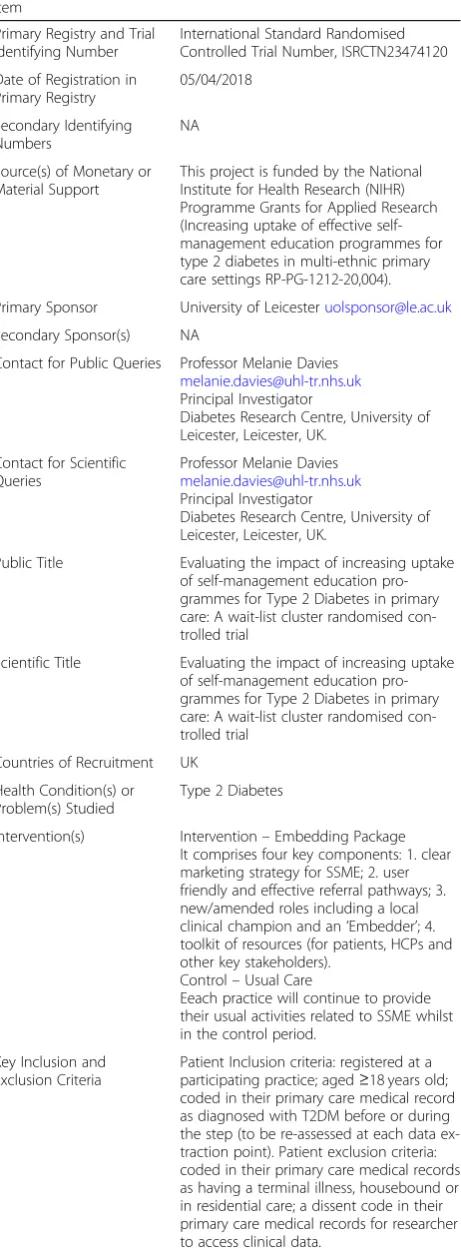
This 30 month open-label trial is testing a complex intervention, the Embedding Package, compared to usual care (see Table 1 for World Health Organization Trial Registration Data Set). The intervention is complex with elements delivered at multiple levels (practice, provider and Clinical Commissioning Group (CCG)). The study has been designed in line with best practice guidelines to
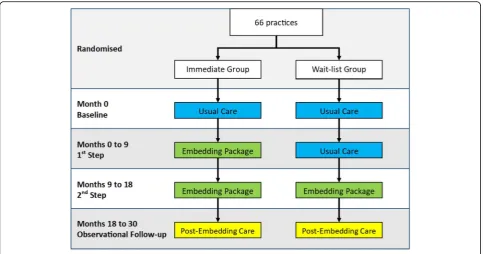
seek to provide a comprehensive understanding of whether and how the intervention works, as well as pro-viding cost data to inform its potential roll-out in the fu-ture [21]. Accordingly, the study comprises an 18 month wait-list cluster RCT, similar to a stepped wedge design but with a single step during the study, to ascertain the effectiveness and cost-effectiveness of the intervention, followed by a 12 month observation to ascertain whether changes are maintained after study support is with-drawn. This is a mixed methods project and to better understand and evaluate the process of implementation, ethnographic work will run alongside the trial.
RCT design (months 0–18)
Baseline data have been collected at month 0. Practices will be randomised 1:1 to 1) the immediate group who receive the Embedding Package from months 0 to 18, or 2) the wait-list group who provide usual care for months 0–9 and receive the Embedding Package for months 9 to 18 (Fig.1). Since data are collected from each step, each practice acts as its own control (immediate group uses the baseline data as its control, the wait-list group uses data collected between 0 and 9 months). To limit poten-tial contamination, for the aspects of the intervention that are targeted at CCG/locality/provider level (e.g. so-cial marketing initiatives), we will request that as far as possible, these are first targeted at practices participating in the Embedding Package, and only aimed at wait-list practices when these have crossed over to receive the intervention.
Observational follow-up design (months 18–30)
The 12-month observational follow-up is designed to in-vestigate whether any improvements observed during the RCT are maintained. During this time the study team will no longer actively reinforce the Embedding Package, but practices can continue using the interven-tion provided during the RCT, if they choose to do so.
Integrated ethnographic study (months 0–30)
The integrated ethnographic study is designed to provide comprehensive data on the process of implementation and the fit of the intervention. Qualitative data will be gathered from observations and semi-structured inter-views. The following will be undertaken:
1. Use the formative findings from the immediate group to refine, tailor and enhance the Embedding Package and its implementation in the second step. 2. Use the data to provide additional evidence about
3. Investigate the degree to which active work to embed SSME has continued in the observational follow-up period
4. Examine the extent to which changes are perceived to have been sustained
5. Identify any changes in the stakeholder organisations with a bearing on sustainability.
Cost estimates will also be generated from structured interviews with staff from SSME providers. The interview and observational data collection tools were developed and tested in the preceding feasibility study (Davies et al. Increasing uptake of self-management education programmes for type 2 diabetes in a multi-ethnic primary care setting: A feasibility study. 2019. In preparation).
Primary and secondary outcome measures
All outcomes will be measured at baseline (0 month), first (0–9 months), and second (9–18 months) steps, as well as over the observational follow-up (18–30 months), except for the self-report data which will only be measured once by questionnaire (during the first step). All biomedical patient level outcomes will be extracted from primary care electronic medical records. For most of these outcomes, the last measurement within that time period will be used. For example, for the first step HbA1c will be defined as the last HbA1c measurement between months 0 and 9. If the variable has not been measured over that time period then it will be deemed missing.
Primary outcome
[image:5.595.60.291.102.727.2] [image:5.595.303.538.108.303.2]The primary outcome is patient-level HbA1c compared between the control and intervention conditions in the RCT i.e. the baseline measure in the immediate group, and baseline and first step in wait-list group compared
Table 1World Health Organization Trial Registration Data Set
Item
Primary Registry and Trial Identifying Number
International Standard Randomised Controlled Trial Number, ISRCTN23474120 Date of Registration in
Primary Registry
05/04/2018 Secondary Identifying
Numbers
NA Source(s) of Monetary or Material Support
This project is funded by the National Institute for Health Research (NIHR) Programme Grants for Applied Research (Increasing uptake of effective self-management education programmes for type 2 diabetes in multi-ethnic primary care settings RP-PG-1212-20,004). Primary Sponsor University of [email protected]
Secondary Sponsor(s) NA
Contact for Public Queries Professor Melanie Davies
Principal Investigator
Diabetes Research Centre, University of Leicester, Leicester, UK.
Contact for Scientific Queries
Professor Melanie Davies
Principal Investigator
Diabetes Research Centre, University of Leicester, Leicester, UK.
Public Title Evaluating the impact of increasing uptake of self-management education pro-grammes for Type 2 Diabetes in primary care: A wait-list cluster randomised con-trolled trial
Scientific Title Evaluating the impact of increasing uptake of self-management education pro-grammes for Type 2 Diabetes in primary care: A wait-list cluster randomised con-trolled trial
Countries of Recruitment UK Health Condition(s) or Problem(s) Studied
Type 2 Diabetes
Intervention(s) Intervention–Embedding Package It comprises four key components: 1. clear marketing strategy for SSME; 2. user friendly and effective referral pathways; 3. new/amended roles including a local clinical champion and an‘Embedder’; 4. toolkit of resources (for patients, HCPs and other key stakeholders).
Control–Usual Care
Eeach practice will continue to provide their usual activities related to SSME whilst in the control period.
Key Inclusion and Exclusion Criteria
Patient Inclusion criteria: registered at a participating practice; aged≥18 years old; coded in their primary care medical record as diagnosed with T2DM before or during the step (to be re-assessed at each data ex-traction point). Patient exclusion criteria: coded in their primary care medical records as having a terminal illness, housebound or in residential care; a dissent code in their primary care medical records for researcher to access clinical data.
Table 1World Health Organization Trial Registration Data Set (Continued)
Item
See eligibility section for full inclusion/ exclusion for all parts of the study. Study Type Type of study - interventional
Method of allocation–cluster randomised Masking–none
Assignment–wait list study, practices randomised 1:1 to immediate intervention or to wait
Purpose–improve outcomes Date of First Enrolment First practice 06/08/2018 Target sample size 66 practices
2050 participant questionnaires
Recruitment status As of 02/10/19 66 practices recruited, 1920 questionnaires returned
Primary outcome(s) HbA1c
with first and second steps in immediate group and sec-ond step in wait-list group.
Secondary outcomes
The secondary biomedical measures to be extracted from primary care at the patient level are: Body Mass Index (BMI); weight; total, Low-Density Lipoprotein (LDL) and High-Density Lipoprotein (HDL) cholesterol; systolic and diastolic blood pressure; glucose, blood pressure and lipid lowering medications; smoking status; hospital admissions; cardiovascular risk score.
Process outcomes will reflect how the intervention is implemented and aid understanding of effectiveness. They will be measured at the patient, practice, or pro-vider level as appropriate, and will include the following: whether or not the patient was referred to and attended SSME (main secondary outcome); type of SSME; centage of eligible individuals referred to education; per-centage of eligible individuals who attended education; percentage of eligible individuals who declined educa-tion; number, timing and venue of available education sessions; number of trained educators.
Secondary psychosocial and process outcomes will also be self-reported by a subset of patients at a single time-point during the first step so that psychosocial outcomes can be compared between those in the intervention and control arms (it is estimated around 2000 questionnaires will be returned). This data will be collected by ques-tionnaire; all participants will be sent a short question-naire they can further opt to complete an additional
questionnaire. The self-reported outcomes from the short questionnaire are: whether or not the patient was referred to and attended SSME; and where the patient has previously received diabetes information from. Those completing the additional questionnaire will pro-vide data on patient activation measure; well-being (W-BQ12); Problem Areas in Diabetes (PAID) score.
Additionally, back end website data on the extent of user engagement (e.g. length of time for which individ-ual pages were viewed and the number of occasions etc.) with specific tools in the online toolkit will be collected.
Trial participants
Recruitment
Before patients were contacted CCGs and their associ-ated SSME providers were approached regarding the study. They needed to support the study by implement-ing the aspects of the Embeddimplement-ing Package that are aimed at providers and commissioners themselves. Participat-ing providers will contribute data on activities relatParticipat-ing to the Embedding Package for use in the cost-effectiveness analysis, on the availability of education sessions and on the number of educators. In CCGs where the provider declined participation, Embedders will work solely and directly with the practices.
[image:6.595.57.541.87.341.2]be collected through the recording of Embedding Pack-age activity. All patients diagnosed with T2DM at the start of each step (including those diagnosed during the step), registered at the practice, and meeting the eligibil-ity criteria will have their pseudonymised data extracted for the outcome measures and will be invited to complete a consent form to link extracted data with self-reported information.
Sampling to the integrated ethnographic study will be purposive, and based on practice characteristics (loca-tion, type of setting - rural, suburban or urban, practice size and socio-economic factors), provider characteristics (structured education programme) and CCG characteris-tics (sustainability and transformation plans) [22]. Adop-tion of this selection criteria will enable the identification of a varied sample of practices with a view to developing an in-depth explanation of the extent of success of implementing the Embedding Package at dif-ferent levels and in difdif-ferent settings, and inform how to optimise implementation of the package (and similar ini-tiatives) in different contexts. In the first step, this will be informed by demographic profile and discussions with the trial co-ordinators, and will aim to generate a maximum variation sample [23]. Sampling during the second step will be theoretically informed by mid-term progress data to explore the challenges involved in implementing and sustaining the Embedding Package in a variety of circumstances. Data will also be collected from organisations associated with the delivery of the Embedding Package in these practices, including CCGs, providers, NHS England regional offices, area teams, and commissioning support units. Practices and associated organisations sampled in the first step will continue to be included in data collection in the second step.
A sub-sample of practices and all of the participating providers will also provide more detailed information on the costs of the individual activities through interviews with a designated staff member (such as the SSME ser-vice manager).
Practice recruitment is complete. The first practice was randomised on 06/August/2018, the last practice was randomised on 22/February/2019. Data collection will be completed by 22/August/2021. Participant re-cruitment started in August 2018 and is expected to be completed by December 2019.
Eligibility criteria
Practices, patients and stakeholders will be recruited and take part in relevant study activities if they meet all of the relevant criteria, as detailed below.
Practices
Practice should be located within a participating CCG; use either EMIS Web or TPP SystmOne (required for
data extraction); able to refer people with T2DM to a structured education programme which meets NICE cri-teria; willing to sign a data sharing and data collection agreement with PRIMIS allowing the collection of pseu-donymised patient data and, where patient consent is given, identifiable data, as required for analysis; where appropriate willing to have a sample of meetings and consultations observed or to be interviewed.
Patients–data extraction and mail-out
All patients registered at a participating practice and meeting the following eligibility criteria will have pseu-donymised data extracted. Eligibility will be assessed at each step and therefore the study is of an open cohort design. If included patients die, or leave the practice, they will be included up until this point. All eligible pa-tients at baseline will be invited to join the self-report component and consent to link data.
Patient inclusion criteria: registered at a participating practice; aged≥18 years old; coded in their primary care
medical record as diagnosed with T2DM before or dur-ing the step (to be re-assessed at each data extraction point); willing and able to provide informed consent (ap-plicable to optional consent form and questionnaire booklet only); able to understand written English to a level sufficient to enable an understanding of the research and their participation within it (applicable to optional consent form and questionnaire booklet only). Patient exclusion criteria: coded in their primary care medical records as having a terminal illness, housebound or in residential care; a dissent code in their primary care medical records for researcher to access clinical data.
Patients–integrated ethnographic study
Patients who express an interest to participate in the ethnographic study and meeting the following criteria will be eligible for the ethnographic study. Patient inclu-sion criteria: meet all of the patient eligibility criteria for the trial; is able to attend the practice unaided or with a carer or support (applicable to observations of consulta-tions only). Patient exclusion criteria: unable to understand spoken English to a level sufficient to enable an under-standing of the research and their participation within it.
Stakeholders
involved in the delivery or commissioning of any aspect of the Embedding Package in a participating practice/ CCG/provider organisation; willing and able to give in-formed consent (written or verbal). Stakeholder exclu-sion criteria: unable to understand written and spoken English to a level sufficient to enable an understanding of the research and their participation within it.
Study procedures
Informed consent
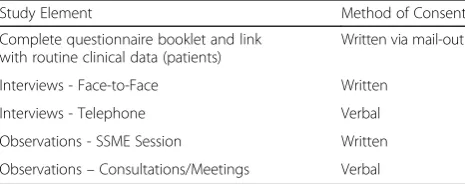
Informed consent will not be required for the data ex-traction element of the study as patients will not be dir-ectly approached and their data will be extracted pseudonymously. However, the Caldicott Guardian of each participating practice will be required to consent to the extraction. A summary of the method of consent for each study element is provided in Table2.
All members of the research team receiving informed consent will be Good Clinical Practice certificated, and authorised to do so by the Chief Investigator. Original signed consent forms will be retained and participants will be given or sent a copy. The PIS will detail the exact nature of the study, the implications, and any risks in-volved in taking part.
Consent to complete questionnaire booklet and link with routine clinical data
Patients will be approached by postal invitation sent from the practice along with information about the study and a questionnaire booklet containing a short questionnaire and consent form. Patients will also be asked to provide consent for the research team to link their responses to the data extracted from GP practices and their record held by the local SSME provider, if such a record exists. Patients will be able to decline participa-tion, or to indicate willingness to participate in either the self-report and data linkage (participation in one of these does not necessitate participation in any other ac-tivity). Patients could also opt to complete an additional questionnaire which included patient reported outcome measures.
Consent to interviews
Informed consent will be received by a member of the research team when a patient or stakeholder agrees to participate in an interview. All participants will have the opportunity to discuss the purpose of the interview and the PIS, ask any questions they have, and then to decide whether they will participate. For face-to-face interviews, the interviewer will obtain written informed consent im-mediately prior to the interview. For telephone inter-views, the interviewer will audio record the reading out of the latest approved version of the consent form and the participant’s agreement with clauses, the consent form will then be annotated with the recording identifi-cation code, signed, and dated by the interviewer. The original copy of the consent form will be retained in the study file and a copy will be provided, either at the time of the interview or by post, to the participant.
Consent to observation of SSME sessions
The educator(s) of a sample of one-to-one or group-based SSME sessions will be given a copy of the stake-holder PIS and will have the opportunity to consider this information and ask any questions. They will then be asked to provide written consent and confirm the dates of the sessions they would be happy to have observed. If the educator(s) does not consent then no participants will be approached. After educator consent has been re-ceived, when booking participants onto one of these ses-sions, the SSME administrator will inform each participant verbally about the study and the presence of an observer. If a participant does not want to attend a session that is being observed, they will be booked onto a session on an alternative date. Participants who give verbal consent (when booking) to be observed will be sent a PIS. Immediately prior to the session, a verbal de-livery of the PIS will be given by the researcher. Prior to requesting written consent, potential participants will be given the opportunity to have any questions related to the study or their participation within it addressed.
Consent to observation of healthcare consultations
[image:8.595.57.290.639.731.2]The ethnographic team will attend clinics in order to ob-serve consultations where discussions about SSME may take place between patients and HCPs. It will not be practical or appropriate to obtain written consent from the HCP or the patient on the day, as this would present a burden to the practice and introduce delays in the clinic/ appointment schedule. Therefore, verbal permission will be obtained from the patient and the HCP ensuring that those who wish to opt out can easily make this known. Written and verbal versions of the PIS will be provided and all participants will be given time to consider the in-formation and ask questions. Patients will be informed of the possible presence of an observer by the practice
Table 2Summary of method of consent per study element
Study Element Method of Consent Complete questionnaire booklet and link
with routine clinical data (patients)
Written via mail-out Interviews - Face-to-Face Written
receptionist when they arrive for their appointment. It will be made clear that they are free to ask that their consult-ation is not observed. The observer will offer to withdraw without any reason having to be given by either the pa-tient or the HCP, and in any event will withdraw if there is any doubt about the appropriateness of their presence.
Consent to observation of practice/provider meetings A sample of meetings where SSME is discussed may be observed. Verbal consent will be sought from the appro-priate person in the organisation and/or the Chair of the meeting. When possible, those due to attend the meet-ing will be informed about the study by the observer prior to the meeting, by providing them with a copy of the stakeholder PIS. If the Chair is willing, at the start of the meeting the observer will explain their role, that anonymity is guaranteed and that they will absent them-selves at any time if anyone would rather they were not there; they will then receive verbal consent from all those present. If any individual does not wish to give consent, the observer will withdraw from the meeting. Participants may also request that the observer with-draws temporarily, for example if part of the meeting re-lates to issues that are confidential, or are not pertinent to the focus of the study. The researcher will respect all such requests.
Data collection
Provider-level process outcome data will be collected from the provider using a brief questionnaire at months 0, 9, 18, and 30. Patient-level biomedical and process outcome data will be collected through pseudonymous extraction from primary care data using Read codes. These data will be aggregated where appropriate to cal-culate the practice-level process outcomes. Data will be extracted at three time-points (month 0, month 9 and 18 collected together, and month 30).
Data extraction procedures are based on those used previously in similar studies [24], and the preceding feasibility study (Davies et al. Increasing uptake of self-management education programmes for type 2 diabetes in a multi-ethnic primary care setting: A feasibility study. 2019. In preparation). Practices can extract their own data, pseudonymise it and then transfer it electronically to the study team at the University of Leicester, or this can be done remotely by PRIMIS. Data extraction will be performed using MIQUEST software. The only key identifier to be extracted will be NHS numbers which will be encrypted into a unique hash (#) code by an Open-Pseudonymiser and CHART software and stored in a spreadsheet containing only pseudonymised data. This will be appropriately and securely transferred to the research team at University of Leicester. PRIMIS will not be able to identify patients at any point during the study.
The practice ID code will not be encrypted as it will be required by the study team to identify which randomisa-tion arm the data belong in.
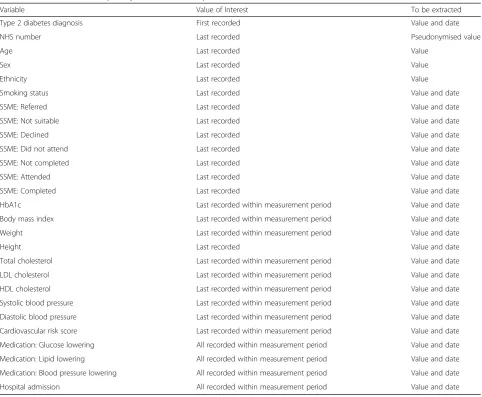
The transferred spreadsheet will contain one line per patient pseudonymised data from all people with T2DM registered at the participating practices during each step (See Table 3). Data recorded over the measurement pe-riods (months 0, 0–9, 9–18, and 18–30) will be extracted.
Each questionnaire booklet sent to patients via a prac-tice mail shot will be pre-assigned a unique patient iden-tifier. Consent and patient details (NHS number, patient name and contact details) will be collected on a separate form and will be stored separately. If the questionnaire booklet is completed and returned with consent, the NHS number will be used to identify the individual pa-tient data in the data extracted from primary care. PRI-MIS will provide the study team with the encryption algorithm so a NHS number can be converted to the unique hash (#) code to allow this linkage. Additionally, if consent is given, the list of names and NHS numbers of patients will be cross-checked against relevant pro-vider systems, and data on SSME invitation and attend-ance held by the provider for these individuals will be linked with their GP and self-report data. The study team will only have access to the name and NHS num-ber of patients returning their questionnaire booklets and will only link data of consenting patients. Secure NHSmail service will be used. Patient NHS numbers will be sent between NHSmail and NHSmail addresses. In addition, list of patients’NHS numbers will be password protected and passwords will be sent in a separate email. The flow of patient data is shown in Fig.2.
Integrated ethnographic study
Cost-effectiveness data collection
The ‘Embedder(s)’ (i.e. the person(s) responsible for driving the implementation of the Embedding Package) will complete a simple tick-box tracker of the pre-identified implementation activities for months 0–9, 9– 18 and 18–30. This tracker will cover the type of activity, the duration over which it was applied, and whether it is still ongoing, providing a census of what activities have been attempted. In addition, the tracker data will pro-vide a measure of resource use against which unit costs can be applied to estimate the costs associated with the Embedding Package. The unit costs will be generated by structured interviews undertaken with designated staff at provider organisations within a sub-sample of practices. The interview will ask for details of staff time, consumables, and other costs that have been devoted to each individual activity over the duration that the activity was undertaken. A pro-forma for the activity data requirements will be sent in advance of the interview. A follow-up e-mail to confirm
the data discussed at the meeting will be sent to the inter-viewees. A maximum of two further e-mails will be sent to resolve any outstanding data queries. Resource use and costs data for developing the intervention, the Embedding Package, will be obtained from the study team.
Intervention
[image:10.595.57.540.96.493.2]The Embedding Package underwent development based on a range of qualitative and experiential work, as well as piloting in an earlier feasibility (Davies et al. Increas-ing uptake of self-management education programmes for type 2 diabetes in a multi-ethnic primary care setting: A feasibility study. 2019. In preparation). It comprises four key components: 1. clear marketing strategy for SSME; 2. user friendly and effective referral pathways; 3. new/amended roles including a local clinical champion and an ‘Embedder’; 4. toolkit of resources (for patients, HCPs and other key stakeholders). The toolkit contains a wide selection of patient-facing resources (e.g.
Table 3Data extracted from primary care at each time point
Variable Value of Interest To be extracted Type 2 diabetes diagnosis First recorded Value and date NHS number Last recorded Pseudonymised value
Age Last recorded Value
Sex Last recorded Value
promotional posters, invitation letters and self-referral forms), HCP-oriented resources and guidance (e.g. docu-ment templates, guidance for recruiting staff, referring patients and increasing staff engagement) and coordin-ation/provider/commissioner-oriented resources (e.g. audit collection and reporting, electronic administration and referral systems, and sample referral pathways). It will also include guidance on constructing and carrying out marketing and communication strategies, how to carry out local needs assessments, as well as detail about how to ensure patient accessibility and course tailoring.
The new/amended roles will include the appointment of an ‘Embedder’ working across each site (or potentially up skilling of an individual already holding an analogous post) who will liaise between all relevant stakeholders to promote SSME, use of the Toolkit, communication and referrals etc. A local clinical champion in each CCG (for example the Diabetes Lead at one of the participating practices) will be identified to promote SSME across the whole locality. Together the two roles and the online Toolkit make up the ‘Embedding Package’ (the intervention).
[image:11.595.61.536.85.569.2]Patients will also be able to access online versions of SSME as a complement to attendance at the group-based version as some patients may prefer education de-livered via a different modality. In order to track the use of this, practice-specific log-ins will be generated that participating practices can give to patients. There will be posters in participating practices to make patients aware of this option.
To allow for any changes to the landscape of the NHS during the project, whilst maintaining the integrity of the study, any changes to the Embedding Package will only be made at Month 9, i.e. when the wait-list group begin receiving the intervention, so that the Embedding Package received during any one time period is consist-ent. The details of the Embedding Package that is actu-ally delivered in each time period will be recorded and considered in secondary analyses, as appropriate.
On commencement of the study in a CCG, the Embedder will hold a Toolkit Action Plan meeting to look at which elements of the Toolkit can be imple-mented. This will then be written up and circulated for finalisation including assigning of tasks to relevant personnel. Review meetings will be scheduled to look at progress. Actions relating to practices will then be dis-seminated by the ‘Embedder’to the relevant staff within each practice, and additional meetings arranged, if necessary.
Control
Usual care will be practice-dependent; therefore, each practice will continue to provide their usual activities re-lated to SSME whilst in the control period. These activ-ities vary greatly between CCGs and their associated practices, and due to the ever-changing landscape of the NHS, usual care may evolve over time. However, usual care will be monitored and recorded within all practices.
Randomisation
This is an open-label trial as it will not be possible to blind practices to their treatment arm. Practices will be randomised prior to baseline (month 0) in a 1:1 fashion to either: Immediate group (receive the Embedding Package for months 0–18), or wait-list group (provide usual care for months 0–9 then receive the Embedding Package for months 9–18). Randomisation will be strati-fied by CCG, and generated and implemented by a stat-istician. The statistician will provide the study team with the randomisation outcome so that they can inform practices of their allocation.
Analysis methods
RCT
Data from the RCT will be analysed once data collection is complete. Descriptive summary statistics of baseline
characteristics and process variables (e.g. number of education sessions available, back end data for the Tool-kit and MyDesmond websites, usual care delivery, etc.) will be produced, using mean (standard deviation) for normally-distributed variables, median (interquartile range) for non-normally distributed variables, and count (percentage) for categorical variables.
The primary analysis will compare HbA1c between the control and intervention states using a mixed model that allows for repeated longitudinal outcomes and practice-level clustering, and is adjusted for season to deal with expected seasonal variation in HbA1c. The primary ana-lysis will be based on the intention-to-treat (ITT) popu-lation, i.e. all eligible patients will be included. Missing outcome data will need to be imputed for the ITT ana-lyses. This will be done using an appropriate multiple imputation method; it is anticipated that predictive mean matching will be used to impute continuous out-comes as this is able to handle linearity and non-normality, and logistic regression will be used for binary outcomes. Predictive variables are likely to include prac-tice level demographics, e.g. sex, ethnic group, or base-line HbA1c. Sensitivity analyses will repeat the primary analyses using complete cases and per protocol populations.
As secondary analyses, the ITT model from the pri-mary analysis will be fitted for the following subgroups of interest: (1) including only patients who attended edu-cation; (2) excluding patients with HbA1c < 6.5% at baseline; (3) by baseline education attendance status; (4) by patient ethnicity and age to examine the effectiveness of the Embedding Package in groups in which there is low SSME uptake; (5) by type/format of programme of-fered/attended.
Secondary patient-level and practice-level outcomes will be compared in a similar manner to the primary analyses, except that practice-level outcomes will not be adjusted for cluster and the psychosocial outcomes will not account for repeated measures as they will only be measured once.
Summaries of self-reported referral and attendance will be produced using appropriate descriptive statistics for the whole dataset and by pertinent subgroups, such as sex and age. Data on SSME referrals and attendance will also be compared between data sources (i.e. self-report, practice, and provider).
A full statistical analysis plan will be written and agreed by all investigators and the trial steering commit-tee before the data are released for analysis. Statistical significance will be defined asp-values less than 0.05.
Observational follow-up
descriptive statistics. HbA1c at 30 months will be com-pared with the HbA1c estimates under intervention and control conditions in the RCT using mixed regression models accounting for repeated measures on the same patients and for the practice-level clustering. Similar analyses will be conducted for the secondary outcomes, including the process outcomes which will aid under-standing about why changes are, or are not, sustained.
Integrated ethnographic study
Qualitative data will be analysed using the Framework Method [26]. Data will be coded and organised based on an established model for evaluating intervention design: Normalisation Process Theory (NPT) [27, 28]. Findings from the ethnographic work will be triangulated with quantitative data [29] to provide an in-depth and inte-grated explanation of the process of implementing the Embedding Package in a variety of contexts. The adop-tion of an inductive and reflexive approach will ensure rapid development and integration of findings from the earlier stages, and inform the optimisation of imple-menting the intervention, particularly in relation to sustainability.
Cost-effectiveness analysis
The general framework for the analysis is to describe the costs and effects of current levels of implementation using published estimates of the cost-effectiveness of pa-tient education programmes, then estimate the incre-mental costs and benefits of increased implementation. These incremental costs and benefits will be a combin-ation of the costs of the implementcombin-ation activities, the associated increase in uptake and the cost effectiveness of the patient education programmes. This framework has been applied to implementation of QOF indicators [30] and is currently being developed further by the De-partment of Health Policy Research Unit for the Eco-nomic Evaluation of Health and Care Interventions (EEPRU).
The cost-effectiveness analysis will take an NHS per-spective and model costs and effects over the lifetime of patients (with appropriate discounting). The costs of im-plementation activities will be generated from within the RCT. The Embedders will record all activity and the up-take of individual embedding activities in each provider will be recorded through an activity proforma, whilst unit costs for each activity will be generated via inter-views in all providers across a sample of practices. The resources identified in each interview will be costed using either budget information from the practices/ CCGs or external unit costs (e.g. Unit Costs of Health and Social Care). All other costs relating to diabetes care will be generated by the Sheffield T2DM policy model [31, 32] which will have its data sources updated
through literature review and identification of the most recent unit costs.
The effects of the implementation activities will be measured in terms of quality adjusted life years (QALYs) estimated using the Sheffield T2DM policy model. The model will generate the QALYs via changes in HbA1c associated with SSME. Changes in HbA1c will be esti-mated in two ways. The primary analysis will be based on individual patient data from this RCT (as described above), whilst a secondary analysis will use published es-timates of the effectiveness of SSME generated from a meta-analysis of RCT data. The central estimate of the incremental cost-effectiveness ratio of the Embedding Package will be presented, together with probabilistic es-timates of effectiveness represented in a cost-effectiveness acceptability curve. Value of information analysis will be undertaken using the Sheffield Acceler-ated Value of Information tool [33]. Deterministic sensi-tivity analysis will also be undertaken to explore the effects of uncertainties that cannot be adequately repre-sented probabilistically; for example, the length of effect of the package, uptake rate without the package, and the mix of alternative education programmes to which pa-tients are referred. Methods and results will be reported in line with Consolidated Health Economic Evaluation Reporting Standards (CHEERS) recommendations [34].
Sample size
In the feasibility study an average cluster size of 460 was found across the six practices included (range 118–824) (Davies et al. Increasing uptake of self-management education programmes for type 2 diabetes in a multi-ethnic primary care setting: A feasibility study. 2019. In preparation). Recruiting 58 practices (29 to each randomisa-tion point) will give over 90% power to detect a difference in HbA1c of 0.1% assuming an SD of 1.5%, based on United Kingdom Prospective Diabetes Study (UKPDS) [35]. There will be 80% power to detect a difference as small as 0.062%. This assumes an intra-cluster correlation coefficient (ICC) of 0.05, one baseline HbA1c measurement with one more HbA1c measurement at each randomisation point. This cal-culation does not take account of potential variation in clus-ter size, as methodological work has shown that the power of studies of a stepped wedge type design is robust to vari-ation in cluster size [36]. The sensitivity of this calculation to changes in the average cluster size was assessed. As long as the average cluster size remains larger than 174 there will be 80% power to detect a 0.1% difference. To allow for potential cluster drop out of 10% the target will be to recruit 66 prac-tices in total.
ethnographic interviews and observations will be re-corded as participants. It is anticipated a minimum of 2050 participants will be recruited (2000 via question-naire and 50 via interview/observation).
The integrated ethnographic study will be conducted within a sub-sample of approximately 12 of the practices and related contexts (e.g. CCGs and providers). Purpos-ive sampling of practices will take place in the first and second steps of the RCT to ensure a representative sam-ple [22]. A subset of 12 practices will provide data for the cost-effectiveness analysis.
Dissemination
The team have a strong track record in generalising, disseminating and implementing research findings. Locally, results will be shared with primary and secondary healthcare organisations, public health bodies and local authorities. The community will be informed of key findings via a multimedia campaign using high profile public venues and services, local press, and accessible social media.. Local ethnic and cultural communities will be contacted through PPI groups and specialist local media.
Nationally, results will be submitted for publication in peer-reviewed journals and to the NIHR Library and for presentation at NHS, health policy, commissioning, dia-betes and nursing conferences, to achieve wide dissemin-ation to academic and clinical communities. The researchers will link with key NHS stakeholders (The Royal College of General Practitioners, the East Mid-lands Academic Health Science Network, The King’s Fund, the Strategic Clinical Network, the Health Foun-dation, the South Asian Health FounFoun-dation, and the NIHR, particularly Applied Research Centres, and Aca-demic Health Science Networks) specifically with imple-mentation in mind, holding regional events for NHS stakeholders. Findings appropriate to the general public will be disseminated through public organisations, na-tional and local diabetes, third sector, the nana-tional Healthwatch network, and Diabetes UK. In consultation with PPI groups, we will take direction for prioritising methods of sharing key findings through popular media, through public information networks, and web-based technology. Evaluation of the impact of our communica-tions strategy will be made through analysing the num-ber of publications covering outcomes, web page hits and other success measures.
Programme steering committee
A Data Monitoring Committee was not set up for this study given the low risk nature of the intervention, i.e. the intervention is aiming to increase uptake to estab-lished programmes which are recommended by NICE. An independent Programme Steering Committee has been appointed and agreed by the funders.
Discussion
This mixed methods study will assess the effectiveness, cost-effectiveness and sustainability of the Embedding Package, an intervention which aims to improve biomedical and psychosocial outcomes of people with T2DM, through increased referral to and uptake of SSME. This study is timely. In 2017 the James Lind Alliance published the top ten research priorities in Diabetes, and the question“What is the best way to encourage people with type 2 diabetes, whoever they are and wherever they live, to self-manage their condition, and how should it be delivered?” was ranked third, highlighting the importance of this issue to patients with T2DM, carers, health-care professionals, and ethnic minority groups [37]. Given the high burden of disease and the current low levels of uptake to education, this study has the potential to have a big impact on the management of T2DM within the UK.
This trial is informed by a programme of work in-cluding development of the Embedding Package based on evidence from existing studies to identify experien-tial practices, procedures, strategies and plans which represent best practice. A feasibility study was then conducted which gave an opportunity to pilot the inter-vention and refine it based on ethnographic findings and to assess the feasibility of data collection processes. The results of the pre-trial studies are described in detail elsewhere (Davies et al. Increasing uptake of self-management education programmes for type 2 diabetes in a multi-ethnic primary care setting: A feasibility study. 2019. In preparation).
contamination of control state practices will be put in place during the first step.
If the Embedding Package is found to be both effective and cost-effective, a‘toolkit’to enable widespread imple-mentation will be developed and rolled-out.
Abbreviations
BMI:Body mass index; CCG: Clinical Commissioning Group;
DESMOND: Diabetes Education and Self-Management for On-going and Newly Diagnosed; HCP: Healthcare professional; HDL: High-density lipoprotein; ICC: Intra-cluster correlation coefficient; LDL: Low-density lipoprotein; MRC: Medical Research Council; NHS: National Health Service; NICE: National Institute for Health and Care Excellence; NPT: Normalisation Process Theory; PPI: Patient and public involvement; QOF: Quality and Outcomes Framework; RCT: Randomised controlled trial; SSME: Structured self-management education; T2DM: Type 2 diabetes mellitus; UK: United Kingdom; X-PERT: X-PERT Health Diabetes Education Programme
Acknowledgements
The authors also acknowledge support from the National Institute for Health Research Collaboration for Leadership in Applied Health Research and Care
—East Midlands (NIHR CLAHRC—EM) and the NIHR Leicester Biomedical
Research Centre, which is a partnership between University Hospitals of Leicester NHS Trust, Loughborough University and the University of Leicester.
Authors’contributions
MJD, CAK, AA, SD, HE, AG, LH, NH, KK, GM, AN, MP, RP, SS, BS, JT, LJG made substantial contributions to conception and design, or acquisition of data, or analysis and interpretation of data. All authors read and approved the final manuscript.
Funding
This project is funded by the National Institute for Health Research (NIHR) Programme Grants for Applied Research (Increasing uptake of effective self-management education programmes for type 2 diabetes in multi-ethnic pri-mary care settings RP-PG-1212-20004). The views expressed are those of the authors and not necessarily those of the NIHR or the Department of Health and Social Care. The funder had no involvement in the study design, con-duct, or manuscript writing.
The Trial Sponsor is the University of [email protected].
Availability of data and materials Not applicable.
Ethics approval and consent to participate
The NHS Research Ethics Committee West Midlands - Edgbaston has provided ethical approval for the conduct of this study (REC reference:18/ WM/0036). HRA Approval was issued on 05 February 2018.
All methods of consent were approved by the Ethics Committee. The Caldicott Guardian of each participating practice gave to consent to the data extraction from primary care. Return of a completed questionnaire will be taken as implied consent. Patients will also be asked to provide written consent for the research team to link their responses to the data extracted from GP practices and their record held by the local SSME Provider, if such a record exists. Additionally, consent will be taken by the researcher before to the start of the interview or the observation.
The current protocol version is Version 3; 23 April 2019. Two substantial amendments have been approved. Substantial Amendment 1 changes were based on feasibility study findings and entailed a revision of sample size, study paperwork and how data is collected. Substantial Amendment 2 involved changes to practice eligibility criteria, to clarify that ethnographic sub-study is optional and to increase study target, due to the greater than anticipated number of questionnaires being returned by patients.
Consent for publication Not applicable.
Competing interests
Conflicts of interest: We do not hold any conflicts of interest, however, for transparency we provide the following statement of conflict: MJD is the
Principal Investigator (PI) on the DESMOND programme (Diabetes education and self-management for people with newly diagnosed Type 2 diabetes). BS, SS and AN are employed by the University Hospitals of Leicester NHS Trust, which receives not-for-profit income for DESMOND. MJD, KK, HE, LG, AN, SS and BS are actively engaged in research and have previously received grants for DESMOND from NIHR, MRC and Diabetes UK to develop and test Dia-betes Self-Management Education and Support programmes like DESMOND. The University Hospitals of Leicester (UHL) NHS Trust (for which BS, SS and AN have a contract) receives licensing fees to support implementation of the DESMOND programme in CCGs in the UK, Ireland and Australia.
All other authors have no competing interests.
Author details
1Diabetes Research Centre, University of Leicester, Leicester, UK.2Leicester
Diabetes Centre, University Hospitals of Leicester NHS Trust, Leicester, UK.
3Biostatistics Research Group, Department of Health Sciences, College of Life
Sciences, University of Leicester, George Davies Centre , University Road, Leicester LE1 7RH, UK.4School of Health and Related Research, University of
Sheffield, Sheffield, UK.5Centre for Reproduction Research, School of Applied
Social Science, De Montfort University, Leicester, UK.6THIS Institute,
University of Cambridge, Cambridge, UK.
Received: 4 October 2019 Accepted: 17 October 2019
References
1. Holman N, Young B, Gadsby R. Current prevalence of type 1 and type 2
diabetes in adults and children in the UK. Diabet Med. 2015;32(9):1119–20. 2. Diabetes UK. Diabetes Prevalence 2018. 2018.https://www.diabetes.org.uk/ professionals/position-statements-reports/statistics/diabetes-prevalence-201 8. Accessed 21 Mar 2019.
3. IDF: Diabetes Atlas Eighth Edition. 2017.http://www.diabetesatlas.org/. 4. Hex N, Bartlett C, Wright D, Taylor M, Varley D. Estimating the current and
future costs of type 1 and type 2 diabetes in the UK, including direct health costs and indirect societal and productivity costs. Diabet Med. 2012;29(7): 855–62.
5. Steinsbekk A, Rygg L, Lisulo M, Rise MB, Fretheim A. Group based diabetes self-management education compared to routine treatment for people with type 2 diabetes mellitus. A systematic review with meta-analysis. BMC Health Serv Res. 2012;12(1):213.
6. Davies M, Heller S, Skinner TC, Campbell M, Carey M, Cradock S, Dallosso H, Daly H, Doherty Y, Eaton S, et al. Effectiveness of the diabetes education and self management for ongoing and newly diagnosed (DESMOND) programme for people with newly diagnosed type 2 diabetes: cluster randomised controlled trial. Br Med J. 2008;336:491–5.
7. Gillett M, Dallosso HM, Dixon S, Brennan A, Carey ME, Campbell MJ, et al. Delivering the diabetes education and self management for ongoing and newly diagnosed (DESMOND) programme for people with newly diagnosed type 2 diabetes: cost effectiveness analysis. BMJ. 2010;341:c4093.
8. Deakin T, Cade J, Williams R, Greenwood D. Structured patient education: the Diabetes X-PERT Programme makes a difference. Diabet Med. 2006; 23(9):944–54.
9. Sturt J, Hearnshaw H, Farmer A, Dale J, Eldridge S. The Diabetes manual trial protocol–a cluster randomized controlled trial of a self-management intervention for type 2 diabetes [ISRCTN06315411]. BMC Fam Pract. 2006; 7(1):45.
10. Sturt J, Taylor H, Docherty A, Dale J, Louise T. A psychological approach to providing self-management education for people with type 2 diabetes: the Diabetes manual. BMC Fam Pract. 2006;7(1):70.
11. Sturt J, Whitlock S, Fox C, Hearnshaw H, Farmer A, Wakelin M, Eldridge S, Griffiths F, Dale J. Effects of the Diabetes manual 1: 1 structured education in primary care. Diabet Med. 2008;25(6):722–31.
12. Trento M, Gamba S, Gentile L, Grassi G, Miselli V, Morone G, Passera P, Tonutti L, Tomalino M, Bondonio P. Rethink organization to iMprove education and outcomes (ROMEO): a multicenter randomized trial of lifestyle intervention by group care to manage type 2 diabetes. Diabetes Care. 2010;33(4):745–7.
14. Pillay J, Armstrong MJ, Butalia S, Donovan LE, Sigal RJ, Vandermeer B, Chordiya P, Dhakal S, Hartling L, Nuspl M. Behavioral programs for type 2 diabetes mellitus: a systematic review and network meta-analysis. Ann Intern Med. 2015;163(11):848–60.
15. He X, Li J, Wang B, Yao Q, Li L, Song R, Shi X, Zhang J-A. Diabetes self-management education reduces risk of all-cause mortality in type 2 diabetes patients: a systematic review and meta-analysis. Endocrine. 2017; 55:712.https://doi.org/10.1007/s12020-016-1168-2.
16. National Institute for Health and Care Excellence. Guidance on the use of patient-education models for diabetes. Technology appraisal guidance [TA60] 2003. Updated August 2015. 2015.https://www.nice.org.uk/ guidance/ta60. Accessed 21 Mar 2019.
17. National Institute for Health and Care Excellence: NICE Quality and Outcomes Framework indicator. 2016. 2016.
18. NHS Digital: National Diabetes Audit, 2017–18: Care Processes and Treatment Targets short report. 2018. 2018.
19. All-Party Parliamentary Group for Diabetes. Taking control: supporting people to self-manage their diabetes. Diabetes UK; 2015. https://diabetes-resources-production.s3-eu-west-1.amazonaws.com/diabetes-storage/ migration/pdf/APPG%2520Diabetes%2520Report_FINAL.pdf. Accessed 29 Oct 2019.
20. Horigan G, Davies M, Findlay-White F, Chaney D, Coates V. Reasons why patients referred to diabetes education programmes choose not to attend: a systematic review. Diabet Med. 2017;34(1):14–26.
21. Craig P, Dieppe P, Macintyre S, Michie S, Nazareth I, Petticrew M. Developing and evaluating complex interventions: the new Medical Research Council guidance. BMJ. 2008;337:a1655.
22. Bryman A. Social research methods. Oxford: Oxford University Press; 2016. 23. Teddlie C, Yu F. Mixed methods sampling: a typology with examples. J
Mixed Methods Res. 2007;1(1):77–100.
24. Holt TA, Fitzmaurice DA, Marshall T, Fay M, Qureshi N, Dalton AR, Hobbs FR, Lasserson DS, Kearley K, Hislop J. AUtomated risk assessment for stroke in atrial fibrillation (AURAS-AF)-an automated software system to promote anticoagulation and reduce stroke risk: study protocol for a cluster randomised controlled trial. Trials. 2013;14(1):385.
25. Wolfinger NH. On writing fieldnotes: collection strategies and background expectancies. Qual Res. 2002;2(1):85–93.
26. Gale NK, Heath G, Cameron E, Rashid S, Redwood S. Using the framework method for the analysis of qualitative data in multi-disciplinary health research. BMC Med Res Methodol. 2013;13(1):117.
27. May C. A rational model for assessing and evaluating complex interventions in health care. BMC Health Serv Res. 2006;6(1):86.
28. Murray E, Treweek S, Pope C, MacFarlane A, Ballini L, Dowrick C, Finch T, Kennedy A, Mair F, O'Donnell C. Normalisation process theory: a framework for developing, evaluating and implementing complex interventions. BMC Med. 2010;8(1):63.
29. Benning A, Ghaleb M, Suokas A, Dixon-Woods M, Dawson J, Barber N, Franklin BD, Girling A, Hemming K, Carmalt M. Large scale organisational intervention to improve patient safety in four UK hospitals: mixed method evaluation. Bmj. 2011;342:d195.
30. Walker S, Mason AR, Claxton K, Cookson R, Fenwick E, Fleetcroft R, Sculpher M. Value for money and the quality and outcomes framework in primary care in the UK NHS. Br J Gen Pract. 2010;60(574):e213–20.
31. Gillett M, Brennan A, Watson P, Khunti K, Davies M, Mostafa S, Gray LJ. The cost-effectiveness of testing strategies for type 2 diabetes: a modelling study; 2015.
32. Gillett M, Chilcott J, Goyder E, Payne N, Thokala P, Freeman C. Prevention of Type 2 Diabetes: Risk Identification and Interventions for Individuals at High Risk–Economic Review and Modelling: ScHARR Public Health Collaborating Centre; 2012. Available via this linkhttps://www.nice.org.uk/guidance/ph38/ evidence/he1-costeffectiveness-review-and-economic-modelling-435125485
33. Strong M, Oakley JE, Brennan A. Estimating multiparameter partial expected value of perfect information from a probabilistic sensitivity analysis sample: a nonparametric regression approach. Med Decis Mak. 2014;34(3):311–26. 34. Husereau D, Drummond M, Petrou S, Carswell C, Moher D, Greenberg D,
Augustovski F, Briggs AH, Mauskopf J, Loder E. Consolidated health economic evaluation reporting standards (CHEERS) statement. Cost Effectiveness Resour Allocation. 2013;11(1):6.
35. Holman RR, Paul SK, Bethel MA, Matthews DR, Neil HAW. 10-year follow-up of intensive glucose control in type 2 diabetes. N Engl J Med. 2008;359(15): 1577–89.
36. Kristunas CA, Smith KL, Gray LJ. An imbalance in cluster sizes does not lead to notable loss of power in cross-sectional, stepped-wedge cluster randomised trials with a continuous outcome. Trials. 2017;18(1):109. 37. Finer S, Robb P, Cowan K, Daly A, Robertson E, Farmer A. Top ten research
priorities for type 2 diabetes: results from the Diabetes UK–James Lind Alliance priority setting partnership. Lancet Diabetes Endocrinol. 2017;5(12): 935–6.
Publisher’s Note

![Dynamique temporelle du liage dans la fusion de la parole audiovisuelle (Temporal dynamics of binding in audiovisual speech fusion) [in French]](data:image/gif;base64,R0lGODlhAQABAIAAAP///wAAACH5BAEAAAAALAAAAAABAAEAAAICRAEAOw==)