PROSPECTIVE COHORT STUDY OF ONE HUNDRED
CASES OF FIRST UNPROVOKED SEIZURE
Submitted in partial fulfillment
of requirements for
BRANCH - I D.M. NEUROLOGY
of
THE TAMILNADU DR.M.G.R. MEDICAL UNIVERSITY CHENNAI
GOVERNMENT STANLEY MEDICAL COLLEGE
CHENNAI – 600 001.
This is to certify that this dissertation entitled
“A PROSPECTIVE COHORT STUDY OF ONE HUNDRED CASES OF FIRST
UNPROVOKED SEIZURE” submitted by
Dr. V. CHANDRAMOULEESWARAN appearing for D.M. Neurology degree
examination in August 2007 is a bonafide record of work done by him under my direct
guidance and supervision in partial fulfillment of regulations of The Tamil Nadu Dr.
MGR Medical University, Chennai. I forward this to The Tamil Nadu Dr. M.G.R.
Medical University, Chennai, Tamil Nadu, India.
Prof. A. MURUGESAN, M.D., D.M.
Professor and Head of the Department Department of Neurology
Government Stanley Medical College and Hospital Chennai.
Prof. T. RAVEENDRAN, MD, DTCD.
Dean,
I, solemnly declare that the dissertation titled “A PROSPECTIVE COHORT STUDY
OF ONE HUNDRED CASES OF FIRST UNPROVOKED SEIZURE” is done by me in the
Department of Neurology, Government Stanley Medical College and Hospital, Chennai
during 2004 – 2007 under the guidance of Prof. Dr. M. DHANARAJ and Prof. Dr. A.
MURUGESAN.
The dissertation is submitted to The Tamil Nadu Dr. MGR Medical University towards
the partial fulfillment of requirements for the award of D.M. Degree in Neurology.
Place : Chennai-600 001. Date : 28.05.2007
Dr. V. CHANDRAMOULEESWARAN
Post graduate Department of Neurology Govt. Stanley Medical College
This study has been accomplished with the help of a number of people.
Firstly I would like to express my sincere gratitude to the dean
Prof. Dr. T. RAVEENDRAN, M.D., D.T.C.D. for permitting me to use the clinical material
for the study.
I am greatly thankful to the former Head of Department,
Prof. Dr. M. DHANARAJ, MD., DNB, DM, DNB for his guidance and encouragement
throughout this endeavour.
I am immensely thankful to Prof. Dr. A. MURUGESAN, MD, DM, Head of
Department, for his constant encouragement and advice.
My sincere thanks to Prof. Dr. R. M. BOOPATHY, MD, DM for motivating and
I am very much obliged to Mr. A. VENGATESAN, Lecturer in Statistics, Department
of Social Paediatrics for his expert guidance.
And finally above all I would like to express my gratitude to the patients who despite
their sufferings and misfortune, consented to participate in this study willingly and the staff
1)
INTRODUCTION
1
2)
REVIEW OF LITERATURE
6
3)
AIMS OF THE STUDY
22
4)
MATERIALS AND METHODS
23
5)
STATISTICAL ANALYSIS
28
6)
RESULTS
29
7)
DISCUSSION
43
8)
CONCLUSION
51
9)
MESSAGE
52
10)
BIBLIOGRAPHY
11)
ANNEXURE - PROFORMA
INTRODUCTION
Seizures have been recognized since ancient days. One of the
earliest descriptions of generalized tonic-clonic seizure was recorded
over 3000 years ago in Mesopotamia and it was attributed to the God of
the Moon. Epileptic seizures were also described in ancient cultures of
India, China and Egypt.
The word seizure is derived from Latin word "sacire", meaning,
"to take possession of" indicating that the person having a seizure is
possessed or at least out of control.
A seizure is a paroxysmal self limited event caused by an
excessive electrical discharge of central nervous system. Epilepsy is a
disorder characterized by recurrent seizures. A First Unprovoked Seizure
(FUS) is a first seizure episode occurring in an individual without an
an acute insult to the central nervous system or with generalised
systemic metabolic disturbance of the body1. Unprovoked seizures can
be further classified into: Remote symptomatic seizure (associated with
stroke, head injury, tumour, infection etc) and idiopathic seizures
(without history of neurological insult or a neurological deficit
presumed to be present from birth) 1.
A first seizure is a frightening event for families and friends.
But the patients may have a certain degree of confusion and reluctance
to seek attention. The consequences of a diagnosis of “epilepsy” are
serious both for the patients and their families. In the management of
epilepsy, it is important to humanely guide and counsel the anxious
patients. The consequences of a diagnosis and treatment must outweigh
the risks of seizures recurrence2.
The incidence of single seizure is 5% in a general population3, 4.
Until recently, the long term anti epileptic drug therapy was started soon
were likely to recur and that seizures could be dangerous and could
cause brain damage.
The antiepileptic drugs were also thought to be safer and
effective in prevention of further episodes of seizures and thereby
altering the long term prognosis after the single seizure.
Through various studies it was found that FUS had a recurrence
rate of only 30-40% in 3 to 5 years1, 5, 6. But once the patient had a
second seizure, the risk of third seizure would be 73% and the risk of
fourth would be 76% after a third seizure5. So it is implied that once a
patient has more than one seizure episode, the risk of having subsequent
seizures are quite high and hence patients should be treated after the
Many clinical trials on FUS revealed the following facts :
1) Anti epileptic drugs are potentially toxic producing
physical, cognitive, psychological and teratogenic
manifestations2.
2) The initiation of anti epileptic drugs immediately after
the FUS might not alter the long term prognosis of seizure
recurrence8.
3) The initiation of the Anti Epileptic drugs after FUS
may reduce the incidence of seizure recurrence in the first 3
4) So following a FUS, initiation of anti epileptic drug
therapy is highly controversial and it must be based on a risk
benefit assessment that outweighs the risk of seizure
recurrence against the side effects of long term anti epileptic
therapy2.
The decision regarding initiation of anti epileptic drug therapy is
highly controversial in view of the variable recurrence rate, potential
side effects of anti epileptic drugs and non alteration of long term
prognosis, as well as social stigma of long term medication for this
chronic illness which can have profound negative effect on self esteem,
social opportunities and elimination from occupation, restriction of
recreational activities. Occurrence of seizure during work involving
handling of heavy machineries, constructional work or deep sea water
fishing may not only cause grievous injury but also endanger the life of
In the management of FUS, a few authors preferred to start anti
epileptic drug therapy immediately after the first seizure, others
preferred to wait for the occurrence of a second seizure. But none of the
authors had taken into consideration the patients’ or their family
members’ opinion. Hence this present study analyses patients’
preferences towards immediate anti epileptic drug therapy following
first attack of unprovoked generalised tonic clonic seizure and the
reasons for their preferences were studied with a one year follow up to
confirm the validity of their decision. The preferences of the patients
with relevance to their occupation, education and gender were assessed.
The role of family members and appropriate counselling by the
neurologist in the decision making process were also assessed. In this
study, the recurrence rate in those patients who preferred as well as
deferred anti epileptic drug therapy were followed up for a period of one
Patients with family history of seizures, localization related
seizures, myoclonic seizures, EEG and imaging abnormalities were
excluded from this study and started on appropriate drug therapy
without waiting for the second seizure, since the recurrence rate is
REVIEW OF LITERATURE
An epileptic seizure is defined as a sudden transitory event of
motor, sensory, autonomic or psychic nature assumed to be the result of
transient excessive discharge of a hyper excitable population of neurons
in the brain10.
An unprovoked seizure is defined as seizure occurring without an
identified proximate precipitant, which excluded seizures associated
with an acute insult to the central nervous system or with systemic
metabolic disturbance11.
Epilepsy is defined as at least two episodes of unprovoked
First Unprovoked Seizure is a seizure episode without any
proximal precipitating event occurring for the first time. A clear history
from the patient and an eyewitness if possible, is crucial in determining
whether or not the episode was epileptic.
Incidence of single seizure in general population was about 5%3,
12 and the incidence of epilepsy is about 1-2 %12. The recurrence rate
after first seizure is highly variable from 17 -81%40, 41. The reason for
this variation was mainly a selection bias in the patient population
chosen for study. The majority of hospital based study estimates have
fallen in the lower end of the range, while estimates from population
based studies and studies in which patients were enrolled within 24 hrs
of seizure fall at the top. So the population based study was more
reliable15. The recurrence was much higher in the initial few weeks or
Until recently, it was a common practice for physicians to begin
long term AED therapy immediately after a single seizure based on the
belief that seizures were likely to recur, could be dangerous and could
cause further brain damage which in turn could cause recurrence. They
assumed that AED were safe, had few side effects and were effective in
prevention of seizure recurrence. These concepts have under gone
substantial changes due to various studies conducted on people with
FUS.
The cumulative risk of seizure recurrence was studied by various
authors. The conclusion of Elwes et al on the course of untreated
epilepsy predicted a recurrence rate of 27% at the end of 5 years14.
The study conducted by Hauser et al in 1982, put the recurrence
rate at 16%, 21% and 27% at the end of first, second and third years
respectively after the index seizure. His study revealed that the
recurrence rate in idiopathic group was 17% in 20 months and 26% in
36 months, then it was unlikely to recur later. Age at index seizure, sex,
seizure type, status epilepticus or abnormality on neurological
examination did not affect the seizure recurrence5. While Anngers et al
in 1986 arrived at a recurrence rate of 36%, 48% and 56% at first, third
and fifth years respectively from the index seizure16. Shinnar et al
configured in 1996 a recurrence rate of 29%, 37%, 42% and 44% at the
end of first, second, fifth and eighth years respectively17.
Gowers, way back in 1881, in a follow up study on 160 patients
found the recurrence rate to be around 33% in one month, 50% in 3
months and 87% in one year. He further said that after a second seizure,
the intervals between successive seizures tended to decrease and
concluded that “seizures beget seizures” (i.e. once a major attack has
occurred, the brain might more readily undergo further attacks) 36. This
was also been substantiated by various studies. A study by Elwes et al
showed the recurrence rate to be 33% in the first month and 50% in first
three months and 87% in one year14 thus, agreed on many aspects of the
Hausser et al arrived at a recurrence rate of 32% in three months,
41% in 6 months, 57% in one year, 73% in 4 years. Patients who did not
have a recurrence in 4 years, had no further seizures for additional 3
years15.
In a study conducted by Shinnar et al, median time to seizure
recurrence was 6.2 months, the cumulative risk of seizure recurrence
was 66% at end of first year, 70% at the end of third year and 81% at the
end of fifth year. Majority of seizures occurred in the first 6 months with
most of the attacks occurring in the initial 3 months. So AEDs if at all
given were useful only in the first six months8.
In a multicentered randomized study conducted by Musico et al,
the chance of achieving one year remission was 82% in patients treated
at first seizure, 84% in patients treated at the time of seizure relapse.
Similarly the chance of achieving 2 year remission was 60 % in patients
treated at first seizure and 59% in patients treated at the time of seizure
which untreated patients tended to achieve seizure remission similar to
those under treatment immediately after the seizure.
The risk of recurrence after a first single unprovoked seizure was
more or less similar in treated as well as untreated cases. In a
randomized multi centric study of immediate and deferred anti epileptic
drug treatment in 1847 patients with single seizures, Marson et al
concluded after a 5 year follow up, 76% of patients in the immediate
treatment group and 77% of those in the deferred treatment group were
seizure free between 3 and 5 years after randomization. The patients in
both the groups did not differ with respect to quality of life outcomes or
serious complications18. Similarly studies conducted by Shinnar et al,
Wolf and Bulloch et al showed no difference between the preferred and
deferred treatment groups19, 20, 21.
Ettore Beghi in a study of treatment of single seizures observed
that the chance of achieving one year remission was 82% in patients
relapse. Similarly the chance of achieving 2 year remission was 60%
and 59%1. The First Seizure Trial Group after a study on treatment of
first tonic clonic seizures observed that the relapse rate is 87% and 68%
in the first and second year in the treated group and 83% and 60%
respectively in the untreated group22. Also in a study conducted at
NIMHANS in 1993, the cumulative risk of recurrence in the treated
group was 23%, 30%, 32%, 33% and 33% as compared to 28%, 36%,
40%, 43% and 45% at 1, 6, 12, 24 and 36 months respectively in the
untreated group24.
Study conducted by Camfield et al in 1989 concluded that one
year of daily treatment with carbamezipine significantly reduced the
recurrence rate after a first afebrile seizure in children compared with
the untreated group, in a randomized open trial. The same authors
concluded in June 2002 after a 15 year follow up study that long term
outcome was unchanged and subsequent clinical course, remission rate
were not improved in comparison with the untreated group and
suggested that diagnosis and treatment of epilepsy must be delayed until
Similar views were expressed by Musico M et al after a
multi-centered randomized open trial. They concluded that patients treated
after the first seizure and those treated after seizure relapse had the same
time dependant probability of achieving 1 and 2 seizure free years43.
Duchowny M et al also believed that AED therapy reduced the
risk of recurrence for the first 3 months only and was not associated
with a significant benefit after more than 3 months. They also concluded
that the benefit of early medical therapy was short lived since there was
no evidence that immediate treatment induces earlier or sustained
remission46.
Marson A et al of MESS study group on immediate vs deferred
AED therapy concluded after a 5 year follow up study that 43% of
patients in the treated group and 53% of patients in the deferred group
had seizures. The rate of remission was similar in both the groups. The
study concluded that little was lost in the long run by deferring treatment
From the above studies on FUS it was concluded that untreated
patients tend to achieve seizure remission in proportions similar to those
of patients who were immediately treated after the index seizure.
Further the delayed initiation of treatment after the occurrence of second
seizure episode had the same long term prognosis as that of early
initiation of treatment. Hence we inferred that patients treated after the
first seizure and those treated after the seizure relapse had the same time
dependant probability of achieving 1 and 2 seizure free years.
In a study conducted by Hausser, it was found that once the
patient developed second seizure, the risk of having a third unprovoked
seizure was 32% at three months, 41% at 6 months, 57% at one year and
73% at end of 4 years. Patients who did not have a recurrence within
four years after a second seizure would have no further seizures for
additional 3 years. The risk of fourth unprovoked seizure after the third
was 31% at three months, 48% at six months, 61% at one year and 76%
at three years5. Thus when compared with the risk of seizure recurrence
after first unprovoked seizure which stands at 30 – 40% in five years,
the risk of seizure recurrence after second and third unprovoked seizures
second unprovoked seizure.
According to Shinnar et al, the risk of subsequent seizures after
two unprovoked seizures rose to about 70%. The cumulative risk of
additional seizures after a third seizure was 66%, 70%, 81% respectively
at the end of first, second and fifth years respectively8, 17.
In a prospective study conducted by collaborative group for the
study of epilepsy, it was concluded that the probability of achieving one
year remission (expressed as relative risk) was 0.76 in patients treated
after two or more seizures, in comparison with those treated after first
seizure. Similarly the corresponding figures for second and third year
remissions were 0.67 and 0.66 respectively. The risk of relapse of a first
seizure was inherently lower than that of any further seizure (38% by 2
years). After the second seizure, the risk of relapse increased to about
79-96%. The second year risk of recurrence varied significantly
according to the presence of recognized etiology of the seizure and of an
Studies also concluded that 90% of newly diagnosed patients
with epilepsy tended to achieve prolonged seizure remission and about
40-60% of these enter remission as soon as treatment was initiated.
Though the AED therapy reduced the risk of seizure recurrence during
the active phase (first 3 months), it did not alter the long term prognosis.
The risk was lowest (24%) in patients with idiopathic or cryptogenic
seizure and normal EEG, intermediate (48%) in those with symptomatic
seizures or abnormal EEGs, and highest (65%) in those with
symptomatic seizures and abnormal EEGs7, 16, 17. Presence of initial
prolonged seizure, seizure during sleep and family history of seizure,
increased the risk of recurrence.
Studies on the predictive value of EEG concerning the risk of
seizure recurrence had shown contradictory results in various studies. In
a study conducted by Gilbert DL et al, the specificity, sensitivity,
positive and negative predictive values were studied. His conclusion was
that the expected information from EEG was too low to affect the
treatment recommendation in most of the patients. So EEG should be
ordered selectively and not routinely after first unprovoked seizure30.
first unprovoked seizure had more relevance only if the EEG was
recorded close in time with the event31. EEG was more useful to make a
diagnosis of focal non epileptic and epileptic abnormalities of a first
seizure32. EEG could be helpful in supporting the diagnosis in older
patients but should not be used to exclude diagnosis of epilepsy. EEG
was useful in defining seizure types, quantifying risk of recurrence and
quantifying likelihood of finding diagnostic abnormalities. EEG with
epileptiform abnormalities tended to have 1.5 – 3.0 fold increase in the
risk of seizure recurrence. EEG had up to 4% false positive rate, a
relatively low sensitivity, a positive predict value of 2% - 3% and did
not have any role in initial seizure management3.
According to Beghi et al, adverse reactions were reported in
about a third of ambulatory patients receiving chronic AED therapy. The
incidence of adverse effects tended to increase with increasing dosage. It
was commonly accepted that currently available AEDs would have an
adverse influence on mental and behavioral functions particularly in
infants and elderly1. The side effects of AED were systemic reactions
such as hepatic, bone marrow toxicity or Steven Johnson syndrome,
Hence the decision about the nature and timing of therapy with anti
seizure medication should be individualized considering the risk of
recurrence and the likelihood of side effects of the medication in a
particular patient.
Madhusudanan M et al in their article observed that actual
decision whether or not to treat patients who presented with initial
seizure must be individualized and dependant on probability of having a
recurrence and on the perceived risk benefit ratio of treatment 13. But
AED therapy was indicated in patients doing risky occupations like
driving or operating dangerous machinery. The above findings were of
considerable importance because up to 30% of the patients treated with
AED therapy experience moderate to severe side effects leading on to
drug non compliance in 20% 28,43.
Among people with only single seizure, the proportion in whom
serious side effects of continuous anti seizure medication would occur,
in the ensuing few years. On the other hand, among those with two or
more unprovoked seizures, the risk of additional seizures was higher
than the risk of side effects of medication. So people with two or more
unprovoked seizures should be treated. Further the decision to treat
seizures carries with it the change in the patient’s life style along with
driving and occupational restrictions, social stigma and economic
burden related to the cost of medications and adverse side effects usually
occurring within 30 days of AED therapy. The clinical course and
remission rates of first seizure were similar in treated and non treated
cases29.
Hermann ST observed that decisions regarding treatment of
single unprovoked seizures must balance the seizure recurrence risk, the
potential impact of a recurrent seizure, the likelihood of adverse effects
of treatment and the patient preference6.
Greenwood RS et al suggested that physician and family should
stopping therapy for providing a better quality of life for the patient.
They advocated withholding of AED therapy until a second seizure9.
The American Academy of Neurology in their recommendation
suggested that the treatment option must be individualized based on risk
benefit assessment that outweighed the risk of another seizure against
the risk of chronic anti epileptic therapy after taking into account both
medical issues and patient and family preference. The following
recommendations were made for children and adolescents who
experienced a first seizure
1. Treatment with AED was not indicated for the prevention of the
development of epilepsy.
2. Treatment with AED should be considered in circumstances where
the benefits of reducing the risk of a second seizure out weigh the
The clinical review by Say RE et al, suggested the involvement
of patients and their relatives in treatment decision recognising the
patients as experts with a unique knowledge of their own health and
their preferences for treatments, health states and outcomes. Increased
patient involvement, a result of various sociopolitical changes was an
important part of quality improvement since it was associated with
improved health outcome and enables doctors to be more accountable to
The SIGN guidelines provided evidence based recommendation on
the diagnosis and treatment of epilepsy45. The recommendations were
1. Ultimate judgement regarding treatment plan must be made by
the doctor following discussion of the options with the patient, in
light of the diagnostic and treatment choices available.
2. Diagnosis of epilepsy should be made by a neurologist or other
epilepsy specialist.
3. A clear history from the patient and an eye witness to the attack
could give the most important diagnostic information and should be
4. EEG is not routinely indicated and should not be performed to
exclude a diagnosis of epilepsy.
5. The decision to start AED therapy should be made by the patient
and doctor. Anti epileptic drug therapy should be given if patient
considers the risk of recurrence unacceptable.
6. Patient should be warned of potential side effects and given clear
instructions to seek medical attention in case of any side effects
arising.
8. Advice and information on epilepsy should be given to the
understanding of the patient making suitable adjustments for
different socio cultural contexts. The doctor should be approachable,
AIMS OF THE STUDY
a) To study the patients’ preference towards anti epileptic therapy
following first attack of generalized tonic clonic seizure.
b) To categorize their preferences based on sex, education and
occupational status of the patients.
c) To follow up the preferred and deferred group of patients for a
period of one year and to assess the recurrence of seizure and
their drug compliance level.
d) To give a final conclusion regarding the initiation of anti epileptic
drug therapy based on the above said observations after adequate
MATERIALS AND METHODS
This study was conducted in the Department of Neurology,
Government Stanley Medical College Hospital, a tertiary care center
located in north Chennai in Tamil Nadu, a state in south India. This
hospital caters primarily to the lower socio economic group.
Unprovoked Generalized Tonic clonic Seizure (GTCS) was defined as a
generalized tonic clonic seizure occurring without any clear
precipitating event and witnessed by a person. Prospectively all the
patients with first attack of unprovoked GTCS who attended the
outpatient department from September 2004 to December 2005 were
enrolled and relevant demographic data such as age, gender, education,
occupation and economic status were recorded. History regarding any
INCLUSIONCRITERIA :
Theinclusioncriteriaadopted were:
a) First attack of unprovoked GTCS
b) Age between 18 to 60 years
c) Normal CT brain
d) Time from the onset of the seizure to registration less than 30 days.
EXCLUSION CRITERIA: The exclusion criteria were
a) Patients with positive family history of seizures or epilepsy
b) Seizure cluster within 24 hours
c) Pregnant women
d) Focal neurological deficit
e) Abnormal CT brain.
EEG was done in all the patients but the results were not
considered while including the patients in the study. Patients and the
family members were counselled between the 8th and 30th day of seizure.
Patients seen within 7 days of onset of seizure were put on tablet
Clobazam 10 mg twice a day for 7 days before enrolling for the study.
Patients and their family members were explained clearly about the
following facts:
a) First attack of unprovoked Generalized Tonic Clonic Seizure was
not epilepsy (GTCS).
b) The chance of recurrence rate of seizure was about 30%- 40% in
three to five years period
c) If anti epileptic drug therapy (AED) was preferred it should be
day
d) Long term AED therapy was associated with some adverse
effects
e) Early initiation of AED therapy would not alter the long term
prognosis
f) All those patients who deferred AED treatment initially would be
given the drug by the hospital, in case of recurrence of seizure.
All patients belonging to both preferred and deferred group were
given the relevant general information regarding education, marriage,
work environment (related to driving, fishing, working in heights or near
After adequate counselling and clarifying the doubts, the patients
were asked about their preferences and reasons for their preferences for
AED therapy. If a patient was indecisive, he/she was encouraged to
discuss with the family members and take the appropriate decision on
the next visit. Those who preferred AED were started on tablet
Phenytoin 200mg once a day and were instructed to collect the drug
periodically once in two weeks from the hospital.
A seizure diary was maintained. Patients in both the groups were
regularly followed up once in 2 months in the outpatient department.
During follow-up visits, drug compliance, any recurrence of seizure, and
adverse drug events were documented.
At the end of one year all the patients were asked to comment
STATISTICL ANALYSIS
Demographic characteristics of patients with first unprovoked
GTCS were given in frequencies and their percentages. Age, sex,
educational status and occupation of patients who preferred or deferred
AED therapy were analyzed using Pearson’s Chi-square test and Yates
corrected Chi-square test. Odds ratio were given with 95% confidence
interval (CI).
Reasons given by the patients for preferring or deferring AED
therapy were given in frequencies and their percentages. In the process
of decision making, the decider’s (patient’s or their relative’s)
proportional differences on preferring or deferring AED were analyzed
using Pearson’s Chi-square test. Odds ratio was given with 95% CI.
RESULTS
A total of 100 patients satisfied our inclusion criteria and were
taken up for the study. The results are given in the following tables with
relevant graphic representations.
TABLE 1.1
DEMOGRAPHIC PROFILE OF THE PATIENTS - AGE GROUP ( n = 100 )
The study population consisted of 100 patients, 47(47%) were in
the age group of under 20 years, 25(25%) were in the age group between
21 – 30 years, 21(21%) were in the age group between 31 – 40 years and
7(7%) were in the age group above 40years. Maximum number of
TABLE 1.2
DEMOGRAPHIC PROFILE OF THE PATIENTS - SEX DISTRIBUTION
Gender No. of patients %
Male 76 76
Female 24 24
In the study population, 76(76%) were males and 24(24%) were
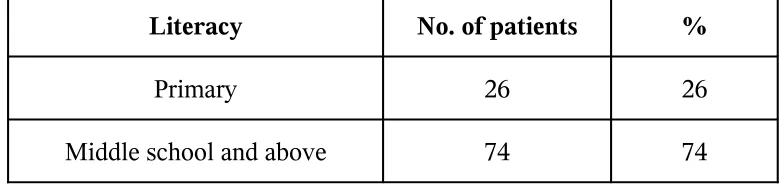
TABLE 1.3
DEMOGRAPHIC PROFILE OF THE PATIENTS - EDUCATIONAL STATUS
Literacy No. of patients %
Primary 26 26
Middle school and above 74 74
The educational status of the 100 patients revealed that 26(26%)
were educated up to primary school level and the rest 74(74%) were
TABLE 1.4
DEMOGRAPHIC PROFILE OF THE PATIENTS - OCCUPATIONAL STATUS
Most of our study population consisted of manual laborers
62(62%) and rest of them were house wives 17(17%) and students
21(21%).
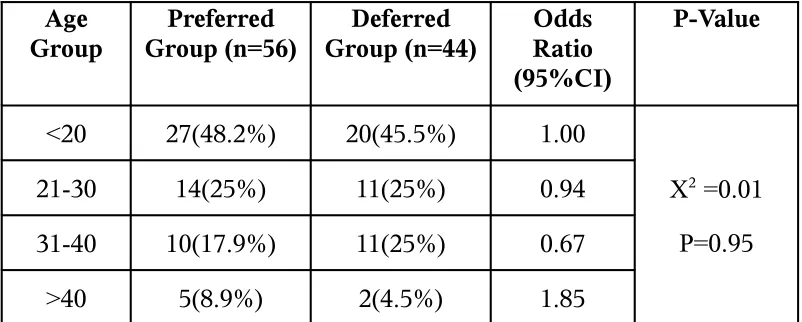
TABLE 2
FACTORS INFLUENCING PREFERENCES OF AED THERAPY - AGE (n=100)
Age Group Preferred Group (n=56) Deferred Group (n=44) Odds Ratio (95%CI) P-Value
<20 27(48.2%) 20(45.5%) 1.00
X2 =0.01
P=0.95
21-30 14(25%) 11(25%) 0.94
31-40 10(17.9%) 11(25%) 0.67
>40 5(8.9%) 2(4.5%) 1.85
a Test of significance was Pearson chi-square test/Yates corrected
chi-square test
b Odds ratio with 95% Confidence Interval
The factors influencing preferences of AED therapy revealed that
deferred group. Out of them 27(48%) in the preferred and 20(45%) in
[image:44.595.110.525.263.454.2]deferred group, were below 20 years.
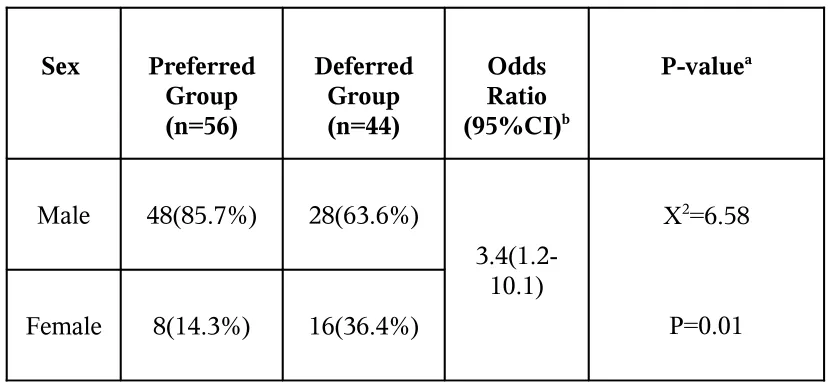
TABLE 3
FACTORS INFLUENCING PREFERENCES OF AED THERAPY – SEX (n=100)
Sex Preferred Group (n=56) Deferred Group (n=44) Odds Ratio (95%CI)b P-valuea
Male 48(85.7%) 28(63.6%)
3.4(1.2-10.1)
X2=6.58
P=0.01
Female 8(14.3%) 16(36.4%)
a Test of significance was Pearson chi-square test/Yates corrected
chi-square test
b Odds ratio with 95% Confidence Interval
Most of the males in the study population 48(63%) opted for
AED and while the majority of the females 16(66%) did not opt for
TABLE 4
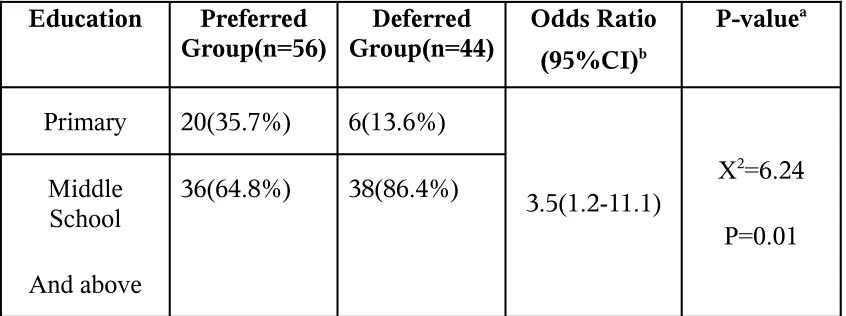
FACTORS INFLUENCING PREFERENCES OF AED THERAPY – EDUCATION (n=100)
Education Preferred Group(n=56) Deferred Group(n=44) Odds Ratio (95%CI)b P-valuea
Primary 20(35.7%) 6(13.6%)
3.5(1.2-11.1)
X2=6.24
P=0.01 Middle
School
And above
36(64.8%) 38(86.4%)
a Test of significance was Pearson chi-square test/Yates corrected
chi-square test
b Odds ratio with 95% Confidence Interval
The bearing of educational back ground on initial choice of AED
therapy indicate that people with lesser education (up to primary level)
i.e 20(77%) preferred to undergo therapy when compared with better
educated people (middle school and above) 38(52%) who deferred the
TABLE 5
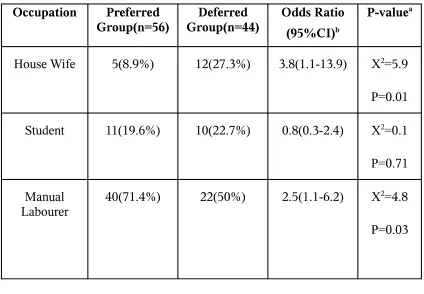
FACTORS INFLUENCING PREFERENCES OF AED THERAPY N - OCCUPATION (n=100)
Occupation Preferred Group(n=56) Deferred Group(n=44) Odds Ratio (95%CI)b P-valuea
House Wife 5(8.9%) 12(27.3%) 3.8(1.1-13.9) X2=5.9
P=0.01
Student 11(19.6%) 10(22.7%) 0.8(0.3-2.4) X2=0.1
P=0.71
Manual
Labourer 40(71.4%) 22(50%) 2.5(1.1-6.2) X
2=4.8
P=0.03
a Test of significance was Pearson chi-square test/Yates corrected
chi-square test
b Odds ratio with 95% Confidence Interval
Manual laborers had a preference for AED therapy while the
TABLE 6
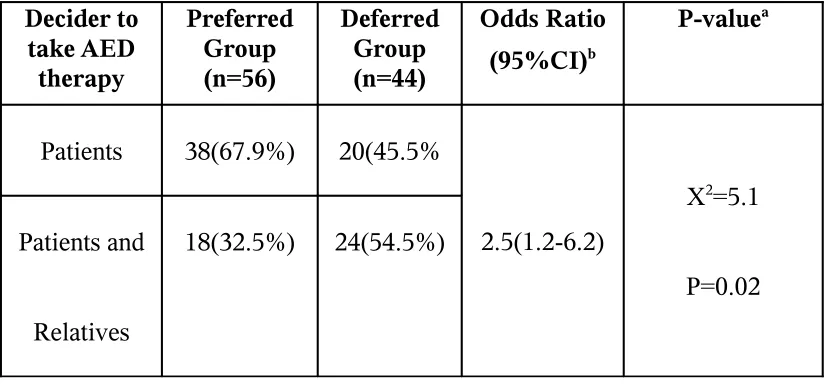
FACTORS INFLUENCING PREFERENCES OF
AED THERAPY – DECIDER (PATIENT / RELATIVE) (n=100)
Decider to take AED therapy Preferred Group (n=56) Deferred Group (n=44) Odds Ratio (95%CI)b P-valuea
Patients 38(67.9%) 20(45.5%
2.5(1.2-6.2)
X2=5.1
P=0.02 Patients and
Relatives
18(32.5%) 24(54.5%)
a Test of significance was Pearson chi-square test/Yates corrected
chi-square test
b Odds ratio with 95% Confidence Interval
Majority of the patients themselves were categorical in initiation
of AED therapy in preferred group (68%). While in the deferred group,
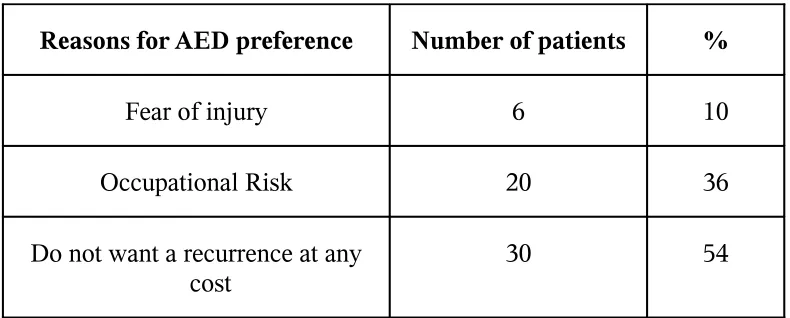
TABLE 7
AED THERAPY PREFERENCES AND REASONS (n = 56)
Reasons for AED preference Number of patients %
Fear of injury 6 10
Occupational Risk 20 36
Do not want a recurrence at any cost
30 54
In the preferred group, majority of the patients (54%) wanted to
under go AED therapy since they did not want recurrence of attack at
any cost since they were either living alone or could not avail medical
help at times of emergency. They also feared loss of employment. Most
of the males who preferred therapy were the lesser educated and manual
laborers involved in masonry work, fishing or electrical works. They
feared not only injuries during seizure episode but also risk to their life
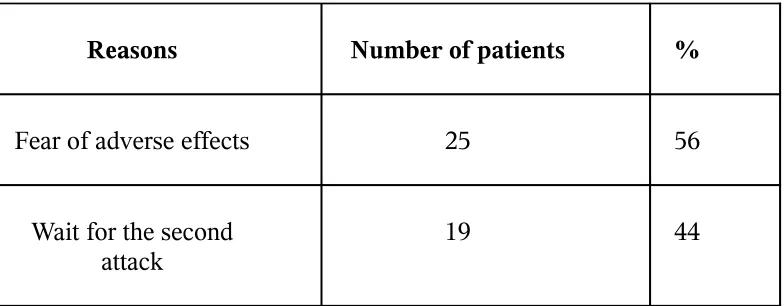
TABLE 8
AED THERAPY DEFERRENCES AND REASONS (n = 44)
Reasons Number of patients %
Fear of adverse effects 25 56
Wait for the second
attack 19 44
In the deferred group, most of the patients (56%) had a fear of
TABLE 9
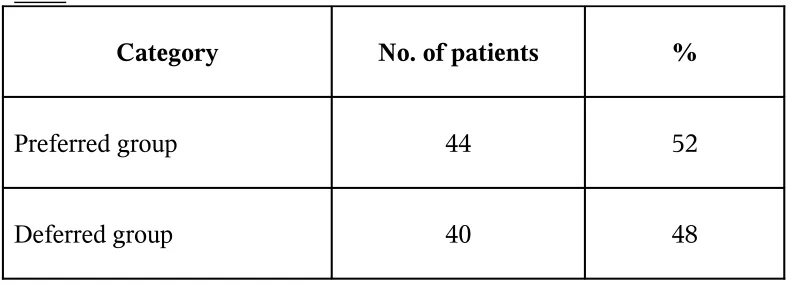
ONE YEAR FOLLOW-UP (n=84)
Category No. of patients %
Preferred group 44 52
Deferred group 40 48
One year follow up was carried out in 84 patients. Out of them
44(52%) were from preferred group and the rest were from the deferred
TABLE 10
RECURRENCE RATE (One year)
Category No. of patients Recurrence %
Preferred group 44 6 14
Deferred group 40 8 20
Among them 6(14%) in the preferred group and 8(20%) in the
deferred group experienced recurrence of seizure. 4 patients (66%) in
the preferred and 6 patients (75%) in the deferred group, experienced
TABLE 11
EEG ABNORMALITIES AND RECURRENCES (n = 84)
Category No. of patients
EEG
abnormality
% Recurrence %
Preferred group 44 13 30 4 31
Deferred group 40 11 27 3 27
EEG were abnormal in 13(30%) in the preferred group and
11(24%) in the deferred group. 4 patients (31%) in the preferred group
DISCUSSION
The present study was conducted in Department of Neurology,
Government Stanley medical college Hospital not only with the sole
purpose of studying patient’s attitude towards AED therapy after a first
unprovoked GTCS but also to study the recurrence rate after a one year
follow up. A total of one hundred new cases were included in the study
after applying appropriate inclusion and exclusion criteria.
Among the study population, 76% were males. In both preferred
and deferred groups, males outnumbered females. This is probably
because of a selection bias in a hospital based study in a developing
country where more males report to hospitals than females because
of socioeconomic reasons. The same conclusion was drawn by
Hausser WA et al15, Shinnar A et al 8, 17 and in a CAROLE study by
Jallon P et al36.
The median age group of patients with FUS was less than 20
years. Out of the study population 34(46%) were below 20 years,
drawing a parallel with studies conducted earlier as in a CAROLE study
by Jallon P et al36, Das CP et al12.
education up to primary level. The choice of anti epileptic therapy was
influenced by the educational status, occupation and gender. As reported
in the present study, males with lower education doing manual jobs had
more preference for AED therapy when compared with their higher
educated counterparts. The decision was based mainly on the fear of
injury, the occupational risk involved there in and avoidance of seizure
recurrence for obvious reasons.
In the management of single seizures, after the initial evaluation
was complete, the main decision was whether to prescribe treatment.
(or)to wait for the recurrence. Although the medical literatures on this
subject were controversial, several factors should be considered.
In 1881 Gowers suggested that “seizures beget seizures” and
cause more and more brain damage with each episode, which if correct,
would suggest that all patients should be treated33. But later studies
revealed the variable recurrence rate after first seizure and the side
effects and social stigma involved in the long term anti epileptic drug
therapy.
In the absence of risk factors such as underlying neurological
abnormalities, the recurrence following first attack of unprovoked
The recurrence rate given by various studies at end of one year
coincided with our study on FUS conducted at Govt. Stanley Hospital.
In a study conducted by Hausser et al the recurrence rate at the
end of one year was found to be 20%15. In a study conducted in
NIMHANS, Bangalore by Gupta SK et al, the recurrence rate stood at
23%24. In a prospective study conducted by Wolf P, Mara KI, the
recurrence rate in the first year follow up was 17.4%44. In our present
study the recurrence rate was about 17% at the end of one year. The
recurrence rate among the preferred and deferred group were 14% and
20% respectively.
The recurrence was found to be the greatest in the initial 3 to 6
months after the index seizure and falls to less than 10% after 2 years8.
In the present study also the maximum number of recurrences occurred
in the initial 3 to 6 months period in the preferred group. In the deferred
group, most of the recurrence occurred within first 3 months, as shown
by Shinnar S et al in one of their studies35. In our study the recurrence
rate was comparatively lower in the initial 3 months in the preferred
group.
The probability of achieving one year remission, the preferred
year remission achieved in a study conducted by Beghi E et al of first
trial group were 83% and 87%1. In the NIMHANS study by Gupta SK et
al, the remission achieved were 77% and 72% in the preferred and
deferred group respectively24. In a multicentered randomized trial by
Musico M et al comparing the treatment of FUS with that of recurrence
showed that the long term effects of the two strategies were
approximately similar43. In the present study, the probabilities of
achieving one year remission among the preferred and deferred groups
were 86% and 80% respectively.
EEG abnormalities were reported in 13 and 11 patients of
preferred and deferred groups out of which 4 and 3 reported recurrence
of seizure during follow up. Studies had been inconclusive on the effect
of EEG abnormalities on seizure recurrence. Gilbert DL concluded and
recommended that EEG should not be done routinely after first
unprovoked seizure since the quantity of expected information from the
EEG was too low to affect the treatment recommendations30. SIGN
guidelines also did not advocate routine EEG after a first seizure45. In
our study also even though routine EEG was done in all patients, the
results were not taken into consideration while planning the treatment
However recent well conducted unbiased studies of prognosis
following a FUS have also demonstrated that a significant percentage of
patients did not have further seizures even without anti epileptic drug
therapy. It seems intuitive that treating patients with antiepileptic
medication, thereby preventing further seizures, should be better than
not treating them. Treatment did appear to reduce risk of recurrent
seizures in many but not all the treated patients.
Hence several neurologists felt that in the management of single
seizure the risk benefit ratio must be weighed before initiating AED
therapy. But who should assess it? The clinician or the affected person?
Obviously the patient’s spouse, close relatives were more concerned
about the health and welfare of the affected person and they could take a
better decision suitable to the patient provided, if they were informed
about the relevant scientific information about first seizure by the
neurologist. Such a decision would be more relevant and practical from
the patient’s perspective and help to improve the health care.
The importance of patient’s preference in treatment decision was
stressed by Say RE in his study34. SIGN guidelinesalso suggested that
ultimate judgment regarding treatment plan must be made by the doctor
diagnostic and treatment choices available45.
This concept was proved correct in the present study also as
evidenced by the similar recurrence rates in both preferred and deferred
group after one year follow up.
In the present study, one of the most important reasons for
immediate preference of AED therapy was certain risky jobs the patients
were involved in. Those patients who were involved in fishing,
construction work, welding, driving, handling sharp instruments as in
carpentry feared that an attack while on work could endanger their life
itself and hence never risked a recurrence. Another major group of
patients never wanted to risk any more attack at all. Even though few
patients expressed that they were living alone and there would be none
to offer any medical help at the time of emergency, most of them could
not offer any other specific reasons. It could be the fear of seizure itself
and the social stigma attached to it. Those who sustained major injuries
during the first attack also feared similar injuries during recurrence and
preferred immediate anti epileptic therapy. Thus fear of seizure, seizure
related injuries and probably the stigma attached to epilepsy were also
the major causes for preferring AED drug therapy.
better educated females who were not involved in physical labour. An
equal number of patients, mostly better educated housewives deferred
the drug therapy and the reasons were
a. Fear of adverse effects of long term AED therapy. These patients
were more concerned about the adverse effects of long term AED
therapy and preferred to wait for the second attack.
b. Willing to wait for the second attack, as the recurrence might not
occur in 50% of patients.
The study had shown that following first attack of unprovoked
GTCS, approximately one half of the patients, mostly males preferred
AED therapy because of
(a) An ‘attack’ while at work, might harm their life
(b) Fear of major seizure-related injuries
(c) Other reasons such as living alone etc.
Some could not give specific reasons for preferring but it might
have been due to fear of seizure itself and the stigma attached to it.
In the present study, the effect of the patient’s involvement in the
themselves involved in the decision making of preferring or deferring
anti epileptic drug from their own perspective. At the end of first year,
they felt their initial decision was correct and relevant. Those who had
recurrence of seizure in the first year follow up in the deferred group
voluntarily came up for the treatment and those who had recurrence in
the preferred group due to defective compliance felt guilty and promised
to be regular. Active participation of the patients helped to improve the
drug compliance of the patient. The drug compliance rate among the
patients attending regular epileptic clinic at Neurology Department,
Government Stanley Medical College Hospital, was only 62%25. But in
our study, drug compliance among the preferred group was 85%. The
above said observations confirm the importance of involving the
patients and their relatives in the process of decision making regarding
initiation of AED therapy. Further, such a self decision could avert any
unwanted legal complications which might arise following the unilateral
CONCLUSIONS
1. Following an attack of first unprovoked seizure, lower educated
male laborers preferred AED therapy for the fear of injury, loss of
job or their life itself.
2. Recurrence rate in the treated and untreated group after a one
year follow up stood at 14% and 20% respectively.
3. Most of the recurrence in the preferred group occurred between
the third to sixth months and in the deferred within 3 months,
inferring that the AED therapy did not have any role in preventing
seizure recurrence beyond three months.
MESSAGE
Following a first attack of unprovoked seizure the decision
regarding AED therapy may be taken by the affected patients and
their close family members after adequate counselling by the
physician. Such a decision will be more relevant and suitable from the
BIBLIOGRAPHY
1. Beghi E, Berg AT, Hauser WA. Treatment of single seizures.
Epilepsy: a comprehensive Textbook.
2. Hirtz D, Berg A, Bettis D, Camfield C, Camfield P, Crumrine P et
al. Practice parameter: Treatment of the child with a first
unprovoked seizure report of the Quality Standards
Subcommittee of the American Academy of Neurology and the
Practice Committee of the Child Neurology Society. Neurology
2003; 60:166-75.
3. Dunn MJG, Breen DP, Davenport RJ and Gray AJ. Early
management of adults with an uncomplicated first generalized
seizure. Emerg Med J 2005; 22: 237 – 242.
4. Forsgren L, Bucht G, Eriksson S, Bergmark L. Incidence and
clinical characterization of unprovoked seizures in adults: a
prospective population-based study. Epilepsia 1996; 37: 224-29.
5. Hauser WA, Rich SS, Lee JR, Anngers JF and Anderson VE;
Risk of recurrent seizures after two unprovoked seizures. NEJM
6. Herman ST. Single Unprovoked Seizures: Current Treat Options.
Neurology 2004; 6(3): 243-55.
7. Camfield P, Camfield C, Smith S, Dooley J, Smith E. Long-term
outcome Is Unchanged by Antiepileptic Drug Treatment after a
First Seizure: A 15-year follow-up from a Randomized Trial in
Childhood.. Epilepsia 2002;43(6):662.
8. Shinnar S, Berg A, O’Dell C; Predictors of multiple seizures in a
cohort of children prospectively followed from the time of their
first unprovoked seizure. Ann Neurol 2000; 48:140-147.
9. Greenwood RS, Tennison MB. When to start and stop
anticonvulsant therapy in children. Arch Neurol 1999;
56(9):1073-77.
10. Gastaut H. Dictionary of epilepsy. Part 1: definitions. Geneva:
World Health Organisation, 1973:48.
11. The commission on Epidemiology and Prognosis. The
international League Against Epilepsy. Guidelines on
epidemiologic studies. Epilepsia 1994;34: 592-596.
12. Das CP, Sawhney IM, Lal V, Prabhakar S. Risk of recurrence of
Neurology India 2000; 48(4): 357-60.
13. Madhusudanan M. First Unprovoked seizure – to treat or not to
treat? JAPI 2000; Vol 48. No.5.
14. Elwes RDC, Johnson AL, Reynolds EH, The course of untreated
Epilepsy; BMJ 1988; 297: 948-950.
15. Hauser WA, Anderson VE, Loewenson RB, McRoberts SM.
Seizure recurrence after a first unprovoked seizure. N Engl J
Med.1982; 307(9): 522-28.
16. Annegers JF, Shirts SB, Hauser WA, Kurland LT. Risk of
recurrence after an initial unprovoked seizure. Epilepsia 1986;
27(1): 43-50.
17. Shinnar S, Berg AT, Moshe SL, The risk of recurrenc following a
first unprovoked seizure in childhood : an extended follow up.
Paediatrics 1996; 98: 216-225.
18. Marson A, Jacoby A, Johnson A, Kim L, Gamble C, Chadwick D;
Lancet 2005 Jun 11-17; 365(9476): 2007-13.
19. Hausser WA, Kurland LT. The epidemiology of epilepsy in
20. Wolf P. Non medical treatment of first epileptic seizues in
adolescence and adulthood. Seizure 1995; 2: 87-94.
21. Boulloche I, Leloup P, Mallet E, Parain D, Tron P. Risk of
recurrence after asingle unprovoked generalized tonic clonic
seizure. Dev Med Child Neurol 1989; 31: 626-632.
22. Hart YM, Sander JW, Johnson AL, Shorvon SD. National general
practice study of epilepsy : recurrence after a first seizure. Lancet
1990; 336: 1271-1274.
23. First Seizure Trial Group. Randomised clinical trial on the
efficacy of antiepileptic drugs in reducing the risk of relapse after
a first unprovoked tonic clonic seizure. Neurology 1993; 43: 478-
483.
24. Gupta SK, Satishchandra P, Venkatesh A, Subbakrishna DK.
Prognosis of single unprovoked seizure. J Assoc Physicians India.
1993; 41(11): 709-10.
25.Dhanraj M, Jayavelu A. Factors influencing antiepileptic drug
noncompliance. Annals of Indian Academy of Neurology 2004;
7: 369-74.
tonic-clonic seizure does not improve the prognosis of epilepsy. First
Seizure Trial Group (FIRST Group). Neurology 1997; 49(4):
991-98.
27. Stronik H, Brouwer OF, Arts WF, Geerts AT, Peters AC, van
Donselaar CA. The first unprovoked, untreated seizure in
childhood: a hospital based study of the accuracy of the
diagnosis, rate of recurrence, and long term follow outcome afte
recurrence. Dutch study of epilepsy in childhood. J Neurol
Neurosurg Psychiatry 1998; 64: 595 – 600.
28. Collaborative Group for Epidemiology of Epilepsy. Adverse
reactions to antiepileptic drugs: a multicentre survey of clinical
practice. Epilepsia 1986; 27: 323- 330.
29. Berg A. Risks of recurrence after a first seizure, Ann Neurology
2000; 48: 140.
30. Gilbert DL, Buncher CR. An EEG should not be obtained
routinely after first unprovoked seizure in childhood. Neurology
2000; 54 (3): 635 – 641.
31. Neufeld MY, Chistik V, Vishne TH, Korczyn AD. The diagnostic
presumed first eve unprovoked seizure. Epilepsy Res. 2000;
42(2-3): 197-202.
32. Schreiner A, Pohlmann-Eden B. Value of the early
electroencephalogram after a first unprovoked seizure. Clin
Electroencephalology 2003; 34(3): 140-144.
33. Gowers WR, Epilepsy and other chronic convulsive diseases:
their causes, symptoms and treatment. London: J & A Churchill,
1881: 242.
34. Say RE, Thomson R. The importance of patient preferences in
treatment decisions - challenges for doctors. BMJ 2003; 327:
542-45.
35. Berg AT, Shinnar S. The risk of seizure recurrence following a
first unprovoked seizure: a quantitative review. Neurology 1991;
41: 965 - 972.
36. Jallon P, Loiseau P, Loiseau J. Newly diagnosed Unprovoked
epileptic seizures; presentation at diagnosis at CAROLE study
group Epilepsia 42(4): 476-475: 2001.
37. Yerby MS. Initial management of new onset seizures, to treat or
38. Bora I, Seckin B, Zarifoglu M, Turan F, Sadikoglu S, Ogul E.
Risk of recurrence after first unprovoked tonic-clonic seizure in
adults. J Neurol. 1995;242(3): 157-63.
39. O’Dell C, Shinnar S. Initiation and discontinuation of
antiepileptic drugs. Neurol Clin. 2001;19(2):289-311.
40. David ML, Geoffrey LA, Post graduate Medicine Vol
111/No.1/Jan 2002.
41. Martinovic Z, Jovic N. Seizure recurrence after afirst generalized
tonic clonic seizure, in children, adolescents and young adults.
Seizure 1997; 6: 461-465.
42. Collaborative Group for Study of Epilepsy. Prognosis of epilepsy
in newly referred patients: a multicenter prospectie study.
Epilepsia 1988; 29: 236.
43. Musico M, Beghi E, Solari A, Viani F, Treatment of first tonic
clonic seizure does not improve the prognosis of epilepsy. First
seizure trial group. Neurology 1993; 43: 478 – 483.
44. Wolf P, Mara KI, Non medical treatment of first epileptic
seizures in adolescence and adulthood. Seizure; 1995 Jun; 4(2):
45. Scottish International Guidelines Network. Diagnosis and
Management of epilepsy – a national clinical guideline. 2003.
46. Duchowny M, Seizure recurrence in childhood epilepsy: the
future ain’t what it used to be. Annals of Neurology 2000; 48:
ANNEXURES
PROFORMA
Name: SerialNo:
Age: Neuro No:
EEG No :
Sex: Date of
registration:
Address:
Education:
Occupation: Income:
Education of the relative:
Date of first seizures:
Time of occurrence: day time sleep
EEG:
CT scan
Time taken to decide about treatment: days
Decided to start treatment
not willing for treatment
Decision taken by patient relative………….
Reason to start/not willing for treatment: