METHOD
Dissertation submitted to
THE TAMIL NADU DR. M.G.R. MEDICAL UNIVERSITY Chennai - 32
In partial fulfillment for the award of the degree of MASTER OF PHARMACY
IN
PHARMACEUTICS Submitted by Reg. No. 26113007
DEPARTMENT OF PHARMACEUTICS J.K.K. NATTRAJA COLLEGE OF PHARMACY
KOMARAPALAYAM - 638183 TAMILNADU
Dept. of Pharmaceutics 1 J.K.K.Nattraja college of pharmacy I. INTRODUCTION
FORMULATION AND EVALUATOIN OF MONTELUKAST SODIUM
CHEWABLE TABLETS BY DIRECT COMPRESSION METHOD
1. Introduction
A tablet is a compressed solid unit dosage form containing medicaments with or without excipients. According to the Indian pharmacopoeia, pharmaceutical tablets are solid flat or biconvex dishes prepared by compressing a drug or a mixture of drugs, with or without excipients1,2. They vary in shape and differ greatly in size, shape and weight, depending on the amount of medicinal substances and the intended mode of administration. It is most popular dosage form and 70% of the total medicines are dispensed in the form of tablets. Tablets offer advantages over
both patient and manufacturers.
Tablets are most popular dosage form due to their simplicity and economy of the manufacture, relative stability and convenience in packaging, shipping and storage. For the patients, ease of manufacturing convenience in administration, accurate dosing and stability compared to oral liquids, tamper proofness compared to capsules, safe compared to parentral dosage forms make it a popular and versatile dosage form3.
1.1 Properties of tablets4
Should be elegant product having its own identity while being free of defects
such as chips, cracks, discoloration and contamination.
Should have strength to withstand the rigors of shocks encountered in its
production, packing, shipping and dispensing.
Should have the physical stability to maintain its physical attributes over
time.
Must be able to release the medicament agent(s) in the body in a predictable
and reproducible manner.
Must have suitable chemical stability over time so as not to allow alteration
Dept. of Pharmaceutics 2 J.K.K.Nattraja college of pharmacy 1.2 Tablet is one of the most popular oral dosage forms due to the following
potential advantages5,6,7
They are unit dosage form and they offer the greatest capabilities of all oral
dosage form for the greatest dose precision and the least content variability.
Cost is lowest of all oral dosage forms.
Lighter and most compact.
Easiest and cheapest to package and transport.
Product identification is easy and rapid requiring no additional steps when
employing an embossed and/or monogrammed punch face.
Easy to swallow with least tendency for hang-up.
Objectionable odor and bitter taste can be masked by coating techniques.
Suitable for large scale production.
Greatest chemical and microbial stability over all oral dosage form.
1.3 Disadvantages compared to other dosage forms8
Difficult to swallow in case of children and unconscious patients.
The tablets usually have insufficient mechanical strength. Hence, careful
handling is required.
The tablets may leave unpleasant taste and/or grittiness in mouth if not
formulated properly.
1.4 Pharmaceutical excipients used in tablets and capsules 9,10
The pharmaceutical industry is ever thirsty to satisfy patient’s therapeutical
needs and apart from active ingredients, excipients play a major role in formulation development.
In addition to transporting the active drug to the site in the body where the drug is intended to exert its action, excipients play an important part in the manufacturing process. They may also be important for keeping the drug from being released too early in the assimilation process in places where it could damage tender tissue and create gastric irritation or stomach upset.
Disintegrant helps the drug to disintegrate into particles small enough to reach the blood stream more quickly and few excipients protect the product's
Dept. of Pharmaceutics 3 J.K.K.Nattraja college of pharmacy Some excipients are used simply to make the product taste and look better. This improves patient compliance, especially in children. Although technically "inactive" from a therapeutic sense, pharmaceutical excipients are critical and essential components of a modern drug product. In many products, excipients make up the bulk of the total dosage form. Apart from the drug’s active ingredient, other essential components include diluents or fillers, binders, disintegrants, lubricants, coloring agents and preservatives. Diluents or fillers are inert ingredients that can significantly affect the chemical and physical properties of the final tablet thus affecting the biopharmaceutical profile.
One classic example of this is calcium salts, which can be utilized as fillers, which interfere with the absorption of tetracycline from the gastrointestinal tract. This example emphasizes that excipients may not always be inert, as they may be
perceived. Usually tablets are designed so that the smallest tablet size which can be conveniently compressed is formed. Thus, if the dose is small more diluents are required and if the dose is high less diluents are required as not to increase the tablet size, which might make it difficult to swallow.
Diluents selection should be made carefully as physical-chemical changes might render the product unstable and might cause problems in manufacturing. Binders are added to tablet formulations to add cohesiveness to powders thereby providing the necessary bonding to form granules which under compaction form a compact mass as tablet. In other words, binders are essential to achieve the “hardness” of the tablet.
Binders are usually selected on basis of previous experience, particular product needs, literature or vendor data or the preference of individual scientists or manufacturing unit. The primary criterion when choosing a binder is its compatibility with other tablet components. It must add sufficient cohesion to the powders to allow for normal processing yet allow the tablet to disintegrate and the drug to dissolve upon ingestion, releasing the active ingredients for absorption. Disintegrant facilitate the breakup of a tablet after oral administration.
They can be added prior to granulation or during the lubrication step prior to
Dept. of Pharmaceutics 4 J.K.K.Nattraja college of pharmacy compacts, one must carefully weigh these two phenomena when designing a tablet. Lubricants prevent sticking of the tablets to the tablet punches during the compression phase of the tablet manufacturing process.
When lubricants are added to a powder mass, they form a coat around individual particles which remains more or less intact during compression. Lubricants are mostly hydrophobic. The presence of lubricant coating may cause an increase in the disintegration time and a decrease in drug dissolution rate. The choice of a lubricant may depend upon the type of tablet being manufactured, dissolution, flow characteristics and requirements of the formulation in terms of hardness, friability and compatibility.
Glidants are the materials that have good flow properties and poor lubrication properties. Glidants improve the flow of powder into the tableting
machines for compaction. They act to minimize the tendency of a granulation to separate or segregate due to excessive vibration. High speed tablet machine require smooth even flow of material to die cavities (tablet mold). The uniformity of tablet weights directly depends on how uniformly the die cavity is filled. In general many materials commonly referred to as lubricants possess only a minimal lubricating activity and are better glidants or anti-adherents.
Thus a blend of two or more materials may be necessary to obtain these properties. Pharmacists should be familiar with the components of pharmaceuticals products, beyond their active ingredients. In order to educate pharmacists on excipients that are routinely used in the pharmaceutical industry, we decided to examine the top 200 prescription, tablets and capsules products of 2003 and find out how many or which excipients are used in each product.
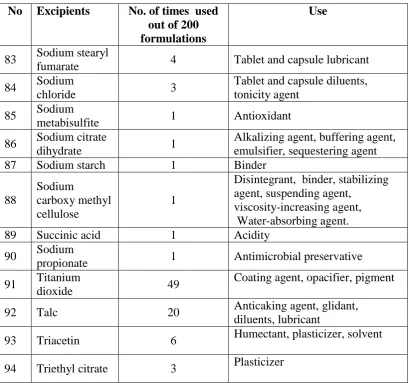
Dept. of Pharmaceutics 5 J.K.K.Nattraja college of pharmacy Table No: 1 Pharmaceutical excipients used in tablets and capsules
No Excipients No. of times used
out of 200 formulations
Use
1 Acacia 2
Emulsifying agent, stabilizing agent, suspending agent, tablet binder, viscosity-increasing agent
2 Alginate
1 Binder
3 Alginic Acid 1
Stabilizing agent, suspending agent,tablet binder, Tablet disintegrant,
Viscosity-increasing agent
4 Aluminum
Acetate 1 Antiseptic
5 Benzyl Alcohol 2 Antimicrobial preservative,
disinfectant,solvent
6 Butyl Paraben 1 Antimicrobial preservative
7
Butylated Hydroxy Toluene
1 Antioxidant
8 Citric acid 1 Disintegrant
9 Calcium
carbonate 1
Tablet and capsule diluents, therapeutic agent
10 Candelilla wax 4 Binder
11 Croscarmellose
sodium 22 Tablet and capsule disintegrant
12 Confectioner
sugar 1
Sugar coating adjunct, sweetening agent
13 Colloidal
silicone dioxide 22
Adsorbent,anticaking agent,emulsionstabilizer, glidant,suspending agent,tablet disintegrant, thermal stabilizer, viscosity-increasing agent
14 Cellulose 19
Adsorbent, suspending agent, tablet and capsule diluents, tablet disintegrant, Adsorbent, glidant, suspending agent, tablet and capsule diluents, tablet disintegrant 15 Plain or anhydrous calcium phosphate
3 Diluent
16 Carnuba wax 12 Binder
Dept. of Pharmaceutics 6 J.K.K.Nattraja college of pharmacy
No Excipients No. of times used
out of 200 formulations Use 18 Carboxymethyl cellulose calcium 3
Stabilizing agent, suspending agent, tablet and capsule
disintegrant, viscosity-increasing agent, water-absorbing agent
19 Calcium
stearate 5 Tablet and capsule lubricant
20
Calcium disodium EDTA
1 Chelation
21 Copolyvidone 1 Film-former, granulating agent,
tablet binder
22 Castor oil
hydrogenated 4
Extended release agent, stiffening agent,tablet and capsule lubricant
23
Calcium hydrogen phosphate dihydrate
1 Diluent
24 Cetylpyridine
chloride 1
Antimicrobial preservative, antiseptic, cationic surfactant, disinfectant, solubilizing agent, wetting agent
25 Cysteine HCL 1 Reducing Agent
26 Crosspovidone 20 Tablet disintegrant
27
calcium
phosphate di or tri basic
7
Anticaking agent, buffer, nutrient, dietary supplement, Glidant
28
Dibasic Calcium Phosphate
9 Diluent
29
Disodium hydrogen phosphate
1 Buffering agent
30 Dimethicone 1 Antifoaming agent, Emollient
31 Erythrosine
Sodium 2 Color
32 Ethyl Cellulose 3
Coating agent, flavoring fixative, tablet binder, tablet filler,
viscosity-increasing agent
33 Gelatin 14
Dept. of Pharmaceutics 7 J.K.K.Nattraja college of pharmacy
No Excipients No. of times used
out of 200 formulations
Use
34 Glyceryl
monooleate 2 Non-ionic surfactant
35 Glycerin
3
Antimicrobial preservative,
Emollient, humectants, plasticizer, Solvent, sweetening agent, tonicity Agent
36 Glycine 1 Tonicity agent
37 Glyceryl
monostearate 1
Emollient, emulsifying agent, solubilizing agent, stabilizing agent,sustained-release ingredient
38 Glyceryl
behenate 1
Coating agent, tablet binder, lubricant 39 Hydroxy propyl cellulose 25
Coating agent, emulsifying agent, suspending agent, thickening agent,viscosity-increasing agent 40 Hydroxyl propyl methyl cellulose 45
Coating agent, film-former, rate-controlling polymer for sustained release, stabilizing agent, suspending agent, viscosity-increasing agent
41 Hypromellose 7
Coating agent, film-former, rate-controlling polymer for sustained release, stabilizing agent, suspending
agent, tablet binder, viscosity-increasing agent
42 HPMC Pthalate 1 Coating agent
43 Iron oxides or
ferric oxide 15 Color
44 Iron oxide
yellow 5
Color
45 Iron oxide red
or ferric oxide 6
Color 46 Lactose hydrous or anhydrous or monohydrate or spray dried 77
Dept. of Pharmaceutics 8 J.K.K.Nattraja college of pharmacy
No Excipients No. of times used
out of 200 formulations
Use
tablet and capsule filler(lactose spray dried)
47 Magnesium
stearate 108 Tablet and capsule lubricant
48
Microcrystallin e
cellulose
61 Adsorbent, suspending agent, tablet diluents, tablet disintegrant
49 Mannitol 4
Sweetening agent, diluents, tonicity agent, vehicle (bulking agent) for lyophilized preparations
50 Methyl
cellulose 3
Coating agent, emulsifying agent, suspending agent, tablet and capsule
disintegrant, tablet binder, viscosity-increasing agent
51 Magnesium
carbonate 2
Diluents
52 Mineral oil 3 Emollient, lubricant, oleaginous
vehicle, solvent
53 Methacrylic
acid copolymer 5 Coating
54 Magnesium
oxide 2 Diluents
55 Methyl paraben 5 Antimicrobial preservative
56 Povidone or
PVP 36
Disintegrant, dissolution aid, suspending agent, tablet binder
57 PEG 40
Ointment base, plasticizer, solvent, suppository base, tablet and
capsule lubricant
58 Polysorbate 80 19 Solubilizer
59 Propylene
glycol 10
Antimicrobial preservative, disinfectant,humectants, plasticizer,
Solvent, stabilizer for vitamins, water-miscible cosolvent 60 Polyethylene
oxide 3
Mucoadhesive, tablet binder, thickening agent
61 Propylene
paraben 4 Antimicrobial preservative
62 Polaxamer 407
or 188 or plain 3
Dept. of Pharmaceutics 9 J.K.K.Nattraja college of pharmacy
No Excipients No. of times used
out of 200 formulations
Use
63 Potassium
bicarbonate 1 Alkalizing agent, therapeutic agent
64 Potassium
sorbate 1 Antimicrobial preservative
65 Potato starch 1 Binder
66 Phosphoric
acid 1 Acidifying agent
67 Polyoxy140
stearate 1
Emulsifying agent, solubilizing agent, wetting agent
68 Sodium starch
glycolate 20 Tablet and capsule disintegrant
69 Starch
pregelatinized 21
diluents, disintegrant,binder (starch pregelatinized Glidant ( starch , potato, corn , wheat, rice)
70 Sodium
crossmellose 1 Disintegrant
71 Sodium lauryl
sulfate 13
Anionic surfactant, detergent, emulsifying agent, skin penetrant, lubricant, wetting agent
72 Starch 19
Glidant, diluents, disintegrant binder.(starch , potato, corn , wheat, rice)
73 Silicon dioxide 14 Same as colloidal silicon dioxide
74 Sodium
benzoate 2
Antimicrobial preservative, lubricant
75 Stearic acid 12 Emulsifying agent, solubilizing
agent, lubricant
76 Sucrose 9
Base for medicated confectionery, granulating agent, sugar coating adjunct, suspending agent, diluents, sweetening agent, viscosity-increasing agent
77 Sorbic acid 3 Antimicrobial preservative
78 Sodium
carbonate 1 Carbonating agent
79 Saccharin
sodium 1 Sweetening agent
80 Sodium
alginate 1
Stabilizing agent, suspending agent, disintegrant, binder, viscosity-increasing agent
81 Silica gel 1 Adsorbant
82 Sorbiton
Dept. of Pharmaceutics 10 J.K.K.Nattraja college of pharmacy
No Excipients No. of times used
out of 200 formulations
Use
83 Sodium stearyl
fumarate 4 Tablet and capsule lubricant
84 Sodium
[image:11.595.109.519.76.459.2]chloride 3
Tablet and capsule diluents, tonicity agent
85 Sodium
metabisulfite 1 Antioxidant
86 Sodium citrate
dihydrate 1
Alkalizing agent, buffering agent, emulsifier, sequestering agent
87 Sodium starch 1 Binder
88
Sodium
carboxy methyl cellulose
1
Disintegrant, binder, stabilizing agent, suspending agent,
viscosity-increasing agent, Water-absorbing agent.
89 Succinic acid 1 Acidity
90 Sodium
propionate 1 Antimicrobial preservative
91 Titanium
dioxide 49
Coating agent, opacifier, pigment
92 Talc 20 Anticaking agent, glidant,
diluents, lubricant
93 Triacetin 6 Humectant, plasticizer, solvent
94 Triethyl citrate 3 Plasticizer
In the tablet formulation, a range of excipients materials is normally required along with the active ingredient in order to give the tablet the desired properties. For
example the reproducibility and dose homogeneity of the tablets are dependent on the properties of the powder mass. The tablet should also be sufficient strong to withstand handling, but should disintegrate after intake to facilitate drug release. The choice of excipients will affects all these properties.
1.4.1 Filler
Dept. of Pharmaceutics 11 J.K.K.Nattraja college of pharmacy 1.4.2 Binder
A material with a high bonding ability can be used as a binder to increase the mechanical strength of the tablet. A binder is usually a ductile material prone to undergo plastic deformation. Typically binder is polymeric material often with disordered solid state structures. Of special importance is the deformability of the peripheral parts of the binder particles. Thereby this group of materials has the capacity of reducing interparticulate distance within the tablet, improving bond formation. If the entire bulk of the binder particle undergoes extensive plastic deformation during compression, the interparticulate voids will at least partly be filled and the tablet porosity will decrease. This increase the contact area between the particles which promote the creation of interparticulate bonds subsequently increases the tablet strength. However, the effect of the binder depends on the both
its own properties and those of the other compounds within the tablet. A binder is often added to the granulation liquid during wet granulation to improve the cohesiveness and compactability of the powder particles, which assists formation of granules. It is commonly accepted that binder added in dissolved form, during a granulation process is more effectives than used in dry powder form during direct compression.
1.4.3 Disintegrating agent
A disintegrants are normally added to facilitate the rupture of bonds and subsequent disintegration of tablets. This increases the surface area of the drug exposed to the gastrointestinal fluids incomplete disintegration can result in incomplete absorption or a delay in the onset of action of the drug. There are several types of disintegrations acting with different mechanisms
a) Promotion of the uptake of aqueous liquids by capillary forces. b) Swelling in contact with water
c) Release if gases when in contact with water d) Destruction of the binder by enzymatic action.
Starch is a traditional particles swells moderately in contact with water and tablets disrupts so called superdisintegrants they are now commonly used since these
Dept. of Pharmaceutics 12 J.K.K.Nattraja college of pharmacy Larger particles of disintegrates have been found to swell to a greater extent and with faster rate than finer particles resulting in more effectiveness disintegration. 1.4.3.1 Super Disintegrants11,12,13
Super disintegrants were increased demands for faster dissolution requirements, there are now available. The major groups of compounds which are used as superdisintegrants in many solid-dosage forms are as follows.
1.4.3.1.1Microcrystalline cellulose (Avicel)
[image:13.595.104.514.348.714.2]Apart from its use in direct compression, microcrystalline cellulose is used as a diluent in tablets prepared by wet granulation, as filler in capsules and for the production of spheres. MCC tablets when exposed to increased humidity (75 %,one week) resulted in a softening and swelling of plain microcrystalline cellulose tablets. This change disappeared on removal of humid condition.
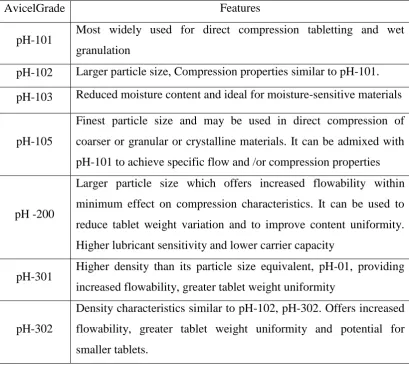
Table No: 2 Comparative properties of various grades of Avicel
AvicelGrade Features
pH-101 Most widely used for direct compression tabletting and wet granulation
pH-102 Larger particle size, Compression properties similar to pH-101.
pH-103 Reduced moisture content and ideal for moisture-sensitive materials
pH-105
Finest particle size and may be used in direct compression of
coarser or granular or crystalline materials. It can be admixed with pH-101 to achieve specific flow and /or compression properties
pH -200
Larger particle size which offers increased flowability within minimum effect on compression characteristics. It can be used to
reduce tablet weight variation and to improve content uniformity. Higher lubricant sensitivity and lower carrier capacity
pH-301 Higher density than its particle size equivalent, pH-01, providing increased flowability, greater tablet weight uniformity
pH-302
Dept. of Pharmaceutics 13 J.K.K.Nattraja college of pharmacy 1.4.4 Glidants, Anti-adherents and Lubricants
Glidants are added to increase the flow ability of the powder mass reduce interparticular friction and improve flow in the hopper shoe and die of the tablet machine. Anti-adherents can be added to decrease sticking of powder to the faces of the punches and die walls during compaction and lubricants is added to decrease friction between powder and die. Facilitating ejection of the tablet from the die however addition of lubricants can have negative effect on tablet strength, since they often reduces the creation of interparticular bond space. Further lubricants can also slow the drug dissolution process by introducing hydrophobic films around drug and excipients particles. These negative effects are especially pounced when long mixing times are required. Therefore the amount of lubricants should be kept relatively low and the mixing procedure kept short to avoid a homogenous distribution of lubricant
throughout the powder mass. An alternative approaches could then be to admix granulated qualities of lubricant.
1.4.5 Flavor, sweetener and colorants
Flavor and sweeteners are primarily used to improve or mask the taste of the drug with subsequent improvement in patient compliance. Coloring tablets has aesthetic value that can improve tablet identification especially when patients are taking number of different tablets at once.
1.5 Manufacturing
1.5.1 Tablet manufacturing methods14-24
Tablets are the unit solid dosage forms meant for oral use and are manufactured by using tablet compression machines. The tabletting mixture that is going to be compressed can be prepared by either of the three techniques- Wet granulation, Dry granulation or direct compression. Each of the individual technique mentioned above has their own advantages and disadvantages respectively.
(a.)Methods for tablet preparation
1. Granulation method.
a. Wet granulation. b. Dry granulation.
Dept. of Pharmaceutics 14 J.K.K.Nattraja college of pharmacy (b.) Steps involved in these methods
Wet granulation Dry granulation Direct compression
Blending Blending Blending
Wet massing and screening Slugging/roller compaction
- Drying
- - Dry screening
Blending(with lubricant) Blending (with lubricant)
Blending (with lubricant)
Compaction Compaction Compaction
1.5.1.1 Wet granulation
Wet granulation is the process in which a liquid binder is added to a powder in a vessel equipped with any type of agitation that will produce agglomeration or granules these granules after drying are compressed to tablet form.
1.5.1.2 Dry granulation
In this technique, there is no use of liquid. The process involves the formation of flugs. Then these flugs are screened or milled to produce granules. The granules formed are then compressed into tablet forms.
1.5.1.3 Direct compression
In general direct compression method involves the direct compaction of tabletting mixture without the step of granulation, provided the tabletting mixture should have enough flow properties and should form a robust tablet. For suppose, if the tabletting mixture is not having good flow properties, we can either use direct compression vehicles (DCV) for improving the flow and compatibility of tabletting mixture or by subjecting the mixture for granulation process (wet or dry
granulation).
The invention of direct compression had increased the production of tablets
Dept. of Pharmaceutics 15 J.K.K.Nattraja college of pharmacy hence can be manufactured by direct compression technique. Drugs with minute doses (potent drugs) as well as drugs with large doses are not suitable for direct compression due to segregation problems and large tablet sizes respectively. Here we mainly focused on the advantages and disadvantages of the direct compression technique, essential properties of DCVs, some of the examples of DCVs and the drugs that are suitable for direct compression technique.
Advantages of Direct compression
Cost Effectiveness: The prime advantage of direct compression over wet
granulation is economic since the direct compression requires fewer unit operations. This means less equipment, lower power consumption, less space, less time and less labor leading to reduced production cost of tablets.
Stability: Direct compression is more suitable for moisture and heat
sensitive APIs, since it eliminates wetting and drying steps and increases the stability of active ingredients. Changes in Dissolution profiles are less likely to occur in tablets made by direct compression on storage than in those made from granulations.
Faster Dissolution: Disintegration or dissolution is the rate limiting step in
absorption in case of tablets with poorly soluble API prepared by wet granulation. The tablets prepared by direct compression disintegrate into API particles instead of granules that directly come into contact with dissolution fluid and exhibits comparatively faster dissolution.
Less wear& tear of punches: The high compaction pressure involved in the
production of tablets by slugging or roller compaction can be avoided by adopting direct compression. The chances of wear and tear of punches and dies are less.
Other advantages: As ingredients are processed for a shorter period of time,
Dept. of Pharmaceutics 16 J.K.K.Nattraja college of pharmacy Limitations of Direct compression
Segregation: Direct compression is more prone to segregation due to the
difference in density of the API and excipients. The dry state of the materials during mixing may induce static charges and lead to segregation. This may lead to the problems like weight variation and content non-uniformity.
Cost: Directly compressible excipients are the speciality products produced
by spray drying, fluid bed drying, roller drying or co-crystallization. Hence, the products are relatively costly than the respective raw materials.
Low dilution potential: Most of the directly compressible materials can
accommodate only 30-40 % of the poorly compressible active ingredients like acetaminophen that means the weight of the final tablet to deliver the 500 mg of acetaminophen would be more than 1300 mg. The large tablets
may create difficulty in swallowing.
Lubricant sensitivity: Lubricants have more adverse effect on the filler,
which exhibit almost no fracture or shear on compression (e.g. starch 1500). The softening effects as well as the hydrophobic effect of alkaline stearates can be controlled by optimising the length of blending time to as little as 2-5 min.
Variation in functionality: There is a lack of awareness in some situations
that the excipients behave differently, depending upon the manufacturer so much so that substitution from one source to that of another is not possible. Hence, there is a need for greater quality control in purchasing of raw materials to assure batch uniformity.
1.5.2 General formula for direct compression includes the following ingredients
1. Binder-Filler (DC-vehicles)
These DC vehicles (either binders or fillers) play an important role as that of API in this method. In general, the terms binder and filler are always confusingly used in direct compression. But, the major difference between these two is their Dilution capacities. (Dilution capacity is the maximum proportion of the API that can be compacted into an acceptable compact by the binder or filler.)Binders have
Dept. of Pharmaceutics 17 J.K.K.Nattraja college of pharmacy binders and fillers are determined by using some reference materials which are difficult to compact. Eg: ascorbic acid.
Based upon the solubility and disintegration properties of the Binders, these
can be classified as-
1. Binders
i. Soluble Binders: These are always non- disintegrating. Some of the examples are Sugars, Ploy hydric alcohols etc.
ii. Insoluble Binders: These insoluble binders are again of two types- a. Disintegrating (MCC, starch etc.)
b. Non-disintegrating (DCP)
When we use soluble filler, there will be rapid release of API from the tablet, but the problem is that soluble erosion and release profile dominates the disintegration and
release profile. (We observed faster release patterns in case of MCC tablets whencompared with similar formula where lactose is used instead of MCC).
Factors influencing the selection of optimum DC- vehicle
Properties of Powders. (particle size, shape, density, solubility) Properties of compacts. (flow, compatibility)
Stability factors. (temperature and moisture effects) Others. (cost, availability etc.)
2.Disintegrants
In general, we use less concentration of disintegrants in DC method when compared with the wet granulation method which are nothing but super disintegrants. This can be explained by following reasons-To minimize the softening and flow properties of the tabletting mixture. The required uniform particle size of API upon disintegration can be achieved only if the disintegrant used is uniformly distributed in the tablet, which may be difficult when high loadings of API are used. Also when we use soluble fillers, erosion followed by dissolution occurs instead of
disintegration, which can be avoided if we use more concentration of disintegrant or super disintegrants. Some of the examples of super disintegrants are sodium starch
Dept. of Pharmaceutics 18 J.K.K.Nattraja college of pharmacy 3. Lubricants
We prefer hydrophilic lubricants over the hydrophobic ones in case of DC
method. This is because, hydrophobic ones (magnesium stearate) may form a film around other ingredients used in the formula which may results in the decrease of tablet hardness.
This problem can be overcome by following by –
Blending the tableting mixture (excluding lubricant) by high shear mixtures
and then adding the lubricant to this main blend with low shear mixing. By carefully controlling the particle size and surface area of the lubricant
used.
Use of hydrophilic lubricants such as stearic acid, stearyl fumerate,
hydrogenated vegetable oils etc.
Some works showed that ejection force, hardness, disintegration and dissolution times of MCC and lactose tablets were adversely effected depending upon the lubricant mix time. Also the type of blender used effects the crushing strength of the
tablets. For example, crushing strength is much decreased for large industrial mixers compared with small laboratory blenders when same concentration of lubricant is used in both cases.
1.5.3 General requirements for Direct compression
Vehicles
In order to perform direct compression without any problems, we need to
consider certain parameters which are to be maintained in optimum range and are as follows
Compactability Flow properties
Dept. of Pharmaceutics 19 J.K.K.Nattraja college of pharmacy dissolution may become slower. In this case we can use soluble filler (Lactose) with a superdisintegrant.) When we use more than one compactable agent (binders) then we can expect both additive (MCC and lactose) and antagonistic effects.(cellulose or starch with fast dissolving sugars like dextrose, sucrose and the result is poorer compactability with long disintegration times). Also, as the crystal properties of tabletting mixture increase, its compactability decreases. So, pure crystals are generally inferior in terms of compactability. So, by increasing the amorphous nature either by spray drying or co-crystallization we can improve the compactability.
Eg: Spray drying of lactose results in small alpha monohydrate crystals that are held together by amorphous glass. These agglomerates are superior to normal crystals in terms of flow and compactability. Also, spray drying of acid hydrolyzate of
cellulose (MCC), agglomeration of starch and partially hydrolyzed starch, Co-crystallization of sucrose with modifieddextrins.
2. Flow properties: “No flow, no tablets.” It is required in each and every step of tablet preparation. Poor flow may result in difficulties for the compression mix to flow from hopper to the die cavity which may cause weight variation problems. Granulation step increases the flow in case of wet granulation method but in case of DC we must use DC grade excipients for better flow. Proper flow can be attained by using Glidiants at levels of 0.1-0.2%. Also if the flow exceeds the optimum range, it may results in segregation of tablet ingredients, this will leads to content uniformity problems.
Preparation of DC-vehicles
As we have already discussed that DC excipients are speciality products prepared by modification of normal ingredients, these modification can be done in two ways
Chemical modification
Ethyl cellulose, Methyl cellulose, HPMC, Na-CMC, Cyclodextrins etc.
Physical modification
Dextrates or compressible sugars, sorbitol, DCP etc.
Spray drying
Dept. of Pharmaceutics 20 J.K.K.Nattraja college of pharmacy
Crystallization
Dipac etc.
Granulation
Tabletose (granulated lactose) etc.
Co-processing
Cellactose : MCC, Lactose
Ludipress : Lactose, PVP, Crosspovidone Starlac : Lactose, Maize starch
Celocol : MCC, Calcium phosphate 1.6 Chewable Tablet 25-32
Tablet is most popular among all dosage forms existing today because of convenience of self administration, compactness and easy manufacturing.25
Many patients express difficulty in swallowing tablets and hard gelatin capsules, resulting in noncompliance and ineffective therapy.26
To overcome this weakness, scientists have developed innovative drug delivery systems known as fast dissolving tablets.27. United States Food and drug administration (FDA) defined fast dissolving tablet (FDT) as “a solid dosage form
containing medicinal substance or active ingredient which disintegrate rapidly usually within a matter of seconds when placed up on the tongue”.28
Their characteristic advantages such as administration without water, patient compliance, rapid onset of action, increased bioavailability and good stability make these tablets popular as a dosage form of choice in the current market.29
Montelukast sodium is a leukotriene receptor antagonist (LTRA) used in maintenance treatment of asthma and to relieve symptoms of seasonal allergies. It is usually administered orally. Montelukast sodium is freely soluble in ethanol, methanol and water and practically insoluble in acetonitrile and its bioavailability is 63%.30,31
In the present study an attempt had been made to prepare chewable tablets of Montelukast sodium in the oral cavity with enhanced dissolution rate and hence improved patient compliance. The basic approach used in the development of
Dept. of Pharmaceutics 21 J.K.K.Nattraja college of pharmacy increase the water uptake with shortest wetting time and thereby decrease the disintegration time of the tablets by simple and cost effective direct compression technique. These systems may offer superior profile with potential mucosal absorption, thus increase the drug bioavailability.
These systems are also called mouth dissolving tablets, melt-in-mouth tablets, Reprimelts, porous tablets, Oro dispersible, quick dissolving or rapidly disintegrating tablets. Montelukast (sodium salt) is potent, selective CysLT1 receptor anatagonist. It is indicated for the prophylaxis and chronic treatment of asthma in adults and pediatric patients. The drug is commercially available in various forms of once- daily oral dosage formulations including oral granules. In addition to the therapeutic ingredients of pharmaceutical tablets (commonly referred to as "actives"), materials inert and non-reactive with respect to
the actives (commonly referred to as "excipients") are added to the tablet formulation to confer specific properties not related to the activity of the therapeutic agents. Excipients such as diluents, binders, glidants, and lubricants are added as processing aids to make the tableting operation more effective.
Other excipients such as microcrystalline cellulose are also added to improve the compression of the tablets. Still other types of excipients added to pharmaceutical tablets are those which enhance or retard the rate of disintegration of the tablet in the patient, improve the taste of the tablet, (for example sweetening agents), or impart a color to the tablets. In some instances such materials will provide more than one of these benefits to the finished tablet. Although excipients are classified as inert materials, they are only inert in the sense that they are not pharmaceutical actives and do not provide a therapeutic effect in themselves, but they make delivery of the therapeutic agent in the most effective manner possible.
Chewable tablets, regardless their geometry, represent a particular form of oral dosage; they are intended to be chewed in the mouth by the patient and are not intended to be swallowed intact. Many chewable formulations are intended to be used to provide a known dosage of active to children or the people who either will refuse to swallow an intact tablet or may have difficulty doing so. Such tablets are
Dept. of Pharmaceutics 22 J.K.K.Nattraja college of pharmacy types of therapeutic agents to an even greater population. One such advantage is that certain types of tablets, because of the large size of the dosage, must be unusually large and, therefore, difficult to swallow. In some cases the effectiveness of the therapeutic agent is improved by the reduction in size that occurs during mastication of the tablets before swallowing. Furthermore, patient compliance with the prescribed therapy, such as antacid treatment, is enhanced by the use of smaller, more convenient tablets which may be consumed when it is inconvenient to swallow pills, for example, in the workplace. This is particularly true when the therapy would otherwise involve a liquid suspension of the therapeutic agent which would be inconvenient to transport, for example in chewable antacid tablets.
Excipients when added to chewable tablets must not only be inert in respect of the active, preferably they provide pleasant mouthfeel and/or prevent tooth
packing, grittiness, and the like, without imparting any unpleasant characteristics to the tablets as they are chewed. Microcrystalline cellulose in various forms.
Aggregates of coprocessed microcrystalline cellulose and guar, by which these aggregates may be made and their physical and organoleptic properties. The aggregates are disclosed as being useful as fat replacements in such food applications as low-fat salad dressings and frozen dessert products. In this patent a brief mention is made of several other possible uses for these materials including controlled release agents, tableting excipients, flavor carriers, or bonding, bulking, or encapsulating agents. Except for this mention, there is no enabling disclosure directed toward their use as excipients nor suggestion that they possess unique properties that might suit them for use in pharmaceutical tablets nor any indication that they might provide extraordinary properties to a particular type of pharmaceutical tablet, for example "chewable" tablets32.
1.7 Asthma33-37
Asthma is a most common chronic inflammatory disease of the airways, characterized by hyper responsiveness to a variety of stimuli. The role of circadian rhythms in the pathogenesis and treatment of asthma indicates that airway resistance increases progressively at night in asthmatic patients. Circadian changes are seen in
Dept. of Pharmaceutics 23 J.K.K.Nattraja college of pharmacy disorder that causes difficulty in breathing when the airways become inflamed and narrow. It is usually caused by allergies. The condition can be managed by medication but sometimes, severe asthma attacks can be fatal. Oral administration could be useful for the treatment of certain diseases, such as asthma, gastric ulcer, hypertension, ischemic heart disease, arthritis, etc., which exhibit circadian rhythms. Oral drug delivery is currently the gold standard in the pharmaceutical industry where it is regarded as the safest, most convenient and an economical method of drug delivery having the highest patient compliance.
1.7.1 Causes
In most cases of asthma in children, multiple triggers or precipitants exist, and the patterns of reactivity may change with age. Treatment can also change the pattern. Certain viral infections, such as respiratory syncytial virus
(RSV) bronchiolitis in infants, predispose the child to asthma.
Respiratory infections: Most commonly, these are viral infections. In some
patients, fungi (eg,allergic bronchopulmonary aspergillosis), bacteria (eg, mycoplasmata, pertussis) or parasites may be responsible. Most infants and young children who continue to have a persistent wheeze and asthma have high immunoglobulin E(IgE) production and eosinophilic immune responses (in the airways and in circulation) at the time of the first viral (Upper Respiratory tract infection). They also have early IgE-mediated responses to local aeroallergens.
Allergens: In patients with asthma, 2 types of bronchoconstrictor responses
to allergens exist.
Early asthmatic responses occur via IgE-induced mediator release from
mast cells within minutes of exposure and last for 20-30 minutes.
Late asthmatic responses occur 4-12 hours after antigen exposure and result
in more severe symptoms that can last for hours and contribute to the duration and severity of the disease. Inflammatory cell infiltration and inflammatory mediators play a role in the late asthmatic response. Allergens can be foods, household inhalants (eg, animal allergens, molds, fungi,
Dept. of Pharmaceutics 24 J.K.K.Nattraja college of pharmacy Irritants: Tobacco smoke, cold air, chemicals, perfumes, paint odors, hair
sprays, air pollutants, and ozone can initiate BHR by inducing inflammation.
Weather changes: Asthma attacks can be related to changes in atmospheric
temperature, barometric pressure, and the quality of air (eg:humidity, allergen and irritant content).
Exercise: Exercise can trigger an early asthmatic response. Mechanisms
underlying exercise-induced asthmatic response remain somewhat uncertain. Heat and water loss from the airways can increase the osmolarity of the fluid lining the airways and result in mediator release. Cooling of the airways results in congestion and dilatation of bronchial vessels. During the rewarming phase after exercise, the changes are magnified because the ambient air breathed during recovery is warm rather than cool.
Emotional factors: In some individuals, emotional upsets clearly aggravate
asthma.
Gastroesophageal reflux(GER):The presence of acid in
the distal esophagus, mediated via vagalor other neural reflexes, can significantly increase airway resistance and airway reactivity.
Allergic rhinitis, sinusitis, and chronic URTI: Inflammatory conditions of
the upper airways (eg, allergic rhinitis, sinusitis, or chronic and persistent infections) must be treated before asthmatic symptoms can be completely controlled.
Nocturnal asthma: Multiple factors have been proposed to explain
Dept. of Pharmaceutics 25 J.K.K.Nattraja college of pharmacy 1.7.2 Signs and Symptoms
Asthma is characterized by recurrent attacks of dyspnea, cough, and expectoration of tenacious mucoid sputum, and usually wheezing. Symptoms may be mild and may occur only in association with respiratory infection, or they may occur in various degrees of severity to the point of being life-threatening.
Classic allergic (atopic) asthma usually begins in childhood and becomes progressively more severe throughout life, although spontaneous remissions may occur in adulthood. Hay fever often accompanies atopic asthma.
The acute attack is characterized by dyspnea usually associated with expiratory wheezing that may be heard without a stethoscope. Cough may be present but is usually not the predominant symptom. There is a small group of patients with asthma in whom paroxysmal cough may be the predominant symptom. When
asthma becomes prolonged, with severe intractable wheezing, it is known as status asthmaticus.
1.7.3 Essentials of Diagnosis
Recurrent acute attacks of dyspnea, cough, and mucoid sputum, usually
accompanied by wheezing.
Prolonged expiration with generalized wheezing and musical rales.
Bronchial obstruction reversible by drugs.
1.7.4 Laboratory Studies
The sputum is characteristically tenacious and mucoid, containing "plugs" and "spirals." Eosinophils are seen microscopically. The differential blood count may show eosinophilia. In severe, acute bronchospasm, arterial hypoxemia may be present as a result of disturbed perfusion/ventilation relationships, alveolar hypoventilation, or functional right-to-left shunts.
1.7.4.1 X-Ray Findings
Chest films usually show no abnormalities. Reversible hyper expansion may occur in severe paroxysms, or hyper expansion may persist in long-standing cases. Transient, migratory pulmonary infiltrations may be present. Severe attacks are sometimes complicated by pneumothorax.
1.7.4.2 Differential Diagnosis
Dept. of Pharmaceutics 26 J.K.K.Nattraja college of pharmacy Picture:1 Chronic Asthamatic Bronchiole.
1.7. 5 Treatment of the patients
Medications used to treat asthma are generally divided into 2 main categories: relievers and controllers. Relievers are best represented by the inhaled short-acting β2-agonists. These quick-acting bronchodilators are used to relieve acute intercurrent asthma symptoms, only on demand and at the minimum required dose and frequency.
Inhaled ipratropium bromide is less effective, but is occasionally used as a reliever medication in patients intolerant of short-acting β2-agonists. Controllers (or preventers) include anti-inflammatory medications, such as inhaled (and oral) glucocorticosteroids, leukotriene-receptor antagonists, and anti-allergic or inhaled nonsteroidal agents, such as cromoglycate and nedocromil. These agents are generally taken regularly to control asthma and prevent exacerbations. Inhaled glucocorticosteroids are the most effective agents in this category.
The controller group also includes some bronchodilators that are taken
Dept. of Pharmaceutics 27 J.K.K.Nattraja college of pharmacy There is some evidence that theophylline may have immunomodulatory effects, but the clinical significance of this remains to be demonstrated. Asthma drugs are preferably inhaled, because this route minimizes systemic absorption and, thus, improves the ratio of the therapeutic benefit to the potential side-effects. The patient must have repeated instruction on how to use the inhaled medication. The recently developed oral leukotriene-receptor antagonists have good safety and tolerance profiles and are taken orally, which may help certain patients comply with treatment.
Asthma medications should be used at the minimum dose and frequency required to maintain acceptable asthma control; they should not be used as a substitute for proper control of the environment. Asthma medications are considered to be safe over many years when used appropriately. The participants in the asthma
consensus conference have reviewed the role of each category of medication. In the following sections they describe briefly the mode of action, pharmacologic and clinical profile, mode of administration and potential side-effects of these drugs.The treatment may be divided into 2 phases: treatment of the acute attack and interim therapy, which is aimed at preventing further attacks.
1.7.6 Asthma management
For all patients with asthma, monitoring should be performed on a continual
basis based on the following parameters, which helps in the overall management of the disease.
Monitoring signs and symptoms of asthma: Patients should be taught to
recognize inadequate asthma control, and providers should assess control at each visit.
Monitoring pulmonary function: Regularly perform spirometry and
peak-flow monitoring.
Monitoring quality of life and functional status: Inquire about missed work
or school days, reduction in activities, sleep disturbances, or change in caregiver activities.
Monitoring history of asthma exacerbations: Determine if patients are
Dept. of Pharmaceutics 28 J.K.K.Nattraja college of pharmacy Monitoring pharmacotherapy: Ensure compliance with medications and
usage of short-acting beta-agonists.
Monitoring patient-provider communication and patient satisfaction.
1.7.7 Drug Category
Bronchodilators
Albuterol, Levalbuterol, Salmeterol, Ipratropium And Theophylline
Leukotriene Receptor Antagonists
Montelukast (Singulair), Zafirlukast
Corticosteroids
Fluticasone, Triamcinolone, Beclomethasone ,Prednisone, Budesonide
Mast Cell Stabilizers
Cromolyn
Combination Beta-Agonist/Corticosteroid
Salmeterol/Fluticasone
5-Lipoxygenase Inhibitors
Zileuton
1.8 General guidelines for collection stability data38-40
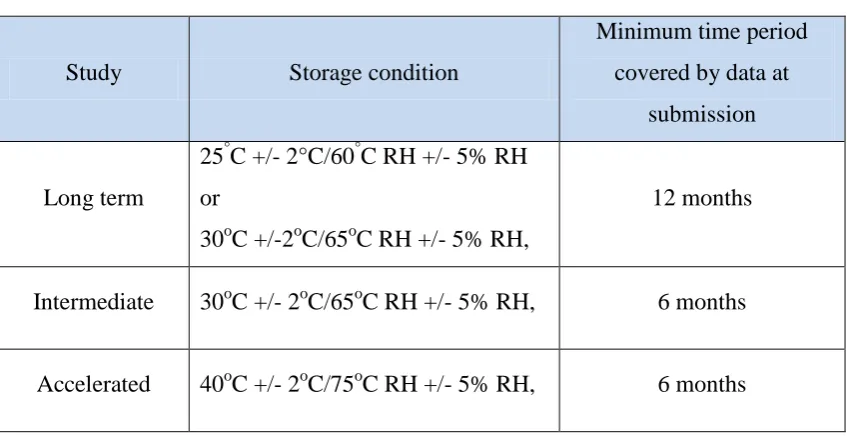
Dept. of Pharmaceutics 29 J.K.K.Nattraja college of pharmacy Table No: 3 ICH Guidelines
Study Storage condition
Minimum time period covered by data at
submission
Long term
25°C +/- 2°C/60°C RH +/- 5% RH or
30oC +/-2oC/65oC RH +/- 5% RH,
12 months
Intermediate 30oC +/- 2oC/65oC RH +/- 5% RH, 6 months
Accelerated 40oC +/- 2oC/75oC RH +/- 5% RH, 6 months
It is up to the applicant to decide whether long term 25oC +/- 2oC/60oC RH
+/- 5% RH or 30oC +/- 2oC/65oC RH +/- 5% RH is to be performed.
If 30oC +/- 2oC/65oC RH +/- 5% RH is long term there is no intermediate
condition.
1.8.1 Stability guidelines for different climatic zones
For convenience in planning and storage and for stability studies international practice identifies four climatic zones, where are described in the united states Europe and Japan are characterized by zones I and II. The values in are based on observable temperature and relatively humidity’s both in and outside in the
Dept of Pharmaceutics 30 J.K.K.Nattraja college of pharmacy 2. LITERATURE REVIEW
Chewable tablet dosage forms continued to draw attention in the search for improved patient compliance and decreased incidence of adverse drug reaction. Many drugs exhibit bitter taste when orally administered and the bitter taste often causes non-compliance of patients because of the discomfort. Therefore, suppression of the bitter taste has been an important subject for chewable tablets with simultaneous improvement in oral feeling.
Priyanka et al41., has formulated and evaluated montelukast sodium chewable
tablets by wet granulation method using microcrystalline cellulose, croscarmellose sodium, mannitol, magnesium stearate, hydroxypropyl cellulose, ferric oxide. The compatability studies were carried out by mixing definite proportion of Montelukast
sodium and microcrystalline cellulose, croscarmellose sodium, mannitol, magnesium stearate, hydroxypropyl cellulose, ferric oxide and cherry flavour, 1:1,1:2.5,1:3,1:5,1:10 and kept in glass vials which has stored at 50°C (three weeks). Based on the optimization of parameters concluded that chewable tablet of Montelukast sodium can be prepared by wet granulation method using croscarmellose sodium as a superdisintegrants.
Kaur Harbir et al42., has reported pharmaceutical tablets can produced three
methods viz. direct compression, dry granulation and wet granulation. Out of three methods, direct compression is most convenient and cheaper method.
Swati J et al43., designed and evaluated chewable tablet of levamisole (used in
treatment of worm infestations). As an anthelmintic, it probably works by targeting the nematode nicotinergic acetylcholine receptor. In the market, levamisole tablets are available in the form of tablets. The chewable tablets of levamisole were prepared by using lactose or mannitol along with sodium starch glycolate in concentration ratios especially for paediatric use. Sodium saccharin and vanilla were used as sweetening agent and flavouring agent respectively. It was observed that the formulation containing lactose shows less disintegration time than formulation containing mannitol.
Kanaka et al44., formulated and evaluated montelukast sodium chewable tablets
Dept of Pharmaceutics 31 J.K.K.Nattraja college of pharmacy and evaluated for the parameters such as average weight, hardness, tensile strength, friability, in vitro dissolution, and assay. The study on the dissolution profile revealed that product prepared from direct compression method had faster dissolution rate while compared to remaining batches and marketed product. Assay values were within the limits of 95 to 105%.
Kathiresan K et al45., formulated and evaluated 5 batches of loratadine
chewable tablets. Loratadine, H1 receptor antagonist used in the treatment of allergic rhinitis and urticaria. Results showed that thickness, weight variation, friability, hardness, and content uniformity of all 5 formulations were within the acceptance limits. But in the in-vitro dissolution study, formulations 1, 2, and 5 demonstrated better cumulative drug release than formulations 3 and 4. However, cumulative drug release of formulation 5 was comparable with innovator than formulations 1 and 2.
Hence the study concludes that loratadine chewable tablet formulated using avicel CE 15 and starch paste showed better characteristics of chewable tablets.
Hiroyuki S et al46., developed oral acetaminophen chewable tablets with
inhibited bitter taste. Various formulations with some matrix bases and coregents’ were examined for development of oral chewable tablets which suppressed the bitter taste of acetaminophen, often used as an antipyretic for infants. Corn starch/lactose, cacao butter and hard fat (Witepsol H-15) were used for matrix bases, and sucrose, cocoa powder and commercial bitter-masking powder mixture made from lecithin (Benecoat BMI-40) were used for corrigents against bitter taste. For the tablets made of matrix base and drug, Witepsol H-15 best inhibited the bitter taste of the drug, and the bitter strength tended to be suppressed with increase in the Witepsol H-15 amount. When the inhibitory effect on the bitter taste of acetaminophen solution was compared among the corrigents, each tended to suppress the bitter taste; especially, Benecoat BMI-40 exhibited a more inhibitory effect. Further, chewable tablets were made of one matrix base and one corrigent, and of one matrix base and two kinds of corrigents, their bitter taste intensities after chewing were compared. As a result, the tablets made of Witepsol H-15/Benecoat BMI-40/sucrose, of Witepsol H-15/cocoa powder/sucrose and of Witepsol H-15/sucrose best masked the bitter taste so that
Dept of Pharmaceutics 32 J.K.K.Nattraja college of pharmacy Maddi SS et al47., designed sodium fluoride chewable tablets for dental caries.
Chewable tablets containing low dosage fluoride content were prepared using two varities of celluloses and their in vitro parameters were evaluated. An eighteen month clinical trial revealed that both these formulations were effective in controlling the caries. However, ethyl cellulose is proved to be superior to methylcellulose as a controlled release matrix material in controlling caries. Thus this study recommends ethyl cellulose matrix tablets containing low fluoride content is an efficacious and cost effective drug device in controlling dental caries.
Shajan et al48., studied Montelukast sodium and Doxofylline bilayer tablet by
using disintegrant such as HPMC, Crosscarmellose sodium. The sustained release
layer of doxofylline HCl was developed by wet granulation technique using polymers HPMC K100M and eudragit RL100 and the immediate release layer of montelukast sodium by direct compression method using superdisintegrant crosscarmellose sodium. The tablets were evaluated for their physical parameters. All the values were found to be within acceptable limits. The in vitro release was carried out using USP Type II apparatus. The optimized batch was subjected to
stability studies for 6 months at 40˚C ± 2 ˚C/ 75 % RH ± 5 % RH. The results suggested that the developed bilayer tablets can be used as an alternative to the
conventional dosage form
Ganji Amarnath Reddy et al49., studied oral fast disintegrating tablet of
Amlodipine Besylateusing different combination of superdisintegrants like Croscarmellose sodium (Ac-Di-Sol), Sodium Starch Glycolate (Primogel), Cross Povidone (Polyplasdone) and got better bioavailability within a short duration of time with different formulations. For the masking of bitter taste we used aspartame as sweetening agent. In this study instead of drug we prepared drug solid dispersion so that drug’s solubility was enhanced.
Errolla Mahesh et al50., has prepared and studied fast dissolving tablets of
Dept of Pharmaceutics 33 J.K.K.Nattraja college of pharmacy to tablet compression. All the formulations were subjected to post compression parameters like hardness and friability (≤1%), indicated that tablets had a good mechanical strength and resistance. Drug content was found to be in the range of 93.51 to 98.79%. The wetting time is an important criteria for understanding the capacity of disintegrants to swell in presence of little amount of water were found to be in the range of 20 to 55 sec.
Mahalaxmi Rathnanand et al51, has formulated and evaluated chewable Tablet
of Metformin HCl using Stevia by different techniques. The variation in the dissolution rate of Metformin chewable tablets made by different techniques were in
the following order, direct compression non-aqueous granulation aqueous granulation. Various evaluation parameters like thickness, hardness, friability,
weight variation and drug content of the formulations were found to be satisfactory. Chewable immediate release metformin tablets DSC (Differential scanning calorimetry) and IR (Infra-red) studies showed no interaction between drug and excipients in optimized formulation. The optimized tablets found to be stable under accelerated conditions for a period of one month.
M. Rajesh et al52 has formulated and characterized Albendazole chewable
tablets Albendazole (ABZ) is a benzimidazole derivative that has been widely used in the treatment of worm infestations in both humans and animals. Albendazole chewable tablets were prepared by wet granulation method using superdisintegrants such as croscarmellose sodium and sodium starch glycolate. The formulations were prepared and the granules were evaluated for pre-compression parameters such as angle of repose, bulk density, tapped density, compressibility index and Hausner’s
ratio. The results showed that all the physical parameters were within the acceptable limit. The stability study for the formulations showed no significance change in disintegration time, drug content and percentage drug release after stored at 40°C±2°C/75%± 5% RH for the period of 30 days.
Mohd Abdul Hadi et al53., has developed sustained release tablets of
Montelukast sodium by direct compression method using various polymers. The drug excipient mixtures were subjected to pre-formulation studies. The tablets were
Dept of Pharmaceutics 34 J.K.K.Nattraja college of pharmacy limits. Montelukast sodium is a leucotriene receptor antagonist used for the maintenance treatment of asthma. The drug release from formulations was extended for a period of 12 hrs. The kinetic treatment showed that the release of drug follows first order models. The optimized formulations were subjected to stability studies and shown there were no significant changes in drug content, physicochemical parameters and release pattern. Results of the present study indicated the suitability of the above mentioned polymers in the preparation of sustained release formulation of Montelukast sodium.
Janugade et al54., was prepared oral press-coated tablet by using direct
compression and wet granulation methods to achieve the predetermined lag time. This press-coated tablet containing montelukast sodium in the inner core was formulated with an outer barrier layer by different compositions of hydrophobic
polymer ethylcellulose and hydrophilic polymer low-substituted hydroxypropylcellulose. The effect of formulation composition on the barrier layer comprising both hydrophobic and hydrophilic excipients on the lag time of drug release was investigated.
Halder A et al55., has prepared Loperamide Hydrochloride chewable tablets by
Dept. of Pharmaceutics 35 J.K.K. Nattraja college of pharmacy
3. AIM AND OBJECTIVE
The goal of any drug delivery system is to provide a therapeutic amount of drug to the proper site of the body, to achieve promptly and then maintain the desired therapeutic drug concentration that elicits the desired pharmacological action
and to minimize the incidence and the severity of unwanted adverse effects.
For many decades, treatment of an acute disease or a chronic illness has been
mostly accomplished by delivering drugs using various pharmaceutical dosage forms, including tablets, capsules, pills, suppositories, ointments, creams, liquids, aerosols, and injectables as carriers. Amongst various routes of drug delivery, oral route is perhaps the most preferred to the patients. The oral route of drug administration is the most important method of administering drugs for systemic effects. Nevertheless, it is probable that at least 90% of all drugs used to produce systemic effects are administered by oral route. It is very popular and successfully used for delivery of drugs because of convenience and ease of administration, greater flexibility in dosage form design, and ease of production and low cost of such a system.
Chewable tablets are intend to be chewed in the mouth prior to swallowing and are not intended to be swallowed intact. The purpose of chewable tablet is to provide a unit dosage form of medication which can be easily administered to children or to the elderly, who may have problem in swallowing a tablet intact. It is also recommended to achieve rapid onset of action. Chewable tablets are preferred for the drugs having high dose, the tablets of which cannot be swallowed.
Conversely, many patients are not able to tolerate the taste of many drugs when formulated as liquid dosage forms, thus leading to poor patient compliance in
those cases. Lately recent developments in dosage form technology are concentrating on presenting the patient with variable dosage alternatives which provide good palatability and ease of administration at same time. This is especially valid when the preparation is to be administered to an infant or to an elderly patient.
Dept. of Pharmaceutics 36 J.K.K. Nattraja college of pharmacy Montelukast sodium is a Leucotriene receptor antagonist used for the treatment of asthma. Montelukast blocks the action of Leucotriene D4 on the cysteinyl Leucotriene receptor in the lungs and bronchial tubes by binding to it. Its biological half life 2.7 to 5.5 hrs.
Dept. of Pharmaceutics 37 J.K.K. Nattraja college of pharmacy
4. PLAN OF WORK
Preformulation studies
Design and development of chewable tablet by direct compression method using superdsintigrants in different concentration. Prepared Chewable tablets of Montelukast sodium will be subjected for the following evaluation parameters.
I. Pre-compression parameters 1. Angle of repose 2. Bulk density 3. Tapped density 4. Carr’s index 5. Hausner ratio 6. Compatibility study
II. Post-compression parameters 1. Appearence 2. Thickness 3. Hardness test 4. Friability test 5. Weight variation test