OF PERINDOPRIL ERBUMINE
Dissertation Submitted to
THE TAMIL NADU Dr. M.G.R. MEDICAL UNIVERSITY,
Chennai-32
In partial fulfillment for the award of Degree of
MASTER OF PHARMACY
IN
PHARMACEUTICS
Submitted by
Reg. No. 26103013
Under the guidance of
Mrs. S. BHAMA, M.Pharm.,
Assistant Professor
DEPARTMENT OF PHARMACEUTICS
J.K.K. NATTRAJA COLLEGE OF PHARMACY
KOMARAPALAYAM
–
638 183
TAMIL NADU
OF PERINDOPRIL ERBUMINE
Dissertation Submitted to
THE TAMIL NADU Dr. M.G.R. MEDICAL UNIVERSITY,
Chennai-32
In partial fulfillment for the award of Degree of
MASTER OF PHARMACY
IN
PHARMACEUTICS
Submitted by
Reg. No. 26103013
Under the guidance of
Mrs. S. BHAMA, M.Pharm.,
Assistant Professor
DEPARTMENT OF PHARMACEUTICS
J.K.K. NATTRAJA COLLEGE OF PHARMACY
KOMARAPALAYAM
–
638 183
TAMIL NADU
OF PERINDOPRIL ERBUMINE
Dissertation Submitted to
THE TAMIL NADU Dr. M.G.R. MEDICAL UNIVERSITY,
Chennai-32
In partial fulfillment for the award of Degree of
MASTER OF PHARMACY
IN
PHARMACEUTICS
Submitted by
Reg. No. 26103013
Under the guidance of
Mrs. S. BHAMA, M.Pharm.,
Assistant Professor
DEPARTMENT OF PHARMACEUTICS
J.K.K. NATTRAJA COLLEGE OF PHARMACY
KOMARAPALAYAM
–
638 183
This is to certify that the dissertation work entitled“FORMULATION AND
EVALUATION OF CONTROLLED RELEASE TABLETS OF
PERINDOPRIL ERBUMINE”, submitted by the student bearing
[Reg. No. 26103013] to “The Tamil Nadu Dr. M.G.R. Medical University”,
Chennai, in partial fulfillment for the award of degree of MASTER OF
PHARMACY in PHARMACEUTICS was evaluated by us during the examination
held on……….
This is to certify that the work embodied in this dissertation entitled
“FORMULATION AND EVALUATION OF CONTROLLED RELEASE
TABLETS OF PERINDOPRIL ERBUMINE”, submitted to “The Tamil Nadu
Dr. M.G.R. Medical University”, Chennai, in partial fulfillment for the award of
degree of MASTER OF PHARMACY in PHARMACEUTICS, is a bonafide
work carried out by SURE NARESH KUMAR [Reg. No. 26103013], during the
academic year 2011-2012, under the guidance and direct supervision of
Mrs. S. BHAMA, M. Pharm., Asst.Professor, Department of Pharmaceutics,
J.K.K. Nattraja College of Pharmacy, Komarapalayam.
PLACE: Komarapalayam Dr. P. PERUMAL, M.Pharm., Ph.D., A.I.C.,
DATE: Professor and Principal,
J.K.K. Nattraja College of Pharmacy,
This is to certify that the dissertation entitled, “FORMULATION AND
EVALUATION OF CONTROLLED RELEASE TABLETS OF
PERINDOPRIL ERBUMINE”, submitted to “The Tamil Nadu Dr. M.G.R.
Medical University”, Chennai, in partial fulfillment for the award of degree of
MASTER OF PHARMACY in PHARMACEUTICS, is a bonafide work carried
out by SURE NARESH KUMAR [Reg. No. 26103013], during the academic year
2011-2012, under my guidance and direct supervision in the Department of
Pharmaceutics, J.K.K. Nattraja College of Pharmacy, Komarapalayam.
Dr. R. Sambath Kumar, M. Pharm., Ph.D., Mrs. S. Bhama, M. Pharm.,
Professor and Head, Asst. Professor,
Department of Pharmaceutics, Department ofPharmaceutics,
J.K.K. Nattraja College of Pharmacy, J.K.K. Nattraja College of Pharmacy,
Komarapalayam-638 183, Komarpalayam-638 183,
The work presented in this dissertation entitled “FORMULATION AND
EVALUATION OF CONTROLLED RELEASE TABLETS OF
PERINDOPRIL ERBUMINE”was carried out by me under the direct supervision
of Mrs. S. Bhama, M. Pharm., Asst. Professor, Department of Pharmaceutics,
J.K.K. Nattraja College of Pharmacy, Komarapalayam, in partial fulfillment for the
award of degree of Master of Pharmacy in Pharmaceutics.
This work is original and has not been submitted in part or full for the award
of any other degree or diploma of any other university.
PLACE: Komarapalayam SURE NARESH KUMAR
At the outset, I am thankful to my PARENTS and God for blessing me with
great strength and courage to complete my dissertation. Behind every success there
are lots of efforts, but efforts are fruitful due to helping hands making the passage
smoother. So, I am thankful to all those hands and people who made my work grand
success.
I take this opportunity with pride and immense pleasure expressing my deep
sense of gratitude to our respectable and beloved guide Mrs. S. BHAMA,
M. Pharm., Asst professor, Department of Pharmaceutics, J.K.K. Nattraja College
of Pharmacy, Komarapalayam, whose active guidance, innovative ideas, constant
inspiration, untiring efforts, encouragement and continuous supervision has made
the presentation of dissertation a grand and glaring success.
I express my heartfelt thanks to respectable and beloved Principal
Dr. P. PERUMAL, M. Pharm., Ph. D., A.I.C., J.K.K. Nattraja College of
Pharmacy, Komarapalayam, for furnishing all the necessary facilities with
wholehearted support and guidance which enabled me for completing this
dissertation in successful manner.
I am proud to dedicate my humblest regards and deep sense of gratitude and
heartfelt thanks to late Thiru. J.K.K. NATARAJAH CHETTIAR, founder of our
college providing us the historical institution to study. I wish to express my sincere
thanks to our most respectful correspondent Smt. N. SENDAMARAAI, B.Com,
Managing Director, Mr. S. OMM SHARRAVANA, B.Com. LLB and Executive
director Mr. S. OM SINGARRAVEL, B.E, M.S., J.K.K. Nattraja Educational
Institutions, Komarapalayam for their blessings, encouragement and support at all
times.
My glorious acknowledgement to Dr. K. SENGODAN, M.B.B.S.,
administrative officer for encouraging us in a kind and generous manner to complete
Mr. R. Kanagasabai, B. Pharm., M.Tech., Asst. Professor, Department of
Pharmaceutics, for their valuable help during my project.
My sincere thanks to Mr. V. Sekar, M. Pharm., Ph.D, Professor& Head.,
Mr. S. Jayaseelan, M. Pharm., Asst.Professor, Mr. D. Boopathy, M. Pharm.,
Assistant Professor and Mr. M. Senthilraja, M. Pharm., Ph.D, Asst. Professor,
Department of Pharmaceutical Analysis for their valuable suggestions.
I express my sincere thanks to Mr. V. Rajesh, M. Pharm., Ph.D, Professor
& Head of the department, Mrs. M. Sudha, M. Pharm., Lecturer,
Dr. P. Ashokkumar, M. Pharm., Ph.D, Professor and Mrs. R. Krishnaveni,
M. Pharm, Lecturer, Department of Pharmacology, for their valuable help during
my project.
I express my sincere thanks to Dr.P.Sivakumar, M.Pharm., Ph.D.,
Professor, Mr.M.Vijayabaskaran, M.Pharm., Asst. Professor,
Mrs.P.Vaijayanthimala, M.Pharm., Lecturer, Mrs.K.Mahalakshmi, M.Pharm.,
Lecturer, Department of Pharmacology, for their valuable suggestion and
inspiration.
My sincere thanks to Dr. S. Sureshkumar, M. Pharm., Ph.D., Professor&
Head of the Department of Pharmacognosy and Mr. M. K. Senthilkumar,
M. Pharm., Asst.Professor, Department of Pharmacognosy for their valuable
suggestions.
I express my sincere thanks to Mr. N. Venkateswara Murthy, M.Pharm.,
Ph.D Asst. Professor & Head, Ms. S. Thangamani, M. Pharm., Lecturer,
Mrs. S. Jayakla, B.A., Asst., for providing necessary facilities from Library at the
time of Work. I extend my thanks to Mr. S. Venkatesan, Storekeeper, Mr.
Manikandan, computer lab Assistant, and Mrs. Shanthi, our lab assistant for their
help during the project.
I am thankful to all my classmates, friends, and juniors.
I pay tribute to my lovable parents, Mr. S. Ramakoteaswara Rao
my father, Mrs. S. Padmavathi my mother for lifting me up till this phase of life.
I sincerely thank them for their love, trust, patience and support and bearing all
kinds of stress to make me what I am.
My truthful dedication to My Brothers Mr. S. Suresh and S. Harish whose
blessings always with me.
It is very difficult task to acknowledge the services to thank all those gentle
people. So I would like to thank all those people who have helped me directly or
indirectly to complete this project work successfully.
SURE. NARESH KUMAR.,
Dedicated to
almighty
CHAPTER TITLE PAGE.NO.
1 INTRODUCTION 1-25
2 LITERATURE REVIEW 26-33
3 AIM AND OBJECTIVE 34
4 PLAN OF WORK 35
5 DRUG & EXCIPIENTS PROFILE 36-51
6 MATERIALS AND METHODS 52-67
7
RESULTS AND DISCUSSION 68-93
8
SUMMARY AND CONCLUSION 94-95
S. No Abbreviations Description
1 # Number
2 µm Micrometer
3 % Percentage
4 API Active pharmaceutical ingredients
5 BCS Biopharmaceutical Classification System
6 BP British pharmacopoeia
7 f1 Dissimilarity factor
8 f2 Similarity factor
9 G Gram
10 g/ ml Gram per milliliter
11 GI Gastrointestinal Tract
12 HPLC High performance liquid chromatography
13 HPMC Hydroxy propyl methyl cellulose
14 XG Xanthan gum
15 ICH International Conference on Harmonization
16 IP Indian Pharmacopoeia
19 MCC Micro Crystalline Cellulose
20 mg Milligram
21 mm Millimeter
22 ml Milliliter
23 N Newton
24 NLT Not Less Than
25 NMT Not More Than
26 Ph Eur. European Pharmacopoeia
27 µg Microgram
28 PVP Polyvinyl Pyrollidine
29 RH Relative Humidity
30 rpm Revolutions per minute
31 SR Sustained release
32 CR Controlled release
33 USP United States Pharmacopoeia
34 UV Ultra Violet
35 w/w Weight per weight
1. INTRODUCTION
The objective of any drug delivery system is to provide therapeutic amount
of drug to targeted site in body to achieve the desired therapeutic effect. In recent
years, attention has been focused on the development of new drug delivery system
rather than invention of new molecules. Because the development cost for new drug
molecule is very high and possibility of repenting successful drugs by applying
concepts and techniques of controlled release drug delivery systems.
CONVENTIONAL DRUG DELIVERY SYSTEM
Oral drug delivery is the most widely utilized route of administration among
all the routes that have been explored for systemic delivery of drugs via
pharmaceutical products of different dosage forms.
The oral dosage form has survived due to
1. Relatively simple and inexpensive to make
2. Convenient for the patient
3. Technology is easy to adapt to changing needs of the drug substance
4. Simplifies the regulatory approval process.
Pharmaceutical products designed for oral delivery are mainly conventional
drug delivery systems, which are designed for immediate release of drug for rapid or
immediate absorption1.
Limitations of the Conventional Drug Delivery System
1) Drugs with short half-life require frequent administration, which increases
chances of missing the dose of drug leading to poor patient compliance.
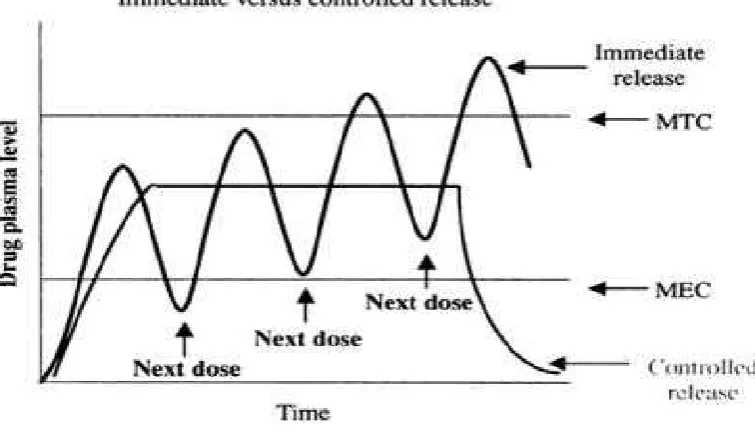
2) A typical peak-valley plasma concentration-time profile is obtained which makes
attainment of steady state condition is difficult.
3) The unavoidable fluctuations in the drug concentration may lead to under
medication or overmedication as the steady state concentration values fall or rise
4) The fluctuating drug levels may lead to precipitation of adverse effects especially
of a drug with small therapeutic index, whenever overdosing occurs.
In order to overcome the drawbacks of conventional drug delivery systems,
several technical advancements have led to the development of controlled drug
delivery system that could revolutionize method of medication and provide a number
of therapeutic benefits2.
For curing of disease, it is necessary to achieve and maintain the
concentration of administered drug within the therapeutically effective range, for
this drug dosage must be taken several times which results in fluctuating drug levels
in plasma. This drawback of conventional dosage form can be overcome by
formulation of controlled release dosage forms which provides drug release in an
amount sufficient to maintain the therapeutic drug level over extended period of
time, with release profiles controlled by the special technological construction and
design of the system.
The primary objectives of controlled drug delivery are to ensure safety and
enhancement of efficacy of drug with improved patient compliance. So the use of
these dosage forms are increasing in treatment of acute and chronic diseases as they
maintain the concentration of drug in plasma above minimum effective
concentration and below the minimum toxic level for extended period of time. Thus,
controlled drug delivery results in optimum drug therapy with reduced frequency of
Figure No. 1 Immediate versus controlled release
Controlled Drug Delivery1
For many drugs, the basic goal of therapy is to achieve a steady state blood
or tissue level i.e., therapeutically effective and non toxic, for an extended period of
time. For this purpose controlled release dosage forms are designed.
Sustained release, sustained action, prolonged action, controlled release,
extended action, timed release depot and repository dosage forms are terms used for
identifying drug delivery systems, which achieve prolonged therapeutic effect by
continuous release of drug for extended time after single dose administration.
controlled release systems release drug at predetermined rate and sustained release
systems only prolong the drug release.
Advantages of controlled release dosage dorms
Controlled release preparations offer several advantages over immediate
release conventional dosage form of same drug.
1. More efficient drug utilization by the body.
2. Better patient compliance.
4. Elimination of peak and valley plasma levels so that drug concentration is
maintained constant over a long period. Hence, reduction in severity and
frequency of untoward effects.
5. Safety margin of potent drug is increased.
Disadvantages of controlled release dosage forms
1. Overdose: Being multiple preparations, there is always the possibility of
sudden release of the total dose administered i.e. dose dumping, which may
result in some toxic manifestations.
2. Loss and Flexibility in dosage: - It is very difficult to adjust the dose of
controlled release products to a patient’s response. The physician has less
flexibility in adjusting the dosage regimen.
3. Side effects: - Controlled release preparations would show not only a longer
duration of effect but also a long duration side effects, especially if patient is
hypersensitive to given medication.
4. The cost of unit dose of controlled release system is higher than the regular
conventional dosage forms.
5. Special treatment problems may arise during accidental poisoning with these
systems.
Oral Controlled Drug Delivery System4
Oral route has been commonly adopted and most convenient route for the
drug delivery, as the patient acceptance for oral route is high. It is relatively safe
route of administration than most parenteral routes where the constraints of sterility
and potential damage at site of administration are minimal. Controlled release
preparation release the drug in controlled manner in gastrointestinal tract for
systemic uptake.
As there is more flexibility and received more attention in designing of
Oral controlled delivery systems can be broadly classified into following
categories, depending on their mechanism of drug release
1. Dissolution–controlled release
a. Encapsulation dissolution control.
b. Matrix Dissolution control.
2. Diffusion Controlled Release
a. Reservoir devices
b. Matrix devices
3. Water penetration Controlled
a. Osmotically controlled release
b. Swelling Systems.
4. Ion exchange resins
5. Gastro retentive Systems
6. Bio adhesive drug delivery systems.
7. Microspheres.
8. Spheronization/ Pelletization
9. Coating Technologies.
Dissolution Controlled Release System5
This can be obtained by slowing the dissolution rate of the drug. Slowing
of dissolution rate can be achieved by incorporating the drug in an insoluble
polymer and coating drug particles or granules with polymeric materials of varying
thickness.
Also the drug may be incorporated in hydrophobic or hydrophilic matrix.
The rate of penetration of dissolution fluid into matrix controls the rate of drug
Matrix Formulations6
Matrix formulations are defined as a drug or other active ingredient
embedded in insoluble excipients in order to achieve release by a continuous
leaching of the drug from the inert matrix core.
Matrix systems can be divided into three types
1. Monolithic matrix tablets
2. Gel forming hydrophilic matrix tablets
3. Erodable (hydrophobic) matrix tablets
Inert monolithic matrix tablets
Probably the simplest method of obtaining controlled release of a drug from
an oral dosage form is incorporation of a drug in an inert matrix. In this inert means
non interacting with the biological fluids. The main reason for its popularity is that
drug release from plastic matrix tablets is independent on the state and condition of
the digestive juices, which may show large inter and intra patient variability (pH,
viscosity).
During its transit through the gastro-intestinal tract, the porous matrix tablet
does not disintegrate like conventional tablets, but remains intact and the skeleton
can be recovered in faeces. The materials used in the preparation of these inert
matrices are predominantly (insoluble) polymers and lipophilic compounds. The
first polymers to be used for the preparation of matrix tablets were (semi- synthetic
polymers such as polyethylene, poly vinyl chloride, poly methyl methacrylate,
polystyrene, poly vinyl acetate, cellulose acetate and ethyl cellulose. The fat
Major drawback of most of the inert polymeric matrix tablets were their
inherent first order drug release characteristics, their poor direct compression
characteristics and the problem leaning of agglomeration equipment used for the
preparation of agglomerates with the required compression characteristics.
Mechanism of release of inert monolithic matrix tablets10
Release from inert matrix tablets occurs via a leaching mechanism. Drug
particles dispersed in the polymer matrix dissolve in the penetrating
gastro-intestinal fluids and are released from the tablet by diffusion through the porous
network of already existing pores and pores that created by dissolution of the drug
particles. At drug loadings exceeding approximately 10-15 % volume, a continuous
structure connecting all drug particles exists (percolating drug network). At
considerably lower loadings, a particular fraction of the drug may be completely
surrounded by the polymer matrix (trapped fraction), which would result in
incomplete release.
Figure: 2 Schematically representation of a leaching-based release mechanism.
Solvent activated matrix tablets
The use of solvent-activated matrix tablets as a method to obtain zero order
release i.e. constant release rates over an extended period was first proposed by
those systems in which the interact ion between polymer and water is responsible
for achieving controlled release. The interaction with water may include
plasticization, swelling, dissolution, erosion or degradation of the polymer. The
two most important types of solvent activated matrix tablets are gel-forming
hydrophilic matrix tablets and erodible (hydrophobic) matrix tablets.
Gel-forming hydrophilic matrix tablets
Gel-forming hydrophilic or swellable matrix systems are homogeneous or
heterogeneous systems in which the drug is dispersed in a swellable hydrophilic
polymer. These systems have been widely studied by researchers since they offer
the possibility to obtain a constant drug delivery over an extended period of time.
Drug release is a function of the polymer characteristics.
Upon swallowing gel-forming hydrophilic matrix tablets, the hydrophilic
polymer is plasticized by the aqueous gastro-intestinal due to which undergoes
macromolecular chain relaxation and volume expansion. Consequently, upon
penetration of the gastro-intestinal fluids into tablet, a sharp front can be
distinguished which separates a dry, glassy core from a hydrated and rubbery gel
layer. Release is governed by diffusion of the dissolved drug through the swollen
gel layer and generally shows a burst effect, caused by dissolution and leaching of
drug particles present at the surface prior to formation of the release-controlling gel.
Other swellable polymers, which have been applied in swelling-controlled
oral drug delivery systems, which show solvent controlled release, are guar gums,
xanthan gum, poly (ethylene oxide) (PEO), poly (vinyl alcohol), ethylene-vinyl
Erodible matrix tablets
Erodible polymers such as poly anhydrides offer another interesting
material platform for zero-order drug release. Like several HPMC grades, upon
water penetration, poly anhydrides form a gel-layer, which erodes at a specific rate.
By choosing the right polymer composition the thickness of the gel-layer may
remain constant with time resulting in a constant release rate until depletion of the
drug.
12
In the last two decades, controlled-release dosage forms have made
significant progression terms of clinical efficacy and patient compliance.
Preparation of drug- embedded matrix tablet that involves the direct compression
of a blend of drug, retardant material and since additives is one of the least
complicated approaches for delivering drug in a temporal pattern into the systemic
circulation. The matrix system is commonly used for manufacturing controlled
release dosage forms because i t makes such manufacturing easy. A wide array of
polymers has been employed as drug retarding agents each of which presents a
different approach to the matrix concept. Polymers forming insoluble or skeleton
matrices constitute the first category of retarding materials, also classed as plastic
matrix systems.
The second class represents hydrophobic and water-insoluble materials,
which are potentially erodible, while the third group includes polymers those form
hydrophilic matrices.
Plastic matrix systems, due to their chemical inertness and drug embeding
ability, have been widely used for controlling the release of the drug. Liquid
penetration into the matrix is the rate-limiting step in such systems unless
channeling agents are used. The hydrophobic and waxy materials, on the other
hand, are potentially erodible and control the release of drug through pore diffusion
and erosion. Polymers belonging to hydrophilic matrix systems, when exposed to
an aqueous medium, does not disintegrate, but immediately after hydration
develops a highly viscous gelatinous surface barrier, which controls the drug
release from, and the liquid penetration into the center of the matrix system.
The use of hydrophilic polymers is actually the most used method in
controlling the release of drugs in the formulation of oral pharmaceutical dosage
forms. Hydroxy propyl methyl cellulose has been extensively used since the
early1960s as a rate-controlling polymer in oral extended-release dosage forms.
14
Hydrophilic matrix systems are popular and versatile controlled release
system amongst polysaccharide derivatives like cellulose ethers, e.g. ,hydroxyl
propyl methyl cellulose (HPMC) and a diverse range of other materials, including
sodium alginate, carrageenan, chitosan, and xanthan gum.
Diffusion Controlled Release System
In case of diffusion controlled release system, diffusion of drug molecule
through the polymeric membrane is the rate limiting step. These systems can be
prepared by encapsulating the drug particles in polymeric membrane or by
dispersing the drug in polymeric matrix.
These systems exhibit non-zero order release rate due to increase in diffusion
resistance and decrease in effective diffusion area as the release proceeds.
Water Penetration Controlled Release System
In these systems, control release is obtained by the penetration of water
into the system. There are following types of water penetration controlled release
system,
Osmotically Controlled Release System
In this system delivery of drug is controlled by solvent influx across a
semi permeable membrane which carries the drug outside through a laser drilled
The osmotic and hydrostatic pressure differences on either side of semi
permeable membrane causes fluid transport into the system, so the rate of drug
release is dependent on osmotic pressure of formulation.
Swelling Controlled Systems11
These systems are initially dry and when placed in body absorb water or
other body fluids and swell. The drug is diffused through the swollen network. Thus,
swelling and diffusion controls the release rate. Most materials used in swelling
controlled systems swells without dissolving.
Ion Exchange Resins
The drugs which are susceptible for enzymatic degradation can be
formulated using ion exchange resins as they temporarily protect the drugs. Resins
are water insoluble materials having anionic, cationic groups. Complex of resin and
drug is formed by prolonged exposure of drug to resin. In ionic environment drugs
are displaced from the resin. The release rate is proportional to the concentration of
ions present in the vicinity of administration site.
Gastro retentive systems
These are hydro dynamically balanced systems. In these systems dosage
form have the specific gravity less than gastric juice, so they float in stomach and
retain the drug over there for extended period of time. Thus, total residence time in
stomach is increased. Also these systems are relatively large in size and passing
from pyloric opening is prohibited.
This system is useful for drugs which are absorbed in stomach and also for
Bio adhesive Systems
Bio-adhesion is the attachment of synthetic or biological macromolecules to
biological tissue. When bio-adhesion occurs with the mucus layer then it is called as
mucoadhesion.
This type of dosage form results in
Prolonged residence time within specified region of body and provides intimate contact with absorbing membrane.
Localization of the drug delivery system at given target site.
An increase in drug concentration gradient due to contact of drug particles with mucosal surface.
Thus the combined effects of direct drug absorption and decrease in excretion rate causes increased bioavailability and duration of action with
smaller dosage and less frequent administration.
Microspheres
These are monolithic, homogenous, spherical particles uniformly covered
with polymer film. The size ranges from 0.1–100µm. They are widely used as drug
carriers.
Administration of drugs in the form of microspheres causes
Improvement of treatment as localization of active substance occurs at site of action.
Prolongation of drug release.
Microspheres are prepared by following methods,
Emulsion–solvent evaporation (o/w, w/o, w/o/w)
Phase separation (non-solvent addition, and solvent
partitioning)
Interfacial polymerize
Spray drying.
The lactide glycolide homo and copolymers are mostly used for preparation
of microspheres, which depending upon variation in copolymer ratio modulates the
release.
Spheronization / Pelletization Process
This is one of the newer processes for formulation of oral controlled release
dosage forms. Formulation of controlled release pellets, beads or spheres are
advantageous than single unit dosage forms. They minimize, dose dumping i.e.
unexpected drug release as in case of single unit dosage form. The beads and pellets
can be combined to get the multi particulate dosage form which provides customized
release profiles. Also incompatible drugs can be delivered by multiparticulate
system. Following are the basic methods for pellets or bead production.
a. Microencapsulation
b. Spray congealing
c. Formulation of particles from plastic mass
d. Agglomeration.
Coating Technologies
Coating technology involves the deposition of uniform membrane of
polymer onto the surface of the substrates such as tablets, pellets and drug particles.
Coating of polymers on substrates provides controlled release using following
a. Film coating
b. Layering coating
c. Compressed coating
Film coating is performed in a coating pan, a fluidized bed or a rotary
granulator. Ethyl cellulose, methacrylic ester copolymers, methacryl ester
copolymers, cellulose acetate and enteric polymers are used for film coating either
alone or in combination.
Factors influencing the design of oral controlled drug delivery systems
The pattern of release of drug from dosage form in the body is dependent on
the drug properties. So these properties of drug like physicochemical and
physiological must be taken into account before the design of controlled release
dosage form.4
Physicochemical Factors
Molecular weight of the drug
Diffusivity is the ability of drug to pass through the membrane and is
inversely proportional to the molecular size. So the lower the molecular weight
faster and more complete is the absorption. Mostly drugs are absorbed through the
passive diffusion and the upper limit for passive diffusion is 600 Daltons. So drugs
having higher molecular weight are poor candidates for oral controlled release
systems. e.g. proteins and peptides.3
Dose Size
In controlled release system, the dose is addition of 2-3 doses depending
upon objective. That is single dose or twice daily. So the drugs have dose more than
Aqueous solubility of drug
A drug with good aqueous solubility, especially with pH – independent
solubility acts as good candidate for controlled release systems. The aqueous
solubility of drug influences the dissolution rate so that controlled release system
cannot control the absorption process, so poorly aqueous soluble drugs are poor
candidates for controlled release. Since drugs must be in solution form before they
are absorbed, drugs with low solubility limit dissolution and suffer bioavailability
problems e.g. griseofulvin. Also for drugs having high solubility, it is difficult to
reduce dissolution rate and ultimately the absorption.
Drug PKa
The PKarange for acidic drugs whose ionization is pH sensitive is 3-7.5
and for basic drugs is 7–11, so for optimum passive absorption the drugs should be
non-ionized at site at least to an extent of 0.1–5%.
Therefore, drugs which are largely ionized are poor candidate for
Controlled Release System.
Partition coefficient
When the drug is ingested, it has to cross many biological membranes for
absorption and also for elimination. The ability of drug is to penetrate these lipidic
membranes is appearant partition coefficient which is defined as,
w o
C C
K
Where,
K = apparent partition coefficient
Co= concentration of drug in non-aqueous phase
Drugs with high partition coefficient value easily permeate through
biological membrane, but for further functions aqueous solubility is required. So
there must be balance between aqueous and oil solubility of drug. This balance gives
optimum flux for permeation through biological membranes. Thus, drugs with
extreme partition coefficient are undesirable for formulation of controlled release
system.
Drug Stability
The stability of drug at site of release and its exposure to bio membrane,
influence the design of controlled release system. Drugs that are unstable in stomach
pH can be formulated as slow release product, which release the drug only in
intestinal environment. Drugs that undergo gut wall metabolism and show instability
in small intestine are poor candidate for controlled release system. In such case drug
must be chemically modified or other route of administration is preferred.6
Protein Binding
The duration of action of drug is function of protein binding. Drug –protein
complex serves as sustaining depot for drugs having high protein binding capacity.
However, drugs with high protein binding capacity are unsuitable for controlled
release system, as they have got long elimination half lives.5
Physiological Factors
Absorption
The constant blood or tissue concentration of drug is obtained from
controlled release system only when the drug is uniformly released and absorbed.
The release rate of drug from dosage form is the rate limiting step rather than
absorption and rapid absorption relative to release is essential. So the drugs which
are poorly absorbed are poor candidates for controlled release system. The drugs
Distribution
For design of controlled release system, all possible information about drug
disposition must be known. But decisions are done by considering the some
pharmacokinetic parameters, one of which is apparent volume of distribution.
Apparent volume of distribution gives the magnitude of drug distribution and
protein binding within body. Also it influences the concentration of drug in blood
and tissue and elimination kinetics.6So, that the drugs having high apparent volume of distribution are poor candidates for controlled release system.
Metabolism
Metabolism of drugs is either an inactivation of active drug or conversion
of an inactive drug to active metabolite. The pharmacokinetic parameters like
elimination rate constants (Ke) are used to predict the rate and extent of metabolism
of drug, so they are considered in design of controlled release system. Following are
the two important factors related to metabolism which must be considered during
design of controlled release system,
1. For chronic administration, drugs capable of either inducing or inhibiting
enzyme synthesis are poor candidates for controlled release system due to
difficulty of maintaining uniform blood levels.
2.
Drugs undergoing first pass effect or intestinal metabolism are not suitable
for design of controlled release system.6
Duration of Action
Duration of action significantly affects the design of controlled release
system and is dependent on biological half life (t ½).The factors like elimination,
metabolism and distribution influence the half life. So, a drug with shorter half life
require frequent dosing, making it suitable candidate for controlled release system.
But drugs with long half life acts for longer time so they are unsuitable. Drugs with
to maintain the release rate. Drugs with half life in range of 2-4 hrs make a good
candidate for design of controlled release system.4
Side Effects
Due to fluctuations in plasma drug concentration, side effects are
developed. The incidences of side effects can be minimized by controlling the
concentration within therapeutic range at any given time. Thus, controlled release
system reduces the side effects by maintaining the plasma concentration in
therapeutic range.
Eg. The gastric irritation caused by drugs like aspirin, potassium chloride
reduced due to controlled release.
Margin of Safety
Margin of safety is known by considering the therapeutic Index.
50 ED
50 TD I T
Where,
T I = Therapeutic Index
TD50 = median toxicdose
ED50 = medianeffectivedose
The drug is considered relatively safe, if its TI is more than 1. The drug is
considered to be more safer as its TI value increases. TI gives the range of plasma
concentration between which drugs are safe and effective. Drugs with narrow
therapeutic range require precise control over blood levels of drug so that they are
Disease State
In certain cases disease state is important property for considering a drug for
controlled release dosage form e.g. aspirin which is not suitable candidate for
controlled release dosage Form but its controlled release dosage Form maintain
therapeutic concentration particularly over night and thus alleviating morning
stiffness in Rheumatoid Arthritis. Also in asthma drug level is maintained for night
to avoid bed time or early morning attacks.3
Approach for the manufacture of Controlled Release Dosage Form
The importances of controlled drug delivery systems that release bioactive
components over extended period of time have been recognized in pharmaceutical
field. Of many routes of drug delivery, oral administration is the most convenient
and commonly employed means for introduction of drugs to systemic circulation.
For oral delivery of drugs tablet formulation is effective. For tablet
formulation direct compression of blends of drugs and additives is the easy method
as direct compression technologies entails reduced labour, cost, time operational
space and equipment and further no heat or moisture is used so this is preferred
method for manufacture of controlled release dosage form.
One of the easy and convenient methods for fabrication of controlled release
dosage form is the incorporation of the drug in a matrix containing a hydrophilic,
rate controlling polymer e.g. (HPMC, XG) Drug release from such types of systems
is controlled by the hydration of polymer, which forms a gelatinous layer at the
surface of matrix, through which the included drug diffuses.
Water soluble drugs are released primarily by diffusion of dissolved drug
molecules across gel layer, while poorly water – soluble drugs are released
predominantly by erosion mechanisms13. The hydrophilic matrices show an initial burst of drug release rate due to the release from the surface and the time needed for
drug diffusion. This is the case of very soluble drugs and so zero-order release is not
obtained and this is the disadvantage of such system.
Materials used for Matrix System
The most widely used materials for matrix system include hydrophilic and
hydrophobic polymers. Commonly used hydrophilic polymers are Hydroxy propyl
methylcellulose (HPMC), Hydroxypropyl cellulose (HPC), xanthan gum (XG),(HE
C)Hydroxyethyl cellulose ,sodium alginate, poly (ethylene oxide) and cross linked
homo polymers and copolymers of acrylic acid. They are usually supplied in
micronized forms, as small particle size is critical for rapid gelatinous layer
formation on tablet surface.
HPMC is nonionic water soluble cellulose ether. It is available in four
different categories based on varying degrees of hydroxyl propyl and methyl
substitution namely E,F,J and K series. Xanthan gum is water soluble
polysaccharide gum. It is composed of glucosyl, mannosyl, and
D-glucosyluronic acid residues and differing proportions of o-acetyl and pyruvic acid
acetal.5
Hydrophobic and monolithic polymer matrix systems usually of waxes and
water insoluble polymers. e.g. of waxes are carnauba wax, bees wax, candelilla wax,
paraffin wax, microcrystalline wax etc. e.g. of insoluble polymers: Eudragit RL 100,
HYPERTENSION
Hypertension is defined as a increasing blood pressure 140/90 mmHg..
Hypertension is a risk factor for myocardial infarction, stroke, congestive heart
failure, end-stage renal disease, and peripheral vascular disease. The World Health
Organization reported that suboptimal blood pressure (SBP > 115 mmHg) is
responsible for 62% of all cerebrovascular diseases and 49% of all ischemic heart
diseases. In addition, suboptimal blood pressure is the number one cause of death
throughout the Western world.12
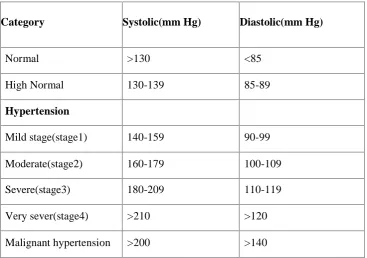
Clinical classification of hypertension
Although hypertension is rise in blood pressure above the normal clinical
values, which can be mild to malignant and therefore classified clinically as
[image:33.595.129.497.454.712.2]summarized below.13
Table 1: Clinical classification of hypertension
Category Systolic(mm Hg) Diastolic(mm Hg)
Normal >130 <85 High Normal 130-139 85-89
Hypertension
Figure 3: Activation of renin angiotensin system is shown as follows
Sodium and water retention regulates blood volume and cardiac output.
Sodium concentration in the blood is regulated by the release of aldosterone,
reduction in glomerular filtration rate and release of atriopeptin hormone from atria
of heart.
Decreased release of vasodepressor agents like prostaglandins
counters the vasopressor effect of Angiotensin–II.
Endocrinal hypertension is due to a number of endocrinal
Contraction of aorta causes systolic hypertension due to constriction and
diastolic hypertension results from changes in the circulation.
Neurogenic hypertension is due to disease like psychogenic, increase in
intracranial pressure.
Antihypertensive agents
Antihypertensive agents are the drugs which lower the blood pressure
in hypertensive patients.
Classification of anti hypertensives
1. Diuretics
e.g. Chlorthalidone, Clopamide, Indapamide
2. β Adrenergic blockers
e.g. Acebutolol, Atenolol, Metoprolol, Propranolol, Timolol
3. α Adrenergic blockers
e.g. Terazosin, Prazosin, Doxazosin
4. α + β Adrenergic blockers
e.g. Labetalol, Carvedilol
5. ACE inhibitors
e.g. Perindopril, Captopril, Enalapril, Lisinopril, Fosinopril,
trandolapril, benazepril etc.
6. Calcium channel blockers
e.g. Amlodipine, Felodipine, Nifedipine, Nimodipine, Verapamil
7. Vasodilators
e.g. Hydralazine, Minoxidil, Sodium nitroprusside
8. Angiotension-II receptor antagonists
e.g. Candesartan, Losartan, Valsartan
9. Central sympatholytics
An overview on Perindopril Erbumine
Numerous studies demonstrated the efficacy of perindopril in the therapy of
essential hypertension. Perindopril doses of 4 to 16 mg administered once daily are
more effective than placebo in the treatment of mild-to-moderate hypertension.
Doses greater than 8 mg offer no advantage in most patients; however, in some
patients doses of 12 or 16 mg daily provide greater therapeutic benefit. The
antihypertensive activity of perindopril is linear at doses up to 8 mg, with 2 mg
doses having only slight antihypertensive activity. Administration with
hydrochlorothiazide, indapamide, and nifedipine in patients demonstrating an
inadequate response to monotherapy has resulted in improved blood pressure
control.
The long-term efficacy of perindopril was reported in the results of an open
trial evaluating 690 patients. Therapy was initiated with perindopril 4 mg once daily
and increased, if necessary, to 8 mg. If diastolic blood pressure remained greater
than 90 mmHg on perindopril 8 mg, a diuretic was added, then another
antihypertensive agent was added if necessary. After 1 year of therapy systolic and
diastolic blood pressure were reduced by 29 mmHg and 19 mmHg, respectively.
Perindopril monotherapy normalized blood pressure in 55% of the patients. Blood
pressure control was achieved in 78% of the patients. After 3 years, perindopril
monotherapy at 4 or 8 mg controlled blood pressure in 56% of the patients.13
The efficacy of perindopril was demonstrated in several studies enrolling
elderly patients with essential hypertension. Perindopril doses of 2 to 8 mg daily
reduced systolic and diastolic blood pressure. In a double-blind study enrolling 34
patients with a mean age of 84 years, perindopril reduced systolic pressure 10% and
diastolic pressure 9%. Blood pressure control (defined as blood pressure < 160/95
mmHg) was achieved in 92.5% of patients (62.5% at the dosage of 2 mg per day,
22.5% at 4 mg per day, 7.5% at 8 mg per day, and 5% at 8 mg per day plus 40 mg
nifedipine). The efficacy of perindopril was evaluated in 2,927 elderly patients (>70
years) in an open study. At initiation of therapy with perindopril 2 or 4 mg once
of therapy, the dose could be doubled or a diuretic added if the perindopril dose had
reached 8 mg in patients with diastolic blood pressure remaining above 90 mmHg.
Diastolic blood pressure was reduced to less than 90 mmHg in 69% of patients at 1
month, 86% of patients at 3 months (in patients on perindopril alone), and 94% at 6
months. At 6 months, diastolic blood pressure was lowered 28 mmHg and systolic
blood pressure 16.6 mmHg.
The efficacy of perindopril was demonstrated in several groups of patients
with hypertension and concomitant disease including hyperlipidemia, Type II
diabetes, ischemic heart disease, cardiac arrhythmia, peripheral arterial occlusive
disease, nephropathy with proteinuria, and chronic obstructive pulmonary disease.
Efficacy was demonstrated in patients with hypertension receiving nonsteroidal
anti-inflammatory agents (indomethacin or diclofenac). In all groups, perindopril 4 mg
once daily effectively reduced blood pressure without negatively affecting the
patient's concomitant disease state or therapy. Perindopril did not affect lipid or
apolipo protein levels in patients with hyperlipidemia, did not affect glucose control
in diabetic patients, had an anti-ischemic and anti anginal effect in those with
ischemic heart disease, and reduced urinary albumin excretion in patients with
proteinuria. Other studies have shown a lack of effect of perindopril on lipid or
carbohydrate metabolism. Several studies demonstrated the safety and efficacy of
perindopril in the treatment of hypertension in patients with diabetes or glucose
intolerance. Perindopril has not negatively affected glucose tolerance, insulin
2. LITERATURE REVIEW
Jignesh P. Prajapati et al., developed absorption factor method and
validated for the simultaneous determination of perindopril erbumine and
amlodipine besylate in their combined pharmaceutical formulation dosage
form. Absorption factor method was performed for perindopril erbumine and
amlodipine besylate at wavelength maxima 216nm and 237nm respectively.
Result of analysis was validated by statistically. The result of the studies
showed that the proposed Spectroscopic method is simple, rapid, precise and
accurate.
SB. Bhanja, P. Ellaiah et al., developed and optimized a sublingual tablet of
Perindopril which is an effective drug in the treatment of hypertension.
Perindopril containing tablets were prepared by direct compression method
using different ingredients such as Crospovidone, Sodium saccharin,
Mannitol, Microcrystalline cellulose, Talc and Magnesium stearate. The
tablets were evaluated for physical properties including Hardness, Weight
variation, Thickness, Friability, Drug content, Wetting time, Water
absorption ratio, In-vitro disintegration time, In-vitro dissolution study and
also Drug release kinetic study.
Mukesh C. Gohel et al., fabricated modified release tablet of metoprolol
succinate using hydroxypropyl methylcellulose (HPMC) and xanthan gum as
a matrixing agent. The in vitro drug dissolution study was carried out in pH
6.8 phosphate buffer employing paddle rotated at 50 rpm. It was concluded
that the desired drug release pattern can be obtained by using a proper
combination of HPMC (high gelling ability) and xanthan gum (quick gelling
tendency). The matrix integrity during dissolution testing was maintained by
Murthy. P.N. V. N et al., prepared controlled-release matrix tablets of
Guaiphenesin and Salbutamol Sulphate and evaluated by using Na CMC,
Xanthan gum, HPMC100cps, Ethyl Cellulose (15cps), Compritol, Precirol in
different concentrations for treatment of respiratory disorders. The
manufacturing procedure was optimized with respect to the thickness
between 6.3 to 6.5mm, hardness 5 to 6 kg/cm2 and description being white, oval shaped tablets with break line on one side. Formulation containing
NaCMC, Xanthan gum, HPMC100cps polymers showed higher rate of drug
release over a period of 24hrs.
Masadi Rajukar et al., formulated the oral controlled release Trimtazidine
di hydrochloride tablets by using HPMC and Xanthan gum as rate
controlling polymer. The tablets were prepared by direct compression
method. Drug content in formulation was determined by UV Method. The
in vitro release study of matrix tablets were carried out in 0.1N Hydrochloric
acid with pH 1.2 for 10 hours. It was observed that the amount of polymer
influences the drug release.
P. Subash Chandra Bose et al., described about the buccal region which
was attractive route for systemic drug delivery. Perindopril was an ACE
inhibitor widely used as an hypertensive agent shows less oral bioavailability
as it undergrows first pass metabolism. Perindopril patches were prepared
using HPMC K4M, Chitosin, HPMCP, PVP and PVA. In vitro release
studies were conducted for perindopril loaded patches in 6.6 pH phosphate buffer solution. Buccoadhesive patches of perindopril can be developed as
potential controlled release formulation for the treatment of hypertension.
Mridanga raj ray et al., have studied about the powders which were
evaluated for angle of repose, bulk density and tapped density whereas the
prepared tablets were evaluated for weight variation, thickness, diameter,
Talukdar and Mooter et al.,have investigated the properties of xanthan
gum matrix tablet invivo. They have used poorly water soluble and highly
water soluble drugs for study. They have done single oral dose
pharmacokinetic study according to randomized crossover design in six
healthy male volunteers. There was no statistically significant difference in
time to reach the Cmax and AUC. But maximal plasma concentration was
varied considerably. They concluded that, although the common
pharmacokinetic parameters of the drug from test products were not
significantly different from the marketed product, the therapeutic efficacy of
drug from former may be superior to that of latter.
Talukdar and RenaltKinget et al., have done the comparative study on
xanthan gum and HPMC as matrices for controlled release drug delivery.
They have concluded that drug diffusion in hydrated HPMC matrices is
higher than in hydrated xanthan gum matrices. This showed that xanthan
gum has higher ability than HPMC to retard the release of drug when used as
matrix forming agent.
Kranz et al., studied the drug release mechanism from HPMC matrices and
developed a new model for quantitative predictions of controlled drug
delivery.
Tao Yi et al., worked on controlled release for poorly soluble drug from
solid self-micro emulsifying formulations with high viscosity hydroxyl
propylmethylcellulose and they concluded that possibility of combining the
characteristics of controlled release and self-emulsifying formulations for the
Ford and Velasco et al., studied the influence of drug (HPMC) (Hydroxy
methyl propyl cellulose) ratio and other technological factors such as drug
and polymer particle size and compression force on the drug release from the
matrices of HPMC. The influence was assessed by multi way analysis of
variance. They reported that release from HPMC ratio. The particle size also
influenced the release to lesser extent and the compression force didn’t affect
the release parameters.
JamzadShahla et al., worked on development of a controlled release low
dose class II drug by using HPMC and they found that HPMC matrices
showed a significantly greater degree of hydration and swelling and stronger
texture property relative to PEO matrices. Results indicated that in the case
of low dose/low soluble drug, total drug release in a zero order manner
heavily depends on the synchronization of erosion and swelling fronts during
the entire dissolution study.
VermaRajan K, Garg Sanjay et al., worked on selection of excipients for
extended release formulations of glipizide through drug–excipients
compatibility testing and they reported results of DSC along with IR and/or
HPLC were successfully employed to assess the compatibility of glipizide
with the excipients used in the development of extended release
formulations.
Basak SC et al., prepared propranolol hydrochloride matrix tablets with
hydroxypropyl methylcellulose polymer to control the release of drug with a
view to develop twice daily sustained release dosage form. The resulting
matrix tablets prepared with hydroxyl propyl methyl cellulose K4M
fulfilled all the official requirements of tablet dosage forms. The in vitro
drug release was measured in aqueous solutions for a total period of 12 h
using 1.2 pH bufferfor first 1 h and pH 7.5 buffer for the rest of period. The
Kenneth I. Ozoemenaa et al., described about enantio selective,
potentiometric membrane electrodes based on carbon-paste impregnated
with and cyclodextrin as chiral selectors for the assay of S-perindopril is
described. Response characteristics showed that the proposed electrodes
could be reliably applied in the assay of S-perindopril raw material and its
pharmaceutical formulation. The best enantio selectivity and time-stability
were exhibited by cyclodextrin based electrodes.
Yeole PG et al., made an attempt to increase therapeutic efficacy, reduce
frequency of administration, and improve patient compliance, by developing
sustained release matrix tablets of diclofenac sodium. Sustained release
matrix tablets of diclofenac sodium, were developed by using different drug:
polymer ratios, such as F1 (1:0.12), F2 (1:0.16), F3 (1:0.20), F4 (1:0.24) and
F5 (1:0.28). Xanthan gum was used as matrix former, and microcrystalline
cellulose as diluent. All the lubricated formulations were compressed using 8
mm flat faced punches. Compressed tablets were evaluated for uniformity of
weight, content of active ingredient, friability, hardness, thickness, in vitro
dissolution using basket method, and swelling index.
NevinErk et al., developed a new sensitive, simple, rapid and precise
reversed-phase high performance liquid chromatographic (HPLC) and two
spectrophotometric methods to resolve binary mixture of Perindopril and
indapamide in the pharmaceutical dosage forms. The first method is based on
HPLC on a reversed-phase column using a mobile phase of phosphate buffer
pH 2.4 and acetonitrile (7:3 % v/v) was used. Linearity range for Perindopril
and indapamide was 5.0–70.0 and 8.0–35.0 g/ ml. In the second method, the
first derivative Spectrophotometry with a zero-crossing technique of
measurement is used for the simultaneous quantitative determination of
Perindopril and indapamide in binary mixtures without previous separation
K S Lakshmi. et al.., validated HPTLC method for simultaneous
determination of losartan and perindopril in tablets. A simple, controlled and
precise high performance thin layer chromatographic method has been
developed for the simultaneous determination of losartan and perindopril in
tablet. Separation was carried out on pre-coated TLC plates, coated with
silica gel 60 F 254. The separation was done by using a mobile phase
toluene: acetonitrile: formic acid (5:5:0.3%v/v/v). After development, the
chromatographic plates were scanned at 215 nm. The Rf value of losartan
and perindopril was found to be 0.55 and 0.27 respectively. The results of the
analysis have been validated statistically and by recovery studies.
Raja sekharanetal., was developed formulation and evaluation of
theophylline controlled released matrix tablets using antham gum. Controlled
release matrix tablets of theophylline were prepared with hydrophilic
polymer xantham gum and evaluated. Controlled release matrix tablets of
theophylline were prepared by wet granulation technique by varying polymer
ratios (1:1 and 1:2) and hardness (5,6 and 7 kg/cm2). IR spectroscopy revealed that there was no interaction between the drug and the polymer used
in the formulation. In vitro dissolution studies were performed using Disso
2000 (Paddle type). From this study it was proved that the release of
theophylline from matrix tablets was influenced by both polymer ratio and
hardness.
BhanjaSatyabrata et al., designed and carried out in vitro evaluation of
mucoadhesive buccal tablets of perindopril prepared by sintering technique
to avoid the first pass metabolism and to improve its bioavailability with
reduction in dose and also dose related side effects. The half-life of
perindopril is approximately 0.8 to 1 hrs. The tablets were prepared by direct
compression method containing polymer polyethylene oxide and carnauba
Thawatchai Phaechamud et al.., formulated controlled release of
propranolol hcl from chitosan-lactose-xanthan gum matrix tablets. The
application of low molecular weight materials chitosan as matrix
component for controlled propranolol HCL release prepared by direct
compression was studied. The effect of the additives on drug release
from matrix tablets containing chitosan was investigated an incorporation
of xanthan gum into chitosan tablet could prolong the drug release rather
than that containing single polymer. The drug release could be modified by
addition of lactose. The drug release was gradually enhanced as the greater
amount of the lactose was added into the matrix. Most of drug
dissolution profiles could be well fitted with first order kinetic release.
Hisham E. Abdellatef et al., described about Simple, rapid, accurate and
sensitive spectrophotometric methods for the determination of perindopril.
The coloured products are measured spectrophotometrically at 588, 843, 419,
550 and 520nm for DDQ, TCNQ, TCNE, CL and p-CA, respectively,
optimization of different experimental conditions is described. Beer’s law is
obeyed in the range of 20–200mg/ml and colours were produced in
non-aqueous media and were stable for at least 1hr. Application of the suggested
methods to perindopril tablets are presented.
J. Siepmanna et al., studied the modeling of drug release from delivery
systems based on HPMC.
M.HarishShoaib et al., Evaluated drug release from ibuprofen matrix tablets
using HPMC.
Antesh K jha et al., studied the formulation and in vitro evaluation of
sustained release matrix tablets of metoprolol succinate using hydrophilic
Bishyajit Kumar biswas et al., studied the in vitro release kinetics study of
esomeprazole magnesium from methocel K15M and methocel K100M
matrix tablets.
Roshanpradhan et al., studied the HPMC (HPMC- K4M, K15M and
K100M) matrix tablets containing indomethacin, the release character of
3. AIM AND OBJECTIVE
The aim of the present work was to formulate and evaluate controlled release
matrix tablets of Perindopril Erbumine by using polymers like Xanthan gum, HPMC
K100 M.
Perindopril Erbumine is an anti hypertensive drug having low molecular
weight (368.46g/ml), short biological life (1.2hr), suggests it is an ideal candidate
for controlled drug delivery system which offers advantages like reduce frequency
of administration, better patient compliance and better controlled release profile.
Perindipril erbumine was effective in small doses (2 to 16 mg). Hence it was used in
hypertension and congestive cardiac failure.
Natural and synthetic polymers was designed for controlled release as they
are bio compatible, non toxic and better patient tolerance.
So, in present study planned to formulate Perindopril Erbumine as controlled
release matrix tablets formulation.
To study the effect of drug, polymer ratio in release rate.
To study the rate of drug release and mechanism of drug release from
4. PLAN OF WORK
The present study was proposed to carry out in the following phases for
formulation and evaluation of controlled release matrix tablets of Perindopril
Erbumine.
Phase-I
Pre-formulation study of pure drug
Compatibility study
Fourier transform infrared spectroscopy (FT-IR)
Preparation of standard curve of Perindopril Erbumine
In acid buffer(pH 1.2)
In phosphate buffer (pH 6.8)
Phase-II
Formulation and evaluation of controlled release matrix tablets of
Perindopril Erbumine
Formulation of Perindopril Erbumine matrix tablets
Evaluation of Perindopril Erbumine matrix tablets
Physical evaluation
Drug content study
In vitro Dissolution study
Kinetic data analysis
Phase-III
5. DRUG PROFILE
5.1 PERINDOPRIL ERBUMINE
Perindopril Erbumine is a dipeptide monoacid monoester with a
perhydroindole group and no sulphydryl radical; chemical name, tert-butyl
ammonium (2S, 3aS, 7aS)-1-(N-[(S)-1-ethoxycarbonyl butyl]-L-alanyl)
perhydroindole-2-carboxylate and used for the treatment of patients with
hypertension and symptomatic heart failure.
Physical and chemical properties
Empirical Formula : C
19H32N2O5 ,C4H11N Molecularweight : 368.46 g/mol
Meltingpoint : 126-128C
Category : Antihypertensive
Description : White crystalline powder, slightly hygroscopic
odourless, bitter in taste.
Solubility
The Perindopril erbumine is soluble in water, methanol, ethanol, acetic acid
and ethyl acetate, slightly soluble in ether, chloroform and benzene.
Chemical Nature
Perindopril erbumine dipeptide monoacid monoester with a per hydroindole
Structure
Structure of Perindopril Erbumine
Chemical name: Tert-butylammonium (2S, 3aS, 7aS)-1-(N-[(S)-1-ethoxycarbonyl
butyl]-L-alanyl) perhydroindole-2-carboxylate
Pharmacokinetics
Absorption : Well absorbed after oral administration.
Route of administration : Oral
Protien Binding : 10 - 20%
Bioavailability : 65% - 75 %
Metabolism : Hepatic
Half life : 1.2 hr
Excretion : Renal
Volume of Distribution : Approx. 140-160L/kg
Clearance : 219–362 m/min.
Dissociation Constant (Pka) : 2.6
Mechanism of Action
Perindopril erbumine inhibits ACE in human subjects and animals, while the
principle mechanism of perindopril is blood pressure reduction is believed to be
through the renin-angiotension- aldoserone system.
ACE inhibitors such as Perindopril cause lower blood pressure by inhibiting
angiotensin-converting enzyme (ACE), which is important for the formation of
angiotensin II. Perindopril inhibit the formation of angiotensin II from angiotensin
I. So, in blood decreases the levels of angiotensin II. Normally the Angiotensin II
would cause constriction of arteries and elevation of blood pressure so its inhibition
will relax the arteries and lower blood pressure, and improve the cardiac pumping
efficiency and output in patients with heart failure.
Adverse effects
Hypotension, tachycardia, chest pain, palpitations, hyperkalaemia,
skin rashes, non-productive cough, headache.
Contraindications
Diuretics reduce the bioavailability of perindopril erbumine, Pregnancy
contraindicated.
Interactions
Perindopril Erbumine is known to interact with other drugs like Fluorouracil,
Lithium, Phenobarbitone, Phenytoin (Na), Warfarin (Na), Digoxin, Azathioprine,
Aspirin. These interactions are sometimes beneficial and sometimes may pose
threats to life.
Indications
The drug is effective in the treatment of H