
Electrochemical Non-enzymatic Glucose Sensors: A Perspective and an Evaluation
Full text
Figure

![Figure 3. A selection of nanostructured nonenzymatic electrode materials. a) PtPb nanoporous (from [77]), b)Au nanowire array (from [93]), c) Ni microparticles on BDD(from [106]) and d) CuO nanofibers (from [248])](https://thumb-us.123doks.com/thumbv2/123dok_us/1942844.154348/15.612.105.509.220.529/selection-nanostructured-nonenzymatic-electrode-materials-nanoporous-microparticles-nanofibers.webp)
Related documents
An improved nonenzymic glucose sensor based on copper oxide- doped nickel oxide composite. microfibers (CuO-NiO-MFs) modified fluorine tin oxide (FTO) electrode was
The preliminary studies of glucose oxidation at the Sr-CuO/SPCE suggested that it can be applicable for the real time glucose monitoring sensor electrode because
The resultant CuO/GP@CdS NWs modified electrode shows good electrocatalytic activity toward glucose oxidation in dark condition, and if under visible light irradiation,
Sensitivity and selectivity of the modified sensors had been reported to enhance the oxidation of glucose at electrode surface due to the combination of extraordinary
Non-Enzymatic Glucose Sensors for Sensitive Amperometric Detection Based on Simple Method of Nickel Nanoparticles Decorated on Magnetite Carbon Nanotubes Modified Glassy
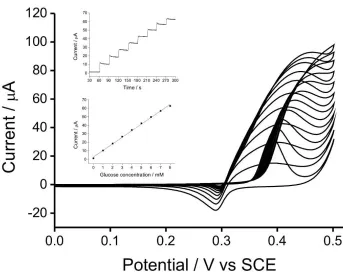
The electrochemical performance of the CuO- graphene modified glassy carbon electrode for glucose sensing was investigated by cyclic voltammetry (CV) and amperometric I-t
Ultrasensitive and selective non-enzymatic glucose detection based on pt electrode modified by carbon nanotubes@graphene oxide/ nickel hydroxide- Nafion hybrid composite in
The detection limit, sensitivity and response time of CNS electrode have been compared with those of other reported electrodes used as glucose sensors [22 , 26 – 28] ( Table 1 )..
