White Rose Research Online URL for this paper: http://eprints.whiterose.ac.uk/108527/
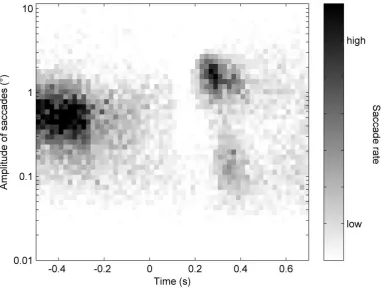
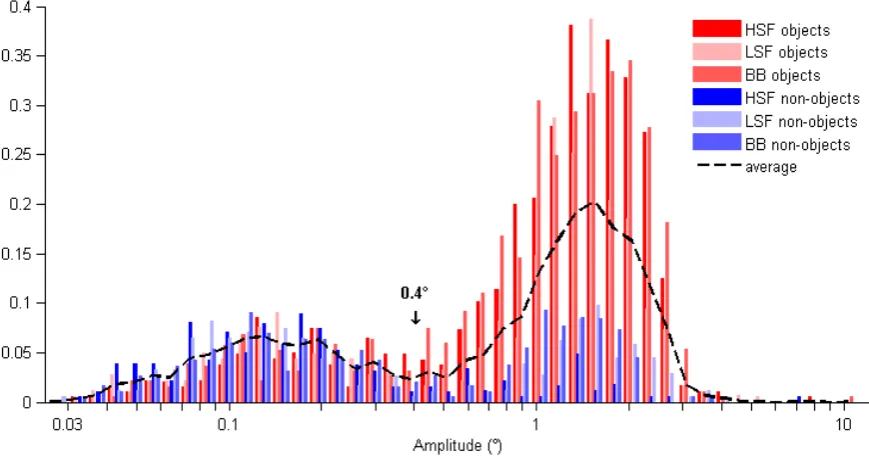
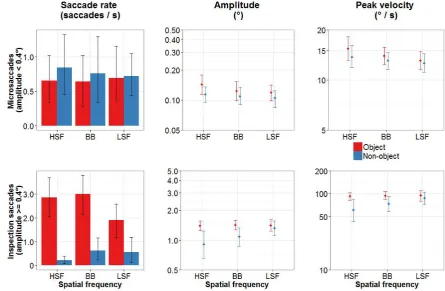
Version: Accepted Version
Article:
Craddock, M, Oppermann, F, Müller, MM et al. (1 more author) (2017) Modulation of microsaccades by spatial frequency during object categorization. Vision Research, 130. pp. 48-56. ISSN 0042-6989
https://doi.org/10.1016/j.visres.2016.10.011
© 2016 Elsevier Ltd. Licensed under the Creative Commons Attribution-NonCommercial-NoDerivatives 4.0 International http://creativecommons.org/licenses/by-nc-nd/4.0/
[email protected] https://eprints.whiterose.ac.uk/
Reuse
Unless indicated otherwise, fulltext items are protected by copyright with all rights reserved. The copyright exception in section 29 of the Copyright, Designs and Patents Act 1988 allows the making of a single copy solely for the purpose of non-commercial research or private study within the limits of fair dealing. The publisher or other rights-holder may allow further reproduction and re-use of this version - refer to the White Rose Research Online record for this item. Where records identify the publisher as the copyright holder, users can verify any specific terms of use on the publisher’s website.
Takedown
If you consider content in White Rose Research Online to be in breach of UK law, please notify us by
Modulation of microsaccades by spatial
1frequency during object categorization
2Matt Craddock
1,2*, Frank Oppermann
1,3*, Matthias M. Müller
1,
3Jasna Martinovic
44
1 Institute of Psychology, University of Leipzig, Germany; 2 School of Psychology, 5
University of Leeds, UK; 3 Donders Institute for Brain, Cognition and Behaviour, Radboud
6
University Nijmegen, Netherlands; 4 School of Psychology, University of Aberdeen, UK
7 8
* Matt Craddock and Frank Oppermann have contributed equally to this manuscript as joint
9
first authors
10
11
Running Head: Microsaccades and object spatial frequencies
12
Send correspondence to:
13
Matthias M. Müller
14
Institute of Psychology
15
University of Leipzig
16
Neumarkt 9-19
17
04109 Leipzig
18
Germany
19
Tel: +49 - 341 - 97 39 54 3
Fax: +49 - 341 - 97 35 96 9
Email: [email protected]
Abstract
21
22
The organization of visual processing into a coarse-to-fine information processing based on
23
the spatial frequency properties of the input forms an important facet of the object recognition
24
process. During visual object categorization tasks, microsaccades occur frequently. One
25
potential functional role of these eye movements is to resolve high spatial frequency
26
information. To assess this hypothesis, we examined the rate, amplitude and speed of
27
microsaccades in an object categorization task in which participants viewed object and
non-28
object images and classified them as showing either natural objects, man-made objects or
29
non-objects. Images were presented unfiltered (broadband; BB) or filtered to contain only
30
low (LSF) or high spatial frequency (HSF) information. This allowed us to examine whether
31
microsaccades were modulated independently by the presence of a high-level feature – the
32
presence of an object – and by low-level stimulus characteristics – spatial frequency. We
33
found a bimodal distribution of saccades based on their amplitude, with a split between
34
smaller and larger microsaccades at 0.4º of visual angle. The rate of larger saccades (≥ 0.4º)
35
was higher for objects than non-objects, and higher for objects with high spatial frequency
36
content (HSF and BB objects) than for LSF objects. No effects were observed for smaller
37
microsaccades (< 0.4º). This is consistent with a role for larger microsaccades in resolving
38
HSF information for object identification, and previous evidence that more microsaccades are
39
directed towards informative image regions.
40
41
Keywords: microsaccades, eye movements, object categorisation, object identification,
42
spatial frequency
43
1. Introduction
45
Object recognition is based on a cascade of feedforward and feedback mechanisms through
46
the visual processing hierarchy (e.g. Bar et al., 2006; Hochstein & Ahissar, 2002; VanRullen,
47
2007). This cascade may follow a coarse-to-fine sequence in which spatial frequency
48
information may be particularly important for coding information at different spatial and
49
temporal scales (e.g. Bullier, 2001; Goffaux et al., 2010; Hegdé, 2008; Kauffmann,
50
Ramanoel, & Peyrin, 2014). Initial, feedforward processing may rely on low spatial
51
frequencies (LSF), which provide information about many features of the visual input in
52
parallel, activating compatible nodes in a recognition network (e.g. Levin, Takarae, Miner, &
53
Keil, 2001). However, the conscious identification of objects likely requires re-entrant
54
processing (feedback mechanisms) with focused attention onto the location of decisive
55
features of potential objects (e.g. Di Lollo, Enns, & Rensink, 2000; Evans & Treisman, 2005;
56
Hochstein & Ahissar, 2002). High spatial frequency (HSF) information may provide more
57
fine-grained details and boundaries necessary for object identification (e.g. Oliva & Schyns,
58
1997; Oliva & Torralba, 2006). While a single glance may rapidly capture LSFs in a visual
59
scene, resolving HSFs and fine spatial detail may require microsaccades (Ko, Poletti, &
60
Rucci, 2010; McCamy, Millan, Stasi, Macknik, & Martinez-Conde, 2014;
Otero-61
Millan, Troncoso, Macknik, Serrano-Pedraza, & Martinez-Conde, 2008; Rucci, 2008; Rucci,
62
Iovin, Poletti, & Santini, 2007; Turatto, Valsecchi, Tamè, & Betta, 2007). Microsaccades are
63
small eye movements – typically up to 1º of visual angle – that occur frequently even during
64
fixation (for reviews, see Conde, Macknik, Troncoso, & Hubel, 2009;
Martinez-65
Conde, Otero-Millan, & Macknik, 2013; Melloni, Schwiedrzik, Rodriguez, & Singer, 2009;
66
Rolfs, 2009). The present study investigates how the occurrence of microsaccades depends on
67
the spatial frequency and object information of the visual input.
Spatial frequency information at different scales contributes to object categorization
69
in different ways. LSFs may be processed and reach higher-order areas faster than HSFs (Bar
70
et al., 2006). LSFs provide coarse global image features associated with the rough shape and
71
layout of objects, helping to determine, for example, scene category. Scene category can be
72
extracted at the first glance as reflected in differential cerebral activity after 150 ms, even
73
with visual exposures starting from 20 ms (Fabre-Thorpe, Richard, & Thorpe, 1998; Thorpe,
74
Fize, & Marlot, 1996; VanRullen & Thorpe, 2001). This processing occurs without directly
75
attending the target image and might thus rely on the first feedforward sweep of activation
76
(Li, VanRullen, Koch, & Perona, 2002; Rousselet, Fabre-Thorpe, & Thorpe, 2002; Thorpe,
77
Gegenfurtner, Fabre-Thorpe, & Bülthoff, 2001). LSF processing may form a major part of
78
this initial feedforward sweep (Bullier, 2001).
79
When comparing pictures of objects filtered for spatial frequency content, intact
80
unfiltered pictures as well as pictures containing both LSF and HSF information showed
81
better performance compared with pictures only containing either LSF or HSF information
82
from around 100 ms of exposure duration (Kihara & Takeda, 2010, 2012). Importantly, the
83
categorization of LSF–only objects outperformed the categorization of HSF objects for the
84
exposure durations of up to 250 ms, suggesting a prior for LSF information in early
85
processing in this kind of categorization task (Kihara & Takeda, 2010). The differences did
86
not change when attentional demands were increased, suggesting that the effects are based on
87
the first feedforward processing (Kihara & Takeda, 2012).
88
However, the information extracted during feedforward processing does not always
89
allow full, accurate identification of scenes and objects within them. For example, Evans and
90
Treisman (2005) asked their participants to identify animal targets embedded in RSVP
91
streams of distractors, with each image presented for 75-100 ms. The participants failed to
92
identify the targets in more than half of the trials, and also often failed to localize the target
correctly, suggesting that further processing is necessary. After the feedforward sweep comes
94
re-entrant, feedback processing, which is likely directed at processing of HSFs. For example,
95
consistent with the expectation that processing of HSF information follows processing of
96
LSF information, coarse-to-fine, LSF-to-HSF image sequences of scenes elicit greater earlier
97
activation in early occipital areas and both frontal and temporal areas compared to
fine-to-98
coarse HSF-to-LSF sequences (Peyrin et al., 2010).
99
Eye movements in this period may be particularly important. Microsaccades follow a
100
stereotypical pattern of inhibition and subsequent release after the onset of a visual stimulus,
101
dropping significantly before rebounding to a new peak after approximately 200-400 ms (e.g.
102
Engbert & Kliegl, 2003; Turatto et al., 2007). They are affected by a range of cognitive
103
factors such as task difficulty and attention (Engbert, 2006; Engbert & Kliegl, 2003;
104
Siegenthaler et al., 2014), and change neural processing (Bosman, Womelsdorf, Desimone, &
105
Fries, 2009; Dimigen, Valsecchi, Sommer, & Kliegl, 2009; Martinez-Conde, Macknik, &
106
Hubel, 2000, 2002; Troncoso et al., 2015). The amplitudes of saccades in these studies range
107
from less than 1º of visual angle, which are typically defined as microsaccades
(Martinez-108
Conde et al., 2013; Melloni et al., 2009), up to 1.5° or 2.0° (e.g. Engbert & Kliegl, 2003;
109
Martinez-Conde, Macknik, Troncoso, & Dyar, 2006; Turatto et al., 2007; Yuval-Greenberg,
110
Tomer, Keren, Nelken, & Deouell, 2008). Stimulus and fixation target size may also
111
influence microsaccade amplitude ((McCamy, Najafian Jazi, Otero-Millan, Macknik, &
112
Martinez-Conde, 2013; Otero-Millan, Macknik, Langston, & Martinez-Conde, 2013).
113
With regard to spatial frequency, there is evidence to suggest that HSF may increase
114
the rate of microsaccades. Microsaccades occur at a higher rate during tasks which require
115
high visual acuity (Ko et al., 2010), show directional biases during tasks that involve
116
discrimination of visual detail (Turatto et al., 2007), and occur more frequently during
117
foveation of faces or other salient objects (Otero-Millan et al., 2008). They also occur more
frequently in more informative regions of visual scenes, such as those with high contrast and
119
low spatial correlation (McCamy et al., 2014). Bonneh, Adini, & Polat (2015) tested
120
microsaccade rates in response to passive viewing of transient Gabor patches with varying
121
spatial frequency. They found that microsaccade latency following release from inhibition
122
increased as spatial frequencies went from middle-level (2 cycles per degree) to higher (8
123
cycles per degree), which may have produced a later, smaller peak in microsaccade rate.
124
However, microsaccade rates in passive viewing tasks may not reflect performance in more
125
directed, active viewing tasks (e.g. McCamy et al., 2014).
126
Consistent with a role of microsaccades in object recognition, it has been
127
demonstrated that the rebound peak in the saccade rate after the onset of a visual stimulus is
128
modulated by high-level stimulus properties; for example, it is relatively elevated for objects
129
compared to non-object stimuli (Hassler, Barreto, & Gruber, 2011; Keren, Yuval-Greenberg,
130
& Deouell, 2010; Yuval-Greenberg et al., 2008). However, this evidence comes primarily
131
from investigations of the relationship between microsaccades and a broadband peak in
132
induced gamma band oscillations (~30-100 Hz), observed using the scalp-recorded
133
electroencephalogram (EEG). This signal was considered to be a signature of the activation
134
of an object representation and the binding of the activity of disparate populations of neurons,
135
each representing distinct object features, into a single coherent percept (Tallon-Baudry &
136
Bertrand, 1999). Several authors have convincingly demonstrated that an electrical,
muscle-137
generated signal associated with microsaccades – the saccade spike potential (SSP) –
138
underlies this effect (Hassler et al., 2011; Keren et al., 2010; Yuval-Greenberg et al., 2008).
139
Thus, many of the reported modulations of induced gamma-band activity – for example, by
140
object orientation (Martinovic, Gruber, & Müller, 2007, 2008) – were likely attributable to
141
modulations of the underlying saccade rate in the critical window around 200-400 ms.
142
Directly examining the saccade rate in this time window may thus reveal information
regarding object recognition processes and role of eye-movements to resolve spatial
144
frequency information.
145
In the present study, we use a living/non-living categorization task to probe the role of
146
spatial frequency in object processing by varying the spatial frequency content of objects. We
147
presented objects either as unfiltered, broadband (BB) images, or filtered to contain only LSF
148
or HSF content. We chose spatial frequency ranges that corresponded to previous studies
149
examining the different roles of HSF and LSF in object recognition (e.g. Bar et al., 2006).
150
These ranges also correspond to the spatial frequency tuning curves observed in orbitofrontal
151
and visual cortices (Fintzi & Mahon, 2013). We expected that we would observe the typical
152
peaks in the saccade rate approximately 200-400 ms after stimulus onset. Given that
153
microsaccades may have a role in resolving fine spatial detail, we expected to see higher rates
154
for HSF and BB images than for images with LSF only. Additionally, we presented
non-155
object trials with spatial frequency content matched to that of the object images. We expected
156
that saccade peak rates would be reduced relative to object trials, in line with previous
157
findings from EEG (e.g. Hassler et al., 2011; Yuval-Greenberg et al., 2008), and in
free-158
viewing of blank scenes (Otero-Millan et al., 2013, 2008). Nevertheless, object versus
non-159
object differences should also reveal whether differences in saccade rate are driven by
high-160
level factors in combination with low-level stimulus properties, or low-level stimulus
161
properties alone: spatial frequency differences on non-object trials would imply the latter. To
162
better characterise the saccades, we also examined their latency, amplitude and peak velocity.
163
164
2. Method
165
2.1 Participants
166
Twelve participants were recruited; all students from the University of Leipzig (ages 20 to
167
28; mean = 24). 7 were female, 5 male. All participants reported normal vision. Participants
received course credit for their participation. The study was conducted in line with the
169
requirements of the local ethics committee of the University of Leipzig, and written informed
170
consent was taken in accordance with the Code of Ethics of the World Medical Association
171
(Declaration of Helsinki).
172
173
2.2 Stimuli and apparatus
174
We selected a set of 240 greyscale photographs from a commercial image database (Hemera
175
Photo Objects), which comprised 120 photographs depicting natural objects (e.g. animals,
176
fruit) and 120 showing man-made objects (e.g. furniture, tools). Only photographs showing a
177
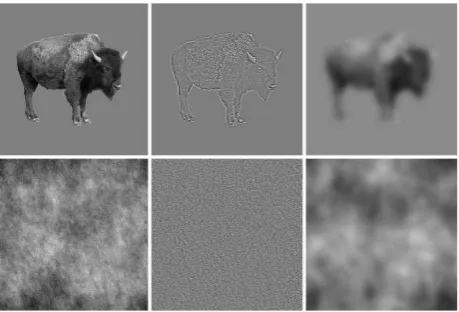
single object in isolation were selected. HSF and LSF versions of each object were produced
178
from the unfiltered, broadband images (BB) by multiplying the Fourier energy of the fast
179
Fourier transform of each BB image with a Gaussian filter that either attenuated spatial
180
frequencies below ~4.7 cycles per degree (cpd) for HSF images or above ~0.9 cpd for LSF
181
images. These settings were comparable to the filtering used by Bar et al. (2006), and also
182
reflect the sensitivities of the visual and orbitofrontal cortices (Fintzi & Mahon, 2013). For
183
each BB, HSF, and LSF image, a matching non-object was created by producing a noise
184
texture with the same amplitude spectrum and spatial frequency content as the original image.
185
This was achieved by randomising the phase of the object image’s Fourier transformation.
186
The mean (global luminance) and standard deviation (RMS contrast) of every BB, HSF, and
187
LSF image was adjusted to match the mean global luminance and RMS contrast of the full set
188
of BB images (see Figure 1).
189
Visual stimuli were presented centrally on a 19-in Eizo FlexScan S1910 monitor at a
190
screen resolution of 1280 × 1024 pixels, and seen from a viewing distance of 80 cm. Stimulus
191
size (including a grey background) was 400 × 400 pixels. The stimuli subtended
192
approximately 10 degrees of visual angle in each direction.
Eye movements were recorded at 500 Hz using the EyeLink II (SR Research Ltd.,
194
ON, CA). Motions of the participant’s head were restrained by using a head rest. Stimulus
195
presentation and data recordings were controlled by the SR Research Experiment Builder
196
software.
197
[image:10.595.184.414.183.339.2]198
Figure 1 Sample stimuli. Columns show unfiltered, high-pass filtered, and low-pass
199
filtered images. Noise images in the lower row were created by randomising the phase
200
of the FFT of the intact object. All pictures were matched for global luminance and
201
RMS contrast.
202
203
2.3 Design
204
The experiment comprised a two factor design with six different conditions: object (object or
205
non-object noise texture) × spatial frequency (BB, HSF, LSF). There were 480 trials split
206
across six blocks of 80 trials. The order of trials was randomised for each participant. On half
207
of the trials, participants saw a BB, HSF, or LSF object. Half of these objects were natural,
208
half man-made. On the other half of trials, participants saw a BB, HSF, or LSF non-object
209
texture. The objects presented in each condition were counterbalanced across participants.
210
Thus, each participant saw each object in only one spatial frequency condition, but each
211
object was presented an equal number of times in every condition over the course of the
212
experiment.
Each trial began with a white fixation cross on a black background presented for a
214
variable period of 500-800 ms. A stimulus image was then presented for 500 ms. Then, the
215
fixation cross reappeared and remained on screen for 1000 ms, after which the screen was
216
blanked for a variable period of 900-1200 ms. Participants were encouraged to use this time
217
to blink if they needed to do so. Participants pressed a different button to indicate the
218
category to which each image belonged: natural object, man-made object, or non-object
219
texture. Note that we subsequently collapsed responses across man-made and natural objects,
220
since our primary interest was in the contrast between objects and non-objects. Participants
221
first performed a practice block of 54 trials, which presented a set of practice images created
222
in the same manner as the experimental images but were not shown during the main
223
experiment. Participants were asked to minimize blinking and eye movements while a
224
stimulus or fixation cross was displayed, and to respond as quickly as possible while aiming
225
to minimize errors.
226
227
2.4 Behavioural data analysis
228
Only RTs on correct trials were included in the analysis (3.7% of the data were coded as
229
errors). RTs were considered as outliers and excluded from the analysis when they deviated
230
more than 2.5 standard deviations from the subject’s mean in a respective condition (further
231
1.7% of the data). Reaction times (RTs) and errors were then analysed using a two-way
232
repeated-measures analysis of variance (ANOVA) with the factors Object (Object versus
233
Non-object) and Frequency (BB, HSF, or LSF). Generalized eta squared is reported to
234
estimate the effect size. If required, post-hoc t-tests were conducted with Bonferroni-Holm
235
correction for multiple comparisons.
236
237
2.5 Eye-tracking analysis
A time window from 500 ms before to 700 ms after picture onset was selected for analysis.
239
Trials were discarded from the analyses if either (a) a blink was within the analyzed time
240
window, or (b) position data from either of the eyes were missed in the relevant time window.
241
We excluded 4.4% of the data from the analysis. Microsaccades were detected using the
242
Engbert and Mergenthaler procedure (2006; see also Engbert & Kliegl, 2003). This algorithm
243
is based on eye movement velocity, with horizontal and vertical velocities computed
244
separately. The detection threshold was calculated relative to noise as = 6 multiples of the
245
median-based SD. Saccades were determined for each eye separately, but only binocular
246
events with a minimal temporal overlap of 6 ms were accepted. To control for overshoot
247
components, which can result from corrections of fixations after saccades, only saccades
248
which occurred at least 30 ms after the previous saccade were considered as microsaccades
249
(see also Mergenthaler & Engbert, 2010). The saccade rate reflects the estimated number of
250
saccades in a trial per second. The saccade rate was determined in bins of 20 ms. Data were
251
analysed using the same two-way repeated-measures ANOVA as the behavioural data
252
consisting of the factors Object and Frequency.
253
3. Results
254
3.1 Behavioural data
255
Participants responded slower [F(1, 11) = 61.98, p < .001, 2 g
. = .28] and made more errors
256
[F(1,11) = 6.00, p = .03, 2g. = .11] when responding on object (732 ms; 6.9% errors) than non-257
object trials (580 ms; 0.4%).
258
There were significant main effects of Frequency for RTs [F(2, 22) = 43.76, p < .001,
259
2 g
. = .03] and errors [F(2,22) = 5.78, p < .01, 2g. = .12] with comparable reaction times and 260
error rates to BB (642 ms, 1.3 % errors) and HSF images (637 ms; 1.1%), and slower and less
261
accurate responses to LSF images (688 ms; 8.6%).
Most important, the interaction between Object and Frequency was also significant
263
for RTs [F(2, 22) = 21.19, p < .001, 2 g
. = .02] and errors [F(2,22) = 5.32, p = .01, 2 g
. = .11].
264
Post-hoc tests (p-value adjusted) revealed that RTs on objects were significantly slower than
265
on non-objects (BB, HSF, and LSF; all ps < .001). Additionally, responses to LSF objects
266
(RT: M = 784 ms, SE = 8 ms; error: M = 16.7%, SE = 23.5 %) were slower and more
error-267
prone than responses to both BB (RT: M = 701 ms, SE = 10 ms, t(11) = 6.48, p < .001; error:
268
M = 2.2%, SE = 2.8%, , t(11) = 2.31, p < .05) and HSF objects (RT: M = 711 ms, SE = 9 ms,
269
t(11) = 7.56, p < .001; error: M = 1.9 %, SE = 2.7%, t(11) = 2.42, p < .05), while no
270
difference was observed between BB and HSF objects (RT: t(11) = 1.41, p .37; errors: t < 1).
271
Furthermore, responses on HSF non-objects (RT: M = 564 ms, SE = 12 ms) were faster than
272
responses on BB (RT: M = 583 ms, SE = 13 ms; t(11) = 4.59, p < .01) and LSF non-objects
273
(RT: M = 592 ms, SE = 12 ms; t(11) = 4.35, p < .01), while no difference was observed
274
between BB and LSF non-objects (t(11) = 1.34, p = .37). There were no differences in error
275
rates between non-object trials (BB: M = 0.4%, SE = 0.6 %, HSF: M = 0.3 %, SE = 0.6%,
276
LSF: M = 0.5%, SE = 0.8%; ts < 1).
277
278
3.2 Eye movement data
279
To determine whether overall saccade rate changes after stimulus presentation, we compared
280
saccade rates averaged across all conditions in three time-windows (baseline: -200-0 ms,
281
poststimulus I: 0-200 ms, and poststimulus II: 200-400 ms). Figure 2 shows the microsaccade
282
rate for each condition averaged across participants. Note that saccade rate is increased before
283
the baseline window. These saccades are likely to reflect movements to re-fixate the fixation
284
cross, which appeared 500 to 800 ms before stimulus onset following a blank screen during
285
which participants was allowed to blink. The saccade rate (baseline: M = 1.43 saccades/s; SE
286
= .19) decreased after stimulus presentation (poststimulus I: M = .43 saccades/s; SE = .10;
test: t(11) = 9.26, p < .001) before increasing relative to the baseline in the later time window
288
(poststimulus II: M = 2.28 saccades/s; SE = .26; t-test: t(11) = 5.11, p < .001).
289
[image:14.595.98.513.133.408.2]290
Figure 2 Group (N = 12) mean rate of detected eye movements in the eye-tracking
291
experiment over time (bin width = 20 ms), separated by condition. Left column shows
292
eye movements on trials in which objects were present; right column shows movements
293
on trials in which non-objects were presented. From top to bottom, the rows show
294
events when high spatial frequency (HSF), broadband (BB), and low spatial frequency
295
(LSF) images were presented. Note the higher rate of microsaccades in the object
296
conditions from 200-400 ms.
297
298
Before comparing saccade rates between conditions, we examined saccade amplitudes.
299
Figure 3 shows the distribution of amplitudes over time averaged across all conditions, with
300
shades of gray reflecting the saccade rate. Overall, saccade amplitudes were mostly between
301
0.05° and 3° of visual angle. The smallest saccade that we detected with the procedure was
302
0.03°, which reflects the technical limit of the video-based eye-tracker to measure saccades.
The initial drop in saccade rate after stimulus presentation is clearly visible, with a
304
subsequent increase around 200-400 ms after stimulus presentation. However, as the saccade
305
rate changed over time, the distribution of saccades of different amplitudes also changed.
306
Most interestingly, the saccades in the 200-400 ms time window follow a bimodal amplitude
307
distribution. Smaller saccades peak at a mean amplitude of 0.12°, whereas larger saccades
308
peak around 1.36°. To rule out that this bimodal distribution is driven by a couple of subjects
309
only, we looked at plots of individual subject data (see Supplementary Figure 1). A clear
310
bimodality can be observed for the majority of subjects. Figure 3 also suggests that there may
311
be a latency difference between larger (M=317ms, SD=24ms) and smaller saccades
312
(M=328ms, SD=35ms), but this is not significant (t(11)<1, p=.39).
313
[image:15.595.107.489.368.656.2]314
Figure 3 Distribution of saccade amplitudes over time (pooled across subjects (N = 12)
315
and conditions; bins of 20 ms and a log amplitude of 0.06). Amplitude axis is plotted on
316
a logarithmic scale. Note the presence of a bimodal distribution after the initial
inhibitory decrease in rate compared to the unimodal distribution in the pre-stimulus
318
window
319
320
For further analyses, we focused on the critical time window from 200-400 ms after
321
stimulus onset. Figure 4 shows the clear bimodal distribution of saccade amplitudes in this
322
time window for each condition. While the distribution of the microsaccades seems to be
323
comparable between conditions, the saccade rate differs clearly between conditions for larger
324
saccades. The rate of the larger saccades is higher when objects (bluish bars) rather than
non-325
objects (reddish bars) were presented. We analyzed the saccades around these two distinct
326
peaks of amplitudes separately. The trough between the peaks was used as the boundary with
327
saccades smaller than 0.4° as small microsaccades and saccades larger or equal to 0.4° as
328
large microsaccades (see also Mergenthaler & Engbert, 2010). There are single saccades with
329
amplitudes clearly outside of the two distributions. These outliers were excluded from further
330
analyses of the two saccade types. Saccades were considered as outliers when their amplitude
331
deviated from the participant’s mean of the respective conditions more than 2.5 standard
332
deviations. According to this criterion, 4 saccades (0.5 %) were excluded from the analysis of
333
small microsaccades and 24 (1.4 %) from the analysis of large microsaccades. Small
334
microsaccades considered for analysis showed a mean amplitude of 0.12 ° of visual angle
335
(SD = 1.32 °). Large microsaccades showed a mean amplitude of 1.27 ° of visual angle (SD =
336
1.30 °).
337
339
Figure 4 Distribution of saccade amplitudes in the time window from 200-400 ms after
340
stimulus onset averaged across subjects (N = 12; bins with a log amplitude of 0.06).
341
This graph shows the bimodal lognormal distribution of saccade amplitudes in the
342
relevant time window (amplitudes are on a logarithmic scale). The reddish bars reflect
343
the object conditions, the blueish bars the non-object conditions. The black line shows
344
the average across conditions and, thus, reflects the time window 200-400 ms from
345
Figure 3
346
347
We analyzed saccade rates, saccade amplitudes, saccade latencies and peak velocity
348
of saccades in the time window 200-400 ms after stimulus onset (Figure 5) using repeated
349
measures ANOVA with the factors Object and Spatial Frequency. In the analysis of
350
amplitudes and peak velocity, subjects were excluded when they made no saccades in one of
351
the conditions in the relevant time window. Thus, three subjects were excluded from the
352
analysis of small microsaccades and five subjects in the analysis of large microsaccades. In
353
the analysis of saccade rate, all subjects were included. 95% confidence intervals for the plots
354
in Figure 5 were estimated using bootstrapping to generate surrogate distributions (1000
iterations) of mean saccade rate, amplitude, and velocity for each condition, as implemented
356
in the ggplot2 package (Wickham, 2009) for R (R Core Team, 2015).
357
358
[image:18.595.72.518.163.454.2]359
Figure 5 Saccade characteristics separated for the two saccade types in the window
360
from 200-400 ms after stimulus onset for objects (red) and non-objects (blue). The
361
upper row shows microsaccades smaller than 0.4°, the lower row microsaccades of 0.4°
362
and larger. The columns represent different saccade characteristics. Left column shows
363
the saccade rate (N = 12; both rows), the centre column amplitudes (N = 9 upper row,
364
N = 7 lower row), and right column peak velocity (N = 9 upper row, N = 7 lower row).
365
Amplitude and peak velocity are plotted on a log scale. Error bars show bootstrapped
366
95% confidence intervals, as described in the method. HSF - high spatial frequency, BB
367
- broadband, and LSF - low spatial frequency images
368
3.2.1 Small microsaccades (amplitude < 0.4°). The analysis of saccade rates revealed
370
no significant effects or interactions [Object: F(1, 11) = 3.92, p = .07, 2 g
. = .01; Frequency:
371
F(2, 22) < 1; Object x Frequency: F(2, 22) < 1]. The same was true also for amplitudes
372
[Object: F(1, 8) = 4.69, p = .06, 2g. = .07; Frequency: F(2, 16) = 1.62, p = .23, 2g. = .02; Object 373
x Frequency: F(2, 16) = 1.36, p = .28, 2g. = .02] and latencies (Object: F(1,9) = 0.10, p=0.75, 374
2 g
. = .002; Frequency: F(2,18) = 0.14, p = .87, 2g. = .004; Object x Frequency: F(2,18) = 0.86, 375
p = 0.44, 2 g
. = 0.02). The analysis of peak velocity showed a significant effect of Object, with
376
significantly faster saccades in response to objects than to non-objects [F(1, 8) = 6.99, p <
377
.05, 2 g
. = .06]. However, no other effects reached significance [Frequency: F(2, 16) = 3.41, p
378
= .06, 2g. = .05; Object x Frequency: F(2, 16) = 2.02, p = .17, 2g. = .01]. 379
3.2.2 Large microsaccades (amplitude ≥ 0.4°). The analysis of saccade rate revealed
380
significant main effects of Object [F(1, 11) = 37.53, p < .001, 2 g
. = .46] and of Frequency
381
[F(2, 22) = 12.44, p < .001, 2g. = .04] as well as a significant interaction of Object and 382
Frequency [F(2, 22) = 16.54, p < .001, 2g. = .05]. Subsequent t-tests (p-value adjusted) 383
revealed for all Frequency conditions higher saccade rates for objects compared with
non-384
objects [BB: t(11) = 6.28, p < .001; HSF: t(11) = 6.09, p < .001; LSF: t(11) = 4.58, p < .01].
385
While the different non-object conditions did not differ [BB vs. HSF: t(11) = 1.98, p > .29
386
BB vs. LSF: t(11) < 1; HSF vs. LSF: t(11) = 1.45, p = .53], we found differences between
387
object conditions. The saccade rate for HSF objects as well as for BB objects was higher
388
compared with LSF objects [HSF vs. LSF: t(11) = 6.61, p < .001; BB vs. LSF: t(11) = 7.18, p
389
< .001], whereas HSF objects and BB objects did not differ [t(11) = 1.38, p = .53].
390
Overall, the number of large microsaccades to non-objects was very low. Five out of
391
the 12 participants did not show any saccade in one of the spatial frequency conditions.
392
Therefore, we refrain from analyzing amplitudes, latencies and peak velocity for non-object
393
conditions. For the analysis of object conditions, we found no significant effects of
Frequency in the analyses of amplitudes and peak velocity [Fs < 1]. However, we do find a
395
significant effect of Frequency in the analysis of latencies (F(2,22) = 21.46, p < 0.001, 2 g
. =
396
.31). Subsequent t-tests (p-value adjusted) reveal that latencies from all three conditions are
397
significantly different from each other, with BB objects eliciting the fastest saccades (M =
398
292ms, SD=21ms), followed by HSF objects (M=312ms, SD=29ms), with slowest saccades
399
for LSF objects (M=335ms, SD=29ms; BB vs. HSF: t(11)=4.13, p = .003; BB vs. LSF:
400
t(11)=5.81, p<.001; HSF vs. LSF: t(11)=3.18, p=.009).
401
402
4. Discussion
403
We investigated modulations of microsaccades during an object categorization task in which
404
objects or non-objects were presented with different scales of spatial frequency content. The
405
images were either unfiltered, broadband images, or filtered to contain only HSF or LSF
406
information. This allowed us to examine both high-level factors (i.e. the presence or absence
407
of an object) and low-level factors (i.e. spatial frequency content) simultaneously. We
408
observed the typical decrease and subsequent increase in saccade rate after visual stimulus
409
presentation (e.g., Engbert & Kliegl, 2003). Most relevant in the context of our study was the
410
clear peak in saccade rate in the time window 200 to 400 ms after stimulus onset. The size
411
and presence of this peak was modulated by the experimental manipulations. Specifically, the
412
peak rate was higher on object than non-object trials, as predicted on the basis of previous
413
work, and was higher for HSF and BB objects than for LSF objects.
414
Detailed analysis of the eye-tracking data revealed a bimodal distribution of the
415
amplitudes of saccades in response to the stimuli, suggesting two different classes of saccade:
416
small microsaccades with amplitudes below 0.4°, and large microsaccades with amplitudes
417
above 0.4° (Mergenthaler & Engbert, 2010). While it is tempting to suggest that small and
418
large microsaccades are generated by different underlying mechanisms, Otero-Millan et al.
(2013) argued that microsaccades and saccades fall on the same functional continuum, and
420
found that saccade rates across that continuum increase as stimulus size increases.
Otero-421
Millan et al. used a free-viewing paradigm in which all saccades over a 30-s trial are
422
considered. These saccades showed a unimodal amplitude distribution with a peak depending
423
on the stimulus size. In contrast, our results reflect the initial burst of saccades 200-400 ms
424
after stimulus onset during a brief stimulus presentation of 500 ms. Small microsaccades in
425
our study show the same characteristics (amplitude and peak velocity) as observed for
426
fixational events in Otero-Millan et al.’s study; our participants were asked to fixate a
427
fixation cross before and after stimulus exposure. Large microsaccades in our study show
428
similar amplitude and peak velocity as those in response to objects of comparable visual size
429
(~4 to 8°). Thus, the bimodal distribution we observe may reflect the sum of trials in which
430
the eyes remain fixated and trials in which the stimuli are inspected during this time window,
431
and thus may reflect both the demands of the task and the size of our stimuli, rather than
432
different classes of eye movement.
433
Otero-Millan et al. (2011) also found that microsaccades larger than 0.5° tended to
434
generate a corrective microsaccade, resulting in a square wave jerk. Corrective saccades may
435
be particularly likely with our object stimuli, given that participants are required to
436
discriminate between different categories, and must therefore inspect informative image
437
regions closely. Nevertheless, we found that our experimental manipulations had very little
438
effect on small microsaccades: there were no substantial effects of object or of spatial
439
frequency observed in the microsaccade rate, amplitude, or peak velocity. In contrast, the
440
large microsaccades were significantly affected by both the presence of an object and by the
441
spatial frequency content of the stimulus. Specifically, for large microsaccades, there were
442
higher saccade rates for objects than for non-objects. Furthermore, there were higher saccade
443
rates for HSF and BB objects than for LSF objects. For non-objects, there were no
differences in rate across different spatial frequencies. This suggests that when objects are
445
presented, more goal-directed inspection saccades may have been necessary to resolve the
446
spatial frequency information supporting object recognition. LSF objects also elicited slower
447
microsaccades than BB or HSF objects, but BB objects elicited even faster microsaccades
448
than HSF objects, indicating the importance of joining low and high spatial frequency
449
information for efficient guidance of eye movements. We suggest that this is consistent with
450
a first-pass, feedforward sweep determining if and where closer inspection was necessary,
451
with feedback mechanisms guiding small eye movements in resolving fine spatial detail (Ko
452
et al., 2010; Poletti, Listorti, & Rucci, 2013). Our findings are also consistent with McCamy
453
et al.’s (2014) finding that more microsaccades are directed to highly informative image
454
regions.
455
One additional possibility is that the additional task required for objects –
456
discrimination between living and non-living objects – may in part be responsible for
457
increasing the rate of larger microsaccades. We previously reported an increased rate of
458
microsaccades for objects versus non-objects in a task with a very different set of object and
459
non-object stimuli (Kosilo et al., 2013). No additional task beyond discriminating between
460
objects and non-objects was required in our previous study, suggesting that it is unlikely that
461
the additional task performed on objects here would explain all of the difference in
462
microsaccade rate between objects and non-objects. An account that combines bottom-up,
463
stimulus-driven effects with top-down task requirements is a more likely explanation.
464
Given the timing of our effects – 200 to 400 ms after stimulus onset – one might ask
465
to what extent these saccades contribute to correct object categorization. Previous studies
466
suggested that reasonably accurate broad categorization of objects is possible even with
467
exposure durations of around 100 ms or less (Thorpe et al., 1996; VanRullen & Thorpe,
468
2001). However, participants are often not able to identify the target objects correctly beyond
the initial broad categorization (see Evans & Treisman, 2005). These earlier studies often
470
used clear circumscribed categories as animal or vehicle sharing specific features (e.g., most
471
animals have legs) that can be used by the participants to categorize the target object without
472
identification. In addition, these target objects were often embedded in scenes that provided
473
further information on the gist of the scene. Moreover, categorization performance in our task
474
is much higher compared to the previous studies, at least in object conditions containing HSF
475
information (around 2.1% errors in HSF and BB object condition). While previous studies
476
suggested that LSF information is more relevant for object categorization with limited
477
exposure duration (Kihara & Takeda, 2010, 2012), our study clearly demonstrates that HSF
478
information contributes to enhance categorization performance (cf. the error rate of 16.6% in
479
the LSF object condition). The advantage of HSF information was not only found in error
480
rates but also RTs were much faster in the HSF and BB object condition compared with LSF
481
condition. Nevertheless, the categorization responses on objects took more than 700 ms on
482
average, and even the fastest response for a correct object categorization took more than 400
483
ms. In summary, saccades in this time window might well be supporting object identification
484
in our categorization task.
485
Note that in a previous report, we found that microsaccades were moderated by
high-486
level and low-level stimulus properties independently (Kosilo et al., 2013). Kosilo et al.'s
487
(2013) experiment required participants to discriminate between line drawings of objects and
488
non-objects that were closely matched to them in terms of various visual attributes, whilst
489
this study used noise texture patches as non-objects. The linear, high-frequency content of
490
non-objects in Kosilo et al. (2013) could have led to more microsaccades in the non-object
491
condition. Also, the specific low-level property which was manipulated differed across
492
studies (spatial frequency here; chromoluminance content there), so it is possible that
high-493
level/low-level interactions depend on the stimulus property which is manipulated.
The bimodal distribution of saccades in the present study has also important
495
methodical implications. When considering that differences between conditions in the present
496
study were only found for large microsaccades but not for small microsaccades, averaging
497
across all saccades can lead to invalid conclusions. Larger saccades are accompanied by
498
larger amplitudes and larger peak velocities. Thus, by averaging across all saccades, the
499
difference in the saccade rate of the inspection saccades would result in differences of the
500
mean amplitude and the mean peak velocity as well. However, these differences do not
501
reflect that larger or faster saccades were produced in a specific condition. Rather, it reflects
502
that overall more of the larger and faster saccades were produced. Some previous studies
503
reporting effects of cognitive factors on microsaccades subsume saccades with amplitudes up
504
to 1.5° or 2.0° (e.g. Engbert & Kliegl, 2003; Turatto et al., 2007; Yuval-Greenberg et al.,
505
2008), although other studies have already considered a detailed analysis of saccade size in
506
relationship to various stimulus properties (e.g. McCamy et al., 2012; Otero-Millan et al.,
507
2008; Troncoso et al., 2015). Given our finding, future research should take a closer look at
508
attributes of saccades elicited in their experiments and if they are found to fall within discrete
509
parts of the saccade continuum, they should be analysed separately. This will help to further
510
determine the functional role of microsaccades.
511
The findings of our study also bear methodological relevance for researchers wishing
512
to examine the induced gamma band signal using EEG, which is highly susceptible to
513
artefacts related to such eye movements. Although previous examinations of microsaccades
514
in comparable paradigms to those used in EEG have suggested that not all patterns of induced
515
gamma-band activity mirror those found in eye movements (Makin et al., 2011), we would
516
nevertheless suggest caution when the microsaccade rate cannot be directly examined via
517
eye-tracking or detection of miniature eye movements from eye channels (Craddock,
518
Martinovic, & Müller, 2016). A task that requires discrimination of complex stimuli is likely
to lead to large microsaccades even in the presence of the fixation cross (Kosilo et al., 2013).
520
Our study indicates that these eye movements reflect both low-level and high-level properties
521
of the stimulus in a way which is consistent with their role in sustaining efficient recognition
522
by guiding the acquisition of task-relevant information. Thus, any study of induced GBA that
523
does not account for microsaccadic artefact is likely to be confounding a range of bottom-up
524
and top-down effects that may be ocular or neural in origin.
525
In summary, the implications of our findings are clear: small saccadic eye movements
526
may be influenced by a combination of both high and low-level factors, and thus researchers
527
must be aware of this when manipulating such factors simultaneously. The finding that
528
spatial frequency content of images is differently utilised when categorising objects, as
529
opposed to distinguishing them from noise texture patches, fits well within the tenets of
530
object recognition models that posit a special role for low-level, spatial frequency
531
information content (e.g. Bar et al., 2006; Bullier, 2001; Hegdé, 2008; Sowden & Schyns,
532
2006). Furthermore, our study demonstrates that depending on the attributes of the stimuli
533
and the task, different manifestations of saccades may be observed. These different types of
534
saccades may come from discrete parts of the saccade continuum - in our study, as in
535
Mergenthaler and Engbert (2010), we observed both small and large (i.e., > 1°)
536
microsaccades. Although small microsaccades were not modulated by low or high-level
537
factors, large microsaccades were, shedding further light on the strategic role of eye
538
movements in sampling the visual environment in order to acquire task-relevant information -
539
in this case, fine spatial detail that is indicative of object identity.
Acknowledgements
541
The project was funded by the Deutsche Forschungsgemeinschaft (DFG, MU 972/16-1). The
542
funders had no role in the design, collection, analysis and interpretation of data, in the writing
543
of the manuscript, or in the decision to submit the manuscript for publication.
544
References
546
B M K K S G A S B J S A M D A M H E 547
Top-down facilitation of visual recognition. Proceedings of the National Academy of Sciences, 548
103(2), 449 454. http://doi.org/10.1073/pnas.0507062103 549
Bonneh, Y. S., Adini, Y., & Polat, U. (2015). Contrast sensitivity revealed by microsaccades. Journal of 550
Vision, 15(9), 11 11. 551
Bosman, C. A., Womelsdorf, T., Desimone, R., & Fries, P. (2009). A Microsaccadic Rhythm Modulates 552
Gamma-Band Synchronization and Behavior. The Journal of Neuroscience, 29(30), 9471 553
9480. http://doi.org/10.1523/JNEUROSCI.1193-09.2009 554
Bullier, J. (2001). Integrated model of visual processing. Brain Research Reviews, 36(2-3), 96 107. 555
http://doi.org/10.1016/S0165-0173(01)00085-6 556
Craddock, M., Martinovic, J., & Müller, M. M. (2016). Accounting for microsaccadic artifacts in the 557
EEG using independent component analysis and beamforming. Psychophysiology, 53(4), 558
553 565. http://doi.org/10.1111/psyp.12593 559
Di Lollo, V., Enns, J. T., & Rensink, R. A. (2000). Competition for consciousness among visual events: 560
The psychophysics of reentrant visual processes. Journal of Experimental Psychology: 561
General, 129(4), 481 507. http://doi.org/10.1037/0096-3445.129.4.481 562
Dimigen, O., Valsecchi, M., Sommer, W., & Kliegl, R. (2009). Human Microsaccade-Related Visual 563
Brain Responses. The Journal of Neuroscience, 29(39), 12321 12331. 564
http://doi.org/10.1523/JNEUROSCI.0911-09.2009 565
Engbert, R. (2006). Microsaccades: a microcosm for research on oculomotor control, attention, and 566
visual perception. In S. L. M. S. Martinez-Conde (Ed.), Progress in Brain Research (Vol. 567
Volume 154, Part A, pp. 177 192). Elsevier. Retrieved from 568
http://www.sciencedirect.com/science/article/pii/S0079612306540099 569
Engbert, R., & Kliegl, R. (2003). Microsaccades uncover the orientation of covert attention. Vision 570
Evans, K. K., & Treisman, A. (2005). Perception of Objects in Natural Scenes: Is It Really Attention 572
Free? Journal of Experimental Psychology: Human Perception and Performance, 31(6), 1476 573
1492. http://doi.org/10.1037/0096-1523.31.6.1476 574
Fabre-Thorpe, M., Richard, G., & Thorpe, S. J. (1998). Rapid categorization of natural images by 575
rhesus monkeys. Neuroreport, 9(2), 303 308. 576
Fintzi, A. R., & Mahon, B. Z. (2013). A Bimodal Tuning Curve for Spatial Frequency Across Left and 577
Right Human Orbital Frontal Cortex During Object Recognition. Cerebral Cortex. 578
http://doi.org/10.1093/cercor/bhs419 579
Goffaux, V., Peters, J., Haubrechts, J., Schiltz, C., Jansma, B., & Goebel, R. (2010). From Coarse to 580
Fine? Spatial and Temporal Dynamics of Cortical Face Processing. Cerebral Cortex. 581
http://doi.org/10.1093/cercor/bhq112 582
Hassler, U., Barreto, N. T., & Gruber, T. (2011). Induced gamma band responses in human EEG after 583
the control of miniature saccadic artifacts. NeuroImage, 57(54), 1411 1421. 584
http://doi.org/10.1016/j.neuroimage.2011.05.062 585
Hegdé, J. (2008). Time course of visual perception: Coarse-to-fine processing and beyond. Progress in 586
Neurobiology, 84(4), 405 439. http://doi.org/10.1016/j.pneurobio.2007.09.001 587
Hochstein, S., & Ahissar, M. (2002). View from the Top. Neuron, 36(5), 791 804. 588
http://doi.org/10.1016/S0896-6273(02)01091-7 589
Kauffmann, L., Ramanoel, S., & Peyrin, C. (2014). The neural bases of spatial frequency processing 590
during scene perception. Frontiers in Integrative Neuroscience, 8. 591
http://doi.org/10.3389/fnint.2014.00037 592
Keren, A. S., Yuval-Greenberg, S., & Deouell, L. Y. (2010). Saccadic spike potentials in gamma-band 593
EEG: Characterization, detection and suppression. NeuroImage, 49(3), 2248 2263. 594
Kihara, K., & Takeda, Y. (2010). Time course of the integration of spatial frequency-based 596
information in natural scenes. Vision Research, 50(21), 2158 2162. 597
http://doi.org/10.1016/j.visres.2010.08.012 598
Kihara, K., & Takeda, Y. (2012). Attention-free integration of spatial frequency-based information in 599
natural scenes. Vision Research, 65, 38 44. http://doi.org/10.1016/j.visres.2012.06.008 600
Ko, H., Poletti, M., & Rucci, M. (2010). Microsaccades precisely relocate gaze in a high visual acuity 601
task. Nature Neuroscience, 13(12), 1549 1553. http://doi.org/10.1038/nn.2663 602
Kosilo, M., Wuerger, S. M., Craddock, M., Jennings, B. J., Hunt, A. R., & Martinovic, J. (2013). Low-603
level and high-level modulations of fixational saccades and high frequency oscillatory brain 604
activity in a visual object classification task. Perception Science, 4, 948. 605
http://doi.org/10.3389/fpsyg.2013.00948 606
Levin, D. T., Takarae, Y., Miner, A. G., & Keil, F. (2001). Efficient visual search by category: Specifying 607
the features that mark the difference between artifacts and animals in preattentive vision. 608
Perception & Psychophysics, 63(4), 676 697. http://doi.org/10.3758/BF03194429 609
Li, F. F., VanRullen, R., Koch, C., & Perona, P. (2002). Rapid natural scene categorization in the near 610
absence of attention. Proceedings of the National Academy of Sciences, 99(14), 9596 9601. 611
http://doi.org/10.1073/pnas.092277599 612
Makin, A. D. J., Ackerley, R., Wild, K., Poliakoff, E., Gowen, E., & El-Deredy, W. (2011). Coherent 613
illusory contours reduce microsaccade frequency. Neuropsychologia, 49(9), 2798 2801. 614
http://doi.org/10.1016/j.neuropsychologia.2011.06.001 615
Martinez-Conde, S., Macknik, S. L., & Hubel, D. H. (2000). Microsaccadic eye movements and firing of 616
single cells in the striate cortex of macaque monkeys. Nature Neuroscience, 3(3), 251 258. 617
http://doi.org/10.1038/72961 618
Martinez-Conde, S., Macknik, S. L., & Hubel, D. H. (2002). The function of bursts of spikes during 619
Proceedings of the National Academy of Sciences, 99(21), 13920 13925. 621
http://doi.org/10.1073/pnas.212500599 622
Martinez-Conde, S., Macknik, S. L., Troncoso, X. G., & Dyar, T. A. (2006). Microsaccades Counteract 623
Visual Fading during Fixation. Neuron, 49(2), 297 305. 624
http://doi.org/10.1016/j.neuron.2005.11.033 625
Martinez-Conde, S., Macknik, S. L., Troncoso, X. G., & Hubel, D. H. (2009). Microsaccades: a 626
neurophysiological analysis. Trends in Neurosciences, 32(9), 463 475. 627
http://doi.org/16/j.tins.2009.05.006 628
Martinez-Conde, S., Otero-Millan, J., & Macknik, S. L. (2013). The impact of microsaccades on vision: 629
towards a unified theory of saccadic function. Nature Reviews Neuroscience, 14(2), 83 96. 630
http://doi.org/10.1038/nrn3405 631
Martinovic, J., Gruber, T., & Müller, M. M. (2007). Induced Gamma Band Responses Predict 632
Recognition Delays during Object Identification. Journal of Cognitive Neuroscience, 19(6), 633
921 934. http://doi.org/10.1162/jocn.2007.19.6.921 634
Martinovic, J., Gruber, T., & Müller, M. M. (2008). Coding of Visual Object Features and Feature 635
Conjunctions in the Human Brain. PLoS ONE, 3(11), e3781. 636
http://doi.org/10.1371/journal.pone.0003781 637
Martinovic, J., Gruber, T., Ohla, K., & Müller, M. M. (2009). Induced Gamma-band Activity Elicited by 638
Visual Representation of Unattended Objects. Journal of Cognitive Neuroscience, 21(1), 42 639
57. http://doi.org/10.1162/jocn.2009.21004 640
McCamy, M. B., Najafian Jazi, A., Otero-Millan, J., Macknik, S. L., & Martinez-Conde, S. (2013). The 641
effects of fixation target size and luminance on microsaccades and square-wave jerks. PeerJ, 642
1, e9. http://doi.org/10.7717/peerj.9 643
McCamy, M. B., Otero-Millan, J., Macknik, S. L., Yang, Y., Troncoso, X. G., Baer, S. M., M -644
The Journal of Neuroscience, 32(27), 9194 9204. http://doi.org/10.1523/JNEUROSCI.0515-646
12.2012 647
McCamy, M. B., Otero-Millan, J., Stasi, L. L. D., Macknik, S. L., & Martinez-Conde, S. (2014). Highly 648
Informative Natural Scene Regions Increase Microsaccade Production during Visual 649
Scanning. The Journal of Neuroscience, 34(8), 2956 2966. 650
http://doi.org/10.1523/JNEUROSCI.4448-13.2014 651
Melloni, L., Schwiedrzik, C. M., Rodriguez, E., & Singer, W. (2009). (Micro)Saccades, corollary activity 652
and cortical oscillations. Trends in Cognitive Sciences, 13(6), 239 245. 653
http://doi.org/16/j.tics.2009.03.007 654
Mergenthaler, K., & Engbert, R. (2010). Microsaccades are different from saccades in scene 655
perception. Experimental Brain Research, 203(4), 753 757. http://doi.org/10.1007/s00221-656
010-2272-9 657
Oliva, A., & Schyns, P. G. (1997). Coarse Blobs or Fine Edges? Evidence That Information Diagnosticity 658
Changes the Perception of Complex Visual Stimuli. Cognitive Psychology, 34(1), 72 107. 659
http://doi.org/10.1006/cogp.1997.0667 660
Oliva, A., & Torralba, A. (2006). Chapter 2 Building the gist of a scene: the role of global image 661
features in recognition. In S. L. M. L. M. Martinez, J. -M. Alonso and P. U. Tse S. Martinez-662
Conde (Ed.), Progress in Brain Research (Vol. 155, Part B, pp. 23 36). Elsevier. Retrieved from 663
http://www.sciencedirect.com/science/article/pii/S0079612306550022 664
Otero-Millan, J., Macknik, S. L., Langston, R. E., & Martinez-Conde, S. (2013). An oculomotor 665
continuum from exploration to fixation. Proceedings of the National Academy of Sciences, 666
110(15), 6175 6180. http://doi.org/10.1073/pnas.1222715110 667
Otero-Millan, J., Serra, A., Leigh, R. J., Troncoso, X. G., Macknik, S. L., & Martinez-Conde, S. (2011). 668
Distinctive Features of Saccadic Intrusions and Microsaccades in Progressive Supranuclear 669
Palsy. The Journal of Neuroscience, 31(12), 4379 4387. 670
Otero-Millan, J., Troncoso, X. G., Macknik, S. L., Serrano-Pedraza, I., & Martinez-Conde, S. (2008). 672
Saccades and microsaccades during visual fixation, exploration, and search: Foundations for 673
a common saccadic generator. Journal of Vision, 8(14), 21. http://doi.org/10.1167/8.14.21 674
P C M C M S S T G S M L T V P T 675
Neural Substrates and Timing of Top Down Processes during Coarse-to-Fine Categorization 676
of Visual Scenes: A Combined fMRI and ERP Study. Journal of Cognitive Neuroscience, 22(12), 677
2768 2780. http://doi.org/10.1162/jocn.2010.21424 678
Poletti, M., Listorti, C., & Rucci, M. (2013). Microscopic Eye Movements Compensate for 679
Nonhomogeneous Vision within the Fovea. Current Biology, 23(17), 1691 1695. 680
http://doi.org/10.1016/j.cub.2013.07.007 681
R Core Team. (2015). R: A language and environment for statistical computing. Vienna, Austria: R 682
Foundation for Statistical Computing. Retrieved from http://www.r-project.org 683
Rolfs, M. (2009). Microsaccades: Small steps on a long way. Vision Research, 49(20), 2415 2441. 684
http://doi.org/16/j.visres.2009.08.010 685
Rousselet, G. A., Fabre-Thorpe, M., & Thorpe, S. J. (2002). Parallel processing in high-level 686
categorization of natural images. Nature Neuroscience, 5(7), 629 630. 687
http://doi.org/10.1038/nn866 688
Rucci, M. (2008). Fixational eye movements, natural image statistics, and fine spatial vision. 689
Network: Computation in Neural Systems, 19(4), 253 285. 690
http://doi.org/10.1080/09548980802520992 691
Rucci, M., Iovin, R., Poletti, M., & Santini, F. (2007). Miniature eye movements enhance fine spatial 692
detail. Nature, 447(7146), 852 855. http://doi.org/10.1038/nature05866 693
Siegenthaler, E., Costela, F. M., McCamy, M. B., Di Stasi, L. L., Otero-Millan, J S A 694
Martinez-Conde, S. (2014). Task difficulty in mental arithmetic affects microsaccadic rates 695
and magnitudes. European Journal of Neuroscience, 39(2), 287 294. 696
Sowden, P. T., & Schyns, P. G. (2006). Channel surfing in the visual brain. Trends in Cognitive 698
Sciences, 10(12), 538 545. http://doi.org/10.1016/j.tics.2006.10.007 699
Tallon-Baudry, C., & Bertrand, O. (1999). Oscillatory gamma activity in humans and its role in object 700
representation. Trends in Cognitive Sciences, 3(4), 151 162. http://doi.org/10.1016/S1364-701
6613(99)01299-1 702
Thorpe, S., Fize, D., & Marlot, C. (1996). Speed of processing in the human visual system. Nature, 703
381(6582), 520 522. http://doi.org/10.1038/381520a0 704
Thorpe, S., Gegenfurtner, K. R., Fabre-Thorpe, M., & Bülthoff, H. H. (2001). Detection of animals in 705
natural images using far peripheral vision. European Journal of Neuroscience, 14(5), 869 706
876. http://doi.org/10.1046/j.0953-816x.2001.01717.x 707
Troncoso, X. G., McCamy, M. B., Jazi, A. N., Cui, J., Otero-M J M S L M -Conde, 708
S. (2015). V1 neurons respond differently to object motion versus motion from eye 709
movements. Nature Communications, 6, 8114. http://doi.org/10.1038/ncomms9114 710
Turatto, M., Valsecchi, M., Tamè, L., & Betta, E. (2007). Microsaccades distinguish between global 711
and local visual processing: NeuroReport, 18(10), 1015 1018. 712
http://doi.org/10.1097/WNR.0b013e32815b615b 713
VanRullen, R. (2007). The power of the feed-forward sweep. Advances in Cognitive Psychology, 3(1), 714
167 176. http://doi.org/10.2478/v10053-008-0022-3 715
VanRullen, R., & Thorpe, S. J. (2001). The Time Course of Visual Processing: From Early Perception to 716
Decision-Making. Journal of Cognitive Neuroscience, 13(4), 454 461. 717
http://doi.org/10.1162/08989290152001880 718
Wickham, H. (2009). ggplot2: Elegant Graphics for Data Analysis. New York: Springer-Verlag. 719
Yuval-Greenberg, S., Tomer, O., Keren, A. S., Nelken, I., & Deouell, L. Y. (2008). Transient Induced 720
Gamma-Band Response in EEG as a Manifestation of Miniature Saccades. Neuron, 58(3), 721
429 441. http://doi.org/10.1016/j.neuron.2008.03.027 722