http://eprints.whiterose.ac.uk/119720/ Version: Accepted Version
Article:
Chen, Y., Xu, C. and Vaidyanathan, S. orcid.org/0000-0003-4137-1230 (2017) Microalgae: a robust “green bio-bridge” between energy and environment. Critical Reviews in
Biotechnology . ISSN 0738-8551
https://doi.org/10.1080/07388551.2017.1355774
[email protected] https://eprints.whiterose.ac.uk/ Reuse
Items deposited in White Rose Research Online are protected by copyright, with all rights reserved unless indicated otherwise. They may be downloaded and/or printed for private study, or other acts as permitted by national copyright laws. The publisher or other rights holders may allow further reproduction and re-use of the full text version. This is indicated by the licence information on the White Rose Research Online record for the item.
Takedown
If you consider content in White Rose Research Online to be in breach of UK law, please notify us by
For Peer Review Only
Microalgae: a robust “green bio−bridge” between energy and environment
! "# $ " % % &
' # ( ) % '% * + # , ! - $# * % $ )
- . % , % / ) !% )) $* '% # 0 .
1 . .
2 * '% . , ! - $# * % $ )
- . %
3 $ % * ! % # , % / ) !% )) $* '% # 0
. 1 . .
4 $ . * 1 # # * ) $ * . $
* 1 # ) "
For Peer Review Only
Microalgae: a robust “green bio bridge” between ener
gy and environment
Yimin Chena,*, Changan Xu a,* and Seetharaman Vaidynanthanb,
a Third Institute of Oceanography, State Oceanic Administration, Xiamen, 361005, Peo
ple’s Republic of China.
b ChELSI Institute, Advanced Biomanufacturing Centre, Department of Chemical and
Biological Engineering, The University of Sheffield, Sheffield S1 3JD, UK.
*Corresponding Author: [email protected] (Y. Chen); [email protected] (C. Xu).
Keywords
Microalgae; Environmental treatment; Biofuel production; Integrated application; Eco nomic feasibility.
For Peer Review Only
Abstract
Microalgae are a potential candidate for biofuel production and environmental treatment because of their specific characteristics (e.g. fast growth, carbon neutral and rich lipid
accumulations). However, several primary bottlenecks still exist in current technologies, including low biomass conversion efficiency, bio invasion from external environment, limited or costly nutrient sources, and high energy and capital input for harvest, stalling its industrial progression. Coupling biofuel production with environmental treatment makes microalgae a more feasible feedstock. This review focuses on microalgal biotech nologies for both bioenergy generation and environmental treatment (e.g. CO2 sequestra
tion and wastewater reclamation). Different intelligent technologies have been developed, especially during the last decade, to unclog the bottlenecks, including mixo
trophic/heterotrophic cultivation, immobilization, and co cultivation. It has been realized that any single purpose for the cultivation of microalgae is not an economically feasible option. Combinations of applications in biorefineries are gradually reckoned to be neces sary as it provides more economically feasible and environmentally sustainable opera tions. This presents microalgae as a special niche occupier linking the fields of energy and environmental sciences and technologies. The integrated application of microalgae is also proven by most of the life cycle analysis (LCA) studies. This study summarizes the latest development of primary microalgal biotechnologies in the two areas that will bring researchers a comprehensive view towards industrialization with an economic perspective.
For Peer Review Only
1. Introduction
Microalgae, prokaryotic or eukaryotic unicellular microorganisms, are capable of grow
ing in terrestrial, freshwater, brackish water and seawater habitats. Compared to higher plants, the simpler unicellular structure makes microalgae grow relatively faster with usually a larger pool of specific compounds like lipids (1), carbohydrates (especially
starch (2)), pigments (3), and antioxidants (4). The thriving biodiversity enables microal
gae to be specially applicable in a variety of fields, including aquaculture, food, pharma cy, environmental engineering as well as biofuel production (5 8). Existence of algae can
be dated back to billions of years (9). They are ubiquitous with high adaptivity even un
der harsh environments such as high temperature or high salinity (10). Due to their robust
nature, microalgae find application in the production of different sustainable biofuels, and treatment of various environmental problems.
Nowadays, one major focus on microalgae is in using them as renewable materi als for biofuels. Fossil derived fuels is a depleting resource and a predominant contributor to global warming and climate change (11). It is evidenced that the largest source of car
bon dioxide is fossil fuel burning, taking up around three quarters of the total anthropo genic emissions (12). The increasing demand for energy and our heavy reliance on car
bon based fossil fuel combustion has resulted in this crisis (13). The unsustainability of
deriving renewable energy from food crops is increasingly becoming apparent (14). Mi
croalgae can offer carbon neutral biofuels, e.g. bioH2 (15), biogas (16), bioethanol (17),
biodiesel (14) and bio oil (18), more efficiently without adversely affecting the supply of
food reserves (19). However, several primary bottlenecks still exist, including low bio
mass conversion efficiency, bio invasion form external environment, limited or costly
For Peer Review Only
nutrient sources, and high energy and capital input for harvest, stalling industrial progres sion. Coupling biofuel production with environmental treatment gives extra benefits mak ing microalgal biofuels more feasible.
Carbon mitigation is now a serious environmental concern and countries around the world have now pledged their intentions to cut carbon dioxide emissions towards al leviating global warming and climate change concerns resulting from greenhouse gas emissions. The recently concluded COP21 (the 21st yearly session of the Conference of the Parties) saw pledges made by key emitters to cut carbon dioxide emissions. The UK Government has committed to reducing its territorial greenhouse gas emissions to 80% of 1990 levels, by 2050 (20). China pledged to peak carbon emissions by 2030 and source
20% of its primary energy from non fossil carbon sources by 2030. USA is aiming to get 26 28% domestic reduction in greenhouse gases by 2025 compared to 2005, and the EU is aiming for upward of 40% domestic reduction in GHG emissions by 2030 compared to 1990 (21). On the basis of photosynthesis, development of microalgae based technologies
will have a significant role to play in future carbon dioxide mitigation strategies.
Microalgae have also been used for reclamation of wastewater. Wastewater from municipality or industry usually contains considerable nitrogen, phosphorus and other pollutants. Its discharge into a natural water body does not only pose a threat to the eco systems but also supplies a rich source of nutrients leading to eutrophication and algal bloom (22). Phytoremediation, using green plants to remove or reduce pollutants, is re
garded as a simple low cost clean up technology for wastewater treatment (23, 24). To
do this, many principles for selecting a potential plant should be taken into consideration, such as growth rate, nutrient removal efficiency and tolerance to the toxic pollutants (23).
For Peer Review Only
From this aspect, a number of microalgal species, such as Chlorella zofingiensis, Chlorel la sorokiniana and Scenedesmus obliquu, have been found to be capable of growing in
wastewater to remove specific pollutants (25 29).
There have been a substantial number of articles that reviewed the microalgae based biofuels and various associated bioreactors (7, 30, 31). In contrast, the potential of
microalgal cultivations for both energy production and environmental treatment together is rarely reviewed and is yet to be widely practiced in industry, even though industrial cultivation of microalgae have been employed in the production of selected products, such as pigments like astaxanthin or special lipids as omega 3 fatty acids (32). Therefore,
this article critically reviews the research progress in applying microalgae (both biotic and abiotic) for biofuel production and environmental treatment, as well as the current advaned and combined technologies (e.g. trophic modes, immobilized systems and co cultivation) for solving current bottlenecks. The life cycle assessment with the economic feasibility for the technologies is also discussed.
2. Environmental treatment
2.1 CO
2sequestration
The fast−growing microalgae have a distinguishing ability to sequester CO2 with a supe
rior efficiency that is 10 to 50 times greater than that of terrestrial plants (33). Microalgae
can theoretically capture up to 9% of the incoming solar energy, via photosynthesis, to
produce 280 tons of dry biomass ha−1 year−1 whilst consuming around 513 tons of CO2
(34). Due to the low level of CO2 in the atmosphere (0.04%), the available CO2 gas is ra
For Peer Review Only
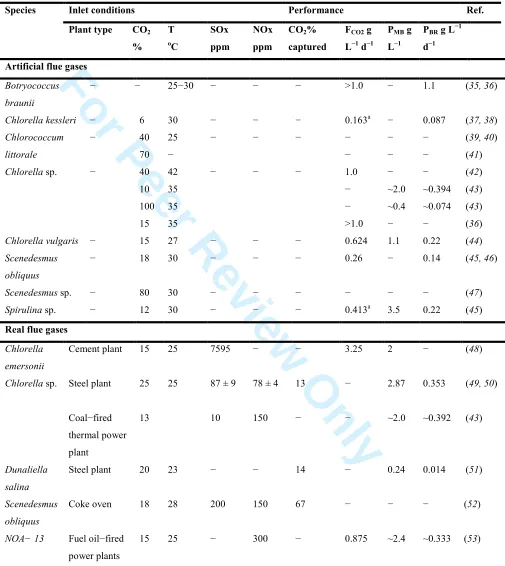
ther low and underfeeds microalgae. Using carbon dioxide from flue gases for microalgae alleviates the related environmental issues like global warming, and has the potential for cost reduction in biomass and biofuel production. Both artificial and real exhaust gases have been tested (Table 1).
Many microalgal species can fix high concentrations of CO2. As listed in Table 1, Botryococcus braunii, Chlorella kessleri, Chlorococcum littorale, Chlorella sp.,
Scenedesmus obliquus, Scenedesmus sp., and Spirulina sp. appear to have good potential
for CO2 sequestration. Spirulina sp. is one of the potential candidates with a high ability
for biomass production as well as carbon dioxide fixation (45, 54). When it was cultivat
ed at 30 °C in a three stage serial tubular photobioreactor (45), the maximum specific
growth rate, maximum productivity rate and maximum cell concentration were 0.44 d−1, 0.22 g L−1 d−1 and 3.50 g dry cell L−1, respectively, with both CO2 concentrations 6% and
12% (v/v). Yun et al.(44) cultivated a freshwater microalga, Chlorella vulgaris, in
wastewater discharged from a steel−making plant to remove ammonia from wastewater and CO2 from flue gas simultaneously. The high CO2 concentration of 15% in the simu
lated flue gas significantly improved the growth of the algae with a CO2 fixation rate of
26.0 g m−3 h−1 and an ammonia removal rate of 0.92 g m−3 h−1. Chlorococcum littorale, a
marine alga, exhibited spectacular tolerance to up to 40% of high CO2 concentration (55).
There are also some algae which can tolerate pure CO2 like Chlorella sp. but under these
conditions they show a limited growth rate (43, 47).
If the temperature of flue gases cool down to an appropriate range, microalgae can be directly exposed to the flue gases with moderate levels of SOx and NOx (up to 150 ppm) (56). Table 1 also gives some pilot practice of microalgae in CO2 sequestration
For Peer Review Only
from exhaust gases of various industrial plants, including coal−fired thermal power plant, oil−fired power plant, coke oven, cement plant, and steel plant. Compared with air, the growth rate of microalgae is enhanced indeed by the higher CO2 content in the flue gases.
A thermal− and CO2−tolerant mutant strain, Chlorella sp. MTF−7 was isolated and its
on−site bioremediation potential was studied by direct aeration with the flue gas (25% CO2) from a steel plant (49). The biomass concentration, and growth rate were 2.87 g L−1
and 0.52 g L−1 d−1, respectively.
Besides, some cyanobacteria also exhibit thermal− and/or CO2−tolerant behav
iours, such as Cylindrospermopsis raciborskii (57), Synechocystis sp. (58), Planktothrix
sp. (59), Spirulina platensis (54). Under high temperature with sufficient supply of nutri
ents, cyanobacteria are able to compete with other algal species and become the dominant one (57, 59). Cyanobacteria are capable of carrying out different strategies in response to
different CO2 levels (60, 61). At low CO2 levels, efficient CO2−concentrating mechanism
(CCM) would be aroused to elevate CO2 concentration in the vicinity of RuBisCO active
centers (Ribulose bisphosphate carboxylase oxygenase, a key enzyme for CO2 fixation).
At high CO2 levels, cyanobacteria would bloom by constitutively expressing both the
low− and high−affinity CO2 uptake genes, yet downregulating cmpA encoding the
high−affinity bicarbonate uptake system BCT1 (e.g.Microcystis) (60, 61).
More details about the application of microalgae in CO2 sequestration have been
discussed by several reviews (62, 63). However, the amount of fixed carbon is such an
important parameter that should be studied carefully. Most results show that only a rela tively low proportion (around 10−20%) of CO2 can be captured, which means 80−90% of
CO2 is released to the atmosphere (49, 51). This is mainly because most of the current
For Peer Review Only
photobioreactors cannot maintain a reactor CO2 residence time of around 4h that is re
quired for significant CO2 removal (64). As such, an ideal bioreactor should be designed
to reduce the CO2 release and enhance the CO2 sequestration efficiency. A double−set
photobioreactor system was developed and employed to culture Chlorella sp. MTF−7
with intermittent flue gas aeration (49). This reached up to 60% of average CO2 removal
efficiency, 70% and 50% of NO and SO2 removal efficiencies, respectively. A strain Scenedesmus obliquus (S. obliquus WUST4) mutated by UV was grown in a 100 L
air−lift photobioreactor to capture CO2 from a flue gas emitted from the combustion
chamber in a coke oven (52). The flue gas was composed of 18% CO2, 2% O2, 200 ppm
or below SOx, 150 ppm or below NOx. As a result, a very high CO2 removal efficiency
was reached (67%) under the optimal operation conditions.
2.2 Wastewater reclamation
Even though flue gases can supplement the limited atmospheric CO2, the growth of mi
croalgae still needs nitrogen, phosphorus, and other nutrients. Artificial addition of these nutrients from commercial market will increase the capital cost especially in a large scale cultivation (65). A solution to this is using wastewater to cultivate microalgae (66). Typi
cally, a wastewater contains rich nitrogen and/or phosphorus. Direct discharge of wastewater into a water body can result in severe eutrophication and even vital disorder of its ecosystem (67). The use of wastewater as a nutrient source seems to be an inevita
ble option when culturing microalgae for biofuel (65). This conserves the cost of nutri
ents and earns an extra benefit from wastewater purification.
For Peer Review Only
As displayed in Table 2, many microalgae species, such as Botryococcus brauinii, Chlorella, Nannochloris, Scenedesmus, Spirulina, can be used for wastewater treatment
to remove nutrients, heavy metals and organic carbon. Some of these microalgae have been grown for nutrient−removal (e.g. N/P) from artificial wastewater. Two nanoplank
tonic microalgal species, i.e. Nannochloris sp. and Scenedesmus intermedius Chod. iso
lated from different sources of pig manure, were studied for their growth rate, and nitro gen and phosphorus uptake (68). These autochthonous species exhibited excellent per
formance with respect to the N/P uptake rates, compared with the commercial species. For S. intermedius, the uptake rates of nitrogen and phosphorous were 0.022 mg h−1 and
0.014 mg h−1, respectively; whilst for Nannochloris sp., they were 0.011 mg h−1 and
0.006 mg h−1, respectively.
Real wastewaters, such as piggery wastewater, urban wastewater and wastewater treatment plant effluents, have also been tested for pollutant removal by microalgae. Sometimes, higher biomass productivity can be reached in wastewater than that in artifi cial media in laboratories. An et al. (69) cultivated Botryococcus braunii UTEX 572 in
pretreated piggery wastewater at 25oC with 1% of CO2, and obtained up to 80 % of nitro
gen removal with an extraordinary biomass productivity of 8.5 g L−1 and hydrocarbon level of 0.95 g L−1. It needs to be pointed out that the potential toxicity of wastewaters to microalgae should be pre−tested before being used for cultivation. If the wastewater con tains concentrated chemicals or exhibits toxicity to the growth of microalgae, a
pre−treated or dilution procedure is usually required. Olguín et al. (75) grew Spirulina
(Arthrospira) in swine wastewater in outdoor raceways with high concentration of nutri ents (1519 mg L−1 N and 620 mg L−1 P). The anaerobic effluents from digested pig waste
For Peer Review Only
were diluted with untreated seawater in a proportion of 2% (v/v), followed by freshwater (1:4) and supplemented with 2 g L−1 NaHCO3. The semi−continuous cultures produced
an average biomass productivity of 11.8 g m−2 d−1, with 84−96% and 72−87% of NH4−N
and P removals, respectively. Alternatively, tolerant and adapted microalgae can be screened naturally or isolated through a period of acclimation cultivation in wastewater,
e.g.Chlorella luteoviridis, Parachlorella kessleri (76). Chlorella is one of the genera that
can grow in a variety of wastewaters (77). For instance, a Chlorella isolate has shown
high tolerance and removal ability to polybrominated diphenyl ethers from wastewater treatment plants (78). Besides, Chlamydomonas mexicana has been found to be able to
degrade herbicide atrazine and thus, can be employed for the remediation of atrazine contaminated streams (79).
Microalgae have also been proposed as a promising tool to remove heavy metals, which are a common type of contaminants in industrial wastewater (80). The presence of
heavy metal ions in aquatic food chains can cause severe health problems for humans, such as damage to the nervous system (lead) and kidney (lead and cadmium), and car cinogenic (nickel). Considering the nutrient requirements for organisms, heavy metals can be divided into two groups: (1) essential but only at trace amount (e.g., Cr, Co, Cu,
As, Ni, Se, Va, and Zn); (2) highly poisonous without any known nutritional value (e.g.
Pb, Hg, Cd, Ur, Ag, and Be) (81). Conventional methods for removing metals from con
taminated waters (like reverse osmosis, electrodialysis, ultrafiltration, ion exchange, chemical precipitation and phytoremediation etc.) have drawbacks, such as high reagent
and energy requirements, generation of toxic sludge, and incomplete removal (82). In
contrast, using microalgae for heavy metal removal is an ecologically safer, cheaper, and
For Peer Review Only
more efficient means (82). Owing to the various benefits of using microalgae for heavy
metals removal, many studies have been carried out to explore this technology and its re search and development have been thoroughly reviewed, including the species selection, removal mechanisms as well as the influencing factors (80, 82, 83).
However, in suspension cultures the presence of microalgae as free cells makes them vulnerable to the native microorganisms already present in the wastewaters. It has been noted that the population of microalgae directly cultivated in unsterile wastewater may be significantly lower than that in sterile wastewater (84). Moreover, the harvest of
free microalgae cells from the wastewater or culture medium is another stubborn problem because of the small size of microalgae cells and the diluted cultures leading to a large capital expenditure (85). For these reasons, immobilization of microalgae in special mate
rials is drawing more attention with the attempt to solve these problems occurring in the suspension culture mode (see next section).
3. Promising technologies for unclogging bottlenecks
To date, there are several primary bottlenecks existing that inhibit the large scale indus trial application of microalgae, including low biomass conversion efficiency, bio invasion from external environment, limited or costly nutrient availability, and high harvest cost. For this reason, many researchers have developed various intelligent technologies with the attempt to unclog the bottlenecks and make it economically feasible. Bioreactor de sign like raceway pond, tubular photobioreactor and other photobioreactors is one method, which has been widely studied and not discussed here, but elsewhere (7, 86). Mixotrophic
For Peer Review Only
and heterotrophic cultivations are used to enhance biomass or lipids production due to the low efficiency in photoautotrophy. Immobilization is culturing algal cells on surfaces of special materials or in tiny enclosed environments to prevent bio invasion from other mi croorganisms and to easily harvest the cells. Co cultivation is culturing target microalga with other microalgal specie(s) or other microorganisms for nutrient complementation or bioflocculation.
3.1 Mixotrophic & Heterotrophic cultivation
Heterotrophy is using organic compounds for growth, without the need for light or inor ganic carbon; whist, mixotrophy is a combination of autotrophy and heterotrophy (87, 88).
Compared to autotrophy, heterotrophy can result in an extraordinary increase in biomass; mixotrophy usually lies between the two but the benefit of producing photosynthetic me tabolites remains (89). As such, mixotrophic and heterotrophic cultivation of microalgae
are employed to surmount bottlenecks of autotrophy, including limitation in CO2 availa
bility and light distribution, suppression by photosynthetic O2 in the medium, less effi
cient production, among others. This strategy allows the use of most industrial fermenters to produce high densities of microalgae cells, which is regarded as an economically fea sible method for large scale biomass production (90).
There are a variety of saccharides and other organic carbon sources that can be utilized by microalgae, such as glucose, glycerol, and acetate. Among saccharides, mono saccharides are more frequently used than disaccharides. Particularly, glucose is the most common carbon source for the majority of heterotrophic algae, followed by galactose and fructose. With glucose, higher rates of growth and respiration are obtained than with any
For Peer Review Only
other substrate like acetate, which may be owing to the higher energy it can produce (~2.8 KJ mol− 1) than acetate (~0.8 KJ mol− 1) (91). Although acetate is also a common
carbon source (e.g. for Chlamydomonas reinhardtii) and has the effect of buffering high
pH levels in the culture, its high concentrations could be toxic for many microorganisms (92), indicating that fed batch cultivation at a low level of acetate is a good choice. In
contrast, glycerol, which is an osmoticum that keeps the osmotic equilibrium in cells, ex hibits almost no toxic effects on many species even at high concentrations (e.g. 5 g L− 1),
such as Neochloris oleabundans, Botryococcus braunii, Dunaliella sp. and Scenedesmus
sp. (93, 94). Similar to acetate for C.reinhardtii, strains in genus Chlorella also had a
wide variation in response to glycerol, which can be explained by phylogenetic analysis that showed high diversity within the Chlorophyta phylum (95). This diversity implies
that a desired strain is possible to be screened out or domesticated for a specific organic compound, especially when it is used for wastewater treatment that supplies cheap carbon sources (95, 96).
Apart from carbon, nitrogen is another important element that can contribute from 1 to 10% dry weight to microalgal cells (90). Nitrogen plays a critical role on microalgal
metabolism, and various nitrogen sources have been tested, mainly including nitrate, ammonium, urea, among others. Nitrate is a primary source of nitrogen and can be assim ilated by most algae. The assimilation of nitrate requires reduction to ammonia and large amounts of energy, accompanied with an increase in pH (97). Ammonium is also a pre
ferred nitrogen form for algae because its assimilation does not involve a redox reaction leading to less energy consumption (98, 99). Nitrate seems to be friendlier to microalgae
than ammonium as high concentration of nitrate does not show toxicity to cells, but am
For Peer Review Only
monium does (100). Toxicity of high ammonium concentration in algal culture can be
caused by both the unionized ammonia (NH3) and the ionized ammonium (NH4+), which
can result in remarkable disturbances to both extracellular and intracellular pH, and cause damages like pigment degradation and even cell lysis (101). In general, the declining or
der of tolerance was found to be: Cyanophyceae > Diatomophyceae > Raphidophyceae > Prymnesiophyceae > Dinophyceae (101). Urea is considered to be a low cost and effi
cient nitrogen source for algal growth as urea contains approximately 46.7% nitrogen content. Urea and other organic nitrogen like amino acids (e.g. glutamine) have been re
ported to have a positive influence in the growth of some species, such as Chlorella sp., Coccomyxa acidophila and Chlorella variabilis (102 104).
Microalgal preference for a nutrient is not only algae dependent but also affected by other nutrients. Selection of a nitrogen source can be affected by the carbon source used because their metabolisms are intimately associated (90). For example, It is worth
noting that the uptake rates of ammonium could be improved by the addition of acetate under mixtrophic regimen, but not under heterotrophic conditions (105).
Although mixotrophic and heterotrophic growth of microalgae can produce higher biomass or lipids than autotrophic growth, they also have several major limitations, in cluding (a) less species for heterotrophy, (b) higher costs associated with the addition of organic substrate, (c) contamination and competition with other microbes, (d) inhibited growth by excess organic substrate, (e) loss of some autotrophic metabolites, and (f) deeper footprint on environment by increased wastes (89). If a suitable species can be
found, then wastewater should be given a priority as a low cost nutrient source. Perez Garcia et al. pointed out that using microalgae for wastewater treatment followed by bio
For Peer Review Only
fuel production from the produced biomass might offer a strategy to overcome some limi tations of these mixotrophic and heterotrophic technologies, making them economically acceptable (90). Otherwise, applying the co culture system of microalgae and bacteria
under heterotrophic conditions could give even higher potential for wastewater treatment and/or biofuel production (see section 3.3 Co culture) (106).
3.2 Immobilized systems
By being fastened in biological or inert matrices, immobilized microalgae (or other mi croorganisms) can also be used to remove nutrients, heavy metals and other industrial pollutants (107, 108). Six types of immobilization have been developed: adsorption, af
finity immobilization, covalent coupling, confinement in liquid−liquid emulsion, capture behind semi−permeable membrane, and entrapment (109). Generally, the immobilization
process consists of two steps: I) mixing the microbial suspension with macromolecule monomers of polymer; II) solidifying the mixture to form a polymeric gel with diverse shapes (24). Although natural polymers (e.g. algal polysaccharides, chitosan) are less sta
ble in wastewater than synthetic polymers (acrylamide, polyurethane, polyvinyl, resins), the most popular polymers used are the natural polymers alginate and carrageenan (110, 111). There are two types of algal immobilization in the treatment of wastewater, i.e.
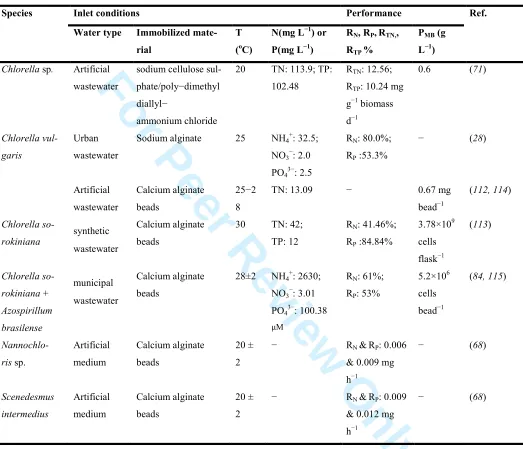
immobilized in alginate films on polyester mesh and encapsulated in alginate beads. Immobilization of microalgae in the treatment of wastewater has been reviewed by several articles (24, 111) and the advances in this area since 2010 is updated in Table
3. Immobilized microalgae can have higher nutrient removal rate than free cells but the leakage of cells to the medium is a common issue (112). This problem depends on the
For Peer Review Only
material of capsules and can be overcome by using sodium cellulose sulphate/poly dimethyl diallyl ammonium chloride (NaCS−PDMDAAC) (71). Immobilization usually
has a disadvantage of lower biomass productivity. This is because the entrapped microal gal cells in the capsules are exposed to a higher pressure, weaker mass transfer, and high er viscosity environment than free cells and thus, require more energy and nutrient to maintain normal physiology (71). An exception has been reported where compared with
free cells, the immobilized Chlorella sorokiniana GXNN 01 in alginate had not only sim
ilar biomass productivity but also higher removal efficiencies of both ammonium and phosphate under different conditions especially micro−aerobic condition (113).
With improved techniques, immobilization in alginate beads becomes one of the most popular methods enabling high density cultivation, which is not affected by the thickness of beads and the supply of CO2. For instance, Botryococcus braunii (Kützing)
and Chlorellavulgaris (Beijerinck) were entrapped in low−sodium silica gels in a novel
photosynthetic CO2 bioconvertor for CO2 assimilation (116). The mesoporosity of the
hybrid gels enabled diffusion of both nutrients and gases. Although there are still scarce investigations in using this technique for CO2 mitigation or other applications, the poten
tial capacity for this purpose can be envisioned.
Immobilization in polymers poses an extent of pressure on microalgae and their metabolism. Nevertheless, many benefits have been observed for the entrapped microal gae, including resistances to aggressive zooplankton or other undesirable organisms, im provements in cellular function and behavior, no secondary pollution (environmentally friendly), no filtration of the treated wastewater, resistances to toxic compounds, and co−immobilization with other microorganism for different purposes (24, 84, 117).
For Peer Review Only
3.3 Co culture
Over the last decade, more and more researchers have diverted their attention from single cell cultures to co culture systems of microalgae and other microorganisms to explore novel strategies. This is because many expected and unexpected benefits can be obtained
via the interaction between the microorganisms in the system, even though it is usually
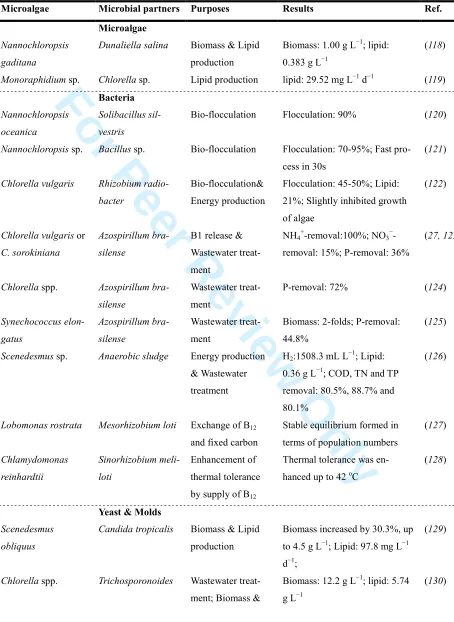
very complicated and difficult to untangle. The objective of the mixed culture is mainly based on the complementation of each member of the consortium to form a symbiosis, by using one species to produce renewable and low cost nutrients, to improve the production of specific bioproducts (like biomass, lipid or pigments), or to harvest the other, as shown in Table 4.
On the basis of the microbial type, there are three major groups that can be de fined, namely microalgae, bacteria, yeast and molds (106). Co cultivation of more than
two microalgal species is primarily carried out to produce more lipids or biomass (118, 119). One of the species is usually oleaginous and its lipid productivity is largely caused
by the more biomass produced, because the lipid content (%) in co culture system is not the highest, compared to mono cultures. For example, the lipid content (%) in the co culture of Chlorella sp. and Monoraphidium sp. (47.79%) is higher than that in the mono
culture of Chlorella sp. (32.03%), but lower than that in the mono culture of Mono
raphidium sp. (51.72%) (119). Owing to the higher biomass productivity of the co culture
(62 mg L− 1 d− 1) than that of the two mono cultures (58.4 and 35.60 mg L− 1 d− 1, respective
ly), its eventual lipid productivity was also higher than that of the two monocultures. It
For Peer Review Only
indicates that the photosynthetic efficiency of the co culture was higher, with a fast con sumption of nutrients for growing biomass leading to an earlier arrival of stationary phase. However, it was observed that high density of Chlorella sp. suppressed the growth
of Monoraphidium sp. over the entire experimental period (119). Admittedly, there must
be some beneficial effects of each member of the co culture to each other, but this strate gy of co cultivation of two (at least) microalgal species should be carefully considered and verified because they are nutrient competitors.
Generally, the principle of co culture between microalgae and other microorgan isms is based on no inhibition on each other at first, then cooperation with complemen tary functions. One kind of cooperation is using a microorganism for harvesting microal gae. Conventional harvesting can account for up to 50% of the total cost of biodiesel pro duction, making it unfeasible for the microalgal industry due to the increased energy re quirements and the addition of chemicals (131). For this reason, bacteria (e.g.Solibacillus silvestris and Bacillus sp.) and yeast (Aspergillus fumigatus) have been employed to func
tion as bio flocculants to harvest microalgal cells (120 122, 131). The flocculation effi
ciency varies from 50 to 90% with a time course from 10 days to 30 s. However, when microalga was co cultivated under heterotrophic conditions, competition and growth in hibition were observed especially for long term co cultivation (122).
For Peer Review Only
Photoautotrophic microalgae can supply photosynthetic O2, fixed carbon for bac
teria, yeasts and molds, which returns with respiratory CO2, vitamins and minerals etc.
Moreover, this kind of cooperation forms a robust team especially for wastewater recla mation: microalgae are able to remove nitrogen and phosphorous nutrients; whist the oth ers are efficient to degrade chemical oxygen demand (COD) (27, 124, 125). For example,
de Bashan et al. co cultivated Chlorella vulgaris or Chlorella sorokiniana with Azospiril lum brasilense in a wastewater collected from a municipal wastewater treatment plant,
reaching removal of up to 100% ammonium, 15% nitrate, and 36% phosphorous within 6 days, plus enhanced growth of microalgae (27). The phosphorous removal could be fur
ther improved up to 72% by starvation of algae in a saline solution for several days (124).
Bacteria of the genus Azospirillum are well known plant growth promoting bacteria
(PGPB) used as inoculants for control of phytopathogens and for plant growth promotion, which has been also found to be microalgae growth promoting bacteria (MGPB) (27, 124, 125).
4. Integrated applications
Investigation of a single application of microalgae is conceivable in specific cases but unlikely to be sustainable and economically feasible when taken into practice. Culturing microalgae for CO2 sequestration or wastewater reclamation takes the role as an “envi
ronmental detergent”, but without appropriate control and management the produced bi omass will be a second pollutant. Likewise, culturing microalgae simply for biofuel pro duction provides a renewable energy source with a potential to replace the traditional fos sil fuel in the future, but using artificial and commercial nutrients is not sustainable.
For Peer Review Only
Therefore, a microalgae−based “N−dimensional” combination of various applications is required, where N stands for the number of applications connected. To reduce the algae cultivation costs and sufficiently utilize the produced microalgae biomass, it is better to combine the upstream application (wastewater/exhaust gas treatment) with the down stream application (biofuel production). For this reason, Table 5 shows the integrated sys tems but does not involve the integration of CO2 sequestration and wastewater treatment,
both of which are the upstream applications.
Many researchers have conducted two−dimensional combination, between biofuel production and CO2 sequestration or wastewater treatment (Table S1), although the per
formance varies over species. Dunaliella tertiolecta can be a good candidate as a CO2
capturer and simultaneously a biofuel producer (147). Under high saline condition with
out sterilization, its CO2 fixation rate, productivity of maximum biomass and productivity
rate of biomass were 0.313 g L−1 d−1, 2.3 g L−1 and 0.17 g L−1 d−1, respectively (147). Be
sides, this species contained 10% (w/w) of glycerol and the produced oil by ther
mo−chemical liquefaction was 36% (w/w). The rich nutrients in the wastewater appear to be not in favor of lipid accumulation that is widely found under nitrogen−deficient condi tions (148). Therefore, post treatment is usually required to induce lipid accumulation.
Alternatively, wastewater can still be used to grow lipid deficient microalgae but with high biomass productivity for other biofuel production such as biogas and bio oil, among others. For this purpose, fast accumulation of biomass rather than lipids becomes the first priority enabling mixed cultivation of different microalgal species in wastewater. Passos et al (149) cultivated several microalgae, including Monoraphidium sp, Stigeoclo nium sp., Scenedesmus sp. and Nitzchia sp., in a high rate algal pond for secondary treat
For Peer Review Only
ment of domestic wastewater. The biomass was harvested for anaerobic digestion in con tinuous anaerobic reactors, yielding 0.12 0.14 L CH4/L day of the methane production
rate. A microwave pretreatment enhanced the methane yield by 30% at 15 days HRT (hydraulic retention time) and 58% at 20 days HRT, but also increased the energy con sumption. Another mixed culture algae from wastewater was used as feedstock of hydro thermal liquefaction for bio crude oil production (150).
Clear purpose for three−dimensional combination of CO2 sequestration,
wastewater treatment and biofuel production is rarely seen in the literature. If assuming that all microalgae used in the two dimensional combination of CO2 sequestration and
wastewater treatment contain a specific amount of lipids, the content still needs to be pre sent for helping the selection of ideal species. Table 6 also displays a few examples in this type of three dimensional combination. A consortium of 15 native algae were cul tured at 6% of CO2 in a wastewater composed of 85−90% carpet industry effluents and
10−15% municipal sewage (140). Most of the nutrients were removed (>96%) with rela
tively lower lipid content of 6.82%. In contrast, Nannochloropsis seems to be a desirable
species of efficient capability in these three aspects (139). By growing Nannochloropsis
sp. in the municipal wastewater at high CO2 concentration of 15%, the maximum produc
tivity of biomass and the lipid content reached as high as 2.23 g L−1and around 60% (w/w), respectively.
It needs to be pointed out that microalgae have wide applications in various fields. The number of applications is more than the three combinations discussed above, includ ing fields such as productions of valuable chemicals for human/animal nutrients. Never theless, the practical adoption of application should take the local conditions and re
For Peer Review Only
quirements into account. The local properties include weather/climate conditions (e.g.
sunlight, temperature, arid or rainy), water types (freshwater or seawater), nutrient source availability (e.g. carbon, either gaseous CO2 or aquatic carbonate or organic carbon), ni
trogen and phosphorus (artificial or waste water, what type if wastewater). A critical basic notion of microalgae−based application should be considered: “LECEM”, short for Locality adapted, Environment−friendly, Cost−minimized, Efficiency−maximized and Mass−maximum utilized. From this viewpoint, a four−dimensional combination of mi croalgal application is proposed in Figure 1. This integration is composed of using flue gas as the rich CO2 source, using wastewater as the rich nutrient source, bio−H2 collec
tion and/or extraction of lipids and/or other valuable compounds, and the production of biomethane or bioethanol or others like PHA from the biomass waste or residues.
In general, the product biomass is given priority to extract valuable products, and then the residue of biomass is used to generate other biofuel like biogas or bio fertilizers. This two stage of separating products maximizes the utilization of biomass that is also supported by the life cycle analysis (151). Not limited by this, when wastewater also con
tains other nutrients such as organic chemicals, these chemicals may be utilized by mi croalgae via heterotrophy (152). A bigger system if allowed can also be expanded to
combine autotrophic and heterotrophic or even mixotrophic microalgae cultivation.
5. Life cycle analysis
Life cycle analysis or assessment (LCA) is a technique used to assess the environmental impacts caused by all the stages of a service or product’s life according to the ISO14040
For Peer Review Only
standard, therefore which is also called as cradle to grave analysis (153). The analysis
should engage all of the relevant energy and material inputs, environmental releases, and evaluate the potential impacts. LCA has become a fundamental element in designing a microalgae system and pipeline towards the end product.
Since microalgae are widely accepted as a promising candidate in various fields, many LCA have been carried out especially in recent years. An environmental LCA was conducted to compare algae with other biofuel feedstocks including corn, switchgrass and canola (154). By using a stochastic life cycle model, algae perform favorably in total land
required and eutrophication potential but exhibit higher environmental impacts than the conventional crops in greenhouse gas emissions, energy and water use. The incorporation of flue gas and wastewater treatment seems to be inevitable to offset the cost burdens and to reduce the large environmental footprint of algae cultivation. In a study, integrating microalgae systems at municipal wastewater treatment plants for energy production has been proved to considerably improve the energy balance (155). An analysis of water
types, operation with or without recycling, algal species and geographic distributions in the US revealed the water footprint of biodiesel production (156). Under freshwater with
out recycling, 0.33 Kg N and 0.71 Kg P per Kg biodiesel are required. The water and nu trients usage can be reduced by 84% and 55%, respectively, when recycling the harvested water. A significant reduction in water requirement of up to 90% was obtained with total elimination of nutrients except P using sea/wastewater. Another LCA evaluates the envi ronmental influence of wastewater based algal biofuels (157). Of 16 pathways examined
by combining different nutrient sources (municipal wastewater, centrate from the sludge drying process, swine manure, and freshwater) and several biomass conversion technolo
For Peer Review Only
gies (microwave pyrolysis, combustion, wet lipid extraction, and hydrothermal liquefac tion), only the centrate cultivation with wet lipid extraction pathway and the centrate cul tivation with combustion pathway have smaller footprints than petroleum diesel in all en vironmental categories examined (fossil fuel use, greenhouse gas emission, eutrophica tion potential, and consumptive water use). Before biofuel production, however, down stream dewatering operations under optimal economy are very important for large scale processing. Co cultivation with some special microorganisms like bacteria or fungi ap pears to be a good strategy for bioflocculation. This was demonstrated by a recent LCA that by using bioflocculation coupled with flow filtration, total energy input of 0.041 kWh, 0.05 kg CO2 and a cost of $ 0.0043 for producing 1 kg of microalgae biomass were
achieved (158).
An LCA study in biodiesel production from microalgae in ponds under Australian conditions showed lower GHG emission by algae ( 27.6 ~ 18.2 g CO2 e/t km) than that
by canola (35.9 g CO2 e/t km) and ULS diesel (ultra low sulfur, 81.2 g CO2 e/t km) (159).
However, the cost of algae is not favorable (2.2 ~ 4.8 /t km) compared with canola (4.2 /t km) and ULS diesel (3.8 /t km). This indicates that culturing microalgae simply for bio diesel production without considering the cost of energy and fertilizer input is not eco nomically feasible. Jorquera et al. (160) conducted an energy LCA for biomass produc
tion by culturing the oil rich microalgae, Nannochloropsis sp. in open ponds and photo
bioreactors. The obtained net energy ratio (NER, energy outputs divided by energy inputs) indicated that flat plate photobioreactors (PBR) and raceway ponds (both NER > 1) are more economically feasible than horizontal tubular PBR (NER < 1).
For Peer Review Only
Using algae for biodiesel production is more suitable for oleaginous species. For lipid limited species but with a fast growth rate, the energy content of algal biomass can be regarded as an alternate to lipid extraction and biodiesel production. An analysis was undertaken for energy balance of microalgal production in open ponds coupled with nu trient removal from wastewater (161). The results show that even without an energy cred
it for nutrient removal, culturing algae in open pond reactors for biofuel production is still energetically favorable when utilizing wastewater as a nutrient source. If the lipid content of dry biomass (e.g. 10%) is lower than the ideal scenario in lab scale reactors (50 60%),
direct combustion of algal biomass seems to be a more viable energy source than bio diesel production (161). Net energy conversion efficiencies for biomass combustion pow
er are usually in the range of 20 40% (162). A higher efficiency can be obtained in larger
systems or when biomass is co combusted in coal fired power plants (162). An LCA of
coal algae co firing demonstrated that coal algae co firing could reduce GHG emissions and air pollution (163). Alternatively, the produced biomass can be converted to bio jet
fuel via hydrothermal liquefaction (HTL) and its LCA study presents a reduction of 76%
in GHG emissions by sitting HTL at a wastewater treatment plant compared to conven tional jet fuel (164).
There is another interesting LCA study performed to study the biogas production from microalgae (151). The authors found that the impacts formed by the production of
methane strongly depend on the electric consumption. Nevertheless, great progress can be achieved by decreasing mixing costs, or by combining lipid extraction from biomass with methane production from the biomass residue. It needs to be noted that these LCAs still do not include the profit earned from the CO2 sequestration, which will definitely further
For Peer Review Only
increase the economic feasibility of the microalgae based application. Besides, results from LCA studies are recognized to be largely inconclusive because modeling assump tions and system boundaries, the basis of LCA, are diverse (165). This issue can be
solved by model normalization with a generic pathway, the results of which show that algae based biodiesel is on par with existing biofuel options (e.g. corn ethanol, soy bio
diesel) in energy consumption and GHG emissions (165). Lack of comprehensive uncer
tainty analysis is another drawback in many LCA studies (166). A Monte Carlo approach
can be employed to estimate ranges of expected values of LCA metrics by incorporating parameter variability with empirically specified distribution functions (166). Sills et al
suggest that reporting results from LCA models as ranges, instead of single values, will more reliably inform industry and policy makers on expected energetic and environmen tal performance of algae based biofuels (166).
6. Conclusions
This article primarily reviews the microalgal biotechnologies for both biofuel pro duction and environmental treatment. The algae based biofuel production is limited by many drawbacks especially the high energy and cost inputs. Owing to the limited bio mass conversion efficiency of photosynthetic microalgae, the major problem of CO2 se
questration is that most of CO2 (80 90%) escapes to the air. To reduce the amount of es
cape, intermittent aeration may be needed and particular bioreactor should be designed to elongate the retained period of gases. Alternatively, gaseous CO2 can be converted to bi
/carbonates and stored in an alkali solution. The high content of CO in flue gases maybe
For Peer Review Only
not a problem for many species, but other components like SO2/NO may exhibit toxicity
to algal cells or change the culture pH. Wastewater contains a variety of inorganic salts
e.g. NO3/NH4+/PO43 that can be used as microalgal nutrients. It has been found that
some special microalgae can also biodegrade particular organic compounds like herbicide atrazine. Besides, the efficiency of heavy metal removal significantly depends on the mi croalgal species.
Several intelligent technologies have been developed to solve the current bottlenecks, mainly including immobilization, mixotropic and heterotrophic cultivation, and co
cultivation. Immobilization of algal cells on special material surface or in tiny environ ments can enhance growth rate, prevent bio invasion from other microorganisms and simplify the harvest process. Mixotrophic and heterotrophic cultivations can enhance bi omass or lipids production, compared to photoautotrophy, but the organic nutrients will increase the cost unless a cheap source is available. Co cultivation with other microalgae or microbes can help the harvest of cells via bioflocculation and forms a symbiosis for
nutrient complementation. Admittedly, these techniques also have their own limitations, and their seamless coupling with other techniques still needs more researches and verifi cation.
When building a microalgal cultivation system, species screening and applications adopted should take the basic “LECEM” principle into account at least. To date, most of the evidences and LCA studies have approved an integrated system of combining various algal applications but a flexible and different combination is allowed depending on the local requirements. As has been predicted (167), microalgae will have enormous potential
For Peer Review Only
if microalgal systems are developed by coupling bioenergy and product diversity with improved efficiency in biorefinery concepts.
Acknowledgement
We gratefully acknowledge SOA Fundamental Research Funds (HE160302 16(2)), China Postdoctoral Science Foundation (2016M602055), Xiamen Science and Technology Pro gram (3502Z20161162) and "13th Five Year" Xiamen National Marine Economic Inno vation Development Demonstration (16CZP017SF06) for the funding support that made this work possible.
For Peer Review Only
Reference
1. D’Alessandro EB, Antoniosi Filho NR, Concepts and studies on lipid and pigments of microalgae: A review. Renewable and Sustainable Energy Reviews 2016; 58: 832 841.
2. Choix FJ, de Bashan LE, Bashan Y, Enhanced accumulation of starch and total carbohydrates in alginate immobilized Chlorella spp. induced by Azospirillum brasilense: II. Heterotrophic
conditions. Enzyme and Microbial Technology 2012; 51: 300 309.
3. Simon DP, Anila N, Gayathri K, Sarada R, Heterologous expression of β carotene hydroxylase in
Dunaliella salina by Agrobacterium mediated genetic transformation. Algal Research 2016; 18: 257 265.
4. Guedes A, Amaro HM, Malcata FX, Microalgae as sources of high added value compounds—a brief review of recent work. Biotechnology Progress 2011; 27: 597 613.
5. Pulz O, Gross W, Valuable products from biotechnology of microalgae. Applied Microbiology and Biotechnology 2004; 65: 635 648.
6. Mata TM, Martins AA, Caetano NS, Microalgae for biodiesel production and other applications: A review. Renewable and Sustainable Energy Reviews 2010; 14: 217 232.
7. Chisti Y, Biodiesel from microalgae. Biotechnology Advances 2007; 25: 294 306.
8. Sendra M, Sánchez Quiles D, Blasco J, Moreno Garrido I, Lubián LM, Pérez García S, Tovar Sánchez A, Effects of TiO2 nanoparticles and sunscreens on coastal marine microalgae: Ultraviolet
radiation is key variable for toxicity assessment. Environment International 2017; 98: 62 68. 9. Bengtson S, Belivanova V, Rasmussen B, Whitehouse M, The controversial “Cambrian” fossils of
the Vindhyan are real but more than a billion years older. Proceedings of the National Academy of Sciences 2009; 106: 7729.
10. Chen CH, Berns DS, Comparison of the stability of phycocyanins from thermophilic, mesophilic, psychrophilic and halophilic algae. Biophysical Chemistry 1978; 8: 203 213.
11. Peters GP, Marland G, Le Quéré C, Boden T, Canadell JG, Raupach MR, Rapid growth in CO2
emissions after the 2008 2009 global financial crisis. Nature Climate Change 2012; 2: 2 4. 12. Ravishankara AR, Rudich Y, Pyle JA, Role of Chemistry in Earth’s Climate. Chemical Reviews
2015; 115: 3679 3681.
13. Balat M, Balat H, Recent trends in global production and utilization of bio ethanol fuel. Applied Energy 2009; 86: 2273 2282.
14. Chisti Y, Biodiesel from microalgae beats bioethanol. Trends in Biotechnology 2008; 26: 126 131. 15. Torzillo G, Scoma A, Faraloni C, Giannelli L, Advances in the biotechnology of hydrogen production with the microalga Chlamydomonas reinhardtii. Critical Reviews in Biotechnology 2015; 35: 485 496.
For Peer Review Only
16. Elsayed S, Boukis N, Patzelt D, Hindersin S, Kerner M, Sauer J, Gasification of Microalgae Using Supercritical Water and the Potential of Effluent Recycling. Chemical Engineering & Technology 2016; 39: 335 342.
17. John RP, Anisha G, Nampoothiri KM, Pandey A, Micro and macroalgal biomass: a renewable source for bioethanol. Bioresource technology 2011; 102: 186 193.
18. Cho S H, Kim K H, Jeon YJ, Kwon EE, Pyrolysis of microalgal biomass in carbon dioxide environment. Bioresource Technology 2015; 193: 185 191.
19. "Sustainable Development of Algal Biofuels," (USA National Academy of Sciences, NW Washington, http://www.nap.edu, 2012).
20. Serrenho AC, Mourão ZS, Norman J, Cullen JM, Allwood JM, The influence of UK emissions reduction targets on the emissions of the global steel industry. Resources, Conservation and Recycling 2016; 107: 174 184.
21. Ondrey G, Progress to Limit Climate Change. Chemical Engineering 2016; 123: 16 19.
22. Chisholm JR, Fernex FE, Mathieu D, Jaubert JM, Wastewater discharge, seagrass decline and algal proliferation on the Cote d'Azur. Marine Pollution Bulletin 1997; 34: 78 84.
23. Ansari AA, Gill SS, Khan FA, Naeem M, in Eutrophication: Causes, Consequences and Control.
(Springer, 2011), pp. 239 248.
24. de Bashan LE, Bashan Y, Immobilized microalgae for removing pollutants: review of practical aspects. Bioresource Technology 2010; 101: 1611 1627.
25. Zhu L, Wang Z, Shu Q, Takala J, Hiltunen E, Feng P, Yuan Z, Nutrient removal and biodiesel production by integration of freshwater algae cultivation with piggery wastewater treatment. Water Research 2013; 47: 4294 4302.
26. Abdelaziz AE, Leite GB, Belhaj MA, Hallenbeck PC, Screening microalgae native to Quebec for wastewater treatment and biodiesel production. Bioresource Technology 2014; 157: 140 148. 27. de Bashan LE, Hernandez J P, Morey T, Bashan Y, Microalgae growth promoting bacteria as
“helpers” for microalgae: a novel approach for removing ammonium and phosphorus from municipal wastewater. Water Research 2004; 38: 466 474.
28. Ruiz Marin A, Mendoza Espinosa LG, Stephenson T, Growth and nutrient removal in free and immobilized green algae in batch and semi continuous cultures treating real wastewater. Bioresource technology 2010; 101: 58 64.
29. Perez Garcia O, Bashan Y, in Algal Biorefineries: Volume 2: Products and Refinery Design, A.
Prokop, R. K. Bajpai, M. E. Zappi, Eds. (Springer International Publishing, Cham, 2015), pp. 61 131.
30. Williams PJlB, Laurens LML, Microalgae as biodiesel & biomass feedstocks: Review & analysis of the biochemistry, energetics & economics. Energy & Environmental Science 2010; 3: 554 590.
For Peer Review Only
31. Ajeej A, Thanikal JV, Narayanan CM, Kumar RS, An overview of bio augmentation of methane by anaerobic co digestion of municipal sludge along with microalgae and waste paper. Renewable and Sustainable Energy Reviews 2015; 50: 270 276.
32. Ruiz J, Olivieri G, de Vree J, Bosma R, Willems P, Reith JH, Eppink MHM, Kleinegris DMM, Wijffels RH, Barbosa MJ, Towards industrial products from microalgae. Energy & Environmental Science 2016; 9: 3036 3043.
33. Li Y, Horsman M, Wu N, Lan CQ, Dubois Calero N, Biofuels from microalgae. Biotechnology Progress 2008; 24: 815 820.
34. Bilanovic D, Andargatchew A, Kroeger T, Shelef G, Freshwater and marine microalgae sequestering of CO2 at different C and N concentrations – Response surface methodology analysis.
Energy Conversion and Management 2009; 50: 262 267.
35. Wang T H, Chu S H, Tsai Y Y, Lin F C, Lee W C, Influence of inoculum cell density and carbon dioxide concentration on fed batch cultivation of Nannochloropsis oculata. Biomass and
Bioenergy 2015; 77: 9 15.
36. Murakami M, Ikenouchi M, The biological CO2 fixation and utilization project by rite (2) —
Screening and breeding of microalgae with high capability in fixing CO2 —. Energy Conversion
and Management 1997; 38: S493 S497.
37. de Morais MG, Costa JAV, Isolation and selection of microalgae from coal fired thermoelectric power plant for biofixation of carbon dioxide. Energy Conversion and Management 2007a; 48: 2169 2173.
38. Kasiri S, Abdulsalam S, Ulrich A, Prasad V, Optimization of CO2 fixation by Chlorella kessleri
using response surface methodology. Chemical Engineering Science 2015; 127: 31 39.
39. Iwasaki I, Hu Q, Kurano N, Miyachi S, Effect of extremely high CO2 stress on energy distribution
between photosystem I and photosystem II in a high CO2 'tolerant green alga', Chlorococcum
littorale and the intolerant green alga Stichococcus bacillaris. Journal of Photochemistry and
Photobiology B: Biology 1998; 44: 184 190.
40. Ota M, Takenaka M, Sato Y, Smith RL, Inomata H, Variation of photoautotrophic fatty acid production from a highly CO2 tolerant alga, Chlorococcum littorale, with inorganic carbon over
narrow ranges of pH. Biotechnology Progress 2015; 31: 1053 1057.
41. Ota M, Kato Y, Watanabe H, Watanabe M, Sato Y, Smith Jr RL, Inomata H, Effect of inorganic carbon on photoautotrophic growth of microalga Chlorococcum littorale. Biotechnology Progress
2009; 25: 492 498.
42. Sakai N, Sakamoto Y, Kishimoto N, Chihara M, Karube I, Chlorella strains from hot springs
tolerant to high temperature and high CO2. Energy Conversion and Management 1995; 36: 693
696.
43. Maeda K, Owada M, Kimura N, Omata K, Karube I, CO2 fixation from the flue gas on coal fired
thermal power plant by microalgae. Energy Conversion and Management 1995; 36: 717 720.
For Peer Review Only
44. Yun YS, Lee SB, Park JM, Lee CI, Yang JW, Carbon dioxide fixation by algal cultivation using wastewater nutrients. Journal of Chemical Technology and Biotechnology 1997; 69: 451 455. 45. De Morais MG, Costa JAV, Biofixation of carbon dioxide by Spirulina sp. and Scenedesmus
obliquus cultivated in a three stage serial tubular photobioreactor. Journal of Biotechnology 2007;
129: 439 445.
46. Bagchi SK, Mallick N, Carbon dioxide biofixation and lipid accumulation potential of an indigenous microalga Scenedesmus obliquus (Turpin) Kützing GA 45 for biodiesel production.
RSC Advances 2016.
47. Hanagata N, Takeuchi T, Fukuju Y, Barnes DJ, Karube I, Tolerance of microalgae to high CO2
and high temperature. Phytochemistry 1992; 31: 3345 3348.
48. Borkenstein CG, Knoblechner J, Frühwirth H, Schagerl M, Cultivation of Chlorella emersonii
with flue gas derived from a cement plant. Journal of Applied Phycology 2011; 23: 131 135. 49. Chiu SY, Kao CY, Huang TT, Lin CJ, Ong SC, Chen CD, Chang JS, Lin CS, Microalgal biomass
production and on site bioremediation of carbon dioxide, nitrogen oxide and sulfur dioxide from flue gas using Chlorella sp. cultures. Bioresource Technology 2011; 102: 9135 9142.
50. Mortensen LM, Gislerød HR, The growth of Chlorella sorokiniana as influenced by CO2, light,
and flue gases. Journal of Applied Phycology 2016; 28: 813 820.
51. Zimmerman WB, Zandi M, Hemaka Bandulasena H, Tesar V, James Gilmour D, Ying K, Design of an airlift loop bioreactor and pilot scales studies with fluidic oscillator induced microbubbles for growth of a microalgae Dunaliella salina. Applied Energy 2011; 88: 3357 3369.
52. Li FF, Yang ZH, Zeng R, Yang G, Chang X, Yan JB, Hou YL, Microalgae capture of CO2 from
actual flue gas discharged from a combustion chamber. Industrial & Engineering Chemistry Research 2011; 50: 6496 6502.
53. Yoshihara KI, Nagase H, Eguchi K, Hirata K, Miyamoto K, Biological elimination of nitric oxide and carbon dioxide from flue gas by marine microalga NOA 113 cultivated in a long tubular photobioreactor. Journal of Fermentation and Bioengineering 1996; 82: 351 354.
54. Chen H W, Yang T S, Chen M J, Chang Y C, Eugene I, Wang C, Ho C L, Lai Y J, Yu C C, Chou J C, Purification and immunomodulating activity of C phycocyanin from Spirulina platensis cultured using power plant flue gas. Process Biochemistry 2014; 49: 1337 1344.
55. Iwasaki I, Hu Q, Kurano N, Miyachi S, Effect of extremely high CO2 stress on energy distribution
between photosystem I and photosystem II in a high CO2 tolerant green alga, Chlorococcum
littorale and the intolerant green alga Stichococcus bacillaris. Journal of Photochemistry and
Photobiology B: Biology 1998; 44: 184 190.
56. Matsumoto H, Hamasaki A, Sioji N, Ikuta Y, Influence of CO2, SO2 and NO in flue gas on
microalgae productivity. Journal of Chemical Engineering of Japan 1997; 30: 620 624.
57. Thomas MK, Litchman E, Effects of temperature and nitrogen availability on the growth of invasive and native cyanobacteria. Hydrobiologia 2016; 763: 357 369.
For Peer Review Only
58. Červený J, Sinetova MA, Zavřel T, Los DA, Mechanisms of High Temperature Resistance of
Synechocystis sp. PCC 6803: An Impact of Histidine Kinase 34. Life 2015; 5: 676 699.
59. Wang X, Liu X, Qin B, Gu Z, Wu Z, Xu H, Zhu H, Cheng G, Liu H, Green algae dominance quickly switches to cyanobacteria dominance after nutrient enrichment in greenhouse with high temperature. Journal of Ecology and Environment 2015; 38: 293 305.
60. Kupriyanova EV, Samylina OS, CO2 concentrating mechanism and its traits in haloalkaliphilic
cyanobacteria. Microbiology 2015; 84: 112 124.
61. Sandrini G, Jakupovic D, Matthijs HCP, Huisman J, Strains of the harmful cyanobacterium
Microcystis aeruginosa differ in gene expression and activity of inorganic carbon uptake systems
at elevated CO2 levels. Applied and Environmental Microbiology 2015; 81: 7730 7739.
62. Skjånes K, Lindblad P, Muller J, BioCO2–a multidisciplinary, biological approach using solar
energy to capture CO2 while producing H2 and high value products. Biomolecular Engineering
2007; 24: 405 413.
63. Wang B, Li Y, Wu N, Lan CQ, CO2 bio mitigation using microalgae. Applied Microbiology and
Biotechnology 2008; 79: 707 718.
64. Judd S, van den Broeke LJP, Shurair M, Kuti Y, Znad H, Algal remediation of CO2 and nutrient
discharges: A review. Water Research 2015; 87: 356 366.
65. U.S.DOE, National algal biofuels technology roadmap. Report no.: DOE/EE 0332. U.S. Department of Energy, Office of Energy Efficiency and Renewable Energy, Biomass Program. 2010. May.
66. Carney LT, Reinsch SS, Lane PD, Solberg OD, Jansen LS, Williams KP, Trent JD, Lane TW, Microbiome analysis of a microalgal mass culture growing in municipal wastewater in a prototype OMEGA photobioreactor. Algal Research 2014; 4: 52–61.
67. Correll DL, The role of phosphorus in the eutrophication of receiving waters: A review. Journal of Environmental Quality 1998; 27: 261 266.
68. Jimenez Perez M, Sanchez Castillo P, Romera O, Fernandez Moreno D, Pérez Martı́nez C, Growth and nutrient removal in free and immobilized planktonic green algae isolated from pig manure. Enzyme and Microbial Technology 2004; 34: 392 398.
69. An J Y, Sim S J, Lee JS, Kim BW, Hydrocarbon production from secondarily treated piggery wastewater by the green alga Botryococcus braunii. Journal of Applied Phycology 2003; 15: 185
191.
70. Worms IAM, Traber J, Kistler D, Sigg L, Slaveykova VI, Uptake of Cd (II) and Pb (II) by microalgae in presence of colloidal organic matter from wastewater treatment plant effluents. Environmental Pollution 2010; 158: 369 374.
71. Zeng X, Danquah MK, Zheng C, Potumarthi R, Chen XD, Lu Y, NaCS–PDMDAAC immobilized autotrophic cultivation of Chlorella sp. for wastewater nitrogen and phosphate removal. Chemical
Engineering Journal 2012; 187: 185 192.
For Peer Review Only
72. Mendez L, Sialve B, Tomás Pejó E, Ballesteros M, Steyer JP, González Fernández C, Comparison of Chlorella vulgaris and cyanobacterial biomass: cultivation in urban wastewater and methane
production. Bioprocess and Biosystems Engineering 2016; 39: 703 712.
73. Álvarez Díaz PD, Ruiz J, Arbib Z, Barragán J, Garrido Pérez MC, Perales JA, Wastewater treatment and biodiesel production by Scenedesmus obliquus in a two stage cultivation process.
Bioresource Technology 2015; 181: 90 96.
74. Martı́nez ME, Sánchez S, Jiménez JM, El Yousfi F, Muñoz L, Nitrogen and phosphorus removal from urban wastewater by the microalga Scenedesmus obliquus. Bioresource Technology 2000; 73:
263 272.
75. Olguín EJ, Galicia S, Mercado G, Pérez T, Annual productivity of Spirulina (Arthrospira) and
nutrient removal in a pig wastewater recycling process under tropical conditions. Journal of Applied Phycology 2003; 15: 249 257.
76. Osundeko O, Dean AP, Davies H, Pittman JK, Acclimation of Microalgae to Wastewater Environments Involves Increased Oxidative Stress Tolerance Activity. Plant and Cell Physiology 2014; 55: 1848 1857.
77. Chiu S Y, Kao C Y, Chen T Y, Chang Y B, Kuo C M, Lin C S, Cultivation of microalgal
Chlorella for biomass and lipid production using wastewater as nutrient resource. Bioresource
Technology 2015; 184: 179 189.
78. Deng D, Tam NF y, Isolation of microalgae tolerant to polybrominated diphenyl ethers (PBDEs) from wastewater treatment plants and their removal ability. Bioresource Technology 2015; 177: 289 297.
79. Kabra AN, Ji M K, Choi J, Kim JR, Govindwar SP, Jeon B H, Toxicity of atrazine and its bioaccumulation and biodegradation in a green microalga, Chlamydomonas mexicana.
Environmental Science and Pollution Research 2014; 21: 12270 12278.
80. Suresh Kumar K, Dahms H U, Won E J, Lee J S, Shin K H, Microalgae – A promising tool for heavy metal remediation. Ecotoxicology and Environmental Safety 2015; 113: 329 352.
81. Inthorn D, Removal of heavy metal by using microalgae. Photosynthetic Microorganisms in Environmental Biotechnology 2001; 310: 111 135.
82. Zeraatkar AK, Ahmadzadeh H, Talebi AF, Moheimani NR, McHenry MP, Potential use of algae for heavy metal bioremediation, a critical review. Journal of Environmental Management 2016; 181: 817 831.
83. Mehta SK, Gaur JP, Use of Algae for Removing Heavy Metal Ions From Wastewater: Progress and Prospects. Critical Reviews in Biotechnology 2005; 25: 113 152.
84. Covarrubias SA, de Bashan LE, Moreno M, Bashan Y, Alginate beads provide a beneficial physical barrier against native microorganisms in wastewater treated with immobilized bacteria and microalgae. Applied Microbiology and Biotechnology 2012; 93: 2669 2680.