R E S E A R C H A R T I C L E
Open Access
Analysis of a mechanistic Markov model
for gene duplicates evolving under
subfunctionalization
Tristan L. Stark
1*, David A. Liberles
2, Barbara R. Holland
1and Małgorzata M. O’Reilly
1Abstract
Background: Gene duplication has been identified as a key process driving functional change in many genomes. Several biological models exist for the evolution of a pair of duplicates after a duplication event, and it is believed that gene duplicates can evolve in different ways, according to one process, or a mix of processes. Subfunctionalization is one such process, under which the two duplicates can be preserved by dividing up the function of the original gene between them. Analysis of genomic data using subfunctionalization and related processes has thus far been relatively coarse-grained, with mathematical treatments usually focusing on the phenomenological features of gene duplicate evolution.
Results: Here, we develop and analyze a mathematical model using the mechanics of subfunctionalization and the assumption of Poisson rates of mutation. By making use of the results from the literature on the Phase-Type
distribution, we are able to derive exact analytical results for the model.
The main advantage of the mechanistic model is that it leads to testable predictions of the phenomenological behavior (instead of building this behavior into the model a priori), and allows for the estimation of biologically meaningful parameters. We fit the survival function implied by this model to real genome data (Homo sapiens,Mus musculus,Rattus norvegicusandCanis familiaris), and compare the fit against commonly used phenomenological survival functions. We estimate the number of regulatory regions, and rates of mutation (relative to silent site mutation) in the coding and regulatory regions.
We find that for the four genomes tested the subfunctionalization model predicts that duplicates most-likely have just a few regulatory regions, and the rate of mutation in the coding region is around 5-10 times greater than the rate in the regulatory regions. This is the first model-based estimate of the number of regulatory regions in duplicates.
Conclusions: Strong agreement between empirical results and the predictions of our model suggest that subfunctionalization provides a consistent explanation for the evolution of many gene duplicates.
Keywords: Continuous-time Markov chain (CTMC), Phase-type distribution, Subfunctionalization, Nonfunctionalization, Pseudogenization, Neofunctionalization, Gene duplication
*Correspondence: [email protected]
1School of Physical Sciences, University of Tasmania, Churchill Ave, 7001
Hobart, Australia
Full list of author information is available at the end of the article
Background
In this paper, we consider the evolution of a pair of gene duplicates following a duplication event which gives rise to two perfect copies of the original gene. Gene duplication was first presented as an important process by Ohno [1], who postulated that the emer-gence of new functions in genomes was enabled by gene duplication. Ohno [1] claimed that duplication relaxed selective pressures on proteins and enabled mutations to accumulate, leading to the eventual pro-cess of neofunctionalization. Gene duplication has since been identified as a common occurrence in sequenced genomes [2], and as an important contributor to genome diversification [3, 4].
Subfunctionalization was first analyzed in a series of papers by Force and Lynch [5–7]. It is a process of sub-dividing functions from the ancestral state between the duplicated gene copies, which allows for both copies of the gene to be preserved by selective pressure without the need to invoke positive selection (as in the neo-functionalization process). To model the evolution of gene duplicates, subfunctionalization is taken together with pseudogenization, a process in which genes lose all functionality, and are effectively lost to the genome. These competing processes describe the ultimate fate of duplicates under subfunctionalization; the copies will either subfunctionalize, in which case both are pre-served by selective pressure, or one of the copies will eventually pseudogenize, and the other copy will be preserved.
Hughes and Liberles [8] sought to build upon the work in Force and Lynch [6] and Lynch and Conery [2, 9] to gen-erate models for neofunctionalization and subfunctional-ization. In these works [2, 6, 8, 9], the expected behaviour of duplicates evolving under sub/neofunctionalization is characterized by inspection of the mechanisms of both processes. Survival/hazard functions were chosen for their conformity to the predictions implied by the characterization and used for subsequent analysis. How-ever, the parameters in these survival/hazard functions do not uniquely characterize processes in the nistic framework. Here we perform a complete mecha-nistic analysis of subfunctionalization. The mechamecha-nistic approach has two main advantages in comparison to fit-ting phenomenological functions (a) it leads to testable predictions about the shape of the survival function under the subfunctionalization model (b) it allows esti-mation of biologically meaningful parameters such as null mutation rates and the number of functions that can be partitioned. The main contributions of this work are:
• Development of a continuous-time Markov chain model for the subfunctionalization process.
• Analysis of the shape properties, long and short-term behaviour of pseudogenization rate, and
interpretation of what this means in terms of biological predictions of the subfunctionalization process.
• Fitting the model to genome data for four mammalian species.
• The first subfunctionalization-model-based estimates of the relative rate of fixation of null mutations both in the coding and regulatory regions of gene duplicates. • The first model-based estimates of the likely numbers
of regulatory regions to exist in gene duplicates.
In the section “A continuous-time Markov chain model for Subfunctionalization” we contstruct the model, justify the various transition rates by analyz-ing the mechanics of the subfunctionalization process, and note some important structural features of the model.
In the section “The pseudogenization cause-specific hazard rate” we introduce the pseudogenization (and sub-functionalization) cause-specific hazard rates. This gives the instantaneous rate of pseudogenization (or tionalization) under the assumption that neither subfunc-tionalization, nor pseudogenization has occurred so-far. We offer a minor correction to the approximation applied by Hughes and Liberles [8].
In the section “Pseudogenization rates” we define and derive results for what we call the pseudogenization rate. This gives the instantaneous rate of pseudoge-nization without the assumption that subfunctionaliza-tion has not yet occurred (as in the standard hazard rate analysis). We argue that this rate is more use-ful in the context of subfunctionalization than the pseudogenization cause-specific hazard rate. We ana-lyze the shape properties of this function, showing that subfunctionalization predicts qualitative behaviour which is consistent with the empirically observed curve [8].
In the section “Subfunctionalization survival func- tion and Poisson duplication” we introduce a simple model for the underlying duplication process. We apply this, together with the survival function implied by our sub-functionalization model, to derive an equation for the likelihood of observing some count of duplicates at a particular time. By taking the product of these like-lihoods over each of the time points represented in a data set, it is possible to estimate parameters for both the subfunctionalization model, and the duplication model.
rate function is sigmoidally shaped, but under cer-tain parameterizations can appear exponential-like in shape.
In the section “Fitting the model to genome data” we fit the model to the genomic data set analyzed in Hughes and Liberles [8], and derive some relevant results. The mechanistic nature of our model means that this fitting provides direct estimates of the rates of mutation in the genome relative to synonymous site mutation, as well as the number of regulatory regions that duplicate genes are likely to have.
In the “Discussion” we consider some biological impli-cations of this analysis. By analyzing the shape proper-ties of the pseudogenization rate function, we rethink the predictions on gene duplicate survival implied by the subfunctionalization process. While our analysis agrees in part with previous characterizations, particu-larly due to Hughes and Liberles [8], we highlight sev-eral points of difference. Most notably, we discuss the finding that our model does not necessarily lead to the broadly concave decline in pseudogenization rate thought to characterize subfunctionalization [8, 10–12]. We see that, under certain parameter sets, the model can lead to rapid convex decline in the hazard rate which would be associated with rapid subfunctionalization and a low risk of nonfunctionalization; and we suggest some possible candidate genes which might exhibit this behaviour.
In the “Conclusions” we discuss the results of the math-ematical and empirical analysis, and what this means for the biological process of subfunctionalization. We sum-marize our goals for modeling gene duplication with ref-erence to the development of an overall mathematical model for gene duplication, incorporating all of the major biological processes.
Much of the mathematical detail is omitted from the main text, and is included in Additional file 1: Section A of Additional file 1: makes use of the embedded discrete-time Markov chain to derive various probabilities of inter-est, including the probability of absorption by the time of thenthmutation.
In Section B of Additional file 1 we consider the cause-specific hazard rates, and derive various measures of inter-est including the probability of absorption before timet, mean time to absorption and thekthmoments of time to
absorption.
Section C of Additional file 1 contains the derivation of the main rate of interest in this work, the pseudoge-nization rate, as well as the average pseudogepseudoge-nization rate where the number of regulatory regions is treated as a random variable.
In Additional file 1: Section E we compare the qualitative features of the model detailed in this work to two existing phenomenological approximations. We also
outline a method for retro-fitting our model to the model of Teufel et al. [11].
Sections F and G of Additional file 1: contain proofs of two important results which are used in the main body of the text. We consider the general case of an absorbing Continuous-time Markov chain (CTMC) with finite state space, and derive limits of the cause-specific hazard rate (Additional file 1: Section F), and an ana-logue of the pseudogenization rate discussed through-out the main body of this work (Additional file 1: Section G).
Methods
A continuous-time Markov chain model for Subfunctionalization
In this section, we define the model which is central to this paper. The model is a continuous-time Markov chain (CTMC), with a structure which is very simi-lar to the phase-type distribution, [13] which has been widely studied in the probability modeling literature, but has so-far seen little or no use in evolutionary biology. In later sections, we will exploit this structural similarity in the derivation of hazard rates and other measures. In Additional file 1: Section A, we also perform an analy-sis of the embedded discrete-time Markov chain [14] to derive results pertaining to the probability of subfunction-alizing/pseudogenizing at (or before) the time of theith
mutation.
The model which we define below is motivated by the mechanics ofregulatorysubfunctionalization. Broadly speaking, subfunctionalization can occur as a non-regulatory process, however the assumptions of this model have been chosen to match the biology of regu-latory subfunctionalization as closely as possible, while allowing for analysis. There is potential application of this model to other modes of subfunctionalization where the underlying mechanics are essentially similar to the mechanics of regulatory subfunctionalization. The fol-lowing key assumptions should be carefully considered when applying the model to processes besides regulatory subfunctionalization:
• the process is assumed to be neutral,
• null mutations are assumed to occur independently, and at a constant rate,
• it is assumed that, due to selection pressure, an unmutated copy of each subfunction is always retained in at least one duplicate
regions. Assume the notation of Hughes and Liberles [8], taking the (Poisson) rate at which null mutations are fixed in each of the z mutable regulatory regions for each gene to be ur, and the (Poisson) rate at which null mutations fix in the coding regions for each to beuc.
For a fixed number z of the regulatory regions in the duplicate pair of genes, consider a continuous-time Markov chain{X(t),t≥0}, with state space
A= {0, 1,. . .,z−1} ∪ {S,P}, (1)
where state i ∈ {0, 1,. . .,z − 1} represents the num-ber of fixed null mutations to have occurred in the case that neither subfunctionalization nor pseudogeniza-tion have happened yet, and the states S and P are introduced to represent subfunctionalization and pseu-dogenization respectively. S and P are both absorbing states - that is, once subfunctionalization or pseudo-genization occurs, the process stops and remains in state S or P, which represent the preservation of both copies, or one copy respectively. Under the subfunc-tionalization process, a duplicate pair is preserved if it undergoes subfunctionalization, otherwise one gene is lost (pseudogenization) and the remaining gene is preserved.
Note that we can significantly simplify the problem by modeling the number of null mutations to have occurred in the system as whole, rather than trying to track mutations in each gene separately. As soon as a null mutation has occurred in both genes, either subfunc-tionalization or pseudogenization must have occurred, so we need only count the total number of muta-tions until one of these two possible outcomes is realized.
We define the generator for our Markov chain to be matrix Q = [qij] where the non-zero off-diagonals are given by
qij= ⎧ ⎪ ⎪ ⎪ ⎪ ⎪ ⎪ ⎨ ⎪ ⎪ ⎪ ⎪ ⎪ ⎪ ⎩
2uc ifi=0,j=P 2zur ifi=0,j=1
uc if 1≤i≤z−2,j=P
(z−i)ur if 1≤i≤z−2,j=i+1 orj=S
ur+uc ifi=z−1,j=P
ur ifi=z−1,j=S.
(2)
Below, we show that the rates qij in (2) are indeed the relevant transition rates by considering the evolution immediately after duplication.
Transitions from 0→P Clearly, the process starts in state 0, since no null mutations have fixed at the instant of duplication. Null mutations fix in the coding region for
each gene at a rateuc, and this leads to pseudogenization. Therefore transitions from 0→Poccurs at rate 2uc.
Transitions from 0→1 Null mutations fix in each of the 2zregulatory regions at a rateur, and hence transition 0→1 occurs at a rate 2zur.
After the first mutation, either a null mutation fixed in one of the coding regions, and the process has been absorbed into stateP, or a null mutation has fixed in one of the regulatory regions of one of the genes, and the process is now in state 1.
As described in [2], null mutation in the regulatory region results in the loss of some particular function for that gene, and the total loss of a function is selected against. Hence the duplicate pair must retain at least one unmutated copy of each regulatory region between them - this is the fundamental concept of subfunction-alization. It follows then that the remaining unaffected gene must be preserved, and so too must its copy of the regulatory region which has mutated in the other duplicate.
Transitions from 1→P Since the unaffected gene now has a unique function which is protected by selective pressure, this gene is no longer susceptible to pseudoge-nization under the subfunctionalization process. As such, only one copy may now undergo null mutation in the cod-ing region, which it does at a rateuc. Hence the rate of transitions from 1→Pisuc.
Transitions from 1→S Also, since one regulatory region in the unaffected gene is protected by selective pressure, and one region has already undergone null mutation for the other gene, each gene hasz−1 regula-tory regions which are now susceptible to null mutation. If such a mutation occurs in the previously unaffected copy, then both copies will have a unique function, and both will be protected by selective pressure. This is subfunctional-ization, and hence the process transitions from 1→Sat a rate(z−1)ur.
Transitions from 1→2 On the other hand, if a null mutation fixes in one of thez−1 susceptible regulatory regions of the same copy in which the previous mutation fixed then the process transitions to state 2 - as two muta-tions have now fixed, but the process has not yet been absorbed. Hence the process transitions from 1→ 2 at a rate(z−1)ur.
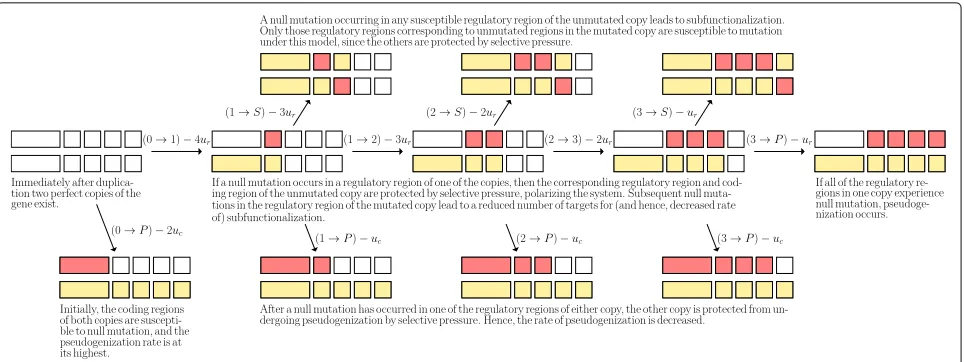
Fig. 1The (biological) transition diagram forz=4. Regions hit by null mutation arecoloured red, and regions which are protected by selective pressure arecoloured yellow
of the same copy, since subfunctionalization (and hence absorption to S) occurs as soon as both copies have a unique function. Therefore, a similar argument is used to show that for alli∈ {1, 2, ..,z−2}transitions
• fromi→Poccur at rateuc,
• fromi→Soccur at rate(z−i)ur,
• fromi→i+1occur at rate(z−i)ur.
Transitions fromz−1→S When the process is in state z−1 there is only one regulatory region for each copy susceptible to null mutation, which occurs at a rateurfor each copy. If such a mutation occurs in the so-far unaf-fected gene then the process transitions to stateS, hence the rate of transition fromz−1→Sisur.
Transitions fromz−1→P There are two distinct ways in which the process can transition fromz−1 →P. The first is similar to the previous cases, with a null muta-tion occurring in the coding region of the copy in which all of the previous mutations have fixed, which occurs at
rate uc. The other way is for a null mutation to fix in the last remaining regulatory region of this same gene, which occurs at a rateur. Hence the rate of transition from
z−1→Pisur+uc.
The full set of possible transitions for the case wherez= 4 is illustrated in Fig. 1.
Block matrix form ofQ
Now, we define Q∗ to be the block matrix of Q which records the transition rates between the non-absorbing states in{0, 1,. . .,z−1}, andV =[vS,vP] to be az×2 matrix where (column) vectorsvSandvPrecord the rates of transition from the non-absorbing states in{0, 1,. . .,z− 1} into the absorbing states S and P, respectively. We have, with O denoting zero matrices of appropriate sizes,
Q=
Q∗ V O O
, (3)
where
Q=
⎡ ⎢ ⎢ ⎢ ⎢ ⎢ ⎢ ⎢ ⎢ ⎢ ⎢ ⎣
0 1 · · · z−1 S P
0 −(2(uc+zur)) 2zur 0 . . . 0 2uc
1 0 −(uc+2(z−1)ur)) (z−1)ur . .. (z−1)ur uc ..
. ... ... ... ... ... ...
z−2 0 0 0 −(uc+2ur) 2ur uc
z−1 0 0 0 0 ur uc+ur
S 0 0 0 0 0 0
P 0 0 0 0 0 0
[image:5.595.59.541.86.267.2]This form of the generator matrix is useful, as we will make extensive use of the matrix Q∗ and the vectorsvS andvPin our derivations.
Note that since Qis atransition rate matrix, the row sums must be 0. The rows full-of-zeros corresponding to the absorbing states are interpreted as the process having zero rate of transition out from these states
The pseudogenization cause-specific hazard rate In this section, we give a brief overview of the pseudo-genization cause-specific hazard rate. A detailed analysis of both the pseudogenization and subfunctionalization cause-specific hazard rates is given in Additional file 1: Section B. In the traditional hazard rate setting, there is only one absorbing state, and the hazard rate is a measure of the rate at which a process is absorbed, given that it has not yet been absorbed. The cause-specific hazard rate can be applied when there are several absorbing states, and is a measure of the rate at which a process is absorbed into a particular absorbing state, given that it has not yet been absorbed into any absorbing state.
Given a random variableTrecording time until absorp-tion, the hazard rateλi(t), given that the process starts in stateiis defined [14] for allt≥0, as
λi(t)= lim
h→0+
P(t<T<t+h|T>t,X(0)=i)
h =
fi(t)
1−Fi(t),
(4)
wherefi(t)is the probability density of absorption occur-ring at time t given that the process starts in state i, and Fi(t) is the corresponding cumulative distribution function.
For the model described in the section “A continuous-time Markov chain model for Subfunctionalization” the hazard rate can be shown (see Additional file 1: Section B) to be
λi(t)= −eie Q∗tQ∗1
eieQ∗t1 , (5)
where ei is a (row) vector with a 1 in thei-th position and 0’s elsewhere, and1denotes a column vector of 1’s of appropriate size.
When an absorption occurs, the process transitions into an absorbing state (for the model considered here that is eitherSorP). This motivates the definition of the cause-specific hazard rate [15], which can be thought of as the instantaneous rate of transition into aparticular absorb-ing state given that the process has not yet been absorbed. In our case, we refer to these rates as the pseudoge-nization cause-specific (j = P) and subfunctionalization cause-specific (j=S) hazard rates, given by
λij(t)= lim h→0+
P(t<T <t+h,X(T)=j|T >t,X(0)=i) h
= fij(t) 1−Fi(t),
(6)
After some analysis (see Additional file 1: Section B) we see that the cause-specific hazard rates for our model are given by
λij(t)=
eieQ∗tV j
eieQ∗t1 . (7)
Additional analysis including an investigation of the lim-iting behaviour, and the derivation of various measures which are not directly related to the central narrative of this paper are included in Additional file 1: Section B. Although these results are not pivotal to this work, they are likely to be of interest to more mathematically inclined readers interested in applications of the phase-type distri-bution to the derivation of related measures.
Now, in order to approximate the pseudogenization hazard rates, Hughes and Liberles [8] applied the follow-ing:
λz t≈
Piz
E(Ti) forti−1≤t<ti, (8)
where the fixed pointstiare evaluated using
t0=0 and ti=ti−1+E(Ti) for 1≤i≤z. (9)
That is, the (approximating) assumption was made that the hazard rates are piece-wise constant within such spec-ified time intervals [ti−1,ti].
However, there was an error in the approximation at which Hughes and Liberles [8] ultimately arrived. They wrote
λz t=
⎧ ⎪ ⎪ ⎨ ⎪ ⎪ ⎩
2uc for 0≤t<t1 uc fort1≤t<tz−1 uc+ur fortz−1≤t<tz 0 fort≥tz.
(10)
With a minor correction we get a good approximation for the pseudogenization cause-specific hazard rate, using the same notation we can write
λz t =
⎧ ⎨ ⎩
2uc for 0≤t<t1 uc fort1≤t<tz−1 uc+ur fort≥tz−1.
(11)
However, as mentioned above, we contend that this is not the rate of central interest in modeling subfunctional-ization.
Pseudogenization rates
In this section, we introduce a new measure, referred to as the pseudogenization rate, which we contend to be of greatest interest in modeling subfunctionalization, and gene duplication more generally. This measure is a slight variation of the hazard rate which accounts for the possibility that subfunctionalization has occurred. This allows analysis of the instantaneous rate of pseudoge-nization when it is not possible to determine whether subfunctionalization has occurred.
Note that in the traditional hazard rate setting, all of the absorbing states are thought of as corresponding to some-thing analogous to death, or failure. In such case, we are rarely interested in modeling the process after absorption, and hence the focus on rates in which absorption has not occurred. In contrast, the central feature subfunctional-ization is the ability for both duplicates to be preserved by selective pressure when subfunctionalization occurs. Hence in our model, the absorbing stateScorresponds to animmunityfrom subsequent failure, and as such we are interested in modeling the behaviour of the system only under the assumption that failure (i.e. pseudogenization) has not yet occurred.
Hughes and Liberles [8] assumed that subfunctionaliza-tion occurred at precisely timet = tz, and approximated the rate of pseudogenization by first approximating the cause-specific hazard rate (the hazard rate conditional on absorption into stateP) up to timet =tz, and setting the rate to be 0 fort > tz (see Eq. (10)). In this way, they partially overcame the fact that the cause-specific hazard rate fails to account for the primary feature of the sub-functionalization process. However, the assumption that subfunctionalization occurs at some predetermined point in time is hard to justify, and we show that there are sub-stantial differences between the qualitative behaviour of such an approximation and the exact rate derived here.
Pseudogenization rate for fixedz
Let
TP=inf{t>0 :X(t)=P} (12)
be the random variable recording the time at which pseu-dogenization occurs. Assume that there arez regulatory
regions in the duplicate pair of genes. We define the pseudogenization rate as
hzP(t)= lim h→0+
P(t<TP<t+h|TP>t,X(0)=0)
h
= f˜(t) 1− ˜F(t),
(13)
where F˜(t) = P(TP ≤ t) andf˜ = ˜F(t) are the corre-sponding cumulative distribution and probability density functions, respectively. After some analysis (see Addi-tional file 1: Section C) this leads to a pseudogenization rate of
hzP(t)= e0e Q∗tv
P
1−e0eQ∗t−I(Q∗)−1vP. (14)
Given enough time, and given that pseudogenization does not occur (which we condition on in the pseudoge-nization rate), we would intuitively expect that subfunc-tionalization must eventually occur. As such, we would expect the rate hzP(t) to approach zero as t approaches infinity, that is,
lim t→∞h
z
P(t)=0. (15)
We have confirmed this analytically in Additional file 1 Section C).
Note that it does not make sense to calculate moments of time to pseudogenization (e.g. the mean, variance) with this rate. This is because of the possible absorp-tion into the stateS- if subfunctionalization occurs, then the time to pseudogenization is infinite. Recalling that the pseudogenization rate does not condition on subfunc-tionalization not occurring, clearly then the mean time to pseudogenization is infinite. For a meaningful calculation of moments, the hazard rate should be used.
Average pseudogenization rate (for randomly distributedz)
We now consider the pseudogenization rate averaged over the possible values ofz. We let Z be a random variable tracking the number of regulatory regions in a duplicate pair, and define the average pseudogenization rate as
HP(t)= Zmax
z=Zmin
pzhzP(t). (16)
Notice that since eachhzP(t) → 0 ast → 0, it follows that
lim t→∞H
z
P(t)=0. (17)
Subfunctionalization survival function and Poisson duplication
with some assumptions about the underlying gene dupli-cation process.
By Eq. (14), the survival function corresponding to the random variableTPis given by
P(TP>t)=1− ˜F(t)=1−e0
eQ∗t−I Q∗−1vP. (18)
Note that the data (handled by Hughes and Liberles [8]) contains the counts of the number of surviving duplicates at the current time. However, this number depends on the gene duplication process, which needs to be considered in the analysis. By introducing a Poisson process to model the duplication process (see Additional file 1: Section D), and a random variable Y(t) representing the number of duplicates that have survived to time t we are able to derive the probability that there areyduplicates surviving at the current time as
P(Y(t)=y)=
1− ˜F(t)
β0
y
y! e
−β0
1− ˜F(t)
, (19)
whereF˜(t)is defined in (18), andβ0is the average number
of duplication events that occur in a time interval of length 0.01s- sbeing the expected number of substitutions per silent site. Note, the time interval is chosen as 0.01ssince this is the size of the intervals in the data set we examine in the section “Fitting the model to genome data”.
Note that (19) defines a Poisson random variable with parameter
β(t)=β0(1−F(t)), (20)
which is the expected number of duplicates surviving to timetif the duplication process is Poisson with parameter β0and the survival process is the model under discussion
in this paper.
With this result, calculating the likelihood of the data given the parameters is straight-forward, and computa-tionally tractable, as we only need to multiply over the probabilities for each of the data bins.
Next, in order to fit the parametersβ0,ur,ucandzto the data set, we use the maximum likelihood method with the log likelihood given by
log(Lθ)=
i
Dilog(β(si)−β(si)−log(Di+1), (21)
whereDiis the count in theithbin of the data set, andsiis the associated cumulative number of silent substitutions per silent site, used as a proxy for time.
For the data set we examine in the section “Fitting the model to genome data” ,si=0.01i.
Results
Here we discuss some further mathematical results which have more direct biological implications than those dis-cussed in the methods section, as well as results from data fitting. In the section “Shape properties of the pseu-dogenization rate functions” we discuss results pertain-ing to the shape of the pseudogenization rate function introduced in the section “Pseudogenization rates”, these results have some implications about the predictions of the subfunctionalization process which are detailed fur-ther in the discussion. In the section “Fitting the model to genome data” we fit the model to the data sets of Hughes and Liberles [8] to estimate the relative rates of muta-tion and the number of regulatory regions comprising gene duplicates in Homo sapiens, Mus musculus, Canis familiarisandRattus norvegicus.
Shape properties of the pseudogenization rate functions
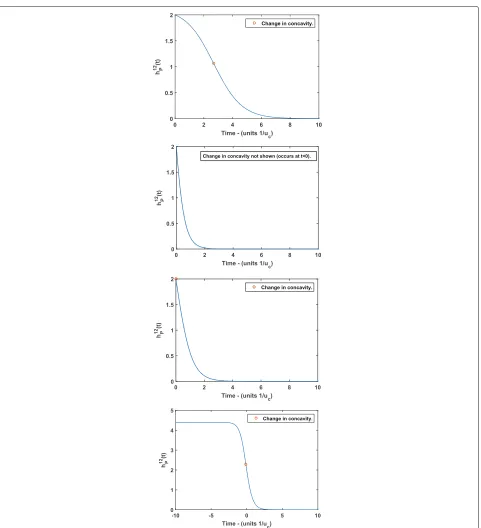
In this section we analyze the shape properties of the pseudogenization rate function, and consider the impli-cations of these properties on the predictions of the subfunctionalization process. We show that our model predicts a sigmoidal shaped pseudogenization rate, we also show this does not always imply the broadly con-cave decreasing hazard rate (where the instantaneous rate of pseudogenization decreases faster and faster as time elapses) suggested by Hughes and Liberles [8]. We find the critical value at which the function’s behaviour shifts from being obviously sigmoidal to apparently exponential (i.e. convex decreasing), which we illustrate in Fig. 2.
Hughes and Liberles [8] found that a hazard rate follow-ing a Weibull distribution provided an extremely good fit to gene duplicate data. Konrad et al. [12] fit sigmoid (S-shaped) curves to their data sets. Panel (d) of Fig. 2 shows that this is indeed the shape arising from our model. Note that the time axis in Panel (d) of Fig. 2 includes nega-tive values. There is an obvious continuation ofhzP(t) to the domain t ∈ R(i.e. including negative t) where we take the same expression forhzPwithout interpretingtas corresponding to time.
Considering the behaviour of hzP(t) for negative tcan be useful, as an important qualitative feature is whether the change of concavity occurs in t ≥ 0, or t < 0. At the point of inflection, the function changes between decreasing more and more quickly, and decreasing more and more slowly. As far as our biological interpretation of hzP(t) (as the rate of pseudogenization) is concerned, we are only interested int ≥ 0. Hence, whether this change of behaviour occurs in real, physical, time (t≥0) or not is an important defining feature of the characteristics of the process. This is demonstrated in Fig. 2.
Fig. 2Pseudogenization ratehz
P(t)with forz=12γless thana, greater thanband equal tocγcrit. Paneldshows the overall shape ofhzP(t), with negative values oftincluded.aPseudogenization ratehz
P(t)withγ < γcritz . The change in concavity occurs att≈2.7. As such, the sigmoidal nature of the function is apparent - we see an initially slowly decreasing hazard rate which decreases more and more rapidly up to the change in concavity, after which the decline in the hazard rate slows, and approaches the asymptote at zero.bPseudogenization ratehz
P(t)withγ > γcritz . Here the change in concavity occurs for somet<0, and hence cannot be seen in real, physical time (t>0). The shape is not obviously sigmoidal, and looks similar to that of an exponential decay. The rate of pseudogenization is initially declining rapidly, before approaching its asymptote at zero. cPseudogenization ratehz
P(t)withγ=γcritz . Here the change in concavity occurs at exactlyt=0. This is qualitatively similar to the case in panelb, with the pseudogenization rate rapidly declining, and the decline becoming slower as the rate approaches its asymptote at zero.
dPseudogenization ratehz
[image:9.595.61.542.83.611.2]a rapid decline in the rate of pseudogenization, quickly approaching its asymptote at zero, and leaving relatively little opportunity for pseudogenization to occur. Alterna-tively, it can start with a slowly declining pseudogenization rate, giving more time for pseudogenization to occur before a high probability of subfunctionalization eventu-ally takes over and the rate of pseudogenization begins to rapidly decline towards it’s aymptote at zero.
In the absence of a relative clock (such as synonymous site mutations, which we use in the section “Fitting the model to genome data”) the parameters uc and ur are only meaningful relative to each other. As such, non-dimensionalization is a convenient technique to reduce the number of parameters from 3 to 2.
We can replace parameters uc andur with their ratio γ = ur/uc, and work with time units 1/uc. Thusuccan be thought of as the units of the rate (note that the rate unitsuc, are the inverse of the time units 1/ucas usual). This technique is applied implicitly throughout many of the results that follow.
The change in concavity will occur when the second derivative is zero, i.e. when hzP (t) = 0. We define γcritz to be the ratio ur/uc at which the second derivative is zero precisely whentis zero, i.e the ratiour/ucsuch that
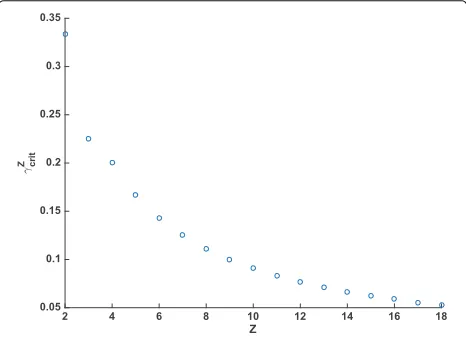
hzP (0) = 0. When 0 < γ = ur/uc < γcritz the con-cavity ofhzP(t)will change for somet∗ > 0, and we see the behaviour where an initially slowly-declining hazard rate decreases more and more quickly before slowing back down as it approaches zero. Otherwise, the change in con-cavity occurs for some negative value oft, and in this case the hazard rate begins its rapid decline immediately, with the rate of decline slowing from it’s initially-high value at all times. Figure 3 shows the values ofγcritz for various values ofz.
Fig. 3Critical valuesγz
critfor various values ofz. Whenur/uc≤γcritz the change in concavity for the pseudogenization rate function will occur in positive time. Otherwise, the change occurs in negative t and the sigmoidal nature of the function will not be apparent when plotted fort>0
The sigmoidal shape is in good qualitative agreement with previous results, and in Additional file 1: Section E we retro-fit our model to existing phenomenological approximations due to Teufel et al. [11] and Konrad et al. [12], finding particularly good agreement with the shape of the hazard function in Teufel et al. [11]. The continua-tion ofhzP(t)to include negativetis particularly useful in this analysis, and in Additional file 1: Section G we prove a result about the limit ast→ −∞of a generalization of hzP(t)applicable to any absorbing CTMC with a finite state space.
We note that the shape ofhzP(t) is only sigmoidal for 0 < ur < uc. For ur = 0 the shape of hzP(t) becomes exponential, and whenur > uc,hzP(t)may have multiple turning points, or points of inflection. However, these are not realistic parameter sets for subfunctionalization.
Example 4.1(γ < γcritz )
In this example, we examine the shape of the pseudo-genization rate forz = 12, andγ = ur/uc = 0.005 < γ12
crit=0.0714. In this case, the sigmoidal shape of the rate
function is quite apparent. This is because the change in concavity occurs in physical time, and hence in Panel (a) of Fig. 2 we can see that the rate is relatively flat neart=0.
Example 4.2(γ =γcritz )
For this example, we examine the shape of the pseudog-enization rate forz=12 andγ =ur/uc=0.0714=γcrit12, shown in Panel (c) of Fig. 2. Here we see little evidence of the sigmoidal shape of the rate function fort ≥0, which could be well approximated by an exponential decay.
Example 4.3(γ > γcritz )
In this example, we examine the shape of the pseudoge-nization rate forz = 12 andγ = ur/uc = 0.2 > γcrit12 =
0.0714. In this case, the point of inflection does not occur in physical time and the shape of the function becomes indistinguishable from an exponential decay. Panel (b) of Fig. 2 shows the rate function for this example.
Fitting the model to genome data
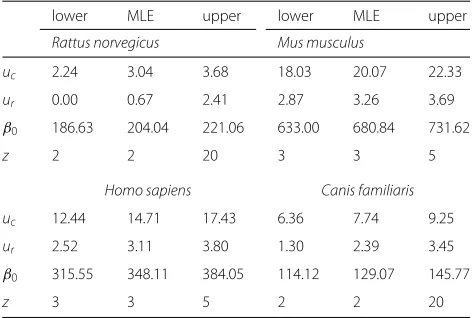
[image:10.595.57.290.507.676.2]were gap free. They concluded that the alignments for the four species M. musculus, R. norvegicus, H. sapiens and C. familiariswere of high quality, and these are the data sets we will examine here. In [8] Hughes and Liber-les fit off-the-shelf survival functions to these data sets. Here we assume that the underlying duplicate process is a Poisson process, and fit the survival function derived from our model as discussed in the section “Subfunctiona-lization survival function and Poisson duplication” of the Methods.
We computed maximum likelihood estimates (MLEs) ˆ
θz = [uˆr,uˆc,βˆ0] for ur,uc andβ0 for each z from 2 to
20 for four mammalian genomes. We call the best of thesez’s (in terms of likelihood)zˆ, with the understand-ing that this is not a true maximum likelihood estimate, since we restrictedˆz∈ {2, 3,. . ., 20}. We chose this trun-cation because it is unlikely that a gene would have in excess of 20 regulatory regions [8]. The case z = 1 is excluded, as subfunctionalization cannot occur in this case, and the survival model reduces to an exponential survival function with parameter 2(uc+ur)whenz = 1 orur=0.
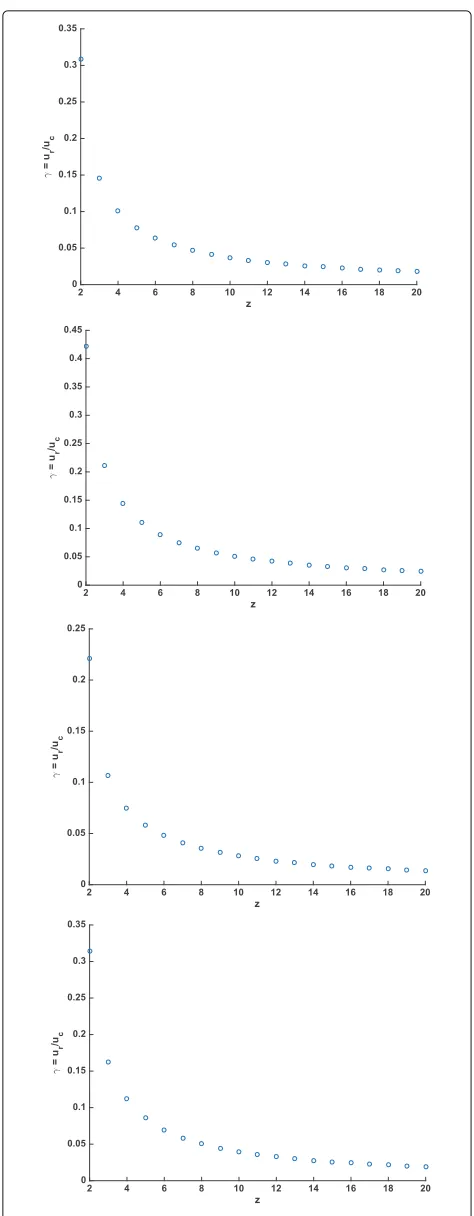
The ratioγ =ur/ucandzappear to be strongly corre-lated in the MLEs, as shown in Fig. 4. A power law relation betweenγ andzappeared to fit quite well, withR2values >0.97 for each of the four genomes.
We compared the fit of our survival function (18) against Weibull and exponential functions using rela-tive likelihood via the AIC [16]. For all four genomes, our model outperformed the exponential function, but was itself outperformed by the Weibull function in the rat, mouse and human genomes. In the canine genome there was insufficient evidence to choose between the Weibull function and the survival function derived from the model.
Mechanistic models can contain parameters that are part of the generative process but add little to data fitting, sometimes resulting in less support for mech-anistic models when compared to simpler models, even when the mechanistic models give more accu-rate inference of the underlying process as judged by the accuracy of parametrization (see Liberles et al. [17]). With this justification in mind, we move for-ward with analysis of the results of fitting the mecha-nistic subfunctionalization model to genomic data. The analysis of mechanistic parameters is conditional on the generative process being what is modeled, namely subfunctionalization.
To estimate the relative rates of mutation γ = ur/uc together with the mean number of duplicates per 0.01s, β0, we fixed z = ˆz and computed e2 likelihood
inter-vals for each of the parameters using the profile likelihood approach. We also calculatede2likelihood intervals forz
using the values of the MLE. In the regular asymptotic
Fig. 4Maximum likelihood estimates forγ =ur/ucfor each
z=2, 3,. . ., 20 for four mammalian species.aγvszin the MLE for
[image:11.595.304.541.82.690.2]casee2 likelihood intervals are equivalent to 95.4%
[image:12.595.303.539.112.271.2]con-fidence intervals [18]. Since the shape of the profile like-lihood is quite standard (for example, see Fig. 5), it is reasonable to regard these intervals as approximate 95% confidence intervals. These results are summarized in Table 1.
There were some minor identifiability issues in fitting the model to this data, in particular, for theRattus norvegi-cusandCanis familiarisgenomes, we were able to find good relative likelihood scores for any z = 2, 3,. . .20, which prevents us from reliably estimatingzfor these two genomes. Together with the close correlation between z andγ = ur/ucthis could be overcome by fixing one or more of the parameters using some outside analysis. In both cases, the maximum likelihood estimate for z was ˆ
z=2.
As a point of interest, we ran some simulations using parameters similar to those estimated for the rat genome. We simulated bins of data identical to those in the data, i.e. 30 bins corresponding to 0.01s, 0.02s,. . .0.3s, and found that the parameters of the model were difficult to recover in this case, with the MLE value for z varying between runs with the same parameters. In some runs, even when z was fixed to the correct value used in the simulation ur anducwere not able to be accurately recovered, with γ = ur/ucvarying from around 0.05 to 0.3 (true value 0.2) in the handful of simulations we ran. The true param-eters fell within the e2likelihood intervals, but it wasn’t until we increased the number of intervals to 100 that we started to get more reliable recovery of the simulation parameters.
The simulation analysis provided some insight into the relatively unstable results for the rat and dog genomes. We suspect that the combination of low count values (and hence lowβ0), together with the relatively low estimated
Fig. 5The profile likelihood curve forucin theRattus norvegicus genome
Table 1e2likelihood intervals and maximum likelihood
estimates for four species
lower MLE upper lower MLE upper
Rattus norvegicus Mus musculus
uc 2.24 3.04 3.68 18.03 20.07 22.33
ur 0.00 0.67 2.41 2.87 3.26 3.69
β0 186.63 204.04 221.06 633.00 680.84 731.62
z 2 2 20 3 3 5
Homo sapiens Canis familiaris
uc 12.44 14.71 17.43 6.36 7.74 9.25
ur 2.52 3.11 3.80 1.30 2.39 3.45
β0 315.55 348.11 384.05 114.12 129.07 145.77
z 3 3 5 2 2 20
mutation rate, leads to an overall lack of information in the data for these two genomes compared to the others, and hence the difficulty pinpointing parameters. Based on the results of the simulations we ran, we expect that the likelihood intervals for these genomes are somewhat reli-able, while the maximum likelihood estimates themselves are probably not very precise.
We also note that for the rat genome the value ur = 0 was within the established likelihood intervals. In this case, the survival function for our model reduces to an exponential survival function with parameter 2uc. The lack of differentiation between the mechanistic and phe-nomenological models in this case is likely due to the previously mentioned relative lack of information in the rat data.
For theHomo sapiensandMus musculusgenomes the maximum likelihood estimate for z was zˆ = 3 in both cases, with z = 3, 4, 5 falling in the e2 likelihood
inter-val. In these two cases the higher mutation rate estimates, together with larger counts of duplicates are suggestive of more informative data, and the results are in-line with this suggestion. We expect the maximum likelihood parameter estimates to be more reliable in these cases.
Note that we model the evolution of a pair of gene duplicates, and thus our estimates implicitly assume that all of the duplicates in the genomes analyzed have the same parameters as each other. That is, the maximum likelihood estimatezˆis an estimate for the number of reg-ulatory regions each gene has assuming they all have the same number of regulatory regions. Similarly, the esti-mates forucandur assume a consistent rate of mutation throughout all of the genes in the data set.
[image:12.595.57.291.536.702.2]considering fixed parameters such as z. In the absence of parameter z, we could think of the Poisson rates uc andur as measuring an average mutation rate across the genome, however, sincezis fixed there is no similar inter-pretation for the number of regulatory regions. With this in mind, we can think ofuc andur as average mutation rates given that all duplicates examined have exactly z regulatory regions.
In order to relax this assumption, we computed anal-ogous maximum likelihood estimates for randomly dis-tributed Z using a truncated (2 ≤ Z ≤ 20) Poisson distribution with parameterα, given by
P(Z=z)= α
z
z!e
−α
20
k=2
αk
k!e
−α
−1
, (22)
which resulted in distributions where the majority of the weight was at the lower end of the truncation, Z = 2. However, this result should be viewed with care, as the procedure is biased in favour of results which place the majority of the weight around the points of truncation, Z = 2 andZ = 20. This is because having the majority of the weight on a single value ofZallows for the param-etersβ0,ur,ucto be chosen so as to best fit the particular value ofZ, giving a distinct advantage over more evenly weighted distributions.
It should be noted that this analysis relies upon a par-ticular set of assumptions, that the mode of action on all genes in the genome is subfunctionalization of the regulatory regions. It should be further noted that sub-functionalization of coding sequences is possible, but in some circumstances may not be a neutral process char-acterized by the same dynamics. For example, subfunc-tionalization from a ligand-binding generalist to a pair of specialists that are specific to an individual or set of lig-ands might require selection to attain that specificity (see Liberles et al. [19] for further discussion of this point). Other types of coding sequence subfunctionalization, like regulation mediated by post-translational modification of specific amino acids might occur with regulatory region-like dynamics.
Discussion
The present work partially contradicts Hughes and Liber-les [8] characterization of subfunctionalization by an initially constant, and then broadly decreasing, concave hazard function which has been adapted by subsequent works [10–12]. The intuition behind this characterization can be explained by thinking of the initial period of con-stant hazard rate as corresponding to the waiting time for the first mutation. After this first mutation the unaffected gene will be selectively protected against pseudogeniza-tion, and hence there is a sharp decline in the hazard rate
(from 2uc to uc in terms of both the model discussed in [8] and the model discussed in this paper). Once the first mutation has fixed, there is now an opportunity for an additional mutation to lead to subfunctionalization, in which case the rate of pseudogenization will decrease from uc to 0. The probability that subfunctionalization occurs before timetis rapidly increasing witht, and this leads to the concave decline in the hazard function.
In contrast, our hazard ratehzP(t)has a sigmoid shape, which includes a period of concave decline, followed by a change in concavity, and a period of convex decline. Con-sidered as a function oft > 0,hzP(t) can include short or long initial periods of concave decline, or no period of concave decline at all, depending on the ratioγ =ur/uc. In all cases the hazard ratehzP(t)will be declining convexly towards 0 from some pointt=tcritonwards.
Forγ > γcritz the change in concavity occurs for some t>0, and we see a short or long period of concave decline followed by convex decline (see Panel (a) of Fig. 2). This essentially agrees with the characterization of Hughes and Liberles [8]. In fact, Fig. 7 of [8] shows a period of con-vex decline in the mean hazard rate when averaging over certain distributions of the number of regulatory regions z. However, the present work shows that even with a fixed number of regulatory regionsza change in concav-ity will occur in the hazard ratehzP(t). This suggests that the period of convex decline is more fundamental to sub-functionalization than suggested by the characterization of [8], which focused particularly on the period of concave decline.
Forγ < γcritz the difference in our hazard rate and the characterization of Hughes and Liberles [8] is more stark, and warrants a careful reconsideration of the biological intuition. In this case, the hazard ratehzP(t) is convexly decreasing for allt > 0, much like an exponential decay (see Panel (b) of Fig. 2).
This convexly decreasing hazard ratehzP(t), as seen in our model, contradicts the characterization of subfunc-tionalization as predicting a concave decline in the hazard rate. However, the prediction of a convex decay comes from the same mechanics which motivate, and (for certain parameter sets) give rise to the concave characteriza-tion. Thus, we suggest some new intuition for duplicates that have a large nonfunctionalizing mutation rate in the regulatory regions.
Noting thathzP(t) = λzP(t)P(X(t) = S), consider now the evolution of a duplicate pair with some large non-functionalizing mutation rate in the regulatory regions, relative to that in the coding regions. Two important fea-tures are then apparent which explain the convex decline of the hazard ratehzP(t).
rate of pseudogenization, since the first nonfunctionaliz-ing change in a regulatory region results in a change in the pseudogenization rate from 2uctouc.
Second, once this first mutation has fixed, there is a very high rate of subfunctionalization (rate of transition toS). SincehzP(t) = λzP(t)P(X(t) = S), the termP(X(t) = S) (which is decreasing exponentially) dominates. Together with the initially rapidly decreasing pseudogenization, this leads to the exponential-like decay ofhzP(t).
Biologically speaking, the case γ < γcritz could corre-spond to a set of genes with complex regulation and a small coding sequence target for both nonfunctionaliza-tion and for the accumulanonfunctionaliza-tion of synonymous mutanonfunctionaliza-tions. This analysis predicts that genes with the features of com-plex regulation requiring multiple functional transcrip-tion factors that have the ability to be subfunctranscrip-tionalized together with a short coding sequence would be strong candidates for subfunctionalization rather than nonfunc-tionalization, and would be less likely to be characterized by a concave hazard function. These conditions could be met, for example, when genes are expressed in multi-ple tissues at different levels. When examined in actual genomic data, genomes dominated by such genes have not been observed, but represent a theoretical possibility in which subfunctionalization would be better characterized by a convex than a concave declining hazard function.
At the individual gene level, there are several classes of proteins that might be thought of as candidates for falling into this space. Casein is a longer protein that could accumulate synonymous changes, but would be hard to nonfunctionalize. It is expressed in multiple tissues, but the regulation of its expression and the strength of neg-ative selection on each regulatory domain is not well known [20].
Another example of genes that might fall into this cat-egory are hormones like insulin and gonadotropin hor-mone releasing horhor-mone (GnRH) that are relatively short proteins, although they are less broadly expressed [20]. GnRH has in fact been retained after multiple gene dupli-cation events in vertebrate lineages with functional diver-gence between copies (the functions in the ancestral state are not known) [21].
Our final example of genes that are candidates to show this behaviour are the intrinsically disordered proteins, which are shorter than folded proteins on average, and may be more mutationally robust to nonfunctionalizing mutations [22]. What is unclear at this stage is the selec-tion on their funcselec-tion and their expression.
While these types of genes are not likely to domi-nate any whole genome analysis, the model predicts that genes with small mutational footprints for nonfunction-alizing mutations and large footprints for regulatory sub-functionalization would undergo subsub-functionalization at high rates.
Conclusions
In this paper, we have introduced a new mathemati-cal model for the biologimathemati-cal process of subfunctional-ization. The model is mechanistically motivated, and analytically and computationally tractable. We have ana-lyzed the model in detail, deriving key performance measures including mean times to subfunftionaliza-tion/pseudogenization, variances, and hazard functions. The parameters of the model correspond to real biolog-ical processes, and as such we have been able to use model fitting to make some inferences about the nature of gene duplicates in four mammalian genomes. The model provides a means to calculate exact results pertaining to subfunctionalization under different rates of mutation for fixed or randomly distributed numbers of regulatory regions, and to estimate the values of these parameters via maximum likelihood.
This gives a fresh perspective on the subfunctional-ization process, and results from the mathematical anal-ysis show that the subfunctionalization model predicts behaviour which is qualitatively more in-line with empir-ical reality than previously thought. The model fits well to empirical data sets, with its survival function provid-ing a better fit than the often-used exponential function in all of the cases examined. The highly flexible Weibull distribution outperformed our model in three of the four cases examined in terms of absolute fit, however the main advantage of a mechanistic model over a flexible phe-nomenological model is the fact that it uses biologically meaningful parameters.
Our analysis of the four mammalian genomes (using data handled by Hughes and Liberles [8]) suggests that (subject to our modeling assumptions) gene duplicates most likely have only a few regulatory regions, and that the rate of mutation in these regulatory regions is around 5–10 times smaller than the rate of mutation in the cod-ing region, which is suggestive of the relative mutational target sizes. This is the first model-based estimate of the number of regulatory regions in gene duplicates. The estimates, based upon an assumption of duplicate gene preservation through the subfunctionalization process are in-line with the conventional thinking. Force et al. [5] suggested that the ratio of mutations be about 0.1, and Hughes and Liberles [8] suggested that between 2 and 12 regulatory regions were realistic. Mechanistic character-ization of mutational potentials in protein-coding genes from molecular-level analysis can add additional insight into these parameterizations.
model predicts that they would undergo subfunctional-ization at high rates, with a sharply convex declining hazard rate for pseudogenization. This contrasts the char-acterization of Hughes and Liberles [8], which features a (primarily) concave declining hazard rate and is con-firmed by our model for genes with larger footprints for nonfunctionalization mutations.
In order to make accurate inferences in a phylogenetic context, increasingly realistic models of the underlying evolutionary processes will be required. While the model described here tackles only a small piece of the overall picture of the evolution of gene duplicates, we believe it is helpful towards the development of a mechanistic model for the overall process of gene duplicate evolution. Our model describes the evolution of a pair of duplicates evolving under subfunctionalization with relatively few assumptions. In terms of modeling this process, the main weaknesses of the model are the lack of detailed model-ing of the codmodel-ing region, which is treated as a smodel-ingle unit which can undergo nonfunctionalizing mutation at a con-stant Poisson rate, and the assumption of concon-stant Poisson rates of mutation, consistent across the regulatory regions. Applying this model to whole-genome data, as in the section “Fitting the model to genome data”, requires a broadening of scope beyond the evolution of a pair of duplicates, and beyond the process of subfunctionaliza-tion. We have implicitly assumed that all of the duplicates in each of the genomes examined are evolving under subfunctionalization, which is not likely to be a realistic assumption. Also, we have fit a single parameterization of the model to each genome. This is similarly unrealistic, as it would imply that all duplicates have the same number of regulatory regions as each other, and that all of these reg-ulatory regions undergo nonfunctionalization at the same rate. At the whole-genome level a more realistic approach would be to allow each duplicate pair to evolve according to a separate parameterization of the model, however this method would have no statistical power.
Furthermore, some attributes of the generative process have not been modeled. One example is the underlying population genetic process of fixation of both the gene duplicate itself and mutations in the gene. When these mutational events are non-neutral, this process becomes particularly difficult to model. Similarly, the organisms studied here at genomic levels are diploid, but no model for dominance and the underlying genetics has been pro-posed. Finally, a steady state mutational process has been assumed, with a constant duplication rate.
Two distinct avenues for extension of the work pre-sented here are apparent. The first is in widening the scope of the model itself, for example by including other pro-cesses besides subfunctionalization, such as neofunction-alization, dosage balance, and potentially other processes described in Innan and Kondrashov [3] to create a more
complete model for the evolution of gene duplicates. The second avenue for extension would focus on the applica-tion of models in broader analysis. Here we applied our model in a whole-genome analysis to get some estimates of mutation rates and number of regulatory regions. The larger problems of the inference of parameters in a phylo-genetic context, gene tree/species tree reconciliation, and ancestral copy number inference from multi-species data in a phylogenetic context are of particular interest.
Additional files
Additional file 1:Contains most of the mathematical details supporting this analysis, including derivations and proofs of various results referenced throughout the main body of this work. (PDF 329 kb)
Additional file 2: Contains the data set analyzed in this work. The data was originally published and analyzed by Hughes and Liblerles [8]. (ZIP 120 kb) Additional file 3:Contains MATLAB scripts used in this analysis, together with some directions for use. (ZIP 6 kb)
Abbreviations
CTMC: Continuous time Markov chain; DDC: Duplication–degeneration– complementation; GnRH: Gonadotropin hormone releasing hormone; MLE: Maximum likelihood estimate
Funding
MMO would like to thank the Australian Research Council for funding this research through Linkage Project LP140100152. BRH would like to that the Australian Research Council for funding this research through Future Fellowship FT100100031. DAL would like to thank the United States NSF for funding this research through grant DMS - 1515691.
Availability of data and materials
The data set supporting the conclusions of this article is included in its additional files. The data set was obtained from correspondence with Tim Hughes, and was first published in [8].
Authors’ contributions
TLS conceived the model and performed mathematical analysis, data analysis and prepared drafts and developed code. MMO conceived the model, performed mathematical analysis, wrote parts of the initial draft and edited drafts. BRH performed mathematical analysis, edited drafts and offered biological insight. DAL edited drafts and provided key biological insight and interpretation of results. All authors read and approved the final manuscript.
Competing interests
The authors declare that they have no competing interests.
Consent for publication Not applicable.
Ethics approval and consent to participate Not applicable.
Author details
1School of Physical Sciences, University of Tasmania, Churchill Ave, 7001
Hobart, Australia.2Center for Computational Genetics and Genomics and
Department of Biology, Temple University, 19122 Philadelphia, USA.
Received: 2 August 2016 Accepted: 8 December 2016
References
2. Lynch M, Conery JS. The evolutionary fate and consequences of duplicate genes. Science. 2000;290(5494):1151–1155.
3. Innan H, Kondrashov F. The evolution of gene duplications: classifying and distinguishing between models. Nat Rev Genet. 2010;11(2):97–108. 4. Liberles DA, Kolesov G, Dittmar K. Evolution after Gene Duplication. In:
Dittmar K, Liberles D, editors. Hoboken: Wiley; 2010. doi:10.1002/9780470619902.ch1.
5. Force A, Lynch M, Pickett FB, Amores A, Yan Yl, Postlethwait J. Preservation of duplicate genes by complementary, degenerative mutations. Genetics. 1999;151(4):1531–1545.
6. Lynch M, Force A. The probability of duplicate gene preservation by subfunctionalization. Genetics. 2000;154(1):459–473.
7. Lynch M, O’Hely M, Walsh B, Force A. The probability of preservation of a newly arisen gene duplicate. Genetics. 2001;159(4):1789–1804. 8. Hughes T, Liberles DA. The pattern of evolution of smaller-scale gene
duplicates in mammalian genomes is more consistent with neo-than subfunctionalisation. J Mol Evol. 2007;65(5):574–588.
9. Lynch M, Conery JS. The origins of genome complexity. Science. 2003;302(5649):1401–1404.
10. Hughes T, Liberles DA. Whole-genome duplications in the ancestral vertebrate are detectable in the distribution of gene family sizes of tetrapod species. J Mol Evol. 2008;67(4):343–357.
11. Teufel AI, Zhao J, O’Reilly M, Liu L, Liberles DA. On mechanistic modeling of gene content evolution: birth-death models and mechanisms of gene birth and gene retention. Computation. 2014;2(3):112–130.
12. Konrad A, Teufel AI, Grahnen JA, Liberles DA. Toward a general model for the evolutionary dynamics of gene duplicates. Genome Biol Evol. 2011;3:1197.
13. Latouche G, Ramaswami V. Introduction to matrix analytic methods in stochastic modeling. Philadelphia: Society for Industrial and Applied Mathematics; 1999.
14. Ross SM. Introduction to probability model, 11th ed. Oxford: Academic press; 2014.
15. Prentice RL, Kalbfleisch JD, Peterson Jr AV, Flournoy N, Farewell V, Breslow N. The analysis of failure times in the presence of competing risks. Biometrics. 1978;34(4):541–554.
16. Kuha J. AIC and BIC comparisons of assumptions and performance. Sociol Methods Res. 2004;33(2):188–229.
17. Liberles DA, Teufel AI, Liu L, Stadler T. On the need for mechanistic models in computational genomics and metagenomics. Genome Biol Evol. 2013;5(10):2008–2018.
18. Hudson D. Interval estimation from the likelihood function. J R Stat Soc Ser B Methodol. 1971;33:256–262.
19. Liberles DA, Tisdell MD, Grahnen JA. Binding constraints on the evolution of enzymes and signalling proteins: the important role of negative pleiotropy. Proc R Soc Lond B Biol Sci. 2011;278(1714):1930–1935. 20. Yates A, Akanni W, Amode MR, Barrell D, Billis K, Carvalho-Silva D, et al.
Ensembl 2016. Nucleic Acids Res. 2016;44(D1):D710–D716. 21. Sefideh FA, Moon MJ, Yun S, Hong SI, Hwang JI, Seong JY. Local
duplication of gonadotropin-releasing hormone (GnRH) receptor before two rounds of whole genome duplication and origin of the mammalian GnRH receptor. PloS ONE. 2014;9(2):e87901.
22. Uversky VN. Unusual biophysics of intrinsically disordered proteins. Biochim Biophys Acta Protein Proteomics. 2013;1834(5):932–951.
• We accept pre-submission inquiries
• Our selector tool helps you to find the most relevant journal
• We provide round the clock customer support
• Convenient online submission
• Thorough peer review
• Inclusion in PubMed and all major indexing services
• Maximum visibility for your research
Submit your manuscript at www.biomedcentral.com/submit