Modeling team knowledge sharing and team flexibility: The role of within-team competition
Hongwei He, Yehuda Baruch and Chieh-Peng Lin
Abstract
This study examines the role of within-team competition (i.e., team hypercompetition and team development competition) in a team process. We developed and tested a model that associates team collectivism as the antecedent of within-team competition, and knowledge sharing and team flexibility as the outcomes. The model was empirically tested with data from 141 knowledge-intensive teams. The empirical findings showed that team collectivism had a positive relationship with team
development competition and a negative relationship with team hypercompetition. Regarding the outcomes, team development competition and team hypercompetition had an indirect relationship with knowledge sharing and team flexibility through team empowerment. We offer a number of original contributions to the team effectiveness literature, especially by showing that team hypercompetition and team development competition have different impacts on team knowledge sharing and team flexibility.
Keywords
Teamwork forms a crucial element of work processes (Mathieu et al., 2008; Mitchell et al., 2011; Nielsen and Daniels, 2012; van Knippenberg et al., 2011). One important within-team interaction that may influence team effectiveness is within-team competition (Tjosvold et al., 2003), which has generated widespread debate, proposing two contrasting views (Fletcher et al., 2008). One view is that competition helps achieve collective outcomes because it encourages people to do their best (e.g., Crawford and LePine, 2012). Another view is that competition is unhealthy, because it discourages people from working together and from helping each other, hence undermining the collective performance (e.g., Zhang et al., 2011).
This debate largely centers on one assumption about competition—that it is driven only by an aim to maximize personal benefit. This assumption could be problematic, at least for people working within the same team, with a collective goal (Chen et al., 2006; Tjosvold et al., 2004). The theory of personal competitive orientations supports two distinctive types of orientations: hypercompetition (i.e., competing to achieve personal gains and status with little concern for the means and possible harms to others) and development competition (i.e., competing for team functioning and development without a primary focus on winning against other team members) (Ryckman et al., 1996; Ryckman et al., 1994). Similarly, at the team level, within-team competition (i.e., the collective competitive orientations of the team members) may be comprised of two dimensions: team hypercompetition and team
development competition. Such a distinction is particularly relevant for teams, because people working on the same team can compete with each other to maximize their personal potential in a constructive way and simultaneously enhance each other’s individual performance and/or team collective performance (e.g., Tjosvold et al., 2003).
According to the theory of competitive orientation, although much research views competition as mainly counterproductive, such a simplistic view overlooks the fact that not all forms of
competition are maladaptive (Collier et al., 2010). People can learn, through the socialization process, to fit into a work group in which they compete with, rather than against, others to accomplish their collective goals (Collier et al., 2010; Sampson, 1988; Wilson, 1993). With the cultivation of
by following team rules during their competition with each other and focus on the benefit of the entire team (Ryckman et al., 1997).
Team hypercompetition is characterized by team members’ need to outperform other members on the same team with little concern for the collective benefit. As a result, hypercompetition often causes direct confrontations, as well as indirect hostility, in a zero-sum game in which individuals strive to create personal advantages and disregard the needs of members of the same team. Team development competition, however, reflects a perspective of competition as facilitating team growth. That is, team development competition stresses a fair contest among team members without hostility, jealousy, or anger, and with a superior common goal of team-level achievements and growth as a whole. Development competition primarily focuses on collective growth and teamwork mastery (Ryckman et al., 1996), which offers an opportunity for learning, improvement, and self-discovery (Collier et al., 2010; Ryckman and Hamel, 1992; Ryckman et al., 1996; Ryckman et al., 1997).
1995). For the reasons described above, knowledge sharing involves some level of motivation (Gagné, 2009; Quigley et al., 2007). Within-team competition has the potential motivational power to
encourage or discourage team members to share their knowledge (Hansen et al., 2005; Tjosvold et al., 2003), and it represents a team environment that may affect knowledge sharing within the team (Zarraga and Bonache, 2003).
Second, an effective team requires high levels of team flexibility (Li et al., 2010; Townsend et al., 1998). Team flexibility refers to team adaptation (or ability) by making any adjustments
necessary to continue effective responses to changing situations (Li et al., 2010; McComb et al., 2007). Team flexibility is associated with a number of benefits, including increased productivity, competitive advantages, and enhanced problem-solving competency (Li et al., 2007; Manuj and Mentzer, 2008; Molleman and Slomp, 1999). Team flexibility also helps teams to cope with turbulent and volatile competitive threats effectively and to take advantage of those threats as opportunities (Johnson, Heimann, and O’Neill, 2001; Liu and Yetton, 2010). The extant literature has acknowledged the significance of team flexibility across various industries; however, it seldom explains how it is influenced by critical within-team competitive dynamism (Li et al., 2010), such as within-team competition.
Therefore, it is important to examine both hypercompetition and development competition at the team level with regard to their impact on both knowledge sharing and team flexibility, because the functional relationships between these constructs at different levels of analysis (e.g., individual vs. team levels) can lead to different results (Chan, 1998). This study’s focus on these two different types of competition can complement previous studies about cooperation, which has been widely accepted as a purely positive teamwork orientation.
emphasized that empowerment is a driver of flexibility (Wellins, Byham, and Dixon, 1994) and knowledge creation (Yahya and Goh, 2002). For that reason, without a thorough examination of empowerment and its impact on team flexibility and knowledge sharing as key outcomes, our understanding of this construct will remain limited, and organizational initiatives directed at building successful teamwork will remain unjustifiable and based on blind faith.
Self-determination theory argues that individuals are motivated to act (e.g., sharing knowledge) based on their inherent growth tendencies and their innate psychological needs (e.g., autonomy, competence, and self-development) (Deci and Ryan, 2002). Team empowerment theory posits that when a team is more empowered, team members are more motivated to share their knowledge and enhance the team’s ability to adapt to changing environments and challenging tasks (Srivastava et al., 2006). Testing the mediation effect of team empowerment is critical, as (1) team empowerment is motivational, so are within-team competition and knowledge sharing; (2) prior research has indeed found that team empowerment affects team knowledge sharing (Srivastava et al., 2006); and (3) team empowerment represents an important intrinsic motivation that stems from within-team competition (Proenca, 2007). Moreover, we add team collectivism as an antecedent of within-team competition and team empowerment. Doing so (1) allows us to control for the effect of team collectivism on team empowerment (Gundlach et al., 2006), while testing the relationship between within-team competition and empowerment; (2) enables us to confirm that team competition is distinct from its closely
associated construct (i.e., team collectivism); and (3) offers a theoretical explanation of team empowerment.
proposes and empirically tests the effects of team collectivism on within-team competition and team empowerment.
Conceptual background and hypothesis development
Within-team competition
A number of trends in the literature of interpersonal competition and team competition suggest that within-team competition should not be considered unidimensional. First, the extant literature offers mixed results about the relationship between competition and performance/outcomes. Some studies suggest that competition facilitates motivation and performance (Abuhamdeh and
Csikszentmihalyi, 2009; Stanne et al., 1999; Tauer and Harackiewicz, 2004), while others demonstrate that competition has a negative effect on group cohesiveness, effectiveness, and friendships (Johnson et al., 1981; Tjosvold et al., 2003). Some research finds that competitive team structure enhances task speed, but not accuracy, in the experimental context (Beersma et al., 2003; Johnson et al., 2006). A few studies indicate that constructive competition does exist and contributes to task effectiveness, social support, strong positive relationships, enjoyment of team experience, desire to participate within a team, and confidence in working collaboratively with competitors in the future (Fülöp, 2009;
Janssen et al., 1999; Tjosvold et al., 2003). Similarly, the literature on “constructive controversy” suggests that because team members in such a competitive environment are more likely to exchange diverse viewpoints and raise serious issues, team conflict could lead to positive outcomes, such as team performance (Bhatnagar and Tjosvold, 2012), better managerial decision making (Tjosvold et al., 1986), and risk taking and innovation (Tjosvold and Yu, 2007). In addition, research has found that constructively managing team members’ emotions (e.g., anger and annoyance) could lead to positive team outcomes (Tjosvold and Su, 2007). However, meta-analytic evidence (De Dreu and Weingart, 2003) shows that task conflict typically hinders team performance.
their emotions during the competition (e.g., Ryckman et al., 1996; Ryckman et al., 1994). Ryckman et al. (1996) argued that individuals can possess two types of competition: hypercompetition (which could be psychologically harmful) and personal development competition (potentially psychologically healthy). Hypercompetition refers to “an indiscriminate need by individuals to compete and win (and to avoid losing) at any cost as a means of maintaining or enhancing feelings of self-worth, with an attendant orientation of manipulation, aggressiveness, exploitation, and denigration of others” (Ryckman et al., 1996, p. 374-375). Personal development competition is an attitude “in which the primary focus is not on the outcome (i.e., winning), but more on enjoyment and mastery of the task” (Ryckman et al., 1996, p. 375).
Prior research has examined the impact of interpersonal competition on interpersonal
relationships, as well as how interpersonal competition affects intrinsic motivation and performance (Reeve and Deci, 1996; Tauer and Harackiewicz, 2004; Vansteenkiste and Deci, 2003). Different interpersonal competitive attitudes have significant implications for personal performance and interpersonal relationships (Ryckman et al., 1996; Ryckman et al., 1997; Ryckman et al., 1994). Competition in the workplace also affects individual employees’ attitudes, stress, and performance (Brown et al., 1998; Fletcher et al., 1993). What has been lacking in the literature is twofold. First, there is a scarcity of research on the impact of within-team competition on team knowledge sharing
and team flexibility (Hansen et al., 2005; Örtenblad, 2004; Tjosvold et al., 2003; Van Den Broek et al., 2008). As noted previously, they are important performance indicators of effective teams. Second, there is a lack of research on the impact of different types of competition. Nevertheless, a few studies have examined the effects of a team competitive reward structure (Beersma et al., 2003; Johnson et al., 2006), and these studies offer some promising initial evidence of the relevance of within-team
competition to team dynamics, which may have implications for knowledge sharing and team flexibility.
Based on the above reasoning, we propose that within-team competition includes both team hypercompetition (Horney, 1937; Ryckman et al., 1997) and team development competition
For example, a team’s competition can take place among members competing for the benefits of both personal gain and team performance; team performance does not necessarily undermine personal gain. However, a team’s competition can be dominated by a prevailing purpose of maximizing personal goals, with only little concern for the team’s benefits. Furthermore, we expect that team
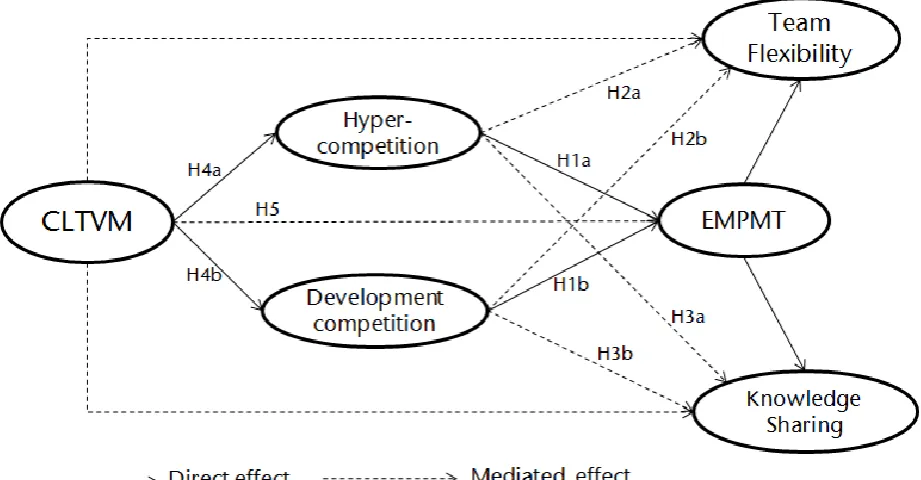
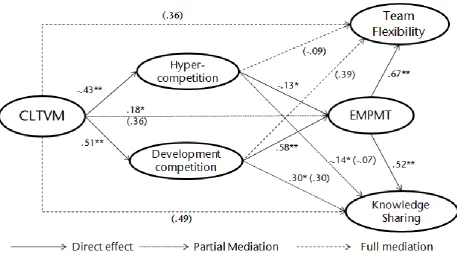
hypercompetition negatively relates to (via team empowerment) within-team knowledge sharing and team flexibility. On the antecedent side, we propose that team collectivism affects within-team competition and empowerment. Figure 1 illustrates the conceptual model and associated hypotheses this study aims to test. We elaborate on these relationships in the following sections.
--- Insert Figure 1 about here ---
Knowledge sharing and team flexibility
Knowledge is an important attribute for successful and effective teams (Haas and Hansen, 2007; Foss et al., 2010; Payne et al., 2009; Srivastava et al., 2006). Knowledge sharing within organizations has been widely examined regarding its motivational factors, such as extrinsic motivations of
incentives and expected rewards (Lin, 2007; Quigley et al., 2007), intrinsic motivations of empowerment (Srivastava et al., 2006), coordination mechanisms (Tsai, 2002), and knowledge networks (Hansen, 2002). Although prior studies on knowledge sharing have examined team-level factors (e.g., transactive memory system) (Brandon and Hollingshead, 2004), the dependent variables tend to be either knowledge-seeking behaviors (Hansen et al., 2005) or external knowledge sharing (Cummings, 2004), as opposed to knowledge sharing among team members.
team flexibility as a key team outcome, because within-team competition could have implications (positive or negative) for a team’s capabilities to respond and flexibility to react to externally imposed pressures (Li et al., 2010).
Within-team competition and team empowerment
Psychological empowerment refers to increased intrinsic task motivation manifested in a set of cognitions reflecting individuals’ orientation to their work roles, such as meaning (i.e., the belief that their work is important), competence (i.e., the perceived ability to perform their tasks), impact (i.e., the degree to which employees feel their work affects the performance of their team), and
self-determination (i.e., perceived autonomy at work) (Avolio et al., 2004; Conger and Kanungo, 1988; Spreitzer, 1995a). At the team level, team empowerment is defined as increased task motivation and orientation that result from team members’ collective, self-determined, positive assessments of their organizational tasks (Kirkman and Rosen, 1999).
Team hypercompetition and team development competition have differential effects on team empowerment, as under different competitions, team members are motivated to achieve different ends. Under hypercompetition, individual members are driven to achieve their own personal goals as the first priority, even at the cost of team-related goals. Consequently, team members are more likely to feel that it is difficult to make a meaningful impact on the team or its associated tasks, as their efforts may be undermined by other team members. In addition, hypercompetitive situations can engender negative interpersonal affect (e.g., hatred and aggression), and thus, have a negative effect on within-team interactions, such as sharing knowledge (Kelly and Barsade, 2001; Sy et al., 2005). Similarly, when a team is hypercompetitive, team members tend to individuate (or isolate) themselves from other team members (Ruscher and Fiske, 1990; Ruscher et al., 1991), which in turn undermines the
conditions necessary for team empowerment, such as a supportive work environment, trust (Kirkman and Rosen, 1999), and subjective well-being (Biron and Bamberger, 2010). Therefore, we
Conversely, team development competition stresses the benevolent comparison of achievements among team members and a common goal of team-level accomplishments. First, team development competition is helpful for team empowerment because it intrinsically motivates team members and enables them to respond to unpredictable demands for change without sacrificing team benefit. Second, under team development competition, team members feel a strong sense of a common goal (Algesheimer et al., 2011; Bosch-Sijtsema et al., 2011; Chen et al., 2006; Mehta et al., 2009; Tjosvold et al., 2004), which in turn enhances their intention of positively influencing the team. Prior research shows that interpersonal competition could enhance intrinsic motivation (Abuhamdeh and
Csikszentmihalyi, 2009; Tauer and Harackiewicz, 2004). Thus:
Hypothesis 1a: Team hypercompetition negatively relates to team empowerment.
Hypothesis 1b: Team development competition positively relates to team empowerment.
Within-team competition, team empowerment, and team flexibility
Empowerment has been found to be an important mediator between different types of team climates (e.g., team-member exchange) and team outcomes (e.g., performance, commitment) (Aryee and Chen, 2006; Liden et al., 2000; Meyerson and Kline, 2008). Similarly, we expect that the
their job activities to meet performance goals. This leads to improved team flexibility (Kirkman et al., 2004). Therefore, those who perceive stronger empowerment within their teams are more cognitively flexible and better at solving problems (Biron and Bamberger, 2010; Swafford et al., 2006).
Collectively, when teams are empowered, proactive behaviors such as flexibility, resilience, and persistence occur (Chen et al., 2007).
Previous research of empowerment posits that empowerment in workplaces mediates the relationship between the social structural context (e.g., within-team competition) (Russell and Fiske, 2008) and team flexibility (Li et al., 2010; Spreitzer, 1995b). As explained previously (see Hypothesis 1a and Hypothesis 1b), team competitions influence team empowerment, which in turn, has a positive relationship with team flexibility. We expect that team empowerment mediates the relationships between team competitions and team flexibility. We do not expect these indirect relationships to be partial mediations, as there are no obvious additional reasons, aside from team empowerment, regarding the ways in which within-team competition influences team flexibility. Thus:
Hypothesis 2a: Team empowerment mediates the negative relationship between team
hypercompetition and team flexibility.
Hypothesis 2b: Team empowerment mediates the positive relationship between team
development competition and team flexibility.
Within-team competition, team empowerment, and knowledge sharing
Knowledge sharing prevents the cognitive resources available within a team from being underutilized (Srivastava et al., 2006). Previous studies have proposed empowerment as a critical predictor of team knowledge sharing (e.g., Srivastava et al., 2006). Given that within-team
In addition to the indirect effect of within-team competition on knowledge sharing via team empowerment, within-team competition may have a direct relationship with knowledge sharing. One major motive for knowledge sharing is concern for the team’s development. Under team development competition with a common collective goal, team members are more likely to engage in knowledge sharing, regardless of whether or not they feel empowered. On the other hand, a major barrier for knowledge sharing is the desire to protect personal knowledge resources (Hansen et al., 2005). Under team hypercompetition, team members are more likely to place their self-interest as the top priority and withhold their knowledge resources. Hence, team development competition tends to encourage knowledge sharing, while team hypercompetition tends to inhibit knowledge sharing.
Hypothesis 3a: Team empowerment partially mediates the negative relationship between team
hypercompetition and team knowledge sharing.
Hypothesis 3b: Team empowerment partially mediates the positive relationship between team
development competition and team knowledge sharing.
It is important to note that organizational behavior researchers suggest that employees’ sense of empowerment is motivated by organizational characteristics (e.g., competition), and it has positive effects on work outcomes (Choi, 2010), such as knowledge sharing and flexibility (Baruch, 1998). Similarly, previous studies indicate that the perception of empowerment is influenced by interpersonal and contextual factors (e.g., development competition among team members), but not vice versa (Tuuli and Rowlinson, 2010).
Team collectivism
orientation for the benefit of their team. Similarly, people may adopt a very developmental
competitive orientation for the benefit of their personal development. In their team work environment, on the other hand, they could compete for their own benefit instead of the collective benefit of the team. Therefore, within-team competition may be driven by a team collectivist culture that affects competition in work teams (Gardner et al., 2009; Gundlach et al., 2006).
Within-team collectivism refers to the degree to which a team values loyalty, responsibility, and cohesiveness in the team family (Brewer and Venaik, 2011; Robert and Wasti, 2002). The extant literature indicates that collectivism helps to explain the degree of team orientation to which the members stress teamwork in performing team activities and in making collective decisions (Salas et al., 2005; Salas et al., 2007; Thakkar et al., 2011). Research shows that team collectivism positively relates to effective team functioning (Dierdorff et al., 2011). Collectivism is associated with a high degree of acceptance of group norms, a strong concern for the well-being of the group, a strong orientation toward group goals, and a tendency toward positive social interaction (e.g., within-team competition) in group contexts (Dierdorff et al., 2011; Triandis et al., 1988). A team is likely to be permeated by a collectivist culture when the demands and interests of the team take priority over the desires and needs of the individuals on the team (Triandis and Gelfand, 1998), which is suggestive of a positive influence on team development competition and a negative effect on team hypercompetition. Team development competition can be more easily achieved within a collectivist environment because collectivists look out for the well-being of the entire team, even at the expense of personal interests (Leung and Bond, 1984). Recent research has related collectivism to constructive competition (e.g., Fülöp, 2009).
Team collectivism could have a direct impact on team empowerment (Kirkman and Shapiro, 2001) and subsequently affect knowledge sharing and team flexibility (Gundlach et al., 2006). Given that empowerment represents increased task motivation resulting from team members’ collective assessments of their team’s tasks (Kirkman et al., 2004), teams with a stronger collectivistic culture are more likely to have higher collective psychological empowerment. Collectivism favors
others on their team to look after their interests and protect them when they are in trouble (Sigler and Pearson, 2000). The social support component of collectivism increases psychological empowerment through positive reinforcement of employee actions that assist the team in meeting its goals (Sigler and Pearson, 2000). Thus, even after controlling for the effects of within-team competition, team collectivism can still have a significant positive relationship with team empowerment. Therefore, we hypothesize:
Hypothesis 4a: Team collectivism negatively relates to within-team hypercompetition.
Hypothesis 4b: Team collectivism positively relates to within-team development competition.
Hypothesis 5a: Within-team hypercompetition partially mediates the relationship between team
collectivism and team empowerment.
Hypothesis 5b: Within-team development competition partially mediates the relationship
between team collectivism and team empowerment.
Hypothesis 5c: Team collectivism positively relates to team empowerment.
Methods
Sample and data collection
We conducted a survey of professionals working in hybrid-virtual teams (mainly in the areas of research and development [R&D], management information systems [MIS], human resources
Based on prior studies on virtual teams (Kirkman and Mathieu, 2005; Maznevski and Chudoba, 2000), we define a knowledge-intensive virtual team as a virtual relationship of knowledge workers that is mostly conducted over webs of communication technologies and guided by a common purpose of fulfilling certain knowledge-intensive tasks and functions. The typical knowledge-intensive virtual teams surveyed in this study are relevant to test our proposed model, because such teams often have a high potential conflict of interest among individual knowledge workers and between individual knowledge workers and the team (Alvesson, 2000), making within-team competition a salient issue for knowledge-intensive teams. In addition, both empowerment and knowledge sharing have been considered crucial mechanisms for effective knowledge-intensive tasks (Alvesson, 2000).
A total of 24 large IT firms in two well-known science parks in Taipei and Hsinchu agreed to participate in this study. The firms provided a diverse sample of virtual teams that rely heavily on e-mail, chat tools, online conferencing, instant messaging, and other online systems to accomplish their teamwork. We surveyed five members from each team, including four team members and the team leader (or team supervisor). When a leader supervised more than one team, we only surveyed one of his or her teams to avoid confusion. The team leaders randomly distributed four questionnaires (sealed in envelopes) to their subordinates, who returned the completed questionnaire directly to onsite
research assistants. Of the 775 questionnaires distributed to the members of 155 teams (with an average team size of 12.26 members per team), 680 usable questionnaires from 141 teams were returned, for a questionnaire response rate of 87.74%. This high response rate (Baruch and Holtom, 2008) was achieved partially due to a gift voucher incentive. A gift voucher of NTD100 (about USD3.35) was provided to every survey respondent. Regarding the representativeness of our sample with regard to the total population, our average team sample represents 41% of the total population of all the teams, which could have a potential impact on the accuracy of model estimation results.
Measures
We measured the constructs in this study using five-point Likert scales ranging from strongly disagree (1) to strongly agree (5). Most measures were drawn and modified from the existing literature to fit the research context. A number of steps were employed in finalizing the measurement items, which were first refined by three management professors working in the field. The refined scale items were then translated into Chinese (Brislin, 1970). At this point, we conducted several informal focus groups with executive MBA students to repeatedly discuss and examine the items’ face validity and representativeness of the two dimensions of within-team competition. Finally, we conducted three pilot studies to assess the quality of our measures and improve item readability and clarity. Some items were reworded or removed following exploratory factor analysis of the three pilot studies (subject were professionals in the IT industry taking evening college classes; n = 59, 73, and 65). Team members, including team leaders—who are also team members—completed all of the measures. This is because the team supervisors are also team members (not external to the teams).
Within-team competition. We developed a seven-item team hypercompetition scale based on the information obtained during an informal focus group with managers (executive MBA students) and by referring to the research outlined above, particularly the personal level constructs of personal
hypercompetition (Ryckman et al., 1994), between-partner competitive goals (Wong et al., 2005), and psychological competitive climates (Brown et al., 1998; Fletcher et al., 2008). Items considered inappropriate were reworded by our focus group or removed from our questionnaire after the three pilot tests, using exploratory factor analysis. A sample item is: “Our team members have a ‘win–lose’ relationship.”
members compete with each other with strong sportsmanship.” The scale of within-team competition was verified via a series of pilot tests among executive MBA students. In an analysis of the main sample, the internal reliability (based on Cronbach’s alpha score) of team hypercompetition was 0.87, and that of team development competition was 0.92. Appendix A lists the measurements items for within-team competition.
Team empowerment. We measured team empowerment with nine items from a shortened version of the team empowerment scale from Kirkman et al.’s (2004) empowerment scale, reaching an
equivalent internal reliability (based on Cronbach’s alpha score) of 0.93. All items loaded to one global dimension of empowerment. We removed two items due to low item-to-total correlations.
Knowledge sharing. We measured knowledge sharing with a four-item scale based on Lin (2010). In this study, for instance, an original item, “I share my job experience with my online coworkers,” was modified to “Our team members share job experiences with one another.” The internal reliability (based on Cronbach’s alpha score) of this construct was 0.94.
Team flexibility. We measured team flexibility using four items modified from Ryu et al.’s (2007) measure to fit the team context. The original scale was developed by Heide and John (1992) to
Team collectivism. We measured team collectivism with seven items slightly reworded from the organizational collectivism scale developed by Robert and Wasti (2002). For example, an original item, “Once someone is hired, the organization takes care of that person’s overall welfare,” was reworded slightly to “Once someone is hired, the team takes care of that person’s overall welfare.” To ensure that we measured collectivism at the team level, we clearly instructed the respondents to refer to their work teams when answering pertinent questions. The internal reliability (based on
Cronbach’s alpha score) was 0.91.
The quality of survey data mainly depends on (1) the nature of the questions asked and (2) the intention and characteristics of the sample subjects (Fetters, Stowe, and Owings, 1984). Our data collection pertinently meets these two criteria. First, our measurement items were drawn and modified from previous studies, and then refined and validated by focus groups and three pilot studies. Second, during the survey, we obtained strong support from our sample firms, whose personnel departments carefully helped distribute the anonymous questionnaires to team leaders who expressed willingness to volunteer, and then traced the status of the returned questionnaires. Moreover, a gift voucher was provided to every participant to motivate their discreet responses. These procedural measures helped to reduce the potential bias of careless or non-purposeful responding. As a result, we had to remove only eight observations that were deemed to be careless or
non-purposeful responses. We also checked whether participants were members of interdependent teams with a shared objective. First, only enduring teams with clear, shared objectives and tasks were selected. Second, only team members who contributed to the core functions of the teams were invited to participate in the survey.
Measurement properties. We performed a number of tests to confirm the validity of the measures of within-team competition for the main study at the individual respondent level. First, we tested the validity of the scales for within-team competition. Because we obtained only one large sample, we randomly split the sample into halves. We used the first half of the sample (n = 349) to conduct
two-factor model (team hypercompetition versus team development competition) achieved a good fit: 2 = 116.782 (43), 2/df = 2.714, IFI = 0.961, CFI = 0.961, and RMSEA = 0.070. All factor loadings
were significant and above a 0.50 threshold, with an AVE score for team hypercompetition of 0.51 and an average variance extracted (AVE) score of 0.55 for team development competition. The square roots of both AVE scores were higher than the correlation between the two factors (r = -0.41) (Fornell and Larcker, 1981). In contrast, a one-factor model (combining two factors into one factor) had an extremely poor fit: 2 = 462.946 (44), 2/df = 10.521, IFI = 0.779, CFI = 0.777, and RMSEA = 0.165.
Results
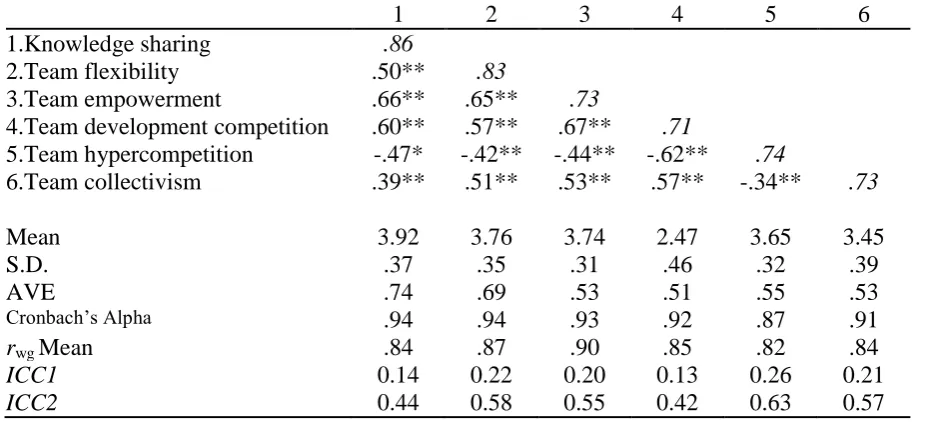
We checked the inter-rater agreement coefficients (rwg: James et al., 1984) before aggregating individual measures into team-level aggregate measures. The coefficients of rwg (mean) for each construct were 0.82 or larger (see Table 1), which were all higher than the cutoff value of 0.70, confirming a strong inter-rater agreement (James et al., 1984). In addition, we calculated both ICC (1) and ICC (2) (see Table 1). ICC (1) measures the inter-rater reliability, representing the amount of variance in any one individual’s response that can be explained by group membership. All ICC (1) values exceeded the accepted cutoff value of 0.12 (de Jong and Elfring, 2010; Glick, 1985), ranging from 0.13 to 0.26. ICC (1) should be used as the primary base for deciding appropriateness of
aggregating perceptual variables into group-level data (James, 1982). ICC (2) measures the reliability of group means and is highly subject to the number of respondents per team; therefore, its value should not be assessed alone (de Jong and Elfring, 2010; James, 1982). Table 1 presents the descriptive statistics, including rwg, ICC (1), and ICC (2), at the team level.
--- Insert Table 1 about here ---
factor CFA model was extremely poor: 2 = 1272.986 (135), 2/df = 9.430, IFI = 0.559, CFI = 0.556, and RMSEA = 0.245. Appendix B (see the lower part of the table) also presents the model comparison results at the team-level analyses. The proposed six-factor structure was clearly superior to all of the other models.
We employed structural equation modeling to test our model (see Figure 1). Initially, we added a number of team control variables (i.e., team ratios in gender, age, education, and expatriate
members), with none being a significant predictor, and removed them for the sake of model parsimony. The model achieved an adequate fit: 2 = 283.787 (121), 2/df = 2.345, IFI = 0.936, CFI = 0.936, and RMSEA = 0.098. Table 2 also presents the model fit comparison between the proposed model and a couple of competing models, the explanation for which can be found in the notes for Table 2.
--- Insert Table 2 about here ---
Hypotheses testing
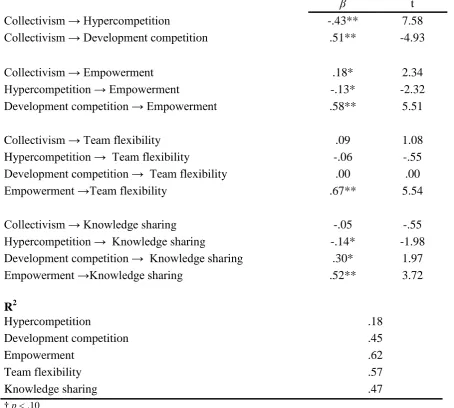
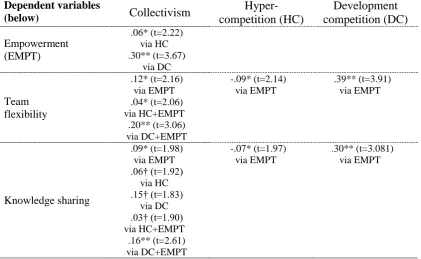
Table 3 presents the estimation results for the proposed model. We calculated the size and significance of the indirect effects based on Sobel tests (Baron and Kenny, 1986; MacKinnon et al., 2007). Table 4 presents indirect effects. Figure 2 presents a visual model with the significant direct and total significant indirect effects.
Effects of within-team competition. Hypothesis 1a states that team empowerment is negatively influenced by team hypercompetition. Hypothesis 1b states that team empowerment is positively influenced by team development competition. Both hypotheses are supported (β = -0.13, p < 0.05 and
β = 0.58, p < 0.01, respectively; see Table 3).
Hypothesis 2a states that team empowerment mediates the effects of team hypercompetition. Hypothesis 2b states that team empowerment mediates the effect of team development competition on team flexibility. Both hypercompetition and development competition are significantly related to team empowerment (see Table 3, β = -0.13, p < 0.05 and β = 0.58, p < 0.01, respectively). In addition, team empowerment is positively related to team flexibility (β = 0.67, p < 0.01). Indirect effect tests (see Table 4) show that both Hypotheses 2a and 2b are supported (β = -0.09, p < 0.05 and β = 0.39, p < 0.01, respectively). However, when team empowerment is controlled for in the full model (see Table 3), neither hypercompetition nor development competition significantly relates to team flexibility (β = -o.06, ns and β = 0.00, ns, respectively), which suggests a full mediation relationship among within-team competition, within-team empowerment, and within-team flexibility.
Hypotheses 3a and 3b state that team empowerment mediates the effects of (a) team hypercompetition and (b) team development competition, respectively, on knowledge sharing. Hypotheses 3a and 3b are supported (β = -0.07, p < 0.05 and β = 0.30, p < 0.01, respectively; see Table 4). In addition, both team hypercompetition and team development competition have direct effects on knowledge sharing (β = -0.14, p < 0.05 and β = 0.30, p < 0.05, respectively; see Table 3), suggesting that team empowerment partially mediates the effects of within-team competition on knowledge sharing.
team hypercompetition (β = 0.06, p < 0.05) and team development competition (β = 0.30, p < 0.01). Thus, Hypotheses 5a and 5b are supported.
Hypothesis 5c states that team collectivism positively relates to team empowerment. Hypothesis 5c is supported (β = 0.18, p < 0.05). Finally, team collectivism also has significant indirect effects on both team flexibility and team knowledge sharing (see Table 4 for detailed paths), which suggests that team empowerment mediates the effects of team collectivism on both team flexibility and team knowledge sharing.
Discussion
Previous research offers a limited understanding of the effect of within-team competition on team flexibility and knowledge sharing. We proposed that within-team competition comprises two distinct dimensions: team hypercompetition and team development competition. In addition, we modeled the effects of within-team competition on team flexibility and team knowledge sharing by stressing the pivotal mediating role of team empowerment. We also integrated team collectivism as an antecedent of within-team competition. This study offers a number of original contributions to the literature.
extant literature. Similar to the effects of competitive orientation at the personal level, team level competitive orientations play similar positive and negative roles in team effectiveness, in that team hypercompetition tends to be detrimental to the team, while team development competition tends to contribute to team effectiveness.
Second, drawing on the theory of team empowerment (Srivastava et al., 2006), we support a motivational-empowering (ME) power of within-team competition on team processes. This ME power of competition suggests that team empowerment acts as a mediation mechanism between within-team competition and team knowledge sharing and team flexibility. However, our research found that after controlling for the effect of team empowerment, within-team competition still has a significant relationship with team knowledge sharing. This finding suggests that team empowerment is not the only mechanism for within-team competition to affect knowledge sharing. This is not surprising, as team development competition aligns the self-interest with the common team interest, thus
encouraging knowledge sharing; team hypercompetition, however, inhibits knowledge sharing so that team members might protect their own interests though preserving knowledge resources. On the other hand, team empowerment was found to mediate fully the relationship between within-team
competition and team flexibility, which suggests that the strength of the ME power of within-team competition differs, depending on the specific team processes or outcomes.
time, the empowering role of team collectivism in team processes and supports the concept that within-team competition helps explain this empowering effect. Due to the partial nature of the mediation role of within-team competition in the relationship between team collectivism and team empowerment, future research should aim to identify other mechanisms of the empowering effect of team collectivism.
Managerial implications
Our findings add to managerial knowledge by unveiling the role and relevance of within-team competition in facilitating team knowledge sharing and team flexibility. This study conceptualizes two essential elements of competition and clarifies the mechanisms through which competition may be effectively used or reduced. Knowledge about the influential processes of within-team competition becomes critical as management increasingly counts on teamwork to achieve organizational goals, despite the fact that motivating teamwork is never simple (Srivastava et al., 2006). Managers who wish to make good use of a reward structure for within-team competition should be able to identify the difference between development competition and hypercompetition. For example, cutthroat
team culture, as our results show that team collectivism relates to team development competition positively and team hypercompetition negatively, which in turn, influences team empowerment and outcomes positively and negatively, respectively. We argue that managing team competition is
especially important for knowledge workers (Alvesson, 2000), such as professors working in research-intensive universities and institutes, consultants working on team projects, and various knowledge workers working in IT firms (as demonstrated by our sample). Collectivism is a spirit that can be substantially enhanced if team members are given the opportunities to strengthen such spirit through team activities, such as participation in decision making, pursuit of common goals, and sharing teamwork responsibility. Meanwhile, managers can plan social events for their teams in an informal setting, such as lunch on a set day of each week or a pleasant outing every few months. While praising individuals’ experience, special skills, or quality of work, managers should keep reminding their subordinates that everyone is expected to embrace a “one-for-all, all-for-one” spirit within the team.
Our empirical results indicate that empowerment is a critical checkpoint for management when evaluating the impact of competition on team knowledge sharing and team flexibility. We point out a move from empowering individuals (Thomas and Velthouse, 1990) to empowering entire teams. Given that competition is inevitable in a team, the status of empowerment may be an important signal for management to relieve the potential negative effect of harmful competition in a timely manner. To improve the performance of teams, management needs to take the concept of empowerment seriously and find ways to encourage positive competition within teams. Firms should empower teams in their decision making and allow teams to be flexible and self-managed.
Limitations and future research
strategies, resource allocation, and alliances) influence team-level development competition and hypercompetition. Third, this research draws upon the literature on team competition and its relevant theories to predict some team processes. Yet, there is a parallel literature on team interdependency that could be related to team competition. For example, task interdependence is defined as the degree to which completing tasks requires the interaction of team members (Horwitz and Horwitz, 2007). Similarly, outcome interdependence is defined as the degree to which individuals perceive that their goals are interdependent with each other (Ghobadi and D’Ambra, 2013). These two streams of research could be integrated in a way that leads team interdependence to team competition. Future research can explore how to integrate these two constructs to build a more comprehensive and integrative model.
Fourth, this study used a sample of hybrid virtual teams. In our sample, teams are relatively homogeneous in terms of their degrees of virtuality. However, it might not always be the case; it would be particularly interesting to examine how team virtuality would affect team dynamism along with within-team competition (Kirkman and Mathieu, 2005; Staples and Webster, 2008). Fifth, the data collected to test our theoretical model are cross-sectional by nature. Therefore, caution needs to be taken in claiming the causal relationships. Although this research and some prior research have supported significant relationships among the variables in question, there is a lack of definitive data on the causal direction of these relationships. To establish the causal relationships more firmly, future research should adopt an experimental or longitudinal research design. In a longitudinal design, for example, future research can measure within-team competition and its dependent variables at different time waves, in the follower order: within-team competition (wave 1), team empowerment (wave 2), and team knowledge sharing and team flexibility (wave 3). In an experimental design, different interventions can be randomly assigned to different teams to induce different types of within-team competition. Such interventions may involve introducing different within-team policies on how within-team members can compete with one another and/or confederates (if ethically appropriate) to create
common source method, in that we measured all variables with a single survey instrument. Future research would benefit from applying multiple sources and/or a longitudinal design to collect the data. Finally, the results of this study need to be interpreted in terms of the potential impact of the
nonresponse rate of the team members. As noted in the Methods section, our average team sample represents 41% of the total population of all teams, which could make our observed effect sizes underestimated by 40% (see Nesterkin and Ganster, 2012, p. 11). Despite these limitations, this research makes valuable contributions to the literature by operationalizing the concept of within-team competition into two-dimensional factors and integrating them into a framework that explains how they relate to important team processes (i.e., team empowerment, team knowledge sharing, and team flexibility).
Funding
References
Abuhamdeh, S., and Csikszentmihalyi, M. (2009). ‘Intrinsic and extrinsic motivational orientations in the competitive context: An examination of person–situation interactions’. Journal of Personality, 77(5), 1615-35.
Algesheimer, R., Dholakia, U. M. and Gurău. C. (2011). ‘Virtual team performance in a highly competitive environment’. Group & Organization Management, 36(2), 161-90.
Alvesson, M. (2000). ‘Social identity and the problem of loyalty in knowledge-intensive companies’.
Journal of Management Studies,37(8), 1101-24.
Aryee, S., and Chen, Z. (2006). ‘Leader-member exchange in a Chinese context: Antecedents, the mediating role of psychological empowerment and outcomes’. Journal of Business Research, 59(7), 793-801.
Avolio, B. J., Weichun, Z., Koh, W., and Bhatia, P. (2004). ‘Transformational leadership and
organizational commitment: mediating role of psychological empowerment and moderating role of structural distance’. Journal of Organizational Behavior,25(8), 951-68.
Baron, R. M., and Kenny, D. A. (1986). ‘The moderator-mediator variable distinction in social
psychological research: conceptual, strategic, and statistical considerations’. Journal of Personality
and Social Psychology,51(6), 1173-82.
Baruch, Y. (1998). Empowerment models in organizations. Career Development International, 3(2), 82-87.
Baruch, Y. and Holtom, B. (2008). ‘Survey response rate levels and trends in organizational research’. Human Relations, 61(8), 1139-1160.
Beersma, B., Hollenbeck, J. R., Humphrey, S. E., Moon, H., Conlon, D. E., and Ilgen, D. R. (2003). ‘Cooperation, competition, and team performance: Toward a contingency approach’. Academy of Management Journal,46(5), 572-90.
Bhatnagar, D., and Tjosvold, D. (2012). ‘Leader values for constructive controversy and team effectiveness in India’. International Journal of Human Resource Management, 23(1), 109-125. Biron, M., and Bamberger, P. (2010). ‘The impact of structural empowerment on individual
well-being and performance: Taking agent preferences, self-efficacy and operational constraints into account’. Human Relations,63(2), 163-91.
Boland, R. J., and Tenkasi, R. V. (1995). ‘Perspective Making and Perspective Taking in Communities of Knowing’. Organization Science, 6(4), 350-372.
Bosch-Sijtsema, P. M. Fruchter, R. Vartiainen, M. and Ruohomäki, V. (2011). ‘A framework to
analyze knowledge work in distributed teams’. Group & Organization Management, 36(3), 275-07. Brandon, D. P., and Hollingshead, A. (2004). ‘Transactive memory systems in organizations:
Matching tasks, expertise, and people’. Organization Science,15(6),633-44.
Brewer, P., and Venaik, S. (2011). ‘Individualism-collectivism in Hofstede and GLOBE’. Journal of International Business Studies, 42(3), 436-445.
Brislin, R.W. (1970). ‘Back-translation for cross-cultural research’. Journal of Cross-Cultural Psychology,1(3), 185-216.
Brown, S. P., Cron, W. L., and Slocum, Jr. J. W. (1998). ‘Effects of trait competitiveness and
perceived intraorganizational competition on salesperson goal setting and performance’. Journal of Marketing,62(4), 88-98.
Chan, D. (1998). ‘Functional relations among constructs in the same content domain at different levels of analysis: A typology of composition models’. Journal of Applied Psychology, 83(2), 234–246. Chen, G., Tjosvold, D., and Liu, C. (2006). ‘Cooperative Goals, Leader People and Productivity
Values: Their Contribution to Top Management Teams in China’. Journal of Management Studies, 43(5), 1177-1200.
Choi, G.-Y. (2010). The Influence of Organizational Characteristics and Psychological Empowerment on Secondary Traumatic Stress of Social Workers Working with Family Violence or Sexual Assault Survivors. National Symposium on Doctoral Research in Social Work. 22nd, Ohio State University. College of Social Work.
Collier, S., Ryckman, R. M., Thornton, B., and Gold, J. A. (2010). ‘Com-petitive personality attitudes and forgiveness of others’. Journal of Psychology, 144(6), 535-543.
Conger, J. A., and Kanungo, R. N. (1988). ’The empowerment process: integrating theory and practice’. Academy Of Management Review,13(3), 471-82.
Crawford, E., and LePine, J. (2012). ‘A configural theory of team processes: accounting for the structure of taskwork and teamwork’. Academy of Management Review, 38(1), 32-48. doi: 10.5465/amr.2011.0206
Cummings, J. N. (2004). ‘Work groups, structural diversity, and knowledge sharing in a global organization’. Management Science,50(3), 352-64.
De Dreu, C. K. W., and Weingart, L. R. (2003). ‘Task versus relationship conflict, team
performance, and team member satisfaction: A meta-analysis’. Journal of Applied Psychology, 88(4), 741-749
Deci, E., and Ryan, R. (Eds.), (2002). Handbook of self-determination research. Rochester, NY: University of Rochester Press.
de Jong, B. A., and Elfring, T. (2010). ‘How does trust affect the performance of ongoing teams? The mediating role of reflexivity, monitoring, and effort’. Academy of Management Journal, 53(3), 535-49.
Dierdorff, E. C., Bell, S. T. and Belohlav, J. A. (2011). ‘The power of “we”: Effects of psychological collectivism on team performance over time’. Journal of Applied Psychology, 96(2), 247-62. Dixon, K. R., and Panteli, N. (2010). From virtual teams to virtuality in teams. Human Relations,
Downing, C. E., Gallaugher, J. M., and Segars, A. H. (2003). ‘Information technology choices in dissimilar cultures: enhancing empowerment’. Journal of Global Information Management, 11(1), 20-39.
Fetters, W., Stowe, P., and Owings, J. (1984). ‘High school and beyond, a national longitudinal study for the 1980s: Quality of responses of high school students to questionnaire items (NCES 84-216)’. Washington, DC: National Center for Education Statistics.
Fiol, C. M., and O'Connor, E. J. (2005). ‘Identification in face-to-face, hybrid, and pure virtual teams: Untangling the contradictions’. Organization Science,16(1), 19-32.
Fletcher, T. D., Major, D. A., and Davis, D. D. (2008). ‘The interactive relationship of competitive climate and trait competitiveness with workplace attitudes, stress, and performance’. Journal of Organizational Behavior, 29(7), 899-922.
Fornell, C., and Larcker, D. F. (1981). ‘Evaluating structural equation models with unobservable variables and measurement error’. Journal of Marketing Research,18(1),39-50.
Foss, N. J., Husted, K., and Michailova, S. (2010). ‘Governing Knowledge Sharing in Organizations: Levels of Analysis, Governance Mechanisms, and Research Directions’. Journal of Management Studies, 47(3), 455-82.
Fülöp, M. (2009). ‘Happy and unhappy competitors: What makes the difference?’ Psychological Topics,18(2), 345-67.
Furst, S., Blackburn, R., and Rosen, B. (1999). ‘Virtual team effectiveness: a proposed research agenda’. Information Systems Journal, 9(4), 249-69.
Gagné, M. (2009). ‘A model of knowledge-sharing motivation’. Human Resource Management,
48(4), 571-589.
Ghobadi, S., and D'Ambra, J. (2013). ‘Modeling high-quality knowledge sharing in cross-functional software development teams’. Information Processing & Management, 49(1), 138-157.
Glick, W. H. (1985). ‘Conceptualizing and measuring organizational and psychological climate: Pitfalls in multilevel research’. Academy of Management Review,10(3),601-16.
Gundlach, M., Zivnuska, S., and Stoner, J. (2006). ’Understanding the relationship between
individualism-collectivism and team performance through an integration of social identity theory and the social relations model’. Human Relations,59(12),1603-32.
Haas, M. R., and Hansen, M. T. (2007). ‘Different knowledge, different benefits: toward a
productivity perspective on knowledge sharing in organizations’. Strategic Management Journal, 28(11), 1133-53.
Hansen, M. T. (2002). ‘Knowledge networks: Explaining effective knowledge sharing in multiunit companies’. Organization Science,13(3),232-48.
Hansen, M. T., Mors, M. L., and Lovas, B. (2005). ‘Knowledge sharing in organizations: Multiple networks, multiple phases’. Academy of Management Journal,48(5), 776-93.
Heide, J. B., and John, G. (1992). ‘Do norms matter in marketing relationships?’ Journal of Marketing, 56(2),32-44.
Horwitz, S. K., and Horwitz, I. B. (2007). ‘The effects of team diversity on team outcomes: A meta-analytic review of team demography’. Journal of Management, 33(6), 987-1015.
James, L. (1982). ‘Aggregation bias in estimates of perceptual agreement’. Journal of Applied Psychology,67(2),219-29.
James, L. R., Demaree, R. G., and Wolf, G. (1984). ‘Estimating within-group interrater reliability with and without response bias’. Journal of Applied Psychology, 69(1),85-98.
Johnson, D. W., Maruyama, G., Johnson, R., Nelson, D., and Skon, L. (1981). ‘Effects of cooperative, competitive, and individualistic goal structures on achievement: A meta-analysis’. Psychological Bulletin,89(1), 47-62.
Johnson, M. D., Hollenbeck, J. R., Humphrey, S. E., Ilgen, D. R., Jundt, D., and Meyer, C. J. (2006). ‘Cutthroat cooperation: Asymmetrical adaptation to changes in team reward structures’. Academy of Management Journal, 49(1), 103-19.
Johnson, P., Heimann, V., and O'Neill, K. (2001). ‘The wonderland of virtual teams’. Journal of Workplace Learning, 13(1), 24-29.
Kelly, J. R., and Barsade, S. G. (2001). ’Mood and Emotions in Small Groups and Work Teams’.
Organizational Behavior and Human Decision Processes, 86(1), 99-130.
Kirkman, B. L., Benson, R., Gibson, C. B., Tesluk, P. E., and Simon, O. M. (2002). ’Five challenges to virtual team success: lessons from Sabre, inc’. Academy of Management Executive, 16(3), 67-79. Kirkman, B. L., Rosen, R., Tesluk, P. E., and Gibson, C. B. (2004). ’The impact of team
empowerment on virtual team performance: The moderating role of face-to-face interaction’.
Academy of Management Journal, 47(2),175-92.
Kirkman, B. L., and Mathieu, J. E. (2005). ‘The Dimensions and Antecedents of Team Virtuality’.
Journal of Management, 31(5), 700-18.
Kirkman, B. L., and Rosen, B. (1999). ‘Beyond self-management: Antecedents and consequences of team empowerment’. Academy of Management Journal,42(1),58-74.
Kirkman, B. L., and Shapiro, D. L. (2001). ‘The impact of team members' cultural values on productivity, cooperation, and empowerment in self-managing work teams’. Journal of Cross-Cultural Psychology,32(5),597-617.
Leung, K., and Bond, M. H. (1984). ‘The impact of cultural collectivism on reward allocation’.
Journal of Personality and Social Psychology,47(4), 793-804.
Li, Y., Jiang, J. J., and Klein, G. (2007). ‘The antecedents of is software development team flexibility’. In 2nd International Research Workshop for IT Project Management.
Liden, R. C, Wayne, S. J., and Sparrowe, R. T. (2000). ‘An examination of the mediating role of psychological empowerment on the relations between the job, interpersonal relationships, and work outcomes’. Journal of Applied Psychology, 85(3), 407-416.
Lin, H. F. (2007). ‘Effects of extrinsic and intrinsic motivation on employee knowledge sharing intentions’. Journal of Information Science, 33(2), 135-49.
Lin, C. P. (2010). ‘Learning task effectiveness and social interdependence through the mediating mechanisms of sharing and helping: A survey of online knowledge workers’. Group & Organization Management, 35(3), 299-328.
Little, T. D., Cunningham, W. A., Shahar, G., and Widaman, K. F. (2002). ‘To parcel or not to parcel: Exploring the question, weighing the merits’. Structural Equation Modeling, 9(2), 151-73.
Liu, L., and Yetton, P. (2010). ‘Sponsorship and it vendor management of projects’. Journal of Information Technology, 25(1), 56-64.
MacKinnon, D. P., Fairchild, A. J., and Fritz, M. S. (2007). ‘Mediation analysis’. Annual Review of Psychology,58,593-614.
Manuj, I., and Mentzer, J. T. (2008). ‘Global supply chain risk management strategies’. International Journal of Physical Distribution & Logistics Management, 38(3), 192–223.
Mathieu, J., Maynard, M. T., Rapp, T., and Gilson, L. (2008). ‘Team effectiveness 1997-2007: A review of recent advancements and a glimpse into the future’. Journal of Management,34(3), 410-76.
Mathieu, J. E., Gilson, L. L., and Ruddy, T. M. (2006). ‘Empowerment and team effectiveness: An empirical test of an integrated model’. Journal of Applied Psychology, 91(1),97-108.
McComb, S. A., Green, S. G., and Dale Compton, W. (2007). ‘Team flexibility's relationship to staffing and performance in complex projects: An empirical analysis’. Journal of Engineering and Technology Management,24(4), 293-313.
Mehta, A., Feild, H., Armenakis, A., and Mehta, N. (2009). ‘Team Goal Orientation and Team Performance: The Mediating Role of Team Planning’. Journal of Management, 35(4), 1026-46. Meyerson, S. L., and Kline, T. J. B. (2008). ‘Psychological and environmental empowerment:
Antecedents and consequences’. Leadership & Organization Development Journal, 29(5), 444-460. Mitchell, R. J., Parker, V., and Giles, M. (2011). ‘When do interprofessional teams succeed?
Investigating the moderating roles of team and professional identity in interprofessional effectiveness’. Human relations, 64(10), 1321-1343.
Molleman, E., and Slomp, J. (1999). Functional flexibility and team performance. International Journal of Production Research, 37(8), 1837-1858.
Nesterkin, D. A., and Ganster, D. C. (2012). The Effects of Nonresponse Rates on Group-Level Correlations. Journal of Management, 39(7), 1799-1824. doi: 10.1177/0149206311433853 Nielsen, K., and Daniels, K. (2012). Enhancing team leaders’ well-being states and challenge
experiences during organizational change: A randomized, controlled study. Human Relations,
65(9), 1207-1231.
Nonaka, I. (1994) ‘A dynamic theory of organizational knowledge creation’. Organization Science5(1): 14-37.
O'Leary, M. B., and Cummings, J. N. (2007). ‘The spatial, temporal, and configurational
characteristics of geographic dispersion in teams’. Management Information Systems Quarterly,
31(3), 433-52.
O'Leary, M. B., and Mortensen. M. (2010). ‘Go (con)figure: Subgroups, imbalance, and isolates in geographically dispersed teams’. Organization Science,21(1), 115-31.
Payne, G. T., Benson, G. S., and Finegold, D. L. (2009). ‘Corporate board attributes, team effectiveness and financial performance’. Journal of Management Studies, 46(4), 704-31.
Proenca, E. J. (2007). ‘Team dynamics and team empowerment in health care organizations’. Health Care Management Review, 32(4), 370-8.
Quigley, N. R., Tesluk, P. E., Locke, E. A., and Bartol, K. M. (2007). ‘A multilevel investigation of the motivational mechanisms underlying knowledge sharing and performance’. Organization Science,18(1),71-88.
Reeve, J., and Deci, E. L. (1996). ‘Elements of the competitive situation that affect intrinsic motivation’. Personality and Social Psychology Bulletin,22(1), 24-33.
Robert, C., and Wasti, S. A. (2002). ‘Organizational individualism and collectivism: Theoretical development and an empirical test of a measure’. Journal of Management,28(4),544-66.
Ruscher, J. B., and Fiske, S. T. (1990). ‘Interpersonal competition can cause individuating processes’.
Journal of Personality and Social Psychology,58(5), 832-43.
Ruscher, J. B., Fiske, S. T., Mikl, H., and Van Manen, S. (1991). ‘Individuating processes in
competition: Interpersonal versus intergroup’. Personality and Social Psychology Bulletin,17(6), 595-605.
Russell, A. M., and Fiske, S. T. (2008). ‘It’s all relative: competition and status in interpersonal perception’. European Journal of Social Psychology, 38(7), 1193-1201.
Ryckman, R. M., Hammer, M., Kaczor, L. M., and Gold, J. A. (1996). ‘Construction of a personal development competitive attitude scale’. Journal of Personality Assessment, 66(2), 374-85. Ryckman, R. M., Libby, C. R., Borne, B. v. d., Gold, J. A., and Lindner, M. A. (1997). ‘Values of
hypercompetitive and personal development competitive individuals’. Journal of Personality Assessment,69(2),271-83.
Ryckman, R. M., and Hamel, J. (1992). ‘Female adolescents’ motives related to involvement in organized team sports’. International Journal of Sport Psychology, 23(2), 147–160.
Ryu, S., Park, J. E., and Min, S. (2007). ‘Factors of determining long-term orientation in interfirm relationships’. Journal of Business Research,60(12), 1225-33.
Salas, E., Sims, D. E., and Burke, C. S. (2005). ‘Is there “big five” in teamwork’? Small Group Research, 36(5), 555-599.
Salas, E., Stagl, K. C., Burke, C. S., and Goodwin, G. F. (2007). ‘Fostering team effectiveness in organizations: Toward an integrative theoretical framework of team performance’. In R. A. Dienstbier, J. W. Shuart, W. Spaulding, & J. Poland (Eds.), Modeling complex systems: Motivation, cognition and social processes: Nebraska Symposium on Motivation (Vol. 51, pp. 185–243). Lincoln: University of Nebraska Press.
Sampson, E. E. (1988). ‘The debate on individualism: Indigenous psychologies of the individual and their role in personal societal functioning’. American Psychologist, 43(1), 15–22.
Spreitzer, G. M. (1995a). ‘Psychological empowerment in the workplace: Dimensions, measurement, and validation’. Academy of Management Journal, 38(5),1442-65.
Spreitzer, G. M. (1995b). ‘An empirical test of a comprehensive model of interpersonal empowerment in the workplace’. American Journal of Community Psychology, 23(5), 601-29.
Srivastava, A., Bartol, K. M., and Locke, E. A. (2006). ‘Empowering leadership in management teams: Effects on knowledge sharing, efficacy, and performance’. Academy of Management Journal,
49(6),1239-51.
Stanne, M. B., Johnson, D. W., and Johnson, R. T. (1999). ‘Does competition enhance or inhibit motor performance: a meta-analysis’. Psychological Bulletin,125(1),133-54.
Staples, D. S., and Webster, J. (2008). ‘Exploring the effects of trust, task interdependence and virtualness on knowledge sharing in teams’. Information Systems Journal,18(6),617-40.
Sy, T., Côté, S., and Saavedra, R. (2005). ‘The Contagious Leader: Impact of the Leader's Mood on the Mood of Group Members, Group Affective Tone, and Group Processes’. Journal of Applied Psychology, 90(2), 295-305.
Tauer, J. M., and Harackiewicz, J. M. (2004). ‘The effects of cooperation and competition on intrinsic motivation and performance’. Journal of Personality and Social Psychology, 86(6), 849-61. Teece, D. J., Pisano, G., and Shuen, A. (1997). ‘Dynamic capabilities and strategic management’.
Strategic Management Journal, 18(7), 509-533.
Thakkar, J., Kanda, A., and Deshmukh, S. G. (2011). ‘Mapping of supply chain learning. A framework for SMEs’. The Learning Organization, 18(4), 313-332.
Thomas, K. W., and Velthouse, B. A. (1990). ‘Cognitive elements of empowerment: An interpretive model of intrinsic motivation’. Academy of Management Review, 15(4),666-81.
Tjosvold, D., Johnson, D. W., Johnson, R. T., and Sun, H. (2003). ‘Can interpersonal competition be constructive within organizations?’ Journal of Psychology,137(1),63-64.
Tjosvold, D., Law, K. S., and Sun, H. F. (2003). ‘Collectivistic and Individualistic Values: Their Effects on Group Dynamics and Productivity in China’. Group Decision and Negotiation, 12(3), 243-63.
Tjosvold, D., and Su, F. (2007). ‘Managing anger and annoyance in organizations in China - The role of constructive controversy’. Group & Organization Management, 32(3), 260-289. Tjosvold, D., Wedley, W. C., and Field, R. H. G. (1986). ‘Constructive controversy, the
Vroom-Yetton model, and managerial decision-making’. Journal of Occupational Behaviour, 7(2), 125-138.
Tjosvold, D., & Yu, Z. (2007). Group risk taking: The constructive role of controversy in China.
Group & Organization Management, 32(6), 653-674.
Tjosvold, D., Yu, Z.-y., and Hui, C. (2004). ‘Team Learning from Mistakes: The Contribution of Cooperative Goals and Problem-Solving’. Journal of Management Studies, 41(7), 1223-45. Triandis, H. C., and Gelfand, M. J. (1998). ‘Converging measurement of horizontal and vertical
Triandis, H.C., Bontempo, R., Villareal, M.J., Asai, M., and Lucca,N. (1988). ‘Individualism and collectivism: Cross-cultural perspectives on self-ingroup relationships’. Journal of Personality and Social Psychology, 54(2), 328-38.
Townsend, A. M., DeMarie, S. M., and Hendrickson, A. R. (1998). ‘Virtual Teams: Technology and the Workplace of the Future’. Academy of Management Executive, 12(3), 17-29.
Tsai, W. (2002). ‘Social structure of "coopetition" within a multiunit organization: Coordination, competition, and intraorganizational knowledge sharing’. Organization Science, 13(2),179-90. Tuuli, M., M., and Rowlinson, S. (2010). ‘What empowers individuals and teams in project settings?
A critical incident analysis’. Engineering, Construction and Architectural Management, 17(1), 9-20.
Van Den Broek, D., Barnes, A., and Townsend, K. (2008). ‘‘Teaming up’: Teams and team sharing in call centres’. Journal of Industrial Relations, 50(2), 257-269.
van Knippenberg, D., Dawson, J. F., West, M. A., and Homan, A. C. (2011). ‘Diversity faultlines, shared objectives, and top management team performance’. Human relations, 64(3), 307-336. Vansteenkiste, M., and Deci, E. L. (2003). ’Competitively contingent rewards and intrinsic motivation:
Can losers remain motivated?’ Motivation and Emotion,27(4),273-99.
Wellins, R. S., Byham, W. C., and Dixon, G. R. (1994). Inside teams: How 20 world-class organizations are winning through teamwork. San Francisco: Jossey-Bass.
Wilson, J. Q. (1993). The moral sense. New York: Free Press.
Wong, A., Tjosvold, D., and Yu, Z. Y. (2005). ‘Organizational partnerships in China: Self-interest, goal interdependence, and opportunism’. Journal of Applied Psychology,90(4),782-91.
Yahya, S., and Goh, W.K. (2002). ‘Managing human resources toward achieving knowledge management’, Journal of Knowledge Management, 6(5), 457-68. .