Invited Comment
A new two-stream instability mode in
magnetized quantum plasma
Fernando Haas
1and Bengt Eliasson
21
Instituto de Física, Universidade Federal do Rio Grande do Sul, 91501-970, Porto Alegre, RS, Brazil
2
SUPA, Physics Department, John Anderson Building, Strathclyde University, Glasgow G4 0NG, Scotland, UK
E-mail:[email protected] Received 6 March 2015
Accepted for publication 21 May 2015 Published 16 June 2015
Abstract
A new transverse mode in a two-stream magnetized quantum plasma is studied by means of a quantum hydrodynamic model, under non-relativistic and ideal Fermi gas assumptions. It is found that Fermi pressure effects induce a minimum cutoff wavelength for instability, unlike the classical case which is unstable for larger wavenumbers. The external magneticfield is also shown to produce a stabilizing effect. Conditions for the applicability of the model and specific parameters for experimental observations are thoroughly discussed.
Keywords: magnetized quantum plasma, two-stream instability, degenerate plasma
(Somefigures may appear in colour only in the online journal)
1. Introduction
The quantum two-stream instability has attracted attention since it is a benchmark problem in quantum plasmas. In [1], it has been treated by means of a multistream Schrödinger– Poisson model and a new quantum unstable mode was iden-tified. The instability was shown to be due to the mode cou-pling involving negative-energy waves [2]. The longitudinal and transverse unstable modes have been found to be described by a generalized dispersion relation, allowing arbitrary orien-tation of the wave vector [3]. In addition, relativistic effects reduces the growth rate of the two-stream instability, as revealed by a multistream Klein–Gordon–Poisson model [4].
The above results are valid for the non-magnetized case. In [5], a non-relativistic theory of the quantum two-stream instability was considered including a homogeneous
equili-brium magnetic field, and the general structure of
the corresponding dispersion relation was derived. It is the purpose of the present work, to consider in detail the quantum two-stream instability in magnetized dense plasma, in a cer-tain transverse configuration to be specified in the next section. The peculiarity of the chosen setup is that it
comprises all relevant influences in the problem, namely the Fermi pressure, the external magnetic field, the Bohm potential and the streams velocity. Therefore, a comparison of the strengths of each of these effects can be checked in detail. This work is organized as follows. In section 2, the quantum two-stream hydrodynamic model is presented, as well as the forms of the two-stream equilibrium and of the small-amplitude transverse perturbations. The linear disper-sion relation, the instability condition and the linear growth rate are derived and plotted for a few sets of parameters corresponding to low and high electron number densities. In section 3 the applicability of the model in real systems is addressed. Finally, some conclusions are drawn in section4.
2. A new transverse quantum two-stream mode in magnetized plasma
Our basic set of equations is given by the quantum hydro-dynamic model for plasmas [6]
n
t · (nu) 0, (1)
i
i i ∂
∂ + =
| Royal Swedish Academy of Sciences Physica Scripta
Phys. Scr.90(2015) 088005 (5pp) doi:10.1088/0031-8949/90/8/088005
0031-8949/15/088005+05$33.00 1 © 2015 The Royal Swedish Academy of Sciences Printed in the UK
Made open access 27 July 2015
(
)
t P mn e m m n n uu · u E u B
2 , (2)
i i i i i i i i 2 2 2 ⎛ ⎝ ⎜⎜ ⎞⎠⎟⎟ ∂ ∂ + = − − + × + t e n c t E B
B u E
0, 1 , (3) i i i 0 1,2 2
μ
∑
× + ∂
∂ =
× = − + ∂
∂
=
adapted to the case of two electron streams described by number densitiesniand velocityfieldsui, withi=1, 2. Here, m and −e are the electron mass and charge, E and B are respectively the electric and magnetic fields,μ0 the vacuum magnetic permeability,cthe speed of light andℏ the scaled Planck’s constant. Finally, Pi is the scalar pressure of each beam, which is included since in principle the cold beam assumption can be violated, specially for very dense, degenerate streams.
Equations (1)–(3) are almost the same as those used by Stenflo [7] in the study of nonlinear interactions between three ordinary mode electromagnetic waves, with two addi-tional features. First, quantum wave-particle effects are included by means of the Bohm potential term proportional to ℏ2in equation (2). Second, quantum statistical effects arising from the Pauli exclusion principle in a dense Fermi gas are also taken into account, by means of the pressure terms These are described by the equation of state
P n E n
n i
2
5 , 1, 2, (4)
i i 0 F 0 3 ⎛ ⎝ ⎜ ⎞ ⎠ ⎟ = =
where n0 is the equilibrium number density of each stream (for simplicity we treat the symmetric case wheren1=n2 at equilibrium) andEF=2(3π2n0)2 3 (2 )m is the
correspond-ing Fermi energy. Pressure terms are in principle necessary, since for large enough densities one can haveEFof the same order of the beams kinetic energy, so that the cold beam hypothesis would be unjustified. In addition, the equation of state with Pi ∼niA
γ
is consistent with the case of adiabatic compression (appropriate for fast phenomena) in one spatial dimension, for which the adiabatic index isγA=3. Moreover, for purely electrostatic oscillations involving just one stream, the equation of state (4) can be shown to reproduce the dispersion relation for high frequency waves in a fully degenerate ideal Fermi gas of electrons. Finally we assume a not too strong magneticfield, so that an anisotropic pressure dyad is not necessary. We also assume a fixed ionic background to ensure global charge neutrality. For the fast processes to be considered, it is safe to assume immobile ions.
The equilibrium state is chosen as
n n n u z
B z
u u
B E
, ˆ,
ˆ, 0, (5)
1 2 0 1 2 0
0
= = = − =
= =
where u0 is a constant speed and B0 a constant magnetic field intensity. We assume transverse (to the static magnetic
field) small amplitude wave perturbations proportional to
t
k r
exp[i( · −ω )], wherek= k xˆ is the wave vector andω the wave angular frequency. Moreover, the electric field perturbation is assumed to be along the equilibrium magnetic
field direction, or δE=δE zˆ, implying from Maxwell’s equations a magnetic fieldfluctuationδB=δB yˆ.
The general dispersion relation for the magnetized quantum two-stream instability has been worked out [5], but with no particular attention paid to the above configuration (5). The peculiarity of the resulting mode is that it is infl u-enced by all relevant effects of the problem, namely Fermi pressure, magnetic field and quantum diffraction effects, as well as streaming velocities. For instance, it can be verified that for longitudinal wave propagation (k =kzˆ), one has: (a) for electricfield perturbationδEwithδE· ˆz≠0, there is no influence of B0 in the final dispersion relation; (b) for
z
E ˆ 0
δ × ≠ there is no role played either by the Fermi
pressure or the Bohm potential. On the other hand, for transverse modes (k=k xˆ) andδE×zˆ≠0 there is no role of the streaming velocities. The equilibria mentioned in this paragraph have been discussed in the literature [5]. On the other hand, as will be shown below, the proposed confi g-uration (5) allows a comparison between the strengths of all the physical mechanisms present in the problem.
Linearizing the equations around the equilibrium (5) and Fourier analyzing the linearized system in space and time, the result is
(
)
c k
k u
k v k m
1
3 5 4
, (6)
p
c 2 2 2
2
2 0
2
2 2
F2 2 2 4 2
⎛ ⎝ ⎜ ⎜ ⎞ ⎠ ⎟ ⎟ ω ω ω ω − = + − − −
where ωp=[(2n0)e2 (mε0)]1 2 is the plasma frequency in
terms of the total electron number density 2n0and the vacuum permittivity ε0, vF=(2E mF )1 2 is the Fermi velocity and
eB m
c 0
ω = is the gyro-frequency. The dispersion relation (6) agrees with equation (37) of [8] in the special case withvF= 0 and no quantum diffraction included.
The dispersion relation is a quadratic equation forω2that can be readily solved. In terms of the normalized variables
K ck V v
c H mc u c , , ,
, , , (7)
p p c c p p F F 2 0 Ω ω ω ω Ω ω ω ω β = = = = = =
the result is
K V H K
K V H K
K
1
2 1 1 3
5 4
1
2 1 1 3
5 4
4 . (8)
c
c
2 2
F
2 2 2 4
2
F2 2
2 4 2
2 2 1 2
⎜ ⎟ ⎜ ⎟ ⎛ ⎝ ⎜ ⎛⎝ ⎞⎠ ⎞ ⎠ ⎟ ⎡ ⎣ ⎢ ⎢ ⎛ ⎝ ⎜ ⎛⎝ ⎞⎠ ⎞ ⎠ ⎟ ⎤⎦ Ω Ω Ω β = + + + + ± + − − − +
growth-rate Γ=β for K≫1, where we used Ω=iΓ. The dominating stabilizing effect for a plasma of low density comes from the magnetic field ∼Ωc. This is the classical situation already discussed in the literature, see [8] for more details, where the instability was proposed as a possible mechanism for magnetic field generation in Crab Nebula. Related works also include counter-streaming non-relativis-tic and relativisnon-relativis-tic magnetized plasmas [9, 10] with application to active galactic nuclei, etc. In the classical regime there is an instability provided(β2−Ωc2)K2>Ωc2. It follows that a necessary condition for instability is
c
β>Ω , i.e. in dimensional units the streaming speed must exceed the electron Alfvén speed cω ωc p. In strongly
magnetized solid density plasmas [11,12], e.g.B0 =10 T5
and using solid density n0=1029m−3 we would have 1
c
Ω ≈ and a relativistic β≈1would be required to excite the instability. At lower magneticfields, e.g.B0 =102–10 T3
[13], we would haveβ=10−2−10−3.
The next important stabilizing terms for dense plasmas comes from the Fermi pressure term proportional toVF2 and the Bohm pressure term proportional toH2. For solid density
n0=1029m−3 we have H=3.2×10⁻⁵ and
VF=5.5×10⁻³. The Fermi and Bohm pressure terms have
equal magnitudes, H K2 4 4 3K V2 F 5
2
= , when in
dimen-sional variables the wavenumber
k (12 5)1 2(3 2 1 3) n 4.8n 01 3 01 3 π
= ≈ , which gives the
wave-length λ≈1.3n0−1 3. Hence the wavelength must be com-parable to or smaller than the mean inter-particle distance for the Bohm potential term to dominate over the Fermi pressure term. This is usually not possible to model within a fluid model, since the fluid model will break down at extremely small wavelengths. Hence in our treatment we should limit the normalized wavenumber to K≲2V HF to avoid wave-lengths shorter than the inter-particle distance. Therefore, whilea priorithe Bohm pressure was included for the sake of completeness,a posterioriit is found that terms proportional toH2have only a marginal role in the instability. Therefore for simplicity from now on we setH≡0. Note that a separate kinetic, not restricted to large wavelengths treatment also indicate the presence of the Bohm contribution∼H K2 4[14]. However, in the practical applications to be described below the Fermi pressure terminates the instability well before the Bohm term starts to play a major role.
Taking the negative sign in equation (8) can give rise to instability (Ω2<0), provided
K
K K V
1
3
5 . (9)
c 2 2
2
2 2
F 2 β
Ω
+ > +
WithΩ =iΓ, the resulting growth rate would follows from
K V K
K V
1
2 1 1 3
5 4
1
2 1 1 3
5 . (10)
c
c
2 2
F
2 2
2
2 2 1 2
2
F2 2
⎜ ⎟
⎜ ⎟
⎡
⎣ ⎢ ⎢ ⎛ ⎝
⎜ ⎛⎝ ⎞⎠ ⎞⎠⎟ ⎤
⎦ ⎥ ⎥ ⎛
⎝
⎜ ⎛⎝ ⎞⎠ ⎞
⎠ ⎟
Γ Ω β
Ω
= + − − +
− + + +
A necessary requirement to fulfill the inequality (9) is c
β> Ω, as can be verified. It is apparent that both magnetic
field and Fermi pressure effects are stabilizing, due to the terms proportional resp. toΩc2andVF
2
terms in the instability condition. From the same contributions, it is found that both forK→0 andK→ ∞one has stable modes. Without Fermi pressure,K→ ∞is unstable assuming β> Ωc.
The instability condition (9) can be treated in exact analytical form since it correspond to a second-degree equation for K2. However, the resulting expressions are somewhat cumbersome, so that we prefer to single out the two limiting relevant subcases below.
2.1. Classical case,Ωc≫KVF
This is the situation already discussed in the literature, see [8] for more details, and also the related works in [9,10]. In the
classical regime there is instability provided
K
(β2 −Ωc2) 2>Ωc2. It follows that a necessary condition for instability is β>Ωc, i.e. in dimensional units the streaming speed must exceed the electron Alfvén speedcω ωc p.
2.2. Quantum dominated case, KVF≫Ωc
In this regime, the instability condition (9) simplifies to
K V
5
3 1, (11)
2 2
F 2 β < −
requiring
V
3
5 (12)
2 F2 β >
and predicting a cutoff wavenumber
K
V
5
3 1 (13)
c
2
F 2
1 2
⎛ ⎝
⎜ ⎞
⎠ ⎟
β
= −
above which there is no instability anymore. Re-introducing dimensional variables one has a cutoff wavelength
c u
v
2 5
3 1 , (14)
c p
02
F 2
1 2
⎛ ⎝
⎜ ⎞
⎠ ⎟
λ π
ω
= −
−
so that λ< λcare certainly stable.
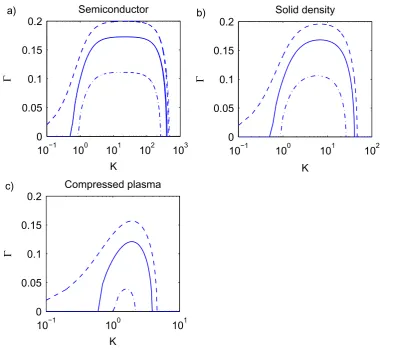
Figure 1 shows the growth-rate obtained from
equation (8), includingHfor the sake of completeness, as a function of wavenumber for different sets of parameters corresponding to a low-density semiconductor plasma with a density ofn0= 1026m−3 (corresponding toVF=5.5×10⁻⁴ andH=1.03×10⁻⁶), a solid density plasman 10 m
0= 29 −3 (corresponding to VF=5.5×10⁻³ and H=3.24×10⁻⁵),
and a compressed plasma withn0=1032m−3(corresponding
to VF=5.5×10⁻² and H=1.03×10⁻³). The magnetic
field has a stabilizing effect and gives rise to a smallest unstable wavenumber. As mentioned above the velocity β must be larger than Ωc for instability. The instability in general is larger for larger β and is terminated at large wavenumbers due to the Fermi pressure proportional to VF
The Bohm pressure is important only at very large wave-numbersK∼ V HF and plays only a minor role for the used parameters since the instability takes place only for
K<V HF .
In brief, the results of this section indicate that: (a) the effects of the Bohm pressure are relatively unimportant for the specific transverse mode under consideration; (b) magnetic and Fermi pressure effects are stabilizing and can suppress the instability, wheneverΩc>β or λ< λc; (c) in addition, pre-cise statements about the instability have been provided, in particular the existence condition (9) and the growth rate from equation (10). In the next section, there is a discussion on the practical aspects of the predictions, regarding possible experimental verification.
3. Observability issues
The obvious questions about the above results are: (a) is the theory applicable to the real world? (b) which parameters
should be applied in eventual laboratory (or astrophysical) environments? We have to address these questions in this section. As will become apparent, a series of conflicting requirements shows up, but a suitable numerical range of physical parameters are proposed.
First of all, there is no collisional mechanism in the model equations (1)–(2). However, the ideal Fermi gas assumption tends to be more justifiable for sufficiently dense systems. Indeed, in this case the exclusion principle triggers the Pauli blocking mechanism forbidding transitions between electrons of the same quantum state [15], effectively implying weaker local interactions (collisions) between the charge carriers. Moreover, the most relevant non-ideal aspect, namely electron–electron collisions, has a collisional fre-quencyνee which can be estimated [15] by
E T
T n , (15)
ee F F
2
02 3
⎛ ⎝
⎜ ⎞
⎠ ⎟
ν ≈ ∼ −
[image:4.595.107.501.64.414.2]whereTis the thermodynamic temperature andTF=EF κBis the Fermi temperature, in terms of the Boltzmann constantκB.
Figure 1.Growth-rates for different sets of parameters corresponding to (a) a semiconductor plasma with number densityn0=1026m−3 corresponding toVF=5.5×10⁻⁴andH=1.03×10⁻⁶, (b) a solid density plasma withn0=1029m−3corresponding toVF=5.5×10⁻³
andH=3.24×10⁻⁵, and (c) a compressed plasma withn 10 m
0= 32 −3corresponding toVF=5.5×10⁻²andH=1.03×10⁻³. The
velocities and magneticfield are chosen such thatβ=0.2andΩc=0.1(solid lines),β=0.2andΩc=0(dashed lines), andβ=0.15and
0.1
c
Ω = (dashed–dotted lines). In all cases there is only a marginal influence of the Bohm pressure terms proportional toH2, while the Fermi pressure term proportional toVF2terminates the instability at largeK. As an illustration, thinner lines show the caseH= 0 in panel (a) showing
The right-hand side is smaller for larger density and smaller thermodynamic temperature. In particular, a fully degenerate system (T →0) can be safely assumed as ideal. For practical issues, the damping rate resulting from equation (15) should be compared to the growth rate from equation (10). Finally, even if denser systems tend to be more ideal, a non-relativistic model requiresv cF ≪1, which is safe for number densities
lower than n0≈ 1036m−3 (a typical number density in the
interior of white dwarf stars). Otherwise, relativistic correc-tions will come into play.
In addition, for the cutoff wavelength predicted in equation (14) one expects that
n , (16)
c 0 01 3
λ ≫λ ≈ −
where the right-hand side denotes λ0 as a measure of the average inter-particle distance. Otherwise, the application of a
fluid modeling may not be valid. The condition (16) can be worked out to give
n
c u
v
2 5
3 1 . (17)
p 0
1 3 0
2
F2
1 2
⎛ ⎝
⎜ ⎞
⎠ ⎟
ω
π
≫ −
Since p n0
1 2
ω ∼ , equation (17) is fulfilled for not too high number densities. This is also required in view of the inequality (12), since a large Fermi speed is able to arrest the instability.
A further requirement to apply a quantumfluid theory is thatkλF≪1, whereλF=vF ( 3 ωp)is the Thomas–Fermi screening length [6], playing the analog role, in degenerate plasma, of the Debye length in classical plasma. Molecular simulation of Yukawa quantumfluids [16] provide support to this long wavelength assumption. In the present problem, an equivalent form of it isλc≫λF, which can be worked out as
v 12 c 5u
3 , (18)
F2+ π2 2≫ 02
which is automatically fulfilled in view of the non-relativistic assumption.
As an illustration and for definiteness, we can chose a setup withu0= c 10and a densityn0 =1031m−3, which in principle is accessible [17–19] in present day laser-plasma compression experiments. In this case we have v cF =
0.03, λc=1.52 nm (in the soft X-ray range) and 32.78
c 0
λ λ = , which are in accordance with the previous
analysis. Also note that for this arrangement one has ωp=
2.52×10¹⁷s−1 and T 1.97 10 K
F= × 6 , so that T ≪10 K6
would be needed to justify the full degeneracy assumption. Additionally, it has been shown that the instability con-dition can be satisfied only if β>Ωc, which in this case yieldsB0 <1.44×10 T5 . The external magneticfield can be
regarded as a control parameter to further validate the theory, e.g. switching it on until the instability stops.
The ideality condition also needs to be verified. From equation (15) and the elected parameters, one has a damping rate νee= 6.65×10⁴T2 and a maximum growth rate (as
numerically found forB0 =0) given byγmax= 0.08ωp, a fast enough instability to overcome collisional damping. For instance, forT 10 K4 T
F
= ≪ one hasνee γmax=3.30×10⁻⁴.
A critical experimental issue, among others, would be to maintain a small thermodynamic temperature of each electron stream.
To conclude the section, in the suggested setup we have
86.02
c F
λ λ = , which is consistent with afluid description of the Fermi gas.
4. Conclusion
A transverse unstable mode in the non-relativistic quantum two-stream instability in magnetized dense plasmas was analyzed in detail. The Fermi pressure was shown to be the dominant quantum effect in such degenerate plasmas, pro-viding a mechanism for the arrest of the instability for suffi -ciently small wavelengths, besides the classical stabilizing role of the external magnetic field. The physical parameters for possible experiments have been worked out. Possible extensions could be the investigation of oblique modes, or the inclusion of relativistic effects.
Acknowledgments
F H acknowledges the Brazilian research funding agency CNPq (Conselho Nacional de Desenvolvimento Científico e Tecnológico) forfinancial support. B E acknowledges support from the Engineering and Physical Sciences Research Council (EPSRC), U.K., Grant no. EP/M009386/1.
References
[1] Haas F, Manfredi G and Feix M 2000Phys. Rev.E622763 [2] Haas F, Bret A and Shukla P K 2009 Phys. Rev.E80
066407
[3] Bret A and Haas F 2010Phys. Plasmas17052101 [4] Haas F, Eliasson B and Shukla P K 2012Phys. Rev.E85
056411
[5] Ren H, Wu Z, Cao J and Chu P K 2008 Phys. Lett. A
3722676
[6] Haas F 2011Quantum Plasmas: An Hydrodynamic Approach (New York: Springer)
[7] Stenflo L 1971J. Plasma Phys.5413
[8] Machabeli G Z, Nanobashvili I S and Tendler M 1999Phys. Scr.60601
[9] Stockem A, Lerche I and Schlickeiser R 2006Astrophys. J.
651584
[10] Stockem A, Lerche I and Schlickeiser R 2007Astrophys. J.
659419
[11] Tatarakis Met al2002Nature415280 [12] Wagner Uet al2004Phys. Rev.E70026401 [13] Lancia Let al2014Phys. Rev.E113235001 [14] Eliasson B and Shukla P K 2010J. Plasma Phys.67 [15] Ashcroft N W and Mermin N D 1976Solid State Physics
(Orlando, FL: Saunders College Publishing)
[16] Schmidt R, Crowley B J B, Mithen J and Gregori G 2012Phys. Rev.E85046408
[17] Nuckolls J, Wood L, Thiessen A and Zimmerman G 1972 Nature239139