Drug Repurposing: A Systematic Approach to
Evaluate Candidate Oral Neuroprotective
Interventions for Secondary Progressive
Multiple Sclerosis
Hanna M. Vesterinen1☯, Peter Connick2☯, Cadi M. J. Irvine1, Emily S. Sena1, Kieren J. Egan1, Gary G. Carmichael1, Afiyah Tariq1, Sue Pavitt3, Jeremy Chataway4, Malcolm R. Macleod1*, Siddharthan Chandran2*
1Department of Clinical Neurosciences, University of Edinburgh, Edinburgh, United Kingdom,2The Anne Rowling Regenerative Neurology Clinic, University of Edinburgh, Edinburgh, United Kingdom,3Leeds Institute of Health Sciences, University of Leeds, Leeds, United Kingdom,4National Hospital for Neurology and Neurosurgery, London, United Kingdom
☯These authors contributed equally to this work.
*[email protected](MRM);[email protected](SC)
Abstract
Objective
To develop and implement an evidence based framework to select, from drugs already li-cenced, candidate oral neuroprotective drugs to be tested in secondary progressive multiple sclerosis.
Design
Systematic review of clinical studies of oral putative neuroprotective therapies in MS and four other neurodegenerative diseases with shared pathological features, followed by sys-tematic review and meta-analyses of the in vivo experimental data for those interventions. We presented summary data to an international multi-disciplinary committee, which as-sessed each drug in turn using pre-specified criteria including consideration of mechanism of action.
Results
We identified a short list of fifty-two candidate interventions. After review of all clinical and pre-clinical evidence we identified ibudilast, riluzole, amiloride, pirfenidone, fluoxetine, oxcarbazepine, and the polyunsaturated fatty-acid class (Linoleic Acid, Lipoic acid; Omega-3 fatty acid, Max EPA oil) as lead candidates for clinical evaluation.
OPEN ACCESS
Citation:Vesterinen HM, Connick P, Irvine CMJ, Sena ES, Egan KJ, Carmichael GG, et al. (2015) Drug Repurposing: A Systematic Approach to Evaluate Candidate Oral Neuroprotective Interventions for Secondary Progressive Multiple Sclerosis. PLoS ONE 10(4): e0117705. doi:10.1371/ journal.pone.0117705
Academic Editor:Robert Shin Fujinami, University of Utah, UNITED STATES
Received:June 10, 2014
Accepted:December 30, 2014
Published:April 9, 2015
Copyright:© 2015 Vesterinen et al. This is an open access article distributed under the terms of the
Creative Commons Attribution License, which permits unrestricted use, distribution, and reproduction in any medium, provided the original author and source are credited.
Data Availability Statement:Data can be accessed athttp://dx.doi.org/10.5061/dryad.8qd33.
Funding:This work was funded by MS Society 946/ 11 (http://www.mssociety.org.uk/.) No funding bodies had any role in study design, data collection and analysis, decision to publish, or preparation of the manuscript.
Conclusions
We demonstrate a standardised and systematic approach to candidate identification for drug rescue and repurposing trials that can be applied widely to
neurodegenerative disorders.
Introduction
Multiple sclerosis (MS) is estimated to affect more than 2.5 million people globally and is the commonest non-traumatic cause of acquired disability for young adults in the industrialised world [1,2]. It is an autoimmune disorder that has two clinical phases reflecting distinct but inter-related pathological processes: focal inflammation drives the relapse-remitting stage and neurodegeneration represents the principal substrate of secondary progression (SP) [3]. In con-trast to the increasing number of effective anti-inflammatory disease modifying treatments for relapse-remitting disease, the absence of therapies for progressive disease represents a major unmet clinical need [4]. The failure to develop clinically effective neuroprotective drugs for SPMS likely reflects a combination of factors including the limited predictive value of existing animal models [5,6], and challenging trial design issues such as patient and disease heterogene-ity, selection of relevant outcomes and biomarkers, and trial duration [7].
When also placed within the wider context of issues relevant to all drug development pro-grammes such as high costs and the prolonged time from target selection to regulatory approv-al, the lack of success in therapeutic development for SPMS has led to interest in novel
approaches such as drug rescue and repurposing [8,9]. By exploiting existing trial and regulato-ry data on clinical safety and efficacy,“drug rescue”(evaluating drugs at advanced stage of de-velopment but abandoned before approval) and“repurposing”(evaluating drugs already approved for other conditions), offer the potential to reduce both the cost and time to achieve licensed approval status [10].
Successful repurposing of drugs is not new; examples include dimethyl fumarate (Tecfidera)
—originally marketed as a therapy for psoriasis, but later developed as a disease modifying therapy for relapsing-remitting MS (RRMS) [11]. Indeed, recognition that an intervention has plausible mechanistic relevance to a novel clinical indication is not uncommon, particularly for disorders that may share common pathogenic processes. New techniques are therefore re-quired to enable rational selection from the wide range of repurposing candidates, aiming to maximise the possibility of success in clinical development. Noting the manifest benefits of sys-tematic, rigorous analysis of both clinical trial andin vivoexperimental data [12,13], we there-fore set out to develop a systematic approach for the identification of drugs with a maximal chance of success if tested in rescue and repurposing clinical trials, illustrating and testing feasi-bility by selection of candidate repurposed oral neuroprotective therapies for SPMS.
Methods
Overview
We systematically reviewed all clinical drug trials in MS and four other neurodegenerative dis-eases (Alzheimer’s disease [AD], motor neuron disease [MND] / amyotrophic-lateral sclerosis [ALS], Parkinson’s disease [PD], and Huntingdon’s disease [HD]). These additional diseases were included because of shared pivotal pathological mechanisms underlying their common neurodegenerative substrate [14,15]. After extracting core metrics from the clinical studies, we
used an algorithm based on the number of diseases in which the drug had been tested to identi-fy those drugs where the clinical evidence might support further investigation. For these drugs we extracted further information from the clinical trial reports using a standard template, and carried out systematic reviews and meta-analyses of thein vivoexperimental data. Finally, these data were synthesised into a uniform format and presented to an international multi-dis-ciplinary committee, which scrutinised each drug in turn using a standard procedure. The committee involved external advisors with a range of expertise including animal models, dis-ease biology, clinical trial design, systematic review and patient representation. After several rounds of elimination, including consideration of pharmacodynamics, safety and mechanistic plausibility (against pre-specified biological processes implicated in demyelination with related neurodegeneration), candidate drugs were identified with the greatest potential for successful clinical development. The study protocol is available as supplementary material (S1 Protocol).
Identification of potentially relevant interventions
Clinical trials in MS, AD, MND/ALS, PD, and HD were identified by searches of three online databases (PubMed, ISI Web of Knowledge, and Embase) as well as the NIH clinical trials data-base (www.clinicaltrials.gov, accessed August 2011) searching for the terms<”multiple sclero-sis”OR“Alzheimer’s disease”OR“Huntington’s disease”OR“Parkinson’s Disease”OR
“Motor Neuron Disease”OR“Amyotrophic lateral sclerosis”>, limited to publication metatags of“human”and“clinical trial”where these filters were available. We also screened the MS da-tabase held by the Cochrane MS group to identify any further relevant clinical trials including unpublished studies. The following search terms were used: multiple sclerosis, Alzheimer’s dis-ease, motor neuron disdis-ease, amyotrophic lateral sclerosis, Parkinson’s disease, Huntington’s disease. No limits were applied for language or date. The full search strategy is given as an ap-pendix. We included case-reports, uncontrolled case series, non-randomised parallel group studies, crossover studies, and randomised controlled trials which reported safety or efficacy. References were exported to Reference Manager and three reviewers (CI, AT & GC) indepen-dently excluded duplicates and screened titles and abstracts for relevance against pre-defined inclusion and exclusion criteria (Fig 1), with differences resolved by discussion with a fourth reviewer (HV). Eligibility was restricted to oral drugs on pragmatic grounds, recognising that the logistics and cost implications of parenteral therapies would potentially preclude investiga-tor led proof-of-concept phase II clinical studies. To generate summaries for the interventions tested in any of the five diseases, we then extracted basic information from each publication in-cluding: publication ID, author, year-of-publication, intervention tested and disease.
Initial screening of candidate interventions
Systematic evaluation of candidate interventions
Publications relating to the short-listed interventions were then systematically evaluated by one author (MM) using a predefined schema. Each report was graded on a scale of one (worst) to four (best) for their reported evidence on safety, efficacy, study quality, and study size. Safety data were scored as:“not described”(1 point),“SUSARs (suspected unexpected serious adverse reactions) or mortality observed”(1 point),“SAEs (serious adverse events) only”(2 points),
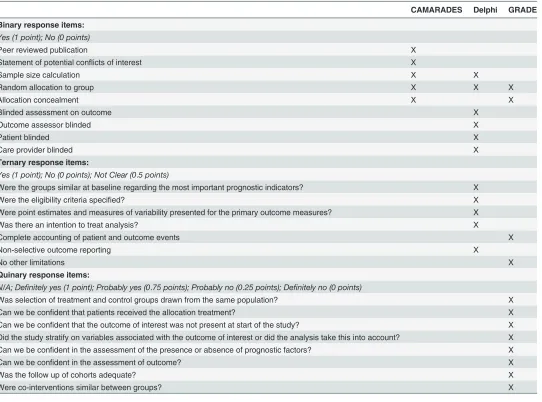
“AEs (adverse events) only”(3 points), or“no adverse effects reported”(4 points). Efficacy data for all outcomes described in a given publication were individually scored as:“not pre-sented”(1 point),“definite (i.e. statistically significant) worsening”(1 point),“neutral”(2 points),“non-significant improvement”(3 points), or“significant improvement”(4 points). The efficacy score was based on the primary outcome measure, and where this was not identi-fied, on the mean efficacy score for all outcomes reported in each publication. Study quality was assessed using a combination of criteria taken from a risk of bias tool developed through a Delphi process [16], GRADE [17], and CAMARADES [18] methods (shown inTable 1). Once each publication was scored they were sorted in quartiles of study quality based on the total number of checklist items scored, with the lowest quartile scoring 1 point and the highest quar-tile scoring 4 points. Study size was categorised as:“1–10 patients”(1 point),“11–100 patients” (2 points),“101–1000 patients”(3 points),“>1000 patients”(4 points). An overall score for each publication was generated as the product of scores for safety, efficacy, quality, and study
Fig 1. Eligibility criteria for publications included in systematic review.Data on efficacy was defined as (the)“reporting of change in clinical status (relapse frequency, disability progression, behavioural symptoms) or changes in biomarkers of clinical status (magnetic resonance imaging (MRI), blood, cerebral spinal fluid (CSF))”.
size (range 0 to 256). Information was also extracted on trial phase and design, mean age and sex of the patients, dose and duration of treatment, and funding source(s).
[image:5.612.39.581.87.489.2]Summaries were then generated for each intervention including: number of patients and disease group(s) studied, design and duration of studies, dose(s) administered, overall publica-tion scores, and median scores for efficacy, safety, and quality.“Heat maps”were created by tabulating the number of publications awarded each of grades 1–4 for efficacy versus safety, for efficacy versus quality and for safety versus quality. An overall score for each intervention (“drug score”) was calculated as the product of the median publication scores for safety, effica-cy, quality, study size, and log10(1 + number of publications).
Table 1. Scoring method for evaluation of study quality.
CAMARADES Delphi GRADE
Binary response items:
Yes (1 point); No (0 points)
Peer reviewed publication X
Statement of potential conflicts of interest X
Sample size calculation X X
Random allocation to group X X X
Allocation concealment X X
Blinded assessment on outcome X
Outcome assessor blinded X
Patient blinded X
Care provider blinded X
Ternary response items:
Yes (1 point); No (0 points); Not Clear (0.5 points)
Were the groups similar at baseline regarding the most important prognostic indicators? X
Were the eligibility criteria specified? X
Were point estimates and measures of variability presented for the primary outcome measures? X
Was there an intention to treat analysis? X
Complete accounting of patient and outcome events X
Non-selective outcome reporting X
No other limitations X
Quinary response items:
N/A; Definitely yes (1 point); Probably yes (0.75 points); Probably no (0.25 points); Definitely no (0 points)
Was selection of treatment and control groups drawn from the same population? X
Can we be confident that patients received the allocation treatment? X
Can we be confident that the outcome of interest was not present at start of the study? X Did the study stratify on variables associated with the outcome of interest or did the analysis take this into account? X Can we be confident in the assessment of the presence or absence of prognostic factors? X
Can we be confident in the assessment of outcome? X
Was the follow up of cohorts adequate? X
Were co-interventions similar between groups? X
Following systematic review, study quality was evaluated according to previously published criteria (CAMARADES, Delphi, and GRADE—see text). A maximum of 24 points were available by the sum of these individual score
Systematic review of preclinical evidence
Preclinical studies in experimental autoimmune encephalomyelitis (EAE), the dominant exper-imental model of MS, were also systematically evaluated for candidate interventions. The CAMARADES database contained data collected on all identified EAE drug studies up to Sep-tember 2009; an updated literature search on the candidate drugs was therefore carried out in September 2011 using PubMed, ISI Web of Knowledge, and Embase as previously described [19]. Briefly, we used the search terms:‘multiple sclerosis’or‘experimental allergic encephalo-myelitis’or‘experimental autoimmune encephalomyelitis’or‘experimental allergic EAE’or
‘experimental autoimmune EAE’or‘autoimmune demyelinating disease’; limited to animals, and with no language restrictions. A full search strategy is given as an appendix. We included publications where the outcome was measured as a change in neurobehavioural score, axonal loss, demyelination or remyelination. Publications were also evaluated using a previously de-scribed 5-item quality checklist comprising of a declaration on: (1) random allocation to group; (2) blinded assessment of outcomes; (3) prior sample size calculation; (4) compliance with animal welfare regulations; and (5) a statement of any potential conflicts of interest [19,20]. We then used the updated database to generate summary estimates of improvement in neurobehavioural score, axon loss, demyelination and inflammation for each intervention using random effects standardised mean difference meta-analysis as previously described [20].
Candidate drug selection committee review
All data was then reviewed at a specially convened International MS Drug Selection meeting comprising expert representation from the Cochrane MS group, neuroscientists, neurologists, brain imaging, people with MS, trial methodologists, and industry. Data for each drug were presented in a standard format, with a structured discussion reviewing safety data, efficacy, the risk of bias, the number of patients contributing evidence, and systematic review of thein vivo experimental data for that intervention. We also considered biological plausibility, pharmaco-logical criteria such as CNS penetration as well as mechanistic class of action. Recognising that the systematic approach described above is likely to have led to under ascertainment of relevant drugs, partly through publication bias and delays in publication [21], we allowed inclusion at this stage of other drug(s) where relevant but not yet published data was known to committee members. Any such drugs were then subjected to the same process of scrutiny; this included in-terrogating the CAMARADES database in real time forin vivodata. Further structured discus-sion and selection occurred over an additional two rounds. The resulting final group were categorised and ranked according to class of action and mechanistic plausibility for effects on pivotal neurodegenerative pathways.
Role of the funding source
The sponsors of the study had no role in study design, data collection, data analysis, data inter-pretation, or writing of the report. All authors had full access to all the data in the study and had final responsibility for the decision to submit for publication.
Results
Systematic literature review and initial screening of candidate
interventions
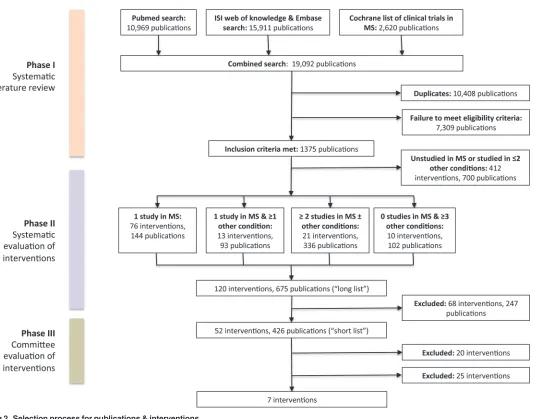
Cochrane database returned 2,620 hits of which 135 were previously unidentified. Of the 16,607 uniquely identified publications, 15,232 did not meet eligibility criteria and were exclud-ed (Fig 2).
Derivation of a short-list of candidate interventions
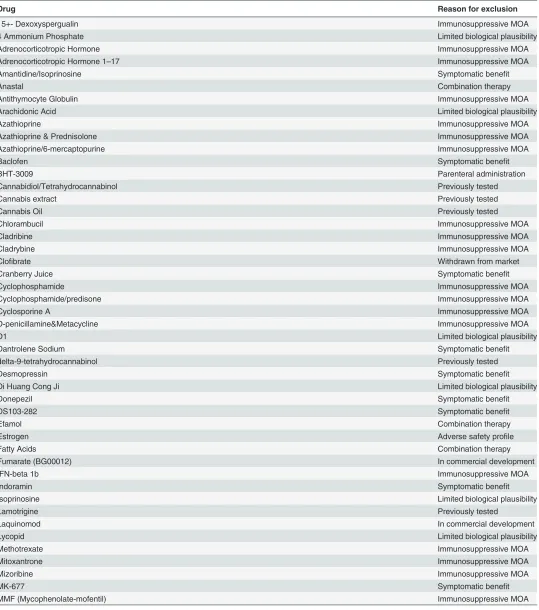
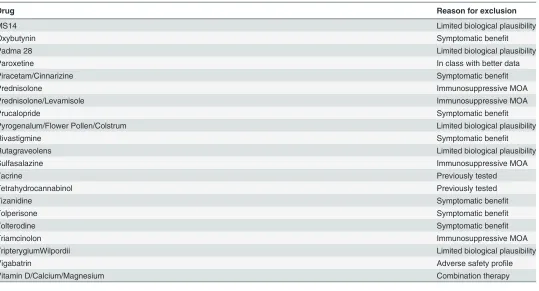
[image:7.612.46.581.69.488.2]The remaining 1,375 publications described 532 specific interventions, 412 of which (700 pub-lications) were excluded because the intervention had been neither tested in MS, nor tested in at least three of the four other diseases under consideration (AD, MND/ALS, PD, HD). One hundred and twenty interventions (675 publications) were therefore long-listed, 110 (91.7%) of which had been tested in MS at least once, and 10 (8.3%) of which had not been tested in MS but had been used in at least three of the four other diseases under consideration. Initial evalua-tion led to 68 intervenevalua-tions being excluded: 23 due to an immunosuppressive mechanism of ac-tion (MOA), 16 based on primarily symptomatic benefit, 11 with limited biological plausibility, 7 that had been previously tested at phase II in SPMS (including cannabinoids and
Fig 2. Selection process for publications & interventions.
lamotrigine), 4 combination therapies, 2 with a significant adverse safety profile, 2 in current commercial development, 1 where a same-class drug with better efficacy data was identified, 1 requiring parenteral administration, and 1 that had been withdrawn from the market
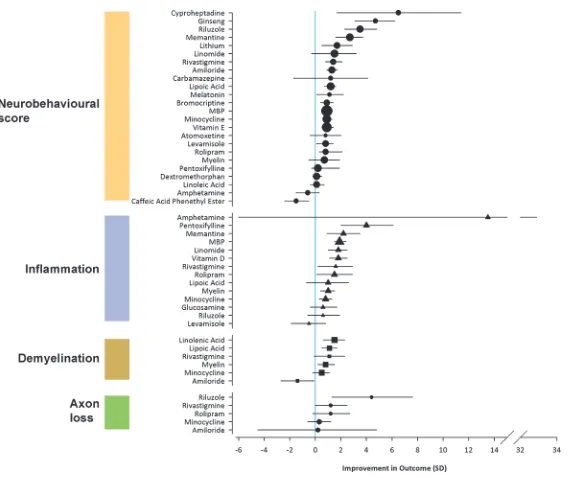
(Table 2). Pre-clinical studies relating to the remaining 52 interventions (Table 3) were then evaluated and ranked for neurobehavioral and pathological efficacy outcomes (Fig 3).
Final candidates for clinical development
The assessments made from each publication in the evalution of each drug are available in Dryad (doi:10.5061/dryad.8qd33). Detailed discussions of each of the 52 short-listed drugs were first undertaken based on individual drug summaries, with particular emphasis on safety and efficacy. Clinical trial databases (www.clinicaltrials.govand the ISRCTN database [now updated towww.controlled-trials.com/]) were additionally screened at this stage for ongoing trials of putative neuroprotection in MS. One further drug (amiloride) was added on the basis of emergent clinical trial data (subsequently published [22]) and strong experimental animal data. Application of our systematic evaluation methods to the amiloride data resulted in a safe-ty score of 3.0, efficacy score of 3.7, study qualisafe-ty score of 4.0, and a study size score of 2.0. The overall drug score for amiloride was therefore 26.5.
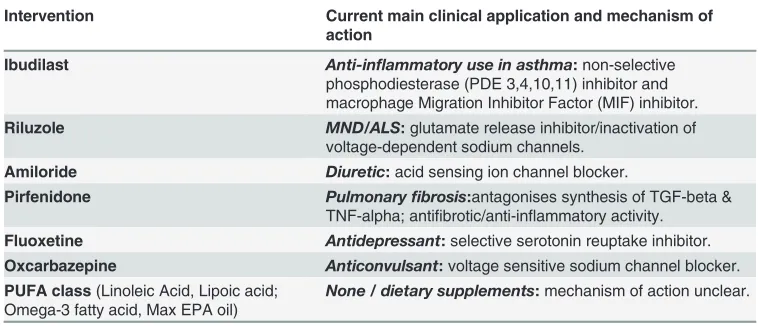
Twenty-one drugs were excluded in the first round (Table 4). The remaining drugs then un-derwent further scrutiny including examination of source publications as well as NIH clinical trials site (www.clinicaltrials.gov) and animal data where relevant. Discussion at this stage fo-cussed on synthesising clinical and pre-clinical data with particular regard to the evidence for efficacy on key pathogenic mechanisms driving neuro-axonal loss in SPMS. A further twenty-two drugs were excluded in this second round (Table 4), leaving a group of ten drugs (four in-dividual drugs from the class of polyunsaturated fatty acids were grouped together) as the final recommendation for study in clinical trials. The final seven recommended candidates were ranked with weighting for prior relevant proof of concept and class-mode of action (Table 5).
Discussion
We report a systematic evidence-led approach to identify drugs for rescue/repurposing trials in neurodegenerative disorders, using progressive MS as an exemplar disease. Progressive MS, like all classic neurodegenerative diseases, is notable for the failure of conventional drug devel-opment to deliver successful neuroprotective therapies. The reasons for this failure include context-specific factors such as an incomplete understanding of disease biology, pathogenic complexity and heterogeneity, limited predictive value of animal models, and a lack of estab-lished trial methodologies; compounded by a wider context of chronically declining productivi-ty in drug development based on target-based approaches [23], declining resources for drug development in the neurosciences, and the growing costs of clinical trials [24]. To make prog-ress, interest in alternative strategies such as drug rescue and repurposing that can frame and accelerate therapeutic development has therefore grown. However, if such rescue and repur-posing programmes are to deliver effective therapies, suitable methods are required to identify and select interventions that merit being taken forward in clinical trials. To that end, we report a novel approach for drug selection in repurposing / rescue trials founded on methodological principles that include systematic review and meta-analytic techniques at multiple stages of interrogation.
Table 2. Candidate interventions excluded during short-listing.
Drug Reason for exclusion
15+- Dexoxyspergualin Immunosuppressive MOA
4 Ammonium Phosphate Limited biological plausibility
Adrenocorticotropic Hormone Immunosuppressive MOA
Adrenocorticotropic Hormone 1–17 Immunosuppressive MOA
Amantidine/Isoprinosine Symptomatic benefit
Anastal Combination therapy
Antithymocyte Globulin Immunosuppressive MOA
Arachidonic Acid Limited biological plausibility
Azathioprine Immunosuppressive MOA
Azathioprine & Prednisolone Immunosuppressive MOA
Azathioprine/6-mercaptopurine Immunosuppressive MOA
Baclofen Symptomatic benefit
BHT-3009 Parenteral administration
Cannabidiol/Tetrahydrocannabinol Previously tested
Cannabis extract Previously tested
Cannabis Oil Previously tested
Chlorambucil Immunosuppressive MOA
Cladribine Immunosuppressive MOA
Cladrybine Immunosuppressive MOA
Clofibrate Withdrawn from market
Cranberry Juice Symptomatic benefit
Cyclophosphamide Immunosuppressive MOA
Cyclophosphamide/predisone Immunosuppressive MOA
Cyclosporine A Immunosuppressive MOA
D-penicillamine&Metacycline Immunosuppressive MOA
D1 Limited biological plausibility
Dantrolene Sodium Symptomatic benefit
delta-9-tetrahydrocannabinol Previously tested
Desmopressin Symptomatic benefit
Di Huang Cong Ji Limited biological plausibility
Donepezil Symptomatic benefit
DS103-282 Symptomatic benefit
Efamol Combination therapy
Estrogen Adverse safety profile
Fatty Acids Combination therapy
Fumarate (BG00012) In commercial development
IFN-beta 1b Immunosuppressive MOA
Indoramin Symptomatic benefit
Isoprinosine Limited biological plausibility
Lamotrigine Previously tested
Laquinomod In commercial development
Lycopid Limited biological plausibility
Methotrexate Immunosuppressive MOA
Mitoxantrone Immunosuppressive MOA
Mizoribine Immunosuppressive MOA
MK-677 Symptomatic benefit
MMF (Mycophenolate-mofentil) Immunosuppressive MOA
Experimental approaches include techniques such as systems biology,‘wet’laboratory experi-ments includingin vitroandin vivoscreening, and methods based on analysis of human data (clinical trials, registries). Ontological methods link two known facts to postulate a third, e.g. known mechanisms of drug efficacy in disease-A and known analogous pathogenic mecha-nisms of disease-B leading to postulated efficacy of the drug in disease-B. The approach we de-scribe combines both experimental and ontological elements for candidate selection. Our decision to link clinical trial data across diseases that share pathogenic features with SPMS rep-resents a foundational“ontological”premise that drug efficacy is based on influencing relevant but not necessarily unique pathobiology. This differs subtly but importantly from a conven-tional target-based drug development scheme; our candidates were chosen based on their influ-ence on a group of relevant biological systems rather than a (set of) pre-specified biological target(s). We then used a meta-analytic approach to synthesise and summarise available human and animal data in a format that allowed systematic and quantitative comparison be-tween drug candidates. Finally, this dataset was critically evaluated and refined through a fur-ther ontological decision stage where an assessment was made of credibility for successful repurposing based on the known mechanism(s) of action of each candidate and the known pathobiology of SPMS.
Seven interventions were identified in our study as the most promising for further clinical evaluation.
[image:10.612.40.579.89.380.2]Ibudilast has been a commercial product in Japan for two decades for asthma. It is a non-se-lective phosphodiesterase (PDE 3,4,10,11) inhibitor and macrophage migration inhibitor factor
Table 2. (Continued)
Drug Reason for exclusion
MS14 Limited biological plausibility
Oxybutynin Symptomatic benefit
Padma 28 Limited biological plausibility
Paroxetine In class with better data
Piracetam/Cinnarizine Symptomatic benefit
Prednisolone Immunosuppressive MOA
Prednisolone/Levamisole Immunosuppressive MOA
Prucalopride Symptomatic benefit
Pyrogenalum/Flower Pollen/Colstrum Limited biological plausibility
Rivastigmine Symptomatic benefit
Rutagraveolens Limited biological plausibility
Sulfasalazine Immunosuppressive MOA
Tacrine Previously tested
Tetrahydrocannabinol Previously tested
Tizanidine Symptomatic benefit
Tolperisone Symptomatic benefit
Tolterodine Symptomatic benefit
Triamcinolon Immunosuppressive MOA
TripterygiumWilpordii Limited biological plausibility
Vigabatrin Adverse safety profile
Vitamin D/Calcium/Magnesium Combination therapy
MOA = mechanism of action
Table 3. Short-listed interventions ranked by overall drug scores.
Number of publications
Efficacy Score
Safety Score
Quality Score
Patient Sample Size Score
Overall Drug Score
Dextromethorphan + Quinidine 3 33 23 4 3 562
Amantadine 57 31 24 22 19 552
Memantine 34 27 2 26 24 516
Gabapentin 8 27 25 29 25 467
4-Aminopyridine 10 27 25 3 21 444
Modafinil 8 29 24 31 21 444
Creatine 12 21 23 27 24 359
Selegiline 11 27 19 27 23 342
L-amphetamine sulfate 1 3 3 4 3 325
Minocycline 11 23 26 23 22 319
Vitamin E 9 21 2 3 24 311
Coenzyme Q10 9 22 19 32 23 306
Vitamin D/Calcium 1 3 4 4 2 289
Atomoxetine 3 27 33 3 17 268
Amiloride* 1 3.7 3 4 2 26.5
Dextromethorphan 7 25 27 23 19 262
Pirfenidone 3 31 3 23 2 258
Ibudilast 1 35 2 4 3 253
Riluzole 16 24 18 24 2 246
Melatonin 7 21 26 21 2 212
Naltrexone 8 22 26 21 18 206
Glucosamine Sulfate 1 25 3 4 2 181
Levamisole 2 32 2 3 2 181
Fluoxetine 5 24 22 26 16 171
Milacemide 4 2 23 25 2 157
Linomide 3 3 13 27 23 15
Levetiracetam 3 37 2 17 2 147
Tranylcypromine 2 25 35 2 15 125
Ginseng 1 33 3 2 2 12
Myelin 1 25 4 2 2 12
Imipramine 2 2 2 3 2 115
3,4-Diaminopyridine 3 23 23 27 13 114
Isoniazid 4 28 25 23 1 108
Tolbutamide 1 3 3 2 2 108
Aspirin 2 2 15 3 25 107
Lithium 11 2 14 24 15 102
Omega 3 Fatty Acid 2 18 3 2 2 10
Linoleic Acid 4 25 1 23 25 98
Pemoline 2 2 2 25 2 95
Vinpocetin / Propentofylline / Theofylline
1 25 3 2 2 9
Bromocriptine 4 19 25 18 15 86
MaxEPA Oil 1 3 1 3 3 81
Lipoic acid 2 2 2 2 2 76
Misoprostol 1 4 3 1 2 72
Pentoxifylline 2 18 1 25 25 55
(MIF) inhibitor with multiple activities relevant to SPMS including: attenuating the pro-in-flammatory response of microglia and astrocytes through reducing nitric oxide and reactive oxygen species; promoting secretion of neurotrophins such as glial cell line-derived neuro-trophic factor (GDNF) / nerve growth factor (NGF) [26]. Ibudilast has already been tested in RRMS, where it has some effect on MRI outcomes and, possibly, on disease progression [27]. Riluzole is licensed for MND and has two modes of action of relevance to SPMS: reducing glutamate release and antagonism of voltage dependent sodium channels [28].
[image:12.612.33.583.92.220.2]Amiloride, a widely used diuretic and acid sensing ion channel (ASIC) blocker, has recently recognised myelo- and neuroprotective effects in both human and experimental models of pro-gressive MS [29].
Table 3. (Continued)
Number of publications
Efficacy Score
Safety Score
Quality Score
Patient Sample Size Score
Overall Drug Score
Hydroxyzine/Caffeine 1 3 3 1 2 54
Oxcarbazepine 1 4 2 1 2 48
Carbamazepine 1 3 4 1 1 36
Moclobemide 1 4 3 1 1 36
Rolipram 2 15 3 15 1 32
Clofibrate 1 2 1 2 2 24
Diazepam 1 3 1 1 2 18
Cyproheptadine 1 3 1 1 1 09
*Amiloride added to the shortlist at committee review based on awareness of relevant but unpublished data. Scores for amiloride were then calculated following publication of this data.
doi:10.1371/journal.pone.0117705.t003
Fig 3. Effect of shortlisted interventions on neurobehavioural and pathological outcomes in EAE. Symbols represent the point estimates of efficacy for interventions. Symbol sizes represent the log10of the
number of animals contributing to that comparison. The vertical line represents the line of no effect.
[image:12.612.201.485.428.667.2]Table 4. Drugs excluded in committee review phase.
Drug Reason for exclusion
Excluded after round 1 4-Aminopyridine Risk of seizures, limited efficacy data Atomoxetine Safety profile, no efficacy data in MS Clofibrate Safety profile, neutral efficacy data
Bromocriptine Safety profile
Dextromethorphan Requires co-administration with quinidine Diazepam Safety profile, limited evidence for efficacy Ginseng Limited clarity around MOA, no efficacy data in MS
Imipramine Limited evidence for efficacy
Isoniazid Likely symptomatic benefit only, no efficacy data in MS
Levamisole Safety profile
Linomide Safety profile
Lithium Limited efficacy data
Melatonin Limited efficacy data
Milacemide Limited efficacy data
Myelin Limited efficacy data
Naltrexone Limited efficacy data
Pemoline Limited efficacy data, not available in European markets
Tolbutamide Limited efficacy data in MS
Vitamin E Limited efficacy data in MS
Excluded after round 2 Amantadine Limited evidence for neuroprotective MOA
Aspirin No evidence in EAE, insufficient basis to trial as neuroprotective agent in SPMS Carbamazepine Better safety and efficacy data for same-class alternative (oxcarbazepine)
Coenzyme Q10 Limited efficacy data in MS
Creatine Safety profile, limited efficacy data
Cyproheptadine Likely symptomatic benefit, no evidence for neuroprotective effect
Dextromethorphan + quinidine Probable symptomatic benefit, no definite evidence for neuroprotective effect Gabapentin Better efficacy data for same-class alternative (oxcarbazepine)
Glucosamine sulfate More appropriate for evaluation in RRMS Hydroxyzine/caffeine No evidence for neuroprotective effect L-amphetamine sulfate Symptomatic benefit
Levetiracetam Insufficient data on neuroprotective effect Memantine Symptomatic benefit, limited evidence for efficacy
Minocycline Currently being evaluated in RRMS
Misoprostol Likely symptomatic benefit
Moclobemide Symptomatic benefit
Modafinil Symptomatic benefit
Pentoxifylline Better safety and efficacy for same-class alternative (ibudilast) Rolipram Better safety and efficacy for same-class alternative (ibudilast)
Selegiline No efficacy data in MS
Tranycypromine Symptomatic benefit
Vinpocetin + Propentofylline + Theophylline Better safety and efficacy for same-class alternative (ibudilast) Vitamin D + Calcium Limited evidence for neuroprotective effect
MOA = mechanism of action. EAE = experimental allergic encephalomyelitis.
Pirfenidone has been reported to improve neurological function in one small study [30]. Fluoxetine is a selective serotonin-reuptake inhibitor (SSRI) widely used for depression. However it also has multiple activities relevant to SPMS including: stimulating glycogenolysis and enhancing the production of brain-derived neurotrophic factor (BDNF) in rodent astro-cyte cultures [31,32]. Moreover, after 2 weeks of fluoxetine a significantly improved cerebral white matter NAA/creatine ratio was found on MRI in patients with MS, suggesting an im-provement in axonal mitochondrial energy metabolism [33]. It might also suppress the anti-gen-presenting capacity of glial cells [34]. Furthermore, in a recent Cochrane review in adults with stroke, SSRIs improved measures of dependence [35]. Two trials of fluoxetine have been carried out in MS: in one (mainly RRMS) [34], there was a significant reduction in relapse rate incidence and new inflammatory lesions; whereas in another (progressive cohort) [36] favour-able trends emerged such as reduced EDSS scores and improved 9 Hole Peg Test performance.
Oxcarbazepine has been reported to improve paroxysmal pain in MS [37], but effects on disease progression have not been studied.
Finally, as long ago as 1989 a trial of long chain n-3 polyunsaturated fatty acids reported non significant trends for efficacy across a number of outcomes measured [38].
While our approach has identified compounds which are already being tested, that others have also considered these drugs to be of interest does provide some validation for our ap-proach. We were surprised that, in spite of no apparent mechanism being known, our shortlist included polyunsaturated fatty acids. Of course, lack of an apparent mechanism of action does not mean that a drug could not be effective, and further research into their potential mode(s) of action might identify a novel target for MS therapeutics.
Limitations of this approach
[image:14.612.198.577.89.252.2]As with all work involving systematic review, our approach is limited by the possibility of in-complete ascertainment of relevant publications, and publication bias favouring studies with positive findings. We attempted to deal with the former by extending our search to include clinical trial databases, and allowing inclusion of drugs with emergent clinical data substantiat-ed by strong underpinning animal experimental evidence that would not have been identifisubstantiat-ed in the original literature screen. The latter is unlikely to exert influence on our selection be-tween candidate interventions as it applies to all those evaluated, however it does reduce the
Table 5. Final recommendations as candidate oral neuroprotective interventions for progressive MS.
Intervention Current main clinical application and mechanism of action
Ibudilast Anti-inflammatory use in asthma:non-selective phosphodiesterase (PDE 3,4,10,11) inhibitor and macrophage Migration Inhibitor Factor (MIF) inhibitor. Riluzole MND/ALS:glutamate release inhibitor/inactivation of
voltage-dependent sodium channels. Amiloride Diuretic:acid sensing ion channel blocker.
Pirfenidone Pulmonaryfibrosis:antagonises synthesis of TGF-beta & TNF-alpha; antifibrotic/anti-inflammatory activity.
Fluoxetine Antidepressant:selective serotonin reuptake inhibitor. Oxcarbazepine Anticonvulsant:voltage sensitive sodium channel blocker. PUFA class(Linoleic Acid, Lipoic acid;
Omega-3 fatty acid, Max EPA oil)
None / dietary supplements:mechanism of action unclear.
PUFA = polyunsaturated fatty acids. MND/ALS = motor neurone disease / amyotrophic lateral sclerosis.
probability of our recommended interventions proving successful in subsequent definitive clin-ical trials. Those designing such trials should therefore be mindful of this issue. Similarly, our approach does not overcome problems that were inherent in the design and execution of the primary studies. Recognising these limitations, we would frame our specific recommendations as drugs that merit further evaluation prior to phase 3 as part of a pipeline strategy programme for drug repurposing in SPMS.
We deliberately limited our analysis to drugs already tested in neurodegenerative conditions that might be considered to have a putative neuroprotective effects, and we will not have identi-fied drugs used for other indications which might have efficacy; alternative approaches are pos-sible. For instance, one might take a more traditional target-based approach based on
identifying existing drugs with effects on molecular pathways believed to be relevant in the context of MS neurodegeneration. We excluded drugs already tested in RRMS as we were seek-ing to identify neuroprotection achieved through mechanisms other than the downstream ben-efit of attenuated multifocal inflammation; a strategy repeatedly shown to be of limited value in SPMS. If drugs exist that can achieve neuroprotection in RRMS through non-immunomodula-tory mechanisms, we will therefore not have identified these. Further, our exclusion of drugs based on their mode of action will have overlooked drugs with more than one relevant mode of action. For instance, ciclosporin is an inhibitor of calcineurin, FK506 inhibits mTOR and amantadine has effects on NMDA receptors and BDNF. Finally, our requirement that drugs had been tested across multiple diseases may have excluded those with substantial efficacy in only one or two diseases which would, by other measures, have made them attractive candi-dates for clinical trial.
It is therefore possible that we have failed to identify many drugs for which there is good evi-dence, from various sources, to suggest that they might have efficacy in SPMS. Whether our method to select candidate interventions for rescue and repurposing studies will improve the translational hit-rate remains to be seen. However we believe that combining robust experi-mental (systematic review / meta-analytic) and ontological selection filters offers a realistic prospect of successful translation into new therapies. Other approaches have been advocated, including using data for drugs with side effects similar to known interventions [39,40]; compu-tational approaches to identify drugs with likely to interact with specific targets [41]; identifica-tion of therapeutic targets through from genome wide associaidentifica-tion studies of patients with the disease [42]; or combinations of these approaches [43]. There are challenges in bringing to-gether evidence from these different domains, not least the identification of relavant sources of information and the analyses of the exceptionally large datasets which will result. However, we believe our approach is complementary to these, and contributes to the development of more comprehensive and reliable algorithms for drug repurposing.
Supporting Information
S1 Protocol. Study protocol. (PDF)
Acknowledgments
the recommendations of PRISMA, MOOSE and Sena et al (doi:10.1038/jcbfm.2014.28). The Corresponding Authors have the right to grant on behalf of all authors and does grant on be-half of all authors, a worldwide licence to the Publishers and its licensees in perpetuity, in all forms, formats and media (whether known now or created in the future), to i) publish, repro-duce, distribute, display and store the Contribution, ii) translate the Contribution into other languages, create adaptations, reprints, include within collections and create summaries, ex-tracts and/or, absex-tracts of the Contribution, iii) create any other derivative work(s) based on the Contribution, iv) to exploit all subsidiary rights in the Contribution, v) the inclusion of electronic links from the Contribution to third party material where-ever it may be located; and, vi) licence any third party to do any or all of the above. All authors meet the ICMJE crite-ria for authorship; MRM is guarantor.
Author Contributions
Conceived and designed the experiments: SC JC MRM SP PC. Performed the experiments: HMV CMJI AT GGC KJE ESS. Analyzed the data: SC JC MRM KJE HMV. Wrote the paper: SC JC MRM SP PC HMV KJE ESS. Used CAMARADES database: MRM ESS HMV.
References
1. World Health Organization, Multiple Sclerosis International Federation. Atlas: multiple sclerosis re-sources in the world, 2008. Geneva, Switzerland: World Health Organization; 2008. 51 p.
2. McAlpine D, Ralph Erskine Conrad Memorial Fund. McAlpine’s multiple sclerosis Alastair Compston. . . [et al.]. 4th ed. [Edinburgh];;Philadelphia PA: Churchill Livingstone/Elsevier; 2006.
3. Stadelmann C, Wegner C, Brück W. Inflammation, demyelination, and degeneration—recent insights from MS pathology. Biochim Biophys Acta [Internet]. 2011 Feb [cited 2011 Jul 13]; 1812(2):275–82. Available:http://www.ncbi.nlm.nih.gov/pubmed/20637864. doi:10.1016/j.bbadis.2010.07.007PMID: 20637864
4. Rovaris M, Confavreux C, Furlan R, Kappos L, Comi G, Filippi M. et al. Secondary progressive multiple sclerosis: current knowledge and future challenges. The Lancet Neurology [Internet]. 2006 Apr [cited 2011 Jul 6]; 5(4):343–54. Available:http://linkinghub.elsevier.com/retrieve/pii/S1474442206704100. PMID:16545751
5. Gold R, Linington C, Lassmann H. Understanding pathogenesis and therapy of multiple sclerosis via animal models: 70 years of merits and culprits in experimental autoimmune encephalomyelitis re-search. Brain. 2006 Aug; 129(Pt 8):1953–71.
6. Baker D, Gerritsen W, Rundle J, Amor S. Critical appraisal of animal models of multiple sclerosis. Mult Scler. 2011 Jun; 17(6):647–57. doi:10.1177/1352458511398885PMID:21372117
7. Kapoor R. Neuroprotection in multiple sclerosis: therapeutic strategies and clinical trial design. Curr Opin Neurol [Internet]. 2006 Jun [cited 2011 Jul 6]; 19(3):255–9. Available:http://www.ncbi.nlm.nih. gov/pubmed/16702831. PMID:16702831
8. Mullard A. Could pharma open its drug freezers? Nature Reviews Drug Discovery [Internet]. 2011 Jun [cited 2013 Feb 28]; 10(6):399–400. Available:http://www.nature.com/doifinder/10.1038/nrd3473. doi: 10.1038/nrd3473PMID:21629278
9. Mullard A. Drug repurposing programmes get lift off. Nat Rev Drug Discov [Internet]. 2012 Jul [cited 2013 Feb 28]; 11(7):505–6. Available:http://www.nature.com/nrd/journal/v11/n7/full/nrd3776.html. doi: 10.1038/nrd3776PMID:22743966
10. Ashburn TT, Thor KB. Drug repositioning: identifying and developing new uses for existing drugs. Nat Rev Drug Discov [Internet]. 2004 Aug [cited 2013 Nov 27]; 3(8):673–83. Available:http://www.nature. com/nrd/journal/v3/n8/full/nrd1468.html. PMID:15286734
11. Gold R, Kappos L, Arnold DL, Bar-Or A, Giovannoni G, Selmaj K, et al. Placebo-controlled phase 3 study of oral BG-12 for relapsing multiple sclerosis. N Engl J Med. 2012 Sep 20; 367(12):1098–107. PMID:22992073
13. Van der Worp HB, Howells DW, Sena ES, Porritt MJ, Rewell S, O’Collins V, et al. Can Animal Models of Disease Reliably Inform Human Studies? PLoS Med [Internet]. 2010 Mar [cited 2013 Feb 28]; 7(3). Available:http://www.ncbi.nlm.nih.gov/pmc/articles/PMC2846855/. doi:10.1371/journal.pmed. 1000250PMID:20361024
14. Dhib-Jalbut S, Arnold DL, Cleveland DW, Fisher M, Friedlander RM, Mouradian MM, et al. Neurode-generation and neuroprotection in multiple sclerosis and other neurodegenerative diseases. J Neuroim-munol. 2006 Jul; 176(1–2):198–215. PMID:16983747
15. Lassmann H. Mechanisms of neurodegeneration shared between multiple sclerosis and Alzheimer’s disease. J Neural Transm. 2011 May; 118(5):747–52. doi:10.1007/s00702-011-0607-8PMID: 21373761
16. Verhagen AP, de Vet HC, de Bie RA, Kessels AG, Boers M, Bouter LM, et al. The Delphi list: a criteria list for quality assessment of randomized clinical trials for conducting systematic reviews developed by Delphi consensus. J Clin Epidemiol. 1998 Dec; 51(12):1235–41. PMID:10086815
17. Atkins D, Best D, Briss PA, Eccles M, Falck-Ytter Y, Flottorp S, et al. Grading quality of evidence and strength of recommendations. BMJ. 2004 Jun 19; 328(7454):1490. PMID:15205295
18. Macleod MR, O’Collins T, Howells DW, Donnan GA. Pooling of animal experimental data reveals influ-ence of study design and publication bias. Stroke. 2004 May; 35(5):1203–8. PMID:15060322
19. Vesterinen HM, Sena ES, ffrench-Constant C, Williams A, Chandran S, Macleod M, et al. Improving the translational hit of experimental treatments in multiple sclerosis. Mult Scler. 2010 Sep; 16(9):1044–55. doi:10.1177/1352458510379612PMID:20685763
20. Vesterinen HM, Sena ES, Egan KJ, Hirst TC, Churolov L, Currie GL, et al. Meta-analysis of data from animal studies: a practical guide. J Neurosci Methods. 2014 Jan 15; 221:92–102. doi:10.1016/j. jneumeth.2013.09.010PMID:24099992
21. Sena ES, van der Worp HB, Bath PMW, Howells DW, Macleod MR. Publication bias in reports of ani-mal stroke studies leads to major overstatement of efficacy. PLoS Biol. 2010 Mar; 8(3):e1000344. doi: 10.1371/journal.pbio.1000344PMID:20361022
22. Arun T, Tomassini V, Sbardella E, de Ruiter MB, Matthews L, Leite MI, et al. Targeting ASIC1 in primary progressive multiple sclerosis: evidence of neuroprotection with amiloride. Brain. 2013 Jan; 136(Pt 1):106–15.
23. Sams-Dodd F. Target-based drug discovery: is something wrong? Drug Discov Today. 2005 Jan 15; 10(2):139–47. PMID:15718163
24. Schwab ME, Buchli AD. Drug research: Plug the real brain drain. Nature [Internet]. 2012 Mar 14 [cited 2013 Feb 28]; 483(7389):267–8. Available from:http://www.nature.com/doifinder/10.1038/483267a doi:10.1038/483267aPMID:22422244
25. Cavalla D. Predictive methods in drug repurposing: gold mine or just a bigger haystack? Drug Discov-ery Today [Internet]. 18(11–12):523–32. Available from:http://www.sciencedirect.com/science/article/ pii/S1359644612004321. Accessed: 2013 Nov 25 doi:10.1016/j.drudis.2013.07.010PMID:23891881
26. Rolan P, Hutchinson M, Johnson K. Ibudilast: a review of its pharmacology, efficacy and safety in respi-ratory and neurological disease. Expert Opin Pharmacother. 2009 Dec; 10(17):2897–904. doi:10. 1517/14656560903426189PMID:19929708
27. Barkhof F, Hulst HE, Drulovic J, Uitdehaag BMJ, Matsuda K, Landin R, et al. Ibudilast in relapsing-re-mitting multiple sclerosis: a neuroprotectant? Neurology. 2010 Mar 30; 74(13):1033–40. doi:10.1212/ WNL.0b013e3181d7d651PMID:20200338
28. Gibson SB, Bromberg MB. Amyotrophic lateral sclerosis: drug therapy from the bench to the bedside. Semin Neurol. 2012 Jul; 32(3):173–8. doi:10.1055/s-0032-1329193PMID:23117941
29. Chu X-P, Xiong Z-G. Acid-sensing ion channels in pathological conditions. Adv Exp Med Biol. 2013; 961:419–31. doi:10.1007/978-1-4614-4756-6_36PMID:23224900
30. Walker JE, Giri SN, Margolin SB. A double-blind, randomized, controlled study of oral pirfenidone for treatment of secondary progressive multiple sclerosis. Mult Scler. 2005 Apr; 11(2):149–58. PMID: 15794387
31. Kong EKC, Peng L, Chen Y, Yu ACH, Hertz L. Up-regulation of 5-HT2B receptor density and receptor-mediated glycogenolysis in mouse astrocytes by long-term fluoxetine administration. Neurochem Res. 2002 Feb; 27(1–2):113–20.
32. Allaman I, Fiumelli H, Magistretti PJ, Martin J-L. Fluoxetine regulates the expression of neurotrophic/ growth factors and glucose metabolism in astrocytes. Psychopharmacology (Berl). 2011 Jul; 216 (1):75–84. doi:10.1007/s00213-011-2190-yPMID:21301813
34. Mostert JP, Admiraal-Behloul F, Hoogduin JM, Luyendijk J, Heersema DJ, van Buchem MA, et al. Ef-fects of fluoxetine on disease activity in relapsing multiple sclerosis: a double-blind, placebo-controlled, exploratory study. J Neurol Neurosurg Psychiatr. 2008 Sep; 79(9):1027–31. doi:10.1136/jnnp.2007. 139345PMID:18450787
35. Mead GE, Hsieh C-F, Lee R, Kutlubaev MA, Claxton A, et al. Selective serotonin reuptake inhibitors (SSRIs) for stroke recovery. Cochrane Database Syst Rev. 2012; 11:CD009286.
36. Mostert J, Heersema T, Mahajan M, Van Der Grond J, Van Buchem MA, et al. The effect of fluoxetine on progression in progressive multiple sclerosis: a double-blind, randomized, placebo-controlled trial. ISRN Neurol. 2013; 2013:370943. doi:10.1155/2013/370943PMID:23984093
37. Solaro C, Restivo D, Mancardi GL, Tanganelli P. Oxcarbazepine for treating paroxysmal painful symp-toms in multiple sclerosis: a pilot study. Neurol Sci. 2007 Jun; 28(3):156–8. PMID:17603770
38. Bates D, Cartlidge NE, French JM, Jackson MJ, Nightingale S, Shaw DA, et al. A double-blind con-trolled trial of long chain n-3 polyunsaturated fatty acids in the treatment of multiple sclerosis. J Neurol Neurosurg Psychiatr. 1989 Jan; 52(1):18–22. PMID:2540285
39. Lounkine E, Keiser MJ, Whitebread S, Mikhailov D, Hamon J, Jenkins J, et al. Large-scale prediction and testing of drug activity on side-effect targets. Nature. 2012 Jun 21; 486(7403):361–7. doi:10.1038/ nature11159PMID:22722194
40. Campillos M, Kuhn M, Gavin A-C, Jensen LJ, Bork P. Drug target identification using side-effect similar-ity. Science. 2008 Jul 11; 321(5886):263–6. doi:10.1126/science.1158140PMID:18621671
41. Keiser MJ, Setola V, Irwin JJ, Laggner C, Abbas AI, Hufeisen SJ, et al. Predicting new molecular targets for known drugs. Nature. 2009 Nov 12; 462(7270):175–81. doi:10.1038/nature08506PMID:19881490
42. Ricigliano VAG, Umeton R, Germinario L, Alma E, Briani M, Di Segni N, et al. Contribution of genome-wide association studies to scientific research: a pragmatic approach to evaluate their impact. PLoS ONE. 2013; 8(8):e71198. doi:10.1371/journal.pone.0071198PMID:23967165