City, University of London Institutional Repository
Citation
:
Kastanakis, M.N. (2010). Explaning variation in luxury consumption. (Unpublished Doctoral thesis, City University London)This is the accepted version of the paper.
This version of the publication may differ from the final published
version.
Permanent repository link:
http://openaccess.city.ac.uk/8695/Link to published version
:
Copyright and reuse:
City Research Online aims to make research
outputs of City, University of London available to a wider audience.
Copyright and Moral Rights remain with the author(s) and/or copyright
holders. URLs from City Research Online may be freely distributed and
linked to.
“EXPLAINING VARIATION IN LUXURY
CONSUMPTION”
Minas N. Kastanakis
Supervisors
Professor George Balabanis
Professor Vangelis Souitaris
Thesis
Submitted to City University for the Degree of Doctor of Philosophy in Management
DEPARTMENT OF MANAGEMENT CASS BUSINESS SCHOOL
TABLE OF CONTENTS
TABLE OF CONTENTS ...2
LIST OF TABLES ...6
LIST OF FIGURES ...7
ACKNOWLEDGEMENTS ...8
COPYRIGHT © ...9
ABSTRACT...10
LIST OF ABBREVIATIONS ...11
1. INTRODUCTION...12
1.1 THE GLOBAL LUXURY MARKET: VALUE AND MANAGERIAL CONCERNS ... 12
1.2 ACADEMIC RESEARCH ON CONSUMPTION OF LUXURIES ... 14
1.3 THE GAP AND THE PRESENT RESEARCH ... 16
1.4 RESEARCH OBJECTIVES AND QUESTIONS... 17
1.5 CONTRIBUTION OF THE PRESENT STUDY ... 18
1.6 STRUCTURE AND SUMMARY OF THE THESIS... 19
2. LITERATURE REVIEW ...21
2.1 OVERVIEW... 21
2.2 A MULTIDISCIPLINARY APPROACH TO LUXURY AND CONSPICUOUS CONSUMPTION ... 22
2.2.1 Introduction: an Overview of Research Approaches from Various Disciplines... 22
2.2.2 Definitions of Terms and Contextual Understanding ... 24
2.2.2.1 Luxury... 24
2.2.2.2 Luxury Goods ... 24
2.2.2.3 Luxury Brands ... 24
2.2.2.4 Typologies of Luxury Brands ... 28
2.2.2.5 Old vs. New Luxury... 29
2.2.3 Evolution of Research on Conspicuous Consumption and Luxury ... 31
2.2.3.1 Early Views on Contemporary Conspicuous Consumption ... 31
2.2.3.2 The Marshallian Utilitarian View vs. the Emergence of Secondary Utility ... 32
2.2.3.3 Relative Consumption: Bandwagon, Snob, and Veblen Effects in the Theory of Consumers' Demand ... 33
2.2.3.4 From ‘50s to ‘80s: the Marginalisation and Re-Birth of Signalling Economics ... 34
2.2.3.5 From Social Economics to the Individual: Economic Psychology and the Conspicuous Consumer ... 35
2.2.3.6 The Emergence of the First Psychological Models ... 35
2.2.3.7 Pierre Bourdieu: the Importance of Cultural Capital and Transmission of Tastes in Contemporary Society ... 38
2.2.3.9 Marketing Conceptualizations of Luxury Consumers ... 42
2.2.3.10 The Dilemmas of Luxury Goods’ Marketing: Dream vs. Awareness and Difussion vs. Rarity... 44
2.2.3.11 The Work of Vigneron and Johnson: a Segmentation Typology of Consumers of Luxury Goods ... 45
2.2.3.12 The Emerging Distinction between Social and Personal Orientation to Luxury... 49
2.2.3.13 Contemporary Research on Luxury Value ... 50
2.2.3.14 The Rarity Principle... 52
2.2.3.15 Conclusions... 54
2.3 DEVELOPING A MODEL OF LUXURY CONSUMPTION ... 55
2.3.1 Introduction to the Model: Variables and Justification for Their Inclusion ... 56
2.3.2 Self-Concept and Trait Theory ... 61
2.3.2.1 Self-Concept Theory... 62
2.3.2.2 Trait Theory and Luxury brands: from Consumer Traits to Consumption Patterns... 71
2.3.3 Traits of the Consumers of Luxury... 77
2.3.3.1 Hedonism ... 77
2.3.3.2 Consumer Perfectionism (Quality-Seeking) ... 78
2.3.3.3 Need For Uniqueness ... 79
2.3.3.4 Narcissism... 81
2.3.3.5 Vanity... 81
2.3.3.6 Status-Seeking... 82
2.3.3.7 Susceptibility to Interpersonal Influence (Conformity) ... 83
2.3.3.8 Fashion Consciousness ... 87
2.4 FORMAL STATEMENT OF HYPOTHESES ... 89
2.5 CONCLUSION FROM THE LITERATURE REVIEW AND MODEL DEVELOPMENT . 110 3. METHODOLOGY ...110
3.1 QUALITATIVE PRE-STUDY... 111
3.1.1 Overview and Philosophical Bases ... 111
3.1.2 Sampling and Data Collection ... 113
3.1.3 Data Analysis ... 116
3.1.4 Coding... 117
3.1.5 Validity and Reliability of Qualitative Data ... 121
3.1.6 Results and Discussion ... 122
3.1.7 Conclusion and Contribution of the Qualitative Study... 144
3.2 MAIN QUANTITATIVE STUDY ... 145
3.2.1 Overview and Philosophical Bases ... 145
3.2.2 Measures ... 147
3.2.3 Pre-Testing (Piloting) of the Instrument ... 154
3.2.4 Sampling ... 156
3.2.5 Survey Technique (Drop and Collect) and Operational Procedure ... 161
3.2.6 Survey Quality: Survey Errors and Treatment... 164
3.2.6.1 Sampling Error... 164
3.2.6.2 Non-Coverage Error... 165
3.2.6.4 Measurement Error ... 167
3.2.6.5 Common Method Variance (CMV) ... 170
3.2.7 Characteristics of the Sample... 174
4. RESULTS OF MAIN QUANTITATIVE STUDY...175
4.1 DATA ANALYSIS OVERVIEW AND SEM STATISTICAL ASSUMPTIONS ... 175
4.2 DATA SCREENING AND PREPARATION... 178
4.3 SEM RESULTS (A): VALIDATING THE MEASUREMENT MODEL ... 179
4.3.1 Self-Concept Measurement... 181
4.3.2 Traits Measurement ... 183
4.3.2.1 Hedonism ... 183
4.3.2.2 Consumer Perfectionism (Quality-Seeking) ... 184
4.3.2.3 Need-For-Uniqueness ... 185
4.3.2.4 Vanity... 186
4.3.2.5 Narcissism... 188
4.3.2.6 Status-Seeking... 189
4.3.2.7 Consumer Susceptibility to Interpersonal Influence (Conformity) ... 190
4.3.2.8 (Novelty) Fashion-Consciousness ... 191
4.3.3 Behavioural (Effects) Measurement ... 192
4.3.4 Conclusions from the Measurement Stage ... 193
4.4 SEM RESULTS (B): TESTING THE STRUCTURAL MODEL... 193
4.4.1 Paths from Self-Concept to Traits... 196
4.4.2 Paths from Traits to Behaviour (Effects) ... 207
4.4.2.1 Initial model ... 207
4.4.2.2 Modifications of the Initial Model ... 211
4.4.2.3 Paths from Traits to Behaviour (Effects): Comments... 215
4.4.2.3.1 Traits Leading to Hedonic-Seeking Behaviour (Hedonic Effect)... 215
4.4.2.3.2 Traits Leading to Quality-Seeking Behaviour (Quality Effect)... 218
4.4.2.3.3 Traits Leading to Snobbish Behaviour (Snob Effect)... 218
4.4.2.3.4 Traits Leading to Veblenian Behaviour (Veblen Effect) ... 221
4.4.2.3.5 Traits Leading to Bandwagon Behaviour (Bandwagon Effect)... 223
4.5 SEM RESULTS (C): EXAMINING THE INDIRECT (MEDIATION) EFFECTS (from Self-Concept through Traits to Effects)... 227
4.5.1 Hedonic-Seeking Consumption Behaviour (Hedonic Effect)... 229
4.5.2 Quality-Seeking Consumption Behaviour (Quality Effect)... 231
4.5.3 Snobbish Consumption Behaviour (Snob Effect)... 233
4.5.4 Veblenian Consumption Behaviour (Veblen Effect) ... 236
4.5.5 Bandwagon Consumption Behaviour (Bandwagon Effect)... 239
4.5.6 Conclusions from the Examination of Indirect (Mediation) Effects ... 241
5. DISCUSSION AND CONCLUSIONS ...242
5.1 THEORETICAL IMPLICATIONS ... 245
5.2.1 Overview of Managerial Relevance... 251
5.2.2 Understanding the Consumers of Luxury Goods: a Three-Level Perspective ... 252
5.2.3 The Market for Luxury Goods: Psychographic and Behavioural Perspectives on Segmentation, Targeting and Positioning ... 254
5.2.3.1 Trait-Based Segmentation, Targeting and Positioning of Luxuries... 256
5.2.3.2 A Short Note on Behaviour-Based (or Effect-Based) Segmentation, Targeting and Positioning of Luxuries... 264
5.3 CONCLUSIONS... 266
6. LIMITATIONS AND DIRECTIONS FOR FUTURE RESEARCH...268
APPENDIX A (Table of Empirical Research on Luxuries)...270
APPENDIX B (Interviews Guide) ...276
APPENDIX C (Transcriptions of Interviews)...281
APPENDIX D (Sample characteristics)...322
APPENDIX E (Measurement instrument) ...327
LIST OF TABLES
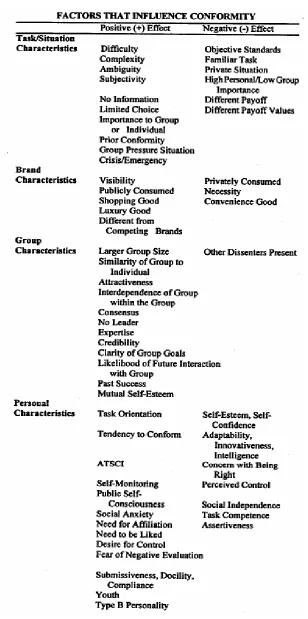
Table 1. Factors that influence conformity p. 86
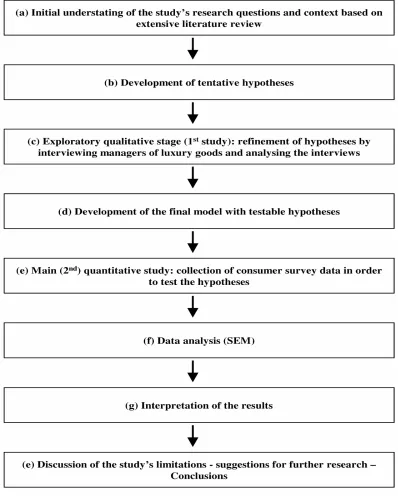
Table 2. Research Process of the Current Study p. 111
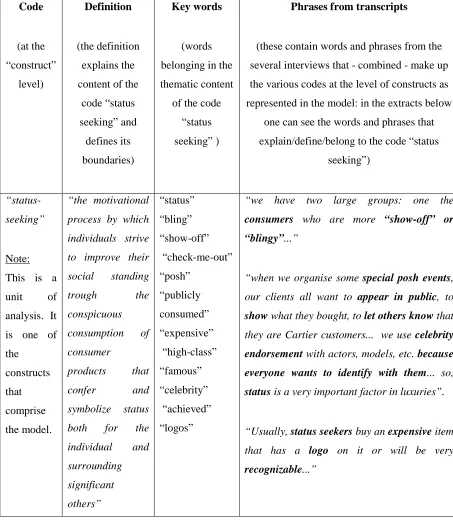
Table 3. Example from Codebook p. 119/20
Table 4. Results of Qualitative Study p. 123/24
Table 4. Results of Qualitative Study (cont.) p. 127/29
Table 4. Results of Qualitative Study (cont.) p. 130/32
Table 4. Results of Qualitative Study (cont.) p. 136/39
Table 4. Results of Qualitative Study (cont.) p. 142/44
Table 5. Postcodes Selected for Sampling Frame p. 159
Table 6. Reliability of Measure Instruments (Cronbach’s α) p. 169
Table 7. Results of Harman’s Single Factor Test p. 173/74
Table 8. Results (Textual) Summary for the Self => Traits Hypotheses p. 206
Table 9. Results for the 1st Estimated Structural Model (Traits => Effects) p. 209
Table 10. Results (Textual) Summary for the 1st Estimated Structural Model (Traits =>
Effects)
p. 210
Table 11. Results for the 2nd - Final - Estimated Structural Model (Traits => Effects) p. 213
Table 12. Results (Textual) Summary for the 2nd - Final - Estimated Structural Model (Traits
=> Effects)
p. 214
Table 13. Results (Textual) Summary for the 2nd - Final - Estimated Structural Model (Traits
=> Effects)
p. 214
Table 14. Standardized Total, Direct & Indirect Estimates for a Mediated Model on Hedonic
Effects
p. 230
Table 15. Standardized Total, Direct & Indirect Estimates for a Mediated Model on Quality
Effects
p. 232
Table 16. Standardized Total, Direct & Indirect Estimates for a Mediated Model on Snob
Effects
p. 234/35
Table 17. Standardized Total, Direct & Indirect Estimates for a Mediated Model on Veblen
Effects
p. 237/38
Table 18. Standardized Total, Direct & Indirect Estimates for a Mediated Model on
Bandwagon Effects
p. 240/41
LIST OF FIGURES
Figure 1. Three Levels of Prestige p. 26
Figure 2. Mason’s Conspicuous Consumption Theoretical Base p. 37
Figure 3. Transmission of Taste Model(s) p. 40
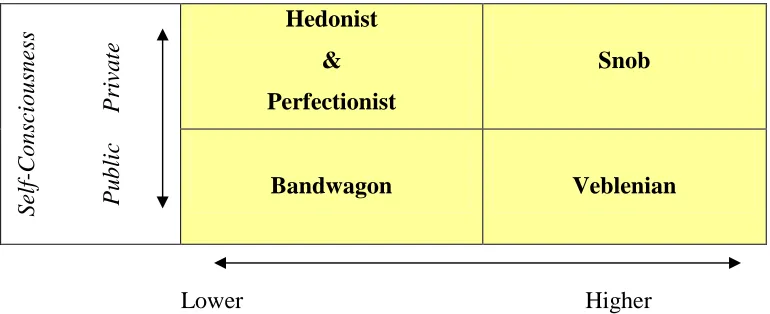
Figure 4: Prestige-Seeking Consumer Behaviours (Vigneron & Johnson) p. 46
Figure 5. Conceptual Model of Personal Orientation to Luxury p. 50
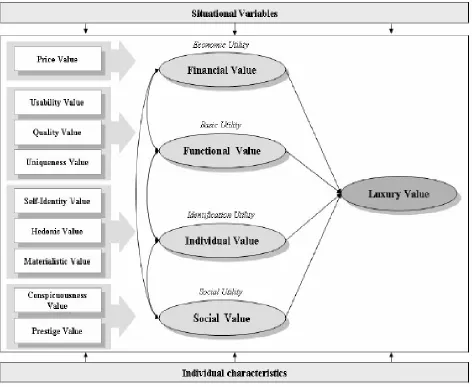
Figure 6. “Luxury Value” Conceptual Model p. 51
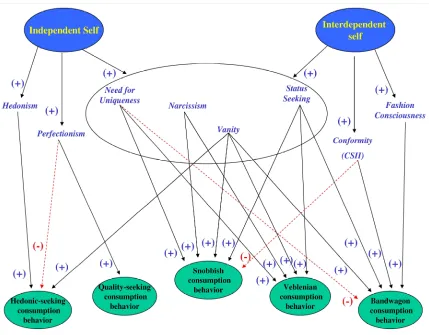
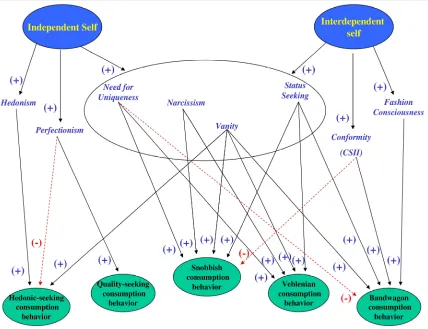
Figure 7. Hypothesized Model of Luxury Consumption Behaviour(s) and Psychological
Antecedents
p. 57
Figure 7 (rep.). Hypothesized Model of Luxury Consumption Behaviour(s) and Psychological
Antecedents
p. 89
Figure 8. London Postal Area p. 158
Figure 9. Response Rate Formula p. 167
Figure 10. Scree Plot Testing for CMV p. 172
Figure 11. Self-Concept Scale Items with Standardized Loadings (figure from AMOS 16.0) p. 182
Figure 12. Hedonism Scale Items with Standardized Loadings (figure from AMOS 16.0) p. 183
Figure 13. Quality-Seeking Scale Items with Standardized Loadings (figure from AMOS 16.0) p. 184
Figure 14. NFU Scale Items with Standardized Loadings (figure from AMOS 16.0) p. 186
Figure 15. Vanity Scale Items with Standardized Loadings (figure from AMOS 16.0) p. 187
Figure 16. Narcissism Scale Items with Standardized Loadings (figure from AMOS 16.0) p. 188
Figure 17. Status-Seeking Scale Items with Standardized Loadings (figure from AMOS 16.0) p. 189
Figure 18. CSII Scale Items with Standardized Loadings (figure from AMOS 16.0) p. 190
Figure 19. Fashion Consciousness Scale Items with Standardized Loadings (figure from AMOS
16.0)
p. 191
Figure 20. Effects Scale Items with Standardized Loadings (figure from AMOS 16.0) p. 192
Figure 7 (rep.). Hypothesized Model of Luxury Consumption Behaviour(s) and Psychological
Antecedents
p. 194
Figure 21. Mediation Effects (Hedonic Behaviour) p. 229
Figure 22. Mediation Effects (Quality-Seeking Behaviour) p. 231
Figure 23. Mediation Effects (Snob Behaviour) p. 233
Figure 24. Mediation Effects (Veblenian Behaviour) p. 236
Figure 25. Mediation Effects (Bandwagon Behaviour) p. 239
Figure 26. Revised Empirically Verified Model of Luxury Consumption Behaviour(s) and
Psychological Antecedents
ACKNOWLEDGEMENTS
I would like to gratefully acknowledge the enthusiastic supervision of Professor George
Balabanis, and thank him for his patience, motivation, enthusiasm, and immense knowledge. His
guidance helped me in all the time of research and writing of this thesis. Every time I was stuck and lost, he would help me see through the mist. I could not have imagined having a better advisor and mentor for my Ph.D study and I hope we will remain working colleagues for a long time and produce significant works together.
Dear Professor, thank you!
I thank my second supervisor, Professor Vangelis Souitaris, for his contagious enthousiasm and the career advice that he has given to me throughout the three years of this Ph.D.
I thank Professor Vince Mitchell for all his advice on various issues as part of the comittee who evaluated this work on regular basis throughout these three years; as well as for introducing me to ESCP Europe, opening my way to joining this great Business School.
COPYRIGHT ©
Minas N. Kastanakis
“I grant powers of discretion to the University Librarian to allow this thesis to be copied in whole or in part.
This permission covers only single copies made for study purposes, subject to normal conditions of acknowledgement.”
ABSTRACT
This PhD study extends the existing knowledge on the consumption of luxuries, by bringing together the conspicuous consumption and luxury consumption literature with self-concept and trait theory, in order to develop a conceptual framework that explains the phenomenon of luxury consumption from a consumer behaviour perspective. The model developed in this study describes and explains a) the psychological antecedents of luxury consumption in the form of a general – personal or social – self-concept orientation, as well as in the form of various luxury-specific individual traits, and b) describes and explains a range of different consumption patterns of luxury goods. It is shown how an individual’s self-concept impacts a variety of luxury consumption behaviours via these mediating trait mechanisms. This integrative and parsimonious model helps in understanding the behaviour of these consumers and assists managers a) to better segment their markets, and b) predict consumer reactions to changes in their offering or communications, based on the interaction of multiple controllable drivers of luxury product consumption.
LIST OF ABBREVIATIONS
IND = Independent (Self-concept) INT = Inter-dependent (Self-concept)
H = Hedonism (trait)
QS = Quality-seeking or consumer perfectionism (trait) NFU = Need-for-uniquenes (trait)
AOS = Avoidance of similarity (trait – component/sub-dimension of NFU)
CCC = Creative choice counter-conformity (trait – component/sub-dimension of NFU) UCC = Unpopular choice counter-conformity (trait – component/sub-dimension of NFU) V = Vanity (trait)
AV = Achievement view (trait – component/sub-dimension of vanity) AC = Achievement concern (trait – component/sub-dimension of vanity) PV = Physical view (trait – component/sub-dimension of vanity)
PC = Physical concern (trait – component/sub-dimension of vanity) NR = Narcissism (trait)
SS = Status-seeking (trait)
CSII = Consumer susceptibility to inter-personal influence
NI = Normative influence (trait – component/sub-dimension of consumer susceptibility to
inter-personal influence)
II = Informational influence NI = Normative influence (trait – component/sub-dimension of
consumer susceptibility to inter-personal influence)
FC = (novelty) Fashion-consciousness
HD = Hedonic effect or hedonic-seeking consumption behaviour QU = Quality effect or quality-seeking consumption behaviour SN = Snob effect or snob (-bish) consumption behaviour VB = Veblen effect or veblenian consumption behaviour
BW = Bandwagon effect or bandwagon consumption behaviour
1. INTRODUCTION
During the last two decades, luxury consumption and luxury brand management has generated much interest and discussion in both business and academic circles. Among business, the focus has been on managerial concerns regarding the proper management of the unprecedented growth of the luxury sector, especially since luxury became a consolidated economic sector in the early 2000s led by the dynamics of conglomerated groups such as LVMH, Richemont Group and PPR Gucci. Following these market developments, there is a growing concern among scholars as well regarding the management of luxury brands and the understanding of the consumers of luxury goods.
This study will try to address both the academic as well as the pragmatic concerns by offering new theoretical and empirical insights into the questions regarding the drivers of luxury consumption and the behaviour of consumers of luxuries: these will, in turn, be of great practical benefit as they could help managers to better segment their markets and predict consumer reactions to changes in their offering or communications based on the interaction of multiple controllable drivers of luxury product consumption.
1.1 THE GLOBAL LUXURY MARKET: VALUE AND MANAGERIAL CONCERNS
The luxury sector has been steadily and rapidly growing over the last few years from a value of a mere $20 billion in 1985 to a current $180 billion (Okonkwo, 2009) or $190 billion (Chevalier and Mazzalovo, 2008) benefiting from globalization and its financial consequences such as wealth-creation opportunities, new affluent market segments, international travel expansion and cultural convergence. These numbers reflect conservative estimates (Chevalier and Mazzalovo, 2008) and only measure the luxury market in its more limited scope including just the traditional “old luxury” players, mostly French and Italian firms with a long heritage and presence in product categories such as fashion, accessories, leather-goods, cosmetics and fragrances, wine and spirits.
If one, however, takes a broader view to include “new luxury” (that is, contemporary European, US and Asian firms in luxury and premium categories) as well as the service sector, the estimated value of the global luxury market can skyrocket: the B.C.G. has estimated1 that the market for “new luxury” products and services was $440 billion in 2003 in the U.S. and an additional $400 billion outside the U.S. (primarily in Japan, UK and other Western European countries). Other
estimations point out to even larger market values: the total U.S. luxury market2 reached a total of $898 billion in 2004 and a total of $1002 billion ($1 trillion) in 2005, a growth of 11.6%. They also report that aggregate results of the 25 leading global luxury brands in 2005 showed an average revenue growth of 10,9%, following an average growth of 14,5% in 2004; while the fastest growing luxury companies in this longitudinal study of the luxury market averaged a growth of 18% or higher in 2005.
Despite the recent cyclical downturn during 2008/2009, the luxury markets are back on healthy growth numbers during the 3rd and last quarter of 2009 and they are expected to fully recover by 2011; while the last estimates for 2010 point out to a global market value of $200 billion for the traditional luxury markets and $1 trillion for the wider premium markets (unpublished financial report 2009, personal communication: Cartier/Richemond Group, November 2009).
From 2000 till 2009 the three dominant trends in the global luxury goods market are globalization, consolidation, and diversification. Globalization is a result of the increased availability of these goods (the “democratization of luxury”), the emergence of new luxury brands, and an increase in tourism. Consolidation involves the growth of big companies and ownership of brands across many segments of luxury products: primary examples include the emergence of conglomerates such as LVMH Group, Richemont Group, and PPR Gucci, which dominate the market in areas ranging from luxury drinks to jewellery, fashion and cosmetics. In addition, leading global consumer companies, such as Procter & Gamble, are also attracted to the industry due to the difficulty of making a profit in the mass consumer goods market, thus, increasing the size of the global market in the premium categories. Finally, even though the top tier of the luxury market is dominated by the “Big Three” corporations mentioned above, there are many smaller operators that have the critical mass to be clearly international and have strong presence in a much diversified - in terms of product/service categories - luxury market (Chevalier and Mazzalovo, 2008). Hence, the annual reports of the large conglomerates as well as those of the smaller global luxury players reflect a common challenge: how to best manage the enormous growth of this market.
As a conclusion, while the big luxury groups have a diversified portfolio of luxury products in several categories and the smaller niche players have a presence in few closely related markets, their
2 Luxury Report 2006; http://www.researchandmarkets.com (accessed: 12/9/07). This includes all luxury purchases by
basic concern is the same: How can they understand, approach and attract the increasingly savvy,
differentiated and very demanding luxury consumers? As the luxury markets have become
increasingly diversified and the consumers are not anymore a homogenous group of “elite people” (as in the past), how can they better segment their markets and tailor their product offerings and
communications?
Therefore, from the practical standpoint of view, this study aspires to address these pragmatic concerns by offering managers the tools to better understand, segment and serve their markets.
1.2 ACADEMIC RESEARCH ON CONSUMPTION OF LUXURIES
As a contemporary phenomenon with huge managerial relevance and impact on the business world, the study of luxuries has recently started to attract the attention of academics as well. Once a marginalised field, which received minimal research attention, luxury consumption and the management of luxury is, during the last ten years, witnessing a steady increase of interest among scholars. A brief timeline of the evolution of luxury research is presented in the next two paragraphs, after which the shortcomings and/or gaps of the field will be highlighted together with an explanation of how this study will attempt to contribute from an academic point of view.
attitudes, and cultural capital (Bourdieu, 1984, 1990; Campbell, 1995; Trigg, 2001; Rojek, 2000; Chadhauri & Majumdar, 2006; Hilton, 2004). Research in Psychology expanded the above concepts by examining the influence of personality and self-concept on consumption (Brinberg & Plimpton, 1986; Gould & Barak, 1988; Netemeyer, Burton, & Lichtenstein, 1995; Kwan et al., 2004; Braun & Wicklund, 1989; Tepper, 2001; Tepper & McKenzie, 2001; Marcus & Kitayama, 1991; Singelis, 1994; Triandis, 1989) while consumer behaviour research added the hedonic dimension in the equation of luxuries’ consumption (Holbrook & Hirschman, 1982; Dubois & Duquesne, 1993; Vigneron & Johnson, 1999).
Current research - during the last decade - (Hansen, 1998; Wong & Ahuvia, 1998; Vigneron & Johnson, 1999; Wong & Zaichkowsky, 1999; Gentry, Putrevu, Shultz, & Commuri, 2001; Coulter, Price, & Feick, 2003) supports the view that personal motives also drive luxury consumption and that it is not solely a social or interpersonal function as exemplified by the conspicuous consumption literature (Berry, 1994; Dittmar, 1994; Corneo & Jeanne 1997; O’Cass & Frost 2002). The limitation of social motives to fully explain luxury consumption was recognized by research advocating the personal-orientation towards luxury (Tsai, 2005). A distinction between socially-oriented and personally-oriented luxury product consumers has emerged in the literature (Wiedmann, Hennigs, & Siebels, 2007). The origins of these two orientations can be traced in an individual’s self concept (Marcus & Kitayama, 1991; Bagozzi & Heathenon, 1994; Ellis & Wittenbaum, 2000; Gudykunst & Lee, 2003). Consumers with primarily independent self-concept show a more personal orientation in the way they consume luxuries whereas consumers with primarily interdependent self-concept care more for the social impact (or signalling) of the consumption (Wong & Ahuvia, 1998; Tsai, 2005; Wiedmann, Hennigs, & Siebels, 2007).
1.3 THE GAP AND THE PRESENT RESEARCH
Having briefly presented the evolution of scholarly research on luxuries, I would like at this section to discuss in more detail the gaps and how the proposed study will attempt to deal with them.
A) The existing empirical studies are mostly small-scale (in terms of sample sizes) attempts to describe some relatively isolated phenomena. While they describe relevant facets of luxury consumption, such as the importance of maintaining the perception of exclusivity or an aura of dream, they fall short when it comes to fully understanding the whole phenomenon of the consumption of such products because they are not based on robust theoretical backgrounds. A few studies (mostly conceptual) focus on the interesting and relevant question of which are the antecedents of such consumption but, in spite of their theoretical appeal, they haven’t explained how exactly such antecedents (e.g. attitudes to luxury: Dubois, Czellar and Laurent, 2005; the self concept: Wong and Ahuvia, 1998; and Tsai, 2005; or the notion of the luxury value: Wiedmann, Hennigs and Siebels, 2007) might lead to the consumption of luxuries. Thus, existing conceptual and empirical papers are largely a-theoretic and merely descriptive but without strong explanatory properties. This study will try to introduce a theoretical basis as a foundation upon which a model of luxury consumption can be developed.
B) Another problem is that every empirical paper on the subject has treated the consumption of luxuries as a homogenous behaviour: thus - on the consequences side this time - the dependent (or outcome) variable is always the “consumption of luxury goods” without any further distinctions. But we know already from economics (Leibenstein, 1950) the existence of different effects - veblen, snob and bandwagon - along with the existence of hedonic and utilitarian consumption. This is another gap which I will try to fill with this empirical study - recognizing that the consumers of luxury goods are not homogenous and their behaviour is far from being homogenous as well.
random sample of actual consumers of luxury goods from a large international metropolitan city (London, UK): such a sample approximates more realistically the global luxury consumer(s).
1.4 RESEARCH OBJECTIVES AND QUESTIONS
The core idea underlying this research is that a consumer’s self-concept as well as various individual luxury-specific traits are, working together, significant regulators of consumption behaviour(s), especially in a domain of highly symbolic objects such as luxury brands. Therefore I believe that the antecedents of luxury consumption should be examined with reference to self-concept and trait theory, drawing on the relevant research streams from psychology and sociology.
In view of the gaps identified above at (1.3), the key objective of the proposed research is to identify all the factors that cause the consumption of luxury goods, explain why they do so, and how this is manifested in observable consumer behaviour. If this is done successfully, the result will be to construct an integrative, comprehensive, empirically assessed and theoretically grounded model of luxury consumption.
This general objective may be broken down into the following specific research questions:
• Is the self-concept an antecedent of consumption of luxuries and, if yes, how exactly?
• Which are the specific traits of the consumers of luxury goods? Do they lead to various different consumption patterns?
• Is the consumption of luxuries a homogenous behaviour or is it comprised from different behavioural patterns and, if yes, what is behind each one of them?
1.5 CONTRIBUTION OF THE PRESENT STUDY
The present study has important theoretical contribution(s) as well as significant managerial implications.
• Theoretical contribution(s):
As already mentioned above at (1.3), existing research is fragmented (focusing on minor phenomena instead of the totality of the phenomenon of luxury consumption) and weak in terms of theoretical grounding. An issue that hasn’t been addressed by existing empirical studies is the identification of the individual antecedents of luxury consumption and the explanation of how they may impact resulting behaviour(s). I believe that the self-concept orientation may be the original antecedent of such behaviour(s); as well as that there are various specific individual traits that can provide the missing link that explains the mechanism of this impact.
Therefore, the main contribution of this study will be the development of a comprehensive, theoretically robust, yet empirically assessed, model that can not only describe but also explain the phenomenon of the (different ways of) consumption of luxury goods from a consumer behaviour perspective. This model should take into account both a) the individual factors that lead to the consumption of luxuries as well as b) the various different behavioural manifestation(s) of such consumption. Overall, this study will provide a new theoretical insight into the whole phenomenon of luxury consumption, thus contributing at both the consumer behaviour literature on luxury consumption as well as to the general psychological literature on self-concept and trait theory.
• Methodological contribution(s)
From a methodological point of view, the present research will address the weaknesses of existing empirical studies that rely on small student samples. This study will draw for the first time a truly random sample of real consumers of luxury goods from a large metropolitan city (London, UK), thus, increasing the validity of the empirical findings.
• Managerial Implications
consumer populations, and c) position different luxury products to the right consumer segment. As a result of this study, they will be able to better predict consumer reactions to changes in their offering or communications based on the interaction of multiple controllable drivers of luxury product consumption. This is especially relevant today if one considers that the large luxury groups maintain a large portfolio of very different luxury brands that should be promoted in different ways and to different consumers. Taking into account that the aggregate value of global luxury markets has already surpassed the trillion $ level, the need for deeper consumer understanding and more sophisticated and accurate segmentation schemes is self-evident.
1.6 STRUCTURE AND SUMMARY OF THE THESIS
This thesis is structured as follows:
•Chapter 1: Introduction
The first chapter has provided an introduction to the topic and highlighted its relevance for the contemporary business. The academic research has been sketched, gaps and/or shortcomings have been identified, and the aims/objectives as well as the expected contribution(s) of this study have been described.
•Chapter 2: Literature Review
This chapter starts by presenting in a methodical way the existing knowledge in the areas of luxuries and conspicuous consumption. Then, it brings in additional streams of research to lay the foundations upon which the suggested model will been built: this second part a) introduces the theories that will be used (self-concept and trait theory), b) identifies and presents the relevant variables, and, c) concludes with a synthesis in the form of a model and a formal statement of hypotheses.
•Chapter 3: Methodology
construction of the questionnaire measures for the quantitative study. It should be noted that the results of this first study are presented in this section as well.
The second part involves a large-scale survey of consumers of luxury goods in London, UK. In this part the following methodological aspects are discussed: 1) construction of a survey instrument; 2) choice of survey method; 3) sampling considerations; 4) measures taken to ensure survey quality and; 5) administration/fieldwork.
•Chapter 4: Results of Main Quantitative Study
This chapter presents the results of a structural equation modelling analysis based on the previously described survey: the measurement model is first established and, then, the structural model is estimated and discussed.
The chapter has five parts: 1) the statistical assumptions/considerations are discussed; 2) the data screening/preparation process is presented in detail; 3) the establishment of the measurement model is presented, with a detailed discussion of several methodological issues related to model fit measures; 4) the estimation/testing of a large structural model: this part includes an in-depth discussion of the tested relationships; 5) a further testing of five additional smaller models, examining in more detail the mediation or indirect effects (traits mediating the relationship between the self concept and the behavioural effects): each of these models is focusing on a different behaviour of consumers of luxury goods (hedonic effect, quality effect, snob effect, veblen effect, bandwagon effect).
•Chapter 5: Discussion and Conclusions
This chapter discusses in detail the overall implications of this study, focusing on the larger picture of the whole phenomenon of luxury consumption (the previous chapter, in addition to presenting the results, included a detailed discussion of the various specific relationships/paths). The theoretical as well as the managerial implications are discussed in detail in this chapter.
•Chapter 6: Limitations and Directions for Future Research
2. LITERATURE REVIEW
According to Boote and Beile (2005), the purpose of the literature review is to critically
examine the state of a field and the history of a topic, resolve ambiguities and, finally, synthesize it
and offer a new perspective. Following this good advice, I intend to split this chapter in 2 sections:
the main review (2.1 and 2.2) and the model development (2.3, 2.4 and 2.5). In order to serve this goal, I will bring into the discussion of the marketing literature on luxuries additional streams of research: a) the literature on conspicuous consumption from economics, sociology and psychology; b) research from psychology on the various individual traits which, I believe, characterize the consumers of luxury goods; and, c) sociological, psychological and marketing research on self-concept theory.
2.1 OVERVIEW
This literature review will be split into two main parts:
a) “A Multidisciplinary Approach to Luxury and Conspicuous Consumption” (2.2): this part will present and critically examine the existing knowledge on the topics of conspicuous consumption and luxuries.
More specifically, this section will start with a) an overview of the research approaches to the topic of luxury/conspicuous consumption from various disciplines (2.2.1); b) some necessary definitions and contextual discussions such as old vs. new luxury (2.2.2); and then, c) the main literature review which will be split into thematic parts (2.2.3).
2.2 A MULTIDISCIPLINARY APPROACH TO LUXURY AND CONSPICUOUS
CONSUMPTION
2.2.1 Introduction: an Overview of Research Approaches from Various Disciplines
Luxury has been approached from various disciplinary points of view: Economics, Economic Psychology, Sociology or Socio-Economic research, Psychology and Marketing.
Economists focus on utility and use the term luxury in contrast to necessities (Besley, 1989;
Kemp, 1998); for example, McKinsey’s consulting (1990) defines luxury brands as those who “have constantly been able to justify a high price, i.e. significantly higher than the price of products with comparable tangible functions”. Kapferer (1997), however, remarks that this definition is not enough since it doesn’t include the notion of an absolute minimum threshold. Nueno and Quelch (1998), again, define luxury brands as “those whose price and quality ratios are the highest of the market; that is, their price is significantly greater than the price of products with similar tangible features”. While indicating too that the price gap measures something intangible, this definition still suffers since it does not delineate the threshold between, for example, real luxuries and premium products or “accessible luxuries”. In addition to the definitional problem, the utilitarian perspective, which dominates this stream of research, regards luxuries as oddities and is theoretically insufficient in dealing with the so-called “non-functional” demand3.
The Socio-Economic and Economical-Psychological school, originated in the classic work of Veblen (1899), moves a step further from purely utilitarian explanations and builds on more elaborate hypotheses with the incorporation of the findings from the signalling and behavioural research (Keasbey, 1903; Duesenberry, 1949; Corfman, Lehmann, and Narayanan, 1991; Coelho and McClure, 1993; Bagwell and Bernheim, 1996; Basmann, Molina and Slottje, 1988; Chao and Schor, 1998; Corneo and Jeanne, 1997; Frank, 1985). Leibenstein, for example, examining three consumer effects on demand (1950), was the first to attribute the high prices of luxury goods to “external effects on utility”4, thereby introducing the well-known today “veblen”, “snob” and “bandwagon” effects, that will be discussed later on.
Therefore, another kind of utility (secondary utility) explains that - even though agents in a given market don’t always value conspicuous goods per se - they compete in a “signalling race” as a confirmation of their capacity to pay; and benefit from this mere confirmation or they benefit from social interactions within a community (Jaramillo and Moizeau, 2003; Amaldoss and Jain, 2005a;
3 “Non-functional demand” is defined here as “that portion of the demand for a consumers’ good which is due to factors
other than the qualities inherent in the commodity” (Leibenstein, 1950).
4
Amaldoss and Jain, 2005b; Amaldoss, Jain and Mina, 2005; Johansson-Stenman and Martinsson, 2006).
Continuing from this point, Sociological research has dealt with luxuries in the stream of research dedicated on conspicuous consumption5 (Bourdieu, 1984, 1990; Campbell, 1995; Trigg, 2001; Rojek, 2000; Chadhauri and Majumdar, 2006; Hilton, 2004; Canterbery, 1999) and with the use of the concept of “prestige” in order to study the effect of group forces on the formation and change of opinions and attitudes. Veblen, originally, (1899) identified two motives behind conspicuous consumption:
a) “Invidious comparison”, where consumers try to distinguish themselves from those of lower classes, and
b) “Pecuniary emulation”, where consumers try to emulate the behaviour of the classes above them and benefit from status gains.
Within this framework, and continuing from the Veblenian thesis that conspicuous consumption was used by people to signal wealth and, by inference, power and status, the sociological research has expanded to cover in detail the role of public vs. private consumption, the impact of reference groups on consumers, and the role of high prices on consumption.
Going into more depth and in a different direction, Psychological and Marketing research builds on the above concepts and goes even further by studying luxury brands’ consumption in relation to personality characteristics (Brinberg and Plimpton, 1986; Gould, and Barak, 1988; Netemeyer and Burton, 1995; Kwan, John, Kenny, Bond and Robins, 2004; Braun and Wicklund, 1989; Tepper, 2001; Tepper and McKenzie, 2001), as well as with the research streams on attitudes and behavioural research (Holbrook, and Hirschman, 1982; Fournier, 1998; Bagozzi, Gopinath, and Nyer, 1999). Psychometric research has used, for example, the constructs of involvement, social-compliance and self-monitoring to study their effects on (general) consumption; these findings have subsequently been used in marketing and integrated, specifically, in the luxury literature together with the study of demographic or lifestyle (psychographic) approaches to luxury consumption. In addition to the rich heritage from the previous disciplines, marketing research has, during the last three decades, fertilized the study of luxuries with various concepts such as, amongst others, the self-concept, identity, emotions and hedonic consumption.
5 However it should be emphasized that the consumption of luxury brands is just “a form of conspicuous consumption”
2.2.2 Definitions of Terms and Contextual Understanding
2.2.2.1 Luxury
Starting from etymology (Merriam-Webster’s Dictionary), a first encounter with the word “luxury” will reveal that it carries several meanings: “a condition of abundance or great ease and comfort; sumptuous environment; something adding to pleasure or comfort but not absolutely necessary; an indulgence in something that provides pleasure, satisfaction, or ease”.
According to Dubois, Czellar and Laurent (2005) the English word “luxury” (as well as the French “luxe”, the Italian “lusso” and the Spanish and Portuguese “lujo”) is derived from the Latin “luxus”, which, according to the Oxford Latin Dictionary, signifies “soft or extravagant living, (over-)indulgence” and “sumptuousness, luxuriousness, opulence”; “luxus” also means sensuality, splendor, pomp - and its derivative “luxuria” is extravagance, etc. Merriam-Webster’s Dictionary defines “luxuriance” as something characterized by richness and extravagance, often tending to excess; and “luxuriant” is something that is yielding abundantly, fertile, fruitful and profuse.
Semantically - though not etymologically (Kapferer, 2006) - the word “luxury” is also often associated with “lux” the Latin word for light; therefore, luxury carries connotations of brightness; is enlightening and glittering; in addition, it is visible and must be seen, most importantly, by others than the owner6.
Dubois, Czellar and Laurent (2005) add that “in its contemporary marketing usage, “luxury” refers to a specific tier or offer in almost any product or service category”.
2.2.2.2 Luxury Goods
An economic definition of luxury will point out that luxury goods have a comparatively high price-to-quality ratio. For the economist, however, quality means tangible functions; therefore, a luxury good has a significantly higher price than another good with similar tangible functions. On that ground, luxury goods are oddities!
2.2.2.3 Luxury Brands
It is a demanding task to define what exactly constitutes a luxury brand; especially so in recent times, after the “mass affluence” or “democratization of luxury” phenomenon has blurred the territory between the dreamed and the affordable brands. Kapferer (2006) believes that no definition can strictly delineate this concept and, rightfully, wonders “where does luxury stop and where does
6
upper range start for instance? Is what has been called “mass-stage products” (a contraction from mass prestige) or “new luxury” still luxury?” The conceptualization of the “luxury brand” in the academic literature7 is, therefore, arbitrary. Some of the proposed definitions and typologies are presented here:
Nueno and Quelch (1998) identify three types of luxury brands:
-“Limited Awareness Brands”, usually run as family business; these are usually boutique stores focused on narrow product lines, often hand-crafted, and targeted to exclusive niche markets through only one or two stores.
-“Well-Known” luxury brands (such as Rolls-Royce cars) that are inaccessible to the broader
market due to their excessive prices and inability to be sampled before purchase.
-“Well-Known” luxury brands that are affordable to a broader audience, such as in categories of accessory items (accessorized luxuries).
While the two first are without doubt luxury brands, the third category, however, is the most problematic, in being distinguished from premium but still mass-market brands.
Silverstein and Fiske (2003) argue that today’s consumers accept paying premiums of 20% to 200% for the “well-designed, well-engineered, and well-crafted goods - often possessing the artisan touches of the traditional luxury goods” that were not found before in the mass middle market. Even when these goods address basic needs, they evoke and engage consumers’ emotions while at the same time feeding their aspirations for a better life. Such “new-luxury” goods, unlike old-luxury
goods, have the potential to generate high volumes despite their relatively high prices. They offer the
following classification of these “new-luxury” (but not “luxury”) brands:
-“Accessible Superpremium”: these products are priced at or near the top of their category, but
middle market consumers can still afford them, primarily because they are low-ticket items. As an example, Belvedere Vodka, which undergoes four rounds of distillations for a smoother taste, is able to command about 28$ a bottle, a 75% premium over Absolut at 16$.
-“Old-Luxury Brand Extensions”: these are lower-priced versions of goods that have been
traditionally been affordable only by the rich. BMW 325 sedans, which consumers buy for their advanced technology and their “work-hard, play-hard” image, at a price of 29.000$, had in 2002 a 12% rise in sales; while the non-luxury Chevy Malibu at 19.000$ list price, had a 4% drop over 2001. This is a category that is problematic in its distinction from pure luxuries.
-“Mass Prestige or ‘Masstige’”: these goods occupy “a spot between mass and class”: while
commanding a premium over conventional products, they are priced well below superpremium or old-luxury goods. An eight-ounce bottle of ‘Bath & Body Works’ body lotion sells at a premium of 276% of the same product by ‘Vaseline Intensive Care’, as an example of this category.
Same as with the previous definitions as well, it is up for interpretation where/how to draw a line between the so-called “new luxury” and the traditional; especially the second category of the “old-luxury brand extensions” seems to be blurred with the definition of the ‘“well-known” luxury brands that are affordable to a broader audience’, offered by Nueno and Quelch (1998).
Vigneron and Johnson (1999), following the categorization introduced by Horiuchi (1984), make use of the term “prestige brands” and propose three further sub-divisions:
- “Upmarket brands”,
- “Premium brands”, and
- “Luxury brands”
Figure 1. Three Levels of Prestige
Therefore, within the “prestige” brand category, the “luxury brands” occupy the extreme end. In subsequent research (2004), however, the authors take exactly the opposite view arguing that
“prestige brands” should be the term to be used when discussing the brands positioned on the
extreme end of the “luxury brand” category; adding, thus, to the confusion between the two terms and to the whole definitional problem.
The relationship between the concepts of “luxury” and “prestige”, as applied to brands, has been explored in a more detailed way by Dubois and Czellar (2002). According to this point of view, the use of these terms as synonyms in the literature (Bagwell and Bernheim, 1996) should be avoided, as they cover different conceptual domains in the customers’ eyes. Specifically:
to be judged as prestigious is an inherent, unique know-how, which may either concern a specific attribute or the overall quality and evaluation of the brand. On the other hand, luxury concerns “self-indulgence, be it private or public; luxury is linked to subjective perceptions of comfort, beauty and a sumptuous lifestyle”, or “everything that is more than what one needs”. This is in accordance with Berry’s (1994) definition of luxury as a concept opposite to necessity; consequently, the product and service brands associated with luxury are more restricted, relatively to prestige brands, and are all related to comfort, beauty and refinement. In addition, prestige is “always a positive evaluative judgement, whereas luxury can be negative if it is too ostentatious”.
- At a symbolic level, prestige can be also acquired by association when consumers interpret prestige symbols (such as a name, person, high prices, events or characters) as being associated with a brand. In this case the two concepts converge since luxury can, among other connotations, emerge “as a type of prestige symbolism” where consumers perceive the high luxury of a brand as a prestige symbol.
Therefore, brands may be prestigious without being luxurious or luxurious without being prestigious, or - in some cases - be both: prestige is a positive evaluative judgement towards the brand, influenced by a unique accomplishment inherent to the brand or by prestige symbols associated with it, while luxury is linked to perceptions of comfort, beauty and a sumptuous lifestyle.
Another important issue, within the domain of definitions, is how luxury brands can be distinguished from regular or normal (non-luxury) brands. Vigneron and Johnson (2004) argue that brands are of two kinds: either luxurious or non-luxurious and agree with Kapferer (1997) who points out that a luxury brand is a discontinuity vis à vis other types of brands. According to their point of view the degree of luxury contained in a luxury brand can be measured on a continuum within the luxury range; outside this range - but not as an extension of it - lie the rest regular brands. Thus, between premium and luxury brands, in marketing terms, there is a difference of degree; however, a premium, prestige or luxury brand cannot be compared to a regular brand.
If then luxury is a discontinuity - and this view certainly seems to have its merit - then how can luxury brands be distinguished from the common ones? A clear answer is not given in the existing literature8 and, therefore, this issue remains to be explored.
8
2.2.2.4 Typologies of Luxury Brands
Kapferer (2006), while avoiding to add another definition, admits that luxury is a concept with “fuzzy” frontiers and offers instead a classification of two different models of luxury brands; while both represent luxuries, they have a different philosophy: one is rooted in “history, rarity and craftsmanship”, and in most cases is associated with European luxury brands, and a second model is based “upon stories, image and marketing finesse”, and represents the American luxury brands, mostly new and ahistorical.
The European model is represented by a “luxury pyramid”9, divided in three levels:
c) On the top level is the “griffe”, the creator’s signature engraved on a unique work, a work that is the pure creation of a single person.
d) This is followed, at the middle level, by luxury brands produced in small series within a workshop or “manufacture” (Hermès, Rolls-Royce, Cartier).
e) Finally, streamlined, mass-production luxuries (Dior and Yves Saint Laurent Cosmetics, DKNY clothes). As the author argues “at this level of industrialization the brand’s frame generates an aura of intangible added values for expensive and prime quality products which, nonetheless, gradually tend to look more and more like the rest of the market”. At this last level the distinction with upper-range or non-luxury brands tends to become problematic.
The American model (including, however, European brands too; such as Armani and Boss) may be thought of “as a flat, circular, constellation-like model (Kapferer, 2004): at the centre of this constellation is the “brand core”, while all manifestations (its extensions, licenses and so on) are around the edge at a more or less equal distance from the centre”. As an example, Ralph Lauren has the core brand with clothing, representing the “patrician East Coast” American aristocracy ideal, but has in addition several other manifestations of the same values such as Ralph Lauren’s Home Textile extension (bed sheets, blankets, tablecloths, bath towels and so on); superstores are stocking the entire core range and its various collections, each one of them bringing its own expression of the core ideals in a different area.
This distinction has a very important implication that should not be overlooked by researchers trying to decompose the values of luxury brands: it is the possibility that newcomers in the luxury market may be able to tackle effectively the issue of authenticity, heritage and tradition10. In an
9 Nyeck (2004), in a short article on French luxury brands, adopts this view of the “luxury pyramid”.
10 These new luxury brands are mainly of two kinds: some of them are “purely” new (as this American model suggests)
audacious but plausible extension, even a regular (non-luxury) brand could re-invent or reposition and transfer itself from the domain of common brands into the luxury continuum.
Unlike brands such as Cartier, Bentley, Ferrari or Dior, who grew and have benefit from the prestige and fame of a famous person, place or organization, some new brands like Ralph Lauren, Boss and Calvin Clein are pure creations of marketing. They are brands who invented story to compensate for the lack of history. Whether they are luxuries or new luxuries is open to discussion; also, whether this new breed of brands will survive as long as their European-model is something that remains to be seen after time. As Kapferer notes “at some point in time, illusion may not work anymore and authenticity11 could become the very exclusive benefit of luxury brands”.
2.2.2.5 Old vs. New Luxury
While “new luxury” may be a re-naming of traditional upper-range (but still massive) products, researchers and marketers should not ignore the possibility that we are in front of fundamental changes in the way luxury is seen and understood by the meta-millennium consumer. This is an issue that has to be investigated in depth and during time before one attempts to give a definite answer; and is pertinent both with regards to the creation of new luxury brands and the extension of new lines of already established ones.
Yeoman and McMahon (2005), for example, believe that luxury is “incredibly fluid, and changes dramatically across time and culture”. They argue that nowadays luxury, due to increased affluence, is a blurred genre that is no longer the preserve of the elite; and, as more demand increases the luxury domain, consumers attach less importance to the old values of tradition and nobility. As consumers are enjoying more material comfort compared to previous generations, the result is a cultural shift12 towards experiences and personal fulfillment; such a shift may have serious implications within the luxury domain. This is also consistent with the view that, increasingly, luxury consumption is seen through the frameworks of hedonic consumption and emotional gratification (Dubois, Laurent and Czellar, 2001; Vigneron and Johnson, 1999 and 2004).
On this “old vs. new” debate, however, the traditional view is still very strong: Dall’Olmo Riley notices (2004) for example that, “although launching brand extensions has proven to be a potentially successful and profitable growth strategy in the luxury sector, such defining factors as
11 Authenticity becomes more and more important (Beverland, 2005) - whether in luxuries or not: marketers are
increasingly turning to brand histories or historical associations as sources of market value (Penaloza, 2000) or as “cultural marker of legitimacy and authenticity” (Brown, Kozinets and Sherry, 2003). Authenticity is considered by many as a core component of successful brands because it forms part of a unique brand identity (Aaker, 1996; Kapferer, 2001; Keller, 1993) and consumers also seek out for authentic brands (Fine, 2003; Holt, 1997; Thompson and Tambyah, 1999). As Brown et al. state, “the search for authenticity is one of the cornerstones of contemporary marketing…”.
12
high awareness, exclusivity and desirability can be lost as the brand and its luxury appeal becomes diluted”. The same argument can be adjusted for the case of totally new luxury brands that may lean dangerously on the experiential or marketing-buzz side without paying attention to more traditional luxury values. Similarly, from the mouth of an expert manager, Bernald Arnault, head of LVMH: “Some brands (…) have slid off the map of prestigious goods to become a sort of mass market of luxury items” (The Economist, 2003).
If this view is correct, true luxury brands that want to retain their luxury status in the minds of consumers may need to retreat from leveraging their prestigious names to launch low-margin “second-tier” lines since uniqueness and exclusivity are qualities that wealthy individuals rate highly when weighing a purchase decision. Pursuing a move down-market might mean that they risk losing their luxury standing among their best customers - wealthy consumers. Luxury brands were always commanding big premiums; therefore the sub-optimal economics are definitely not worth the risk of sacrificing their high-margin business for the thinly profitable move to less prestigious offerings. Allsopp however (2005) believes that in the UK “the search for low prices is endemic” and this impacts luxuries: “luxury in the low price society” faces difficult problems in view of the fact that “today’s consumers do not just want low prices, they expect them”.
As a conclusion, the proliferation of the term “luxury” in the various markets reflects an intended speculative use, since something “luxurious” is translated into sales more easily; reflecting the academic skepticism on this issue, Dubois and Paternault note that “the path is narrow between the sterility of malthusianism and the excess of mass marketing” (1995).
Finally, referring back to the discussion of European vs. USA typologies, one could propose a link between these typologies and the phenomenon of the “democratization of luxury”13, drawing an argument from Rémaury (2002): the author, after examining the cultural factors that shape this new trend, argues that the greater democratic process in the USA impacts luxury product marketing; therefore, it is a plausible assumption to argue that Kapferer’s American model is akin to “new luxuries” or, more broadly, to the luxuries departing from the traditional expensive, heritage-carrying, aesthetic view of a luxury brand. On the same line, it can be argued that heritage and history is something that is naturally associated with the long history of Europe while the newly created American nation can’t, of course, attach such connotations to its brands; therefore “new luxury” is mostly an US-born phenomenon.
Even though the above discussion doesn’t offer a precise, clear-cut solution to the classification problems of luxuries, however at this point we can, based on these definitions, debates and typologies, make an important observation regarding luxuries and their relation to regular (non-luxury) brands: their territory is safeguarded by a combination of high price tags and additional quality, aesthetic, hedonic and emotional elements not usually found - at least altogether - in non-luxury brands; these elements, together with their enhanced symbolic functions, are the elements that draw the line between the luxury and the non-luxury brand (and partly between the old and new luxuries).
The same view is taken by Dall’Olmo, Lomax and Blunden (2004) where the main distinction seems to be the enhanced symbolism of the luxury brands vs. the emphasis in functionality for the regular brands; that is, “luxury goods are higher in the psychological, social and symbolic dimensions while non-luxury goods score higher in the functional dimension”. In addition, they suggest the following differences between luxury brands and regular brands: luxury brands target a niche market (Phau and Prendergast, 2000) and follow an exclusive distribution strategy, while regular brands address the mass market (Dibb et al., 2001) and go for mass distribution; for luxuries the focus is on status and rarity while regular brands focus on price competition (Nueno and Quelch, 1998); finally, the importance of craftsmanship and founder’s heritage are noted as important elements of luxury brands (Kapferer, 1998).
2.2.3 Evolution of Research on Conspicuous Consumption and Luxury
Before diving into the domain of luxury, one should get acquainted with the research on conspicuous consumption; as well as the literature from the social, signalling, behavioural and economic psychology. All these streams are interwoven with luxury in such a way that any literature review without it would be incomplete: actually, conspicuous consumption and early economic research on relative spending and signalling is the domain where luxury research originates from.
2.2.3.1 Early Views on Contemporary Conspicuous Consumption
contemporary form; and explanations, similar to the proposed by contemporary sociology, psychology or economics start to emerge. Early philosophers such as David Hume (1739), who believed that ostentatious consumption was “innocent luxury” driven by pride in ownership and possession, and Adam Smith (1776), who argued that socially visible consumption was totally justified by conformity to rules of decency and the need to protect one’s social status among its peers, were not critical at all to such phenomena. Later on, however, views change: John Rae (1834) rejects ostentatious consumption on moral and religious grounds as it is driven by vanity; John Stuart Mill (1848) agrees that such vanity has no place in a civilized society and adds that such indulgence should be taxed; and Nassau Senior (1836), preparing the ground for Veblen, holds that the desire for social distinction expressed through possession and display of wealth is the most powerful passion among humans.
2.2.3.2 The Marshallian Utilitarian View vs. the Emergence of Secondary Utility
In spite of these early voices that recognized social motivations, mainstream economists such as Alfred Marshall, whose “Principles of Economics” (1890) dominated the field for decades, marginalized the issue of status-driven consumption. Marshall considered it the indulgence of a small minority, implying that it had no place in a theory of consumption; while there were critics to this view - such as Pigou (1903) who argued that the degree to which individual choices could be affected by the opinion of others had been greatly underestimated – however, they found small acceptance during their era.
Among the “contemporary” scientists, it was Thorstein Veblen (1899), with his depiction of consumer motivations as of “invidious comparison” and “pecuniary emulation”14, who introduced the first non-utilitarian perspective15 on the issue or, alternatively, the notion of “secondary utility”16. Veblen’s basic argument is based on the firm belief that, as wealth is increased and spreads over the society, consumer behaviour is driven not by satisfying subsistence needs or comfort but by the attempt to attain “esteem and envy of fellow men”. For him, the purpose of acquiring possessions was to be found in the public consumption of esteem, status and anxiety displayed by materialism. His theory - while initially ignored - managed to finally find followers only after the World War II;
14
“Invidious comparison” is the case where consumers try to distinguish themselves from those of lower classes; and “pecuniary emulation” where consumers try to emulate the behaviour of the classes above them and benefit from status gains.
15 Utility is herein defined as primary utility (that is, the qualities “inherent” in the product or service). 16