City, University of London Institutional Repository
Citation
: Fopp, M.A. (1988). Museum & gallery management. (Unpublished Doctoral
thesis, City University London)This is the accepted version of the paper.
This version of the publication may differ from the final published
version.
Permanent repository link:
http://openaccess.city.ac.uk/7538/Link to published version
:
Copyright and reuse:
City Research Online aims to make research
outputs of City, University of London available to a wider audience.
Copyright and Moral Rights remain with the author(s) and/or copyright
holders. URLs from City Research Online may be freely distributed and
linked to.
Author:
Qualification: Institution: Department:
Date of Submission:
Michael Anton Fopp Doctor of Philosophy (PhD) City University, London Arts Policy & Management May, 1988
MUSEUM & GALLERY MANAGEMENT
A Study of Management and Organization Theories and their
relevance to the Museum Context, Techniques of Management in
Museums, the importance of Education in Management Skills and
the Administration of Museums with Business Management
ABSTRACT
This thesis examines management and organization theories and
their relevance to the Museum and gallery context. In Part
One management theories are examined to ascertain the
development of management thinking and to establish the
principles under which museums and galleries operate. This
theme is developed to extend the concept of management
expertise in museums and galleries to enable due consideration
to be given to applications of management theory which are
seen to be under-utilized yet appropriate to the changing
environment in which museums and galleries currently operate.
Thought is given to the attitudes and antecedents of the
museum profession and their seeming reluctance to develop new
management skills. The complexities of subject-specialists
occupying key management positions within museums and
galleries is discussed and the move to a more consultative
approach to management is recommended.
Part Two explores Organization Theory, its historical and
contemporary view and its relevance to the museum and gallery
context. An analysis of organizational structure questions
the understanding by museum managers of the importance of
appropriate structures to the successful and effective control
of' museums and galleries. Following on from this is a
detailed look at structural patterns and how best to
understand and design appropriate structures within the
environment of change currently affecting museums. To give
guidance to this line of thought Organization Culture,
Conflict and Change is examined to point out the importance of
a cognizant approach to these subjects by senior museum
professionals in order to provide the most appropriate
structure within institutions which are required to function
with historic collections in a competitive environment that
has seen fundamental changes, generally, over the past twenty
years.
TABLE OF CONTENTS
Conventions
3
Acknowledgements & Declaration
General Introduction
5
PART ONE
MANAGEMENT THEORY AND ITS RELEVANCE TO THE MUSEUM CONTEXT
Introduction
21
Chapter No
1 Scientific Management
23
2 The Quantitative Approach
31
3 The Classical Approach
35
k The Human Relations Approach
5 The Systems Approach
59
6
Contingency Theory and the Situational ApproachSummary to Part One
86
PART TWO
ORGANIZATION THEORY AND ITS RELEVANCE TO THE MUSEUM CONTEXT
Introduction
99
Chapter No
7
Organization Theory,An Historic and Contemporary View
120
8 Organizational Structure
1Lt7
9
Structural Patterns and the Division of Work177
10 Organization Culture, Conflict and Change219
11 Conclusion
273
Appendices
281
Conventions
1. The term museum refers to museums, art galleries and
establishments combining the functions of both.
2. The term he or she should be understood in the context in
which it is written and does not imply any sexist attitude on
the part of the writer.
3. The term worker is used to describe any person, of
whatever job title, who is the recipient of the management
Acknowledgements
It would be impossible for me to list all the many people who
have assisted me in this work. I would, nevertheless like to
express my appreciation to Eric Moody and Professor John Pick
for their good counsel while supervising my research. To Dr
John Tanner I must record my grateful thanks for his unerring
optimism when I began to flag and for giving so generously of
his time. The support and help I have received from my wife
has been the single most influential factor in my being able
to complete the work at all - to Rosemary a thousand thanks.
Declaration
The Author grants powers of discretion to the Librarian of the
City University to allow this thesis to be copied in whole or
in part. This permission covers only single copies made for
study purposes, subject to the normal conditions of
GENERAL INTRODUCTION.
The concept of management studies and senior staff with
management training or qualifications, is a new phenomenon in
museums. For many years museums have been managed with little
or no attention being paid to management training for staff.
The view has often been expressed that management training and
the resulting techniques, are inappropriate to museums and, as
such, are irrelevant to the museum profession. The general
opinion has been that museums are different from other
organizations (commercial or not) and is one which a large
section of the museum profession retains. A recent Working
Party Report on Museum Professional Training (1) went so far
as to point out that, in addition, employers were not
acknowledging the importance of training beyond a certain
point. That point being the possession of the Museums
Association Diploma as an entry-level qualification with its
severely limited management studies and administration
training content.
During the recent decade of contracting subsidies (in real
terms) for the arts, and greater competition from an
increasing number of museums and other leisure attractions,
those working in the museum profession have been forced to
acknowledge their shortcomings in the areas of organizational
control and management. The many new independent museums,
useful guidelines to the other museum sectors (a). As a
result the museum profession is increasingly aware of the need
for greater expertise in the management of their institutions
rather than just their collections.
The attitude of members of the profession is explained by
the method of recruitment; motives for entering the
profession; and qualities of incumbents.
A. Method of recruitment
The profession is almost a sealed box; entry is severely
limited at every level except the very lowest with no more
than 1O or 50 junior professional curatorial staff entering in
each year (2). The Museums Association has published an
information sheet about careers in museums wherein it
states:-"Opportunities for a museum career are comparatively
limited in number. Applicants must be prepared to
wait for a suitable vacancy and to move around the
country. Competition is intense - a post in a
national museum may attract over 300 applicants.
Promotion within the national museums is gradual and
staff tend to develop specialist research within
their collections. There is greater mobility of
personnel among local authority museums to achieve
promotion." (3)
As a result the widest recruitment of candidates from outside
the profession is done at the start of an individual's career.
Approximately half of the junior entrants to the profession
each year do so without any formal museum-orientated training
immediately after having completed their academic education.
In many cases the more senior posts are being filled by
candidates from outside the museum-world. By the time those
who could help change the profession have obtained a position
of influence, they have been in the profession for a
considerable time. They may be pre-eminent in their
specialist subject, but their experience of management
techniques will, at best, be severely circumscribed.
B. Desire to enter the museum profession
Qualifications required to enter the profession are generally
high. An honours degree, often supplemented by a higher
research degree, is the norm (b). As a result the profession
tends towards the academic in context and outlook. By their
nature museums do not offer the same sort of career prospects
as many other openings available to graduates. It is probably
fair to say that the perception of the museum profession is
still similar to that of the museum itself - a rather 'dusty',
or mundane job, of interest only to its subject specialists.
Such people can hardly be regarded as the most innovative,
ambitious, or entrepreneurial of the graduates available.
It is inevitable that subject-specialists, as they progress
through the museum grades, find themselves increasingly
divorced from the "purity" of research and involved in
departmental or institutional management. The profession is,
as a result, well endowed with experts in the specialist areas
of curatorship, but has few experienced managers, doing the
work with the wrong attitude but unable (and ill-equipped) to
do anything else. The recent unveiling of ambitious plans to
turn the Tate Gallery into one of the largest museum complexes
in the world has been criticised more for the existing
standards of management than for its desire to expand. In a
piece published In the Guardian newspaper (25 September 1986)
Waldemar Januszczak summed up an article by
saying:-"This then is the ramshackle institution which today
unveils its grandiose plans for the future. We do
not know where the money for the new museum complex
Is coming from. We do not know when it will be
finished. We do know how It will be administered.
All we know for sure Is that a landlord who cannot
keep a bedsit in order is planning to build a
C. Quality of incumbents
Museums, then, tend to have experts in their subject fields
who, on promotion, often find management difficult or even
incomprehensible. This is a generalization but one that
should be recognised more openly by those who may be able to
address the problem. The whole career within a museum, its
development and training, is geared, almost exclusively, to
the specialist subjects within which individuals work. Very
little attention is given to developing broader skills so that
museum specialists of the requisite calibre - and some will
wish to remain scholars all their days, to the enrichment of
their museums - can become also innovative managers. These
people will, by wider thinking, applying new techniques,
improving administration, revitalising financial systems and
creating greater collaboration between institutions and
public, be able to transform old fashioned museums into
vibrant and popular centres that are an integral part of the
community's educational and recreational life. This problem
is real and threatens museum employment's status as a
profession. More importantly, it threatens the whole museum
framework.
The attitude of the museum profession to the available
tra.ning in management subjects was less of an impediment in
the past than it is today. Up to the late 1970s museum
provision was a relatively secure part of public funding
sector). The museum was recognised as being a place of
learning, research and conservation. The changes that have
taken place during the past decade have altered not only the
place of museums, but also the way in which they are perceived
by their funding bodies.
The greatest change has been the burgeoning independent or
private sector, whose museums have generally been created to
fulfil some specific and defined purpose. From the start
their aims and objectives have been clear. In contrast, many
of our greatest and most established museums and galleries
have long forgotten their defined purpose, or that purpose has
been extended by years of change. The independent museums
have had a powerful incentive to attract visitors and provide
a display that invites inspection; they are obliged to earn
income to pay all or part of their expenses. They have had to
attract an audience in order to survive - something totally
new In the public sector. This new approach to the whole
concept of running a museum has had a profound effect on the
management techniques that are required of senior museum
personnel In the i.ndependent sector. The 'independents' have
shrugged off the dusty image of traditional museums by
providing the general public with eye-catching and informative
displays; as a result museums have moved forward from being
purely academic institutions to become venues that combine
education and leisure. This new environment has encouraged
the public to visIt them, and they have done so in large
serious import to museums that charge admission, for visitors
generate the income necessary to run such institutions.
The changing role of such museums has affected the attitudes
of the public; the visitor now has greater expectations from
museums than once was the case. Skills in design, in earlier
years an inoonsequential subject, are now as important to a
museum as conservation. Designers have provided the public
with innovative and exciting displays; they have turned
previously dull subjects into lively entertainment.
Television has provided the public with a much keener
awareness of shape and form; visitors are not satisfied with a
meagre standard from museums and have responded accordingly,
usually with their feet. Museums have changed on an even
broader base, including increases in the number of
appointments to posts concerned with this external image;
these appointments have included marketing specialists and
educationalists, as well as designers. A wish to know more
about museum visitors and their attitudes through visitor
surveys has required a commercial or marketing expertise that
had not existed before. An increasing involvement with the
natural and human heritage outside the museum has necessitated
greater activity at a community level, particularly under the
Government's urban aid programme for the declining industrial
cities (5) and to a lesser extent with minority groups (6).
Some of this new work had an art bias, at least partly due to
Associations which were established on a similar basis to the
Area Museums Councils (7).
Not only did the outward appearance of museums change, the
internal areas of work were changed as a result of many
external Influences. Awareness of the archeological heritage
was forced on museums as a result of post-war building and
road development. Faced with Increasing numbers of
discoveries, archeological staff in provincial museums mounted
rescue operations, often In collaboration with local
societies, to salvage what they could. Many museums, Chester,
Winchester and Worthing, for example, found themselves
preoccupied with these problems with minimal staff resources;
the Museum of London continues with this type of rescue work
today. The incidence of archeological sites has not signalled
any increase In staff or fiscal provision for the museums
Involved.
In the wake of the intense activity surrounding archeological
finds came a growing interest In industrial archeology in
which museums were closely involved. The first major
industrial site development for museum purposes was at
Ironbridge In Shropshire. Here a charitable trust was
established to restore, preserve and develop as a museum,
various industrial and related monuments, in situ, in what is
regarded by many as the cradle of the Industrial revolution
(8). Funded through a charitable trust under the Charities
covenanting profits to it, the Ironbridge Gorge Museum Trust
has become the archetype of the new-wave independent museums,
which gave rise to the formation of the Association of
Independent Museums (AIM) in 1977.
Museums have also become involved with the interpretation of
the countryside, a further response to public awareness of the
need to use the natural heritage wisely. This movement, which
received some impetus in the early 1960s manifested itself
through the Involvement of museums in providing nature trails
and interpretive centres; for example, the creation of a Field
Study Unit based at Leicester Museums. Conservation awareness
has Influenced natural history displays considerably since
that time (9).
Expansion and diversification brought with it the need for new
skills and the development of old ones, for improved standards
among museum staff and for a better understanding of the
purpose of museums and their role in society. As the result
of a three-year grant from the Calouste Gulbenkian Foundation,
the University of Leicester established a full Department of
Museum Studies (10). This development took place in close
collaboration with the Museums Association and for the first
decade concerned Itself primarily with the training of
graduates intending to make a career in the museum profession;
holders of Its Graduate Certificate in Museum Studies were
Museum Association Diploma (c). A similar course, with
specialization in the fine and decorative arts was commenced
in the Department of History of Art at the University of
Manchester in 1971 (11). Like the Museums Association Diploma
these training facilities have attracted overseas
participation. At Leicester, the introduction of an
additional taught course leading to a Master's degree in 1975,
and opportunities to undertake research into the museum
function to doctoral level, accentuated this. After fifteen
years of operation, some fourteen per cent of the 287
Leicester graduates held museum appointments abroad. Qf those
employed in the United Kingdom, about half served in local
authority museums and the remainder were fairly spread among
the national, university and independent museums. From 1980,
the Department of Museum Studies at Leicester commenced
providing all the compulsory course requirements for the
in-service Museums Association Diploma (12). This exclusive
agreement expires in October 1987. Both these Universities
devote themselves to providing postgraduate courses for
entrants to the profession, and their Masters' programmes were
designed for the curatorial professional; one doctorate (from
Leicester) has, so far, been awarded. Very early in the
planning of the Leicester courses an element of management
teaching was included. This part of the course has always
been subordinate to the museum studies elements and as such is
very limited in its scope (d). This vision of how necessary
management expertise would be as museums altered in the late
1970s
and early1980s
has not been sustained and themanagement content of the Leicester course is little changed
since the course was started. However, the museum environment
transformed radically in the years
1975
to1985.
In1975
byagreement with the Department of Education and Science and the
Treasury, certain of the national museums administered by
trustees were devolved giving their governing bodies far
greater autonomy. This, in a sense, anticipated a
recommendation made by Lord Redcliffe-Maud in his report to
the Calauste Gulbenkian Foundation that funding the
administration of the arts in provincial England and Wales
would best be achieved on the 'arms-length principle' (13);
this principle was explained by the Report as being a
distancing from Politics of the administration or
policy-making process within the Arts.
As an example of the problems facing museums during the mid
1970s,
the Victoria and Albert Museum (which did not, at thattime, have delegated powers) in
1977,
when required byGovernment to reduce its staff, found no alternative but to
discontinue its circulating exhibition programme on which many
provincial museums had greatly relied. The programme has yet
to be reinstated, in spite of devolvement under the National
Heritage Act
1983
and the introduction of a voluntaryadmission charge to the main building in 1985. Inevitably in
a period of severe recession the issue of free admission to
museums arose. The Government introduced charges to the
national museums in 19714 through the Museums and Galleries
Admission Charges Act 1972, but this lasted only three months,
a period which saw a dramatic fall in attendances but was too
short a time to give rise to any constructive statistics for
the future. The whole subject of admission charges has caused
great debate; the legislation has remained on the statute book
and many local authorities have considered the introduction of
entrance fees. Some adopted them but in terms of revenue they
have not, generally, been a success (1 14). Independent
museums appear to be different, with a public willing to pay,
particularly for an open-air experience; in many cases they
combine the attributes of being good value for money,
educational, and enjoyable. The changes in the range of
museum appointments over recent years have reflected the
radical change in the museums themselves, but the most
influential element has been the reaction of the visitor. The
public have been attending museums in larger numbers than ever
before; this has resulted in a dilemma for senior museum
professionals, in that museum services are now provided
against a background of increased demand from a more
interested public; this coincides with a period of constraint
in public expenditure and large-scale competition from other
leisure-orientated attractions. Both these factors have
necessitated more effective management from museums; on the
management of their resources and available funds, and on the
other the management techniques of competitors in other fields
have suggested changes. In the "Manual of Curatorship"
recently published by the Museums Association (15), there
appeared a whole section on 'Management and Administration'.
The section was by far the smallest and was ill-placed in the
book (e); its attempt to educate curators in their management
duties was minimal but this, and the only two articles on the
subject ever to appear in the Museums Journal illustrate that
management skills have yet to be taken seriously by curators.
This failing is understandable when it is realised that,
historically, curators see as their central duty the
acquisition, preservation, conservation and interpretation of
artifacts (f). This traditional viewpoint (which places
total emphasis on curatorial work) is an inheritance from
those years when museums were places for a small section of
the public to visit; provision was poor but adequate for the
standards then prevailing, and visitors were not sought in the
face of innovative competition.
In the latter part of this decade museums are in a very
different position to fifteen years ago. Museums are now
required to find an audience, to entertain that audience and
to give value for money whilst retaining all the other skills
e. •A second edition is now being prepared with a promised expansion of the Chapter on Management.
and specializations that go to make up an academic institution
preserving a collection. Allied to this requirement is the
more stringent approach to funding which has resulted from
world-wide economic factors. In this climate, the management
of museums (particularly senior management) has become more
complex and demands academic status plus those skills
associated more with business and commerce. The complication
arises when it is realised that there are fundamental
differences between the type of senior manager in commerce or
industry, and museums. The industrialist may well be highly
qualified in a specialist subject connected with the industry,
but will probably have accepted that, to become a senior
manager, specialising in the techniques of management is of
the essence. In museums, virtually without exception, the
senior manager is a specialist and a curator. However,
traditionally the arena in which he/she worked did not require
the same management techniques as needed in the commercial
sector so the acceptance of having to add management skills to
an already highly qualified list of achievements has met with
resistance. This inexperience has had other effects on the
profession; the skills required to motivate a team of
employees whose intellectual and academic gifts span the whole
range of human achievement, from the lowest to the highest,
requires profound skill.
Fundamental features of management, carefully adapted to
museum requirements, have been pioneered by some institutions
museum aims/objectives and the recognition and acceptance of
these by staff and governing bodies alike is now as important
as a statement of collecting policy and, when properly
communicated to staff, can lead to a renewed sense of purpose
and direction (16).
The purpose of management techniques is to enable the
individual to be more effective; management systems are aimed
at deploying resources - whether financial, human or
material -in the most economic way. Because priorities are
likely to alter as policies change, management systems should
be designed so that the necessary adjustments can be made as
and when required, within the resources currently allocated.
The learning of techniques to help cope with the changing
environment and culture of the museum framework i fundamental
to the successful future of museums. This thesis explores
those theories of management which have been practised for
many years and puts them into the museum context. It looks at
management techniques for the individual and how museums can
realise greater effectiveness. The museum framework as a
whole is examined in the context of organizational theory
(particularly those relating to structure) to study how basic
concepts can be applied to the organizational problems of
1. Museums & Galleries Commission
(1987) -
Museum Professional Training and Career Structure - Report by a Working Party - HMSO2. ibid
3. Museums Association Information Sheet
(1979) -
Careers in museums - The Museums Association, London24. JANUSZCZAK W,
(25
September1986) -
A Tate a tete - The Guardian, London & Manchester5. THOMPSON J,
(1980) -
Cities in Decline: Museums and the Urban Programmes1969-1979 -
Museums Journal 80 (24)6. THOMPSON J
(1972) -
A Bradford Project in Community Involvement - Museums Journal71 (4)
7. LEWIS G D,
(19824) -
Museums in Britain:1920
to the present day - Manual of Curatorship, The Museums Association, London8. COSSONS N
(1973) -
The Ironbridge Project - Museums Journal72 (24)
9. STANSFIELD G
(1967) -
Museums in the Countryside -Museums Journal67 (3)
10. SINGLETON H H
(1966) -
The Leicester Course - Museums Journal66 (3)
11. SMITH A
(1971) -
The Postgraduate Course in Gallery and Museum Studies, Department of Art History, University of Manchester - Museums Journal71 (3)
12. LEWIS G D
(1983) -
The Training of Museum Personnel in the United Kingdom - Museums Journalö3 (1)
13. REDCLIFFE-MAUD J,Lord
(1976) -
Support for the Arts in England and Wales - Calauste Gulbenkian Foundation UK & Commonwealth Branch, London124.
BESTERMAN T & BOTT V(1982) -
To Pay Or Not To Pay -Museums Journal82 (2)
15. THOMPSON J (Ed),
(19824) -
Manual of Curatorship - The Museums Association, LondonPART ONE
MANAGEMENT THEORY AND ITS RELEVANCE TO THE MUSEUM CONTEXT
Introduction
Part One looks at 'management' in terms of something that can
be quantified rather than the vague process often referred to
as 'managing'. In order to do this various principles, or
theories, are discussed in order to follow the chronology of
management thinking and how that thinking has affected museums
and galleries.
The study of managers at work has been undertaken for nearly a
century in an effort to distil the principles and practice of
good management and, thereby, improve the average manager, if
not to the highest level then at least to a better level than
he would otherwise achieve. From such studies have emerged
several schools of thought about management, each with its own
characteristic view of what management is about. These
theories are, in most cases, quite complex and a summary is
given here to illustrate the major ones. The value to the
museum professional of being aware of these alternative
approaches is that they provide a different perspective on the
way museums can be managed, and point to possible solutions
for the future problems that museums will assumedly be called
upon to face.
Six approaches are described; each has a relevance to the
museum context, either in current effect or history. By
comparing these approaches an appreciation of current
management theory and practice can be determined
-particularly in the context of museums. It is important to
point out, however, that these theories are hardly definitive
and where they are identified in use, are often combined one
with another.
CHAPTER ONE
SCIENTIFIC MANAGEMENT
"Scientific Management" is the term used to describe the
principles relating to the management of production work. The
theories behind these principles were formulated by an
American engineer, Frederick Winslow Taylor (1856-1915).
Taylor's view was that a manager
should:-(1) Develop, through scientific analysis and experiment,
the best methods of performing each task,
(ii)
Select and train workers to use the best methods,
(iii)
Co-operate with workers and view management and
productive work as two equal components in an
enterprise.
Taylor described his theory
as:-"The principle object of management should be to
secure the maximum prosperity for the employer,
coupled with the maximum prosperity for each
employee." (1)
Taylor's views were extended and developed by his colleague,
Henry Laurence Gantt
(1861-1919),
and by the industrialengineer, Frank Bunker Gilbreth
(1868192 1
4) and Lillian EvelynMoller Gilbreth
(1878-1972)
who laid the foundations of themodern science of 'work study' (a).
Taylor's views were first presented in
1903
when he wrote apaper "Shop Management", for the Transaction of the American
Society of Mechanical Engineers (2). The name "scientific
management" (b) seems to have been coined in
1910
duringdiscussions between the lawyer Louis Dembitz Branders
(1856-1941), Frank Gilbreth and the management consultant,
Harrington Emerson (1853-1931) when Branders was preparing to
argue before a tribunal that American railroad operators
a. Work Study isthe activity or process ofsystematically examining, analyzing and measuring methods of performing work that Involves human activity in order to improve those methods. Also called: 'motion and time study', 'methods engineering',
'time-and-motion engineering', or 'time-and-motion study'.
b. Scientific Management Is also known as "Taylorism"
should not be allowed to raise their rates because they were
so inefficient. Emerson appeared as a witness and suggested
that if the railroads followed Taylor's (and Emerson's)
methods of "scientific management" they could save one million
dollars a day. The case aroused enormous public interest and,
in 1911, Taylor published a book called "The Principles of
Scientific Management" and "Shop Management" was
simultaneously reissued as a book (3).
Taylor's quest seems to have been the pursuit of the
fundamental principles of efficiency, and underlying his
search was a belief that there was 'one best way' of doing any
job. He insisted that it was management's task, using careful
experimentation and observation, to identify the one best
method, and to develop standardized procedures and
standardized tools (even down to shovels) for implementing it.
Managers should then select the work-force very carefully,
choosing only a "first-class man", (ie one entirely suited to
the job), and train him to use only the best method (4). In
this way, production could be improved and costs reduced.
Workers would share in the resulting benefits by being
rewarded for a fair day's work, their assigned goals being
carefully determined by stop-watch studies. Taylor
acknowledged that this could lead to higher wage costs, but he
argued that management should be concerned less with labour
costs than with the overall costs per unit, and that his
methods would lead, through increased output, to a reduction
in unit costs. He called upon management to improve working
conditions and to reduce physical effort and fatigue, in order
to increase the output per worker.
Many listened to, or read of, Taylor's theory and believed his
principles to be sound; it was also considered that his view
was dangerous and attempted to reduce men to the status of
mere machines. It is not likely that the total concept of
"Scientific Management" has ever knowingly been practised by
the museum and gallery profession for it is more suitable
within businesses concerned primarily with production than the
service-orientated areas within which museums operate. It is
also a relatively simple, yet imperfect, solution to a very
complex problem and, in isolation, does not seem to have a
great many benefits. It oversimplifies quite intricate issues
by suggesting that extra money will motivate people to work
harder, and it ignores the inevitable conflict of aims between
the labour force and management. Indeed, the multifarious
human relations, goal seeking and role playing elements of
everyday life within museums and galleries seem to counter all
of Taylor's theory - particularly the rather authoritarian
attitude which may have been acceptable eighty years ago.
It is, however, appropriate to break down Taylor's theory into
its component parts; museums have incorporated some of his
philosophy but, as is the case throughout management, have
also taken substantial elements from other theorists.
Taylor's desire to improve efficiency is a concern held by
most managers, not least those who work in museums. His wish
to achieve "the one best way" of doing a job is not to be
dismissed as an impossibility in museums. For many years the
profession has been encouraging its own form of regulated
training for curators. Whilst this could never achieve the
sort of robotic results wished for by Taylor, it was and is an
attempt to standardize training to an extent where all will
have had the same professional start. Indeed, the Museums
Documentation Association (MDA) is correctly posing a policy
of total standardization for the completion of archive record
catalogues -particularly when the subject-matter is likely to
be computerised sometime in the future.
Taylor's view that selecting the best person to do the job is
as valid today as ever it was and his pioneering comments
regarding conditions of work still hold weight. His theory
does not take into account (for how could it) the vast changes
in the attitudes of workers and the higher standard of
education, a marked factor in museums. The biggest flaw in
seeing any useful parallel in museums for the furtherance of
Taylor's theory is that his single-minded attitude, and lack
of flexibility would not work in the open, educated, task
motivated world of museums.
Nevertheless, there are still a
few examples of museums being run by authoritative managers in
a way somewhat similar to that proposed by Taylor. Museums
have to look to other methods of describing their approach to
management - the "scientific" approach would seem not to be
the ideal.
Taylor should not be dismissed as an ogre, for his ideas have
left a legacy of principles and beliefs which are still widely
implemented today. Indeed, he was aware of the adverse
impression that could be gained, and was careful to point out
that his approach was not a dictatorial method of obtaining
more output from workers without providing a return. He
emphasised this when giving evidence about his theories to a
House of Representatives Committee in 1912. He said:
"Now Gentlemen, I want you to see clearly that,
because that is one of the characteristic features
of scientific management; this is not nigger
driving; this is kindness; this is teaching; this is
doing what I would like mighty well to have done to
me If I were a boy trying to learn how to do
something. This is not a case of cracking a whip
over a man and saying, 'Damn you, get there.' The
old way of treating workmen, on the other hand, even
with a good foreman, would have been something like
this: 'See here, Pat, I have sent for you to come
here to the office to see me; four or five times now
you have not earned your 60 per cent increase in
wages; you know that every workman in this place has
got to earn 60 per cent more wages than they pay in
any other place around here, but you're no good and
that's all there is to it; now, get out of this.'
That's the old way ...
"The new way is to teach and help your men as you
would a brother; to try to teach him the best way
and show him the easiest way to do his work. This
is the new mental attitude of the management toward
the men ..." (5).
This testimony reveals the rather out-dated philosophy behind
'Taylorism' but also underlines the misconception that has
arisen regarding its reputed overly authoritarian approach.
Taylor did not intend his system to be dictatorial but it has,
nevertheless, thus evolved.
1. TAYLOR F W
(19 1
17) - Scientific Management - Harpers & Brothers, New York2. TAYLOR F W
(1903) -
Shop Management - Transaction of the American Society of Mechanical Engineersvol.211 pp 1337-1480
3. FRENCH D & SAWARD H
(1975) -
A Dictionary of Management -Pan Books4. PUGH D S
(1971) -
Organization Theory, Selected Readings -Penguin BooksCHAPTER TWO
THE QUANTITATIVE APPROACH (MANAGEMENT SCIENCE)
During the 1960s and 1970s the quantitative approach to
management gained strength and grew into what is now generally
known as Management Science. In its simplest form it can be
described as the application of scientific techniques,
research and results to the problems of management. It is
virtually synonymous with 'operational research' (a), although
it is sometimes suggested that management science is concerned
with general theories whilst operational research is concerned
with solving particular problems. The reliance on detailed
study and experimentation point this approach towards Taylor's
theories of Scientific Management and there is no doubt that
the quantitative approach can be traced back to those
principles. However, a more recent antecedent has been the
application of quantitative techniques to the analysis of
wartime operations (hence the name of one of the main
ingredients - Operations Research) which led to similar
techniques being applied to the business problems of
peacetime. This approach has gained impetus from the
increasing availability of computers to handle the storage of
data in management information systems and to manipulate the
complex mathematical models which are used to simulate
business activities and predict outcomes. Whilst this
approach has little relevance to the broad spectrum of
management problems it has profound effects on our ability to
organise and make decisions, which then have a greater chance
of being pragmatic; particularly those decisions that relate
to financial information, or project planning.
Museums have, unwittingly, been adopting the quantitative
approach in their decision making for many years for it is in
the nature and training of the curator to be scientific in his
approach to the management of a museum's collection. It is
doubtful, however, whether these principles have much to offer
senior museum staff exercising a management role. The
quantitative approach does have a merit in evaluating options
in a scientific way; there is little doubt that this element
of the overall theory is helpful to the museum profession. In
areas of financial decision making, coupled with the
availability of low-cost computer hardware and software,
museum staff can now apply quantitative techniques that would
have demanded considerable time and expertise only a few years
ago.
The principal task is to build a mathematical model of a
situation using data that is readily available; this model is
options can be calculated quickly. As we become more aware of
the power of these methods and the relative ease with which
computers can be used to perform immensely complicated
manipulations of a model, then the quantitative approach will
have a place in museums and galleries. That place will never
be of prime importance as an overall system, for the
quantitative approach has serious limitations as an
all-embracing set of management principles. However, there are
now, and will always be, an increasing number of museums who
use the applications of quantitative techniques. Examples of
which are:
a. 'What if ...?' problems. With a suitable computer model,
one can quickly answer the 'What if ...?' type of question.
What if taxation rates change? What if sales targets are not
achieved? What if costs escalate? One can vary these
parameters and leave the computer to calculate the likely
effects on performance. Naturally, the accuracy of the model
will influence the reliability of its predictions.
b. Sensitivity problems. In a very similar way, one can
identify those parameters to which a proposed course of action
is most sensitive. The computer might reveal, for instance,
that a large variation in interest rates would have little
effect on profit levels while a very small variation in sales
figures would have a dramatic effect. Sensitivity tests of
operation which they most need to monitor so that corrective
action can be taken as soon as it is needed.
c. Goal seeking. The manager specifies the results he wants
to achieve (e.g. a level of admission income) and the computer
model will work backwards to determine, for example, the
levels of admissions (including ratios of specific admission
categories) that are needed to achieve it.
d. Mixing problems. Linear programming is a mathematical
technique for determining the best possible mix of factors to
attain the required outputs. It is used, for example, in the
petro-chemical industry to calculate optimum mixes of very
complex resources. It is only relevant to museums with
significant project or resource problems.
e. 'Bottlenecks'. Models can be developed to represent, for
instance, new shop or exhibition layouts. By running the
model one can detect where queues and bottlenecks tend to
occur, and one can test alternative options to find the best.
Some managers in museums are already using techniques of a
quantitative nature for solving 'what if' problems and the
step forward to other techniques in not far away. Training
is the key - particularly In such management techniques as
these. Once again, It is difficult to see the Quantitative
Approach being relevant as a complete management system within
the museum and gallery context. There are elements of the
approach that do have a place, but in the limited ways already
CHAPTER THREE
THE CLASSICAL APPROACH
Classical management has its roots in the writings of Henri
Fayol nearly seventy year's ago. Fayol's analysis of the
functions of management still forms the basis of one of the
most frequently adopted views, so much so that it has been
called the classical view. It is also widely known as the
Process School because it uses management as a process and
examines the component parts of the process separately.
Fayol wrote
that:-"to manage is to forecast and plan, to organise, to
command, to co-ordinate and to control" (1).
He developed a framework for a unifying doctrine of
administration that he hoped would hold good wherever the art
of government had to be exercised. He was one of the first to
stress the key position of that symbol of formal organization,
the organization chart, which, with his Organizational Manual
of Job Descriptions, remains a chief instrument of business
management. He produced ideas on human relationships which
preceded those of Mary Parker Follett (a). Not least, he was
a firm advocate of the view that management could and should
be taught; this was a revolutionary idea in
1908 (2).
There have been many attempts to improve on Fayol's theory.
For example, the Idea of a manager "commanding" has a
strangely old-fashioned ring about it, and it has often been
replaced by words such as "directing" or "leading" - though
even "leading" can sound dated in the modern world, with its
concern for Ideas of participative management and industrial
democracy. The word "motivating" is often preferred, perhaps
because it sounds less militaristic. This is certainly the
case In museums and galleries where a consultative approach to
management Is employed in the most successful organizations.
However, top-level museum professionals are still called
"Directors". Museums and galleries are still "directed"
rather than "managed".
There is no doubt that Fayol's analysis retains a very
wide-spread popularity as a way of looking at management. Museums
are employing many of the functions which Fayol attributed to
a. Mary Parker FOLLETT
(1868 - 1933),
an American political and business philosopher who suggested that reliance on common acceptance of the law of the situation would depersonalize orders and thus make them more acceptable. Coined the phrase "law of the situation" to describe the action that must be taken because of the circumstances that exist, not because a superior has given an order to a subordinate.management yet they do so without realising that they are
utilizing his classical approach.
Museums and galleries, along with other businesses, may have
modified Fayol's original list of functions, but they
nevertheless employ the process described by him. The
principles of his analysis are that managing consists of four
major
activities:-1)
Planning
2)
Directing
3)
Organising
U
Controlling
Planning can be divided into seven elements.
A manager
should plan (or develop) objectives, forecasts, programmes,
policies, schedules, procedures and budgets. Directing would
also be divided into a similar number consisting of: staffing,
motivating, training, counselling, supervising, communicating
and decision making. The process is continued with organising
being made up of developing organization structure, delegating
and establishing relationships whilst controlling has four
elements -establishing standards, measuring, evaluating and
correcting.
Henri Fayol's approach gave a fundamental concept of managing
for managers at any level. His original analysis of
attributes has been developed so that managing can be
described as planning, directing, organising and controlling
the activities of subordinates to achieve or exceed
objectives. Defining the various elements of his original
definition has exercised the minds of many over the past
seventy years, but established definitions of these elements
are now commonplace.
1) Planning
The seven elements of Fayol's first heading
are:-1) Planning: determining what needs to be done, by whom, by
when and in what order to fulfil one's assigned
responsibility.
ii) Objective: a goal, target, or quota to be achieved within
a certain time.
iii) Programme: strategy to be followed and major actions to
iv) Schedule: a plan showing when individual or group
activities or accomplishments will be started and/or
completed.
v) Budget: planned expenditures required to achieve or exceed
objectives.
vi) Forecast: a projection of what will happen by a certain
time.
vii) Policy: a general guide for decision making and
individual actions.
viii) Procedure: a detailed method for carrying out a policy.
2) Directing
Implementing and carrying out approved plans through
subordinates to achieve or exceed objectives.
1) Staffing: seeing that a qualified person is selected for
each position.
ii) Training: teaching individuals or groups how to fulfil
their duties and responsibilities.
iii) Supervising: giving subordinates day-to-day instruction,
guidance, and discipline, as required for them to fulfil their
duties and responsibilities.
iv) Motivating: encouraging subordinates to perform by
fulfilling or appealing to their needs.
v) Counselling: holding private discussion with a subordinate
about how he might do better work, solve a personal problem or
realise his ambitions.
vi) Communicating: exchanging information with subordinates,
associates, superiors and others about plans, progress and
problems.
vii) Decision making: making a ,judgement about a course of
action to be taken.
3) Organising
Arranging and relating the personnel and the tasks to be
completed so that the work can be performed most effectively
by the people involved.
1) Developing organization structures: identifying and
out in relation to their importance with the minimum of
conflict.
ii) Delegating: assigning work, responsibility and authority
so that subordinates can make maximum use of their abilities.
iii) Establishing relationships: creating the conditions that
are necessary for mutually co-operative efforts of people.
t) Controlling
Measuring progress towards set objectives, evaluating what
needs to be done and then taking corrective action to achieve,
or exceed objectives.
1) Standard: a level of individual or group performance
defined as adequate or acceptable.
ii) Measuring: determining through formal and informal reports
the degree to which progress towards objectives is being made.
iii) Evaluating: determining causes of and possible ways to
act upon significant deviations from planned performance.
iv) Correcting: taking controlled action to correct an
unfavourable trend or to take advantage of an unusually
Top Management
Middle Management
First Line
Management
It must also be noted that the nature of the managing part of
the job changes too, not only is it necessary to monitor the
proportions of time spent 'doing the job' as against 'getting
it done through people'; but it is also necessary to be aware
of the relative attention given to the different functions of
management. The classical approach points out that, as an
individual moves up the management ladder, the time and
attention given to planning and organising must increase
relative to that given to directing and controlling. This is
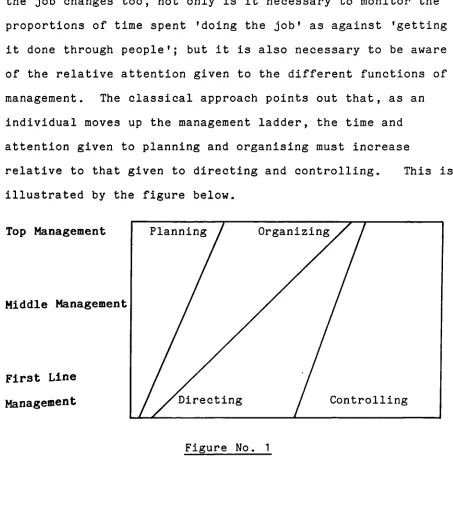
[image:45.595.56.509.171.698.2]illustrated by the figure below.
It can be seen from the above figure (based on a handout
issued to management trainees by INCOMTEC (3)), that Fayol's
original list of functions remains fundamentally the same but
has been slightly modified and that management is presented
very much as a process in which the component parts can be
laid out systematically.
It would seem, at first glance,
that most serious attempts at good management employ the
techniques illustrated in the classical approach. Museums
exercise the skills of classical management in many ways; a
few have senior staff who have attended management schools,
whilst others have people who have entered the museum
profession following other careers. Those that exercise these
techniques knowingly are few, but the classical approach is
founded on logic and good sense. As a result the empirical
'seat of the pants' methods of management, so often used in
museums, are nearer to this approach than some others. Indeed,
it is such an ordered and defined method that its component
parts find great favour in museums and galleries. However,
whilst it forms the basis of traditional management thinking,
it is by no means the optimum system. The classical approach
was particularly popular following Henri Fayol's published
work at the beginning of this century and continued as such
until its decline in the period between the two world wars.
There was a resurgence of interest in his methods between the
early 1950s and the end of the 1970s, but, even if it is used
1.
FAYOL H (199) - General Industrial Management - Pitman
2.
CUTHBERT N (1970) - Management Thinkers - Penguin Books
CHAPTER Z
THE HUMAN RELATIONS APPROACH
The human relations approach developed strongly during the
19 i 0's and thereafter, partly as a pendulum reaction against
the seemingly impersonal features of scientific management,
but mainly because research studies conducted during the
previous two decades had demonstrated the importance of good
human relations and the influence of social factors on
workers' motivation.
The research undertaken became known as
"The Hawthorne Studies"; named after a long series of
observations of people at work carried out at the Western
Electric Company's Hawthorne factory, near Chicago, from 1927
until 1932. The Hawthorne plant was very large, employing
about 29,000 workers and producing telephone apparatus.
The
original aim of the experiments was to continue some earlier
research on the effect of levels of workplace lighting on
productivity.
The experiments were carried out jointly by
the company's Employee Relations Research Department and the
Harvard Graduate School of Business Administration.
The
studies are regarded by supporters of the human relations
approach as a mile-stone in the evolution of management ideas.
assembled telephone equipment at the Hawthorne plant were the
subjects of a series of studies undertaken to determine the
effect on their output of working conditions, length of the
working day, number and length of rest pauses, and other
factors relating to the "nonhuman" environment. The young
women, especially chosen for the study, were placed in a
selected room under one supervisor and were carefully
observed.
As the experimenters began to vary the conditions of work,
they found that, with each major change, there was a
substantial increase in production. They decided, when all
the conditions to be varied had been tested, to return the
girls to their original poorly-lighted work benches for a long
working day without rest pauses and other amenities. To the
astonishment of the researchers, output rose again, to a level
higher than it had been even under the best of the
experimental conditions.
At this point, the researchers were forced to look for factors
other than those which had been deliberately manipulated in
the experiments. For one thing, it was quite evident that
the workers developed very high morale during the experiment
and became extremely motivated to work hard and well. The
1) The girls felt special because they had been
singled out for a research role; this selection
showed that management thought them to be important.
ii) The girls developed good relationships with one
another and with their supervisor because they had
considerable freedom to develop their own pace of
work and to divide the work among themselves in a
manner most comfortable to them.
iii) The social contact and easy relations among the
girls made the work generally more pleasant.
A new kind of hypothesis was formulated out of this
preliminary research. The premise was that motivation to
work, productivity and quality of work are all related to the
nature of the social relations among the workers and between
the workers and their boss. In order to investigate this
more systematically, a new group was selected. This group
consisted of fourteen men: some wired banks of equipment
which others then soldered, and which two inspectors examined
before labelling it "finished". The men were put into a
special place where they could be observed around the clock by
a trained observer who sat in the corner of the room. At
wore, on, and nothing special happened as a result of his
presence, they relaxed and fell into their normal working
routine. The observer discovered a number of very
interesting things about the work group in the bank-wiring
room.
Result 1: Though the group keenly felt its own
Identity as a total group, there were nevertheless
two cliques within it, roughly corresponding to
those in the front of the room and those at the
back. The men in front felt themselves to be of
higher status and they thought that the equipment
they were wiring was more difficult than that of the
rear group. Each clique included most of the wire
men, solder men and inspectors in that part of the
room, but there were some persons who did not belong
to either exclusive groups. The two cliques each
had its own special games and habits, and there was
a good deal of competition and mutual banter between
them.
Result 2: The group as a whole had some 'norms',
certain ideas of what was a proper and fair way for
things to be. Several of these norms concerned the
production rate of the group and could best be
fair day's pay"; the group had established a norm of
how much production was "fair", (6,000 units), a
figure which satisfied management, but was well
below that which the men could have produced had
fatigue been the only limiting factor. Related to
this basic norm were two others: "One must not be a
rate buster", which meant that no member should
produce at a rate too high relative to that of the
others in the group, and "One must not be a
chiseler", which meant that one must not produce too
little relative to the others. Being a deviant in
either direction illicited rebukes, social pressure
to get back into line, and social ostracism if the
person did not respond to the pressure. In that
the men were colluding to produce at a level below
their capacity, these norms taken together amounted
to what has come to be called "restriction of
output".
The other key norm which affected working
relationships concerned the inspectors and
supervisor of the group. In effect, the norm stated
(in the vernacular) that "Those in authority must
not act officious or take advantage of their
authority position". The men attempted to uphold
the assumption that inspectors were no better than
anybody else and that, If they attempted to take
advantage of their role or if they acted
officiously, they were violating group norms. One
inspector did feel superior and showed it. The men
were able to play tricks on him with the equipment,
to ostracize him, and to put social pressure on him
to such an extent that he asked to be transferred to
another group. The other inspector in the group
and the supervisor were "part of the gang" and were
accepted for this reason.
Result 3: The observer discovered that the group
did not follow company policy on a number of key
issues. For example, it was forbidden to trade
jobs because each job had been rated carefully to
require a certain skill level. Nevertheless the wire
men often asked solder men to take over wiring while
they soldered. In this way, they relieved monotony
and kept up social contacts with others in the room.
At the end of a day, each man was required to
report the amount of work he had done. The
supervisor was supposed to report for all the men,
but he had learned that the men wished to do their
own reporting and decided to let them do it. What
the men factually reported was a relatively standard
actual output. This practice produced a
"straight-line output", a standard figure for each day.
Actually, however, the output within the group
varied greatly as a function of how tired the men
were, their morale on a particular day, and many
other circumstances. The men did not cheat in the
sense of reporting more than they had done.
Rather, they would under-report some days thus
saving up extra units to list on another day when
they had actually under-produced.
Result : The men varied markedly in their
individual production rates. An attempt was made
to account for these differences by means of
dexterity tests given to the men. Dexterity test
results did not correlate with output, however. An
intelligence measure was then tried with similar
lack of success. What finally turned out to be the
key to output was the social membership in the
cliques. The members of the high-status clique were
uniformly higher producers than the members of the
low-status clique. But the very highest and the
very lowest producers were the social isolates, who
Evidently the individual output was most closely
related to the social membership of the workers, not
to their innate ability. The output rates were
actually one of the major bones of contention
between the two cliques because of the pay system:
each man got a base rate plus a percentage of the
group bonus based on the total production. The
high-status clique felt that the low-status one was
cheating and continually expressed this view to
them. The low-status group felt insulted to be
looked down upon and realised that the best way to
get back at the others was through low production.
Thus, the two groups were caught in a self-defeating
cycle which further depressed the production rate
for the group as a whole (1).
These, and similar studies, were the foundation of the theory
in which a man's needs were assumed to be very largely
satisfied and determined by the norms of his work group.
Elton Mayo, who was associated with the Hawthorne Studies for
part of their long duration, concluded that: