City, University of London Institutional Repository
Citation
:
Ayers, S., Claypool, J. and Eagle, A. (2006). What happens after a difficult birth? Postnatal debriefing services. British Journal of Midwifery, 14(3), pp. 157-161.This is the unspecified version of the paper.
This version of the publication may differ from the final published
version.
Permanent repository link:
http://openaccess.city.ac.uk/2023/Link to published version
:
Copyright and reuse:
City Research Online aims to make research
outputs of City, University of London available to a wider audience.
Copyright and Moral Rights remain with the author(s) and/or copyright
holders. URLs from City Research Online may be freely distributed and
linked to.
City Research Online: http://openaccess.city.ac.uk/ [email protected]
What happens after a difficult birth? Postnatal debriefing services.
Susan Ayers
School of Health Sciences, City University London, UK.
Jennifer Claypool
Washington University, Department of Psychology, St. Louis, MO, U.S.A.
Andrew Eagle
Consultant Clinical Psychologist, Central and North West London NHS Foundation Trus, U.K.
Please cite this paper as:
Ayers, S., Claypool, J., & Eagle, A. (2006). What happens after a difficult birth? Postnatal debriefing
ABSTRACT
There is increasing pressure to improve maternity services and provide postnatal services for women
who have a difficult birth experience. However, there is little information about services currently
offered. This survey aimed to establish the type and availability of postnatal services in the UK for
women who have a difficult or traumatic birth. A telephone survey was carried out of a quarter of UK
hospitals randomly chosen from the Department of Health listing. Seventy-one hospitals took part
(76% of eligible hospitals). Results showed that 94% (CI 86% to 98%) of hospitals provide postnatal
services for women who have difficult births. Most of these are debriefing services (78%: CI 67% to
86%) that were implemented in response to need; only 5% (CI 2% to 13%) were reportedly started on
the basis of research evidence. Results are discussed in relation to the relative lack of awareness that
INTRODUCTION
Maternity services are under increasing pressure to improve their services. In the UK, a recent report
from the Healthcare Commission (Commission for Healthcare Audit and Inspection, 2005) was highly
critical of maternity services and, in response, the Government has set up an advisory group which
will set new standards for maternity services. Pressure groups such as the Association for
Improvement of Maternity Services (AIMS) and Birth Trauma Association (BTA) are pushing for
better maternity services, and national newspapers intermittently join this campaign (e.g. The
Observer’s ‘Better Birth Campaign’). The increasing culture of litigation also adds to the pressure for
improvement of maternity services. In the UK, problems with maternity services account for more
than seventy percent of litigation in the National Health Service (NHS), which increases pressure on
hospitals to both improve care and provide some form of postnatal psychological support to try to
reduce litigation.
Difficult birth experiences can affect women’s psychological health but, for the majority of women,
this does not lead to clinically significant psychological problems. Research suggests that
approximately one third of women in the Western world evaluate their experience of childbirth as
traumatic (Ayers, 2004). Ten percent of women have severe symptoms of traumatic stress in the
weeks following birth but the majority of these women recover without intervention. Between one
and two percent of women go on to develop clinical post-traumatic stress disorder (PTSD) as a result
of birth and require treatment (see Ayers, 2004, for a review). Although this is a relatively small
percentage, the numbers of women giving birth means up to 13,000 new cases of postnatal PTSD
occur every year in the United Kingdom alone.
Prevention or intervention for postnatal PTSD can take a number of forms. Prevention can involve
identifying vulnerable women in pregnancy (e.g. those who have a history of psychological problems
or trauma) and offering them psychological support or alternative birth procedures. Similarly,
specialised training for midwives and obstetricians might reduce the incidence of postnatal PTSD. For
Current recommended treatment for PTSD is psychotherapy, such as cognitive behaviour therapy,
with the addition of pharmacological treatment (SSRI’s) in severe cases, or where there are comorbid
disorders such as depression (Foa et al., 1999; National Institute for Health and Clinical Excellence
(NICE), 2005).
The main issue surrounding intervention for postnatal PTSD is whether to offer early, short-term
intervention to women with symptoms of traumatic stress in the initial weeks after birth or whether to
provide later long-term intervention for women with clinical PTSD. There are advantages and
disadvantages to each of these approaches. Early intervention might prevent the development of
clinical PTSD but might not be cost-effective because the majority of postnatal women recover
spontaneously from symptoms of traumatic stress without intervention (Ayers, 2004). Later
intervention can be targeted at women with clinical PTSD but these interventions need to be more
intensive, longer, and might not be as effective. Although there is no published research looking at
treatment efficacy for postnatal PTSD, research into PTSD in other groups suggests variable success
rates of cognitive behaviour therapy with between 40% and 90% of people recovering (Harvey et al.,
2003).
In secondary care it is often easier to offer short-term up services rather than long-term
follow-up, so this appears to be the favoured approach. Five years ago, Small et al. (2000) reported that 36%
of UK healthcare trusts have formal arrangements for postnatal debriefing and an additional 26%
planned to implement similar procedures. However, these figures come from unpublished data so it is
difficult to know how reliable they are. In addition, debriefing interventions are currently
controversial. Debriefing is a broad term covering a range of approaches which usually consist of one
session within four weeks of a traumatic event where individuals are encouraged to talk about the
event to promote emotional processing and prevent the development of PTSD. Debriefing originated
from critical incident debriefing which was a highly structured group session that included going over
the facts, thoughts and impressions, emotional reactions, normalizing, planning for the future, and
development of PTSD with one session very soon after the event. However, research examining the
efficacy of debriefing in non-obstetric samples has found little evidence it is effective and some
evidence that it increases the risk of developing PTSD (Rose et al., 2002). Recent guidelines in the
UK and USA therefore recommend against the use of debriefing interventions for PTSD (Foa et al.,
1999; NICE guidelines, 2005) and its use is therefore controversial.
Despite the controversy of debriefing it is increasingly used with postnatal women. Contributing to
this controversy is a lack of clear distinction between what does, and what does not, comprise
debriefing. As outlined above, psychological debriefing as originally proposed is a highly structured,
one-off, group session within four weeks of the traumatic event that covers facts, thoughts, and
feelings. This is different to midwife-led or obstetrician-led debriefing, which suffers from a lack of
clear definition but generally seems to comprise of one session within the first few months after birth
where midwives or obstetricians go over the obstetric events of birth with a woman. Finally, ‘Birth
Afterthoughts’ programs are becoming increasingly popular in the UK, where women meet with a
midwife or midwife-counsellor to go over the obstetric events of birth and express their feelings about
the birth (Curtis, 1994).
Five studies have looked at midwife-led debriefing in postnatal samples with mixed results. Lavender
& Walkinshaw (1998) randomised 114 primiparous women in the UK into either a debriefing
intervention or normal care and found that women who received debriefing had lower anxiety and
depression three to four weeks after birth. In contrast a similar UK trial of 319 primiparous women
found no differences in fear of future childbirth between women who received debriefing and women
who received normal care (Kershaw et al., 2005). Similarly, Small et al (2000) randomised 1041
women in Australia into debriefing or normal care and found no significant differences between
groups in depression six months after birth.
Three studies have looked at postnatal PTSD following debriefing. In the first study 1745 Australian
debriefing within 72 hours of delivery and found no differences between women who received
debriefing or normal care in depression or PTSD up to 12 months postpartum (Priest et al., 2003). In
the UK study mentioned above, 319 primiparous women who had an operative delivery were
randomised into debriefing or control groups. The intervention consisted of midwife-led critical
incident stress debriefing to individual women 10 days and 10 weeks after birth. This study also found
no differences between women in the intervention and control groups in PTSD symptoms up to 20
weeks postpartum (Kershaw et al., 2005). In contrast, Gamble et al (2005) randomised 103 Australian
women with symptoms of PTSD immediately after birth into debriefing or control groups. The
intervention comprised of midwife-led counselling within 72 hours of birth and telephone counselling
four to six weeks after birth. Women in the debriefing group reported fewer symptoms of depression
and PTSD three months after birth.
The evidence on postnatal debriefing is therefore conflicting and there are a number of issues that need
to be clarified. First, as already mentioned, it is not clear what midwife-led debriefing entails. A
recent review of postpartum counselling concluded that “descriptions of postpartum counselling and
debriefing are generalised and nonspecific” (Gamble & Creedy, 2004). It may be that midwife-led
debriefing, where the focus is on medical events and explanations, has a different effect to debriefing
that uses more psychological approaches, such as critical incident debriefing. Secondly, it may be that
the timing or targeting of debriefing is crucial. The scant available research on postnatal debriefing
suggests that debriefing might only be effective if it is targeted at women who have severe symptoms
of PTSD immediately after birth, as oppose to research that assumes obstetric factors, such as being
primiparous and having an operative delivery, are inherently traumatic and therefore a risk factor.
There is therefore conflicting information about the use and efficacy of debriefing with postnatal
women.
Given the current lack of research into the treatment of postnatal PTSD and the controversy over the
use of debriefing generally, it is worrying that midwife-led debriefing and Birth Afterthoughts
urgently needed to examine what services are currently being offered to women after birth and the
efficacy of different approaches to intervention. The study reported here addresses this first aim and
reports a survey of UK hospitals to ascertain what postnatal services are currently offered, how they
are run, funded, and evaluated.
METHODS
This was a cross-sectional telephone survey of postnatal services for women who have a difficult birth.
Just over a quarter of UK hospitals (304/1162) were randomly chosen from the Department of Health
list of hospitals using computer-generated randomisation. Ninety-three of these hospitals had an
obstetrics department and were eligible for the survey. Of these, 71 completed the survey (76%); 7
were not contactable (8%); and 15 did not complete the survey (16%). The survey was mostly carried
out by telephone (90%) although 10% requested the survey by mail. Surveys were completed by the
head of midwifery, senior midwife, or consultant obstetrician. The survey asked about whether
postnatal services were available for women who had ‘a difficult or traumatic birth’. If so, further
questions were asked about the type of service, how it was run, funded, evaluated, how long it had
been in place, etc. Most questions were open i.e. did not have prescribed response categories.
Respondents’ answers were noted and results are reported according to naturally occurring categories.
Ethical approval was obtained from the University of Sussex Ethics Committee for the Department of
Life Sciences.
RESULTS
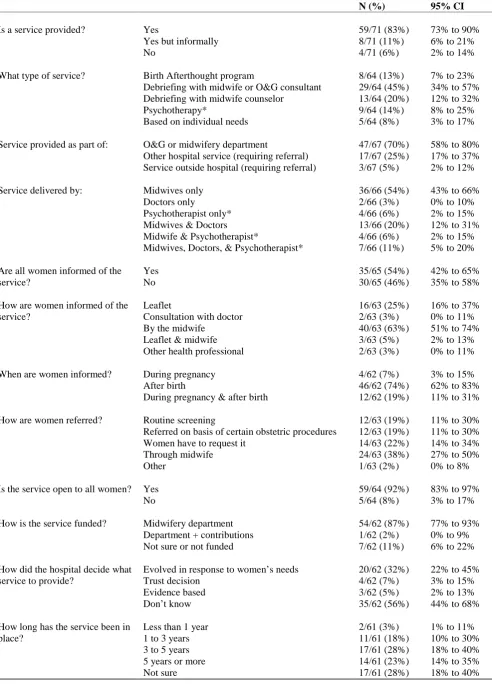
Table 1 displays the results of the survey and it can be seen that 94% (CI 86% to 98%) of hospitals in
the UK have formal or informal services in place for women who have a difficult birth experience.
Most of these are debriefing services provided by midwives, midwife-counsellors, or doctors (65%; CI
53% to 76%). Thirteen percent were Birth Afterthought programs, which are similar to debriefing
services. This means that 78% (CI 67% to 86%) of postnatal services offered in UK services are
debriefing type services. Psychotherapists (counsellors or clinical psychologists) are involved with
(70% of services provided by midwifery and 87% funded by midwifery). In the majority of cases,
services are open to all women who are informed about the service by a midwife after birth. Most
services evolved in response to need, with only 5% started on the basis of research evidence. Those
services started on the basis of research evidence consisted of two ‘Birth Afterthought’ programs and
one a postnatal drop-in group. Just over half of services had been running for three years or more
(51%; CI 39% to 63%). Finally, approximately one third of services were formally evaluated (34%)
and the remainder had only informal feedback or no feedback.
- Insert Table 1 about here -
Comparison of debriefing services (excluding Birth Afterthought programs) with other services found
that a larger proportion of debriefing services evolved in response to women’s needs (74% compared
to 26% of other services; χ2
= 8.51, df 3, p=0.04), and women were more likely to be informed about
debriefing by midwives (76% compared to 24% of other services; χ2
= 14.82, df 5, p=0.01).
DISCUSSION AND CONCLUSION
The survey establishes that nearly all the UK hospitals surveyed provide a service for women who
have a difficult birth, and the majority of these services are debriefing services. This widespread
provision of postnatal support is in direct contrast to criticisms of maternity services by the Healthcare
Commission, pressure groups, and media that were outlin
ed in the introduction. Criticisms of
maternity services are rarely countered by recognition of services, such as these, which
provide postnatal help and support for women who have difficult births. It is therefore
possible that lay people and pressure groups are
largely unaware of the widespread availability of these services. This suggests that we need to increase awareness of these services and that the currentpractice of midwives informing women about services is ineffective. Effectiveness could be improved
by ensuring all women are informed of these services on discharge from hospital, in the community
and written form. In addition, primary care workers who come in contact with postnatal women could
be informed about the services and relevant referral processes. Health visitors, for example, are well
placed to identify women who might need help and to refer them back to hospital maternity services.
It is therefore commendable that most hospitals provide a postnatal service for women who have a
difficult birth, and that fourteen percent of these are psychotherapy services as per guidelines for
PTSD treatment. However, the widespread use of debriefing is worrying given the controversy over
the efficacy of debriefing for PTSD and the current guidelines not to use debriefing for PTSD. As
previously discussed, it is possible that postnatal debriefing is different to psychological debriefing
and may well be more effective but the evidence to date is inconsistent (Kershaw et al., 2005;
Lavender & Walkinshaw, 1998; Small et al., 2000). Given the problem of litigation in obstetrics, it is
possible that many postnatal debriefing services have been implemented because of the need for some
form of damage limitation. Thus hospitals have provided what is possible, in the absence of any
sound empirical evidence of what is effective. The finding in this study that many hospitals reported
services were instigated on the basis of need supports this. Thus research urgently needs to be carried
out to inform clinical practice in this area. It may be possible to start with the third of maternity
services that reported their postnatal services had been formally evaluated. A systematic review of
these evaluations may provide a useful first step towards examining the efficacy of different services.
There are a number of implications of this survey. First, this survey establishes that many UK
hospitals are providing postnatal services that lay people and the media may be unaware of. Therefore
we need to increase awareness in primary and secondary care of available services so this information
is better disseminated to women. Second, there is no strong evidence base for the type of service
currently provided so research urgently needs to address the efficacy of different services in this area.
Third, there are funding implications because mental health problems are traditionally dealt with by
mental health services yet this survey shows midwifery departments are funding the majority of
postnatal services. Research is therefore also needed to examine which of these types of service is
REFERENCES
Ayers S. Delivery as a traumatic event: prevalence, risk factors, and treatment for postnatal
posttraumatic stress disorder. Clinical Obstetrics & Gynecology. 2004; 47(3): 552-567.
Commission for Healthcare Audit and Inspection. State of healthcare 2005. London: Healthcare
Commission.
Foa EB, Davidson JRT, & Frances A. The expert consensus guideline series: Treatment of
posttraumatic stress disorder. Journal of Clinical Psychiatry. 1999; 60(Suppl 16).
Gamble J & Creedy D. Content and processes of postpartum counseling after a distressing birth
experience: a review. Birth. 2004; 31(3): 213-218.
Gamble J, Creedy D, Moyle W, Webster J, McAllister M & Dickson P. Effectiveness of a counseling
intervention after a traumatic childbirth: a randomised controlled trial. Birth. 2005; 32(1):
11-19.
Harvey AG, Bryant RA & Tarrier N. Cognitive behaviour therapy for posttraumatic stress disorder.
Clinical Psychology Review. 2003; 23: 501-522.
Kershaw K, Jolly J, Bhabra K & Ford J. Randomised controlled trial of community debriefing
following operative delivery. British Journal of Obstetrics & Gynaecology. 2005; 112:
1504-1509.
Lavender T & Walkinshaw SA. Can midwives reduce postpartum psychological morbidity? A
randomised trial. Birth. 1998; 25: 215-219.
Mitchell JT. When disaster strikes… the criticial incident stress debriefing process. Journal of
Emergency Medical Services. 1983; 8(1): 36-39.
National Institute for Health and Clinical Excellence. Post-Traumatic Stress Disorder Clinical
Guideline. 2005.
Priest SR, Henderson J, Evans SF & Hagan R. Stress debriefing after childbirth: a randomised
controlled trial. Medical Journal of Australia. 2003; 178: 542-545.
Rose S, Bisson J, Churchill R & Wessely S. Psychological debriefing for preventing post-traumatic
stress disorder (PTSD). The Cochrane Database of Systematic Reviews. 2002; Issue 2: Art.
Small R, Lumley J, Donohue L, Potter A, Waldenstrom U. Randomised controlled trial of midwife led
debriefing to reduce maternal depression after operative childbirth. British Medical Journal.
Table 1. Postnatal services in the UK for women who have a difficult or traumatic birth
N (%) 95% CI
Is a service provided? Yes 59/71 (83%) 73% to 90%
Yes but informally 8/71 (11%) 6% to 21%
No 4/71 (6%) 2% to 14%
What type of service? Birth Afterthought program 8/64 (13%) 7% to 23%
Debriefing with midwife or O&G consultant 29/64 (45%) 34% to 57%
Debriefing with midwife counselor 13/64 (20%) 12% to 32%
Psychotherapy* 9/64 (14%) 8% to 25%
Based on individual needs 5/64 (8%) 3% to 17%
Service provided as part of: O&G or midwifery department 47/67 (70%) 58% to 80%
Other hospital service (requiring referral) 17/67 (25%) 17% to 37% Service outside hospital (requiring referral) 3/67 (5%) 2% to 12%
Service delivered by: Midwives only 36/66 (54%) 43% to 66%
Doctors only 2/66 (3%) 0% to 10%
Psychotherapist only* 4/66 (6%) 2% to 15%
Midwives & Doctors 13/66 (20%) 12% to 31%
Midwife & Psychotherapist* 4/66 (6%) 2% to 15%
Midwives, Doctors, & Psychotherapist* 7/66 (11%) 5% to 20%
Are all women informed of the Yes 35/65 (54%) 42% to 65%
service? No 30/65 (46%) 35% to 58%
How are women informed of the Leaflet 16/63 (25%) 16% to 37%
service? Consultation with doctor 2/63 (3%) 0% to 11%
By the midwife 40/63 (63%) 51% to 74%
Leaflet & midwife 3/63 (5%) 2% to 13%
Other health professional 2/63 (3%) 0% to 11%
When are women informed? During pregnancy 4/62 (7%) 3% to 15%
After birth 46/62 (74%) 62% to 83%
During pregnancy & after birth 12/62 (19%) 11% to 31%
How are women referred? Routine screening 12/63 (19%) 11% to 30%
Referred on basis of certain obstetric procedures 12/63 (19%) 11% to 30%
Women have to request it 14/63 (22%) 14% to 34%
Through midwife 24/63 (38%) 27% to 50%
Other 1/63 (2%) 0% to 8%
Is the service open to all women? Yes 59/64 (92%) 83% to 97%
No 5/64 (8%) 3% to 17%
How is the service funded? Midwifery department 54/62 (87%) 77% to 93%
Department + contributions 1/62 (2%) 0% to 9%
Not sure or not funded 7/62 (11%) 6% to 22%
How did the hospital decide what Evolved in response to women’s needs 20/62 (32%) 22% to 45%
service to provide? Trust decision 4/62 (7%) 3% to 15%
Evidence based 3/62 (5%) 2% to 13%
Don’t know 35/62 (56%) 44% to 68%
How long has the service been in Less than 1 year 2/61 (3%) 1% to 11%
place? 1 to 3 years 11/61 (18%) 10% to 30%
3 to 5 years 17/61 (28%) 18% to 40%
5 years or more 14/61 (23%) 14% to 35%
Has this service been evaluated? Yes – formal audit or research project 21/61 (34%) 24% to 47%
Yes – informal feedback 13/61 (21%) 13% to 33%
No 18/61 (30%) 20% to 42%
Not sure 9/61 (15%) 8% to 26%
NOTE: Missing data meant n ranged from 61 to 71.