Genetic Learning Particle Swarm Optimization
Yue-Jiao Gong, Member, IEEE, Jing-Jing Li, Yicong Zhou, Senior Member, IEEE, Yun Li, Member, IEEE,
Henry Shu-Hung Chung, Senior Member, IEEE, Yu-Hui Shi, Senior Member, IEEE, and
Jun Zhang, Senior Member, IEEE
Abstract—Social learning in particle swarm optimiza-tion (PSO) helps collective efficiency, whereas individual repro-duction in genetic algorithm (GA) facilitates global effectiveness. This observation recently leads to hybridizing PSO with GA for performance enhancement. However, existing work uses a mech-anistic parallel superposition and research has shown that construction of superior exemplars in PSO is more effective. Hence, this paper first develops a new framework so as to organically hybridize PSO with another optimization technique for “learning.” This leads to a generalized “learning PSO” paradigm, the *L-PSO. The paradigm is composed of two cas-cading layers, the first for exemplar generation and the second for particle updates as per a normal PSO algorithm. Using genetic evolution to breed promising exemplars for PSO, a spe-cific novel *L-PSO algorithm is proposed in the paper, termed genetic learning PSO (GL-PSO). In particular, genetic opera-tors are used to generate exemplars from which particles learn and, in turn, historical search information of particles pro-vides guidance to the evolution of the exemplars. By performing crossover, mutation, and selection on the historical informa-tion of particles, the constructed exemplars are not only well diversified, but also high qualified. Under such guidance, the global search ability and search efficiency of PSO are both enhanced. The proposed GL-PSO is tested on 42 benchmark functions widely adopted in the literature. Experimental results verify the effectiveness, efficiency, robustness, and scalability of the GL-PSO.
Index Terms—Exemplar construction, genetic algorithm (GA), hybrid method, learning scheme, particle swarm optimiza-tion (PSO).
Manuscript received December 12, 2014; revised June 23, 2015; accepted August 21, 2015. This work was supported in part by the National High-Technology Research and Development Program (863 Program) of China under Grant 2013AA01A212, in part by the National Science Fund for Distinguished Young Scholars under Grant 61125205, and in part by the National Natural Science Foundation of China under Grant 6120002 and Grant 61502542. This paper was recommended by Associate Editor L. Zhang. (Corresponding author: Jing-Jing Li.)
Y.-J. Gong and J. Zhang are with the Department of Computer Science, Sun Yat-sen University, Guangzhou 510275, China, also with the Key Laboratory of Machine Intelligence and Advanced Computing, Ministry of Education, Guangzhou, China, and also with the Engineering Research Center of Supercomputing Engineering Software, Ministry of Education, Guangzhou 510006, China, (e-mail:[email protected]).
J.-J. Li is with the School of Computer Science, South China Normal University, Guangzhou 510006, China.
Y. Zhou is with the Department of Computer and Information Science, University of Macau, Macau 999078, China.
Y. Li is with the School of Engineering, University of Glasgow, Glasgow G12 8QQ, U.K.
H. S.-H. Chung is with the Department of Electronic Engineering, City University of Hong Kong, Hong Kong.
Y.-H. Shi is with the Department of Electrical and Electronic Engineering, Xi’an Jiaotong-Liverpool University, Suzhou 215123, China.
This paper has supplementary downloadable multimedia material available athttp://ieeexplore.ieee.orgprovided by the authors.
Digital Object Identifier 10.1109/TCYB.2015.2475174
I. INTRODUCTION
P
ARTICLE swarm optimization (PSO), a nature-inspired optimization technique, has attracted significant attention since introduced by Kennedy and Eberhart [1], [2] in 1995. Simulating the social behavior of birds flocking or fish schooling, a population of particles in a PSO algorithm coop-erates and interacts to search for solutions in the problem space. Owing to its conceptual simplicity and high effi-ciency, PSO has been successful in solving a variety of problems in many areas such as power systems [3], [4], indus-trial electronics [5], wireless sensor networks [6], and feature selection [7].However, in canonical PSO, all particles keep learning from the personal best experience (pbests) and the global best-so-far solution (gbest) of the entire swarm, which may lead to premature convergence. To improve the performance, a num-ber of PSO variants have been developed during the past two decades. These variants can be generally divided into four cat-egories that focus on: 1) population topology and multiswarm techniques [8]–[10]; 2) parameter control [11]–[14]; 3) hybrid methods [15]–[25]; and 4) novel learning schemes [26]–[30], respectively. Although much effort has been made to enhance the performance of PSO, many of the variants cannot maintain their improvements over problems of different characteris-tics. For example, some PSO variants are able to increase population diversity and avoid premature convergence, but their search speed and solution accuracy are decreased as a result. On the other hand, some other algorithms still cannot locate the global optimum for difficult problems involv-ing many local optima. So far, it has been a challenginvolv-ing task to improve the overall performance of PSO for wider applicability.
In nature, it is widely accepted that the behavior of organisms, such as bee foraging and scouting [31], and bird migration [32], is influenced by genetic information. A disci-pline named “behavioral genetics” is dedicated to discussing how such genetic control is executed [33], [34]. In particu-lar, Raine et al. [35] discovered that the animals’ foraging behavior depends primarily on its evolutionary history rather than the current foraging condition. Alcock [36] put forward a viewpoint that behavioral variation is partially derived from genotypic variation, and therefore, it is an evolutionary pro-cess. On the other hand, the skills acquired by animals in social activities affect the natural selection force on the animals and hereafter alter the genes in the population [37], [38]. As biological experiments reveal that the behavior and genetic information of organisms influence each other, it would be
(b) (a)
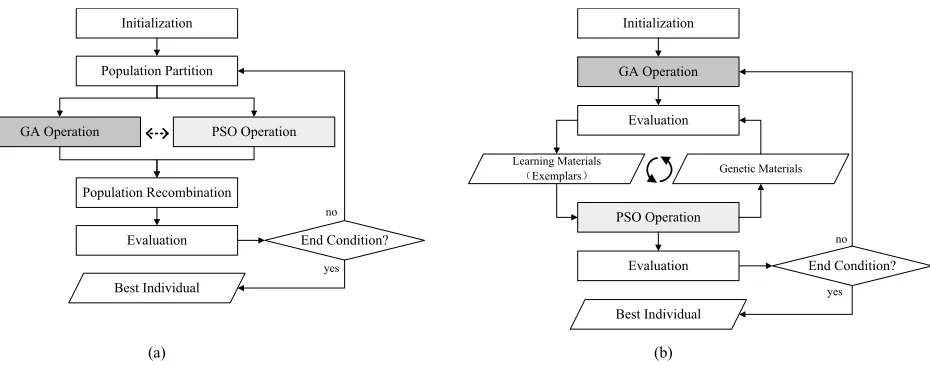
Fig. 1. (a) Parallel and (b) cascade frameworks of GA-PSO hybrid algorithms.
possible and interesting to utilize such interaction between the behavior and genes to enhance the performance of the biologically inspired PSO technique.
In the literature, a number of work have been reported in improving the performance of PSO by adopting genetic methods, which can be categorized into the following two types. First, some PSO algorithms embed a spe-cific genetic operator of genetic algorithm (GA) such as mutation [39] and crossover [40]. Second, significant efforts are made in fully hybridization of PSO and GA. For exam-ple, Shi et al. [15] proposed a PSO-GA-based hybrid algo-rithm by executing the two algoalgo-rithms simultaneously. Then, Kao and Zahara [16] hybridized PSO with GA based on a fit-ness ranking method. Valdez et al. [17] integrated GA and PSO by using a fuzzy logic method for decision-making. Three dif-ferent hybrid mechanisms are proposed in [18], the first being to run GA and PSO in parallel and exchange their information via crossover between chromosomes and the gbest particle, the second being to apply the mutation of GA on stagnated par-ticles, and the third being to divide the number of iterations to run GA and PSO in complement. Furthermore, GA-PSO hybrid algorithms have been developed to tackle some ad hoc applications, including recurrent network design [19], elec-tromagnetic structure optimization [20], and conformal array pattern synthesis [21]. More recently, Jeong et al. [22] pro-posed an efficient GA-PSO hybrid algorithm for real-world multiobjective problems.
Most of these hybrid algorithms share conceptual and oper-ational similarities in that they divide the population into two parallel subpopulations, each controlled by GA and PSO separately, and then recombine the subpopulations at set inter-vals. A general framework of those algorithms is illustrated in Fig. 1(a), which shows that GA and PSO are hybridized in a parallel manner. In this hybridization mechanism, GA and PSO are loosely coupled, and the effect coming from the interaction of GA and PSO is ambiguous to recognize. For example, it is hard to identify how the individuals exchanged from GA affect the PSO population and whether they will result in updating the pbests and gbest. Inversely, it is also
difficult to characterize how the individuals transferred from PSO influence the GA population, especially whether the migrated individuals will survive in the selection. More criti-cally, the benchmark-testing results of PSO-GA hybrid algo-rithms reported in the literature are inconclusive [15]–[17]. In particular, the algorithms are tested on low-dimensional problems (no more than 10-D in most cases), and their per-formance lies between that of PSO and GA in optimizing many benchmarks. It can be seen that hybridizing PSO with GA to achieve the perfect goal of “1+1 >2” still remains a challenging task.
To further improve the performance of PSO, this paper develops a genetic learning scheme that applies GA for exem-plar construction. As illustrated in Fig. 1(b), GA and PSO are hybridized in a cascade manner. The main loop of the algorithm is composed of two cascading layers, the first for exemplar generation by GA and the second for particle updates as per a normal PSO algorithm. In this way, particles in PSO are no longer simply guided by the gbest and pbests, but are guided by the exemplars constructed by GA. GA and PSO are hybridized in a highly cohesive way, which establishes a pos-itive feedback loop to accelerate the population to locate the optimum.
1) By learning from the exemplars constructed from GA, the search of particles is more diversified, thus help-ing avoid the premature convergence of PSO. Moreover, owing to the effect of the selection operator in GA, the survived exemplars are also of high quality. They are capable of providing effective guidance for particles and hence improving the search efficiency of PSO.
2) In turn, the search experience (pbests and gbest) of parti-cles propagates promising genetic materials back to GA and helps GA reproduce improved exemplars.
providing an open opportunity to improve the performance of PSO in the future.
The rest of this paper is organized as follows. Section II reviews the technical and biological backgrounds on hybridiz-ing PSO with GA. Section III presents the GL-PSO algorithm with implementation details and analysis, followed by a gener-alized hybrid paradigm in Section IV. Experimental tests are carried out in Section V. Finally, conclusions are drawn in Section VI.
II. BACKGROUNDS
A. Technical Background: GA Versus PSO
Currently, GA and PSO are two well-known branches existing in the field of bio-inspired optimization. A typical GA consists of three basic operators: 1) selection; 2) crossover; and 3) mutation. The selection operator duplicates higher-quality chromosomes to pass on for improving the average fitness values of the population, also known as evolution. Crossover and mutation are reproductive operators that provide the evolving population with alternative but probably higher-quality genetic materials. In contrast, a PSO algorithm does not employ the selection operator, but the evolution is repre-sented by updating particles toward historically best positions. The flying trajectories of particles in PSO can correspond to the changing genetic materials in GA.
The differences in the mechanisms of GA and PSO often result in the differences in their performance. In canonical GA, two chromosomes are randomly picked to exchange their component genes through crossover, and some genes in the chromosomes are randomly varied through mutation. Therefore, the reproduction process of GA is, to some extent, omnidirectional. On the other hand, in canonical PSO, as par-ticles are guided by their previous best positions (pbests) and the global best position (gbest) found by the swarm, the search is more directional than that of GA. Hence, it is expected that GA possesses a better exploration ability than PSO whereas the latter facilitates faster convergence.
In Section S-I of the supplementary file of this paper, exper-iments have been carried out on unimodal and multimodal benchmark functions to compare GA and PSO, the results of which verify the above analysis. For the unimodal func-tion, owing to its efficient search mechanism, PSO is seen to quickly converge to the optimum and to obtain high solu-tion accuracy. However, for the multimodal funcsolu-tion, when the pbests fall into a local optimum far from the global opti-mum in the landscape, particles are seen difficult to jump out of the local optimum. This is why PSO performs poorly in optimizing the multimodal function in the experiment. On the contrary, GA owns a much better global search ability that it is capable of locating the global optimum of the multimodal function. However, as the crossover and mutation are relatively directionless, the GA population approaches an optimum more slowly, which leads to the insufficient performance of GA on both the two kinds of problems.
To summarize, GA and PSO have their respective merits and demerits. The issue remaining is how to utilize the mer-its of both to enhance the overall performance, i.e., how to
improve the global search ability of PSO by incorporating GA mechanisms without slowing down the search?
B. Biological Background: Gene–Behavior Interaction From a biological perspective, GA changes the pheno-types of individuals via changing their genopheno-types, which is a long-term process. Unlike GA, PSO adjusts the phenotypes of particles based on interactive learning activities, which is short-term. This can also be interpreted as the reason why PSO converges faster than GA.
However, in nature, the behavioral traits of organisms are under genetic control. This perspective was firstly pro-posed by Galton [41] in 1869. After a century of verifi-cation and development, the branch of science to explore and formulate the relationships between genes and behav-ior is recognized as a research discipline termed “behavbehav-ioral genetics” by Fuller and Thompson [42] in 1960. Since then, Galton has been considered as the first behavioral geneticists. Nowadays, it has become a widely accepted concept that most behavior of organisms are covary with both genotypes and environment [33], [34]. For example, Robinson and Page [31] proposed that genotype distinguishes the nectar foraging, pollen foraging, and nest-site scouting behavior of honey bee colonies. The work in [32] shows that the blackcap’s migratory motivation and direction are under genetic control. Raine et al. [35] put forward that the animals’ foraging behavior could be better explained by its evolutionary history, rather than their present foraging conditions. The book entitled Animal Behaviour—An Evolutionary Approach presents many examples showing that a proportion of phenotypic variation in behavior is derived from genotypic variation.
Inversely, Sterelny [37] developed a perspective that learn-ing has evolutionary consequences. Although the skills acquired by animals cannot be directly encoded into their genes, the variations in animals’ phenotype affect the natu-ral selection force acting on the animals and hereafter alter the genes in the animal population generation by generation. For instance, Jones et al. [38] found that some woodpeckers learn to use cactus spines to harvest food in tree trunk, and natural selection is more likely to preserve those individuals in the population whose beak shape facilitates manipulating spines. Afterward, more and more birds not only acquire the feeding skill but also inherit the specific beak shape.
To conclude, in nature, the behavior of organisms, such as foraging and migration, is under genetic control, and, inversely, their acquired skills via social activities (such as learning) would finally play roles in genotypic variations. In brief, the genes and behavior of organisms interact with each other. As PSO is a kind of nature-inspired technique, this motivates us to incorporate some genetic mechanism into the learning and search process of the algorithm.
III. GENETICLEARNINGPSO A. Canonical PSO Learning Scheme and its Variants
Xi = [xi,1,xi,2, . . . ,xi,D] represent the velocity and position
of the ith particle (i = 1,2, . . . ,M, where M is the popula-tion size), respectively. Let Pi =[pi,1,pi,2, . . . ,pi,D] denotes
the pbest of particle i and G =[g1,g2, . . . ,gD] denotes the
gbest of the whole swarm. The update equations for the dth dimension (d=1,2, . . . ,D) of particle i are defined as
vi,d←ω·vi,d+c1·r1,d·
pi,d−xi,d
+c2·r2,d·
gd−xi,d
(1) xi,d←xi,d+vi,d (2)
where ω denotes the inertia weight, c1 and c2 are accelerate
coefficients determining the relative importance of Pi and G,
and r1,d and r2,d are random numbers uniformly selected
within [0, 1].
With this canonical learning scheme, a particle learns from both Piand G and may hence oscillate if these two exemplars
locate on opposite sides of Xi. On the other hand, if Pi and
G are located in a same local optimum, the particle may be trapped in this optimum, which causes premature convergence. In order to overcome the above shortcomings, researchers have developed variant PSO learning schemes, among which the following velocity update is widely adopted [26]–[28]:
vi,d←ω·vi,d+c·rd·
ei,d−xi,d
. (3)
Here, replacing two exemplars Pi and G, a single composite
exemplar Ei=[ei,1,ei,2, . . . ,ei,D] is constructed in phenotype
combination to attract particle i. In fact, the canonical velocity update scheme in (1) can be transformed into this condensed form by regarding ei,d in (3) as a linear combination of pi,d
and gd, as according to [26]
ei,d=
c1·r1,d·pi,d+c2·r2,d·gd
c1·r1,d+c2·r2,d .
(4)
For examples, a fully informed particle swarm (FIPS) algorithm [26] guilds a particle to learn from all its neigh-bors with the exemplar vector being the linear combination of all the pbests in the neighborhood. In comprehensive learn-ing PSO (CLPSO) [27], ei,d is set to pi,d within a predefined
probability range, or set to the dth dimension of another particle’s pbest via a tournament selection. In orthogonal learn-ing PSO (OLPSO) [28], it conducts orthogonal experimental design on Pi and G in order to construct Ei with orthogonal
combination.
B. Genetic Learning Scheme
Because the exemplar vector Ei determines the search
tra-jectories of particles, it plays a significant role in PSO. In this paper, aiming for a more promising vector than using lin-ear or orthogonal combination, a genetic llin-earning scheme that applies GA to breed exemplars is proposed and developed. The motivation of this paper is described as follows. First, canon-ical PSO algorithm simply uses Pi and G to guide search,
which induces premature phenomenon easily. As described in Section II-A, compared to PSO, GA exhibits a better global search ability. So that it is expected that the genetic operators can bring diversity to the exemplar vectors to discourage the premature convergence of PSO. Moreover, the exemplar built
by GA is not only well diversified but also with high quality, which is capable of providing a good guidance for particles and hence improving the efficiency of PSO. Furthermore, from a biological point of view, the foraging behavior of birds in nature is under genetic control. It is reasonable to incorporate such a genetic learning scheme into a PSO algorithm. In the following, the detailed implementation of the genetic learning scheme is presented.
1) Crossover: For each particle i, crossover operation is first conducted on Pi and G to generate an offspring Oi =
[oi,1,oi,2, . . . ,oi,D]
oi,d=
rd·pi,d+(1−rd)·gd, if f(Pi) <f
Pkd
pkd,d, otherwise
(5)
where rdis a random number uniformly distributed in [0, 1],
kd ∈ {1,2, . . . ,M} is the index of a random particle, i =
1,2, . . . ,M, and d = 1,2, . . . ,D. Here, without loss of generality, the considered objective f is for minimization.
This way, a good particle is more likely to perform the arithmetic crossover between its pbest position Pi and the
gbest position G. By integrating the information of the global best particle, the performance of Oi has potential to further
improve. On the contrary, if particle i is an inferior one in the swarm, the offspring will have more dimensions coming from that of another particle with better fitness. Instead of randomly picking two individuals in the population to undergo crossover as in traditional GA, the above crossover utilizes the histori-cal search experience of particles in PSO to improve the gene quality. An experimental discussion of the crossover operation is provided in Section S-II of the supplementary file, which shows that the operator helps improving search efficiency.
2) Mutation: The bred offspring Oi then undergoes the
mutation operation with a probability bounded by probability of mutation (pm). This is the same as the classical mutation operation of GA, which is very simple. For each dimension d, a random number rd ∈ [0,1] is generated, and then, if rd
is smaller than pm, this dimension of Oi is reinitialized in the
search space
oi,d =rand(lbd,ubd), if rd<pm (6)
where lbd and ubd stand for the lower and upper bounds of
the dth dimension. The mutation brings in diversity of the exemplar to reach more exploratory coordinates (theoretically, any coordinates) in the search space.
3) Selection: After applying crossover and mutation to create the offspring, selection is performed to determine whether the offspring or the current exemplar survives in this generation. The following operation is executed:
Ei ←
Oi, if f(Oi) <f(Ei)
Ei, otherwise. (7)
Note that, the calculation of f(Oi) consumes the number of
function evaluations (FEs) in the new algorithm.
a certain number, a stopping gap sg, of generations, the exem-plar may be considered trapped in a deep local optimum. In this case, we employ the 20%M-tournament selection to update the particle’s exemplar. Here the tournament size is empirically set to a value proportional to the population size M. That is, 20%M exemplars are chosen at random to join the tournament, where the winner with the best fitness replaces the particle’s current exemplar. By learning from another exem-plar, the particle is able to change the search direction abruptly so as to fly out of the local optimum.
For each particle, in summary, it conducts the crossover, mutation, and selection described above once in every gener-ation to construct a promising exemplar and hereafter learns from the exemplar as per the traditional PSO. With the genetic breeding scheme, a novel genetic learning PSO (GL-PSO) algorithm is developed. The pseudo code of GL-PSO is shown in Algorithm 1 and its framework is sketched in Fig. 1(b). It can be observed that GL-PSO is relatively easy to imple-ment. For public use, we provide the source code of GL-PSO online, which can be downloaded at [43].
Note that the proposed GL-PSO algorithm maintains the canonical framework of PSO, in which particles update their velocities and positions in the search space by utilizing histor-ical search experience. The novelty of GL-PSO lies in that it applies GA to process the pbests and gbest of particles so as to breed the exemplars, which captures the historical search experience with a more global prospective. Particles can hence learn with a good diversity and a high quality, for potentially improved exploration and exploitation abilities. It is to be pointed out that the fundamental component of the proposed algorithm is PSO but rather than GA, and GA is used as an auxiliary technique.
C. Complexity Analysis of GL-PSO
The computational costs of the canonical PSO algorithm involve the initialization (Tini), evaluation (Teva), and
veloc-ity and position update (Tupd) for each particle. Assume D
is the dimensionality of the search space and MaxFEs is the maximum number of FEs allowed for the algorithm. The time complexity of PSO can be estimated as T(D)=Tini+(Teva+
Tupd)·MaxFEs=D+(D+2·D)·MaxFEs=D·(1+3·MaxFEs).
Therefore, O (D · MaxFEs) is the time complexity of the canonical PSO. As the parameter MaxFEs is commonly set to 10 000 · D in the literature, the canonical PSO algorithm has a time complexity quadratic to the problem size D.
In GL-PSO, the time complexity is determined by the computational costs of the PSO operation (TPSO) and the
GA operation (TGA). Here TGA consists of the
computa-tional costs of crossover (Tcro), mutation (Tmut), and selection
(Tsel). In the worst cases, we have Tcro= D,Tmut =D, and
Tsel = 1+0.2·M. Besides, as PSO and GA both consume
evaluation times, the maximum number of iterations for the update of a particle and an exemplar is both (MaxFEs/2). Therefore, the worst-case time complexity of GL-PSO can be calculated as T(D) =Tini+(TPSO+TGA)·(MaxFEs/2)
= Tini + [(Teva + Tupd) + (Teva + Tcro + Tmut + Tsel)]· (MaxFEs/2)=D+(3·D+0.1·M+0.5)MaxFEs. Therefore,
Algorithm 1 Genetic Learning PSO Algorithm (GL-PSO)
1: /* Initialization */
2: for i=1 to M do
3: Randomly initialize Vi and Xi; 4: Evaluate f(Xi);
5: Pi =Xi; 6: end for
7: Set G to the current best position of particles;
8:
9: /* Main Loop*/
10: repeat
11: for i=1 to M do
12: /* Exemplar Update: Crossover */
13: for d=1 to D do
14: Randomly select a particle k∈ {1,2, . . . ,M};
15: if f(Pi) <f(Pk)then
16: oi,d=rd·pi,d+(1−rd)·gd;
17: else
18: oi,d=pk,d;
19: end if
20: end for
21: /* Exemplar Update: Mutation */
22: for d=1 to D do
23: if rand(0,1) <pm then
24: oi,d=rand(lbd,ubd);
25: end if
26: end for
27: /* Exemplar Update: Selection */
28: Evaluate f(Oi); 29: if f(Oi) <f(Ei)then 30: Ei=Oi
31: end if
32: if f(Ei)ceases improving for sg generations then 33: Select Ej by 20%M tournament;
34: Ei=Ej;
35: end if
36:
37: /* Particle Update */
38: for d=1 to D do
39: vi,d=ω·vi,d+c·rd·(ei,d−xi,d); 40: xi,d=xi,d+vi,d
41: end for
42: Evaluate f(Xi); 43: Update Pi and G; 44: end for
45: until Terminal Condition
the GL-PSO algorithm has an O[(D+M)·MaxFEs] time com-plexity, also linear to MaxFEs. Still, the time complexity is quadratic to the problem size D.
D. Search Behavior of GL-PSO
(a)
[image:6.612.54.294.49.273.2](b)
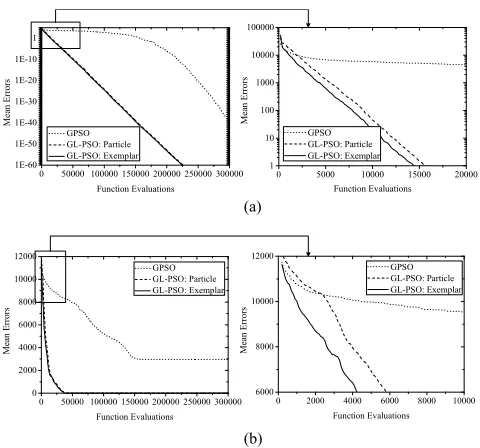
Fig. 2. Search behavior of GL-PSO and its comparison with that of canoni-cal PSO. (a) Relationship between exemplar and particle on Sphere problem. (b) Relationship between exemplar and particle on Schwefel’s problem 2.26.
(a) (b)
Fig. 3. Mean difference of the fitness of exemplars and particles in GL-PSO. (a) D-value on Sphere problem. (b) D-value on Schwefel’s problem 2.26.
where the solid and dashed lines refer to the average fitness values of exemplars and particles, respectively. Meanwhile, the convergence curve of the average fitness value obtained by the canonical PSO with global topology (GPSO) is represented by dotted line in Fig.2for the purpose of comparison. Moreover, we define a D-value as the mean difference between the fit-ness of exemplars and particles in GL-PSO, which is depicted in Fig.3.
Generally, the exemplars generated in the genetic learning scheme are capable of providing good guidance for the parti-cles, as observed in Figs. 2 and3. No matter the function is unimodal or multimodal, the fitness values of exemplars are better than those of particles during the optimization process. At an early stage of the swarm search, the randomly initial-ized population covers a relatively broad range in the solution space. At this time, the crossover performed on pbests and gbest has an exploration effect in that it constructs an exemplar far away from the particle’s current pbest. Fig.3shows that the fitness difference between exemplars and particles increases to a large value at this stage. Afterward, with the convergence of the population, pbests and the gbest become geographically close. The crossover operation of GL-PSO tends to have an exploitation effect because the constructed exemplars locate in the vicinity of particles. As seen in Fig.3, the fitness difference
between exemplars and particles begins to decrease after the initial time period.
The effect of mutation is more prominent in optimizing mul-timodal functions. As shown in Fig.3, the curve of D-value on Schwefel function is not as smooth as that on Sphere function, which contains many extreme points. As particles gradually fly toward their exemplars, the local minimum points on the D-value curve imply the moment that exemplars are jumping out of a local optimum. This owes to the mutation operation embedded in the genetic learning scheme, which injects diver-sified information into the exemplars even when the population has converged. In Fig.2(b), the curve of GPSO slows down after 2000 FEs and then flattens out to a horizontal course after 150 000 FEs. On contrast, owing to the effective and efficient guidance of exemplars, GL-PSO exhibits promising exploration and exploitation abilities from beginning to end, as shown in Fig.2(b).
The enhanced performance of the genetic learning scheme also benefits from the selection operation. First let us look at a shortcoming of the canonical learning scheme. As described in Section III-A, the velocity update rule in canonical PSO can be transformed into a composite form (3) by defining the exemplar as a linear combination of pbest and gbest in (4). Consider a 2-D Sphere function whose optimum is [0, 0]. If particle i’s pbest is Pi = [6,5] and the gbest is G =[2,2],
then the constructed exemplar could be Ei = [3,3]. In the
next generation, suppose that pbest and gbest are updated to Pi = [5,4] and G = [2,1], respectively, and the newly
calculated exemplar is Ei = [4,3]. In such a case, although
both pbest and gbest evolve, the exemplar deteriorates. Hence, particle i learns from the deteriorated exemplar, which is inef-ficient. In the genetic learning scheme, however, selection is performed to overcome this problem. It ensures that the exem-plar evolves generation by generation directionally until gets trapped in a local optimum. Moreover, once the exemplar gets trapped, the particle will select another particle’s exemplar to learn from, hence flying out of the local optimum. It can be seen in Fig.2 that GL-PSO is more efficient than GPSO. To summarize, by adopting the proposed genetic learning scheme consisting of crossover, mutation, and selection, the global search ability and search speed of the PSO algorithm are both improved.
IV. THE*L-PSO HYBRIDPARADIGM
[image:6.612.55.295.324.420.2]Besides the GL-PSO, the *L-PSO family can embrace some other members such as DL-PSO that uses a differential learn-ing scheme as in differential evolution (DE), EL-PSO with an estimation-of-distribution learning scheme adopting an estima-tion of distribuestima-tion algorithm (EDA), etc. All these could lead to interesting future work. This paper uses the genetic learning method because of the technical and biological backgrounds described in Section II. Moreover, the proposed GL-PSO obtains promising numerical results which will be presented in Section V.
Besides, embedding some traditional mathematical meth-ods could be alternative choices of learning. For example, the existing FIPS, CLPSO, and OLPSO algorithms apply a weighted-sum method, a simple composition approach, and an orthogonal experiment design, respectively. It is to be noticed that FIPS and CLPSO are not commonly identified as hybrid algorithms since their upper layer do not involve any evaluation procedure to calculate the fitness of the constructed exemplars.
V. EXPERIMENTALVERIFICATION ANDCOMPARISONS
A. Experimental Setup
To thoroughly evaluate the performance of the proposed GL-PSO, two popular test suites consisting of 42 benchmark functions in total [44], [45] are tested in the numerical exper-iments. A list and description of these functions are presented in Section S-III of the supplementary file. The first test suite ( f1–f14) includes all the scalable functions recommended by
Yao et al. [44] and has been widely used in [46]–[48]. In the test suite, f1–f4 are unimodal functions, f5 is unimodal in
2-D and 3-D space but has multiple optima when D >3, f6
is a step function, and f7 is a noisy quartic function. These
functions are used to investigate the convergence feature of the algorithm, since many PSO variants improve the global search ability at the cost of slowing down their convergence rate. Then, f8–f13 are multimodal functions with different
land-scapes, and f14 is a discontinuous version of the Rastrigin
function f9. These functions are used to show whether the
pro-posed algorithm improves the exploration ability of previous PSO algorithms in order to avoid premature convergence.
The second test suite ( f101–f128) consists of 28 shifted
and rotated functions from the CEC 2013 test suit for real-parameter optimization, where f1–f5 are unimodal functions,
f6–f20 are multimodal functions, and f21–f28 are hybrid
com-position functions [45], [49]. These shifted and rotated func-tions are used to test the performance of different algorithms in more complex and difficult cases.
The effectiveness and efficiency of the proposed GL-PSO are then compared with those of seven peer algorithms. GPSO [11] is the global PSO algorithm with inertia weight ω linearly decreasing from 0.9 to 0.4. Hierarchical PSO with Time-Varying Accelerating Coefficients (HPSO-TVAC) [13] makes improvements by adjusting accelerating coefficients and integrating auxiliary procedure. FIPS [26], CLPSO [27], and OLPSO [28], as described in Section III-A, focus on developing novel learning schemes and constructing effective exemplars. Besides, GAPSO [18] is a GA and PSO hybrid
TABLE I
PARAMETERCONFIGURATIONS
algorithm in which the GA and PSO run in parallel and exchange information by crossover. DEPSO [23] adopts a DE update strategy, a PSO update strategy, and a random update strategy alternately to improve particles.
The parameter configurations of these algorithms are according to the corresponding references, which are shown in TableI. An exception is that, for GAPSO, we have conducted experiment to find out a promising parameter configuration because the parameter settings of pc (probability of crossover), pm, and ds (designated step) are not provided in the reference. For the proposed GL-PSO, parametersωand c are empirically set to 0.7298 and 1.49618, respectively; the mutation probabil-ity is set as pm=0.01; and the stopping gap is set as sg=7. The population size is fixed at 50 for all the algorithms.
These algorithms are tested on 30-D functions with the same MaxFEs=10 000 · D. For each benchmark, each algorithm is repeated 30 times independently to obtain statistical results. All the algorithms are coded in C, executed on a PC with the Intel Core2 Quad CPU Q6600 at 2.40 GHz with 2 GB of RAM (note that only a single processor is used).
In addition, because PSO belongs to nondeterministic algo-rithms, the differences of results are influenced by both intrinsic errors (determined by the algorithms’ optimization performance) and random errors (caused by random number generation in the algorithm). To determine whether the dif-ferences of results are caused by intrinsic errors, a statistical hypothesis test is applied to evaluate whether the differences between the results are significant. In statistics, the Wilcoxon rank-sum test is one of the most well-known nonparamet-ric statistical hypothesis tests [50]. In this paper, the one-tail Wilcoxon test at a significance level α = 0.05 is applied to compare the results of algorithm pairs.
B. Experimental Results and Comparisons on First Test Suite (f1–f14)
1) Results on Unimodal Functions: In Table II, the mean, best, and standard deviations of the error values obtained by the eight algorithms on functions f1–f7 are presented,
TABLE II
STATISTICALRESULTS ONUNIMODALFUNCTIONS OF THEFIRSTTESTSUITE
TABLE III
SEARCHSPEED ANDRELIABILITY ONUNIMODALFUNCTIONS OF THEFIRSTTESTSUITE
OLPSO, and GL-PSO successfully overcome this deficiency and achieve high solution accuracy. Moreover, the proposed GL-PSO algorithm performs the best in optimizing four out of the seven functions.
The p-value obtained in the hypothesis test is also reported in Table II. If the p-value is less than the significance level α=0.05, the difference of results is statistically significant. It can be seen that GL-PSO significantly outperforms seven other algorithms on most benchmarks except f7. This is because f7is
a noise function with random walk that distracts the selection of good exemplars and lowers the performance of GL-PSO.
The search speed of different algorithms is compared in Table III, where the average number of FEs and comput-ing time (in s) used to reach the error bound are presented. Besides, Table III also reports the percentage of the runs
successfully reaching the error bound in all the 30 runs, which reflects the reliability of the corresponding algorithms. The best value in each row is marked in bold. It can be observed from Table III that GL-PSO generally possesses the highest search speed as well as the highest reliability.
2) Results on Multimodal Functions: Comparisons of the algorithms on multimodal functions f8–f14 are reported in
TableIV. These functions contain a number of local optima, which may lead to premature convergence of PSO algorithms. Traditionally, PSO has seen difficulties in locating the global optimum of the Schwefel function f8, because this problem
TABLE IV
STATISTICALRESULTS ONMULTIMODALFUNCTIONS OF THEFIRSTTESTSUITE
TABLE V
SEARCHSPEED ANDRELIABILITY ONMULTIMODALFUNCTIONS OF THEFIRSTTESTSUITE
On the contrary, the other three algorithms, GAPSO, CLPSO, and GL-PSO, are not trapped into poor local optima. The pro-posed GL-PSO is the only algorithm that can reach a low error of 3.82×10⁻⁴ in all the runs with standard deviation 0 on this function.
Consider the Rastrigin function f9. It is a complex
multi-modal problem with a significant number of local optima. For this problem, an algorithm maintaining larger diversity is more likely to yield good results. It can be observed in Table IV
that GL-PSO performs the best on this function, which means that the proposed genetic learning effectively maintains the population diversity. This success owes much to the mutation operation, which diversifies the exemplars and hence diver-sifies the search of particles most. In general, in terms of solution accuracy, the GL-PSO algorithm performs the best in
five out of the seven multimodal functions. Moreover, accord-ing to the Wilcoxon test results (WTRs), GL-PSO significantly outperforms the other PSO variants on more benchmarks.
Furthermore, from the comparison of search speed and relia-bility shown in TableV, it can be observed that GL-PSO is also efficient in solving problems with a number of local optima. Generally, the proposed GL-PSO algorithm possesses both a strong global search ability and a high convergence speed, which are very promising for tackling multimodal problems.
It is to be noticed that, compared with the experimental results of GA and PSO reported in Section S-I of the sup-plementary file, the proposed GL-PSO algorithm improves performance over both GA and PSO on the unimodal Sphere function f1and the multimodal Schwefel function f8. GL-PSO
TABLE VI
STATISTICALRESULTS ON THESECONDTESTSUITE(MEANERROR±STANDARDDEVIATION)
organically embeds GA to benefit the swarm search of PSO, resulting in a “1+1>2” effect for both the GA and PSO.
C. Experimental Results and Comparisons on Second Test Suite (f101–f128)
To further validate the performance of GL-PSO, compar-isons are made on shifted and rotated functions f101–f128,
which are very complex and difficult to solve. The mean and standard deviations of the error values obtained by the eight algorithms are listed in TableVI, where the performance rank of GL-PSO among the eight algorithms is also presented. It can be observed that the proposed algorithm is a competi-tive PSO variant for the second test suite. In optimizing the 28 functions, GL-PSO is ranked the first for 14 times, the second for six times, and ranked the third and fourth for four and three times respectively. Compared with the peer algo-rithms, the proposed algorithm can produce competitive results
TABLE VII
WTRSBETWEENGL-PSOANDOTHERPSO ALGORITHMS ON THESECONDTESTSUITE
on most functions except f104. Considering the fitness
land-scape of function f104, it can be seen in [45] that the local
regularities are smoothed. The proposed algorithm is not the best in dealing with this kind of problems.
The WTRs on f101–f128 are tabulated in Table VII, which
shows that the proposed GL-PSO algorithm produces sig-nificantly better results than the other algorithms on more functions.
(a) (b)
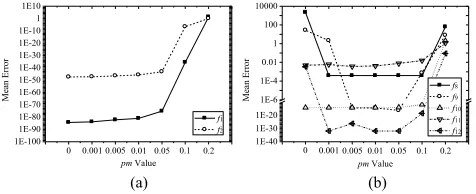
Fig. 4. Effect of the mutation probability pm on the performance of GL-PSO. (a) Unimodal functions. (b) Multimodal functions.
cases, GL-PSO exhibits the fastest convergence among the compared algorithms, and meanwhile, it is not easy to be trapped in local optima. To conclude, the above results have verified the effectiveness and powerfulness of using the pro-posed genetic learning scheme for performance enhancement of PSO.
D. Investigation of Parameters
This section investigates the sensitivity of GL-PSO to the mutation probability pm and the stopping gap sg. First, we conduct GL-PSO with pm =0, 0.001, 0.005, 0.01, 0.05, 0.1, and 0.2, respectively, and fix the other parameters as those presented in Section V-A. Unimodal functions f1 and f2 and
multimodal functions f8–f12 are tested in the experiments.
The effect of different settings of pm on the performance of GL-PSO is plotted in Fig. 4, where the horizontal axis is the pm value and the vertical axis is the mean error for each func-tion. It can be observed that the proper range of pm is [0.005, 0.05]. A larger pm will perturb a smooth search of particles and result in poor convergence, whereas a smaller pm cannot pre-vent premature convergence in solving multimodal problems. With a pm∈[0.005, 0.05], the algorithm can exhibit favorable performance on both unimodal and multimodal problems.
In addition, GL-PSO is tested with sg=1,2, . . . ,10, respec-tively, with the other parameters being fixed. Fig. 5(a) shows that the solution accuracy obtained by GL-PSO is insensitive to the stopping gap, and all the ten sg values can provide good performance for the algorithm. Besides, in Fig.5(b), the search speed of using different sg values is depicted and compared, where the vertical axis is the average number of FEs required to reach the predefined error bound for each function. It can be observed that setting sg in the range of [4, 7] can help improving the search efficiency of GL-PSO. This parameter determines the condition of the jumping-like behavior of exemplars in the algorithm. A small sg value will lead to a particle sensitively changing its exemplar (search guidance), which would result in population oscillation and hence reduce the efficiency of PSO. On the other hand, when using a large sg, a particle can be trapped in a local optimum for a long time, which is also not efficient. To summarize, pm ∈ [0.005, 0.05] and sg ∈ [4, 7] are recommended in this paper.
In addition, in the crossover of the exemplar construction in GL-PSO, gbest of the entire swarm is utilized to generate new exemplars. If the local best information (lbest) of a neighbor-hood structure is used instead, GL-PSO can be implemented on different PSO topologies. Comparisons between global and
[image:11.612.317.556.52.150.2](a) (b)
Fig. 5. Effect of the stopping gap sg on the performance of GL-PSO. (a) Solution accuracy. (b) Search efficiency.
local versions of GL-PSO are made in Section S-V of the sup-plementary file. Results show that GL-PSO with the global topology performs the best.
E. Scalability Analysis
In the literature, the performance of many PSO algorithms decreases drastically with the increase in the problem scale. In this section, we conduct scalability analysis for the above eight PSO algorithms to test their performance on 50-D and 100-D functions. Experimental settings are the same as those described in Section V-A, among which the MaxFEs is set to 10 000·D.
Table VIII reports the mean results obtained by the eight PSO variants, where the best results are marked in bold. It can be seen that the proposed algorithm maintains good per-formance when the problem dimension increases. Compared with the other algorithms, GL-PSO obtains the best results on most of the 50-D and 100-D problems being tested and it also achieves competitive results on the remaining a few problems. Particularly, for the multimodal functions, the number of local optima increases drastically with the problem dimension, which makes PSO vulnerable to premature convergence. As shown in Table VIII, GL-PSO is the only algorithm that can maintain a good global search ability in such cases, whereas the performance of the other algorithms deteriorates severely. For example, in optimizing f8, f9, and f14, GL-PSO obtains
highly accurate results when the dimensionality increases to 50 and 100, whereas all the other seven algorithms get trapped in poor local optima.
F. Comparisons With Other Evolutionary and Swarm Intelligence Algorithms
In this section, we further compare GL-PSO with other evo-lutionary and swarm intelligence algorithms, including a con-tinuous ant colony optimization (ACOR) [51], self-adaptive
DE (SaDE) [52], EDA [53], artificial bee colony (ABC) [54], and evolution strategy with covariance matrix adaptation (CMA-ES) [55]. 30-D problems are tested in the experiments, with parameter configurations according to the corresponding references. As the procedures and time complexity of these algorithms differ substantially, for a fair comparison, we use a maximum running time (MaxRT) instead of the MaxFEs as the stopping criterion. All algorithms are coded and exe-cuted in the same environment, with MaxRT being 1 s for all functions.
TABLE VIII
RESULTS OFSCALABILITYTEST ON50-DAND100-D PROBLEMS
TABLE IX
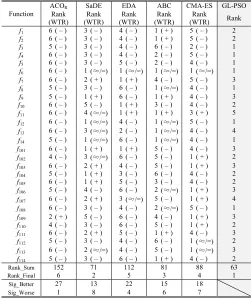
COMPARISONSBETWEENGL-PSOANDOTHERALGORITHMS FOR FUNCTIONOPTIMIZATION(RUNTIME=1S)
“−” denote that the compared algorithm is significantly bet-ter and worse than GL-PSO, respectively, and “≈/=” stands for that the differences between the results are not signifi-cant). Consider the rankings in Table IX. GL-PSO performs the best among the six algorithms, followed by SaDE, ABC,
and CMA-ES. The proposed algorithm exhibits consistent per-formance and ranks the first or second in optimizing most of the benchmark functions. Moreover, the WTRs show that GL-PSO produces significantly better results than the other algorithms on more functions.
VI. CONCLUSION
[image:12.612.48.299.367.665.2]future research into the cascade hybridization of PSO with other and emerging techniques. Moreover, this would also lead to interesting future development of PSO algorithms for dynamic and multiobjective optimization, as well as real-world applications [56], [57].
REFERENCES
[1] J. Kennedy and R. Eberhart, “Particle swarm optimization,” in Proc. IEEE Int. Conf. Neural Netw., vol. 4. Perth, WA, Australia, 1995, pp. 1942–1948.
[2] R. Eberhart and J. Kennedy, “A new optimizer using particle swarm theory,” in Proc. 6th Int. Symp. Micro Mach. Human Sci., Nagoya, Japan, 1995, pp. 39–43.
[3] Y. del Valle, G. K. Venayagamoorthy, S. Mohagheghi, J.-C. Hernandez, and R. G. Harley, “Particle swarm optimization: Basic concepts, variants and applications in power systems,” IEEE Trans. Evol. Comput., vol. 12, no. 2, pp. 171–195, Apr. 2008.
[4] M. R. AlRashidi and M. E. El-Hawary, “A survey of particle swarm optimization applications in electric power systems,” IEEE Trans. Evol. Comput., vol. 13, no. 4, pp. 913–918, Aug. 2009.
[5] R. Ruiz-Cruz, E. N. Sanchez, F. Ornelas-Tellez, A. G. Loukianov, and R. G. Harley, “Particle swarm optimization for discrete-time inverse opti-mal control of a doubly fed induction generator,” IEEE Trans. Cybern., vol. 43, no. 6, pp. 1698–1709, Dec. 2013.
[6] R. V. Kulkarni and G. K. Venayagamoorthy, “Particle swarm optimiza-tion in wireless-sensor networks: A brief survey,” IEEE Trans. Syst., Man, Cybern. C, Appl. Rev., vol. 41, no. 2, pp. 262–267, Mar. 2011. [7] B. Xue, M. Zhang, and W. N. Browne, “Particle swarm optimization
for feature selection in classification: A multi-objective approach,” IEEE Trans. Cybern., vol. 43, no. 6, pp. 1656–1671, Dec. 2013.
[8] S. Janson and M. Middendorf, “A hierarchical particle swarm optimizer and its adaptive variant,” IEEE Trans. Syst., Man, Cybern. B, Cybern., vol. 35, no. 6, pp. 1272–1282, Dec. 2005.
[9] F. van den Bergh and A. P. Engelbrecht, “A cooperative approach to particle swarm optimization,” IEEE Trans. Evol. Comput., vol. 8, no. 3, pp. 225–239, Jun. 2004.
[10] J. J. Liang and P. N. Suganthan, “Dynamic multi-swarm particle swarm optimizer,” in Proc. IEEE Swarm Intell. Symp., Pasadena, CA, USA, 2005, pp. 124–129.
[11] Y. Shi and R. Eberhart, “A modified particle swarm optimizer,” in Proc. IEEE Int. Conf. Evol. Comput., Anchorage, AK, USA, 1998, pp. 69–73. [12] M. Clerc and J. Kennedy, “The particle swarm—Explosion, stability, and convergence in a multidimensional complex space,” IEEE Trans. Evol. Comput., vol. 6, no. 1, pp. 58–73, Feb. 2002.
[13] A. Ratnaweera, S. K. Halgamuge, and H. C. Watson, “Self-organizing hierarchical particle swarm optimizer with time-varying acceleration coefficients,” IEEE Trans. Evol. Comput., vol. 8, no. 3, pp. 240–255, Jun. 2004.
[14] Z.-H. Zhan, J. Zhang, Y. Li, and H. S.-H. Chung, “Adaptive parti-cle swarm optimization,” IEEE Trans. Syst., Man, Cybern. B, Cybern., vol. 39, no. 6, pp. 1362–1381, Dec. 2009.
[15] X.-H. Shi, Y.-C. Liang, H.-P. Lee, C. Liu, and L. M. Wang, “An improved GA and a novel PSO-GA-based hybrid algorithm,” Inf. Process. Lett., vol. 93, no. 5, pp. 255–261, Mar. 2005.
[16] Y.-T. Kao and E. Zahara, “A hybrid genetic algorithm and particle swarm optimization for multimodal functions,” Appl. Soft Comput., vol. 8, no. 2, pp. 849–857, Mar. 2008.
[17] F. Valdez, P. Melin, O. Castillo, and O. Montiel, “A new evolutionary method with a hybrid approach combining particle swarm optimization and genetic algorithms using fuzzy logic for decision making,” in Proc. IEEE Congr. Evol. Comput., Hong Kong, 2008, pp. 1333–1339. [18] K. Premalatha and A. M. Natarajan, “Hybrid PSO and GA for
global maximization,” Int. J. Open Prob. Compt. Math., vol. 2, no. 4, pp. 597–608, Dec. 2009.
[19] C.-F. Juang, “A hybrid of genetic algorithm and particle swarm optimiza-tion for recurrent network design,” IEEE Trans. Syst., Man, Cybern. B, Cybern., vol. 34, no. 2, pp. 997–1006, Apr. 2004.
[20] F. Grimaccia, M. Mussetta, and R. E. Zich, “Genetical swarm optimiza-tion: Self-adaptive hybrid evolutionary algorithm for electromagnetics,” IEEE Trans. Antennas Propag., vol. 55, no. 3, pp. 781–785, Mar. 2007. [21] W.-T. Li, X.-W. Shi, Y.-Q. Hei, S.-F. Liu, and J. Zhu, “A hybrid opti-mization algorithm and its application for conformal array pattern syn-thesis,” IEEE Trans. Antennas Propag., vol. 58, no. 10, pp. 3401–3406, Oct. 2010.
[22] S. Jeong, S. Hasegawa, K. Shimoyama, and S. Obayashi, “Development and investigation of efficient GA/PSO-HYBRID algorithm applicable to real-world design optimization,” IEEE Comput. Intell. Mag., vol. 4, no. 3, pp. 36–44, Aug. 2009.
[23] C.-S. Zhang, J.-X. Ning, S. Lu, D.-T. Ouyang, and T.-N. Ding, “A novel hybrid differential evolution and particle swarm optimization algo-rithm for unconstrained optimization,” Oper. Res. Lett., vol. 37, no. 2, pp. 117–122, Mar. 2009.
[24] S. Li, M. Tan, I. W. Tsang, and J. T.-Y. Kwok, “A hybrid PSO-BFGS strategy for global optimization of multimodal functions,” IEEE Trans. Syst., Man, Cybern. B, Cybern., vol. 41, no. 4, pp. 1003–1014, Aug. 2011.
[25] Z.-H. Liu, J. Zhang, S.-W. Zhou, X.-H. Li, and K. Liu, “Coevolutionary particle swarm optimization using AIS and its application in multipa-rameter estimation of PMSM,” IEEE Trans. Cybern., vol. 43, no. 6, pp. 1921–1935, Dec. 2013.
[26] R. Mendes, J. Kennedy, and J. Neves, “The fully informed particle swarm: Simpler, maybe better,” IEEE Trans. Evol. Comput., vol. 8, no. 3, pp. 204–210, Jun. 2004.
[27] J. J. Liang, A. K. Qin, P. N. Suganthan, and S. Baskar, “Comprehensive learning particle swarm optimizer for global optimization of multimodal functions,” IEEE Trans. Evol. Comput., vol. 10, no. 3, pp. 281–295, Jun. 2006.
[28] Z.-H. Zhan, J. Zhang, Y. Li, and Y.-H. Shi, “Orthogonal learning par-ticle swarm optimization,” IEEE Trans. Evol. Comput., vol. 15, no. 6, pp. 832–847, Dec. 2011.
[29] C.-H. Li, S.-X. Yang, and T. T. Nguyen, “A self-learning particle swarm optimizer for global optimization problems,” IEEE Trans. Syst., Man, Cybern. B, Cybern., vol. 42, no. 3, pp. 627–646, Jun. 2012.
[30] Z.-H. Ren, A.-M. Zhang, C.-Y. Wen, and Z.-R. Feng, “A scatter learning particle swarm optimization algorithm for multimodal problems,” IEEE Trans. Cybern., vol. 44, no. 7, pp. 1127–1140, Jul. 2014.
[31] G. E. Robinson and R. E. Page, “Genetic determination of nectar for-aging, pollen forfor-aging, and nest-site scouting in honey bee colonies,” Behav. Ecol. Sociobiol., vol. 24, no. 5, pp. 317–323, May 1989. [32] P. Berthold and F. Pulido, “Heritability of migratory activity in a
natu-ral bird population,” Proc. Biol. Sci., vol. 257, no. 1350, pp. 311–315, Sep. 1994.
[33] S. M. Stigler, “Darwin, Galton and the statistical enlightenment,” J. Roy. Stat. Soc. A., vol. 173, no. 3, pp. 469–482, Jul. 2010. [34] T. J. Bazzett, An Introduction to Behavior Genetics. Sunderland, MA,
USA: Sinauer Assoc., 2008.
[35] N. E. Raine, T. C. Ings, A. Dornhaus, N. Saleh, and L. Chittka, “Adaptation, genetic drift, pleiotropy, and history in the evolution of bee foraging behavior,” in Advances in the Study of Behavior. New York, NY, USA: Academic Press, 2006, pp. 305–354.
[36] J. Alcock, Animal Behavior: An Evolutionary Approach, 5th ed. Sunderland, MA, USA: Sinauer Assoc., 1993.
[37] K. Sterelny, “Made by each other: Organisms and their environment,” Biol. Philos., vol. 20, no. 1, pp. 21–36, Jan. 2005.
[38] C. G. Jones, J. H. Lawton, and M. Shachak, “Positive and negative effects of organisms as physical ecosystem engineers,” Ecology, vol. 78, no. 7, pp. 1946–1957, 1997.
[39] S. H. Ling et al., “Hybrid particle swarm optimization with wavelet mutation and its industrial applications,” IEEE Trans. Syst., Man, Cybern. B, Cybern., vol. 38, no. 3, pp. 743–763, Jun. 2008.
[40] M. S. Arumugam and M. V. C. Rao, “On the improved performances of the particle swarm optimization algorithms with adaptive parameters, crossover operators and root mean square (RMS) variants for computing optimal control of a class of hybrid systems,” Appl. Soft Comput., vol. 8, no. 1, pp. 324–336, 2008.
[41] F. Galton, Hereditary Genius. London, U.K.: Macmillan, 1869. [42] J. L. Fuller and W. R. Thompson, Behavior Genetics. New York, NY,
USA: Wiley, 1960.
[43] (Sep. 10, 2015). GLPSO Source Code. [Online]. Available:
http://www.ai.sysu.edu.cn/GYJ/glpso/c_code/
[44] X. Yao, Y. Liu, and G.-M. Lin, “Evolutionary programming made faster,” IEEE Trans. Evol. Comput., vol. 3, no. 2, pp. 82–102, Jul. 1999. [45] J. J. Liang, B. Y. Qu, P. N. Suganthan, and A. G. Hernández-Díaz,
“Problem definitions and evaluation criteria for the CEC 2013 spe-cial session on real-parameter optimization,” Comput. Intell. Lab., Zhengzhou Univ., Zhengzhou, China, Tech. Rep. 201212, 2013. [46] H. Gao and W.-B. Xu, “A new particle swarm algorithm and its globally
[47] T. Blackwell, “A study of collapse in bare bones particle swarm opti-mization,” IEEE Trans. Evol. Comput., vol. 16, no. 3, pp. 354–372, Jun. 2012.
[48] W.-J. Yu et al., “Differential evolution with two-level parameter adap-tation,” IEEE Trans. Cybern., vol. 44, no. 7, pp. 1080–1099, Jul. 2014. [49] M. Ergezer and D. Simon, “Mathematical and experimental analyses of oppositional algorithms,” IEEE Trans. Cybern., vol. 44, no. 11, pp. 2178–2189, Nov. 2014.
[50] J. Derrac, S. García, D. Molina, and F. Herrera, “A practical tutorial on the use of nonparametric statistical tests as a methodology for comparing evolutionary and swarm intelligence algorithms,” Swarm Evol. Comput., vol. 1, no. 1, pp. 3–18, Mar. 2011.
[51] K. Socha and M. Dorigo, “Ant colony optimization for continuous domains,” Eur. J. Oper. Res., vol. 185, no. 3, pp. 1155–1173, Mar. 2008. [52] A. K. Qin, V. L. Huang, and P. N. Suganthan, “Differential evolution algorithm with strategy adaptation for global numerical optimization,” IEEE Trans. Evol. Comput., vol. 13, no. 2, pp. 398–417, Apr. 2009. [53] P. Larrañaga, R. Etxeberria, J. A. Lozano, and J. M. Peña, “Optimization
in continuous domains by learning and simulation of Gaussian net-works,” in Proc. Genet. Evol. Comput. Conf., Las Vegas, NV, USA, 2000, pp. 201–204.
[54] D. Karaboga and B. Basturk, “A powerful and efficient algorithm for numerical function optimization: Artificial bee colony (ABC) algo-rithm,” J. Glob. Optim., vol. 39, no. 3, pp. 459–471, Nov. 2007. [55] N. Hansen, S. D. Müller, and P. Koumoutsakos, “Reducing the time
com-plexity of the derandomized evolution strategy with covariance matrix adaptation (CMA-ES),” Evol. Comput., vol. 11, no. 1, pp. 1–18, 2003. [56] X.-L. Hu and J. Wang, “An improved dual neural network for solving a class of quadratic programming problems and its k-winners-take-all application,” IEEE Trans. Neural Netw., vol. 19, no. 12, pp. 2022–2031, Dec. 2008.
[57] L. Shao, R.-M. Yan, X.-L. Li, and Y. Liu, “From heuristic optimiza-tion to dicoptimiza-tionary learning: A review and comprehensive comparison of image denoising algorithms,” IEEE Trans. Cybern., vol. 44, no. 7, pp. 1001–1013, Jul. 2014.
Yue-Jiao Gong (S’10–M’15) received the Ph.D.
degree in computer science from Sun Yat-sen University, Guangzhou, China, in 2014.
She is currently a Post-Doctoral Research Fellow with the Department of Computer and Information Science, University of Macau, Macau, China. Her current research interests include evolutionary com-putation and swarm intelligence. She has published over 30 papers, including nine IEEE Transaction papers, in her research area.
Jing-Jing Li received the Ph.D. degree in computer
science from Hong Kong Polytechnic University, Hong Kong, in 2012.
She is currently a Lecturer with the School of Computer Science, South China Normal University, Guangzhou, China. Her current research interests include evolutionary algorithm, energy efficient rout-ing, and object tracking for wireless sensor net-works.
Yicong Zhou (M’07–SM’14) received the Ph.D.
degree in electronic engineering from Tufts University, Medford, MA, USA, in 2010.
He is currently an Assistant Professor with the Department of Computer and Information Science, University of Macau, Macau, China. He has authored/co-authored over 80 papers, including 13 IEEE Transaction papers, six most down-loaded/popular papers in corresponded journals, and one “highly cited paper” within the top 1% of published papers in the ISI database up to 2015. His current research interests include chaotic system design, multimedia security, image processing and understanding, and machine learning.
Dr. Zhou was a recipient of the third price of Macau Natural Science Award in 2014. He is a member of the International Society for Optical Engineers and the Association for Computing Machinery.
Yun Li (S’87–M’90) received the Ph.D. degree
in computing and control from the University of Strathclyde, Glasgow, U.K., in 1990.
He was a Visiting Professor with Kumamoto University, Kumamoto, Japan, in 2002. He has served as the Founding Director of the University of Glasgow Singapore, Singapore, from 2011 to 2013, and acted as the Founding Director of the University’s international joint program with the University of Electronic Science and Technology of China (UESTC), Chengdu, China, in 2013. He is currently a Professor with the Department of Systems Engineering, University of Glasgow, Glasgow, U.K., and a Visiting Professor with the UESTC and Sun Yat-sen University, Guangzhou, China, researching into smart design with market informatics via the cloud to complete the value chain for Industry 4.0. He has 200 publications and he is a Chartered Engineer.
Dr. Li is an Associate Editor of the IEEE TRANSACTIONS ON EVOLUTIONARY COMPUTATION and the SM Journal of Engineering Sciences.
Henry Shu-Hung Chung (M’95–SM’03) received
the Ph.D. degree in electrical engineering from Hong Kong Polytechnic University, Hong Kong, in 1994.
He is currently a Professor with the Department of Electronic Engineering, City University of Hong Kong, Hong Kong. He has authored six research book chapters and over 320 technical papers including 150 refereed journal papers in his research areas and holds 26 patents. His current research interests include time- and frequency-domain analysis of power electronic circuits, switched-capacitor-based converters, random-switching techniques, and control methods.
Dr. Chung is currently the Editor-in-Chief of the IEEE POWER ELECTRONICS LETTERS, and an Associate Editor of the IEEE TRANSACTIONS ONPOWERELECTRONICS, the IEEE Journal of Emerging and Selected Topics in Power Electronics, and the IEEE TRANSACTIONS ONCIRCUITS ANDSYSTEMS, PARTI.
Yu-Hui Shi (SM’98) received the Ph.D. degree in
electronic engineering from Southeast University, Nanjing, China, in 1992.
He is currently a Professor with the Department of Electrical and Electronic Engineering, Xi’an Jiaotong–Liverpool University, Suzhou, China. His current research interests include computational intelligence techniques (including swarm intelli-gence) and their applications.
Dr. Shi is the Editor-in-Chief of the International Journal of Swarm Intelligence Research and an Associate Editor of the IEEE TRANSACTIONS ON EVOLUTIONARY COMPUTATION. He is the Chair of the IEEE Chief Information Officer Task Force on Swarm Intelligence.
Jun Zhang (M’02–SM’08) received the Ph.D.
degree in electronic engineering from the City University of Hong Kong, Hong Kong, in 2002.
He is currently a Changjiang Chair Professor with the Department of Computer Science, Sun Yat-sen University, Guangzhou, China. His current research interests include computational intelligence, cloud computing, data mining, and power electronic cir-cuits. He has published over 200 technical papers in his research area.