City, University of London Institutional Repository
Citation
: Li, F., Nucciarelli, A., Roden, S. & Graham, G. (2016). How Smart Cities
Transform Operations Models: A New Research Agenda for Operations Management in the Digital Economy. Production Planning & Control, 27(6), pp. 514-528. doi:
10.1080/09537287.2016.1147096
This is the accepted version of the paper.
This version of the publication may differ from the final published
version.
Permanent repository link:
http://openaccess.city.ac.uk/13879/Link to published version
: http://dx.doi.org/10.1080/09537287.2016.1147096
Copyright and reuse:
City Research Online aims to make research
outputs of City, University of London available to a wider audience.
Copyright and Moral Rights remain with the author(s) and/or copyright
holders. URLs from City Research Online may be freely distributed and
linked to.
City Research Online: http://openaccess.city.ac.uk/ [email protected]
Li F, Nucciarelli, A, Roden, S & Graham, G. 2016. How Smart Cities Transform Operations Models: A New Research Agenda for Operations Management in the Digital Economy. Production Planning & Control. DOI:10.1080/09537287.2016.1147096 Estimated Publication date - 29 Feb 2016 (Online)
How Smart Cities Transform Operations Models:
A New Research Agenda for Operations Management in the Digital Economy
Feng Li*, Alberto Nucciarelli, Sinead Roden, Gary Graham
Abstract
The notion of smart cities is growing in prominence in the digital economy. The integration
of urban infrastructures with information and communication technologies (ICT) enables the
development of new operations models. Digitised infrastructures offer opportunities for
public and private organisations to design and deliver more customer-centric products or
services, particularly for those that require geographical proximity with consumers in the
O2O (online to offline) context. A framework is developed and used to analyse three case
examples. These cases illustrate the emergence of new operations models and,
demonstrate how smart cities are re-defining the characteristics of operations models
around their scalability, analytical output and, connectivity. We also explore the feasibility,
vulnerability and acceptability of each new operation. This paper contributes to our
understanding of how smart cities can potentially transform operational models, and sets
out a research agenda for operations management in smart cities in the digital economy.
1. Introduction
Over the last four decades, information and communications technologies (ICTs) are
increasingly integrated into urban infrastructures, leading to the rapid development of
smart cities (Manville et al., 2014). This integration has three main effects: i) it improves the
efficiency and effectiveness of public services that rely on urban infrastructures (e.g. utilities
and healthcare); ii) it enables the creation of new innovative services that disrupt city-based
sectors (e.g. Uber in the urban taxi service); and iii) it encourages the update of existing
operations models by unlocking the economic value of city-based resources (e.g. Airbnb in
the hospitality). In each of these cases, smart cities are facilitating the transformation of
operations models, by innovatively addressing traditional operational problems and
resource constraints in urban settings, and developing new ways of value creation and
delivery to different stakeholders.
However, most existing studies of smart cities have been focused on town planning,
particularly as an ‘urban labelling phenomenon’ (Hollands, 2008), rather than the
development of more efficient and effective operations across different industries using
new operations models (Allwinkle and Cruickshank, 2011; Paroutis et al., 2014). This is
rather surprising given the near ubiquitous broadband and mobile networks in cities, the
rapidly growing range of smart devices carried by the urban population, the explosive
development of big data associated with the Internet of Things (IoT), and the potential
effect of connected vehicles and smart homes on consumer behaviour and on city services
management. Such developments pose serious challenges and opportunities for operations
managers to transform their operations models, and they call for new theoretical and
empirical research in operations management (George, 2014; Anttiroiko et al., 2014.).
and operations, and to adopt radically different new business models and new
organisational forms (Li, 2006, 2014). This has already resulted in the transformation of
operations models in a wide range of industries, from travel, music and retailing, to search
and advertising. However, online retailing (retail e-commerce) only represents less than
10% of total retailing in most countries (for example, less than 7% in the USA in 2014
according to data published by the US Census Bureau, Figure 1), as many products need to
be physical delivered; and many services require close geographical proximity between
service providers and consumers. Smart cities offer the ideal combination of advanced ICT
infrastructure and services with a high concentration of people within urban areas, which
creates the environment to unlock the enormous potential for the remaining 90% of
products and services that have yet to fully benefit from e-Commerce.
The redesign of traditional operations models to take advantage of the smart city
environment and target the 90% of activities not yet adequately addressed by e-Commerce
represents a significant new area that deserves strategic consideration across industries.
This set of activities is often termed O2O (online-to-offline or offline-to-online), which
significantly extends the scope of current e-Commerce activities and opens up new
possibilities for transforming operations models across different sectors. A range of
examples are emerging in areas including personal, domestic and community services
(Bizzby, GlamSquad), taxi services (Uber), catering (Opentable), and urban tourism (Airbnb).
Such services are only feasible in smart cities where people are concentrated, and as such,
demand and supply are geographically close and are easily connected by a ubiquitous digital
infrastructure. This is an area that has not been adequately addressed by previous studies.
---
Insert Figure 1 about here
Therefore, the central question guiding this paper is: how will smart cities transform
operations models? To answer this question, we commence by discussing the origin of the
smart city concept and reviewing alternative notions of the phenomenon (Haque, 2012;
Nam and Pardo, 2011; Manville et al., 2014). We then propose a conceptual framework,
which highlights the role that operations management will play if a firm is to achieve
(operational) transformation in the smart city context. In this framework, we propose that
smart cities enable the development of new operations models by re-defining three central
characteristics: scalability, analytical output and, connectivity. We then offer an evaluative
approach of these new models of operation, where we assess their feasibility, vulnerability
and acceptability (Slack and Lewis, 2011).
This framework can help operations managers to address conceptual and practical
questions when developing, evaluating and comparing new operations models smart cities.
We have developed three theory-guided case studies to serve as examples of new
operations models in the digital economy. As will be discussed later in the paper, the main
purpose of these case studies is not to validate particular new operations models, but to
illustrate the potential of smart cities in enabling new operations models across different
sectors. These cases will help us understand the tactical and strategic decision-making
facing operations managers and the impact of active customer participation in the new
operations models.
The paper is structured as follows: Section 2 reviews the relevant literature,
illustrates the evolution of smart cities, and provides a working definition of the concept.
Section 3 presents a conceptual framework for understanding the role of scalability,
analytical output and connectivity in developing new operations models, and for evaluating
such new operations models in terms of their feasibility, vulnerability and acceptability.
have developed. Section 5 summarises the main insights emerging from the case studies.
Finally, Section 6 concludes the paper and outlines a new agenda for future research
investigating operations management in the digital economy.
2. The Emergence of Smart Cities
The urban population accounts for 54% of the total global population and it is
expected to reach 66% by 2050. Africa and Asia are projected to urbanize faster than other
continents and they will host the largest cities on the planet. However while their
urbanization rates will reach 56% and 64% respectively, it is predicted that it will be
European cities that will have a higher proportion of their populace (with over 80% of their
citizens) living in city areas by 2050 (United Nations, 2014).
Overcrowded cities pose a major challenge for national and local governments in
scaling up their public infrastructures and services (i.e. education, transportation, water and
energy supply) and meeting strict environmental standards to provide wealthy and healthy
living conditions, including efficient and effective healthcare, security and protection
systems, accessible social, artistic and cultural networks, and a wide range of products and
services. Densely populated cities also pose new challenges for organisations in the design
and management of their operations. There is an urgent need to develop more efficient
and effective operations models, both for the management of urban infrastructures and,
the production and delivery of products or services that rely on these urban infrastructures.
One response from cities around the world is to leverage the power of ICTs by
integrating urban and technological infrastructures (e.g. streets, utilities and telecom
networks) and digitalising traditional services (such as online Land Registry, energy smart
metering, and healthcare electronic records). This enables urban authorities to integrate
Lee, 2001; Ho, 2002; Moon, 2002; West, 2004; Carter and Belanger, 2005; Nam and Pardo,
2014). The development of smart cities opens up new possibilities for organisations to
re-consider their operations models. Today, sensors are increasingly embedded in consumable
products and other everyday objects, creating a new world where all objects are connected
through IOTs (Petrolo, Loscri and Mitton, 2014).1 At the same time, we are witnessing
pervasive adoption of smart, portable electronic devices and related applications by the
urban population, where both fixed and mobile broadband networks have become near
ubiquitous. Most of all, applications running on mobile devices (e.g. tracking medical
parameters, real-time geo-location of people and objects), as well as sensors embedded in
consumer products (smart homes) and other objects (including other urban infrastructures)
are generating a huge amount of real-time and archived data, which can be monitored,
analysed and acted upon by citizens, governments and businesses, through increasingly
more powerful analytics and automated tools. It is the effective use of such data that will
make cities ‘smart’ and further enrich the notion of smart cities in the years to come.
From an operations management perspective, digitalisation and IoT signal the
beginning of a fundamental shift in how citizens engage with services, and how products
and services can be designed and delivered in a more customer-centric way. Encouraging
society to become more connected and data driven is described as the ‘cornerstone’ in
smart cities where citizens are ‘informed, engaged and empowered’ (Kamel Boulos, 2014: 3).
However, the progressive digitalisation of cities also raises major questions pertaining to
their role and function, and the impact that increasing digitalisation has on human
1The IoT is enabled through instrumentation, defined as the ‘integration of live real-world data through the use
interaction and the engagement of citizens in urban activities and, product and service
consumption. Cities have been ‘for a long time of critical importance for economy and
society, as they bring together (in geographic proximity) many different types of resources
and people’ enabling social and economic activities to take place efficiently (Loukis et al.,
2011: 145). ICT applications and digital mobility increasingly challenged the notion of cities
as centres of aggregation where people need to converge to efficiently work together
(Graham and Marvin, 1999; Loukis et al., 2011). However, as Graham and Marvin (1999: 90)
have argued, ‘it is now clear that most IT applications are largely metropolitan phenomena.
They are developing out of the older urban regions and are associated with new degrees of
complexity within cities and urban systems, as urban areas across the world become
relationally combined into globally-interconnected, planetary metropolitan systems’.
Despite the challenges, it is clear that in smart cities where the ICT infrastructure is
dynamic and constantly evolving, the manner in which organisations and their associated
operations strategy connects to the smart city infrastructure can be a key determinant of
competitive advantage. Smart technologies allow operations and customers to connect in
more innovative and direct ways and therefore whilst the technology is used as a
mechanism to deliver products and services to the market, it is the customers themselves
who become more involved in the service production and delivery process. This enables
organisations to radically redesign their operations models in smart cities.
Previous studies have identified eight critical dimensions for smart cities, around
management and organisation, technology, governance, policy context, people and
communities, economy, built infrastructure, and natural environment (Chourabi et al, 2012).
This research will build on some of the relevant dimensions (i.e. management and
organisation, technology, people and communities) to examine the development of new
models of operations management in a smart city context. Specifically, we explore how
updating or innovating traditional service delivery approaches. Although many traditional
operations models will remain viable, there is immense potential for these operations to
evaluate how the smart city can help transform the way they deliver value to customers.
2.1 The evolution towards smart cities
The notion of smart city has evolved significantly over the last four decades. From
the late 1960s, there has been a progressive integration of ICTs with other urban
infrastructure and services. This has allowed local governments, businesses and institutions
to explore new approaches to service design and delivery. The cities have been described as
wired, virtual, digital, information, intelligent, and smart (Nam and Pardo, 2011; Lee et al.,
2013; Kitchin, 2014). Some of these terms are often used interchangeably, although each
emphasises specific aspects or characteristics of the city. What they share in common is a
focus on the increasing adoption of ICTs in urban settings.
Dutton et al. (1987: 3) defined wired cities ‘as a community in which all kinds of
electronic communications services are available to households and businesses’, with
particular focus on ‘experiments and projects involving the use of advanced information and
communications technologies for the provision of services to households and businesses’.
As suggested by Targowski (1990), such definitions were built on a futuristic idea of cities,
following the introduction of cable technologies and the digitalisation of the
telecommunications switching systems in the UK and US during the 1960s (see also Smith,
1970; Martin, 1974; Cornford and Gillespie, 1992). Broadly speaking, wired cities have been
based on the idea of WAN (Wide Area Networks) for connecting city-based activity and the
urban population. These networks would see the city using various digital media from
The concept of virtual cities is associated with the rapid development of the Internet
(Graham and Aurigi, 1997; Firmino, 2003). It illustrates Internet-based urban initiatives to
‘widen local participation in telematics and to engineer the emergence of new “electronic
public spaces” *that+ will complement or replace the undermined physical public spaces of
cities’ (Graham and Aurigi, 1997: 19). The investigation of a ‘virtual urbanity’ is aimed at the
development of digitised social relationships, and the democratisation of knowledge and
information has been the first attempt made by scholars to look at the impact of
digitalisation on human activities in an urban setting.
The transition to intelligent city (Komninos, 2008; 2009) has significantly modified
the interpretation of the integration of urban and ICT infrastructures and their potential
applications. Defining intelligent cities as ‘territorial innovation systems combining
knowledge-intensive activities, institutions for cooperation and learning, and web-based
applications of collective intelligence’, Schaffers et al. (2011: 434) added cooperation
activities and knowledge capital as a core resource enabled by technology to foster a
process of knowledge, learning and innovation. Santinha and de Castro (2010) and
Zavadskas et al. (2010) have used the notion of intelligent cities to unravel its impact on
regional development and territorial governance. The idea of intelligent cities implies an
active role of local governments to create governance that helps cities and societies exploit
the potential of ICTs to create innovation (Batty, 1990). As in Santinha and de Castro (2010:
77), it is the mix of ‘organisational capacity, institutional leadership, creativity and
technology [that act] as drivers for change in a globalised and knowledge-driven economy’.
The concept of the intelligent city is based on the way hard infrastructures are used
(Batty et al. 2012) and they are acknowledged to have ‘the ability to support learning,
technological development and innovation procedures’ (Nam and Pardo, 2011: 285). These
core characteristics helped Nam and Pardo (2011: 285) to make a clear distinction with what
every intelligent city has digital components’, they characterized a digital city by the
engagement of digitalisation in various city functions such as work, environment, recreation
and housing, thus not limiting it to knowledge-based and innovation activities. In fact they
affirm that a digital city ‘refers to a connected community that combines broadband
communications infrastructures, a flexible, service-oriented computing infrastructure based
on open industry standards [and] innovative services to meet the needs of governments and
their employees, citizens and businesses’ (Craglia, 2004; Nam and Pardo, 2011; Yovanof and
Hazapis, 2009). Various examples of digital cities exist (e.g. Digital City Amsterdam) that
have fostered the interaction among citizens and with digital information made available by
early city-initiatives. These developments together have laid the foundation for smart cities.
2.2 Defining smart cities
In moving towards a definition of smart cities, it is acknowledged that the difference
between intelligent and smart cities can be difficult to ascertain. Allwinkle and Cruickshank
(2011: 9) clarify that ‘for smart cities the capacities that intelligent cities have sought to
develop over the past twenty years or so become the technical platform for their
application across a host of service-related domains’. This infers that the distinction is a shift
from innovation (i.e. computational power, databases, knowledge-transfer capabilities of
cities, etc.) to application.
There are many living examples (e.g. Eindhoven in the Netherlands, Birmingham and
Glasgow in the UK) and working definitions of smart cities (e.g. Caragliu et al., 2011; Batty et
al., 2012; Komninos, 2013; Paroutis et al., 2014; Anttiroiko et al., 2014; Goodspeed, 2014;
Manville et al., 2014; Neirotti et al., 2014; Piro et al., 2014). Manville et al. (2014: 9)
regarded smart cities as ‘a place where the traditional networks and services are made
its inhabitants and businesses’;1 and as ‘cities seeking to address public issues via ICT-based
solutions on the basis of a multi-stakeholder, municipally based partnership’. In fact, ‘smart
cities’ describe the set of technologies, systems and methodologies that could enable the
spread of more efficient and effective city-enabled operational applications (Manville et. al.,
2014). This is aligned with the perspective of Batty et al. (2012: 2) that ‘cities can only be
smart if there are intelligent functions that are able to integrate and synthesise data to
some purpose, ways of improving the efficiency, equity, sustainability and of life in cities’.
The smartness of an urban environment stems particularly from the ability and actual
implementation of big data management with effect on the provision of a broad set of
city-wide services (e.g. urban transports, healthcare, tourism) and related activities (e.g. booking
taxi services, delivery of healthcare services, assistance in city-trips planning).
An important characteristic of smart cities is smart people, which are described as
one of six smart city characteristics whereby people and communities are enabled to ‘input,
use, manipulate and personalise data, for example through appropriate data analytic tools
and dashboards, to make decisions and create products and services’ (Manville et al, 2014:
28). The existence of smart people enables a collaborative approach among citizens,
institutions and business organizations that ‘establishes the smart city as a platform that
fosters the collective (local) intelligence of all affected stakeholders’ (Walravens et al., 2014).
As operations seek to explore the online-offline interfaces, smart people and their
connectivity have become an important resource in new operations models.
2.3 Smart cities, big data and operations management
1 See the Digital Agenda for Europe. A Europe 2020 Initiative:
Local governments, citizens, businesses and other organisations create data in their
daily activities by exploiting the potential of ICT infrastructures and services. A smart city
environment enables the production and use of such data in the provision of services in
these cities.1 This fast-growing data generated in an online community-like setting is shared
across the network amongst manufacturers and services operators. This on the one hand
enables local governments, businesses and other organisations to act smartly by processing
the data to provide customised services that respond to emerging needs within cities; and
on the other hand, allows citizens to take an active role in data sharing with service
providers and providing real-time feedback on services. The development of smart cities
presents unprecedented challenges and opportunities for operations managers: they need
to develop new tools and techniques for production planning and control, and be aware
that the increased transparency and convenience of smart city infrastructures and services
calls for the development of new operations models.
For example, an operations manager can capture individual or team level data
relating to the movement of employees around a workspace, or time attributed to a
particular task. Such data can be used to craft more accurate forecasts. In conjunction with
the appropriate predictive analytics (from statistics, to modelling to data mining),
operations managers can analyse current and historical data to make forecasts for the
future (Fawcett and Waller 2014). Taking a broader supply chain perspective, if operations
collaborate with other actors in their supply chain, using big data they can optimise
customer value across the entire supply chain, cooperate to improve processes, and
1 Big data is not a term uncommon to the current day business parlance. Generated through a plethora of
leverage the productive and technical capabilities of their suppliers to offer greater levels of
customisation to customers at competitive prices. In this sense, big data is enabling a new
source of customer intimacy and closeness (Fawcett and Waller 2014). Today, RFID tags are
used in their billions to sense the position of inventory on shelves and in-transit, increasing
the level of stock transparency external to the operation in their supply chain. This level of
information visibility helps to realize improvements in inventory management and asset
utilization (Delen, Hardgrave et al. 2007). However, the real value in RFID lies in the big data
generated and the intelligence that can be offered around business processes, the value
chain and their redesign (Moradpour and Bhuptani, 2005). Internally generated data are
increasingly combined with data from external sources.
Big data and the associated analytics are being extensively applied in efforts to
predict and mitigate the effect of supply chain risks and disruptions, which can severely
disrupt operations and their associated supply chains. The increasing importance of big
data to operations managers has heightened their attention to ensuring that high quality
analytical output is selected and interpreted. Tactical and strategic decisions based on poor
quality, inaccurate data could be costly. The quality of the data on which they base these
decisions should be as important to them as the interaction they have with their service
customers or the products they deliver (Hazen, Boone et al. 2014).
3. Smart Cities and New Operations Models
Building on the previous section which described the evolution of smart cities and
their defining characteristics, this paper will now examine how smart cities can enable the
transformation of operations models. We define an operations model as the content,
structure and interaction of an operation’s resources, processes, people and capabilities,
model, we refer to the lack of definitional clarity surrounding ‘business models’ more
generally and their various contexts (Zott et al, 2011).
A business model is a complex, multi-dimensional concept, which has been defined
differently by previous studies (Zott et al, 2011). Generally speaking, it defines the rationale
and logic that a firm identifies, creates, delivers and captures value; and illustrates the
architecture of the product, service and information flows, the sources of revenue and
benefits for suppliers and customers, and the method by which a firm builds and uses its
resources to offer its customers better value than its competitors and make money in doing
so (Massa & Tucci, 2012; Baden-fuller & Morgan, 2010: Li, 2014). An operations model is a
key part of a business model, as it defines the way a business model works and how the firm
implements its strategy, and in particular, how the firm configures its people, processes and
technology to create and deliver value to its different stakeholders.
We assert that a focus on the operations of an organisation is necessary to explain
the impact of smart cities on product and service provision. Many traditional operations
models will co-exist with new operations models, but there is immense potential for these
operations to evaluate how the smart city can help update and evolve the way they deliver
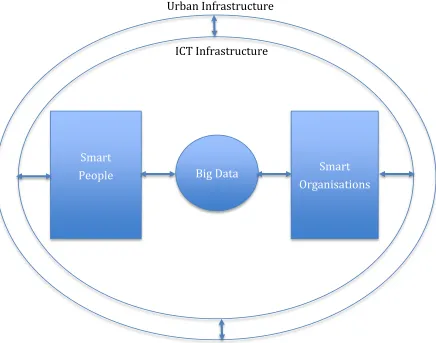
value and compete in an increasingly digitised environment. Figure 2 presents the
conceptual framework which guides the remainder of this paper. It focuses on the
integration of smart cities and operations models. Specifically, we delineate the
characteristics which enable the development and assessment of new operations models in
a smart city context.
---
Insert Figure 2 about here
---
Smart cities are enabling the formation of new operations models by redefining
three characteristics of the technologies that underpin operations: scalability, analytical
output and connectivity. These characteristics are traditionally strongly linked to process
volume and variety (Slack and Lewis, 2011). However in a smart city context, the digitised
infrastructure and the smart city mind-set of citizens enable operations to use geographical
proximity, coupled with the online connectivity of citizens to services, to redefine off-line
service consumption and challenge traditional notions of volume and variety.
Scalability: The impact of smart cities in operations can be described in relation to the scalability of processes and the capacity growth they can enable. Scalability is defined
as the ‘ability to shift to a different level of useful capacity, quickly, cost-effectively and
flexibly’ (Slack and Lewis, 2011). Some technologies will be more readily scalable than
others and the implications for the operation can be significant if the technology cannot
match the level of customer demand or engagement. Scalability also depends on particular
ICT systems working together, inferring that the design and system architecture of a
technology is important in determining how it connects to other services in a smart city.
Citizens place a wide variety of demands on technology-based services in smart cities, and
this should serve as the basis for organising services, devices and technology types. The
scalability of the technology - and the operations based on the technology - is thus an
important consideration for new operations models.
Analytical Output: According to Slack and Lewis (2011) there are two drivers influencing analytical output, namely the amount of data processing required and the level
of customer or citizen interaction. In the context of smart cities, a great deal of information
is created that can enable the development of new operations models by generating data
for the operation (e.g. demand preferences and trends) and often its customers or users
degree of interaction (i.e. the analytical content) has an important impact on the event to
which this information can be effectively leveraged to improve current operations models.
Other city-based stakeholders (e.g. local governments and public institutions) can
access and manage large volumes of data in order to more efficiently plan the delivery and
organise the consumption of value added services. For an operation developing or
integrating smart technology there is great potential that resides in this data (as described
in Section 2.3) as the analysis and meaning that emerges from it can help to differentiate
smart city from current operations models. Accurate processing and analysis of data can
help an operation better understand customer demand patterns and thus forecast more
accurately, whilst also providing transparency of supply chains. However, the mere
generation of big data does not generate value improvements for an organisation and some
smart technologies, by design, will create more easily codified and interpretable data.
Connectivity: Connectivity relates to the degree to which operations are connected to other infrastructures, service providers and information sources. Traditionally,
connectivity was understood as the physical hard wiring of different IT processes. However
as cities become increasingly wired and digitised, connectivity in the smart city context
relates to the integration of information, systems, people and services across the urban
environment (Caragliu et al, 2011). In addition, smart cities require the connectivity of
technological components with political and institutional components. Political components
represent various political elements (city council, boroughs and government) and external
pressures such as policy agendas and politics that may affect the outcomes of some
operations. Smart technologies will display differing levels of connectivity with other
infrastructures and importantly, their users. Depending on the nature of the industry in
which an operation resides, and the organisation of the service provision (public versus
components and thus may require a degree of ‘readiness’ at the institutional level (e.g.
removing legal and regulatory barriers) (Miorandi, 2012).
Connectivity allows the real time transfer of data, offering both demand side and
supply side transparency for an operation. In this regard, it allows operations to connect
more intimately with different customers, tailoring services accordingly.
3.2 Assessment mechanisms for new operational models
Previous works have examined general and overarching frameworks and decision
models around the development of smart cities (Lee, 2013). However, little attention has
been placed on the implications for the operations model of an organisation. For every
operation it is imperative that they evaluate smart technologies and their implications, both
for their operation and customers or users. This evaluation involves determining its value or
worth, and also should it include some consideration around the adoption of alternatives or
the consequences of not adopting at all (Slack and Lewis, 2011). We align with Slack and
Lewis’ (2011) broad classes of evaluation criteria (feasibility, vulnerability and acceptability)
and apply them to a smart city context.
Feasibility assessment:Feasibility relates to the degree of difficulty in implementing and adopting new operations models and the supporting technology required, as well as the
resources required to effectively implement them.
Financial Feasibility: The financial feasibility pertains to the amount of financial
investment that smart technologies and the new operations models will require. Depending
on the existing ICT infrastructure of the operation, this could range from a one-off purchase
to a more considerable investment in hardware or software development. Using big data
and predictive analytics, there is potential to simulate projections around net cash flows
likely to be earned if a proposed new operations model was introduced. However,
include an assessment of how the resources required to effectively implement new
technologies align with the resources and capabilities that are accessible to the operation.
Market Feasibility: Determining the changes required in current resource and
capability base is an important consideration for operations. To borrow Fawcett and
Waller’s analogy (2012: 161): ‘New competitive rules demand a new type of team’. Having
smart technologies and data storage facilities in place is one thing, but having the
capabilities and human capital, capable of managing this technology and interpreting this
valuable data resource is quite another. The operation will require data management and
analytical skills to be present or accessible across functions, so that the connection of
customers or users to the operation can be sustained. In the case of new operations models
like Uber and AirBnB, where the ideas are particularly innovative, the skills required had to
be defined at the outset. However, in health services that are adopting new technologies
and new operations models, the first step is to identify the required skills and match them
against the skills already available.
Regardless of the nature of analytical output produced by an operation, in order to
effectively leverage its potential, analytical expertise (in the form of data scientists) is
required to tackle both the technical and the managerial issues that can emerge around
interpretation and application of big data. The data scientist is described as one of the most
lucrative jobs of the 21st century but shortage of supply is becoming a serious constraint in
some sectors (Davenport and Patil, 2012).
To assess the feasibility of new operations models and the underpinning
technologies, a series of questions need to be asked: What are the likely technological
trajectories of the supporting technology? How sustainable are they? Has strategic level
commitment been given to the new operations model? What knowledge/capability gaps
Acceptability assessment: Acceptability is a multifaceted term which includes financial and resourcing acceptability alongside factors associated with the market and
customer preferences.
Financial Acceptability: Perceptions or ideals around what is deemed ‘financially
acceptable’ will differ across industry and depend on the nature of the operation. It should
be defined with particular attention to the value proposition of the operation. In healthcare,
a smart initiative or technology might be evaluated on the basis of how it impacts on
operational workload. For instance, the improvement the initiative makes to lowering
variance in the % of full beds or improvements in theatre occupancy rate and other
efficiency gains.
Citizen/Customer Acceptability: As has been acknowledged, some operations
require the customer to take on a ‘prosumer’ role and participate more concertedly in the
service provision or production process (Roth and Menor, 2003). Given that the smart city
context works on the premise that ‘smart people’ will be more connected and by
implication, more participative in some services, the evaluation of the suitability (or
acceptance) of their involvement is important, as there are some instances in which
customer participation is not always optimal (i.e. services with higher levels of expert input
or professional care required).
Traditionally, increasing the level of ICTs within a service offering was associated
with a loss of personal attention and ‘distance’ in delivery. However, in a smart city, the
digitalisation of many services actually offers a more personable and customised service
experience. Using healthcare as an example, smart cards contain personal information
about patients: identification, emergency data (allergies, blood type, etc.), vaccination,
drugs used, and the general medical record, effectively acting as an electronic medical
record for the patient (Aubert and Hamel, 2001). The smart card reduces delays in the
picture of that patient quickly, tailoring the treatment accordingly. From an operations
perspective, customisation is normally associated with increased variability and variety in
the process, which is not ideal. Variability has long been acknowledged as something to be
reduced or eliminated, in order to increase consistency and reduce complexity in the
operation (Vredenburg and Bell, 2014). For the customer, the associated customisation
engenders perceptions of service quality and control over the service process (Xie et al,
2008). However, the smart city context can offer increased customisation for citizens,
without increasing the variability for the operation, as the ICT infrastructure of the
operation can offer customised interface, based on data collected and auto analysed.
As well as quality, the smart city context can allow operations to position their
products and services to improve speed, dependability, cost or flexibility from a customer’s
perspective. The greater the extent to which a new operations model or initiative is
perceived to deliver, or exceed, customer expectations in such areas, the greater the
likelihood that it will be viewed as ‘acceptable’ from a market perspective,
However, the degree to which ICT interventions or technologies are acceptable for
the customer is also likely to be connected to the nature of the service. Where the value in
a service is based around implicit (or psychological) services, personal interaction is
important and therefore citizens may show some reluctance to engage (Roth and Menor,
2003). In considering how a smart city can support the development of an operations
models and its service offering, it is imperative to consider the service concept and how
smart technologies fit with the values, culture and practices of different citizens and
customers. The compatibility of the technology to the norms and practices of these groups
lowers the probability of rejection by the social group. This is linked to the concept of social
approbation (Tornatzky and Klein 1982). Acceptance of the technology may also increase if
In practice, the acceptability of a new operation model and its underpinning
technologies need to be addressed through some of the following related questions: What
value does the new operations model provide for the customer? How does the technology
impact delivery or response times for customers or users? How flexible is the technology in
terms of customer use? How is performance defined in this operation? What
improvements in performance would we expect to leverage through the adoption of new
technology? What is the current level of customer participation in this operation? What
are the opportunities for customers to adopt a ‘prosumer’ role? What are the associated
benefits and challenges?
Vulnerability assessment: The third criteria pertaining to the risks that an operation may be susceptible to following the implementation of the technology.
Privacy and Security: Issues of privacy and security influence the vulnerability of the
technology and the operations it supports. The smart city often requires that customer
information and data sharing be more fluid. However, embedded security and
privacy-preserving mechanisms need to be considered at a systematic level by the operation and
embedded into the design of the operation in order to ensure adoption (Miorandi et al,
2012). Without guarantees in terms of system-level confidentiality, authenticity and privacy
the relevant stakeholders are unlikely to adopt solutions around smart technologies on a
large scale (Miorandi et al, 2012). Big data sharing agreements today are described by
Koutroumpis and Leiponen (2013) as informal, poorly structured and manually enforced.
Instead, agreements need to be designed with robust mechanisms for data protection and
privacy, incorporating access and usage control that can be trusted by all key stakeholders
(George, 2014). Failures in security and privacy often generate strong negative publicity.
completeness of ‘the picture’ when in reality the data only represents what can be digitally
captured. However, digital economy has a fundamental flaw in that many things cannot be
digitised (Li, 2006). Fawcett and Waller (2012: 158) question the balance between ‘seeking
analytics-based first mover advantage and striving for causation-driven understanding’.
Seeing a relationship between two variables hidden in big data does not infer anything
about causality – human judgment at some stage is often required.
There are some types of knowledge and information that are inherently difficult to
codify and capture, and as efforts to be ‘information rich’ intensify, these sources can be
overlooked. Insights, experience, and the tacit knowledge of individuals and groups cannot
be easily digitised, but do warrant attention and analysis. With the movement towards
information liquidity in smart cities, this information can however be overlooked in decision
making, whereby decisions are based on what is known, rather than unknown.Redman
(1998) reports that the costs of poor data quality range from 8% to 12% of revenues for a
typical organisation and, up to 40% to 60% of a service organisation's expense. Cities are
complex systems, comprised of technical, social and physical parts, and an overreliance on
‘the technical’ can have negative consequences. Human interpretation, cognition and
emotion should not be eliminated in the interpretation of big data, and big data analytics
should not be viewed as the panacea of human decision maker error. Social and technical
components need to be jointly considered by operations to ensure that they continue to
deliver customer value and remain competitive in an increasingly digitised environment.
To assess the vulnerability of a new operation model and its underpinning
technologies, a series of important questions need to be asked. How does the new
operations model impact traditional modes of operation? Are there interdependencies
created with other operations through the adoption of new technologies? How critical are
with the changing operations model? Assuming an increased level of customer participation,
where are the most likely ‘failure’ points for the customer in the process and what are the
implications for failure at each stage?
4. Theory Guided Case Studies: How smart Cities Transform Operations Models
Three cases were purposively selected in order to advance the conceptual
framework presented, and demonstrate the emergence of new operations models in
different sectors in smart cities. Following Levy’s (2008) theory-guided case studies, we
framed our case analysis to enable the production of ‘causal explanations based on a
logically coherent theoretical argument that generates testable implications’. Our research
was also informed by Patton’s (1990) theoretical sampling approach in choosing cases which
are likely to extend or replicate the emergent theory of operations models in smart cities.
Theory guided case studies allow us to explain a single case avoiding generalisation
beyond the data due to the structure offered through a conceptual framework, which is
focused on theoretically specified aspects of reality. The structure of our cases studies is
then determined by the proposed framework and allows us to examine the selected
underpinning theoretical concepts. This theoretical framing of the data enabled the
researchers to consistently explore similarities and differences between key operational
model characteristics. In particular, the case examples illustrate: (1) how smart city can
enable the development of new service operations models (Uber) that are industry altering;
(2) how smart city can enable the creation of a new market niche via new operations
models by unlocking the economic value of city-based resources (AirBnB); and, (3) how
smart city can help address some of the operational challenges of traditional service
industries (i.e. healthcare), through the development of smart technologies and new
Information was primarily gathered from secondary sources, including published
media interviews, industrial journals and trade magzines, newspapers and web data. Some
confirmatory field data, consisting of observation notes, expert interviews with providers
and users of the services for each case – was also collected to cross validate our key
findings. The construct validity of our cases were achieved by developing constructs through
a literature review, use of multiple sources of evidence, establishing a chain of evidence,
and having key external informants review our draft case study reports (Miles and
Huberman, 1984; Yin 1993). In accordance with Eisnedhardt (1989), the internal validity is
established by linking of the analysis to prior theory identified in literature review, expert
peer review, and the development of diagrams, illustration and data matrices to
demonstrate the internal consistency of the information collected.
4.1 Case example 1: smart transport - Uber
Firstly launched in San Francisco in 2009 – and available in more than 200 cities with
an estimated value of US$17billion+ in June 2014 – Uber offers an industry rule-changing
service (i.e. ride sourcing) that links passengers requesting a ride with a community of
non-commercially licensed drivers through a mobile application that shares passenger’s GPS
location (see also Rayle et al., 2014). This example illustrates one of the many O2O
operations in smart cities. In line with the growth of smart cities, this service helps to satisfy
an increasing demand for urban mobility at reasonable cost, and offers considerable
flexibility for independent drivers.
Uber does not own the cars and does not employ the drivers, but instead drivers are
independent agents who decide when and if they will access their Uber application and
accept requests for rides from Uber customers. Uber aligns with the smart mobility concept
is fundamentally different from traditional taxi firms – for example, either the London Black
Cabs whose operations model is primarily to drive around the street or wait at stations,
airports or other taxi stands for customers to come (Skok and Tissut, 2003). This is also very
different from the private hire taxi firms in the UK, whose customers have to telephone the
Taxi office in advance to order a taxi through an operator, so the firm can send a taxi to pick
up the customer from a specified location and time.
In terms of connectivity, Uber operates around a very straightforward application
which integrates GPS positioning with 3G and 4G mobile technologies. Customers and
drivers are connected with ease. This ease in connectivity increases the propensity of
passengers and drivers to engage with the technology underpinning the unique service
offering as little ‘education’ is needed and one download of the application onto a smart
phone or tablet is all that is required. The level of connectivity is thus not complex as single
stand-alone devices just need to be connected to the web and they don’t need to be
connected to one another. The technology does not need to be installed in any physical
location, increasing the mobility of components.
This unique connectivity allows the real time transfer of data (analytical output),
offering demand side and supply side transparency for an operation. The value for both
parties relies on the possibility to share passengers’ position (i.e. GPS data) and drivers’
directions. Passengers can easily locate the closest available cars near their locations. They
can use the embedded real-time location tool to map the community of drivers moving
across the city and choose the one that has not only the most convenient location but also
has been recommended by previous passengers. This operation thus works on the basis of
real-time data being analysed online, by both the driver and the passenger, to determine if
they want to engage in a service transaction off-line. From the perspective of the drivers,
they can pick up the requests of passengers, whose location aligns with their planned trip
vehicles. From the customers’ perspective, they can use available information to determine
which driver is most geographically suitable and also understand the service experience of
previous customers, and make their decisions accordingly.
The simplicity of connectivity in this operation and the transparency offered for both
drivers and customers already suggests a level of innovation and ‘smartness’ in design.
However, the scalability of the operation in a smart city context also distinguishes it from
traditional operations in this industry. With its ability to shift to optimum levels of useful
capacity, quickly, cost-effectively and flexibly (Slack and Lewis, 2011), Uber's model can be
described as highly scalable. By design, Uber incurs very little cost and through dynamic
pricing (at certain times) can easily influence the levels of capacity offered, and the amount
of demand satisfied. Changes in dynamic pricing (introduced in 2012) are driven
algorithmically when wait times are increasing dramatically, and ‘unfulfilled requests’ start
to rise. Drivers can thus choose to ‘add capacity’ at the busiest times as this is when the
fares will be highest. This chase capacity strategy reduces idle time for drivers and increases
the probability for Uber that their customer demand can be fulfilled.
It is relevant to note also that Uber is unlikely to develop in a non-city context as its
operations model is embedded in the creation of value from processing data shared by two
interdependent communities (i.e. passengers and drivers) that interact online in an offline
urban street network. The key factor to the efficient functioning of the urban operations
model is scale, both in the number of cars available across the city, and demand from
customers over time and across the urban space. Uber enables an innovative online and
smart use of data (i.e. passengers’ needs and driver and vehicle’s characteristics) that affect
the match of demand and supply in a scalable and flexible operations model.
Like Uber, Airbnb was founded in 2009 in San Francisco where its three founders
rented out an inflatable mattress (as an AirBed & Breakfast) at their apartment via a website,
on the occasion of a major conference event in town. Identifying a way to directly access
the increasing demand in the tourism industry for affordable short-term accommodation,
the founders developed a new operations model that has so far redefined the rules of the
hospitality industry, through the utilisation of idle capacity (in terms of beds) in residential
dwellings. The 5-year-old Airbnb model is based on a centuries-old practice, namely renting
out spare beds to travellers (Guttentag, 2013:4), and as of February 2015, Airbnb has
1,000,000+ listings, with an estimated market value of $13bn.
Airbnb has shifted a fully offline service (accommodation has to be physically
‘consumed’) to an operation that is managed online by a new category of entrepreneurial
homeowners. In terms of connectivity, the difficulties encountered by owners in connecting
with potential guests has been addressed through the creation of an online community of
hosts and guests with easy access to a database of properties, communication tools,
payment methods and booking options. A new reservation procedure enhances the
accountability of owners and renters, through connection with an external identity
verification system. Both owners and renters require only access to the web and then they
need to create an online profile which communicates relevant information about them,
allowing both actors in the potential exchange to connect ‘socially’ to some extent to
determine if they are happy to proceed (Edelman and Luca, 2011).
Smart tourism is about leveraging technology and their social components to
support the enrichment of tourist experiences, and the Airbnb model thus represents a
movement in this direction through the instant and simple connectivity it offers. The
transparency afforded through this connectivity has addressed some of the safety concerns
In terms of analytical output, the website and smartphone application provides
real-time accommodation availability for a particular city or area, on requested dates, based on
the guest preferences inputted. Also multiple sources of evidence (in the form of previous
guest reviews) are synthesised on the website to allow potential guests some insight into
the service experience of previous guests. This information flow is dyadic as hosts also can
access the profile, characteristics and feedback on guests. As such, this model and the
technology that underpins it provide the opportunity to connect real-world actions to a
virtual reputation – another example of the rapidly growing domain of O2O services.
For the tourist industry, Airbnb represents one of the most scalable innovations as it
effectively enables any connected citizen to advertise spare capacity in their homes or
residences online. The effective capacity of cities, in terms of tourist accommodation,
across continents has grown considerably as a result of this model. This peer-to-peer
operations model broadens the access to accommodation for those who desire it and who
may have, in the past, been unable to access it due to the expense often associated with
some hotels or guest houses. For Airbnb, by offering a safe, digital environment in which to
connect, the company can create a leaner business model that does not require a large
workforce to deliver the service (as in traditional hospitality models). What makes this
operation revolutionary is not the (offline) service itself, but the ability to leverage it by
using the power of internet connected systems and the willingness of ‘smart people’ who
are open to exploring the potential of new mode of service delivery. Similar to Uber, the
city context is key for the volume of supply and demand. In doing so, a new operations
model is successfully created in the smart city context.
4.3 Case example 3: smart healthcare – Telehealth
Sheng General Hospital, is a common telehealth home care model in Taiwan. Telehealth
programmes enable the aged with chronic illnesses to live independently in their own
homes and get acute care more efficiently without increasing the manpower needed from
the hospital (Hsu, 2010). The services in this model included: (A) telemonitoring of
physiological parameters (blood pressure and/or blood sugar); (B) providing the relevant
health information and medication instructions: and, (C) offering consultations with
healthcare professionals via videoconferences. In recent years, a wide range of telehealth
services have been launched in the UK, Europe and North America and across many other
parts of the world. In the UK, companies such as Docobo, Tunstall and iSpy Digital have
implemented various telehealth - and telecare - services for old people using similar
operations models (Oderanti and Li, 2013).
This healthcare operations model encourages connectivity between hospitals,
medical devices manufacturers, IT vendors, and health care providers to develop telehealth
solutions for the elderly and to improve traditional operations models that are increasingly
unsustainable with a rapidly growing aging population. Using broadband technology, TV set
top boxes connect the patients to the telehealth services. Patients are provided with
medical sensors to monitor parameters such as body temperature, blood pressure, and
breathing activity. Other sensors, either wearable or fixed are deployed to gather data to
monitor patient activities in their living environments. Patients themselves measure their
vital signs, according to the instructions provided by their doctors. They can either upload
this information or report it through voice response systems, or video calling if concerns are
raised. The team in the call centre (consisting of nurses and doctors) can engage with
patients periodically to monitor their health status and address their concerns. In terms of
connectivity this patient data can be integrated into the hospital’s computerised physician
order entry (CPOE) system or into the hospital information system (HIS) directly. The
based medicine through systematic review of clinical data and make treatment decisions
based on the best available information (Jee and Kim, 2013).
This model works on the basis of active patient participation, a willingness to engage
with the technology and an involvement in the remote sharing of personal health data.
Effective customer participation has been shown to increase the likelihood that the needs of
a product or service are met and this is particularly apparent for service such as healthcare
where the outcome is dependent on patient participation (Bitner, 1997). Indeed, such
technologies have signalled a greater level of participation from patients in the service
delivery process. Patients have moved from being passive recipients of treatment, to playing
a key role in the determination of quality, satisfaction and service value.
In terms of scalability, this model relies on the integration of technology and data
with other healthcare service operations, which adds complexity to the logistics of scaling
up the service. There is also a heavy reliance on the capabilities of the patient and their
carers to play a reliable and attentive role to the reporting of data and use of the technology,
which can render some patients groups as ‘unsuitable customers’. Also, the operational,
human and societal implications for the operations could be significant if the technology
cannot match the level of customer engagement of the current provisions and be aligned
with the intervention of personal care when needed. The technology needs to demonstrate
a high level of reliability which can impact the degree to which capacity can be added
quickly and efficiently (i.e. scalability). There are significant cost implications associated with
scaling up these operations and they are also likely to be met with some resistance from
those citizens who may view such evolution in the operations model as ‘depersonalisation’
as opposed to ‘customer-focus’.
The individual patient monitoring capabilities offered through telehealth allows the
In terms of the level of analytical output, the data extracted from each patient and their
online participation with the operation has obviously direct implications for the immediacy,
and nature of their treatment, offline. However, the hospitals and other city-based
stakeholders can access this data at an aggregate level in order to plan the delivery and
organise the consumption of their service offerings more efficiently. The data gathered has
the potential to transform the operations models and revolutionise healthcare service
provision in smart cities.
Traditionally, healthcare operations were encouraged to examine how process
mapping and standardisation can be implemented to improve patient flow, throughput and
ultimately hospital performance (Boyer and Pronovost, 2010). However, new solutions
based on technologies used in this Taiwanese example highlight the potential of patient
involvement to improve the operations process and facilitates the development of smart
healthcare as a core component of smart cities. Telehealth is growing in prominence across
both developing (Mohan et al, 2004) and developed contexts (Mohan et al, 2004; Oderanti
and Li, 2013). Fichman et al (2011) argues that ICT can expedite the transformation of the
healthcare sector by redefining the relationships among key healthcare stakeholders
through innovative operations models.
5. Case Synopsis: Emerging Insights from the Case Studies
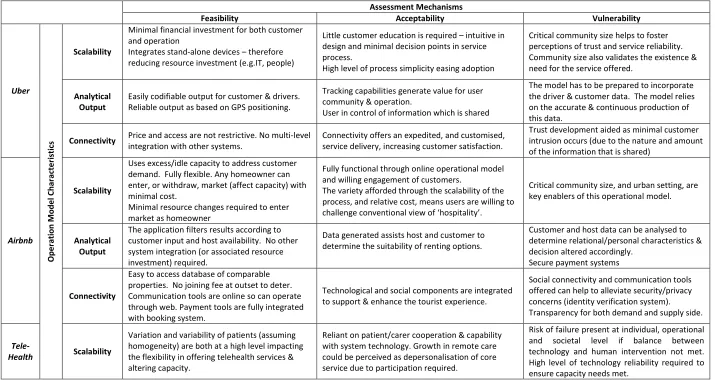
Table 1 provides a summary to illustrate the interface between the characteristics of
operations models and their assessment criteria (in the three cases). We provide an
overview of the development of new operations models in relation to three central
characteristics – scalability, analytical output, and connectivity. Table 1 also offers an
evaluative approach of these new operations models around their feasibility, vulnerability
and acceptability.
Insert Table 1 about here
---
These cases demonstrate that there are significant opportunities for transforming
operations models in smart cities - both in the management of urban infrastructures
themselves [such as smart meters for urban utilities, and the development of intelligent
transport systems (Giannoutakis and Li, 2012)], and in production and service operations
across different sectors that rely on digitised urban infrastructures. Table 1 helps to
explicate the behavioural, technological and operational factors, which contribute to the
scalability, development of analytical output and connectivity across operations models.
The involvement of smart people in each of the cases emerges as well as the role of
information creation and usage (big data).
This paper examined how the rapid emergence of smart cities enables the
development of new operations models around the central characteristics of scalability,
analytical output and connectivity, by reshaping the feasibility, vulnerability and
acceptability of the operation in urban context. The framework we developed was effective
as a cognitive tool in understanding the transformation of operations models in smart cities.
Going forward, more empirical and theoretical research is needed to further develop and
validate the framework, not only as a conceptual instrument, but also as a practical tool to
guide user practice. More research is also needed to understand the opportunities and
challenges involved in transforming operations models across different sectors
6. Conclusions and Future Research
Our paper explored how smart cities could enable the development of new
operations models and how these models can be evaluated. Further it aimed at setting out a