FUNCTION IN SEDANTARY MALE SMOKERS”
A Dissertation Submitted to
THE TAMILNADU Dr. M.G.R. MEDICAL UNIVERSITY CHENNAI
In partial fulfilment of the requirements for the award of the
MASTER OF PHYSIOTHERAPY Degree Programme
Submitted by Reg.No : 271430205
PPG COLLEGE OF PHYSIOTHERAPY 9/1 KEERANATHAM ROAD,
SARAVANAMPATTY COIMBATORE – 641 035
9/1 KEERANATHAM ROAD, SARAVANAMPATTY COIMBATORE – 641 035
The Dissertation entitled
“EFFECT OF UPPER BODY RESISTANCE TRAINING ON PULMONARY FUNCTION IN SEDANTARY MALE SMOKERS”
Submitted by
Reg. No. 271430205 Under the guidance of
Prof.KS.RAJA SHENTHIL M.P.T (Cardio-Resp)., MIAP.,(PhD).,
A Dissertation submitted to
THE TAMILNADU Dr.M.G.R. MEDICAL UNIVERSITY CHENNAI
Dissertation Evaluated on
Internal Examiner External Examiner
Prof.KS. RAJA SHENTHIL M.P.T (Cardio-Resp).,MIAP.,(PhD)., Principal/HOD-Department of Cardio-Respiratory Sciences, PPG College of Physiotherapy,
Coimbatore-641035.
This is to certify that the dissertation entitiled “EFFECT OF UPPER BODY
RESISTANCE TRAINING ON PULMONARY FUNCTION IN SEDANTARY MALE SMOKERS”is a bonafide compiled work, carried out by Register No: 271430205, PPG College of Physiotherapy,Coimbatore-641035 in partial fulfillment for the award of degree in Master of Physiotherapy as per the doctrines of requirements for the degree from THE TAMILNADU Dr. M.G.R. MEDICAL UNIVERSITY, CHENNAI-32. This work was guided and supervised by Prof. KS.RAJA SHENTHIL M.P.T (Cardio-Resp).,MIAP.,(PhD).,
DATE: PRINCIPAL
ACKNOWLEDGEMENT
First I would like to thank the Lord Almighty and My Parents, My Brothers and Friends for their unfailing love, affection and endless blessings.
I express my sincere gratefulness to Dr.L.P THANGAVELU M.S.,F.R.C.S., Chairman and Mrs.SHANTHI THANGAVELU M.A.,Correspondent,PPG Group of institutions,Coimbatore for their encouragement and providing the source for the successful of the study.
With due respect,my most sincere thanks to My Principal and Guide Prof. KS. RAJA SHENTHIL M.P.T (Cardio-Resp).,MIAP.,(PhD)., who gave me his precious time and with his vast experience helped me to complete this dissertation successfully.
I would like to thank my Academic Incharge Prof.Dr.M.SANKAR SAHAYARAJ M.P.T(Neurology),PGDSPT.,TTCY.,MIAP., for his valuable supportthroughout my studies.
I would like to thank my PG Class Co-ordinator Prof.K.RAMADEVI M.P.T(Cardio-Resp) for his valuable support throughout my studies.
.
Several special people have guided me and have contributed significantly to this effort. I thank my faculty members for their constant support and cheer all along in achieving the goal.
Back ground of the study:
Improvement in diaphragmatic excursion and peak expiratory flow rate (PEFR) in sedentary male smokers using upper body resistance training along with conventional breathing exercises.
Purpose of the study:
To evaluate the effect of upper body resistance training on diaphragmatic excursion and Peak expiratory flow rate in sedentary male smokers.
Study design:
The Research approach for the study was an randomized quasi experimental study .
Methodology:
The study included 40 male volunteers with sedentary life style.40 were randomly allocated by lot system to control group and experimental group.
Control group - receives conventional breathing exercise.
Experimentalgroup - receives conventional breathing exercise with upper body resistance training.
The Experimental group were assigned to exercise for 4 weeks, 3 times weekly on non-consecutive days using Upper body resistance training program and breathing exercise. In the Control group only breathing exercise was given for 10 min.
Intervention effect was tested using inch tape and PEFR (peak expiratory flow rate) .
Conclusions:
Four weeks of UBRT program brought about significant changes in the pulmonary function in male sedentary smokers promoting an increase in, diaphragmatic excursion and peak expiratory flow rate in chronic obstructive pulmonary disease.
CHAPTERS NAME OF THE TITLE PAGE NO.
I. Introduction 1
1.1 Background of the study
2
1.2 Need of the Study 2
1.3 P Aim of the study 3
1.4 Objectives of the study 3
1.5 Hypothesis 3
1.6 Operational Definitions 4
II. Review of literature 5
III. Materials and Methodology 11
3.1 Study design 11
3.4 Sample size 11
3.5 Selection criteria 11
3.6 Study duration 12
3.7 Materials 12
3.8 Parameters 13
3.9 Procedure 13
3.10 Technique 14
3.11 Statistical tool 17
IV. Data Analysis and result 19
4.1 Data Analysis 19
4.2 Result 23
V. Discussion 26
VI. Summary and conclusion 29
VII. Limitation and suggestion 30
VIII. Reference 31
TABLE NO. TITLE PAGE NO.
4.1 Measurement of Diaphragmatic excursion of Group-A 19
4.2 Measurement of Peak expiratory flow rate of Group-A 20
4.3 Measurement of Diaphragmatic excursion of Group-B 21
4.4 Measurement of Peak expiratory flow rate of Group-B 22
4.5 Diaphragmatic excursion measurement of Group A and B 23
4.6 Peak expiratory flow rate of Group A and B 24
LIST OF GRAPHS
Graph NO. TITLE PAGE NO.
4.1 Comparison of pre and post values of Diaphragmatic
excursion of Group A
20
4.2 Comparison of pre and post values of PEFR of Group A 21
4.3 Comparison of pre and post values of Diaphragmatic
excursion of Group B
22
4.4 Comparison of pre and post values of PEFR of Group B 23
4.5 Mean difference of Group A and Group B of diaphragmatic
excursion
24
1
CHAPTER I
INTRODUCTION
Cigarette smoking has been clearly documented as a primary cause of impaired pulmonary
function. It is known to cause cardiovascular and cerebrovascular disorders, chronic obstructive
pulmonary diseases (COPD), and cancers. It is believed that smoking, either active or passive,
has negative influence on lung function, especially Forced expiratory volume in one second
(FEV1).
In India, approximately 25 % of men and 3 % of women are current smokers. Results of the
Global Adult Tobacco Survey (GATS) in Kerala found that 42 % of adults were exposed to
smoke. Estimates show over 5,500 youth start using tobacco every day.
It has been found that muscular exercise increases O2 consumption, rate of diffusion, and the
rate and depth of respiration. Moreover, it has been shown that moderate-to-high levels of
regular physical activity are associated with a lower lung function decline and risk of COPD in
active smokers
.
The most recent guidelines on pulmonary rehabilitation (PR) recommends theinclusion of exercise training targeted at the muscles of the upper extremities (UEs) in physical
therapy programs specific to subjects with COPD.
During activities involving the UEs, respiration becomes ineffective because the accessory
respiratory muscles work to sustain the shoulder girdle, which may contribute to producing early
fatigue and dyspnea. In addition, there is a shift in respiratory work to the diaphragm. This is
associated with severe dyspnea, and termination of exercise at low workloads, especially in
subjects with more severe bronchial obstruction.
Upper limb exercise training for subjects with COPD has been shown to increase upper limb
2
In addition to UBRT, breathing exercises are capable of increasing the pulmonary ventilation and
improving mobilization of the chest wall, drainage of trachea bronchial secretions; promote
relaxation, which contributed to a significant increase in FEV1, and peak expiratory flow (PEF).
Though smoking is inversely associated with lung function, it seems to have a more deleterious
effect than sedentary lifestyle on lung function. Physically active smokers had higher lung
function than their non-physically active counterparts.
1.1
BACK GROUND OF THE STUDY
Cigarette smoking is well correlated with lung diseases such as chronic obstructive pulmonary
disease. It is common among men than women in India. In addition, sedentary lifestyle is
associated with less efficient pulmonary function. Effectiveness of upper body resistance training
(UBRT) in improving pulmonary function is unclear. Keeping all these factors in view, this
study aims to examine the effect of UBRT on pulmonary function in male sedentary smokers.
1.2
NEED OF THE STUDY
The need of the study is to examine the effect of upper body resistance training on pulmonary
function in sedentary male smokers. The sedentary lifestyle is associated with less efficient
pulmonary function. Moderate-to-high levels of regular physical activity are associated with a
lower lung function decline and risk of COPD in active smokers.
Early life involvement in smoking during childhood might prevent the lung from attaining
complete development and increase chances of illnesses. In addition, airflow limitation resulting
from sedentary lifestyle is an independent predictor of future cardiovascular events in patients
with various cardiovascular risk factors.
Elimination of smoking and incorporating physically active lifestyles can help to increase
respiratory capacity. This is important information for use with health promotion and health
education programs that are geared towards reducing the negative effects of smoking as one of
the main risk factors for chronic diseases, such as cancer, lung diseases, cardiovascular diseases,
3
1.3
AIM OF THE STUDY
This study aims to evaluate the efficacy of UBRT on pulmonary function so that more
appropriate choices can be made when designing exercise programs for individuals with
decreased pulmonary function and to assist in maintenance of normal pulmonary function,
particularly in smokers.
1.4 OBJECTIVES OF THE STUDY
To evaluate the effect of upper body resistance training on improving diaphragmatic excursion
and peak expiratory flow rate in sedentary male smokers. .
To evaluate the effect of breathing exercise on improving diaphragmatic excursion and Peak
expiratory flow rate in sedentary male smokers.
1.5
HYPOTHESIS
Null hypothesis
There was no significant effect of upper body resistance training on diaphragmatic excursion in sedentary male smokers.
There was no significant effect of upper body resistance training on peak expiratory flow rate
in sedentary male smokers.
Alternate hypothesis
There was significant effect of upper body resistance training on diaphragmatic excursionin
sedentary male smokers.
There was significant effect of upper body resistance training on peak expiratory flow ratein
4
1.6 OPERATIONAL DEFINITIONS
Resistance training:
Resistance training (also called strength training or weight training) is the use
of
resistance to muscular contraction to build the strength, anaerobic endurance
and size of skeletal muscles.
(
5th edition) C.Kisner.
Sedentary
Sedentary lifestyle was defined as the lowest quartile of the total physical activity score. It is a
type of lifestyle with no or irregular physical activity.
Brenda W. Campbell Jenkins
Diaphragmatic excursion
:
Diaphragmatic excursion is the movement of the thoracic diaphragm during breathing.
Normal diaphragmatic excursion should be 3–5 cm, but can be increased in well-conditioned
persons to 7–8 cm. This measures the contraction of the diaphragm. It is performed by asking the
patient to exhale and hold it.
Donna Frownfelter-3rd edition
Forced expiratory volume in one second (FEV1):
The maximal volume of air that can be expired in one second starting from a maximal
inspiratory force.
Ellen A.Hillegass, EdD, PT,CCS
Peak expiratory flow rate:
The peak expiratory flow (PEFR) rate is a measure of pulmonary function that may be defined
as the greatest flow assessed in a forced expiration from a full inspiration at total lung capacity
level.
5
CHAPTER II
REVIEW OF LITERATURE
Y Cheng, C Macera et al (2003)
:
Effects of physical activity on exercise tests and respiratory function:
The results of this study describes, Change in physical activity habits is associated with change in
cardiorespiratory fitness and improved pulmonary function in healthy sedentary people.
Dugan D,Walker R, Monroe DA (1995):
These findings indicate that pulmonary rehabilitation programs can help patients realize improved lung
function, improved emotional states, increased knowledge about their disease states, and an increased
cardiovascular fitness level. The results of this study suggest a regimen that can improve the quality of life
for patients with chronic lung disease.
Ozlu T, Bulbul Y (2005):
Smoking and Lung cancer:
It is estimated that deaths attributable to tobacco use will rise to 10 million by 2025, and
one-third of all adult deaths are expected to be related to cigarette smoking. The association between
cigarettes and lung cancer has been proven by large cohort studies. Tobacco use has been
reported to be the main cause of 90% of male and 79% of female lung cancers. 90% of deaths
from lung cancer are estimated to be due to smoking. The risk of lung cancer development is
20-40 times higher in lifelong smokers compared to non-smokers. Environmental cigarette smoke
exposure and different types of smoking have been shown to cause pulmonary carcinoma.
Smoller JW, Pollack MH et al (1996):
Patients with pulmonary disease, particularly those with obstructive lung disease, have a high
rate of panic symptoms and PD. There is reason to believe that pulmonary disease constitutes a
risk factor for the development of panic related to repeated experiences with dyspnea and
6
hyperventilation, the use of anxiogenic medications, and the stress of coping with chronic
disease.
Kerstjens H, Rijcken et al (1997):
It has long been shown that smoking – both active and passive – has a negative influence on lung
function. On average, moderate to heavy male smokers roughly have a 15ml/year larger decline
in lung function than non-smokers.
J M Harsoda, Geetanjali Purohit (2005):
Our study found that repeated periodic exercise helped in improving lung functions, especially
FEV1.Periodic measurement of FEV1 with regular exercise can help in generating awareness
regarding lifestyle modifications, and acquiring a healthy habit of being active. Exercise is a
stressful condition that produces marked change in body functions, improves endurance and
reduces breathlessness. Skeletal muscle control many crucial elements of aerobic conditioning,
including lung ventilation.
Judith Garcia-Aymerich et al (2007):
This prospective study shows that moderate to high levels of regular physical activity are
associated with reduced lung function decline and COPD risk among smokers. Higher levels of
regular physical activity could reduce the risk of COPD by modifying smoking-related lung
function decline. Active smokers with moderate to high physical activity had a reduced risk of
developing COPD as compared with the low physical activity group.
Ries AL, Bauldoff GS et al(2007):
Pulmonary rehabilitation has become a standard of care for patients with chronic lung diseases.
This document provides a systematic, evidence-based review of the pulmonary rehabilitation
literature that updates the 1997 guidelines published by the American College of Chest
Physicians (ACCP) and the American Association of Cardiovascular and Pulmonary
Rehabilitation.
There is substantial new evidence that pulmonary rehabilitation is beneficial for patients with
7
Costi S, Crisafulli E et al (2009):
We studied the effects of 15 sessions of unsupported UEET on functional exercise capacity, the
ability to perform activities of daily living (ADL), and symptoms perceived during activities
involving arms in patients with COPD. Our trial corroborates the effectiveness of unsupported
UEET in specifically improving functional exercise capacity of patients with COPD.
Holland AE, Hill CJ et al (2004):
This study compares the effects of upper limb and lower limb training with lower limb training
alone on exercise capacity, symptoms, and quality of life with COPD.Unsupported upper limb
training has been shown to improve upper limb endurance, but its effects on symptoms and
quality of life have not been examined.
Celli BR, Criner G, Rassulo J (1988):
To test the hypothesis that during unsupported arm exercise (UAE) some of the inspiratory
muscles of the rib cage partake in upper torso and arm positioning and thereby decrease their
contribution to ventilation, we studied 11 subjects to measure pleural (Ppl) and gastric (Pga)
pressures, heart rate, respiratory frequency, O2 uptake (VO2), and tidal volume (VT) during
symptom-limited UAE. We used leg ergometry (LE) as a reference. . This results in a shift of the
dynamic work to the diaphragm and abdominal muscles of exhalation. In a few subjects UAE
results in an irregular breathing pattern and very short exercise tolerance.
Epstein Sk et al (1997):
We investigated whether unsupported arm training, as the only form of exercise, could decrease
the VO2 and VE cost (percentage increase from resting baseline) associated with unsupported
arm elevation and exercise, respectively and we conclude that arm training reduces the VO2 and
VE cost of UAE and UAEX, possibly through improved synchronization and coordination of
accessory muscle action during unsupported arm activity.
Wright PR et al (2002)
:This study evaluates the efficiency of hypertrophic maximal strength training on various COPD
8
programme is suitable to improve performance measures of patients with moderate to severe
COPD and it might also improve pulmonary function.
Galvan CC, Cataneo AJ (2007):
This study evaluates the effect of utilization of a specific training program of respiratory muscles
on pulmonary function in tobacco smokers. The application of the protocol of respiratory
exercises with and without additional load in tobacco smokers produced immediate improvement
in the performance of respiratory muscles, but this gain was more accentuated after 2 weeks of
exercise.
Prakash S, et al (2007):
Cross sectional observation study was conducted to determine if yoga and athletic activity
(running) are associated with better lung functions as compared to subjects with sedentary
lifestyles and how does athletes and yogis differ in lung function. Spiro metric parameters were
assessed in randomly selected 60 healthy male, non-smoking; non-obese subjects-athletes, yogis
and sedentary workers. The groups differed significantly in FEV1 and PEFR. The highest mean
FEV1 and PEFR were observed in yogis. Both yogis and athletes had significantly better FEV1
as compared to sedentary workers. Yogis also had significantly better PEFR as compared to
sedentary workers and athletes. Yogis and athletes had similar lung functions except for better
PEFR amongst yogis. Involvement in daily physical activity or sport preferably yoga can help in
achieving better pulmonary function.
Schneider CM et al (2007
):
The current study suggested that moderate intensity, individualized, prescriptive exercise
maintains or improves cardiovascular and pulmonary function with concomitant reductions in
fatigue during and after cancer treatment.
Panton LB et al (2004):
The purpose of the present study was to investigate the effects of resistance training in addition
to aerobic training on functional outcomes in patients with COPD.Resistance training may be a
9
resistance training was well tolerated and improved functional outcomes in COPD patients that
were currently involved in an aerobic training program.
Ries AL, et al (1988)
We designed and evaluated two simple, practical, and widely applicable upper-extremity training
programs in 45 patients with COPD participating concurrently in a comprehensive,
multidisciplinary pulmonary rehabilitation program. We conclude that specific upper-extremity
training may be beneficial in the rehabilitation of patients with COPD and warrants further
investigation.
Lake FR et al (1990):
We designed a randomized controlled study to evaluate the benefit of upper-limb exercise
training, alone and in combination with walking training, in patients with severe chronic airflow
obstruction. . We conclude that exercise training improves exercise performance in severe
Chronic Airflow Obstruction that the training is specific for the muscle group trained, and that
upper-limb exercises should be included in training programs for these patients.
Clark CJ, Cochrane LM et al (2000):
Upper and lower limb isokinetic maximum and sustained muscle function were compared in 43
COPD patients. The COPD patients had reduced isokinetic muscle function (with the exception
of sustained upper limb strength) as compared with healthy sedentary subjects. Muscle function
improved after weight training in the COPD patients. Whole body endurance during treadmill
walking also improved with no change in maximal oxygen consumption.
O
’
Donnell DE et al (1998):
We studied the impact of a 6-wk supervised, multimodality endurance exercise training program
(EXT) on strength and endurance of ventilatory and peripheral muscles in patients with chronic
10
peripheral muscle function in severe CAL, but such improvements did not appear to contribute
significantly to reduced exertional symptoms and enhanced exercise performance.
Wasswa-Kintu et al:
Reduced FEV1 is strongly associated with lung cancer. Even a relatively modest reduction in
11
CHAPTER III
METHODOLOGY
3.1 STUDY DESIGN
The Research approach for the study was a quasi-experimental study design.
3.2 STUDY SETTING:
Techno park workers from Trivandrum city.
3.3 STUDY SAMPLING TECHNIQUE:
The study includes 40 male volunteers with sedentary life style. They were randomly allocated
by lot system to control group and experimental group.
Control group-
receives conventional breathing exerciseExperimental group-
receives upper body resistance training program and deep breathingexercise
.
3.4 SAMPLE SIZE:
40 male volunteers with sedentary life style.
3.5 SELECTION CRITERIA:
Inclusion criteria:
Sedentary lifestyle male subjects
Age group of 27-32 years
Bodymass:85-95 kg
Height:170 cm- 180 cm
12
They must have sedentary lifestyle, as in no leisure-time physical activity or activities done for
less than 20 minutes or fewer than three times per week.
Exclusion criteria:
Incapable of realizing the protocol of respiratory exercises,
Any known pulmonary, cardiac pathologies, musculoskeletal disorders,
Recent surgery
Recent Trauma.
Any infective respiratory illness.
Any treatment undergoing.
3.6 STUDY DURIATION:
Weeks: 4 Duration: 30 minutes /day
Sittings: Weekly 3 sittings/ person
3.7
MATERIALS:
PEFR& chart
Inch tape
Dumb bells
1 Chair
1 couch
1 towel
Consent form
13
3.8
PARAMETERS:
Pulmonary function measures FEV1 Using
Diaphragmatic excursion (inch tape measurement)
Peak expiratory flow rate
3.9 PROCEDURE
This experimental study was conducted for 40 subjects with age group of 27-32 years who
smokes a minimum of 10 cigarettes/day for at least 10 years and still uses cigarettes. Prior sanction was obtained from the authorities to conduct the study. All the subjects were selected after satisfying the inclusion criteria for the study. The subjects and the bystanders are explained in detail about the procedure and the patients who are willing to take part in the study a consent form is signed by the subject itself. They must have sedentary lifestyle as in no leisure- time physical activity or activities done for less than 20 minutes or fewer than 3 times/week.
These 40 subjects will be then randomly assign in to two groups by lot system namely control
group (Group A) and experimental group (Group B).Each group contains 20 subjects. Group A receives breathing exercises. Group B receives upper body resistance training exercises and conventional breathing exercises.
Control Group (CG) =20
They receive breathing exercises only for 4 weeks.
Experimental Group (EG) =20
They receive 4 weeks of UBRT program and deep breathing exercise.
The treatment schedule consists of four weeks. The tool selected for pre-test and post-test
14
3.10TECHNIQUE
The 4 week training program includes 30 minutes of UBRT that will be supplemented with 10
minutes of deep breathing exercises for Experimental Group as well as control group.
GROUP A - Control Group
Receiving diaphragmatic breathing exercise ( 10 minutes)
Volunteer was placed in the supine position,
Volunteer was instructed to inhale through his nose and hold it for 2 or 3 sec ,then slowly
expire through the mouth, therapist apply gentle sliding pressure with finger tips, working
bilaterally from xiphocostal angle to lower ribs.
They need to maintain their usual activities and they need not to participate in any form
of exercises during their 4 weeks training period.
GROUP B-( Experimental group)
Receiving diaphragmatic breathing exercise
The strength training program
Prior to the upper body resistance training exercises, each volunteer was placed in the
supine position and submitted to a diaphragmatic breathing exercise maneuver that
consists of applying gentle, sliding pressure with the fingertips, working bilaterally from
the xiphocostal angle to the lower ribs.
The strength training program includes 5 major muscle groups
1. A Seated press- for strengthen Pectoralis major
2. Lattisimus dorsi pull down- for lattisimus dorsi
3. Seated rows- for biceps, triceps, deltoid
4. Seated Shoulder press- for Triceps, deltoid, pectoralis muscles
15
Initially the upper body strength is assessed using one repetition maximum (1RM) i.e. the maximum weight that could be lifted through the full range of motion one time)
For the first week, the resistance was 50% of 1RM and during the final week the
resistance increases to 85% of 1RM.
Each exercise was performed as 3 sets of 10 repetitions each. Thereafter, the training
Workload was increased when more than 10 repetitions per set could be performed.
This protocol was repeated for three non-consecutive days of UBRT per week for four
Weeks.
One minute rest period was given between each set and 30 seconds between each
exercise
For each training session, recordings are made for -the exercises performed
-weights used
-number of sets and repetitions completed for each exercises.
Five minutes of warm-up period that includes general body active exercises and upper
extremity muscle stretching was done prior to the session and five minutes of cool-down
period which also included general body active exercises and upper extremity muscle
stretching was done at the end of the session.
OUTCOME MEASUREMENT:
Assessment Procedure:
A. Diaphragmatic excursion:
To measure the Diaphragmatic excursion inch tape was used.
Ask the person to take "exhale and hold it" while you percuss down the left scapular
line until the sound changes from resonant to dull. Mark the area. This estimates the
level of the diaphragm separating the lungs from the abdominal viscera.
Allow the patient to take a few normal breaths. Then, ask the person to "take a deep
breath and hold it." Continue percussing down from the first mark to the level where
16
Measure the two marks. Repeat the same procedure on the right side. It should be
equal bilaterally and measure about 3-5 cm. in adults.
B. Peak Expiratory Flow Rate (PEFR):
Insert the mouth piece into the meter, if not already fitted.
Ensure the pointer is set at zero (L/min).
Hold the PEFR so that your fingers are clear of the scale and slot.
Do not obstruct the holes at the end of the PEFR
Stand up if possible or sitting preferably, take a deep breath, place the peak flow rate
in the mouth and hold horizontally, closing the lips around the mouth piece, then
blow as hard and as fast as you can.
Note the number on the scale indicated by the pointer.
Return the pointer to zero (L/min) and repeat the procedure twice move to obtain
three readings. Mark the highest of the three readings on your peak flow chart.
Measure peak flow rate close to the same time each day. You should record the PEFR
twice daily.
Keep a chart of PEFR
Measurement:
The best of three readings is used as the recorded value of the peak expiratory flow
17
3.11 STATISTICAL TOOL
The statistical tools used in the study were paired “t” test and unpaired “t” test.
Paired
‘
t
’
test:
The paired “t” test was used to find out the statistical significance between pre and
post-test of sedentary male volunteers treated with diaphragmatic breathing exercise
and upper body resistance training exercise.
Formula: Paired “t” test:
d = difference between pre test Vs post test values
d = mean difference
n = total number of subjects
s = standard deviation
Unpaired
“
t
”
test:
The unpaired “t‟ test was used to compare the statistically significant difference
between Group A and Group B.
18
n1 = total number of subjects in group A
n2 = total number of subjects in group B
x1= difference between pre test Vs. post test of group A
x1= mean difference between pre test Vs. post test of group A
x2= difference between pre test Vs. post test of group B
19
CHAPTER IV
DATA ANALYSIS AND RESULT
4.1 Data analysis
This section deals with the analysis and interpretation of data collected from group A
and group B who underwent diaphragmatic breathing exercise and upper body
resistance training exercise respectively.
CONTROLGROUP-A
The mean values, mean difference, standard deviation and paired t value between pre
test and post test values of sedentary male smokers diaphragmatic excursion was
measured by using inch tape for group A who have been subjected to conventional
breathing exercise.
TABLE-I
Measurement of Diaphragmatic excursion of Group-A
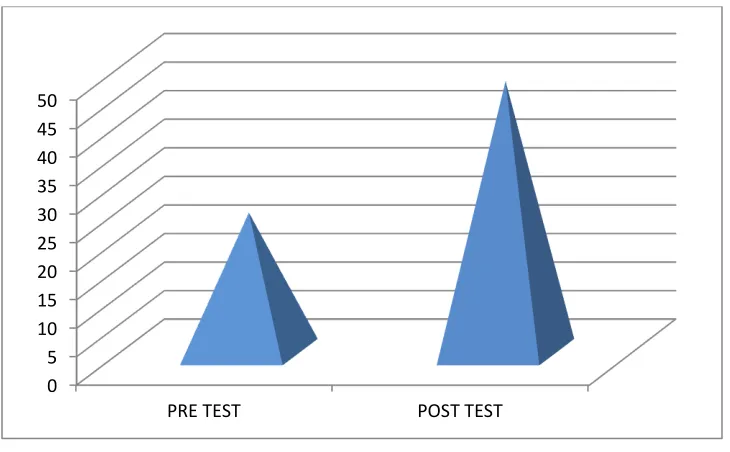
Table -1 shows the analysis of volunteers. The paired t value of pre vs. post sessions
of group A was 3.43 at 0.05 level of significance, which was greater than the
tabulated value of 2.15. This shows that there is statistical difference in pre vs. post
result. The pre test mean was 24.5 and post test mean was 40.1, which shows there is
an increase in diaphragmatic excursion.
Diaphragmatic
excursion
Mean Mean
difference
Standard deviation
Paired T test
Pre test
Post test
24.5
40.1
20
GRAPH-I
Comparison of pre and post values of Diaphragmatic excursion of group-A
TABLE-II
Measurement of Peak expiratory flow rate (PEFR) Group-A
PEFR Mean Mean
difference
Standard deviation
Paired T test
Pre Test
Post test
6727
6991
[image:30.612.125.490.175.401.2]26.4 1.94 26.7
Table II shows the analysis of volunteers. The paired t value of pre vs. post sessions
of group A was 26.7 at 0.05 level of significance, which is greater than the tabulated
value of 2.15. This shows that there is a statistical difference in pre vs. post result. In
PEFR the pre test mean was 6727 and post test mean was 6991, which shows there is
an increase in pulmonary function evaluated by peaked expiratory flow rate. 0
5 10 15 20 25 30 35 40 45 50
21
GRAPH-II
Comparison of pre test and post test values of PEFR group-A
EXPERIMENTAL GROUP B:
The mean values, mean difference, standard deviation and paired t value between pre
test and post test values of sedentary male smokers diaphragmatic excursion was
measured by using inch tape for group B who have been subjected to conventional
breathing exercise and Upper body resistance training exercises.
TABLE-III
Measurement of Diaphragmatic excursion of Group-B
Diaphragmatic excursion
Mean Mean
difference
Standard deviation
Paired T test
Pre test
Post test
47.5
80.9
33.4 1.78 18.11
0 5 10 15 20 25 30 35 40 45 50
22
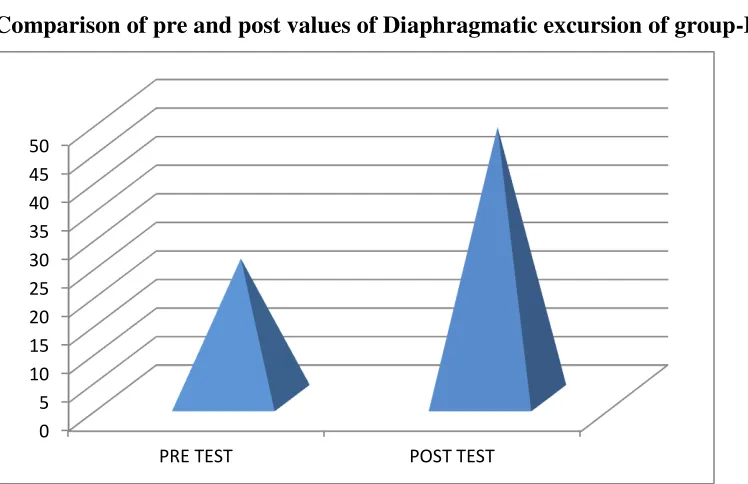
Table -II1 shows the analysis of volunteers. The paired ‘t’ value of pre vs. post
sessions of group A was 18.11 at 0.05 level of significance, which was greater than
the tabulated value of 2.15. This shows that there is statistical difference in pre vs.
post result. The pre test mean was 47.5 and post test mean was 80.9, which shows
there is an increase in diaphragmatic excursion.
GRAPH-III
Comparison of pre and post values of Diaphragmatic excursion of group-B
TABLE-IV
Measurement of Peak expiratory flow rate (PEFR) Group-B
PEFR Mean Mean
difference
Standard deviation
Paired T test
Pre Test
Post test
6938
7744
806 2.01 30.42
Table IV shows the analysis of volunteers. The paired t value of pre vs. post sessions
of group B was 30.42 at 0.05 level of significance, which is greater than the tabulated
value of 2.15. This shows that there is a statistical difference in pre vs. post result. In 0 5 10 15 20 25 30 35 40 45 50
23
PEFR the pre test mean was 6938 and post test mean was 7744, which shows there is
an increase in pulmonary function evaluated by peaked expiratory flow rate.
GRAPH-IV
Comparison of pre test and post test values of PEFR group-B
4.2 RESULT
It represent the comparative mean values, mean difference, standard deviation, and
unpaired “t” value between group A and group B on of sedentary male smokers.
TABLE-V
Diaphragmatic excursion measurement of group A and B
Diaphragmatic excursion
Mean Mean
difference Standard deviation Unpaired T test Group A Group B 24.5 47.5
23 1.46 1.64
0 5 10 15 20 25 30 35 40 45 50
24
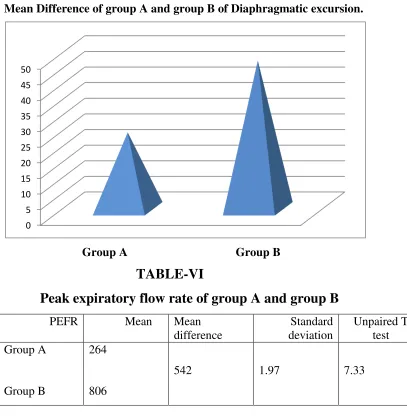
Table -V shows the unpaired t value of 1.64 which is greater than the tabulated
“t”value of 2.05 at 0.05 level of significance. This shows that there is statistically significant difference between group A and group B. The mean value of group A is
24.5 and post test mean was 47.5, which shows there is greater improvement in group
B than group A.
GRAPH-V
Mean Difference of group A and group B of Diaphragmatic excursion.
Group A Group B
TABLE-VI
Peak expiratory flow rate of group A and group B
PEFR Mean Mean
difference Standard deviation Unpaired T test Group A Group B 264 806
[image:34.612.122.529.195.613.2]542 1.97 7.33
Table -VI shows the analysis of group A and group B.The unpaired t value of 7.33 is
greater than the tabulated “t”value of 2.05 at 0.05 level of significance. This shows
that there is statistically significant difference between group A and group B. The
mean value of group A is 264 and post test mean was 806, which shows there is
25
GRAPH-VI
Mean Difference of group A and group B of PEFR
Group A Group B
Therefore the study is rejecting the null hypothesis and accepting the alternate
hypothesis.
26
CHAPTER V
DISCUSSION
To find out the effectiveness of upper body resistance training on Peak expiratory
flow meter and diaphragmatic excursion of sedentary male smokers.
Nancy et al (1990):
Three measurements of PEFR were obtained by usingcalibrated mini-Wrights Peak Flow Meter. PEFR was strongly related to age, sex and,
height. After adjustments for these factors, low PEFR was associated with chronic
respiratory symptoms cough, wheeze, and shortness of breath, exertional dyspnoea,
orthopnoea and paroxysmal nocturnal dyspnoea. PEFR was strongly related to
measures of functional ability and physical activity, self-assessment of health and
simple measures of cognitive function.
Several studies have described an increase in rib cage contribution to chest wall
motion and/or asynchrony between rib cage and abdominal motion in these patients
[63-65]. The mechanisms underlying these alterations are not fully elucidated, but
appear to be related to the degree of airflow obstruction, hyperinflation of the rib
cage, changes in diaphragmatic function, and increased contribution of accessory
inspiratory muscles to chest wall motion. Based on the result of above studies, it is
concluded that upper body resistance training exercise can be used to improve the
diaphragmatic excursion and PERF.
In the analysis and interpretation of diaphragmatic excursion in group A, the paired t
value of (3.43) was greater than the tabulated paired t value of 2.15 which showed
that there was a statically significant difference at 0.05 level of significance and 19
degree of freedom between pre and post results. The pre test mean is (24.5) and post
test was (40.1) which shows the improvements regarding improve the diaphragmatic
excursion.
In the analysis and interpretation of PERF in group A, the paired t value of (26.7)
was greater than the tabulated paired t value of 2.15 which showed that there was a
27
between pre and post results. The pre test mean is (6727) and post test was (6991)
which shows the improvements regarding improve pulmonary function(PEFR).
The above study result support the result of present study in which the
conventional breathing exercise has got improvement in above mentioned
parameters in group A sedentary male smokers.
In the analysis and interpretation of diaphragmatic excursion in group B, the paired t
value of (18.11) was greater than the tabulated paired t value of 2.15 which showed
that there was a statically significant difference at 0.05 level of significance and 19
degree of freedom between pre and post results. The pre test mean is (47.5) and post
test was (80.9) which shows the improvements regarding improve the diaphragmatic
excursion.
In the analysis and interpretation of PERF in group B, the paired t value of (30.42)
was greater than the tabulated paired t value of 2.15 which showed that there was a
statically significant difference at 0.05 level of significance and 19 degree of freedom
between pre and post results. The pre test mean is (6938) and post test was (7744)
which shows the improvements regarding improve pulmonary function(PEFR).
J M Harsoda, Geetanjali Purohit (2005):
Supports the result of present study that repeated periodic exercise helped in improving lung functions, especially FEV1.Periodic measurement of FEV1 with regular exercise can help in generating awareness regarding lifestyle modifications, and acquiring a healthy habit of being active. Exercise is a stressful condition that produces marked change in body functions, improves endurance and reduces breathlessness. Skeletal muscle control many crucial elements of aerobic conditioning, including lung ventilation
IN THE COMPARISON OF GROUP A AND GROUP B
In the analysis and interpretation of Diaphragmatic excursion between Group A and
Group B, the unpaired “t” value of (1.64) was greater than the tabulated paired t
value of 2.05 at 0.05 level of significance and 38 degrees of freedom which showed
that there was statistically significant difference between pre and post results of group
28
B was (47.5) and the mean difference was 23. Which showed that there was
significant improvements regarding diaphragmatic excursion status in group B
compared to group A in response of intervention.
In the analysis and interpretation of PEFR between Group A and Group B, the
unpaired “t” value of (7.33) was greater than the tabulated paired t value of 2.05 at
0.05 level of significance and 38 degrees of freedom which showed that there was
statistically significant difference between pre and post results of group A and group
B. The mean value of group A was (264) and The mean value of group B was (806)
and the mean difference was 542. Which showed that there was significant
improvements regarding pulmonary function measured in PEFR status in group B
compared to group A in response of intervention.
Based on the statistical analysis and interpretation of results, the present study
showed that there was significant improvement regarding diaphragmatic excursion
and PEFR in sedentary make smokers with upper body resistance training exercise
and conventional breathing exercise.
Therefore the present study is accepting the alternate hypothesis and rejecting
the null hypothesis.
29
CHAPTER VI
SUMMARY AND CONCLUSION
SUMMARY
The results of the present study demonstrate that physical therapy intervention using a
4-week program of upper body resistance training exercise for sedentary, male
smokers significantly increased the pulmonary function (PERF), and diaphragmatic
excursion.
A total number of 40 subjects with sedentary life style were selected by randomly
allocated by lot system method after considering the inclusion and exclusion criteria.
The informed consents were obtained from the subjects individually.
Diaphragmatic excursions, PERF, were taken as the parameters. Pre test data were
collected for group A and group B sedentary male smokers and computed.
Group A volunteers were subjected to conventional breathing exercise with
supervision and Group B volunteers were subjected to conventional breathing
exercise along with upper body resistance training exercise for a period of four
weeks. The results of the same parameter were recorded for comparison after four
week of intervention.
CONCLUSION:
Based on statistical analysis, the result of this study showed that there was significant
improvement in both groups. The result also showed that the subjects who
participated in experimental Group B had showed good improvement on
diaphragmatic excursion and PERF than the control Group A.
Based on the result, this study concluded that conventional breathing exercise
improves the diaphragmatic excursion and PEFR. Meanwhile,
Four weeks of high intensity upper body resistance training exercise have an
important beneficial impact in promoting an increase in PEFR as well as greater
30
CHAPTER VII
LIMITATIONS AND SUGGESTIONS
Limitations
1. Size of the sample was very small which might have affected the outcome.
2. The study was of short duration.
3. It was not able to assess the other psychological aspects of the volunteers.
Suggestions
1. A large sample size is required to establish the effect of intervention
2. To make the result more valid, a long term study may be carried out.
3. The result obtained suggests that the exercises proposed can be of therapeutic
importance in the treatment of respiratory muscles alteration.
4. Further studies are needed inorder to evaluate the effects of lower body resistance
31
CHAPTER VIII
REFERENCE
1. Smoller JW, Pollack MH, Otto MW, Rosenbaum JF, Kradin RL. Panic anxiety, dyspnea and
respiratory disease: Theoretical and clinical considerations. Am J Respir Crit Care Med 1996;
154:6-17
2.Ozlu T, Bulbul Y. Smoking and lung cancer. Tuberk Toraks 2005; 53:200-9.
3. Kerstjens H, Rijcken B, Schouten P, Postma D. Decline of FEV1 by age and smoking status:
Facts, figures, and fallacies. Thorax 1997; 52:820-7.
4.Dugan D, Walker R, Monroe DA. The effects of 9-week program of aerobic and upper body
exercise on the maximal voluntary ventilation of chronic obstructive pulmonary disease patients.
J Cardiopulm Rehabil 1995;15:130-3.
5. Cheng YJ, Macera CA, Addy CL, Sy FS, Wieland D, Blair SN. Effects of physical activity on
exercise tests and respiratory Function. Br J Sports Med 2003;37:521-8.
6. Judith Garcia-Aymerich, Peter Lange, Benet M, Schnohr P, Antó JM.Regular physical activity
modifies smoking-related lung function decline and reduces risk of chronic obstructive
pulmonary disease.
7.Ries AL, Bauldoff GS, Carlin BW, Casaburi R, Emery CF, Mahler DA,et al. Pulmonary
Rehabilitation, Joint ACCP/AACVPR Evidence-BasedClinical Practice Guidelines. Chest
2007;131:4S-42.
8. Costi S, Crisafulli E, Antoni FD, Beneventi C, Fabbri LM, Clini EM. Effects
of unsupported upper extremity exercise training in patients with COPD.
Chest 2009;136:387-95.
9. Holland AE, Hill CJ, Nehez E, Ntoumenopoulos G. Does unsupported upper limb exercise
training improve symptoms and quality of life for patients with chronic obstructive pulmonary
32
10. Celli BR, Criner G, Rassulo J. Ventilatory muscle recruitment during unsupported arm
exercise in normal subjects. J Appl Physiol 1988; 64:1936-41.
11. Epstein SK, Celli BR, Martinez FJ, Couser JI, Roa J, Pollock M, et al. Arm training reduces
the VO2 and VE cost of unsupported arm exercise and elevation in chronic obstructive
pulmonary disease. J Cardiopulm Rehabil 1997;17:171-7.
12. Wright PR, Heck H, Langenkamp H, Franz KH, Weber U. Influence of resistance training on
pulmonary function and performance measures of patients with COPD. Pneumologie 2002;
56:413-7.
13. Galvan CC, Cataneo AJ. Effect of respiratory muscle training on pulmonary function in
preoperative preparation of tobacco smokers. Acta Cir Bras 2007; 22:112-8.
14. Prakash S, Meshram S, Ramtekkar U. Athletes, yogis and individualsWith sedentary
lifestyles; do their lung functions differ? Indian J Physiol Pharmacol 2007;51:7680.
15.Celli BR, Macnee W. committee members of the ATS/ERS Task force. Standards for the
diagnosis and treatment of patients with COPD: A summary of the ATS/ERS position paper.
Eur Respir J 2004;23:932-46.
16. Schneider CM, Hsieh CC, Sprod LK, Carter SD, Hayward R. Effects of supervised exercise
training on cardiopulmonary function and fatigue in breast cancer survivors during and after
treatment. Cancer 2007;110:918-25.
17. Panton LB, Golden J, Broeder CE, Browder KD, Cestaro-Seifer DJ,Seifer FD. The effects of
resistance training on functional outcomes in patients with chronic obstructive pulmonary
disease. Eur J Appl Physiology 2004;91:443-9.
18. Ries AL, Ellis B, Hawkins RW. Upper extremity exercise training in
chronic obstructive pulmonary disease. Chest 1988;93:688-92.
19.Lake FR, Henderson K, Briffa T, Openshaw J, Musk AW. Upper-limb and
lower-limb exercise training in patients with chronic airflow obstruction.
Chest 1990;97:1077-82.
20. Clark CJ, Cochrane LM, Mackay E, Paton B. Skeletal muscle strength
and endurance in patients with mild COPD and the effects of weight
33
CHAPTER IX
ANNEXURE
ANNEXURE-I
INFORMED CONSENT FORM
TITLE:
EFFECT OF UPPER BODY RESISTANCE TRAINING ON PULMONARY FUNCTION
IN SEDANTARY MALE SMOKERS
INVESTIGATOR: _ _ _ _ _ _ _ _ _ _ _
PURPOSE OF THE STUDY:
I_ _ _ _ _ _ _ _ _ _ _ _ _ _ _ _ ,have been informed that this study will work towards improving
Pulmonary function in male sedentary workers.
PROCEDURE:
Each term of the study protocol has been explained to me in detail. I understand that during the
procedure, I will be receiving the treatment for one time a day. I understand that I will have to
take this treatment for four weeks.
I understand that this will be done under investigator, _ _ _ _ _ _ _ _ _ _ _ _ _ _ _ supervision. I
am aware also that I have to follow therapist‟s instructions as has been told to me. CONFIDENTIALITY:
I understand that medical information provided by this study will be confidential. If the data are
used for publication in the medical literature or for teaching purposes, no names will be used and
other literature such as audio or video tapes will be used only with permission.
RISK AND DISCOMFORT:
I understand that there are no potential risks associated with this procedure, and understand that
investigator will accompany me during this procedure. There are no known hazards associated
34
REFUSAL OR WITHDRAWL OF PARICIPATION:
I understand that the decision my participation is wholly voluntary and I may refuse participate,
may withdraw consent at any time during the study.
I also understand that the investigator may terminate my participation in the study at anytime
after researcher has explained me the reasons to do so.
I _ _ _ _ _ _ _ _ _ _ _ _ _ _ have explained to ………. the purpose of the research, the procedures required and the possible risks and benefits, to the best of my
ability.
……… ……… Investigator Date
I ………. Confirm that researcher has explained me the purpose of the research, the study procedure and the possible risks and benefits that I may experience.
I have read and I have understood this consent to participate as a subject in this research
project.
……….. ……… Subject Date
……….. ……….
Signature of the Witness
35
ANNEXURE
–
II
ASSESSMENT PROFORMA
NAME :
AGE :
SEX :
ADDRESS :
CHIEF COMPLIANT :
PAST MEDICAL HISTORY :
PRESENT MEDICAL HISTORY :
PERSONAL HISTORY :
ON OBSERVATION :
ON EXAMIATION :
DIAGNOSIS :
MODE OF EXERCISE :
MEASUREMENT TOOL : INCH TAPE, PEFR
Anthropometric data.
CONTROL (n = 20) EXPERIMENTAL (n = 20)
Age (years) 27 -32 27 -32
Body mass (kg) 85-95 85-95
Height (cm) 170 to 180 170 to 180
BMI (kg/m2) 26-30 26-30
36
ANNEXURE-III
MASTER CHART PEAK EXPIRATORY FLOW RATE DIAPHRAGMATICEXCURSION PEAK EXPIRATORY FLOW RAT DIAPHRAGMATIC EXCURSION
S no GROUP-A CONTROL GROUP GROUP-B EXPERIMENTAL GROUP PRE TEST POST TEST PRE
TEST POST TEST PRE TEST
POST TEST
PRE
TEST POST TEST
1 320 328 336 386 1.3 1.8 2 3.5
2 350 360 352 389 1.4 1.6 2 4
3 335 350 332 375 1 1.4 1 3.2
4 290 307 348 386 1.5 2 2.3 3.5
5 336 343 356 392 1.3 1.8 2.1 4.2
6 352 358 347 383 1 1.9 2.6 3.2
7 332 340 380 400 1 2.2 2.8 3.8
8 348 355 345 396 1.2 2 2.4 3.5
9 356 378 324 380 1 2.3 2.9 4.2
10 347 365 345 394 1.3 1.8 2 4
11 300 320 380 400 1 2 2.5 3.9
12 345 356 345 366 1 1.9 1.9 4
13 324 345 350 394 1 2 2.8 4
14 345 356 325 380 2 2.8 2.4 5
15 380 390 347 385 1 2 2.8 3.8
16 345 358 365 392 2 2.3 2.4 4
17 350 355 320 384 1 1.8 2.8 5
18 325 335 350 395 1.5 2.3 2.5 4.1
19 347 362 335 369 1 2 2.8 5
S.NO Pre testPost test PRE TESTPOST TEST PRE TESTPOST TESTPRE TESTPOST TEST
1 320 328 336 386 1.3 1.8 2 3.5
2 350 360 352 389 1.4 1.6 2 4
3 335 350 332 375 1 1.4 1 3.2
4 290 307 348 386 1.5 2 2.3 3.5
5 336 343 356 392 1.3 1.8 2.1 4.2
6 352 358 347 383 1 1.9 2.6 3.2
7 332 340 380 400 1 2.2 2.8 3.8
8 348 355 345 396 1.2 2 2.4 3.5
9 356 378 324 380 1 2.3 2.9 4.2
10347 365 345 394 1.3 1.8 2 4
11300 320 380 400 1 2 2.5 3.9
12345 356 345 366 1 1.9 1.9 4
13324 345 350 394 1 2 2.8 4
14345 356 325 380 2 2.8 2.4 5
15380 390 347 385 1 2 2.8 3.8
16345 358 365 392 2 2.3 2.4 4
17350 355 320 384 1 1.8 2.8 5
18325 335 350 395 1.5 2.3 2.5 4.1
19347 362 335 369 1 2 2.8 5