Theses Thesis/Dissertation Collections
5-21-2016
Perception of Software Employees towards Human
Resource Development Roles, Functions, and
Professionals
Bhagyashree BarhateFollow this and additional works at:http://scholarworks.rit.edu/theses
This Thesis is brought to you for free and open access by the Thesis/Dissertation Collections at RIT Scholar Works. It has been accepted for inclusion in Theses by an authorized administrator of RIT Scholar Works. For more information, please [email protected].
Recommended Citation
R.I.T
Perception of Software Employees towards Human Resource
Development Roles, Functions, and Professionals
by
Bhagyashree Barhate
A Thesis Submitted in Partial Fulfillment of the Requirements of the
Degree of Master of Science in Human Resource Development
School of International Hospitality & Service Innovation
College of Applied Science and Technology
Rochester Institute of Technology Rochester, NY
Rochester Institute of Technology
College of Applied Science and Technology
We hereby approve the thesis proposal of
Bhagyashree Barhate
Candidate for the degree Master of Science
Acknowledgements
This thesis is dedicated to my parents Rekha and Vinay Barhate, and my guide Malar Hirudayaraj. Without their countless efforts to help me improve my thesis, I would not have been able to complete my research.
I would like to thank my parents for their support to have sent me all the way to the United States and finish my Graduate Degree with this last step of writing the thesis. I thank my father Vinay Barhate, who went through my research and suggested ways to improve it through his experience as a Professor! Thank you Father for believing I can do it.
I would like to specially thank my thesis guide Dr. Malar Hirudayaraj for her constant motivation and prodding me to “hang in there”! Her feedback helped me not only to learn, but also produce this piece of work I can be proud of. I would not have been able to finish this project without her guidance and support. Professor, I really thank you and words cannot express my gratitude and devotion.
I would like to thank all my friends Rohan, Akshay, Abhijeet, Gautam, and Sathya who brain-stormed with me to help me narrow down my topic of study. They helped me to pilot test my data collection instrument and refine it for better data collection. They fed me food when I could not cook for myself during this project.
I would like to thank Nachiket Deshpande, who helped me understand the concepts of quantitative data analysis. His expertise in statistics helped me choose the best statistical tools to analyze my results and report the findings.
Abstract
The purpose of this research was to explore the perception of employees working in the software industry towards Human Resource Development (HRD) roles, functions, and professionals. This research adopted a quantitative methodology and administered a survey to understand how the employees perceive the different HRD roles and their importance in the organization. The research also studied the different perceptions employees may have towards the HRD professionals and their competencies. The participants in this study belonged to the software industry and have been working in their current technical job roles for atleast a year. A survey was used to collect data and was designed on an online platform – Google Forms. The survey was designed in a way to include all the roles and functions described in the competency model designed by The Association of Talent Development in 2014. The participants ranked Learning and Knowledge Management as the most important HRD function. The participants also
Table of Contents
Chapter 1: Introduction ... 8
Chapter 2: Literature Review ... 13
Chapter 3: Methodology ... 41
Chapter 4: Results and Findings ... 49
Chapter 5: Conclusion and Implications ... 64
References ... 67
List of Tables
Table 1 Comparative definitions of HRD over the years. ... 24
Table 2. Functions of HRD ... 27
Table 3. Comparison between HRM and HRD ... 32
Table 4. List of perception studies in the HR field ... 37
Table 5. Respondents experience, job role, and location by gender ... 51
Table 6. Using ATD areas of expertise to design the survey questions ... 53
List of Figures
Figure 1. Process phases of HRD ... 23
Figure 2. Model of Human Resource Development within Organization and Environment ... 23
Figure 3. The ATD Competency Model (2014). ... 28
Figure 4. Parallel between HRM and HRD ... 32
Figure 5. Ranking of HRD functions with respect to each other. ... 54
Figure 6. Perception towards HRD effectiveness ... 56
Figure 7. Perception towards Training effectiveness. ... 59
Chapter 1: Introduction Background
Organizations today are moving towards pulling down the functional walls within the organization and building an open platform to increase interaction and accessibility between different departments. The employees, who are the heart of organizations, can interact through the open platforms to contribute towards their personal career development which in turn leads to organizational development. The employees need to be polished and prepared to become
valuable assets who can contribute to the organization’s success (McGoldrick & Stewart, 1996). Today, organizations spend a lot of their time and capital in the development of employees and human resource development (HRD) is the force behind all the employee development
initiatives. The developmental activities of HRD are aimed at improving the organization’s performance and its main aim is to “increase the knowledge, skills, and capacities of all people” (Harbison & Myers, 1964, p. 2). Human Resource Development (HRD) professionals act as the bridges between the different departments to bring about a functional transparency between departments to assist in employee development. They perform roles and functions of career development, training, skill development, organization development, change management, talent management, etc. Human Resource Development professionals are the advocates of change in organizations and are responsible to guide the employees towards achieving personal career goals and organizational goals.
shift from being a Software Engineer to a Human Resource Executive. After this transition, I experienced that my colleagues who were still employed as software engineers perceived my individual capacities based on my professional title as an HR executive. I was amused with how the change in my title and role, changed my colleague’s perception towards me. After a few conversations with my colleagues, who were all software employees, I was able to find that these software employees were not satisfied with the efficiency levels of performance of the HR professionals and hence they perceived my professional capacity to have dipped because of the change in my title and role.
Secondly, I was surrounded by students pursuing technical degrees when I started my Master’s degree in HRD at Rochester Institute of Technology in the United States. Whenever I met someone new with a technical background or coursework, they would be curious about my coursework in HRD. Most often I was asked if HRD was the same as HRM which led to long conversations with me explaining them about the impact of HRD in organizations. I would always wonder that as a student in HRD, I understand and realize the potential of HRD but these students with technical degrees, who make up the majority of employees in their related industry, were not even aware that HRD exists and more so that HRD is independent of HRM. And even if some of the students were aware of HRD, they had fuzzy perceptions of towards the role and functions of the HRD professionals. They believed that HRD activities were unnecessary and instead of contributing in the employee’s development, valuable time is wasted in HRD activities which could have been invested in working on the time-bound software project deliverables.
employees towards HRD professionals because of my close association with the industry and my personal experiences within the industry.
Research Problem
The Human Resource (HR) department is one of the most important departments in the organization and has diversified roles and functions. However, it has been reported that these roles and functions are not given the necessary credit (Alagaraja, 2013). Software organizations employ technically skilled employees who work for a specific client throughout a project. The learning and development activities of software employees are focused on continuous
improvements of processes and documenting them for future reference (Agrawal & Thite, 2003; Mathiassen & Pourkomeylian, 2003; Singh, 2012).
has followed the roles and functions listed by The Association of Talent Development (2014), to develop an understanding towards its perceptions.
Even though there are studies that focus on perception of employees about generic HR functions and HRM roles, there are barely any studies that explore the perceptions of employees about HRD roles and functions. Also, there are no studies that explore the perception of
employees in the software industry towards HRD roles and functions. This study is intended to bridge this gap.
Purpose Statement
The purpose of this study is to understand the perception of software employees towards HRD roles, functions, and professionals in a software organization.
Research Questions
The study explore two research questions:
1. What are the perceptions of software employees towards HRD roles and functions? 2. What are the perceptions of software employees towards HRD professionals?
This research will assist the HRD practitioners in the software industry to understand the general perceptions of employees towards them and work accordingly. By understanding the perceptions, HRD practitioners can further assist the employees in overcoming their inhibition to approach HRD department and professional and ask for assistance in the employee
developmental process.
Methodology
Chapter 2: Literature Review
Introduction
According to the Bureau of Labor Statistics, the software industry employed more than 4 million people in the United States in 2015. It comprises of major occupations and roles such as Computer and Information Research Scientists, Computer Systems Analysts, Information Security Analysts, Computer Programmers, Software Developers, Systems Software, Web Developers, Database Administrators, Network and Computer Systems
Administrators, Computer Network Architects, Computer User Support Specialists,
and Computer Network Support Specialists (Bureau of Labor Statistics [BLS], 2015). Today the software industries are providers of tools, applications, and products; and different services such as maintenance and deployment of information systems in organizations, set-up architecture for easy data sharing between the employees, and act as a third-party to host information for its clients.
standing in the organization which affect employee perceptions. A literature review was conducted to understand how the researchers in the past have reported the perceptions towards Human Resource Development (HRD) roles, functions, and professionals across industries such as manufacturing, software, service, and medicine. The aim of the literature review is to
understand the human resource function in organizations in general and how it is an umbrella under which HRM and HRD co-exist or overlap.
The literature review covers the trends in software organizations which influences HRM and HRD practices. Further, the HRM function was understood with respect to its most
important functions based on the definitions coined for HRM. The evolution of HRD as a field was studied to establish its inception in the organizations. The Association of Talent
development has devised a competency model for the field of HRD, and it defines 10 areas of expertise and 6 foundational competencies. The areas of expertise were used to conduct a literature review and develop an understanding in each area as a HRD function in the
organizations. The existing perception studies were reviewed to recognize the fields in which perceptions studies have been performed and establish a gap to justify the need for this research study. Articles were retrieved from journals such as Human Resource Development Quarterly, Human Resource Development Review, Advances in Developing Human Resources, Journal of European Industrial Training, The International Journal of Human Resource Management, and Human Resource Development International. The keywords used to search for articles included human resource development, human resource management, perceptions, competencies,
Software Industry
A software organization is referred to as knowledge driven and thrives on its employee’s competencies and abilities (Mathiassen & Pourkomeylian, 2003). A software organization witnesses a team-based structure. The contributions of HRD in this type of an environment are required to be agile and dynamic (Singh, 2012). The software engineers themselves possess high levels of abstract reasoning, cognition and synthesis of data, communication and collaboration with cross-functional teams, analysis, and strategy building (Moran, 2010). These competencies while highly desired also lead the software engineers to resist traditional command and control culture. They do not deal with work related issues in their own set peculiar ways; thus loading the HRD professionals to come up with innovative means to keep these employees engaged to deliver high performance (Kinnear & Sutherland, 2000; Agrawal & Thite, 2003). It has been noted that in a software organization, the major deliverable is a software application which is customized to meet the customer’s needs. The traditional method of producing the deliverable in the form of a software application is through software project management (Halloran, 1999). However, the software projects get delayed due to improper management and the deliverable is usually rolled out later than expected which leaves the customer dissatisfied (Mathiassen & Pourkomeylian, 2003). There is a need to manage projects in the organizations and it can be achieved though organizational learning and professing knowledge about project management techniques (Halloran, 1999). Thus, through active involvement of HRD professionals,
(Sajjad & Marouf, 2004). Software engineers could lack orientation if they were not guided efficiently from the beginning of their assigned job roles (Broady-Preston & Hayward, 2000). The study conducted by Broady-Preston and Hayward (2000) talks about the major changes undergone by the software industry in the United Kingdom and how managers from different organizations conclude that skill training is necessary for strategy formulation. These results reflect the need of bridging HR department and the managers to collectively make decisions in order to sustain and combat challenges through strategic partnerships. The software engineers play an important role in development and deployment of software products which assist in revenue generation (Murthy & Abeysekera, 2007). Efforts that contribute to the development of software engineers lead to indirect generation of revenue. The financial results of any
organization can be increased if employees are allowed to play a dominant role in the decision making processes. Thus, the employees need to be convinced that their individual development will not only help the organization to achieve goals but also increase their value estimated in terms of employability. Improving the human capital in one organization directly impacts the knowledge-based economy which has a high demand of knowledge-based products and services (Low, 2000).
Human Resource
capabilities, and time. Hence, as stated by Haslinda (2009), “the practice of HRM and HRD works to ensure that employees are able to meet the organization's goals” (p. 180).
Human Resource, in general, has struggled through years to establish itself as a separate department in the organization (Vosburgh, 2007). In the later twentieth century, it evolved from being known as Labor Relations, Industrial Relations, Personnel Administration/Management, Human Resource, and many other titles depending on administration of the different
expectations posed by the organizations on their employees (Vosburgh, 2007). The roles of HR have diversified into strategic partner, change agent, administrative expert, and employee relations expert to meet the organizational goals (Vosburgh, 2007). As a result of this evolution, the two most prominent HR functions that prevail in the organizations today are HRM and HRD based on whether the HR professionals are performing the function of management of
recruitment, talent, or payroll, or functions of individual focused development activities (Haslinda, 2009).
Human resource management. In the 19th century, industrial psychology of workers was introduced to respond to the industrial revolution and there was a subsequent rise in the need for labor which rose the demand for maximum wellbeing of the workers (Ivancevich, 2007). With the advent of technology in industries, the organizations went through a huge rise in size and production of goods and services. This led to employees working in different departments to come closer together to ensure that the management addresses their need for pay rise and
to manage and administer the needs of the employees, led to the transition of departments from personnel management department to human resource management (Legge, 2005).
Human Resource Manamagement has established itself widely over the years and
expanded its functional responsibilities in the organization, although there are continued debates on the functional differences between the terms personnel management and HRM (Marchington & Wilkinson, 2002; Legge, 2005). The HRM functions mainly involve Hiring, Compensation, Performance Management, Performance Appraisals, Culture development, and Strategic alignment (Hoobler & Nancy, 2004). Woodall, Scott-Jackson, Newham, and Gurney (2009) noted that HRM function is at cross-roads, as on the one hand, it has tried to establish itself as a separate department in organizations; whereas, on the other, it’s most traditional functions of managing recruitment and performance are outsourced. The unavailability of competent HRM professionals or the costs associated with these functions may prompt this outsourcing.
Hiring/Recruitment/Talent acquisition. Thefunction of employee selection starts with finding the right candidate and proceeding to conducting interviews, pre-employment screening and testing, and lastly making the job offer (Smith & Mazin, 2011). The employees are selected based on the requirement of the organization based on the job title. The position that needs to be filled can be advertised either via print or web based media, referrals, career fairs, and other search firms (Smith & Mazin, 2011). In a software industry, the employees are most commonly hired at an entry level and include recent graduates (Accenture, 2016). Some multinational companies such as Amazon, Oracle, Microsoft, Dell, SAIC, and IBM hire approximately 2000 jobs for software engineers each year respectively (Forbes, 2013).
Performance management. Chadwick and Dabu (2009), and Wright, McMahan, and
advantage among the employees. The skills and knowledge are measured through formal
performance management system. In a service based industry such as software, the challenges to develop and maintain a performance management system are higher as the HR department is not often consulted in the process (Singh, 2012). This leads to misdirected analysis of the cause, thus costing the organization in terms of time and resources (Singh, 2012). In the systems perspective, HR balances the inputs, outputs, and intermediary processes by linking the different resources to influence business processes and affect the entire organization’s structure based on performance (Swanson, 1995).
Rewards and recognition.Rewards and recognition are a way of maintaining a cordial
employee relationship environment in the organization (Smith & Mazin, 2011). Rewards are paid to the employees in monetary terms and recognitions are a way of appreciating employees for their valuable contributions to the organization (Smith & Mazin, 2011). Different organizations structure these programs in accordance with their culture.
In a software industry, rewards and recognition programs are most commonly designed to appreciate the employee’s team effort, creativity, and project success (Mahaney & Lederer, 2006). Project failure in software program development continues to plague software organizations. According to Mahaney and Lederer (2006), a lack of intrinsic and extrinsic rewards for software program developers may be a cause of such failure.
After rigorous validation, path analysis (an extension of multiple regression that simultaneously tests more complex relationships) showed that use of
implementation success (but not satisfaction or quality) (Mahaney & Lederer, 2006, p. 42).
Compensation and benefits.The purpose of designing compensation and benefits plans in
the organization is to provide the employees with lucrative working conditions (Smith & Mazin, 2011). It thus becomes a big challenge for the HR professionals to be competent in designing compensation plans for their employees. Human resource management professionals earn a certification on compensation by understanding the employment laws, fundamentals to employee benefits, retirement plans, and health benefit plans (Shenenberg & Smith, 1999). When
employees are provided with monetary and non-monetary benefits which act as perks of working in the organization. Thus, sound compensation and benefit plans play a role in motivation and engagement levels of the employees (Smith & Mazin, 2011).
Human resource development (HRD). Human resource development and its
components of training, learning, and organizational development have evolved from the social and economic conditions surrounding the organizations (Swanson & Holton, 2009). Through the history of the world, people have found different ways to gain knowledge and enhance their learning, and implement it in their workplace. Today, HRD can be referred to as a department, function, or job with the aim to progress and solve problems (Swanson & Holton, 2009). However, the conceptualization and formalization of HRD took a long time and is still affected by the environment surrounding learning and development practices. Human resource
Although schools and learning institutions had been already established, historically, formalized methods of learning flourished in the twentieth century when the government became actively involved in propagating learning by establishing public schools and providing technical training to the masses to progress in the world and develop performance oriented individuals (Swanson & Torraco, 1994). During this century, the World Wars instigated the foundation of War Department Committee for Education and Special Training. Large numbers of people were required to undergo training in a short amount of time which marked a significant landmark towards the evolution of training and development (Dooley, 1945). Job aids and instructions started to get printed which made it easier for the trainees to advance in their training regimes. Cost-effective methods for mass training which also maintained high levels of quality were devised to respond to the war-time emergencies. During this time, many researchers came up with theories and models based on human relations, motivation, management, psychology, education, and training to solve problems surrounding them which shaped HRD (Swanson & Holton, 2009).
Scholarly and professional practices in human resource development were invigorated because of the multiple social and economic changes around the organization which brought about new research and conceptualization of the profession. ‘Training’ became a commonly used term during this time (Swanson & Holton, 2009). Print literature on the aspects of human
& Holton, 2009). The world boundaries started to fade through human resource development and education with the establishment of International Journal of Training and Development in the year 1997. Knowledge on training and developmental practices around the world were shared within this new world culture. HRD practices and policies are constantly being formed to provide organizations with the guidelines for effective performance focused operation. In the year 1945, the American Society for Training and Development (ASTD) came into being (ATD, 2016). Through academic collaborations and research, ASTD published foundational
competencies required for professionals practicing training related activities. With the evolution of HRD, the terms HRD and training are being used interchangeably (Haslinda, 2009). In the later years, training was not the only function performed through HRD and thus to cater to the needs of changing organizations, ASTD renamed themselves as Association for Talent
Development (ATD) in the year 2014.
Human resource development is still a young field and practitioners have been trying to define it in their own individual industries with performance and development as the key
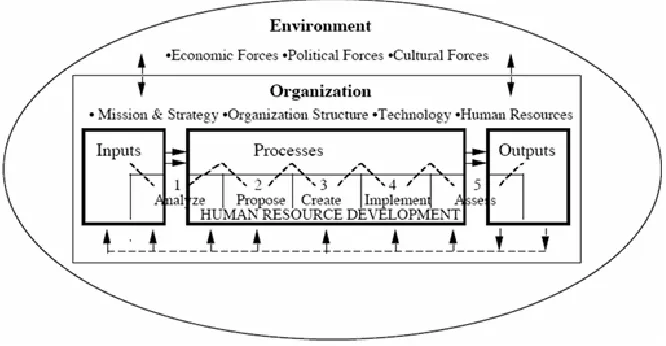
objectives of implementation. It has a problem-solving approach towards real-world problems in organizations and other settings. Swanson and Holton (2009) have identified a 5-phase process of HRD implementation in organizations and other formal or informal settings to define and solve any problems impeding effectiveness (see Figure 2). Within this HRD model, the first phase includes the analysis of the given problem at hand to understand its causes. The next phase proposes possible alternative solutions with analysis on the pros and cons of each alternative and recommending the best solution. The last three phases of implementing HRD include the
Figure 1. Process phases of HRD (Swanson & Holton, 2009, p. 24)
The environment in which HRD sustains is governed by the economic, political, and cultural forces (Swanson & Holton, 2009). This environment forces play an important role in the formation of HRD policies and processes by impacting the organizational components of mission and strategy, structure, technology, and human resources. A synergy within this environment leads to the formation of a sustainable human resource development model. The definitions of HRD have evolved based on the components such as the environment and organizations in which it is practiced (see Figure 3).
Figure 2. Model of Human Resource Development within Organization and Environment
[image:24.612.158.491.458.631.2]According to Mankin (2001), the three operational components of HRD are organization development, career development, and training and development. The process map of HRD and the effects of environment on HRD are crucial to define this function in an operational context. Some of the key components which govern HRD and its definitions are behavioral change, performance improvement of individuals and organizations, organizational development, training and development, learning activities, and human expertise (Chalofsky, 1990; Hamlin, 2004; Harbison & Myers, 1964; Jones, 1981; McLean & McLean, 2001; Swanson, 1987; Swanson, 1995).
A review of literature indicates a pattern of changing definitions depending on the relevance of one of the key components of the HRD functions. The definition of HRD also depends on the underlying theory on which it is built and is most commonly seen governed by the economic, psychological, and systems theory (Chalofsky, 1992; Hamlin, 2004; Harbison & Myers, 1964; Jones, 1981; McLean & McLean, 2001; Swanson, 1987; Swanson, 1995). The economic theory governing HRD dictates the utilization of resources scarce or abundant to produce results (Wang & Dobbs, 2009). The psychological theory revolves around the human cognition, mental processes, and act as determinants of human behavior (Swanson & Holton, 2009). Whereas, the systems theory is based on a more wholesome approach towards problems by keeping in mind the inputs and outputs affecting the organization (Brache, 2002). The HRD definitions over time, as noted by Swanson and Holton (2009, p. 6), highlight key components and underlying theories of HRD and can be seen changing to become more inclusive of operations and key functional roles, to produce performance based outcomes (see Table 1). Table 1.
Author Definition
Harbison and Myers (1964) HRD is the process of increasing the knowledge, skills, and
capacities of all people in society (p. 2).
Jones (1981)
HRD is systematic expansion of people’s work related abilities focused on the attainment of both organization and personal
growth (p. 188).
Smith (1988)
HRD consists of programs and activities, direct and indirect, instructional and/or individual that positively affect the
development of individuals and the productivity and profit of the organizations (p. 1).
Nadler and Nadler (1989)
HRD is organized learning experience provided to employees within a specified period of time to bring about the possibility of performance improvement and/or personal growth (p. 6).
Marsick and Watkins (1994)
HRD is the process or activity that, either initially or over the long term, has the potential to develop adult’s work-based knowledge, expertise, production, and satisfaction whether for personal or group/team gain, or for the benefit of the organization, community, nation, or ultimately, the whole humanity (p. 355)
Swanson (2009)
HRD is the process of developing and unleashing expertise for the purpose of improving organization system, work process, team and individual performance.
This research study revolves around the functions and roles of HRD carried out in the software industry and what are the employee perceptions towards them. Thus, in this context, the most relevant definition of HRD is stated by Swanson (2009), “a process of developing and unleashing human expertise through organization development and personnel training and development for the purpose of improving performance” (as cited in Swanson & Holton, 2009, p. 8).
in order of importance when it comes to strategic discussions and is placed following
Accounting, Sales, and Marketing (Hamlin, 2007). Human resource development fails to secure a seat at the strategic planning table in the organization, because most managers believe that development of employees through the HRD functions such as training is an unnecessary cost (Hamlin, 2007). However, with the evolution in the role and functions of HR, the function of training and development has become an important function and can be seen as an integral part of most organizations irrespective of the relevance attained by other HRD functions (Ruona & Gibson, 2004; HR Focus, 2005). The main reason for this can be attributed to the practices and policies of the HRD professionals themselves and how they are portrayed (Alagaraja, 2013). There is a gap in the organizations where HRD professionals are failing to communicate their relevance to the employees and ensure participation in developmental activities. In a study conducted by Espedal (2005), it was concluded that supervisors and line managers in firms do not exhibit the required amount of commitment to make sure that HR professionals successfully involve all employees in their learning management activities. This poses a challenge to HR personnel as they have to take extra efforts to develop rules and regulations to ensure employee involvement.
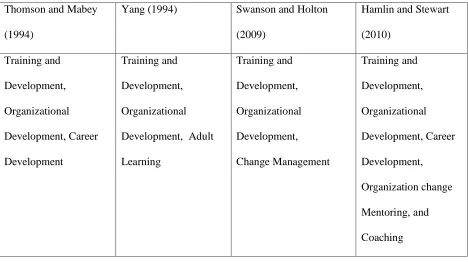
functions differently (see Table 2). The functions of training and development and organization development seem to be the most accepted HRD functions in the research through years. The table (see Table 2) represents the growth of HRD, inclusion, and diffusion of functions. Table 2.
Functions of HRD
Thomson and Mabey
(1994)
Yang (1994) Swanson and Holton
(2009)
Hamlin and Stewart
(2010) Training and Development, Organizational Development, Career Development Training and Development, Organizational
Development, Adult
Learning Training and Development, Organizational Development, Change Management Training and Development, Organizational Development, Career Development, Organization change Mentoring, and Coaching
HRD competencies. A competency is a set of defined behaviors that provide a structured guide enabling the identification, evaluation, and development of the behaviors in individual employees (White, 1959). A competency model defines the set of competencies that
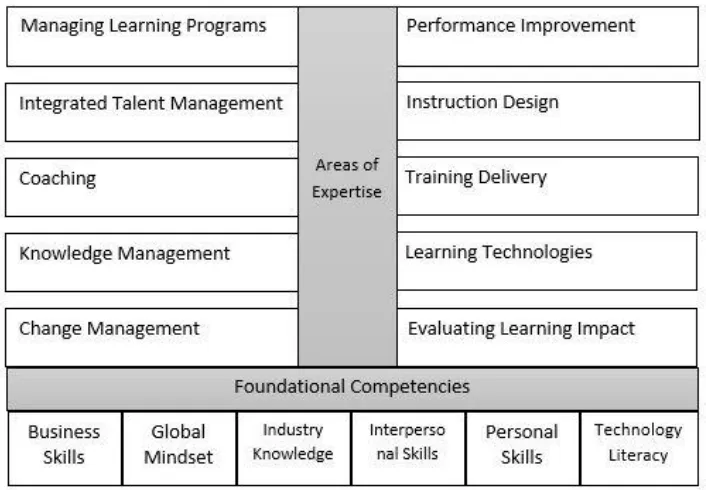
The 2014 ATD Competency Model is the most recent model for specifically HRD professionals. This competency model was developed to define competencies for the success of HRD professionals in organizations. This model is wholesome in its implementation and conceptualization. It includes the areas of expertise which correspond to the current
[image:29.612.147.500.269.514.2]organizational environments. In this research, the functions and competencies developed by ATD (2014) were used to develop an understanding of the perceptions of employees towards them based on their relevance and importance.
Figure 3. The ATD Competency Model (2014). Adapted from The ATD Model (2014).
Source: https://www.td.org/Certification/Competency-Model
Performance improvement.Performance in the HRD context can refer to either
skills, and abilities to govern organizational performance (Kim, 2015; Russ-Eft & Preskill, 2005).
Integrated talent management. According to the 2007 research conducted Chartered
Institute of Personnel and Development (CIPD), definition of talent is organization specific with a focus on the individual’s capacities which may have implications on the entire group. An integrated talent management approach by the HRD is dedicated to develop and manage the employee knowledge, skills, and abilities and link recruitment, training, and performance management together (Spreitzer & Porat, 2012). The information about employee’s skills and competencies can be shared through different departments to borrow and move talent within the organization for sustainable growth (Spreitzer & Porat, 2012).
Change management.The Association for Talent Development defines change
management as“Apply a systematic process to shift individuals, teams, and organizations from current state to desired state” (ATD, 2016). Organization development and change management are considered to be the means to implement planned change effectively. “They are concerned with the sequence of activities, processes, and leadership issues that produce organizational improvements” (Cummings & Worley, 2001, p. 3). Depending on the organizational need, change in HRD can have different scope such as individual development, learning, work and life roles, internal adult development, innovation, and goal-directed activity (Swanson & Holton, 2009).
the tools, knowledge, and opportunities they need to develop themselves and become more effective” (Peterson & Hicks, 1995, p. 41). In a mentorship, the mentor is usually an influential senior member in the organization “who has advanced experience and knowledge and who is committed to providing upward mobility and support to careers” (Ragins & Scandura, 1994, p. 962). Mentoring activities are aimed at improving the careers of the mentees by providing role modelling, acceptance and confirmation, counselling and friendship (Kram, 1985). Every
employee is assigned a coach or a mentor who assists in the employee’s learning via a structured, semi-structured, or loosely-structured methods (Swanson & Holton, 2009).
Training.In the ATD model (2014), the training function has been divided into separate areas of expertise such as design of training, evaluating learning impact, managing learning program, and knowledge management. Training is a holistic term which includes all these components and has existed as a vital function of HR through the years (Ruona & Gibson, 2004; HR Focus, 2005). Planned learning and developmentis an important aspect of strategic HRD and is considered to be a necessity in an employee’s work cycle irrespective of their position in the organization (Garavan, 2007). Learning and development is most traditionally performed using a team-focused strategy which puts members of a team under the same roof to deliver training (Swanson & Holton, 2009). According to a study conducted by Gubbins, Garavan, Hogan, and Woodlock (2006), in the health industry, “top managers see training and
responsible to “capture, distribute, and archive intellectual capital to encourage knowledge-sharing and collaboration” (ATD, 2014).
With technology overtaking all the organization’s day to day work, HRD has also updated to provide employees with training opportunities on-the-go. HRD needs to learn enabling technologies to keep individuals and groups connected through environments for knowledge sharing and strategic information flow (Kannan, 2010). A number of studies have been performed which have concluded how virtual HRD has contributed towards the employees leaning and knowledge management to measure performance based outcomes (Bennet, 2009; Bennet, 2014; Chapman & Stone, 2010; Kluge & Reily, 2008).
Learning and knowledge management. According the Association of Talent
Development (2014) learning and knowledge management is the process to, “capture, distribute, and archive intellectual capital to encourage knowledge-sharing and collaboration”. Knowledge management supports the learning of employees in organizations by tracking the learning outcomes (Swanson & Holton, 2009). Organizations today track the learning of employees virtually through HRIS systems (Kannan, 2010).
Overlap of HRM and HRD in Literature
When conducting this literature review, an overlap was identified between the HRM and HRD functions. In most organizations, the HRM and HRD functions are not clearly
differentiated. This in addition to both functions being situated within the larger umbrella if HR, could impact the employees’ perception of the functions of the two fields. The functions
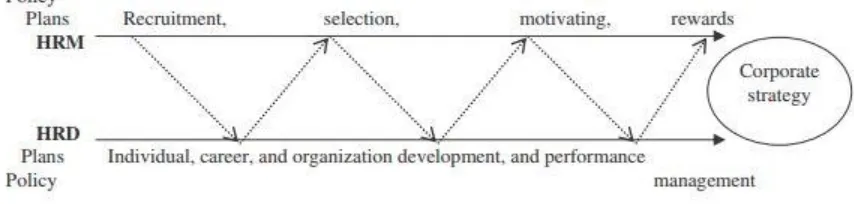
functions performed by HRM and HRD were reviewed separately and critically analyzed. As the focus of this study is on software industries, the relevance and importance of HRD was studied in more detail as compared to HRM. An attempt to identify the differences between HRM and HRD functions by Haslinda (2009) has highlighted the key processes and activities performed by each of them (see Table 1).
Table 3.
Comparison between HRM and HRD (Haslinda, 2009, p. 181).
HRM HRD
Definition:
HRM is a process of managing human talents to achieve organization’s objective”
Definition:
HRD is a series of organized activities conducted within a specified time and designed to produce behavioral change Process:
Recruitment and selection, Compensation and benefits, Labor and Industrial relations, Safety & Health management
Activities:
Training and development, Performance Appraisals Management, Career planning and development, Change Management
[image:33.612.81.508.567.669.2]According to McGoldrick and Stewart (1996), HRD is a supplemental function of HRM within HR as they both emphasize on implementing corporate strategy for organizational effectiveness. HRM recruits suitable candidates for the organization and HRD polishes and prepares the candidates to become valuable employees (McGoldrick & Stewart, 1996).
The overlap in the HRM and HRD functions affects HRD when it comes to recognizing the different functions performed within HRD. Training remains the most widely accepted function in the organizations and is not seen as being a part of HRD exclusively. Training is also seen overlapping in the studies related to both HRM and HRD. The other HRD roles and
functions such as knowledge management, change management, performance improvement, coaching and mentoring, and talent management take a back seat as the most common focus of research seems to be on training.
HRD Professionals: Roles and Competencies
The different HR roles in the organization are not necessarily performed by only one HR professional. A team of HR professionals conduct and lead dynamic, diverse projects, and projects which require expertise (Gubbins & Garavan, 2005). They have to perform roles of change agent, learning agent, internal consultant, performance engineers, and HRD managers (Gilley & Maycunich, 2003). They have to constantly interact with employees belonging to all cadres; ranging from senior executives to entry-level despite the multiple HR related roles they take on, HR professionals are mostly perceived to perform administrative roles (Mei &
Subramaniam, 2014). In the changing business environment, there are a number of emerging trends such as globalization, learning maximization, and social responsibilities and HRD
professionals have a role preparing the organization to thrive in them (Bing, Kehrhahn, & Short, 2003). HRD professionals need to be equipped with the skills and experience to deal with challenges these trends may pose.
Ofori et al. (2012) concluded that employees gave greater importance to the roles of HRs when they performed retention of qualified personnel, training and development, and
professionals did not perceive themselves to be partners in strategic building and development of the organization. They tended to be more involved in the administrative tasks rather than
contributing to the organization’s development. In some cases when the size of the organization is less than two hundred employees, the management did not feel the need to invest in an HR department (Hamlin, 2007; Vosburgh, 2007). The management believe that HR development skills are not necessary in a small organization and hence they tried to solve their own problems. However, they overlooked the fact that HR professionals can help in setting and achieving the organization’s goals through unleashing the power of human capital (Fox, 2013).
Even though HRD professionals are responsible for important employee related
leaders of the organization. The major reason behind this distrust is the non-generation of visible profits by the HR function.
The competency model developed by the Association of Talent Development described ten key competencies required by the HRD professionals to conduct their day to day activities (2014). These include Change Management, Performance Management, Instructional Design, Training Delivery, Learning Technologies, Evaluating Learning Impact, Managing Learning Programs, Integrated Talent Development, Coaching, and Knowledge Management. The efficiency in performance of these activities played a role in understanding what the employees perceive their HRD department to be capable of. These competencies are essential for HRD professionals to prepare the organizations to adapt to emerging trends and sustain themselves in a competitive environment.
HRD in the Software Industry
Software organizations employ knowledge-intensive employees who contribute towards creation of intellectual products. The executive level employees in such an establishment perform the task of providing conditions for the creation of intellectual products (Zavyalova & Kosheleva, 2013). The role of HRD in such an institution is to develop tools to foster the
development of required intellectual benefit (Zavyalova & Kosheleva, 2013). In an era of global competitiveness, HRD is often considered as a critical link between human resources and organizational survival (Dubois & Rothwell, 2004).
related functions (Bing et al., 2003). The actual skills possessed by the human resource
professionals are thus overlooked and their skill sets are expected to be at par with the majority of the population in the organization i.e. software engineers (Mathiassen & Pourkomeylian, 2003). Thus, adapting to the industry’s business and trends can help in ensuring that human resource professionals are considered as equals and invited to contribute in the organizations strategic planning and setting goals.
In order to effectively implement the activities which will supplement achieving organizational goals, HRD must ensure active participation of the employees (Blyton & Turnbull, 1998; Garavan & Heraty, 2001; Marchington & Wilkinson, 2002). According to Brockbank and Ulrich (2003), “HR professionals in high-performing firms actively translate (business) knowledge in contributing to strategic decision making, developing competitive cultures, making change happen, and creating market-driven connectivity” (p. 6). Yet, employees do not see HRD professionals as being capable of pivotal contribution. The general perception about HRD professionals is that they perform non-essential administrative functions that are not critical to the competitiveness of the organization.
Perceptions
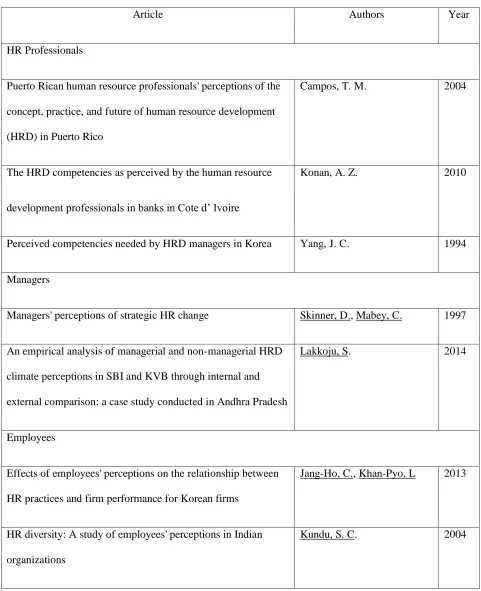
Table 4.
List of perception studies in the HR field
Article Authors Year
HR Professionals
Puerto Rican human resource professionals' perceptions of the
concept, practice, and future of human resource development
(HRD) in Puerto Rico
Campos, T. M. 2004
The HRD competencies as perceived by the human resource
development professionals in banks in Cote d’ Ivoire
Konan, A. Z. 2010
Perceived competencies needed by HRD managers in Korea Yang, J. C. 1994
Managers
Managers' perceptions of strategic HR change Skinner, D., Mabey, C. 1997
An empirical analysis of managerial and non-managerial HRD
climate perceptions in SBI and KVB through internal and
external comparison: a case study conducted in Andhra Pradesh
Lakkoju, S. 2014
Employees
Effects of employees' perceptions on the relationship between
HR practices and firm performance for Korean firms
Jang-Ho, C., Khan-Pyo, L 2013
HR diversity: A study of employees' perceptions in Indian
organizations
A study of perceptions regarding the changing roles, skills, and
effectiveness of human resources functions (Dissertation)
Dunn, J 2009
Perceptions regarding the future of the human resource
functions within Bayer Polymers and Chemicals (Dissertation)
Kendrick, F. O. 2005
Perceptions of the Human Resource Management Function
among Professionals: A Ghanaian Study
Ofori, D. F.,
Sekyere-Abankwa, V., Borquaye, D. B 2012
In the study conducted by Ofori, Sekyere-Abankwa, and Borquaye (2012) on HR functions, the participants were required to rank the HR functions based on their perceived importance for each. The participants were professionals working in Ghanaian organizations. They ranked ‘Recruitment of Qualified Personnel’as the most important HR function followed by Training and Development, Retention of staff, Guidance and Counselling, Health and Safety, Job analysis, Promotion, Benefits, and Recognition. The HR professionals themselves also have some perceptions on importance of the different HR roles such as Strategic Partnership,
Employee Advocate, and Admin expert (Mei & Subramaniam, 2014). Human resource
The perceived importance and legitimacy of HRD highly depends on the support of relevant stakeholders in the organization (Gubbins & Garvan, 2005). The attitude from senior management influences the employee perception about the importance of HRD (Gubbins, Garavan, Hogan, & Woodlock, 2006). The study conducted by Gubbins et al. (2006) concluded that employees perceived higher management in their organizations were supportive of HRD activities as opposed to being actively involved in the HRD activities. There is a need for the strategic involvement of the HRD department in the organization to align the goals and
ambitions of senior management and employees. Alagaraja (2013), noted that even though HRD was given a seat at the strategic table, the internal customers (such as senior executives and line managers) perceived the role of HRD to be limited to recruitment and employee relations. When these participants were asked about their perceptions of the training functions, they described it to be about “harassment and those type of things” (Alagaraja, 2013, p. 447). Misconceptions about the functions of human resource development is detrimental to the utilization of services offered by the HRD department in the organizations. The HRD department must be equipped to address the business needs of the employees by being involved in the business processes and not only the everyday functional processes. Past studies indicate the importance of demonstrating business competencies by HRD to attract employees to participate in the activities which lead to employee and organizational development. HRD must be able to help the organizations to break these traditional perceptions and develop a different perspective towards them through these demonstrations of business competencies as noted in the ATD 2014 model.
Summary and Conclusion
Chapter 3: Methodology
The study used quantitative methods by using self-administered survey was used for data collection as a strategy of inquiry. The survey was designed using an online-tool – Google Forms. This chapter describes the process of data collection and analysis.
Participants
The participants for this study were the employees working in the software industry across India and the United States. These participants performed technical job roles such as software engineer/executive, technical architect, software project managers, or team leads within their organizations.
A research relationship was established with the study participants to gather data through an online survey. This was done in multiple stages as the participants were not located in the same place and had to be contacted via personal email, and posted notices and personal messages on social media websites such as Facebook and LinkedIn. It was advantageous if the participants have worked in the industry for at least one year and have often interacted with HR. The first stage of establishing a research relationship with the participants was to peruse the personal and professional network of the researcher to identify potential participants working in the software industry. In the second stage, emails and messages through social media were sent to the potential participants with information on the purpose of the research and how the participants will strengthen the research through their valuable participation. In the third phase, the
participants who responded to the emails and messages sent in the second phase with acceptance to participate in the study were sent the hyperlink to the survey.
and Software Engineering were a high potential pool of participants, in addition to current students with work experience in the industry. In the fourth stage, the RIT alumni and current students were reached through via their department chair and department administrators. An abstract and IRB research approval certificate was presented to the department chair to obtain their approval to gain access to their student database. Upon receiving permission to contact the RIT alumni and current students, a detailed email was sent to the department administrator which included information on the research problem and purpose, an introduction of the researcher, a cover letter explaining methods of how the researcher will maintain confidentiality of data collected, and a link to the online survey (see Appendix B). In the fifth stage, the administrator forwarded this email to all the students in their database explaining the eligibility and value of participation in the survey.
Research Design
This study utilized a cross-sectional survey design to assess the individual perceptions towards HRD roles, functions, and professionals. Cross-sectional studies focus on one group at one point in time (Hagan, 2006; Neuman, 2004; Trochim, 2001). Understanding the initial perceptions of employees requires a cross-sectional survey and will ensure more participation as it takes lesser time for completion. A cross-sectional survey is used when the purpose of the study is descriptive without any hypothesis but the aim is to describe a population or a subgroup within the population (Trochim, 2001). Thus, using a cross-sectional survey will result in
developmental needs of the employees such as providing training and knowledge management (Mathiassen & Pourkomeylian, 2003). It is important to understand the employee perception towards effectiveness of these functions so that the employees can participate in them with more conviction.
Research approval. An Institutional Review Board at RIT reviewed the research
proposal and survey design before granting permission to conduct the survey research. A consent form was included in the survey for participants to sign off and they were requested to provide their consent before participating in the study after reading the terms, nature, incentives, advantages, and value of participation. The participants were assured that the information they shared about their organization’s HRD, will be kept in a password protected database with only the researcher having access to the raw data.
When the participants are spread over such a large area, constraints such as distance, time zones, and cost of communication come into play. The online survey allowed the participants to
respond to the survey at a time most suitable for them and ensuring that the researcher receives their responses at a click of a button. Online data collection tools ensured that there was no loss of data by providing embedded and simplified databases for analysis (Lefever, Dal, &
Matthíasdóttir, 2007).
The survey methodology was based on the guidelines stated by Lefever, Dal, and Matthíasdóttir (2007). In this research, careful consideration was given to factors such as respondent age, gender, and job role which ensures that the participants are legitimate. According to Lefever et al. (2007), three factors that affected their response rates in online surveys are (1) style of the first page of the survey, (2) relationship with the website/brand, and (3) respondent interest or relevance of the survey (p. 575). Google forms was used to design this survey. An inbuilt theme, background color, and font which reflected an office environment was the chosen style for survey presentation maintain uniformity through all pages. Google is a well-known search engine which has diversified in developing different online tools which are used by individuals for professional and personal tasks. As software professionals are familiar with the Google forms tool, it was used to design the survey for data collection in this study.
Participants belonging to the software industry were sought through personal and professional network of the researcher and were presented with the survey for completion after ensuring their participation eligibility. After the initial contact was established, participants were sent the link to the survey. After one week, a reminder email or social network message was sent to the participants along with the hyperlink to the online survey. To generate a sense of
media to increase the response rate. A personalized relationship was already present between the researcher and most of the participants enabling a good response rate. A thank you note
appreciating the participant’s involvement in the study, was sent to all the participants.
Survey design. Individual factors to gain demography related information included ‘country’, ‘gender’, ‘company name’, ‘job role’, and ‘years of work experience in the current role’. The survey was designed based on the ATD Competency Model which describes the key skills and competencies required for a HRD practitioner. The key skills and competencies were used as survey items around which the questions were designed. The survey questions were designed by utilizing these competencies to understand the individual perception towards each of them with respect to their usefulness and effectiveness.
According to Haslinda (2009), employees often find it a challenge to differentiate
perceived importance. Functions with rank 1 were given the highest weightage and functions with rank 10 were given the lowest weightage.
Out of the remaining sixteen questions, fifteen questions were asked to answer the first research question ‘What are the perceptions of software employees towards HRD roles and functions?’ The last question was focused on answering the second research question ‘What are the perceptions of software employees towards HRD professionals?’ The survey questions were based on the roles, functions, and competencies of professionals adapted from the ATD Model (2014). The first question asked in the HRD category was to know if the participants identified a separate training department in their organization. This was a closed-ended dichotomous
question with simple response options of ‘Yes’ or ‘No’. The next question required the participants to rank 6 HRD roles and functions with respect to each other and their perceived importance. Here also the functions with rank 1 was given the highest weightage and functions with rank 6 was given the lowest weightage. A 5-point Likert scale was used to gather responses with scores from 1 – 5, to register the participant’s level of satisfaction towards the effectiveness of any role or function with 5 being the highest level of satisfaction and 1 being the lowest. A score of 5 corresponded to the phrase ‘Strongly Agree’, a score of 4 corresponded to ‘Agree’, a score of 3 corresponded to ‘Neither Agree nor Disagree’, a score of 2 corresponded to
‘Disagree’, and a score of 1 corresponded to ‘Strongly Disagree’.
extensive research among HRD practitioners. Only the roles and functions presented in the model were used as a framework for survey questions. (ATD, 2016). This ensured that the roles and functions presented in the survey represent a standard frame of reference and were easy to follow. Thirdly, the language of the survey was easy to comprehend and relevant definitions were provided to avoid any confusion. Validity refers to accuracy of the survey design (Creswell, 2014). The survey in this study was validated before use through a pilot-test. It was administered to 10 participants who were also asked to note any irregularities in the questions. The feedback from these participants about their understanding of the questions, terms, definitions, length, and missing features was implemented before the final roll-out. However, there were still some potential threats to the validity of the survey design. First, respondents may not have sufficient knowledge on the topic as noted in the literature review (Fowler, 2002). For instance, the respondents may not be aware of the different HRD roles and functions to be able to rank them or note their levels of satisfaction. In order to overcome this, definitions were provided in the survey for reference and understanding of specific roles and functions. Simple and everyday terms were used for greater comprehension. Second, the way the response scale is presented may confuse the participants and they may select a completely opposite response option. A Likert scale is standard and option 1 always corresponds to the phrase ‘Strongly Disagree’. In this survey design, every response scale is marked with the corresponding phrase to avoid any uncertainty.
survey tool and most participants must have used this platform to take other surveys in the past ensuring higher familiarity. Fourthly, the areas of expertise and competencies in HRD were selected from the ATD model leading to higher familiarity with the functions among the participants. Yet, there were inherent weaknesses with the survey methodology itself. First, the distribution of participants made it impossible to have any personal contact with them and thus if the participants were unfamiliar with any question, they may be hesitant to contact the researcher and leave the survey in between. Second, survey administration was a challenge due to
geographical distances and there were limited sources to contact participants to ensure higher response rate.
Data Analysis
Basic descriptive statistics were used to describe the data. Descriptive statistical
Chapter 4: Results and Findings
The primary purpose of this research was to understand the perceptions of software employees towards the HRD functions, roles, and the professional competencies of HRD employees. A cross-sectional survey was used to answer the following research questions.
1. What are the perceptions of Software Employees towards HRD roles and functions? 2. What are the perceptions of Software Employees towards HRD professionals? The survey consisted of 23 questions including 6 demographic questions, 2 ranking questions, 14 questions on perceived effectiveness of HRD roles and functions, and 1 question on perceived effectiveness of HRD professional’s competencies.
Descriptive Statistics
Basic descriptive statistics were used to describe the data, including demographic data, and perception of effectiveness of HRD functions with respect to each other. Descriptive
statistics was used to analyze data as all the variables used in this survey design are independent. The perception on each independent variable was gathered. The study did not include any dependent variables.
Participants
The data was collected from 100 software professionals from more than 30 different software organizations located in India and United States. The survey was sent out to nearly 300 software professionals in the researcher’s personal and professional network, which provided a 33.33% response rate. Survey was distributed through January to February 2016. The researcher made four attempts to contact the software professionals within the sampling frame. The
participate in the survey were sent a link to the online self-administered survey via email or social media. The participants had to click on the hyperlink provided to access the survey. The survey was a dynamic instrument which allowed the participants to navigate from one question to another in a systematic manner. After registering their responses in the survey and reaching the end, the participants had to submit their survey by clicking on the ‘Submit’ button. The third and the final contact served as a reminder for participation.
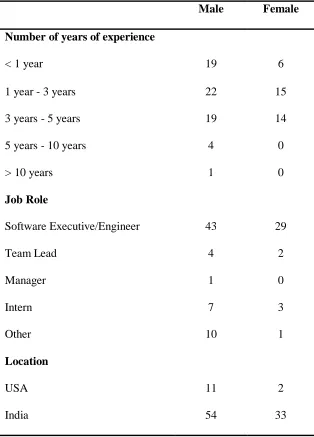
Six items were included in the survey to describe the demographics of the participants. These items included “gender”, “job type”, “country”, and “years of experience”. Table 5 below represents the frequencies for these variables. Out of the 100 responses received, 35 respondents were females and 65 were male respondents (see Table 5). The participants performed a range of job roles from Software Executive/Engineer, Team Lead, Manager, Senior Manager, Intern, Consultant, and Chief Technology Officer. While 87% participants worked in the Indian software industry 13% participants worked in the U.S. The survey respondents were majorly in their initial stages of the career. Aldrin reported (2011, p. 26), that nearly 28% of the participants from the software industry changed more than 2 companies over the extent of their careers. In this study, the results indicated that 25% of the participants had less than 1 year of work experience in their current job role, whereas, 70% of the respondents had 1-5 years of
Table 5.
Respondents experience, job role, and location by gender
Male Female
Number of years of experience
< 1 year 19 6
1 year - 3 years 22 15
3 years - 5 years 19 14
5 years - 10 years 4 0
> 10 years 1 0
Job Role
Software Executive/Engineer 43 29
Team Lead 4 2
Manager 1 0
Intern 7 3
Other 10 1
Location
USA 11 2
India 54 33
Human Resource Management (HRM)
way the questions in the questionnaire are presented and structured. The first question in the survey required to rank the HRM related functions based on the participants’ perceptions of their importance. The survey design aimed to give the participants a point of reference to establish a familiarity with the functions pertaining to HRM to distinguish them from the HRD related functions in the questions that follow. The HRM functions included Performance
Management/Appraisal, Rewards and Recognition, Career Development, Conflict Resolution, Benefits and Compensation, Payroll, Hiring/Recruitment/Talent Acquisition, Procedural Justice and Distributive Justice, Training, and Employment Laws and Compliance. These functions were chosen based on existing literature (Mayhew, 1985; Smith & Mazin, 2011; Pass & Hyde, 2005).
Perceived importance of HRM functions and roles. The participants perceived
Performance management/appraisal as the most important HRM function with 32% participants ranking it as number 1. As noted by Pulakos (2004), the performance management systems are considered the “Achilles’ heel” in HRM (p. 1). An employee’s discontent over unclear
expectations, goals, and absence of feedback directly affects their performance, motivation, and engagement and thus producing a vicious cycle of errors (Pulakos, 2004). Thus, having
performance management and appraisal ranked as the most important HRM function in this research contributes to the general consensus among employees today.
Human Resource Development (HRD)
employees towards HRD roles, functions, and professionals and hence more emphasis was put on the HRD related functions. Participants were either asked to rank the HRD functions based on their perceived importance or asked to express their perceived effectiveness towards the
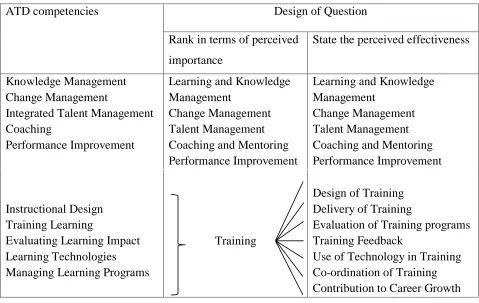
[image:54.612.72.551.313.616.2]performance of HRD functions. The ATD model (2014) represents 10 areas of expertise in the HRD profession. The survey used in this research included questions based on these 10 areas of expertise and 6 foundational competencies expected in the HRD professionals. The areas of expertise were either clubbed or diffused to form the survey questions (see Table 6). Table 6.
Using ATD areas of expertise to design the survey questions
ATD competencies Design of Question Rank in terms of perceived
importance
State the perceived effectiveness Knowledge Management
Change Management
Integrated Talent Management Coaching
Performance Improvement
Learning and Knowledge Management
Change Management Talent Management Coaching and Mentoring Performance Improvement
Learning and Knowledge Management
Change Management Talent Management Coaching and Mentoring Performance Improvement
Instructional Design Training Learning
Evaluating Learning Impact Learning Technologies Managing Learning Programs
Training
Design of Training Delivery of Training
Evaluation of Training programs Training Feedback
Use of Technology in Training Co-ordination of Training Contribution to Career Growth
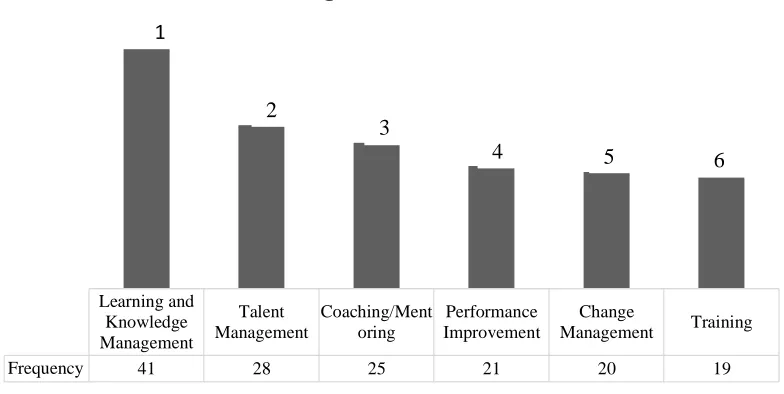
followed by Talent Management, Performance Improvement, Coaching/Mentoring, Change Management, and Training in decreasing order of importance (see Figure 5).
Figure 5. Ranking of HRD functions with respect to each other.
Perception towards effectiveness of performance of functions and roles. A 5-point Likert scale was provided to the participants to register their perceived effectiveness of
performance of each of the HRD functions with response options 1 to 5 with the phrases ‘Strongly Disagree’ to ‘Strongly Agree’ respectively anchoring with them.
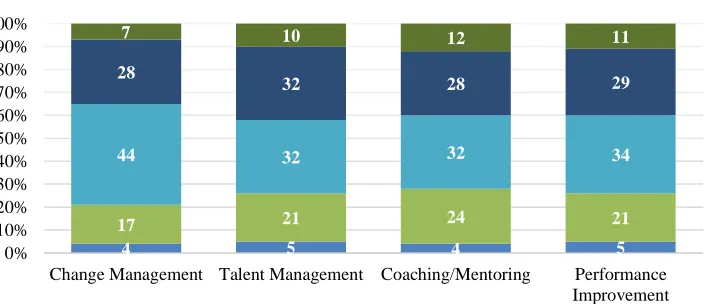
The responses of participants on the how effectively the Change Management (CM) function was performed was rather surprising, as 44% participants did not have any opinion about this specific function performed. This response corresponds with the observation by Alagaraja (2013), that the employees may not be aware of the different change management activities under process in the organization. It is interesting to note that the 44% of employees who did not offer an opinion on the CM function were new in the industry with less than 1 year experience. This could indicate that the junior employees were not aware of change management or the role of HRD professionals with regard to that or that the junior employees were not
Learning and Knowledge Management
Talent Management
Coaching/Ment oring
Performance Improvement
Change
Management Training
Frequency 41 28 25 21 20 19
Ranking of HRD functions
1
2
3