EFFECTIVENESS OF VIRTUAL LABOUR PROCESS UPON KNOWLEDGE AND ANXIETY LEVEL REGARDING LABOUR PROCESS AMONG
PRIMIGRAVID MOTHERS
By
MINTU KURIAKOSE
A DISSERTATION SUBMITTED TO THE TAMILNADU DR.M.G.R MEDICAL UNIVERSITY, CHENNAI, IN PARTIAL FULFILMENT OF THE
REQUIREMENTS FOR THE DEGREE OF MASTER OF SCIENCE IN NURSING
EFFECTIVENESS OF VIRTUAL LABOUR PROCESS UPON KNOWLEDGE AND ANXIETY LEVEL REGARDING LABOUR PROCESS AMONG
PRIMIGRAVID MOTHERS
Approved by the Dissertation committee on : ______________________________
Clinical Guide : ______________________________
Dr. Latha Venkatesan,
M.Sc (N)., M.Phil (N)., Ph.D ( N)., Principal cum Professor,
Apollo College of Nursing,
Chennai – 600 095.
Research Guide : ______________________________ Prof. Lizy Sonia. A,
M.Sc (N)., Ph.D (N)., Vice Principal,
Apollo College of Nursing, Chennai – 600 095.
Medical Guide : ______________________________ Dr. Gowri Meena,
MD(OG)., DNB(OG)., CIMP., MRCOG(UK), Laparoscopic Surgeon,
Infertility Specialist, Consultant Obstetrician and Gynaecologist
Apollo Speciality Hospitals
Vanagaram Chennai – 600 095.
A DISSERTATION SUBMITTED TO THE TAMILNADU DR.M.G.R MEDICAL UNIVERSITY, CHENNAI, IN PARTIAL FULFILMENT OF THE
REQUIREMENTS FOR THE DEGREE OF MASTER OF SCIENCE IN NURSING
DECLARATION
I hereby declare that the present dissertation entitled “Effectiveness of virtual labour process upon knowledge and anxiety level regarding labour process among primigravid mothers” is the outcome of the original research
work undertaken and carried out by me under the guidance of
Dr. Latha Venkatesan, M.Sc (N)., M.Phil (N)., Ph.D (N)., Principal and Professor in Obstetrics and Gynaecological Nursing and Mrs. Lizy Sonia. A, M.Sc (N)., Ph.D (N)., Vice Principal and Professor, Head of the department in
Medical Surgical Nursing, Apollo College of Nursing, Chennai.
I also declare that the material of this has not formed in anyway, the basis
for the award of any degree or diploma in this University or any other
Universities.
i
ACKNOWLEDGEMENT
I thank God Almighty for being with me and guiding me throughout my endeavour and showering His profuse blessings in each and every step to complete the dissertation.
I proudly express my sincere gratitude to our esteemed leader Dr. Latha Venkatesan, M.Sc (N)., M.Phil (N)., Ph.D (N)., Principal, Apollo
College of Nursing, for her restless efforts in setting higher goals for us to achieve and her excellent guidance, caring spirit, support and valuable suggestions during the course which paved the way for my overall development.
I extend my earnest gratitude to Prof. Lizy Sonia. A, M.Sc (N)., Ph.D (N)., Vice-principal and Head of Medical Surgical Nursing Department,
Apollo College of Nursing, for her elegant direction, encouragement and timely help.
I owe my special thanks to Prof. Vijayalakshmi, M.Sc (N)., Ph.D (N)., Research co-ordinator, for her prolonged patience and continuous guidance in completing my study. With special reference I thank Dr. Gowri Meena, MD(OG)., DNB(OG)., CIMP., MRCOG(UK), Laparoscopic Surgeon, Infertility Specialist, Consultant Obstetrician and Gynaecologist, Apollo Speciality Hospitals, Vanagaram, Chennai for her elegant direction and worthful suggestions for performing the study.
ii
My sincere thanks to Mrs. Thamizharasi, Lecturer, Department Of Obstetrics and Gynaecological Nursing for her increasing search, valuable suggestions, efficient guidance, invaluable caring spirit and profound support
throughout the study. I would like to thank Mrs. Saraswathy, M.Sc (N)., Mrs. Kavitha, M.Sc (N)., Mrs. Juliet, M.Sc (N)., Lecturers of Department of
Obstetrics and Gynaecological Nursing for their guidance and profound support throughout the study. Also sincere thanks to all the faculty of Apollo College of Nursing for their support during the data collection.
I am thankful to the study participants, their good nature, kind heartedness and contagious energy will always be remembered.
I am indeed indebted to the Administrator, Andhra Mahila Sabha Hospital, Adayar, Chennai. I extend my earnest gratitude to Mr. Kannan, Universe Computers, who helped me in printing, Mr. Praveen, who helped me in creating my Virtual Labour Process video and to Ms. Lavanya, who helped me with my tamil recording. A note of thanks to the Librarians at Apollo College of Nursing and The Tamil Nadu Dr. M.G.R. Medical University, for their help in providing needed reference materials which I required.
I honestly express my sincere gratitude to my parents Mr. Kuriakose and Mrs. Geetha for helping me to pursue my academic interest and support. I also thank my brothers Mr. Mathew, Mr. Mibin and all my family members who took concern and supported me.
iii SYNOPSIS
An Experimental Study to Assess the Effectiveness of Virtual Labour
Process upon Knowledge and Anxiety level among Primigravid Mothers within
35 – 40 Weeks of Gestation at Selected Hospital, Chennai.
Objectives of the Study
1. To assess the level of knowledge and anxiety before and after Virtual
Labour Process among Control and Experimental group of Primigravid
mothers within 35 - 40 weeks of gestation.
2. To determine the effectiveness of Virtual Labour Process by comparing
the level of knowledge and anxiety before and after the Virtual Labour
Process among Experimental and Control group of Primigravid mothers
within 35 - 40 weeks of gestation.
3. To find the association between the selected Demographic variable and the
level of knowledge and anxiety before and after the Virtual Labour
Process among Control and Experimental group of Primigravid mothers
within 35 - 40 weeks of gestation.
4. To find the association between the selected Obstetric variables and the
level of knowledge and anxiety before and after the Virtual Labour
Process among Control and Experimental group of Primigravid mothers
within 35 - 40 weeks of gestation.
5. To determine the level of satisfaction among Experimental group of
iv
The conceptual framework set up for this study is based on “King’s Goal
Attainment Model” (1981). This model addresses process of action, reaction,
interaction whereby nurses and clients share information about their perception.
The variables of the study were Virtual Labour Process, knowledge and anxiety
regarding labour. Null hypothesis were formulated. An extensive review of
literature was made based on the opinions of the experts. An Experimental study
of pre-test and post-test design was used. The study included 60 Primigravid
mothers within 35 – 40 weeks of gestation who were selected by simple random
sampling. The study was conducted at Andhra Mahila Sabha Hospital, Chennai.
Selected Demographic variable Proforma, Selected Obstetric variable
proforma, Structured Interview Schedule, Anxiety scale which and Rating scale
on satisfaction on Virtual Labour Process prepared by the researcher were the
various tools used by the researcher. The validity was obtained from various
experts and reliability was established. The main study was conducted after the
pilot study. The level of knowledge and anxiety regarding labour process were
assessed for the Control and Experimental group of Primigravid mothers. The
Virtual Labour Process of ten minutes duration was provided for the Experimental
group. Then the level of knowledge and anxiety regarding labour process were
assessed again after 7 days for both the groups. The level of satisfaction on Virtual
Labour Process among the Experimental group of Primigravid mothers were
assessed after one week from intervention. The data obtained were analyzed using
v
Major Findings of the Study
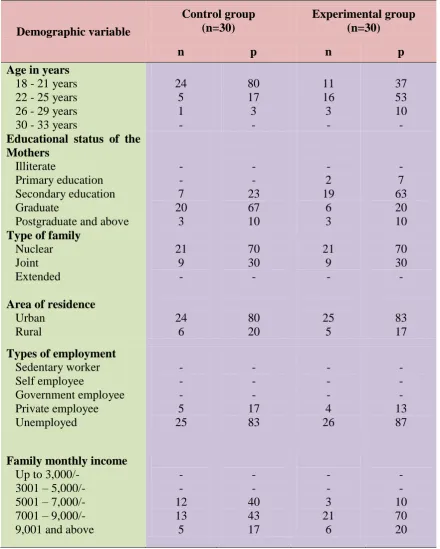
The majority of the Primigravid mothers were between the age group of 18
– 21 years (80%, 37%) and 22 – 25 years (17%, 53%), a significant
percentage of them are qualified with secondary education (23%, 63%)
and graduation courses (67%, 20%), majority of them were from nuclear
families (70%, 70%), most of them reside in urban area (80%, 83%),
majority of the mothers were unemployed (83%, 87%) and most of them
had a family monthly income within Rs. 7001 – 9000 (43%, 70%), a large
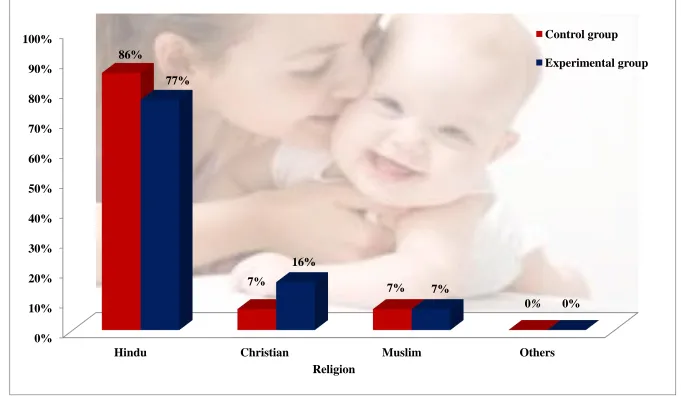
percentage of them were Hindus (86%, 77%).
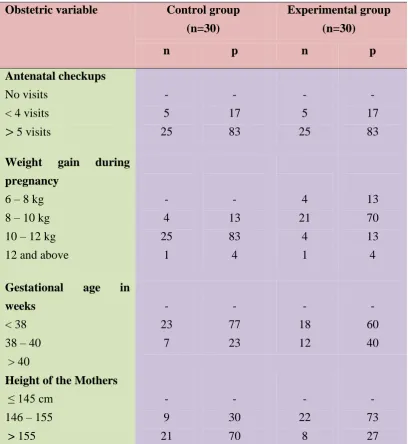
Majority of Primigravid mothers had undergone more than 5 antenatal
visits (83%, 83%), most of them gained about 8 -10 kg (13%, 70%) and 10 – 12 kg (83%, 13%) weight during pregnancy, a significant percentage of
them had gestational age within 38 – 40 weeks of gestation (77%, 60%)
and a majority of them had height 146 – 155 cm (30%, 73%) and more
than 155 cm (70%, 27%).
Majority of the Primigravid mothers had moderately adequate knowledge
(80%, 53%) before intervention in the Control and Experimental group
respectively and all of them gained adequate knowledge (100%) after
intervention in the Experimental group.
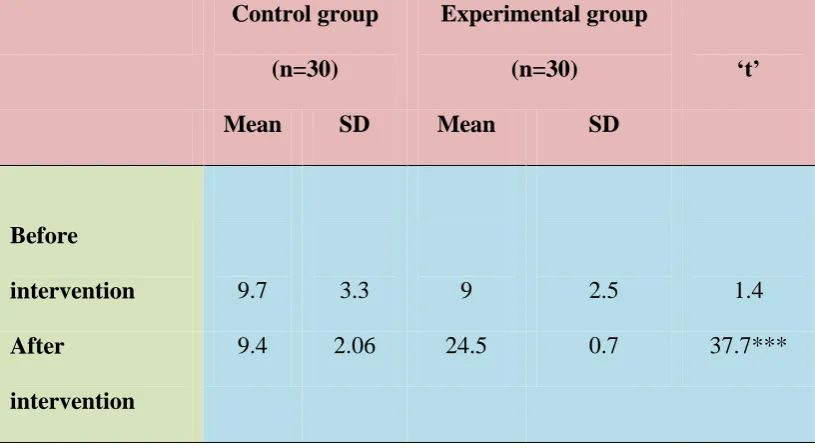
The mean knowledge level was slightly high after intervention
(M=9.4, SD=2.06) compared to before intervention (M=9.7, SD=3.3) in
the Control group where as the mean level of knowledge was very high
after intervention (M=24.5, SD=0.7) compared to before intervention
vi
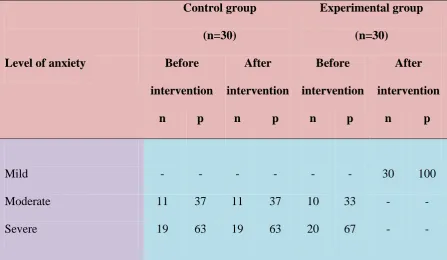
Majority of mothers had severe level of anxiety (63%, 67%) in the Control
and Experimental group before intervention and a few mothers in the
Control and Experimental group had moderate level of anxiety
(37%, 33%) before intervention. After the intervention the level of anxiety
in the Experimental group reduced to a mild level of anxiety (100%).
There was a severe level of anxiety in a significant percentage (63%) of
them in the Control group after intervention.
The mean level of anxiety in the Experimental group was low after
intervention (M=1.2, SD=1.69) in comparison with before intervention
(M=8.1, SD=1.7). Whereas in the Control group there is only a slight
decrease in the level of anxiety (M=7.2, SD=1.12) after intervention in
comparison with before intervention (M=7.8, SD=1.23).
All of the participants in the Experimental group were highly satisfied
(100%) with the Virtual Labour Process and none of them (0%) reported
unsatisfaction towards the intervention.
There was no significant association between age, educational status, type
of family and type of employment with knowledge regarding labour
process among the Control group of Primigravid mothers. Hence the null
hypothesis H02 was retained.
There was significant association between age and educational status with
knowledge regarding labour process among the Experimental group of
Primigravid mothers but there was no significant association with type of
family and type of employment. Hence the null hypothesis H02 was
rejected.
There was no significant association between age, type of employment,
vii
among the Control group of Primigravid mothers. Hence the null
hypothesis H02 was retained.
There was no significant association between age, type of employment,
type of family and educational status with anxiety regarding labour process
among the Experimental group of Primigravid mothers. Hence the null
hypothesis H02 was retained.
There was no significant association between number of antenatal
check-up and gestational age in weeks with knowledge regarding labour process
among the Control group of Primigravid mothers also there is no
significant association between number of antenatal check-up and
gestational age in weeks with knowledge regarding labour process among
the Experimental group of Primigravid mothers. Hence the null hypothesis
H03 was retained.
In the Control group of Primigravid mothers there was no significant
association between number of antenatal check-up and gestational age in
weeks with anxiety regarding labour process. Hence null hypothesis H03 was retained.
There was significant association found between the number of antenatal
check-up with anxiety regarding labour process and no significant
association between the gestational age in weeks with anxiety regarding
labour process among the Experimental group of Primigravid mothers.
Hence the null hypothesis H03 was rejected.
The study concluded that the Virtual Labour Process was effective in
terms of reduction in anxiety and improvement in knowledge regarding labour
viii
Recommendations
The same study can be conducted with large number of samples.
A comparison can be made between primi and multi gravidae.
A comparison can be made with different countries.
The same study can be conducted at different setting.
A comparison can be made between different types of educational
ix
TABLE OF CONTENTS
Chapter Contents Page No
I INTRODUCTION 1-15
Background of the study 1
Need for the study 4
Statement of the study 7
Objectives of the study 7
Operational definition 8
Assumptions 9
Null Hypothesis 10
Delimitations 10
Conceptual Framework 11
Projected Outcome 15
Summary 15
Organization of the Report 15
II REVIEW OF LITERATURE 16-26
Literature Related to Maternal Knowledge Regarding Labour 16
Literature Related to Maternal Anxiety Regarding Labour 19
Literature Related to the Effectiveness of Various
Educational Programme
21
x
III RESEARCH METHODOLOGY 27-38
Research Approach 27
Research Design 27
Variables of the Study 28
Research Setting 31
Population, Sample, Sampling technique 31
Sampling Criteria 32
Selection and Development of Study Instrument 33
Psychometric Properties of the Study Instrument 35
Pilot Study 36
Protection of Human Rights 36
Data Collection Procedure 37
Problems Faced During Data Collection 37
Plan for Data Analysis 38
Summary 38
IV ANALYSIS AND INTERPRETATION 39-59
V DISCUSSION 60-68
VI SUMMARY, CONCLUSION, IMPLICATIONS, RECOMMENDATIONS AND LIMITATIONS
69-79
REFERENCES 80-85
xi
[image:14.595.96.510.116.765.2]LIST OF TABLES
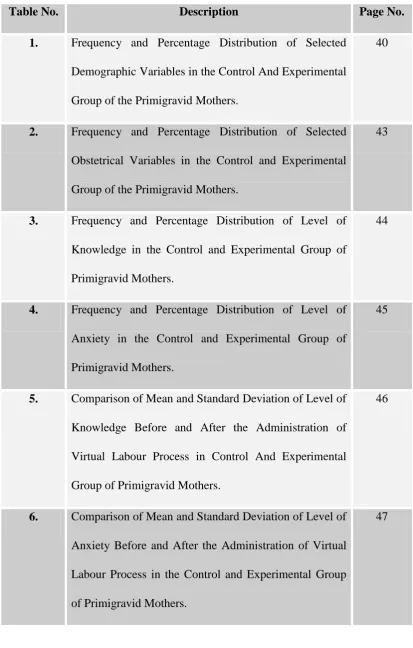
Table No. Description Page No.
1. Frequency and Percentage Distribution of Selected Demographic Variables in the Control And Experimental
Group of the Primigravid Mothers.
40
2. Frequency and Percentage Distribution of Selected Obstetrical Variables in the Control and Experimental
Group of the Primigravid Mothers.
43
3. Frequency and Percentage Distribution of Level of Knowledge in the Control and Experimental Group of
Primigravid Mothers.
44
4. Frequency and Percentage Distribution of Level of Anxiety in the Control and Experimental Group of
Primigravid Mothers.
45
5. Comparison of Mean and Standard Deviation of Level of Knowledge Before and After the Administration of
Virtual Labour Process in Control And Experimental
Group of Primigravid Mothers.
46
6. Comparison of Mean and Standard Deviation of Level of Anxiety Before and After the Administration of Virtual
Labour Process in the Control and Experimental Group
of Primigravid Mothers.
xii
7. Frequency and Percentage Distribution of Level of Satisfaction on Virtual Labour Process in Experimental
Group of Primigravid Mothers.
48
8. Association between the selected Demographical Variables and the Level of Knowledge Before and After
Virtual Labour Process in the Control group of
Primigravid Mothers.
49
9. Association between the selected Demographic Variables and the Level of Knowledge Before and After
Virtual Labour Process in the Experimental Group of
Primigravid Mothers.
51
10. Association between the selected Demographic Variables and the Level of Anxiety Before and After
Virtual Labour Process in the Control Group of
Primigravid Mothers.
53
11. Association between the selected Demographic Variables and the Level of Anxiety Before and After Virtual
Labour Process in the Experimental Group of
Primigravid Mothers.
54
12. Association between the selected Obstetric Variables and Level of Knowledge Before and After Virtual Labour
Process in the Control Group of Primigravid Mother.
xiii
13. Association between the selected Obstetric Variables and Level of Knowledge Before and After Virtual Labour
Process in the Experimental Group of Primigravid
Mother.
56
14. Association between the selected Obstetric Variables and Level of Anxiety Before and After Virtual Labour
Process in the Control Group of Primigravid Mother.
57
15. Association between the selected Obstetric Variables and Level of Anxiety Before and After Virtual Labour
Process in the Experimental Group of Primigravid
Mother.
xiv
[image:17.595.100.516.119.294.2]LIST OF FIGURES
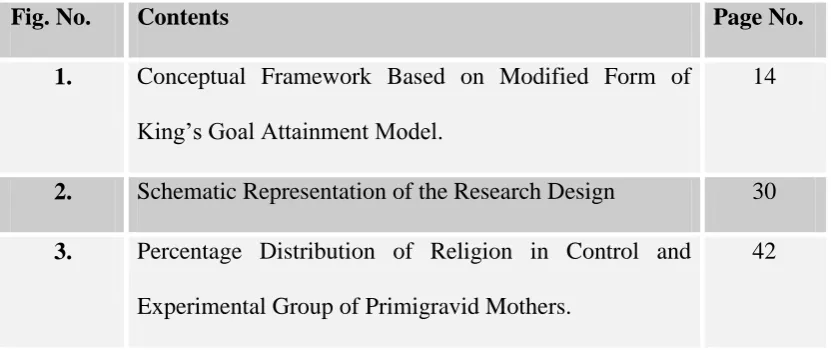
Fig. No. Contents Page No.
1. Conceptual Framework Based on Modified Form of King’s Goal Attainment Model.
14
2. Schematic Representation of the Research Design 30 3. Percentage Distribution of Religion in Control and
Experimental Group of Primigravid Mothers.
xv
LIST OF APPENDICES
Appendix Title Page No.
I Letter seeking permission to conduct study xvi II Letter permitting to conduct the study xvii III Ethics committee permission to conduct the study xviii
IV Request for content validity xx
V Content Validity Certificate xxi
VI List of Experts for Content Validity xxii VII Research Participant Consent Form xxiii
VIII Certificate for English Editing xxv
IX Certificate for Tamil Editing xxvi
X Demographic Variables Proforma for Primigravid Mothers xxvii XI Obstetric Variables Proforma for Primigravid Mothers xxxi
XII Structured Interview Schedule xxxiv
XIII Anxiety Scale xlix
XIV Rating Scale on Satisfaction of Virtual Labour Process liii XV Tamil Script for Virtual Labour Process lvii
XVI Plagiarism Originality Report lxiii
XVII Data Code Sheet lxiv
XVIII Master Code Sheet lxv
1 CHAPTER I INTRODUCTION
"A moment in my tummy... a lifetime in my heart."
- Li Langelz Mom
Background of the Study
Babies are bits of star-dust blown from the hand of God. Lucky are the
woman who knows the pangs of birth for she has held a star. Whether giving birth
will be difficult or easy, pain full or pain free, long – drawn – out or brief, it is
something where everyone ends up with own unique experience. Birth is not only
about making babies, it is about making Mothers strong, competent, capable
Mothers who trust themselves and know their inner strength.
Giving birth to a baby is a very great event in most cases. There are
feelings associated with this event like that of achievement, excitement and
braveness, and Mothers are mostly proud of giving birth without any technical
assistance.
Pregnancy is one of the most valuable spiritual lessons for any female and
has the single greatest impact of any event in a normal life on earth. There is a
little to say about such pregnancy. God loves to have many children because many
children means many sources of joy in life. Having beloved babies in a loving
relationship is a most beautiful experience. Since we all are made in the image of
God, we all enjoy what God enjoys – many babies growing up and creating joy of
2
Childbirth is more than a physical phenomenon it is important to have an
awareness of the birth process and honor it all the physical, emotional and
spiritual levels. Babies can experience pleasure, pain, fear, stress and serenity in response to the Mothers’s experiences and reactions. Education is a vital part of
building a relationship of trust with oneself and their baby. Childbirth preparation
gives a pregnant Mothers the knowledge, skills and support that instill confidence
in her ability to give birth and gives her partner the confidence to be active in the
process.
According to Indian culture, talk about reproductive system is considered
to be shameful. Historically Mothers are expected to be subservient to be their
families and have very little interaction with outsiders. Owing to their low status,
their access to education and health information are limited. Mothers’s
experiences of childbirth have changed significantly in the past few years in
developing countries like India. Deliveries, which previous took place at home
with a familiar attendant, now occur in hospitals or nursing homes and are
characterized by protocols and increased alienation from the familiar environment
and persons. Procedures and techniques used in labour rooms of hospitals further
create an atmosphere of unreality around normal childbirth. Mothers going
through the process of childbirth in labour rooms are thus confused between
traditional practices and hospital procedures. Antenatal health education regarding
Labour Process and delivery may help to reduce this confusion and the Mothers
can co-operate well with the process.
In India, 128.9 million births occur per year. According to the Ministry of
3
22.1/thousand live births. The birth rate in Tamil Nadu and Chennai in the year
2009 was 16.3/1000 births and 15.3/1000 births respectively (Department of
Health and Family Welfare, 2009).
Every year worldwide approximately 211.4 million Mothers experience
the joy of pregnancy based on the WHO report in 2010. Where in India
approximately 31.3 million Mothers experiences pregnancy annually says
UNICEF study.
The wisdom and compassion a woman can intuitively experience in
childbirth can make her a source of healing and understanding for other Mothers.
Though labour and delivery are not without pain and some degree of anxiety, if
Mothers remains confident, well-informed and fully supported by health workers
and partner, she is likely to have no problem in handling the awesome task of
bringing a child into the world.
Prepared child Birth is based on the premises that the perception of pain is
heightened by fear and tension and reduced by education and relaxation. Studies
show that Mothers who are prepared and use the comfort measures from childbirth
preparation class make the birthing process easier and have a shorter labour if all
factors are favorable. A good child birth class empowers couples to have
confidence in their decisions, their body, the natural process of labour and their
ability to be wonderful parents.
Now a days anxiety is common in life and it is more among Primigravid
4
in labour is 13.3% according to American psychological Association in 2005.
The world wide prevalence rate of anxiety in labour is 13%. India is currently
suffering an epidemic of generalized anxiety disorders. In 2006 national
institute of medical science conducted a survey in which 18.1% population
are suffering from stress and anxiety in India.
No studies were found related to use of Virtual Labour Process to improve
knowledge and to reduce anxiety, so the researcher was very interested in doing a
study using virtual programme and was curious to find the effectiveness of virtual
programs in increasing the level of knowledge and reducing the level of anxiety.
Need for the Study
Pregnancy is a special time of life in a woman’s life. Most Mothers give
birth without complications. Birth starts with the onset of labour, which is usually
marked by the beginning of regular uterine contractions. Pregnancy, childbirth and
Mothershood are times when a woman undergoes a vast change in her body and it
can be termed as an entirely new birth for woman or as a time of rebirth.
Primigravida is a newly pregnant Mothers for the first time. They usually
have difficulty in recognizing the changes that occur in the body that causes discomfort until her pregnancy lasted. This affects the Mothers’s psychology
because of the lack of knowledge. They undergo anxiety because labour is
something new to be experienced. Lack of knowledge can also lead Primigravid
5
According to National centre for health statistics (2008) the birth rate in
United States was 685/1000 Mothers ages 15 – 44 years in that 58.5/1000 Mothers
undergone vaginal delivery. About 55% of full term newborns worldwide are
delivered vaginally, while over 75% of full term newborns in US are delivered
vaginally.
There will be so many questions as the pregnant Mothers get closer and
closer to the due date. Both men and Mothers have negative thoughts and feelings
about the impending birth experience. The biggest obstacle that they may have
will be the fear of the unknown. Education is the key and the greatest factor in
decreasing the fear. The more they know and understand about the process of
labour, the better prepared they will be to choose the best options available.
Knowledge regarding the pregnancy and labour has a positive influence on
the antenatal Mothers, to take adequate care of her and in turn leads to better
compliance during Labour Process, thereby leading to natural child birth.
The anxiety level in the Primigravid Mothers are mainly due to the lack of
knowledge regarding the premonitory signs of labour, the process of labour and
the immediate care of the newborns. Studies have shown that anxiety due to
labour in Primigravid Mothers may lead to Obstetrical complications like
pre-eclampsia, forceps deliveries, prolonged and precipitated labour, post partum
hemorrhage, manual removal of placenta, fetal distress, preterm labour and child
6
Once the changes taking place in Mothers’s body for the first time, it will
increase her anxiety level. To overcome anxiety and to prevent complications of
anxiety among Primigravid Mothers, they should be educated about labour
process and should make them be prepared for childbirth. So the researcher feels
that there is a need to improve the level of knowledge and reduce the maternal
anxiety during the birth process among Primigravid Mothers by using Virtual
Labour Process.
Various educational methods were adopted by the nursing personnel to
reduce the level of anxiety regarding labour process by improving the knowledge
level of pregnant Mothers. This includes Structured Teaching Programme, Health
talks, informational booklets, guidance and counseling, video programmes etc.
Many researches were conducted and has proved its effectiveness in reducing
anxiety on various aspects of health and it also shows that knowledge and anxiety
is inversely proportional which means that once knowledge increases the level of
anxiety decreases.
The effectiveness of structured teaching program to improve knowledge
on warning signs of pregnancy among Primi antenatal Mothers was conducted by
Kavitha (2012), and it was found effective.
A quasi experimental study conducted by Gayathri (2009) showed the
effectiveness of planned teaching program in improving the level of knowledge
and reducing the level of anxiety about labour among Primigravidae.
7
During the clinical postings, the researcher came across many Primigravid
Mothers who were anxious regarding labour process. They were also found to
have inadequate knowledge regarding various aspects of labour process and
newborn care. Thus the researcher felt the need of improving the level of
knowledge of Primigravid Mothers thereby decreasing their level of anxiety
regarding labour process.
The researcher felt that apart from the usual educational methods, the
Virtual Labour Process would be more interesting and effective in improving the
level of knowledge and reducing the level of anxiety among the Primigravid
Mothers.
Statement of the Problem
An Experimental Study to Assess the Effectiveness of Virtual Labour
Process upon Knowledge and Anxiety Level among Primigravid Mothers within
35 – 40 weeks of Gestation at Selected Hospital, Chennai.
Objectives of the Study
1. To assess the level of knowledge and anxiety before and after Virtual
Labour Process among Control and Experimental group of Primigravid
Mothers within 35 - 40 weeks of gestation.
2. To determine the effectiveness of Virtual Labour Process by comparing
the level of knowledge and anxiety before and after the Virtual Labour
Process among Experimental and Control groups of Primigravid Mothers
8
3. To find the association between the selected Demographic variable and the
level of knowledge and anxiety before and after the Virtual Labour
Process among Control and Experimental group of Primigravid Mothers
within 35 - 40 weeks of gestation.
4. To find the association between the selected Obstetric variables and the
level of knowledge and anxiety before and after the Virtual Labour
Process among Control and Experimental group of Primigravid Mothers
within 35 - 40 weeks of gestation.
5. To determine the level of satisfaction among Experimental group of
Primigravid Mothers within 35 – 40 weeks of gestation regarding
administration of Virtual Labour Process.
Operational Definition
Effectiveness
In this study the effectiveness refers to the outcome of Virtual Labour
Process as measured in terms of knowledge and anxiety level before and after the
Virtual Labour Process among Primigravid Mothers within 35 - 40 weeks of
gestation using Structured Interview schedule and Anxiety scale prepared by the
researcher.
Virtual Labour Process
In this study the term Virtual Labour Process refers to the moving
animated pictures with foot notes (English) prepared by the researcher with time
duration of 10 minutes. This is administered to each Primigravid Mothers in the
Experimental group individually. This depicts the entire process of labour from
9 Knowledge
It refers to the level of information known to the Primigravid Mothers regarding labour process before and after the Virtual Labour Process as measured
by a Structured Interview schedule which is developed by the researcher.
Anxiety
It refers to feeling of fear from the anticipation of process of labour among
Primigravid Mothers before and after the Virtual Labour Process as measured
using the Anxiety scale which is developed by the researcher.
Primigravid Mothers
It refers to the Mothers who are going to deliver baby for the first time
irrespective of previous abortions between the age group of 18 - 35 years and
within 35 – 40 weeks of gestation.
Satisfaction
It is a feeling of gratification attained or achieved by the Primigravid
Mothers as measured using satisfaction rating scale.
Assumptions
The study assumes that
Primigravid Mothers are very anxious at the time of labour.
Reducing the anxiety level of the Primigravid Mothers in labour is an
important function of a nurse.
The Primigravid Mothers have a decreased level of knowledge regarding
10
Health teaching is important for Primigravid Mothers for improving their
knowledge.
Virtual Labour Process is an accepted method of teaching.
Null Hypothesis
H01 : There will be no significant difference between pre and post-test level of knowledge and anxiety regarding labour process among the Control and
Experimental groups of Primigravid Mothers within 35 - 40 weeks of
gestation.
H02 : There will be no significant association between the selected Demographic variables and the level of knowledge and anxiety regarding labour process
among the Control and Experimental groups of Primigravid Mothers
within 35 – 40 weeks of gestation.
H03 : There will be no significant association between the selected Obstetric variables and the level of knowledge and anxiety regarding labour process
among the Control and Experimental groups of Primigravid Mothers
within 35 – 40 weeks of gestation.
Delimitations
The study was limited to Mothers who were Willing to participate in the study.
Primigravid
Between the age group of 18-35 years.
Within the gestational age of 35-40 weeks.
11 Understanding English or Tamil
Receiving treatment from Andhra Mahila Sabha Hospital at the time of
data collection.
Conceptual Framework
Conceptual framework deals with interrelated concepts or abstractions that
are assembled together in some rational schemes by virtue of their relevance to a
common theme (Polit and Beck, 2004).
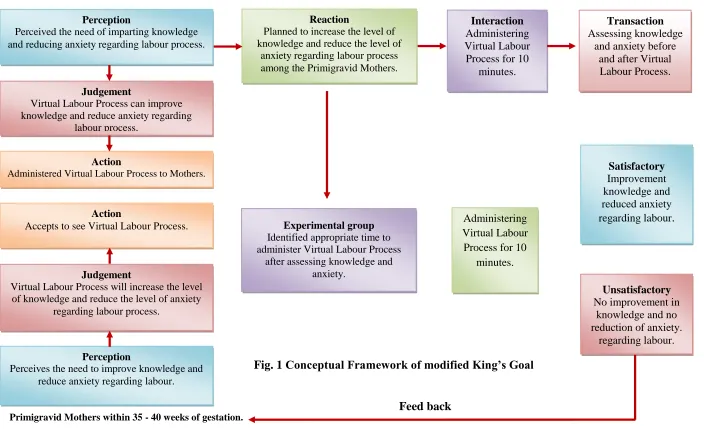
The conceptual framework set up for this study is based on “King’s Goal Attainment Model” (1981). This model addresses process of action, reaction,
interaction whereby nurses and clients share information about their perception.
Through perception and communication they identify the problems through which
they set goals and take necessary action.
The framework was selected for the present study as it provides a way of
understanding and providing throughout the concepts of perception, judgement,
action, reaction, interaction, transaction and feedback between the nurse and the
antenatal Mothers within 35 – 40 weeks of gestation, the components of the model
incorporated in the study are as follows:
1. Perception
2. judgement
3. Action
4. Reaction
5. Interaction
6. Transaction
12 Perception
A person imparts energy from the environment and transforms, processes
and stores it. The study assumed that there was interpersonal relationship between
researcher and the Primigravid Mothers within 35 – 40 weeks of gestation. The
nurse researcher and Primigravid Mothers perceived the need of awareness
regarding labour process and reduction of anxiety in Primigravid Mothers.
Judgement
Analyze the area of action which can be carried out. The nurse researcher
and the Primigravid Mothers within 35 – 40 weeks of gestation analyzed the need
for improving the knowledge and reducing the anxiety level regarding labour
process.
Action
Individual exports the perceived energy as demonstrated by observable
behavior by taking mental or physical action. In this study the researcher plans to improve the Primigravid Mothers’s knowledge and reduce her level of anxiety
regarding labour process. The Mothers shows readiness to improve her knowledge
and reduce her anxiety level.
Reaction
Reaction means developing action and acting on perceived choices for
goal attainment. Both the nurse researcher and the participants planned for
reaction. For the Experimental group of Primigravid Mothers within 35 – 40
weeks of gestation efforts were taken to improve the knowledge level and reduce
13 Interaction
It refers to the verbal and non verbal behavior between an individual and
the environment or between two or more individuals. It involves goal directed
communication. Actions lead to interaction where the researcher shows Virtual
Labour Process to the Primigravid Mothers within 35 – 40 weeks of gestation in
the Experimental group to improve knowledge and to reduce anxiety regarding
labour process.
Transaction
Imogene King believed that transaction is the mutually defined goals of
two or more individuals and the means to achieve them. They reach an agreement
about how to attain these goals and then set about to realize them. Thus the nurse
researcher and the Primigravid Mothers mutually set a goal to improve the level of
knowledge and reduce the level of anxiety regarding labour process among the
Mothers.
Feedback
The outcome may either be satisfactory or unsatisfactory. Satisfactory
indicates that the Virtual Labour Process was effective in increasing the level of
knowledge and reducing the level of anxiety. Unsatisfactory indicates that Virtual
Labour Process was not effective in increasing the level of knowledge and
reducing the level of anxiety.
Researcher adapted this model and perceived that it was apt in enabling to
assess the effectiveness of Virtual Labour Process in increasing the level of
knowledge and reducing the level of anxiety among Primigravid Mothers within
14 Nurse Researcher
Perception
Perceived the need of imparting knowledge and reducing anxiety regarding labour process.
Judgement
Virtual Labour Process can improve knowledge and reduce anxiety regarding
labour process.
Action
Administered Virtual Labour Process to Mothers.
Judgement
Virtual Labour Process will increase the level of knowledge and reduce the level of anxiety
regarding labour process.
Action
Accepts to see Virtual Labour Process.
Perception
Perceives the need to improve knowledge and reduce anxiety regarding labour.
Reaction
Planned to increase the level of knowledge and reduce the level of
anxiety regarding labour process among the Primigravid Mothers.
Experimental group
Identified appropriate time to administer Virtual Labour Process
after assessing knowledge and anxiety.
Interaction Administering Virtual Labour
Process for 10 minutes.
Transaction Assessing knowledge
and anxiety before and after Virtual
Labour Process.
Administering Virtual Labour
Process for 10 minutes.
Satisfactory Improvement knowledge and reduced anxiety regarding labour.
Unsatisfactory No improvement in
knowledge and no reduction of anxiety.
[image:32.842.84.788.88.517.2]regarding labour.
Fig. 1 Conceptual Framework of modified King’s Goal Attainment Model
Primigravid Mothers within 35 - 40 weeks of gestation.
15
Projected Outcome
The study projects that the Virtual Labour Process will have an effect on the
level of anxiety and knowledge among the Primigravid Mothers within 35 – 40 weeks
of gestation.
Summary
This chapter has dealt with the background of the study, need for the study,
statement of the problem, objectives of the study, operational definitions, assumptions,
Null Hypothesis, delimitations and conceptual framework.
Organization of the Report
Further aspects of the study are presented in the following chapters.
Chapter II : Review of literature.
Chapter III : Research methodology which includes research approach,
research design, research setting, population, sample, sampling
technique, tool description, validity and reliability of tools, pilot
study, data collection procedure and plan for data analysis.
Chapter IV : Analysis and interpretation of data is presented in terms of descriptive and inferential statistics
Chapter V : Discussion.
16 CHAPTER II
REVIEW OF LITERATURE
A literature review involves the systematic identification, location, scrutiny and
summary of written materials that contain information on the research problem (Polit
and Hungler 2007).
“Conducting a literature review is a little bit doing a full-fledged study”. The
review of literature has two major goals: (1) To provide readers with an overview of
existing evidence on the problem being addressed and (2) To develop an argument that
demonstrates the need for the new study. According to nursing research by Polit (2008), ‘Review of literature is a written summary of the state of evidence on a research
problem’.
The review of literature in this chapter is presented under the following headings:
1. Literature related to maternal knowledge regarding labour.
2. Literature related to maternal anxiety regarding labour.
3. Literature related to the effectiveness of various educational programme.
4. Literature related to labour experiences in Primigravid Mothers.
Literature related to maternal knowledge regarding labour
Harriet Adong (2011) conducted an exploratory study to assess knowledge,
perceptions and practices in pregnancy and childbirth in Udanda. It ulilized focus group
discussion (FGD), key informant interview (KII) and in-depth interviews between
17
Mothers who have delivered 5 years prior to the study. Results show that majority of
Mothers had knowledge of pregnancy preparation, dangers of pregnancy and childbirth,
and the need for antenatal care and delivering in health facilities. However there were
some limitations regarding access and cost related healthcare like preference for modern
health care services through TBAs. There is, however, dual health seeking both from
biomedical and traditional health care. In terms of pregnancy and child birth practices,
both traditional and modern practices existed.
A study conducted by Kathryn Crowe (2007) in Sydney to assess knowledge of
childbirth, fears regarding pregnancy, state of anxiety, expectation of pain and
confidence in ability to Control pain were examined as possible predictors of positive
childbirth experience. Self-reports of these variables were collected from 30 Primi
parous Mothers enrolled in prenatal courses, on three occasions: before the class, after
the last class and 24 to 48 hours after delivery. It was found that those who
demonstrated greater knowledge of childbirth and higher confidence after classes
subsequently reported a less painful childbirth. Those with higher levels of childbirth-
related fear before classes reported experiencing less anxiety during labour and delivery.
The findings support the current emphasis in prenatal education on imparting
knowledge, instilling confidence and providing a forum for dealing with childbirth
related fears.
Nuraini (2005) conducted an experimental study on 60 pregnant Mothers from
10 cluster villages at central Java, Indonesia. The purpose of this study is to ascertain if
a new approach to ANC can improve pregnant Mothers's knowledge of its benefits. The
18
routine ANC. The findings show that the improvement of knowledge in the intervention
group is significant particularly in the knowledge about healthy pregnancy, pregnancy
complications, safe birth and taking care of the newborn. The improvement of
knowledge was significantly influenced by the respondents' educational back ground
and socio-economic status.
Henry (2004) has undertaken a study to assess Mothers’s knowledge and plans
regarding intrapartum pain management at the Royal College for Mothers in Australia.
There were 496 participants. Antenatal pain management information was accessed by
98% of Mothers. Sources most accessed were antenatal classes (55%), Multimedia
(53%) and friends and relatives (46%). Antenataly 80% of Mothers planned to use
intrapartum pain management: natural methods were most popular (62% planned to use)
and pethidine least (49% planned against). Intrapartum 19% used unwanted pain
management mostly (67%) due to increased labour pain. Increased information access
was associated with significantly higher use of natural methods and epidural analgesia
as well as significantly higher satisfaction scores.
Grery (1998) in his survey to find out the importance of information given
during pregnancy, expressed that there should be a consideration of the need to give
information to the pregnant Mothers during the relaxing period before the onset of
labour, which is the most appropriate time for giving information regarding care during
labour with the use of audio-visual resources. Red and Shaw (1994) express that the
receptivity of Mothers to information is questioned when she is admitted to the hospital
or when in labour. If the Mothers are well prepared, they may be able to adjust to their
19
Literature related to maternal anxiety regarding labour
Wing Cheung (2006) conducted an exploratory descriptive correlation study on
the relationship between maternal anxiety levels and feelings of Control during labour.
A convenient sample of 90 Hong Kong Chinese first-time Mothers was selected from an
Obstetric unit of public teaching hospital in Hong Kong. The Labour Agentry Scale
(LAS) to measure feelings of Control during childbirth and a Visual Analogue Scale for
anxiety (VAS-A) was used to measure Mothers's self-reported level of anxiety during
labour. The study showed a significant negative relationship between maternal anxiety
and feelings of Control during labour.
A qualitative study conducted by Schneiderz (2002) on Mothers’s experiences
and perception of their first pregnancy at Australia. Thirteen Primi Mothers were selected for this study by using interview method data were collected at the Mothers’s
home on three occasions during pregnancy. Results showed that most of the Mothers
had difficulty in coping with the physical and emotional symptoms of pregnancy and
loss of control caused by anxiety. This study concluded that midwives should focus on
Mothers centered model of care and to provide continuity of care.
Melender (2002) conducted a study on woman’s experience of fear in
association with pregnancy and child birth among 481 pregnant Mothers in Western
Finland. Data were collected by using semi Structured Interview method. The results
showed that 78% of them expressed fear relating to pregnancy, to child birth or both.
The causes of fear and anxiety were negative mood, negative stories told by others, lack of assuring information, multipara’s negative experiences of previous pregnancy, child
birth and baby health and care. Parity and antenatal training were the most important
20
A comparative study on intensive and conventional therapy for severe fear of
child birth was conducted by Saisfot (2002) in Finland. The researcher used questioner
to collect data from 176 Mothers who were selected for this study. Results showed birth
related concerns decreased in intensive therapy group, increased in the conventional
therapy group, labour was shorter in the intensive therapy group and conventional
group. The study concluded both kinds of therapy reduced unnecessary caesarean also
the Intensive therapy on anxiety related to pregnancy and birth reduced and labour were
shorter.
Hofberg (2002) conducted a study about fear associated with pregnancy and
child birth at University hospital in Finland. By using interview method data were
collected from 20 Mothers who were selected for this study. The results of data
collected from ten Primigravid and ten Multi gravid showed common fears associated
with pregnancy. They suggest midwifery staff remember that pregnant Mothers have
very serious fears associated with pregnancy and child birth, try to protect Mothers
against these fear by giving opportunity to deal with their own fear and to obtain help
when needed. They concluded that 10% of pregnant Mothers had fear of child birth,
with counseling decrease the rate of elective caesarean section, without counseling have
a negative impact on the subsequent experience of child birth.
Sharma (1998) conducted a study about the effect of psycho-educational programme (related to labour and delivery) on Primigravidae’s level of anxiety during
their third trimester of pregnancy at northern institute of country by using probability
convenient technique method. The data was collected from 60 Primigravida who were
selected for this study. Results showed reducing overall anxiety level was statistically
21
Literature related to the effectiveness of various educational programs
Larsson Wilde (2011) conducted a study in Sweden to illuminate Mothers’s
perceptions of childbirth and childbirth education before and after education and birth.
Findings of the study showed that increased knowledge about childbirth and
experiences of confirmation during childbirth contributed to a better experience than
expected. Findings also stress the importance of individual assessment of expectations
and experiences of childbirth education.
Maimburg (2010) conducted a randomized clinical trial in Danish University
Hospital, to compare the birth process in parturient Mothers enrolled in structured
antenatal training programme with Mothers allocated in routine care. The study findings
revealed that they used less epidural analgesia during labour for interventional group.
Thus the study concluded that attending the antenatal education classes may help
Mothers to cope better with the birth process.
A quasi experimental study conducted by Gayathri (2009) in Karnataka to assess
the effectiveness of planned teaching program on knowledge and reducing anxiety about
labour among Primigravidae. Using purposive sampling 60 Primigravidae were
selected. Data was collected using a structured knowledge questionnaire and
standardized Zung self-rating scale. Results showed that planned teaching program was
effective method to gain knowledge about labour among Primigravidae and the anxiety
regarding labour was reduced. Therefore the study concluded that identification of
anxiety and stress, helps nurses to plan provide holistic care which helps Mothers to
22
Svensson (2009) conducted a study in Sydney to determine the outcome of
antenatal education programme with increased content on parenting. The objective of
the study was to assess whether antenatal education programme with increased content
on parenting will improve the parenting skills of Mothers postnatally, than those
attending the regular antenatal education programme. Out of 170 samples, 91 Mothers
attended the new programme and 79 the regular programme. The postnatally assessed
maternal self efficacy score and the knowledge score of Mothers who attended “Having a Baby Programme” were significantly higher than those attended regular antenatal
education programme.
A randomized Controlled study was conducted by Mehadizadeh (2005) to
evaluate the impact of birth preparation courses on the health of the Mothers and
newborn among 200 Primigravidas younger than 35 years and gestational age above 20
weeks. Birth preparation courses were given in eight sessions and measurable clinical,
Obstetrical and neonatal advantages were monitored and compared in Experimental and
Control groups. The study concluded that antenatal preparation classes could play a
major role in the health of Mothers and newborn during labour and postnatal period. In
addition they also suggested that antenatal preparation classes should be introduced to
all Mothers as a National Health Policy.
In Quebec, Canada, Louise Dumas (2002) conducted a study and found that
prenatal education is generally offered at no cost to high risk couples as part of the
government paid services provided in most of the provinces local community health
23
basis. Prenatal education was essentially aimed at both reducing the number of low birth
weight and premature babies and informing high risk couples about pregnancy, labour,
birth, and postpartum events.
Murira (2000) conducted a study in the University of Zimbabwe to evaluate how
the health education is currently practiced in the antenatal clinics in Harare and to make
recommendation for its improvement. The result revealed that health education was
given once in pregnancy, on the first visit only. The lecture was the most used teaching
method. Midwives decided on the subject matter for health education without
consultation with the expectant Mothers. As a result many Mothers could not follow the
practical advice given to them. Both the staff and the pregnant Mothers agreed that there
should be greater use of written material for Mothers to read at home. The conclusion of
the study was that the lecture is not the most appropriate method of health education
during pregnancy and greater use should be made of other methods of communication
such as the mass media and pamphlets.
A study was conducted Rojamma (1999) to identify the effectiveness of teaching
thirdtrimester pregnant Mothers about newborn care in an urban slum community of
Hyderabad. In this study two groups of third trimester antenatal Mothers (16 in each
group) were given health education either individually or in groups, on the care of the
newborn .The pretest and post test scores of Mothers who received individual health
teaching were average 19 and 33 as against 47. But the Mothers who received group
health teaching obtained average 19 and 40 as against 47. The study revealed that group
24
Literature related to labour experiences in Primigravid Mothers
Bruggemann (2007), conducted a comparative study on to measure the
effectiveness and safety of the support group given to Mothers during labour and
delivery. By using randomized Controlled trail method, 212 Primi parous Mothers were
selected for this study. One hundred and five Mothers were included in support group
and 107 Mothers were in no support group. The results showed overall, the Mothers in
the support group were more satisfied with labour. During labour, patient satisfaction
was associated with the presence of companion, with care received and during delivery,
satisfaction was associated with having companion with care received. They concluded the presence of a companion of the woman’s choice had a positive influence on her
satisfaction with the birth process.
Gibbins (2001), conducted a qualitative study to explore, describe and
understand the expectations during pregnancy and subsequent experiences of child birth
in Primi parae at the north of England. By using unstructured tape recorder interview
method data were collected. Eight Primi para Mothers were selected for this study. The
results showed in this study was that all Mothers wanted to take a active part in their
labour and the feeling of being in Control was achieved through support from partners,
the positive attitude and information by the midwives caring for them during pregnancy
and labour. This study reveals the importants for midwives to explore and discover the
wishes and feelings of Mothers in their care so that realistic expectations can be
25
A randomized clinical trial conducted by Langer (1998) to evaluate the effects of
psychosocial support during labour, by a female companion (doula) at social security
hospital in Mexico city. The researcher used a randomized clinical trial method. Seven
hundred and twenty four Mothers were randomly assigned to be accompanied by a
doula or to receive routine care. Results showed that the intervention group perceived a
high degree of Control over the delivery experience and the duration of labour was
shorter than in the Control group. There were no effect either on Mothers’s anxiety, self
esteem, perception of pain and satisfaction with new born conditions. They concluded
psychosocial support by doulas had a positive effect on duration of labour.
Hofmeyr (1991) conducted a comparative study on the effect of supportive
companionship on labour and a adaptation to parenthood at community hospital by
using randomized Control trail method. Primi parous Mothers were selected for this
study 75 Mothers were included Control group, 74 Mothers in the support group.
Results showed that companion ship has a measureable effect on the progress of labour,
use of analgesia were significantly reduced. The support group had coped well during
labour, pain scores and anxiety scores were lesser than the Control group. They concluded labour in a Mothers’s feeling of competence, perceptions of labour, and
confidence in adapting to parenthood, companionship during labour aimed to promote
26 Summary
This chapter has dealt with the review of literature related to the problem stated.
The literatures presented here were extracted from 21 primary and 2 secondary sources.
It helped the researcher to understand the impact of the problem under study. It has
enabled the investigator to design the study, develop the tool, plan the data collection
procedure, and to analyze the data.
27 CHAPTER III
RESEARCH METHODOLOGY
This chapter deals with the methodology used by the researcher in this study
which includes research approach, research design, setting of the study, population,
sample, sampling technique, sampling criteria, selection and development of the tools,
psychometric properties of the tools, pilot study, data collection procedure and plan for
data analysis.
Research Approach
To accomplish the objectives of the study, an Experimental research approach
was considered most appropriate as the researcher wanted to assess the effectiveness of
Virtual Labour Process upon level of knowledge and anxiety among Primigravid
Mothers within 35 – 40 weeks of gestation.
Research Design
Research design is the overall plan for addressing a research question, including specifications for enhancing the study’s integrity (Polit, 2008).
The true Experimental (pre test – post test) research design was used in this
study. The researcher assessed the level of knowledge and anxiety with the Structured
Interview schedule and the Anxiety scale prepared by the researcher before intervention
for both the Control and Experimental group of Primigravid Mothers. The researcher
28
Mothers within 35 – 40 weeks of gestation and reassessed the level of knowledge and
anxiety for both the group after intervention. The level of satisfaction on Virtual Labour
Process was assessed from the Experimental group of Primigravid Mothers.
R O1 X O2 R O1 O2 R - randomization
O1 - assessment before the administration of Virtual Labour Process X - administration of Virtual Labour Process
O2 - assessment after the administration of Virtual Labour Process
Variables
Variable is an attribute that varies. That is taken on different values (Polit, 2010).
Independent variable
The variable that is believed to cause or influence the dependent variable is
called independent variable. In this study Virtual Labour Process was the independent
variable. Virtual Labour Process was provided for ten minutes to assess the change in
the level of knowledge and anxiety among the Primigravid Mothers within 35 – 40
weeks of gestation.
Dependent variable
The variable hypothesized to depend on or be caused by independent variable is
the dependent variable. Knowledge and anxiety were the dependent variables in this
study. The level of knowledge and anxiety was assessed before and after Virtual Labour
29 Extraneous variables
A variable that confounds the relationship between the independent and
dependent variables and that needs to be controlled either in the research design or
through statistical procedures is the extraneous variables. Demographic variables and
30
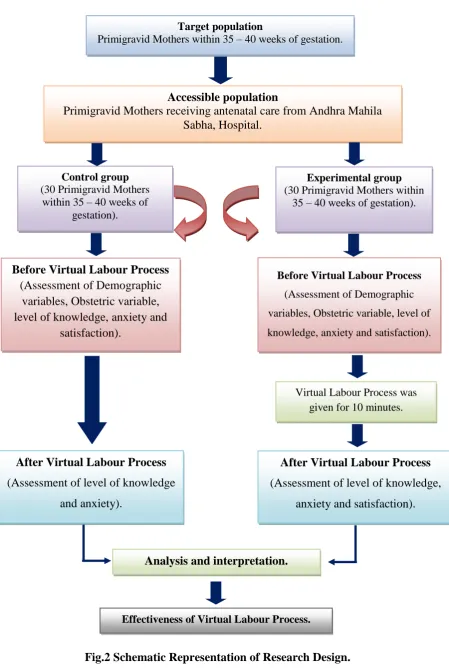
Fig.2 Schematic Representation of Research Design. Target population
Primigravid Mothers within 35 – 40 weeks of gestation.
Accessible population
Primigravid Mothers receiving antenatal care from Andhra Mahila Sabha, Hospital.
Control group (30 Primigravid Mothers
within 35 – 40 weeks of gestation).
Experimental group (30 Primigravid Mothers within
35 – 40 weeks of gestation).
Before Virtual Labour Process (Assessment of Demographic
variables, Obstetric variable, level of knowledge, anxiety and
satisfaction).
Before Virtual Labour Process
(Assessment of Demographic
variables, Obstetric variable, level of
knowledge, anxiety and satisfaction).
Virtual Labour Process was given for 10 minutes.
After Virtual Labour Process (Assessment of level of knowledge
and anxiety).
After Virtual Labour Process (Assessment of level of knowledge,
anxiety and satisfaction).
Analysis and interpretation.
31
Research Setting
The study was conducted at Andhra Mahila Sabha Hospital located at Adayar
which is a semi-urban area of Chennai. The hospital is 200 bedded which has an
antenatal OPD with 5 – 10 new Primi antenatal cases per day. On an average 90 – 120
Primi antenatal cases per month. The hospital also has labour room, postnatal ward, post
operative ward, NICU, operation theatre, labour atory and other diagnostic facilities like
scanning. They also provide Immunization and conduct teaching programmes for the
staff and the patients and do referral to government agencies in need.
Population
Population is the entire set of individuals or objects having some common
characteristics (Polit and Beck, 2010). The target population is the entire population in
which a researcher is interested and to which he or she would like to generalize the
study results. In this study the target population was all the Primigravid Mothers
between 35 – 40 weeks of gestation of that area. The accessible population is the
aggregate of cases that confirm to designated criteria and that are accessible as subjects
for a study. In this study the accessible population was all the Primigravid Mothers who
were between 35 – 40 weeks of gestation who came for consultation at Andhra Mahila
Sabha Hospital, Chennai.
Sample
According to Polit and Beck (2010) sample is a subset of population elements. A
32
which 30 Primigravid Mothers were randomly assigned to the Control group and 30
Primigravid Mothers were assigned to the Experimental group.
Sampling Technique
Sampling technique is the process of selecting a portion of the population to
represent the entire population so that inferences about the population can be made
(Polit and Beck 2010). Simple random sampling was used in this study for the Mothers
who satisfy the inclusion criteria where the odd number Primigravid Mothers were
assigned to Control group and the even number Primigravid Mothers were assigned to
the Experimental group.
Sampling Criteria
Inclusion criteria
Primigravid Mothers who were
Willing to participate in the study.
Between the age group of 18-35 years.
Within the gestational age of 35-40 weeks.
Not under high risk group.
Able to understand English or Tamil.
Exclusion criteria Mothers who were
Not willing to participate in the study.