UNIVERSITI TEKNIKAL MALAYSIA MELAKA
DESIGN AND IMPLEMENTATION OF SMART OBSERVABLE
SYSTEM OF INDOOR HYDROPONIC
This report submitted in accordance with requirement of the Universiti Teknikal Malaysia Melaka (UTeM) for the Bachelor Degree of Engineering Technology
(Industrial Automations & Robotics) (Hons.)
by
NURHIDAYAH BINTI MAKBUL SHAH B071310581
940115-10-5436
DECLARATION
I hereby, declared this report entitled “Design and Implementation of Smart Observable System of Indoor Hydroponic” is the result of my own research except
as cited in references.
APPROVAL
This report is submitted to the Faculty of Engineering Technology of UTeM as a partial fulfillment of the requirements for the degree of Bachelor of Electrical Engineering Technology (Industrial Power) with Honours. The member of the supervisory is as follow:
i
ABSTRAK
ii
ABSTRACT
iii
DEDICATION
iv
ACKNOWLEDGEMENT
First of all, I want to thank to Allah S.W.T for the good health and wellbeing as well as chances to complete my Final Year Project successfully just in time. I had to face some challenges and problems throughout these last two semesters in completing this subject such as, lack of knowledge, information and time that fly so fast.
Luckily, my supervisor, En Khalil Azha bin Mohd Annuar guide me throughout this last two semesters until the end and I would like to give my fullest gratitude and thank you to him, En Khalil Azha. Thousands of thanks to him for giving in supports, concerns and a lot more to me when I‟m having a problem with either software or hardware by giving me opinions and moral support, until I managed to finish this project smoothly. Not forgetting to En Muhammad Salihin Bin Saealal as my panel or examiner for this Bachelor Degree Project and to his kind consideration in examining my project.
I would also like to express my sincere thanks to my senior, Muhammad Hanafi bin Mujtahidin for guidance at the beginning of the project since he has done the same project as mine and let me have a clear and better understanding about the project that I will develop. Not forgetting Ronald Wong Zen Loong and Bong Zhi Yuh who allowed me to visit their hydroponic household here in Bachang, Melacca and gave me a lot of additional information on hydroponic cultivation.
v
TABLE OF CONTENTS
Abstrak i
Abstract ii
Dedication iii
Acknowledgement iv
Table of Content v
List of Tables viii
List of Figures ix
List of Acronyms and Abbreviations xi
CHAPTER 1: INTRODUCTION 3.1 Introduction
3.2 Project Development 3.3 Problem Statement 3.4 Objectives
3.5 Scope
3.6 Report Outline
CHAPTER 2: LITERATURE REVIEW 2.1 Introduction
2.2 Communication 2.2.1 Bluetooth
2.2.1.1 HC – 06 2.2.2 Mobile Phone
2.2.3 Software Specification 2.3 Indoor Hydroponic
2.3.1 Automated Indoor Hydroponic 2.3.1.1 EBB and FLOW 2.4 Microcontroller
2.4.1 Arduino
vi
2.5 Sensor
2.5.1 Temperature Sensor 2.5.1.1 Thermistor 2.5.1.2 Thermocouple 2.5.2 pH Sensor
2.5.3 Float Switch
CHAPTER 3: METHODOLOGY 3.1 Introduction
3.2 Principle of Methodology 3.3 Structure of System Design 3.4 Software Development 3.5 Hardware Development 3.6 Overall Development
3.6.1 Parts Linked to Microcontroller 3.7 System Design
3.7.1 Cart Design
3.7.2 Hardware Involves 3.7.3 Water and Vase Design 3.7.4 Water Pump Placement
3.8 pH and Fertilizer
CHAPTER 4: PRELIMINARY RESULT 4.1 Introduction
4.2 Project Operation 4.2.1 First Step 4.2.2 Second Step 4.3 Part of The Hardware
4.3.1 Overall Layer of Hardware and Electrical 4.4 Experimental Set Up
vii
4.4.1 Experiment on Brand A and Brand B 4.4.2 Calibration on pH Calibration Solution
4.4.2.1 pH Test on Basic Solution 4.4.2.2 pH Test on Acidic Solution 4.4.2.3 pH Test on Alkaline Solution 4.4.3 Increasing and Decreasing of pH Reading 4.5 Settings for Water Nutrition, pH and Its Concentration
4.5.1 Suitable pH for a Suitable Plant 4.6 System Testing
4.6.1 System Testing on Application 4.6.2 System Testing on Bluetooth Module 4.6.3 System Testing on Leave‟s Length 4.6.4 System Testing on Crop‟s roots
CHAPTE CONCLUSION 5.1 Introduction 5.2 Conclusions 5.3 Recommendations 5.4 Project Potential
REFERENCE
APPENDICES A
APPENDICES B
viii
LIST OF TABLES
1.1 Project‟s Plan Characteristic 5
2.1 The Attribution for Hydroponic System 21
3.1 Specification of Atlas Scientific pH Probe 45 4.1 Specification of pH‟s Value on Specific Vegetable 61 4.2 Specification of pH‟s Value on Specific Herbs 61
4.3 Roots in Different Concentration 67
ix
LIST OF FIGURES
1.1 Inside of Cart for Indoor Hydroponic System 4
1.2 Outer Cart for Indoor Hydroponic System 5
1.3 Deforestation 6
1.4 Landslide 7
1.5 Baby Kale 10
1.6 LED Strips 11
1.7 HC – 06 11
1.8 Bluetooth Serial Controller Interface 12
1.9 Atlas Scientific pH Sensor 12
1.10 Float Switch 13
2.1 HC-06 17
2.2 HC-06 Schematic 18
2.3 Ebb & Flow Cycle 22
2.4 Arduino UNO Board 24
2.5 Arduino UNO Board Pin 25
2.6 Types of Sensors Involves 25
3.1 Flowchart of the Project 31
3.2 Idea of Linking MicroC to System 32
3.3 Example of Process in the System 32
3.4 Flowchart of Software Process 33
3.5 Flowchart of Hardware Process 35
3.6 Flowchart of Overall Process 37
3.7 Parts That Linked with Arduino UNO 38
3.8 Cart 39
3.9 ... Process of Designing Cart 39
3.10 Cart in Solid Work 39
x
3.12 Soluble Fertilizer Container, Caster Wheel and Hand Phone‟s Holder 40
3.13 Main Tank 41
3.14 Perspex 42
3.15 Process of Designing Water Tank 42
3.16 Process of Installing Float Switch in Vase 43
3.17 Process of Installing Water Pump in Tank 43
3.18 pH Sensor 44
3.19 Calibration Solutions 45
3.20 A Visit to Hydroponic Household 46
3.21 A Visit to Agro Bazaar at MAHA 2016, Serdang 46
3.22 Brand A 48
3.23 Brand B 48
4.1 First Step Visual Flow 50
4.2 Second Step of Visual Flow 51
4.3 Outer Cart 52
4.4 Back View 52
4.5 Brand A and B in Powder Form before Dissolved with Water 53
xi
4.20 System Testing on On and Off of Fan 64
xii
ACRONYMS AND ABBREVIATIONS
pH - Potentials Hydrogen
UV - Ultra Violet
IDE - Integrated Development Environment DOP - Dwarf Ornamental Peppers
LED - Light Emitted Diodes SMS - Short Message Service
PC - Personal Computer
WI-FI - Wirelessly Fidelity EDR - Enhanced Data Rate
UART - Universal Asynchronous Receiver/Transmitter USB - Universal Seriel Bus
GSM - Global System for Mobile Communication PIC - Peripheral Interface Controller
I/O - Input / Output
EC - Electrical Conductivity
3D - Three Dimensional
PWM - Pulse Width Module TXD - Transmission Data
RXD - Receiver Data
BSC - Bluetooth Seriel Controller
CO2 - Carbon Dioxide
H3POH - Phosphoric Acid K3OH - Potassium Hydroxide
FHS - Floating Hydroponic System PVC - Polyvinyl Chloride
˚C - Degree Celsius
1 CHAPTER 1
INTRODUCTION
1.1 Introduction
Plants can be classified as a living organism and as well as exemplified by trees, herbs, ferns, grasses and so on. Hydroponics is fairly recent term used for growing plants without soil and method dates back much earlier. It can be exemplified with the hanging gardens of Babylon, the floating garden of the Aztec of Mexico and Chinese culture which always refer or form a “hydroponic” cultivation. The untimely recorded; plant constituent was in 1600 when Belgian Jan Van Helmont showed in his classic experiment that plants obtain substances from water. The conclusion showed from the research that plants obtain substances for growth from water was correct. In the following years, researchers developed many diverse basic formulae for the study of plant nutrition. Hydroponic literally means “water works“. It can be define as the science of growing plants without the use of the soil but has to grow in a water or nutrient-rich solution without presents of oil.
2
hydroponics gardening is gaining popularity for both commercial and home gardening application all around the world.
Hydroponics can be exciting and fun. It takes an important place in the classroom. Carrying out hydroponics experiments helps students better in understanding how plants grow. For instance, by withholding certain nutrient from the hydroponics solution, students can observe firsthand how plant growth is affected then overcome the deficiencies. Together with hydroponic provides a hands-on approach to learning and many of the life science educational objectives are reinforced. Whether it‟s a hobby or a grower or gardener, education is the key for successful growing. This by means, basic plant growth has to be review for better understanding in hydroponics.
3
The pH level for plant‟s nutrient is much important as just adding plant food to the water. pH is basically a measurement of alkalinity and acidity of the nutrient solution which make pH of 7 is neutral, less than 7 is acidic and over 7 is alkaline or basic. While actually, the most suitable pH reading for better nutrient is between 5.8 to 6.4, or slightly acidic. This is to avoid iron and some others metal might be unavailable to the plant and if it is too low, the take-up calcium, magnesium and other macro-element may be hindered.
After explaining the rate plants take up nutrients for environmental regulations conditions, proper lightings is very important to successful hydroponic gardening. There will be two different stage of plant‟s growing system. Firstly, the vegetative growth stage, which plants in needs of full-spectrum light but with blue end of the spectrum more. Secondly, fruiting and flowering stage, it is preferable to have the red end of spectrum. Plants use mainly the reds and blues where actually so much of the energy of standard lighting is quit wasted. Thus, full-spectrum horticultural lamps have to be chosen when setting up an indoor hydroponic system. A 15W is merely enough for 33.5cm x 27cm area.
4 1.2 Project Development
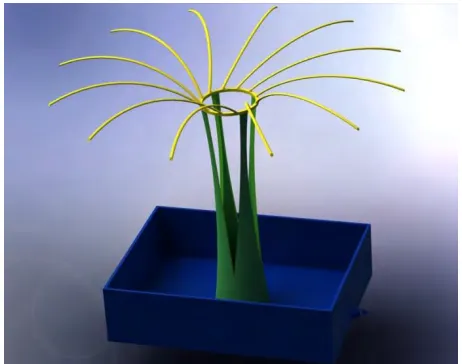
[image:19.612.230.461.323.505.2]The design of indoor hydroponic with smart observable system is exactly the title of this project where the main idea of this project is to use Bluetooth features in an android phone to automatically switch on the grow lamp, fan or thermostat, pump in and out water and nutrient into the tank. The cellphone will be the tool to do all of these including figure out the temperature of the plant. Basically, the temperature sensor will send input data of the current temperature in degrees to Arduino and Arduino then will transfer the data to cellphone with the help of Bluetooth module. The programming of the Arduino is burn by using Arduino IDE Programmer editor and transferred using USB cable from the computer board.
5
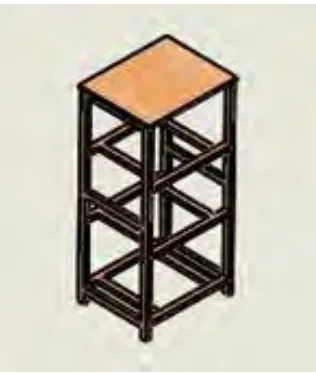
Figure 1.2: Outer Cart of Indoor Hydroponic System
Table 1.1: Project‟s Plan Characteristics
ATTRIBUTE DATA
Number of plants 1
Plant Vegetables
Dimensions Width= 35cm, Height= 72cm, Length= 35cm
Operating temperature 10-35celcius
Total lifespan 5-7weeks
Reservoir volume 11L
Sensor measurement Anytime
Operating voltage 24V
[image:20.612.108.548.386.621.2]6 1.3 Problem Statement
In the past, hydroponic system required research to setting up, steps for installation is many as well, after all it is required daily monitors to ensure proper growing conditions. When growing, pests and bacteria can significantly affects the health of the plants. It‟ll definitely involve environmental predators that can cause harm. To avoid this harmful pests, UV light as a grow light is used in indoor hydroponic. However, UV has its own drawback which is harmful to human skin. That‟s when LED as grow light is the best tools to use as an artificial sunlight.
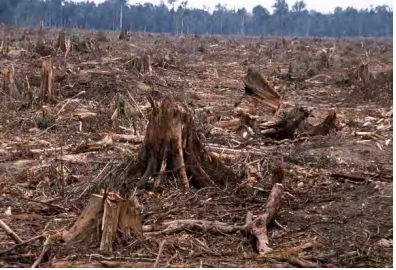
[image:21.612.229.427.477.612.2]The biggest problem for today‟s cultivation is that there are problems of enough land and the alternative cost of feed is quite high. It is also worth nothing that there is a significant reduction when weather isn‟t balance. For soil cultivation, there is a time when draught season when humidity of soil is at substandard or poor. With hydroponics, there will be always a water supply circulating oxygen into the root system of the plants. Hydroponic can also concern or distribute to the issues of food insecurity for poor-food-supply country such as Ecuador and materials for hydroponics are quit cost effective to farme
7
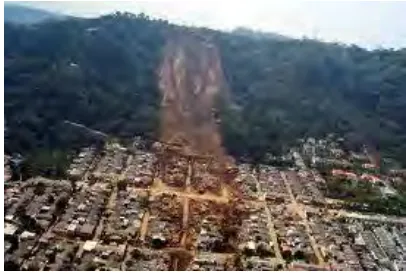
[image:22.612.225.428.236.373.2]Landslide can be state as one catastrophic event, it can cause human injury including loss of life, economic devastation, construction destroyer and cultural and heritage values. It is usually occurred when the land experience direct hit from the raindrops when raining and surely be one of the land‟s erosion factors. Without trees, increase in environmental temperature can‟t be coped. Disappearance of the trees means disappearance of the canopy layer which mainly helps in preventing direct sunlight reaching to the ground. Figure 1.4
Figure 1.4: Landslide
8 1.4 Objective
To realize this project, the project objectives have been finished in the duration time granted according to the main purpose of this project which to provide smart observable system that can monitored and control pH value as well as the temperature value for the close system as to balance the healthiness of crops with nutrient and its temperature. The improvise that will be make is to use Bluetooth module as a communication bridge between application on android smartphone and sensors with the help of float switch act as a mechanical sensor. This project will offer an alternative way to cope with these problem and helping in providing a clean, healthier and disease-less product in a long run.
1. To establish a smart system that can operate indoor hydroponic for home use.
2. To design the whole electrical system that will combine with hydroponic structure and monitor the pH of the crop.
3. To prove how this system helps in development of better system in agriculture.
The mission of this project is to build an indoor hydroponic which basically will not involve sunlight. I will attempt to dispel some of people common fears associated to make the hydroponic gardening endeavor successful and rewarding. Purpose is to build hydroponic system to lead a better and organize-well life and use all the facilities that technologies has offer us in these era.
9
erosion cause by regular soil farming. What‟s make land and water consumption is important nowadays? Seventy- five percent of all fresh water is use for agriculture somehow these fresh water supplies are being over allocated, contaminated and depleted at an alarming rate.
One thing to do, which undeniably an exciting and creative process is that, decorating your home. For many people, decorate a home or office would be so much compelling when choosing the accessories that will decorate the space. From the floor carpet to the candle and the candle holder itself and from vases to houseplants, home accessories is crucial as it personally makes your home to feels like home, enhance and transform positive energy. As to enhance means adding up a little bit of „mood‟ no matter at the corner behind the close door, corner under the stairs, or confine spaces used on apartment patios, small backyard, basement and last but not least at the end of the corner of your balcony, this hydroponic indoor for home kits is undeniably suit your home and office. The combination of green plants and cart of 90 centimeter tall will be just perfectly nice to enhance the „mood‟ for your home to feels like home.